resources by type
resources by grade
resources by subject
other resources
Relevant
alt down
Any Time
alt down
filter by
alt down
All File Types
alt down
filter nav Show filters
Sort by: Relevant
CLEAR
resources by type
Activities
up arrow
Centers
Crafts
Escape Room
Experiments
up arrow
Labs
Games
Projects
Read Alouds
Songs
Classroom Decor
down arrow
Teacher Tools
down arrow
Worksheets & Printables
down arrow
resources by grade
Early Learning
down arrow
Pre-K
down arrow
Elementary
down arrow
Middle School
down arrow
High School
down arrow
Adult Education
Not Grade Specific
resources by subject
Creative Arts
down arrow
ELA
down arrow
Holiday & Seasonal
down arrow
Life Studies
down arrow
Math
down arrow
P.E. & Health
down arrow
Social Studies
down arrow
Special Resources
down arrow
Science
up arrow
Basic Science
down arrow
Chemistry
Earth and Environmental Sciences
down arrow
Life Sciences
down arrow
Physics
Technology
down arrow
Foreign Languages
down arrow
Resources for Teachers
down arrow
other resources
Common Core
Homeschool Resources
down arrow
Montessori
Research
STEM
Science Action Labs Astronomy

Science Action Labs Astronomy
Science, Earth and Environmental Sciences, Space, Grade 1, 2, 3, Labs, Experiments, Activities

Science Action Labs Astronomy Eager to introduce your young learners to the captivating world of astronomy? Explore with them through our Science Action Labs Astronomy resource, designed ideally for Grades 1, 2, and 3. This dynamic educational tool boasts 64 ready-to-print pages in PDF format, perfect for activities geared towards nurturing their interest and understanding of astronomy. Use it in public schools or whilst homeschooling kids. Unravel the Vast Universe A primary focus polished within this resource is an evolving comprehension of the vastness of our universe. Students would develop insights on how crucial elements like rotation speed and gravity contribute to planetary movement within our solar system- all through exciting experimental learning! Cultural Learning and Historical Figures Weaved into these lessons are interesting folklore surrounding moon superstitions that have spanned cultures across time. We also highlight influential figures who made significant strides within astronomical science, connecting pupils with vibrant pieces of cosmic history. Creative Exploration & Hands-On Learning The resource fosters creativity by encouraging students to design their own Martian Being! On top of this engaging task comes hands-on rainbow-making activities that incorporate learning about chromatics. Evaluation & Cognitive Skill Building Built-in quizzes regularly evaluate progress while reconfirming comprehensive understanding. The interactive questionnaires extend student learning beyond textbook-style memorization - aiding cognitive skills development throughout the process. Versatile Usability Whether it's group classroom sessions, small group pairs or individual homework assignments - its flexible design fits seamlessly into any teaching environment. The product is more than just a teaching aid. It's an interactive, educational catalyst that sparks curiosity about space exploration, and fuels passions for discovery. Embrace the power of innovative learning with Science Action Labs Astronomy , as your pupils unravel mysteries of outer space right from their classrooms!

Author Classroom Complete Press

Tags Astronomers, Astronomy Activities, Science Labs, Action Labs, Astronauts In Space

Work and Energy – Lab Station Activity

Work and Energy – Lab Station Activity
Science, Physics, Grade 8, 9, 10, 11, Labs, Experiments, Activities

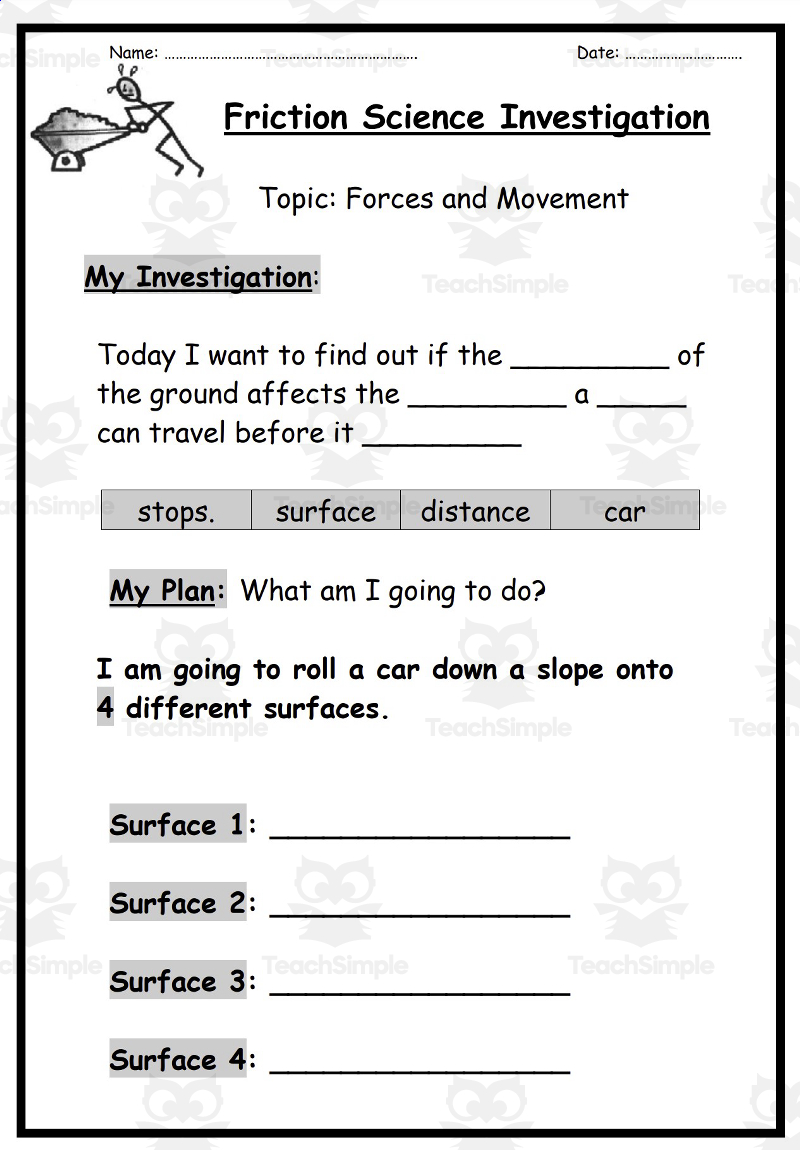
Work and Energy - Lab Station Activity An engaging teaching resource designed for high school physics students that focuses primarily on work, energy, forces, and friction. Its main goal is to facilitate active learning through interactive tasks. Activity Overview This resource offers a lab activity comprising multiple stations. Each station presents different testing methods such as: Answering questions drawn from readings or videos. Sharing personal opinions on specific topical issues. Diagram creation activities. The aim is to introduce students to different approaches to understanding and applying key concepts related to work and energy. Included Activities: 'Research tasks': Utilizing devices or classroom computers for data gathering. 'Written expression': Elucidating thoughts on theoretical issues via written communication. 'Connect-the-Dot Readings': Merging theoretical concepts with practical real-life situations. 'Test Your Knowledge': A mixture of multiple-choice questions with requests for written explanations justifying the chosen answers. To maximize class time efficiency, bonus word search or word scramble tasks have also been included which could serve as an additional source of marks when properly utilized. The ultimate objective ensuring every student finds something beneficial during the lesson without idle moments. Ease of Preparation: The resources are ready-to-use – simply print the cards provided in the download pack, place them around the classroom strategically for task initiation. An answer key provided within this package facilitates easy assessment. Value Beyond the Lab: The station cards extend beyond just lab activities – they can also be used as study materials before tests or quizzes to stimulate students' interest and improve retention and overall performance. Summary In a nutshell, for educators seeking versatile resources that focus not only on content, but on delivery methods that cater to all types of learners, Work and Energy - Lab Station Activity is certainly a resource worth considering.

Author Teach With Fergy

Tags Work, Energy, Forces, Friction, Lab Activity, Work Power And Energy Lab

Apple Science Experiment - Observing Apples

Apple Science Experiment - Observing Apples
Fall, Seasons, Holiday & Seasonal, Basic Science, Science, Nature & Plants, Life Sciences, Kindergarten, Preschool, Grade 1, 2, Experiments, Activities

Make learning about apples fun with this apple science experiment. Students will practice making predictions, conducting an experiment, and recording their results with this apple observation experiment. What is Included: There is a detailed instructional page that provides detailed instructions for the experiment, a materials list needed, and any special tips or optional activities to complete with this experiment. There is a recording page with easy to follow directions for students to draw or color their predictions and record the results of the experiment. There are two journaling pages students can use to record their results and write about what they observed during the experiment. One journal page includes picture clues to guide students in their responses, while the other is a simple journal page for students to draw whatever they wish and then write their responses. What is the Experiment? This experiment is an apple observation. An apple will be cut into fourths and placed in different environments for students to observe what happens to the apple slices after a set period of time. This experiment allows students to observe the oxidation process in an apple. How to Use: Students can work in small groups of 2 or 3 to complete this experiment. The teacher may also choose to lead the experiment with the whole group of students. Each method allows students to make predictions and record results on their own. This science experiment is perfect for young learners. The easy to follow instructions and scaffolded recording and journaling pages help students through completing the experiment. While setting up the experiment does take material and time to do, the recording pages and journaling pages are no-prep, making this an easy activity to prepare for students. The low prep experiment is a great addition to any busy classroom or home school environment.

Author The Connett Connection

Rating

Tags Apple Science, Apple Science Experiments, Science Experiment, Elementary Science, 1st Grade Science Experiments, Kindergarten Experiments, Kindergarten Science Projects, Science Experiments For Kids

Synthesis, Decomposition, and Combustion – Lab Station Activity

Synthesis, Decomposition, and Combustion – Lab Station Activity
Science, Chemistry, Grade 7, 8, 9, 10, Labs, Experiments, Activities

Synthesis, Decomposition, and Combustion – Lab Station Activity Immerse your students in the fascinating world of chemistry using the Synthesis, Decomposition, and Combustion Lab Station Activity . This educational resource is perfect for teachers looking to actively engage their students in learning about the human digestive system . Designed specifically for grade 7-10 science and chemistry students. Interactive Learning Stations This interactive lab activity combines education with assessment. Your students journey through each of nine uniquely designed stations. Each station comes with a comprehensive description card that provokes discussions, challenging questions or creative tasks such as drawing or building artefacts relevant to digestion study. Simplicity at Its Best! One prime advantage for educators using this resource is its simplicity, requiring minimal preparation on your part. Just print and lay out the included descriptions cards before class. A Variety of Exciting Activities Variety offered by strategic exercises encourages self-learning. 'Rest station' allows learners reflection time between intense cognitive exercises. Bonus activities like exciting word scrambles ensure idle time is eliminated from your classroom. Note: You can use these lab-based learning resources either during actual lessons experimenting inside laboratory conditions or outside labs like review tasks before tests etc., Teachers have successfully employed these versatile tools within whole-group settings while others assign them as homework. In conclusion - With this thoroughly researched lab station activity on synthesis decomposition & combustion aspects of Human Digestive System hands-on illustrations insightful context reviews based games quizzes etc., expect strengthened understanding amongst children regarding organs disorders associated with digestion!

Author Teach With Fergy

Tags Chemistry Lab, Interactive Learning, Digestion, Synthesis, Decomposition

Ecobottle Lab - Human Impact on Ecosystems Inquiry Lab Experiment

Ecobottle Lab - Human Impact on Ecosystems Inquiry Lab Experiment
Science, Life Sciences, Biology, Grade 8, 9, 10, Experiments, Activities

This ecosystems lab allows your students to create and carry out a hands-on, engaging experiment on how humans affect our environment. It utilizes the steps in the scientific method to scaffold learning and allow your students to come to a conclusion based on findings that are tangible. The lab includes: - a full task overview with pictures - a complete description of lab report components - instructions that allow you to scaffold your student’s learning - instructions which allow your kids learn to design an experiment on their own or with some help from you - a complete rubric marking scheme - Google and Office versions - one click and the Google versions will copy themselves to your Drive This activity goes well with my ecosystems unit where you will find the following lessons: Lesson 1 - The Spheres of the Earth Lesson 2 - Ecosystems Lesson 3 - Energy Flow In Ecosystems Lesson 4 - Cycling of Matter In Ecosystems Lesson 5 - Population Influences within Ecosystems Lesson 6 - Ecological Succession Lesson 7 - Biomass and Fossil Fuels Lesson 8 - The Importance of Biodiversity Lesson 9 - Invasive Species -------------------------------------------------------------------------------------------- Also please stop by my blog Teach With Fergy for news, resources, and my various ramblings.

Author Teach With Fergy

Tags Science Labs, Sustainable, Ecosystems, Eco-bottle Lab

Nonrenewable Energy Sources Lab Station Activity

Nonrenewable Energy Sources Lab Station Activity
Science, Chemistry, Grade 5, 6, 7, 8, 9, 10, 11, Labs, Experiments, Activities

Nonrenewable Energy Sources Lab Station Activity An expressive teaching resource fashioned to infuse active, hands-on learning in your science classroom. This Lab Station Activity is an engaging, interactive dive into nonrenewable energy sources and their impacts. It is tailored for grades 5 to 11, aligning with the NGSS standards MS-ESS3-4, MS-ESS3-5, and HS-ESS3-4.. Educational Approach The activity embraces a diversified approach, integrating multiple modes of learning at each stage. This not only ensures student involvement but also caters for all kinds of learners regardless of their strength or preferred style. Fields covered include biomass, fossil fuels, and nuclear energy among other topics; along with electricity generation and global warming aspects that highlight real-world application. The Stations Set Up: Drawing/Building: Students engage in creative processes at this station. Tutorial Hunt: Here, students find answers to specific questions surrounding non-renewable energy. Perspective Sharing:Socratic-style interaction where students give written opinions/thoughts on certain issues mentioned in prompts given. Literacy Appraisal: Hones reading comprehension as students explore topical news about real life implications of non-renewable energy sources. Knowledge Test : Learners assess self-understanding through multiple choice questions related to the subject matter . Exciting Multimedia : Students engage with short, educational video clips about non-renewable energy sources and try to answer questions based on these Additional Complementary Activities : To ensure the energetic tempo is unbroken while transitioning between stations, this activity includes: word searches and word scrambles. User-Friendly Format : The product comes in an easy-to-use format that requires minimal prep—just print out the cards and distribute them around your classroom! It's fully editable so you have leeway to make it relatable to your teaching style or class needs. An answer key likewise avails a compact verifying tool for responses when needed. Pedagogical Flexibility : This active learning tool provides flexibility by catering for large-group instruction during class time as well as small collaborative groups. It can also be given as homework for individual students .

Author Teach With Fergy

Tags Nonrenewable Energy, Lab Station Activity, Hands-on Learning, NGSS-aligned, Interactive, Energy Labs Middle School

Static Electricity – Lab Station Activity

Static Electricity – Lab Station Activity
Science, Physics, Grade 7, 8, 9, 10, Labs, Experiments, Activities

Static Electricity Lab Station Activity Bring static electricity concepts to life in your middle or high school science classroom. This interactive lab station activity allows students to engage with key physics concepts surrounding electrostatics, charging, and static electricity applications. Through nine unique stations, learners will conduct hands-on experiments, read applicability passages, watch expert videos, and more. The activity is designed to complement static electricity curriculum for grades 7-10. It requires almost no prep and includes detailed student sheets and answer keys. Extension activities like word scrambles and searches are also provided to maximize student engagement. Use this time-saving resource to create an immersive learning experience that will spark students' curiosity about the invisible world of static electricity.

Author Teach With Fergy

Tags Static, Electricity, Current, Charged, Lab Station, Static Lab, Electricity Activity, Static Electricity Activities, Static Word Scramble, Electrostatics Physics Lab Answers, Electricity Lab

Newton’s 3 Laws of Motion – Lab Station Activity

Newton’s 3 Laws of Motion – Lab Station Activity
Science, Physics, Grade 8, 9, 10, 11, Labs, Experiments, Activities

Newton's 3 Laws of Motion Lab Station Activity Students will learn Newton's three laws of motion through engaging lab stations. This hands-on physics activity allows small groups to rotate through 8 stations testing their knowledge of concepts like inertia, momentum, and equal-and-opposite forces. Stations feature building challenges, research questions, videos, and multiple choice assessments . A recording sheet tracks student progress as they navigate stations. This customizable resource works for middle and high school grade levels. Use it to introduce, reinforce or review Newton's laws of motion.

Author Teach With Fergy

Tags Motion, Newton, Forces, Objects, Lab Station

Ecosystems – Lab Station Activity

Ecosystems – Lab Station Activity
Science, Life Sciences, Biology, Grade 7, 8, 9, 10, Labs, Experiments, Activities

Engage students in learning about ecosystems with this interactive lab station activity . Students rotate through 9 stations, each offering a unique hands-on opportunity to demonstrate knowledge. Activities range from drawing and building models to conducting research, watching videos, answering multiple choice questions, and more. Recording sheets provided for students to document their work. Covers topics like ecosystems, populations, communities, sustainability, abiotic and biotic factors. Easily implemented for individual, small group, or whole class learning. Requires almost no prep - just print cards and you're ready. Answer keys included. Check out other science lab station activities on various biology, physics, chemistry, and space science topics.

Author Teach With Fergy

Tags Biotic, Factors, Ecosystem, Change, Lab Stations

Atomic Theory, Structure and Isotopes – Lab Station Activity

Atomic Theory, Structure and Isotopes – Lab Station Activity
Science, Chemistry, Grade 7, 8, 9, 10, Labs, Experiments, Activities

Atomic Theory, Structure and Isotopes Lab Stations Engage students in learning atomic theory, atomic structure, and isotopes with this interactive lab station activity. Students move through nine stations, including drawing atoms, watching expert videos, completing knowledge checks, reading real-life applications, and formulating their own questions.recording answers on a passport worksheet. This resource requires almost no teacher prep - just print the self-explanatory station cards with detailed student directions. The activity works well for whole group or independent work, covers core topics, and aligns to grades 7-10 science standards. Assessment at multiple stations allows students to exhibit understanding in various ways while staying focused and challenged. Extend student learning by pairing the lab stations with the included word scramble and word search.

Author Teach With Fergy

Tags Atoms, Atomic, Theory, Structure, Isotopes

Chemical Reactions and Balancing Equations – Lab Station Activity

Chemical Reactions and Balancing Equations – Lab Station Activity
Science, Chemistry, Grade 9, 10, 11, 12, Labs, Experiments, Activities

Chemical Reactions and Balancing Equations Lab Station Activity This editable lab station activity covers describing chemical reactions, balancing chemical equations, and types of chemical reactions. Students rotate through 9 stations, including getting hands-on to draw models, researching topics, writing explanations, answering questions based on videos, and more. It is designed to engage students in the content in a fun and meaningful way. Use it to complement your chemistry curriculum as an in-class lab or review activity before tests. With minimal prep required and an answer key provided, implementing this activity into your chemistry lesson plans is seamless. Your students will love moving through the stations while solidifying their understanding of chemical reactions and balancing equations.

Author Teach With Fergy

Tags Ionic, Forces, Reactions, Chemical, Lab Stations, Balancing Equations, Describing Chemical Reactions Lab Answer Key

Natural Disasters – Lab Station Activity

Natural Disasters – Lab Station Activity
Science, Earth and Environmental Sciences, Environmental Science, Grade 7, 8, 9, 10, 11, 12, Labs, Experiments, Activities

Natural Disasters Lab Station Activity Bring the science of natural disasters to life in your middle or high school classroom with this engaging lab station activity . Students will rotate through 9 stations testing their knowledge about topics like cloud formation, earthquakes, tsunamis, and climate change. Activities range from hands-on drawing and building to answering questions based on expert videos. With minimal prep required by the teacher, this self-guided experience equips students with the recording sheet they need to document their learning. This versatile resource works for both review and initial knowledge building. The content covers core ideas in environmental science and earth science curricula. As students move through thestations, their creativity and critical thinking skills are put to the test in a meaningful, memorable way. This activity brings interactive learning to a subject that lends itself perfectly to active engagement by students.

Author Teach With Fergy

Tags Weather, Climate, Tectonics, Natural Disasters, Lab Stations

Human Digestive System – Lab Station Activity

Human Digestive System – Lab Station Activity
Science, Life Sciences, Human Body, Grade 7, 8, 9, 10, Labs, Experiments, Activities

Human Digestive System – Lab Station Activity This interactive human digestive system resource engages students through eight diverse lab stations. Learners examine models, draw diagrams, watch videos, research online, solve puzzles, and respond to questions. The self-guided format enables customized implementation for individuals, small groups, or whole class. The non-repetitive blend of creativity, writing, media, and critical thinking caters to multiple learning styles. Students reinforce anatomy concepts like organs and disorders while connecting ideas to digestion processes. The activity concludes with an assessment where learners develop their own questions. Educators save prep time since the package provides content cards, recording sheets, and answer keys. Extendable to a unit on body systems.

Author Teach With Fergy

Tags Human, Digestive, System, Lab Station, Anatomy, Hands On Digestive System Activities, Digestive System Hands-on Activities, Digestive System High School Activities

Cells and The Cell Theory – Lab Station Activity

Cells and The Cell Theory – Lab Station Activity
Science, Life Sciences, Biology, Grade 7, 8, 9, 10, Labs, Experiments, Activities

Cells and The Cell Theory – Engaging Lab Station Activity Bring cells and cell theory to life for your middle or high school science students with this interactive lab station activity . Students will rotate through 9 stations, each offering a unique hands-on opportunity to build their understanding of cells, organelles, cell types, diseases, and more. Activities range from drawing cells to answering questions based on videos and readings to creating their own quiz questions. Almost no prep needed - just print the self-contained station cards and guides. Bonus word scramble and word search activities ensure students stay engaged. This versatile resource works for both learning new content or reviewing before a test. With 9 lively stations packed with visual, written and creative interactions, your students will love discovering cells and cell theory!

Author Teach With Fergy

Tags Cells, Plant, Animal, Cell Theory, Lab Station, Cell Structure Lab, Cell Theory For Middle School

Momentum, Conservation of Momentum, and Impulse – Lab Station Activity

Momentum, Conservation of Momentum, and Impulse – Lab Station Activity
Science, Physics, Grade 9, 10, 11, 12, Labs, Experiments, Activities

Momentum, Conservation of Momentum, and Impulse Lab Station Activity Bring physics concepts to life and get students engaged with this editable high school lab station activity . Students will rotate through 9 stations, each offering a unique hands-on opportunity to demonstrate understanding of momentum, conservation of momentum, and impulse. Activities range from drawing and explaining to answering video questions and completing knowledge checks. Recording sheets provided for students to document conclusions. Addressing key NGSS standards HS-PS2-2 and HS-PS2-3, topics covered include momentum, conservation of momentum, impulse, crumple zones, billiards, and types of collisions. Contains bonus vocabulary puzzles to prevent downtime between stations. This self-directed experience needs almost no teacher prep - simply print, set up, and students are ready to learn. Edit files to fit your specific needs. Check the preview for even more lab station activities spanning science disciplines.

Author Teach With Fergy

Tags Momentum, Conservation, Impulse, Inertia, Lab Station, Impulse Activity, Momentum Labs Physics, Momentum And Conservation Of Momentum Answer Key, Momentum Lab, Conservation Of Momentum Lab, Momentum Physics Labs

Electricity Generation – Lab Station Activity

Electricity Generation – Lab Station Activity
Science, Technology, Engineering, Grade 7, 8, 9, 10, Labs, Experiments, Activities

Educators seeking an engaging, hands-on resource to teach the principles of electricity generation will find the Electricity Generation - Lab Station Activity to be an invaluable teaching tool. This product is a fully editable lab station activity designed to actively engage students in learning about electricity production. This robust product offers seven distinct lab stations with unique and engaging activities. Students have opportunities at each station to test their understanding of different methods of electricity production—such as renewable and non-renewable sources, fossil fuels, nuclear power, wind energy, hydroelectric power and future technologies in interactive ways. The resource includes practically no-prep for educators - just print the cards and lay them out around the classroom! Bonus activities: An added advantage is bonus activities such as word scrambles and word searches related to the topic. These orchestrated interjections ensure there is no idle time between transitioning from one action-packed station activity to another! The toolkit can be used during laboratory sessions or serves well for review tasks prior tests or quizzes. This resource also promotes independent thinking skills by requiring students to research specific aspects relating to electricity generation on their own devices or a classroom computer at 'research' stations. It encourages expression as students write down opinions on questions surrounding how electricity gets produced. Designed for multi-modal learners from 7th-10th grade studying science with subtopics in engineering; this package can also be sent home as extensions/homework tasks after lessons end. Overall teachers will appreciate how effortlessly it blends learning assessment while ensuring student engagement! Note: An answer key is provided where applicable so educators can quickly and accurately grade student work and offer feedback on their learning progress. In summary, this unique collection of station activities facilitates a complete immersion into understanding electricity generation while ensuring students remain stimulated and engaged throughout their exploration. As they navigate through each station activity – either in small groups or individually – students strengthen their grasp over the subject matter.

Author Teach With Fergy

Tags Electricity Generation, Lab Station, Hands-on Learning, Renewable Energy, STEM Education

Periodic Table – Lab Station Activity

Periodic Table – Lab Station Activity
Science, Chemistry, Grade 9, 10, 11, 12, Labs, Experiments, Activities

This fully editable Lab Station Activity on the Periodic Table is meant to get your students out of their seats and engaged in the content. Each station not only offers a unique opportunity to test your students' knowledge (offer an opinion, answer questions based on a video or reading, draw, etc.), but also provides a fantastic learning opportunity where your kids are learning through assessment. Each station comes with a description card while some also contain more detailed instructions, a reading, questions to answer, etc. Students are equipped with a recording sheet (passport) to write their answers. There is almost no prep for you. Simply print the cards, lay them out around the room and you're all set. An answer key is also provided where applicable. This lab activity covers: - The Periodic Table - The History behind its creation ---------------------------------------------- Bonus Activities: To ensure your students don’t have any downtime between stations, your lab also includes a 10-word word scramble and word search, both with an answer key. You can use them as part of their mark, as a bonus so it’s not mandatory, etc. However you choose to use it, it will ensure that your students are always busy and never idle. Note: For stronger classes, I give the word scramble and for weaker ones, the word search. ----------------------------------------------- ---------------------------------------------- How do the Lab Stations work? Each station is specially designed to be a unique complement to the material while at the same time, provide a valuable learning experience. Below is an overview of how each station works. In your activity , each will be tailored to the specific content. Station 1: Get Hands-On – using their creative skills, students are required to draw or build. Station 2: Research – using a classroom computer or their own device, students must research a specific question/issue surrounding the topic. Station 3: Explain yourself – students write down an opinion to a question in paragraph form. Station 4: Rest Station - students can use this time to catch up on work they didn't have time to complete at a previous station or prepare themselves for an upcoming one. Station 5 - Applicability reading – students read a short passage from an article, website, etc. which directly connects the classroom content to a real life application. Station 6: Test your knowledge – students answer 5 multiple choice questions then provide a written explanation for how/why they came to their conclusions. Station 7: Learn from the expert – using a classroom computer or their own device, students must watch a short video clip and answer the associated questions. They may stop, rewind and restart as often as they like during the time frame. Station 8 - Rest Station. Station 9: Become the question master – Students must create 2 multiple-choice questions, 2 true/false questions and 1 short answer question. Students must also supply the answers. ------------------------------- You might also be interested in my other lab station activities Biology: • Cell and the Cell Theory • The Human Digestive System • The Circulatory System • The Human Respiratory System • Mitosis and the Cell Cycle • Cellular Respiration and Photosynthesis • Photosynthesis • Cancer: Cell Division Gone Wrong - Volume I • Cancer: Cell Division Gone Wrong - Volume II • Cell Membrane and Transport • Hearing and the Human Ear • The Human Eye • Genetic Material: DNA and RNA • The Nervous System • Energy Flow In Ecosystems Ecology and the Environment: • Ecosystems • The Classification of Living Things • Biodiversity and Invasive Species • The Carbon and Water Cycle • Climate Change • Photosynthesis • Cellular Respiration and Photosynthesis • Ecological Succession • Plant Sexual and Asexual Reproduction • Earth's Seasons • Interactions Within Ecosystems Physics: • Newton's Three Laws of Motion • Kinetic and Gravitational Potential Energy • Current Electricity and Circuit Diagrams • Static Electricity • Light Optics and the Production of Light • Sound, Sound Energy and Speed • One and Two-Dimensional Motion • Uniform Acceleration • How Planes Fly • Refraction • Friction • Energy and Its Forms • Density and Buoyancy Space Science: • The Life and Death of Stars • The Moon and its Phases • Life In Space • Our Solar System • Solar and Lunar Eclipse • Earth's Seasons • Asteroids, Comets and Meteors Chemistry: • Atomic Model, Notation and Atoms • Chemical Reactions and Balancing Equations • Molecular and Ionic Compounds • Physical and Chemical Properties & Changes • Acids, Bases, and Neutralization Reactions • The Periodic Table • Single and Double Displacement Reactions • Balancing Chemical Equations • Synthesis, Decomposition and Combustion Reactions • Atomic Theory, Atomic Structure and Isotopes • Types of Bonds and Intermolecular Forces • The Mole/Avogadro's Number • Density and Buoyancy These station cards are meant to be used as a lab activity but can also be utilized in a review task before a test or a quiz. Used either way, your students will love it! I know mine do and I'm telling you from first-hand experience as I've used this activity in my own class. Thank you for your interest in my products. If you have any questions, please send me an email - devon@teachwithfergy.com

Author Teach With Fergy

Tags Chemistry, Periodic Table, Elements, Metals, Lab Station, The Periodic Table Lab, The Periodic Table Lab Answers, Periodic Table Activities, Periodic Table Lab Answer Key

XL Domino – Chemical Elements 1–118 | exploring element names + symbol

XL Domino – Chemical Elements 1–118 | exploring element names + symbol
STEM, Science, Chemistry, Physics, Life Sciences, Montessori, Basic Science, Grade 7, 8, 9, 10, 11, 12, Activities, Games, Worksheets & Printables, Task Cards, Quizzes and Tests, Teacher Tools, Word Problems, Flashcards, Escape Room, Experiments

XL Domino – Chemical Elements 1–118 An interactive domino game for exploring element names and symbols 🧪🎲 This printable XL domino game offers a fun and flexible way for students to practice the names and symbols of all 118 chemical elements. Designed for use in grades 7–10, this resource supports both introductory lessons and ongoing review in chemistry class. Whether used in small groups, as a full-class activity, or even spread out along the hallway floor, it encourages active learning and collaboration. Each card features either the name or the symbol of a chemical element. By matching these correctly, students build a long domino chain – all while reinforcing their knowledge of atomic numbers, symbols, and the layout of the periodic table. What’s included: 238 printable domino cards (PDF format) Two complete versions of the game (119 cards each): – Beginner version: element names on both sides – Advanced version: name on one side, symbol on the other Covers all elements from hydrogen (1) to oganesson (118) Tips for setup and gameplay included How I’ve used it: This game works well before introducing the periodic table in depth. It gives students time to get comfortable with element names and symbols in a low-pressure setting. The larger card format makes it ideal for group work or movement-based activities, such as arranging the cards on the floor or in the hallway. Why it works: The visual repetition and active gameplay help students internalize key facts more effectively than passive memorization. Group dynamics also support peer learning – students naturally help each other recall unfamiliar elements. And because it feels like a game, students stay engaged longer and show more willingness to participate. The material is easy to prepare: print, laminate if you like, and cut out the cards. From there, you can adapt it for differentiated learning levels or turn it into a competitive classroom challenge. This is not just a game – it’s a versatile teaching tool that brings the periodic table to life. 📍 Best wishes, Heike from @Lernfitness Did You Know? I teach with a certified therapy dog, and together we create a positive and welcoming learning environment. 🐶

Author Lernfitness

Rating

Tags Educational Card Games, Chemistry, Physics, STEM Science Matching Game, Chemical Elements, Periodic Table Matching Game, Game, Domino, Differentiation

Scientific Method - Lab Station Activity

Scientific Method - Lab Station Activity
Science, Basic Science, Grade 6, 7, 8, 9, Labs, Experiments, Activities

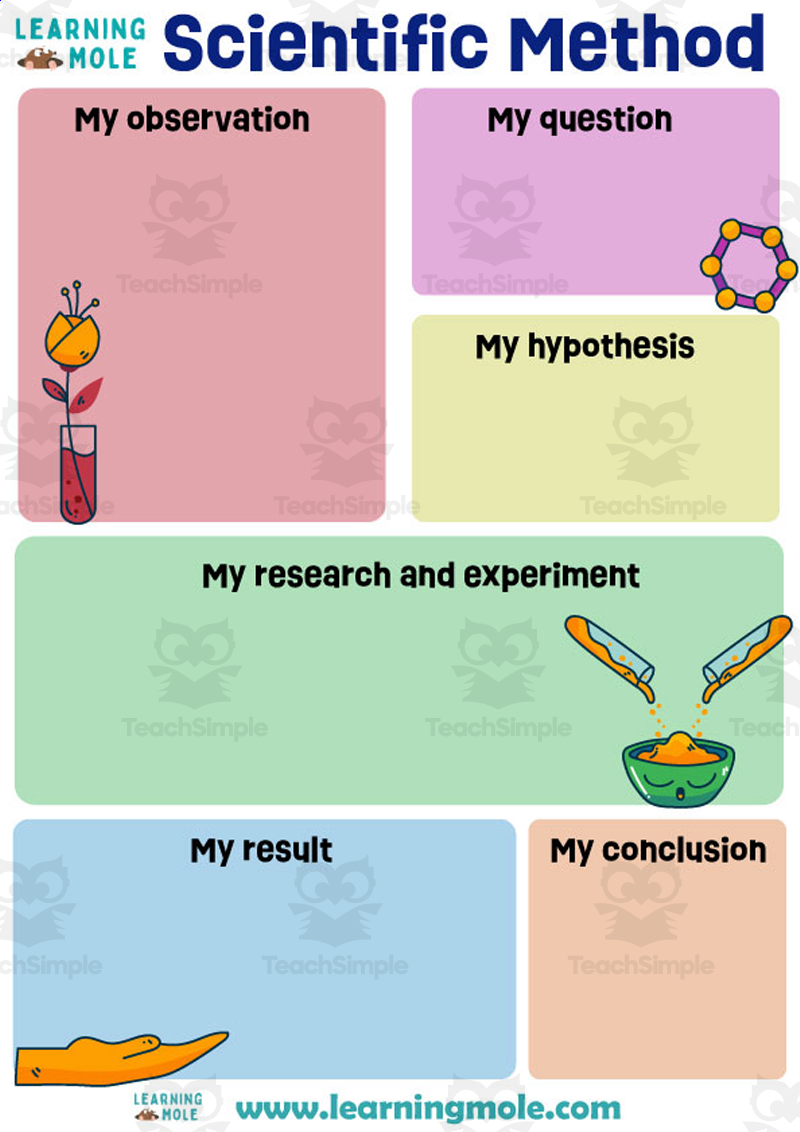
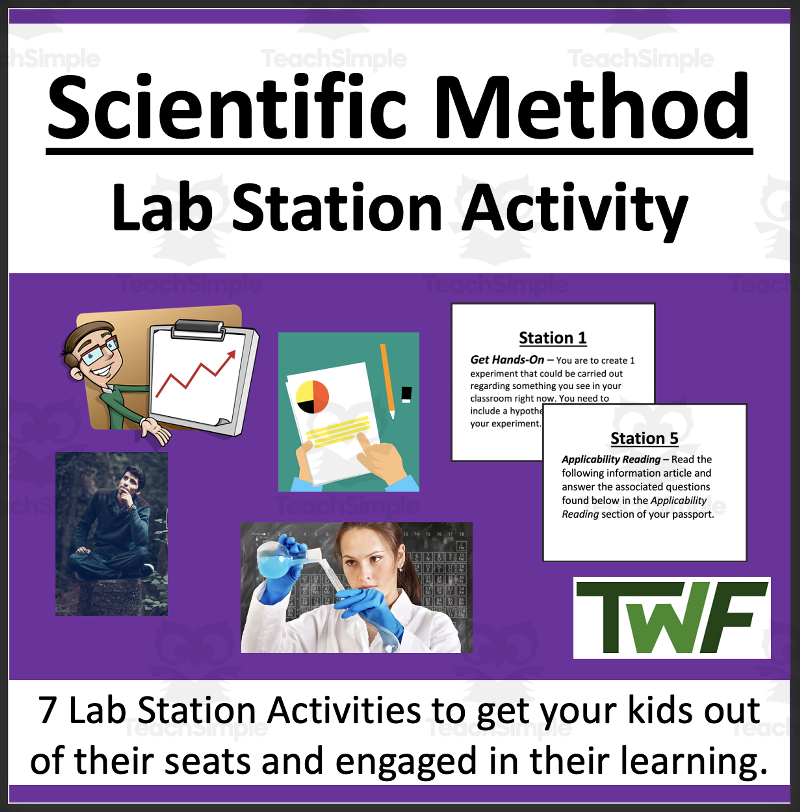
Scientific Method - Lab Station Activity This lab station activity allows students to apply their understanding of the scientific method by moving around the classroom and working with peers. Stations focus on creating hypotheses and procedures, identifying variables, analyzing data and drawing conclusions, and formulating testable questions. The varied format facilitates unique learning and assessment opportunities. Typically 2-3 stations are graded per group in a 30-minute timeframe. Stations work well for introducing or reviewing the scientific method in middle and high school science classrooms. This general science resource can be adapted for use in chemistry, physics, biology, and other branches when customized hypotheses and testable questions are generated.

Author Teach With Fergy

Tags Lab Safety, Science Safety, Classroom Lab Safety, Lab Safety Lab Station, Lab Station Activity

Solutions and Mechanical Mixtures – Lab Station Activity

Solutions and Mechanical Mixtures – Lab Station Activity
Science, Chemistry, Grade 7, 8, 9, 10, Labs, Experiments, Activities

Solutions and Mechanical Mixtures Activity for Chemistry Class This editable chemistry lab station activity helps students learn about solutions, mechanical mixtures, saturation, solubility, and separation techniques. It is designed for high school chemistry classes. The hands-on activity features 9 stations that engage students in the content through drawing, research, writing opinions, watching videos, answering questions, and more. A recording sheet allows students to document their learning. Answer keys are provided for applicable stations. Topics covered include: - Homogeneous mixtures - Heterogeneous mixtures - Centrifuge - Saturated, unsaturated, and supersaturated solutions To maximize student learning, the activity includes bonus vocabulary puzzles that can be used for additional practice or assessment . The customizable lab stations promote active learning while assessing student knowledge. Teachers can use this as an introductory or review activity before tests and quizzes. The engaging format helps students retain information. This product includes editable station cards and student sheets that can be customized as needed. Simply print and distribute to have an interactive solutions and mixtures lab ready to go!

Author Teach With Fergy

Tags Solutions, Mechanical, Mixtures, Solubility, Lab Station

Mutations – Lab Station Activity

Mutations – Lab Station Activity
Science, Life Sciences, Biology, Grade 9, 10, 11, 12, Labs, Experiments, Activities

This fully editable Lab Station Activity on Mutations is meant to get your students out of their seats and engaged in the content. This activity was designed for High School Biology students. Each station not only offers a unique opportunity to test your students' knowledge (offer an opinion, answer questions based on a video or reading, draw, etc.) but also provides a fantastic learning opportunity where your kids are learning through assessment. Each station comes with a description card while some also contain more detailed instructions, a reading, questions to answer, etc. Students are equipped with a recording sheet (passport) to write their answers. There is almost no prep for you. Simply print the cards, lay them out around the room and you're all set. An answer key is also provided where applicable. This lab activity covers: - Mutations Overview - Small-scale Mutations - Missense Mutations - Nonsense Mutations - Silent Mutations - Frameshift Mutations - Large-scale Mutations - Causes - Mutagens ---------------------------------------------- Bonus Activities: To ensure your students don't have any downtime between stations, your lab also includes a 10-word word scramble and word search, both with an answer key. You can use them as part of their mark, as a bonus so it's not mandatory, etc. However you choose to use it, it will ensure that your students are always busy and never idle. Note: For stronger classes, I give the word scramble and for weaker ones, the word search. ----------------------------------------------- How do the Lab Stations work? Each station is specially designed to be a unique complement to the material while at the same time, provide a valuable learning experience. Below is an overview of how each station works. In your activity , each will be tailored to the specific content. Station 1: Get Hands-On – using their creative skills, students are required to draw or build. Station 2: Research – using a classroom computer or their own device, students must research a specific question/issue surrounding the topic. Station 3: Explain yourself – students write down an opinion to a question in paragraph form. Station 4: Rest Station - students can use this time to catch up on work they didn't have time to complete at a previous station or prepare themselves for an upcoming one. Station 5 - Applicability reading – students read a short passage from an article, website, etc. which directly connects the classroom content to a real life application. Station 6: Test your knowledge – students answer 5 multiple choice questions then provide a written explanation for how/why they came to their conclusions. Station 7: Learn from the expert – using a classroom computer or their own device, students must watch a short video clip and answer the associated questions. They may stop, rewind and restart as often as they like during the time frame. Station 8 - Rest Station. Station 9: Become the question master – Students must create 2 multiple-choice questions, 2 true/false questions and 1 short answer question. Students must also supply the answers. ------------------------------- You might also be interested in my other lab station activities Biology: • Cell and the Cell Theory • The Human Digestive System • The Circulatory System • The Human Respiratory System • Mitosis and the Cell Cycle • Cellular Respiration and Photosynthesis • Photosynthesis • Cancer: Cell Division Gone Wrong - Volume I • Cancer: Cell Division Gone Wrong - Volume II • Cell Membrane and Transport • Hearing and the Human Ear • The Human Eye • Genetic Material: DNA and RNA • The Nervous System • Energy Flow In Ecosystems • DNA Manipulation and GMOs • Transcription and Translation • Cellular Respiration • Thermoregulation • Proteins and Nucleic Acids • Mutations Coming Soon: - Excretory system - Endocrine system - Carbohydrates and Lipids - Meiosis Ecology and the Environment: • Ecosystems • The Classification of Living Things • Biodiversity and Invasive Species • The Carbon and Water Cycle • Climate Change • Photosynthesis • Cellular Respiration and Photosynthesis • Ecological Succession • Plant Sexual and Asexual Reproduction • Earth's Seasons • Interactions Within Ecosystems • Physical and Behavioral Adaptations Physics: • Newton's Three Laws of Motion • Kinetic and Gravitational Potential Energy • Current Electricity and Circuit Diagrams • Static Electricity • Light Optics and the Production of Light • Sound, Sound Energy and Speed • One and Two-Dimensional Motion • Uniform Acceleration • How Planes Fly • Refraction • Friction • Energy and Its Forms • Density and Buoyancy • Electricity Production Coming Soon: - Calculating average speed, velocity, and displacement - Work = F x d - Renewable energy sources - Nonrenewable energy sources - Projectile Motion - Momentum, Conservation of Momentum and Impulse - Power - The Doppler Effect and Supersonic Travel Space Science: • The Life and Death of Stars • The Moon and its Phases • Life In Space • Our Solar System • Solar and Lunar Eclipse • Earth's Seasons • Asteroids, Comets and Meteors Chemistry: • Atomic Model, Notation and Atoms • Chemical Reactions and Balancing Equations • Molecular and Ionic Compounds • Physical and Chemical Properties & Changes • Acids, Bases, and Neutralization Reactions • The Periodic Table • Single and Double Displacement Reactions • Balancing Chemical Equations • Synthesis, Decomposition and Combustion Reactions • Atomic Theory, Atomic Structure and Isotopes • Types of Bonds and Intermolecular Forces • The Mole/Avogadro's Number • Density and Buoyancy • The Particle Theory and the Classification of Matter Coming Soon: - Periodic table group properties General Science: • The Scientific Method and Science Skills These station cards are meant to be used as a lab activity but can also be utilized in a review task before a test or a quiz. Used either way, your students will love it! I know mine do and I'm telling you from first-hand experience as I've used this activity in my own class. Thank you for your interest in my products. If you have any questions, please send me an email - devon@teachwithfergy.com

Author Teach With Fergy

Tags Mutations, Mutagens, DNA, Cancer

Plate Tectonics – Lab Station Activity

Plate Tectonics – Lab Station Activity
Science, Earth and Environmental Sciences, Environmental Science, Grade 7, 8, 9, 10, Labs, Experiments, Activities

Plate Tectonics Lab Station Activity engages students through hands-on learning. This editable high school earth science resource teaches key concepts like tectonic plates, plate boundaries, earthquakes, major plates, seafloor spreading, and more. Students rotate through 9 stations, including: drawing models, conducting research, writing opinions, reading applicability passages, answering comprehension questions, watching expert video clips, creating their own multiple choice questions, and catching up on previous work. Bonus vocabulary puzzles ensure continued engagement. This activity works for whole group, small group, or independent work. The no-prep format means simply print, set up, and implement.

Author Teach With Fergy

Tags Earth, Plates, Continental, Earthquakes, Lab Station, Plate Tectonics Lab Worksheet Answer Key, Plate Tectonics Hands On Activity, Plate Tectonics Lab Answer Key, Hands-on Plate Tectonics Activities, Plate Tectonics Activity, Plate Tectonics Lab Answers, Plate Tectonics Activity Answer Key

Kinetic and Gravitational Potential Energy – Lab Station Activity

Kinetic and Gravitational Potential Energy – Lab Station Activity
Science, Physics, Grade 9, 10, 11, Labs, Experiments, Activities

Kinetic and Gravitational Potential Energy Lab Station Activity This editable 9-station lab activity allows students to get out of their seats and actively learn about kinetic and gravitational potential energy. The hands-on stations engage students through drawing , research, opinion-writing, and more. Questions and reading assignments connect the content to real-world applications. A recording sheet allows students to document their work as they rotate through the stations. This activity can be used to review before a test or as an immersive lab experience. It covers key concepts like kinetic energy, gravitational potential energy, and the conservation of energy. Bonus vocabulary puzzles are included to keep students productive during transition times. Suitable for grade 9-11 physics classes, this lab station activity needs almost no teacher prep and provides an exciting opportunity for students to interact with the content.

Author Teach With Fergy

Tags Kinetic, Energy, Gravity, Conservation, Lab Station, Potential And Kinetic Energy Games Online, Work And Energy Lab, Kinetic And Potential Energy Word Search

Life and Death of Stars – Lab Station Activity

Life and Death of Stars – Lab Station Activity
Science, Earth and Environmental Sciences, Space, Grade 8, 9, 10, Labs, Experiments, Activities

Life and Death of Stars Lab Station Activity Dive into the life cycle of stars with this engaging lab station activity . Students will rotate through 9 stations, each offering a unique way to explore concepts like stellar life cycles, types of stars, the H-R diagram, stellar nucleosynthesis, and more. Activities range from creative tasks to research questions to knowledge checks. Word scrambles and searches ensure students stay busy. Almost no prep required - just print and go. Covers key ideas in stellar astronomy through varied formats for enhanced engagement and learning. Useful as an introductory or review activity for middle and high school physical science and physics. Provides an exciting hands-on complement to any unit on space science.

Author Teach With Fergy

Tags Stars, Life Cycle, Elements, Astronomy, Lab Station, Stars Activity