


9,469 products added recently
Page 35 - Best Teaching Resources

 Show filters


Character Trait Activity for Caring
Special Resources, Social Emotional Learning (SEL), Life Skills, Not Grade Specific, Activities
Character Trait Activity for Caring: An Educational Resource Character Trait Activity for Caring is an exceptional educational tool designed to instil the key trait of caring in students. It combines sound methodology and thoughtful design to deliver lessons effectively. The Importance of Character Traits: In today's fast-paced world, it is crucial to teach more than academics, promoting values that nurture empathetic individuals. Teaching character traits throughout an academic year can produce impactful results. "Character Trait Activity for Caring" puts this theory into action by teaching students about 'caring'. The Methodology: The activity starts with a clear definition of 'caring', followed by brainstorming sessions where learners identify instances showcasing their caring efforts at school, home or community level. An adaptable resource - useful for whole group discussions, small groups interaction or individual homework assignments - catering seamlessly to different teaching styles without compromise on effectiveness. Editions: Beyond just acknowledging Personal Development! Potential avenues are offered within the resource so that educators can dig deeper during class discussions. This not only leads pupils towards recognizing their own good deeds but also understanding the demonstrations and manifestations made by others within varying environments which encourages mutual respect & empathy fostering inclusive learning communities. An In-Depth Look into What This Resource Offers: A systematic guide comprehending: A brainstorming page dedicated to identifying actions reflecting ‘caring’ behaviors among learners in different settings whether that be school premises , homes or their communities A set of two follow-up pages with sentences revolving around the idea of ‘caring’ ready for use post downloading them in PDF format. This fantastic resource also comes with another pair of versatile pages without any specific words, so educators can extend their lessons beyond 'caring'. The familiar format enables learners to adapt quickly, widening the scope of learning yet maintaining an engaging atmosphere! A truly valuable addition to your teaching toolkit - instilling enduring life skills and nurturing caring behaviors- it’s not merely a teaching resource but a insightful pathway that moulds humble, kind & considerate individuals!
Author Life with 5 Boys
Tags Character Traits, Caring, Empathy, Values, Reflective Thinking
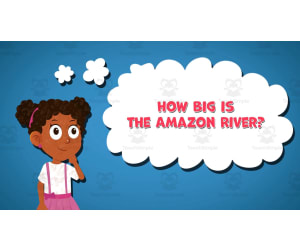
I WONDER - How Big Is The Amazon River | Animated Video Lesson
Geography, Social Studies, Grade 3, 4, 5, 6, 7, 8, 9, Lesson Plans, Teacher Tools
Video Introduction An amazing video designed for the students to learn more about famous places in different countries. I WONDER - How Big Is The Amazon River | Animated Video Lesson What do you know about this place? Do you know in which part of the world it is? Have you ever visited this place? If yes, can you tell us more about your adventure, and what do you like the most about this place? Do you like reading about Geography? What is your favorite country in the whole world? If you are going on a trip where it will be? Which country? What you are going to see there? Does this country has a famous place to visit? I WONDER - How Big Is The Amazon River | Animated Video Lesson The activity is perfect for encouraging the researching skills for the students, while learning more about this fantastic place. I WONDER - How Big Is The Amazon River | Animated Video Lesson This friendly designed video is suitable for students at school, homeschooling, and as a group activity. Format Available in MP4 format.
Author Educational Voice
Tags How Big Is The Amazon River, How Big Is The Amazon River Video, The Amazon River, Amazon River, Amazon River Facts, Amazon River Facts For Kids, Amazon River Video, Amazon River Video For Kids
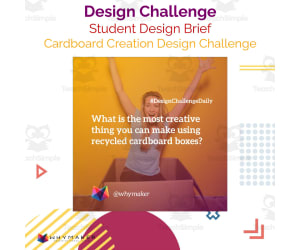
Cardboard Creation Design Challenge
, Not Grade Specific, Worksheets & Printables, Word Problems, Activities
The Cardboard Creation Design Challenge The Cardboard Creation Design Challenge is a well-formulated teaching resource that suits versatile educational environments. This tool provides educators, including public school teachers and homeschoolers, a platform to offer students an unparalleled creative experience while promoting independent thought and problem-solving skills. Main Objective of this Resource This primary goal of this teaching resource is to inspire innovation and deep thinking among students. READY design challenges mean no additional preparation time is needed from the teacher's side - simply hand them out to your students for unique opportunities towards self-guided learning! Integration with Various Subjects and Real-world Scenarios These challenges subtly combine subjects like Math with real-world scenarios in word problems, allowing learners to associate classroom teachings with practical life applications during Makerspace Events, Genius Hour, Choice Time Periods or even SEL Time. Context: Explains the logic behind the challenge. Design Challenge: Describes what must be accomplished. Specifications:List crucial requirements of the challenge. Constraints: Show limitations impacting task-resolution process. Needed Materials & Tools. Ideal for Cartography lessons or Independent Studying. In Summary This instrument fosters creativity across various curriculums - from Mathematics assignments developing critical thinking skills right down towards Technology Classes tackling complex Engineering concepts. The adaptability across varied grade levels emphasizes these design tasks' purpose: To instigate innovative thought-processing habits within future inventors, regardless of their academic stages. These challenges invite each student into an immersive learning experience, one challenging task at a time!
Author WhyMaker
Tags Design Thinking, Problem Solving, Hands-on Learning, Creativity, STEM

Dominoes: Pets
ELA, Language Development, Vocabulary, Grade 1, 2, 3, 4, 5, 6, Activities, Games
Dominoes: Pets is an engaging vocabulary game that educators can utilize in various instructional settings. Students match dominoes with words and pictures to build their knowledge of common household pets. This versatile resource works well for whole group instruction, small group practice, partner games, or even independent work. Learners of all ages enjoy playing dominoes while simultaneously reinforcing their understanding of new vocabulary words and pet names. With just 28 domino tiles to manipulate, the game integrates seamlessly into multiple classroom arrangements. From primary to intermediate elementary grades, Dominoes: Pets stimulates student engagement with vocabulary in a multisensory, interactive way. This game is an excellent addition to any language arts curriculum seeking to build students' vocabulary knowledge.
Author Better Teaching Resources
Tags Domino, Dominoes, Pets, Animals, Matching

South Carolina State Symbols Clip Art
Social Studies, Geography, Not Grade Specific,
Tree= Sabal Palmetto Animal= White-Tailed Deer Bird= Carolina Wren Flower= Yellow Jessamine Insect= Carolina Mantid Reptile= Loggerhead Sea Turtle Amphibian= Spotted Salamander Butterfly= Tiger Swallowtail Butterfly Fish= Striped Bass Flag South Carolina state
Author Teacher's Clipart
Tags Geography, South Carolina, Symbols, USA, Coloring, South Carolina State Amphibian, Symbols Of South Carolina, Carolina Symbols, South Carolina State Bird And Flower

Monster Multiplication Custom Craft Cards x8
Math, Multiplication and Division, Division, Grade 2, 3, Crafts, Activities
These are Monster Multiplication Custom Craft Cards x8. You can use these cards as flash cards, small group intervention and so much more. Students will love these cards to practice multiplication. These cards are printed in black and white, so students can color them.
Author WORDS ASIDE
Tags Graphics, Clipart, Math Mats, Monsters, Multiplication

COMBINED: The FIVE Elements of a Story Graphic Organizers
ELA, Reading, Reading Comprehension, Language Development, Pre-Reading, Writing, Not Grade Specific, Teacher Tools, Graphic Organizers
This BUNDLED resource includes ALL Graphic Organizers from our The Five Elements of a Story series. This set includes custom graphic organizers for Character, Setting, Plot, Theme and Conflict. An additional 5 BONUS graphic organizers are included. These graphic organizers can be used in any classroom, for any grade, and with any student. Use these graphic organizers to help students gain an understanding of the five elements of a story. Each graphic organizer comes with instructions on how to use them. Character Graphic Organizers: Character Map - Write the name of the character in the middle circle. Then, describe the character’s actions in the top left square; what the character says and how they speak in the top right square; the character’s feelings in the bottom left square; and what the character looks like in the bottom right square. Character Trait Chart - Choose a character from the story. In the first column, write down any traits that your character has. Include physical features, personality, feelings, and anything else that describes your character. In the second column, provide evidence from the story to support your chosen trait. Character Feelings - In the top box, describe the character’s feelings at the beginning of the story. In the next series of boxes, describe an event that has an effect on the character, then how this character feels as a result of this event. In the last box, describe the character’s feelings at the end of the story. Relationship Web - Write the name of the main character in the story in the middle circle. In the circles branching out from the middle one, write down the relationships the character has. Include whether you think this is a good relationship or a bad one. Do the same for any other character in the story. Character Comparison - Use the Venn Diagram to compare two characters from the story. Write the names of each character in the overlapping circles. Write any differences the characters have with one another in the outside circles. Write any similarities the characters have in the middle of both circles. Character Scrapbook - Create a scrapbook for one of the characters in the story. Choose a character from the story. Choose some important events that happen in the story that shapes the character. Draw pictures of these events and explain what happened and how it affected the character. Character Analysis - Keep track of every character in the story and their traits. Write the name of each character in the story in the first column. Write a trait that the character has in the second column. In the third column, write down the page and paragraph number of a quote that proves this trait. Character Development - Choose a character from the story. Write down their initial thought on a topic or situation in the first column. In the second column, write down the event that has an effect on that character’s thoughts. Then, write down the character’s new thoughts on the topic or situation in the third column. Character Cluster - ‑is Cluster Map can be completed in many different ways. Start with a character in the middle triangle. Then, branch out from the character with related topics in the circles. Expand on those topics in the rectangles. Suggestions include: relationship web, traits web, feelings web. Character Sketch - Complete this Character Sketch of any character in the story by writing what the character says, thinks, hates, loves, owns, does or uses. Also include the characters strengths and weaknesses, and where the character has come from in the story, and where the character is going. Setting Graphic Organizers: Setting Elements - Place + Time + Environment = Setting in this Graphic Organizer. Describe the Place that the story takes place in the house graphic. Then, describe the Time in the clock graphic. Finally, describe the Environment in the landscape graphic. Setting Stage - Draw the setting that the story takes place in on the stage in this graphic organizer. Be sure to illustrate the time and place that the story takes place in. Also include the environment of the story, and try to show the tone or mood that the setting creates for the story. Changes in Setting - Identify how the Setting changes throughout the story. In the first column, write down when and where the story takes place at the beginning. In the second column, write down when and where the story takes place at the end. Compare the two to show how the setting changed. Setting Comparison - Compare your Setting with the Setting of the story. In the first column, describe your own Place, Time, Environment, and Mood. Then, do the same for the story’s setting in the second column. Finally, compare each element of the setting. What is the same? What is different? Tone and Mood - Where + When = Tone/Mood in this Graphic Organizer. Describe Where the story takes place in the house graphic. Then, describe When the story takes place in the clock graphic. Finally, describe how both of these elements affect the Tone and Mood of the story. Setting Map - Draw a map to show where the story takes place. Include all the important places from the story as the setting changes. As an extra activity, include routes to each place as it happens in the story. Additionally, include the time for each place on your map. Be creative with your drawing. Past, Present, Future - Describe the Setting as it changes throughout the story. In the Past section, write the setting that took place before the story (flashback). In the Present section, write the current setting of the story. In the Future section, write the setting that will take place after the story (flashback). Elements of Setting - Place + Time + Environment + Mood = Setting in this Graphic Organizer. Describe the Place that the story takes place in the top left box. Then, describe the Time in the top right box. Then, describe the Environment in the bottom left box. Finally, describe the Mood in the bottom right box. Character and Setting Comparison - Compare the Characters in the story with the Setting. Write traits that the character and setting share where the circles overlap. Write traits that the character and setting don’t share in the outside circles. Do this for each character and setting in the story. Setting Analysis - Describe each element of the Setting in detail. Describe the setting, how it relates to the characters, and how the characters are in conflict with the setting. Then, identify the tone and mood of the story, how the setting affects it, and how the story would change if the setting was different. Plot Graphic Organizers: Plot Pyramid – Complete this classic Plot Pyramid graphic organizer by writing the Introduction of the story in the bottom left box. Then, describe the Rising Action, followed by the Climax of the story. Finish up with the Falling Action and the Resolution or Conclusion of the story. Sequence – Describe events from the story in sequence. Start off by writing the Initiating Event, or the event that starts off a chain reaction, in the top box. Follow this with the Steps that directly result from this event in order that they occur. Finish up by writing the Final Outcome of this event. Prediction Chart – In the first column, write down what you predicted, or thought would happen in the story. In the second column, write down what actually happened in the story. Continue this format for each event you predict will happen in the story. Storyboard – Illustrate the plot or an event from the story. Draw or describe in detail each stage in the plot or in an event that takes place in the story. Remember, the order of plot development is: Introduction, Rising Action, Climax, Falling Action, and Resolution/Conclusion. Story Structure – Complete the Story Structure by identifying the Introduction, events of the Rising Action, Climax, events of the Falling Action, and the Conflict and Resolution of the story. Then, identify the theme of the story, as well as the setting of the story (where and when the story takes place). Sequence Chain – Describe up to 9 events from the story in the order that they occur. Write the first event in the first box, followed by the second event in the following box, and so on following the chain. It is not necessary to fill in every box with an event. For an extra activity, draw each event in detail. Prediction Tree – In this Prediction Tree graphic organizer, write your question at the base of your tree. On the trunk, write down your prediction to the answer of the question posed. On the branches, write down evidence from the story to support your prediction. Story Cycle – Describe the Introduction of the story in the top right box. Following the cycle, describe the Rising Action next. Then, include the Climax of the story. Follow this with the Falling Action, and finally with the Resolution of the story. Then, describe how the Resolution relates back to the Introduction. Changes in Plot – Identify how the Plot changes throughout the story. In the first column, write down what happened in the beginning of the story. In the second column, write down what happened at the end of the story. Compare the two to show how the plot changed. Do this for every event in the story. Plot Analysis – Describe the Introduction and identify the Point of View. Describe the Rising Action and what’s being Forshadowed if relevant. Identify the Inciting Force and the Climax. Describe the Falling Action and any Suspense that is experienced. Describe the Conclusion and any Symbolism that is present. Theme Graphic Organizers: Inference Clues – Infer the theme and its meaning from the story by using clues the author gives you. Write down clues to the theme in the circles. Then, find the theme based on these clues and write it in the Inference box. Discuss how you were able to come to that conclusion based on the clues from the story. Theme Prediction – Predict what you think the theme of the story will be based only on the cover art, title, and back cover description. Then, support your prediction. Follow this by writing down evidence from the story as you read along. Finally, write down the actual theme and compare this to your prediction. Theme Chart – First identify the main characters, main conflict, and theme of the story. Then, breakdown the theme of the story by first writing down the beginning of the theme. Follow this by writing the development of the theme, then the climax of the theme. Finish off with the resolution of the theme. Theme Comparison – First, write down a list of themes from the story in the first box. Then, compare these themes by writing their differences in the outside circles, and their similarities in the area where the circles overlap. Finally, write down your conclusions based on this information. Theme Tree – Complete the Theme Tree by first writing the theme on the trunk of the tree. Then, include evidence from the story to support the theme on the branches of the tree. Evidence can be in the form of quotes, paraphrasing, descriptions, and drawings. Theme Contrast – This graphic organizer helps with identifying the Theme and not getting it confused with the Plot or Main Idea of the story. Contrast the theme with the plot or main idea by comparing them and listing ONLY their differences in the two columns. Theme Connection – Connect the Theme of the story with Real Life. First, identify the theme of the story and write it in the center triangle. Then, write down examples of the theme from the story in the circles. Finally, write down examples of the theme as they appear in real life in the rectangles. Changes in Theme – Identify how the Theme changes throughout the story. In the first column, write down the theme in the beginning of the story. In the second column, write down the theme at the end of the story. Compare the two to show how the theme changes. Do this for every theme in the story. Theme Identifier – Get help identifying the Theme of a story by answering the questions. Start off by describing what happens in the story. Then, identify the most important event in the story. Explore the characters by identifying how they change and what they learn. Finally, determine what the author is trying to tell you. Theme Analysis – Identify the Theme, analyze its development, and summarize key supporting details. First, write down what you think the author wants you to understand in the triangle. Then, include supporting evidence in the circles. Finally, tell how the author communicates the theme in the rectangles. Conflict Graphic Organizers: Conflict Dissection – Complete this graphic organizer by filling in each quadrant. In the first box, identify the characters of the story. In the next box, identify the time and place of the story. In the third box, identify the problem that takes place in the story. In the last box, identify the solution to the problem. Problems and Solutions Chart – Identify the Problems and possible Solutions with this graphic organizer. First, identify the problem in the first box. Then, identify possible causes of the problem, followed by possible effects of the problem. Finally, identify any possible solutions to the problem based on this information. Conflict Commentary – Summarize the Conflict by first identifying how the conflict starts. Then, identify possible causes of the conflict. At the top, identify the climax of the conflict, or how it comes to a head. Then, identify possible effects of the conflict. Finally, identify the outcome of the conflict. Internal or External Conflict – Determine whether the conflict in the story is internal or external. Internal conflict: a character experiences two opposite emotions or desires. External conflict: a character struggles with an outside force. Find examples of the conflict in the story and add them to the column that most fits. Conflict Type Chart – In the first column, find examples from the story that shows Character against Character. In the second column, find examples of Character against Nature. In the third column, find examples of Character against Self. And finally, in the fourth column, find examples of Character against Society. Conflict Timeline – Complete the Conflict Timeline graphic organizer by breaking down the events for the conflict. Write down the stages of events for the conflict in the boxes on the timeline. Each stage should follow the order in which it took place in the story. Opposing Forces Comparison – Compare two opposing forces in the story with this graphic organizer. First, identify the two forces you will be comparing. Then, identify the struggle between these two forces. List the differences between the two forces in the outside circles. List the similarities where the circles overlap. Conflict Map – Outline the Conflict in the story with this Conflict Map graphic organizer. First identify the conflict of the story in the top box. Then, identify the two forces that are in conflict with each other, and what happens when these two forces collide. Finally, identify the resolution of the conflict. Cause-Effect-Consequences – Identify the cause, effect, and consequences of the Conflict as it appears in the story. First, identify the conflict in the story in the top box. Then, in the chart, identify the causes of the conflict, the effects of the conflict, and the consequences of the conflict. Conflict Analysis – Determine what type of conflict the author created: Character vs. Character, vs. Nature, vs. Self, vs. Society, vs. Supernatural, or vs. Technology. Answer the questions to lead to the Conflict Statement. Here, identify the type of conflict, what the character wants, and why they can’t have it. Bonus Graphic Organizers: Story Map – Map out the story with this graphic organizer. First list the Characters and describe the Setting of the story in the top boxes. Then, identify the Problem that takes place. Move on to outlining the Major Events of the story. Finally, explain the Resolution and Theme in the bottom boxes. Story Elements – Identify the Story Elements in this graphic organizer. Identify the Theme, Setting, and the Relevance of the Setting. Then, identify the Characters in the story with their names, traits, and function in the story. Move on to identify the Conflict that takes place, the Plot, Climax, and Resolution. Plot and Conflict Analysis – Analyze the Plot and Conflict that takes place in the story. First, identify the Protagonist (hero) of the story, and the Antogonist (villain). Then, identify the Conflict, and what type it is. Complete the Plot Pyramid next. Finally, explain how the Conflict is resolved in the end. Event Map – Breakdown an Event from the story with this graphic organizer. Write down an event from the story in the middle circle. Then, record What happened, When it happened, Where it happened, Who was involved, How it happened, and Why it happened or Why it is important in the circles. Figurative Language – Complete this graphic organizer by finding examples of the selected Figurative Language from the story. Write down examples of Metaphor, Simile, Hyperbole, Imagery, Personification, and Symbolism used in the story. Then, write the page number where you found each example.
Author Ibby Resources
Rating
Tags Study, Skills, Character, Setting, Plot, Theme, Conflict, Literary, Device

Tall Tall Tall Tales Gr. 4-6
Creative Arts, Art, Drama, Grade 4, 5, Teacher Tools, Lesson Plans
Tall Tall Tall Tales Gr. 4-6: A Dynamic Teaching Resource Tall Tall Tall Tales Gr. 4-6 is an exceptional teaching resource which has been designed for educators who are eager to imbibe amusement and understanding in students regarding the vibrant world of folktales. This unique unit effectively marries reading comprehension and creative writing, serving as an exciting new perspective for public school teachers as well as home-based education mentors. Comprising lessons that are appropriate for learners from grade 4 to grade 6, these narratives draw from a diverse collection of lighthearted tall tales rooted in various cultures all around our globe. Alongside providing insight into key characteristics that shape these stories, the narrative framework also equips students with a richer understanding of global storytelling patterns. Bespoke Activities & Additional Tools Inclusive approach: The package includes bespoke activities that enhance its adaptability – it can be used across whole-group learning environments; split among smaller clusters; or some exercises can be made into individual homework assignments. American tall tales: Supplement this lesson plan with numerous American tall tales – each one brings its own unique set of comprehension questions that test student grasp on study material while sparking interest in folktales more broadly . Diverse disciplines: In addition to bolstering reading skills and cultivating creativity via structured writing activities, the methods enclosed within this product also introduce younger minds to related sub-disciplines such as Art & Music alongside Drama – key elements aimed at escalating appreciation levels among learners towards creative disciplines. Flexible format: All resource files are available in user-friendly PDF format thereby ensuring quick access regardless of geographical constraints or diverse technological resources – making it a practical choice even when education shifts from classroom to outdoor study or transitions across multiple schooling environments.. Review assistance: Included is an answer key that facilitates quick review of student comprehension thus optimizing efficiency during lesson implementation. Educational AND fun: The availability of additional tools such as crossword puzzles, word searches and even coloring books introduces fun elements into the learning process while fortifying concepts in a subtle yet impactful manner. In Conclusion The Tall Tall Tall Tales Gr 4 - 6, transforms teaching folktales into an captivating experience whereby learning becomes intuitive rather than repetitive. It fosters an interactive environment where core educational objectives harmoniously intertwine with cultural appreciation and creative expression.
Author Classroom Complete Press
Tags PDF

I WONDER - How Big Is An African Elephant | Animated Video Lesson
STEM, Animals, Life Sciences, Science, Biology, Grade 1, 2, 3, 4, 5, 6, 7, 8, Lesson Plans, Teacher Tools
Video Introduction Animal kingdoms are full of fascinating wonders to learn. This video is designed for the students to learn more about animals in different countries. I WONDER - How Big Is An African Elephant | Animated Video Lesson Do you like animals? what is your favorite one? Do you own a pet? If yes, tell us more about it, like what its name? And what do you like most about it? What are the animal kingdoms? Can you write down the characteristics of each animal class like mammals, birds, reptiles, amphibian, fish and mollusks. Do you know that some animals can sing, can you name any of them? What is the largest and the smallest mammal in the world? What is the largest and the smallest bird in the world? What is the largest and the smallest fish in the world? I WONDER - How Big Is An African Elephant | Animated Video Lesson The video is perfect for encouraging the researching skills for the students, while learning more about these fantastic animals. I WONDER - How Big Is An African Elephant | Animated Video Lesson This friendly designed video is suitable for students at school, homeschooling, and as a group activity. Format Available in MP4 format.
Author Educational Voice
Tags How Big Is An African Elephant, How Big Is An African Elephant Video, African Elephant, African Elephant Facts, African Elephant Facts For Kids, African Elephant Video, African Elephant Video For Kids

TRACING NUMBERS | FREE MINIBOOK | NUMBERS 1 TO 10
Math, Numbers, Kindergarten, Preschool, Grade 1, Activities, Games
A. WHO ARE WE? We are EDITORIAL ARENAS EDUCATIVAS, a publisher dedicated to designing educational resources for primary school children approximately between the ages of 3 and 12 who are learning mathematics, literacy, as well as worksheets for learning Spanish and some brain exercises. Welcome to the EDITORIAL ARENAS EDUCATIVAS resource store. We are a publishing house dedicated to the creation of fabulous resources for primary education. For example, we make resources for the areas of mathematics, language, and even Spanish. So take advantage of this opportunity to download the largest amount of resources for yourself. MAIN INFORMATION: 1. Product name: You can use this educational resource in the primary education classroom. 2. Number of pages: This document contains the following number of pages: 10 PAGES 3. Is it editable or not? This educational document is not editable, because this way you can use it better and you will not have any problem with the composition or design undergoing any variation. 4. Theme: This educational resource contains a topic for the primary education of children. 5. Document version: This educational document is available in PDF version, size A4. 6. Color or black/white: This educational product is designed in color because we believe that this will be much more attractive for your children. 7. Aimed at children of ages: This educational document is specifically aimed at children in primary education. 8. Area: This educational document may be used in some area of primary education for children. 9. Keywords: children, primary education, resources for children, free resources, primary resources, resources for primary education. 10. How do I print it? You can print this document in PDF format, A4 size. 11. How to apply it in class? You can apply this document individually or also in a group, it all depends on the criteria of the educator who is going to apply this sheet. SECONDARY INFORMATION: 12. Ways to apply it in class: You can apply this document both individually and as a group, it all depends on your criteria. 13. Will they need extra items to use this worksheet? Yes, perhaps your students will need a pencil, markers, etc., it all depends on the creativity of the teacher. This file is for personal use only. It is not allowed to be resold or shared with others.
Author EDITORIAL LAURA EDUCA
Tags NUMBERS, TRACING, TRACING NUMBERS, FREE RESOURCES

Bubble Letters A-Z
Montessori, Toddler, Kindergarten, Preschool, Worksheets, Worksheets & Printables, Coloring Pages
This is a PDF that contains ALL the letters of the alphabet. There are a total of 30 pages. Some letters have a couple of different printing options. These are great for introducing letter of the day/week. Students can color the letters or decorate them with crafty items such as glitter, yarn, stickers, feathers, pom poms, etc. This activity can be prepared for a whole class or small group activity. Additionally, it can be used at a center or station. #alphabet #preschool #letters #AtoZ - - - - - - - - - - - - - - - - - - - - - - - - - - - - - - - - - - - - - - - - - - - - - - - - - - - - - - - - - - - - - - - - - - - - - - - - - - - - - - - - - - - - - - - - - - - - - - - - - - - - - - - - - - - - - - - - - - - - - - - - - - - - - - - - - - - - - - - - - - - - - - - - - - - - - - - - - - - - - - - - - - - - - - - - - - - - - - - - - - - - - - - - - - - - - - - - - - - - - - - - - - - - - - - - - - - - - - - - - - - - - - - - - - - - - - - - - - - - - - - - - - - - - - - - - - - - - - - -
Author CraftEdPrints
Tags Letters, Alphabet, Bubbleletters, Preschool, Kinder

Back to School - The Alphabet of the New School Year - Word Listing
ELA, Language Development, Vocabulary, Writing, Grade 1, 2, 3, 4, 5, Worksheets & Printables, Worksheets
This writing activity is an interesting way for children to record words related to first day of school. They can then combine the collection of these words to write a text about their expirience of first day pf school. Furthermore, these words can be used for spelling practice. In addition, all the children in the class can collect the words they recorded and make a school dictionary together, thus having an enriched list of related words. I offer the follwing products that you might find interesting Story Telling Poster Story Telling (6 A4 Posters) AWAKENING CREATIVITY in the English – Language Arts classroom Part 4 AWAKENING CREATIVITY in the English – Language Arts classroom Part 1 AWAKENING CREATIVITY in the English – Language Arts classroom Part 3 AWAKENING CREATIVITY in the English – Language Arts classroom Part 2 Sensory Language: Poster 2 (I describe using my 5 senses...) What is Sensory Language? It is the use of sensory details in description. Sensory Language: Descriptive Writing Activities 2 Sensory Language: Roll and tell! (A rolling die game with task cards) Sensory Language: Poster 1 (I read using my 5 senses...) Sensory Language: Poster 3 (What is sensory language?) Sensory Language: Descriptive Writing Activities 3 READING COMPREHENSION worksheets for INFORMATIONAL texts READING COMPREHENSION worksheets for ANY text Let’s READ about ZEBRAS Poster: I'm reading=I'm thinking Story Mountain Plot your story! (Story Mountan) Story Telling Poster Story Character (A4 poster) READING COMPREHENSION worksheets for ANY story Part 1 READING COMPREHENSION worksheets for ANY story Part 2 Trace and colour 4 (farm animimals) Trace and colour 7 (school stuff) Trace and colour 6 (farm animals) Trace and colour 5 (farm animals) Trace and colour 8 (means of transportation) Trace and colour 3 Trace and colour 9 (football-soccer) Trace and colour 1 Trace and clolour 2 Summer Vocabulary Part 1 Summer Vocabulary Part 2 Fall/Autumn Vocabulary Part 1 Fall/Autumn Vocabulary Part 2 Spring Vocabulary Part 1 Spring Vocabulary Part 2 Winter: Vocabulary (word-wall) Seasons (4 A4 posters) The 4 seasons (A4 poster)
Author Teach To Heaven, Reoulita.com
Tags Back To School, First Day Of School, Vocabulary, School Vocabulary, Word List

Letter X Song (Animated Music Video)
ELA, Writing, Language Development, Phonics, Handwriting, Preschool, Kindergarten, Grade 1, 2, Songs, Activities
This product is the perfect resource for any teacher looking to help their students learn the Letter X Sound. The Letter X Song is a great way to teach the Letter X Sound, uppercase and lowercase Letter X, vocabulary words with the Letter X sound, and Letter X handwriting practice.
Author Have Fun Teaching
Tags Alphabet, Phonics, Vowels

I WONDER - What Is Newton's Law Of Motion | Animated Video Lesson
Physics, Science, STEM, Grade 6, 7, 8, 9, 10, 11, 12, Lesson Plans, Teacher Tools
Video Introduction An amazing video designed for the students to learn more about STEM. I WONDER - What Is Newton's Law Of Motion | Animated Video Lesson Do you like STEM subjects? what is your favorite one? Have you ever tried to plant a seed? If yes, tell us more about it. Or have you ever tried to invent something? If yes, tell us more about it. And how do you think it will help us? Have you ever seen a microorganism under a microscope? What was it? And how it looked like? Mathematics is a marvelous subject. Let' sharpen our brains and solve some equations. Do you like timetable tricks? What is your favorite one? Do you know how to code? Have you ever created an app or a game before? If yes, how was it like? I WONDER - What Is Newton's Law Of Motion | Animated Video Lesson The video is perfect for encouraging the researching skills for the students, while learning more about this fantastic topic. I WONDER - What Is Newton's Law Of Motion | Animated Video Lesson This friendly designed video is suitable for students at school, homeschooling, and as a group activity. Format Available in MP4 format.
Author Educational Voice
Tags What Is Newton's Law Of Motion, What Is Newton's Law Of Motion Video, Law Of Motion, Law Of Motion Facts, Law Of Motion Facts For Kids, Law Of Motion Video, Law Of Motion Video For Kids, Law Of Motion Facts For Kids

12 Essential Election Terms for Middle & High-Vocabulary Strategies
Social Studies, History, History: USA, Government, Grade 6, 7, 8, 9, 10, Teacher Tools, Lesson Plans
The purpose of this 18-page, standards-aligned, easy prep lesson, 12 Essential Election Terms for Middle and High School-Vocabulary Strategies, is for students to explore essential vocabulary so that they can begin to build their knowledge as they delve more deeply into the election. Every four years, citizens of our nation get to choose our next president. Middle School and High School students are at the age where they begin to think of themselves as members of this country. Many of them witness their relatives voting, but many do not, either because their relatives are not citizens or because their relatives are disengaged from the electoral process. It is our duty as Social Studies teachers to engage our students in the electoral process so that they understand how our electoral system works and so that they see the value in participating in our democracy through voting. Students will start the lesson by identifying which terms they are familiar with and how familiar they are with them in Road Signs to Understanding.. From there, they will complete a K.I.M. Vocabulary activity: (Knowledge, Information, Memory) and write an original sentence for each word. Finally, there is a vocabulary quiz which includes both a multiple choice part and a short answer part where they show how well they understand the meanings of the words. The 12 words are: ballot, candidate, citizen, democracy, election, government, political parties, propaganda, proposition, representative democracy, and vote 12 Essential Election Terms for Middle and High School-Vocabulary Strategies includes the following: a force copy google link so that you can easily edit this lesson if you need to About this Resource--a guide appearing at the beginning of the resource to orient teachers to everything in the document A hyper-linked Table of Contents An Essential Question: How do key election terms shape our understanding of democratic processes, and what strategies can we employ to navigate and utilize them effectively? Standards for Reading in History, Objectives and Learning Targets 3 Guiding Questions: How do citizens engage with the democratic process through terms like "ballot," "candidate," and "vote," and what role do these terms play in ensuring representative governance. What strategies can individuals employ to critically evaluate the influence of "propaganda" and "political parties" in elections, and how do these terms impact the formation of informed civic choices? In what ways do concepts like "representative democracy" and "citizen" shape our understanding of government structures and the responsibilities of individuals within a democratic society? The following handouts and worksheets with keys Understanding Essential Election Vocabulary (Road Signs to Understanding Vocabulary) K.I.M. Vocabulary for Essential Election Terms and Key K.I.M. Vocabulary for Essential Election Terms Key Essential Election Vocabulary Quiz and Key This lesson pairs nicely with my review lesson: This lesson pairs nicely with my lesson: 12 Essential Election Terms: Color by Number Vocabulary Review for Middle School
Author Intentional Teaching and Learning
Tags Election, Vocabulary Strategies, Election Terms, Government, Civics, Vocabulary Skill-building, Assessment, Democracy, U.S. History, Discussion And Reflection
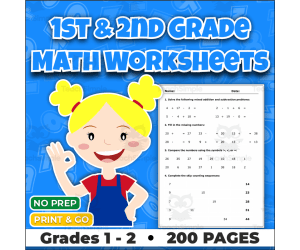
1st & 2nd Grade Mixed Math Worksheets
Math, Grade 1, 2, Worksheets & Printables, Workbooks, Worksheets
These printable math worksheets provide a variety of exercises designed to help first and second grade students strengthen their arithmetic skills and build confidence through regular practice. Students will work on mixed addition and subtraction, missing numbers, number comparisons, and skip counting sequences. The activities encourage independent thinking, improve accuracy, and reinforce essential math concepts. What’s Included Mixed addition and subtraction problems Fill-in-the-missing-number exercises Comparing numbers using greater than (>), less than (<), and equal to (=) symbols Skip counting sequences Skills Students Will Practice Addition and subtraction Number sense and number relationships Identifying missing numbers Comparing numbers Recognizing number patterns and skip counting Improving calculation accuracy Perfect For First and second grade classrooms Math centers and independent work Homework assignments Homeschooling Extra math practice and review Why Use These Worksheets? Students write their answers directly on the worksheets, making the activities easy to complete independently or with teacher or parent guidance. The variety of exercises helps keep practice engaging while reinforcing important foundational math skills. Target Grade Levels Grade 1 Grade 2
Author INNA
Rating
Tags 2nd Grade Math Worksheets, Mixed Addition And Subtraction, Addition And Subtraction Practice, Comparing Numbers Worksheets, Missing Numbers Worksheets, Skip Counting Worksheets, Number Sense Activities, Elementary Math Practice, Printable Math Worksheets

CIRCLE NUMBER COLORS - Numbers 1 to 100
Math, Numbers, Kindergarten, Preschool, Grade 1, 2, Worksheets & Printables, Flashcards
Mathematics is a very important area for citizens because we use it every day, for this reason in school learning mathematics should be one of the happiest and most rewarding experiences for children. As the vast majority of psychologists and educational psychologists say, it is important that children in their learning process enjoy the majority of satisfactory experiences so that their learning is much more lasting. For this reason, teachers must strive to use the majority of pedagogical strategies and/or resources. Nowadays, thanks to the internet, teachers can find most of these resources, even for free, and ready to be printed and used in the classroom. 1. Why should teachers use educational materials in the classroom? As is known according to multiple researches, the use of educational material brings many benefits in the classroom. - Speeds up learning mathematics. - Helps students see learning mathematics in a more fun way. - It will make your students use their logical and mathematical skills. 2. In what area of knowledge can it be applied? This pedagogical resource can be applied in the area of mathematics teaching. 3. Should I apply it individually or in groups in my class? I recommend that you use it both ways. If you want to apply it in a group, I suggest you use some extra dynamic or game. Otherwise, if you want to use it individually, I recommend that you make the effort to give each child their set of cards from 1 to 100. 4. What size and format is this resource in? This resource is available in A4 format, in PDF, ready to be printed and/or used. 5. Is it in color or black and white? This document is in colors, to make it much more attractive. 6. Is this resource free or do I have to pay to use it? It's free, so take the opportunity to download it now.
Author EDITORIAL LAURA EDUCA
Rating
Tags Numbers, Flashcards Numbers, Numbers 1 To 100, Circle Numbers

Finger puppets - People in the Stone Age - People in History
Social Studies, First Peoples (Native), Grade 3, 4, 5, 6, Activities
Finger Puppets: People in the Stone Age – Bringing History to Life Immerse yourself in the exciting world of the People in the Stone Age with these creative finger puppet templates! This interactive material brings history lessons to life in a fun and vivid way, while encouraging students' creativity. What's included? The set contains finger puppet templates in two variants: Colorful templates: Ready to cut out and use immediately. Black and white templates: These can be designed and colored by the students themselves. In addition, there are suitable backdrops for finger puppet theater as well as instructions on how the pupils can make a storage bag for their puppets, which they can place in their folder. Who is the material suitable for? The finger puppets are ideal for science and history lessons in grades 3 to 6. They offer an exciting opportunity to discover historical content in a playful and creative way. A wide range of possible applications in the classroom. Here are some ideas on how the finger puppets can be used in the classroom: Role-play: Students can re-enact scenes from Incas history to deepen what they have learned. Dialogues: The students let characters talk to each other and thus develop a more profound understanding of historical contexts. Inventing stories: The students create their own stories based on the People in the Stone Age themes. Presentations: With the finger puppets as a visual aid, students can create lectures about the People in the Stone Age. Group work: Developing scenes or stories together promotes teamwork and social learning. Why finger puppets? Finger puppets are a creative way to bring historical content to life and tangible. They support action-oriented learning, encourage collaboration, and provide students with a playful approach to complex topics. You can find many more finger puppet sets in my TeachSimple shop - e.g. on biblical stories, fairy tales or epochs of history. Best wishes, Die Relitante - Doreen Blumhagen
Author Die Relitante
Tags Finger Puppets, ElementarySchool, MiddleSchool, CreativeLearning, HistoryClass, SocialStudies, MayaCivilization, InteractiveLearning, Crafts, Stone Age
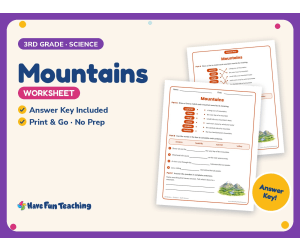
Mountains Worksheet – 3rd Grade Rocks Practice + Answer Key
Science, Earth and Environmental Sciences, Geology, Earth Sciences, Grade 2, 3, 4, Worksheets & Printables, Worksheets
The Mountains Worksheet gives third grade students focused, no-prep practice with rocks. It is a print-and-go science page that fits easily into a mini-lesson, a center rotation, or a quick review day. Learning objective: Students will build accuracy and confidence with rocks through short, focused practice that reinforces what was taught in class. Why it works: Practice like this gives students a chance to try rocks on their own after you teach it. Because the page is quick to complete and easy to review, it fits into almost any part of the school day. What's included: 1 printable worksheet page Clear, student-friendly directions 3 practice sections (Part A to Part C) Answer key (1 page) Cover page How it's organized: The page opens with these directions: "Draw a line to match each mountain word to its meaning." The practice is split into 3 parts, so students can work through it in clear steps. Grade level: Designed for third grade students. It also works well for second grade and fourth grade students who need extra practice or a fresh review. How to use it: It is a great fit for morning work, learning centers, intervention groups, test review, homeschool lessons, and take-home practice. Answer key: An answer key is included, so you can check work quickly or let students self-correct. Teaching tips and variations: Project the page and solve one or two items as a class before students work on their own. Model the first item together, then let students finish the rest independently. Pair students to compare answers and talk through any differences. Skills covered: Earth Science, Rocks, Science File type: PDF, ready to print. Number of pages: 3 (1 worksheet page, 1 answer key page, 1 cover page). Have Fun Teaching creates classroom-tested resources for PreK through 6th grade. Follow our shop to find more science worksheets that pair well with this page. Have Fun Teaching on Teach Simple
Author Have Fun Teaching
Rating
Tags Rocks Worksheet, Rocks, 3rd Grade Science, 3rd Grade Worksheet, Answer Key, Science, Printable Worksheet, Rocks Practice, Science Worksheet, No Prep

RI.5.1 Fifth Grade Common Core Lesson
ELA, Reading, Common Core, Grade 5, Teacher Tools
This lesson is aligned with the Fifth Grade Common Core standards and will help your students quote accurately from a text when explaining what the text says explicitly and when drawing inferences from the text. This is a great resource for any Fifth Grade teacher looking to help their students improve their reading comprehension skills.
Author Have Fun Teaching
Tags Inference, Main Idea, Reading Comprehension
Taxes & Paychecks – Real-World Simulation Sheets
Social Skills, Special Resources, Life Skills, Social Emotional Learning (SEL), Social Studies, Economics, Math, Money, Measurements, STEM, Grade 6, 7, 8, 9, 10, 11, 12, Workbooks, Worksheets & Printables, Worksheets, Teacher Tools, Quizzes and Tests, Quizzes, Tests, Literacy Readers, Lesson Plans, Word Searches
Get Ready To Unlock Real Life Know How In Finance By Teaching Students About Taxes Made Simple, Paychecks, And Managerial.Learn and Use Your Skills In The Real World Without Hosting A Class In Your Community With This All-Encompassing Feature Rich Tax And Paycheck Unit. Do you ever just wish to bring in Real Life Math, teach students valuable life long skills, make it relatable, and teach students about the relationship between abstract developement of numbers versus actual application of numbers in the real world? If you do; THIS IS the complete all-inclusive, no prep repititive unit that you needed to discover to teach your middle schoolers all about taxes, paychecks; found out that you CAN earn money with this comprehensive written unit. How can we make something that seems overwhelming and complicated, easier, and more enjoyable? By using an engaging and student centered material to inform and educate your students about understanding their actual earnings (Net Pay) before they get their first paycheck. This will help your middle school students view their paychecks as an indication of successful involvement within the work force against societal standards of financial obligation by then being empowered after having deliuered when they felt more discouraged previously. This is the ultimate teaching plan; a tried and true, 5-day-lesson plan that is intended to sufficiently prepare your students for their future by creating an opportunity for them to be able to view themselves as successful in the world of finance and less anxious about obtaining those same values. This product will benefit students in grades 6-9 who are studying math (especially for applying percentages/real-world scenarios), financial literacy, life skills and/or career exploration, civics and economics (to comprehend how tax money works within society), and in cooperative homeschool environments. Including the 34-page (pdf only) detailed phase one: core content and theory guide which explains the differences and similarities between gross and net, overtime, FICA, federal and state taxes and voluntary deductions. You’ll want to use this as part of teacher preparation materials or to supplement any students who are classified as advanced readers. Phase 2: Workbook for Students (10 Workbooks) Workbooks from 1 to 10 will provide instructions and examples for answering the following: 1. Understanding the structure of a paycheck (Worksheet #1). 2. Finding gross pay for various given situations (Worksheet #2). 3. All about FICA (the intergenerational contractual agreement) (Worksheet #3). 4. What to expect on your federal and state income tax return (Worksheet #4). 5. What the deduction from your paycheck is, to whom you can give it, and the effect of giving (Worksheet #5). 6. Bringing everything together to calculate the net pay for the paycheck (Worksheet #6). 7. What effect sales tax has on the consumer (Worksheet #7). 8. The basics of how property taxes impact local communities (Worksheet #8). 9. Understanding Form W-4 and Form W-2 (Worksheet #9). 10. Understanding the basics of the consumer and their role in the economy (Worksheet 10). Phase 3: Teaching Resources & Visuals High contrast visuals in black and white that can be printed and used are; diagrams of the paycheck pipeline, the anatomy of a paycheck, and where the taxes are sent. Also, a complete answer key will give the teacher all of the answers and how to create them from the 10 workbooks. Lastly, there will be a full guide for implementation by the teacher that includes the pacing guide (5 days), daily lesson objectives, daily lesson activities, weekly lesson discussion prompts, and how to differentiate lessons for children needing scaffolding or extensions. Allow your students to have the knowledge necessary to make a successful transition into their adult lives at home and in the community. Download this print and go unit today to help your students become knowledgeable, confident participants in the economy! Why Schools/Parents Especially Like It : Building Real-Life Skills - This program teaches students a real-world, practical skill that they will use starting the day they receive their first paycheck, laying the groundwork for a lifetime of future financial success. Connecting Civics & Math - This project successfully connects important math concepts (percentages) with key civics lessons that teach students how taxes are used to support the communities they live in, making learning much more effective and relevant to students. Comprehensive & No Preparation - This program is a complete unit that is ready to use; including the lesson plan, student worksheets, visuals, answer keys and 5-day lesson plans teachers will have more time to plan for other subjects. Empowering & Reducing Students’ Anxiety - The confusion caused by the amount of information presented on pay stubs and issues related to deductions is replaced by clarity and control over their finances with an understanding of what many of those deductions mean, allowing them to view themselves as part of and contributing to our economy. Promoting Critical Thinking - Students will build critical thinking skills through discussions about capstone simulations and ethics (i.e., considering progressive taxation), as well as developing the ability to analyze and evaluate many complex financial situations beyond basic computation. Mainly: - Middle School Math: Excellent resource for %'s and decimals; includes real-life problems. - Pre-Algebra or Consumer Math in HS (9th grade): Great introduction or summary. - Financial Literacy in HS or MS: Core unit of any financial literacy curriculum. - Life Skills/Career Readiness: Essential info for every student getting ready to work. - Civics/Economics: Excellent connection between personal finance and how government/public services are funded. Terms of Service/Copyright: Copyright is with Syed Hammad Rizvi. All rights reserved. If used in the classroom, this resource can only be used once per teacher. There is no sharing, alteration, distribution or selling of any portion of this resource. For example, you may not post this resource on the internet for others to view and download. If you wish to share this resource with colleagues, please order additional licenses at Teachsimple. Thank you for adhering to the above terms of use. This product is proudly created by Syed Hammad Rizvi.
Author Creative Book Store
Rating
Tags FinancialLiteracy, RealWorldMath, LifeSkills, UnderstandingTaxes, Paycheck, ConsumerMath, PersonalFinance, Economics, MathLesson, Civics
Slopes and Graphs Editable PowerPoint 8.EE.B.6
Math, Algebra, Grade 8, Presentations, Teacher Tools
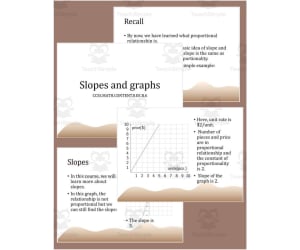
Slopes and Graphs Editable PowerPoint 8.EE.B.6 PowerPoint Description: Slopes and Graphs Editable PowerPoint 8.EE.B.6 is a comprehensive, in-depth educational supplement for algebra teachers teaching grade 8 pupils. Displaying information on 33 slides, it elaborates the connections between slope, unit rate, parallel lines and constant of proportionality. It provides a thorough learning experience by explaining complex terms and showcasing their applications. This tool makes optimal use of parallel lines along with similar triangles to indicate that the slope remains constant irrespective of selected points. Note: This resource can be customized to suit different classroom settings since it's presented in an editable Microsoft PowerPoint format. Instructions can be given during full-class discussions or smaller groups for problem-solving exercises. User versatility: Homeschoolers will find this module helpful whether used independently or as additional material enhancing fundamental algebraic principles. Pupils may use the PPT as homework – providing them further opportunities to assess each concept at a pace comfortable for them – improving understanding over time. Slopes and Graphs Editable PowerPoint 8.EE.B.6: Key Benefits: Liberates educators from exhaustive lesson planning while ensuring academic honesty necessary for advanced math learners developing foundational skills significant for future studies. An engaging tool transitioning student understanding from theory protocols into realistic applications effortlessly integrating proven instructional methods with modern technology features.
Author TheBrightestKid
Tags Slope, Unit Rate, Constant Of Proportionality, Parallel Lines, Similar Triangles

Word Puzzles Crossword Wordsearch Anagram CRAFTS
Special Resources, ELA, Special Education Needs (SEN), Speech Therapy, Language Development, ESL, Writing, Handwriting, Vocabulary, Not Grade Specific, Crosswords Puzzles, Worksheets, Worksheets & Printables
Word Games with Puzzles | Crossword Wordsearch Anagram | CRAFTS . Designed for usage across multiple grade levels, this teaching resource known as 'Word Games with Puzzles' seamlessly integrates essential vocabulary study with an engaging CRAFTS theme . This resource is incredibly versatile and adaptable to fit a variety of learning environments . It invites educators in public schools, or even those that teach in a homeschooling setting, to invigorate their Language Arts curriculum while catering to educational trends including Special Education Needs ( SEN ), Speech Therapy, ESL instruction, and Life Skills lessons . The primary contents of the package comprise : two matching activities ( words to pictures & vice versa ) . a word search board with real photos or illustrations on top of the page . two quiz versions . anagrams worksheet ( with photos or color illustration images ) . a wheel of images to spin, cut and paste or laminate as flash cards . a wheel of words to spin, cut and paste or laminate as flash cards . two writing boards (blank and lined) . The word search board challenges pupils further by letting them identify key keywords hidden amongst many irrelevant ones - offering both challenge and fun . Supplemental Materials include : Real photos along with whimsical illustrations serve dual purposes; they function not only as flashcards but also allow teachers to create visual folders thus adding versatility and creativity into everyday teaching circumstances . All elements included in this resource can double down both as part of your center's resources library or can be handed out on individual bases hence serving multiple needs, from group- works to homework assignments . This brings you the valued flexibility everyone appreciates when it comes down classroom management - making this product extremely well- rounded . 12 page pdf .
Author WORDS ASIDE
Tags Vocabulary Study, Handwriting Practice, Word Search, Visual Aids, Word Wall, Crossword, Esl, Independent Work, Centers, Words Aside
Reducing Your Community's Carbon Footprint: Reduce, Reuse, Recycle, and Plant Gr. 5-8
Science, Earth and Environmental Sciences, Environmental Science, Grade 5, 6, 7, 8, Teacher Tools, Lesson Plans
Reducing Your Communitys Carbon Footprint: Reduce, Reuse, Recycle and Plant Gr. 5-8 An engaging educational resource, designed primarily for grades 5 to 8 students. It aims to enhance environmental consciousness by offering profound insights into the community's carbon footprint and its effect on global climate change. Evaluation of cause-and-effect incidents: The resource encourages learners to assess the sequence of events that stem from simple routines like commuting to work or substantial implications like reducing island size. Versatile usage: This material is adaptable across different learning environments - ideal not only for whole-group instructions in conventional classrooms but also for small group activities, homework assignments and interactive online sessions. Inspiring transformations: Beyond highlighting the adverse consequences of climate change, this curriculum narrates how Cubans adopted a completely fossil fuel-free farming system within a decade and discusses urban heat island effects caused by urbanization with fact-based analyses. Bloom’s Taxonomy and STEAM initiatives guidelines compliance: This resource marries enlightenment with engagement through crossword puzzles, quizzes which offer self-assessment opportunities with carbon footprint calculators as per Bloom’s Taxonomy guidelines. The curriculum is available as a downloadable PDF format file ensuring easy access and adaptable printing choices whether you wish to use it remotely or in a physical classroom environment. Specially formulated for Environmental Science subject under Science courses, Reducing Your Communitys Carbon Footprint: Reduce, Reuse, Recycle, and Plant Gr. 5-8 offers an intriguing yet pragmatic perspective on environmental conservation promoting sustainable lifestyle habits ensuring us all a healthier future.
Author Classroom Complete Press
Tags PDF