



3,988 products added recently
Page 670 - Newest Teaching Resources

 Show filters
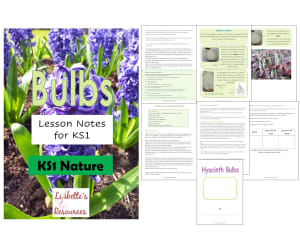
Planting Bulbs
Science, Life Sciences, Nature & Plants, Grade 1, Teacher Tools, Lesson Plans
Planting Bulbs Planting Bulbs is a dynamic teaching resource focused on first-grade students' introduction to the world of botany. This lesson plan is created around planting hyacinth bulbs, offering an interactive and hands-on science education opportunity. Aims and objectives This lesson enables students to observe and compare, thus growing their natural curiosity. Furthermore, it offers in-depth explanations into: Understanding what a bulb is. The process of bulb growth. What is included in the pack? The material comes bundled in a transparent ten-page PDF file format that interlaces useful insights with practical application opportunities. This ensures not only theoretical understanding but also the formation of concrete concepts through actual interaction with plants. As part of its user-friendly nature, this guide includes extendable activities aimed at relative exploration and richening understanding: Versatile activities are adaptable for whole group instruction or smaller focus groups. There is the potential to modify for classwork or homework assignments promoting independent investigations. Also included are ways for comprehensive questions and recording methods that underpin student analytical capabilities while also instilling excellent research practices from their educational journey's onset. This guided approach caters right from understanding botany's basics like bulbs to observable growth over several weeks – making this lesson plan useful throughout one academic term's period in autumn. Whether you are a public school teacher wanting your students engaged deeply into scientific study or homeschoolers looking for authentic materials that offer practically appealing learning experiences within controlled environments – this product oozes flexibility! Conclusively, this custom-designed tool perfectly fits First Grade science curricula needs, transforming the Botany lessons into a fun-filled routine endeavour rather than a monotonous theory activity ! Who is it for? First-grade students Home educators What format is the Planting Bulbs lesson in? It comes as one PDf with 10 pages
Author Lilibette's Resources
Tags Planting Bulbs, Botany, Hands-on Learning, Science Education, Observation, First Grade Science, Bulbs, Plants, Autumn

Tecumseh- A Warrior's Speech- = Analysis, Questions, Assessment
Social Studies, First Peoples (Native), History, History: USA, Grade 6, 7, 8, 9, Assessments, Teacher Tools
History comes alive in your 6th to 9th grade classrooms when you introduce compelling primary source texts for analysis. But analyzing a primary source document can be challenging for your students to understand. This 33-page resource, Tecumseh- A Warrior's Speech- Primary Source Analysis, Questions, Discussion, and Assessment offers teachers two lesson plans : an introduction or review of what primary sources are and how to analyze a primary source document by reading it 4 times for specific purposes. The 4-Reads approach has students reading, discussing, and answering questions to understand the context and origin of the document, discover the Big idea, establish the purpose or argument, and to read like a historian. Student discussions are engaging, lively, and collaborative as they delve deeply into understanding Tecumseh's speech, his reasoning and values as the indigenous tribes confronted encroaching land settlement and theft from white settlers. The lesson comes with 2 assessments : a multiple choice and short answer assessment and a creative "Say, Mean. Matter" assessment in which students choose a quote, passage, or paragraph from the speech, explain what it means, and analyzes why it matters. A copy of the primary source, Tecumseh- A Warrior's Speech as well as a paraphrased version is included so you can provide differentiated instruction for your ELL, RSP, 504, and struggling readers. The standards- aligned lesson includes the following: objectives and learning targets an Essential Question: How do indigenous perspectives on land and nature challenge dominant narratives of ownership and exploitation? 3 Guiding Questions: 1. How does Tecumseh challenge the concept of land ownership in his speech? 2. What arguments does Tecumseh make regarding the interconnectedness of land and air? and 3. How does Tecumseh's speech reflect indigenous perspectives on the environment and natural resources? A convenient "About this Resource" orients teachers to everything included in the lesson A link to the force copy of the google doc, which you can edit. Lesson Plan 1: Primary and Secondary Sources Lesson Plan 2: Four Reads: Reading and Analyzing a Primary Source Document Primary Source Document Original and Paraphrase: 4 Reads Questions and Answer key Multiple choice and Short Answer Assessment and Answer Key Say, Mean, Matter Assessment
Author Intentional Teaching and Learning
Tags Primary Source Analysis, Assessment, Differentiation, Thinking Like A Historian, Indigenous History, Critical Thinking Questions, Collaborative Discussion, War Of 1812, 6th-9th Grades

Tecumseh's Speech to the Osage- Analysis, Questions, Assessment
Social Studies, First Peoples (Native), History, History: USA, Grade 6, 7, 8, 9, Assessments, Teacher Tools
Historical primary source documents make history come alive in our Social Studies classrooms, but students need to be taught the strategies and skills to make meaning of them. This 36-page lesson plan, Tecumseh's Speech to the Osage- Primary Source Analysis, Questions, Discussion, and Assessment, provides teachers with all the materials and strategies they need to help their 6th through 9th grade students navigate a difficult and important speech in American History. Tecumseh, a Shawnee leader, was a masterful orator who used his skills to convince other tribes to join him in resisting white settler encroachment on indigenous land. As your students navigate the text, through 4 different readings, they will build an understanding of the context and origin (reading 1), the Big Idea (reading 2), the purpose and argument (reading 3) and will draw important conclusions as they think like a historian. (reading 4). Besides the 4-Reads lesson plan, there is a lesson plan in which teachers can introduce or review what primary source documents are and why they are important. The lesson includes Tecumseh's speech and a paraphrased version so you can differentiate for your ELL, RSP, 504, and struggling students. The standards- aligned lesson includes the following: objectives and learning targets an Essential Question: What strategies for resistance and unity emerge from indigenous voices in the face of colonial expansion? 3 Guiding Questions: 1. How does Tecumseh appeal to a sense of shared identity and purpose among indigenous peoples in his speech? 2. What specific actions does Tecumseh propose to resist encroachment on indigenous lands? 3. How did Tecumseh's call for unity influence indigenous resistance movements during the early 19th century? A convenient "About this Resource" orients teachers to everything included in the lesson A link to the force copy of the google doc, which you can edit. Lesson Plan 1: Primary and Secondary Sources Lesson Plan 2: Four Reads: Reading and Analyzing a Primary Source Document Primary Source Document: Original and Paraphrase: 4 Reads Questions and Answer key Multiple choice and Short Answer Assessment and Answer Key Say, Mean, Matter Assessment
Author Intentional Teaching and Learning
Tags Indigenous History, Critical Thinking Questions, Collaborative Discussions, Assessment, American History, Primary Source Analysis, War Of 1812, 6th-9th Grades, Thinking Like A Historian

SH Phonic Worksheets for Early Years/Intervention/dyslexia
Special Resources, ELA, Special Education Needs (SEN), Language Development, Phonics, Reading, Grade 1, 2, 3, Worksheets & Printables, Worksheets
About This Product This is a pack of 30 Phonic SH worksheets to teach the digraph SH, specially designed for those with special needs, including those with dyslexia or who may be suspected of being dyslexic, but will work equally well with young learners in Kindergarten/EYFS/Y1. These sheets are LETRS/Science of Reading and UK GOV requirements aligned. These worksheets also align with the most popular phonic programmes, including RWI and Letters and Sounds. Who are these worksheets for? I have written them for pupils who struggle with processing information - especially sounds. This includes children who are DYSLEXIC or have ANY other kind of processing disorder. Such children may have failed with other methods of teaching phonics. Such pupils need activities that: ·are highly structured - one tiny step at a time building on the one before using only a limited number of words to start with and only using words that the child has already learnt to sound out, with no nasty surprises. ·Have only a little on each pageas these pupils tire easily. What makes these worksheets special? I have a powerful three-step process which I use with my special needs pupils, which is worked out throughout the worksheets: 1. See it!where we focus on becoming aware of the new sound in words. This involves first hearing the new sound in words and then seeing it in words (tracking). 2. Sound-it-out!Having learnt to see the new sound in words, we learn to sound out these words to read and write them. We begin by usingsound-it-out boxesfor reading and spelling which help the child to segment the word before blending the sounds. Once the child can read and write individual words, we work on fluency by building familiarity with the common words in the new sound family. Once the child can sound the words out to read and spell confidently, we move on to recognising them/using them in longer reading and dictation passages, as soon as the child is able. I provide 2 reading passages with comprehension exercises and one dictation passage, with a page in the workbook dedicated to it, with room for a picture, which again cements understanding. 3. Write it! Incorporated into the above two steps, we constantly write the new sound. This adds a multi-sensory dimension to our work - we see with our eyes, we sound it with our mouth parts and voice, and then we move by writing. All three steps work together to help the child feel in control of his/her learning and to become a successful, confident learner. We finish each sound with a dictation which culminates our work before we move on to the next sound. I try to give this a week after we finish the book, to act as revision. The dictation: Read this passage to your pupil, who should write it. Have the child read his/her work and check for errors. Make sure the writing is completely accurate before saying the child has finished, including full stops and capital letters correctly used. Flashcards are included. What is included in the pack: 30 Activities 2 Games A word search Flashcards with room to add your own words Please note: This pack is in a series: Find the bundle here: https://teachsimple.com/product/phonic-worksheets-for-special-needs-bundle-highly-structured I do hope others find these Special Needs Phonic worksheets helpful for their pupils with ordering and processing difficulties!
Author Lilibette's Resources
Rating
Tags Special Needs Phonics, Dyslexia Phonic Worksheets, Phonic Worksheets For Dyslexics, Reading Intervention, Sh Worksheets, Sh Digraph, Phonics, Dyslexia
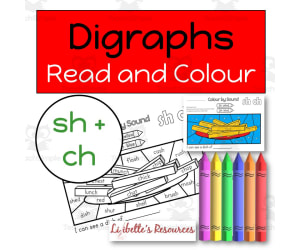
Digraphs Sh + CH: Read and Colour
Special Resources, ELA, Language Development, Phonics, Reading, Kindergarten, Preschool, Worksheets & Printables, Worksheets
This fun, Read and Color worksheet for SH/CH words is an excellent means of encouraging children to become familiar with new digraphs, especially SH and CH which many children confuse. The child will need to scan th words to find those that begin with SH and those that begin with CH and then decode the words. What is included in the pack? One PDF sheet for the TH digraph. What do the worksheets involve? An adult should instruct pupils as to how to colour-code the crayons, by the code given. An adult will need to help with this as the children are not expected to be able to read the colour names. The child should then read the words to an adult (you will want to ensure they get it correct the first time and not make mistakes). The child colour the picture, reading the words and checking against the code to see which colour to each shape. Children can easily work on the sheet unaided once they have been instructed and the words colour-coded, although, with children with special needs, it is strongly suggested that an adult works with the child for maximum benefit. How to use As each new blend is introduced the teacher has several aims: The child should be thoroughly familiar with the new digraph - to recognise it wherever it is seen; To be able to track the new digraph in words; To be able to decode words containing the new digraph easily To distinguish a digraph from other similar digraphs This fun read and colour activity provides help for all four! Pupils will need as much practice as they can to achieve thefour things listed above and for some children, this can be tedious; the teacher must think of creative ways to give as much repetition as needed and to keep the child engaged. This fun Read and Colour sheet is ideal as a new way to engage the child: the child will be reading and re-reading and in doing so may even become familiar with the words, which will aid reading fluency. Who are the initial blends Find and colour worksheets for? Young learners Those with a special need Due to their non-babyish nature , they can be successfully used with older ESL/EFL pupils. Answer keys: An answer key is not necessary for this activity.
Author Lilibette's Resources
Tags Read And Colour, Colour By Sound, Phonic Workheets, Digraphs, Special Needs, Sh Digraph, Ch Digraph, Sh And Ch

Digraphs SH: Read and Colour
Special Resources, ELA, Language Development, Phonics, Reading, Kindergarten, Preschool, Worksheets & Printables, Worksheets
This fun, Read and Color worksheet for SH words is an excellent means of encouraging children to become familiar with a new digraph. The child will be scanning the picture for each word as it is coloured and colouring according to the code given. The child will be thrilled by the finished picture! What is included in the pack? One PDF sheet for the SH digraph. What do the worksheets involve? An adult should instruct pupils as to how to colour-code the words, by the code given. An adult will need to help with this as the children are not expected to be able to read the colour names. The child should then read the words to an adult (you will want to ensure they get it correct the first time and not make mistakes). The child colours the picture, reading the words and checking against the code to see which colour to each shape. Children can easily work on the sheet unaided once they have been instructed and the words colour-coded, although, with children with special needs, it is strongly suggested that an adult works with the child for maximum benefit. How to use As each new blend is introduced the teacher has several aims: The child should be thoroughly familiar with the new digraph - to recognise it wherever it is seen; To be able to track the new digraph in words; To be able to decode words containing the new digraph easily. This fun read and colour activity provides help for all three! Pupils will need as much practice as they can to achieve the three things listed above and for some children, this can be tedious; the teacher must think of creative ways to give as much repetition as needed and to keep the child engaged. This fun Read and Colour sheet is ideal as a new way to engage the child: the child will be reading and re-reading and in doing so may even become familiar with the words, which will aid reading fluency. Who are the initial blends Find and colour worksheets for? Young learners Those with a special need Due to their non-babyish nature , they can be successfully used with older ESL/EFL pupils. Answer keys: An answer key is not necessary for this activity.
Author Lilibette's Resources
Tags Read And Colour, Colour By Sound, Phonic Workheets, Digraphs, Special Needs, Digraph TH, Digraph Workhseets

Digraphs TH: Read and Colour
Special Resources, ELA, Language Development, Phonics, Reading, Kindergarten, Preschool, Worksheets & Printables, Worksheets
This fun, Read and Color worksheet for TH words is an excellent means of encouraging children to become familiar with a new digraph. The child will be scanning the picture for each word as it is coloured and colouring according to the code given. The child will be thrilled by the finished picture! What is included in the pack? One PDF sheet for the TH digraph. What do the worksheets involve? An adult should instruct pupils as to how to colour-code the words, by the code given. An adult will need to help with this as the children are not expected to be able to read the colour names. The child should then read the words to an adult (you will want to ensure they get it correct the first time and not make mistakes). The child colours the picture, reading the words and checking against the code to see which colour to each shape. Children can easily work on the sheet unaided once they have been instructed and the words colour-coded, although, with children with special needs, it is strongly suggested that an adult works with the child for maximum benefit. How to use As each new blend is introduced the teacher has several aims: The child should be thoroughly familiar with the new digraph - to recognise it wherever it is seen; To be able to track the new digraph in words; To be able to decode words containing the new digraph easily. This fun read and colour activity provides help for all three! Pupils will need as much practice as they can to achieve the three things listed above and for some children, this can be tedious; the teacher must think of creative ways to give as much repetition as needed and to keep the child engaged. This fun Read and Colour sheet is ideal as a new way to engage the child: the child will be reading and re-reading and in doing so may even become familiar with the words, which will aid reading fluency. Who are the initial blends Find and colour worksheets for? Young learners Those with a special need Due to their non-babyish nature , they can be successfully used with older ESL/EFL pupils. Answer keys: An answer key is not necessary for this activity.
Author Lilibette's Resources
Tags Digraph TH, Th Worksheets, Read And Colour, Colour By Sound, Phonic Workheets, Digraphs, Special Needs

informational Reading: Spring: Science Reading Passages Magazine Style
ELA, Reading, Science, Life Sciences, Nature & Plants, Animals, Basic Science, Biology, Preschool, Grade 1,
The Informational Easy Reader Science Passages: Spring contains 4 spring-related, easy-to-read science articles in magazine format for ages 6 to 8, but which are also suitable for older special needs children. Help children develop a love of reading while stimulating their minds to learn about the world around them! Help children to take learning outside the classroom. For some, you may light a spark that will encourage a hobby, or even lead to a child becoming an eminent scientist! This is a product that you can use to suit your own purpose! Children love to see how they can read REAL information. For some children, factual information is more of a stimulus to read than fiction. Try it on your reluctant readers and see! This volume contains articles on the following: Spring showers: Find out what they are and why the plants love them! Blackbirds: Learn about blackbirds and their nesting habits Spring Butterflies: Find out which butterflies to look for and how to identify them The Pond in April: Learn of three easy-to-see pond creatures Plus how to make butterflies - a fun activity to follow up These science articles/passages have many uses: As a home-education nature study curriculum , Charlotte Mason style For Nature study As an information book - there is a front cover and contents page like a real book. As reading comprehension passages to support autumn project/topic work. You are free to make your own reading comprehension worksheets based on these articles. To stimulate early readers to read - the text is broken into small chunks which encourages early readers to tackle longer texts. To encourage older struggling readers - the format is reader-friendly and the colour photos bring learning to life. Send home to consolidate classwork and for parents to enjoy learning alongside children (many parents are amazed at how much they learn from these articles too!) Many other uses - only limited by your imagination To facilitate the teaching of 'Informational text' Standards Suitable for use in the UK. For use by: Parents Teachers Home-educators Private tutors Anyone! What does the Informational Easy Reader Science Passages: Autumn contain? 1 PDF e-book. There are four double-page articles, in full colour, plus double-page instructions for making a moss terrarium. Print as a book or as individual articles, either on A3 paper, or each page separately on A4 paper.
Author Lilibette's Resources
Tags Reading Comprehension, Science, Reading Comprehension Passages, Informational Easy Reader, Reluctant Readers, Spring, Informational Reading, Nature Study, Homeschool, Charlotte Mason Nature Study

ESL Chat: "Can you...?" Board Game
Special Resources, ELA, Language Development, ESL, Grammar, Not Grade Specific, Activities, Games
Looking for something to help your ESL students? This is a perfect pair work activity that can help your students increase their speaking skill in a super fun way! Enhance your students' grammar, comprehension, and speaking skills with this board game ! With 30 unique and interesting questions, this resource fosters engaging dialogue and meaningful practice. Instructions Pair Work Activity: "Can you...?" Objective: Practice the grammar structure "Can you...?" through interactive pair work. Materials Needed: Pair Work cards with various "Can you...?" scenarios. Timer Step 1: Assign student pairs and provide each pair with a card. Step 2: Teach the Structure: Briefly introduce the grammar structure "Can you...?" to the students. Provide examples and encourage students to form their own sentences using the structure. Step 3: Pair Work Activity: Both students take turns answering the question using "Do you prefer A or B?" and provide a reason for their choice. Dependent upon level, encourage students to engage in a meaningful conversation and ask follow-up questions. Monitoring: Circulate among the pairs to monitor their progress and provide assistance as necessary. Offer feedback on grammar, pronunciation, and fluency. Activity End: Students perform the task until the end of allotted time or they finish their cards. Tips: Encourage students to elaborate on their answers and provide reasons for their preferences. Emphasize the importance of active listening and encouraging their partner to speak. Provide positive reinforcement and praise correct usage of the grammar structure.
Author Chat Toolbox
Tags Esl, Games, Actvities, Efl, Ell, Literacy, Reading, Speaking, Conversation
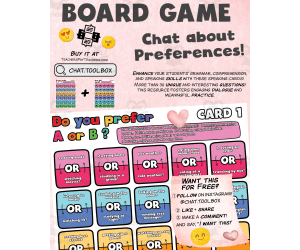
ESL Chat: Preferences using "Do you prefer A or B?" Board Game
ELA, Language Development, ESL, Not Grade Specific, Activities, Games
Looking for something to help your ESL students? This is a perfect pair work activity that can help your students increase their speaking skill in a super fun way! Enhance your students' grammar, comprehension, and speaking skills with this board game ! With 30 unique and interesting questions on each card, this resource fosters engaging dialogue and meaningful practice. Instructions Pair Work Activity: "Do You Prefer A or B?" Objective: Practice the grammar structure "Do you prefer A or B?" through interactive pair work. Materials Needed: Pair Work cards with various "Do you prefer A or B?" scenarios. Timer Step 1: Assign student pairs and provide each pair with a card. Step 2: Teach the Structure: Briefly introduce the grammar structure "Do you prefer A or B?" to the students. Provide examples and encourage students to form their own sentences using the structure. Step 3: Pair Work Activity: Both students take turns answering the question using "Do you prefer A or B?" and provide a reason for their choice. Dependent upon level, encourage students to engage in a meaningful conversation and ask follow-up questions. Monitoring: Circulate among the pairs to monitor their progress and provide assistance as necessary. Offer feedback on grammar, pronunciation, and fluency. Activity End: Students perform the task until the end of allotted time or they finish their cards. Tips: Encourage students to elaborate on their answers and provide reasons for their preferences. Emphasize the importance of active listening and encouraging their partner to speak. Provide positive reinforcement and praise correct usage of the grammar structure.
Author Chat Toolbox
Tags Esl, Ell, Literacy, Speaking, Communication, Reading, Cards, Learning, English
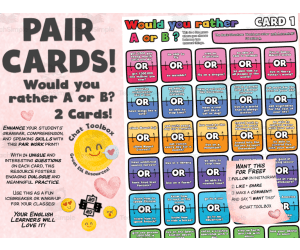
ESL Chat: Preferences, "Would you rather A or B?" Board Game
ELA, Language Development, ESL, Not Grade Specific, Activities, Games
Would you rather buy this print right now and solve all your problems or scroll a lot looking for something better? Stop scrolling here! This pair work activity will help your young learners increase their speaking skill in a super fun way! Enhance your learners' grammar, comprehension, and speaking skills with this activity ! With 30 interesting questions on each card, this resource provides engaging dialogue and meaningful speaking practice. Instructions Pair Work Activity : "Would you rather A or B?" Objective: Practice the grammar pattern "Would you rather A or B?" through interactive pair work. Materials Required: Pair Work cards with various "Would you rather A or B?" scenes. Timer First 1: Assign student pairs and provide each pair with a card. Second 2: Teach the Pattern: Briefly introduce the grammar pattern "Would you rather A or B?" to your students. Give examples and encourage students to form their own sentences using the pattern. Third 3: Work in Pairs: Sstudents take turns answering the question using "Would you rather A or B?" and provide a reason for their choice. Dependent upon level, support students to engage in a meaningful conversation and ask follow-up questions. Monitoring: Walk among the pairs to monitor their progress and provide help if necessary. Give feedback on grammar, pronunciation, and fluency. Activity End: Learners perform the activity until the end of allotted time or they finish their cards. Tips: Encourage learners to elaborate on their answers and provide reasons for their preferences. Tell the importance of active listening and encouraging their partner to speak. Provide positive feedback and praise correct usage of the grammar pattern.
Author Chat Toolbox
Tags Esl, Ell, English Language, Zoom, Literacy, Online Lesson, Handout, Pair Work, Grammar
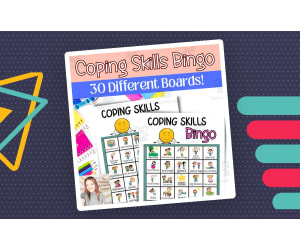
Coping Skills Bingo Counseling Game | Social Emotional Activity
Special Resources, Social Emotional Learning (SEL), Life Skills, Grade 1, 2, 3, 4, 5, Activities, Games
Are you wanting a counseling game that will spice up your coping skills lessons in your counseling sessions? This Coping Skills Bingo Game is perfect for keeping engagement high in your sessions while also teaching your students all about different coping skills! This coping skills activity is the perfect counseling activity. With 46 different calming strategies, students will have a chance to practice calming down their big feelings while getting to play a classic game with a fun twist! This coping skills game includes calling cards that state the skill and then students are encouraged to practice that skill if they have it on their board! This bingo game also includes 30 bingo cards with different types of grids to support students with different attention spans and skill levels so you can differentiate how you would like! What is Included: ⭐ 10 3x3 Bingo Cards ⭐ 10 4x4 Bingo Cards ⭐ 10 5x5 Bingo Cards ⭐ 46 Different Coping Skills ⭐ Ink-Friendly Copy Why Is It A Must-Have?: ❤️ Helps students identify & practice different coping skills ❤️ Helps expand different calming strategies for students ❤️ Increases engagement in your sessions ❤️ Perfect For Different Types of Learners Some Ideas for Use Are: ⭐ Individual Lessons ⭐ Small Groups ⭐ Whole Class Lessons Help your students expand their coping skills toolbox, identify the coping skills that work for them, and grow to love social emotional learning with this bingo game !
Author The Feelings and Friends Teacher
Tags Coping Skills, Coping Skills Activity, Coping Skills Game, Coping Skills Bingo, Counseling Games, Counseling Activities, Calming Strategies, Bingo Game, Social Emotional Learning Activities
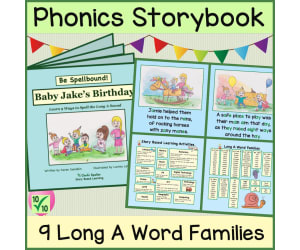
Phonics eBook Story for Long A Vowel Sound + Spelling Activities and
ELA, Language Development, Phonics, Spelling, Preschool, Grade 1, 2, Activities
Learning to spell Long A words is fun and interesting with this engaging phonics story full of words showing how the Long A vowel sound can be spelled in 9 different ways. The story contains 103 Long A words, with the Long A letters printed in contrasting green for easy decoding. The storybook also includes differentiated word family lists, a reading comprehension quiz, homonyms, high frequency sight words, play based and cross curricular activities and a colouring page. Your students will easily develop phonemic awareness, learn to decode sounds in words and build knowledge of letter sound correspondence. In this engaging story, 'Baby Jake's Birthday', Jamie and Jane are in charge of the games at Baby Jake's first birthday party. Children will love reading about the party fun while learning to spell at the same time. Our unique approach to phonics combines systematic spelling with story based learning to bring spelling to life and provides the context for phonics to make sense. Re-energize your students and make spelling time a happy and successful time for all! Please note: these are different to decodable readers for whole words. This phonics story book focuses on decoding a focus sound. Long A letters are printed in contrasting green to scaffold and support students learning to spell. In This Resource: engaging 22 page full page phonics picture book story 103 Long A spelling words to learn 9 different ways the Long A sound can be spelled: 'a', ai', 'ay', 'a_e', 'ea', 'ei', 'eigh', 'e_e' and 'ey' word family list tricky words reading comprehension homonyms grapheme chart story on one page coloring page spelling activity ideas cross curricula story based learning activities Print or View PDF format to print as booklet or single pages, or view on any screen in single or double page format to suit Note: 2 versions are included to accommodate differences in US and UK/Australian spelling. The following different spellings occur in the story and accompanying activity pages. US/UK: neighbors/neighbours, favorite/favourite, labeling/labelling, coloring/colouring More About Clever Speller, Story Based Learning Breathe life into spelling with this unique story based approach that makes learning to spell easy and fun. Beautifully illustrated phonics picture books are full of words that highlight the many different ways a focus sound can be spelled, making the journey from hearing sounds in words, to knowing all the ways to spell them, clear and easy to understand. Clever Speller is different. No other spelling resource features full length picture books with all the ways to spell a focus sound in the same story. Whole language and phonics work together, to present a perfect mix of old and new that will gain, and keep, student’s attention. Clever Speller applies the rigour of phonics, in the context of whole language, to make sense of crazy English spelling and bring it to life. Traditional picture book style stories showing all the ways to spell a focus sound enable a seamless progression from phonemic awareness to phonics knowledge. Colourful characters and interesting adventures engage and enthral students so that learning to spell, and read, is an enjoyable experience for all. Benefits: Develop phonemic awareness Provide context for phonics to make sense Provide rigour for whole language to be effective Easily learn grapheme phoneme correspondence Enhance retention and recall Save time with planning Cater for different learning styles Differentiate for learning variability Complement any spelling methodology Bridge the gap between leveled readers and authentic texts Engage students with connected and meaningful activities Integrate reading and spelling lessons Features Decodable sound phonics picture books for the short and long vowel sounds 1 book for each short and long vowel sound 73 ways to spell 10 long and short vowel sounds Over 1000 focus sound spelling words Graphemes printed in different color for easy decoding Grapheme charts and word family lists Spelling and integrated cross curricular activities Literal and inferential reading comprehension Homophones, homonyms and homographs High frequency/sight words grouped by focus sounds Printable activities and resources
Author Clever Speller
Tags Phonics Ebook, Phonics Story, Long A Spelling, Long A Word Families, Explicit Phonics, Learn To Spell In Context, Contextual Learning, Story Based Learning
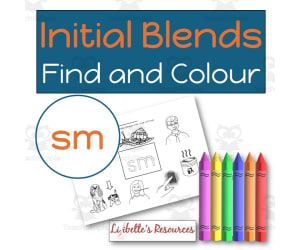
SM Blend Find and Colour Phonics Worksheet to Develop Phonemic
Special Resources, ELA, Special Education Needs (SEN), Language Development, Phonics, Kindergarten, Preschool, Worksheets & Printables, Worksheets
This SM fun, Find and Color worksheet for initial blends is excellent for acquainting children orally with initial consonant blends and helping them develop the necessary phonemic awareness in preparation for more advanced blending work, involving four phonemes. What is included in the pack? One PDF sheet for the SM blend. This is a sample of our pack of 20 activities covering common initial blends which can be found here in one PDF file: less clutter on your computer! What do the worksheets involve? Pupils are instructed to combine the two letters on the worksheet and then look for objects that start with that consonant blend. Then, these items ought to be coloured, leaving the others uncoloured. Children can easily work on the sheet unaided once they have been instructed, although, with those children with special needs, it is strongly suggested that an adult works with the child for maximum benefit. How to use The introduction of the concept of initial blends needs to be done thoroughly. When I work with children, especially those with a special need, I first like to teach children to blend two consonant letters. Then I work on developing the children's phonemic awareness: that being the ability to hear two consonant letters blended at the beginning of a word, easily. This is difficult for some pupils and takes a lot of practice. These worksheets can assist by first encouraging students to blend the two consonant letters and then by helping them to hear the blend at the start of a word. As often as you can, practice blending the letters in each initial blend and encourage the students to follow suit. I find that modelling is key at this stage. Who are the initial blends Find and colour worksheets for? Young learners Those with a special need Due to their non-babyish nature , they can be successfully used with older ESL/EFL pupils. Answer keys: The answer key is included on the sheet, in small print.
Author Lilibette's Resources
Tags Initial Blends, Consonant Blends, Initial Consonant Blends, S Blends, Phonemic Awareness, Phonic Workssheets, Sm Blend

GL Blend Find and Colour Phonics Worksheet to Develop Phonemic
Special Resources, ELA, Special Education Needs (SEN), Language Development, Phonics, Kindergarten, Preschool, Worksheets & Printables, Worksheets
This GL fun, Find and Color worksheet for initial blends is excellent for acquainting children orally with initial consonant blends and helping them develop the necessary phonemic awareness in preparation for more advanced blending work, involving four phonemes. What is included in the pack? One PDF sheet for the GL blend. This is a sample of our pack of 20 activities covering common initial blends which can be found here in one PDF file: less clutter on your computer! What do the worksheets involve? Pupils are instructed to combine the two letters on the worksheet and then look for objects that start with that consonant blend. Then, these items ought to be coloured, leaving the others uncoloured. Children can easily work on the sheet unaided once they have been instructed, although, with those children with special needs, it is strongly suggested that an adult works with the child for maximum benefit. How to use The introduction of the concept of initial blends needs to be done thoroughly. When I work with children, especially those with a special need, I first like to teach children to blend two consonant letters. Then I work on developing the children's phonemic awareness: that being the ability to hear two consonant letters blended at the beginning of a word, easily. This is difficult for some pupils and takes a lot of practice. These worksheets can assist by first encouraging students to blend the two consonant letters and then by helping them to hear the blend at the start of a word. As often as you can, practice blending the letters in each initial blend and encourage the students to follow suit. I find that modelling is key at this stage. Who are the initial blends Find and colour worksheets for? Young learners Those with a special need Due to their non-babyish nature , they can be successfully used with older ESL/EFL pupils. Answer keys: The answer key is included on the sheet, in small print.
Author Lilibette's Resources
Tags Initial Blends, Consonant Blends, Initial Consonant Blends, Phonemic Awareness, Phonic Workssheets, L Blends, Gl Blend

PL Blend Find and Colour Phonics Worksheet to Develop Phonemic
Special Resources, ELA, Special Education Needs (SEN), Language Development, Phonics, Kindergarten, Preschool, Worksheets & Printables, Worksheets
This PL fun, Find and Color worksheet for initial blends is excellent for acquainting children orally with initial consonant blends and helping them develop the necessary phonemic awareness in preparation for more advanced blending work, involving four phonemes. What is included in the pack? One PDF sheet for the PL blend. This is a sample of our pack of 20 activities covering common initial blends which can be found here in one PDF file: less clutter on your computer! What do the worksheets involve? Pupils are instructed to combine the two letters on the worksheet and then look for objects that start with that consonant blend. Then, these items ought to be coloured, leaving the others uncoloured. Children can easily work on the sheet unaided once they have been instructed, although, with those children with special needs, it is strongly suggested that an adult works with the child for maximum benefit. How to use The introduction of the concept of initial blends needs to be done thoroughly. When I work with children, especially those with a special need, I first like to teach children to blend two consonant letters. Then I work on developing the children's phonemic awareness: that being the ability to hear two consonant letters blended at the beginning of a word, easily. This is difficult for some pupils and takes a lot of practice. These worksheets can assist by first encouraging students to blend the two consonant letters and then by helping them to hear the blend at the start of a word. As often as you can, practice blending the letters in each initial blend and encourage the students to follow suit. I find that modelling is key at this stage. Who are the initial blends Find and colour worksheets for? Young learners Those with a special need Due to their non-babyish nature , they can be successfully used with older ESL/EFL pupils. Answer keys: The answer key is included on the sheet, in small print.
Author Lilibette's Resources
Tags Initial Blends, Consonant Blends, Initial Consonant Blends, Phonemic Awareness, Phonic Workssheets, L Blends, FL Blend

FL Blend Find and Colour Phonics Worksheet to Develop Phonemic
Special Resources, ELA, Special Education Needs (SEN), Language Development, Phonics, Kindergarten, Preschool, Worksheets & Printables, Worksheets
This FL fun, Find and Color worksheet for initial blends is excellent for acquainting children orally with initial consonant blends and helping them develop the necessary phonemic awareness in preparation for more advanced blending work, involving four phonemes. What is included in the pack? One PDF sheet for the FL blend. This is a sample of our pack of 20 activities covering common initial blends which can be found here in one PDF file: less clutter on your computer! What do the worksheets involve? Pupils are instructed to combine the two letters on the worksheet and then look for objects that start with that consonant blend. Then, these items ought to be coloured, leaving the others uncoloured. Children can easily work on the sheet unaided once they have been instructed, although, with those children with special needs, it is strongly suggested that an adult works with the child for maximum benefit. How to use The introduction of the concept of initial blends needs to be done thoroughly. When I work with children, especially those with a special need, I first like to teach children to blend two consonant letters. Then I work on developing the children's phonemic awareness: that being the ability to hear two consonant letters blended at the beginning of a word, easily. This is difficult for some pupils and takes a lot of practice. These worksheets can assist by first encouraging students to blend the two consonant letters and then by helping them to hear the blend at the start of a word. As often as you can, practice blending the letters in each initial blend and encourage the students to follow suit. I find that modelling is key at this stage. Who are the initial blends Find and colour worksheets for? Young learners Those with a special need Due to their non-babyish nature , they can be successfully used with older ESL/EFL pupils. Answer keys: The answer key is included on the sheet, in small print.
Author Lilibette's Resources
Tags Initial Blends, Consonant Blends, Initial Consonant Blends, Phonemic Awareness, Phonic Workssheets, L Blends, FL Blend

CL Blend Find and Colour Phonics Worksheet to Develop Phonemic
Special Resources, ELA, Special Education Needs (SEN), Language Development, Phonics, Kindergarten, Preschool, Worksheets & Printables, Worksheets
This CL fun, Find and Color worksheet for initial blends is excellent for acquainting children orally with initial consonant blends and helping them develop the necessary phonemic awareness in preparation for more advanced blending work, involving four phonemes. What is included in the pack? One PDF sheet for the CL blend. This is a sample of our pack of 20 activities covering common initial blends which can be found here in one PDF file: less clutter on your computer! What do the worksheets involve? Pupils are instructed to combine the two letters on the worksheet and then look for objects that start with that consonant blend. Then, these items ought to be coloured, leaving the others uncoloured. Children can easily work on the sheet unaided once they have been instructed, although, with those children with special needs, it is strongly suggested that an adult works with the child for maximum benefit. How to use The introduction of the concept of initial blends needs to be done thoroughly. When I work with children, especially those with a special need, I first like to teach children to blend two consonant letters. Then I work on developing the children's phonemic awareness: that being the ability to hear two consonant letters blended at the beginning of a word, easily. This is difficult for some pupils and takes a lot of practice. These worksheets can assist by first encouraging students to blend the two consonant letters and then by helping them to hear the blend at the start of a word. As often as you can, practice blending the letters in each initial blend and encourage the students to follow suit. I find that modelling is key at this stage. Who are the initial blends Find and colour worksheets for? Young learners Those with a special need Due to their non-babyish nature , they can be successfully used with older ESL/EFL pupils. Answer keys: The answer key is included on the sheet, in small print.
Author Lilibette's Resources
Tags Initial Blends, Consonant Blends, Initial Consonant Blends, Phonemic Awareness, Phonic Workssheets, L Blends, CL Blend

ST Blend Find and Colour Phonics Worksheet to Develop Phonemic
Special Resources, ELA, Special Education Needs (SEN), Language Development, Phonics, Kindergarten, Preschool, Worksheets & Printables, Worksheets
This ST fun, Find and Color worksheet for initial blends is STupendous for acquainting children orally with initial consonant blends and helping them develop the necessary phonemic awareness in preparation for more advanced blending work, involving four phonemes. What is included in the pack? One PDF sheet for the ST blend. This is a sample of our pack of 20 activities covering common initial blends which can be found here in one PDF file: less clutter on your computer! What do the worksheets involve? Pupils are instructed to combine the two letters on the worksheet and then look for objects that start with that consonant blend. Then, these items ought to be coloured, leaving the others uncoloured. Children can easily work on the sheet unaided once they have been instructed, although, with those children with special needs, it is strongly suggested that an adult works with the child for maximum benefit. How to use The introduction of the concept of initial blends needs to be done thoroughly. When I work with children, especially those with a special need, I first like to teach children to blend two consonant letters. Then I work on developing the children's phonemic awareness: that being the ability to hear two consonant letters blended at the beginning of a word, easily. This is difficult for some pupils and takes a lot of practice. These worksheets can assist by first encouraging students to blend the two consonant letters and then by helping them to hear the blend at the start of a word. As often as you can, practice blending the letters in each initial blend and encourage the students to follow suit. I find that modelling is key at this stage. Who are the initial blends Find and colour worksheets for? Young learners Those with a special need Due to their non-babyish nature , they can be successfully used with older ESL/EFL pupils. Answer keys: The answer key is included on the sheet, in small print.
Author Lilibette's Resources
Tags Initial Blends, Consonant Blends, Initial Consonant Blends, S Blends, Phonemic Awareness, Phonic Workssheets, St Blend
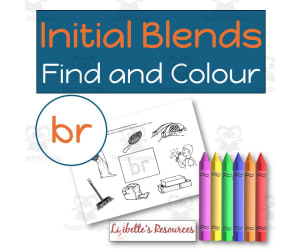
BR Blend Find and Colour Phonics Worksheet to Develop Phonemic
Special Resources, ELA, Special Education Needs (SEN), Language Development, Phonics, Kindergarten, Preschool, Worksheets & Printables, Worksheets
This BR fun, Find and Color worksheet for initial blends is BRilliant for acquainting children orally with initial consonant blends and helping them develop the necessary phonemic awareness in preparation for more advanced blending work, involving four phonemes. What is included in the pack? One PDF sheet for the BR blend. This is a sample of our pack of 20 activities covering common initial blends which can be found here in one PDF file: less clutter on your computer! What do the worksheets involve? Pupils are instructed to combine the two letters on each worksheet and then look for objects that start with that consonant blend. Then, these items ought to be coloured, leaving the others uncoloured. Children can easily work on the sheets unaided once they have been instructed, although, with those children with special needs, it is strongly suggested that an adult works with the child for maximum benefit. How to use The introduction of the concept of initial blends needs to be done thoroughly. When I work with children, especially those with a special need, I first like to teach children to blend two consonant letters. Then I work on developing the children's phonemic awareness: that being the ability to hear two consonant letters blended at the beginning of a word, easily. This is difficult for some pupils and takes a lot of practice. These worksheets can assist by first encouraging students to blend the two consonant letters and then by helping them to hear the blend at the start of a word. As often as you can, practice blending the letters in each initial blend and encourage the students to follow suit. I find that modelling is key at this stage. Who are the initial blends Find and colour worksheets for? Young learners Those with a special need Due to their non-babyish nature , they can be successfully used with older ESL/EFL pupils. Answer keys: The answer key is included on the sheet, in small print.
Author Lilibette's Resources
Tags Initial Blends, Consonant Blends, Initial Consonant Blends, Phonemic Awareness, Phonic Workssheets, Br Blend, Br Initial Blend, R Blends

TR Blend Find and Colour Phonics Worksheet to Develop Phonemic
Special Resources, ELA, Special Education Needs (SEN), Language Development, Phonics, Kindergarten, Preschool, Worksheets & Printables, Worksheets
This TR fun, Find and Color worksheet for initial blends is TRemendous for acquainting children orally with initial consonant blends and helping them develop the necessary phonemic awareness in preparation for more advanced blending work, involving four phonemes. What is included in the pack? One PDF sheet for the TR blend. This is a sample of our pack of 20 activities covering common initial blends which can be found here in one PDF file: less clutter on your computer! What do the worksheets involve? Pupils are instructed to combine the two letters on the worksheet and then look for objects that start with that consonant blend. Then, these items ought to be coloured, leaving the others uncoloured. Children can easily work on the sheet unaided once they have been instructed, although, with those children with special needs, it is strongly suggested that an adult works with the child for maximum benefit. How to use The introduction of the concept of initial blends needs to be done thoroughly. When I work with children, especially those with a special need, I first like to teach children to blend two consonant letters. Then I work on developing the children's phonemic awareness: that being the ability to hear two consonant letters blended at the beginning of a word, easily. This is difficult for some pupils and takes a lot of practice. These worksheets can assist by first encouraging students to blend the two consonant letters and then by helping them to hear the blend at the start of a word. As often as you can, practice blending the letters in each initial blend and encourage the students to follow suit. I find that modelling is key at this stage. Who are the initial blends Find and colour worksheets for? Young learners Those with a special need Due to their non-babyish nature , they can be successfully used with older ESL/EFL pupils. Answer keys: The answer key is included on the sheet, in small print.
Author Lilibette's Resources
Tags Initial Blends, Consonant Blends, Initial Consonant Blends, Phonemic Awareness, Phonic Workssheets, R Blends, Tr Blend

SP Blend Find and Colour Phonics Worksheet to Develop Phonemic
Special Resources, ELA, Special Education Needs (SEN), Language Development, Phonics, Kindergarten, Preschool, Worksheets & Printables, Worksheets
This SP fun, Find and Color worksheet for initial blends is SPlendid for acquainting children orally with initial consonant blends and helping them develop the necessary phonemic awareness in preparation for more advanced blending work, involving four phonemes. What is included in the pack? One PDF sheet for the SP blend. What do the worksheets involve? Pupils are instructed to combine the two letters on each worksheet and then look for objects that start with that consonant blend. Then, these items ought to be coloured, leaving the others uncoloured. Children can easily work on the sheets unaided once they have been instructed, although, with those children with special needs, it is strongly suggested that an adult works with the child for maximum benefit. How to use The introduction of the concept of initial blends needs to be done thoroughly. When I work with children, especially those with a special need, I first like to teach children to blend two consonant letters. Then I work on developing the children's phonemic awareness: that being the ability to hear two consonant letters blended at the beginning of a word, easily. This is difficult for some pupils and takes a lot of practice. These worksheets can assist by first encouraging students to blend the two consonant letters and then by helping them to hear the blend at the start of a word. As often as you can, practice blending the letters in each initial blend and encourage the students to follow suit. I find that modelling is key at this stage. Who are the initial blends Find and colour worksheets for? Young learners Those with a special need Due to their non-babyish nature, they can be successfully used with older ESL/EFL pupils. Answer keys: The answer key is included on the sheet, in small print.
Author Lilibette's Resources
Tags Initial Blends, Consonant Blends, Initial Consonant Blends, S Blends, Phonemic Awareness, Phonic Workssheets, Sp Blend
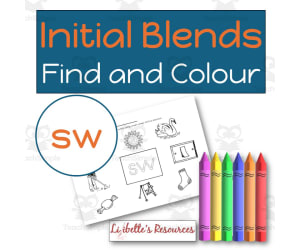
SW Blend Find and Colour Phonics Worksheet to Develop Phonemic
Special Resources, ELA, Special Education Needs (SEN), Language Development, Phonics, Kindergarten, Preschool, Worksheets & Printables, Worksheets
This SW fun, Find and Color worksheet for initial blends is excellent for acquainting children orally with initial consonant blends and helping them develop the necessary phonemic awareness in preparation for more advanced blending work, involving four phonemes. What is included in the pack? One PDF sheet for the SW blend. What do the worksheets involve? Pupils are instructed to combine the two letters on each worksheet and then look for objects that start with that consonant blend. Then, these items ought to be coloured, leaving the others uncoloured. Children can easily work on the sheets unaided once they have been instructed, although, with those children with special needs, it is strongly suggested that an adult works with the child for maximum benefit. How to use The introduction of the concept of initial blends needs to be done thoroughly. When I work with children, especially those with a special need, I first like to teach children to blend two consonant letters. Then I work on developing the children's phonemic awareness: that being the ability to hear two consonant letters blended at the beginning of a word, easily. This is difficult for some pupils and takes a lot of practice. These worksheets can assist by first encouraging students to blend the two consonant letters and then by helping them to hear the blend at the start of a word. As often as you can, practice blending the letters in each initial blend and encourage the students to follow suit. I find that modelling is key at this stage. Who are the initial blends Find and colour worksheets for? Young learners Those with a special need Due to their non-babyish nature, they can be successfully used with older ESL/EFL pupils. Answer keys: The answer key is included on the sheet, in small print.
Author Lilibette's Resources
Tags Initial Blends, Consonant Blends, Initial Consonant Blends, S Blends, Phonemic Awareness, Phonic Workssheets

SK Blend Find and Colour Phonics Worksheet to Develop Phonemic
Special Resources, ELA, Special Education Needs (SEN), Language Development, Phonics, Kindergarten, Preschool, Worksheets & Printables, Worksheets
This SK fun, Find and Color worksheet for initial blends is excellent for acquainting children orally with initial consonant blends and helping them develop the necessary phonemic awareness in preparation for more advanced blending work, involving four phonemes. What is included in the pack? One PDF sheet for the SK blend. This is a sample of our pack of 20 activities covering common initial blends which can be found here in one PDF file: less clutter on your computer! What do the worksheets involve? Pupils are instructed to combine the two letters on the worksheet and then look for objects that start with that consonant blend. Then, these items ought to be coloured, leaving the others uncoloured. Children can easily work on the sheet unaided once they have been instructed, although, with those children with special needs, it is strongly suggested that an adult works with the child for maximum benefit. How to use The introduction of the concept of initial blends needs to be done thoroughly. When I work with children, especially those with a special need, I first like to teach children to blend two consonant letters. Then I work on developing the children's phonemic awareness: that being the ability to hear two consonant letters blended at the beginning of a word, easily. This is difficult for some pupils and takes a lot of practice. These worksheets can assist by first encouraging students to blend the two consonant letters and then by helping them to hear the blend at the start of a word. As often as you can, practice blending the letters in each initial blend and encourage the students to follow suit. I find that modelling is key at this stage. Who are the initial blends Find and colour worksheets for? Young learners Those with a special need Due to their non-babyish nature , they can be successfully used with older ESL/EFL pupils. Answer keys: The answer key is included on the sheet, in small print.
Author Lilibette's Resources
Tags Initial Blends, Consonant Blends, Initial Consonant Blends, S Blends, Phonemic Awareness, Phonic Workssheets, SK Blend