
Character Experiences Anchor Chart
The Character Experiences Anchor Chart is an indispensable tool conceived particularly for educators, to better comprehend character's experiences and their interactions within various tales or series.




54 resources
Explore sub-categories
1 sub-categories · 54 resources
The Character Experiences Anchor Chart is an indispensable tool conceived particularly for educators, to better comprehend character's experiences and their interactions within various tales or series.
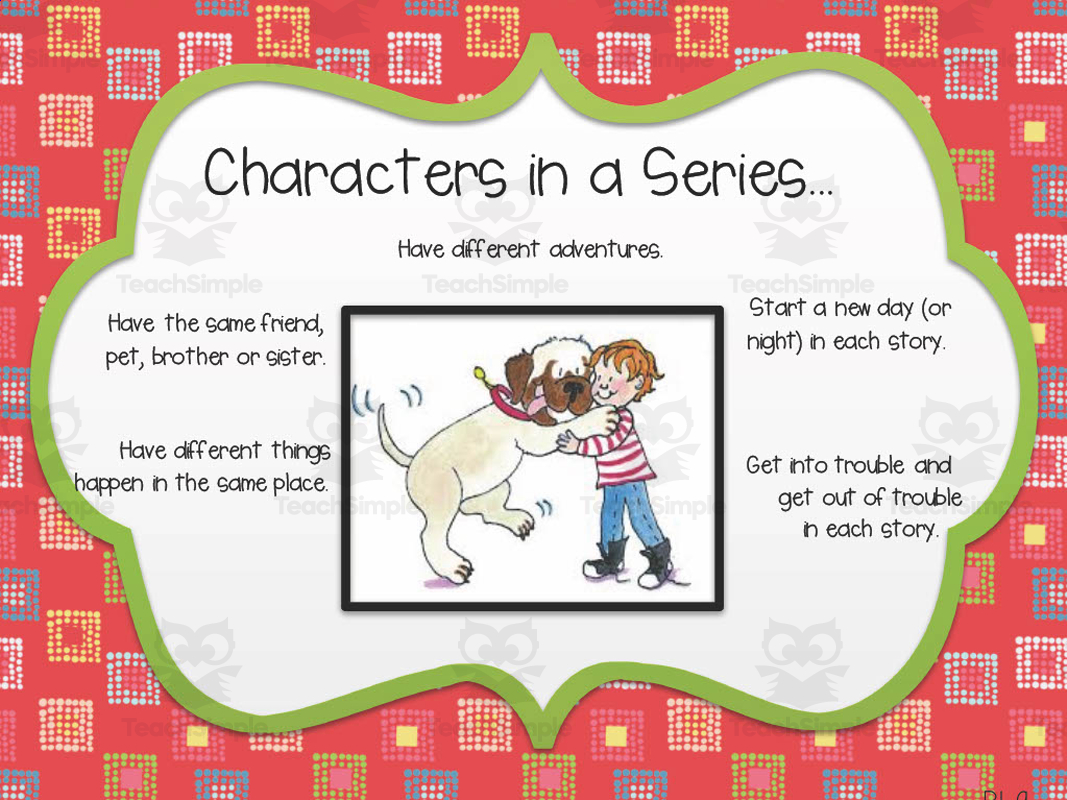
This resource is an anchor chart set for characters in a series. The first anchor chart is complete. The second anchor chart is a fill in the blank.

Model the four steps with a question about a shared text. Use the guided chart during practice and the fill-in version to review the routine.

Show students how comparing and contrasting works with a Venn diagram about two children. The chart separates what they have in common from their differences and supplies words that help students express each kind of idea. Use the complete chart to model a comparison, then let students fill in the key terms on the companion version. The sentence-frame pages support responses about a new pair of characters, objects, or ideas you introduce.

This resource is a set of anchor charts focused on comparing two texts on the same topic. Students are able to use these anchor charts to decipher similarities and differences between texts on the same topic.

This resource is a set of 2 charts">anchor charts for connections within texts The first chart is complete. The following chart is fill in the blank.

This resource is a set of 4 charts">anchor charts for teaching how to find and use context clues. The first chart is complete. The following 3 charts are fill in the blank.
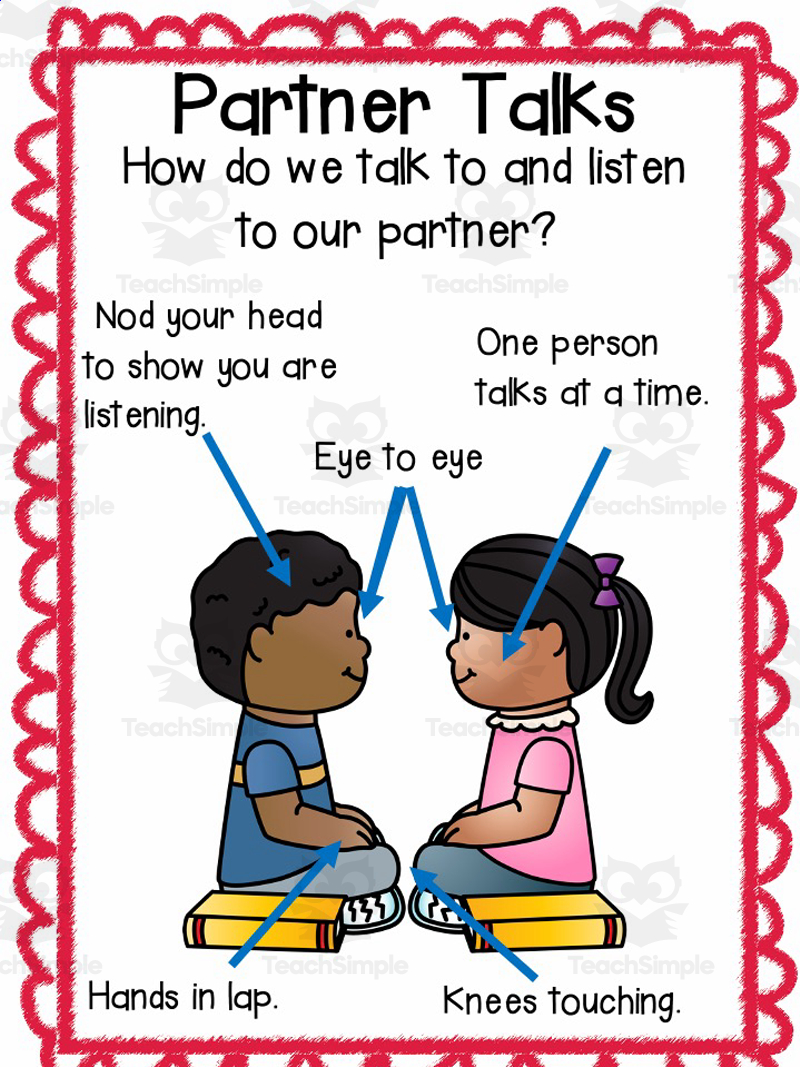
This resource is a set of 3 anchor charts for teaching partner talk. The first anchor chart is complete. The following 2 charts are fill in the blank.

Introduce fact and opinion with a side-by-side reference showing ways to recognize each. Students can discuss whether a statement can be checked and notice language that often signals a personal view. Use the completed chart to model examples, then have students label the companion version. Apply the distinction to short statements from a text or class discussion.

Help students choose the important information to include when retelling a text. Fiction worksheets prompt characters, setting, problem, events and solution, while nonfiction pages ask for a main idea, three details and the author’s purpose. Reference charts and two sentence-starter levels let teachers model a response, then reduce written support as learners reuse the structure with new reading.

Introduce idioms with a definition chart, then invite students to complete the matching fill-in version. Two additional templates let the class name an idiom, explain its meaning, and compare that meaning with the literal words. Choose familiar expressions from your current read-aloud or class conversations. Complete the templates together and keep them in reading notebooks or on display as a reminder during later reading.
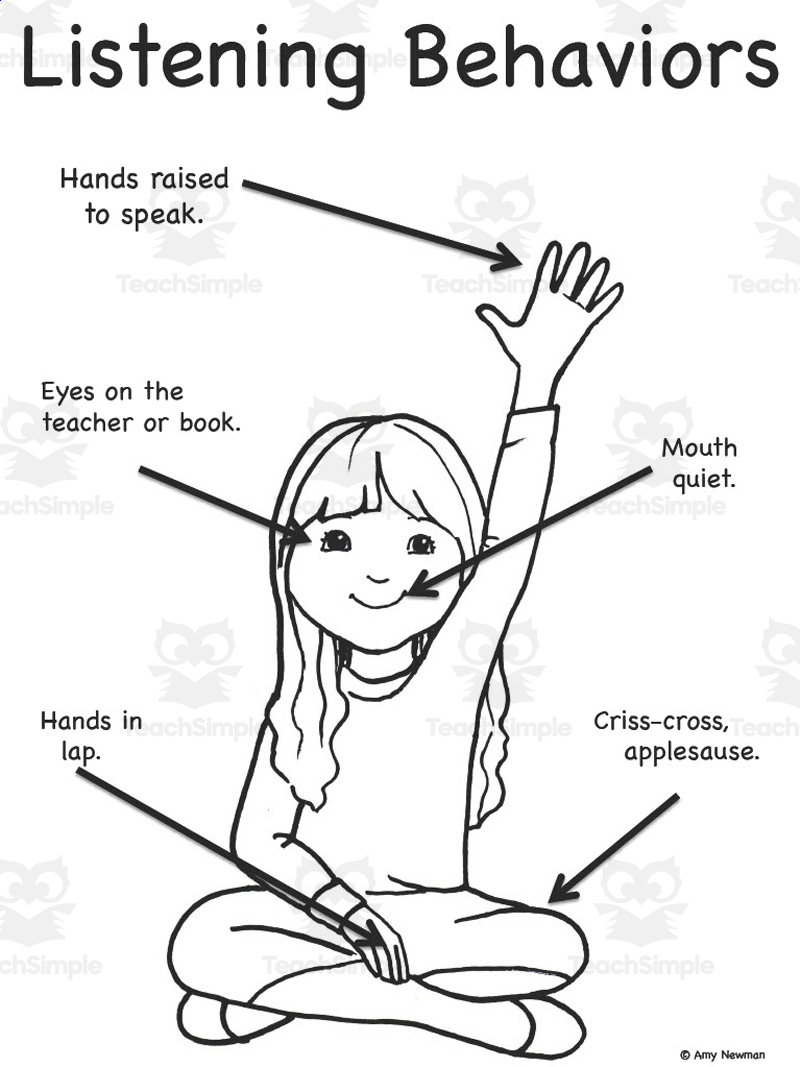
A set of classroom anchor-chart posters establishing listening behavior expectations for when the teacher is talking or reading aloud.

This resource is a set of 2 anchor charts for teaching readers what they need to know. The first chart is complete. The second chart is a fill in the blank.

Four main-idea charts pair two related layouts with guided fill-in versions. A stool diagram shows the main idea supported by three details. A second layout provides an evidence sentence frame and prompts for before, during and after reading. Display the completed references, then use the partially blank versions for notebook work. Pair the charts with a text students can use to identify a main topic and supporting details.

Display the chart for the type of connection you are teaching and model a response using the current read-aloud. Students can borrow a sentence starter while explaining how their connection relates to the text.
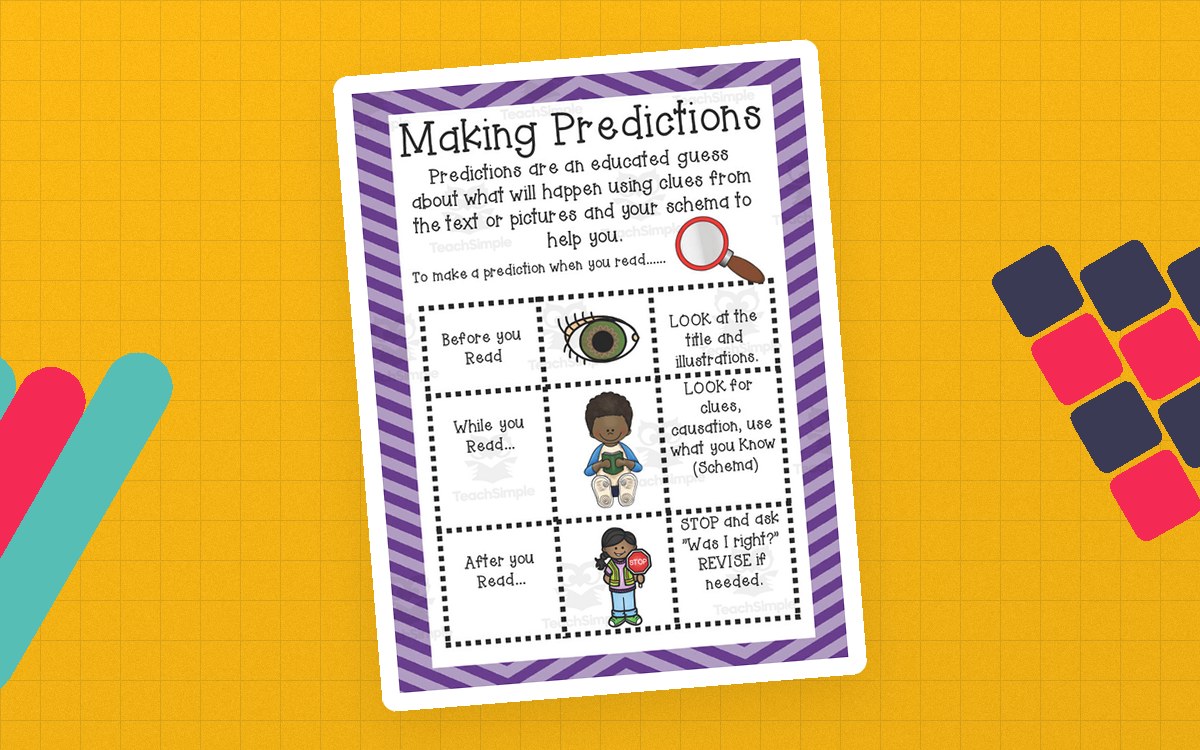
This resource is a set of 4 charts">anchor charts for teaching students how to make predictions. The first chart is complete. The following 3 charts are fill in the blank.

Assemble this anchor chart as you introduce five multiplication properties, adding each definition beside its worked example. Separate pieces let students compare how changing factor order differs from changing grouping, and see a fact split into partial products. The guide specifies 24-by-32-inch chart paper, although its sample layout depicts addition and subtraction; an additional student reference page covers addition and subtraction models.

A nonfiction text-structures anchor chart set explains five expository structures — problem and solution, sequencing, description, cause and effect, and compare and contrast — through a reference table of definitions and transition or key words such as 'therefore,' 'first, second, next,' and 'alike, different.' The set is provided as two matching pages: one fully filled-in chart for display and one cloze version with blanks so students can complete blanks in definitions and the closing note while the key-word column remains filled in. A closing note reminds students that a single text can contain more than one structure even when one dominates overall. Teachers can post the completed version as a permanent classroom reference and use the blank version as a formative check during a reading-structures lesson.

This resource is a set of 2 charts">anchor charts for opinion writing. The first chart gives students the O.R.E.O. acronym to keep in mind as they opinion write. The second chart is a fill in the blank.

This resource is a set of 3 anchor charts for teaching partner talk. The first anchor chart is complete. The following 2 charts are fill in the blank.
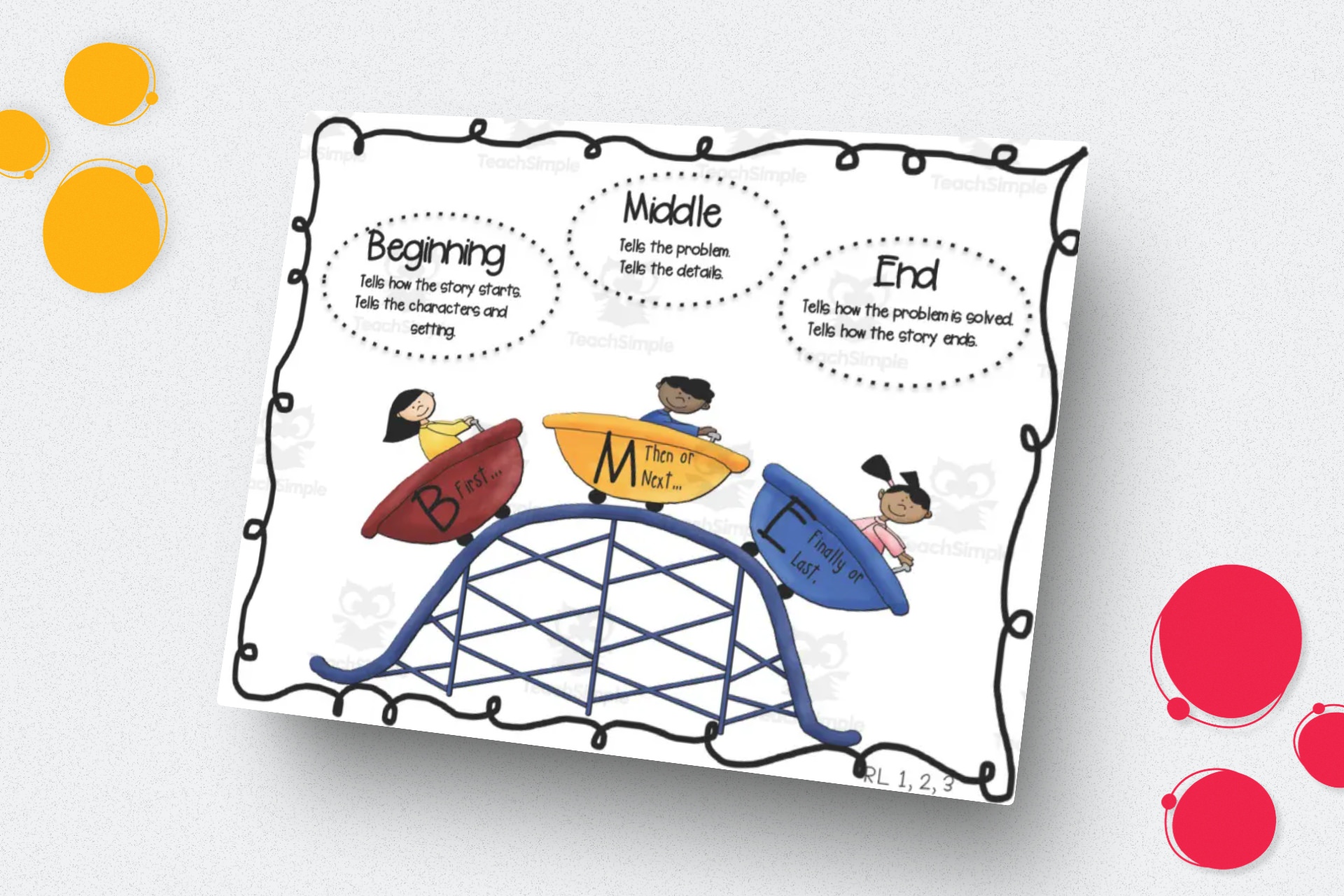
Teaching Plot Anchor Chart Chart out new territories of learning with this unique set of teaching tools designed to simplify the process of understanding plot structures.

Editable Point of View Anchor Chart Overview The Editable Point of View Anchor Chart is a priceless teaching tool for educators immersed in the subject area of Language Arts.
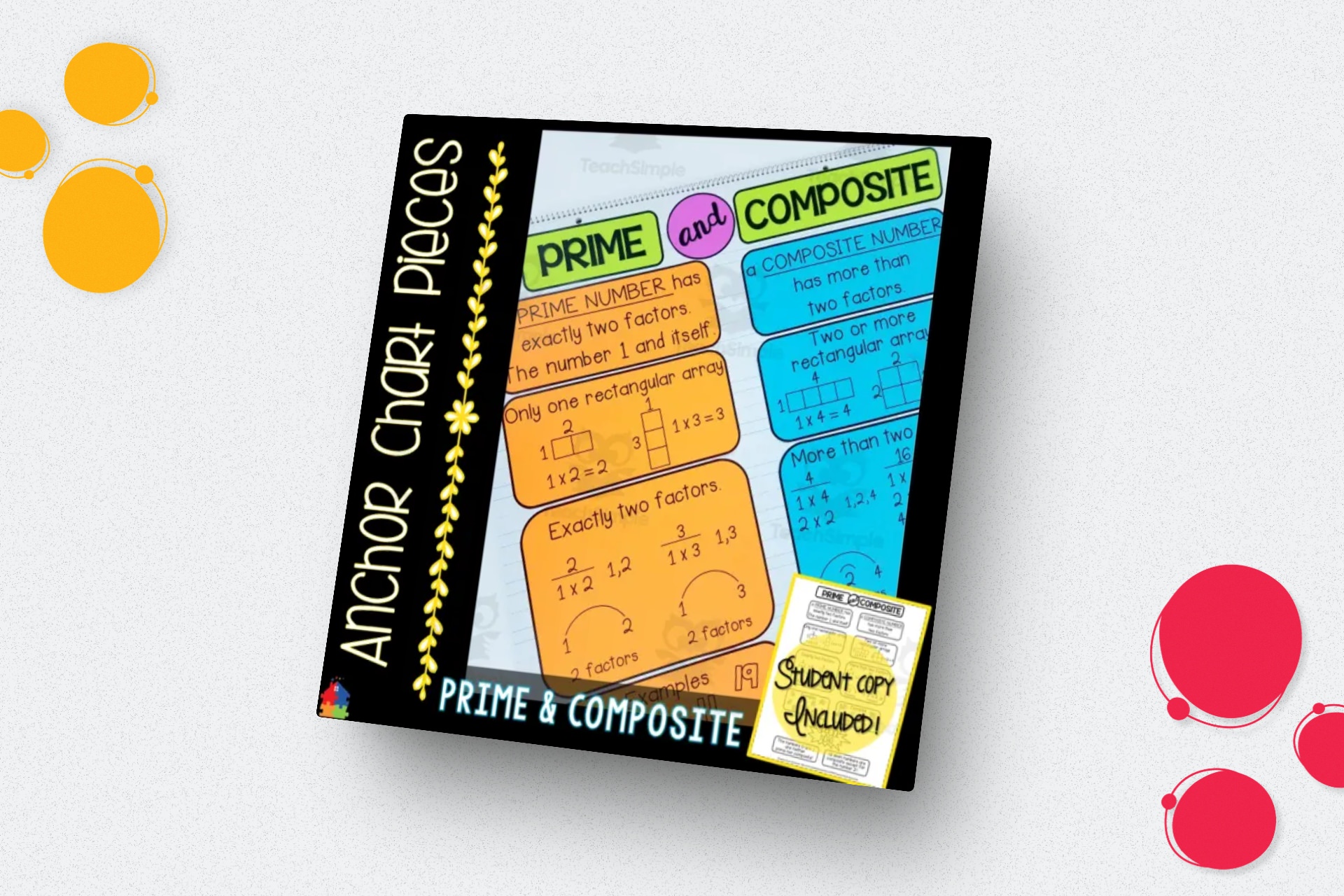
This resource is a Prime and Composite Anchor Chart . It will come with everything you need to develop this math anchor chart with your students.

Use the reference while discussing a shared story. Have students name the character’s need or difficulty, then locate the event that resolves it before completing the response frames.