
Hamster Cause and Effect Worksheet
This Hamster Cause and Effect Worksheet is a great way for students to identify cause and effect after reading a story. This is a valuable skill for students to have as they begin to read more complex texts.


55 resources
This Hamster Cause and Effect Worksheet is a great way for students to identify cause and effect after reading a story. This is a valuable skill for students to have as they begin to read more complex texts.

An anchor chart defines characters as 'the people or animals that the story is about' and then focuses on the main character, describing them as the most important character and the one central to the story's action. The chart is provided in two matching versions: a fully completed reference page for teacher display, and a second page with key words removed as blanks (e.g., 'the ______ or _______ that the story is about' and 'The MOST __________ CHARACTER'), letting a teacher use it as a fill-in-the-blank activity with students during a shared reading or mini-lesson. Once students can identify a story’s main character, the roll a story printable lets them apply that concept by rolling a character, setting, and story-line into an original story idea.
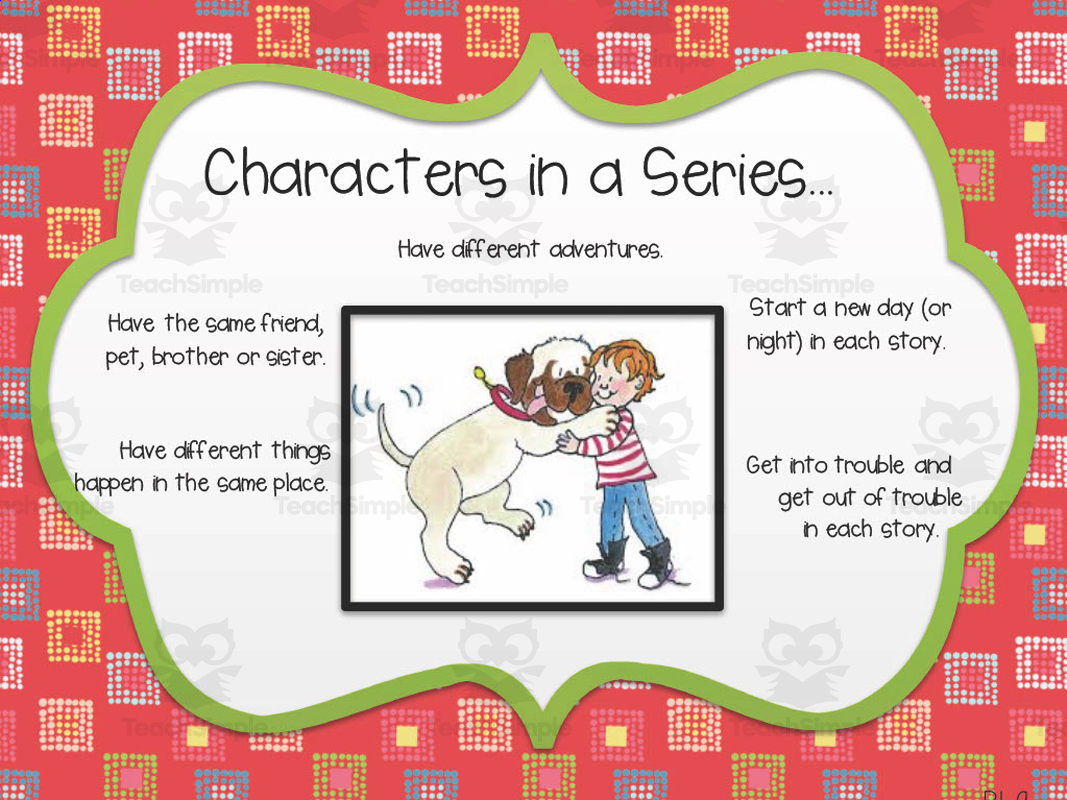
This resource is an anchor chart set for characters in a series. The first anchor chart is complete. The second anchor chart is a fill in the blank.

Help students choose the important information to include when retelling a text. Fiction worksheets prompt characters, setting, problem, events and solution, while nonfiction pages ask for a main idea, three details and the author’s purpose. Reference charts and two sentence-starter levels let teachers model a response, then reduce written support as learners reuse the structure with new reading.
 Free download
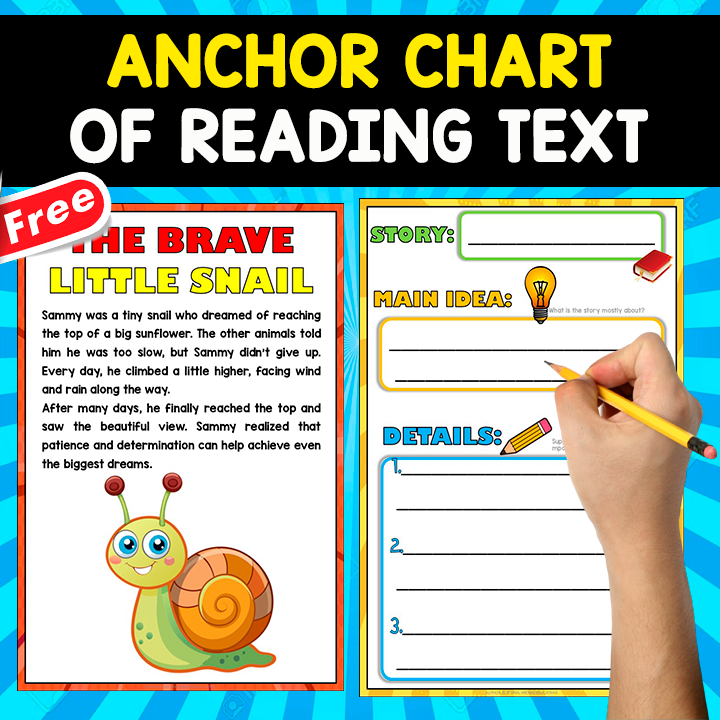
Teach reading comprehension (identifying the main idea and supporting details) using a short English narrative about a snail named Sammy who climbs a sunflower despite others doubting him and learns that patience and determination achieve dreams.
 Free download
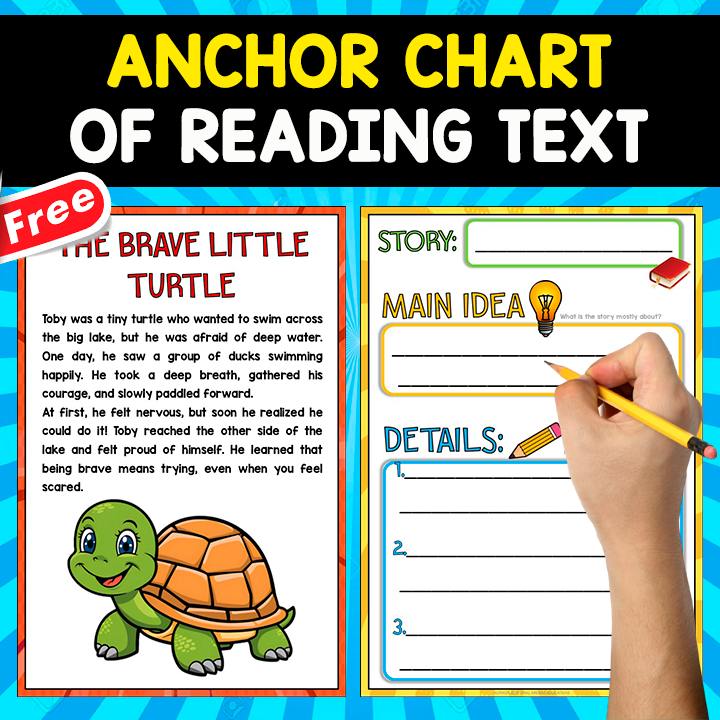
Teach reading comprehension (identifying the main idea and supporting details) using a short English narrative about a turtle named Toby who overcomes his fear of deep water to swim across a lake and learns that being brave means trying anyway.
 Free download
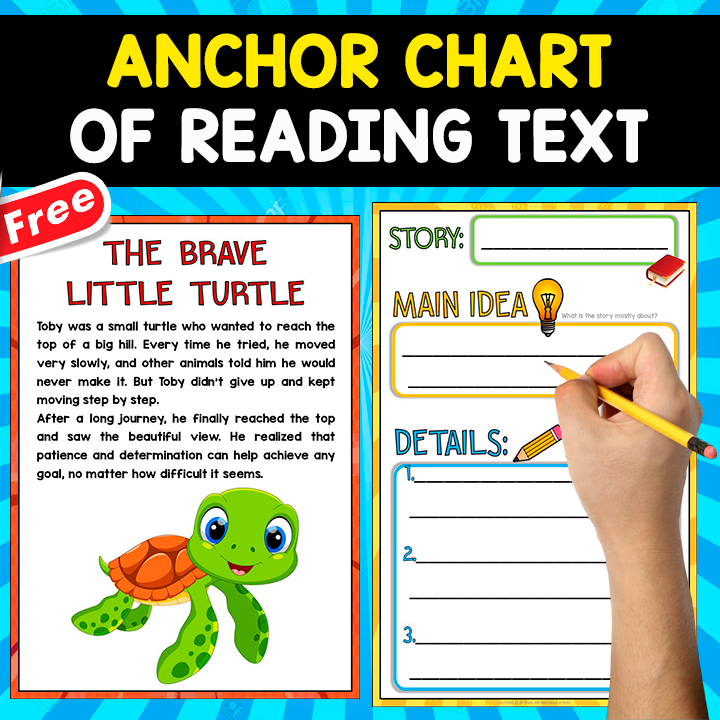
Teach reading comprehension (identifying the main idea and supporting details) using a short English narrative about a turtle named Toby who slowly climbs a hill despite others' doubts and learns that patience and determination achieve goals.
 Free download
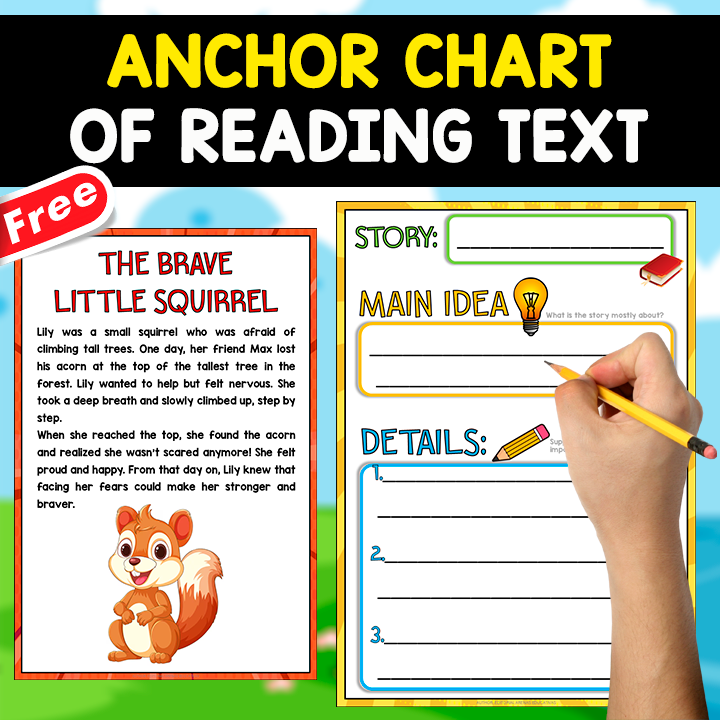
Teach reading comprehension (identifying the main idea and supporting details) using a short English narrative about a squirrel named Lily who overcomes her fear of climbing tall trees to help a friend and learns that facing fears builds courage.
 Free download
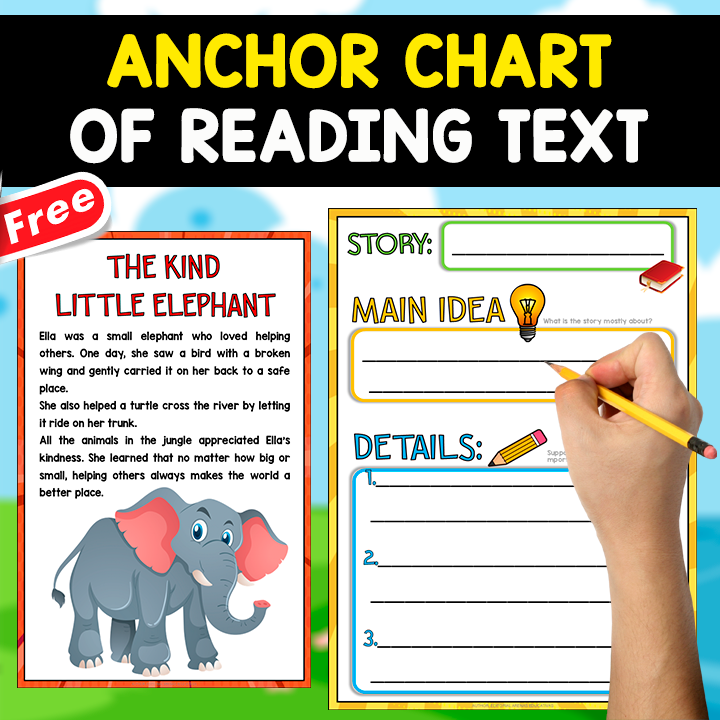
Teach reading comprehension (identifying the main idea and supporting details) using a short English narrative about a kind elephant named Ella who helps other animals and learns that helping others makes the world better.
 Free download
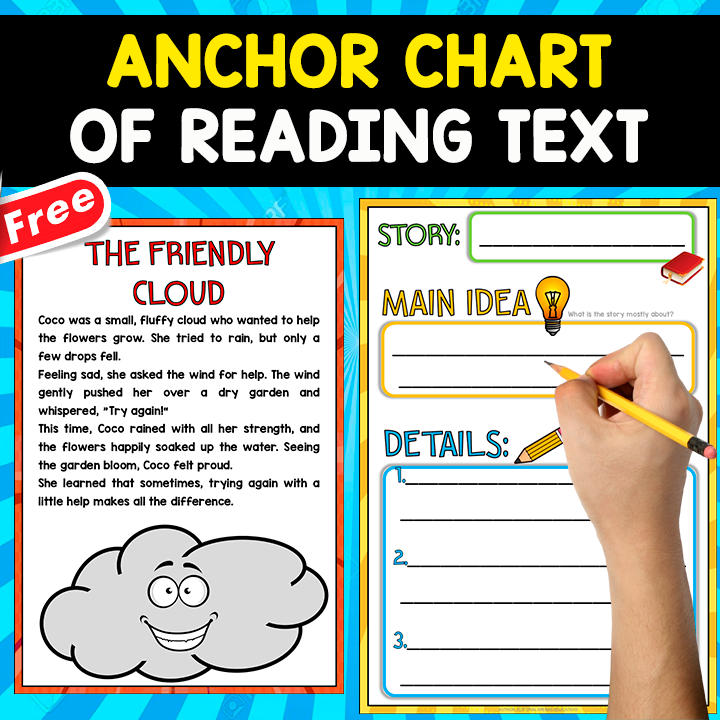
Teach reading comprehension (identifying the main idea and supporting details) using a short English narrative about a cloud named Coco who learns that trying again, with a little help, makes a difference.
 Free download
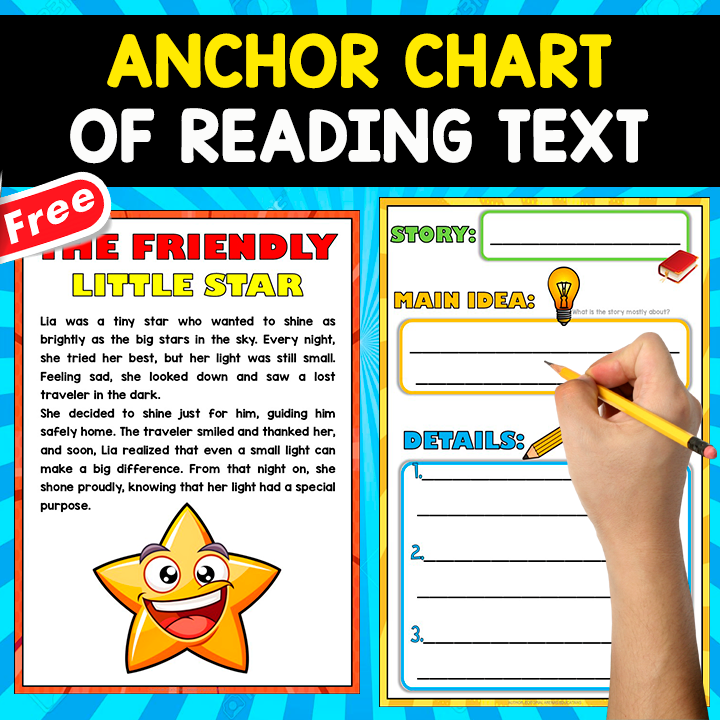
Teach reading comprehension (identifying the main idea and supporting details) using a short English narrative about a small star named Lia who guides a lost traveler home and learns that even a small light can make a big difference.
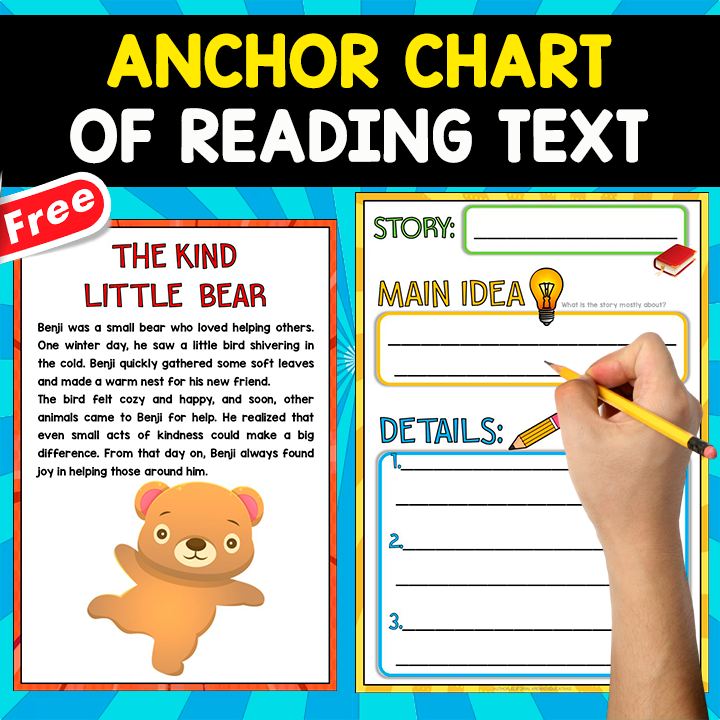 Free download
Teach reading comprehension (identifying the main idea and supporting details) using a short English narrative about a bear named Benji who helps a cold bird build a nest and learns that small acts of kindness make a big difference.

This resource is an anchor chart and writing set for The Gingerbread Man. There are 2 different ways for students to write about the story as they sequence the events that took place. Graphics for students to cut out are included.

This resource is a character traits chart. It will include a character trait and students will provide a synonym and example from a text. There are 14 character traits.
Literary Devices: Character Chart - FLASH-MAC The Literary Devices: Character Chart - FLASH-MAC is a dynamic teaching resource designed for students ranging from grade 5 to grade 8, focusing on the broad subject of Language Arts and…
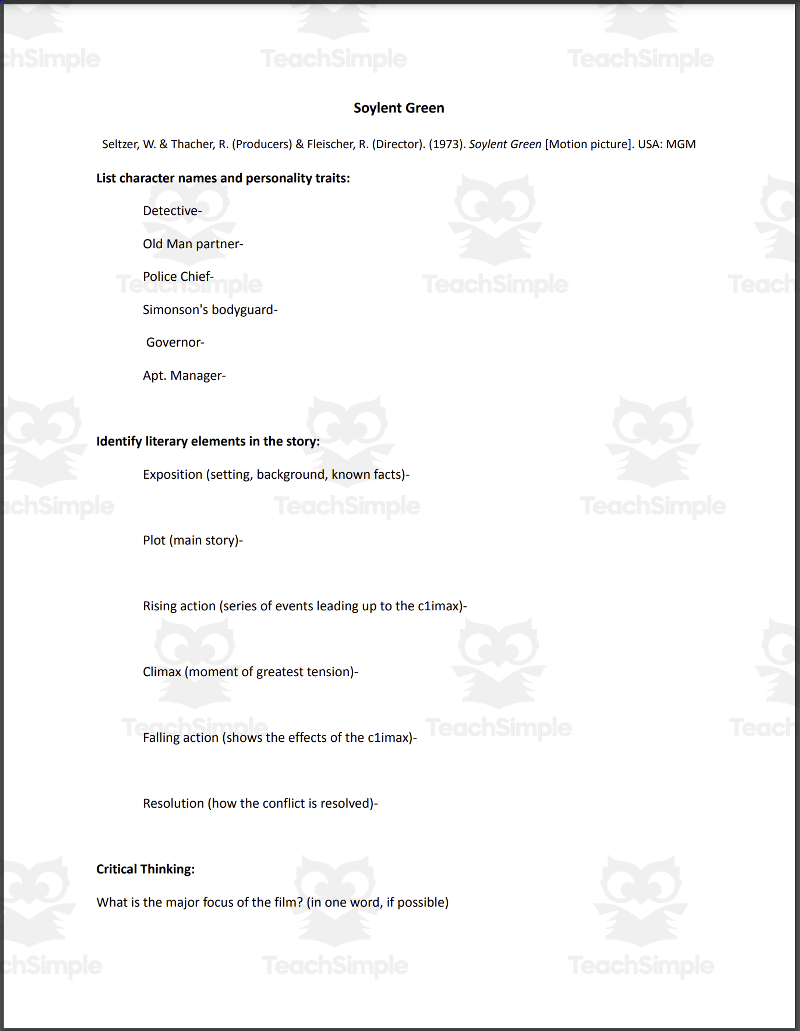
Novel - Film Study Guide: Soylent Green This study guide is designed as a unique teaching resource for educators, particularly those focusing on high school level language arts.
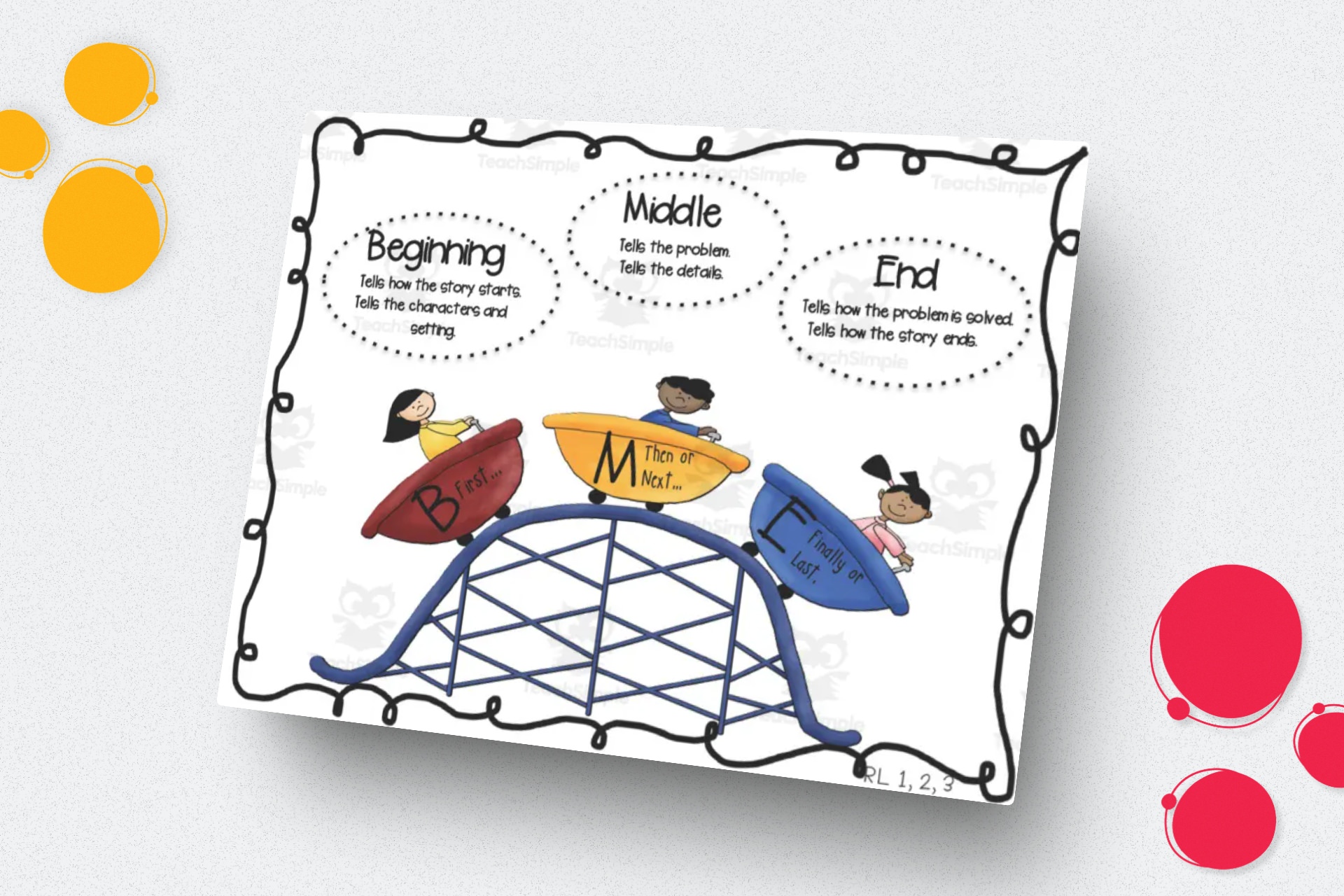
Teaching Plot Anchor Chart Chart out new territories of learning with this unique set of teaching tools designed to simplify the process of understanding plot structures.
Ten plot-focused graphic organizers guide students through mapping a story's five elements — introduction, rising action, climax, falling action, and resolution — using formats that range from a classic Plot Pyramid and Story Cycle to a Prediction Tree, a nine-box Sequence Chain, and a two-column Changes-in-Plot chart. Two introductory instructional pages explain how to use the ten templates; the Plot Analysis format, for example, also asks students to identify point of view, foreshadowing, and symbolism alongside the standard plot stages. Because every organizer is a blank template, teachers supply the story or text students will map onto it.
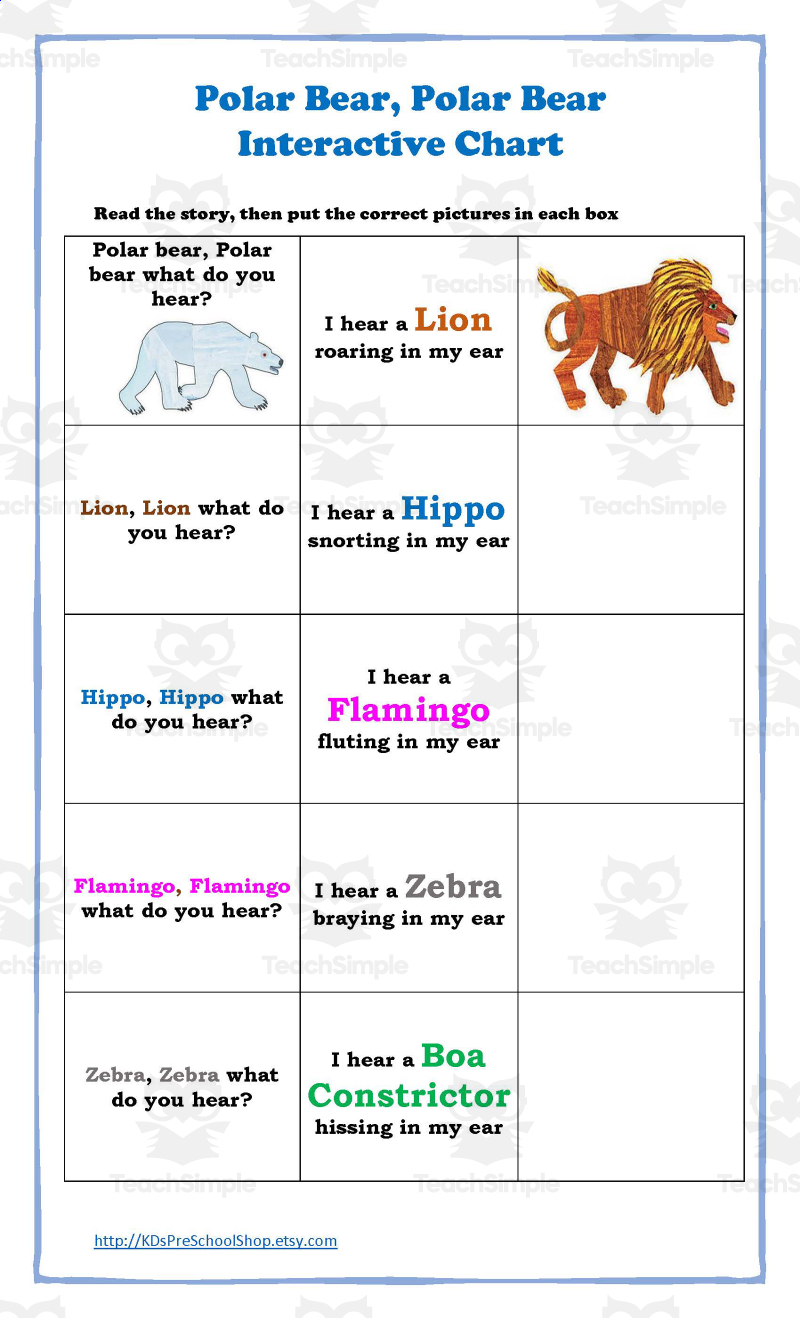
Polar Bear Interactive Chart | Book Companion This interactive sequencing chart makes an engaging companion resource for classrooms reading the children's book Polar Bear, Polar Bear, What Do You See?

This worksheet can help your students compare two stories with similar plots or characters. It can be a useful tool to help them understand the elements from the two stories.
 Free download
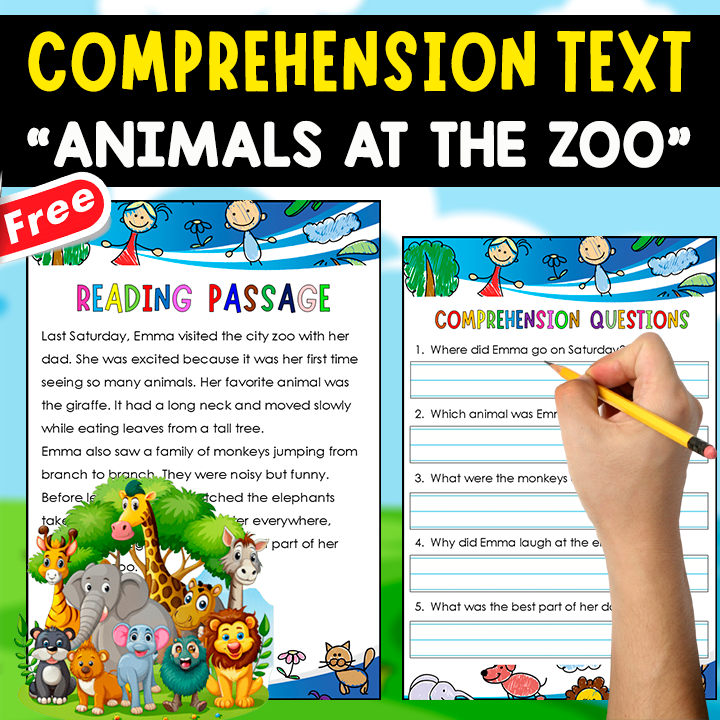
A short ESL/early-reader comprehension pack using a simple fiction passage about a family visit to the zoo, paired with four reading-strategy anchor-chart activities (predict, visualize, question, summarize) and a vocabulary box.

A five-step Somebody/Wanted/But/So/Then framework walks students through identifying a story's main character, goal, problem, attempted solution, and ending, and it appears twice — once fully worded as a teacher or display copy, and once with key words blanked out for students to fill in themselves. A second, matching chart titled ‘Summarizing’ explains that a summary retells a story's main events and lists the five elements to include (characters, setting, problem, events, solution) using the same SWBST acronym, again in both a complete and a fill-in-the-blank version. Together the four pages form a two-part anchor chart set meant to be posted for reference and then reinforced through an interactive-notebook-style blank version students complete in their own notes. The charts can support story retelling alongside a teacher-selected text.

This resource is a Squirrel's New Year's Resolution Interactive Reading Packet. This is a great component to your early finisher buckets or reading stations during the winter season.
 Free download
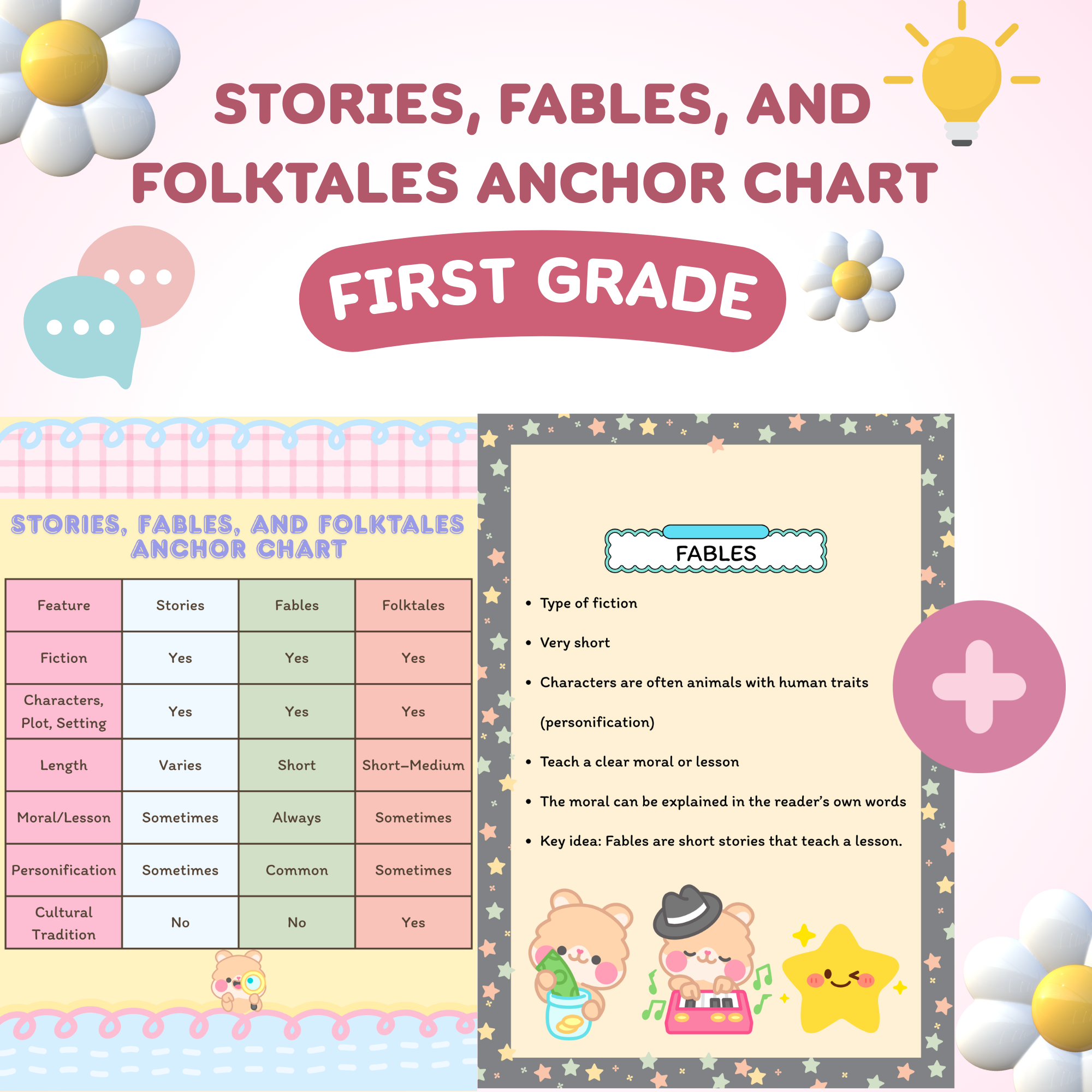
This set of anchor charts helps first graders learn about stories, fables, and folktales. Big, colorful pictures show what makes each one different. The set has four charts. The first chart is about stories.