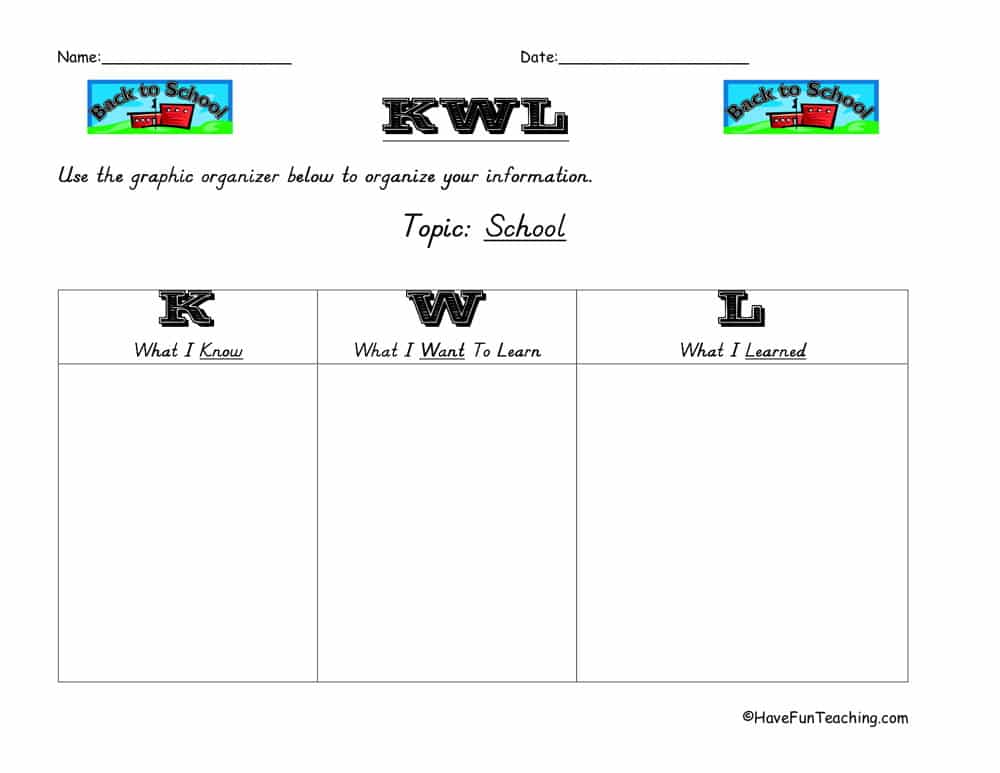
School KWL Graphic Organizer
KWL (Know / Want to know / Learned) graphic organizer for a Back to School themed lesson about school.




1,096 resources
Explore sub-categories
2 sub-categories · 1,096 resources
KWL (Know / Want to know / Learned) graphic organizer for a Back to School themed lesson about school.
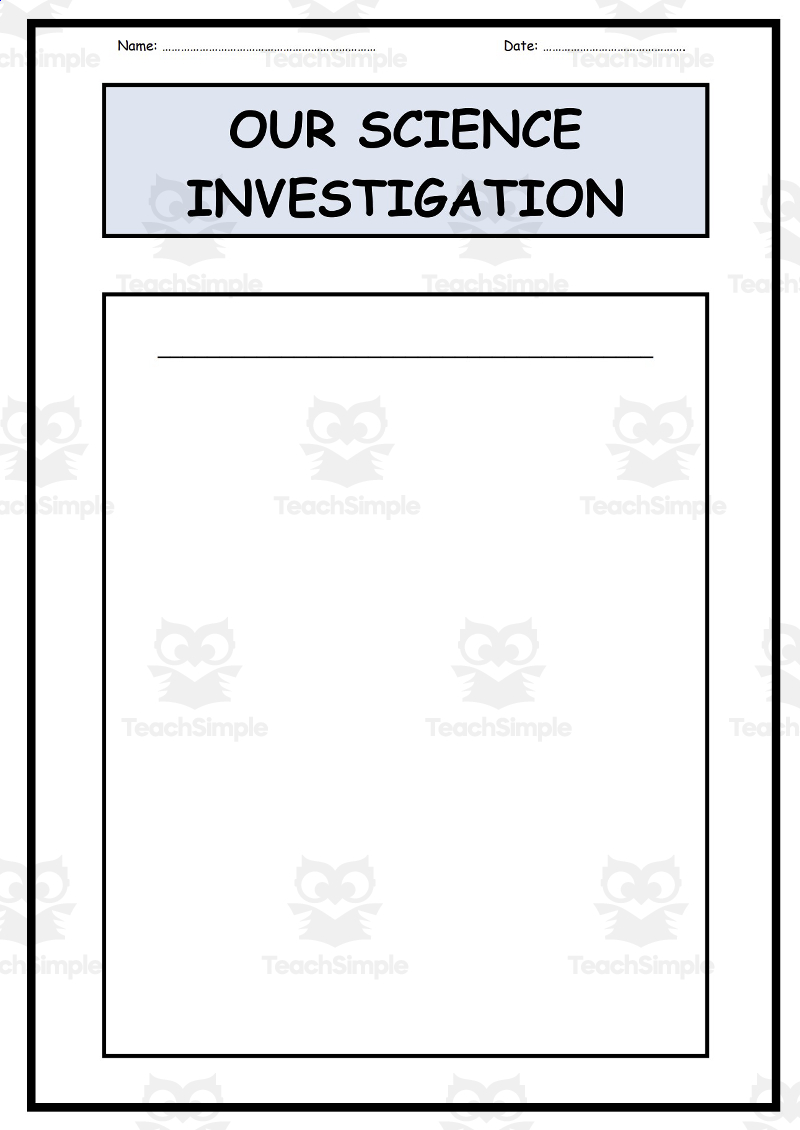
An editable, blank scientific investigation template booklet that can be adapted to any science experiment, guiding students through the steps of the scientific method.
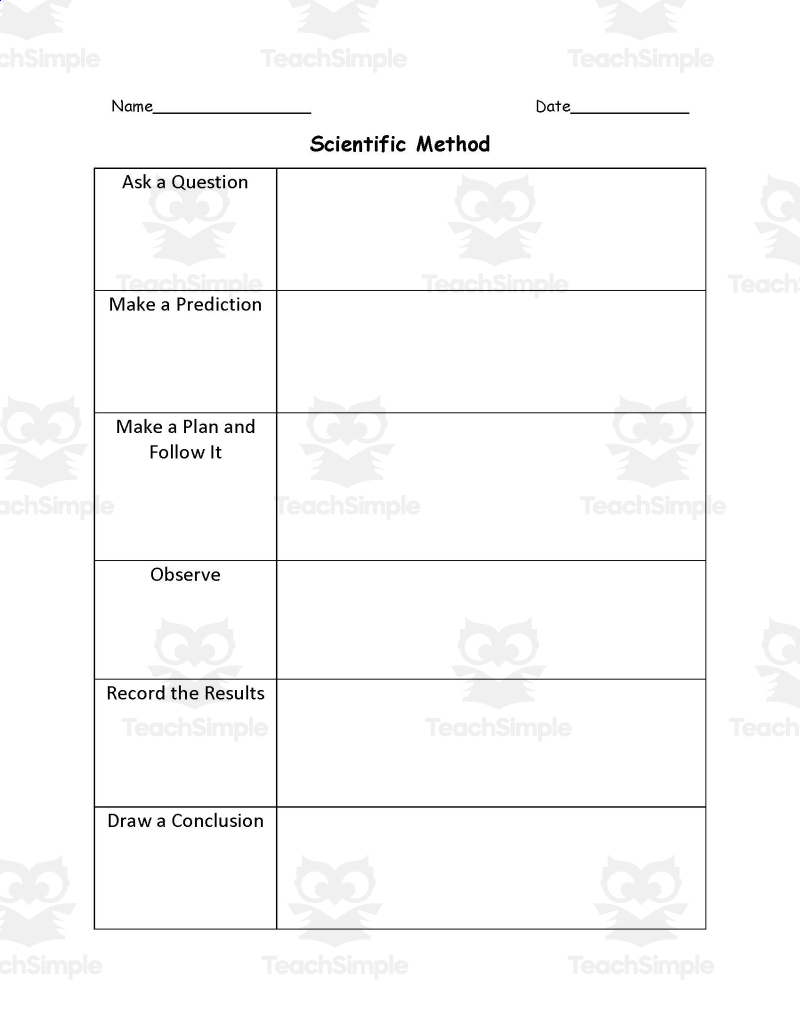
This super basic Scientific Method Template is perfect for getting kids started with the scientific method and for teaching them about scientific research.
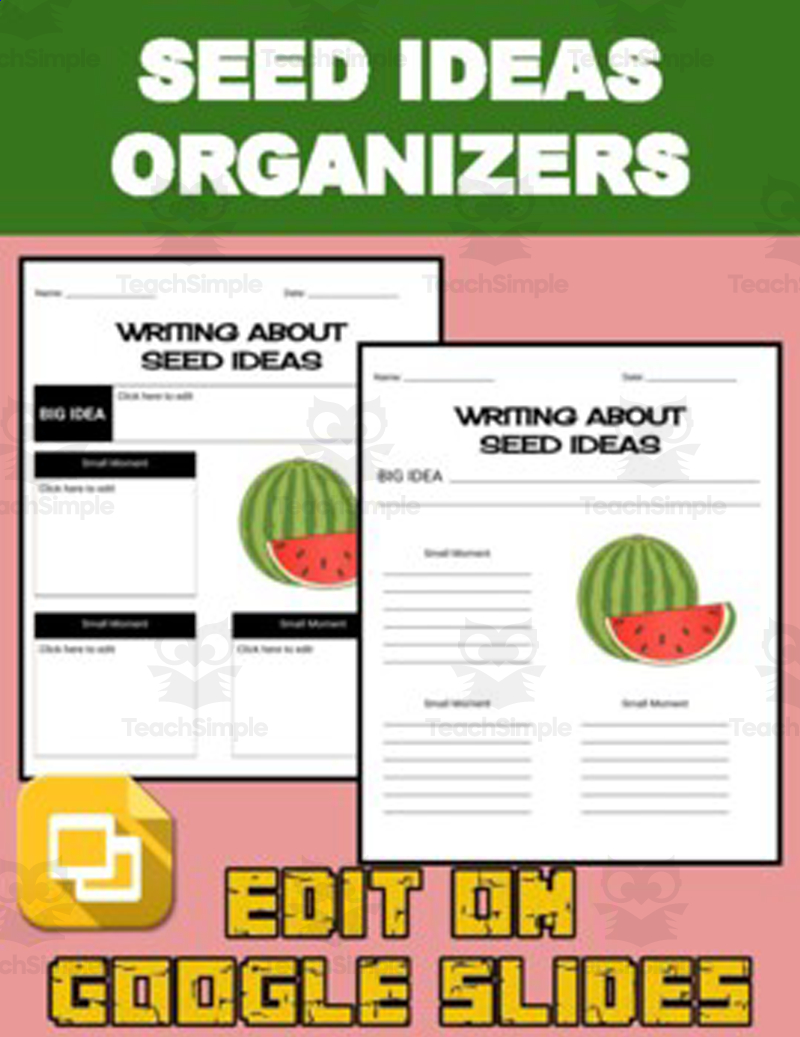
A graphic organizer that helps students brainstorm a 'big idea' (watermelon topic) and supporting 'small moment' (seed) ideas for personal narrative writing.
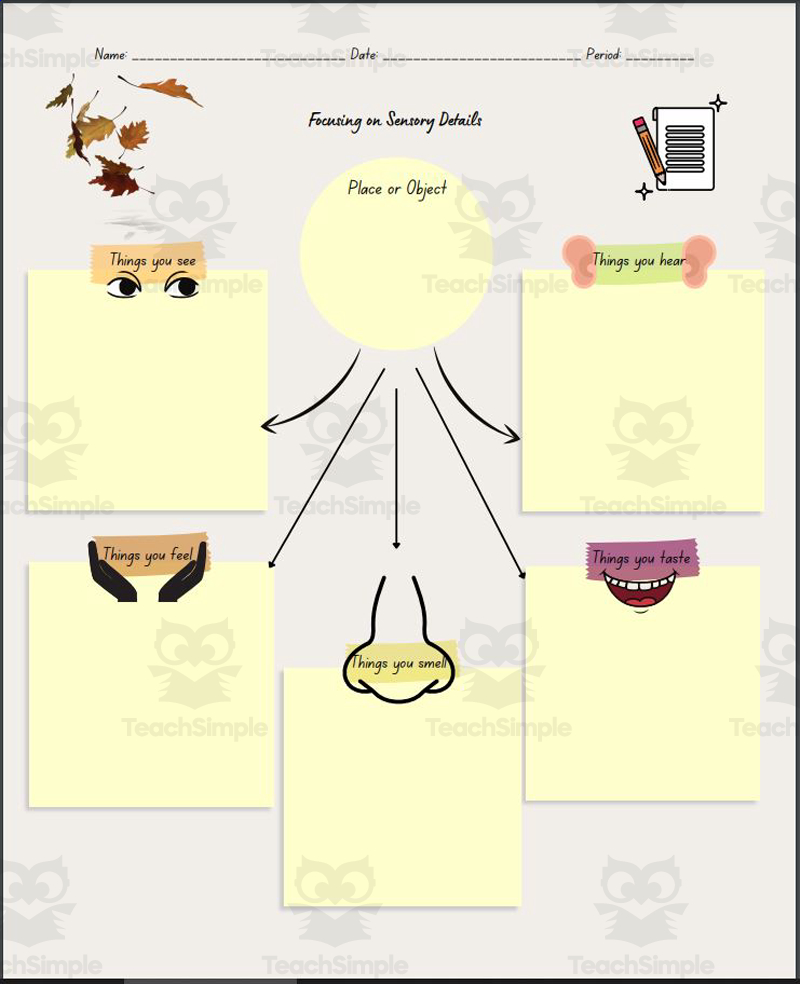
Start a descriptive-writing task by naming a place or object in the organizer’s central field. Students collect relevant details in five sense-labeled boxes, then choose observations to develop into sentences or a paragraph. You can model one example first and leave a box unused when a sense does not apply to the subject.

Students struggle writing sentences that contain a subject, predicate and details. This graphic organizer ensures that their sentence includes a subject When?, Who?, Is Doing What?, Where? and Why?

This Sequence of Events Cycle Graphic Organizer is a great way for students to describe the major events that occur in the beginning, middle, and end while reading.
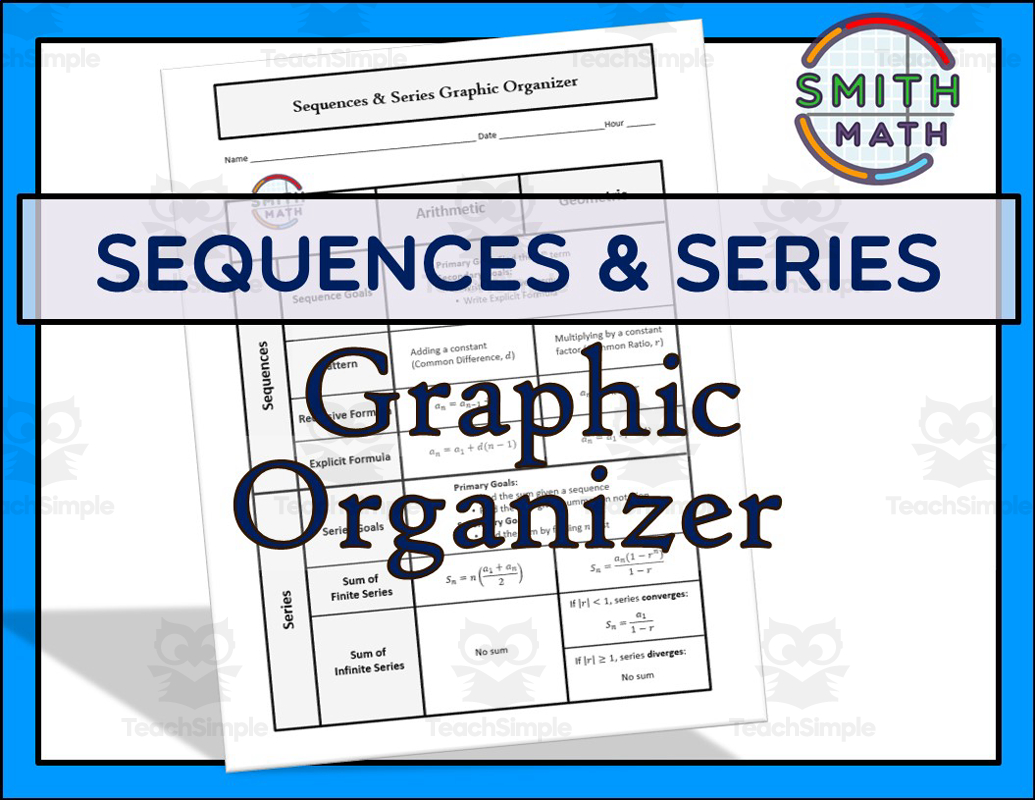
If you are a high school math teacher, finding resources that best serve for your students is of the utmost importance! This is a Sequences and Series Graphic Organizer that is filled with purposeful information that your students can put…
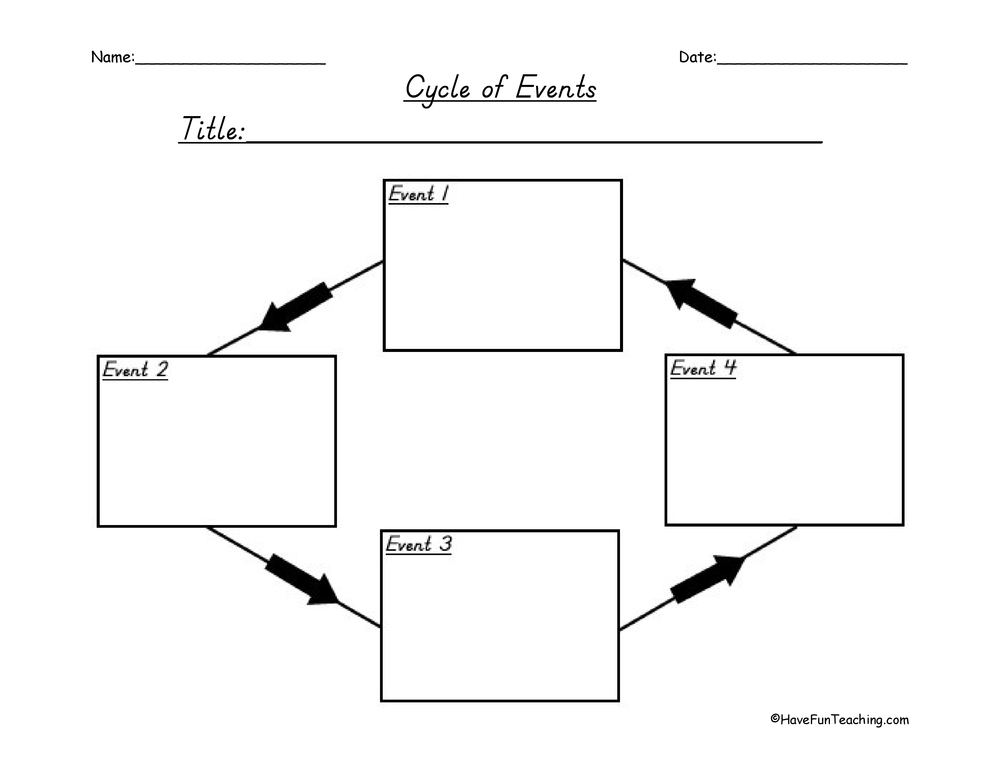
This Sequencing Graphic Organizer is a great way for students to describe the four major events while reading. It's simple and easy to use, and it's a great way for teachers to keep track of their students' progress.

This two-page organizer presents economic and political causes of Shays’ Rebellion alongside its consequences. The student page supplies two causes and two effects, leaving three spaces in each row for notes; the teacher key fills all five spaces in each row. Use the supplied entries to introduce the topic, then add details from the class reading and compare them with the expanded teacher chart.

This graphic organizer can help your students to organize the effects of smoking. It is a great way to help them learn about the dangers of smoking and the ways it can impact their health.

A five-step Somebody/Wanted/But/So/Then framework walks students through identifying a story's main character, goal, problem, attempted solution, and ending, and it appears twice — once fully worded as a teacher or display copy, and once with key words blanked out for students to fill in themselves. A second, matching chart titled ‘Summarizing’ explains that a summary retells a story's main events and lists the five elements to include (characters, setting, problem, events, solution) using the same SWBST acronym, again in both a complete and a fill-in-the-blank version. Together the four pages form a two-part anchor chart set meant to be posted for reference and then reinforced through an interactive-notebook-style blank version students complete in their own notes. The charts can support story retelling alongside a teacher-selected text.
 Free download
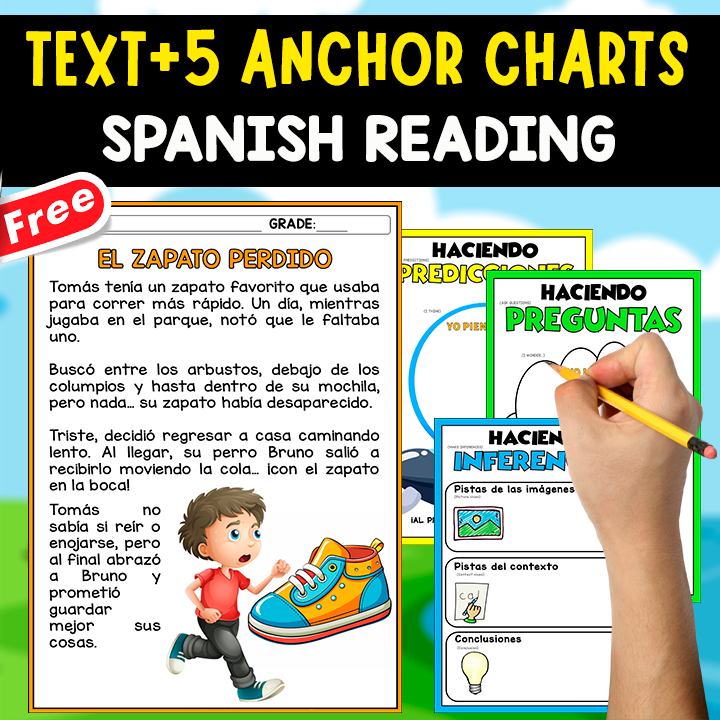
 SPANISH TEXT + 5 ANCHOR CHARTS | El zapato perdido INTRODUCTION: Thank you for choosing EDITORIAL ARENAS EDUCATIVAS! Our mission is to deliver a variety of learning resources that make education enjoyable and effective for children.
 Free download
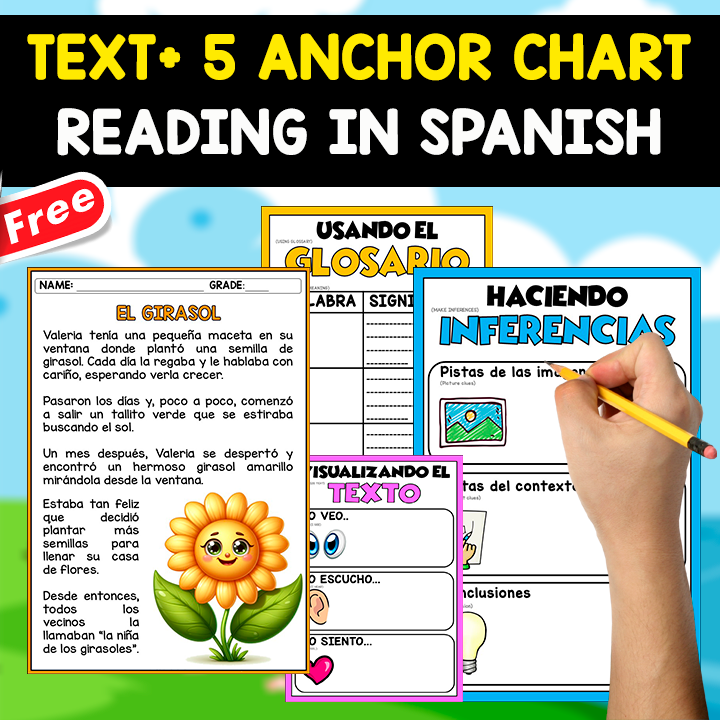
 SPANISH TEXT + 5 ANCHOR CHART | EL GIRASOL INTRODUCTION: EDITORIAL ARENAS EDUCATIVAS is dedicated to providing high-quality educational content to help children learn efficiently and with joy.
 Free download
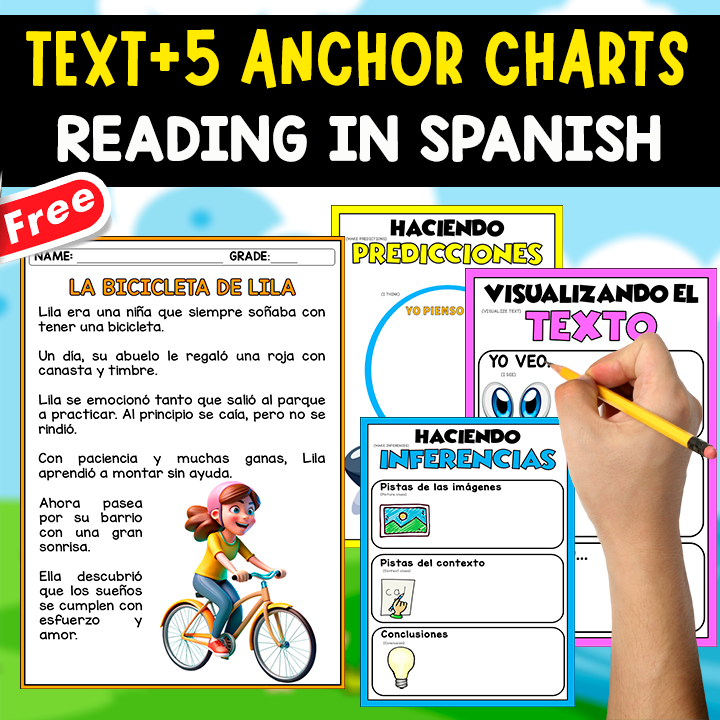
 Gives students a short Spanish-language story, "LA BICICLETA DE LILA", followed by reading-comprehension questions, a vocabulary glossary, and four reading-strategy anchor charts (predicting, questioning, visualizing, and inferring) tied to the story.
 Free download
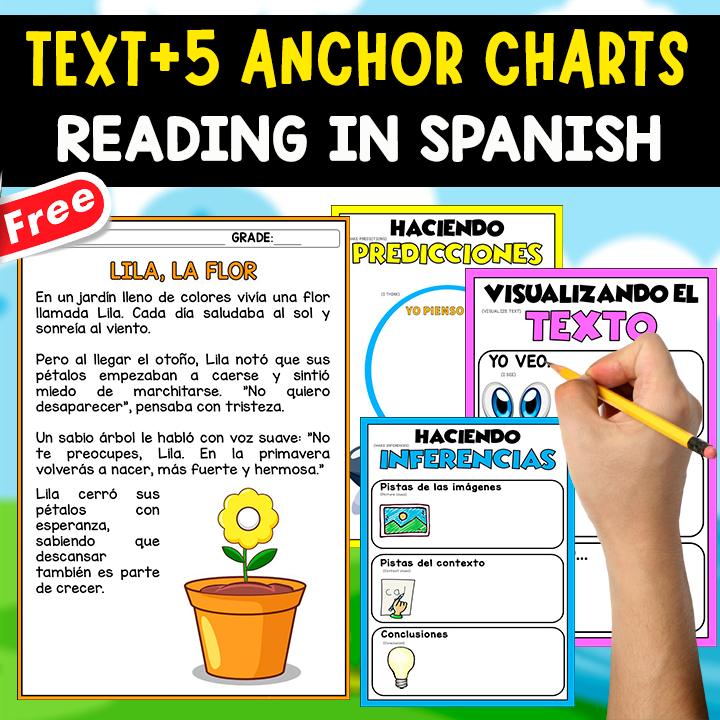
 Gives students a short Spanish-language story, "LILA, LA FLOR", followed by reading-comprehension questions, a vocabulary glossary, and four reading-strategy anchor charts (predicting, questioning, visualizing, and inferring) tied to the story.
 Free download
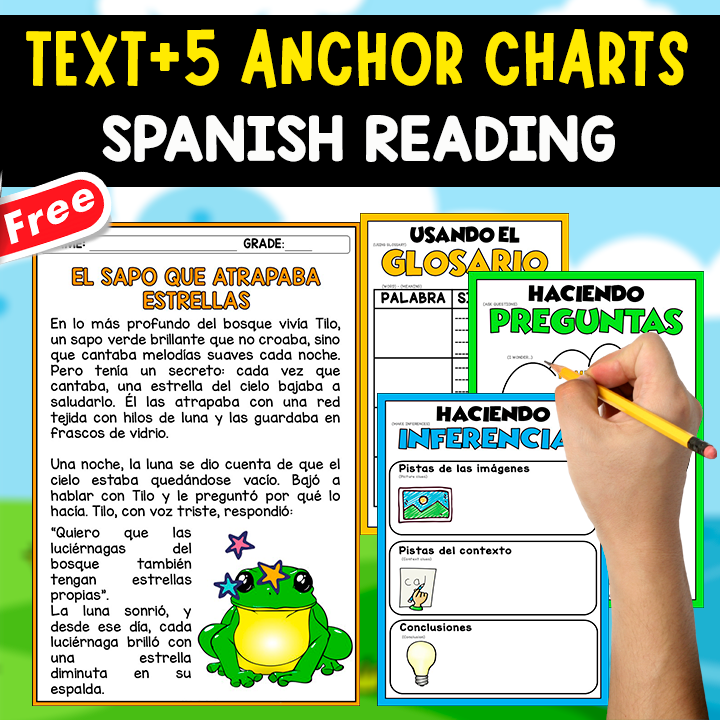
 Gives students a short Spanish-language story, "EL SAPO QUE ATRAPABA ESTRELLAS", followed by reading-comprehension questions, a vocabulary glossary, and four reading-strategy anchor charts (predicting, questioning, visualizing, and inferring) tied to the story.
 Free download
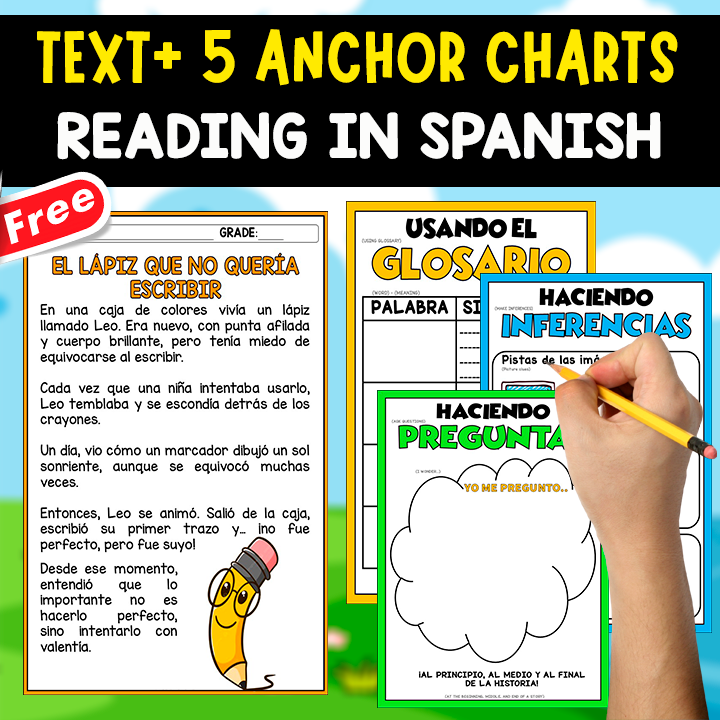
 Gives students a short Spanish-language story, "EL LÁPIZ QUE NO QUERÍA ESCRIBIR", followed by reading-comprehension questions, a vocabulary glossary, and four reading-strategy anchor charts (predicting, questioning, visualizing, and inferring) tied to the story.
 Free download
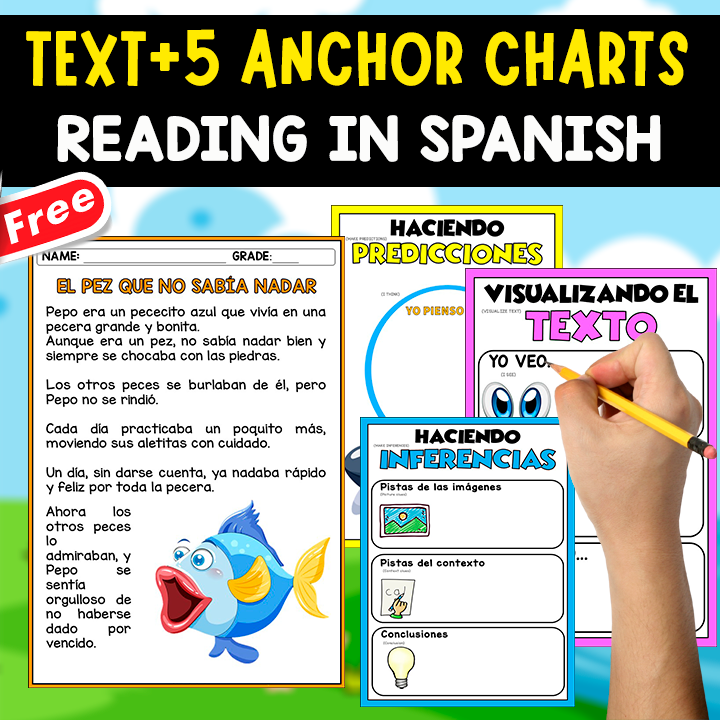
 Gives students a short Spanish-language story, "EL PEZ QUE NO SABÍA NADAR", followed by reading-comprehension questions, a vocabulary glossary, and four reading-strategy anchor charts (predicting, questioning, visualizing, and inferring) tied to the story.
 Free download
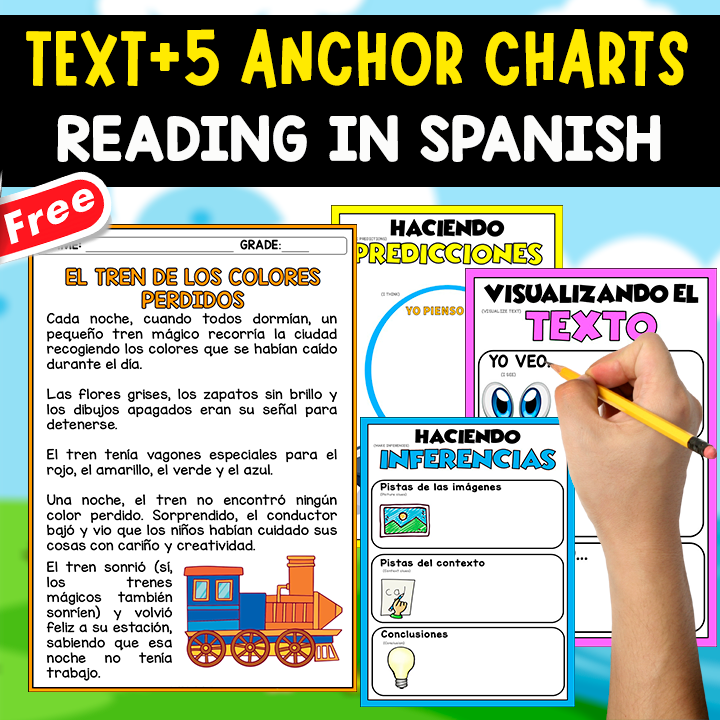
 Gives students a short Spanish-language story, "EL TREN DE LOS COLORES PERDIDOS", followed by reading-comprehension questions, a vocabulary glossary, and four reading-strategy anchor charts (predicting, questioning, visualizing, and inferring) tied to the story.
 Free download
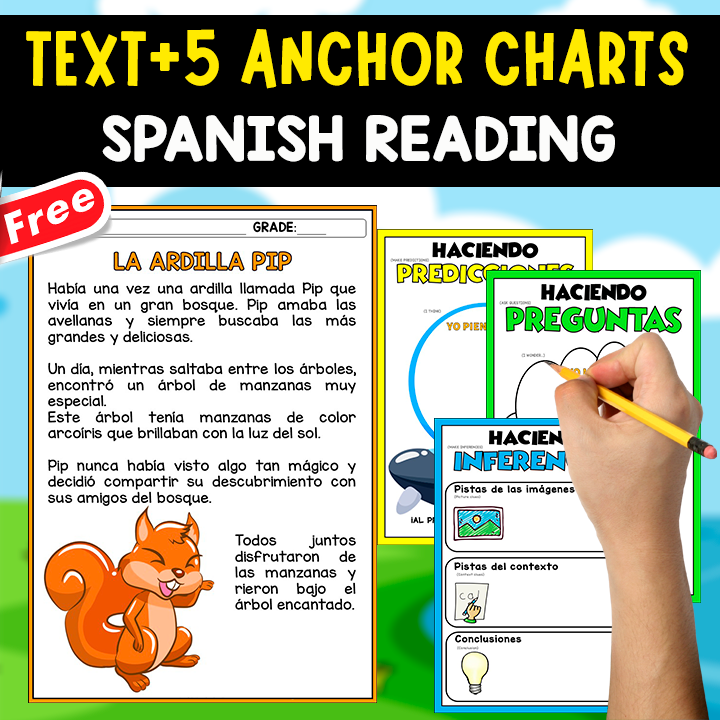
 Gives students a short Spanish-language story, "LA ARDILLA PIP", followed by reading-comprehension questions, a vocabulary glossary, and four reading-strategy anchor charts (predicting, questioning, visualizing, and inferring) tied to the story.
 Free download
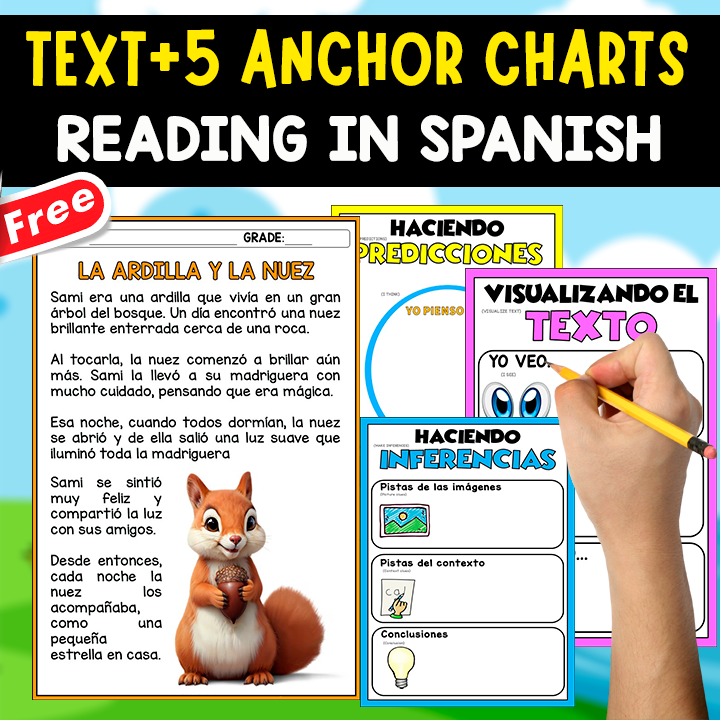
 Gives students a short Spanish-language story, "LA ARDILLA Y LA NUEZ MÁGICA", followed by reading-comprehension questions, a vocabulary glossary, and four reading-strategy anchor charts (predicting, questioning, visualizing, and inferring) tied to the story.
 Free download
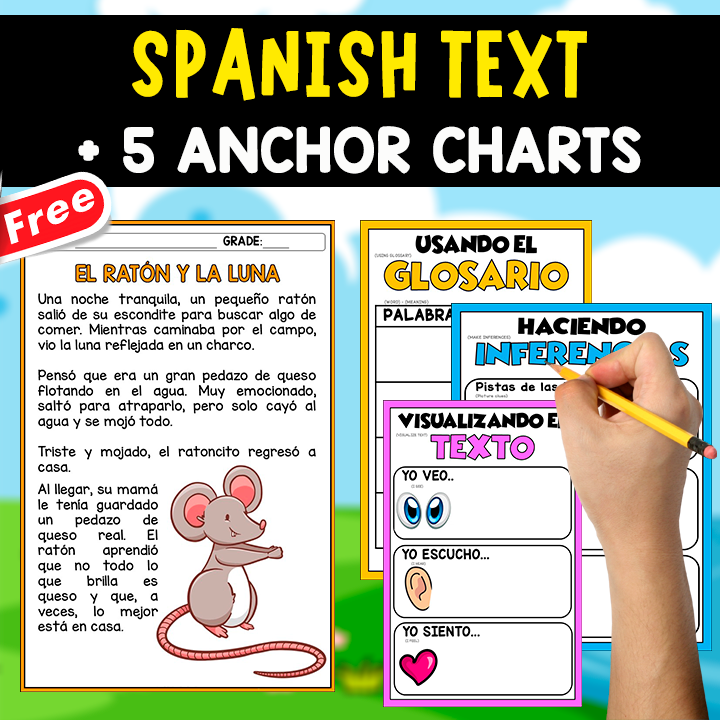
 Provide a short bilingual (Spanish story / English-labeled strategy prompts) reading passage, 'El ratón y la luna', with comprehension questions and a set of reusable reading-strategy anchor charts.
 Free download
 Spanish: ESCALERA DE LA METACOGNICIÓN An instructive and enlightening tool for educators eager to foster metacognition in their students.