



3,890 products added recently
Page 11 - Elementary Lesson Plans
Support your elementary students with lesson plans that cover a broad range of subjects and skills. These resources are designed to promote cognitive, social, and emotional growth. Incorporate them into your teaching to provide a well-rounded education that meets the needs of all your students.

 Show filters

Geometry: 2-D & 3-D Shapes - Learn the Skill - FLASH-PC
Math, Geometry, Common Core, Grade 3, 4, 5, Teacher Tools, Lesson Plans
Geometry: 2-D & 3-D Shapes - Learn the Skill - FLASH-PC Flash-PC is an interactive educational software designed to ignite curiosity and foster a love for learning about geometric shapes among students. The program uses real-world applications to bring theoretical geometry concepts to life, ensuring an engaging and effective study process. This resource caters towards students in grades 3 through 5, offering a multifaceted approach towards understanding geometrical principles. It encourages profound analytical thinking and problem-solving skills by: Integrating valuable mathematical tools within the curriculum. Presenting complex geometric concepts through relatable, everyday scenarios. Promoting task-based learning strategies that hinge on practical problem resolution The course content aligns with both Common Core State Standards and STEM initiatives, seamlessly integrating into any teaching plan aiming at promoting broader skills in mathematics. Following strict guidelines from the National Council of Teachers of Mathematics (NCTM), Flash-PC ensures rigorousness for efficient learning outcomes. A notable feature of this tool is its inclusive bilingual structure – offering Spanish voiceover alternatives alongside English text options. This serves as a noteworthy stride toward fostering diversity within classroom settings or homeschooling environments since it includes learners from diverse linguistic backgrounds thus providing equal opportunities for all students alike. The Flexibility Factor: The downloadable format allows teachers unmatched flexibility in their lesson planning. They can use Flash-PC for full-class instruction on geometry education or split students into smaller groups for collaborative learning efforts around shapes. Alternatively educators could also leverage it as homework thereby supporting self-paced individual exploration serving different academic needs effectively. To summarize:, Geometry: 2-D & 3-D Shapes - Learn the Skill - FLASH-PC is an all-rounded educational resource for every classroom, be it public schools or homeschooling setups. The tool streamlines complex geometric learning with consummate ease while promoting enjoyable ways to build math proficiency and creative problem-solving skills among young learners. Notably, independent treks taken away from class sessions equally contribute to successful academic outcomes showcasing its adaptable nature in diverse learning application.
Author Classroom Complete Press
Tags Software (PC)

Growth and Development Health: 4th and 5th Grade Unit 2
P.E. & Health, Life Studies, Physical Education, Health, Special Resources, Life Skills, Social Emotional Learning (SEL), Social Skills, Grade 4, 5, Teacher Tools, Lesson Plans, Worksheets & Printables, Worksheets
Growth and Development Health: 4th and 5th Grade Unit 2 For 4th and 5th Grade Health, there are seven standards that students will practice and learn. This unit is all about Growth and Development. Through using this Growth and Development Health: 4th and 5th Grade Unit 2 students will explore and learn to identify daily healthy habits. This unit is the perfect way to help 4th and 5th grade students learn and develop healthy habits. In this unit, students will understand and explain the six major body systems including the cardiovascular system, the digestive system, muscular system, the respiratory system, the nervous and skeletal systems, along and more. Also included in this unit, students will compare their emotional, physical, and academic differences with other classmates as they do activities with each other to build friendships and classroom unity with each other. Furthermore, students will have the opportunity to practice scenarios using different healthy methods. At the end of this unit, there is an assessment to check for understanding with answer keys included. This 24-page unit meets Common Core Standards and is filled with engaging activities that will help any student build a healthy foundation! Included in this 4th and 5th Grade Health Unit are the following: There are six major body systems that students will learn and be able to explain how they work and function together. The 6 major systems listed in this unit and include the following systems: Cardiovascular, Respiratory, Digestive, Skeletal, Nervous, and Muscular. Students will also compare their emotional, physical, and academic differences. There is an opportunity for students to healthy methods using different scenarios. Lastly, included there is an assessment to check for understanding with answers. There are 24 pages included! This 4th and 5th Grade Unit 2: Growth and Development meets the Common Core Standards. There are seven units that cover all the health requirements for 4th and 5th grade. Here are the links to other health units: Health | 4th and 5th Grade Unit 1: Personal Health Health | 4th and 5th Grade Unit 2: Growth and Development Health | 4th and 5th Grade Unit 3: Nutrition and Physical Activity Health | 4th and 5th Grade Unit 4: Substance Use and Abuse Health |4th and 5th Grade Unit 5: Injury and Violence Prevention Health | 4th and 5th Grade Unit 6: Prevention and Control of Disease Health |4th and 5th Grade Unit 7: Environmental Consumer Health
Author K-5 Treasures
Tags Health Unit, Personal Health, Healthy Goals, Health Activities, Physical Goals, Health Goals, Health And Wellness, 4th Grade Health, 5th Grade Heath, Heath Units

The World of Dolphins: Guided Reading Level Q with Lesson Plan
ELA, Resources for Teachers, Reading Comprehension, Reading, Science, Language Development, Life Sciences, Earth and Environmental Sciences, Pre-Reading, Vocabulary, Grade 3, 4, 5, Worksheets & Printables, Worksheets, Teacher Tools, Centers, Activities, Literacy Readers, Quizzes, Quizzes and Tests, Assessments, Lesson Plans
This The World of Dolphins (level q) guided reading book with lesson plan includes: Guided Reading Color Label (front cover x1) This is a quick way to match the book’s demands to what students can generally handle.. The overall goal is to use the level/color to pick books for several smaller groups. To qualify for a certain level, a student is expected to read a book from that level with about 90–94% accuracy. If a student is consistently accurate and understands, move up a level. If the student is struggling at that level, drop down and add more support. Each student will improve at completely different rates, but it is generally one of the best ways to check progress across the class. DOWNLOAD THE CATALOG TO VIEW ALL GUIDED READING BOOKS AVAILABLE (SORTED LEVELS A-Z) Pre-Reading Question (x1) Teacher asks the prompt aloud, can be while showing the cover or first page. Students share what they already know, or make educated guesses from the cover. Prompt them to use the target vocabulary. Write some of their responses on the board to look back at during the reading. Vocabulary Words (x5) Introduce the five words, best doing it one at a time. Start by saying it, while students repeat and then see if anyone knows what it means before reading further. Read through the meaning and try to briefly connect each word to a picture or gesture so it’s meaningful. Ask students to flip through the book pages and point to where they see each of the vocabulary words. While reading the book pause upon coming across one of the vocab words or read the sentence twice to make sure students understand the word has appeared. Optional: Ask students to raise hands whenever they see/hear one of the new words. Guided Reading Pages (x10) Check the book snapshot (below) for: primary topic - do you need to prep extra reading or intro materials on this? what is taught best - decide on 1-2 bullets to focus on, use the prompt or words provided here for best results. learning goals - what you are checking for students to be able to do after the session, elicit answers using prompts or words provided. key vocabulary (see section above). questions overview - so you know what is coming up and if you need to prep extra materials to assist understanding. Run the lesson You may have already looked at a few of the pages together, but you can show them some of the pictures again first to set meaning. Depending on how much time you have and how familiar your students are with guided reading class, you may want to read the book aloud first with the group first. Students whisper or partner read, while you listen in. If time, do it as a group, one student reading a page each. Use the guided page’s prompts to coach: “Check the picture / does it make sense?” “Point under the words / try the first sound” “Reread the sentence smoothly”. Try to focus more on one student per session (rotating every time), so you can work out if they are ready to move up or need to move down a level. Comprehension Questions (back cover x3) This is your way to check that students didn’t just say the words, but actually understood the text. First, let students answer by pointing to the page/picture and saying a short sentence. After any answer, follow with: “Show me where you found that in the text.” In bigger groups, have partners answer first (10–20 seconds), then call on 2–3 students to share. Differentiation tips: Emerging speakers/struggling readers: oral + pointing On-level: oral in a full sentence Higher: one written sentence or draw + label Book Snapshot Title: The World of Dolphins Genre: Nonfiction (informational) Subject: Life Science Primary Topic: Dolphin traits, behavior, and survival Estimated Guided Reading Level (A–Z): Q What This Book Teaches Best Explains dolphins as marine mammals (warm-blooded, nurse young with milk) and notes they are related to whales. Teaches how dolphins breathe : they cannot breathe underwater, must surface for oxygen, and use a blowhole to exhale and inhale quickly. Highlights dolphin social life in pods , including working together for food, protection from predators, and saving energy by swimming as a team. Describes dolphin communication and sensing , including clicks/squeaks/whistles, a unique “signature whistle,” and echolocation to find objects in dark or murky water. Connects dolphin survival to human impact , naming pollution, habitat loss, and accidental capture in fishing nets as threats. Learning Goals Students will explain why dolphins must come to the ocean’s surface to breathe and how a blowhole helps them do it. Students will describe how dolphins live in pods and list ways pod members help each other find food and stay safe. Students will explain how echolocation works in the text and what information dolphins learn from returning echoes. Students will identify what dolphins eat in the book and describe one hunting strategy pods use with schools of fish. Students will describe how mother dolphins care for calves and what the mother teaches the calf over time. Students will name threats to dolphins mentioned in the text and explain why protecting the ocean matters for their survival. Key Vocabulary From the Text blowhole — opening on top of a dolphin’s head for breathing. echolocation — finding things using sounds and listening for echoes. carnivores — animals that eat other animals for food. crustaceans — sea animals with hard shells, like crabs and shrimp. breaching — jumping up out of the water. Discussion Prompts Pre-reading question: What do you think dolphins need in order to survive in the ocean? Comprehension questions: Why does the text say dolphins have to come to the surface of the ocean? Comprehension questions: How does the text explain that echolocation helps dolphins in dark or murky water? Comprehension questions: What does the text say dolphins do in pods that helps them find food or stay safe? Printing Tips 1. Best Printing Method (Recommended) “Booklet” Printing (Best if Available) If your printer or PDF viewer supports Booklet Printing , use this. Settings to use: Print mode: Booklet Paper size: Letter or A4 (either works) Orientation: Landscape Print on both sides: Yes Flip on: Short edge Scaling: Fit to printable area Booklet subset: First test: Front sides only Then: Back sides only This will automatically: Pair pages correctly Put the cover on the outside Align everything for folding After printing, fold in half and staple along the spine . 2. If “Booklet” Printing Is NOT Available You can still print this correctly with manual duplex printing . Step-by-step: Open the PDF. Choose Print . Set: Orientation: Landscape Pages per sheet: 1 Print on both sides: Yes Flip on: Short edge Print all pages . Because each PDF page already contains two facing book pages, the result will still fold cleanly into a book. Thousands of Cored Education products are included with your TeachSimple membership. Download links and encyclopedia index available here.
Author Cored Education
Rating
Tags Reading Comprehension, Reading Passages, Reading, Guided Reading, Guided Reading Lesson Plan, Guided Reading Activity, Pre-reading, Science Lesson Plans, Life Science, Earth Science

Number & Operations: Addition & Subtraction - Practice the Skill 1 - MAC Software
Math, Numbers, Kindergarten, Preschool, Grade 1, 2, Teacher Tools, Lesson Plans
Number & Operations: Addition & Subtraction - Practice the Skill 1 - MAC Software This valuable teacher's resource is designed to increase competency in Number and Operations focusing on addition and subtraction. This interactive MAC software, downloadable as a zip file, is suitable for early learners from preschool level to grades one and two. The software adheres strictly to the Common Core Standards while meeting STEM initiative targets. It follows guidelines set by the National Council of Teachers of Mathematics (NCTM), ensuring optimal alignment with contemporary educational standards. Key Features: Captivating, curriculum -oriented content consolidated through timed drill activities. These drills challenge students to promptly solve addition and subtraction problems hence fostering fluency. Inclusion of crucial mathematical tools within the timed drills for ease of use by students. A bilingual feature offering both English voice-over and text as default with an added Spanish voice-over option inclusive of corresponding Spanish text. This element supports bilingual classrooms or homeschooled children for whom Spanish may be their first language at home. The software's wide grade level range enhances its versatility for consecutive academic years or varying levels within a single class year. In addition to traditional classroom lessons, it can be utilized in small group sessions addressing different skill levels or even assigned as practice homework. Bridging Classroom Teaching With Interactive Learning Integrating Number & Operations: Addition & Subtraction - Practice the Skill 1 - MAC Software within your routine resources aids in grooming confident young mathematicians who master not just understanding but application of mathematical concepts as well.</p
Author Classroom Complete Press
Tags Math Lesson, Addition, Subtraction, Operations, Digital Math

Social Skills Role-Play Scenarios & Empathy Building Sheets
Classroom Management, Resources for Teachers, Community Building, Life Skills, Special Resources, Social Emotional Learning (SEL), Social Skills, Special Education Needs (SEN), Speech Therapy, STEM, Homeschool Curriculum, Homeschool Templates, Grade 3, 4, 5, 6, 7, Worksheets, Worksheets & Printables, Workbooks, Word Searches, Teacher Tools, Assessments, Lesson Plans, Quizzes and Tests, Quizzes, Tests
This comprehensive 33-page digital Social Skills Role-Play Scenarios and Empathy Building Sheets Curriculum for students in Grades 3-6 provides educators with easy-to-implement lessons about powerful and important topics - social-emotional learning (SEL) and developing empathy. Each of the components in this package features relevant supportive research along with fun, engaging, and easy-to-use role-play simulations and seven engaging student worksheets that address the most important life skills our students need, including developing empathy; resolving conflict; practicing active listening; decoding non-verbal cues; navigating peer pressure; providing genuine apologies; and displaying sportsmanship. This curriculum is perfect for teachers in elementary schools, counselors, homeschoolers, and out-of-school-program providers. Included in this 33-page Curriculum are the following components and resources: Phase 1: The Core Theory behind Affective, Cognitive, and Compassionate Empathy/ Supporting Material for Role Playing Phase 2: Seven Printable Student Worksheets with Real-Life Role-Playing Scenarios (Decoding Non-Verbal Cues, The Empathy Bridge, I Statement Architect, Active Listening, Peer Pressure Navigator, Apology Blueprint, Sportsmanship & Fair Play) Phase 3: Curriculum Guides, Teachers Visuals, Implementation Guide, and Answer Key This no-prep resource is designed to provide students with a real-world opportunity to transform abstract concepts into experiential learning through safe role-play and mapping experiential empathy. Therefore, all upper elementary-aged children (8-12) will develop emotional intelligence by reducing the tendency to exhibit hostile attribution bias, and practice prosocial behaviors in a low-stakes learning environment. Immediate digital download is available, and the Curriculum may be easily printed and used immediately or utilized through Google Classroom. Why Schools & Parents are Successful: Both research and classrooms prove this method produces results. The basis for these materials is experiential learning theory, mirror neuron studies, and restorative practice; there is measurable growth in empathy and resolving conflicts. You will find many ready-to-use worksheets, role-play scripts, and teacher guides to help you provide instant lessons that save you hours of planning for your classroom. This is an effective method to help your son or daughter become more emotionally intelligent, eliminate hostile attribution bias, and help them develop real-life scripts for dealing with peer pressure, making apologies, and engaging in fair play. Use this method for the whole classroom or in small groups or during counseling, and it will include different learners, multi-age groups and students with neuro-diversity. Many parents report that their children demonstrate newfound positivebehaviour at home, and schools have successfully adopted this curriculum to reduce relational aggression and meet CASEL standards. Intended target audience: Grades 3 - 6 (approximately 8 to 12 years old) are referenced in every chapter and case study/worksheet in this curriculum as being appropriate for that age range and developmental level. The other target ages of K - 2 will not be appropriate due to more advanced cognitive requirements (the second-order Theory of Mind, perspective-taking, and restorative language frameworks) and to Grades 7+ (middle school) students for their focus on upper elementary social dynamics (recess exclusion, group projects, rumor spreading, sportsmanship). Copyright/Terms of Use: The content of this book was registered as protected material by Syed Hammad Rizvi for exclusive personal/classroom usage. Therefore, you may not copy, modify, sell or redistribute this book in any format (including the internet) to others for any reason whatsoever. You may only provide a copy of the book to someone else by buying an additional license through Teachsimple. Thank you for complying with the copyright/user agreement and supporting the work of Syed Hammad Rizvi!
Author Creative Book Store
Rating
Tags SEL, SocialEmotionalLearning, EmotionalIntelligence, EmpathyBuilding, SocialSkills, MentalHealthForKids, SocialEmotional, SocialEmotionalDevelopment, RolePlayScenarios, SocialSkillsRolePlay
Number & Operations: Multiplication & Division - Practice the Skill 3 - MAC Software
Math, Algebra, Common Core, Grade 3, 4, 5, Teacher Tools, Lesson Plans
Number & Operations: Multiplication & Division - Practice the Skill 3 - MAC Software This resource is designed for educators with a focus on teaching multiplication and division aligned to elements of Number and Operations. It provides an effective learning experience through succinct, curriculum -focused practice skill timed drill activities. Vision: Picture a classroom buzzing with students actively solving equations, independently working on multiplying and dividing numbers. The aim of this software is to facilitate such an engaging environment for Grades 3 to 5. The Package: The MAC software includes not just mathematical problems but also provision for hands-on learning experiences using practical math tools that help students visually decipher multiplication and division process. Switching languages is effortless as instructions are available in both English and Spanish, thus enriching the learning experience for students who speak either or both languages at home. The product adheres to Common Core State Standards and NCTM (National Council Of Teachers Of Mathematics). This makes it highly valuable across various educational settings including individual homework assignments as well as small or large group classroom activities due to its standards compliance feature. Tech Specs: All the resource material comes packaged in an easy-to-download single zip file suitable exclusively for MAC systems without causing much hassle, so you could dive into enriching your student's number crunching skills right away! In Conclusion: All-in-all this resource equips learners solidly while keeping them engaged thoroughly during Math lessons. Give your teaching strategy an upgrade by employing this remarkable tool aimed at mastering multiplication and division today!
Author Classroom Complete Press
Tags Math Skills, Digital Math, Operations, Numbers, Division Practice
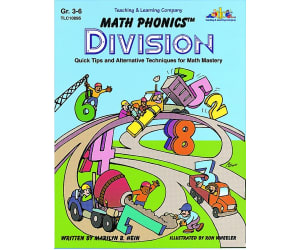
Math Phonics Division: Quick Tips and Alternative Techniques for Math Mastery
Math, Multiplication and Division, Multiplication, Grade 3, 4, 5, 6, Teacher Tools, Lesson Plans
Math Phonics Division: Quick Tips and Alternative Techniques for Math Mastery Math Phonics Division: Quick Tips and Alternative Techniques for Math Mastery is a comprehensive resource especially designed to bolster understanding of division in mathematics. This tool is primarily geared towards Grade 3, 4, 5, and 6 students as it introduces fundamental mathematical concepts using alternative methodologies. Innovative Approach To Education This unique teaching tool integrates strategies usually utilized in language arts such as rules theme and pattern recognition into the learning of Mathematics. The program ensures that these techniques are embedded in an extensive manner thereby simplifying math learning through engaging exercises that students need only spend several minutes each day working on. Suitability & Ease-of-Use Ideal for both public school teachers looking for innovative lesson plans or homeschoolers seeking to add newer dimensions to their curriculum. The material is provided as a PDF file which can be printed out as worksheets or used digitally on electronic devices making it user-friendly. Allows flexibility - Can be used by individual students during self-study periods, small groups in peer-led problem-solving sessions or even at home providing supplemental exercises boosting proficiency levels outside routine classroom hours. Summary: In essence, Math Phonics Division: Quick Tips and Alternative Techniques for Math Mastery merges varied teaching paradigms into a unified intensive tool making division easily understandable rather than merely requiring rote memorization. It's certainly an excellent addition to educators aiming for holistic learning objectives!
Author Classroom Complete Press
Tags PDF

Space Travel & Technology: Blasting Off Gr. 5-8
Science, Earth and Environmental Sciences, Space, Grade 5, 6, 7, 8, Teacher Tools, Lesson Plans
Space Travel & Technology: Blasting Off Gr. 5-8 An immersive teaching resource designed to transport students to the forefront of space exploration. This chapter slice , "Blasting Off," forms part of a larger lesson plan called "Space Travel & Technology," making it both versatile and integrable within a broader curriculum. Ideally suited to grades 5 through 8, this resource aligns with state standards, bringing Science and Astronomy principles alive using simplified language and vocabulary suitable for this age group. In-Depth Exploration The guide will turn your classroom into a shuttle en route to the International Space Station with your students playing key roles as crew members - scientists, engineers, astronauts! A Hands-On Experience This invaluable resource brings together exciting activities that can be modified for small groups or adapted for whole class instruction. Reading passages provide key insights into space travel while student activities integrated throughout encourage active engagement and knowledge application. There are test prep materials included that help reinforce gained knowledge while boosting test-taking confidence among learners. Included also are colorful mini posters that captivate attention while reinforcing topics learned — perfect for visual learners! Digital Learning Tool This PDF format product can also be assigned as homework ensuring learning continues even outside classroom walls. In essence, "Space Travel & Technology: Blasting Off Gr. 5-8" , is an inspiring bridge between today's classroom environment and tomorrow's vision of interstellar exploration. It champions educators' role in preparing future pioneers of space exploration by grounding theory with practical applications all within a learner-friendly framework.
Author Classroom Complete Press
Tags PDF

Silent Letters Phonics – MB, WR, KN, GN Set
ELA, Phonics, Language Development, Vocabulary, Grammar, Grade 1, 2, Worksheets & Printables, Literacy Readers, Teacher Tools, Lesson Plans
With this Phonics / Silent Letters for 1st and 2nd Grade: MB, WR, KN, and GN your students will be able to identify the silent letter words and become better readers as they practice each sound and learn the words that are associated with these sounds. Each worksheet as many activities for the following silent letters: WR, GN, MB, and KN silent letter sounds. This unit is perfect for whole group, individual work, centers, or homework to complete on their own. These fun and engaging activities will help your student match, read, write, and identify the silent sounds in words. With so much practice, students will be able to master these sounds and become better readers. Also included are short reading passages where they will then answer comprehension questions on what they read. All tools helpful to young readers and engaging at the same time. For each sound in this unit, students will: Start with reading a short and easy passage and identify the silent letter words and highlight or color those words. They will also identify at least five words from the reading passage with the silent letter sound. Included are comprehension questions about the passage that each student will answer. Students will also fill in the missing word in a sentence from a word bank that highlights the silent letter sound. On another worksheet, students will complete a cut, sort, and matching activity with the silent letter words and glue them to the correct picture. With a paperclip, students will spin the silent letter word and match it to the correct picture. Lastly, they will complete a word search for the silent letter sounds. It is 27 pages of fun, engaging activities that your students are sure to enjoy! For more phonics and grammar activities, click on the following links below:
Author K-5 Treasures
Rating
Tags Phonics, Silent Letters, 1st Grade Resources, 2nd Grade Resources, Gn Words, Mb Words, Kn Words, Wr Words, Reading Resources, Phonics Worksheets

Writing Well Grade 5: A Guide for Proper Writing Technique
ELA, Writing, Grade 5, Teacher Tools, Lesson Plans
Writing Well Grade 5: A Guide for Proper Writing Technique This is a comprehensive resource specially designed to increase the writing prowess of all fifth-grade students. It aligns easily with most English language textbooks for this grade and provides practical tasks focusing on fundamental areas such as: Capitalization Punctuation Sentence and paragraph construction Story creation Identifying grammatical components. New Concepts Introduction Methodology Ensures Effective Learning: The guide uniquely presents new concepts or skills. Each page starts with a clarification or rule relating to the subject matter, setting the foundation for comprehension before learners start exercises centered on that area. The Significance of Word Classifications in Grammar: The instructions aid understanding by explaining different word classes like nouns and verbs in detail, along with their respective grammar roles. Recognizing these connections improves regualr language application and boosts children's confidence as they perfect their writing techniques. Inclusive Digital Provision Enhances Accessibility & Convenience: Included in the guide is PDF content which can be easily retrieved from multiple devices, ensuring ready access during group school lessons, small group activities or homeschooling sessions at home. Its digital nature also allows it to be assigned as homework conveniently. An Enriched Teaching Experience Awaits Educators: Apart from presenting distinct learner-friendly lesson plans ; educators get support too—an included answer key—making marking easier and faster while preserving high teaching standards. "Writing Well Grade 5": Aiming not merely to educate but also inspire our young writers towards mastering language - nurturing linguistic dexterity step-by-step.
Author Classroom Complete Press
Tags PDF
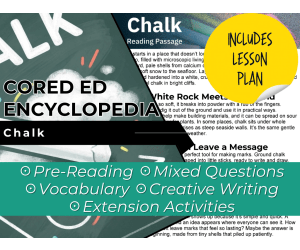
Chalk Reading Comprehension Passage - Cored Ed Encyclopedia
ELA, Language Development, Reading Comprehension, Reading, Pre-Reading, Life Sciences, Science, Social Studies, Earth and Environmental Sciences, Geography, Grade 2, 3, 4, 5, Worksheets & Printables, Worksheets, Teacher Tools, Centers, Activities, Writing Prompts, Assessments, Quizzes and Tests, Quizzes, Lesson Plans
This chalk reading comprehension with lesson plan includes: Visualization (on the front cover) Start your lesson by taking a minute to think and share something about the topic. Read the script aloud (slowly), perhaps prepare some music or sound effects. Student close their eyes and let their imaginations wander. Students open their eyes, read the question aloud and give them a few minutes to complete. Ask a few students to share or keep answers until the end to compare with what they learn in the passage. Quick pause—thousands of Cored Education products are included with your TeachSimple membership. Download links and encyclopedia index available here. Pre-Reading Trivia Students will write down one thing they already know about the subject and then read five more facts and discuss. These facts are fun, and the students will enjoy learning about the subject before reading more. Give 1 minute for students to write what they already know (no pressure—best guess is fine). Read the five facts together. After each fact, do ask a student for their opinion, was it surprising? Set a purpose by asking students to highlight/underline one fact they want to learn more about during the reading. Reading Passage The text is a high-interest reading passage with set paragraphs, roughly three to four paragraphs long. It contains a variety of themes about the topic, anywhere from history to technology. The passage is between 250 and 350 words in length. First, ask students to look at the headings and see what they’ll learn about today. What do they know about the topic/heading? First read options: Teacher read-aloud (best for support). Partner reading (paragraph by paragraph). While reading, students underline important details, and vocabulary words they think may come up in the questions section. Mixed Questions The first question page contains four multiple-choice questions, each with a choice of four answers, and three written response questions that require a sentence or two from the student. Students complete the mcqs first independently, then review quickly as a class. For the 3 written responses, try to get students giving the answer with some form of evidence: “I think ___ because the text says ___.” If students get stuck, send them back to check the passage. Vocabulary Questions Practice seven key words from the text in this section across two activities. First section is scrambled words where students will unscramble three words given a clue for each. The second section is a word to meaning matching activity. Before starting, have some students read out words they underlined in the passage. Ask students to say the word and read aloud the sentence(s) around each word. Ask students to do scrambled words and the matching exercise in pairs then go through answers as a class. For the scrambled spelling task, get four pairs to come up to the board and write the words for extra practice with the other student reading out the clue. For the matching task, prompt students to give full sentences: “I matched ___ with ___ because ___.” Creative Writing In this question, the student will be required to write a five to eight sentence paragraph on a question related to the topic. Before starting, ask students write down 3 key ideas they are going to include in their piece. Ask students for ideas to share around the class to help those struggling. Pro writing expectations: 5–8 sentences At least 2 facts or details from the passage At least 2 vocabulary words from the previous page Students read their paragraphs while classmates listen for facts and vocabulary words. Extension Activities This page is optional for fast finishers or to take home. There are several activities, each one requiring a different skill. Do some, do none, do all, completely optional - but you will feel reassured knowing every possibility is planned for. Includes summary writting question and additional facts. Answer Key There are answers for the multiple-choice questions, written response questions have sample answers, vocabulary answers and if there is a summary question then a sample summary will be provided as well. Lesson Plan Included Customized lesson plan for this lesson is included. Lesson Snapshot Title: Chalk Genre: Nonfiction (informational text with headings) Subject: Life Science / Earth Science / Reading (Informational Text) Primary Topic: How chalk forms and how people use it Estimated Guided Reading Level (A–Z): O What This Lesson Teaches Best Explains chalk’s origin: microscopic ocean life made calcium carbonate shells that piled up, hardened, and became chalk. Uses cause-and-effect to show how pressure, time, and weather change materials (shells → rock; waves/wind reveal cliffs). Connects a natural material to human uses (building materials, improving sour soil, writing and drawing). Builds understanding of properties of materials (chalk is soft, rubs into powder, leaves visible marks on dark boards). Highlights how tools and surfaces change over time (dark boards, colored chalk experiments, sidewalk chalk, whiteboards). Learning Goals Students will explain how chalk forms over a long time using details from the text. Students will identify what chalk is made from in the beginning of its story (shells of microscopic living things). Students will describe at least two practical uses of chalk named in the text. Students will explain why chalk worked well on dark boards, using evidence from the passage. Students will compare chalk rock and gypsum “chalk” as described in the passage. Key Vocabulary From the Text microscopic — too tiny to see without help. carbonate — part of a mineral in many shells. crumbly — easy to break into small pieces. gypsum — a mineral used to make some board “chalk.” pavement — the hard surface of a sidewalk or road. FULL CATALOG OF DOWNLOAD LINKS AND ENCYCLOPEDIA INDEX HERE
Author Cored Education
Rating
Tags Vocabulary, Reading Comprehension, Reading Passages, Lesson Plans, Ela Lesson Plans, Reading Comprehension Lesson Plans, Pre-reading, Science Lesson Plans, Earth Science, Geography

Magic Math Puzzle | Interactive Math Video Lesson
, Grade 1, 2, 3, 4, Lesson Plans, Teacher Tools
Magic Math Puzzle | Interactive Math Video Lesson Magic Math Puzzle | Interactive Math Video Lesson is a remarkable teaching resource perfect for educators looking to inject an element of fun in the study of math. Geared towards Grade 1 through Grade 4 students, it makes math concepts on puzzles more approachable and comprehensible. This video lesson serves as a superb mechanism for triggering young minds to go beyond the norm and explore ingenious ways to solve mathematical puzzles. With its colorful animations and interactive features, students are likely to remain engaged with this resource consistently. Uniqueness of Magic Maths Puzzle Video Lesson Effective Utilization of Visual Content: What sets Magic Maths Puzzles apart from traditional teaching methods is its efficient utilization of visual content that proves significantly impactful in student engagement. Bite-sized: It only runs for one minute - providing bite-sized information that's easily digestible even by the youngest learners. The Magic Maths Puzzles video lesson contains one MP4 file. Easy-to-use doesn't even begin to describe how accessible this product is- just download the file, hit play and you're ready to go! Note: Please make sure your equipment can support MP4 files before using this resource. Versatile Usage Scenarios The flexibility feature allows teachers utilize this video lesson in whole group instruction or during smaller focus groups. Parents can use it effectively when homeschooling or during eLearning and remote learning situations. Potential Add-ons: This includes possibilities for homework assignments where students apply what they've learned at home then bring their understanding back into class discussions. Magic Maths Puzzles not only kindles interest in Mathematics but also contributes terrifically towards improved academic outcomes for learners. Discover exciting transformation possibilities with your mathematics instruction today with Magic Maths Puzzles!
Author Educational Voice
Tags Math Puzzles, Interactive Learning, Visual Content, Teaching Resource, Student Engagement

Reading Comprehension: Main Idea
ELA, Reading, Reading Comprehension, Common Core, Grade 5, 6, 7, 8, Teacher Tools, Lesson Plans
Reading Comprehension: Main Idea - An Essential Teaching Resource Reading Comprehension: Main Idea is an essential teaching resource designed to enhance the reading and comprehension skills of students in grades 5 through to 8. Reading, a fundamental communication tool, is vital for success both within and beyond school. Focusing on "Main Idea" This resource specifically zooms in on "Main Idea," a key chapter slice from the full "Reading Comprehension" lesson plan. The ability to understand main ideas within texts enables students to grasp overall themes or concepts, thereby enriching their comprehension ability. An Effective and Structured Learning Tool The instructional material adopts Bloom's Taxonomy of Learning objectives, emphasizing its educational appropriateness. It emphasizes key reading acquisition elements such as: Understanding inference Leveraging context clues. The structure suits various implementation strategies—it can be used for whole group instruction or small group work. Considering each student’s learning style, it can also serve as individual assignments or extra homework tasks. A Compact Yet Informative Resource This teaching tool is compact yet informative and comes across 24 print-ready pages in PDF format. This convenience serves teachers working with diverse classroom environments well. Language Arts teachers will appreciate that this resource aligns closely with Common Core State Standards; thereby assuring curriculum-compliant lessons while instilling confidence that they are equipped with effective materials for stimulating their students' comprehension abilities.</p
Author Classroom Complete Press
Tags Reading, Comprehension, Word Search, Main Idea, Literacy

Cells Reading Comprehension Passage - Cored Ed Encyclopedia
ELA, Language Development, Reading Comprehension, Reading, Pre-Reading, Life Sciences, Science, Technology, History, Social Studies, Grade 2, 3, 4, 5, Worksheets & Printables, Worksheets, Teacher Tools, Centers, Activities, Writing Prompts, Assessments, Quizzes and Tests, Quizzes, Lesson Plans
This cells reading comprehension with lesson plan includes: Visualization (on the front cover) Start your lesson by taking a minute to think and share something about the topic. Read the script aloud (slowly), perhaps prepare some music or sound effects. Student close their eyes and let their imaginations wander. Students open their eyes, read the question aloud and give them a few minutes to complete. Ask a few students to share or keep answers until the end to compare with what they learn in the passage. Quick pause—thousands of Cored Education products are included with your TeachSimple membership. Download links and encyclopedia index available here. Pre-Reading Trivia Students will write down one thing they already know about the subject and then read five more facts and discuss. These facts are fun, and the students will enjoy learning about the subject before reading more. Give 1 minute for students to write what they already know (no pressure—best guess is fine). Read the five facts together. After each fact, do ask a student for their opinion, was it surprising? Set a purpose by asking students to highlight/underline one fact they want to learn more about during the reading. Reading Passage The text is a high-interest reading passage with set paragraphs, roughly three to four paragraphs long. It contains a variety of themes about the topic, anywhere from history to technology. The passage is between 250 and 350 words in length. First, ask students to look at the headings and see what they’ll learn about today. What do they know about the topic/heading? First read options: Teacher read-aloud (best for support). Partner reading (paragraph by paragraph). While reading, students underline important details, and vocabulary words they think may come up in the questions section. Mixed Questions The first question page contains four multiple-choice questions, each with a choice of four answers, and three written response questions that require a sentence or two from the student. Students complete the mcqs first independently, then review quickly as a class. For the 3 written responses, try to get students giving the answer with some form of evidence: “I think ___ because the text says ___.” If students get stuck, send them back to check the passage. Vocabulary Questions Practice seven key words from the text in this section across two activities. First section is scrambled words where students will unscramble three words given a clue for each. The second section is a word to meaning matching activity. Before starting, have some students read out words they underlined in the passage. Ask students to say the word and read aloud the sentence(s) around each word. Ask students to do scrambled words and the matching exercise in pairs then go through answers as a class. For the scrambled spelling task, get four pairs to come up to the board and write the words for extra practice with the other student reading out the clue. For the matching task, prompt students to give full sentences: “I matched ___ with ___ because ___.” Creative Writing In this question, the student will be required to write a five to eight sentence paragraph on a question related to the topic. Before starting, ask students write down 3 key ideas they are going to include in their piece. Ask students for ideas to share around the class to help those struggling. Pro writing expectations: 5–8 sentences At least 2 facts or details from the passage At least 2 vocabulary words from the previous page Students read their paragraphs while classmates listen for facts and vocabulary words. Extension Activities This page is optional for fast finishers or to take home. There are several activities, each one requiring a different skill. Do some, do none, do all, completely optional - but you will feel reassured knowing every possibility is planned for. Includes summary writting question and additional facts. Answer Key There are answers for the multiple-choice questions, written response questions have sample answers, vocabulary answers and if there is a summary question then a sample summary will be provided as well. Lesson Plan Included Customized lesson plan for this lesson is included. Lesson Snapshot Title: Cells Genre: Nonfiction (informational science text with headings) Subject: Life Science / Reading (Informational Text) Primary Topic: Cell discovery, parts, and how cells work Estimated Guided Reading Level (A–Z): Q What This Lesson Teaches Best Explains how scientists first described “cells” by observing cork under a microscope (Robert Hooke, 1665). Shows how improved lenses led to new discoveries, including seeing living tiny organisms and developing the idea that living things are built from cells. Teaches core cell-part functions using a clear analogy (a cell as a “busy little city”), including membrane, nucleus/DNA, and organelles. Highlights differences and similarities across living things (one-celled organisms vs. animals with trillions of cells working in teams). Introduces the idea of cell division and specialization as a way living things grow and heal. Learning Goals Students will explain why Robert Hooke used the word “cells” for what he saw in cork. Students will describe how better microscopes changed what scientists could observe. Students will identify key cell parts named in the text and describe what each does. Students will compare one-celled organisms with animals made of many cells, using details from the passage. Students will describe what the passage says about how new cells form. Key Vocabulary From the Text membrane — thin “skin” that separates inside from outside. nucleus — cell center part that holds DNA. organelles — tiny cell parts with special jobs. mitochondria — parts that help release energy from food. chloroplasts — green parts that capture sunlight. FULL CATALOG OF DOWNLOAD LINKS AND ENCYCLOPEDIA INDEX HERE
Author Cored Education
Rating
Tags Vocabulary, Reading Comprehension, Reading Passages, Lesson Plans, Ela Lesson Plans, Reading Comprehension Lesson Plans, Pre-reading, Science Lesson Plans, Life Science, History

Batteries Reading Comprehension Passage - Cored Ed Encyclopedia
ELA, Language Development, Reading Comprehension, Reading, Social Studies, Writing, History, Pre-Reading, Physics, Science, Grade 2, 3, 4, 5, Worksheets & Printables, Worksheets, Teacher Tools, Centers, Activities, Writing Prompts, Assessments, Quizzes and Tests, Quizzes, Lesson Plans
This batteries reading comprehension with lesson plan includes: Visualization (on the front cover) Start your lesson by taking a minute to think and share something about the topic. Read the script aloud (slowly), perhaps prepare some music or sound effects. Student close their eyes and let their imaginations wander. Students open their eyes, read the question aloud and give them a few minutes to complete. Ask a few students to share or keep answers until the end to compare with what they learn in the passage. COMPANION VIDEO NOW AVAILABLE (EMBEDDED AFTER PREVIEW PICTURES IN PRODUCT DESCRIPTION) Quick pause—thousands of Cored Education products are included with your TeachSimple membership. Download links and encyclopedia index available here. Pre-Reading Trivia Students will write down one thing they already know about the subject and then read five more facts and discuss. These facts are fun, and the students will enjoy learning about the subject before reading more. Give 1 minute for students to write what they already know (no pressure—best guess is fine). Read the five facts together. After each fact, do ask a student for their opinion, was it surprising? Set a purpose by asking students to highlight/underline one fact they want to learn more about during the reading. Reading Passage The text is a high-interest reading passage with set paragraphs, roughly three to four paragraphs long. It contains a variety of themes about the topic, anywhere from history to technology. The passage is between 250 and 350 words in length. First, ask students to look at the headings and see what they’ll learn about today. What do they know about the topic/heading? First read options: Teacher read-aloud (best for support). Partner reading (paragraph by paragraph). While reading, students underline important details, and vocabulary words they think may come up in the questions section. Mixed Questions The first question page contains four multiple-choice questions, each with a choice of four answers, and three written response questions that require a sentence or two from the student. Students complete the mcqs first independently, then review quickly as a class. For the 3 written responses, try to get students giving the answer with some form of evidence: “I think ___ because the text says ___.” If students get stuck, send them back to check the passage. Vocabulary Questions Practice seven key words from the text in this section across two activities. First section is scrambled words where students will unscramble three words given a clue for each. The second section is a word to meaning matching activity. Before starting, have some students read out words they underlined in the passage. Ask students to say the word and read aloud the sentence(s) around each word. Ask students to do scrambled words and the matching exercise in pairs then go through answers as a class. For the scrambled spelling task, get four pairs to come up to the board and write the words for extra practice with the other student reading out the clue. For the matching task, prompt students to give full sentences: “I matched ___ with ___ because ___.” Creative Writing In this question, the student will be required to write a five to eight sentence paragraph on a question related to the topic. Before starting, ask students write down 3 key ideas they are going to include in their piece. Ask students for ideas to share around the class to help those struggling. Pro writing expectations: 5–8 sentences At least 2 facts or details from the passage At least 2 vocabulary words from the previous page Students read their paragraphs while classmates listen for facts and vocabulary words. Extension Activities This page is optional for fast finishers or to take home. There are several activities, each one requiring a different skill. Do some, do none, do all, completely optional - but you will feel reassured knowing every possibility is planned for. Includes summary writting question and additional facts. Answer Key There are answers for the multiple-choice questions, written response questions have sample answers, vocabulary answers and if there is a summary question then a sample summary will be provided as well. Lesson Plan Included Customized lesson plan for this lesson is included. Lesson Snapshot Title: Batteries Genre: Nonfiction (informational passage) Subject: Science (Physical Science / Electricity) Primary Topic: How batteries store energy and changed over time Estimated Guided Reading Level (A–Z): T What This Lesson Teaches Best Explains what a battery does and how it powers devices when connected in a circuit (electrons moving through a wire to light a bulb or spin a motor). Introduces key electricity ideas in context (plus/minus ends guiding the “flow” the right way; current moving for a while). Gives a clear mini-history of batteries, from 1800’s “voltaic pile” to later “wet cells,” “dry cells,” and rechargeable batteries. Connects science to real-world uses, from small watch batteries to lithium-ion packs and room-size battery banks for the power grid. Highlights responsible use: batteries don’t last forever, so careful charging and recycling can help protect people and the planet. Learning Goals Identify what the passage says is stored inside a battery and what makes electricity move in a circuit. Explain, using the text, how electrons help a flashlight make a bright beam. Describe what Alessandro Volta built in 1800 and what materials were stacked. Compare “wet cells” and “dry cells” using details from the passage about carrying and spilling. Explain what makes a rechargeable battery different, based on how the passage describes “pushing” chemical changes backward. Describe how batteries are used today, including small devices and large battery banks on the power grid. Key Vocabulary From the Text electrons — tiny particles that can move through a wire. circuit — a path electricity travels through to do work. current — electricity moving steadily in a path. rechargeable — able to be filled up again with electricity. recycling — using materials again instead of throwing them away. FULL CATALOG OF DOWNLOAD LINKS AND ENCYCLOPEDIA INDEX HERE
Author Cored Education
Rating
Tags Vocabulary, Reading Comprehension, Reading Passages, Lesson Plans, Ela Lesson Plans, Reading Comprehension Lesson Plans, Pre-reading, History, Science Lesson Plans, Physics

Lewis & Clark Memorial: Fort Clatsop: Historic Monuments Series
Social Studies, History, History: USA, Grade 4, 5, 6, 7, 8, Teacher Tools, Lesson Plans
Lewis & Clark Memorial: Fort Clatsop: Historic Monuments Series This comprehensive resource is ideally suited for Grade 4 to Grade 8 History classes with a focus on US history. The materials whisk learners on an immersive journey into the past, bringing to life the daunting journey embarked upon by the Corps of Discovery. The product delves deep into profiles of key figures such as Jefferson, Sacagawea, and York. In addition, it highlights interactions with numerous Native American tribes during the expedition. Another important aspect touched upon is details about the renowned Louisiana Purchase. A Peep Into Original Journals: An exclusive feature available in this teaching resource includes excerpts from original journals penned during this historic era. This unique provision offers learners firsthand insights unlikely to be found in traditional study materials! Fort Clatsop Learnings: The section dedicated to explaining the hardships faced at Fort Clatsop cultivates critical thinking among students as they analyze survival strategies implemented at that period. Involving Activities: This product advertises several hands-on activities which are designed to stimulate curiosity and active participation amongst students. Tailored for both whole group instruction or small groups, it adapts well according to classroom dynamics. Product File Description: The package consists of a readily accessible PDF file containing lesson plans tailored specifically for social studies curriculums focusing on US history. To conclude, Lewis & Clark Memorial: Fort Clatsop: Historic Monuments Series is an ideal educational tool enabling instructors a novel way of narrating historical exploratory tales while fostering an environment conducive for student engagement and learning.
Author Classroom Complete Press
Tags PDF
Number & Operations: Fractions - Addition & Subtraction - Learn the Skill - PC Software
Math, Fractions, Common Core, Grade 3, 4, 5, Teacher Tools, Lesson Plans
Number & Operations: Fractions - Addition & Subtraction - Learn the Skill - PC Software A valuable teaching tool for mathematics educators, this software targets students primarily in grades 3 to 5. It offers practical exercises on adding and subtracting fractions which are key aspects of the number and operations subject. Aims This resource provides real-world word problems that help students understand these complex mathematical abilities while applying those skills to life beyond the classroom. The focus is on comprehension through traditional text-based tutorials with voice overs in English and Spanish. The software also incorporates interactive math tools. Versatility These teaching aids are adaptable for different instructional scenarios. They could be used in a whole-group classroom setting, for differentiated instruction within small groups, or as homework tasks aiming at reinforcing learned concepts. This flexibility is beneficial for your lesson planning process. Standard Adherence & Relevance Evidently precision has been prioritized when constructing these resources as they align meticulously with Common Core State Standards (CCSS). In addition, our material stays relevant by developing them adhering closely to standards established by National Council of Teachers of Mathematics (NCTM), acknowledging current STEM advancements and initiatives within education circles nationwide. Accessibility Easily accessible via a single zip file compatible with PCs enabling quick downloading and installation- this software promises optimal efficiency coordinating seamlessly into your tech-savvy classrooms or homeschooling scenarios alike. Ideal For... An experienced teacher looking- for new supplementary materials . A homeschooler seeking comprehensive curriculum- based modules. Specifications Conclusion Making strides in adding value to everyday lessons through innovative design; Number & Operations: Fractions - Addition & Subtraction - Learn the Skill- PC Software redefines mathematical learning one fraction at a time. Give your students a solid foundation in adding and subtracting fractions that will benefit them well beyond their formative years.
Author Classroom Complete Press
Tags Math Lesson Plans, Fractions Lesson Plan, Math Skills, Digital Math, Adding Fractions

Data Analysis & Probability: Probability - Practice the Skill 2 - MAC Software
Math, Patterns, Common Core, Kindergarten, Preschool, Grade 1, 2, Teacher Tools, Lesson Plans
Data Analysis & Probability: Probability - Practice the Skill 2 - MAC Software Presenting a comprehensive pedagogical tool tailored to enhance comprehension of the Probability concept in Data Analysis. The product encapsulates curriculum -centric content and practical usage, delivering riveting 'practice the skill' timed drill tasks. The software is meticulously developed for Preschoolers, Kindergarteners, and Grades 1-2 students. Designed with versatile teaching methods in mind; fit for whole group instruction or small group lessons An engaging interactive design that eases homework assignments with parents'/guardians' guidance at home. We ensure alignment with Common Core State Standards, and STEM initiatives making this resource an essential inclusion not only in math classes but serves broader educational opportunities including Pattern activities under Subsubjects category. Product Features All neatly packaged downloadable software inside a Mac compatible zip file. Inclusive with English voice over and text default setup. A Spanish voice-over option complete with translated text is available for non-English speakers – ensuring inclusive education commitment. Rigorously conforms to National Council of Teacher de Mathematics (NCTM) guidelines guaranteeing soundly structured pedagogy aiding smooth transition between learners’ current skills set and anticipated knowledge acquisition prowess levels. Data Analysis & Probability: Probability - Practice the Skill 2 - MAC Software - where education meets enjoyable learning halfway!
Author Classroom Complete Press
Tags Math Lesson Plan, Digital Math, Digital Lesson, Patterns Activity, Probability

Discover! Body Systems
Science, Life Sciences, Human Body, Grade 4, 5, 6, Teacher Tools, Lesson Plans
Discover! Body Systems: An Exceptional Teaching Resource Discover! Body Systems is a meticulously designed teaching resource that delves into the captivating world of human biology. It specifically caters to students in Grade 4, Grade 5 and Grade 6. This well-rounded educational tool provides a thorough understanding of the elementary concepts associated with our body systems. The covered areas include: The Respiratory System, The Digestive System, The Excretory System, The Circulatory System, The Nervous System, and The Skeletal and Muscular Systems. Versatile Design All contained within one product file are well-thought-out lesson plans providing not only general background information but also proposing interactive activities for a variety of learning environments, be it whole class discussions or small group sessions. Making Learning Interactive This product also includes thought-provoking discussion questions for every topic allowing educators effortless integration into existing science curriculums. Ensuring no stone is left unturned; complete answers accompany each question. Fostering Critical Thinking Skills Beyond factual knowledge acquisition; Discover! Body Systems encourages critical thinking skills linking theory with real-world applications.This was built considering the importance of practical implementation when studying abstract scientific notions. Digital Accessibility In an e-learning era understanding digital accessibility needs; this resource comes conveniently formatted as a PDF file type ensuring easy access across multiple platforms – right from desktop computers to hand-held smart devices. In conclusion,the Discover! Body Systems excels at meeting modern education needs, simplifying difficult science subjects with creativity and adaptability. In turn, educators can inspire curious young minds about the intricate workings of their bodies.
Author Classroom Complete Press
Tags PDF

" Hansel and Gretel" | Fairy Tale Early Reader Unit
ELA, Reading, Grade 1, 2, 3, 4, Lesson Plans, Teacher Tools
Hansel and Gretel Fairy Tale Early Reader Unit The Hansel and Gretel Fairy Tale Early Reader Unit serves as an engaging educational tool designed primarily for students from Grades 1 to 4. This comprehensive resource is set in the context of the beloved fairy tale, Hansel and Gretel, with a strong focus on developing literacy skills. Central to this unit are four unique reading levels intended to meet diverse learning needs. Each level includes: A student booklet A teacher booklet Full-page versions This design provides versatility for classroom use, be it in group learning sessions or as homework for independent study at home. Fascinating Extras Boost Learning To enrich the experience even further, additional language arts resources promote deeper engagement with this fairy tale-themed unit. The unit features enlightening extras such as: Fairy Tales Elements posters serving as crucial visual aids In-depth articles about Brothers Grimm - the masterminds behind Hansel and Gretel - for a valuable historical perspective. Promote Creativity! Foster your students' creativity by encouraging them to write their own renditions of Hansel and Gretler using our structured writing booklets! They can choose how they wish to customize it- by coloring pictures or making illustrations based on their skill level. Vocabulary Development It’s worth mentioning that our vocabulary strips range from basic levels up to more challenging ones. They serve dual purposes: In developing spelling skills, In understanding word definitions thoroughly. . Moving beyond memorization, our worksheets support vocabulary recognition using the context of the fairy tale. These can be used side by side with playful sequencing cards that promote story-line consistency by enabling learners to arrange illustrated scenes in a chronological order. Final Touches In conclusion, wrap up your unit with editing worksheets designed to help students develop their sentence structure skills and turn normal descriptions into vivid images. Doing so aids in the development of creative thinking - a skill essential for future studies. The Hansel and Gretel Fairy Tale Early Reader Unit is an end-to-end teaching resource that significantly enhances young learners' literacy development. It adapts to different types of learning environments such as whole-group instruction, small-group work or remote learning. Most importantly, it stays aligned with common core standards, preparing them better for academic advancement.
Author Simply Schoolgirl
Tags Fairy Tale Literacy, Reading Levels, Comprehension Skills, Vocabulary Development, Creative Writing

Appreciating Differences
Special Resources, Life Skills, Grade 3, 4, 5, 6, Teacher Tools, Lesson Plans
Appreciating Differences Appreciating Differences, a mindfully crafted teaching resource, is available as an easy-to-use PDF which features 146 print-ready pages. Typically suited for students from Grade 3 to Grade 6, it's ideal for educators wanting to cultivate empathy and inclusivity in the classroom. The resource offers a broad perspective on multicultural education, understanding that it goes beyond merely addressing ethnicity. "Appreciating Differences" helps students comprehend and respect various aspects of diversity they encounter in their everyday lives. This includes physical, social, and economic differences that are prevalent in today's fast-paced global society. Diverse Set of Activities Writing Exercises: These stimulate self-exploration and expression while developing essential language skills. Gaming Sessions: This element encourages essential critical thinking capacity while highlighting the importance of team effort and unity. Creative Arts:A platform granting children an opportunity express their views about diversity through art forms. Incorporation of Practical Applications The effectively designed "Appreciating Differences" , allows learners engage in hands-on learning experiences like surveying and graphing skills application. It transfers individuals beyond native English-speaking environments by introducing them to different languages strengthening their global perspective. Versatile Usage Scenario This diverse educational tool can be integrated into a wide range of learning scenarios such as group lessons promoting whole class discussions or small focus groups to facilitate role-play scenarios associated with diversity themes. Elements from the material can also be assigned as tasks for students at home enabling reinforcement concept incorporation learned during school hours. In Summary Appreciating Differences provides educators with a multi-faceted approach in teaching, going beyond standard lesson plans , it aids them to nurture sensitivity towards dissimilarities amongst young impressionable minds. With this resource will they gain an understanding of how individualities add vibrancy and harmony to our world. It thereby helps inspire students to acknowledge and appreciate the beauty of divergences within humanity, leaping towards the goal of making our world a friendlier place.
Author Classroom Complete Press
Tags Thematic Units, Immigration, Multicultural, Cultures, Melting Pot, Appreciating Differences
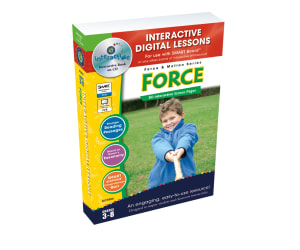
Force - Digital Lesson Plan Gr. 5-8 | PC Software
Science, Physics, Grade 3, 4, 5, 6, 7, 8, Teacher Tools, Lesson Plans
Force - Digital Lesson Plan Gr. 5-8 Overview Force - Digital Lesson Plan Gr. 5-8, is an education tool designed for educators in both public schools and homeschool environments. It offers a comprehensive and fun lesson plan on force science, suitable for grade 5 to grade 8 students. This interactive PC software ventures into the invisible world of forces, demystifying what they are and their different types through an enticing eighty screen-pages full of captivating content. Main Concepts Taught: Type of forces: Both contact and distance-based ones The difference between balanced versus unbalanced forces Distinguishing weight versus gravity Magnetic and electrostatic forces explanations Features: Purposefully Prepared Activities: Immerses your learners in before-and-after reading interactive activities to test comprehension. Suitable for Different Teaching Methods: The program supports whole group teaching, small group instruction or individual learning tasks. Gamified Education: Memory match games, Crossword puzzles and word searches enhance retention capability. Ii> " ... This download comes as a zip file with user-friendly PC software that's easy to install. Developed according to state & national standards, the content adheres strictly to Bloom's Taxonomy—guaranteeing proficiently delivered lessons.. Choose 'Force - Digital Lesson Plan Gr. 5-8 | PC Software' as your next classroom tool!
Author Classroom Complete Press
Tags Digital Lesson Plan, Force Lesson Plan, Interactive Activity, Memory Match Game, Physics Lesson

5th Grade Morning Work | 180 Days Review | Math & ELA | 3rd Quarter
ELA, Math, Grade 5, Centers, Activities, Lesson Plans, Teacher Tools, Worksheets & Printables
Grade 5 Morning Work | 3rd Quarter Student Pages + Full-Year Teacher Resources Keep your fifth grade mornings purposeful, consistent, and easy to manage with 45 days of Grade 5 morning work for Quarter 3 . This resource includes ALL teacher resources for the complete 180-day program , while the student practice pages in this pack are specifically for 3rd Quarter: Days 91–135 . What’s Included ⭐ FULL-YEAR TEACHER RESOURCES You receive the complete teacher toolkit for planning, organizing, differentiating, and assessing the entire 180-day Grade 5 morning work program : Teacher Guide Full 36-week Pacing Guide Skills Checklist for tracking student progress Fully Editable Morning Work Schedule Year-at-a-Glance planning support Differentiation strategies Complete Answer Key for Days 1–180 Printing and classroom organization guidance 📚 STUDENT PAGES INCLUDED: 3RD QUARTER The student portion of this product includes Days 91–135 , providing 45 days of ready-to-use Grade 5 morning work . Each day includes a two-page set with 24 consistent sections . 📖 LANGUAGE ARTS Students practice: Grammar Vocabulary Context clues Reading comprehension Reading skills Writing Vocabulary Word of the Day Writing prompts Reading challenges SEL check-ins Jokes Brain teasers Growth mindset Would You Rather questions 🔢 MATH & THINK Students practice: Number sense Mental math and fact fluency Multi-digit multiplication Long division Order of operations Fractions Decimals Measurement Geometry Data and graphs Multi-step word problems Math challenges Daily enrichment Fun facts Important: The student practice pages included in this product are Days 91–135 only . The teacher resources and complete Answer Key cover all 180 days . How It Works in the Classroom Use this Grade 5 morning work as a daily bell ringer, morning routine, independent practice, homework, or spiral review. Each two-page daily set is designed to take approximately 10–15 minutes . Students work through Language Arts and Math & Think while you circulate, confer, pull small groups, or prepare for the day. The predictable daily spotlight keeps students focused: Monday: Grammar, place value, multiplication, and editing Tuesday: Reading passage, theme, fractions, and vocabulary Wednesday: Grammar, long division, and decimals Thursday: Reading, inference, and geometry Friday: Spiral review, multi-step problems, and writing response The enrichment rotation keeps the routine fresh: 🧠 Monday — Brain Teaser 🧩 Tuesday — Logic Puzzle 🔬 Wednesday — STEM Challenge 📚 Thursday — Vocabulary Challenge 🌎 Friday — Trivia Use the pages for: Morning work Bell ringers Homework Early finishers Sub plans Small-group warm-ups Intervention practice Spiral review Test preparation Independent practice Print the pages two-sided, flipping on the long edge , for one sheet per student per day. Standards & Learning Goals This Grade 5 morning work resource provides daily spiral review across essential fifth grade ELA and math skills. Quarter 3 increases the challenge with larger multiplication factors, 2-digit divisors, rounding to any place value, inference, and point of view . 📖 ELA Skills Students practice: Grammar and language conventions Context clues Academic vocabulary Greek and Latin roots Prefixes and suffixes Figurative language Reading comprehension Inference Point of view Main idea Theme Author's purpose Text structure Writing and revising Opinion writing Narrative writing Informative writing Constructed responses Quarter 3 shifts reading practice toward inference and point of view , encouraging students to use evidence and think beyond literal details. Students work with full reading passages and targeted reading-skill questions throughout the quarter. 🔢 Math Skills Students practice: Number sense Rounding to any place value Mental math Multi-digit multiplication Long division 2-digit divisors Order of operations Fractions Decimals Measurement Geometry Data interpretation Multi-step word problems Mathematical reasoning Quarter 3 moves students into larger multiplication factors and division with 2-digit divisors , while number sense expands to rounding numbers to any place value. The daily pages continue combining computation with fractions, decimals, measurement, geometry, real data, and multi-step problem solving. Why Teachers Love It ✨ You get ALL the teacher resources for the entire year. The teacher materials support the complete 180-day program , not just Quarter 3. ✨ Students get exactly what they need for Quarter 3. Days 91–135 provide a complete 45-day student set. ✨ Save valuable planning time. The daily routine is already organized across ELA, math, enrichment, and engaging thinking activities. ✨ Build student independence. The same 24 sections appear every day, helping fifth graders quickly learn the routine. ✨ True spiral review. Skills return throughout the 180-day program while the difficulty increases. No content repeats across the 180 days. ✨ A built-in difficulty ramp. Quarter 3 moves students into larger multiplication, 2-digit divisors, more advanced rounding, inference, and point of view. ✨ Strengthen higher-level thinking. Students solve multi-step problems, analyze reading passages, explain their thinking, revise writing, and complete daily enrichment. ✨ Differentiate with ease. Assign only the sections students have been taught. Highlight fewer boxes for students needing a shorter task. ✨ Support English learners. Pre-teach the Vocabulary Word of the Day. Greek and Latin root activities also support word-attack strategies. ✨ Support small groups. Use Page B as a ready-made warm-up for math intervention groups. ✨ Keep mornings engaging. Logic puzzles, STEM challenges, trivia, brain teasers, jokes, growth mindset prompts, and Would You Rather questions add variety. ✨ Use it beyond morning work. The pages work well for homework, early finishers, intervention practice, sub plans, and spiral review. ✨ Have answers for the entire year. Every answer is included in the complete Answer Key, while the Pacing Guide provides the skill sequence. Looking for Grade 5 morning work for Quarter 3 that saves planning time and keeps students practicing essential skills every day? This pack includes 45 days of student practice (Days 91–135) PLUS ALL teacher resources for the full 180-day program . Give your fifth graders a purposeful, engaging morning routine that strengthens ELA and math skills while building independence throughout the school year! Print it, prep it, and make your fifth grade mornings easier! 💛
Author Bright Classroom Ideas Marketplace
Rating
Tags Math, Ela, Morning Work, Back To School

Space Travel & Technology - Digital Lesson Plan Gr. 5-8 - FLASH-MAC
Science, Earth and Environmental Sciences, Space, Grade 5, 6, 7, 8, Teacher Tools, Lesson Plans
The Space Travel & Technology - Digital Lesson Plan Gr. 5-8 - FLASH-MAC This is much more than a simple teaching resource, it's an engaging portal to the intriguing world of space exploration. It 's a highly interactive tool that uses an 80 page digital lesson plan to seamlessly blend learning and enjoyment. On this invigorating educational voyage, students assume the roles of scientists, engineers and astronauts on a shuttle journey to the International Space Station. It emboldens them to look beyond our galaxy and imagine humanity's next steps back to the moon, towards Mars and into deep space. A Bridge for Educators Educators act as a crucial link in preparing tomorrow's leaders for such exciting voyages. The digital lesson plan enables teachers to create opportunities for their learners which allows in-depth engagement with each lesson content related from grade 5 through 8 Science syllabus with emphasis on astronomy content. Going Beyond Reading Passages Fully supplemented with diverse resources such as pre-and post-reading activities that provoke critical thinking within processes associated Bloom’s Taxonomy hierarchy. Incorporated test prep materials can assist prepare pupils for state-standardized exams. An interactive enforcement toolkit containing fun memory match games along with crossword puzzles and word searches – all aligned meticulously with individual state standards. It also features printable materials designed for versatility whether used in whole classes or small breakout groups; fitting even into take-home assignments. Inclusive Features A bilingual design providing English and Spanish Text-to-Speech capabilities ensuring wide accessibility among various learning groups Multimedia support comprising relevant videos further enhances understanding of lessons Evaluation of learner understanding over covered material is made easy through utilizing Comprehension Quizzes included within this package This flexible tool is compatible with Software (Mac) platforms, making it portable for educators wherever they go. Conclusion The Space Travel & Technology - Digital Lesson Plan Gr. 5-8 - FLASH-MAC paves the way for an immersive teaching experience, turning any classroom into a launchpad for academic success and fostering pupils' familiarity with space travel and technology. This resource is not simply an educational tool; it also provides a thrilling peek into the future of space exploration.
Author Classroom Complete Press
Tags Software (Mac)