



3,927 products added recently
Page 74 - Elementary Lesson Plans
Support your elementary students with lesson plans that cover a broad range of subjects and skills. These resources are designed to promote cognitive, social, and emotional growth. Incorporate them into your teaching to provide a well-rounded education that meets the needs of all your students.

 Show filters

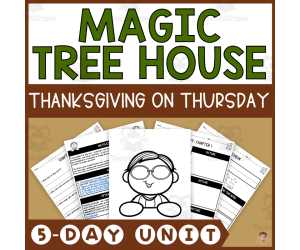
Thanksgiving on Thursday (Magic Tree House #27 Lesson Plan, Videos, Activities)
ELA, Reading, Grade 1, 2, 3, Lesson Plans, Teacher Tools
Bring history to life for students with this 5-day novel study on the Magic Tree House book Thanksgiving on Thursday. This reading comprehension resource covers the journey of Jack and Annie as they travel back in time to the first Thanksgiving. Through engaging printable activities, elementary students will strengthen literacy skills, learn about early American history and Native American culture, and make cross-curricular connections. Implementation ideas are provided to facilitate instruction for whole group, small group, or independent assignments. Customize this versatile Thanksgiving-themed language arts unit based on your students' grade level from 1st to 3rd, reading proficiency, and learning preferences. This easy no-prep book companion saves teachers preparation time while offering an interactive educational experience for public, private or homeschool settings.
Author Heather Huhman
Tags Thanksgiving On Thursday, Magic Tree House, Thanksgiving, Book Companion, Novel Study, Thanksgiving On Thursday Read Aloud

Washington Crossing the Delaware: History - Hands On
Social Studies, History, History: USA, Grade 1, 2, 3, 4, Teacher Tools, Lesson Plans
Washington Crossing the Delaware: History - Hands On An educational resource that offers an immersive approach to teaching historical events, primarily focusing on the Revolutionary War. This unique teaching tool helps students discover its impact through experiential activities. Targeted at grade 1-4 students, it presents a hands-on approach to social studies within USA history. The centerpiece of this resource Washington Crossing the Delaware: A significant event from the Revolutionary War depicted in one of America's most famous artworks. Students are challenged to differentiate fact from artistic exaggeration through various creative activities throughout the book. Poems, discussions, plays, and games are included to engage learners deeply and bring history alive in your classroom. This resource enables educators to deliver comprehensive learning experiences either as independent tasks or integrated into a lesson plan. It's adaptable for different learning settings – equally effective for whole group lessons as for small group engagement or homework assignments. Emphasizing Empathy and Understanding In addition to dealing with historical facts; it advocates empathy towards all those affected by war – soldiers and civilians who experienced pain, hardship, fear during these testing times. By inviting studentsto imagine lives filled with hunger,coldness,andever present danger– they can truly grasp their struggles leading up to these monumental events that changed America’s future. Last but not least,this resource is designed for easy access globally via its downloadable PDF format that accommodates compatibility across various digital platforms with minimal hassle such as printing them out if desired printed reference materials are needed too. Please note there's one product file available here on Teach Simple website– proving itself an invaluable tool regardless if usage context be physical virtual classroom environment alike!
Author Classroom Complete Press
Tags PDF

Circulatory, Digestive & Reproductive Systems Gr. 5-8
Science, Life Sciences, Human Body, Grade 5, 6, 7, 8, Teacher Tools, Lesson Plans
Circulatory, Digestive & Reproductive Systems Gr. 5-8 This engaging resource provides a comprehensive exploration of the human body for students in grades 5-8. It simplifies intricate concepts and sequentially uncovers the layers of our biological systems. The Journey Begins: The Circulatory System The educational adventure starts with an examination of the circulatory system which essentially includes arteries, veins and capillaries - our vital lifelines for oxygen delivery. This section even empowers students to understand their own pulse dynamics! From Circulation to Digestion The lesson seamlessly transitions to digestion, presenting how food travels from mouth to stomach and is converted into energy-providing molecules. In addition, it elucidates how humans extract nutrients while expelling non-digestible waste—a key process in maintaining wellness. Diving Deep Into The Excretory System: A significant segment is dedicated towards studying this complex network that assists with waste disposal. To demo these ideas interactively, teachers can guide an activity where students build a model kidney; offering them firsthand experience on its functions! Reproductive Science – Miracle of Life: A fascinating ending note—your inside-the-body tour concludes with reproductive science—exploring how two cells unite to spark life itself! Note: Adhering strictly with Next Generation State Standards along with Bloom's Taxonomy and STEAM initiatives; this teaching tool ensures maximal alignment. Whether utilized as class-wide lessons or small group activities or homework tasks - "Circulatory, Digestive & Reproductive Systems Gr. 5-8" can adapt across multiple formats. This package also includes: Additional exercises like crossword puzzles and word searches. A useful comprehension quiz. All these features aim at cementing the learned concepts through creative interaction! Data Delivery Format This product is conveniently provided in plain PDF format. This practical and effective resource focuses on middle-grade science curricula predominantly emphasizing human body studies. Thus, it caters exceedingly well to traditional school teachers as well as homeschooling parents alike—by bestowing an invaluable hands-on experience via its interactive lessons and pragmatic activities.
Author Classroom Complete Press
Tags PDF
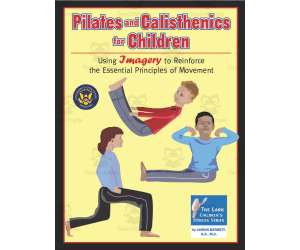
Pilates and Calisthenics for Children: Using Imagery to Reinforce the Essential Principles of Movement
P.E. & Health, Health, Preschool, Grade 1, 2, 3, 4, 5, Teacher Tools, Lesson Plans
Pilates and Calisthenics for Children: Using Imagery to Reinforce the Essential Principles of Movement is a resource tool catering to educators in health and physical education sphere. Primarily geared towards Kindergarten through Grade 5 students, it serves as an effective teaching guide. The key focus of this tool is the nurturing use of senses allowing children's imagination to flourish while grasping mind-body fundamentals. By integrating pilates with calisthenics, this unique blend offers techniques that facilitate a whole body workout. This contributes in enhancing strength, flexibility, endurance and coordination which establishes an early foundation on fitness principles for young learners. This comprehensive product is arranged into 96 easily understandable lesson plans readily available in PDF format. These lessons can be adapted within: Whole group classes Small groups Homeschooling individual assignments sessions They are versatile enough to adjust based on class size or individual student needs. An inherent objective with these lesson plans is equipping students with resourcefulness throughout their learning journey. The lessons encourage self-study progressively fostering lifelong learning habits rather than mere adoption of techniques. The primary engagement strategy employed involves using imagery exercises that supplement theoretical know-hows with fun practicals. This method not only aids better retention but also nurtures a growing interest towards P.E & Health topics among young learners.
Author Classroom Complete Press
Tags Breathing Exercises, Pilates, Calisthenics, Using Imagery, Movement

Subject-Verb Agreement Supplementary Materials Grade 5-6 (PDF)
ELA, Language Development, ESL, Grammar, Common Core, Resources for Teachers, Grade 5, 6, 7, Worksheets & Printables, Worksheets, Quizzes and Tests, Teacher Tools, Tests, Assessments, Lesson Plans
Subject-Verb Agreement Supplementary Materials Note: This download DOES NOT include the tests themselves. You can still make use of these materials without them but they are recommended. Download in a format of your choice in the "Links" section below. In the Supplementary Pack Interactive Ice Breakers: Engaging warm-up activities that introduce students to key ELA concepts, such as quick capitalization corrections and punctuation challenges. Guided Practice: Structured teacher-led exercises that reinforce grammar and punctuation rules, helping students identify and apply them correctly in sentences. Group and Partner Tasks: Collaborative activities where students work together to edit sentences, correct capitalization, and improve punctuation through peer discussion and teamwork. Independent Worksheets: Carefully designed worksheets that provide focused practice, allowing students to apply learned concepts and refine their skills independently. Exit Tasks: Quick assessments at the end of each lesson, prompting students to reflect on what they’ve learned and apply their knowledge in writing and editing tasks. Links Major Subject-Verb Practice Wish Sentences Request Sentences Contrary to Fact Sentences Google Docs Google Forms Google Slides PDF PPT Word FULL CATALOG OF DOWNLOAD LINKS HERE Grade 5/6 Links: Capitalization & Punctuation Google Docs Google Forms Google Slides PDF PPT Word Free Supplementary Materials Pack Adjectives Google Docs Google Forms Google Slides PDF PPT Word Free Supplementary Materials Pack Nouns Google Docs Google Forms Google Slides PDF PPT Word Free Supplementary Materials Pack Pronouns Google Docs Google Forms Google Slides PDF PPT Word Free Supplementary Materials Pack Verbs Google Docs Google Forms Google Slides PDF PPT Word Free Supplementary Materials Pack Prefixes & Suffixes Google Docs Google Forms Google Slides PDF PPT Word Free Supplementary Materials Pack Sentence Structure Google Docs Google Forms Google Slides PDF PPT Word Free Supplementary Materials Pack Subject Verb Agreement Google Docs Google Forms Google Slides PDF PPT Word Free Supplementary Materials Pack Tenses Google Docs Google Forms Google Slides PDF PPT Word Free Supplementary Materials Pack Context Clues Google Docs Google Forms Google Slides PDF PPT Word Free Supplementary Materials Pack Defining Words Google Docs Google Forms Google Slides PDF PPT Word Free Supplementary Materials Pack Fill in the Blanks Google Docs Google Forms Google Slides PDF PPT Word Free Supplementary Materials Pack Homophones Google Docs Google Forms Google Slides PDF PPT Word Free Supplementary Materials Pack Synonyms Google Docs Google Forms Google Slides PDF PPT Word Free Supplementary Materials Pack ELA Review Questions Overview Questions have three answer choices. There are a handful of pictures on each test for aesthetic purposes, as well as a review sheet covering most of the topics covered in the product. Introduction or Example Sheet Each topic will include an introduction or example sheet to go through first with your students. Full Answer Keys Full answer keys and sample responses are provided so no matter how busy you are, you know you're covered! For More Like This For similar downloads and other frees, do check out Cored Group on TeachSimple.
Author Cored Education
Tags Elementary, Answers, Ccss, Common Core, Grammar, Tests, Test Prep, Assessment, Grade 5, Grade 6
I WONDER - How Long Did The Brachiosaurus Live | Animated Video Lesson
Animals, Life Sciences, Science, History: Ancient, History, Social Studies, History: World, Grade 4, 5, 6, 7, 8, 9, 10, Lesson Plans, Teacher Tools
Video Introduction An amazing video designed for the students to learn more about dinosaurs in different countries. I WONDER - How Long Did The Brachiosaurus Live | Animated Video Lesson Do you like dinosaurs? what is your favorite one? Do you own a pet? If yes, tell us more about it, like what its name? And what do you like most about it? Do you think that your pet has been evolved from a dinosaur? Can you write down the characteristics of your favourite dinosaur like it's shape, their rivals, where did it use to live and what was their favourite food? What is the largest and the smallest dinosaur that ever found? Why is the T-rex is so famous? Have you ever read any interesting facts about it? Can you name any of the carnivores or herbivores dinosaurs? I WONDER - How Long Did The Brachiosaurus Live | Animated Video Lesson The video is perfect for encouraging the researching skills for the students, while learning more about dinosaurs. I WONDER - How Long Did The Brachiosaurus Live | Animated Video Lesson This friendly designed video is suitable for students at school, homeschooling, and as a group activity. Format Available in MP4 format.
Author Educational Voice
Rating
Tags How Long Did The Brachiosaurus Live, How Long Did The Brachiosaurus Live Video, Brachiosaurus, Brachiosaurus Video, Brachiosaurus Facts, Brachiosaurus Facts For Kids, Brachiosaurus Video For Kids
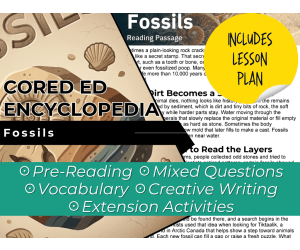
Fossils Reading Comprehension Passage - Cored Ed Encyclopedia
ELA, Reading Comprehension, Reading, Science, Technology, Earth and Environmental Sciences, Life Sciences, Pre-Reading, Language Development, Vocabulary, Grade 2, 3, 4, 5, Worksheets & Printables, Worksheets, Teacher Tools, Centers, Activities, Writing Prompts, Assessments, Quizzes and Tests, Quizzes, Lesson Plans
This fossils reading comprehension with lesson plan includes: Visualization (on the front cover) Start your lesson by taking a minute to think and share something about the topic. Read the script aloud (slowly), perhaps prepare some music or sound effects. Student close their eyes and let their imaginations wander. Students open their eyes, read the question aloud and give them a few minutes to complete. Ask a few students to share or keep answers until the end to compare with what they learn in the passage. Quick pause—thousands of Cored Education products are included with your TeachSimple membership. Download links and encyclopedia index available here. Pre-Reading Trivia Students will write down one thing they already know about the subject and then read five more facts and discuss. These facts are fun, and the students will enjoy learning about the subject before reading more. Give 1 minute for students to write what they already know (no pressure—best guess is fine). Read the five facts together. After each fact, do ask a student for their opinion, was it surprising? Set a purpose by asking students to highlight/underline one fact they want to learn more about during the reading. Reading Passage The text is a high-interest reading passage with set paragraphs, roughly three to four paragraphs long. It contains a variety of themes about the topic, anywhere from history to technology. The passage is between 250 and 350 words in length. First, ask students to look at the headings and see what they’ll learn about today. What do they know about the topic/heading? First read options: Teacher read-aloud (best for support). Partner reading (paragraph by paragraph). While reading, students underline important details, and vocabulary words they think may come up in the questions section. Mixed Questions The first question page contains four multiple-choice questions, each with a choice of four answers, and three written response questions that require a sentence or two from the student. Students complete the mcqs first independently, then review quickly as a class. For the 3 written responses, try to get students giving the answer with some form of evidence: “I think ___ because the text says ___.” If students get stuck, send them back to check the passage. Vocabulary Questions Practice seven key words from the text in this section across two activities. First section is scrambled words where students will unscramble three words given a clue for each. The second section is a word to meaning matching activity. Before starting, have some students read out words they underlined in the passage. Ask students to say the word and read aloud the sentence(s) around each word. Ask students to do scrambled words and the matching exercise in pairs then go through answers as a class. For the scrambled spelling task, get four pairs to come up to the board and write the words for extra practice with the other student reading out the clue. For the matching task, prompt students to give full sentences: “I matched ___ with ___ because ___.” Creative Writing In this question, the student will be required to write a five to eight sentence paragraph on a question related to the topic. Before starting, ask students write down 3 key ideas they are going to include in their piece. Ask students for ideas to share around the class to help those struggling. Pro writing expectations: 5–8 sentences At least 2 facts or details from the passage At least 2 vocabulary words from the previous page Students read their paragraphs while classmates listen for facts and vocabulary words. Extension Activities This page is optional for fast finishers or to take home. There are several activities, each one requiring a different skill. Do some, do none, do all, completely optional - but you will feel reassured knowing every possibility is planned for. Includes summary writting question and additional facts. Answer Key There are answers for the multiple-choice questions, written response questions have sample answers, vocabulary answers and if there is a summary question then a sample summary will be provided as well. Lesson Plan Included Customized lesson plan for this lesson is included. Lesson Snapshot Title: Fossils Genre: Nonfiction (Informational Text) Subject: Science (Earth Science/Life Science) / Reading (Informational Text) Primary Topic: Fossils, how they form, and what they reveal Estimated Guided Reading Level (A–Z): Q What This Lesson Teaches Best Defines a fossil and explains that fossils can be body parts (tooth, bone) or traces (footprint, burrow, fossilized poop) that become clues in the “fossil record.” Explains how fossils form when remains are quickly covered by sediment , and minerals in water replace material or fill empty spaces until remains harden like stone. Teaches mold and cast formation: a body can disappear, leaving a hollow mold that later fills to make a cast. Introduces paleontology and shows how scientists “read” patterns in sedimentary rock layers to learn how life has changed over time. Shows how fossils can guide new discoveries , including using rock layers to search for missing kinds of creatures (Tiktaalik example). Learning Goals Students will identify two kinds of fossils named in the text and give an example of each. Students will explain how sediment and minerals help remains become hard “as stone.” Students will describe how a mold and a cast can form, using the text’s explanation. Students will explain how scientists use patterns in sedimentary rock layers to learn which fossils are older. Students will describe why the fossil record is “not complete,” based on the passage. Students will describe how fossils can help scientists decide where to search for new discoveries. Key Vocabulary From the Text sediment — dirt and tiny bits of rock. minerals — materials in water that can harden remains. mold — a hollow shape left after a body is gone. cast — a filled-in copy of a hollow shape. paleontology — the study of ancient life using fossils. FULL CATALOG OF DOWNLOAD LINKS AND ENCYCLOPEDIA INDEX HERE
Author Cored Education
Rating
Tags Vocabulary, Reading Comprehension, Reading Passages, Lesson Plans, Ela Lesson Plans, Reading Comprehension Lesson Plans, Pre-reading, Science Lesson Plans, Earth Science, Life Science

Cooking Intermediate ESL Lesson Plan
ELA, Language Development, ESL, Grade 4, 5, 6, 7, 8, 9, 10, 11, 12, Teacher Tools, Lesson Plans
All About Cooking Intermediate ESL Lesson Plan This intermediate English as a Second Language lesson plan focuses on cooking vocabulary and grammar. Students will listen to an audio recording about cooking and complete comprehension exercises. Additional activities allow students to practice grammar skills in the context of cooking. This versatile resource can be used in whole group, small group, partner, or individual settings. Implementation ideas include using it as an introductory lesson, reinforcement, assessment, or homework. With multiple components, this lesson plan supports differentiated instruction. Answer keys are provided for all student handouts. This practical lesson helps intermediate ESL learners expand their knowledge of cooking terms and apply key grammar principles. This ESL ELA TEFL lesson plan is started with some new flash cards and a warmer and then followed by learning some vocabulary suitable for the lesson. That's followed by a reading passage and some exercises before students listen to an audio file. The class is finished with another exercise, conversation topics and an activity . If there is time there is an added writing drill and further exercises that can be completed in the classroom or set as homework. The TEFL resource is available in PDF with 31 ready to print pages and one digital access file. A part of it is on Google Apps. The answer key is also included for reference.
Author TEAM TEFL
Tags Cooking, ESL Lesson, Grammar Lesson Plan, Small Group Work, Audio
I WONDER - What Is The Radius And Diameter | Animated Video Lesson
STEM, Geometry, Math, Grade 4, 5, 6, 7, 8, 9, 10, Lesson Plans, Teacher Tools
Video Introduction An amazing video designed for the students to learn more about STEM. I WONDER - What Is The Radius And Diameter | Animated Video Lesson Do you like STEM subjects? what is your favorite one? Have you ever tried to plant a seed? If yes, tell us more about it. Or have you ever tried to invent something? If yes, tell us more about it. And how do you think it will help us? Have you ever seen a microorganism under a microscope? What was it? And how it looked like? Mathematics is a marvelous subject. Let' sharpen our brains and solve some equations. Do you like timetable tricks? What is your favorite one? Do you know how to code? Have you ever created an app or a game before? If yes, how was it like? I WONDER - What Is The Radius And Diameter | Animated Video Lesson The video is perfect for encouraging the researching skills for the students, while learning more about this fantastic topic. I WONDER - What Is The Radius And Diameter | Animated Video Lesson This friendly designed video is suitable for students at school, homeschooling, and as a group activity. Format Available in MP4 format.
Author Educational Voice
Tags What Is The Radius And Diameter, What Is The Radius And Diameter Video, Radius, Radius Facts, Radius Video, Radius Video For Kids, Diameter, Diameter Facts, Diameter Video, Diameter Video For Kids
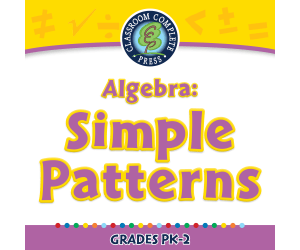
Algebra: Simple Patterns - PC Software
Math, Patterns, Kindergarten, Preschool, Grade 1, 2, Teacher Tools, Lesson Plans
Algebra: Simple Patterns - PC Software A robust teaching software designed to help educators in traditional classrooms and homeschool settings effectively instruct students on the basic concepts of algebra. The content is aligned with the curriculum and ideally suited for preschool, kindergarten, and early grade school level (grades 1-2). Features: Pre-assessment stage: Precisely gauge students' existing knowledge about algebraic patterns before starting a lesson. Detailed Lesson Plan: A comprehensive roadmap that guides teachers through their lessons in an organized manner and ensures key learning objectives are met. Real-world Word Problems: Present algebraic pattern concepts in relatable contexts for a practical understanding of the material. A timed drill activity : Test speed without sacrificing accuracy, ideal for both group lessons or individual study sessions. Additions: The software also includes math tools and printables making it easy to mix digital learning with hands-on activities. Additionally, to make learning more engaging there are multiple built-in games like memory match game, board game ,and spinner games available within the program. Bilingual Support: An added advantage is it's support Spanish voiceover & texts enabling bilingual instruction or assisting second language learners to easily make connections between verbal expressions in two languages. Note: This product is compatible with PCs only . In conclusion, combining all these features makes "Algebra: Simple Patterns - PC Software", an invaluable addition to any modern educational toolkit!
Author Classroom Complete Press
Tags Digital Math, Simple Patterns, Patterns Lesson, Algebra Worksheet, Math Lesson

More Rockin' Rebuses Gr. K-2
Creative Arts, Art, Music, Grade 1, Teacher Tools, Lesson Plans
More Rockin' Rebuses Gr. K-2 More Rockin' Rebuses Gr. K-2 is a dynamic teaching resource designed specifically for students in grades kindergarten through second grade. It's a useful tool for both public school teachers and homeschooling parents as it combines reading passages, rebus stories, and imaginative thinking activities to formulate an inclusive lesson plan. Kids are naturally attracted to rebus stories as the associated illustrations aid in positively identifying words. This makes More Rockin' Rebuses Gr. K-2 a perfect tool to boost reading comprehension skills while also fostering creativity among students with art forms. Included Rebus Stories: Ingrid and her 100 Hats You Can Make Magic! A Handy Handprint The Little Red Hen The Storybook Grandma/li> A great feature of this resource is its versatility across different teaching settings—e.g., whole group discussions where students take turns reading aloud from the book or small team sessions encouraging teamwork. This PDF product includes photocopy-friendly material making homework assignments simple with minimal preparation required. Students can each create their own book related to these rebus stories by integrating their own illustrations giving them sense of ownership over learning. Cross-Curricular Topics: /strongit lesson plans making it a versatile accessory across multiple subjects giving first-grade educators myriad potential uses for classroom instruction. In summary, <strongs Gr.K-2 and adolescent-methodically hich effectively amalgamate literacy enhancement with imagination stimulation, thus creating a thriving educational environment that encourages active participation from young learners.
Author Classroom Complete Press
Tags PDF

Grade 1 Yearlong Reading Comprehension Curriculum | 72 Worksheets
ELA, Grade 1, Lesson Plans, Teacher Tools, Worksheets & Printables
Grade 1 Yearlong Reading Comprehension Curriculum | 72 No-Prep Worksheets Help your first graders build strong reading comprehension skills all year long with this engaging Grade 1 Reading Comprehension Curriculum ! This comprehensive resource includes 72 original fiction and nonfiction passages , targeted comprehension practice, vocabulary activities, and writing prompts designed to support young readers throughout the school year. With a simple, consistent format and carefully scaffolded skills, this year-long reading curriculum makes planning easy while helping students grow in confidence and comprehension. What's Included ✅ 36 weeks of reading comprehension instruction ✅ 72 original reading passages (2 per week) ✅ Balanced mix of fiction and nonfiction texts ✅ Vocabulary matching activity with every passage ✅ 4 comprehension questions per passage ✅ Writing prompt included with every lesson ✅ Student Worksheet Book ✅ Teacher's Guide ✅ Complete Answer Key ✅ Skill-focused reading practice that spirals throughout the year How It Works in the Classroom This reading comprehension curriculum is designed for flexibility and can be used in: Whole-group reading lessons Small-group instruction Literacy centers Independent practice Homework assignments Intervention groups Substitute plans Teachers follow a simple routine for each passage: Read and discuss the passage Complete the vocabulary activity Answer comprehension questions Respond to the writing prompt The predictable structure helps students build independence while strengthening reading comprehension skills. Standards & Learning Goals Students will practice and strengthen: Reading comprehension Key details Main idea and main topic Compare and contrast Cause and effect Sequencing and retelling Story elements Author's purpose Making predictions Drawing conclusions Vocabulary development Written responses to text Skills are spiraled across the full 36-week curriculum to support long-term growth and mastery. Why Teachers Love It ⭐ Minimal prep required ⭐ Consistent format all year ⭐ Fiction and nonfiction balance ⭐ Easy-to-follow teacher support materials ⭐ Supports reading, vocabulary, and writing in one resource ⭐ Great for differentiation and intervention ⭐ Builds student confidence through routine ⭐ Year-long curriculum already planned for you Students receive exposure to hundreds of vocabulary words while engaging with a wide variety of age-appropriate topics including families, animals, seasons, community helpers, plants, healthy habits, transportation, Earth science, and imaginative stories. Perfect For ✔ Grade 1 classrooms ✔ Homeschool settings ✔ Reading intervention ✔ Literacy centers ✔ Independent reading practice ✔ Supplemental reading instruction ✔ Year-long reading programs Download Today If you're looking for a comprehensive Grade 1 Reading Comprehension Curriculum that combines reading passages, vocabulary practice, comprehension questions, and writing activities into one easy-to-use resource, this year-long program is ready to support your students from the first week of school to the last!
Author Bright Classroom Ideas Marketplace
Rating
Tags Yearlong, Curriculum, Full Year, Back-to-school, Reading, Writing, Ela

I WONDER - How Did Stone Age People Get Their Food | Animated Video
History: Ancient, History, Social Studies, History: World, Grade 4, 5, 6, 7, 8, 9, 10, Lesson Plans, Teacher Tools
Video Introduction An amazing video designed for the students to learn more about history. I WONDER - How Did Stone Age People Get Their Food | Animated Video Lesson Do you like history? Which topic do you really enjoy about history? Have you ever read an interesting fact about the Vikings? If yes, can you mention them? What do you like most about the Victorian era? Can you name all the Tudors? Have you ever wondered how people used to live in ancient Japan and ancient China? Do you know any interesting facts about ancient Egyptians and the Pharaohs? Have you ever visited South America? What do you know about Incas and Aztecs? Celtic culture was really one of a kind, can you name any of the places that Celts used to live in? Imagine yourself living during the ancient Roman empire, how your life will look like? Ancient Greece was an amazing place to live in. What do you know about ancient Greek life? I WONDER - How Did Stone Age People Get Their Food | Animated Video Lesson The video is perfect for encouraging the researching skills for the students, while learning more about history. I WONDER - How Did Stone Age People Get Their Food | Animated Video Lesson This friendly designed video is suitable for students at school, homeschooling, and as a group activity. Format Available in MP4 format.
Author Educational Voice
Tags How Did Stone Age People Get Their Food, How Did Stone Age People Get Their Food Video, Stone Age People, Stone Age People Facts, Stone Age People Facts For Kids, Stone Age People Video, Stone Age People Video For Kids

Reading Well - Grades 2-3
ELA, Reading, Grade 2, 3, Teacher Tools, Lesson Plans
Reading Well - Grades 2-3 Presenting to you, the versatile and comprehensive Reading Well series meant for Grade 2 and Grade 3 students. This educational resource is designed to cater to the needs of educators in various settings, making it equally useful for homeschoolers, public school teachers or private tutors. Reading Well broadens the pedagogic possibilities with a plethora of activities that can be implemented both in classrooms and at home. Be it realistic fiction, biography, poetry, informational articles or plays/skits - this series includes an array of reading materials and writing styles that stimulate an enriched learning environment. Serving as an impactful teaching tool This greatly impactful teaching tool for language arts especially reading is intricately detailed. The comprehension exercises are crafted thoughtfully encouraging students to exercise different reading skills. The variety enables young learners to comprehend texts better while having fun deciphering myths or getting engrossed in tall tales! To keep track of progress made by each student we have included comprehensive assessment rubrics within this series. A sequential nature The most unique feature about Reading Well is its sequential nature. Each book builds upon skills learnt previously helping ensure continuous progress in your young charges’ reading ability without them feeling overwhelmed. User-friendly structure Available as a neatly formatted PDF file containing lesson plans targeted towards Grade 2 and Grade 3 students. Listing what it entails: Focusing on enhancing their reading proficiency – whether used for whole group instruction or small group exercises This resource can also be set as homework assignments thanks its user-friendly structure. In conclusion, if there's one multifaceted teaching aid needed for Language Arts curriculum at these elementary grade levels with especial focus on reading – it would invariably be 'Reading Well'. Bringing out the best! Allowing educators a chance at innovative instruction methods while providing children intriguing contents packaged inside valuable learning experiences – Reading Well for 2nd and 3rd graders, undoubtedly brings out the best in both.
Author Classroom Complete Press
Tags PDF

I WONDER - Who Built The Eiffel Tower | Animated Video Lesson
Geography, Social Studies, Grade 2, 3, 4, 5, 6, 7, 8, Lesson Plans, Teacher Tools
Video Introduction An amazing video designed for the students to learn more about history. I WONDER - Who Built The Eiffel Tower | Animated Video Lesson Do you like history? Which topic do you really enjoy about history? Have you ever read an interesting fact about the Vikings? If yes, can you mention them? What do you like most about the Victorian era? Can you name all the Tudors? Have you ever wondered how people used to live in ancient Japan and ancient China? Do you know any interesting facts about ancient Egyptians and the Pharaohs? Have you ever visited South America? What do you know about Incas and Aztecs? Celtic culture was really one of a kind, can you name any of the places that Celts used to live in? Imagine yourself living during the ancient Roman empire, how your life will look like? Ancient Greece was an amazing place to live in. What do you know about ancient Greek life? I WONDER - Who Built The Eiffel Tower | Animated Video Lesson The video is perfect for encouraging the researching skills for the students, while learning more about history. I WONDER - Who Built The Eiffel Tower | Animated Video Lesson This friendly designed video is suitable for students at school, homeschooling, and as a group activity. Format Available in MP4 format.
Author Educational Voice
Tags Who Built The Eiffel Tower, Who Built The Eiffel Tower Video, The Eiffel Tower, The Eiffel Tower Video, The Eiffel Tower Facts, The Eiffel Tower Facts For Kids, The Eiffel Tower Video For Kids, France

Curriculum Math Tools - Money Counter Tool - FLASH-MAC
Math, Algebra, Grade 1, 2, 3, 4, 5, 6, 7, 8, Lesson Plans, Teacher Tools
Curriculum Math Tools - Money Counter Tool - FLASH-MAC This is a teaching resource designed to enhance and simplify the understanding of core mathematical concepts. Suitable for all grades from Grade One through Grade Eight, it can be used effectively in homeschooling settings as well as public school classrooms. The tool's main focus is on bolstering foundational knowledge in mathematics, keeping in sync with respected educational standards such as: NCTM (National Council of Teachers of Mathematics) Common Core STEM guidelines This tool introduces a shift from traditional approaches to learning maths by offering an interactive engagement with five significant strands: Number & Operations for basic arithmetic, Algebra to aid understanding patterns and equations, Geometry that boosts visualization, Measurement for understanding dimensions and its variations, Data Analysis & Probability to initiate statistical thinking early on. The practical interface caters to different teaching dynamics. It fosters collaborative learning among small groups or large classrooms alike. Moreover, it can provide immediate visual support during homework assignments, making complex mathematical ideas easier to grasp. Note:The product includes one file which only operates with software compatible with Mac devices. Hence one should verify the compatibility criteria before attempting use. To Conclude... ; The "Curriculum Math Tools - Money Counter Tool – FLASH MAC", allows teachers an opportunity bring algebra alive while keeping up with advanced curricular standards — transforming students’ perception towards mathematics into a logical discourse worthy of exploration!
Author Classroom Complete Press
Tags Software (Mac)

Number & Operations: Fractions - FLASH-MAC
Math, Fractions, Grade 1, 2, Teacher Tools, Lesson Plans
Number & Operations: Fractions - FLASH-MAC This educational resource is a comprehensive teaching tool designed to simplify the concept of fractions in number and operations for first and second-grade students. This essential teaching aid comes packed with research-based, grade-appropriate content that supports math learning in an engaging manner. A Rounded Approach to Learning Employing an intricately rounded approach to learning, the resource encapsulates multiple facets including: a pre- assessment segment, rich lesson plan, practice exercises with real-world word problems, and time-constrained drill activities. Each segment aims at providing learners with a thorough understanding of critical mathematical concepts while fostering their problem-solving skills. Creative Inclusions & Diverse Needs catered too... Beyond just instruction-dependent resources, this package includes printable material for hands-on activities. Students will find enjoyment while reinforcing their knowledge through creative inclusions such as a memory match game, board game and spinner game. Additionally mindful of the diverse needs of today’s classrooms or homeschool environments; the product features options for English text along with voice over support not just in English but also Spanish. The Crowning Feature... The crowning feature of this resource is arguably its inclusion of SMART Response assessment tools which make it simpler than ever for educators to monitor student progress. Compatible with Mac operating systems; educators have unprecedented flexibility regarding how they implement this resource – be it relayed during whole groups sessions as part of instructed lessons or used by smaller groups working independently or even assigned as individual homework tasks to consolidate classroom teachings at home. In essence, Numer & Operations: Fractions - FLASH-MAC is not just another addition to your curriculum—it's more like adding streamlining power into your teaching repertoire. This blazes the trail for individualized, streamlined learning experiences that resonate soundly with diverse cohorts of first and second-grade students.
Author Classroom Complete Press
Tags Software (Mac)

Word Problems
, Grade 2, 3, Worksheets & Printables, Word Problems, Teacher Tools, Lesson Plans
Word Problems Workbook: The Perfect Learning Resource Word Problems , a resourceful workbook, is centered around providing ample practice to elementary students in solving mathematical word problems . This eminent tool is concentrated on developing proficiency in: Addition Subtraction Multiplication, Division Telling time Fractions initiation for beginners. Designed specifically for primary school children (mainly grade 2 to grade 3), this workbook complements most routinely applied classroom curricula seamlessly. Simplicity and Structure The heart of the workbook's design lies in its simplicity. Organized systematically in an escalating structure, it stimulates effective assimilation of content and development of vital critical thinking abilities that are key for resolving problems. Note: Parents or educators can modify or resequence the content order as per each child’s learning speed. Navigability & Self-Paced Learning The ease-of-navigation feature promotes self-paced learning and instills independence amongst learners. A Versatile Teaching Tool This exceptional workbook proves beneficial: In a formal classroom setting - as whole group teaching material during math hours or; In supplementary assignments to amplify cooperative learning among smaller groups; For homeschooling parents seeking holistic learning resources outside core curricula bounds, this sourcebook adds depth to their child's mathematical proficiencies. An Instant Feedback Mechanism: This practical tool includes an easy-to-reach four-page answer leaflet tucked within the book body ready to be pulled out whenever needed thereby enabling instant feedback. Summary: In short, Word Problems deciphers complex issues into enjoyable exercises fostering a learning culture with minimum supervision indirectly fostering self-reliance and proactive mistake correction. All files are delivered in PDF format for across-device compatibility simplifying lesson planning significantly & sustaining high-quality instruction delivery either in classrooms or home setups.
Author Classroom Complete Press
Tags PDF
I WONDER - Where Do Pangolins Live | Animated Video Lesson
STEM, Animals, Life Sciences, Science, Biology, Grade 1, 2, 3, 4, 5, 6, 7, 8, Lesson Plans, Teacher Tools
Video Introduction Animal kingdoms are full of fascinating wonders to learn. This video is designed for the students to learn more about animals in different countries. I WONDER - Where Do Pangolins Live | Animated Video Lesson Do you like animals? what is your favorite one? Do you own a pet? If yes, tell us more about it, like what its name? And what do you like most about it? What are the animal kingdoms? Can you write down the characteristics of each animal class like mammals, birds, reptiles, amphibian, fish and mollusks. Do you know that some animals can sing, can you name any of them? What is the largest and the smallest mammal in the world? What is the largest and the smallest bird in the world? What is the largest and the smallest fish in the world? I WONDER - Where Do Pangolins Live | Animated Video Lesson The video is perfect for encouraging the researching skills for the students, while learning more about these fantastic animals. I WONDER - Where Do Pangolins Live | Animated Video Lesson This friendly designed video is suitable for students at school, homeschooling, and as a group activity. Format Available in MP4 format.
Author Educational Voice
Tags Where Do Pangolins Live, Where Do Pangolins Live Video, Pangolins, Pangolin, Pangolins Facts, Pangolins Facts For Kids, Pangolins Video, Pangolins Video For Kids, Pangolin Video

Passport Series: Asia
Social Studies, Geography, Grade 5, 6, 7, 8, 9, Teacher Tools, Lesson Plans
The Passport Series: Asia The Passport Series: Asia is a comprehensive teaching resource aimed to arouse world exploration in students. The curriculum encompasses eight detailed study books, covering more than 50 countries across all seven continents, from North America to Australia. This dynamic approach caters specifically to middle and high school levels, making it an ideal fit for public and homeschool educators teaching Social Studies with a heavy emphasis on Geography. This meticulously crafted unit incorporates deep studies into each country's history, culture, language, cuisine and much more. The educational journey starts with Asia as the starting destination. These insights about Asian countries go far beyond general trivia; enabling learners to dive into different geographic regions from a position of familiarity rather forum distant observers. Features of The Passport Series: Cross-curricular reinforcements: Includes reproducible pages that are filled with content that reinforces knowledge across different areas of study. Cultural immersion: Provides not just information but also cultural immersion by including recipes and games related to the locale being studied. Educational flexibility: Offers unique ideas for extension activities which can be used in whole group instructions or small group learning - even as homework assignments! A distinguishing aspect of the Passport Series: Asia is its gorgeous illustrations and photographs. These visual aids give students a tangible sense of each location they're studying – almost like they're travelling half-way around the globe! If you're an educator aiming at showcasing various cultures and landscapes worldwide - The Passport Series: Asia is one series you won't want your pupils to miss! Allowing them to become educated travellers who appreciate global diversity!
Author Classroom Complete Press
Tags PDF

I WONDER - How Does Wasting Food Impact The Environment
Environmental Science, Earth and Environmental Sciences, Science, Grade 4, 5, 6, 7, 8, 9, 10, Lesson Plans, Teacher Tools
Video Introduction An amazing video designed for the students to learn more about STEM. I WONDER - How Does Wasting Food Impact The Environment | Animated Video Lesson Do you like STEM subjects? what is your favorite one? Have you ever tried to plant a seed? If yes, tell us more about it. Or have you ever tried to invent something? If yes, tell us more about it. And how do you think it will help us? Have you ever seen a microorganism under a microscope? What was it? And how it looked like? Mathematics is a marvelous subject. Let' sharpen our brains and solve some equations. Do you like timetable tricks? What is your favorite one? Do you know how to code? Have you ever created an app or a game before? If yes, how was it like? I WONDER - How Does Wasting Food Impact The Environment | Animated Video Lesson The video is perfect for encouraging the researching skills for the students, while learning more about this fantastic topic. I WONDER - How Does Wasting Food Impact The Environment | Animated Video Lesson This friendly designed video is suitable for students at school, homeschooling, and as a group activity. Format Available in MP4 format.
Author Educational Voice
Tags How Does Wasting Food Impact The Environment, How Does Wasting Food Impact The Environment Video, Wasting Food, Wasting Food Facts, Wasting Food Facts For Kids, Wasting Food Video, Wasting Food Video For Kids

Windmills Reading Comprehension Passage - Cored Ed Encyclopedia
ELA, Language Development, Reading Comprehension, Reading, Pre-Reading, Science, Technology, Physics, History, Social Studies, Grade 2, 3, 4, 5, Worksheets & Printables, Worksheets, Teacher Tools, Centers, Activities, Writing Prompts, Assessments, Quizzes and Tests, Quizzes, Lesson Plans
This windmills reading comprehension with lesson plan includes: Visualization (on the front cover) Start your lesson by taking a minute to think and share something about the topic. Read the script aloud (slowly), perhaps prepare some music or sound effects. Student close their eyes and let their imaginations wander. Students open their eyes, read the question aloud and give them a few minutes to complete. Ask a few students to share or keep answers until the end to compare with what they learn in the passage. Quick pause—thousands of Cored Education products are included with your TeachSimple membership. Download links and encyclopedia index available here. Pre-Reading Trivia Students will write down one thing they already know about the subject and then read five more facts and discuss. These facts are fun, and the students will enjoy learning about the subject before reading more. Give 1 minute for students to write what they already know (no pressure—best guess is fine). Read the five facts together. After each fact, do ask a student for their opinion, was it surprising? Set a purpose by asking students to highlight/underline one fact they want to learn more about during the reading. Reading Passage The text is a high-interest reading passage with set paragraphs, roughly three to four paragraphs long. It contains a variety of themes about the topic, anywhere from history to technology. The passage is between 250 and 350 words in length. First, ask students to look at the headings and see what they’ll learn about today. What do they know about the topic/heading? First read options: Teacher read-aloud (best for support). Partner reading (paragraph by paragraph). While reading, students underline important details, and vocabulary words they think may come up in the questions section. Mixed Questions The first question page contains four multiple-choice questions, each with a choice of four answers, and three written response questions that require a sentence or two from the student. Students complete the mcqs first independently, then review quickly as a class. For the 3 written responses, try to get students giving the answer with some form of evidence: “I think ___ because the text says ___.” If students get stuck, send them back to check the passage. Vocabulary Questions Practice seven key words from the text in this section across two activities. First section is scrambled words where students will unscramble three words given a clue for each. The second section is a word to meaning matching activity. Before starting, have some students read out words they underlined in the passage. Ask students to say the word and read aloud the sentence(s) around each word. Ask students to do scrambled words and the matching exercise in pairs then go through answers as a class. For the scrambled spelling task, get four pairs to come up to the board and write the words for extra practice with the other student reading out the clue. For the matching task, prompt students to give full sentences: “I matched ___ with ___ because ___.” Creative Writing In this question, the student will be required to write a five to eight sentence paragraph on a question related to the topic. Before starting, ask students write down 3 key ideas they are going to include in their piece. Ask students for ideas to share around the class to help those struggling. Pro writing expectations: 5–8 sentences At least 2 facts or details from the passage At least 2 vocabulary words from the previous page Students read their paragraphs while classmates listen for facts and vocabulary words. Extension Activities This page is optional for fast finishers or to take home. There are several activities, each one requiring a different skill. Do some, do none, do all, completely optional - but you will feel reassured knowing every possibility is planned for. Includes summary writting question. Answer Key There are answers for the multiple-choice questions, written response questions have sample answers, vocabulary answers and if there is a summary question then a sample summary will be provided as well. Lesson Plan Included Customized lesson plan for this lesson is included. Lesson Snapshot Title: Windmills Genre: Nonfiction (informational text) Subject: Science & Technology / Social Studies (history of technology) Primary Topic: How windmills evolved to do work Estimated Guided Reading Level (A–Z): Q What This Lesson Teaches Best Explains how people learned wind’s “steady push” could do work like grinding grain . Traces a clear history of windmills over time (western Asia → Europe → modern wind turbines). Shows how windmills were redesigned to solve problems in different places , such as pumping water out of low, wet land into canals. Introduces how modern wind turbines make electricity using lift , spinning blades, a shaft, and a generator . Learning Goals Students will describe how early windmills helped with grinding grain, using details from the passage. Students will identify where and when the text says the panemone was used. Students will explain how some European windmills were built to turn and face the wind. Students will describe how Dutch engineers used windmills to move water and help make dry land. Students will explain how a wind turbine makes electricity, based on the final section. Key Vocabulary From the Text panemone — an early windmill with cloth sails behind walls. shaft — a rod that turns to power a machine. millstones — heavy stones that grind wheat and rye into flour. canals — built waterways that carry water away from land. generator — a machine a spinning shaft turns to make electricity. FULL CATALOG OF DOWNLOAD LINKS AND ENCYCLOPEDIA INDEX HERE
Author Cored Education
Rating
Tags Vocabulary, Reading Comprehension, Reading Passages, Lesson Plans, Ela Lesson Plans, Reading Comprehension Lesson Plans, Pre-reading, Science Lesson Plans, History Lesson Plans, Technology
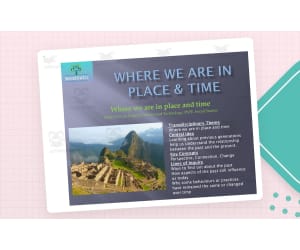
IB PYP - WHERE WE ARE IN PLACE AND TIME - PLANNER & RESOURCES
, Grade 1, 2, 3, 4, 5, 6, Teacher Tools, Lesson Plans
IB PYP - Where We Are in Place and Time - Planner & Resources This teaching resource covers the International Baccalaureate Primary Years Programme's Where We Are in Place and Time theme. Designed for educators teaching grades 1-6, it provides a complete planner and supplemental materials to engage students in this global theme. Students will inquire into personal histories, homes and journeys, discoveries, explorations and migrations of humankind, and the relationships between the interconnectedness of individuals and civilizations. Implementation ideas include whole group instruction to introduce the theme, small group work to explore lines of inquiry, and independent research assignments. This concise resource allows flexibility for educators to tailor activities to their curriculum needs across multi-age classrooms.
Author WonderWellPYP
Tags International Baccalaureate, Unit Plans, PYP, Thematic Unit Plans, Planners
I WONDER - How Was The Frisbee Invented | Animated Video Lesson
History, Social Studies, History: Europe, Inventors, Basic Science, Science, History: British, History: World, Grade 4, 5, 6, 7, 8, 9, 10, Lesson Plans, Teacher Tools
Video Introduction An amazing video designed for the students to learn more about history. I WONDER - How Was The Frisbee Invented | Animated Video Lesson Do you like history? Which topic do you really enjoy about history? Have you ever read an interesting fact about the Vikings? If yes, can you mention them? What do you like most about the Victorian era? Can you name all the Tudors? Have you ever wondered how people used to live in ancient Japan and ancient China? Do you know any interesting facts about ancient Egyptians and the Pharaohs? Have you ever visited South America? What do you know about Incas and Aztecs? Celtic culture was really one of a kind, can you name any of the places that Celts used to live in? Imagine yourself living during the ancient Roman empire, how your life will look like? Ancient Greece was an amazing place to live in. What do you know about ancient Greek life? I WONDER - How Was The Frisbee Invented | Animated Video Lesson The video is perfect for encouraging the researching skills for the students, while learning more about history. I WONDER - How Was The Frisbee Invented | Animated Video Lesson This friendly designed video is suitable for students at school, homeschooling, and as a group activity. Format Available in MP4 format.
Author Educational Voice
Tags How Was The Frisbee Invented, How Was The Frisbee Invented Video, The Frisbee History, History Of The Frisbee, History Of The Frisbee Facts, History Of The Frisbee Video, History Of The Frisbee Video For Kids