



3,915 products added recently
Page 4 - Chemistry Lesson Plans
Simplify the complexities of chemistry with lesson plans that engage students through experiments and real-world applications. Covering topics like chemical reactions, atomic structures, and the periodic table, these resources make abstract concepts tangible. Use them to foster enthusiasm and a strong grasp of chemistry fundamentals.

 Show filters


Chemical Reactions and Balancing - Senior Chemistry Lesson
Science, Chemistry, Grade 10, 11, 12, Teacher Tools, Lesson Plans
Chemical Reactions and Balancing - Senior Chemistry Lesson Your lesson covers chemical reactions and balancing. In order, the lesson teaches about; Chemical Reactions, Energy in Reactions, Chemical Change Clues, Writing Chemical Formulas, the Law of Conservation of Mass, and Balancing Chemical Reactions. Your lesson includes the teacher and student version of the presentation, TWO worksheets, an auto-graded exit ticket, and a student lesson handout so the students can record the notes on a more condensed medium. This lesson is designed to be your go-to resource, whether you're in a traditional classroom or a virtual one. With both a teacher version and a student version, it seamlessly fits into your lesson plans, making learning engaging and adaptable. Assessment made easy We've included an auto-graded Exit Ticket and a quiz with an answer key because I know you don't have an excess of time. I know you don't, because I don't and I know I'll do whatever I can to reduce my grading time. Whether you use PowerPoint or Google Slides, prefer Word or Google Docs, this lesson has you covered. This lesson comes in both Office and Google formats for your convenience. The student version of the presentation has strategically placed blanks for them to fill in as you're teaching. It keeps them active and engaged, encourages discussion, and leaves more time for those "aha" moments.
Author Teach With Fergy
Tags Chemistry Lesson, Writing Reactions, Synthesis Reactions, Combustion Reactions

Lesson 3.2 - Force Diagrams
Science, Chemistry, Physics, Grade 6, 7, 8, 9, 10, 11, 12, Lesson Plans, Teacher Tools
Lesson 3.2 - Force Diagrams : A significant teaching resource, primarily useful for grade 6 through grade 12 students who want to understand the foundations of net forces and balanced/unbalanced forces, targeted at Integrated Chemistry & Physics syllabus. The kit includes: '3.2 Force Diagrams Notes': These notes provide comprehensive instructions on identifying the net force acting upon an object and assessing whether these forces are balanced or unbalanced. Two versions exist: Version A, which offers blanks for student interaction, while version B, completely filled in, perfect for absentees or additional aid seekers. '3.2 Force Diagrams Practice': This practice sheet engages students by allowing them to sketch their own net force diagrams and decipher if there are imbalances or balances within their drawings. '3.2 Force Diagrams Mini-Poster' activity: Here learners get to profit from demonstrating their understanding by creating unique scenarios involving forces—transferring this into illustrating both force and net-force diagrams . A beneficial twelve slide whiteboard practice PowerPoint material that immediately gauges student comprehension during lessons themselves—promoting quick yet efficient knowledge evaluation. An additional PowerPoint note document ensures easy delivery of presentations spotlighting learning objectives and associated beginning questions regarding the subject matter itself. This product aligns with specific Indiana State Standards (ICP.3.2), particularly concerning Integrated Chemistry & Physics instruction spectrum. The files provided come in editable .docx or .pptx formats giving educators autonomy over adjusting file content according to particular needs while PDF renditions guarantee a simple viewing experience across any software platforms capable of running PDF files such as Adobe Reader]. Make sure to have a fitting software platform before downloading. Highly adaptive within various educational setting range—whole-group discussions, small group work, or individual assignments—Lesson 3.2 - Force Diagrams , effortlessly adapts to varied teaching methods aiming at enriching student insights into the elementary principles of forces.
Author Integrated Chemistry and Physics
Tags Force Diagrams, Net Forces, Balanced Forces, Unbalanced Forces, Integrated Chemistry And Physics
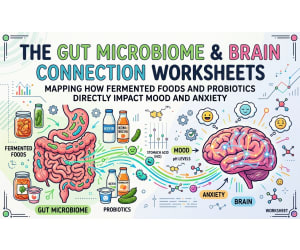
The Gut Microbiome & Brain Connection Worksheets
P.E. & Health, Health, Mental Health, Mindfulness, Physical Education, Sports, Yoga, Science, Physics, Chemistry, Grade 6, 7, 8, 9, 10, 11, 12, Worksheets & Printables, Workbooks, Worksheets, Word Searches, Teacher Tools, Lesson Plans, Quizzes and Tests, Quizzes, Tests, Assessments
Unlock the Science of Mood! A Comprehensive Gut-Brain Connection Unit for Health & Biology Are your students struggling with anxiety, stress, or low moods? Are you looking for a way to connect biology and nutrition to real-world mental health and Social-Emotional Learning (SEL)? This comprehensive, no-prep digital unit, "The Gut-Brain Connection: How Fermented Foods Impact Mood and Anxiety," is the resource you need. It provides a fascinating, scientifically-backed exploration of the gut microbiome and its direct link to our brains. Empower your students with the knowledge to understand and "bio-hack" their own mental well-being through nutrition! This 46-page resource is perfect for health, biology, or life science classes and is designed to be engaging, rigorous, and easy to implement. Students will move from understanding the theory to applying it to their own lives. ► What's Included in This 46-Page Unit? Phase 1: Core Content & Theory (Student Textbook): In-depth yet easy-to-understand chapters covering: The Gut-Brain Axis & The "Second Brain" The Vagus Nerve & Neurotransmitters (Serotonin, GABA) The Science of Probiotics, Fermentation, and Short-Chain Fatty Acids (SCFAs) Specific Mood-Boosting Foods: Kefir, Kimchi, Sauerkraut, and Miso Real-world case studies on managing anxiety and mood. Phase 2: Student Workbook (10 Worksheets): A complete workbook to test comprehension and critical thinking. Activities include: Vocabulary mapping and fill-in-the-blanks True/False/Nuance analysis Scenario analysis and case study questions Personal reflection and data collection A capstone project: "Synthesizing the Science: Your Gut-Brain Action Plan." Phase 3: Visuals & Teacher Resources (The Ultimate Time-Saver!): 3 High-Quality Visual Diagrams: Perfect for projectors or as printable posters (The Vagus Nerve Highway, Data Literacy Chart, Fermented Foods Mind Map). Comprehensive Answer Key: Detailed answers for every single question in the student workbook. Teacher Implementation Guide: A day-by-day pacing guide for a 3-day micro-unit, including objectives, instructional strategies, and discussion prompts. This isn't just a lesson; it's a powerful tool that gives students agency over their health. It demystifies anxiety and provides actionable, science-based steps for a healthier mind. Download today to bring this game-changing topic to your classroom! Keywords: Gut-Brain Axis, Gut Health, Mental Health, Anxiety, Nutrition, Health Curriculum, Biology, Middle School Health, High School Health, Probiotics, Fermented Foods, Social-Emotional Learning (SEL), Worksheets, Lesson Plan, No-Prep, Printable, Digital, Science, Serotonin, GABA, Vagus Nerve, Microbiome. Why Parents/Schools Love It: Empowers Students with Actionable Knowledge: It moves beyond theory, teaching students practical, dietary strategies they can use to manage their own mood and anxiety. Bridges Science with Social-Emotional Learning (SEL): This unit perfectly integrates rigorous biology with the critical topic of mental wellness, showing students the direct connection between what they eat and how they feel. Scientifically Accurate & Rigorous: The content is based on modern nutritional psychiatry, providing credible and trustworthy information that demystifies complex biological processes. Comprehensive & No-Prep Resource: With a student reader, 10 worksheets, visual aids, and a full answer key, this unit saves teachers valuable prep time and is ready to print or use digitally immediately. Addresses a Timely and Critical Topic: In a world where student anxiety is on the rise, this resource tackles the issue head-on from a fresh, biological perspective, removing stigma and promoting proactive health. Target Audience : Based on the content's language, complexity, and explicit mention on page 2 ("Grade 6 Health scholars"), primary target is: Grade 6 Health and Science Teachers. However, the material can easily be adapted for a broader range. should also target: Grades 7-9 Health, Life Science, and Biology Teachers. High School Psychology or Home Economics/Nutrition Teachers. Homeschooling Parents teaching middle or early high school science and health. Copyright/Terms of Use: This Book was copyrighted by Syed Hammad Rizvi. This resource is for personal and single classroom use only. You may not alter, redistribute, or sell any part of this resource. In other words, you may not put it on the Internet where it could be publicly found and downloaded. If you want to share this resource with colleagues, please purchase additional licenses from Teachsimple. Thank you for respecting these terms of use. This product is happily brought to you by Syed Hammad Rizvi
Author Creative Book Store
Rating
Tags GutBrainAxis, GutBrainConnection, GutMicrobiome, Microbiome, Probiotics, MentalHealth, MentalWellness, AnxietySupport, AnxietyRelief, StudentMentalHealth

I WONDER - Why Are Liquids Free Flowing | Animated Video Lesson
Chemistry, Science, Grade 4, 5, 6, 7, 8, 9, 10, Lesson Plans, Teacher Tools
Video Introduction An amazing activity designed for the students to learn more about STEM. I WONDER - Why Are Liquids Free Flowing | Animated Video Lesson Do you like STEM subjects? what is your favorite one? Have you ever tried to plant a seed? If yes, tell us more about it. Or have you ever tried to invent something? If yes, tell us more about it. And how do you think it will help us? Have you ever seen a microorganism under a microscope? What was it? And how it looked like? Mathematics is a marvelous subject. Let' sharpen our brains and solve some equations. Do you like timetable tricks? What is your favorite one? Do you know how to code? Have you ever created an app or a game before? If yes, how was it like? I WONDER - Why Are Liquids Free Flowing | Animated Video Lesson The video is perfect for encouraging the researching skills for the students, while learning more about this fantastic topic. I WONDER - Why Are Liquids Free Flowing | Animated Video Lesson This friendly designed video is suitable for students at school, homeschooling, and as a group activity. Format Available in MP4 format.
Author Educational Voice
Tags Why Are Liquids Free Flowing, Why Are Liquids Free Flowing Video, Liquids, Liquids Facts, Liquids Facts For Kids, Liquids Facts Video, Chemistry, Chemistry Facts, Chemistry Facts For Kids

I WONDER - What PH Is The Acid In Our Stomachs | Animated Video Lesson
Human Body, Life Sciences, Science, Biology, STEM, Chemistry, Grade 6, 7, 8, 9, 10, 11, 12, Lesson Plans, Teacher Tools
Video Overview The human body is full of fascinating wonders to learn. This video is created to help the students recognize the anatomy and the job of the human body. I WONDER - What PH Is The Acid In Our Stomachs | Animated Video Lesson Every part and organ in our human body is vital so let's see how important they are. Have you ever imagined how we look like if we didn't have a skeleton? Did you know that because we have our amazing muscles we can stand! Do you know how many teeth do we have? Have you ever wondered about the food journey inside our body? Can you name all the glands in our body? Why do we have skin? Our nervous system is really good at sending signals. Can you tell us more about it? Are you really good at Mathematics, painting, or any other thing? You should really thank your brain about it! The famous five senses are really doing a great work? Can you explain how every sense works? I WONDER - What PH Is The Acid In Our Stomachs | Animated Video Lesson The video is perfect for encouraging the researching skills for the students, while learning more about our fantastic human body. I WONDER - What PH Is The Acid In Our Stomachs | Animated Video Lesson This friendly designed video is suitable for students at school, homeschooling, and as a group activity. Format Available in MP4 format.
Author Educational Voice
Tags What PH Is The Acid In Our Stomachs, What PH Is The Acid In Our Stomachs Video, The Acid In Our Stomach, The Acid In Our Stomach Facts, The Acid In Our Stomach Video, The Acid In Our Stomach Facts For Kids

Synthesis, Decomposition and Combustion - Senior Chemistry Lesson
Science, Chemistry, Grade 10, 11, 12, Teacher Tools, Lesson Plans
Synthesis, Decomposition, and Combustion Reactions - Senior Chemistry Lesson Your lesson covers three main reaction types. In order, the lesson teaches; the Steps to Writing Reactions, Synthesis Reactions, Decomposition Reactions, and Combustion Reactions. Your lesson includes the teacher and student version of the presentation, TWO embedded videos, an auto-graded exit ticket, and a student lesson handout so the students can record the notes on a more condensed medium. This lesson is designed to be your go-to resource, whether you're in a traditional classroom or a virtual one. With both a teacher version and a student version, it seamlessly fits into your lesson plans, making learning engaging and adaptable. Assessment made easy We've included an auto-graded Exit Ticket and a quiz with an answer key because I know you don't have an excess of time. I know you don't, because I don't and I know I'll do whatever I can to reduce my grading time. Whether you use PowerPoint or Google Slides, prefer Word or Google Docs, this lesson has you covered. This lesson comes in both Office and Google formats for your convenience. The student version of the presentation has strategically placed blanks for them to fill in as you're teaching. It keeps them active and engaged, encourages discussion, and leaves more time for those "aha" moments.
Author Teach With Fergy
Tags Chemistry Lesson, Writing Reactions, Synthesis Reactions, Combustion Reactions
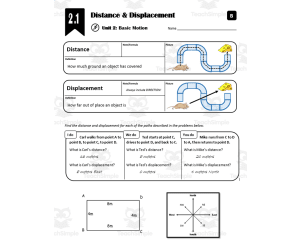
Lesson 2.1 - Distance & Displacement
Science, Chemistry, Physics, Common Core, Grade 6, 7, 8, 9, 10, 11, 12, Lesson Plans, Teacher Tools
Lesson 2.1 - Distance & Displacement: A Comprehensive Teaching Resource This resource is a comprehensive package designed for those tackling the important concepts of distance and displacement in Physical Sciences. A complete set of Notes on Distance and Displacement Two versions available – (A) fill in the blanks for interactive learning, and (B) complete notes as a ready reference or for students with special needs. Custom Worksheets to Practice Skills: Students can practice finding an object's distance or displacement using graphical representations of movements. Inclusive design with a standard (A) version and tailored (B) version to cater to varied learning paces among scholars. Slick PowerPoint Notes: An ideal solution that streamlines lesson delivery regardless of class size, converting scientific explanations into engaging presentations. Included Also Are: "Objectives & Sample Starter Questions" : sets clear goals for understanding the concept at hand while initiating meaningful discussion starts. A resource perfectly aligned with 2016 Indiana State Standards: This resource tailors perfectly into your curriculum requirements—whether it’s public schools or homeschooling settings alike. Diverse File Formats Available: .docx files for adaptability based on individual educator’s preferences plus .pdf files perfect as quick-reference non-editable versions requiring any PDF viewer like Adobe Reader. Ideal For Grades 6-12 : This comprehensive guide allows students between Grade 6 to Grade 12 comprehend how to distinguish between distance and displacement, and determine their values either from graphical or mathematical representation against time. Transform teaching the notion of Distance & Displacement into an enjoyable experience with this comprehensive and concise resource.
Author Integrated Chemistry and Physics
Tags Distance, Displacement, Notes, Worksheets, PowerPoint
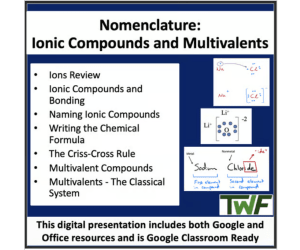
Nomenclature -Ionic Compounds & Multivalents - Senior Chemistry Lesson
Science, Chemistry, Grade 10, 11, 12, Teacher Tools, Lesson Plans
Nomenclature - Ionic Compounds & Multivalents - Senior Chemistry Lesson Your lesson covers naming ionic compounds and multivalents. In order, the lesson teaches about; Ions, Ionic Compounds and Bonding, Naming Ionic Compounds, Writing the Chemical Formula, The Criss-Cross Rule, Multivalent Compounds, and Multivalents - The Classical System. Your lesson includes the teacher and student version of the presentation, an auto-graded exit ticket, and a student lesson handout so the students can record the notes on a more condensed medium. This lesson is designed to be your go-to resource, whether you're in a traditional classroom or a virtual one. With both a teacher version and a student version, it seamlessly fits into your lesson plans, making learning engaging and adaptable. Assessment made easy We've included an auto-graded Exit Ticket and a quiz with an answer key because I know you don't have an excess of time. I know you don't, because I don't and I know I'll do whatever I can to reduce my grading time. Whether you use PowerPoint or Google Slides, prefer Word or Google Docs, this lesson has you covered. This lesson comes in both Office and Google formats for your convenience. The student version of the presentation has strategically placed blanks for them to fill in as you're teaching. It keeps them active and engaged, encourages discussion, and leaves more time for those "aha" moments.
Author Teach With Fergy
Tags Chemistry Lesson, Lewis Structures, Valence Electrons, Octet Rule, Ionic Bonding, Multivalent Ions, Ions, Naming Ionic Compounds, Bonding

I WONDER - Is Chemical Energy Harmful To The Environment
Chemistry, Science, STEM, Grade 6, 7, 8, 9, 10, 11, 12, Lesson Plans, Teacher Tools
Video Introduction An amazing video designed for the students to learn more about STEM. I WONDER - Is Chemical Energy Harmful To The Environment | Animated Video Lesson Do you like STEM subjects? what is your favorite one? Have you ever tried to plant a seed? If yes, tell us more about it. Or have you ever tried to invent something? If yes, tell us more about it. And how do you think it will help us? Have you ever seen a microorganism under a microscope? What was it? And how it looked like? Mathematics is a marvelous subject. Let' sharpen our brains and solve some equations. Do you like timetable tricks? What is your favorite one? Do you know how to code? Have you ever created an app or a game before? If yes, how was it like? I WONDER - Is Chemical Energy Harmful To The Environment | Animated Video Lesson The video is perfect for encouraging the researching skills for the students, while learning more about this fantastic topic. I WONDER - Is Chemical Energy Harmful To The Environment | Animated Video Lesson This friendly designed video is suitable for students at school, homeschooling, and as a group activity. Format Available in MP4 format.
Author Educational Voice
Tags Is Chemical Energy Harmful To The Environment, Is Chemical Energy Harmful To The Environment Video, Chemical Energy, Chemical Energy Facts, Chemical Energy Facts For Kids, Chemical Energy Video For Kids

I WONDER - What Is Stomach Acid | Animated Video Lesson
Chemistry, Science, Biology, Life Sciences, Human Body, STEM, Grade 6, 7, 8, 9, 10, 11, 12, Lesson Plans, Teacher Tools
Video Overview The human body is full of fascinating wonders to learn. This video is created to help the students recognize the anatomy and the job of the human body. I WONDER - What Is Stomach Acid | Animated Video Lesson Every part and organ in our human body is vital so let's see how important they are. Have you ever imagined how we look like if we didn't have a skeleton? Did you know that because we have our amazing muscles we can stand! Do you know how many teeth do we have? Have you ever wondered about the food journey inside our body? Can you name all the glands in our body? Why do we have skin? Our nervous system is really good at sending signals. Can you tell us more about it? Are you really good at Mathematics, painting, or any other thing? You should really thank your brain about it! The famous five senses are really doing a great work? Can you explain how every sense works? I WONDER - What Is Stomach Acid | Animated Video Lesson The video is perfect for encouraging the researching skills for the students, while learning more about our fantastic human body. I WONDER - What Is Stomach Acid | Animated Video Lesson This friendly designed video is suitable for students at school, homeschooling, and as a group activity. Format Available in MP4 format.
Author Educational Voice
Tags What Is Stomach Acid, What Is Stomach Acid Video, Stomach Acid, Stomach Acid Facts, Stomach Acid Facts For Kids, Stomach Acid Video, Stomach Acid Video For Kids, Human Body, Human Body Facts
I WONDER - Are There Polymers Found In Nature | Animated Video Lesson
Chemistry, Science, STEM, Grade 6, 7, 8, 9, 10, Lesson Plans, Teacher Tools
Video Introduction An amazing video designed for the students to learn more about STEM. I WONDER - Are There Polymers Found In Nature | Animated Video Lesson Do you like STEM subjects? what is your favorite one? Have you ever tried to plant a seed? If yes, tell us more about it. Or have you ever tried to invent something? If yes, tell us more about it. And how do you think it will help us? Have you ever seen a microorganism under a microscope? What was it? And how it looked like? Mathematics is a marvelous subject. Let' sharpen our brains and solve some equations. Do you like timetable tricks? What is your favorite one? Do you know how to code? Have you ever created an app or a game before? If yes, how was it like? I WONDER - Are There Polymers Found In Nature | Animated Video Lesson The video is perfect for encouraging the researching skills for the students, while learning more about this fantastic topic. I WONDER - Are There Polymers Found In Nature | Animated Video Lesson This friendly designed video is suitable for students at school, homeschooling, and as a group activity. Format Available in MP4 format.
Author Educational Voice
Tags Are There Polymers Found In Nature, Are There Polymers Found In Nature Video, Polymers, Polymers Facts, Polymers Facts For Kids, Polymers Video, Polymers Educational Video For Kids, Polymers Video For Kids
I WONDER - Why Is The Solid State Important | Animated Video Lesson
Chemistry, Science, Grade 4, 5, 6, 7, 8, 9, 10, Lesson Plans, Teacher Tools
Video Introduction An amazing activity designed for the students to learn more about STEM. I WONDER - Why Is The Solid State Important | Animated Video Lesson Do you like STEM subjects? what is your favorite one? Have you ever tried to plant a seed? If yes, tell us more about it. Or have you ever tried to invent something? If yes, tell us more about it. And how do you think it will help us? Have you ever seen a microorganism under a microscope? What was it? And how it looked like? Mathematics is a marvelous subject. Let' sharpen our brains and solve some equations. Do you like timetable tricks? What is your favorite one? Do you know how to code? Have you ever created an app or a game before? If yes, how was it like? I WONDER - Why Is The Solid State Important | Animated Video Lesson The video is perfect for encouraging the researching skills for the students, while learning more about this fantastic topic. I WONDER - Why Is The Solid State Important | Animated Video Lesson This friendly designed video is suitable for students at school, homeschooling, and as a group activity. Format Available in MP4 format.
Author Educational Voice
Tags Why Is The Solid State Important, Why Is The Solid State Important Video, Solid State, Solid State Facts, Solid State Facts For Kids, Solids, Solids Facts, State Of Matter, States Of Matter
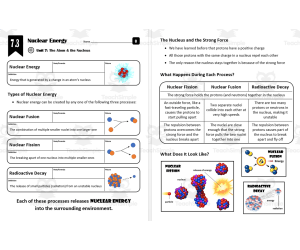
Lesson 7.3 - Nuclear Energy
Science, Chemistry, Physics, Grade 6, 7, 8, 9, 10, 11, 12, Lesson Plans, Teacher Tools
Lesson 7.3 - Nuclear Energy This comprehensive teaching resource aims to enhance student learning of nuclear energy for grades 6 through 12. The guide focuses on various components of nuclear energy, including nuclear fusion, nuclear fission, and radioactive decay. Nuclear Energy Notes: Detailed notes outlining significant differences between the three main types of nuclear energy. These are available in two versions - An interactive format for students to fill in blanks as they learn and a full version which is ideal for absent learners or those needing extra support. Nuclear Energy Simulation: An engaging tool accessed via a provided URL that allows students to study effects of nuclear fission on different nuclei. Nuclear Energy Reading: A segment presenting pro and con arguments from two separate articles at varying lexile levels to cater to different student proficiencies. PowerPoint Notes: Teaching points presented in an easy-to-show format suitable for class time. Objectives & Starter Questions: Prompts designed to get students thinking about core topics before diving into detailed discussions. All the files included can be downloaded as .docx (for Word), .pptx (for PowerPoint) files if revisions are required or .pdf files for quick access without any modifications needed. Lesson 7.3 - Nuclear Energy closely aligns with the Integrated Chemistry & Physics criteria specified by Indiana State Standards making it a perfect educational tool suitable for public educators and homeschooling parents alike..
Author Integrated Chemistry and Physics
Tags Nuclear Fusion, Nuclear Fission, Radioactive Decay, Pros And Cons, Critical Thinking
I WONDER - What Are Elements | Animated Video Lesson
Chemistry, Science, STEM, Grade 6, 7, 8, 9, 10, 11, 12, Lesson Plans, Teacher Tools
Video Introduction An amazing video designed for the students to learn more about STEM. I WONDER - What Are Elements | Animated Video Lesson Do you like STEM subjects? what is your favorite one? Have you ever tried to plant a seed? If yes, tell us more about it. Or have you ever tried to invent something? If yes, tell us more about it. And how do you think it will help us? Have you ever seen a microorganism under a microscope? What was it? And how it looked like? Mathematics is a marvelous subject. Let' sharpen our brains and solve some equations. Do you like timetable tricks? What is your favorite one? Do you know how to code? Have you ever created an app or a game before? If yes, how was it like? I WONDER - What Are Elements | Animated Video Lesson The video is perfect for encouraging the researching skills for the students, while learning more about this fantastic topic. I WONDER - What Are Elements | Animated Video Lesson This friendly designed video is suitable for students at school, homeschooling, and as a group activity. Format Available in MP4 format.
Author Educational Voice
Tags What Are Elements, What Are Elements Video, Elements, Element, Elements Facts, Elements Facts For Kids, Elements Video, Elements Facts Video, Elements Facts Video For Kids, Science

Chemical Symbols, Formulas & Compounds - Lesson Bundle
Science, Chemistry, Grade 10, 11, 12, Teacher Tools, Lesson Plans
Chemical Symbols, Formulas & Compounds - Lesson Bundle A comprehensive teaching resource designed for educators teaching Science and Chemistry, specifically targeting students from Grade 10 to 12. This meticulously designed product excels with its adaptability in both traditional classroom settings and remote/distance learning environments. This two-day instructional bundle incorporates diverse digital tools such as: Google Slides , PowerPoint presentations, Word Documents, and Google Docs. The course content aids student understanding of chemical symbols, formulas and compounds through engaging instruction methods. Methods incorporated into the lesson include: An auto-graded exit ticket for assessing student understanding post-lesson, An informative handout included for student reference throughout the lesson. Main topics covered: Symbols identification; Naming elements; Understanding atom counting; Navigating combining capacity; Applying the criss-cross rule; Identifying compound names using periodic charts, And other robust chemistry-centric subjects. To enhance its accessibility across multiple teaching scenarios: The Chemical Symbols Formulas & Compounds - Lesson Bundle can be accessed anywhere with any device irrespective of platform. This functionality addresses IT pressure if your institution exclusively uses Google tools, while also increasing accessibility options supporting educational wellness in new-age challenges due to remote learning constraints. To further heighten flexibility in a digital space, this resource can be easily incorporated into platforms like Google Classroom. This allows for one-click placement of the complete resource into your digital repository, enabling direct assignment to students. Lastly, this practical educational package aids educators with supportive and versatile tools that enrich teaching efficiency and student outcomes in chemistry.
Author Teach With Fergy
Tags Chemical Symbols, Formulas, Compounds, Teaching Resource, Chemistry

I WONDER - What Is Radiation | Animated Video
Chemistry, Science, Physics, STEM, Grade 6, 7, 8, 9, 10, 11, 12, Lesson Plans, Teacher Tools
Video Introduction An amazing video designed for the students to learn more about STEM. I WONDER - What Is Radiation | Animated Video Lesson Do you like STEM subjects? what is your favorite one? Have you ever tried to plant a seed? If yes, tell us more about it. Or have you ever tried to invent something? If yes, tell us more about it. And how do you think it will help us? Have you ever seen a microorganism under a microscope? What was it? And how it looked like? Mathematics is a marvelous subject. Let' sharpen our brains and solve some equations. Do you like timetable tricks? What is your favorite one? Do you know how to code? Have you ever created an app or a game before? If yes, how was it like? I WONDER - What Is Radiation | Animated Video Lesson The video is perfect for encouraging the researching skills for the students, while learning more about this fantastic topic. I WONDER - What Is Radiation | Animated Video Lesson This friendly designed video is suitable for students at school, homeschooling, and as a group activity. Format Available in MP4 format.
Author Educational Voice
Tags What Is Radiation, What Is Radiation Video, Radiation, Radiation Facts, Radiation Facts For Kids, Radiation Video, Radiation Facts Video, Radiation Facts Video For Kids, Science Video For Kids

I WONDER - How Was Polonium Named | Animated Video Lesson
Biographies, Social Studies, Inventors, Basic Science, Science, Chemistry, Grade 4, 5, 6, 7, 8, 9, 10, Lesson Plans, Teacher Tools
Video Introduction An amazing video designed for the students to learn more about famous people in different countries. I WONDER - How Was Polonium Named | Animated Video Lesson Do you know this person? How much do you know about him/her? Who is your idol? Why did you choose this person? Tell us more about him/her? Who is your favorite athlete? Or what is your favorite team? Have you recently heard a story about a famous person? Who was this person? Can you tell us more about him/her. Who is your favorite president, king, or queen? Why you chose that person? In your country, who are the most famous people? What did they do? Can you tell us more about them. What is your favorite invention? Who invented it? Who is your favorite artist? What is the most famous thing he/she have done? What is the most enjoyable you have read before? Who wrote it? I WONDER - How Was Polonium Named | Animated Video Lesson The video is perfect for encouraging the researching skills for the students, while learning more about this fantastic place. I WONDER - How Was Polonium Named | Animated Video Lesson This friendly designed video is suitable for students at school, homeschooling, and as a group activity. Format Available in MP4 format.
Author Educational Voice
Rating
Tags How Was Polonium Named, How Was Polonium Named Video, Polonium, Polonium Facts, Polonium Video, Polonium Video For Kids, Polonium Facts For Kids, Marie Curie, Marie Curie Video
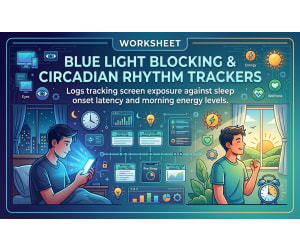
Blue Light Blocking & Circadian Rhythm Trackers
Science, Physics, Chemistry, STEM, Resources for Teachers, Classroom Management, Community Building, Earth and Environmental Sciences, Research, P.E. & Health, Homeschool Curriculum, Homeschool Templates, Grade 8, 9, 10, 11, 12, Worksheets & Printables, Workbooks, Worksheets, Word Searches, Teacher Tools, Lesson Plans, Quizzes and Tests, Quizzes, Tests, Assessments
Are your students tired? Do they struggle with morning fatigue, yet stay glued to their screens late into the night? It's the paradox of modern adolescence. This comprehensive, project-based learning (PBL) module transforms their struggle into a powerful scientific investigation. Turn Students into Scientists with This Hands-On Health Project! Instead of just telling students that "screens are bad for sleep," this resource empowers them to prove it to themselves. "The Screen Time & Sleep Experiment" is a rigorous, 4-week unit that guides students through an N-of-1 trial—a personal experiment where they are both the researcher and the subject! Students will learn the deep neurobiology behind sleep (melatonin, suprachiasmatic nucleus, ipRGCs) and then apply it by tracking their own data. They will use detailed logs to correlate evening screen time with critical metrics like Sleep Onset Latency (SOL) and Morning Energy Levels . This isn't just a worksheet; it's a journey of self-discovery that builds critical life skills. What's Included in This 36-Page Turnkey Resource? Part 1: The Empirical Approach to Sleep Hygiene (11 Pages): A detailed, student-facing guide explaining the science of circadian rhythms, melatonin suppression, photic vs. cognitive arousal, and intervention strategies. Part 2: Student Workbook (16 Pages): Features 10 detailed worksheets that guide students through every phase of their experiment—from establishing a baseline to tracking interventions (software filters, blue-light glasses), analyzing data, and creating a sustainable personal sleep protocol. Part 3: Visuals & Teacher Resources (9 Pages): Everything you need to facilitate the project with confidence. This section includes: High-resolution conceptual diagrams (flowcharts, scatter plots). A comprehensive, fill-in-the-blank Answer Key. A detailed Teacher Implementation Guide with a 4-week pacing plan, advice on navigating subjective data, and strategies for ensuring student privacy. Why This Project is a Game-Changer for Your Classroom: Relevant & Engaging: Tackles a real-world issue that directly impacts every student's daily life, health, and academic performance. Promotes Scientific Literacy: Students practice the scientific method, collect and analyze quantitative data, identify confounding variables, and distinguish correlation from causation. Cross-Curricular: Perfect for Health, Biology, AP Psychology, Human Anatomy & Physiology, and even Statistics classes. Builds Digital Citizenship & SEL: Encourages self-regulation, mindfulness about technology use, and empowers students to take control of their own well-being. Give your students the "aha!" moment they need to understand the invisible mechanics of their own biology. Equip them with the knowledge and skills to navigate the digital age in a healthy, productive way. Download this print-and-go resource today! Keywords: Sleep Hygiene, Screen Time, Blue Light, Circadian Rhythm, Health, High School, Biology, AP Psychology, Project-Based Learning (PBL), Data Tracking, Scientific Method, Melatonin, Digital Citizenship, Health and Wellness, Student Experiment, Lab Report. Why Parents/Schools Love It: Turns a Problem into a Project: It addresses the universal struggle over teen screen time not with lectures, but with an empowering, student-led scientific investigation. Fosters Self-Responsibility: By using their own data, students see the direct consequences of their habits, leading to intrinsic motivation for change that is far more effective than parental nagging. Teaches Critical 21st-Century Skills: This goes beyond biology; it teaches data literacy, critical thinking, self-regulation, and how to create a healthy work-life-tech balance. It’s a Complete, Turnkey Solution: The resource is a comprehensive package with a student guide, workbook, and a full teacher implementation guide, making it easy for any educator to run a high-quality, impactful project. Target Audience: Student Classes : Based on the explicit mention of "Grade 11 Health students" and the academic rigor of the content, target: Primary Target: High School Health and Wellness Classes (Grades 10-12) . This is a perfect fit. Secondary Targets: Biology / AP Biology: Excellent for units on the human endocrine system, nervous system, or homeostasis. AP Psychology: Perfect for units on sleep, consciousness, and sensation. Human Anatomy & Physiology: Fits into studies of the nervous and endocrine systems. Statistics: The data collection and analysis component makes it a fantastic real-world project. Copyright/Terms of Use: This Book was copyrighted by Syed Hammad Rizvi. This resource is for personal and single classroom use only. You may not alter, redistribute, or sell any part of this resource. In other words, you may not put it on the Internet where it could be publicly found and downloaded. If you want to share this resource with colleagues, please purchase additional licenses from Teachsimple. Thank you for respecting these terms of use. This product is happily brought to you by Syed Hammad Rizvi
Author Creative Book Store
Rating
Tags ScreenTime, SleepHygiene, ProjectBasedLearning, PBL, HighSchoolHealth, HighSchoolBiology, Health Education, ScienceTeacher, DigitalCitizenship, StudentWellness

I WONDER - What Is A Battery Terminal | Animated Video Lesson
Physics, Science, Chemistry, Homeschool Curriculum, Grade 6, 7, 8, 9, 10, Lesson Plans, Teacher Tools
Video Introduction An amazing activity designed for the students to learn more about STEM. I WONDER - What Is A Battery Terminal | Animated Video Lesson Do you like STEM subjects? what is your favorite one? Have you ever tried to plant a seed? If yes, tell us more about it. Or have you ever tried to invent something? If yes, tell us more about it. And how do you think it will help us? Have you ever seen a microorganism under a microscope? What was it? And how it looked like? Mathematics is a marvelous subject. Let' sharpen our brains and solve some equations. Do you like timetable tricks? What is your favorite one? Do you know how to code? Have you ever created an app or a game before? If yes, how was it like? I WONDER - What Is A Battery Terminal | Animated Video Lesson The video is perfect for encouraging the researching skills for the students, while learning more about this fantastic topic. I WONDER - What Is A Battery Terminal | Animated Video Lesson This friendly designed video is suitable for students at school, homeschooling, and as a group activity. Format Available in MP4 format.
Author Educational Voice
Tags What Is A Battery Terminal, What Is A Battery Terminal Video, Battery Terminal, Battery Terminal Facts, Battery Terminal Facts For Kids, Battery Terminal Video, Battery Terminal Video For Kids, Science

I WONDER - What Is The Nucleus In The Atom | Animated Video Lesson
Chemistry, Science, STEM, Grade 6, 7, 8, 9, 10, 11, 12, Lesson Plans, Teacher Tools
Video Introduction An amazing video designed for the students to learn more about STEM. I WONDER - What Is The Nucleus In The Atom | Animated Video Lesson Do you like STEM subjects? what is your favorite one? Have you ever tried to plant a seed? If yes, tell us more about it. Or have you ever tried to invent something? If yes, tell us more about it. And how do you think it will help us? Have you ever seen a microorganism under a microscope? What was it? And how it looked like? Mathematics is a marvelous subject. Let' sharpen our brains and solve some equations. Do you like timetable tricks? What is your favorite one? Do you know how to code? Have you ever created an app or a game before? If yes, how was it like? I WONDER - What Is The Nucleus In The Atom | Animated Video Lesson The video is perfect for encouraging the researching skills for the students, while learning more about this fantastic topic. I WONDER - What Is The Nucleus In The Atom | Animated Video Lesson This friendly designed video is suitable for students at school, homeschooling, and as a group activity. Format Available in MP4 format.
Author Educational Voice
Tags What Is The Nucleus In The Atom, What Is The Nucleus In The Atom Video, Nucleus, Nucleus Facts, Nucleus Video, Nucleus Facts For Kids, Atom, Atom Facts, Atom Video, Atoms Facts For Kids

Fluids Unit
Science, Chemistry, Grade 7, 8, 9, 10, Teacher Tools, Lesson Plans
If you are looking for some additional science engagement for your learners to engage with, I have just the resource for you. This is a Fluids Unit that is meant for science students who are learning about how fluids work. The Fluids: Understanding Matter and Energy Unit is complete with 9 different interactive lesson presentations to instruct students. The objective of the unit is to: -- Analyze how the properties of fluids are used in various technologies, and assess the impact of these technologies on society and the environment -- Investigate the properties of fluids -- Demonstrate an understanding of the properties and uses of fluids The topics presented in this Fluids Unit are: 1. Introduction to Fluids 2. Introduction to Fluids Theme 3. Exploring Fluids 4. Flow Rate and Viscosity 5. Density, Mass, and Volume 6. Buoyancy 7. Compressibility and Pascal’s Law 8. Pressure, Temperature, and Volume 9. Fluid Spills This Fluids Unit is a ready to go resource designed for any high school student. This unit may be presented in small groups, whole class, or individual students for research. I hope you enjoy! Take A Look at My Best Sellers: Locations on the Cartesian / Coordinate Plane Worksheet Video Game Design – Coding Project Art History Research Project Coloring Lesson for Middle School Digital Portraits Lesson Book Club, but with a twist! You can find more resources at my storefront here: https://teachsimple.com/contributor/resource-garden
Author Resource Garden
Tags Fluids Unit, Science Unit, Science Lessons, Science Presentation, Pascal's Law, Density, Graphic Organizers, Interactive Physical Science

I WONDER - What Is Frost | Animated Video Lesson
Earth Sciences, Earth and Environmental Sciences, Science, Geography, Social Studies, STEM, Chemistry, Grade 4, 5, 6, 7, 8, 9, 10, Lesson Plans, Teacher Tools
Video Introduction An amazing video designed for the students to learn more about famous phenomena in different countries. I WONDER - What Is Frost | Animated Video Lesson What do you know about this phenomenon? Where it happens? When it happens? What are the safety measures that we should take to be safe during this phenomenon? Are there any other places in the world that experienced this phenomenon? If yes, tell us more about them. Why do you think it happens? Do you like reading about Geography? What is your favorite country in the whole world? I WONDER - What Is Frost | Animated Video Lesson The video is perfect for encouraging the researching skills for the students, while learning more about this fantastic phenomenon. I WONDER - What Is Frost | Animated Video Lesson The video is perfect for encouraging the researching skills for the students, while learning more about this fantastic phenomenon. Format Available in a PDF format.
Author Educational Voice
Rating
Tags What Is Frost, What Is Frost Video, Frost, Frost Facts, Frost Video, Frost Video For Kids, Frost Facts For Kids, Frosting, Frosting Facts, Frosting Video

I WONDER - Are All Metals Conductors | Animated Video Lesson
Basic Science, Science, Chemistry, Physics, Grade 4, 5, 6, 7, 8, 9, 10, Lesson Plans, Teacher Tools
Video Introduction An amazing activity designed for the students to learn more about STEM. I WONDER - Are All Metals Conductors | Animated Video Lesson Do you like STEM subjects? what is your favorite one? Have you ever tried to plant a seed? If yes, tell us more about it. Or have you ever tried to invent something? If yes, tell us more about it. And how do you think it will help us? Have you ever seen a microorganism under a microscope? What was it? And how it looked like? Mathematics is a marvelous subject. Let' sharpen our brains and solve some equations. Do you like timetable tricks? What is your favorite one? Do you know how to code? Have you ever created an app or a game before? If yes, how was it like? I WONDER - Are All Metals Conductors | Animated Video Lesson The video is perfect for encouraging the researching skills for the students, while learning more about this fantastic topic. I WONDER - Are All Metals Conductors | Animated Video Lesson This friendly designed video is suitable for students at school, homeschooling, and as a group activity. Format Available in MP4 format.
Author Educational Voice
Tags Are All Metals Conductors, Are All Metals Conductors Video, Conductors, Conductors Facts, Conductors Facts For Kids, Conductors Video, Conductors Video For Kids, Metals, Metals Facts

I WONDER - How Are The Elements On The Periodic Table Grouped
Chemistry, Science, Grade 4, 5, 6, 7, 8, 9, 10, Lesson Plans, Teacher Tools
Video Introduction An amazing activity designed for the students to learn more about STEM. I WONDER - How Are The Elements On The Periodic Table Grouped | Animated Video Lesson Do you like STEM subjects? what is your favorite one? Have you ever tried to plant a seed? If yes, tell us more about it. Or have you ever tried to invent something? If yes, tell us more about it. And how do you think it will help us? Have you ever seen a microorganism under a microscope? What was it? And how it looked like? Mathematics is a marvelous subject. Let' sharpen our brains and solve some equations. Do you like timetable tricks? What is your favorite one? Do you know how to code? Have you ever created an app or a game before? If yes, how was it like? I WONDER - How Are The Elements On The Periodic Table Grouped | Animated Video Lesson The video is perfect for encouraging the researching skills for the students, while learning more about this fantastic topic. I WONDER - How Are The Elements On The Periodic Table Grouped | Animated Video Lesson This friendly designed video is suitable for students at school, homeschooling, and as a group activity. Format Available in MP4 format.
Author Educational Voice
Tags How Are The Elements On The Periodic Table Grouped, How Are The Elements On The Periodic Table Grouped Video, Periodic Table, Periodic Table Facts, Periodic Table Facts For Kids, Periodic Table Video