



3,906 products added recently
Page 58 - Science Lesson Plans
Bring science to life with lesson plans that cover biology, chemistry, physics, and more. These resources offer experiments and interactive lessons to stimulate curiosity. Implement them to foster a deep understanding of scientific principles and a passion for discovery.

 Show filters


I WONDER - How Did The Planet Mercury Get Its Name | Animated Video
Space, Earth and Environmental Sciences, Science, Grade 6, 7, 8, 9, 10, 11, 12, Lesson Plans, Teacher Tools
Video Introduction An amazing video designed for the students to learn more about space facts. I WONDER - How Did The Planet Mercury Get Its Name | Animated Video Lesson Do you like reading about space? If yes, what is your favorite topic? What do you know about our solar system? What is the smallest planet in our solar system? What is the biggest planet in our solar system? What is the hottest planet in our solar system? And what is the coldest one? Do you think there are aliens? If yes, what do you think they look like? What do they eat and how they speak to each other? Where do they live? What is a galaxy? And what is a milky way? Have you recently saw a shooting star? If yes, tell us more about it, like when did it happen and where? What is a blackhole? Can a blackhole gets bigger by time? Do you like counting the stars? What do you think a star is made of? I WONDER - How Did The Planet Mercury Get Its Name | Animated Video Lesson The video is perfect for encouraging the researching skills for the students, while learning more about the fantastic space. I WONDER - How Did The Planet Mercury Get Its Name | Animated Video Lesson This friendly designed video is suitable for students at school, homeschooling, and as a group activity. Format Available in MP4 format.
Author Educational Voice
Tags How Did The Planet Mercury Get Its Name, How Did The Planet Mercury Get Its Name Video, Planet Mercury's Name, Planet Mercury's Name Video, Planet Mercury's Name Video For Kids, Planet Mercury's Name Facts

I WONDER - How Do Earthquakes Occur | Animated Video Lesson
Geography, Social Studies, Earth Sciences, Earth and Environmental Sciences, Science, Environmental Science, Grade 2, 3, 4, 5, 6, 7, 8, Lesson Plans, Teacher Tools
Video Introduction An amazing video designed for the students to learn more about natural disasters in different countries. I WONDER - How Do Earthquakes Occur | Animated Video Lesson What do you know about this natural disaster? Do you know in which part of the world this could happen? Have you ever read about the safety misusers that we could have to protect ourselves from this natural disaster? If yes, can you tell us more about them? Can you name other natural disasters? If yes, tell us more about where they are likely to happen? And how frequently? Do you like reading about Geography? What is your favorite country in the whole world? If you are going on a trip where it will be? Which country? What you are going to see there? Does this country has a famous place to visit? Do you like reading about Geology? If yes, what is your favourite topic? I WONDER - How Do Earthquakes Occur | Animated Video Lesson The video is perfect for encouraging the researching skills for the students, while learning more about this fantastic phenomenon. I WONDER - How Do Earthquakes Occur | Animated Video Lesson This friendly designed video is suitable for students at school, homeschooling, and as a group activity. Format Available in MP4 format.
Author Educational Voice
Tags How Do Earthquakes Occur, How Do Earthquakes Occur Video, Earthquakes, Earthquake, Earthquakes Facts, Earthquakes Facts For Kids, Earthquakes Video, Earthquakes Video For Kids
I WONDER - What Are Compounds | Animated Video Lesson
Chemistry, Science, STEM, Grade 6, 7, 8, 9, 10, 11, 12, Lesson Plans, Teacher Tools
Video Introduction An amazing video designed for the students to learn more about STEM. I WONDER - What Are Compounds | Animated Video Lesson Do you like STEM subjects? what is your favorite one? Have you ever tried to plant a seed? If yes, tell us more about it. Or have you ever tried to invent something? If yes, tell us more about it. And how do you think it will help us? Have you ever seen a microorganism under a microscope? What was it? And how it looked like? Mathematics is a marvelous subject. Let' sharpen our brains and solve some equations. Do you like timetable tricks? What is your favorite one? Do you know how to code? Have you ever created an app or a game before? If yes, how was it like? I WONDER - What Are Compounds | Animated Video Lesson The video is perfect for encouraging the researching skills for the students, while learning more about this fantastic topic. I WONDER - What Are Compounds | Animated Video Lesson This friendly designed video is suitable for students at school, homeschooling, and as a group activity. Format Available in MP4 format.
Author Educational Voice
Tags What Are Compounds, What Are Compounds Video, Compounds, Compounds Facts, Compounds Facts For Kids, Compounds Video, Compounds Video For Kids, Compounds Facts Video For Kids

I WONDER - What Jobs Do Rabbits Ears Do | Animated Video Lesson
STEM, Life Sciences, Science, Biology, Animals, Grade 1, 2, 3, 4, 5, 6, 7, 8, Lesson Plans, Teacher Tools
Video Introduction Animal kingdoms are full of fascinating wonders to learn. This video is designed for the students to learn more about animals in different countries. I WONDER - What Jobs Do Rabbits Ears Do | Animated Video Lesson Do you like animals? what is your favorite one? Do you own a pet? If yes, tell us more about it, like what its name? And what do you like most about it? What are the animal kingdoms? Can you write down the characteristics of each animal class like mammals, birds, reptiles, amphibian, fish and mollusks. Do you know that some animals can sing, can you name any of them? What is the largest and the smallest mammal in the world? What is the largest and the smallest bird in the world? What is the largest and the smallest fish in the world? I WONDER - What Jobs Do Rabbits Ears Do | Animated Video Lesson The video is perfect for encouraging the researching skills for the students, while learning more about these fantastic animals. I WONDER - What Jobs Do Rabbits Ears Do | Animated Video Lesson This friendly designed video is suitable for students at school, homeschooling, and as a group activity. Format Available in MP4 format.
Author Educational Voice
Tags What Jobs Do Rabbits Ears Do, What Jobs Do Rabbits Ears Do Video, Rabbits Ears, Rabbits Ears Facts, Rabbits Ears Facts For Kids, Rabbits Ears Video, Rabbits Ears Video For Kids, Rabbits, Rabbit
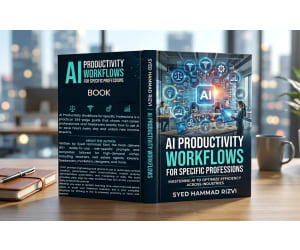
AI Productivity Workflows for Specific Professions Book
Science, Technology, Computer Science, Engineering, Research, Resources for Teachers, Classroom Management, Community Building, Life Studies, Business, Grade 6, 7, 8, 9, 10, 11, 12, Activities, Projects, Teacher Tools, Assessments, Lesson Plans, Outlines, Literacy Readers, Presentations, Workbooks, Worksheets & Printables
The Complete Guide To Using AI In Your Job AI Productivity Workflows for Specific Professions is a more than 394-page, professional resource that includes 90-plus role-specific prompts, templates and step-by-step workflows – all designed to give you the tools needed as a mid-career professional/freelancer working in a high-opportunity, low-competition niche to unlock the potential of AI in your career. AI Productivity Workflows provides practical and professional AI solutions for you in the following professions: - For Teachers: Use AI to create efficiently designed curriculum and personalize instruction. - For Real Estate Agents: Use AI to create search-engine-optimized property listing descriptions and develop virtual tours of properties, helping speed up property sales. - For Freelancers: Use AI to dramatically accelerate the pace at which you can create content and acquire new clients. - For Lawyers: Use AI to virtually automate the majority of your contract drafting and compliance process. - For Creative Professionals: Use generative AI to create amazing designs and branding for your products. Written by Syed Hammad Rizvi (AI Application Architect and AI Product Management Expert at Microsoft), this practical resource contains a wealth of information on key topics, including: - Basics of AI prompt engineering - Ethical use of AI in business - Advanced applications of AI in marketing, finance, HR, project management, data analysis and - Monetizing your AI expertise. This resource is ideal for gig economy and creative professionals who are ready to gain a competitive advantage in their professions starting in and beyond. Reasons Why Parents/Schools Appreciate It: 1) It gives teachers the ability to create adaptive lessons and resources for each individual child by personalizing their education at an increased rate with scalability. 2) It allows teachers to focus on building meaningful relationships with their students and being highly effective teachers by utilizing AI for administrative tasks creating more time in their day. 3) It prepares students for an automated future by providing teachers with tools to assist in classroom instruction as well as provide them with prompt guidance based on student need. 4) It provides measurable school-wide efficiency gains while upholding ethics in artificial intelligence, ensuring the protection of student data, and maintaining academic integrity. 5) It provides schools with affordable and immediately available professional development that enables school personnel to remain competitive without incurring significant costs for outside training. Intended Audience (Level and Age of Students/Class) : This book is geared more towards professional development for teachers than basic beginner students. It has been written as a resource for: Teachers in grades 6-12 who teach Computer Science, Business, Career and Technical Education (CTE), English/Language Arts and more; or any other subject area that includes Artificial Intelligence/digital literacy Higher Education Instructors/ADE Facilitators who teach AI skills, digital entrepreneurship or professional growth and development courses School Administrators & Instructional Coaches - to assist with a school-wide plan for implementing Artificial Intelligence Each chapter that discusses how to use Artificial Intelligence in Education such as curriculum design, personalized learning, assessment and feedback, creating educational content, administrative automation and engaging students has been included to provide teachers with ideas on how they can help their students become proficient as well as knowledgeable about using Artificial Intelligence so they can spend less time teaching and more time helping students achieve success in the classroom. Terms of Use/Copyright: This book is under copyright and ownership of Syed Hammad Rizvi. This resource can only be used in its entirety or in part for a single personal class, including no alterations, redistributing, or selling any part of this resource. This means that you cannot place this resource on the internet where it can be searched/pulled and downloaded by the public. You may wish to share this resource with your colleagues; however, you will need to obtain additional Teachsimple licenses to do so. Thank you for respecting the copyright and terms of use. Syed Hammad Rizvi presents this product with joy.
Author Creative Book Store
Rating
Tags AIForTeachers, AIForRealEstate, AIForFreelancers, AIForLawyers, AIForEducators, AIForMarketers, AIForDesigners, AIForRealEstateAgents, AIForContentCreators, TeacherAI
I WONDER - Are There Different Types Of Avalanches | Animated Video
Geography, Social Studies, Earth Sciences, Earth and Environmental Sciences, Science, Environmental Science, Grade 3, 4, 5, 6, 7, 8, 9, Lesson Plans, Teacher Tools
Video Introduction An amazing video designed for the students to learn more about natural disasters in different countries. I WONDER - Are There Different Types Of Avalanches | Animated Video Lesson What do you know about this natural disaster? Do you know in which part of the world this could happen? Have you ever read about the safety misusers that we could have to protect ourselves from this natural disaster? If yes, can you tell us more about them? Can you name other natural disasters? If yes, tell us more about where they are likely to happen? And how frequently? Do you like reading about Geography? What is your favorite country in the whole world? If you are going on a trip where it will be? Which country? What you are going to see there? Does this country has a famous place to visit? Do you like reading about Geology? If yes, what is your favourite topic? I WONDER - Are There Different Types Of Avalanches | Animated Video Lesson The video is perfect for encouraging the researching skills for the students, while learning more about this fantastic phenomenon. I WONDER - Are There Different Types Of Avalanches | Animated Video Lesson This friendly designed video is suitable for students at school, homeschooling, and as a group activity. Format Available in MP4 format.
Author Educational Voice
Tags Are There Different Types Of Avalanches, Are There Different Types Of Avalanches Video, Different Types Of Avalanches, Different Types Of Avalanches Video, Different Types Of Avalanches Facts, Different Types Of Avalanches Video For Kids

The Environment Gr. 5-7
Science, Earth and Environmental Sciences, Environmental Science, Grade 5, 6, Teacher Tools, Lesson Plans
Sure, here is the text formatted using HTML tags: The Environment Gr. 5-7 The Environment Gr. 5-7 is an engaging teaching resource designed specifically for students in grade levels five to seven, focusing on the important subject of our environment. This product is a comprehensive tool meant to ignite curiosity and encourage earth-conscious thinking among students. This expansive resource splits learning into three meaningful parts: Initial knowledge building Self- assessment Hands-on experience The initiation begins with "Environment: A Need to Know", filled with assignments and demonstrations that connect directly with young learners' experiences. In the second phase called "Test Construction", students create their examinations based on what they've learned previously, promoting peer collaboration—a unique way of reinforcing comprehension. "Environment Day" This versatile resource can be used as a complete lesson plan or broken down into individual activities for smaller group sessions or homework assignments. To add value it also includes an answer key making evaluation convenient thereby saving valuable time teachers can utilize effectively elsewhere. Presentation & Accessibility Packed within a PDF file format, The Environment Gr 5-7 conveniently integrates within broader science curriculums ready to use across multiple digital devices. In conclusion,, The Environment Gr. 5-7 wonderfully merges information presentation, self- assessment , and hands-on learning for a well-rounded educational tool that's both enjoyable and thought-provoking for students learning about the environment.
Author Classroom Complete Press
Tags PDF

Renewable Energy Experiments & Design Challenge Pack
Science, Life Sciences, Earth and Environmental Sciences, Earth Sciences, Environmental Science, Geology, Space, Biology, Nature & Plants, Technology, Grade 6, 7, 8, 9, 10, 11, 12, Worksheets & Printables, Workbooks, Worksheets, Word Searches, Teacher Tools, Assessments, Lesson Plans, Quizzes and Tests, Quizzes, Tests
Using the Renewable Energy Experiments and Design Challenge Kit – A rigorous classroom-tested STEM Curriculum that combines Physics, Environmental Science and Engineering Design – will allow you to help your students think like engineers in their development of renewable energy solutions. This kit provides all of the resources necessary for a 4–6 week exploration of renewable technologies related to our decarbonized future, from the quantum principles behind photovoltaic cell technology to the fluid dynamics governing how hydroelectric turbine work. Each of following modules combines a conceptual theory with supplemental worksheets to enhance learning through hands-on experience. The culmination of each module will be students participating in a high-stakes design challenge (Zero-Emission Island) to develop a resilient microgrid that integrates the use of solar, wind, pumped hydroelectric, biogas and battery storage energy. In addition to individual student worksheet documents, this kit includes a comprehensive teacher implementation guide, timeline for pacing to meet state or national standards (NGSS & AP), student use rubrics, lab setup instructions that outline acceptable ranges for outcome data variation, and a complete answer key for ALL (10) worksheets included in this kit. Additionally, this kit includes multiple real-life case studies of renewable energy technologies (i.e., Hornsdale Power Reserve, Hywind Tampen Floating Wind Farm, Agrivoltaics at Jack’s Solar Garden) that provide students with practical applications of the theoretical concepts they have studied. As such, regardless of the type of renewable energy unit you teach (i.e. AP Environmental Science Course, Physics Elective or Engineering Pathway) through the depth of the 10 different renewable energy modules offered within this kit along with the flexibility within the teacher implementation guide and provided assessment tools, making this pack is perfect to help you deliver an unforgettable renewable energy experience for your students. Highlights: 10 complete modules (solar, wind, water/ocean, geothermal, biomass, storing energy, combined energy and grid, life cycle analysis, and LCOE economics) culminating with an island design challenge, Worksheets for students with practice, data analysis, and critical thinking skills, Answer key fully worked out with all qualitative explanations, Teacher's guide (nightly admin book, where applicable) with pacing, aligned to standards (NGSS HS-PS2-1, HS-PS3-3 and HS-ETS1-2) by common failure points, with tolerances in lab wiring, Visuals of energy flow paths, how turbines work, and the engineering process Target audience: Advanced Placement / International Baccalaureate (IB), Grades 9-12 and Entry Level College Environmental or Engineering Class. Reasons Schools & Parents Like It : Ready-made curriculum based on set of standards saves the teacher lots of time (many hours), so everything needed for a complete lesson (worksheets, labs, rubric) are able to be printed out, or assigned electronically. Real live examples of real live engineering solutions to energy issues for 2021 (Hornsdale battery, floating offshore wind turbines, agrivoltaics) will be shown through very useful case studies. Higher order thinking will develop as the students no longer use simply memorization, but will be able to calculate efficiencies, design systems, troubleshoot failure, and validate their choice with data. All instructor is given with teaching easiness through complete instructor support: flags common mistakes with students, lab data tolerance ranges, and answer keys for each piece of lab to help less knowledgeable (or skilled) instructors teach well. Materials can be flexible and modular - they are usable to complete a full 4 or 6 week unit or to supplement or complement an existing unit. Also will work in each of the 3 delivery formats - in-person, hybrid, or remote. Classes to Target By Grade Level: Using mathematics (cubic wind power law, LCOE, Betz efficiency, potential energy equations) as well as laboratory analyses and synthesis tasks this PDF would serve as a perfect fit for: 10–12 Grade (Primarily); 9th Grade Advanced STEM or Honors (with some exceptions); AP Environmental Science; AP Physics I or II (or both); IB Physics or Environmental Systems & Society; High School Engineering OR PLTW (Project Lead the Way); Introduction To Renewable Energy OR Sustainability Engineering In College; Homeschool High School Science Curriculum; STEM Areas In General. Copyright/Terms of Use: This book by Syed Hammad Rizvi is copyrighted. This product can be used for personal use and in one classroom. It cannot be altered, shared or sold. Simply, do not place it online to be publically available and/or downloaded. If you would like to share this with your colleagues, you should purchase additional licenses through Teachsimple and we appreciate your cooperation. This product was created by Syed Hammad Rizvi.
Author Creative Book Store
Rating
Tags SolarEnergy , WindEnergy , Hydroelectric , Geothermal , Biomass , EnergyStorage , GridIntegration , BatteryTechnology , LCOE , LifecycleAnalysis

I WONDER - Is A Hot Spring The Same As A Geyser | Animated Video
Geography, Social Studies, Earth Sciences, Earth and Environmental Sciences, Science, Environmental Science, Grade 6, 7, 8, 9, 10, 11, 12, Lesson Plans, Teacher Tools
Video Introduction An amazing video designed for the students to learn more about natural disasters in different countries. I WONDER - Is A Hot Spring The Same As A Geyser | Animated Video Lesson What do you know about this natural disaster? Do you know in which part of the world this could happen? Have you ever read about the safety misusers that we could have to protect ourselves from this natural disaster? If yes, can you tell us more about them? Can you name other natural disasters? If yes, tell us more about where they are likely to happen? And how frequently? Do you like reading about Geography? What is your favorite country in the whole world? If you are going on a trip where it will be? Which country? What you are going to see there? Does this country has a famous place to visit? Do you like reading about Geology? If yes, what is your favourite topic? I WONDER - Is A Hot Spring The Same As A Geyser | Animated Video Lesson The video is perfect for encouraging the researching skills for the students, while learning more about this fantastic phenomenon. I WONDER - Is A Hot Spring The Same As A Geyser | Animated Video Lesson This friendly designed video is suitable for students at school, homeschooling, and as a group activity. Format Available in MP4 format.
Author Educational Voice
Tags Is A Hot Spring The Same As A Geyser, Is A Hot Spring The Same As A Geyser Video, Geyser, Geyser Facts, Geyser Video, Geyser Facts For Kids, Geyser Video For Kids, Spring, Spring Facts
I WONDER - What Are Mixtures | Animated Video Lesson
Chemistry, Science, STEM, Grade 6, 7, 8, 9, 10, 11, 12, Lesson Plans, Teacher Tools
Video Introduction An amazing video designed for the students to learn more about STEM. I WONDER - What Are Mixtures | Animated Video Lesson Do you like STEM subjects? what is your favorite one? Have you ever tried to plant a seed? If yes, tell us more about it. Or have you ever tried to invent something? If yes, tell us more about it. And how do you think it will help us? Have you ever seen a microorganism under a microscope? What was it? And how it looked like? Mathematics is a marvelous subject. Let' sharpen our brains and solve some equations. Do you like timetable tricks? What is your favorite one? Do you know how to code? Have you ever created an app or a game before? If yes, how was it like? I WONDER - What Are Mixtures | Animated Video Lesson The video is perfect for encouraging the researching skills for the students, while learning more about this fantastic topic. I WONDER - What Are Mixtures | Animated Video Lesson This friendly designed video is suitable for students at school, homeschooling, and as a group activity. Format Available in MP4 format.
Author Educational Voice
Tags What Are Mixtures, What Are Mixtures Video, Mixtures, Mixture, Mixtures Facts, Mixtures Facts For Kids, Mixtures Facts Video, Mixtures Video, Mixtures Video For Kids, Stem
Floating Classroom At Sea | Interactive Science Lesson | Micro-Learning Deck
Science, Earth and Environmental Sciences, Environmental Science, Grade 6, 7, 8, 9, Teacher Tools, Lesson Plans
This micro-learning deck is the perfect accessory to your Science instruction! This digital slideshow presents Floating Classroom At Sea. Within this slideshow, you will receive: -Video Lesson -Reading Passage w/ Audio -Close Reading -Quick Write The informational texts included in this resource alongside the informal assessments will keep your students engaged from beginning to end.
Author Teach Me This
Tags Golden Bear Ship, True False Questions, Classroom At Sea, Engineering, Paramilitary School
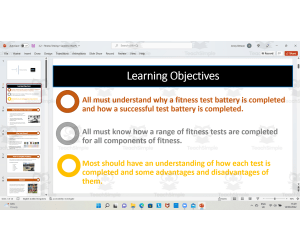
Fitness Testing Methods
Science, Life Sciences, Human Body, Grade 7, 8, 9, 10, 11, Teacher Tools, Lesson Plans
Fitness Testing Methods: An Efficient Resource for Education Fitness Testing Methods is a highly efficient teaching resource developed for educators in public schools and homeschoolers. It is structured to cater to students from grades 7 through 11, focusing on scientific study involving the human body. Learning Delivery Format The learning material is delivered as a comprehensive Microsoft PowerPoint presentation comprising of an expansive 30-slide lesson plan built around various fitness tests, making it both substantial and versatile. Educational Objectives Helping students appreciate why completing a fitness test battery is essential. Showcasing how different types of fitness tests target all components of personal fitness like strength, speed, agility or flexibility etc., are performed . Promoting understanding about benefits and limitations associated with each test - knowledge which fits perfectly with what most learners should ideally comprehend. Versatility and Applicability The teaching resource can be seamlessly deployed across various settings; from whole class instructions to smaller student groups focused on personalized attention. It can also serve efficiently when assigned as homework promoting independent learning among students. In summation: Whether you're an educator seeking to refine your testing techniques during physical education classes or aiming supplement classroom lessons on human physiology; Fitness Testing Methods delivers substance in simplicity—enhancing the educational experience inside or outside typical school environments.
Author The PE Tutor
Tags Fitness Tests, Personal Fitness, Teaching Resource, Physical Education, Human Physiology

AI Tools for Research – Fact-Checking & Bias Detection Worksheets
Science, Technology, Computer Science, Engineering, Special Resources, Social Emotional Learning (SEL), Social Skills, Life Skills, STEM, Research, Grade 6, 7, 8, 9, 10, 11, 12, Worksheets & Printables, Workbooks, Worksheets, Word Searches, Writing Prompts, Teacher Tools, Lesson Plans, Assessments, Diagrams, Presentations
This 41-page PDF is a fully prepared to print middle school Digital Literacy Curriculum called "Advanced Digital Tools for Research: Fact-Checking and Detecting Bias Worksheets" designed for students in grades 6-8 to be able to use the V.E.R.I.F.Y. Framework (Validate, Extract, Read Lateral, Interrogate Bias, Find Primary Evidence, Yield Conclusion) to critically evaluate content generated by AI, identify hallucinatory or fabricated information, detect algorithmic bias, and utilize lateral reading skills. This resource is ideal for the AI era and includes: - Four theoretical chapters with practical real-world examples (e.g., Titanic, Great Wall of China, Space Race, Paleo-Diet). - Ten hands-on student worksheets (e.g., Anatomy of a Digital Claim, Spotting Plausible Falsities, Lateral Reading Protocol, Unmasking Structural Bias, The Phantom Citation Mystery, Chronological Confusion, etc.). - Three full-color visual frameworks/diagrams (Fact-Checking Workflow, Algorithmic Bias Triad, Source Credibility Spectrum). - A complete answer key with rubrics and high proficiency examples. - A complete Teacher Implementation Guide including pacing (4-6 class periods), differentiation for ELLs/developing readers and gifted students, formative assessment examples, and examples of exit tickets. - A ready-to-teach PDF requiring no preparation that increases research skills, media literacy, and critical thinking through an alignment to both the CCSS, ISTE, and Digital Citizenship Standards, making it appropriate for use in English Language Arts, Social Studies, Science, and Technology classes. Why Schools/Parents Find It To Be Effective: Develops Real World Skills that Kids Need to Survive in an AI World. Kids will learn how to identify when they are being deceived by hallucinations, bias, and fake citations before they copy and paste into their papers or projects. No Preparation or Planning Time Required - Teachers get full theory, worksheets, visuals, answers and pacing guide when using this product. Parents appreciate the independent critical thinking experience provided to their children. Fun Way to Increase Student Engagement - Kids enjoy using the detective-style worksheets (Tree Octopus Hoax, Phantom Biologist, Brooklyn Bridge Hoax, etc.) to develop critical thinking skills through the use of skepticism as a game. Differentiated, Inclusive, and Fully Accessible - Students are able to access the materials because of the built in supports provided for ELL/Developing Readers, and extension challenges for Gifted Students. Ensures Academic Integrity Now and in the Future - Aligns well with the local school districts expanding policies regarding the appropriate use of AI, as well as standards for digital citizenship. Intended Audience of Book (As per complete PDF analysis): This resource is specifically created for students in Grades 6 to 8 (Middle School). There are examples throughout the resource, as can be seen in the seven (7) and eight (8) examples referenced. Answer keys and teacher guides both have "Grade 6 to 8 Student Workbook" clearly labeled on them. Best Fit: ELA, Social Studies/History, Research projects in Science, Digital Literacy/Media Literacy, or Technology courses Excellent for Homeschoolers, Gifted Programs, or Educators Teaching AI Ethics and Responsible Research. Copyright & Terms of Use This Book is copyrighted by Syed Hammad Rizvi. This resource is solely for personal and individual classroom use. You may not modify, redistribute or sell any part of this resource (including putting it online for others to back or download). In order to share this resource with your coworkers please buy more licenses from Teachsimple. Thank you for following these terms of use. -------------------------------------------------------------------* This product was created by Syed Hammad Rizvi to be enjoyed!
Author Creative Book Store
Rating
Tags AIFactChecking, BiasDetection, DigitalLiteracy, MiddleSchoolWorksheets, AIFactCheck, VERIFyFramework, CriticalThinking, MediaLiteracy, AIforTeachers, DigitalLiteracyWorksheets

Aquaponic Parasites Liver Flukes in Humans: Lesson Plan, Worksheets & Google App
Science, Earth and Environmental Sciences, Environmental Science, Grade 7, 8, 9, 10, Lesson Plans, Teacher Tools
Aquaponic Parasites Liver Flukes in Humans: Lesson Plan, Worksheets & Google App This educational resource is designed for educators to introduce liver flukes, a potential disadvantage of aquaponic systems. Specifically targeting students from grade 7 to grade 10 focusing on environmental science. About the Teaching Resource The lesson plan explains how liver flukes, an uncommon parasite in aquaponic agriculture, become dangerous threats in aquatic environments. It focuses on their lifecycle and elucidates why they pose risks while offering solutions on avoidance strategies. Recommended Teaching Methods Educators could pair students for video watching and subsequent discussions. Group video sessions followed by individual question-based assignments. Assignment of specific questions to individuals for presentation of findings later. Efficacious lesson plan for substitute teachers or extra homework activities/topups/credit tasks related closely with topic taught during class hours. Learner Outcomes From this resource, Students will: Understand the parasitic nature of liver flukes including consequences upon human hosts; Learns how liver flukes propagate; Demonstrate knowledge on preventive measures against these nuisances in aquaponics systems; Note that all provided files are compatible across multiple devices - digitally fillable PDFs include printable ones as well as a Google Slides Hyperdoc pack compatible with any device’s disparity among learners thereby allowing virtual interaction more directly. In essence, this HTML package contains a didactic toolkit that provides quality education to learners thereby enhancing their knowledge base.
Author Dynamic Earth Learning
Tags Aquaponic Parasites, Liver Flukes, Aquatic Environments, Parasite Lifecycle, Zoonotic Diseases
I WONDER - What Is Reflection And Refraction | Animated Video Lesson
Physics, Science, STEM, Grade 6, 7, 8, 9, 10, 11, 12, Lesson Plans, Teacher Tools
Video Introduction An amazing video designed for the students to learn more about STEM. I WONDER - What Is Reflection And Refraction | Animated Video Lesson Do you like STEM subjects? what is your favorite one? Have you ever tried to plant a seed? If yes, tell us more about it. Or have you ever tried to invent something? If yes, tell us more about it. And how do you think it will help us? Have you ever seen a microorganism under a microscope? What was it? And how it looked like? Mathematics is a marvelous subject. Let' sharpen our brains and solve some equations. Do you like timetable tricks? What is your favorite one? Do you know how to code? Have you ever created an app or a game before? If yes, how was it like? I WONDER - What Is Reflection And Refraction | Animated Video Lesson The video is perfect for encouraging the researching skills for the students, while learning more about this fantastic topic. I WONDER - What Is Reflection And Refraction | Animated Video Lesson This friendly designed video is suitable for students at school, homeschooling, and as a group activity. Format Available in MP4 format.
Author Educational Voice
Tags What Is Reflection And Refraction, What Is Reflection And Refraction Video, Reflection, Reflection Facts, Reflection Video, Reflection Video Of Kids, Refraction, Refraction Video, Refraction Video For Kids

Vegetables Reading Comprehension Passage - Cored Ed Encyclopedia
ELA, Language Development, Reading Comprehension, Reading, Pre-Reading, Science, Life Sciences, Health, P.E. & Health, Nature & Plants, Grade 2, 3, 4, 5, Worksheets & Printables, Worksheets, Teacher Tools, Centers, Activities, Writing Prompts, Assessments, Quizzes and Tests, Quizzes, Lesson Plans
This vegetables reading comprehension with lesson plan includes: Visualization (on the front cover) Start your lesson by taking a minute to think and share something about the topic. Read the script aloud (slowly), perhaps prepare some music or sound effects. Student close their eyes and let their imaginations wander. Students open their eyes, read the question aloud and give them a few minutes to complete. Ask a few students to share or keep answers until the end to compare with what they learn in the passage. Quick pause—thousands of Cored Education products are included with your TeachSimple membership. Download links and encyclopedia index available here. COMPANION VIDEO NOW AVAILABLE (EMBEDDED AFTER PREVIEW PICTURES IN PRODUCT DESCRIPTION) Pre-Reading Trivia Students will write down one thing they already know about the subject and then read five more facts and discuss. These facts are fun, and the students will enjoy learning about the subject before reading more. Give 1 minute for students to write what they already know (no pressure—best guess is fine). Read the five facts together. After each fact, do ask a student for their opinion, was it surprising? Set a purpose by asking students to highlight/underline one fact they want to learn more about during the reading. Reading Passage The text is a high-interest reading passage with set paragraphs, roughly three to four paragraphs long. It contains a variety of themes about the topic, anywhere from history to technology. The passage is between 250 and 350 words in length. First, ask students to look at the headings and see what they’ll learn about today. What do they know about the topic/heading? First read options: Teacher read-aloud (best for support). Partner reading (paragraph by paragraph). While reading, students underline important details, and vocabulary words they think may come up in the questions section. Mixed Questions The first question page contains four multiple-choice questions, each with a choice of four answers, and three written response questions that require a sentence or two from the student. Students complete the mcqs first independently, then review quickly as a class. For the 3 written responses, try to get students giving the answer with some form of evidence: “I think ___ because the text says ___.” If students get stuck, send them back to check the passage. Vocabulary Questions Practice seven key words from the text in this section across two activities. First section is scrambled words where students will unscramble three words given a clue for each. The second section is a word to meaning matching activity. Before starting, have some students read out words they underlined in the passage. Ask students to say the word and read aloud the sentence(s) around each word. Ask students to do scrambled words and the matching exercise in pairs then go through answers as a class. For the scrambled spelling task, get four pairs to come up to the board and write the words for extra practice with the other student reading out the clue. For the matching task, prompt students to give full sentences: “I matched ___ with ___ because ___.” Creative Writing In this question, the student will be required to write a five to eight sentence paragraph on a question related to the topic. Before starting, ask students write down 3 key ideas they are going to include in their piece. Ask students for ideas to share around the class to help those struggling. Pro writing expectations: 5–8 sentences At least 2 facts or details from the passage At least 2 vocabulary words from the previous page Students read their paragraphs while classmates listen for facts and vocabulary words. Extension Activities This page is optional for fast finishers or to take home. There are several activities, each one requiring a different skill. Do some, do none, do all, completely optional - but you will feel reassured knowing every possibility is planned for. Includes summary writting question. Answer Key There are answers for the multiple-choice questions, written response questions have sample answers, vocabulary answers and if there is a summary question then a sample summary will be provided as well. Lesson Plan Included Customized lesson plan for this lesson is included. Lesson Snapshot Title: Vegetables Genre: Nonfiction (Informational text) Subject: Science (Life Science: plants, nutrition) / Reading (informational text) Primary Topic: What vegetables are and why they matter Estimated Guided Reading Level (A–Z): N What This Lesson Teaches Best What counts as a vegetable (in this text): Defines vegetables as edible parts of plants people choose to eat, including roots (carrot), leaves (spinach), and flower buds (broccoli). Plant parts and categories: Explains that many vegetables come from soft-stemmed, herbaceous plants rather than woody trees, and that vegetables come in many shapes because plants have many useful parts. Early farming and seed-saving: Describes how people once gathered edible plants from the wild, then began planting and saving seeds (about 10,000–7,000 BC), keeping and sharing plants that tasted better or grew bigger. Science vs. everyday language (tomato debate): Contrasts the botanical definition of “fruit” (seed-bearing part formed from a flower’s ovary) with how “vegetable” often means a savory plant food served with meals, noting a U.S. court decision in 1893 calling tomatoes vegetables for a tax rule. Nutrition and food preservation: States vegetables are usually low in fat and calories, filling because they bring water and fiber, and may contain vitamins/minerals (examples include vitamin A and vitamin C); also notes chilling, freezing, or canning to keep vegetables longer. Learning Goals Students will define a vegetable using examples from the text (root, leaf, bud). Students will describe where many vegetables come from (soft-stemmed, herbaceous plants) and explain what that means. Students will explain how seed-saving helped wild plants become “garden favorites,” using details from the passage. Students will compare the botanical meaning of fruit with the cooking meaning of vegetable, using the tomato example. Students will identify two reasons vegetables can be filling and healthy (water, fiber, vitamins/minerals) based on the text. Key Vocabulary From the Text edible — safe and good to eat. herbaceous — soft-stemmed; not woody. botanists — scientists who study plants. ovary — flower part that can form fruit. fiber — nutrient that helps you feel full. FULL CATALOG OF DOWNLOAD LINKS AND ENCYCLOPEDIA INDEX HERE
Author Cored Education
Rating
Tags Vocabulary, Reading Comprehension, Reading Passages, Lesson Plans, Ela Lesson Plans, Reading Comprehension Lesson Plans, Pre-reading, Science Lesson Plans, Nature And Plants, Health
Plant Power Gr. 1-2
Science, Earth and Environmental Sciences, Environmental Science, Grade 1, 2, Teacher Tools, Lesson Plans
"Plant Power Gr. 1-2": A teaching resource to introduce Botanical World "Plant Power Gr. 1-2" is a highly adaptable educational resource aiming at introducing grade 1 and grade 2 students to the diversity of edible plants. List of major contents: Interactive storybooks about herbs, vegetables, fruits etc. Online resources offering detailed, accessible content on the subject This resource can be used for whole class instruction, smaller groups, and even as an engaging homework module where learners independently explore various concepts at their own pace. Main features include: Inclusion of "I Am a Flowering Plant with Four Parts" and "My Name is Herb and I Like to Plant and Grow Herbs" bookmaking patterns Pictures of fruits and vegetables. Pocket chart activities & songs for interactive lessons etc. Additionally, there are pocket chart classification tasks, assisting students in categorizing different plants—an important skill reinforcing scientific thinking. The lesson plan extensively covers activities such as: Fostering independent learning through task cards An engaging farmer's market board game enabling application of learned concepts A variety of student worksheets further fostering cognitive abilities among young learners Available as a user-friendly 61-page PDF,, this resource makes learning an intriguing journey in grades 1 and 2 by creating immersive experiences for both teachers facilitating sessions and students exploring their natural surroundings from a scientific perspective.
Author Classroom Complete Press
Tags Environment, Reading Passages, Plants, Task Cards, Word Search
I WONDER - Can House Plants Reduce Air Pollution | Animated Video
Environmental Science, Earth and Environmental Sciences, Science, Grade 2, 3, 4, 5, 6, 7, 8, Lesson Plans, Teacher Tools
Video Introduction An amazing video designed for the students to learn more about STEM. I WONDER - Can House Plants Reduce Air Pollution | Animated Video Lesson Do you like STEM subjects? what is your favorite one? Have you ever tried to plant a seed? If yes, tell us more about it. Or have you ever tried to invent something? If yes, tell us more about it. And how do you think it will help us? Have you ever seen a microorganism under a microscope? What was it? And how it looked like? Mathematics is a marvelous subject. Let' sharpen our brains and solve some equations. Do you like timetable tricks? What is your favorite one? Do you know how to code? Have you ever created an app or a game before? If yes, how was it like? I WONDER - Can House Plants Reduce Air Pollution | Animated Video Lesson The video is perfect for encouraging the researching skills for the students, while learning more about this fantastic topic. I WONDER - Can House Plants Reduce Air Pollution | Animated Video Lesson This friendly designed video is suitable for students at school, homeschooling, and as a group activity. Format Available in MP4 format.
Author Educational Voice
Tags Can House Plants Reduce Air Pollution, Can House Plants Reduce Air Pollution Video, Plants Reduce Air Pollution, Plants Reduce Air Pollution Facts, Plants Reduce Air Pollution Video, Plants Reduce Air Pollution Facts For Kids

I WONDER - How Can I Work Out The Angles In A Shape | Animated Video
STEM, Computer Science, Technology, Science, Grade 6, 7, 8, 9, 10, 11, 12, Lesson Plans, Teacher Tools
Video Introduction An amazing video designed for the students to learn more about STEM. I WONDER - How Can I Work Out The Angles In A Shape | Animated Video Lesson Do you like STEM subjects? what is your favorite one? Have you ever tried to plant a seed? If yes, tell us more about it. Or have you ever tried to invent something? If yes, tell us more about it. And how do you think it will help us? Have you ever seen a microorganism under a microscope? What was it? And how it looked like? Mathematics is a marvelous subject. Let' sharpen our brains and solve some equations. Do you like timetable tricks? What is your favorite one? Do you know how to code? Have you ever created an app or a game before? If yes, how was it like? I WONDER - How Can I Work Out The Angles In A Shape | Animated Video Lesson The video is perfect for encouraging the researching skills for the students, while learning more about this fantastic topic. I WONDER - How Can I Work Out The Angles In A Shape | Animated Video Lesson This friendly designed video is suitable for students at school, homeschooling, and as a group activity. Format Available in MP4 format.
Author Educational Voice
Tags How Can I Work Out The Angles In A Shape, How Can I Work Out The Angles In A Shape Video, Angles, Angle, Angles Facts, Angles Facts For Kids, Angles Video, Angles Video For Kids
I WONDER - What Does Stomach Acid Do | Animated Video Lesson
STEM, Human Body, Life Sciences, Science, Biology, Grade 4, 5, 6, 7, 8, 9, 10, Lesson Plans, Teacher Tools
Video Overview The human body is full of fascinating wonders to learn. This video is created to help the students recognize the anatomy and the job of the human body. I WONDER - What Does Stomach Acid Do | Animated Video Lesson Every part and organ in our human body is vital so let's see how important they are. Have you ever imagined how we look like if we didn't have a skeleton? Did you know that because we have our amazing muscles we can stand! Do you know how many teeth do we have? Have you ever wondered about the food journey inside our body? Can you name all the glands in our body? Why do we have skin? Our nervous system is really good at sending signals. Can you tell us more about it? Are you really good at Mathematics, painting, or any other thing? You should really thank your brain about it! The famous five senses are really doing a great work? Can you explain how every sense works? I WONDER - What Does Stomach Acid Do | Animated Video Lesson The video is perfect for encouraging the researching skills for the students, while learning more about our fantastic human body. I WONDER - What Does Stomach Acid Do | Animated Video Lesson This friendly designed video is suitable for students at school, homeschooling, and as a group activity. Format Available in MP4 format.
Author Educational Voice
Tags What Does Stomach Acid Do, What Does Stomach Acid Do Video, Stomach Acid, Stomach Acid Facts, Stomach Acid Facts For Kids, Stomach Acid Video, Stomach Acid Video For Kids, Stomach
I WONDER - What Is A Robux | Animated Video Lesson
Computer Science, Technology, Science, Grade 4, 5, 6, 7, 8, 9, 10, Lesson Plans, Teacher Tools
Video Introduction An amazing video designed for the students to learn more about STEM. I WONDER - What Is A Robux | Animated Video Lesson Plants world is really fascinating! Do you know that some flowers eat insects? Some other plants like to grow on walls can you mention any? Do you know what is the difference between fungicide and pesticide? If yes, Can you tell us more about it? What is nuclear energy? Is it safe to use it? Do you think it is a clean energy? Have you ever read about potential energy? If yes, tell us what it is? Do you think that potential energy can be converted into another form of energy? How it happens? I WONDER - What Is A Robux | Animated Video Lesson The video is perfect for encouraging the researching skills for the students, while learning more about this fantastic topic. I WONDER - What Is A Robux | Animated Video Lesson This friendly designed video is suitable for students at school, homeschooling, and as a group activity. Format Available in MP4 format.
Author Educational Voice
Rating
Tags What Is A Robux, Robux, Robux Facts, Robux Video, Robux Video For Kids, Robux Facts For Kids, Roblox, Roblox Facts, Roblox Video, Roblox Video For Kids

The Sun | Interactive Science Lesson | Micro-Learning Deck
Science, Earth and Environmental Sciences, Space, Grade 6, 7, 8, 9, Teacher Tools, Lesson Plans
This micro-learning deck is the perfect accessory to your Science instruction! This digital slideshow presents The Sun, A Real Star. Within this slideshow, you will receive: -Video Lesson -Reading Passage w/ Audio -Close Reading -Quick Write The informational texts included in this resource alongside the informal assessments will keep your students engaged from beginning to end.
Author Teach Me This
Tags The Sun, Interactive, Science, Astronomy, Reading Passage

Light - Refraction Explained - Fully Resourced Lesson for Middle School
Science, Physics, Grade 5, 6, 7, 8, 9, Lesson Plans, Teacher Tools
<h3>The Light- Refraction Explained - Fully Resourced Lesson for Middle School</h3> This comprehensive teaching resource focuses on the intriguing phenomenon of light refraction, tailored to learners from grades 5 through 9. With an engaging blend of activities and informational materials, this package delves into key subtopics including: <ul> <li><b>Speed of light in different mediums</b></li> <li><b>Direction of bending based on density factors</b></li> <li><i>'Apparent depths' and 'experiencing lightning before thunder' phenomena.</i>>&ldquo/li> /"/ul> P>The Virtual Experiment feature stands out, where students can engage with angles of incidence and refraction within a semi-circular glass block setting. This material comes packed with fifteen distinctive resources designed to encourage creative adaptation according to individual student strengths and available time. These include: &ORAGE0 (This detailed worksheets supporting PowerPoint presentations) ^ Interactive activities like 'Cut-Stick' )Certifications like 'Flip It' (Fact Sheets able to accurately deliver key principles / l Furthermore, these resources are integrated with literacy, oracy aspects along with self- assessment techniques encouraging skill enhancement in areas like public speaking and peer evaluation. t/li> P>In addition is an exit ticket quiz as a helpful assessment tool at the end. And useful recommendations are also provided via a logically plotted flowchart assisting in optimal instructional planning. & italics. (H4)A versatile tool for any educator in the realm of science & physics!
Author Elf off the Shelf Resources
Tags Light Refraction, Interactive Learning, Virtual Experiment, Science Education, Physics
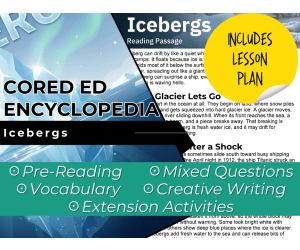
Icebergs Reading Comprehension Passage - Cored Ed Encyclopedia
ELA, Reading Comprehension, Reading, Language Development, History, Social Studies, Science, Physics, Earth and Environmental Sciences, Pre-Reading, Grade 2, 3, 4, 5, Worksheets & Printables, Worksheets, Teacher Tools, Centers, Activities, Writing Prompts, Assessments, Quizzes and Tests, Quizzes, Lesson Plans
This Icebergs reading comprehension with lesson plan includes: Visualization (on the front cover) Start your lesson by taking a minute to think and share something about the topic. Read the script aloud (slowly), perhaps prepare some music or sound effects. Student close their eyes and let their imaginations wander. Students open their eyes, read the question aloud and give them a few minutes to complete. Ask a few students to share or keep answers until the end to compare with what they learn in the passage. Quick pause—thousands of Cored Education products are included with your TeachSimple membership. Download links and encyclopedia index available here. Pre-Reading Trivia Students will write down one thing they already know about the subject and then read five more facts and discuss. These facts are fun, and the students will enjoy learning about the subject before reading more. Give 1 minute for students to write what they already know (no pressure—best guess is fine). Read the five facts together. After each fact, do ask a student for their opinion, was it surprising? Set a purpose by asking students to highlight/underline one fact they want to learn more about during the reading. Reading Passage The text is a high-interest reading passage with set paragraphs, roughly three to four paragraphs long. It contains a variety of themes about the topic, anywhere from history to technology. The passage is between 250 and 350 words in length. First, ask students to look at the headings and see what they’ll learn about today. What do they know about the topic/heading? First read options: Teacher read-aloud (best for support). Partner reading (paragraph by paragraph). While reading, students underline important details, and vocabulary words they think may come up in the questions section. Mixed Questions The first question page contains four multiple-choice questions, each with a choice of four answers, and three written response questions that require a sentence or two from the student. Students complete the mcqs first independently, then review quickly as a class. For the 3 written responses, try to get students giving the answer with some form of evidence: “I think ___ because the text says ___.” If students get stuck, send them back to check the passage. Vocabulary Questions Practice seven key words from the text in this section across two activities. First section is scrambled words where students will unscramble three words given a clue for each. The second section is a word to meaning matching activity. Before starting, have some students read out words they underlined in the passage. Ask students to say the word and read aloud the sentence(s) around each word. Ask students to do scrambled words and the matching exercise in pairs then go through answers as a class. For the scrambled spelling task, get four pairs to come up to the board and write the words for extra practice with the other student reading out the clue. For the matching task, prompt students to give full sentences: “I matched ___ with ___ because ___.” Creative Writing In this question, the student will be required to write a five to eight sentence paragraph on a question related to the topic. Before starting, ask students write down 3 key ideas they are going to include in their piece. Ask students for ideas to share around the class to help those struggling. Pro writing expectations: 5–8 sentences At least 2 facts or details from the passage At least 2 vocabulary words from the previous page Students read their paragraphs while classmates listen for facts and vocabulary words. Extension Activities This page is optional for fast finishers or to take home. There are several activities, each one requiring a different skill. Do some, do none, do all, completely optional - but you will feel reassured knowing every possibility is planned for. Includes summary writting question and additional facts. Answer Key There are answers for the multiple-choice questions, written response questions have sample answers, vocabulary answers and if there is a summary question then a sample summary will be provided as well. Lesson Plan Included Customized lesson plan for this lesson is included. Lesson Snapshot Title: Icebergs Genre: Nonfiction (informational passage) Subject: Reading (Informational Text) / Earth Science Primary Topic: How icebergs form, drift, and change Estimated Guided Reading Level (A–Z): R What This Lesson Teaches Best Key facts about iceberg floating: ice is lighter than seawater and most of an iceberg is below the surface (about 90% underwater). How icebergs form from glaciers on land, including the process called calving when a piece breaks away at the sea. Human safety and history connections: the Titanic tragedy and how the International Ice Patrol began sending warnings to ships. How icebergs change shape over time (waves at the waterline, meltwater weakening from above) and why scientists track them (ocean currents, changing polar ice). Using headings to organize information into focused sections (formation, safety/history, observation/science clues). Learning Goals Explain why most of an iceberg is hidden under the ocean’s surface. Describe how snow becomes hard glacier ice and how a new iceberg forms. Define calving using details from the passage. Identify what happened in 1912 and how it led to safer travel for ships. Describe two ways an iceberg can change shape and one reason scientists watch iceberg paths. Key Vocabulary From the Text seawater — ocean water with salt in it. surface — the top layer of something. glacier — a huge, slow-moving river of ice. calving — when a piece breaks off a glacier. currents — moving flows of ocean water. FULL CATALOG OF DOWNLOAD LINKS AND ENCYCLOPEDIA INDEX HERE
Author Cored Education
Rating
Tags Vocabulary, Reading Comprehension, Reading Passages, Lesson Plans, Ela Lesson Plans, Reading Comprehension Lesson Plans, Pre-reading, History, Science Lesson Plans, Earth Science