



3,928 products added recently
Page 85 - Science Lesson Plans
Bring science to life with lesson plans that cover biology, chemistry, physics, and more. These resources offer experiments and interactive lessons to stimulate curiosity. Implement them to foster a deep understanding of scientific principles and a passion for discovery.

 Show filters

Greenhouse Gases | Interactive Science Lesson | Micro-Learning Deck
Science, Earth and Environmental Sciences, Environmental Science, Grade 7, 8, 9, 10, Teacher Tools, Lesson Plans
This micro-learning deck is the perfect accessory to your Science instruction! This digital slideshow presents Greenhouse Gases. Within this slideshow, you will receive: -Video Lesson -Reading Passage w/ Audio -Close Reading -Quick Write The informational texts included in this resource alongside the informal assessments will keep your students engaged from beginning to end.
Author Teach Me This
Tags Greenhouse Gases, Droughts, Interactive Science, Vocabulary, Comprehension

Kids Can Be Aware: Creative lessons for teaching kids about the environment
Creative Arts, Art, Science, Physics, Preschool, Kindergarten, Teacher Tools, Lesson Plans
Kids Can Be Aware: Creative Lessons for Teaching Kids about the Environment This exceptional educational resource is designed to spark curiosity and awareness in young children about the environment. The resource incorporates imaginative activities that seamlessly weave environmental themes into everyday learning. What's Inside? The PDF includes 64 printable pages, intricately designed to be part of lesson plans related to core subjects like Art, Music, and Physical Science. However, these sheets aren't entirely academic; they offer a blend of hands-on activities for enhanced creative learning. An exciting game of animal hide-and-seek in the classroom or transforming corners into various biomes makes learning fun! Natural materials from local surroundings bring real-world applications right into science or art lessons. Create remarkable group-based projects that mirror different habitats or educate on aspects of biodiversity conservation. Flexible Learning Resource P The 'Kids Can Be Aware' guide is adaptable for both small group sessions as well as whole class discussions. The innovative teaching approach can even extend to homework assignments where children can involve their parents in creating mini ecosystems at home! Note: This guide also cleverly couples snacking with engaging lessons – making each session deliciously unforgettable! A Transformative Approach Towards Holistic Learning If you're looking towards changing your conventional teaching methods by integrating explore beyond textbooks and worksheets - go for Kids Can Be Aware: Creative Lessons For Teaching Kids About The Environment! It helps nurture empathy and promotes responsibility towards the environment - vital traits missing from typical education systems. "In taking this straightforward, organic route towards environment learning – you get to leave classroom corners permanently resident with lifelong learners!"
Author Classroom Complete Press
Tags Creative Lessons, Art Lesson, Awareness, Teaching Awareness, Environment

I WONDER - Why Do We Have Saliva | Animated Video Lesson
Human Body, Life Sciences, Science, Biology, STEM, Grade 2, 3, 4, 5, 6, 7, 8, Lesson Plans, Teacher Tools
Video Overview The human body is full of fascinating wonders to learn. This video is created to help the students recognize the anatomy and the job of the human body. I WONDER - Why Do We Have Saliva | Animated Video Lesson Every part and organ in our human body is vital so let's see how important they are. Have you ever imagined how we look like if we didn't have a skeleton? Did you know that because we have our amazing muscles we can stand! Do you know how many teeth do we have? Have you ever wondered about the food journey inside our body? Can you name all the glands in our body? Why do we have skin? Our nervous system is really good at sending signals. Can you tell us more about it? Are you really good at Mathematics, painting, or any other thing? You should really thank your brain about it! The famous five senses are really doing a great work? Can you explain how every sense works? I WONDER - Why Do We Have Saliva | Animated Video Lesson The video is perfect for encouraging the researching skills for the students, while learning more about our fantastic human body. I WONDER - Why Do We Have Saliva | Animated Video Lesson This friendly designed video is suitable for students at school, homeschooling, and as a group activity. Format Available in MP4 format.
Author Educational Voice
Tags Why Do We Have Saliva, Why Do We Have Saliva Video, Saliva, Saliva Facts, Saliva Facts For Kids, Saliva Video, Saliva Video For Kids, Mouth, Mouth Facts, Mouth Facts For Kids

Guided Reading Level M - Acid Rain (with Lesson Plan)
ELA, Resources for Teachers, Reading Comprehension, Reading, Science, Technology, Physics, Life Sciences, Earth and Environmental Sciences, Environmental Science, Grade 2, 3, 4, Worksheets & Printables, Worksheets, Teacher Tools, Centers, Activities, Literacy Readers, Quizzes, Quizzes and Tests, Assessments, Lesson Plans
This Guided Reading Book - Acid Rain (Level M) with lesson plan includes: Guided Reading Color Label (front cover x1) This is a quick way to match the book’s demands to what students can generally handle.. The overall goal is to use the level/color to pick books for several smaller groups. To qualify for a certain level, a student is expected to read a book from that level with about 90–94% accuracy. If a student is consistently accurate and understands, move up a level. If the student is struggling at that level, drop down and add more support. Each student will improve at completely different rates, but it is generally one of the best ways to check progress across the class. DOWNLOAD THE CATALOG TO VIEW ALL GUIDED READING BOOKS AVAILABLE (SORTED LEVELS A-Z) Pre-Reading Question (x1) Teacher asks the prompt aloud, can be while showing the cover or first page. Students share what they already know, or make educated guesses from the cover. Prompt them to use the target vocabulary. Write some of their responses on the board to look back at during the reading. Vocabulary Words (x5) Introduce the five words, best doing it one at a time. Start by saying it, while students repeat and then see if anyone knows what it means before reading further. Read through the meaning and try to briefly connect each word to a picture or gesture so it’s meaningful. Ask students to flip through the book pages and point to where they see each of the vocabulary words. While reading the book pause upon coming across one of the vocab words or read the sentence twice to make sure students understand the word has appeared. Optional: Ask students to raise hands whenever they see/hear one of the new words. Guided Reading Pages (x10) Check the book snapshot (below) for: primary topic - do you need to prep extra reading or intro materials on this? what is taught best - decide on 1-2 bullets to focus on, use the prompt or words provided here for best results. learning goals - what you are checking for students to be able to do after the session, elicit answers using prompts or words provided. key vocabulary (see section above). questions overview - so you know what is coming up and if you need to prep extra materials to assist understanding. Run the lesson You may have already looked at a few of the pages together, but you can show them some of the pictures again first to set meaning. Depending on how much time you have and how familiar your students are with guided reading class, you may want to read the book aloud first with the group first. Students whisper or partner read, while you listen in. If time, do it as a group, one student reading a page each. Use the guided page’s prompts to coach: “Check the picture / does it make sense?” “Point under the words / try the first sound” “Reread the sentence smoothly”. Try to focus more on one student per session (rotating every time), so you can work out if they are ready to move up or need to move down a level. Comprehension Questions (back cover x3) This is your way to check that students didn’t just say the words, but actually understood the text. First, let students answer by pointing to the page/picture and saying a short sentence. After any answer, follow with: “Show me where you found that in the text.” In bigger groups, have partners answer first (10–20 seconds), then call on 2–3 students to share. Differentiation tips: Emerging speakers/struggling readers: oral + pointing On-level: oral in a full sentence Higher: one written sentence or draw + label Book Snapshot Title: Acid Rain Genre: Nonfiction (informational science text) Subject: Science (Earth & Environmental Science) Primary Topic: Causes, effects, and solutions for acid rain Estimated Guided Reading Level (A–Z): M What This Book Teaches Best Explains how human activities (factories, power plants, and vehicles) change the chemistry of the air by releasing gases into the sky. Describes a chemical reaction in the clouds where gases mix with water vapor and oxygen to form acids that stay suspended in the air. Defines acid rain as acids falling to the ground as rain or snow, and notes it can also fall as fog or as dry dust during a drought. Uses the pH scale to compare normal rain (about 5.6) to acid rain (often between 4.2 and 4.4). Shows environmental impacts on forests (nutrients dissolving; difficulty taking up water) and on lakes/streams (changes to water chemistry that affect fish and other animals). Learning Goals Describe how rain is part of the water cycle and helps plants and animals survive. Identify gases released by factories, power plants, and vehicles that contribute to acid rain. Explain how gases high in the clouds can react and form acids that stay in the air. Use details from the text to compare normal rain and acid rain using pH numbers. Describe how acid rain can affect forests, lakes, streams, fish, birds, and other animals. Explain one way people can help reduce acid rain by using cleaner energy sources. Key Vocabulary From the Text chemistry — how materials can change when they mix. atmosphere — the air that surrounds Earth. reaction — a change that happens when substances mix. drought — a long time with little or no rain. nutrients — substances living things need to grow healthy. Discussion Prompts Pre-reading question: What do you think might happen when gases from cars and factories mix with water in the air? Comprehension questions: What gases do factories and power plants release when they burn fuels like coal? Comprehension questions: What happens to these gases high in the clouds, according to the text? Comprehension questions: What is one way people can help reduce acid rain in this book? Printing Tips 1. Best Printing Method (Recommended) “Booklet” Printing (Best if Available) If your printer or PDF viewer supports Booklet Printing , use this. Settings to use: Print mode: Booklet Paper size: Letter or A4 (either works) Orientation: Landscape Print on both sides: Yes Flip on: Short edge Scaling: Fit to printable area Booklet subset: First test: Front sides only Then: Back sides only This will automatically: Pair pages correctly Put the cover on the outside Align everything for folding After printing, fold in half and staple along the spine . 2. If “Booklet” Printing Is NOT Available You can still print this correctly with manual duplex printing . Step-by-step: Open the PDF. Choose Print . Set: Orientation: Landscape Pages per sheet: 1 Print on both sides: Yes Flip on: Short edge Print all pages . Because each PDF page already contains two facing book pages, the result will still fold cleanly into a book. Thousands of Cored Education products are included with your TeachSimple membership. Download links and encyclopedia index available here.
Author Cored Education
Rating
Tags Reading Comprehension, Reading Passages, Reading, Guided Reading, Guided Reading Lesson Plan, Guided Reading Activity, Pre-reading, Science Lesson Plans, Earth Science, Physics
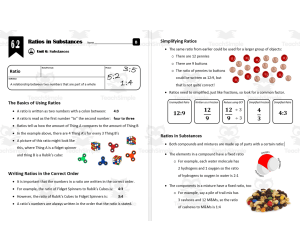
Lesson 6.2 - Ratios in Substances
Science, Chemistry, Physics, Grade 6, 7, 8, 9, 10, 11, 12, Lesson Plans, Teacher Tools
Lesson 6.2 - Ratios in Substances: Overview Lesson 6.2 - Ratios in Substances is an educational package targeted for middle and high school teachers teaching science subjects, especially chemistry and physics. It offers tools to help students grasp the basics of finding ratios in chemical compounds and mixtures. Included Resources: Note Sheets: There are two versions of notes sheets about 'Ratios in Substances.' Version (A) has blanks for independent note-taking, while version (B) is complete for reference or special aid requirements. Worksheets: Practical worksheets are included to motivate deeper understanding by finding ratios of given groups. Two distinct versions foster differentiated instruction effectively. Ratios PowerPoint Notes:The package features supportive PowerPoint Notes designed specifically for effective whole group projection during class lectures or discussions.. This resource assists educators create dynamic lessons directed at specific learning outcomes based on Indiana's integrated Physics & Chemistry education curriculum state standards. A Special Note About Customizability: All .docx files can be customized according to your unique education framework or individual learning aims on compatible word processing software such as Microsoft Word; the same applies when altering .pptx files via PowerPoint-compatible devices! Be sure you've got matching software installed before purchasing this valuable resource. A Flexibly Applied Resource! This package can be employed via whole-group instruction during regular classroom hours, used during small study circles, or even assigned as homework material - Lesson 6.2 - Ratios in Substances naturally integrates within any structured teaching strategy.
Author Integrated Chemistry and Physics
Tags Ratios, Substances, Chemistry Education, Physics Education, Instructional Materials

All About Earthquakes | Earth Science Unit
Science, Earth and Environmental Sciences, Earth Sciences, Grade 1, 2, 3, 4, Lesson Plans, Teacher Tools
Let's learn all about earthquakes! Teach your students all about the parts of an earthquake (hypocenter, epicenter, foreshocks, and aftershocks), how scientists study earthquakes, and earthquake safety. Develop an understanding of the Richter scale, how earthquakes happen, and more. There are plenty of activities to appeal to students with all learning styles and preferences. I hope you enjoy this resource! What You Get: Sample Lesson Blueprint Inspiration for Projects and Engaging Activities Educational Video Resources (Accessible through QR codes and URLs) 12 Vocabulary Strips: (Subduction zone, magma, shock waves, seismic activity , Richter scale, fault lines, hypocenter, epicenter, foreshock, aftershock, seismograph, seismologist) Article on "What Causes Earthquakes?" (Available in two reading levels) Article on "Earthquake Safety" (Provided in two reading levels) 1 Poster detailing Earthquake foreshocks and aftershocks 2 Posters illustrating the Richter scale with examples 1 Poster dedicated to Fault Lines 1 Poster explaining the epicenter and the travel of shock waves Earthquake-themed Word Search Earthquake Safety Poster Template for Crafting Your Personal Earthquake Safety Plan Template for Designing Your Personal Richter Scale Poster Seismic Readout Creation Template "Earthquake in my Neighborhood" Cut and Paste Worksheet 2 Coloring Pages: "Earthquake Safety at Home" and "Earthquake Safety at School" Writing Templates Engaging review game
Author Simply Schoolgirl
Tags Earthquakes, Earth Science, Earthquake Vocabulary, Earthquake Crafts, Earthquake Worksheets, Earthquake Lesson, Richter Scale, Seismic, Epicenter, Fault Lines, Earthquake Worksheet Middle School
I WONDER - Do Leopards Live In Groups | Animated Video Lesson
STEM, Animals, Life Sciences, Science, Biology, Grade 1, 2, 3, 4, 5, 6, 7, 8, Lesson Plans, Teacher Tools
Video Introduction Animal kingdoms are full of fascinating wonders to learn. This video is designed for the students to learn more about animals in different countries. I WONDER - Do Leopards Live In Groups | Animated Video Lesson Do you like animals? what is your favorite one? Do you own a pet? If yes, tell us more about it, like what its name? And what do you like most about it? What are the animal kingdoms? Can you write down the characteristics of each animal class like mammals, birds, reptiles, amphibian, fish and mollusks. Do you know that some animals can sing, can you name any of them? What is the largest and the smallest mammal in the world? What is the largest and the smallest bird in the world? What is the largest and the smallest fish in the world? I WONDER - Do Leopards Live In Groups | Animated Video Lesson The video is perfect for encouraging the researching skills for the students, while learning more about these fantastic animals. I WONDER - Do Leopards Live In Groups | Animated Video Lesson This friendly designed video is suitable for students at school, homeschooling, and as a group activity. Format Available in MP4 format.
Author Educational Voice
Tags Do Leopards Live In Groups, Do Leopards Live In Groups Video, Leopards, Leopard, Leopards Facts, Leopards Facts For Kids, Leopards Video, Leopards Video For Kids, Leopard Facts, Leopard Video
I WONDER - Do Arachnids Lay Eggs | Animated Video Lesson
STEM, Biology, Life Sciences, Science, Animals, Grade 3, 4, 5, 6, 7, 8, 9, Lesson Plans, Teacher Tools
Video Introduction Animal kingdoms are full of fascinating wonders to learn. This video is designed for the students to learn more about animals in different countries. I WONDER - Do Arachnids Lay Eggs | Animated Video Lesson Do you like animals? what is your favorite one? Do you own a pet? If yes, tell us more about it, like what its name? And what do you like most about it? What are the animal kingdoms? Can you write down the characteristics of each animal class like mammals, birds, reptiles, amphibian, fish and mollusks. Do you know that some animals can sing, can you name any of them? What is the largest and the smallest mammal in the world? What is the largest and the smallest bird in the world? What is the largest and the smallest fish in the world? I WONDER - Do Arachnids Lay Eggs | Animated Video Lesson The video is perfect for encouraging the researching skills for the students, while learning more about these fantastic animals. I WONDER - Do Arachnids Lay Eggs | Animated Video Lesson This friendly designed video is suitable for students at school, homeschooling, and as a group activity. Format Available in MP4 format.
Author Educational Voice
Tags Do Arachnids Lay Eggs, Do Arachnids Lay Eggs Video, Arachnids, Arachnid, Arachnids Facts, Arachnids Facts For Kids, Arachnids Video, Arachnids Video For Kids, Arachnids Eggs, Arachnids Eggs Facts
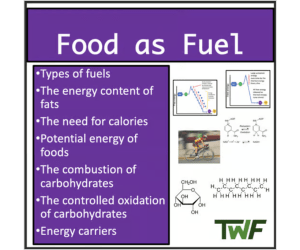
Food as Fuel - Senior High School Biology lesson
Science, Life Sciences, Biology, Grade 11, 12, Teacher Tools, Lesson Plans
Food as Fuel - Senior High School Biology lesson The lesson covers the following topics; Types of fuels, The energy content of fats, why we need calories, potential energy of foods, combustion of carbohydrates, controlled oxidation of carbohydrates, and energy carriers. The lesson includes the teacher and student version of the presentation, two embedded videos, two embedded web tasks, an auto-graded exit ticket, and a student lesson handout so the students can record the notes on a more condensed medium. The lesson is entertaining, engaging, and classroom-tested. This lesson is designed to be effective whether you're in a traditional classroom or a virtual one. With both a teacher version and a student version, it seamlessly fits into your lesson plans, making learning engaging and adaptable. Assessment made easy I've included an auto-graded Exit Ticket and a quiz with an answer key. This allows you to assess your student's understanding without increasing your workload. Whether you use PowerPoint or Google Slides, prefer Word or Google Docs, this lesson will be perfect for your classroom as it comes in both Office and Google formats for your convenience. The student version of the presentation has some of the text removed so that your students can fill in some notes while not spending the entire class doing so. This keeps them active and engaged, and encourages discussion.
Author Teach With Fergy
Tags Biochemistry, Senior Biology Lesson, Biology Lesson, Senior Biology, Fats, Calories, Carbohydrates
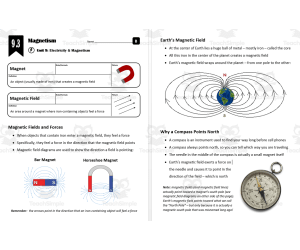
Lesson 9.3 - Magnetism
Science, Physics, Grade 6, 7, 8, 9, 10, 11, 12, Lesson Plans, Teacher Tools
Lesson 9.3 - Magnetism includes the following files: 9.3 Magnetism Notes Introduces the concept of magnets and magnetic fields and describes Earth's magnetic field and its effect on compasses. This notes sheet comes with an (A) version that has blanks for students to fill out as well as a completed (B) version for students who are absent or may require accommodations. 9.3 Magnetism Research This page can be used to get students engaged with what they are learning about magnetism. Students are asked to use the internet to research several different technologies that use magnetism, describe how magnetism is involved, and think about a world without magnetic technology. 9.3 Objectives & Starter Questions PowerPoint Learning objectives and sample starter questions for the topic. 9.3 PowerPoint Notes Notes in PowerPoint format to make presentation to the class a breeze. The following 2016 Indiana State Standards for Integrated Chemistry & Physics are addressed in this resource: ICP.8.3 Describe on a macroscopic scale how any distribution of magnetic materials (e.g. iron filings, ferrofluid, etc.) aligns with the magnetic field created by a simple magnet.
Author Integrated Chemistry and Physics
Tags Integrated Chemistry & Physics, Magnetism, Magnetic Field, Compass, Electricity, Magnetism Worksheet Grade 8 Pdf

I WONDER - What Is A Vaquita | Animated Video Lesson
STEM, Animals, Life Sciences, Science, Biology, Grade 1, 2, 3, 4, 5, 6, 7, 8, Lesson Plans, Teacher Tools
Video Introduction Animal kingdoms are full of fascinating wonders to learn. This video is designed for the students to learn more about animals in different countries. I WONDER - What Is A Vaquita | Animated Video Lesson Do you like animals? what is your favorite one? Do you own a pet? If yes, tell us more about it, like what its name? And what do you like most about it? What are the animal kingdoms? Can you write down the characteristics of each animal class like mammals, birds, reptiles, amphibian, fish and mollusks. Do you know that some animals can sing, can you name any of them? What is the largest and the smallest mammal in the world? What is the largest and the smallest bird in the world? What is the largest and the smallest fish in the world? I WONDER - What Is A Vaquita | Animated Video Lesson The video is perfect for encouraging the researching skills for the students, while learning more about these fantastic animals. I WONDER - What Is A Vaquita | Animated Video Lesson This friendly designed video is suitable for students at school, homeschooling, and as a group activity. Format Available in MP4 format.
Author Educational Voice
Tags What Is A Vaquita, What Is A Vaquita Video, Vaquita, Vaquita Facts, Vaquita Video, Vaquita Facts For Kids, Vaquita Video For Kids, Animals, Animal, Animals Facts

Atomic Theory and Model - Lesson Bundle
Science, Chemistry, Grade 10, 11, 12, Teacher Tools, Lesson Plans
Atomic Theory and Model - Lesson Bundle This comprehensive instructional resource, designed primarily for Grade 10, 11 and 12 educators, will also prove useful for home-schooling parents. The focus of the package is on revisiting key periods in history that shaped our understanding of atoms today. The Exciting Historical Journey The lesson plans tell the fascinating story beginning with Democritus’ atomic notion, delving into Dalton’s Ball Model before exploring J.J. Thompson's Raisin Bun model. The narrative then moves on to Rutherford’s Gold Foil Experiment leading them finally to Bohr’s Energy Level Model. User-friendly Integration & Formats Apart from its historically rich content, what sets this resource apart from others are: Google Slides integration facilities Traditional resources in Office formats including Word and PowerPoint. Dual compatibility feature ensuring uninterrupted access regardless of equipment or locale. Possible uses: A whole-class conversation starter; Allotted as supplementary material during small group studies; An enriching homework project for individual learners. Innovative Features Included: - An auto-graded Exit Ticket assessing student understanding. - Inquiry activity prompting students towards independent thinking about how our knowledge of atom has evolved over time. - Embedded videos providing live demonstrations ensuring lasting knowledge imprint. The students' versions include blanks that need filling during course progression to keep engagement levels high, thus mutating typical classroom passive instruction into active participation mode. Feedback from previous buyers serves testament its worthiness: 'Clear concise', ‘intriguing', 'interactive','easy-to-understand' commonly seen throughout user reviews suggesting immediate improvement in teaching effectiveness. This Atomic Theory and Model - Lesson Bundle will undoubtedly breathe new life into your chemistry teaching, paving the way for a truly transformative educational experience.
Author Teach With Fergy
Tags Atomic Theory, Democritus, Dalton, Thompson, Rutherford

Force: Kinds of Force Gr. 5-8
Science, Physics, Grade 5, 6, 7, 8, Teacher Tools, Lesson Plans
Force: Kinds of Force Gr. 5-8 Introducing a comprehensive teaching tool designed for students from grades 5 to 8, the Force: Kinds of Force Gr. 5-8 resource. This practical and user-friendly resource simplifies complex scientific concepts, preparing students to understand real-world applications of physics-related principles. Overview: This integral part of the 'Force' lesson plan tackles various kinds of forces that work on contact and at a distance. The explanations are in straightforward language with precise vocabulary for an easier grasp. Coverage: Balanced and unbalanced forces Weight and gravity Magnetic and electrostatic forces The interactions between multiple forces are also covered along with how they combine to establish the total force impacting an object. Presentation: The resource is set out systematically into separate sections which include: Comprehensive reading passages Preparatory activities before readings Follor-up activities post readings suited to Bloom's Taxonomy and STEM initiatives Learner Engagement: To maintain engagement among learners, this guide includes: Educational games like crosswords & word searches, Alongside comprehension quizzes designed for reinforcing learned concepts. Also included are vibrant mini posters that assist in consolidating lessons learnt & Test preparation materials as well. Ease Of Use: The product comes as a downloadable PDF file format ensuring easy access at any time. It can be used in a whole group in classroom settings, small study groups or even individual assignments or homework tasks. Aligned With Standards: Neatly aligned with State Standards , This teaching tool is a dependable learning companion that aids students' understanding of daily life physics.
Author Classroom Complete Press
Tags PDF

I WONDER - Why Do Penguins Huddle Together | Animated Video Lesson
STEM, Animals, Life Sciences, Science, Biology, Grade 1, 2, 3, 4, 5, 6, 7, 8, Lesson Plans, Teacher Tools
Video Introduction Animal kingdoms are full of fascinating wonders to learn. This video is designed for the students to learn more about animals in different countries. I WONDER - Why Do Penguins Huddle Together | Animated Video Lesson Do you like animals? what is your favorite one? Do you own a pet? If yes, tell us more about it, like what its name? And what do you like most about it? What are the animal kingdoms? Can you write down the characteristics of each animal class like mammals, birds, reptiles, amphibian, fish and mollusks. Do you know that some animals can sing, can you name any of them? What is the largest and the smallest mammal in the world? What is the largest and the smallest bird in the world? What is the largest and the smallest fish in the world? I WONDER - Why Do Penguins Huddle Together | Animated Video Lesson The video is perfect for encouraging the researching skills for the students, while learning more about these fantastic animals. I WONDER - Why Do Penguins Huddle Together | Animated Video Lesson This friendly designed video is suitable for students at school, homeschooling, and as a group activity. Format Available in MP4 format.
Author Educational Voice
Tags Why Do Penguins Huddle Together, Why Do Penguins Huddle Together Video, Penguins Huddle, Penguins Huddle Facts, Penguins Huddle Facts For Kids, Penguins Huddle Video, Penguins Huddle Video For Kids

I WONDER - Why Do Animals Hibernate | Animated Video Lesson
STEM, Animals, Life Sciences, Science, Biology, Grade 1, 2, 3, 4, 5, 6, 7, 8, Lesson Plans, Teacher Tools
Video Introduction Animal kingdoms are full of fascinating wonders to learn. This video is designed for the students to learn more about animals in different countries. I WONDER - Why Do Animals Hibernate | Animated Video Lesson Do you like animals? what is your favorite one? Do you own a pet? If yes, tell us more about it, like what its name? And what do you like most about it? What are the animal kingdoms? Can you write down the characteristics of each animal class like mammals, birds, reptiles, amphibian, fish and mollusks. Do you know that some animals can sing, can you name any of them? What is the largest and the smallest mammal in the world? What is the largest and the smallest bird in the world? What is the largest and the smallest fish in the world? I WONDER - Why Do Animals Hibernate | Animated Video Lesson The video is perfect for encouraging the researching skills for the students, while learning more about these fantastic animals. I WONDER - Why Do Animals Hibernate | Animated Video Lesson This friendly designed video is suitable for students at school, homeschooling, and as a group activity. Format Available in MP4 format.
Author Educational Voice
Tags Why Do Animals Hibernate, Why Do Animals Hibernate Video, Animals, Animals Facts, Animals Facts For Kids, Animals Video, Animals Video For Kids, Hibernation, Hibernation Facts, Hibernation Video
I WONDER - Do Waterfalls Impact The Weather | Animated Video Lesson
Geography, Social Studies, Environmental Science, Earth and Environmental Sciences, Science, Earth Sciences, Grade 4, 5, 6, 7, 8, 9, 10, Lesson Plans, Teacher Tools
Video Introduction An amazing video designed for the students to learn more about famous places in different countries. I WONDER - Do Waterfalls Impact The Weather | Animated Video Lesson What do you know about this place? Do you know in which part of the world it is? Have you ever visited this place? If yes, can you tell us more about your adventure, and what do you like the most about this place? Do you like reading about Geography? What is your favorite country in the whole world? If you are going on a trip where it will be? Which country? What you are going to see there? Does this country has a famous place to visit? I WONDER - Do Waterfalls Impact The Weather | Animated Video Lesson The activity is perfect for encouraging the researching skills for the students, while learning more about this fantastic place. I WONDER - Do Waterfalls Impact The Weather | Animated Video Lesson This friendly designed video is suitable for students at school, homeschooling, and as a group activity. Format Available in MP4 format.
Author Educational Voice
Tags Do Waterfalls Impact The Weather, Do Waterfalls Impact The Weather Video, Waterfalls, Waterfalls Facts, Waterfalls Video, Weather, Weather Facts, Weather Video, Weather Video For Kids

Robbery in the Science Lab | Blood Type Lesson Plan
Science, Life Sciences, Biology, Grade 7, 8, Lesson Plans, Teacher Tools
This resource is a Robbery in the Science Lab Blood Type Lesson Plan. With this lesson plan, students will learn all they need to know about blood types, how they form and much more. Students will love working together and individually to solve this mystery.
Author Maude in the Middle
Tags Blood Type, Science Lab, Science Lesson Plan, Interactive Science, Notes

I WONDER - How Does The Lymphatic System Help The Immune System
Human Body, Life Sciences, Science, Biology, STEM, Grade 6, 7, 8, 9, 10, 11, 12, Lesson Plans, Teacher Tools
Video Overview The human body is full of fascinating wonders to learn. This video is created to help the students recognize the anatomy and the job of the human body. I WONDER - How Does The Lymphatic System Help The Immune System | Animated Video Lesson Every part and organ in our human body is vital so let's see how important they are. Have you ever imagined how we look like if we didn't have a skeleton? Did you know that because we have our amazing muscles we can stand! Do you know how many teeth do we have? Have you ever wondered about the food journey inside our body? Can you name all the glands in our body? Why do we have skin? Our nervous system is really good at sending signals. Can you tell us more about it? Are you really good at Mathematics, painting, or any other thing? You should really thank your brain about it! The famous five senses are really doing a great work? Can you explain how every sense works? I WONDER - How Does The Lymphatic System Help The Immune System | Animated Video Lesson The video is perfect for encouraging the researching skills for the students, while learning more about our fantastic human body. I WONDER - How Does The Lymphatic System Help The Immune System | Animated Video Lesson This friendly designed video is suitable for students at school, homeschooling, and as a group activity. Format Available in MP4 format.
Author Educational Voice
Tags How Does The Lymphatic System Help The Immune System, How Does The Lymphatic System Help The Immune System Video, Lymphatic System, Lymphatic System Facts, Lymphatic System Facts For Kids, Lymphatic System Video

Great White Shark Facts | Interactive Science Lesson | Micro-Learning Deck
Science, Life Sciences, Animals, Grade 5, 6, 7, 8, Teacher Tools, Lesson Plans
This micro-learning deck is the perfect accessory to your Science instruction! This digital slideshow presents Great White Shark Facts. Within this slideshow, you will receive: -Video Lesson -Reading Passage w/ Audio -Close Reading -Quick Write The informational texts included in this resource alongside the informal assessments will keep your students engaged from beginning to end.
Author Teach Me This
Tags Great White Shark, Animal Facts, Interactive Science Lesson, Shark Diets, Food Chain, Shark Lesson Plans

Circulatory, Digestive & Reproductive Systems: Heart Gr. 5-8
Science, Life Sciences, Human Body, Grade 5, 6, 7, 8, Teacher Tools, Lesson Plans
Circulatory, Digestive & Reproductive Systems: Heart Gr. 5-8 The Circulatory, Digestive & Reproductive systems: Heart resource for grades 5 through 8 is an instrumental tool that delves into the intricacies of key human body systems. As an educational aid, this material helps to demystify complex biological topics and processes in a learner-friendly manner. Key Features: Provides comprehensive information on the heart's role within the circulatory system and aids in distinguishing between arteries and veins. Illustrates how our organs operate in harmony to maintain overall health and vitality. Succinctly explains how various organs help transform nutrients from food ingestion through digestion into energy essential for survival. Elaborates crucial detoxification processes carried out by our liver, lungs, and skin which contribute significantly towards achieving internal balance. The content also includes clear overviews of kidney function along with a comprehensive look at our intestines. For learners seeking exposure towards advanced aspects of life science studies - there is even a section detailing reproduction focused on the growth cycle from sperm-cell fertilization up until gestation culminating with birth. This teaching material aims not only at providing ready-to-implement lesson plans but also includes student activities for assessing understanding along with test prep resources enabling educators to efficiently measure progress attained by students across different topics covered within their curriculum content aligned accurately with state standards following Bloom's Taxonomy and STEM initiatives framework. Inclusions: Eyecatching mini-posters in color that serve as learning anchors. This packaged PDF file offers complete flexibility for teachers looking to implement whole group instruction or smaller group discussions as well as homework assignments making it contextually adaptable according to specific learning scenarios effectively enhancing the teaching-learning process.
Author Classroom Complete Press
Tags PDF
Planting Curriculum Pack
Creative Arts, Art, Social Studies, ELA, Math, Addition and Subtraction, Addition, Reading, Writing, Handwriting, Language Development, Vocabulary, Science, Life Sciences, Nature & Plants, Kindergarten, Lesson Plans, Teacher Tools
If your students are studying nature or are about to begin a planting unit, I have just the resource to provide you with everything you need and more! This is a Planting Curriculum Pack complete with an abundance of printable resources and engaging activities for students to complete. This curriculum was designed for your preschool students. The curriculum goal is to introduce an awareness of the life cycle of plants and build upon the children’s current knowledgebase related to gardening through a variety of hands-on experiences. The vocabulary that students will focus on is spring, row, buds, planting, petals, root, annuals, sprout, seeds, bulbs, greenhouse, garden, soil, stem, perennials, and weed. This curriculum will come with a letter of the week (G) and color of the week (green). This curriculum pack includes: --Sensory Table Ideas --Art Activities --Cooking Experience --Community Time --Math Activities --Home/School Connection Ideas --Science Table Enrichments --Science Concepts/Activities --Prop Box Ideas/Dramatic Play Enrichments --Movement and Motor --Playground/Walk Activities --Transition/Waiting Ideas --Block Area Enrichments --Flannel Board --Teacher Made Enrichment Ideas --Field Trip Ideas --Supplemental Learning Ideas/Activities At the start of this pack, you will receive a list of supplies needed for activities and projects. The worksheets, activities, and tasks included in this pack are intended to be completed in a variety of formats – whole group, small group, and independent work. I hope you enjoy! You can find more resources at my storefront here: https://teachsimple.com/contributor/learning-foundations Here are other similar resources for you to enjoy: https://teachsimple.com/product/gingerbread-man-curriculum-pack https://teachsimple.com/product/jungle-love-curriculum-pack https://teachsimple.com/product/friendship-curriculum-pack https://teachsimple.com/product/kings-queens-and-dragons-curriculum-pack https://teachsimple.com/product/fire-safety-curriculum-pack
Author Learning Foundations
Tags Planting, Gardening, Botany, Science Vocabulary, Plant Life Cycle, Color Of The Week, Letter Of The Week, Seasons, Art Activities

I WONDER How Are The Different Colours Created In The Aurora Borealis
Geography, Social Studies, Environmental Science, Earth and Environmental Sciences, Science, Grade 1, 2, 3, 4, 5, 6, 7, 8, Lesson Plans, Teacher Tools
Video Introduction An amazing video designed for the students to learn more about famous places in different countries. I WONDER - How Are The Different Colours Created In The Aurora Borealis | Animated Video Lesson What do you know about this place? Do you know in which part of the world it is? Have you ever visited this place? If yes, can you tell us more about your adventure, and what do you like the most about this place? Do you like reading about Geography? What is your favorite country in the whole world? If you are going on a trip where it will be? Which country? What you are going to see there? Does this country has a famous place to visit? I WONDER - How Are The Different Colours Created In The Aurora Borealis | Animated Video Lesson The activity is perfect for encouraging the researching skills for the students, while learning more about this fantastic place. I WONDER - How Are The Different Colours Created In The Aurora Borealis | Animated Video Lesson This friendly designed video is suitable for students at school, homeschooling, and as a group activity. Format Available in MP4 format.
Author Educational Voice
Tags How Are The Different Colours Created In The Aurora Borealis, How Are The Different Colours Created In The Aurora Borealis Video, Aurora Borealis, Aurora Borealis Facts, Aurora Borealis Video, Aurora Borealis Video For Kids

I WONDER - Why Are Some Plants Spicy | Animated Video Lesson
Science, Life Sciences, Nature & Plants, Grade 1, 2, 3, 4, 5, 6, 7, 8, Teacher Tools, Lesson Plans
Video Introduction An amazing activity designed for the students to learn more about STEM. I WONDER - Why Are Some Plants Spicy | Animated Video Lesson Do you like STEM subjects? what is your favorite one? Have you ever tried to plant a seed? If yes, tell us more about it. Or have you ever tried to invent something? If yes, tell us more about it. And how do you think it will help us? Have you ever seen a microorganism under a microscope? What was it? And how it looked like? Mathematics is a marvelous subject. Let' sharpen our brains and solve some equations. Do you like timetable tricks? What is your favorite one? Do you know how to code? Have you ever created an app or a game before? If yes, how was it like? I WONDER - Why Are Some Plants Spicy | Animated Video Lesson The video is perfect for encouraging the researching skills for the students, while learning more about this fantastic topic. I WONDER - Why Are Some Plants Spicy | Animated Video Lesson This friendly designed video is suitable for students at school, homeschooling, and as a group activity. Format Available in MP4 format.
Author Educational Voice
Tags Plant, Plants, Stem, Plant Video, Plants Video, Stem Video, Educational Video, Educational Videos For Kids

Animal Science Unit | All About Kangaroos | Learning about Animals
Science, Life Sciences, Animals, Kindergarten, Preschool, Grade 1, 2, Lesson Plans, Teacher Tools
This huge collection of animal resources has been designed to help you create an amazing curriculum to learn about KANGAROOS. You'll find real photos, non-fiction articles and other reading material, arts and crafts, worksheets, and writing activities to help you create an animal science unit. A variety of differentiated materials is provided so these resources can work with students pre-K through 2nd grade. You'll be stunned with the amazing resources in this unit study! Great care has been taken while creating these unit to provide high-quality and thorough information, photos, and activities. I am currently updating all these animal units to make them even more amazing so please check back soon! How to Use This: Carefully study all the provided resources, then print the parts you like the most! Print enough worksheets and activities for each student. Then jump right in and have a great time! What You Get: Teacher Resources: Discussion questions, project and activity ideas, book list, links to related videos...... Printables: Animal classification poster, type of eater poster, life cycle poster, animal species poster, collectible animal cards, vocabulary strips with definitions, map showing where the animal is native, and 12 high-quality photographs of animal habitats, behaviors, and physical characteristics. Worksheets: A ton of adorable and helpful worksheets to learn about animal adaptations, habitats, life cycles, vocabulary words, eating habits, and animal anatomy. Reading Material: Lots of reading resources including nonfiction article about this animal provided in two differentiated reading levels with comprehension questions. Also included is a fictional story about a child naturalist studying this animal provided in two reading levels. Several cute bookmarks featuring this animal. Writing Opportunities: You'll be blown away by the number of writing templates and options provided here including a full page blank booklet for young students, a half-page booklet with photos to add, nature journal covers, animal report planners provided in two levels, a few other writing prompts. You'll find something for every level of writing ability and skill. Crafts: Cute animal photo cut-outs, animal art outlines to support in depth art projects, jointed (articulated) paper craft, paper bag puppet, animal mask, animal footprint cut-outs, and coloring pages. Games: A macro-photo guessing game and a cute memory game to review this animal's behaviors, physical characteristics, and habitat.
Author Simply Schoolgirl
Tags Zoology, Australian Animals, Marsupials, Marsupial, Outback, Kangaroo Lesson Plans, Kangaroo Crafts, Kangaroo Printables, Kangaroo Worksheets