
Art Terms Vocabulary Flash Cards - TABLET
Present the same art vocabulary terms and definitions as the print flash card version, formatted one term per slide for screen/tablet display.


3,630 resources
Explore sub-categories
3 sub-categories · 3,630 resources
Present the same art vocabulary terms and definitions as the print flash card version, formatted one term per slide for screen/tablet display.

Interactive micro-learning slide deck teaching middle-school students about panda biology, conservation, and habitat through close reading and short-response activities.

An introductory notes presentation on the cell for a high school Biology or Anatomy/Physiology course, covering the history of cell discovery, cell theory, prokaryotes vs. eukaryotes, and the plasma membrane.

A multi-file chemistry lesson package teaching atomic structure (protons, neutrons, electrons), atomic number/mass, isotopes, average atomic mass calculation, periodic table notation, and chemical symbols, provided in both teacher and student slide versions plus a Bill Nye video-companion worksheet.
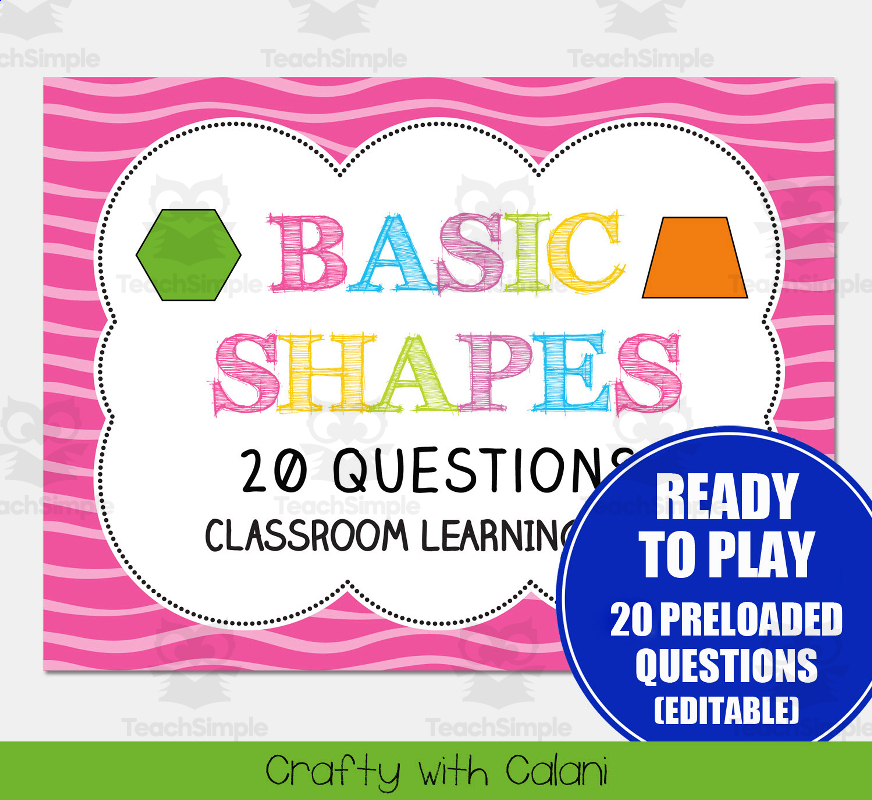
Practice identifying 2D and 3D shapes by name through a 20-question quiz-board game (PowerPoint 'Questions' game format).

A French-language PowerPoint lesson introducing body-part vocabulary using a slideshow with images, IPA pronunciation transcriptions, and color-coded example sentences.
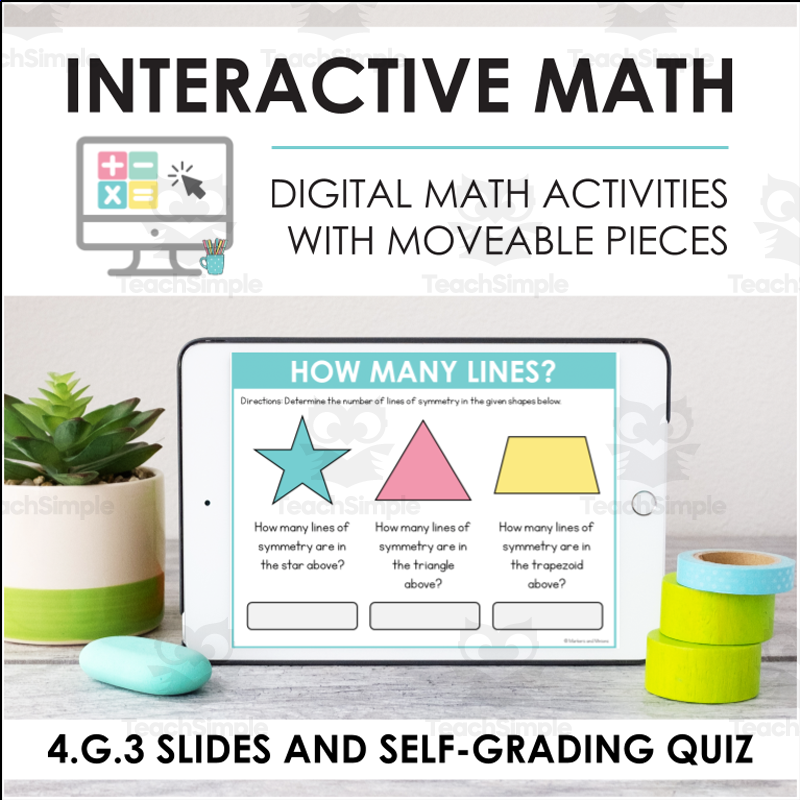
Interactive digital slide deck plus a linked self-grading Google Form quiz for identifying and constructing lines of symmetry (CCSS 4.G.3).
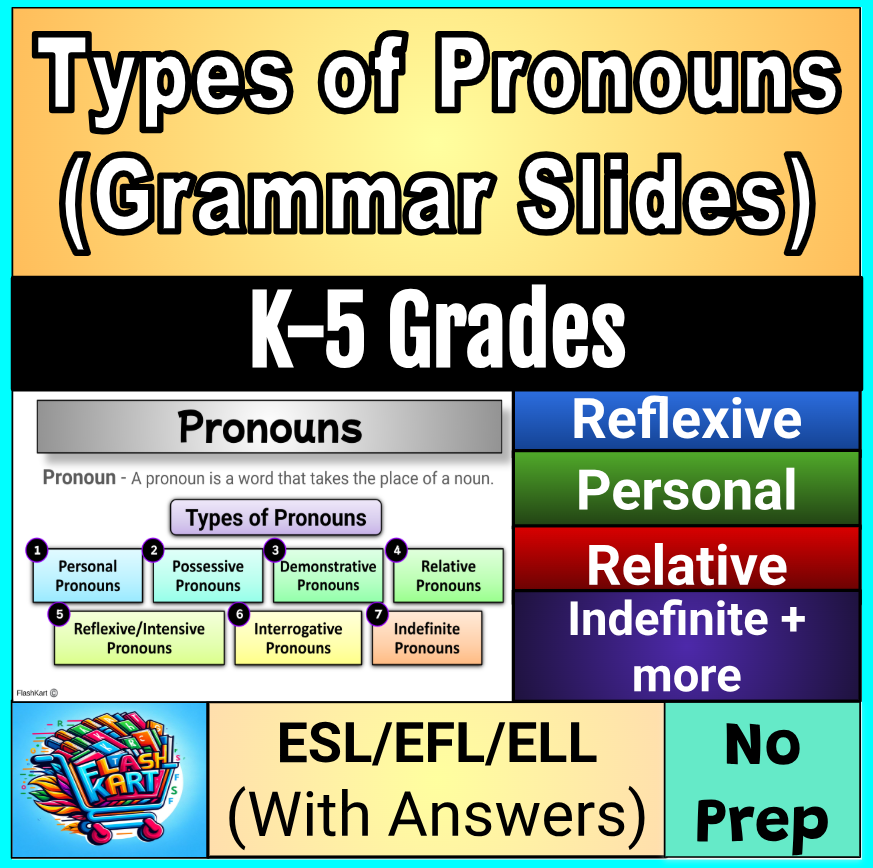
Teach the seven types of pronouns (personal, possessive, demonstrative, relative, reflexive/intensive, interrogative, indefinite) using slide-based explanations, comic-style dialogue, and practice worksheets.
A GCSE English Literature PowerPoint lesson analytically reading 'An Inspector Calls' Act 3 Part 3, from Gerald's doubts to the close of the play (confirming no suicide occurred, the family's divided response, and the final twist telephone call), framed around the concept of alliance.
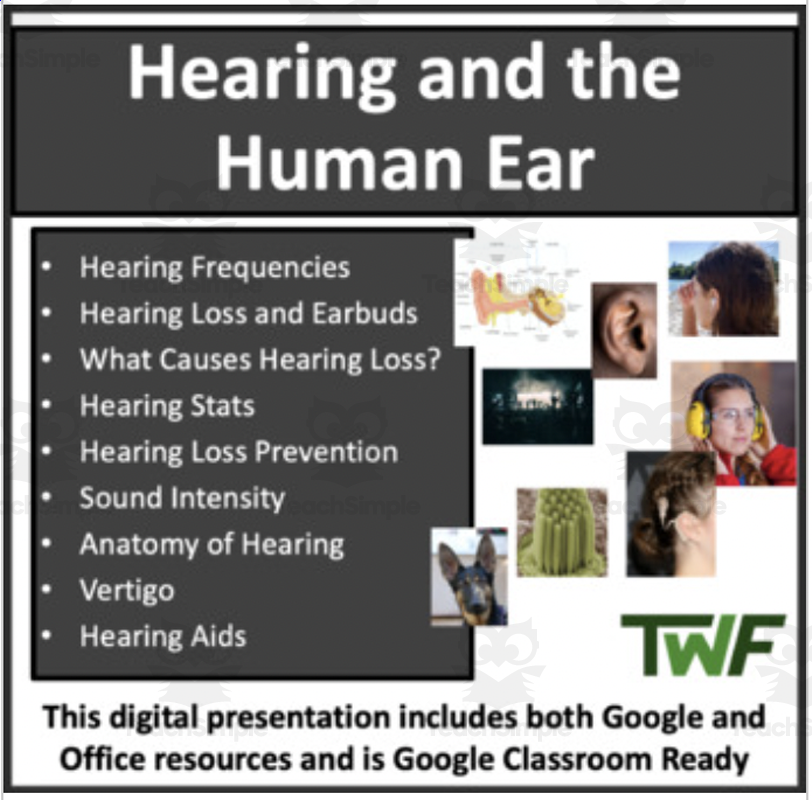
A 1-2 day lesson package covering the physics and biology of hearing: frequencies, hearing loss causes/prevention, sound intensity, and ear anatomy.
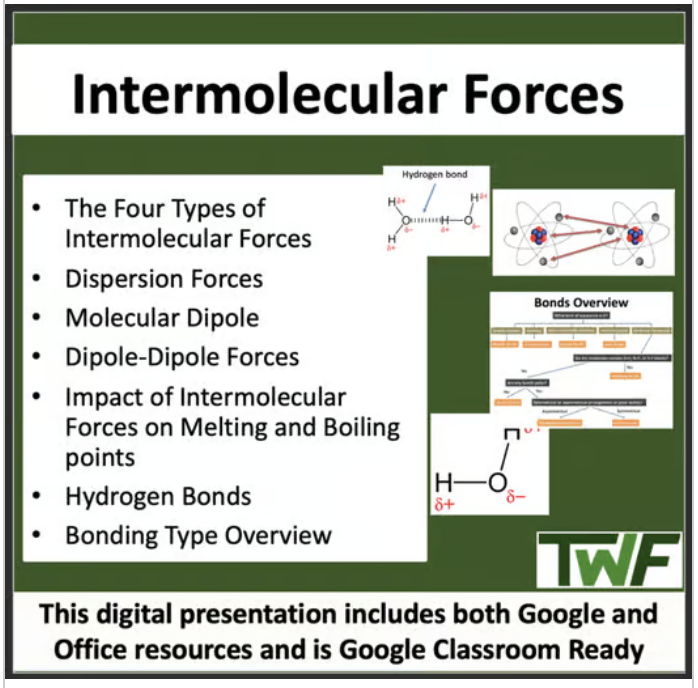
Teach the four types of intermolecular forces (dispersion, molecular dipole, dipole-dipole, hydrogen bonding) and how they affect melting and boiling points, for senior-level chemistry.
An AP Psychology unit bundle covering the genetics/biological basis of behavior (heredity, epigenetics, evolutionary perspective, twin/family/adoption studies) plus related biopsychology and cognition review activities.

A micro-learning interactive slide deck biography of Bill Clinton, building reading comprehension, vocabulary, and summarizing skills through an informational text.
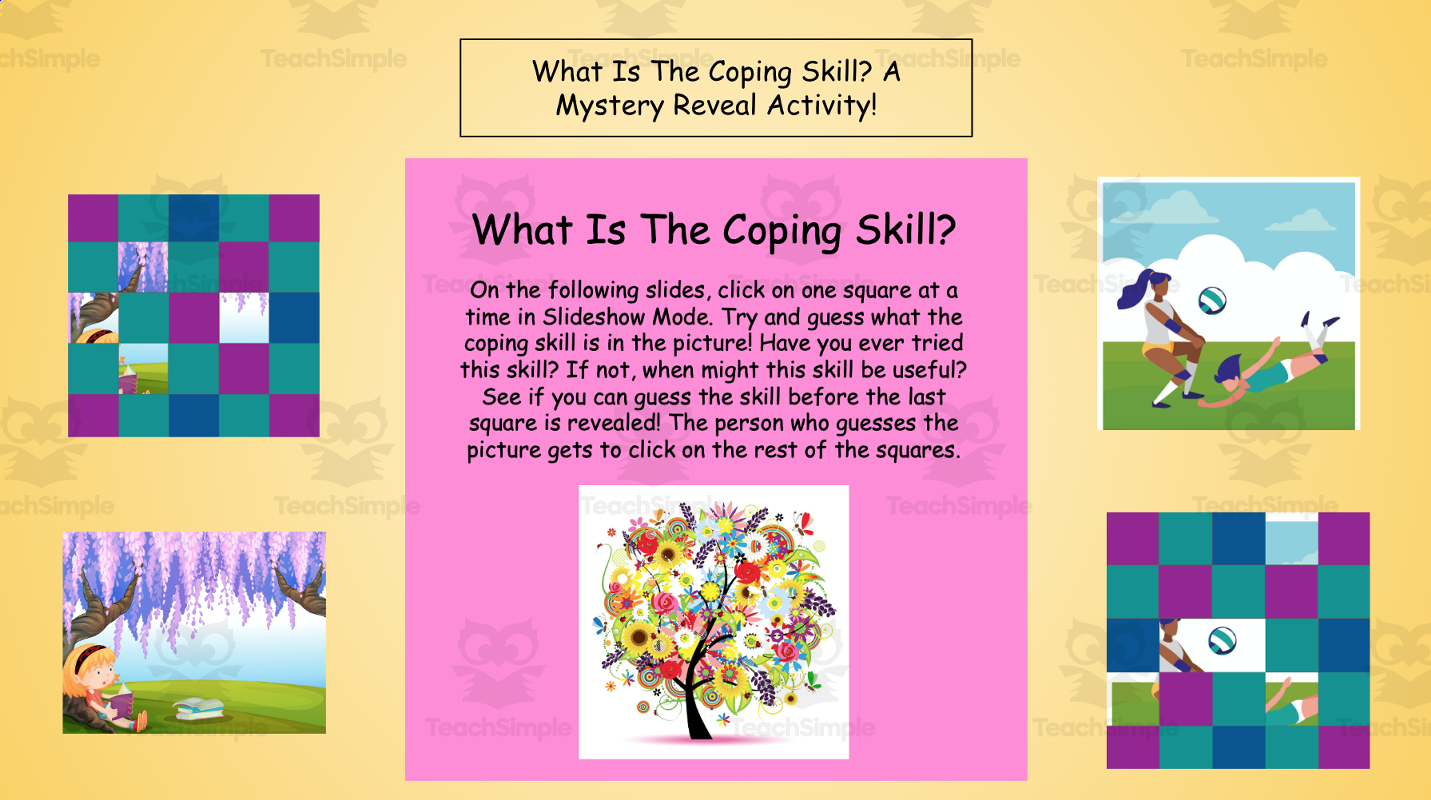
An interactive SEL (social-emotional learning) presentation activity where students guess a coping skill hidden behind a grid of squares that are revealed one at a time.

A social-skills activity (from the 'Socially Skilled Kids' series) presenting scenario cards where students decide how to respond kindly to a peer's situation.
Teach early contact and colonization dynamics between Native American groups and Europeans, including causes of European exploration and colonial relations.

Digital lesson teaching Spanish personal (subject) pronouns, including regional variation (vos vs. tú), through vocabulary-introduction slides, a singular/plural comparison chart, and fill-in-the-blank practice with answers.
 Free download
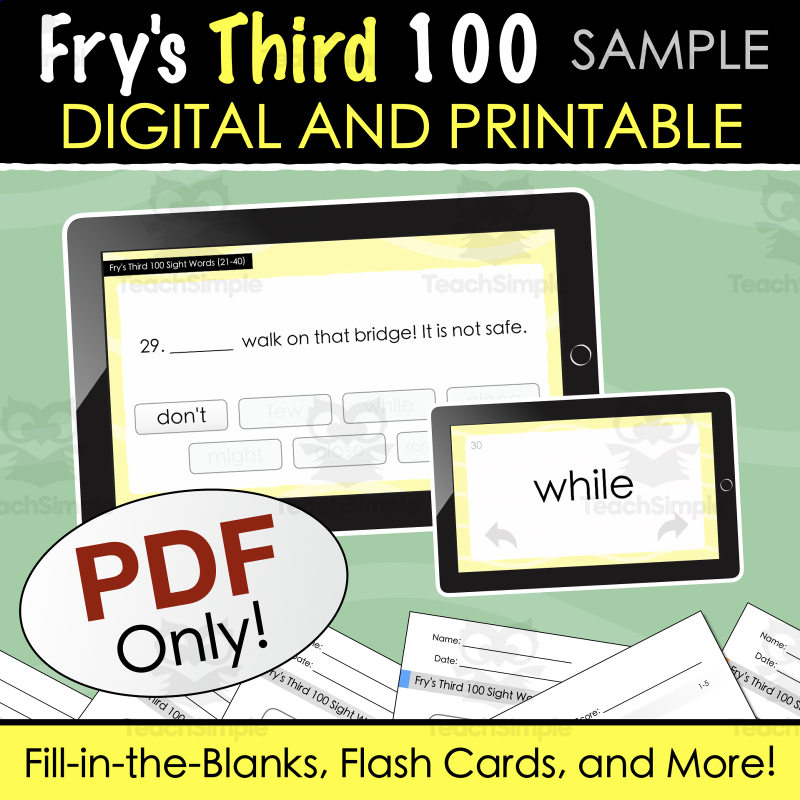
Practice and check recognition/spelling of Fry's Third 100 Sight Words (words 1-20 of this free sample) through fill-in-the-blank sentences, digital self-check slides, and flash-card style word drill.

An editable interactive Google Slides/PowerPoint unit teaching elementary and middle school students the rules for punctuating and formatting dialogue (quotation marks, speaker tags, comma placement) in writing.

A 35-slide PowerPoint math lesson teaching students to add and subtract fractions with unlike denominators by first finding equivalent fractions to establish a common denominator, aligned to standard 5.NF.1 (labeled '5.NBT.1' on the title slide).

Teach students to identify and discuss the elements of art (line, texture, shape, form, colour, value, space) and principles of design (balance, proportion, variety & emphasis, harmony & unity, rhythm & movement) using guided discussion questions about artworks.

Provide a multi-resource bundle teaching the scientific method (the eight steps: questioning, controlling variables, hypothesis, planning, performing, observing, analyzing, discussing) through slide-based lessons and hands-on lab/project activities.

Teach a high school chemistry unit on states of matter, kinetic molecular theory, phase changes, and phase diagrams through a lecture-guide worksheet paired with a matching PowerPoint presentation.

Digital self-checking multiplying decimals with whole numbers practice activity, accessed via an external link, that reveals a mystery/puzzle picture as students answer correctly.