



3,947 products added recently
Page 2 - Basic Science Quizzes
Biology Quizzes test students' understanding of living organisms and life processes. Topics may include cell structure and function, human body systems, genetics, evolution, and ecology. By using these quizzes, you can assess comprehension, reinforce key concepts, and inspire a deeper interest in the natural world. They are essential for students pursuing further studies in the life sciences.

 Show filters


Weather & Extreme Events Prediction Worksheets
Resources for Teachers, Basic Science, Science, Inventors, Theories, Earth and Environmental Sciences, Earth Sciences, Environmental Science, Nature & Plants, Life Sciences, Grade 5, 6, 7, 8, 9, 10, 11, Workbooks, Worksheets & Printables, Worksheets, Word Searches, Teacher Tools, Lesson Plans, Quizzes and Tests, Quizzes, Tests, Assessments
Using this Complete Weather and Extreme Events Prediction Unit, you can convert your students from passive observers of weather to skilled analytical forecasters! Are you sick of units that merely scratch the surface of the science of weather? This 30-page, ready-to-go unit challenges students in middle and high school to delve into deeper levels of meteorological investigation, such as thermodynamics and tornado development. The assessment in this unit is not just a bank of worksheets - it is a complete pedagogical system that promotes critical thought, data analysis, and an in-depth understanding of the atmospheric forces at work around us. The unit is broken down into three phases, which makes it simple to implement over a two-week time frame or as separate lessons/activities. The purpose of this unit is to prepare students to effectively educate others about severe weather. 30 page unit will be broken down into two phases. Phase 1 - Core Content & Theory - 10 Pages - This includes four chapters that represent the foundation of the unit. These chapters will help to explain to students complex topics in simple terms with real-life examples (i.e., 1900 Galveston Hurricane and the 1993 Superstorm). Chapter 1 - The Engine of the Sky (Air Masses & Thermodynamics) Chapter 2 - The Structure of Storms (Cyclogenesis & Frontal Boundaries) Chapter 3 - The Mechanics of Fury (Tornadoes & Hurricanes) Chapter 4 - The Meteorologists Toolkit (Data, Models, & Human Intuition) -This phase will contain real-life examples of each of these chapters. Phase 2 - Student Workbook - 11 Pages - The student workbook contains 10 worksheets with a variety of question types (e.g. Fill-in-the-blank, Data Analysis, Scenario Analysis, & Short Response) that will test the student's knowledge of the topics discussed in phase 1. Some possible topics that the student workbook could cover are: - Instruments used to measure weather and how to read a Synoptic Map. - How thunderstorms develop and how tornadoes develop. - Tropical Cyclones and Flash Floods - How blizzards develop, heat waves develop, droughts develop, and how to model a weather event using predictive modeling software. Phase 3: Visuals and Teacher's Resources (91 pages): The ultimate resource for teachers to help save time and increase lesson effectiveness. Professional Quality Visuals: 3 professionally designed and scalable diagrams/charts covering key concepts (Atmospheric Variables, Forecast Process, and Storm Intensification), which can be used to project or print. Detailed Answer Key: All the answers for each workbook question, including explanations for scenario-based problems. Teacher Implementation Guide: A complete blueprint for success, including a detailed pedagogical rationale, a suggested 2-week pacing guide, and differentiated instruction strategies for input of both developing and advanced learners. This resource is well-suited for: Grades 7 to 10 - Earth Science Advanced/Honors Middle School Science Electives in Meteorology or Environmental Science Homeschool Co-ops and STEM Clubs Emergency Sub Plans (No Preparation Needed!). Mastering the Process of Weather Predicting and Learning how meteorologists complete their work. Download for More Information. Keywords: Weather Units, Meteorology, Extreme Weather, Earth Science, Middle School Science, High School Science, NGSS, Worksheets, Activities, Tornados, Hurricanes, Weather Prediction, STEM, Print & Go, No Prep, Sub Plans, Cyclogenesis, Climates, Teacher Resources. There are Many Reasons Why Schools/Parents Enjoy Using This Innovation: Teaches Students to Analyze the Real World: In addition to teaching students about types of clouds, this program develops their analytical abilities through collecting and analysing data; using models for interpretation; and understanding the inter-relationships between the factors that cause changes within the Earth system. Ready to Use and Saves Time: The entire unit takes two weeks to complete and is complete with a teacher’s resource guide, a pacing schedule and an answer key. This makes preparing for instruction very easy. Connects Science with Human Influence: The case studies from amazing weather events (the Joplin tornado, the Galveston hurricane) provide relevance to this type of science and illustrate how vital it is to be able to predict weather (saving lives). Allows for Differentiation for All Students: The lesson plans in the teacher resource guide have been designed with differentiated strategies to enable every child to be successful (both developing learners and advanced learners). Professionally Designed Visuals that are Easy to Understand: Each lesson in this unit is supported by visually appealing drawings and charts (professional looking) that will help make concepts such as pressure gradients and forecasting workflows tangible and concrete for all students. Student Class Targeting : Identify students based on evidence from the teacher guide or complexity of material: 1) Primary Target Group: 7th and 8th Grade Middle Schoolers taking Earth or Integrated Sciences courses. This material is high-level material and meets the systemic thinking capacity of these high schoolers. 2) Secondary Target Group: 9th and 10th Grade High School students taking introductory Earth or Environmental Science classes. This material could be used as a great “building block” or as an in-depth “review” for students who will take advanced classes their junior year. 3) Niche Target Group: Need for 6th Grade students with advanced/gifted potential for a challenging “niche” curriculum AND Home School Families with students interested in deep investigations of Meteorology The original author of this Book - Syed Hammad Rizvi - has placed restrictions on how you can use it. The Book is for your own personal use only or for use by only one classroom teacher (single use per purchase). You cannot modify, redistribute, or sell any portion of this Book to anyone else or put it on the Internet for anyone else to access. If you'd like to share this Book with other educators and/or teachers, please purchase more than one copy (i.e., additional licenses) through Teachsimple. Thank you for your cooperation with this copyright and use policy!
Author Creative Book Store
Rating
Tags ScienceTeacher, WeatherForecastingUnit, Iteachscience, Weather, Meteorology, ExtremeWeather, EarthScience, AtmosphericScience, WeatherPrediction, WeatherForecasting

Native Plant Vs. Invasive Species Sorting Maps
Science, Life Sciences, Nature & Plants, Earth and Environmental Sciences, Earth Sciences, Environmental Science, Geology, Basic Science, Inventors, Theories, Homeschool Curriculum, Grade 3, 4, 5, 6, 7, 8, Worksheets & Printables, Workbooks, Worksheets, Word Searches, Teacher Tools, Lesson Plans, Quizzes and Tests, Quizzes, Tests
Transform your students from passive observers into active ecological detectives! This comprehensive, no-prep ecology unit on Native Plants vs. Invasive Species is designed to make complex environmental science concepts accessible, engaging, and unforgettable for elementary and middle school students. Say goodbye to "green-wall" blindness! This resource moves beyond simple plant identification and dives deep into the why —why native plants are ecosystem heroes and how invasive species disrupt the delicate balance of nature. Through a compelling blend of theory, real-world case studies (like Monarchs & Milkweed, Kudzu, and Garlic Mustard), and hands-on visual sorting activities, students will build a foundational understanding of their local ecosystems. This isn't just a set of worksheets; it's a complete pedagogical toolkit designed to foster critical thinking, scientific observation, and a sense of environmental stewardship. Perfect for your Earth Day unit, life science curriculum, or any time you want to connect students with the natural world in their own backyards. WHAT'S INCLUDED (34 Pages): Part 1: In-Depth Educator's Guide (Chapters 1-4) Foundations of Ecology: Clear explanations of Co-evolution, Native, Non-Native, and Invasive Species. Compelling Case Studies: Flora that Helps (Oak, Milkweed) and Flora that Harms (Garlic Mustard, Kudzu). Classroom Implementation Guide: Step-by-step instructions for a seamless teaching experience, from abstract concepts to concrete outdoor activities. Key Vocabulary & Glossary: A perfect student reference sheet or spelling list. Part 2: Engaging Student Workbook (10 Worksheets) 10 scaffolded, fill-in-the-blank worksheets covering key topics like: The Foundation of Local Ecology Pollinator Pathways & Food Webs The Root of the Matter – Soil Security Woodland, Wetland, and Backyard Ecosystems Mechanisms of Invasion & Restoration Strategies A final "Design a Native Oasis" capstone project! Part 3: Visuals & Teacher Resources Printable Classroom Posters/Anchor Charts: Flora Classification Mind Map, Ecosystem Impact Comparison Chart (Helps vs. Harms), and a Field Identification Flowchart. Comprehensive Answer Key: Detailed answers for worksheet. Teacher Implementation Guide: Includes a pedagogical framework, suggested lesson sequencing (4-Day plan), and differentiation strategies for both emerging and advanced learners. Keywords: Native Plants, Invasive Species, Ecology, Ecosystem, Biodiversity, Food Web, Lesson Plan, Worksheet, Activity, 4th Grade Science, 5th Grade Science, 3rd Grade, 6th Grade, NGSS, STEM, Environmental Science, Earth Day, Printable, Digital, Homeschool, Life Science, Plant Unit. Why Parents/Schools Love It: Turns Abstract Science into Concrete Action: It masterfully bridges the gap between textbook theory and the real world, equipping students to identify plants and ecological issues in their own schoolyards and parks. Fosters Critical Thinking, Not Rote Memorization: Instead of just learning plant names, students analyze relationships, cause-and-effect, and ecosystem functions, developing true scientific literacy. Comprehensive & Teacher-Friendly: This is a complete, "plug-and-play" unit with a teacher's guide, lesson plans, differentiation strategies, student worksheets, visuals, and a full answer key, saving educators dozens of hours of prep time. Engaging for Multiple Learning Styles: The curriculum appeals to visual learners (charts, maps), kinesthetic learners (sorting activities), and narrative learners (compelling case studies), ensuring the entire class stays engaged. Promotes Real Environmental Stewardship: The ultimate goal of this unit is to empower a new generation of informed environmentalists who understand and value their local biodiversity, making it a lesson with a lasting impact. Target Student Audience : Based on the content's language, concepts, and structure, primary target audience is: Sweet Spot: 4th and 5th Grade Students. The document explicitly mentions "fourth-grade student" and the cognitive development of nine-to-ten-year-olds. The concepts (e.g., allelopathy, keystone species) are challenging but presented in a scaffolded way that is perfect for this age group. Expanded Range: 3rd to 6th Grade. The material can be easily adapted. For 3rd graders, you can focus more on the visual sorting and the core "helper vs. harmer" concepts. For 6th graders, you can use the "For Advanced Learners" suggestions and expand on the research and restoration project ideas. Other Markets: This is also an excellent resource for homeschooling co-ops , environmental clubs , nature centers , and after-school STEM programs . Copyright/Terms of Use: This Book was copyrighted by Syed Hammad Rizvi. This resource is for personal and single classroom use only. You may not alter, redistribute, or sell any part of this resource. In other words, you may not put it on the Internet where it could be publicly found and downloaded. If you want to share this resource with colleagues, please purchase additional licenses from Teachsimple. Thank you for respecting these terms of use. This product is happily brought to you by Syed Hammad Rizvi
Author Creative Book Store
Rating
Tags LifeScience, ScienceLesson, STEM, STEAMEducation, ScienceForKids, FoodWeb, EnvironmentalEducation, ScienceActivities, EnvironmentalScience, Ecosystem

Reading Comprehension for Science Articles – Critical Analysis
Science, Basic Science, Inventors, Theories, Chemistry, Earth and Environmental Sciences, Earth Sciences, Environmental Science, Life Sciences, Nature & Plants, Grade 6, 7, 8, 9, 10, 11, 12, Worksheets & Printables, Workbooks, Worksheets, Word Searches, Teacher Tools, Assessments, Lesson Plans, Quizzes and Tests, Quizzes, Tests
This comprehensive literature unit on scientific article analysis will turn your students from being passive readers into critical thinkers! True scientific literacy—being able to evaluate evidence critically—has become the most important skill of our time due to the overwhelming amount of information and misinformation in today’s society. This unit is a complete, no-prep 5-day lesson plan that will help students in middle and high school understand how to break down scientific articles. With this unit’s help, students will learn how to look at methodological procedures; how to find biases; how to tell the difference between correlation and causation; and how to develop evidence-based arguments—all of which are necessary for success in AP classes, as well as in college! This unit is appropriate for the following classes: Biology, Chemistry, Environmental Science, Physics and as a cross-curricular project with ELA. This resource also correlates with the NGSS Science and Engineering Practices (Engaging in Argument Based on Evidence) and other Common Core Literacy standards. Included in this unit: 1. Educator & Student Master Guide (47 pgs) : Part 1 consists of an in-depth detailed core instructional guide for teachers on Scientific Reading Theory. Core principles and concepts included: IMRAD (scientific structure) ; Hierarchy of Evidence ; Identifying Fallacies Part 2 consists of constructing 10 scaffolded, grade level appropriate worksheets using High-Interest/Relevant scientific reading materials. Examples include: Anatomy of an Abstract Isolation of Variable and Control Critique Methodology Interpret Data & Statistical Literacy Correlation vs. Causation Identify Bias/Conflict of Interest Synthesize Competing Hypotheses Peer Review Simulation Part 3 consists of teacher support systems: 3 Visual Professional Anchor Charts/Posters (anatomy of a scientific argument, source credibility matrix, interrogating empirical graphics) Comprehensive Answer Key (all 10 worksheets) 5-Day Implementation/Teaching Plan: step-by-step plan to facilitate complete unit implementation successfully Will enable your students to read as scientists, question as reporters, and think as researchers; providing the necessary tools to assist in developing their confidence/skepticism towards the scientific world. How Parents and Schools Appreciate It: Teaches Skills for the 21st Century: Instead of teaching through rote memorization, this unit prepares students to learn to think critically. Students learn to use the problem-solving skills needed for success in college and their future career paths. Teaches Digital and Media Literacy: In this age of "fake news" and false claims, the unit provides students with tools to evaluate the credibility of scientific information they see online, including news headlines and social media posts. Prepares Students for Academic Challenge: The analytical skills that students develop (being able to analyze dense texts, understand research design, and base their opinion on credible evidence) give students a solid head-start into AP science classes and university studies. Comprehensive Teaching Tools for Teachers: The unit is a complete unit, and includes everything that teachers need to implement student learning. Each teacher will find all of the information and teaching materials necessary, along with a comprehensive teacher guide, ready-to-publish worksheets, visual aids, and answer key; which will save every teacher dozens of hours on the preparation and planning of each lesson. Audience: The Target Audience includes: Primary: Grades 8-12 Science (On Level); High School AP or Honors Biology; Chemistry; Environmental Science; Physics Secondary: Gifted or Advanced (Grades 6-7-Science), as the concepts may be difficult for Sixth-grade students who are not Advanced or Gifted; nevertheless, students classified as Advanced will do well. Cross-Curricular: High School ELA/ELA or Media Literacy planer interested in adding analysis of non-fictional/informational text to their plan. Copyright/Terms of Use: This Book is the property of Syed Hammad Rizvi, and it is provided as a resource for you to use in a personal and single classroom only. You cannot alter, redistribute or sell any part of this resource. Thereby, any part of this resource cannot be placed on the Internet where all can access (e.g., downloaded). If you would like to share this resource with colleagues, please purchase additional licenses from Teachsimple. Thank you for abiding by these terms. Syed Hammad Rizvi, thank you for bringing you (with a smile) this product.
Author Creative Book Store
Rating
Tags STEM, ScienceEducation, Education, Teaching, EdTech, STEMeducation, TeacherLife, Homeschool, BackToSchool, ScientificLiteracy

Sound Energy Two Lesson Unit: Lesson Plan, Printables, Powerpoint and Quiz
Science, Basic Science, Grade 4, 5, Quizzes, Quizzes and Tests, Teacher Tools
Sound Energy Two Lesson Unit: Lesson Plan, Printables, Powerpoint and Quiz This comprehensive teaching resource introduces the concept of sound energy to grade 4 and grade 5 students. The Sound Energy mini-unit is divided into two distinct lesson plans supplemented with 10 printable worksheets, an animated powerpoint presentation, and an informative quiz. Lesson Plan One The first part of the unit includes a smooth flow PowerPoint presentation which details fundamental concepts using sounds on most slides for an immersive learning experience. Lesson Plan Two The second lesson encourages hands-on learning through interactive science stations investigations or individual review worksheets. Material requirements are basic school items like tuning forks; rulers; rubber bands; cup of water; shoe box or tissue box etc. Vibrations - analyzing vibrations using tuning forks in a water cup Pitch Changes - exploring changes in pitch by altering strings attached to a box using rubber bands In addition to the regular lessons comes a quiz at the end of each unit for self-assessment purposes. Added bonuses: STEAM Activity & Reading Comprehension Sheets An additional offering is a STEAM activity encouraging children to create their own musical instruments at home for extra credit, thereby enhancing practical understanding outside class hours! The inclusion of reading comprehension activities ensures this product delivers holistic education. This teaching resource can also serve as homework assignments or foundation for group project works to encourage peer interaction. It's perfect both for homeschooling parents and professional educators.
Author ScienceRocket
Tags Sound Energy, Vibrations, Sound Waves, Frequency, Pitch

Orthographic Mapping Phonics Grids
Science, Basic Science, Inventors, Theories, Life Sciences, Human Body, STEM, Special Resources, Life Skills, Special Education Needs (SEN), Kindergarten, Preschool, Homeschool Curriculum, Grade 1, 2, 3, 4, Worksheets & Printables, Workbooks, Worksheets, Word Searches, Teacher Tools, Lesson Plans, Quizzes and Tests, Quizzes, Tests, Assessments
Unleash the Power of the Science of Reading! The Ultimate Orthographic Mapping Phonics Toolkit for K-2 Are you searching for a rigorous, no-prep phonics resource that aligns perfectly with the Science of Reading (SoR)? Transform your literacy instruction and empower your students to move beyond rote memorization with this comprehensive Orthographic Mapping Phonics Grids workbook. This is not just a collection of worksheets; it's a complete pedagogical system designed to rewire the brain for fluent reading and spelling. Based on the evidence-based principles of orthographic mapping, these worksheets guide students through the crucial process of connecting phonemes (sounds) to graphemes (letters). By explicitly teaching students to segment sounds and map them to their written representations, you will build a solid foundation for decoding, eliminate the habit of guessing, and permanently store words in their sight vocabulary. This massive, 38-page resource is perfect for core instruction, small group intervention (RTI), literacy centers, tutoring, and even for homeschool parents looking to provide research-backed support. WHAT'S INCLUDED: A Comprehensive Educator's Guide (10 Pages): Dive deep into the neuroscience and methodology behind orthographic mapping. This guide explains the "why" with clarity, covering Linnea Ehri's phases of development, the anatomy of a phonics grid, and case studies proving its effectiveness. Teach with the confidence of an expert! Systematic Student Worksheets (18 Pages): A strategically sequenced set of worksheets that build in complexity: Worksheet 1: CVC Words Worksheet 2: Consonant Digraphs (sh, ch, th, etc.) Worksheet 3: Initial Consonant Blends (sl, fr, st, etc.) Worksheet 4: Final Consonant Blends (nd, st, mp, etc.) Worksheet 5: The FLOSS Rule (ff, ll, ss, zz) Worksheet 6: CVCe / Magic E Words (cake, time, rope) Visuals & Teacher Resources (10 Pages): Clear diagrams illustrating the cognitive process of orthographic mapping. A "Tap, Map, Graph" implementation guide. A complete, diagnostic Answer Key with grapheme breakdowns to help you identify phonological vs. orthographic deficits. Keywords for SEO/Tags: Science of Reading, SoR, Orthographic Mapping, Phonics Worksheets, K-2 Phonics, Kindergarten, First Grade, Second Grade, Phoneme Grapheme Mapping, CVC Words, Digraphs, Blends, Magic E, CVCe, Structured Literacy, Reading Intervention, RTI, Special Education, Homeschool, Orton-Gillingham aligned, No Prep, Printable. Why Parents/Schools Love It: Brain-Based & Research-Backed: It's not a fad. This resource is built on the proven neurological science of how children actually learn to read, aligning perfectly with the Science of Reading (SoR). Builds Real Decoding Skills: It systematically teaches students to analyze words by sound, ending the frustrating cycle of guessing based on pictures or first letters. Comprehensive & All-in-One: From a deep-dive educator guide to student worksheets and a full answer key, it provides everything a teacher or parent needs to implement the strategy with confidence, right away. Highly Diagnostic Tool: The unique grid format makes it immediately obvious where a student is struggling—whether it's hearing the sounds (phonological awareness) or knowing the letters (orthographic knowledge). Fosters Independent, Confident Readers: By making the structure of English visible and predictable, these worksheets empower students, reduce anxiety around spelling, and build a solid foundation for a lifetime of fluent reading. Target Student Classes : Based on the clear and systematic progression of phonics skills presented in the worksheets, target educators and parents of students in: Kindergarten: (For the CVC words and introducing digraphs) First Grade: (This is the sweet spot, covering CVC, digraphs, blends, FLOSS rule, and CVCe) Second Grade: (Excellent for review, intervention for struggling readers, or students just beginning to work with more complex vowel patterns) This resource is ideal for reading specialists, interventionists, and special education teachers working with students of any age who have gaps in these foundational skills. Copyright/Terms of Use: This Book was copyrighted by Syed Hammad Rizvi. This resource is for personal and single classroom use only. You may not alter, redistribute, or sell any part of this resource. In other words, you may not put it on the Internet where it could be publicly found and downloaded. If you want to share this resource with colleagues, please purchase additional licenses from Teachsimple. Thank you for respecting these terms of use. This product is happily brought to you by Syed Hammad Rizvi Apply sound-by-sound reading with these CVC blending worksheets . Apply sound mapping to longer beginnings with these consonant blend worksheets .
Author Creative Book Store
Rating
Tags Scienceofreading, Orthographicmapping, Structuredliteracy, Phonics, Sor, Phonemegraphemema, Brainbasedlearning, Readingresearch, Cvcwords, Consonantdigraphs
Carbon Footprint Calculator & Personal Sustainability Plans
Science, Basic Science, Earth and Environmental Sciences, Life Sciences, Earth Sciences, Environmental Science, Geology, Space, Nature & Plants, Biology, Homeschool Curriculum, Homeschool Templates, Grade 4, 5, 6, 7, 8, Worksheets & Printables, Workbooks, Worksheets, Word Searches, Teacher Tools, Assessments, Lesson Plans, Quizzes and Tests, Quizzes, Tests
This fully planned out unit, straying away from Climate Anxiety and allowing students to build agency related to climate action, can be printed right out of this document and used in the classroom immediately. Designed for use in Grades 5–7 (ages 10–14), students will progress through this unit comprehensively by learning about the Carbon Cycle, measuring their actual CO₂e emissions, and creating their own personal plan for sustainability. The unit provides scientific text, real-world case studies (i.e. The Life of a White Cotton T-shirt), 10 individual audit worksheets related to home energy, transportation, diet, consumption, and water use. There is a Carbon Calculator provided which translates students' daily habits into actual data as well as templates for SMART Goal Setting and Advocacy Letters to promote action from students after completing the project. The materials align with NGSS (Earth and Human Activity Standard) and are ideal for Earth Day, STEM, or to promote Environmental Literacy throughout the rest of the school year. Not only does this package come with an extensive Teacher's Guide complete with answer keys, grading rubrics, visual aids, and a flexible 5-day pacing guide; the materials have been scaffolded to help mitigate eco-anxiety with both kindness and evidence-based science. The highlights include: 4 engaging chapters on greenhouse gases, CO₂e, and Life Cycle Assessment 10 student audit worksheets and a Carbon Calculator to synthesize student audit results SMART Goals Workshop for setting student action plans and evaluating systemic actions Professional writing activity related to Advocacy Letters A comprehensive Teacher Key, including Answer Keys, Grading Rubrics, and 5-Day Unit Plan All materials have been classroom-tested and proved to be effective. Appreciated by Parents and Educators: Empowerment Versus Fear – Empowers children and youth to make positive changes by turning their fear of climate change into tangible steps they can take themselves. Real-World Math/Data Skills – Develops mathematics and data-based skills through the calculation of CO₂e from current activities, reinforcing applied math and unit conversion skills and improving critical thinking. Systems Thinking – Students develop a deeper understanding of system relationships and the ripple effects of human activity on the ecological system through Life Cycle Assessment (T-shirts) and permafrost feedback loops. Teacher-friendly, Minimal Prep/Materials Needed – All materials required for implementation are provided (e.g., rubrics, answer keys, visuals, and 5-day pacing guides), so even non-science specialists can implement without difficulty. Opens Up Conversation at Home/School/Community – The advocacy letter and family audit provide an avenue for discussion beyond the classroom, resulting in actual changes to household sustainability. Targeted Grade Levels: The statement in the introduction clearly states that targeted grade levels are ‘5th, 6th, and 7th Grade.’ Therefore, because the math being introduced in this program involves multiplication, metric/unit conversions, basic percentage reasoning and cognitive complexity, I believe students in grades 5 through 7 will best use this resource as follows: Primary Group: 5th – 7th Grade (10-13 year olds) Secondary/Extension Group: (4th Grade) Advanced; 8th – 9th Grade as a basic review of what they learned in grades 5 and/or 6. Copyright/Terms of Use : The copyright for this book is owned by Syed Hammad Rizvi. This resource is intended for personal use and to be used in a single classroom. This means that you may not repurpose, sell, or give away any part of this resource. In essence, you cannot upload this resource to any public place on the internet and make it available to the world. If you wish to distribute this resource to other teachers, please purchase additional licenses through Teachsimple. Thank you for respecting these terms of use. This product is brought to you proudly by Syed Hammad Rizvi.
Author Creative Book Store
Rating
Tags ClimateChangeEducation, EcoLiteracy, SustainableClassroom, GlobalWarming, ClimateAction, GoGreen, ZeroWasteClassroom, EnvironmentalEducation, GreenSTEM, EarthWarriors
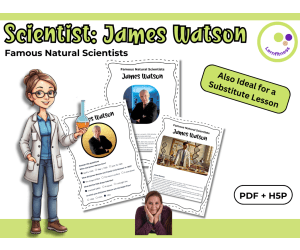
Scientist James Watson – Fact Sheet, Quiz & Interactive PDF incl. H5P
Life Sciences, Science, STEM, History, Social Studies, Biographies, Inventors, Basic Science, Physics, Biology, Grade 6, 7, 8, 9, 10, 11, Worksheets, Worksheets & Printables, Quizzes, Quizzes and Tests, Teacher Tools, Projects, Activities
Scientist James Watson - Fact Sheet, Quiz & Interactive Version (PDF & H5P) James Watson – Discovering the DNA Double Helix Fact Sheet, Quiz & Interactive Exercises (PDF + H5P) This 45-minute resource introduces students in grades 7–10 to James Watson and his role in one of the most important scientific discoveries of the 20th century: the structure of DNA. Most students have heard of DNA, but they often don’t know much about how its double helix structure was uncovered – or who was involved in the process. Together with Francis Crick, and building on key work by Rosalind Franklin, Watson helped lay the groundwork for modern genetics. To make this big topic more manageable in class, I’ve put together a short, ready-to-use lesson. It includes an informational text, a fact sheet, quiz questions with answers, and a few creative tasks that get students thinking and engaging with the content. All materials are included in both color and black-and-white versions for flexible use – whether printed or on-screen. What’s included: A short, accessible text on James Watson and the discovery of DNA A fact sheet to help students organize and reflect on the key ideas Quiz questions (with solutions) to check understanding A creative task where students come up with their own questions and discuss them in pairs Formats: PDF for printing or digital use, plus an H5P version for interactive learning Answer key included I’ve used this in biology lessons as part of a genetics unit, but it also works well when exploring the history of science or how scientific discoveries are made. It’s especially helpful when time is short and you want something that’s both informative and easy to implement – no extra prep needed. 🚀 Download now and bring the legacy of James Watson into your biology lessons today! 📍 Best wishes, Heike from Lernfitness Did You Know? I teach with a certified therapy dog, and together we create a positive and inspiring learning environment. 🐶✨
Author Lernfitness
Tags Science, Biology, Famous Scientists Lesson, H5P, Interactive Science Exercises, STEM, History, Scientists, Physiology, James Watson

Phonics & Early Literacy with Themed Story Builders
STEM, Classroom Management, Resources for Teachers, Community Building, Science, Basic Science, Inventors, Theories, Special Resources, Social Emotional Learning (SEL), Kindergarten, Preschool, Homeschool Curriculum, Homeschool Templates, Grade 1, 2, 3, Teacher Tools, Assessments, Lesson Plans, Literacy Readers, Quizzes and Tests, Quizzes, Tests, Worksheets & Printables, Workbooks, Worksheets
Do your students get bored by phonics drills? Do you have beginning readers who sound out words well, but do not understand what they read? Phonics & Early Literacy With Themed Story Builders will connect the dots between mechanical decoding and creating a love for books and reading! 39 pages of the most complete literacy program curriculum for Kindergarten through 1st and 2nd grade. The program is rooted in the Science of Reading offers a unique method for teaching phonics skills through a new way of creating stories. This program also provides the student opportunities to develop vocabulary, syntax and comprehension while expressing his/her own creativity and imagination. Constrained Narrative Architecture (CNA) Method not only moves students beyond rote memorization when learning how to decode word lists, but also teaches students how to build themed stories using the newly-acquired phonics skills. Once students have created a complete themed story, they will have an understanding of the phonics rules used in the story, plus vocabulary, syntax and comprehension. What You're Getting with This Resource Without Preparation That Has An Immediate Impact on Teaching!? PHASE ONE: Theoretical Foundations & Core Content for the Teacher- This guide provides an educator with an understanding of the neuroscience behind our methodology. The educator will learn the "why" of Orthographic Mapping, Cognitive Load Theory, Narrative Scaffolding, and other elements to become a more experienced and knowledgeable teacher. PHASE TWO: Student Workbook- The student workbook consists of 10 fun thematic worksheets and each worksheet will provide the student with a story background that aligns to the specific sequential skill provided on the worksheet, and offers the student an adventure in phonics. PHASE THREE: Teacher Resource Package- The teacher resource package consists of pedagogical diagrams, full comprehensive answer key, and a teacher implementation guide with pacing suggestions. The 10 Themed Adventure Worksheets Cover the Following Skills in a Sequence: 1. The Alpine Forest (Short Vowels & CVC Words) 2. Deep Sea Discovery (Consonant Digraphs; sh, ch, th, wh) 3. The Clockwork City (Initial Consonant Blends: L, R, S) 4. Dino-Valley Dig (CVCe Words- “Magic e”) 5. Starlight Space Station (Long Vowel Teams- ai, ee, ea, oa, ue) 6. The Whispering Willow Farm (R-Controlled Vowels- ar, er, ir, or, ur) 7. The Weather Wizards (Diphthongs; ou, ow, oi, oy) 8. The Great Mountain Train (Hard/Soft 'c'/ 'g') 9. The Midnight Toy Shop (Syllable Segmentation) 10. The Enchanted Castle (Cumulative Review/Creative Story Building) This is ideal for large group instruction, small group intervention, structured literacy centers, or an effective homeschool phonics program. It will stop the continual slaughter of expected reading enjoyment and create skilled independent readers now! Search for: phonics programs, science of reading, early literacy, kindergarten reading programs, first grade phonics programs, second grade literacy programs, decodable activities, reading intervention programs, story building worksheets, fill-in-the-blank worksheets, structured literacy center materials, homeschool phonics programs, constant vowel, constant e, constant combination sounds, and constant blends of vowel sounds. The reason why parents and schools are happy is because the curriculum is based on scientific principles, known as the "Science of Reading." This means that the curriculum teaches children to read the right way and progresses from the recognition of the individual sounds to being able to read smoothly and understand what they are reading. Phonics becomes fun instead of boring since this curriculum substitutes the traditional rote phonics drills with engaging themed activities. Children become so involved in creating an imaginative story with dinosaurs or by creating a real-life story about a space station that they do not even realize they are really learning important phonics skills. True comprehension of what to read is developed because this resource requires students to select the word that completes a sentence so that it will make sense. This develops the child’s ability to read for meaning as opposed to simply reading out loud. This resource is designed to be easily differentiated as the teacher’s guide contains suggestions for helping struggling readers (such as those with dyslexia) and those working at an advanced level, making it suitable for all students in a diverse classroom or homeschool environment. This resource is comprehensive and ready to be implemented right away, as it includes not only the worksheets that are used in the program, but also has a complete teacher’s guide, student activities to use with the worksheets, and an answer key. Everything you need! Target Audience Review: According to the explicit scope and sequencing outlined on pages 7 & 8 that outline students working through CVC words all the way to multisyllabic words, the following summarizes how this PDF has been developed for: - Primary Target Students: Kindergarten (approx. age 5) - 1st Grade (approx. age 6) and 2nd grade (approx. age 7). - Primary Buyers: K-2 Classroom Teachers, Home School Parents, Literacy Specialists, Reading Interventionists and Tutors. Phase 1 of the theoretical component of the PDF is especially beneficial to these users as it will allow them to show the product's educational merit by demonstrating that the research supports the Science of Reading. Copyright & Terms of Use: This Author's work is licensed to Syed Hammad Rizvi. This product has been created for personal use/by you and one other teacher in the same place. You cannot alter, redistribute or make this product available for sale. You may not upload this product onto any website unless you would like to lose your copyright ownership of the work. Again, please respect the above license agreement and do not share this product with your colleagues, if they would like access, please help them out by purchasing a license from Teachsimple. Thank you very much for your understanding, I appreciate it! As usual this product is provided as a free service, thanks for being apart of my business!
Author Creative Book Store
Rating
Tags Phonics, Scienceofreading, Earlyliteracy, Structuredliteracy, Reading, Literacy, Teachertiptuesday, Kindergarten, Firstgrade, Secondgrade
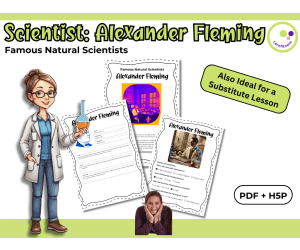
Alexander Fleming– Fact Sheet, Quiz & Interactive PDF incl. H5P
Life Sciences, Science, STEM, History, Social Studies, Biographies, Inventors, Basic Science, Physics, Biology, Grade 6, 7, 8, 9, 10, 11, 12, Worksheets, Worksheets & Printables, Quizzes, Quizzes and Tests, Teacher Tools, Projects, Activities
Scientist Alexander Fleming - Fact Sheet, Quiz & Interactive Version (PDF & H5P) Alexander Fleming – The Accidental Discovery of Penicillin Fact Sheet, Quiz & Interactive Exercises (PDF + H5P) 💊🦠 This 45-minute resource introduces students in grades 7–10 to Alexander Fleming and his groundbreaking contribution to modern medicine: the discovery of penicillin. Many students have heard of antibiotics, but they often don’t know the story behind how the first one was found – or why it was such a turning point in medical history. Fleming’s observation of mold killing bacteria in 1928 led to one of the most important medical advances of the 20th century. To make this topic accessible in the classroom, I’ve put together a short and structured lesson. It includes a clear informational text, a fact sheet, quiz questions with answers, and a creative pair activity. The material is provided in both color and black-and-white versions – ready to print or use digitally – plus an interactive H5P version for digital learning 💻. What’s included: A student-friendly text on Alexander Fleming and the discovery of penicillin A fact sheet to help students identify and organize key information Quiz questions (with solutions) for quick review A creative task where students write their own questions and exchange them with a partner Formats: Printable/digital PDF and interactive H5P version Answer key included ✅ I’ve used this as part of a biology unit on the immune system or microbes, but it also works well in cross-curricular lessons on scientific discovery or health. It’s easy to use, whether for regular lessons, partner work, or independent tasks. 🚀 Download now and bring the legacy of Alexander Fleming into your biology lessons today! 📍 Best wishes, Heike from Lernfitness Did You Know? I teach with a certified therapy dog, and together we create a positive and inspiring learning environment. 🐶✨
Author Lernfitness
Tags Science, Biology, Famous Scientists Lesson, H5P, Interactive Science Exercises, STEM, History, Scientists, DNA, Barbara McClintock
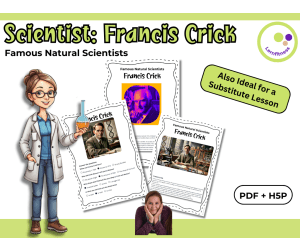
Scientist Francis Crick – Fact Sheet, Quiz & Interactive PDF incl. H5P
Life Sciences, Science, STEM, History, Social Studies, Biographies, Inventors, Basic Science, Physics, Biology, Grade 6, 7, 8, 9, 10, 11, 12, Worksheets, Worksheets & Printables, Quizzes, Quizzes and Tests, Teacher Tools, Projects, Activities
Scientist Francis Crick - Fact Sheet, Quiz & Interactive Version (PDF & H5P) Francis Crick – The DNA Double Helix and the Origins of Modern Genetics Fact Sheet, Quiz & Interactive Exercises (PDF + H5P) 🧬 This 45-minute resource introduces students in grades 7–10 to Francis Crick and his role in uncovering the structure of DNA – one of the most influential discoveries in modern biology. Many students are familiar with the term DNA, but only a few know the story behind how scientists first identified its double helix shape. Together with James Watson, and building on the work of Rosalind Franklin, Crick helped explain how genetic information is stored and passed on – a breakthrough that still shapes biology and medicine today. To make this complex topic easier to teach, I’ve put together a concise and structured lesson. It includes a short informational text, a fact sheet, quiz questions with answers, and a creative task where students come up with their own questions. All versions are included – both in color and black-and-white – and there’s also an interactive H5P version for digital use 💻. What’s included: A short, accessible text on Francis Crick and the discovery of DNA A fact sheet to help students sort and reflect on the key points Quiz questions (with solutions) to check understanding A creative task where students write and exchange their own questions Formats: Printable/digital PDF and interactive H5P version Answer key included ✅ I’ve used this during our genetics unit, but it also fits well in lessons on the history of science or how discoveries are made. It’s easy to integrate and works well for partner work, independent tasks, or short science projects. 🚀 Download now and bring the legacy of Francis Crick into your biology lessons today! 📍 Best wishes, Heike from Lernfitness Did You Know? I teach with a certified therapy dog, and together we create a positive and inspiring learning environment. 🐶✨
Author Lernfitness
Tags Science, Biology, Famous Scientists Lesson, H5P, Interactive Science Exercises, STEM, History, Scientists, Francis Crick, DNA
High-Frequency Heart Word Tracing
Science, Basic Science, Inventors, Theories, Life Sciences, Human Body, Resources for Teachers, Classroom Management, Community Building, STEM, Kindergarten, Preschool, Grade 1, 2, 3, 4, 5, Worksheets & Printables, Workbooks, Worksheets, Word Searches, Teacher Tools, Assessments, Lesson Plans, Quizzes and Tests, Quizzes, Tests
Transform Your Literacy Instruction with Science of Reading Heart Word Worksheets! Are you struggling to teach tricky, high-frequency words like said , was , and they ? Do your early readers get frustrated when phonics rules don't apply? Say goodbye to rote memorization and hello to a method that works! This comprehensive resource, grounded in the Science of Reading , leverages the power of Orthographic Mapping to help students master irregular high-frequency words. Our "Heart Word" tracing method is a game-changer for Pre-K, Kindergarten, and 1st Grade classrooms. Instead of asking students to memorize the whole word, we teach them to identify the decodable parts they already know and focus their memory on only the irregular "heart part"—the part they must learn by heart. This isn't just another set of worksheets; it's a complete instructional toolkit designed to reduce cognitive load, build reading confidence, and create lasting neural pathways for fluent reading. WHAT'S INCLUDED: Part 1: In-Depth Teacher's Guide (10 pages): A professional guide explaining the methodology, the cognitive science behind orthographic mapping, and case studies showing proven results. Part 2: Student Workbook (10 Differentiated Worksheets): Engaging, multi-sensory worksheets that guide students through mapping and tracing common high-frequency words. The activities isolate the irregular graphemes for targeted practice. Part 3: Teacher Resources & Visuals (14 pages): Visual Frameworks: Clear diagrams explaining the "Heart Word" mapping process and the 5-step kinesthetic learning cycle. Developmental Scaffolding Matrix: A guide to using the worksheets across Pre-K, K, and 1st Grade. Step-by-Step Implementation Protocol: An "I Do, We Do, You Do" lesson plan to ensure effective instruction. Assessment Tools: Formative and summative assessment rubrics and logs to track student progress. Comprehensive Answer Keys: Master mapping keys for all words and answers to knowledge checks. WHO IS THIS FOR? Pre-K, Kindergarten, and 1st Grade Teachers Homeschooling Parents Reading Interventionists and Specialists (RTI / Tier 2) Literacy Coaches Tutors working with students who struggle with sight words Stop the guessing game and empower your students with a logical, brain-friendly system for decoding the most common words in the English language. Download now to build confident, fluent readers! Keywords: Science of Reading, SoR, Heart Words, High-Frequency Words, Sight Words, Orthographic Mapping, Tracing Worksheets, Phonics, Irregular Words, Decoding, Pre-K, Kindergarten, First Grade, Homeschool, Reading Intervention, Multi-Sensory Learning, Digital Download. Why Parents/Schools Love It: Grounded in Science: It’s not just busywork. This curriculum is built on the proven, brain-based principles of the Science of Reading and orthographic mapping. Reduces Student Frustration: It transforms "tricky words" from a source of confusion into a solvable puzzle, boosting confidence and reducing anxiety for young learners. Multi-Sensory & Engaging: By combining visual (seeing), auditory (saying the sound), and kinesthetic (tracing) learning, it cements words into long-term memory far more effectively than flashcards. Builds Stronger Decoders: Instead of encouraging guessing, it teaches students to analyze words, strengthening their overall phonics and decoding skills for all reading. Comprehensive & All-in-One: It's more than just worksheets. It's a complete, ready-to-use toolkit with a teacher's guide, implementation protocols, and assessment tools, saving educators valuable planning time. Target Student Classes : Based on the explicit text and the "Developmental Scaffolding Matrix" on page 25, target: Pre-K (Ages 4-5) Kindergarten (Ages 5-6) 1st Grade (Ages 6-7) Additionally, this resource is perfectly suited for: Reading Intervention Groups (RTI, Tier 2 & 3 Support): The explicit, multi-sensory approach is ideal for students who need extra support. Special Education: Students with dyslexia or other learning differences will benefit greatly from the systematic and brain-based methodology that avoids the pitfalls of whole-word memorization. Copyright/Terms of Use: This Book was copyrighted by Syed Hammad Rizvi. This resource is for personal and single classroom use only. You may not alter, redistribute, or sell any part of this resource. In other words, you may not put it on the Internet where it could be publicly found and downloaded. If you want to share this resource with colleagues, please purchase additional licenses from Teachsimple. Thank you for respecting these terms of use. This product is happily brought to you by Syed Hammad Rizvi
Author Creative Book Store
Rating
Tags ScienceOfReading, HeartWords, OrthographicMapping, SoR, IrregularWords, HighFrequencyWords, HeartWordMethod, ReadingScience, BrainBasedLearning, TrickyWords

Health & Nutrition – Balanced Meal Planning Pack
Science, Life Sciences, Human Body, Nature & Plants, Basic Science, Inventors, Theories, Resources for Teachers, Classroom Management, Community Building, Homeschool Curriculum, Homeschool Templates, Grade 6, 7, 8, 9, 10, Worksheets & Printables, Workbooks, Worksheets, Word Searches, Teacher Tools, Assessments, Lesson Plans, Quizzes and Tests, Quizzes, Tests
Revolutionize the way your students think about nutrition from simple concepts to hard-core biochemistry using my: Complete Health & Nutrition – Balanced Meal Planning Pack. This isn't just a lesson on the food pyramid. This customized, no prep curriculum will provide middle & high school (Grades 7-10) with the scientific knowledge and practical application of this knowledge to create solid lifelong healthy eating habits. This resource is suitable for health classes, biology classes, life skills classes, or physical education classes, consists of 48 pages and is divided into three phases: Phase 1: Core Content & Theory (12 Pages) *) Go beyond simply understanding calories in and calories out and have an in-depth understanding of the biochemical make-up of macronutrients (carbohydrates, proteins, lipids) and the role of essential micronutrients (vitamins and minerals). *) Understanding energy expenditure was never made so simple! Understand your BMR, TDEE, Digestive Physiology, Hidden Hunger, the modern-day balanced plate scienced *) Utilize Real Life Case Studies like "The Marathon Runner's Collapse" and "Examination Week Protocol" to make science come to life for students. Phase 2: Student Workbook (21 pages) * 10 detailed worksheets that link theory to practice. No simple fill in the blanks! * Activities include Macronutrient Mastery, Decoding Food Labels, Caloric vs Nutrient Density, Dietary Diagnostics, Meal Planning Logistics, Grocery Pricing, and Modifying Recipes. * Critical thinking scenarios challenge students' ability to solve real-world problems like planning meals for a budgeted vegan, an athlete, or a family with various dietary restrictions. Phase 3: Visual/Aids/Teacher's Resources (15 pages) * Answer keys that make it easier for you to help your students, giving you save time in preparing. * Each of the three high contrast professional visual aids include: Macronutrient Synergy Map, Balanced Plate Paradigm, Glycemic Volatility Graph. Perfect for use as a presentation or handout or for poster size in the classroom. This digital and printed resource is the only unit you will need to teach students how to fuel both their bodies and brains, ultimately setting them up to have success. They will learn how to function in the modern food world while creating a foundation that allows them to discern marketing myths; and to empower themselves to take control of their metabolic health. Keywords: Nutrition lesson plans, health science, meal planning, high school health class, middle school health class, biology, macronutrients, food labels, becoming a healthy eater (lifestyle), digital workbook, printable workbook, life skills, physical education, nutrition unit, project-based learning. What Parents/Schools Appreciate Most About It: More Than Just Study Materials: This is not your standard guide of food pyramid style based information that provides answers to "why" food is important rather than just teaching them about "what" food is by incorporating real biochemically based research that gives students leadership skills through critical thinking about applying appropriate nutrients in their daily diets. No Need To Create New Lessons: It is a comprehensive, ready-to-teach resource that contains all the lessons needed for instructing students, including student learning materials (worksheets), student-directed interactive media, and an answer key for each lesson; which allows teachers to reduce their lesson planning and preparation time by several hours. Teaching Students Skills For Today And Tomorrow: Students will acquire real-world skills that they can apply throughout their lives, including, reading confusing food labels and budgeting for groceries, as well as creating meal plans based upon their own individual physical demands and/or mental needs (i.e., studying for exams, participating in sports). Based On Research And Up-to-date Information: The curriculum provides students with current scientifically valid information by disproving current myths and focusing on scientifically verified, up-to-date information (e.g., nutrient density, the body's hormonal response to food, and the importance of the body's microbiome). Audience For This Poster: From examining the content, language, and references in the text (i.e. two references to "grade 8 students," two references to "9th grade students," and teacher reference to "middle years (grades 7-9)"), I am using the following criteria to define my audience? Primary Target: Advanced Middle School Students (Grades 7-8) and regular High School Students (Grades 9-10) Justification: The vocabulary is appropriate for students of this age and demonstrates a high level of abstract thinking (i.e. biochemistry, paradigm shifts, phospholipid bilayers, anaphylaxis). This will serve as an excellent core unit for a Health or Biology class in high school or as a challenging, extensive science unit for an advanced middle school science class. This Book © by Syed Hammad Rizvi This item is intended for private use and classroom use by one owner. No part may be altered, shared, or sold. You may not post this resource on the web where it may be found and downloaded by others. If you wish to share this resource, you need to purchase additional licenses through Teachsimple. Thank you for following these guidelines. Created by: Syed Hammad Rizvi
Author Creative Book Store
Rating
Tags Nutrition, Health, HealthyEating, Wellness, MealPlanning, MealPrep, HealthScience, Biology, Science, PhysicalEducation

Reading Food Labels for Endocrine Disruptors
Science, Chemistry, Basic Science, Inventors, Theories, Life Sciences, Biology, Human Body, P.E. & Health, Health, Grade 6, 7, 8, 9, 10, 11, 12, Workbooks, Worksheets & Printables, Worksheets, Word Searches, Teacher Tools, Lesson Plans, Quizzes and Tests, Quizzes, Tests, Assessments
Are your students truly aware of what's hiding in their snacks? Transform your classroom or home into a real-world science lab with this comprehensive, no-prep curriculum that teaches students to become "Pantry Detectives!" This engaging, project-based unit empowers students to investigate their own food, decode confusing labels, and understand the science behind endocrine-disrupting chemicals (EDCs) , artificial food dyes , and microplastics . Moving beyond abstract concepts, this resource makes health and biology tangible, relevant, and incredibly important to their daily lives. Students will embark on a "scavenger hunt" through their own pantries, applying a three-tiered investigative methodology to uncover hidden chemicals in everyday foods like mac & cheese, fruit snacks, and sports drinks. They will learn to think like toxicologists and act as educated consumer advocates for their own health. This All-in-One Digital PDF Unit Includes: Part 1: The Informational Text (11 pages): A detailed, student-friendly "textbook" covering: The Endocrine System and its function. How EDCs like artificial dyes (Red 40, Yellow 5) and microplastics (BPA, Phthalates) interfere with hormones. Real-world case studies analyzing popular food products. Part 2: The Student Workbook (20 pages): Ten hands-on, investigative worksheets that guide students through their scavenger hunt. Activities include: The Pantry Reconnaissance Mission The Colorful Culprits (Artificial Dyes) The Packaging Problem (Microplastics) The "Natural" Deception (Marketing vs. Reality) The EDC-Free Action Plan (A final synthesis project) Part 3: Teacher Resources & Visuals (10 pages): Everything you need for seamless instruction: 3 High-Resolution Visual Diagrams/Anchor Charts: Perfect for presentations or classroom posters (EDC Pathway, Scavenger Hunt Matrix, Label Decoding Chart). Comprehensive Answer Key: A complete, easy-to-use answer key for all 10 worksheets. Skills & Subjects Covered: Science/Biology: Endocrine system, hormones, cellular receptors, toxicology. Health & Nutrition: Reading food labels, processed foods, making healthy choices. Critical Thinking: Analyzing marketing claims, data synthesis, problem-solving. ELA: Reading comprehension of technical text, vocabulary building. Perfect for middle school science, health class, a homeschool co-op, or a project-based learning (PBL) unit, this resource is ready to print and go. Empower your students to take control of their health by understanding the chemical landscape of their own pantry. Download today! Keywords: Middle School Science, Health, Nutrition, Endocrine System, Food Labels, Scavenger Hunt, Project-Based Learning, PBL, Artificial Dyes, Food Coloring, Microplastics, BPA, Reading Labels, Critical Thinking, Hands-On Activity, Digital, Printable, Worksheet, Homeschool, No Prep, Biology, Consumer Science. Why Parents/Schools Love It: Real-World Relevance: It brilliantly connects abstract biology and chemistry concepts directly to the food students eat every day, making learning tangible and unforgettable. Empowers Students: This isn't just a worksheet; it's a life skill. It teaches students to become critical thinkers and proactive guardians of their own long-term health. Engaging & Hands-On: The "scavenger hunt" format is fun and investigative, promoting active learning over passive memorization. Students are doing science, not just reading about it. Comprehensive & No-Prep: This is a complete, ready-to-use unit. It includes the informational text, all student activities, high-quality visuals, and a full answer key, saving teachers valuable preparation time. Target Student Audience : Based on the explicit mention on page 1 ("For a Grade 7 student") and the complexity of the topics (e.g., Bisphenol-A, petroleum-based dyes, cellular disruption), target audience is: Primary Target: Middle School students (Grades 6, 7, and 8) in Science, Health, or Life Science classes. Secondary Target: Early High School students (Grade 9) in introductory Biology, Health, or Environmental Science courses. It's also an excellent resource for Homeschooling families looking for a relevant, hands-on science curriculum. Copyright/Terms of Use: This Book was copyrighted by Syed Hammad Rizvi. This resource is for personal and single classroom use only. You may not alter, redistribute, or sell any part of this resource. In other words, you may not put it on the Internet where it could be publicly found and downloaded. If you want to share this resource with colleagues, please purchase additional licenses from Teachsimple. Thank you for respecting these terms of use. This product is happily brought to you by Syed Hammad Rizvi
Author Creative Book Store
Rating
Tags ScienceScavengerHunt, FoodLabels, ReadingLabels, EndocrineDisruptors, ProjectBasedLearning, PBL, ArtificialDyes, Microplastics, ChemicalsInFood, ConsumerScience
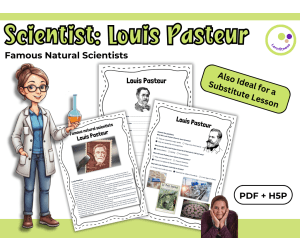
Louis Pasteur – Understanding the Scientist Behind Vaccines and Germ
Life Sciences, Science, STEM, Social Studies, Biographies, Inventors, Basic Science, Physics, Chemistry, Technology, Grade 6, 7, 8, 9, 10, 11, Worksheets, Worksheets & Printables, Quizzes, Quizzes and Tests, Teacher Tools, Projects, Activities
Louis Pasteur – Understanding the Scientist Behind Vaccines and Germ Theory Comprehension Activities A short reading and activity set for secondary science lessons 🧫📖 (PDF + H5P) ⚗️📘 A printable and digital resource for grades 7–10 science and cross-curricular teaching 🧪🧠 This resource gives students an introduction to the life and work of Louis Pasteur – the chemist and microbiologist best known for developing vaccines, inventing pasteurization, and changing the way we understand germs and disease. His work connects naturally to many science units, especially those on health, microbiology, or scientific discovery. The material is straightforward and can be used across different contexts – whether in a focused biology or chemistry lesson, as part of a “scientist spotlight,” or even in non-specialist substitute teaching situations. What’s included: A clear and accessible informational text about Louis Pasteur A profile worksheet to help students summarize key facts Quiz questions to check comprehension (with full solutions) Two optional extension tasks: – Students write their own questions about the text – Exchange and answer peer questions in pairs File formats: – PDF for print and digital use – Editable DOCX (text only) – H5P (interactive version for digital platforms, without images) How it works in the classroom: Students start by reading the text, then complete the profile and quiz. The extension tasks are ideal for partner work, early finishers, or to stretch more confident learners. The layout is clear enough that students can work independently – even without strong background knowledge in science. The H5P version is great for online learning or blended classrooms, where students can complete the quiz and get immediate feedback. I’ve used this kind of format to support lessons on immune response, disease prevention, and historical breakthroughs in science. No complex setup required – just print, upload, or project, and you’re ready to go. Have fun exploring the world of science with your students! Warmly, Lernfitness Did You Know? I teach with a certified therapy dog, and together we focus on creating a positive and inspiring learning environment.
Author Lernfitness
Rating
Tags Science, Famous Scientists Lesson, H5P, Interactive Science Exercises, STEM, Scientists, Chemistry, Louis Pasteur, Vaccines, Germ

Antoine Laurent de Lavoisier – Exploring the Father of Modern Chemistr
Life Sciences, Science, STEM, Social Studies, Biographies, Inventors, Basic Science, Physics, Chemistry, Biology, Grade 6, 7, 8, 9, 10, 11, Worksheets, Worksheets & Printables, Quizzes, Quizzes and Tests, Teacher Tools, Projects, Activities
Antoine Laurent de Lavoisier – Exploring the Father of Modern Chemistry A structured reading and worksheet resource for grades 8–10 (PDF + H5P) ⚗️📚 A printable and digital resource for grades 8–10 science and cross-curricular teaching 🧪🧠 This classroom resource gives students the chance to learn about Antoine Laurent de Lavoisier, the scientist often referred to as the “father of modern chemistry.” Known for his work on the conservation of mass and his role in naming elements like oxygen and hydrogen, Lavoisier helped shape the way we think about matter and chemical reactions today. The material combines a clear, student-friendly text with structured tasks to support understanding and engagement. It’s designed to be flexible enough for regular science lessons, independent study, or even substitute teaching—no special background knowledge is needed. What’s included: Informational text about the life and work of Antoine Lavoisier Profile worksheet for summarizing key points Quiz questions with complete answer key Two optional follow-up activities: – Students write their own questions based on the text – Partner exchange and answer Formats: – PDF (print or digital use) – Editable DOCX (text only, no design) – H5P (interactive version for digital platforms, no images) In the classroom: This resource works well alongside lessons on chemical reactions, the law of conservation of mass, or the history of scientific discovery. I’ve used it both as an introduction to a new unit and as a quiet reading activity when students needed structured but independent work. The H5P version is especially useful for blended learning or homework, allowing students to check their answers and work at their own pace. A practical way to link modern scientific concepts to one of their earliest thinkers—with no extra prep required. Have fun exploring the world of science with your students! Warmly, Lernfitness Did You Know? I teach with a certified therapy dog, and together we focus on creating a positive and inspiring learning environment.
Author Lernfitness
Rating
Tags Science, Famous Scientists Lesson, H5P, Interactive Science Exercises, STEM, Scientists, Chemistry, De Lavoisier, Father Of Modern Chemistry, Antoine Laurent De Lavoisier
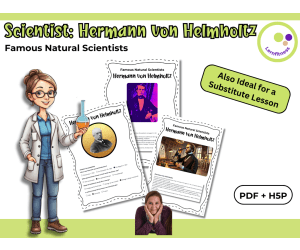
Hermann von Helmholtz – Fact Sheet, Quiz & Interactive PDF (incl. H5P)
Life Sciences, Science, STEM, History, Social Studies, Biographies, Inventors, Basic Science, Physics, Human Body, Grade 6, 7, 8, 9, Worksheets, Worksheets & Printables, Quizzes, Quizzes and Tests, Teacher Tools, Projects, Activities
Hermann von Helmholtz - Fact Sheet, Quiz & Interactive Version (PDF & H5P) Hermann von Helmholtz – Sensory Physiology Made Understandable Fact Sheet, Quiz & Interactive Exercises (PDF + H5P) This material introduces students in grades 7–10 to the life and research of Hermann von Helmholtz – one of the key figures behind our scientific understanding of vision, hearing, and nerve conduction. Even if students already know a bit about how our senses work, most are surprised to learn how long ago these topics were explored in depth – and by whom. Helmholtz’s work at the intersection of biology, physics, and medicine still shapes modern neuroscience today. To make this complex content more accessible, I put together a compact set of resources you can easily use in a 45-minute lesson. It includes a short text, a fact sheet, quiz questions (with answers), and a few creative tasks to get students thinking and interacting. You’ll find both color and black-and-white versions – great for printing or digital use. There’s also an H5P version for those who prefer an interactive format. What’s included: A short, student-friendly text on Hermann von Helmholtz and his key discoveries A fact sheet activity to help students organize the main ideas Quiz questions (with solutions) to check understanding An open-ended task where students come up with their own questions and exchange them with a partner Ready-to-print or use digitally (PDF + H5P) Answer key included for quick correction I’ve used this in biology class as part of a unit on the nervous system, but it also fits well in lessons on sensory organs, neuroscience, or even the history of science. The material works for independent work, partner activities, or as a simple introduction to one of the most influential scientists of the 19th century. No extra prep needed – just pick the version that suits your classroom best. 🚀 Download now and bring the legacy of Hermann von Helmholtz into your biology lessons today! 📍 Best wishes, Heike from Lernfitness Did You Know? I teach with a certified therapy dog, and together we create a positive and inspiring learning environment. 🐶✨
Author Lernfitness
Tags Science, Biology, Famous Scientists Lesson, H5P, Interactive Science Exercises, STEM, History, Scientists, Hermann Von Helmholtz, Physiology
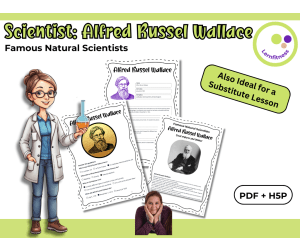
Scientist Alfred Russel Wallace Fact Sheet, Quiz + Exercises PDF + H5P
Life Sciences, Science, Biology, STEM, History: World, History, Social Studies, Biographies, Inventors, Basic Science, Grade 6, 7, 8, 9, Worksheets, Worksheets & Printables, Quizzes, Quizzes and Tests, Teacher Tools, Projects, Activities
Discover Alfred Russel Wallace – The Scientist Who Revolutionized Evolutionary Biology 🔬 Introduce Your Students to the Unsung Hero of Evolution! Most students have heard of Charles Darwin, but did you know that Alfred Russel Wallace independently developed the theory of natural selection at the same time? Despite his groundbreaking contributions to evolution, biogeography, and ecology, Wallace remains one of the most overlooked figures in science history. With this engaging Fact Sheet, Quiz, and Interactive Exercises, your students will explore Wallace’s discoveriesand understand his impact on modern biology – all in just one lesson (45 minutes)! 🧪 Why This Resource is a Must-Have for Biology Teachers ✅ Ready-to-Use & Time-Saving – A structured lesson plan that requires zero prep! ✅ Engaging & Interactive – Includes fact sheets, quizzes, and creative tasks to spark curiosity. ✅ Perfect for Middle & High School – Designed for grades 7–10 with differentiation options. ✅ Flexible Format – Available in printable PDF and digital H5P interactive exercises. ✅ Encourages Independent Learning – Students can work at their own pace with built-in self-assessment tools. 📚 What’s Included? 📝 Concise & Engaging Informational Text – A student-friendly introduction to Wallace’s life, discoveries, and impact. 📄 Fact Sheet Activity – Helps students organize knowledge in a structured, creative way. ❓ Quiz Questions with Solutions – A fun way to reinforce learning with built-in self-assessment. 🎭 Interactive & Creative Tasks – Encourages critical thinking with student-generated questions and peer activities. 🎨 Color & Black-and-White Templates – Choose what works best for your class. 🖥 H5P Digital Exercises – Interactive activities for blended or digital learning environments. 📌 How to Use This Resource in Your Classroom 1️⃣ Students read the informative text about Alfred Russel Wallace. 2️⃣ They create a fact sheet to organize their learning. 3️⃣ Quiz questions help consolidate their understanding. 4️⃣ Students develop their own questions, exchanging them with classmates for peer discussions. 💡 Great for Regular Lessons, Substitutes, and Digital Learning! 🌟 Why Biology Teachers Love It ✔ Makes Evolution Engaging – Helps students understand natural selection & biogeography in an exciting way. ✔ Brings an Overlooked Scientist to Life – A great way to expand beyond Darwin and explore other key figures in science. ✔ Flexible for Different Teaching Styles – Use it for direct instruction, independent work, or interactive digital lessons. ✔ Encourages Deeper Thinking – Sparks curiosity and discussion about the history of science. 🔬 Inspire Future Scientists with the Story of Alfred Russel Wallace! Give your students a new perspective on evolution and scientific discovery with this ready-to-use fact sheet, quiz, and interactive activities. 🚀 Download now and bring the fascinating legacy of Alfred Russel Wallace into your classroom today! 📍 Best wishes, Heike from Lernfitness Did You Know? I teach with a certified therapy dog, and together we create a positive and inspiring learning environment. 🐶✨
Author Lernfitness
Tags Science, Biology, Famous Scientists Lesson, H5P, Interactive Science Exercises, STEM, History, Scientists, Evolution, Alfred Russel Wallace

Who Has It? – Chemical Elements Game (1–118) – 3 Levels of Differentia
STEM, Science, Chemistry, Physics, Life Sciences, Earth and Environmental Sciences, Basic Science, Special Resources, Social Emotional Learning (SEL), Special Education Needs (SEN), Homeschool Templates, Grade 6, 7, 8, 9, 10, 11, Activities, Games, Worksheets & Printables, Task Cards, Quizzes and Tests, Teacher Tools, Quizzes, Worksheets, Projects, Flashcards
Who Has It? – Chemical Elements Game (1–118) – 3 Levels of Differentiation A cooperative chemistry card game for grades 7–10 to review atomic numbers, element names, and symbols 🧪🎯 This resource is a classroom game that helps students become more confident with the chemical elements – from hydrogen to oganesson. The game follows the well-known “I have… who has?” format and is designed to reinforce students’ understanding of element names, symbols, and atomic numbers in a playful and interactive way. To support different learning levels, the material includes three differentiated versions of the full game, each with 118 element cards: With element names for both question and answer (beginner level) Only the “I have…” part includes the name , the question uses the symbol/number (intermediate level) Without element names – players must match based on symbol and atomic number alone (advanced level) Each version builds on the last and can be used flexibly depending on students' prior knowledge. The game works best with medium to large groups and encourages students to listen carefully, stay engaged, and support one another. What’s included: 3 full card sets (118 cards per set = 354 total) Differentiated by content and level of language support Clear instructions for printing, laminating, and use Ideal for individual, pair, or group work How I use it in class: I’ve played this game both at the end of a chemistry unit and as a fun opener when starting the periodic table. It’s also perfect for substitute lessons or for classes with mixed ability levels. Since each student needs to be ready when their card comes up, it fosters attention and collaboration. This is one of those games where learning happens almost by accident – students are so focused on playing that they internalize atomic numbers and symbols without even noticing. A simple, engaging way to bring structure, repetition, and movement into chemistry class – no extra prep needed. If you're looking for an easy way to help students become more confident with the periodic table, this might be worth trying in your classroom. Best, Heike from Lernfitness Did You Know? I teach with a certified therapy dog, and together we create a positive and welcoming learning environment. 🐶
Author Lernfitness
Rating
Tags Game, Educational Card Games, Chemistry, Physics, STEM Science Matching Game, Chemical Elements, Periodic Table Matching Game, Who Has It, STEM, Who Has It?
Barbara McClintock – Fact Sheet, Quiz & Interactive PDF incl. H5P
Life Sciences, Science, STEM, History, Social Studies, Biographies, Inventors, Basic Science, Physics, Biology, Grade 6, 7, 8, 9, 10, 11, 12, Worksheets, Worksheets & Printables, Quizzes, Quizzes and Tests, Teacher Tools, Projects, Activities
Scientist Barbara McClintock - Fact Sheet, Quiz & Interactive Version (PDF & H5P) Barbara McClintock – Genetics and the Discovery of Jumping Genes Fact Sheet, Quiz & Interactive Exercises (PDF + H5P) 🌽🧬 This 45-minute resource introduces students in grades 7–10 to Barbara McClintock – a pioneering geneticist whose research changed the way we understand genes and heredity. Many students know the basics of DNA and inheritance, but fewer have heard of McClintock or her discovery of “jumping genes” (transposons). Working with maize plants 🌽 in the mid-20th century, she found that genes can move within the genome – a finding that was far ahead of its time and only fully recognized years later. To help students access this complex but fascinating topic, I’ve created a compact and ready-to-use lesson. It includes an informational text, a fact sheet, quiz questions with answers, and a creative partner task. All materials come in both color and black-and-white versions, plus there’s an H5P version for digital use. What’s included: A short, student-friendly text about Barbara McClintock and her scientific contributions A fact sheet to help students organize key information Quiz questions (with answer key) for self-checking or review A creative task where students come up with their own questions and exchange them in pairs Formats: Printable/digital PDF and interactive H5P version 💻 Answer key included ✅ I’ve used this material as part of our genetics unit, especially when discussing how scientific ideas are received and validated over time. It also works well in lessons on women in science or the history of biology. Easy to implement and suitable for partner work, independent study, or short projects. 🚀 Download now and bring the legacy of Barbara McClintock into your biology lessons today! 📍 Best wishes, Heike from Lernfitness Did You Know? I teach with a certified therapy dog, and together we create a positive and inspiring learning environment. 🐶✨
Author Lernfitness
Tags Science, Biology, Famous Scientists Lesson, H5P, Interactive Science Exercises, STEM, History, Scientists, DNA, Barbara McClintock

Interactive Chemistry Quiz: GHS Symbols – Genially + PDF Version
Science, STEM, Chemistry, Physics, Life Sciences, Earth and Environmental Sciences, Technology, Basic Science, Biology, P.E. & Health, Homeschool Templates, Grade 6, 7, 8, 9, 10, 11, Teacher Tools, Experiments, Activities, Labs, Worksheets & Printables, Escape Room, Games, Presentations, Quizzes and Tests, Quizzes
Interactive Chemistry Quiz: GHS Symbols – Genially (+ PDF Version) Bring lab safety to life with this interactive quiz on the GHS (Globally Harmonized System) hazard symbols – perfect for middle and high school chemistry lessons. Whether you're starting the unit or wrapping up a safety review, this quiz adds variety, visual appeal, and a bit of fun to your lesson plan. You’ll get two versions of the quiz: – A PDF version that can be used digitally or printed (but it works not well) – A Genially link that leads to an animated, interactive version (includes sound – which can be muted) Both versions test students on the meanings of the various GHS symbols – from corrosive substances to environmental hazards. The quiz includes original clipart and my own glitter-animated GHS symbols to make the content more visually appealing without distracting from the important safety message. I usually use the Genially quiz for individual work in the computer lab or on tablets, so each student can go at their own pace. But it also works well as a station activity , a class-wide quiz , or even as homework , depending on your classroom setup. At the end of the PDF, you’ll find: A QR code to scan directly to the Genially A clickable link for browser access An iframe embed code , if you want to use it on your (non-commercial) learning platform Attention: The interactive PDF does not contain the full scope of the material. The quiz works. Unfortunately, the additional tasks do not. Using Genially is therefore recommended and much more motivating for the pupils. For the interactive quiz you need an internet connection and a terminal device. The quiz can be carried out with the whole class or as partner or individual work. I prefer individual work at each student's own pace. To get to the Genially link, either scan the QR code at the end of the document or click on the link button available there. You can also copy the iframe code and embed the Genially on a learning platform or other... The Genially can be used either at the beginning of the topic or as a backup. It is also worth using as a station in station work. The interactive version includes motivating sound effects , a self-paced structure , and a clear, age-appropriate design for grades 7–10. 📌 Important note : The Genially quiz is protected by copyright. It’s for your own classroom use only . Please don’t share the link or embed it outside a private, secure learning environment. Sharing with colleagues, online platforms, or social media is not permitted. I hope your students enjoy reviewing GHS symbols as much as mine do! – Heike from @Lernfitness Did You Know? I teach with a certified therapy dog, and together we create a positive and welcoming learning environment. 🐶
Author Lernfitness
Rating
Tags GHS, Science, Lab, Chemistry, Pictograms, Genially, Interactive, Lab Safety, Hazard Symbols, Individual Work
Lynn Margulis – Fact Sheet, Quiz & Interactive PDF incl. H5P
Life Sciences, Science, STEM, History, Social Studies, Biographies, Inventors, Basic Science, Physics, Biology, Grade 6, 7, 8, 9, 10, 11, 12, Worksheets, Worksheets & Printables, Quizzes, Quizzes and Tests, Teacher Tools, Projects, Activities
Scientist Lynn Margulis - Fact Sheet, Quiz & Interactive Version (PDF & H5P) Lynn Margulis – Endosymbiosis and a New View of Evolution Fact Sheet, Quiz & Interactive Exercises (PDF + H5P) 🧫🔬 This 45-minute resource introduces students in grades 7–10 to Lynn Margulis – a scientist who challenged conventional ideas about evolution and opened up new ways of understanding how complex cells came to be. Many students are familiar with Darwin and natural selection, but fewer know about Margulis and her theory of endosymbiosis. Through her work in the 1960s and 70s, she proposed that parts of our cells – like mitochondria and chloroplasts – actually originated from ancient symbiotic bacteria. Her ideas weren’t widely accepted at first, but over time they became a foundational part of modern biology. To make this topic accessible, I’ve put together a compact, ready-to-use lesson with everything needed for a solid introduction. It includes a short informational text, a fact sheet, quiz questions with answers, and a creative partner task. All materials are available in both color and black-and-white versions, plus there’s an H5P version for digital use. What’s included: A student-friendly text about Lynn Margulis and her contributions to evolutionary biology A fact sheet to help students collect and structure key points Quiz questions with solutions for quick checks or review A pair activity where students create and exchange their own questions Printable PDF and interactive H5P formats for flexible use 💻 Answer key included ✅ I’ve used this resource as part of our evolution unit, especially when discussing how scientific theories develop and why some ideas take time to be accepted. It also fits well into lessons on women in science or interdisciplinary approaches to biology. The format allows for independent work, partner activities, or short projects – whatever suits your group best. 🚀 Download now and bring the legacy of Lynn Margulis into your biology lessons today! 📍 Best wishes, Heike from Lernfitness Did You Know? I teach with a certified therapy dog, and together we create a positive and inspiring learning environment. 🐶✨
Author Lernfitness
Tags Science, Biology, Famous Scientists Lesson, H5P, Interactive Science Exercises, STEM, History, Scientists, Lynn Margulis, Endosymbiotic Theory

Homologous Series of Alcohols – Word Search Activity (Differentiated)
Life Sciences, Science, STEM, Basic Science, Physics, Chemistry, Biology, Earth and Environmental Sciences, Environmental Science, Grade 6, 7, 8, 9, 10, 11, Worksheets, Worksheets & Printables, Quizzes, Quizzes and Tests, Teacher Tools, Activities, Games, Task Cards, Crosswords Puzzles, Word Searches
Homologous Series of Alcohols – Word Search Activity (Differentiated) A flexible review task for organic chemistry lessons (Grades 8–11) 🧪🔍 Alkanols Alcanoles This set of word search puzzles offers a quiet but focused way for students to review the homologous series of alcohols in organic chemistry. Instead of asking for definitions or formulae, students engage with key terms through active searching – which can be a surprisingly effective way to reinforce terminology. The material includes 10 word search puzzles , each in two variants (A/B), with five levels of difficulty . These levels are marked with stars (1 to 5), so you can easily differentiate within your classroom. Puzzles vary by grid size and by the direction in which words are hidden – from simple (only forward) to more challenging (also backward and diagonal). The content covers terminology related to the alcohol functional group and homologous series, making it a suitable supplement to introductory or review units in organic chemistry. What’s included: 10 unique puzzles × 2 variants (A and B) 5 differentiation levels based on grid size and word direction Answer keys for all puzzles Color and black-and-white versions for easy printing Chemistry-themed clipart to add visual appeal Ideas for classroom use: I’ve used these word searches both as a quiet review tool and as a warm-up or cool-down at the beginning or end of a lesson. The A/B version is especially useful for classroom management – students working side by side aren’t tempted to copy but still complete equivalent tasks. Students often appreciate the variety, especially when switching between more structured exercises and creative, self-paced activities. Whether as an individual task, a group competition, or a calming option during busy weeks – this resource supports technical vocabulary in a format that feels low-pressure and accessible. A simple and effective addition to your chemistry toolkit. Have fun exploring the world of science with your students! Warmly, Lernfitness Did You Know? I teach with a certified therapy dog, and together we focus on creating a positive and inspiring learning environment.
Author Lernfitness
Rating
Tags Science, STEM, Chemistry, Homologous Series, Alcohols, Word Search Activity, Differentiated, Organic Chemistry, Alkanols, Alcanoles

Robert Wilhelm Bunsen – A Scientist Behind the Flame
Life Sciences, Science, STEM, Social Studies, Biographies, Inventors, Basic Science, Physics, Chemistry, Technology, Grade 6, 7, 8, 9, 10, 11, Worksheets, Worksheets & Printables, Quizzes, Quizzes and Tests, Teacher Tools, Projects, Activities
Robert Wilhelm Bunsen – A Scientist Behind the Flame Comprehension Activities A reading and activity set for chemistry lessons (grades 7–10) 🔥🔬 (PDF + H5P) ⚛️📘 A printable and digital resource for grades 7–10 science and cross-curricular teaching 🧪🧠 This resource introduces students to Robert Wilhelm Bunsen, a chemist best known for developing the Bunsen burner – a piece of lab equipment many students first encounter in middle or high school science. But Bunsen’s work went far beyond that: his research on spectroscopy and chemical elements helped lay the foundation for modern analytical chemistry. This material offers a straightforward and accessible way to bring scientific history into your classroom. The short informational text is written in student-friendly language and is paired with activities that help learners understand and retain what they’ve read. It’s also well suited for substitute lessons, since the tasks are self-explanatory and don’t require prior knowledge. What’s included: Informational text about Robert Bunsen’s life and scientific contributions Student worksheet for creating a profile based on the reading Quiz questions to review content, with full solution sheet Two optional follow-up tasks: – Write your own questions about the text – Exchange and answer partner questions File formats: – PDF for easy printing or sharing – Editable DOCX (text only) – H5P version for use in digital classrooms (without images) How it can be used in class: You can use this material to introduce Bunsen during a unit on lab safety, spectroscopy, or chemical elements. I’ve also used it as a quick addition to practical lessons that involve Bunsen burners, giving students historical context for a tool they use regularly. The H5P format supports digital learning environments, offering students the chance to complete the quiz interactively. No complex setup is needed – just print, project, or upload, and the lesson is ready. A simple way to bring a historical figure into a modern classroom context. Have fun exploring the world of science with your students! Warmly, Lernfitness Did You Know? I teach with a certified therapy dog, and together we focus on creating a positive and inspiring learning environment.
Author Lernfitness
Rating
Tags Science, Famous Scientists Lesson, H5P, Interactive Science Exercises, STEM, Scientists, Chemistry, Robert Wilhelm Bunsen, Bunsen Burner, Lab Equipment
Scientist Gregor Mendel Fact Sheet, Quiz + Exercises | PDF + H5P
Life Sciences, Science, Biology, STEM, History: World, History, Social Studies, Biographies, Inventors, Basic Science, Grade 6, 7, 8, 9, Worksheets, Worksheets & Printables, Quizzes, Quizzes and Tests, Teacher Tools, Projects, Activities
Discover Gregor Mendel – The Father of Genetics Did you know that Gregor Mendel, a humble monk with a passion for science, laid the foundation for modern genetics? Through his famous pea plant experiments, he uncovered the basic principles of heredity, showing how traits are passed from one generation to the next. His discoveries were ahead of their time and only fully appreciated years later, but today they are essential to biology and genetics. This teaching resource is designed to introduce your grades 7–10 students to Mendel’s groundbreaking work in a fun and engaging way. Perfect for a 45-minute lesson, it combines clear explanations with interactive and creative activities that make learning about genetics both accessible and exciting. What’s Included: Concise Informational Text: A clear and engaging overview of Gregor Mendel’s role in science. Fact Sheet Activity: Encourages students to organize knowledge and work creatively. Quiz with Solutions: Promotes fun, interactive learning and self-assessment. Additional Exercises: Students can create their own questions and collaborate in pairs to deepen their understanding. Flexible Formats: Includes a color and black-and-white printable PDF, as well as interactive H5P tasks for digital learning. Why You’ll Love This Resource: Time-Saving: Perfect for teachers who need a ready-to-go, well-structured lesson. Versatile Use: Ideal for biology, history of science, or cross-curricular lessons in English and science classes. Promotes Independence: Solutions are included, allowing students to check their work and explore the topic at their own pace. Interactive and Engaging: Tasks are designed to keep students actively involved while learning about Gregor Mendel’s legacy. Whether you use it for a regular lesson, substitute teaching, or as part of a digital learning activity, this resource will make Gregor Mendel’s contributions come alive for your students. Bring Gregor Mendel’s fascinating world of science into your classroom and inspire your students to see history and science in a whole new light! Have fun exploring the world of science with your students! Warmly, Lernfitness Did You Know? I teach with a certified therapy dog, and together we focus on creating a positive and inspiring learning environment.
Author Lernfitness
Tags Science, Biology, Famous Scientists Lesson, H5P, Interactive Science Exercises, STEM, History, Scientists, Gregor Mendel, Genetics