



3,947 products added recently
Page 3 - Basic Science Quizzes
Biology Quizzes test students' understanding of living organisms and life processes. Topics may include cell structure and function, human body systems, genetics, evolution, and ecology. By using these quizzes, you can assess comprehension, reinforce key concepts, and inspire a deeper interest in the natural world. They are essential for students pursuing further studies in the life sciences.

 Show filters

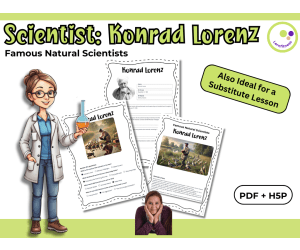
Konrad Lorenz – Fact Sheet, Quiz & Interactive PDF incl. H5P
Life Sciences, Science, STEM, History, Social Studies, Biographies, Inventors, Basic Science, Physics, Biology, Grade 6, 7, 8, 9, 10, 11, 12, Worksheets, Worksheets & Printables, Quizzes, Quizzes and Tests, Teacher Tools, Projects, Activities
Scientist Konrad Lorenz - Fact Sheet, Quiz & Interactive Version (PDF & H5P) Konrad Lorenz – Animal Behavior and the Roots of Ethology Fact Sheet, Quiz & Interactive Exercises (PDF + H5P) 🦢🧠 This 45-minute resource introduces students in grades 7–10 to Konrad Lorenz – a key figure in the development of modern ethology, the study of animal behavior. Many students enjoy learning about animals, but the scientific side of behavior research ist oft weniger bekannt. Lorenz is especially known for his work on imprinting in geese – observing how young animals form strong attachments during a critical period after birth. His careful observations helped shape the way we think about instinct, learning, and behavior in both animals and humans. To make this topic approachable, I’ve put together a compact, ready-to-use lesson. It includes a short informational text, a fact sheet, quiz questions with answers, and a creative partner task. The materials are available in both color and black-and-white versions, plus there’s an H5P version for digital use. What’s included: A short, student-friendly text about Konrad Lorenz and his contributions to behavioral science A fact sheet to help students organize key ideas Quiz questions (with answer key) for review or self-check A partner task where students come up with their own questions and exchange them Formats: Printable/digital PDF and interactive H5P 💻 Answer key included ✅ I’ve used this material when introducing the basics of behavior in biology – especially to discuss how scientific observation works in practice. It also fits nicely into lessons on instinct vs. learning or historical perspectives on animal research. The flexible format works well for independent study, pair work, or short projects. 🚀 Download now and bring the legacy of Konrad Lorenz into your biology lessons today! 📍 Best wishes, Heike from Lernfitness Did You Know? I teach with a certified therapy dog, and together we create a positive and inspiring learning environment. 🐶✨
Author Lernfitness
Tags Science, Biology, Famous Scientists Lesson, H5P, Interactive Science Exercises, STEM, History, Scientists, Konrad Lorenz, Animal Behavior

Jacques Monod – Fact Sheet, Quiz & Interactive PDF incl. H5P
Life Sciences, Science, STEM, History, Social Studies, Biographies, Inventors, Basic Science, Physics, Biology, Grade 6, 7, 8, 9, 10, 11, 12, Worksheets, Worksheets & Printables, Quizzes, Quizzes and Tests, Teacher Tools, Projects, Activities
Scientist Jacques Monod - Fact Sheet, Quiz & Interactive Version (PDF & H5P) Jacques Monod – Gene Regulation and the Logic of Life Fact Sheet, Quiz & Interactive Exercises (PDF + H5P) 🧬⚙️ This 45-minute resource introduces students in grades 9–11 to Jacques Monod – a French molecular biologist whose work helped uncover how genes are turned on and off. In many biology classes, students learn what DNA is and how proteins are made. But the question of how cells know which genes to activate – and when – often stays abstract. Monod, together with François Jacob, studied this in bacteria and developed the model of the lac operon. It’s a great example of how cells respond to their environment, and it laid the groundwork for much of what we know about gene regulation today. To make this topic more tangible, I’ve created a compact, ready-to-use lesson that breaks it down into manageable parts. It includes an informational text, a fact sheet, quiz questions with answers, and a creative partner task. The material comes in color and black-and-white versions, plus there’s a digital H5P version. What’s included: A clear, student-friendly text about Jacques Monod and the lac operon A fact sheet to help students sort and retain key information Quiz questions with an answer key – good for review or independent work A task where students design and exchange their own questions in pairs Printable PDF and interactive H5P formats for flexible use 💻 Answer key included ✅ I’ve used this resource during our genetics unit, especially when moving from DNA basics to regulation and gene expression. It also fits well in discussions about how scientific models are developed and tested. The partner task works well in small groups or for homework – depending on your setup. 🚀 Download now and bring the legacy of Jacques Monod into your biology lessons today! 📍 Best wishes, Heike from Lernfitness Did You Know? I teach with a certified therapy dog, and together we create a positive and inspiring learning environment. 🐶✨
Author Lernfitness
Tags Science, Biology, Famous Scientists Lesson, H5P, Interactive Science Exercises, STEM, History, Scientists, Jacques Monod, Molecular Biology
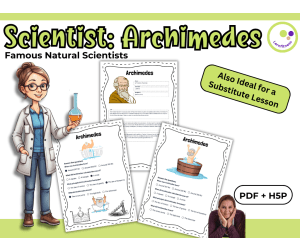
Archimedes – Scientist Profile and Comprehension Activities PDF + H5P
Life Sciences, Science, STEM, Social Studies, Biographies, Inventors, Basic Science, Physics, Chemistry, Math, Grade 6, 7, 8, 9, Worksheets, Worksheets & Printables, Quizzes, Quizzes and Tests, Teacher Tools, Projects, Activities
Archimedes – Scientist Profile and Comprehension Activities Informational Text, Student Tasks & Quiz (PDF, DOCX, H5P) ⚖️🧠 This resource introduces students in grades 7–10 to Archimedes, one of the most influential figures in early science. Best known for his work on buoyancy and the principle of density determination for irregular objects, Archimedes connects classical thought with key scientific concepts still taught today. The material combines factual reading with structured tasks. It can be used flexibly: in science lessons, for cross-curricular units, or as an easy-to-run activity in substitute teaching. Students read a short informational text, fill in a profile worksheet, complete quiz questions, and – if time allows – create their own questions to exchange with a partner. What’s included: Informational text about Archimedes Profile worksheet for comprehension and reflection Answer key for the profile Quiz questions with solutions Two extension tasks: – Create your own questions – Exchange and answer a partner’s questions File formats: – Printable PDF – Editable DOCX (text only) – Interactive H5P version (text-based, no images) In the classroom: I’ve used this kind of resource in regular science lessons as well as in non-specialist cover lessons. The tasks are clear enough for independent work and provide a good balance between reading, writing, and critical thinking. The H5P version allows for easy digital use on learning platforms, especially when students work from home or on devices in class. It’s also great for differentiation: stronger students can work on their own questions, while others use the glossary or reread sections to complete the basics. Whether you use it to introduce Archimedes in physics or to practice nonfiction reading strategies, this is a flexible resource that’s ready to go with little prep. Have fun exploring the world of science with your students! Warmly, Lernfitness Did You Know? I teach with a certified therapy dog, and together we focus on creating a positive and inspiring learning environment.
Author Lernfitness
Rating
Tags Science, Famous Scientists Lesson, H5P, Interactive Science Exercises, STEM, History, Scientists, Chemistry, Archimedes, Scientific Concepts
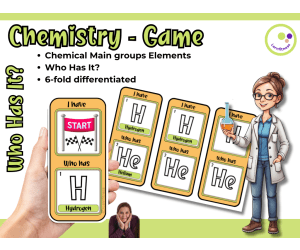
Who Has It? – Main Group Elements Game - 6 Levels of Differentiation
STEM, Science, Chemistry, Physics, Life Sciences, Earth and Environmental Sciences, Basic Science, Special Resources, Social Emotional Learning (SEL), Special Education Needs (SEN), Homeschool Templates, Grade 6, 7, 8, 9, 10, 11, Activities, Games, Worksheets & Printables, Task Cards, Quizzes and Tests, Teacher Tools, Quizzes, Worksheets, Projects, Flashcards
Who Has It? – Main Group Elements Game (6 Levels of Differentiation) A chemistry card game to review the main group elements in a structured and playful way (Grades 7–10) 🧪🎯 This classroom game is based on the “I have… who has?” format and helps students review the main group elements of the periodic table. It focuses on atomic numbers, element symbols, and – depending on the level – the correct element names. The game format encourages full-class participation, supports recall through repetition, and helps even quieter students get involved in a low-pressure way. The special feature: six levels of differentiation , so you can tailor the material to your students’ abilities. Whether you teach a mixed-level group or want to build in progression over time, these sets offer plenty of flexibility. What’s included: 3 card sets × 2 difficulty paths = 6 levels total Each set contains 52 cards (156 cards total) Elements included: all main group elements up to element 118 Levels range from fully labeled to no element names at all Clear instructions for printing, cutting, and gameplay Differentiation overview: Levels 1 & 2: All names included Levels 3 & 4: Only “I have” part includes names Levels 5 & 6: No names – only symbols and atomic numbers How to use in class: In my own lessons, I’ve used this as a review after teaching atomic structure or periodic trends. It works well as a class opener, during stations, or even in a substitute lesson. The A/B sets are helpful when students sit close together – it prevents copying but keeps everyone working on the same task. Students enjoy the rhythm of the game, and because every card depends on the one before, they naturally stay attentive. It’s a great way to combine repetition with interaction. Low-prep, flexible, and genuinely useful for learning chemical elements in a collaborative setting. Best, Heike from Lernfitness Did You Know? I teach with a certified therapy dog, and together we create a positive and welcoming learning environment. 🐶
Author Lernfitness
Rating
Tags Game, Educational Card Games, Chemistry, Physics, STEM Science Matching Game, Chemical Elements, Periodic Table Matching Game, Who Has It, STEM, Main Groups

Joseph John Thomson – The Discovery of the Electron
Life Sciences, Science, STEM, Social Studies, Biographies, Inventors, Basic Science, Physics, Chemistry, Technology, Grade 6, 7, 8, 9, 10, 11, Worksheets, Worksheets & Printables, Quizzes, Quizzes and Tests, Teacher Tools, Projects, Activities
Joseph John Thomson – The Discovery of the Electron Comprehension Activities A ready-to-use science resource for grades 7–10 (PDF + H5P) ⚛️📘 A printable and digital resource for grades 7–10 science and cross-curricular teaching 🧪🧠 This classroom resource introduces students to Joseph John Thomson, the physicist who discovered the electron and helped shape our modern understanding of atomic structure. His work not only earned him a Nobel Prize, but also laid the groundwork for the atomic models students learn about in middle and high school. The material is designed to be easy to use – even if you’re short on prep time. The reading text is short and accessible, followed by a structured worksheet and quiz questions. It’s suitable for science lessons focused on atomic theory or the history of chemistry, but it also works well in substitute teaching settings since students can work through it independently. Included in this resource: A short informational text on J.J. Thomson A profile worksheet to help students summarize key points Quiz questions (with solution key) Two extension activities: – Students write their own questions based on the reading – Exchange and answer a partner’s questions File formats: – PDF (for printing or digital use) – DOCX (editable, text only) – H5P version (interactive, for learning platforms) How I use it in class: I like using materials like this at the start of a unit on atomic structure or when we discuss the development of scientific models. It gives students a chance to see how our current understanding has evolved – and reminds them that science is built on the ideas of real people. The H5P version allows for digital delivery and self-checking, making it great for homework or blended learning. It also gives students the chance to reflect, work at their own pace, or collaborate in pairs. Quick to prepare, easy to adapt – and a great way to connect abstract content to the scientists who helped shape it. Have fun exploring the world of science with your students! Warmly, Lernfitness Did You Know? I teach with a certified therapy dog, and together we focus on creating a positive and inspiring learning environment.
Author Lernfitness
Rating
Tags Science, Famous Scientists Lesson, H5P, Interactive Science Exercises, STEM, Scientists, Chemistry, Joseph John Thomson, Electron, Atomic Structure

Justus von Liebig – Chemistry Pioneer and Science Reformer
Life Sciences, Science, STEM, Social Studies, Biographies, Inventors, Basic Science, Physics, Chemistry, Biology, Grade 6, 7, 8, 9, 10, 11, Worksheets, Worksheets & Printables, Quizzes, Quizzes and Tests, Teacher Tools, Projects, Activities
Justus von Liebig – Chemistry Pioneer and Science Reformer A ready-to-use reading and activity set for grades 7–10 (PDF + H5P) ⚗️📄 A printable and digital resource for grades 7–10 science and cross-curricular teaching 🧪🧠 This resource introduces students to Justus von Liebig, one of the most influential chemists of the 19th century. Known for his work on agricultural chemistry, food science, and lab-based teaching, Liebig helped shape the way chemistry is studied and taught even today. His contributions go beyond formulas – they reach into education, nutrition, and everyday life. The resource includes a concise, accessible text paired with simple, structured tasks. It can be used in a chemistry unit, during a lesson on the history of science, or as part of a substitute plan where no specialized background is required. Included in this resource: Informational text on Justus von Liebig’s life and achievements Student worksheet for creating a scientist profile Quiz questions with a complete answer key Two extension tasks: – Students write their own questions based on the reading – Peer activity to exchange and answer each other’s questions File formats: – PDF for print or digital use – Editable DOCX (text only) – H5P version for use in digital classrooms (no images) How it’s used in the classroom: This kind of material works well as a quiet reading activity, a springboard for science-history discussions, or a way to highlight lesser-known scientists who had a big impact. I’ve used it during lessons on food chemistry and nutrient cycles to provide real-world context. The H5P version supports independent and self-paced work, especially in hybrid or online classrooms. With minimal prep and clear instructions, the material can be used flexibly across settings. A thoughtful and low-prep resource to bring historical depth and personal stories into science class. Have fun exploring the world of science with your students! Warmly, Lernfitness Did You Know? I teach with a certified therapy dog, and together we focus on creating a positive and inspiring learning environment.
Author Lernfitness
Rating
Tags Science, Famous Scientists Lesson, H5P, Interactive Science Exercises, STEM, Scientists, Chemistry, Justus Von Liebig, Biology, Plants
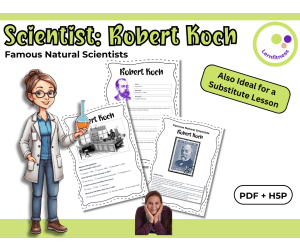
Scientist Robert Koch Fact Sheet, Quiz + Exercises | PDF + H5P
Life Sciences, Science, STEM, History: World, History, Social Studies, Biographies, Inventors, Basic Science, Human Body, Grade 6, 7, 8, 9, Worksheets, Worksheets & Printables, Quizzes, Quizzes and Tests, Teacher Tools, Projects, Activities
Discover Robert Koch – The Scientist Who Unlocked the Secrets of Infectious Diseases Did you know that Robert Koch was one of the first scientists to prove that bacteria cause diseases? His groundbreaking research on tuberculosis, anthrax, and cholera revolutionized medicine and helped develop life-saving treatments. Thanks to Koch’s work, doctors and scientists began to understand how infectious diseases spread—and, more importantly, how to stop them. This teaching resource introduces your grades 7–10 students to Koch’s incredible discoveries in a way that is engaging and easy to grasp. Designed for a 45-minute lesson, it includes clear explanations, interactive exercises, and creative tasks that bring Koch’s contributions to life in the classroom. What’s Included: Concise Informational Text: A clear and engaging overview of Robert Koch’s role in science. Fact Sheet Activity: Encourages students to organize knowledge and work creatively. Quiz with Solutions: Promotes fun, interactive learning and self-assessment. Additional Exercises: Students can create their own questions and collaborate in pairs to deepen their understanding. Flexible Formats: Includes a color and black-and-white printable PDF, as well as interactive H5P tasks for digital learning. Why You’ll Love This Resource: Time-Saving: Perfect for teachers who need a ready-to-go, well-structured lesson. Versatile Use: Ideal for biology, history of science, or cross-curricular lessons in English and science classes. Promotes Independence: Solutions are included, allowing students to check their work and explore the topic at their own pace. Interactive and Engaging: Tasks are designed to keep students actively involved while learning about Robert Koch’s legacy. Whether you use it for a regular lesson, substitute teaching, or as part of a digital learning activity, this resource will make Robert Koch’s contributions come alive for your students. Bring Robert Koch’s fascinating world of science into your classroom and inspire your students to see history and science in a whole new light! Have fun exploring the world of science with your students! Warmly, Lernfitness Did You Know? I teach with a certified therapy dog, and together we focus on creating a positive and inspiring learning environment.
Author Lernfitness
Tags Science, Biology, Famous Scientists Lesson, H5P, Interactive Science Exercises, STEM, History, Scientists, Robert Koch, Tuberculosis

Theodor Schwann – Fact Sheet, Quiz & Interactive PDF (incl. H5P)
Life Sciences, Science, Biology, STEM, History, Social Studies, Biographies, Inventors, Basic Science, Nature & Plants, Grade 6, 7, 8, 9, Worksheets, Worksheets & Printables, Quizzes, Quizzes and Tests, Teacher Tools, Projects, Activities
Theodor Schwann – Fact Sheet, Quiz & Interactive Version (PDF & H5P) This lesson-ready material introduces students to Theodor Schwann 🧪 and his contribution to one of the most important concepts in biology: the cell theory 🔬. While many students in grades 7 to 10 already know that all living things are made of cells, they often don’t know where this insight comes from – or who helped uncover it. In this lesson, students explore the work of Theodor Schwann, who, together with Matthias Schleiden, laid the foundation for modern cell biology. The materials are designed to fit into a 45-minute session ⏱️ and work well in both print and digital formats. I’ve used them in regular biology lessons as well as for independent learning phases or when a quick but meaningful sub plan was needed. The resource includes a short, accessible reading passage about Schwann’s scientific discoveries. After reading, students fill in a fact sheet 📝 to summarize key information, and then answer quiz questions to check their understanding. What worked really well in my class was the final task: students created their own questions based on the material and exchanged them with a partner. It led to some thoughtful discussions and helped them reflect on what they had actually learned 💬. You’ll find two versions of the printable PDFs – one in color 🎨 and one in black and white. The included H5P version offers a digital alternative for interactive use, especially useful on learning platforms or digital boards (note: the H5P version contains no design elements, just the interactive tasks). Included: Informational text about Theodor Schwann Fact sheet task Quiz questions with answer key Creative student task (write your own questions) Printable PDFs (color & B/W) H5P interactive version The materials are self-explanatory and suitable for classroom use, homework, or digital learning 💻. 🚀 Download now and bring the legacy of Theodor Schwann into your biology lessons today! 📍 Best wishes, Heike from Lernfitness Did You Know? I teach with a certified therapy dog, and together we create a positive and inspiring learning environment. 🐶✨
Author Lernfitness
Tags Science, Biology, Famous Scientists Lesson, H5P, Interactive Science Exercises, STEM, History, Scientists, Cytology, Theodor Schwann

Henry Louis Le Chatelier – Understanding Chemical Equilibrium
Life Sciences, Science, STEM, Social Studies, Biographies, Inventors, Basic Science, Physics, Chemistry, Biology, Grade 6, 7, 8, 9, 10, 11, Worksheets, Worksheets & Printables, Quizzes, Quizzes and Tests, Teacher Tools, Projects, Activities
Henry Louis Le Chatelier – Understanding Chemical Equilibrium A short reading and worksheet resource for grades 8–10 science classes (PDF + H5P) ⚖️🧪 A printable and digital resource for grades 8–10 science and cross-curricular teaching 🧪🧠 This resource introduces students to Henry Louis Le Chatelier, the French chemist best known for his work on chemical equilibrium. His principle – describing how systems respond to changes in concentration, temperature, or pressure – is a key concept in chemistry classrooms around the world. With this material, students not only learn about Le Chatelier’s scientific contribution but also get a glimpse of the person behind the theory. The tasks are structured clearly and can be used in regular chemistry lessons or as part of a non-specialist substitute plan. No prior knowledge is required to get started, and the layout supports both independent and pair work. Included in this resource: Informational text about Henry Le Chatelier’s life and research A worksheet for creating a scientist profile based on the reading Quiz questions with solutions for quick review Two optional follow-up tasks: – Students create their own questions about the text – Exchange and answer questions in pairs File formats: – PDF (printable and digital) – Editable DOCX (text only) – H5P version (interactive and image-free, suitable for LMS use) How to use it in class: I’ve used this material as part of an introduction to equilibrium in chemistry or to wrap up a unit on reaction rates and reversible processes. The reading offers students some historical context, which helps them see that the science they’re learning is connected to real people and ideas. The H5P format supports digital work and allows for self-checking. It’s also helpful for remote learning or homework. With little to no prep required, this resource makes it easy to enrich your science curriculum. Have fun exploring the world of science with your students! Warmly, Lernfitness Did You Know? I teach with a certified therapy dog, and together we focus on creating a positive and inspiring learning environment.
Author Lernfitness
Rating
Tags Science, Famous Scientists Lesson, H5P, Interactive Science Exercises, STEM, Scientists, Chemistry, Henry Louis Le Chatelier, Chemical Equilibrium, Le Chatelier

Hans Krebs – Fact Sheet, Quiz & Interactive PDF incl. H5P
Life Sciences, Science, STEM, History, Social Studies, Biographies, Inventors, Basic Science, Biology, Chemistry, Grade 6, 7, 8, 9, 10, 11, 12, Worksheets, Worksheets & Printables, Quizzes, Quizzes and Tests, Teacher Tools, Projects, Activities
Scientist Hans Krebs - Fact Sheet, Quiz & Interactive Version (PDF & H5P) Hans Krebs – Cellular Respiration and the Discovery of the Krebs Cycle Fact Sheet, Quiz & Interactive Exercises (PDF + H5P) 🔁🧬 This 45-minute resource introduces students in grades 10–12 to Hans Krebs – the scientist who uncovered one of the most important metabolic pathways in our cells: the citric acid cycle, also known as the Krebs cycle. When teaching cellular respiration, many students can follow the basics of glucose breakdown and ATP production – but the details of what happens in the mitochondria often feel abstract. Krebs' discovery in the 1930s helped explain how cells extract energy efficiently from food molecules through a cycle of chemical reactions. It’s a key part of understanding aerobic respiration and metabolism. To make this complex process more accessible, I’ve created a structured lesson that includes a short informational text, a fact sheet, quiz questions with answers, and a creative partner task. All materials are available in color and black-and-white, plus there’s a digital H5P version for interactive learning. What’s included: A student-friendly text about Hans Krebs and the citric acid cycle A fact sheet to help visualize and summarize the steps of the cycle Quiz questions (with answer key) for quick review or comprehension checks A creative task where students develop and exchange their own questions in pairs Formats: Printable PDF and interactive H5P 💻 Answer key included ✅ I’ve used this resource during our unit on cellular respiration, often right after glycolysis and before moving on to the electron transport chain. It’s especially helpful for students who benefit from breaking down complex processes into steps. The partner activity works well for revision or as preparation for assessments. 🚀 Download now and bring the legacy of Hans Krebs into your biology lessons today! 📍 Best wishes, Heike from Lernfitness Did You Know? I teach with a certified therapy dog, and together we create a positive and inspiring learning environment. 🐶✨
Author Lernfitness
Tags Science, Biology, Famous Scientists Lesson, H5P, Interactive Science Exercises, STEM, History, Scientists, Hans Krebs, Citric Acid Cycle

Glucose Spikes & Mindful Eating Charts
P.E. & Health, Health, Mental Health, Physical Education, Sports, Yoga, Mindfulness, Science, Basic Science, Theories, Grade 4, 5, 6, 7, 8, 9, 10, Worksheets & Printables, Workbooks, Worksheets, Word Searches, Writing Prompts, Teacher Tools, Lesson Plans, Quizzes and Tests, Quizzes, Tests
Tired of the post-lunch "afternoon slump" in your classroom? Empower your students to take control of their own energy and focus with this engaging, no-prep Health and Science mini-unit on blood sugar and mindful movement! This comprehensive resource transforms the abstract concept of "energy crashes" into a visible, understandable, and manageable biological process. Through simple line graphs and relatable analogies, students will discover the powerful connection between what they eat, how they move, and how they feel. This isn't just a health lesson; it's a life skill that integrates science, math, and critical thinking. Perfect for 4th, 5th, and 6th-grade science or health classes, this unit uses a cross-curricular approach to boost data literacy (reading line graphs) while teaching foundational biology. Students learn why a short walk after a meal is a "magic trick" for preventing fatigue and brain fog, empowering them to make positive choices that directly impact their academic performance and well-being. WHAT'S INCLUDED (49-Page PDF): PART 1: In-Depth Teacher Guide: Four chapters explaining the core science (The Journey of a Carbohydrate, The Spike and Crash, The Role of Skeletal Muscle, Reading Line Graphs) with real-world case studies. PART 2: Student Workbook with 10 Activities: A complete set of printable or digital worksheets that build from basic concepts to advanced application. Activities include: Anatomy of an Energy Graph Analyzing Sedentary vs. Active Scenarios The "Muscle Sponge" Effect Interpreting Data Tables & Timing Experiments Mindful Observation and Real-World Scenarios Culminating "Be the Health Scientist" Final Project PART 3: Teacher Resources & Visuals: Full Answer Key: A complete, question-by-question answer key for all 10 worksheets. High-Fidelity Visuals: Clear, simple graphs and flowcharts perfect for projection or printing. Teacher Implementation Guide: Tips on pedagogical framing, kinesthetic mapping activities, and vital guidance on inclusion, equity, and adaptability for all students. Keywords: Health and Nutrition, Blood Sugar Lesson, Glucose Spikes, Mindful Eating, Line Graph Worksheets, Data Literacy, Science and Math Integration, STEM, Biology, Afternoon Slump, Energy Crash, 5th Grade Health, 6th Grade Science, Middle School, Printable & Digital, No-Prep, Sub Plans, Case Study, Answer Key Included. Why Parents/Schools Love It: Empowers Students: It teaches children the "why" behind feeling tired or focused, giving them actionable tools (like a 10-minute walk) to manage their own energy and well-being. Boosts Academic Focus: By preventing the post-lunch "energy crash," this lesson directly contributes to improved concentration, mood, and engagement in afternoon classes. Integrates Core Subjects: This is not just a health lesson. It masterfully blends Science (biology), Math (data literacy, graphing), and Reading (case studies) into one seamless, high-impact unit. Promotes a Healthy Mindset: The curriculum focuses on positive, inclusive action (mindful movement) rather than restrictive dieting, fostering a healthy long-term relationship with food and activity. Saves Teachers Time: It’s a complete, "no-prep" unit with a detailed teacher guide, student worksheets, visuals, and a full answer key, making it incredibly easy to implement. Target Student Audience : Based on the content, language, and concepts presented (like abstract reasoning for line graphs), target: Primary Target: 5th Grade (as explicitly mentioned in the document). Secondary Target: 4th Grade (as an introduction to data and health) and 6th Grade (as a foundational or review unit). Broader Target: Middle School Health or General Science Classes looking for an engaging, real-world application of biology and data analysis. Copyright/Terms of Use: This Book was copyrighted by Syed Hammad Rizvi. This resource is for personal and single classroom use only. You may not alter, redistribute, or sell any part of this resource. In other words, you may not put it on the Internet where it could be publicly found and downloaded. If you want to share this resource with colleagues, please purchase additional licenses from Teachsimple. Thank you for respecting these terms of use. This product is happily brought to you by Syed Hammad Rizvi
Author Creative Book Store
Rating
Tags HealthEducation, NutritionEducation, BiologyForKids, STEMEducation, StudentHealth, MetabolicHealth, GlucoseSpikes, AfternoonSlump, StudentWellness, HealthyHabits

Robert Boyle – Exploring the Foundations of Modern Chemistry
Life Sciences, Science, STEM, Social Studies, Biographies, Inventors, Basic Science, Physics, Chemistry, Human Body, Grade 6, 7, 8, 9, 10, 11, Worksheets, Worksheets & Printables, Quizzes, Quizzes and Tests, Teacher Tools, Projects, Activities
Robert Boyle – Exploring the Foundations of Modern Chemistry A short reading and activity set for grades 7–10 (PDF + H5P) ⚗️📘 A printable and digital resource This material introduces students to Robert Boyle, a 17th-century scientist often considered one of the founders of modern chemistry. His work on gases and scientific experimentation is still relevant today, especially when students first encounter Boyle’s Law or the basics of pressure and volume. The text and tasks are structured in a way that makes them easy to use in a regular lesson or even in a non-specialist substitute setting. Students work independently or in pairs to read, reflect, and test their understanding. Included in this resource: Informational text on Robert Boyle and his contributions Profile worksheet to guide understanding Quiz questions with solutions Two optional follow-up tasks: – Students write their own questions about the text – Partner activity: exchange and answer peer questions Formats: – Printable PDF – Editable DOCX (text only) – H5P version for interactive, digital use Classroom use: I’ve used materials like this to complement lessons on gas laws or to introduce a historical perspective on chemistry. It works well as part of a science unit, a literacy-focused lesson, or even during quiet working phases. Students read the short info text, fill out a profile sheet, and complete the quiz. The additional tasks are great for early finishers or small group work. The H5P version is useful for digital platforms and allows students to check their answers independently. No special preparation is needed – just print or upload and the activity is ready to go. Have fun exploring the world of science with your students! Warmly, Lernfitness Did You Know? I teach with a certified therapy dog, and together we focus on creating a positive and inspiring learning environment.
Author Lernfitness
Rating
Tags Science, Famous Scientists Lesson, H5P, Interactive Science Exercises, STEM, History, Scientists, Chemistry, Robert Boyle, Gases

Electrical and Chemical Energy Mini-Unit: PPT, Printables, Lesson Plans and Quiz
Science, Basic Science, Grade 4, 5, 6, Quizzes, Quizzes and Tests, Teacher Tools
Electrical and Chemical Energy Mini-Unit: PPT, Printables, Lesson Plans and Quiz offers a comprehensive teaching tool designed for Grade 4 to 6 students. This two-lesson mini-unit delves deep into the concepts of electrical and chemical energy, focusing on how these forms of energy bring about change. This package includes: An interactive notebook for note-taking A 32 slide PowerPoint presentation with animations Visual aids in the form of well-crafted clipart and real-world examples Intriguing STEAM activity involving a bottle and balloon experiment that observes stored chemical energy at play. Seven printable worksheets including reading comprehension exercises. The lessons are structured as follows: Lesson One: This lesson uses direct instruction!. It's conducted in tandem with an animated PowerPoint presentation while students fill out their 'learning maps' in their interactive notebooks. Lesson Two: In this lesson, students will get hands-on experience as they investigate chemical energy through an exciting STEAM activity. The Worksheets: Facts centered around electrical energy (the power of electrons). A clear understanding of stored chemical energy. i Different forms of energies such as light, heat alongside electrical & chemical sources. The Assessment Methodology: assessment is compiled into a thirteen-question quiz amalgamating various testing techniques; Fill in blanks, multiple-choice questions, short answers All these resources are designed to make the teaching and learning process of Electrical and Chemical Energy Mini-Unit a much easier, engaging, fun-filled experience.
Author ScienceRocket
Tags Electricity, Chemical Reactions, Energy Transformations, Interactive Learning, Assessment
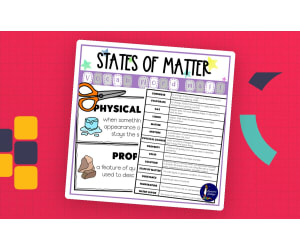
States of Matter Vocabulary Word Wall with Vocabulary Quiz
Science, Basic Science, Earth and Environmental Sciences, Earth Sciences, Physics, Grade 3, 4, Quizzes, Quizzes and Tests, Teacher Tools
States of Matter Vocabulary Word Wall with Vocabulary Quiz Included in this collection: 14 large flashcards for your word wall A student handout containing all vocabulary words A quiz on states of matter vocabulary An answer key Vocabulary Words: Condense Evaporate Gas Liquid Matter Mixture Physical change Property Solid Solution State of matter Substance Temperature Water vapor Grasping the concepts of states of matter and understanding the associated vocabulary is a crucial foundation for more advanced scientific learning in subsequent grades. These essential ideas aid students in constructing a robust base for their scientific knowledge. Each vocabulary card features a corresponding image, facilitating clearer explanations and addressing student queries. Enhance your students' confidence with the included quiz! This assessment encourages students to contemplate the behavior of various substances, their classification, and their potential transformations between different states. Thank you! States of Matter Vocabulary Word Wall with Vocabulary Quiz | States of Matter Vocabulary Word Wall with Vocabulary Quiz | States of Matter Vocabulary Word Wall with Vocabulary Quiz | States of Matter Vocabulary Word Wall with Vocabulary Quiz | States of Matter Vocabulary Word Wall with Vocabulary Quiz | States of Matter Vocabulary Word Wall with Vocabulary Quiz | States of Matter Vocabulary Word Wall with Vocabulary Quiz | Connect the vocabulary to key ideas with these states of matter notebook pages .
Author Soumara Siddiqui
Tags States Of Matter, States Of Matter Vocabulary, Mixture, Physical Properties, Solution, Substance

Science and General Knowledge Interactive Quiz for Middle School
Science, Basic Science, Grade 5, 6, 7, 8, 9, Quizzes, Quizzes and Tests, Teacher Tools
Science and General Knowledge Interactive Quiz for Middle School: A Versatile Teaching Resource The Science and General Knowledge Interactive Quiz for Middle School is a versatile teaching tool crafted to enhance your students' critical thinking capabilities while broadening their general knowledge. This utility serves both as an end-of-term activity or a first-day team builder, fostering collaboration and individual responsibility within teams. Quiz Format This resource boasts of a 65 question team quiz that's fully animated, accommodating up to seven teams in a friendly competition. The questions are presented through engaging pictures alongside multiple choice answers, covering an array of topical as well as historical subjects - encouraging accessibility and inclusivity among diverse types of learners. Detailed Slides A notable feature of this educational resource is the inclusion of interesting details about each topic within the slides themselves, giving students supplementary layers for learning beyond just answering the quiz items. This ensures they are expanding their knowledge horizons while actively participating in the game. Teamwork & Individualism The interactive quiz has mechanisms such that during their turn, each team is required to answer one science question followed by four general knowledge questions. All members must consent to every answer proposed which fosters group decision-making skills. An individual round follows which can accommodate up to thirty swift responses accumulating points for their respective groups; resulting in layers added with flexibility depending on time constraints taken between 30-50 minutes of gameplay total Variety & Compatibility The resources are compiled into one Zip file with various file types making it user-friendly according to specific requirements when incorporating it into existing lesson schedules. It seamlessly fits grades 5-9 Science classes especially those focusing on Basic Science concepts; marking it as a potentially engaging accessory to your curriculum .
Author Elf off the Shelf Resources
Tags Interactive Quiz, Critical Thinking, General Knowledge, Team Building, Inclusive Learning
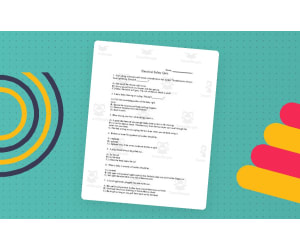
Electrical Safety Quiz / Assessment and Answer Sheet (for the lesson on Electrical Safety)
Science, Basic Science, Grade 6, Quizzes, Quizzes and Tests, Teacher Tools
Electrical Safety Quiz and Answer Sheet The quiz and answer sheet are for the powerpoint lesson on Electrical Safety. Enjoy Teaching! SAVE PREP TIME BUILD YOUR RESOURCES OFFER LEARNERS MORE! Store Motto: For the cost of a cup of coffee, save hours of classroom planning! Copyright © 2014 EasyasABC ALL RIGHTS RESERVED.
Author Easy As ABC
Tags Electrical Safety Quiz, Electrical Safety Assessment, Grade Six Science, Science Assessment, Science Quiz