



3,889 products added recently
Page 436 - Teacher Tools
Equip yourself with tools that streamline your teaching process and enrich your classroom experience. This collection includes organizational planners, assessment templates, and classroom management strategies. By integrating these resources, you can focus on delivering impactful instruction and fostering student success.

 Show filters


I WONDER - How Do Humans Breathe | Animated Video Lesson
Human Body, Life Sciences, Science, Biology, STEM, Grade 3, 4, 5, 6, 7, 8, 9, Lesson Plans, Teacher Tools
Video Overview The human body is full of fascinating wonders to learn. This video is created to help the students recognize the anatomy and the job of the human body. I WONDER - How Do Humans Breathe | Animated Video Lesson Every part and organ in our human body is vital so let's see how important they are. Have you ever imagined how we look like if we didn't have a skeleton? Did you know that because we have our amazing muscles we can stand! Do you know how many teeth do we have? Have you ever wondered about the food journey inside our body? Can you name all the glands in our body? Why do we have skin? Our nervous system is really good at sending signals. Can you tell us more about it? Are you really good at Mathematics, painting, or any other thing? You should really thank your brain about it! The famous five senses are really doing a great work? Can you explain how every sense works? I WONDER - How Do Humans Breathe | Animated Video Lesson The video is perfect for encouraging the researching skills for the students, while learning more about our fantastic human body. I WONDER - How Do Humans Breathe | Animated Video Lesson This friendly designed video is suitable for students at school, homeschooling, and as a group activity. Format Available in MP4 format.
Author Educational Voice
Tags How Do Humans Breathe, How Do Humans Breathe Video, Breathing, Breathing Facts, Breathing Facts For Kids, Breathing Video, Breathing Video For Kids, Human Body, Human Body Facts

5th Grade Science Diagnostic Assessment & Review System
Science, Grade 5, Assessments, Teacher Tools, Lesson Plans, Worksheets & Printables
Start the year with a clear picture of what students know using this 5th grade beginning of year science assessment and targeted skills system. With a 48-question diagnostic worth 121 points , teacher scoring and analysis tools, instructional grouping support, 11 targeted follow-up practice pages , and complete explained answer keys, this resource helps you move from assessment results to focused instruction without piecing together separate materials. Designed as a complete Assess → Analyze → Group → Review → Reteach system, this Grade 5 science resource checks readiness across Life Science, Earth & Space Science, Physical Science, and Scientific Practices using cells, food webs, Earth systems, solar system models, energy chains, graphs, data tables, scenarios, and Claim-Evidence-Reasoning tasks. What’s Included This 5th grade science assessment and review system includes: ✅ 48-question beginning-of-year science diagnostic ✅ 121 total assessment points ✅ 4 major science strands ✅ Life Science questions ✅ Earth & Space Science questions ✅ Physical Science questions ✅ Scientific Practices questions ✅ Multiple-choice questions ✅ Short-answer questions ✅ Labeling activities ✅ Matching questions ✅ Diagram interpretation ✅ Data tables ✅ Graph reading ✅ Scientific scenarios ✅ Vocabulary-in-context questions ✅ Claim-Evidence-Reasoning (CER) tasks ✅ 10 labeling and diagram-interpretation items ✅ Animal cell labeling ✅ Plant and animal cell comparison ✅ Marine food web interpretation ✅ Earth systems model ✅ Solar system diagram ✅ Physical and chemical change analysis ✅ Conservation of matter model ✅ Energy transformation chain ✅ Forces and motion model ✅ Variables and fair-test setup ✅ Answer recording sheet ✅ Quick-reference answer key ✅ Skill-by-skill scoring chart ✅ Strand analysis tool ✅ Secure, Developing, and Needs Support performance bands ✅ Individual Student Performance Profile ✅ Whole-class data tracker ✅ Suggested instructional groups ✅ Group planning sheet ✅ 11 targeted follow-up science practice pages ✅ “Remember” reteaching box on every follow-up page ✅ “Apply It” challenge on every follow-up page ✅ All-new follow-up practice with no repeated assessment questions ✅ Complete answer keys ✅ Suggested short-answer responses ✅ Completed visual and diagram answers ✅ Sample CER responses ✅ Short “why” explanation for every assessment item ✅ Partial-credit guidance ✅ CER scoring rubric Part 1 contains 48 mixed-format questions worth 121 total points across four science strands. The Teacher Guide recommends two 40–50 minute sessions and explains that the diagnostic is intended as a planning tool to reveal what fifth graders retained and where instruction should begin. Part 2 turns student responses into actionable data with an answer recording sheet, quick-reference key, skill-by-skill scoring, strand analysis, performance bands, individual student profiles, a whole-class data tracker, suggested instructional groups, and a group planning sheet. Part 3 includes 11 ready-to-assign targeted follow-up pages , each with fresh practice, a short Remember reteach box, and an Apply It challenge for students ready to extend their thinking. Part 4 provides correct answers for all 48 questions, explanations of why answers are correct, suggested open-response answers, completed diagrams, sample CER responses, partial-credit guidance, and a CER scoring rubric. How It Works in the Classroom Use this 5th grade beginning of year science assessment during the first weeks of school to identify what students retained from earlier science learning and where instruction should begin. The resource follows a practical five-step system: 🔎 Assess — Students complete the 48-item mixed-format science diagnostic 📊 Analyze — Score by skill and strand to identify patterns and gaps 👥 Group — Sort students into instructional groups based on shared needs 📝 Review — Assign only the targeted follow-up pages students need 🎯 Reteach — Use complete explanations, worked visuals, and sample CER responses to support next steps The 5-Step System chart on page 2 of Part 1 connects each stage directly to the matching part of the resource, creating a clear workflow from initial diagnostic assessment to targeted reteaching. The same page also summarizes the 48 items, 121 points, mixed formats, four strands, diagram focus, and suggested timing. Use this resource for: ⭐ Beginning-of-year science assessment ⭐ 5th grade science diagnostic ⭐ Back-to-school science review ⭐ Science pre-assessment ⭐ Science readiness check ⭐ Formative assessment ⭐ Small-group planning ⭐ Science intervention ⭐ Targeted reteaching ⭐ Data-driven instruction ⭐ Skill-based grouping ⭐ Independent follow-up practice ⭐ Science centers ⭐ CER practice ⭐ Graph and data interpretation review The Scoring at a Glance chart on page 2 of Part 2 breaks the assessment into four strand totals: Life Science /34, Earth & Space Science /31, Physical Science /35, and Scientific Practices /21 , for 121 total points . It also defines three performance bands: Secure (80%–100%) , Developing (50%–79%) , and Needs Support (below 50%) . The Class Data Tracker on page 15 of Part 2 provides a whole-class view of strand percentages and total performance, while the Suggested Instructional Groups on page 16 help teachers group students according to shared needs and connect those groups to matching Part 3 review pages. Standards & Learning Goals This fifth grade science diagnostic assessment reviews foundational concepts and scientific reasoning across four major strands: 🌱 Life Science — cells and organisms, animal cell structures, plant and animal cell differences, organelle functions, levels of organization, food webs, energy flow, ecosystems, producers, consumers, decomposers, population data, photosynthesis, and organism survival 🌎 Earth & Space Science — Earth’s four systems, system interactions, solar system order and models, day and night, seasons, planet data, climate graphs, Earth’s water, condensation, water cycle interactions, renewable resources, space objects, and conditions needed for life ⚡ Physical Science — properties of matter, physical and chemical changes, signs of chemical change, conservation of matter, energy transformations, forms of energy, potential and kinetic energy, gravity, friction, forces on a ramp, force-and-motion data, and balanced and unbalanced forces 🔬 Scientific Practices — scientific method, independent and dependent variables, controlled variables, fair tests, interpreting data tables, graph reading, drawing conclusions, and Claim-Evidence-Reasoning from data Students demonstrate understanding through varied science tasks rather than one question type. The assessment includes a five-part animal cell labeling task , plant-cell interpretation, a marine food web, ocean population data, Earth’s four systems, a solar system model, a monthly climate graph, physical and chemical change comparisons, conservation of matter in a sealed jar, an energy transformation chain, force arrows on a ramp, force-and-speed data, an experimental variables setup, line graph reading, bar graph reading, and CER tasks. The Skill-by-Skill Scoring Chart on pages 10–12 of Part 2 helps teachers pinpoint specific gaps rather than relying only on one total score. Skills include cell basics, cell structure, plant versus animal cells, organelle function, food webs, energy flow, ecosystems, Earth systems, solar system concepts, seasons, climate graphs, physical and chemical changes, conservation of matter, energy transformations, forces, variables, data interpretation, graph reading, conclusions, and CER reasoning. Why Teachers Love It ✨ Move beyond a single test score. Results can be analyzed by strand and individual skill, helping teachers see exactly where students are secure and where review is needed. ✨ Turn assessment data into an instructional plan. The scoring tools connect results to performance bands, student profiles, grouping, and targeted follow-up practice instead of leaving teachers with a stack of completed tests. ✨ Use visual, model-based questions to see student thinking. Students work with cell diagrams, food webs, Earth systems, solar system models, energy chains, force diagrams, data tables, graphs, experimental setups, and CER tasks. ✨ Assess fifth-grade science reasoning through mixed formats. The diagnostic includes multiple choice, short answer, labeling, matching, diagram interpretation, data tables, graph reading, scientific scenarios, vocabulary in context, and Claim-Evidence-Reasoning. ✨ Include 10 labeling and diagram-interpretation items. Visual tasks address cells, a marine food web, Earth systems, the solar system, physical and chemical changes, conservation of matter, energy transformations, forces, and experimental variables. ✨ Support data-driven small groups. The Suggested Instructional Groups tool organizes students around shared needs in Life Science, Earth Science, Physical Science, or Scientific Practices and connects each group to matching Part 3 practice. ✨ Differentiate with clear performance bands. Use Secure, Developing, and Needs Support ranges to guide enrichment, targeted practice, or foundational small-group reteaching. ✨ Assign only the review students need. The 11 targeted follow-up pages include: Cells & Organisms Review Food Webs & Energy Review Ecosystems Review Earth’s Systems Review Water Cycle & Weather Review The Solar System Review Matter & Changes Review Energy Review Forces & Motion Review Scientific Method & Variables Review Science Data & Graphs Review The Practice Page Menu on page 2 of Part 3 directly matches common student difficulties to specific follow-up pages, making targeted assignment faster. ✨ Reteach before students practice. Every targeted page includes a concise Remember box that reviews the essential concept before students begin. ✨ Challenge students who are already secure. Every follow-up page includes an Apply It task designed to extend thinking beyond basic recall. ✨ Use fresh follow-up practice instead of repeating the diagnostic. Part 3 explicitly provides all-new practice, allowing students to demonstrate understanding on new examples and situations. ✨ Build Claim-Evidence-Reasoning skills. Students complete CER tasks connected to marine food webs, conditions for life on Earth, physical versus chemical changes, and plant-growth data. Part 4 includes sample CER responses and scoring guidance. ✨ Make grading more manageable. Part 4 includes a correct answer, a short explanation of why, suggested responses for writing tasks, completed visual items, and partial-credit guidance for multi-part questions. ✨ Use completed diagrams for faster checking. Part 4 provides fully worked visual support for challenging items such as the animal cell, plant cell, marine food web, Earth’s four systems, solar system, and energy transformation chain. ✨ Track individual student needs. The Student Performance Profile on page 14 of Part 2 includes a strand snapshot, strengths, focus areas, assigned Part 3 pages, and group placement. ✨ See class-wide patterns quickly. The Class Data Tracker on page 15 lets teachers scan columns for whole-class strand gaps and rows for individual grouping needs. ✨ Keep the instructional loop connected. Assessment, analysis, grouping, targeted review, reteaching, and answer support are designed as one coordinated system rather than disconnected activities. Start the year knowing what students understand and what they need next with this 5th grade beginning of year science assessment . Download this complete diagnostic and targeted review system to assess readiness, analyze results by strand and skill, create focused instructional groups, assign specific follow-up practice, and support reteaching with complete explained answer keys. Perfect for teachers searching for a 5th grade science diagnostic assessment , beginning-of-year science review, back-to-school science assessment, fifth grade science pre-assessment, Life Science review, Earth and Space Science review, Physical Science review, Scientific Practices assessment, cells and organisms, food webs, Earth systems, solar system review, physical and chemical changes, conservation of matter, energy transformations, forces and motion, scientific method, variables, CER practice, science intervention, small-group science planning, data-driven instruction, or targeted science reteaching. Follow up ecosystem questions with this ecosystem vocabulary worksheet .
Author Bright Classroom Ideas Marketplace
Rating
Tags Science, Back To School, Worksheet, Lesson, Assessment
I WONDER - How Were Roman Numerals Used | Animated Video Lesson
History: Europe, History, Social Studies, History: Ancient, Numbers, Early Math, Math, Grade 4, 5, 6, 7, 8, 9, 10, Lesson Plans, Teacher Tools
Video Introduction An amazing video designed for the students to learn more about history. I WONDER - How Were Roman Numerals Used | Animated Video Lesson Do you like history? Which topic do you really enjoy about history? Have you ever read an interesting fact about the Vikings? If yes, can you mention them? What do you like most about the Victorian era? Can you name all the Tudors? Have you ever wondered how people used to live in ancient Japan and ancient China? Do you know any interesting facts about ancient Egyptians and the Pharaohs? Have you ever visited South America? What do you know about Incas and Aztecs? Celtic culture was really one of a kind, can you name any of the places that Celts used to live in? Imagine yourself living during the ancient Roman empire, how your life will look like? Ancient Greece was an amazing place to live in. What do you know about ancient Greek life? I WONDER - How Were Roman Numerals Used | Animated Video Lesson The video is perfect for encouraging the researching skills for the students, while learning more about history. I WONDER - How Were Roman Numerals Used | Animated Video Lesson This friendly designed video is suitable for students at school, homeschooling, and as a group activity. Format Available in MP4 format.
Author Educational Voice
Tags How Were Roman Numerals Used, How Were Roman Numerals Used Video, Roman Numerals, Roman Numerals Facts, Roman Numerals Facts For Kids, Roman Numerals Video, Roman Numerals Video For Kids
Algebra: Addition & Subtraction - Learn the Skill - PC Software
Math, Algebra, Common Core, Kindergarten, Preschool, Grade 1, 2, Teacher Tools, Lesson Plans
Algebra: Addition & Subtraction - Learn the Skill - PC Software A valuable teaching resource, specially crafted for educators catering to early grades like Preschool, Kindergarten, Grade 1 and Grade 2. Teaches Mathematics with a focus on Algebra, facilitating addition and subtraction mastery. Premise Designed as an essential academic tool for both public school teachers and parents choosing homeschooling. Created targeting comprehensive understanding of Algebra's Addition and Subtraction by using highly interactive real-world problems. This module comes equipped with inclusive math tools supporting learners in skill mastering. Special Features: Easily understandable English voiceover along with text by default. An option to switch to Spanish voiceover and text for bilingual education or aiding Spanish-speaking students. Educational Standards Alignment This software aligns perfectly with recognized educational frameworks like the Common Core State Standards (CCSS), offering quality instruction regardless of student backgrounds or abilities.Acknowledges guidelines from National Council of Teachers of Mathematics (NCTM) therefore ensuring that your teaching is compliant with professional standards within the educational sector. To Install: All one needs is a single zip file replete with PC compatible software enabling quick installation and immediate use. It can serve as an excellent self-guided homework assignment enhancing at-home numeracy development in conjunction with regular classroom instruction. Its versatile nature suits varied pedagogical approaches customized as per individual learner needs thereby addressing each unique learning style among your students. Final Note: Leverage the opportunity offered by this well-rounded software YOUR most dependable ally in successfully imparting early-grade algebra!
Author Classroom Complete Press
Tags Math Lesson Plan, Algebra Lesson, Addition Lesson, Subtraction Lesson, Math Skills
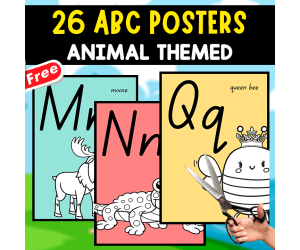
26 ABC ILLUSTRATIONS | FREE RESOURCE
ELA, Language Development, Vocabulary, Spelling, Pre-Reading, Phonics, Early Learning, Elementary, Homeschool Resources, Not Grade Specific, Pre-K, Activities, Classroom Decor, Teacher Tools
26 ILLUSTRATIONS OF THE ABC | ANIMAL POSTERS INTRODUCTION: Welcome to EDITORIAL ARENAS EDUCATIVAS! We specialize in producing diverse educational tools to support children's learning journeys. Be sure to browse our store for reading, writing, math, and Spanish resources designed to make learning fun and impactful. MAIN DESCRIPTION: 1) What is the main objective of this resource? As is known, the development of these resources primarily seeks to help our students around the world learn a variety of topics better and in a much more fun way. 2) What types of activities or content does this document include? This type of document contains educational activities, all specially designed to be developed and understood in an easy and educational way. 3) How can this material support children's learning or development? This material will help our students learn in an educational way. It will support your students by guiding them in a much more playful way to achieve easy and rapid learning. 4) What specific skills are developed using this resource? Students will be able to develop their attention, concentration, creativity, and imagination skills. It will also allow students to develop their cognitive skills such as comprehension, analysis, and others. SECONDARY AND COMPLEMENTARY INFORMATION: 1) Is the material designed in color or black and white? This document has been designed in color (if required) or is sometimes created in black and white to make your learning experience easier. 2) What age range is appropriate for this resource? Our publishing company is dedicated to creating resources for young children between the ages of 3 and 12, as well as for older students or anyone who needs them. 3) What keywords best describe this resource? We can tag this product with keywords such as: teaching resource, resources, materials, teaching materials, worksheets, educational worksheets, worksheets for children. 4) What instructions should I follow for proper printing? I recommend that you first download this document, then check if your printer is capable of printing, and also verify that you have the appropriate document size. TAGS: ABC. ABECEDARY,ALPHABET,POSTERS. THANK YOU!
Author EDITORIAL LAURA EDUCA
Rating
Tags FREE, FREE RESOURCES, ALPHABET, ABC, ABECEDARY, ALPHABET MINIBOOK, CLASSROOM DECOR, DECOR
I WONDER - How Do The Fingers Move | Animated Video Lesson
Human Body, Life Sciences, Science, Biology, STEM, Grade 2, 3, 4, 5, 6, 7, 8, Lesson Plans, Teacher Tools
Video Overview The human body is full of fascinating wonders to learn. This video is created to help the students recognize the anatomy and the job of the human body. I WONDER - How Do The Fingers Move | Animated Video Lesson Every part and organ in our human body is vital so let's see how important they are. Have you ever imagined how we look like if we didn't have a skeleton? Did you know that because we have our amazing muscles we can stand! Do you know how many teeth do we have? Have you ever wondered about the food journey inside our body? Can you name all the glands in our body? Why do we have skin? Our nervous system is really good at sending signals. Can you tell us more about it? Are you really good at Mathematics, painting, or any other thing? You should really thank your brain about it! The famous five senses are really doing a great work? Can you explain how every sense works? I WONDER - How Do The Fingers Move | Animated Video Lesson The video is perfect for encouraging the researching skills for the students, while learning more about our fantastic human body. I WONDER - How Do The Fingers Move | Animated Video Lesson This friendly designed video is suitable for students at school, homeschooling, and as a group activity. Format Available in MP4 format.
Author Educational Voice
Tags How Do The Fingers Move, How Do The Fingers Move Video, Fingers, Finger, Fingers Facts, Fingers Facts For Kids, Fingers Video, Fingers Video For Kids, Bone, Bones Facts
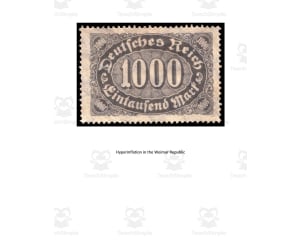
Hyperinflation in the Weimar Republic Lesson`
Social Studies, History, History: World, Government, Grade 9, 10, 11, Teacher Tools, Lesson Plans
This is a lesson for Hyperinflation in the Weimar Republic. National Curriculum Standards: Learners will understand the causes and effects of inflation. Learners will be able to explain how monetary decisions at the national level affect households, businesses and governments. Learners will be able to analyze and evaluate conditions, actions, and motivations that contribute to conflict and cooperation among groups and nations. Specific Objectives: To identify the reasons for hyperinflation in the Weimar Republic To understand how the Treaty of Versailles placed an unrealistic debt in Germany which would eventually lead to the rise of Hitler and World War II. Materials: Fake money. (either bought or printed if your school has a cutter.) Make sure there are enough units of $1 so students are not struggling for change. Papers (preferably color) Markers Procedure: Start by reviewing the Treaty of Versailles and how it unfairly placed the blame and a huge debt burden on Germany. ($33 billion). Then tell the class that the Weimar Republic, which was the democratic government set up in Germany after the war came up with an ingenious solution to pay off the debt. To realize how this is going to affect Germany, start a game in which the class will simulate the German economy in the 1920’s. You may want to start off by having students clear up some desks to the sides of the classroom. Divide the class into seven or eight groups. There should be about five groups of German merchants and about two or three groups of British and French “tourists” that will visit Germany. Each German merchant group will sell a specific product during five rounds. Some ideas for German products: Bread, Milk, Beer, Brats, chocolates. Of course, they do not need these items in class. Simply prepare ahead these items by drawing them with markers on colorful paper. Prepare five papers for each item.
Author Creative Educator
Tags Hyperinflation, Weimar Republic, Government, World War II, Hitler, Germany, Treaty Of Versailles, British, French, Merchants, Hyperinflation In The Weimar Republic, Weimar Germany Hyperinflation, Weimar Republic Inflation, Hyperinflation Weimar Republic, German Hyperinflation After Ww1, Weimar Hyperinflation
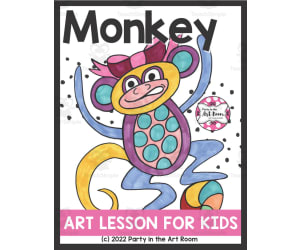
Monkey Art Lesson for Kids
Creative Arts, Art, Not Grade Specific, Lesson Plans, Teacher Tools
Monkey Art Lesson for Kids offers a fun and engaging art lesson focused on all things monkey. Students will discuss features of monkeys, play dice games to build familiarity, and complete detailed artwork of their own monkey creation. This lesson covers multiple art techniques, encouraging students to explore color, shape, texture, and more while letting their creativity run wild. It includes supplemental writing prompts to help students reflect on their artistic process and final piece. Teachers can utilize this versatile resource during any art class for independent practice, small groups, or a whole class activity. With all materials provided, students from K-8 will stay motivated as they learn about art concepts and monkeys simultaneously.
Author Party in the Art Room - Arts & Crafts for Kids | Arts Integration
Tags Monkeys, Art Lesson, Animal Crafts, Artist Reflection, Writing Activity, Monkey Art Project, Monkey Art Preschool
Bucket List | Figurative Language Activity | Micro-Learning Deck
ELA, Reading, Reading Comprehension, Grade 4, 5, 6, 7, Teacher Tools, Lesson Plans
This resource allows students to explore figurative learning in a fun way. The figurative language term for this learning deck is "Bucket List." Through close reading and a reading passage with audio, your students will better comprehend figurative language! Included: -Video lesson on language concept -Reading passage w/ audio Comprehension -Quick write
Author Teach Me This
Tags Bucket List, Figurative Language, Learning Deck, Digital Lesson, Comprehension Activity
Teen Financial Literacy Workbook
Math, Money, Statistics, Finance, Life Studies, Career, Business, Research, Special Resources, Life Skills, Homeschool Curriculum, Grade 8, 9, 10, 11, 12, Projects, Activities, Teacher Tools, Assessments, Diagrams, Lesson Plans, Literacy Readers, Presentations, Workbooks, Worksheets & Printables
Have you ever dreamt of having a long-term source of wealth? The Teen Financial Literacy Workbook Professional Edition is an affiliate partner – with great resources and actual financial literacy PDF workbook systems for students, parents, schools, owners, businesses, and anyone else who desires or needs basic money management skills! This 41-page workbook features engaging activities surrounding money management with 10 separate segments (All representatives of teen financial success) containing: -Money Mindset and Abundance Mentality -Types of Earning Income (active income vs. passive income, paycheck income vs. side hustle income) -Introduction to Budgets ( Rule of 50/30/20, tracking budgets and how to re-balance them) -Smart Ways to Save Money (compound interest & how to build an emergency fund; short vs. long-term financial goals) -Banking 101 (types of bank accounts; what is a debit card? Ways to avoid bank fees) -Credit Education (what is a credit score and how to improve it; credit cards; establishing a credit history) -Debt Relief Options (student loans; car loans; snowball/investment; interest vs. avalanche methods) -Introduction to Investment (stocks; bonds; mutual funds; risk-reward analysis) -Online Shopping Safeguards and Scam Prevention -Basic Understanding of Taxes (income tax, sales tax, basics of filing taxes) The Teen Financial Literacy Workbook has been designed to take the abstract concepts surrounding financial literacy and provide the tools and resources to develop responsible behaviors and create lifelong habits! The workbook can be used for instructional purposes (e.g., classroom-based, homeschooling; family financial nights; or independent teen learning) and is an excellent resource for teaching financial literacy. The workbook is easily accessible as an Instant Digital Download (PDF format, device/tablet/phone f, etc.) to print after downloading. No preparation work is necessary! Suitable for all types of life skill, career and technical programs, economics, or personal finance courses. What Makes It So Popular With Parents and Schools : Relatable to real life - Topics that teens need to prepare for the "real world", including: how to manage a paycheck, learn about credit scores, avoid debt traps, and the importance of investing and being safe online - are not often covered thoroughly in school. Supported interaction with parents and teens - Each module contains mentoring tips to help parents guide their teens without lecturing them making money discussions a way to bond more closely. Professionally designed - Provides a clean, visually appealing layout, interesting graphics and plenty of practical examples to keep teenagers engaged without sounding like a stuffy textbook. Easy to use - Print 1 pdf file for use in the classroom, at home or with family; there is no teacher preparation time. Demonstrated long-term results - Instilling habits that help young adults avoid making expensive mistakes as an adult (i.e. high-interest debt, low credit scores, missed opportunities for compound growth). This workbook is specifically designed for students in high school (grades 9–12). Ideal for students who will be using this workbook are freshmen, sophomores, juniors, and seniors (ages 14–18) that are preparing for their first job(s), preparing for college/university, getting their first car, or preparing to live independently from their parents. It is also appropriate for advanced 8th graders attending middle school life skills sessions and/or pre-high school financial literacy programs; however, this workbook is not appropriate for elementary/middle school because much of the content assumes students in these grades can: - Receive a paycheck. - Get a credit card. - Make decisions about going to college or trade school. Copyright/Use: This book is the intellectual property of Syed Hammad Rizvi. This book is intended to be used for personal, noncommercial, single-student use. You are prohibited from changing, redistributing, or selling any part of this book on the internet or making it available for download by the public. If you want to share this book with colleagues, you must purchase additional licenses from Teachsimple. Thank you for your adherence to the copyrights of these resources. Syed Hammad Rizvi acknowledges and appreciates your support.
Author Creative Book Store
Rating
Tags FinancialLiteracy, TeenFinancialLiteracy, FinancialLiteracyForTeens, MoneyManagement, TeenFinance, HighSchoolFinance, BudgetingForTeens, FinancialFreedom, PersonalFinance, MoneySkills

Florida (FAST) Pack of 3 ELA Tests for Grade 6
ELA, Grade 6, Assessments, Teacher Tools, Tests, Quizzes and Tests, Worksheets & Printables
Florida (FAST) Pack of 3 ELA Tests for Grade 6 Boost reading comprehension and test confidence with these FAST Grade 6 ELA Practice Tests ! This rigorous, standards-aligned resource includes three full-length assessments designed to mirror the Florida FAST exam and build mastery across literary and informational text skills. What’s Included ✅ 3 full-length FAST Grade 6 ELA practice tests (35 questions each, 105 total) ✅ Paired passages (1 literary + 1 informational per test) to build cross-text analysis skills ✅ Complete Answer Key with detailed rationales for every question ✅ Comprehensive Teacher’s Guide with pacing, scoring, and reteaching strategies ✅ Built-in data tracking, performance levels, and skill breakdowns How It Works in the Classroom These Grade 6 FAST ELA practice tests are designed for flexible and effective instruction: Use as full-length benchmark assessments (60–75 minutes) Administer as pre-, mid-, and post-assessments to track growth Assign specific question sets for targeted skill practice (vocabulary, inference, text structure) Use paired passages to strengthen cross-text synthesis and evidence-based thinking Apply answer rationales to guide reteaching and discussion Standards & Learning Goals Aligned to Florida B.E.S.T. / FAST Grade 6 ELA standards . Students will build mastery in: Reading Literature (RL): theme, character development, figurative language Reading Informational (RI): central idea, text structure, author’s purpose Vocabulary & Language: context clues, academic vocabulary, connotation Cross-Text Analysis: comparing, synthesizing, and evaluating multiple texts Why Teachers Love It ⭐ Mirrors the format, rigor, and structure of the real FAST assessment ⭐ Includes paired passages for deeper thinking and higher-order skills ⭐ Provides detailed explanations for meaningful reteaching ⭐ Supports data-driven instruction with clear performance levels ⭐ No-prep, print-and-go for easy classroom use Perfect for test prep, intervention, small groups, and progress monitoring ! Download these FAST Grade 6 ELA Practice Tests today to give your students the structured, engaging practice they need to build confidence and succeed on the FAST exam!
Author Bright Classroom Ideas Marketplace
Rating
Tags Florida, Fast, State Test, Ela

How to Write a Book Report: Kinds of Book Reports
ELA, Writing, Common Core, Grade 5, 6, 7, 8, Teacher Tools, Lesson Plans
How to Write a Book Report: Kinds of Book Reports An invaluable teaching resource designed for educators seeking to improve their students' book reporting skills. This resource focuses on the different types of book reports, introducing students to various formats and approaches. The concept of writing a book report often induces groans among the students. Yet, this elegantly crafted workbook is designed to engage pupils in an interactive learning process that demystifies the art of book reporting. Characterized by clear instruction during drafting and revision phases, this tool presents opportunities for learners from 5th grade through 8th grade, making it suitable for a broad range of language arts classes. Applicable across multiple educational structures such as public school classrooms or homeschooling scenarios Can be implemented in several ways - it can serve as core content during whole group instruction or used as reference material in small learning groups. Useful as supplementary homework exercise allowing learners additional practice outside formal class hours. Based on Bloom's Taxonomy learning objectives,the workbook provides thorough insights into the correct form and mechanics pertinent to all types of book reports. Further enhancing its usability is its adherence with Common Core State Standards which ensure compatibility with globally accepted student-learning outcomes. In addition to delivering comprehensive instructional content housed within vibrant six color graphic organizers that review skill focus areas and guide students through productive writing processes; This resource presents an implementation guide for educators coupled with an effective assessment rubic, Rounding off its offering are entertaining word puzzles and comprehension quiz that blends education with fun while stimulating cognition amongst learners The entire content package comes consolidated within one product file; delivered in PDF format providing uncomplicated access while preserving quality.
Author Classroom Complete Press
Tags PDF

The Meaning of Life | Advanced Lesson Plan
ELA, Language Development, ESL, Not Grade Specific, Teacher Tools, Lesson Plans
This is an advanced lesson plan worksheet set for The Meaning of Life. Students will learn more about these topics and then complete the exercises to follow, which will assess their comprehension and implement grammar skills. This resource can also be accessed through Google Apps. Answer key included. An audio exercise is included.
Author TEAM TEFL
Tags Egyptian Era, History, ESL Lesson, Language Arts, Vocabulary Words
Valid Samples & Inferences QUIZ
Math, Statistics, Grade 7, Quizzes, Quizzes and Tests, Teacher Tools
Valid Samples & Inferences QUIZ The Valid Samples & Inferences QUIZ is designed to adhere to the 7th Grade Statistics & Probability Standards. The objective of this resource is to anchor student comprehension about how statistics can be leveraged to extract information about a larger population group by studying that population's sample size. The secondary aim is to emphasize that creating accurate generalizations about a targeted audience can only be achieved if derived from representative samples. This understanding is pivotal towards grasping that random sampling contributes towards generating these representative samples and accordingly fortify valid inferences. Intended Users Public school educators searching for classroom exercises or homework tasks. Homeschooling parents seeking sequential methods of introducing fundamental concepts. The scope for implementation spreads across various teaching scenarios like: In-class whole-group lessons Small-group projects Solo assignments Or even within flipped classrooms. This intuitive education tool comprises of a 10-question quiz distributed in two different formats: printable (PDF) and digital (Google Forms). Educators have the option to download it for offline use or utilize it online on Google Drive as per the step-by-step instructions offered on an introductory page . Another attribute featured here includes an 'answer key' embedded right within in its content, ensuring ease-of-use! Potential Applications: It's specifically aimed at supporting grade-7 Mathematics students under the category of Statistics. This makes it beneficial for focused evaluations, initiating new chapters or revisiting crucial notions during end-of-unit reviews. Bring the Valid Samples & Inferences QUIZ into your instructional plans today!
Author The Math Cafe
Tags Statistics, Probability, Valid Samples, Random Sampling, Inferences

Lesson 2.2 - Speed
Science, Chemistry, Physics, Grade 6, 7, 8, 9, 10, 11, 12, Lesson Plans, Teacher Tools
Lesson 2.2 - Speed This pedagogical resource is designed to aid students in grades six through twelve grasp the concept of speed within the sciences. The teaching materials included revolve around subjects like Chemistry and Physics. This package includes: Instructive worksheets Progressive activities Motivating lesson starters to perfect speed calculations. About the Resource The resource has several integral components including: A detailed notes sheet illustrating the definition and ways of measuring speed. Versions available: An interactive one with blanks for note-taking. A pre-filled version for absentees or those needing extra help. A 'Speed Lab' activity that aids hands-on practice by answering real-time questions. 'Trade-and-Check' sessions replacing traditional question-answer methods with group-oriented problem-solving. An enticing 'Walk to School' activity incorporating Google Maps into hands-on learning while integrating digital resources into individual classroom settings. Additionally, this collection provides PowerPoint versions of instructor notes for clear, sleek presentations. Starter questions enhance student engagement right from lesson commencement. Formats provided are .docx files (editable using Word) & .pptx files (editable on PowerPoint), allowing teachers flexibility in molding materials based on their teaching styles and student requirements. Comprehensive .pdf files ensure undistorted view on any PDF-capable software. Note: This well-balanced mix of traditional print material with digital formats make these resources ideal for whole-class learning, small group instruction or homework tasks—fostering a fun-filled and engaging learning environment all around speed!
Author Integrated Chemistry and Physics
Tags Speed Calculations, Science Instruction, Hands-on Learning, Practical Application, Interactive Teaching

Sarah Palin (Former Alaska Governor) Biography PowerPoint
Social Studies, History, History: USA, Government, Not Grade Specific, Teacher Tools, Presentations
This informative 76-page PDF document outlines the life and career of Sarah Palin, the former Governor of Alaska who was selected as the Republican Party's vice presidential nominee in 2008. The biography PowerPoint provides educators with a comprehensive overview of Palin's background, including details on her birthdate, education, elected offices held, political experience, accomplishments, marriage, and children. The well-organized content flows chronologically and spotlights Palin's journey from small town high school basketball star to becoming Alaska's first female governor at age 42. This versatile resource can facilitate whole class instruction, small group discussion, or independent research on contemporary political leaders. Presented objectively in an easy-to-digest slide format, it offers students an engaging look at a prominent figure who made history on the national political stage.
Author Mr. Matthews Teacher Store
Tags Palin Biography, Governor Alaska, Vice Presidential, Political Leaders, Contemporary Politicians
Barbers Reading Comprehension Passage - Cored Ed Encyclopedia
ELA, Language Development, Reading Comprehension, Reading, Social Studies, Writing, Vocabulary, History, Pre-Reading, Spelling, Grade 2, 3, 4, 5, Worksheets & Printables, Worksheets, Teacher Tools, Centers, Activities, Writing Prompts, Assessments, Quizzes and Tests, Quizzes, Lesson Plans
This barbers reading comprehension with lesson plan includes: Visualization (on the front cover) Start your lesson by taking a minute to think and share something about the topic. Read the script aloud (slowly), perhaps prepare some music or sound effects. Student close their eyes and let their imaginations wander. Students open their eyes, read the question aloud and give them a few minutes to complete. Ask a few students to share or keep answers until the end to compare with what they learn in the passage. Quick pause—thousands of Cored Education products are included with your TeachSimple membership. Download links and encyclopedia index available here. Pre-Reading Trivia Students will write down one thing they already know about the subject and then read five more facts and discuss. These facts are fun, and the students will enjoy learning about the subject before reading more. Give 1 minute for students to write what they already know (no pressure—best guess is fine). Read the five facts together. After each fact, do ask a student for their opinion, was it surprising? Set a purpose by asking students to highlight/underline one fact they want to learn more about during the reading. Reading Passage The text is a high-interest reading passage with set paragraphs, roughly three to four paragraphs long. It contains a variety of themes about the topic, anywhere from history to technology. The passage is between 250 and 350 words in length. First, ask students to look at the headings and see what they’ll learn about today. What do they know about the topic/heading? First read options: Teacher read-aloud (best for support). Partner reading (paragraph by paragraph). While reading, students underline important details, and vocabulary words they think may come up in the questions section. Mixed Questions The first question page contains four multiple-choice questions, each with a choice of four answers, and three written response questions that require a sentence or two from the student. Students complete the mcqs first independently, then review quickly as a class. For the 3 written responses, try to get students giving the answer with some form of evidence: “I think ___ because the text says ___.” If students get stuck, send them back to check the passage. Vocabulary Questions Practice seven key words from the text in this section across two activities. First section is scrambled words where students will unscramble three words given a clue for each. The second section is a word to meaning matching activity. Before starting, have some students read out words they underlined in the passage. Ask students to say the word and read aloud the sentence(s) around each word. Ask students to do scrambled words and the matching exercise in pairs then go through answers as a class. For the scrambled spelling task, get four pairs to come up to the board and write the words for extra practice with the other student reading out the clue. For the matching task, prompt students to give full sentences: “I matched ___ with ___ because ___.” Creative Writing In this question, the student will be required to write a five to eight sentence paragraph on a question related to the topic. Before starting, ask students write down 3 key ideas they are going to include in their piece. Ask students for ideas to share around the class to help those struggling. Pro writing expectations: 5–8 sentences At least 2 facts or details from the passage At least 2 vocabulary words from the previous page Students read their paragraphs while classmates listen for facts and vocabulary words. Extension Activities This page is optional for fast finishers or to take home. There are several activities, each one requiring a different skill. Do some, do none, do all, completely optional - but you will feel reassured knowing every possibility is planned for. Includes summary writting question and additional facts. Answer Key There are answers for the multiple-choice questions, written response questions have sample answers, vocabulary answers and if there is a summary question then a sample summary will be provided as well. Lesson Plan Included Customized lesson plan for this lesson is included. Lesson Snapshot Title: Barbers Genre: Nonfiction (informational passage) Subject: Social Studies / Careers & Community Primary Topic: What barbers do and how barbering changed over time Estimated Guided Reading Level (A–Z): S Support pages noted in the PDF: visualize prompt, pre-reading trivia, mixed questions, vocabulary activity, creative writing prompt, extension activities + “final facts,” and an answer key. What This Lesson Teaches Best What barbers do: cut, trim, and style hair, and often shave or shape facial hair. How places like barber shops can be about community (talking and sharing news) as well as haircuts. How a job can change over time, including barbers doing medical tasks in the Middle Ages and later separating from doctors and surgeons. How symbols communicate meaning: the spinning striped barber pole connects to earlier work (red/white linked to blood and bandages; a blue stripe is common in the United States). Reading for precise details (e.g., hair “swirls” near the crown; how rotating stripes create an illusion). Learning Goals Students will identify at least two services the passage says many barbers provide. Students will explain why barber shops became popular gathering places in Greece, using details from the text. Students will describe how the barber’s job “grew in surprising directions” during the Middle Ages, based on the passage. Students will describe what “bloodletting” means in the passage. Students will explain what the red and white stripes on a barber pole are often linked to and how the spinning pole can trick the eyes. Students will describe how the passage connects a simple shop sign to a long history (“a simple sign can carry a long memory”). Key Vocabulary From the Text clippers — electric tools that cut hair. mustaches — hair above the upper lip. swirls — curved patterns that twist around. bloodletting — making a small cut to let blood flow. bandages — cloth used to cover a wound. FULL CATALOG OF DOWNLOAD LINKS AND ENCYCLOPEDIA INDEX HERE
Author Cored Education
Rating
Tags Vocabulary, Reading Comprehension, Reading Passages, Lesson Plans, Ela Lesson Plans, Reading Comprehension Lesson Plans, Pre-reading, History, History Lesson Plans, Social Studies Lesson Plans

Sight Word Easy Worksheets Find and Circle Kindergarten 1st 2nd Grade
ELA, Language Development, ESL, Vocabulary, Spelling, Life Studies, Kindergarten, Preschool, Grade 1, 2, 3, Activities, Worksheets & Printables, Teacher Tools
This interactive and attractive setBathroom SSight Word Easy Worksheets Find and Circle Kindergarten 1st 2nd Grade 69 Pages learners develop their original Sight Word Easy Worksheets Find and Circle Kindergarten 1st 2nd Grade this set contains 69 pages in this set, each in each a different Digraphs Sight Word Easy Worksheets Find and Circle Kindergarten 1st 2nd Grade to ensure a fun and structured approach to using a fun and type of work that useful; Each card is fun this edited set of Sight Word Easy Worksheets Find and Circle Kindergarten 1st 2nd Grade is built in an elegant style that attracts attention this interactive and attractive set of Bathroom Sign Out Sheet designed to help young learners develop their original Body Parts Activity Worksheets skills through Sight Word Easy Worksheets Find and Circle Kindergarten 1st 2nd Grade This set contains. these printable offer useful courses, this provides a useful course-rich practice, it is designed to help using resource grade 2 easily to learn about Sight Word Easy Worksheets Find and Circle Kindergarten 1st 2nd Grade fun and interactive manner. A collaborative learning activity added students. PDF format
Author LAMO
Rating
Tags English Language Arts, Spelling, Writing, Centers, Printables, Independent Work Packet

RL.3.5 Third Grade Common Core Lesson
ELA, Reading, Common Core, Grade 3, Teacher Tools
This RL.3.5 Third Grade Common Core Lesson can help your students refer to parts of stories, dramas, and poems when writing or speaking about a text. By using terms such as chapter, scene, and stanza, your students will be better equipped to understand and analyze a text.
Author Have Fun Teaching
Tags Plot, Reading Comprehension, Story Elements
Global Warming CAUSES: Greenhouse Gases: Synthetic Gases - FLASH-MAC
Science, Earth and Environmental Sciences, Environmental Science, Common Core, Grade 5, 6, 7, 8, Teacher Tools, Lesson Plans
The Global Warming CAUSES: Greenhouse Gases: Synthetic Gases - FLASH-MAC This is an educational tool that enriches the understanding of synthetic greenhouse gases, a principal contributor to global warming. Designed for educators teaching grades 5 through 8 science, particularly environmental science. Critical Features: Curriculum -based content that incorporates reading passages. Before-and-after-reading questions challenge student comprehension of the material read. Potential ways to integrate this interactive tool range from whole group instruction in class, small study groups during cooperative learning sessions, or as homework exercises. Included Printables and Digital Media: Included with this educational tool are printables enhancing hands-on learning experience of synthetic greenhouse gases. Utilizing vocabulary flashcards supports scientific language acquisition vital in bridging knowledge gaps while reinforcing learned concepts. Also incorporated are video and audio clips making lessons dynamic and appealing! Pedagogical Alignment: Echoing Bloom’s Taxonomy principles, integrated activities stimulate higher-order thinking among students by requiring them to apply learned concepts—ensuring effective content assimilation. Fitted For Age Appropriateness: The Global Warming CAUSES: Greenhouse Gases: Synthetic Gases FLASH-MAC is designed at the'7th-to-8th grade reading level.' National Standards Compliance: It reflects Common Core State Standards ensuring quality education meeting nationally accepted benchmarks. Enlighten your students using The Global Warming CAUSES: Greenhouse Gases: Synthetic Gases FLASH-MAC, and witness them probe into the critical scientific foundations associated with global warming. Empower your learners to become earth-conscious!
Author Classroom Complete Press
Tags Software (Mac)

PE Assessment – Overhand Throw Pre/Post Pack
P.E. & Health, Physical Education, Not Grade Specific, Teacher Tools, Assessments
The PE Assessment Series: Overhand Throw is an organized packet that gives you pre-tests, post-tests and everything in between. There are peer- assessments and self-assessments included to provide you with a variety of formats. There is a rubric to assist you with scoring. These can be opened & printed as JPG files or in PDF.
Author Cap'n Pete's Power PE
Rating
Tags Peer Assessment, Rubrics, Fitness, Exercise
U.S. Representative Brett Guthrie (KY - 2nd) BIO PPT
Social Studies, History, History: USA, Government, Not Grade Specific, Teacher Tools, Presentations
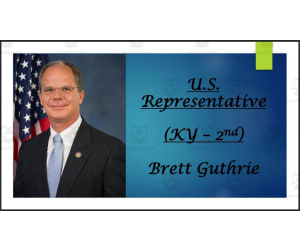
Introducing a 40-page biography PowerPoint about Brett Guthrie, the current U.S. Representative from Kentucky's 2nd congressional district since 2009. This informative resource traces Guthrie's background, including his birthdate and hometown, education at the University of Kentucky, early career, and initial foray into politics when he was elected to the Kentucky State Senate in 1999, where he served for nine years. The presentation chronicles Guthrie’s path to the U.S. House of Representatives, his accomplishments and legislative actions around issues like healthcare and economic policies, and committee appointments. Created for social studies classes, this PDF slide deck delivers key details from Guthrie’s personal life and professional career that allow students to connect with the work of their congressional representative.
Author Mr. Matthews Teacher Store
Tags Biography, Brett Guthrie, Kentucky, U.S. Representative, Congressman, Legislator

I WONDER - Can A Cat Own Money | Animated Video Lesson
Life Sciences, Science, Animals, Grade 3, 4, 5, 6, 7, 8, 9, Lesson Plans, Teacher Tools
Video Introduction Animal kingdoms are full of fascinating wonders to learn. This video is designed for the students to learn more about animals in different countries. I WONDER - Can A Cat Own Money | Animated Video Lesson Pets are really great companions for humans. Have you ever had a pet at your house? If yes, tell us more about it. Do you know how many types of birds do we have on Earth? Can you name some of these types? Can you think of some characteristics that mammals have and why they are different from the other types of animals? Do you think humans are mammals? I WONDER - Can A Cat Own Money | Animated Video Lesson The video is perfect for encouraging the researching skills for the students, while learning more about these fantastic animals. I WONDER - Can A Cat Own Money | Animated Video Lesson This friendly designed video is suitable for students at school, homeschooling, and as a group activity. Format Available in MP4 format.
Author Educational Voice
Rating
Tags Can A Cat Own Money, Cat, Cats, Cat Facts, Cats Facts, Cat Video, Cats Video, Cats Facts For Kids, Cat Facts For Kids, Cats Video For Kids
I WONDER - Are There Different Types Of Frost | Animated Video Lesson
Earth Sciences, Earth and Environmental Sciences, Science, Grade 4, 5, 6, 7, 8, 9, 10, Lesson Plans, Teacher Tools
Video Introduction An amazing video designed for the students to learn more about famous phenomena in different countries. I WONDER - Are There Different Types Of Frost | Animated Video Lesson What do you know about this phenomenon? Where it happens? When it happens? What are the safety measures that we should take to be safe during this phenomenon? Are there any other places in the world that experienced this phenomenon? If yes, tell us more about them. Why do you think it happens? Do you like reading about Geography? What is your favorite country in the whole world? I WONDER - Are There Different Types Of Frost | Animated Video Lesson The video is perfect for encouraging the researching skills for the students, while learning more about this fantastic phenomenon. I WONDER - Are There Different Types Of Frost | Animated Video Lesson The video is perfect for encouraging the researching skills for the students, while learning more about this fantastic phenomenon. Format Available in a PDF format.
Author Educational Voice
Rating
Tags Are There Different Types Of Frost, Are There Different Types Of Frost Video, Different Types Of Frost, Different Types Of Frost Video, Different Types Of Frost Facts, Different Types Of Frost Video For Kids, Different Types Of Frost Facts For Kids