



3,984 products added recently
Page 7 - Social Emotional Learning Worksheets
Use SEL worksheets to help students navigate emotions, build resilience, and improve social interactions. Activities include scenarios, reflection prompts, and cooperative tasks. Incorporate them to strengthen community and foster a respectful learning environment.

 Show filters

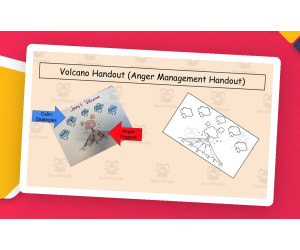
Volcano Handout -An SEL Coloring Page SEL Worksheet
Special Resources, Social Emotional Learning (SEL), Social Skills, Special Education Needs (SEN), Grade 1, 2, 3, 4, 5, Worksheets & Printables, Worksheets, Coloring Pages, Writing Prompts
In this SEL coloring page and SEL worksheet, students will write down their anger triggers at the bottom of the volcano. There is room for 6 triggers. Then they will write down calming strategies in the 5 rain clouds. This handout is helpful in an SEL lesson about anger, in a counseling session or in small group work. For more SEL coloring pages, SEL worksheets, SEL presentations, please visit my SEL store at: https://teachsimple.com/contributor/jennifer-moyer-taylor?page=2 You may also like other SEL related resources to target anger management such as: https://teachsimple.com/product/dont-let-the-gingerbread-man-snap-boom-cards-and-sel-coloring-pages (In this SEL Boom Cards resource, students will learn how to manage their anger in healthy ways versus unhealthy ways. There is a fun image of a gingerbread man cookie as a Christmas themed Boom Deck. Each card has an example of how someone managed their anger-either in a healthy way or not so healthy way. Students will click on the correct gingerbread man image. Each student will get a turn at the Boom Cards. You can also use this as a center, group activity assign it for homework.) https://teachsimple.com/product/coping-skills-brochure-and-sel-coloring-pages (This is a coping skills brochure when students experience a big emotion. The emotion could be anger, worry, sadness, etc. There is an SEL coloring page, writing prompts about different coping skills and emotion triggers.) https://teachsimple.com/product/self-control-quiz-show-no-prep (Self Control Quiz Show Power Point. Sometimes students who exhibit anger, have not learned or mastered the skills of self-control. In this engaging Jeopardy like game show, students will compete as a class to answer different questions related to self-control. This is a fun whole classroom SEL lesson. There is even a tip sheet to have the class go over before the quiz show and to take home to share with their family members about what they learned in class.) https://teachsimple.com/product/28-calm-down-strategy-sel-cards-editable (28 editable calm down cards. Sometimes kids cannot think straight when they are flooded with anger. In these cards, students will get to learn about and explore different ways to calm down when they are upset. Then they can think clearly about what to do next.)
Author Jennifer Moyer Taylor
Tags Anger Management, Calming Down, Self-regulation, SEL, School Counseling, Temper, Anger Volcano, Sel Coloring Pages, SEL Worksheets, Social Emotional Learning

1st grade Coronavirus / Covid-19 Facts
P.E. & Health, Health, Special Resources, Life Skills, Social Emotional Learning (SEL), Social Skills, Kindergarten, Grade 1, Teacher Tools, Lesson Plans, Worksheets & Printables, Worksheets
First Grade Coronavirus Facts simplifies a complex topic for young learners. This informative lesson teaches essential information about COVID-19, including what it is, how it spreads, and how to stay safe. Presented in straightforward language, it covers the virus's origins and transmission. Students gain key understandings like hand washing, mask wearing, and social distancing. Educators can facilitate rich discussions to build health awareness. The material suits whole-group instruction or independent learning centers. This timely resource equips first grade classrooms with age-appropriate details about the coronavirus pandemic. Included are a total of 13 pages with lots of activities for young learners. There are seven units that cover all the health requirements for first grade. Here are the links to other health units: Health 1st Grade Unit 1: Personal Health by Teach Simple Health 1st Grade Unit 2: Growth and Development by Teach Simple Health 1st Grade Unit 3: Nutrition and Physical Activity by Teach Simple Health 1st Grade Unit 4: Substance Use and Abuse by Teach Simple Health 1st Grade Unit 5: Injury / Violence Prevention and Safety by Teach Simple Health 1st Grade Unit 6: Prevention / Control of Disease by Teach Simple Health 1st Grade Unit 7: Environmental / Consumer Health by Teach Simple You can also teach your students about keeping yourself safe by studying about the Coronavirus, where and when it started and facts that plagued our world with this virus. 1st grade Coronavirus / Covid-19 Facts by Teach Simple This unit meets Common Core Standards.
Author K-5 Treasures
Tags Coronavirus, Covid-19 Facts, Pandemic, Spread Of Virus, 1st Grade Health, First Grade Health, Health Resources , Health Worksheets, Worksheets On Health, Worksheets On Covid
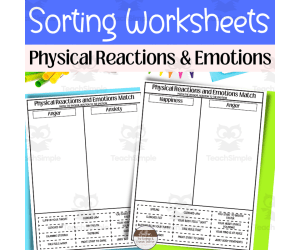
Emotions Sorting Worksheets For Matching Physical Responses To Emotion
Special Resources, Social Emotional Learning (SEL), Life Skills, Grade 1, 2, 3, 4, Activities, Games, Worksheets & Printables, Worksheets
Emotions Sorting Worksheets for Matching Physical Responses to Emotion Ages: Grades 1 through 4 This teaching resource aims to facilitate the understanding of the relationship between physical responses and emotions. The goal is to promote social emotional learning while keeping students engaged. Educational Objectives: Promote self-awareness and mindfulness by identifying physical reactions prompted by specific emotions. Foster body scanning methods among learners, a technique aimed at establishing a connection between their emotions and physiological responses. How To Use: The worksheets are user-friendly. Simply print them out for student use. Students cut out descriptions of body reactions and match them with corresponding emotions based on their intuition. Potential Applications : One-on-one lessons Small group exercises An extension activity following your main Emotions Lessons plan You can also hold insightful discussions post-activity by revisiting each category to understand why certain responses were linked with specific feelings. Ideal For: Social Emotional Learning (Primary Subject) Life Skills All these critical life skills can be instilled among young minds through an interactive approach provided by these worksheets ! Note: This product is available for download in PDF format (American spelling) but can be adapted worldwide..
Author The Feelings and Friends Teacher
Tags Emotions, Physical Responses, Social Emotional Learning, Body Scanning, Self-awareness, Matching Emotion Worksheets For Kindergarten

Best Behavior Basketball SEL Boom Deck and SEL coloring pages
Special Resources, Social Emotional Learning (SEL), Social Skills, Special Education Needs (SEN), Preschool, Grade 1, 2, 3, Activities, Worksheets & Printables, Worksheets, Mazes, Coloring Pages
Best Behavior Basketball SEL Boom Deck With Audio & Handouts This teaching resource mingles the excitement of basketball with enriching learning activities to create a stimulating, engaging environment. The Best Behavior Basketball SEL Boom Deck, furnished with audio and handouts, streamlines social emotional learning (SEL) by dividing students into two competitive teams—either Bulldogs or Cardinals. The immersive learning journey initiates as each student gets a turn answering questions from their team after a coin flip decides which group goes first. There are 88 Boom Deck cards. Because each card is determined by the previous one, the adventure is engaging for all students. Sonic Feature: Featuring sound on every card for easy narration. Learning through Gaming: Covers an entire classroom lesson with its 13 questions per team. There are extra final and tie-breaker questions to keep the excitement all through the game-like session. Teaches practical aspects such as sportsmanship and real-time behavior as they compete constructively within their teams. Bonus Activities: A maze challenge Behavior matching activity using swish or miss SEL coloring pages: An artistic opportunity to design their own basketball shoes and ball Aimed at Early Learners K-3rd Grade Functionalities-: Whole-group sessions, small discussion circles or individual assignments at home catering to varying classroom dynamics. Tech Requirements - E-Learning material created using Boom Cards-interface technology is required. Additional Note: For effective utilization while also tracking student progress efficiently, purchase of premium account recommended post trial versions' expiry. For more SEL coloring pages, Boom Decks, SEL presentations, please visit my store at: https://teachsimple.com/contributor/jennifer-moyer-taylor I am a full-time school counselor and teach SEL classes weekly for grades kindergarten through 8th grade. My SEL products are truly "kid tested, kid approved". If the class or students don't resonate with a lesson, I tweak it and change it to make it more engaging and meaningful for the students.
Author Jennifer Moyer Taylor
Tags Basketball, SEL, Boom Deck, Audio, Handouts, SEL Coloring Pages, SEL Maze, Social Emotional Learning, School Counseling, Social Skills

Don't Stir The Drama Pot-An SEL Presentation Plus SEL Coloring Page
Special Resources, Social Emotional Learning (SEL), Social Skills, Creative Arts, Art, Special Education Needs (SEN), Life Skills, Grade 4, 5, 6, 7, 8, 9, Teacher Tools, Lesson Plans, Worksheets & Printables, Worksheets, Coloring Pages, Writing Prompts
In this product, you will get a Google Slides lesson with SEL coloring pages and Writing prompts discussing what causes drama among friends, what makes things worse (heats it & stirs it up) and what makes things better (what cools it down). There are 10 situations to discuss as a class. You can have students use fingers (1-5) or move to stations around the room to choose what they would do in different situations. Finally, there is a reflection and a coloring activity to reinforce the importance of being drama-free. This lesson will address friendship skills, relationship skills as well as social awareness. You can use this for whole-classroom guidance lessons, small groups, and even one on one counseling. There are descriptions of what heats up (fuels) drama among friends as well as what de-escalates friendship problems. There is a 19-slide presentation using Google Slides. In the PDF, you just need to click on the image of the main cover image. This is the image of a collection of the slide presentation, the reflection sheet, as well as the mindfulness coloring activity sheet. There are slide notes on every page. Please read each slide note for each slide. This will help you have a seamless lesson with very little prep and no need to prepare for your SEL lesson. The heat-up reasons are; involving other people as messengers, bringing up past situations, gossiping, using mean words, and blaming others. The cooldown strategies are; owning your stuff (taking responsibility for your own actions), sharing your own feelings, sticking to the current situation, listening to the other person's perspective, and calming down before you react. This is a great lesson to use if you are finding students have difficulty solving their own problems among their friendship groups, small groups for girls (in particular), or hosting lunch bunch groups for girls. This is not gender specific so you can use it for both genders if needed.
Author Jennifer Moyer Taylor
Tags Friendship Skills, Google Slides, School Counseling, SEL, Special Education, SEL Presentations, SEL Coloring Pages, Worksheet Writing Prompts, Social Emotional Learning

Daily Life Skills: Brian Learns to Speak with Kindness
Special Resources, Life Studies, Social Emotional Learning (SEL), Special Education Needs (SEN), Social Skills, Life Skills, Grade 10, 11, 12, Activities, Worksheets & Printables, Worksheets
Product Title: Daily Life Skills: Brian Learns to Speak with Kindness This teaching resource, titled Daily Life Skills: Brian Learns to Speak with Kindness, offers a unique take on the essential skill of communication, focusing specifically on tone and word selection. It is brought to life through the engaging narrative of Brian and his journey towards courteous and respectful speech. Understanding the importance of using kind words isn't solely about avoiding negative outcomes but also creating a positive atmosphere for everyone. This tool emphasizes on student self-awareness during communications, pointing out how their attitude and words can significantly impact others. The simple language used in this module is designed for high school learners as well as adults diagnosed with intellectual challenges. Real-world examples along with visual aids such as illustrations, help make complex concepts more easily understood. The tool includes seven comprehension questions specifically formulated to test understanding and further strengthen students' learning experience beyond theoretical reading. It is an invaluable resource for special education teachers, occupational therapists, caregivers at home or community-based support teams looking at enhancing real-life skills.. This versatile tool can be used both in interactive group situations as well as hands-on projects or tasks set either at home or school, thus fostering independence amongst students both at school and home while promoting measurable growth within their communities. Besides this main module, it provides recommendations for additional helpful resources including educating students about how bank accounts work, offering tips regarding effective month-to-month budgeting coupled with money math involvement when clothes shopping or reading restaurant menus. In detailed preparation considering special education classes; worksheets encourage application while activities ensure dynamic engagement providing practical exercises. Wrapped up neatly within a six-page PDF bursting with instructive and engaging content. Suitable for grade 10 through 12 students, translating theory into practice.
Author Adulting Life Skills Resources
Tags Communication Skills, Kindness, Social Narratives, Positive Atmosphere, Self-awareness
Sensory Diet Planning for Overstimulation
Life Skills, Special Resources, Social Emotional Learning (SEL), Social Skills, Special Education Needs (SEN), Speech Therapy, STEM, Physical Education, P.E. & Health, Health, Homeschool Curriculum, Homeschool Templates, Grade 1, 2, 3, 4, 5, Worksheets & Printables, Workbooks, Worksheets, Word Searches, Teacher Tools, Lesson Plans, Quizzes and Tests, Quizzes, Tests, Assessments
Help your autistic learners thrive in the classroom and beyond with this complete sensory diet toolkit that will allow you to create a sensory diet for each learner. If you're a parent, educator, or therapist who feels lost when trying to understand the sensory processing issues of young autistic learners and are looking for a way to go beyond reactionary approaches to create an environment that is neuro-affirming, this is the toolkit for you! The 35-page guide was created by professionals who understand the challenges faced by preschool through 1st grade educators and provides clear, easy-to-follow instructions to create, implement and track an effective sensory diet. This is more than just worksheets; it is a complete evidence-based professional development program helping you develop your skills as a sensory detective using evidence-based data. What’s Included in This Evidence-Based Toolkit: Phase 1: Comprehensive Theory & Methodology (10 Pages) : This section offers a thorough guide detailing the neurobiology of sensory overstimulation, the often-overlooked senses such as proprioception, vestibular awareness, and interoception. Additionally, it covers fundamental concepts regarding a sensory diet and features case studies to enhance practical understanding. Phase 2: Student Workbook & Facilitator Tracking Tools (17 Pages) : This part comprises a collection of 11 clinical-grade worksheets intended for educators and parents to monitor, assess, and address sensory needs. These tools include: - Tracker for Sensory Baseline & Arousal State - Guides for Proprioceptive, Vestibular, and Tactile "Brain Breaks" - Early Warning Signs Tracker for Overstimulation - Audit Checklist for Classroom Environmental Triggers - "My Body Feels..." Interoception Check-In with an accompanying visual chart designed for students! - And much more! In this section of the Toolkit there are important visual representations and other teaching materials to provide you with what you need for an effective system of Supports. Phase 3: includes visual representation(s) of the "Escalation & Intervention Cycle" (Examples: Conceptual Diagrams - for use in understanding the steps in the Cycle). - "Brain Break Taxonomy" flowchart - allowing you to tie interventions to specific behaviours in the Escalation Cycle. - Teacher Implementation Guide, with details on how to implement the components of the toolkit as well as a neurodiversity-affirming perspective. - Model Documentation - showing you how to complete trackers for maximum effect. The contents of your Toolkit will help you transition from "Behaviour Management" (i.e. behaviour modification techniques/strategies) to "Neurological Support" (ie supporting learners by providing specific tools & strategies for self-regulation) through concrete examples identifying the root causes of behaviours, preventing crises before they happen and teaching learners through respectful means." Reasons That Parents/Schools Appreciate It: Proactive vs Reactive: Rather than only reacting to incidents of sensory overload or meltdowns, it provides a data-based system for helping to identify causes of the issue and preventing future occurrences through additional data tracking tools. All-in-one vs completing multiple worksheets: This program is designed as a complete curriculum including theory, tracking, intervention and teacher guides. All resources are provided in one location, reducing the burden on the parent and/or educator having to independently find and create all the resources. Creates Consistency in Support throughout Home/School: The program has been designed to provide tools that can be used and shared between home and school, providing a system of support for the child, 24 hours a day, 7 days a week. Empowering and approves of Neurodiversity: The program promotes the understanding and support of a child’s neurological needs with dignity and respect thereby eliminating the need to use antiquated methods of behavior modification. Immediate Implementation: The program was designed for immediate use in a real-world situation with written and sample instructions included; therefore, it is easy for all educators to implement new strategies into day-to-day teaching. Depending on the content and language used in the PDF, the target audience should be: Grade Level: Pre-K, Kindergarten, and First Grade (in particular, the age range of 4-7 years old). Primary Audience: Special Education Teachers, Occupational Therapists , School Psychologists, Board Certified Behaviour Analysts with a Neurological Understanding of Autism (would find guide useful). Inclusion Classroom General Education Teachers Paraprofessionals, Teacher Aides, Support Staff (including training/employment opportunities) Secondary Audience: Inclusion Classroom Teachers—General Education Knowledgeable and Engaged Parents of Autistic Students who are involved in their child's Sensory Plan and collaborating with the school team. Copyright / Terms of Use: Syed Hammad Rizvi copyrighted this book. This resource is for your personal use as well as only one classroom. You may not modify, redistribute, or sell any section of this resource, thus making it available on the Internet for anyone to find publicly and download. If you'd like to share this resource with colleagues, please purchase additional licenses through Teachsimple. Your respect for these terms of use is appreciated. Syed Hammad Rizvi is delighted to provide this product to you!
Author Creative Book Store
Rating
Tags SpecialEducation, SpEd, SpecialEducationTeacher, SpEdTeacher, OccupationalTherapy, SchoolOT, PediatricOT, BCBA, NeurodiversityAffirming, AutismParent

Health 1st Grade Unit 6: Prevention / Control of Disease
P.E. & Health, Special Resources, Health, Physical Education, Life Skills, Social Emotional Learning (SEL), Social Skills, Grade 1, Lesson Plans, Teacher Tools, Worksheets, Worksheets & Printables
For 1st Grade Health there are seven standards that need to be taught. Unit 1 Personal Health Unit 2 Growth and Development Unit 3 Nutrition and Physical Activity Unit 4 Substance Use and Abuse Unit 5 Injury/ Violence Prevention Control and Safety Unit 6 Prevention/Control of Disease Unit 7 Environmental Consumer Health The focus is on equipping students with knowledge about the prevention and control of diseases. It's centered on how germs can lead to sickness along with hands-on techniques for averting germ transmission. This involves activities such as: The role healthcare professionals play in disease control. The imperative nature of communicating symptoms when they're feeling unwell. Routine precautions like proper handwashing. Understanding the instruments that doctors use when examining you when you are sick. Each unit ends with an assessment that enables teachers to gauge student comprehension effectively. Included are answer keys in the unit. A total of 12 pages for Health 1st Grade Unit 6: Prevention / Control of Disease. With many activities to complete, students will be engaged and learn so much from this unit! There are seven units that cover all the health requirements for first grade. Here are the links to other health units: Health 1st Grade Unit 1: Personal Health Health 1st Grade Unit 2: Growth and Development Health 1st Grade Unit 3: Nutrition and Physical Activity Health 1st Grade Unit 4: Substance Use and Abuse Health 1st Grade Unit 5: Injury / Violence Prevention and Safety Health 1st Grade Unit 6: Prevention / Control of Disease Health 1st Grade Unit 7: Environmental / Consumer Health You can also teach your students about keeping yourself safe by studying about the Coronavirus, where and when it started and facts that plagued our world with this virus. 1st grade Coronavirus / Covid-19 Facts by Teach Simple This unit meets Common Core Standards.
Author K-5 Treasures
Tags Disease Prevention, Germ Transmission, Handwashing Techniques, Healthcare Professionals, Symptom Communication, First Grade Health, 1st Grade Health, Health Resources, Health Resources For 1st Grade
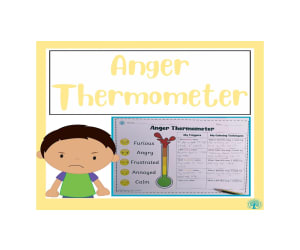
Anger Thermometer Worksheet
Special Resources, Social Emotional Learning (SEL), Social Skills, Special Education Needs (SEN), Not Grade Specific, Worksheets, Worksheets & Printables
Identifying escalating levels of anger within themselves is an important skill for children’s healthy social-emotional development. This creative “anger thermometer” worksheet provides a visual scale for students to evaluate their internal frustration, paired with critical reflection questions to facilitate de-escalation at each phase. The worksheet features a color-coded thermometer bar ranging from “I’m calm” in green up to “I’m furious!” in hot red. Five stages of anger are delineated including calm, annoyed, frustrated, angry, and furious. At each level, students first give examples of small provocations that would trigger those feelings personally. Writing specific anger sparks builds self-awareness of their own “boiling points”. Next, children self-strategize the best ways they can healthily soothe themselves at each anger level before boiling over. Recommendations like take deep breaths, squeeze a stress ball, walk away or tell the teacher are included. Articulating go-to regulation tactics cements them as concrete tools kids can independently access. Guiding children to accurately gauge anger cues in themselves and intervene with appropriate calming methods before losing control is essential for their development and classroom harmony. This anger thermometer worksheet establishes that routine skillfully through relatable visualization and reflective writing. It helps keep students’ inner temperature in check! Included in this resource is 1 PDF printable worksheet
Author SEN Resource Source
Tags Anger, Emotions, Feelings, Behavior, Behavior Support, Calming Strategies
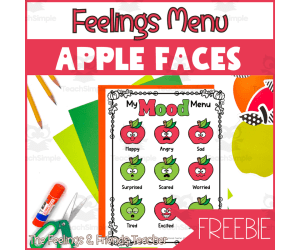
Fall Feelings Menu | Apple Emotions Visual Choice Board & Chart
Social Emotional Learning (SEL), Special Resources, Life Skills, Special Education Needs (SEN), Kindergarten, Grade 1, 2, 3, Posters, Classroom Decor, Coloring Pages, Worksheets, Worksheets & Printables
Are you looking for a way to teach kids all about their feelings? Feelings menus are the perfect way to do it! This printable fall feelings menu will become a staple in your school counseling sessions this fall. It helps to promote social emotional learning by supporting students with emotional recognition, labeling, and understanding different emotions! It includes 9 different apple themed faces that provide a variety of emotional faces that students can pick from. Whether you are wanting to incorporate this for your fall feelings check ins or use it as a fall coloring page, students will love using this as a visual support! This Emotions Chart helps students who are beginning to learn and label different emotions and can be used in a variety of different ways! This emotions menu also includes facial expressions with themed characters so you can use them with students with key interests! Some Ways To Use In Sessions: ⭐ Individual Counseling Lessons ⭐ Fall Feelings Check-In ⭐ Fall Coloring Sheet ⭐ Reference Poster For Kids ⭐ To Introduce New Emotions ⭐ Small Groups & Whole Class Check-Ins If you're looking for a way to introduce emotions to your students while also celebrating the fall season, then snag this resource!
Author The Feelings and Friends Teacher
Rating
Tags Feelings Check In, Feelings Chart, Emotional Regulation, Emotions Chart, Fall Emotions, Fall Feelings, Fall Coloring Pages, Fall Coloring Sheet, Choice Boards Special Education

Spot Emotion Book
Special Resources, Social Emotional Learning (SEL), Grade 3, 4, 5, 6, Worksheets & Printables, Worksheets
The Spot Emotion Book: An Essential Teaching Tool Designed for public school teachers and homeschooling parents, the Spot Emotion Book is an effective tool in teaching kids to understand their emotions. The highlight of using this tool lies in its writing template where students can record their distinct understanding of each emotion. Diane Alber's "A Little Spot" Series This unique book fits perfectly with Diane Alber's renowned "A Little Spot" series which emphasizes social skills topics such as: Anger Anxiety Peacefulness Happiness Sadness Confidence Love Pocket Friendly Design For Diverse Learning Environments: A compact offering that makes it hassle-free to carry, it is ideal for a classroom or a home-based teaching environment. With this Spot Emotion Book you will be giving students ample opportunities for engaging, challenging exercises catered towards emotional awareness and resilience - from Grade 3 through Grade 6. The Availability: The PDF format ensures simple instant download post-purchase - Teachers thus have the flexibility to incorporate these worksheets into lesson plans in sync with individual student's emotional progress trajectory. In Summary: The Spot Emotions Book is an organized learning space assisting young learners manage complex emotions while adding reinforcement to vital social skills understanding—an educator’s must-have toolkit.
Author Penguin Teacher Store
Tags Emotion Identification, Social Skills Education, Diane Alber Series, Emotional Resilience Training, Homeschooling Resource

Functional Life Skills: Omar Prepares to Visit His New Doctor
Special Resources, Social Emotional Learning (SEL), Special Education Needs (SEN), Speech Therapy, Life Skills, Grade 10, 11, 12, Activities, Worksheets & Printables, Worksheets
In Omar Prepares to Visit His New Doctor, Olivia helps Omar prepare to visit a new primary care doctor. • An excellent conversation starter for discussing medical information is this life skills story. • Use simple and clear language to cover the importance of medical history, including surgeries, hospitalizations, allergies, and family medical history. • The story examines the social history, including smoking, drinking, and drug use. • They discuss changes in health and family medical history since your last visit with the doctor. • The interactive dialog and questions engage learners and reinforce their understanding of the story and the concepts. • The real-world examples, and age-appropriate visual aids, such as illustrations and diagrams , make this conversational story an excellent resource for teaching social narratives. • This social narrative's simple and direct language sets clear expectations, making it ideal for high school students and adults with intellectual disabilities. The story includes seven (7) reading comprehension questions and answers to reinforce and measure the student's understanding of the Functional Life Skills contained in the story! This life skills story will assist high school students and young adults in developing the necessary independent living skills to become more independent at school, at home, and in their communities. This story is designed to be used by special education teachers, occupational therapists, speech therapists, ABA therapists, registered behavior technicians (RBT), parents, supported living coaches, and life skills teachers to teach their students valuable life skills. In addition to interactive instruction, this resource is ideal for hands-on and community-based learning, defining, setting, and measuring IEP goals. Related Products for Developing Independent Living Skills How to Create an Emergency Exit Plan How to Create a Medication List How to Create a Supplement List Understanding and Tracking Allergies How to Read a Prescription Label How to Create a Strong Password What to do When the Doorbell Rings Engage your special education class with this highly interactive High School Functional Life Skills Story! It's printable , easy to use, and ready to hand out! A PDF file with seven (7) pages.
Author Adulting Life Skills Resources
Tags Adulting On The Spectrum, Independent Living Skills, IEP Goal-Oriented Skills, Community-Based Instruction, Autism Reading Comprehension, Life Skills For Autistic Teens And Adults, Autism Safety Resources, Autism Visual Aid Life Skills, Autism Social Narratives
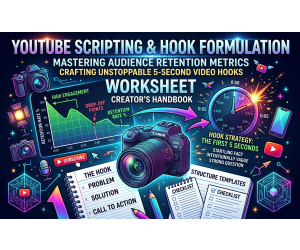
YouTube Scripting & Hook Formulation
Science, Technology, Computer Science, Engineering, Life Skills, Special Resources, Social Emotional Learning (SEL), Special Education Needs (SEN), Social Studies, Sociology, Grade 6, 7, 8, 9, 10, 11, 12, Teacher Tools, Worksheets & Printables, Workbooks, Worksheets, Word Searches, Writing Prompts, Lesson Plans, Quizzes and Tests, Quizzes, Tests
Are your students passive consumers of media, or are they a new generation of creators? Transform your classroom with this comprehensive, 5-day curriculum designed to turn high school students from mindless scrollers into master strategists of the digital age. This is not just another "how to make a video" guide. This is a deep dive into the psychology, data analytics, and persuasive writing that powers the world's largest video platform. Specifically designed for a Grade 10-12 audience, this curriculum meets students where they are—on YouTube—and equips them with critical 21st-century skills in media literacy, data analysis, and compelling communication. In a world where attention is the most valuable currency, this unit teaches students how to earn it. They will learn to deconstruct viral videos, analyze audience retention metrics, and engineer powerful "5-second hooks" that captivate an audience from the very first frame. What's Included in this 41-Page Resource? Part 1: In-Depth Theoretical Framework (10 Pages): The Attention Economy: Understanding the science of modern attention. The Psychology of the Click: Exploring concepts like the "Cognitive Threshold" and the "Triad of Immediate Engagement." Decoding Audience Retention Metrics: A student-friendly guide to reading the "Graph of Truth" to diagnose what works and what doesn't. Actionable Hook Templates: Three powerful, psychologically-backed frameworks (The Paradoxical Premise, Negative Outcome Warning, and In Medias Res) for scripting irresistible introductions. Part 2: Engaging Student Workbook (19 Pages): 10 Hands-On Worksheets: A full suite of activities covering everything from analyzing retention graphs and rewriting weak hooks to aligning visual/verbal cues and reverse-engineering competitor videos. Capstone Project: A final worksheet where students synthesize all their learning to draft the "Ultimate 5-Second Hook" for various scenarios. Part 3: Complete Teacher Resources (12 Pages): Visual Anchor Charts: High-quality diagrams of the Retention Curve, the Anatomy of a Hook, and the CVI Formulation Matrix, perfect for classroom display. Comprehensive Answer Key: Detailed answers and "ideal responses" for all 10 student worksheets. Full 5-Day Teacher Implementation Guide: A step-by-step, no-prep lesson plan with objectives, activities, homework assignments, and common pitfalls to ensure a successful and engaging unit. Equip your students for the future. Whether they aim to be content creators, marketers, filmmakers, or simply more critical consumers of digital media, this curriculum provides an unforgettable, practical, and highly relevant learning experience. Perfect for: High School English Language Arts (ELA) Media Studies or Digital Literacy Electives Career and Technical Education (CTE) programs Public Speaking & Communications Creative Writing Business & Marketing Classes Why Parents/Schools Love It: Builds Critical 21st-Century Skills: This curriculum goes beyond standard subjects, teaching in-demand skills like digital storytelling, data analysis, and persuasive communication—competencies essential for college applications and modern careers. Promotes Digital Literacy & Critical Thinking: It transforms students from passive media consumers into active, critical analysts. They learn to understand the psychological techniques used to capture their attention, making them smarter and safer digital citizens. Highly Engaging & Relevant: The content meets students in their world—YouTube. This inherent relevance boosts student engagement, participation, and knowledge retention in a way that traditional topics often struggle to match. Cross-Curricular & Practical Application: This unit seamlessly integrates concepts from English (writing), Math (data/graphs), Psychology (behavior), and Art (visuals), demonstrating the real-world application of academic knowledge. Career & Technical Education (CTE) Pathway: This resource provides a foundational understanding of the creator economy, digital marketing, and media production, opening students' eyes to viable and lucrative modern career paths. Target Student Grade Level : Based on a complete analysis, the PDF explicitly and repeatedly references Grade 10 students . The language is sophisticated yet well-explained, making it perfectly suited for this level. Primary Target: Grade 10 (Ages 15-16) Secondary Target: The curriculum is easily adaptable for Grades 9 through 12 (Ages 14-18). It would be particularly effective in advanced 9th-grade classes or as a core unit for 11th and 12th-grade electives in media, marketing, or communications. Copyright/Terms of Use: This Book was copyrighted by Syed Hammad Rizvi. This resource is for personal and single classroom use only. You may not alter, redistribute, or sell any part of this resource. In other words, you may not put it on the Internet where it could be publicly found and downloaded. If you want to share this resource with colleagues, please purchase additional licenses from Teachsimple. Thank you for respecting these terms of use. This product is happily brought to you by Syed Hammad Rizvi
Author Creative Book Store
Rating
Tags YouTubeCurriculum, VideoScripting, MediaLiteracyCurriculum, DigitalStorytellingUnit, AudienceRetention, 5SecondHook, HookFormulation, CreatorEconomyEducation, HighSchoolMedia, YouTubeForStudents

Health 1st Grade Unit 2: Growth and Development
P.E. & Health, Health, Physical Education, Special Resources, Life Skills, Social Emotional Learning (SEL), Social Skills, Grade 1, Lesson Plans, Teacher Tools, Worksheets & Printables, Worksheets
For 1st Grade Health there are seven standards that need to be taught. Unit 1 Personal Health Unit 2 Growth and Development Unit 3 Nutrition and Physical Activity Unit 4 Substance Use and Abuse Unit 5 Injury/ Violence Prevention Control and Safety Unit 6 Prevention/Control of Disease Unit 7 Environmental Consumer Health These units can be taught out of order. They are only numbered for your convenience. At the end of each unit, there is an assessment to test students’ understanding. Through using this Health 1st Grade Unit 2: Growth and Development students will explore and learn to identify physical characteristics and emotional characteristics. Included in this Health 1st Grade Unit 2: Growth and Development: * Students match the physical characteristics and facial expressions with the correct emotion. * Students will draw an emotion based on a given event. * They will also work as a class as they identify all the different characteristics their peers have compared to themselves. At the end of the unit, there is an assessment to check for understanding. Included in this unit is an assessment with answer key. A total of 9 pages for Health 1st Grade Unit 2: Growth and Development. There are seven units that cover all the health requirements for first grade. Here are the links to other health units: Health 1st Grade Unit 1: Personal Health Health 1st Grade Unit 2: Growth and Development Health 1st Grade Unit 3: Nutrition and Physical Activity Health 1st Grade Unit 4: Substance Use and Abuse Health 1st Grade Unit 5: Injury / Violence Prevention and Safety Health 1st Grade Unit 6: Prevention / Control of Disease Health 1st Grade Unit 7: Environmental / Consumer Health You can also teach your students about keeping yourself safe by studying about the Coronavirus, where and when it started and facts that plagued our world with this virus. 1st grade Coronavirus / Covid-19 Facts by Teach Simple This unit meets Common Core Standards.
Author K-5 Treasures
Tags Health Unit , Growth And Development, Physical Differences, Emotional Differences, Self Development, 1st Grade Health, First Grade Health, Healthy Activities, Healthy Foods, 1st Grade Resources
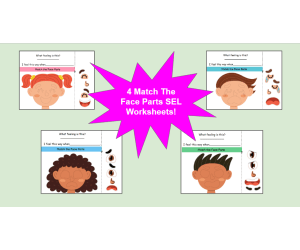
4 SEL Worksheets-Match The Feeling Face Parts
Special Resources, Social Emotional Learning (SEL), Social Skills, Special Education Needs (SEN), Kindergarten, Preschool, Grade 1, Worksheets & Printables, Worksheets, Writing Prompts
In this fun SEL worksheet package, you will receive 4 Match the Feeling Face Parts worksheets. There are 4 feelings represented; angry, worried, happy and sad. Each worksheet also has 2 writing prompts; What feeling is this? and "I feel this way when..." Students cut out the face parts, then glue them on the face. Then they can answer the writing prompts. These worksheets are great for after an SEL lesson, a school counseling lesson, or as a center activity for students to choose which one they would like to complete. This is appropriate for pre-K, kindergarten and first grades. For more SEL products, please visit my store here: https://teachsimple.com/contributor/jennifer-moyer-taylor For more SEL products, please check out these SEL focused resources: https://teachsimple.com/product/sel-presentation-the-core-four (The Core Four SEL Presentation. In this lesson, students learn about the "core four" clues to figure out how someone is feeling. The eyes, eyebrows, mouth and hands. This is a great lesson to teach before doing these Match The Face Parts worksheets. Students will look at photos of real kids and decide how they are feeling based on the 4 core. Then they will play feeling charades using their hands, eyes, eyebrows, and mouth to show how they feel and their partner will guess.) https://teachsimple.com/product/i-can-tame-my-temper-an-sel-anger-management-handout (I can tame my temper handout. Students will identify what makes them mad and are triggers for anger. They will also identify what can cool them down and squelch their fire (anger).) https://teachsimple.com/product/freebie-visuals-for-resetcalm-down-areas (FREE visuals for any calm down or reset area in the classroom. There are 3 wheels students can look at. One wheel is all about their feelings, one wheel has different strategies for what they can do to calm down and one wheel is for what behavior they need to show and do to reset back into the class activities.)
Author Jennifer Moyer Taylor
Tags Sen, Sel, Sel Worksheets, Feelings, Emotions, School Counseling, Social Emotional Learning, Social Skills, Special Education Needs, Writing Prompts
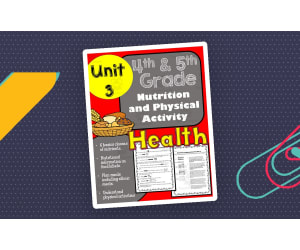
Nutrition and Physical Activity Health: 4th and 5th Grade Unit 3
P.E. & Health, Life Studies, Physical Education, Health, Special Resources, Life Skills, Social Emotional Learning (SEL), Social Skills, Grade 4, 5, Teacher Tools, Lesson Plans, Worksheets & Printables, Worksheets
Nutrition and Physical Activity Health: 4th and 5th Grade Unit 3 For 4th and 5th Grade Health, there are seven standards that students will practice and learn. Through using this 4th and 5th Grade Health Unit 3: Nutrition and Physical Activity, students will explore and learn to identify daily healthy habits. This unit is the perfect way to help 4th and 5th graders learn the importance of their personal health! This Unit 3: Nutrition and Physical Activity contains many activities that include teaching the six basic nutrients the body needs and how students can maintain a healthy lifestyle. Students will also learn the importance of portion sizes, and they will be able to learn and understand the new food labels that was recently recreated on all food containers. Furthermore, students will get to plan 3 meals that are healthy and create an ethnic recipe of their own.. Plus, they'll get to learn about physical and moderate exercises to keep their bodies healthy. At the end of this unit, there is an assessment and answer key to check for understanding. This 4th and 5th Grade Unit 3: Nutrition and Physical Activity meets Common Core standards and will make learning about nutrition and physical activity fun and exciting! Included in this 4th and 5th Grade Health unit are the following: Students will learn about the body's nutrients that are needed for a healthy lifestyle which include: Water, Protein, Carbohydrates, Fat, Vitamins, Minerals. They will learn about portion sizes and the basic food groups. They will create and plan three healthy meals. Students will decipher what food labels mean on food packages and how to apply that to their life. They will learn a new ethnic recipe and make their own meal. Students will learn about physical and moderate exercises and come up with their own ways to stay healthy with exercise. Lastly, there is an assessment to check for understanding. Included is an answer key. There are 26 pages included! There are seven units that cover all the health requirements for 4th and 5th grade. Here are the links to other health units: Health | 4th and 5th Grade Unit 1: Personal Health Health | 4th and 5th Grade Unit 2: Growth and Development Health | 4th and 5th Grade Unit 3: Nutrition and Physical Activity Health | 4th and 5th Grade Unit 4: Substance Use and Abuse Health |4th and 5th Grade Unit 5: Injury and Violence Prevention Health | 4th and 5th Grade Unit 6: Prevention and Control of Disease Health |4th and 5th Grade Unit 7: Environmental Consumer Health
Author K-5 Treasures
Tags Personal Health, Healthy Goals, Health Activities, Physical Goals, Health Goals, Health And Wellness, 4th Grade Health, 5th Grade Heath, Heath Units, Nutrition Goals

Health 2nd Grade Unit 7: Environmental / Consumer Health
P.E. & Health, Health, Physical Education, Common Core, Special Resources, Life Skills, Social Emotional Learning (SEL), Social Skills, Grade 2, Lesson Plans, Teacher Tools, Worksheets & Printables, Worksheets
For 2nd Grade Health there are seven standards that need to be taught. Unit 1 Personal Health Unit 2 Growth and Development Unit 3 Nutrition and Physical Activity Unit 4 Substance Use and Abuse Unit 5 Injury/ Violence Prevention Control and Safety Unit 6 Prevention/Control of Disease Unit 7 Environmental Consumer Health These units can be taught out of order. They are only numbered for your convenience. At the end of each unit, there is an assessment to test students’ understanding. Through using this Health 2nd Grade Unit 7: Environmental / Consumer Health students will explore and learn: * How our environment is important to our health * Understanding pollution and the different types of pollution. * A focus on keeping our oceans clean and protecting sea life. * Environmental resources. * How to reduce, reuse, and recycle. * Project ideas on how to recycle some materials. * The importance of farmers markets and it is important to a community. With so many activities, students will learn all about their environment and how to protect it better with these worksheets. This unit meets Common Core Standards. At the end of the unit, there is an assessment to check for understanding. Answers to the assessment questions are provided. A total of 12 pages for 2nd Grade Health on Environmental and Consumer Health. There are seven units that cover all the health requirements for second grade. Here are the links to other health units: Health 2nd Grade Unit 1: Personal Health Health 2nd Grade Unit 2: Growth and Development Health 1st Grade Unit 3: Nutrition and Physical Activity Health 2nd Grade Unit 4: Substance Use and Abuse Health 2nd Grade Unit 5: Injury / Violence Prevention and Safety Health 2nd Grade Unit 6: Prevention / Control of Disease Health 2nd Grade Unit 7: Environmental / Consumer Health 2nd grade Coronavirus / Covid-19 Facts
Author K-5 Treasures
Tags Health Unit, Environment, Consumer Health, Reduce Reuse Recycle, Second Grade Health, 2nd Grade Health, Healthy Habits, Reducing Pollution, Health Activities, Health Resources For 2nd Grade

Health 1st Grade Unit 1: Personal Health
P.E. & Health, Creative Arts, Art, Health, Physical Education, Social Skills, Special Resources, Life Skills, Social Emotional Learning (SEL), Grade 1, Lesson Plans, Teacher Tools, Worksheets & Printables, Worksheets
For 1st Grade Health there are seven standards that need to be taught. Unit 1 Personal Health Unit 2 Growth and Development Unit 3 Nutrition and Physical Activity Unit 4 Substance Use and Abuse Unit 5 Injury/ Violence Prevention Control and Safety Unit 6 Prevention/Control of Disease Unit 7 Environmental Consumer Health These units can be taught out of order. They are only numbered for your convenience. At the end of each unit, there is an assessment to test students’ understanding. Through using this Health 1st Grade Unit 1: Personal Health students will explore and learn to identify daily healthy habits. Included in this unit: * Understanding what active verses unactive movements and activities. * Being physically active and choosing which activity is healthy vs unhealthy. * Identifying healthy foods in a fun wordsearch. * How to understand your emotions and when to talk to someone to get help. At the end of the unit, there is an assessment to check for understanding. Included in this unit is an assessment with answer key. A total of 10 pages for Health 1st Grade Unit 1: Personal Health. There are seven units that cover all the health requirements for first grade. Here are the links to other health units: Health 1st Grade Unit 1: Personal Health Health 1st Grade Unit 2: Growth and Development Health 1st Grade Unit 3: Nutrition and Physical Activity Health 1st Grade Unit 4: Substance Use and Abuse Health 1st Grade Unit 5: Injury / Violence Prevention and Safety Health 1st Grade Unit 6: Prevention / Control of Disease Health 1st Grade Unit 7: Environmental / Consumer Health You can also teach your students about keeping yourself safe by studying about the Coronavirus, where and when it started and facts that plagued our world with this virus. 1st grade Coronavirus / Covid-19 Facts by Teach Simple This unit meets Common Core Standards.
Author K-5 Treasures
Tags Personal Health, Health Unit , Healthy Habits, Self-care, 1st Grade Health, First Grade Health, Healthy Foods, Healthy Eating, Physical Activity, Personal Development
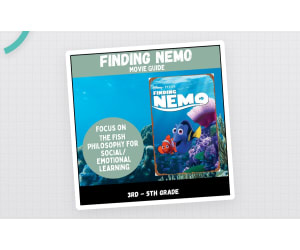
Finding Nemo Movie Guide (Fish Philosophy - Social/Emotional)
Special Resources, Social Emotional Learning (SEL), Social Skills, Grade 3, 4, 5, Teacher Tools, Worksheets
The Finding Nemo movie guide combines writing and social emotional learning (social studies) as students must find examples of the Fish Philosophy in the movie and provide evidence of how these concepts are used. Using movies and movie guides in the classroom can make learning more engaging and relatable for students. Movies bring lessons to life by showing scientific concepts and social issues in an entertaining way, while movie guides help students focus on important details and think critically about what they watch. Movie Synopsis: Marlin, a clown fish, is overly cautious with his son, Nemo, who has a small fin (Some consider it a disability). When Nemo swims too close to the surface to prove himself, he is caught by a diver, and now Marlin must set out to find him, even though he is afraid of the ocean. A blue reef fish named Dory, who has a really short memory, meets up with Marlin and complicates (and sometimes helps with) the chance meetings of sharks, jellyfish, and a host of ocean dangers. At the same time, Nemo plots his escape from a dentist's fish tank, with the help of another fish with a shortened fin and a seagull. Speaking and listening standards can also be covered depending on how many of the above topics you cover in your classroom. The movie guide provides an opportunity for teachers to "get back" some of that class time at the end of a unit, whether needed for grading projects, working one on one with students, or finishing up assessments. Other students are engaged and still actively searching for the topics covered in the unit discussed. The activities provided allow for: Class discussion Small group discussion Informal assessment Movie Rating: G Grades: 3rd - 5th Tags: Finding Nemo, Disney Pixar, movie guide, Fish Philosophy, social emotional learning, behavior management, Choose your Attitude, Play, Make Their Day, Be There File type: PDF Pages: 2 - including answer key
Author Kel's Klass
Tags Disney Pixar, Movie Guide, Finding Nemo, Fish Philosophy, Social Emotional Learning, Behavior Management, Choose Your Attitude, Play, Make Their Day, Be There
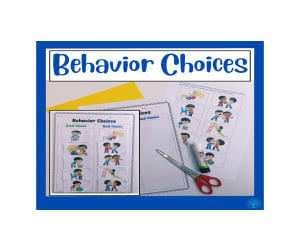
Behavior Choices Worksheet
Special Resources, Social Emotional Learning (SEL), Social Skills, Special Education Needs (SEN), Not Grade Specific, Worksheets, Worksheets & Printables
Helping young children understand good behavior versus bad behavior is crucial for social-emotional development. This hands-on cut and stick activity creatively builds those critical analysis and reflection skills using engaging picture sorting. The worksheet features 10 different illustrated scenarios a child might encounter, like swinging on a chair, sharing a book, arguing over toys and putting resources back where they go. Students must examine each scene thoughtfully, discussing why the behaviors shown are right or wrong choices. Children then cut out each scenario and physically sort them under the columns “Good Choices” or “Bad Choices” according to their own reasoning. The active sorting process cements understanding on a deeper level than just circling pictures. They gain experience breaking down and evaluating situational appropriate conduct. Finally, children glue their sorted cards permanently under the correct column, creating a reference resource for reasoning through conduct analysis independently in the future. The divided visual reminds them that small daily decisions shape not just their own feelings, but peers’ too. Interactive, hands-on and displaying impact powerfully, this cut and stick behavior worksheet advances the crucial ability to differentiate right from wrong. Guiding children positively at a young age prevents much headache for teachers later!
Author SEN Resource Source
Tags Behavior, Behavior Support, SEN, Consequences, Reflection, Self-awareness

Emotions and Coping Skills Challenge For Early Elementary Students
Special Resources, Social Emotional Learning (SEL), Grade 2, 3, 4, 5, 6, Worksheets & Printables, Worksheets
Incorporating feelings and coping skills is exactly what this fun class challenge does! This A-Z challenge is a great review activity that helps students to identify various feelings and coping skills by using the alphabet. Students are encouraged to get creative (especially for harder letters like X and Z) and see if they can come up with different types of emotions and calming strategies. This can be a great assessment tool as well if you have emotions/coping skill based groups, or have students who struggle with identifying various emotional states or appropriate coping skills! To spice things up in your small group lessons, you can have students race to see how many they can think of in a short amount of time with a little friendly competition. This activity is simple, but helps students to think about what they have learned and how to see what creative ways they can think of to calm themselves! This activity is no prep, simply print and go, to make sure you have time to actually accomplish the important things! Ideas for Use: ⭐Individual Lessons ⭐Push-In Lessons ⭐Group Lessons ⭐Class Challenges ⭐Students that may struggle with identifying emotions/coping skills
Author The Feelings and Friends Teacher
Tags Coping Skills , Emotions Worksheet, Coping Skills Worksheet, Emotions And Feelings, Coping Skills Challenge, Small Group Activity, School Counseling, Social Emotional Learning
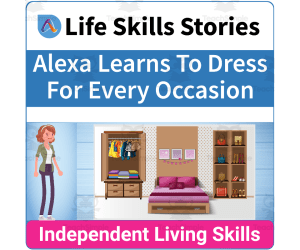
Daily Life Skills: Alexa Learns How to Dress for Every Occasion
Special Resources, Life Studies, Social Emotional Learning (SEL), Special Education Needs (SEN), Speech Therapy, Life Skills, Grade 10, 11, 12, Activities, Worksheets & Printables, Worksheets
In Alexa Learns How to Dress for Every Occasion, Alyssa teaches Alexa that dressing well can help one to stand out positively. The use of this Daily Life Skills resource will allow students to engage in: • This functional life skills story emphasizes the importance of dressing appropriately for various occasions such as school, work, and hiking. • The story uses simple and clear language to explain how appearance can influence people's perceptions. • This life skills story is an excellent conversation starter for discussing the significance of being presentable in public. • The interactive dialog and questions engage learners and reinforce their understanding of the story and the concepts. • The real-world examples, and age-appropriate visual aids, such as illustrations and diagrams , make this conversational story an excellent resource for teaching social narratives. • This social narrative's simple and direct language sets clear expectations, making it ideal for high school students and adults with intellectual disabilities. The story includes seven (7) reading comprehension questions and answers to reinforce and measure the student's understanding of the Daily Life Skills contained in the story! This life skills story will assist high school students and young adults in developing the necessary independent living skills to become more independent at school, at home, and in their communities. This story is designed to be used by special education teachers, occupational therapists, speech therapists, ABA therapists, registered behavior technicians (RBT), parents, supported living coaches, and life skills teachers to teach their students valuable life skills. In addition to interactive instruction, this resource is ideal for hands-on and community-based learning, defining, setting, and measuring IEP goals. Related Products for Developing Independent Living Skills The Value of a Bank Account How to Create a Monthly Budget How to Create a Shopping List How Credit Cards Work Level 1 Grocery Shopping Money Math Level 1 Clothes Shopping Money Math Level 1 Reading Menus Money Math Engage your special education class with this highly interactive High School Daily Life Skills Story! It's printable , easy to use, and ready to hand out! A PDF file with six(6) pages.
Author Adulting Life Skills Resources
Tags Adulting On The Spectrum, Independent Living Skills, Autism Reading Comprehension, Life Skills For Autistic Teens And Adults, Life Skills For Visual Learners, Functional Self-Care Resources, Summer Life Skills Activities, Life Skills For Occupational Therapists, Life Skills For ABA Therapists, Social And Emotional Learning

Vocational Skills Activity: How to Read a Basic Pay Stub
Special Resources, Creative Arts, Art, Life Studies, Social Emotional Learning (SEL), Special Education Needs (SEN), Life Skills, Finance, Career, Grade 10, 11, 12, Activities, Worksheets & Printables, Worksheets
In this Special Education life skills activity, high school students will learn How to Read a Basic Pay Stub by calculating earnings, gross pay, and net pay. The use of this Vocational Skills Activity will allow students to engage in: • Calculating multiple earnings types • How to calculate your gross pay • How to calculate your net pay • Learn how to calculate earnings, gross pay, and deductions • Provide an overview of various types of deductions, such as medical and retirement deductions • Describe different types of taxes, including federal, social security, and Medicare There are a total of 30 reading comprehension questions in this Vocational Skills Activity! This activity will assist high school students in developing the necessary life skills to become more independent at school, at home, and in their communities. A great place to use this handout is in special education classes or in one-to-one settings, such as ABA therapy, speech therapy, occupational therapy, and Registered Behavior Technician (RBT) sessions. High school students who are working on independent living would benefit significantly from this activity for defining, setting, and measuring IEP goals. In addition to interactive instruction, this resource is ideal for hands-on and community-based learning. Engage your special education class with this highly interactive High School Vocational Skills Activity! This activity contains step-by-step instructions, questions, and answers that reinforce learning, age-appropriate graphics, real-world examples, and ideas for implementation. This is the perfect special education activity for grade 10, grade 11, grade 12, and autism life skill centers . This special education life skills handout was designed to assist teens and adults with difficulties developing independent living skills. It's a printable, easy-to-use activity ready to hand out! Related Products for Developing Independent Living Skills How to Schedule an Appointment How to Fill Out a Job Application How to Create an Emergency Exit Plan How to Create a Strong Password A PDF with 17 unique pages. Color and black-and-white versions of each page are available for this pdf resource.
Author Adulting Life Skills Resources
Tags Life Skills Money Math, Independent Living Skills, IEP Goal-Oriented Skills, Autism Resource For Parent, Life Skills For Autistic Teens And Adults, Adulting On The Spectrum, Social And Emotional Learning, Life Skills For Teens, Life Skills For Adults, Autism And Money Skills, Reading A Pay Stub Worksheet Pdf, How To Read A Pay Stub Worksheet, Reading A Pay Stub Worksheet Answers, Reading A Paycheck Stub Worksheet, Reading A Pay Stub Worksheet
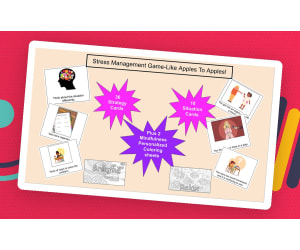
SEL Stress Management Game + Coloring Pages
Special Resources, Social Emotional Learning (SEL), Special Education Needs (SEN), Social Skills, Life Skills, Grade 3, 4, 5, 6, Activities, Games, Worksheets & Printables, Worksheets, Coloring Pages
In this resource, you will get an engaging game like Apples To Apples. There are 36 strategy cards and 18 situation cards. This is an SEL game. Each person takes a turn with being the judge like Apples to Apples. It is important to make enough sets for the number of groups who will be playing. for example, I recommend at least 3-5 people playing together for each group. So if there are 20 students, then create at least 5 different sets of the cards, Then follow the directions for the game below: First, everyone gets 5 strategy cards. There is no revealing the cards to other players. Then one person is chosen to be the "judge" for the first round. I usually pick the oldest person to make it fair. The judge reveals the card to all and even can read the card out loud. The the other players choose one of their strategy cards to handle that particular situation. Then the judge decides which one they would use. Important; there is not right or wrong here, just what one person would do in that situation. Next the next player goes (usually counter clockwise) to who will be the judge. The person will reveal the situation and the other players will play their strategy card. Play as long as time allows. Next, you can print off the mindfulness coloring sheets for students to color and reinforce the idea or coloring mindfully when they are upset, frustrate, need some time alone, etc. There is a way to change the word and position of the word in the mindfulness coloring sheet. These are SEL coloring pages. For more SEL resources and products, please visit my SEL store at: https://teachsimple.com/contributor/jennifer-moyer-taylor I am a full-time school counselor who works with kindergarten through 8th graders. My products are "kid tested, kid approved"!
Author Jennifer Moyer Taylor
Rating
Tags Apples To Apples, Games, Stress Management, Social Skills, Social Emotional Learning, School Counseling, SEL, SEL Coloring Pages, Special Education