Paragraph Correction Worksheets
- Grades
- Grades 5–8, Elementary, Middle School
- File type
- Preparation
- Print ready


- Subject
- ELA, Grammar
- Topic
- grammar worksheets, commas
- Resource types
- Worksheets & Printables, Worksheets
- Preparation
- Print ready
About this resource
What's inside this resource
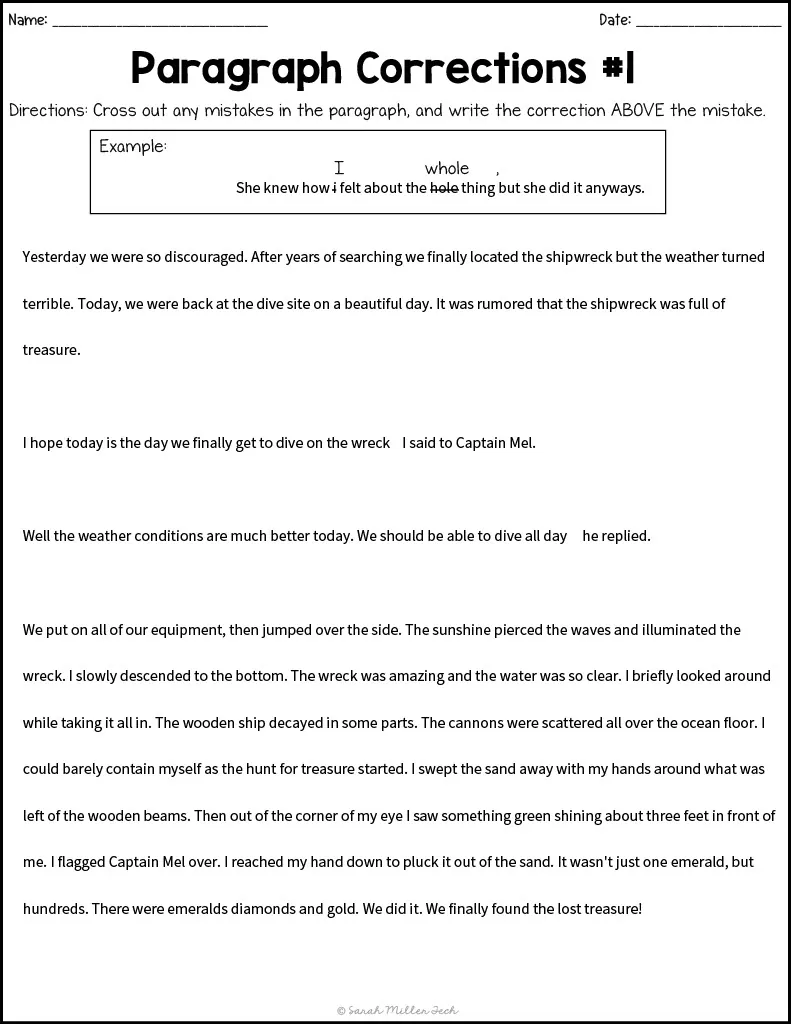
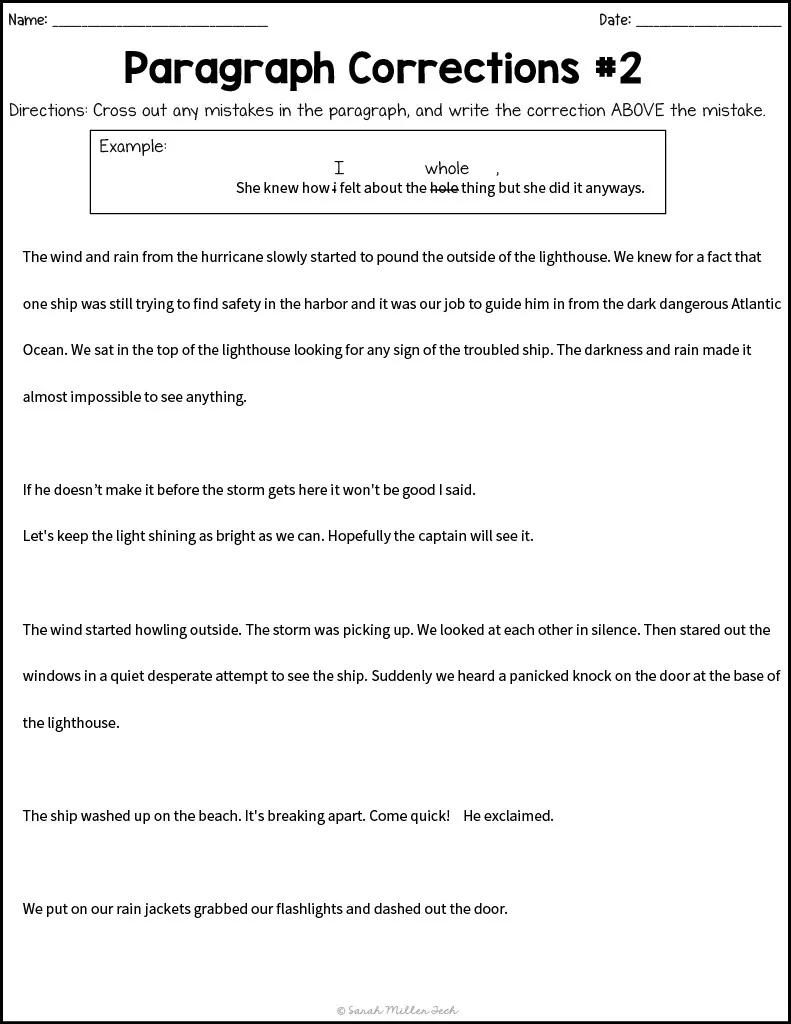
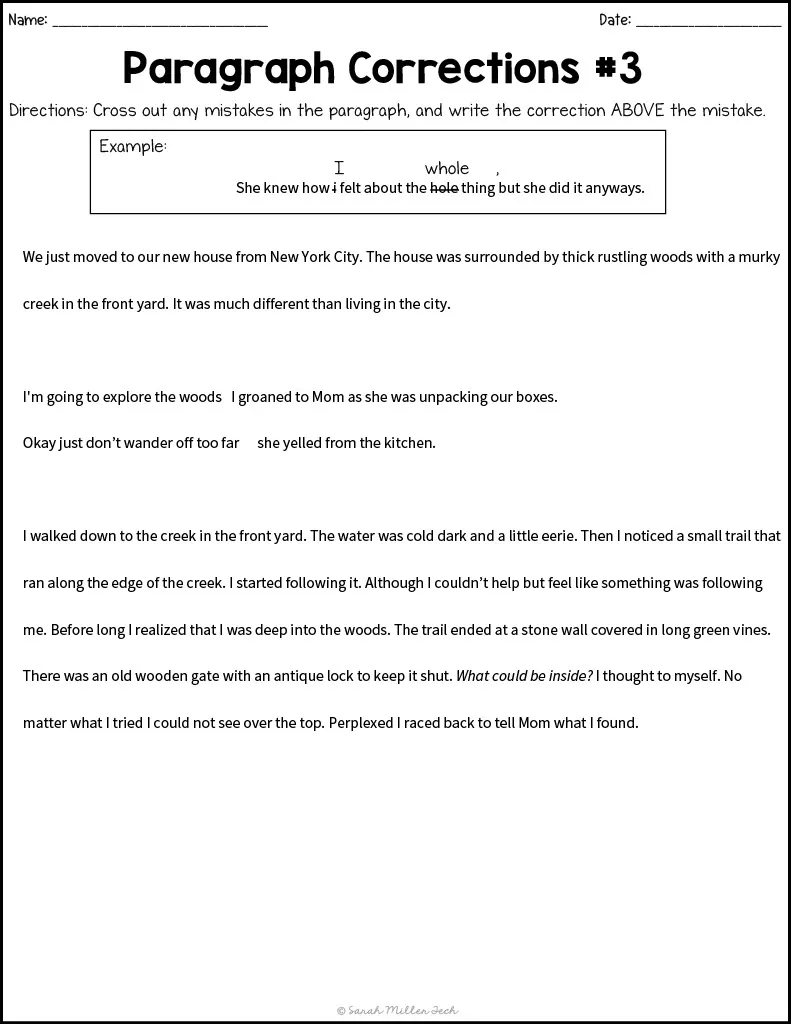
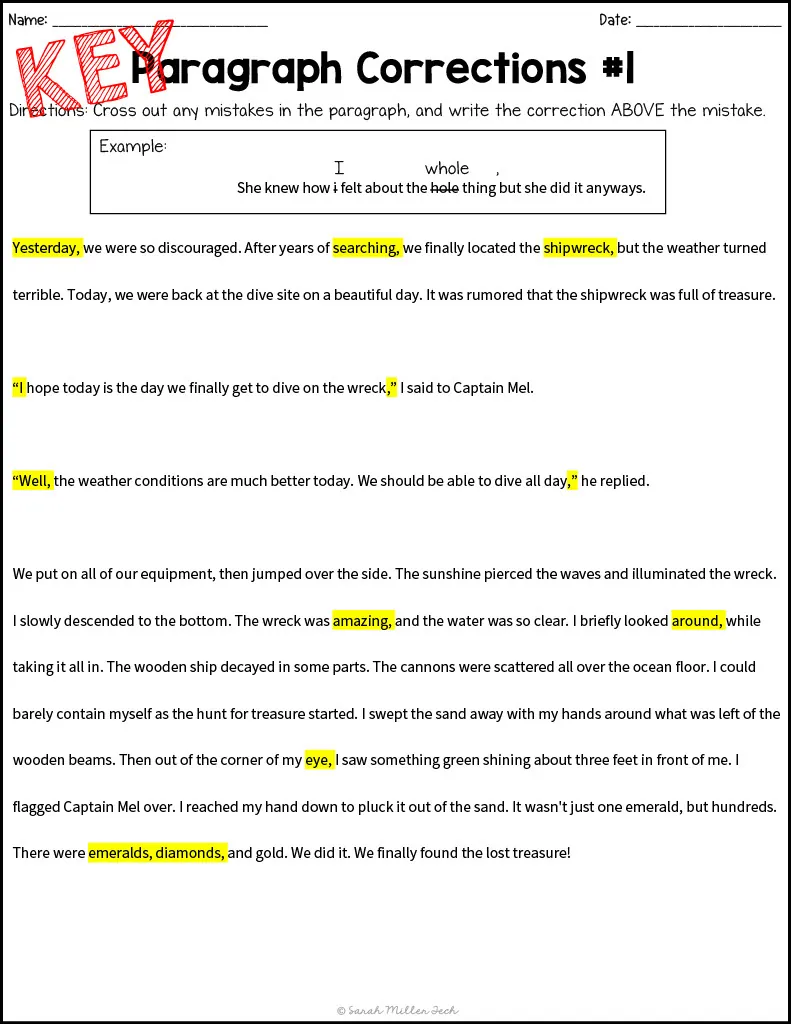
These are Paragraph Corrections Worksheets.
There are 3 different worksheets that you can print and give to students for homework, small groups and more.
Students will work to find the errors in each paragraph.
Answer keys included.
There is also a Comma Rules Cheat Sheet to help students.
Related resources
More resources teachers may find useful
24 related resources were found using this product's title, contributor, categories and tags.


In the classroom
Teaching tips & learning objectives

Learning objectives
Identify missing commas in context, including after introductory words, in lists, and before conjunctions joining independent clauses.
Identify and add missing quotation marks around spoken dialogue within a narrative paragraph.
Apply six specific comma rules (lists, conjunctions, introductory words, quoted text, interruptions, paired adjectives) using the cheat sheet as a reference.

Teaching tips
Have students complete a paragraph without the cheat sheet first, then check their corrections against it, since the cheat sheet's six rules map directly onto the kinds of errors in the three paragraphs.
Use one paragraph for whole-class modeling, then assign the remaining two for independent or small-group practice.
Keep the three answer key pages (marked 'KEY') separate from the student paragraphs before distributing. Add spelling and new-speaker lines to the editing practice with this dialogue proofreading worksheet.

Skills covered
Comma usage — students insert commas after introductory words, in lists, before conjunctions joining two independent clauses, and around interruptions, per the cheat sheet's six rules.
Quotation mark usage — students add missing quotation marks around spoken dialogue, such as identifying that 'I hope today is the day...' needs to be set off as a quotation.
Proofreading and editing — students read a full narrative paragraph critically to locate and mark every mechanical error, not just isolated sentences.
Good to know
Questions teachers ask about this resource
Do the three paragraphs use different stories?
Yes. Students edit narratives about a shipwreck dive, a lighthouse storm rescue and exploring woods near a new house.

No reviews yet
Downloaded this resource? Tell other teachers how it went.
Resource details
Concepts & topics
Core concepts
 Core concepts
commas
quotation marks
proofreading
 Topics
Explore more
Categories this resource belongs to
Explore related searches
More to explore
You may also like