Short Vowel Worksheets and Printables - Short e
- Grades
- Preschool–Pre-K, Grade 1, Elementary
- File type
- Preparation
- Print ready


- Subject
- ELA, Language Development, Phonics
- Topic
- Short Vowel Worksheets, Short Vowel Printables
- Resource types
- Worksheets & Printables, Worksheets
- Preparation
- Print ready
About this resource
What's inside this resource
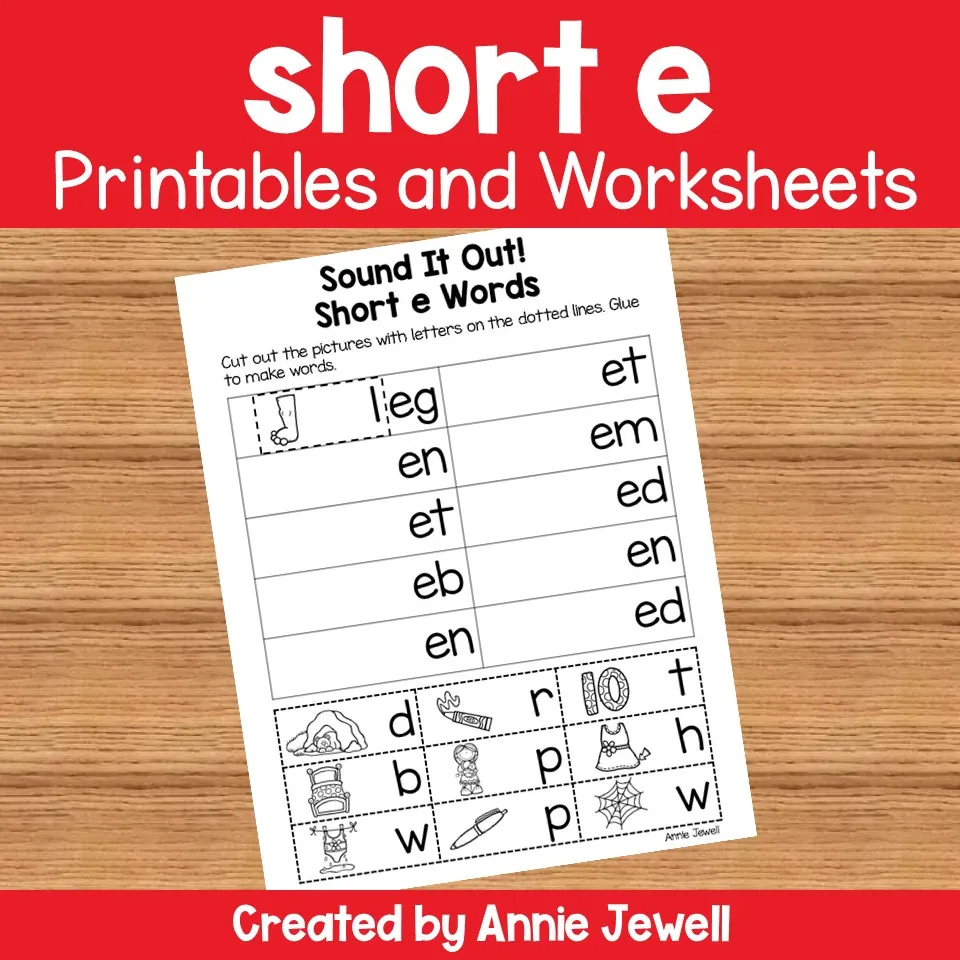
Do your students need extra practice with short vowels? This No Prep "short e" resource includes 13 worksheets. Focus is on CVC words. This word work printable is perfect for kindergarten and 1st Grade.
Included in this resource:
Word work
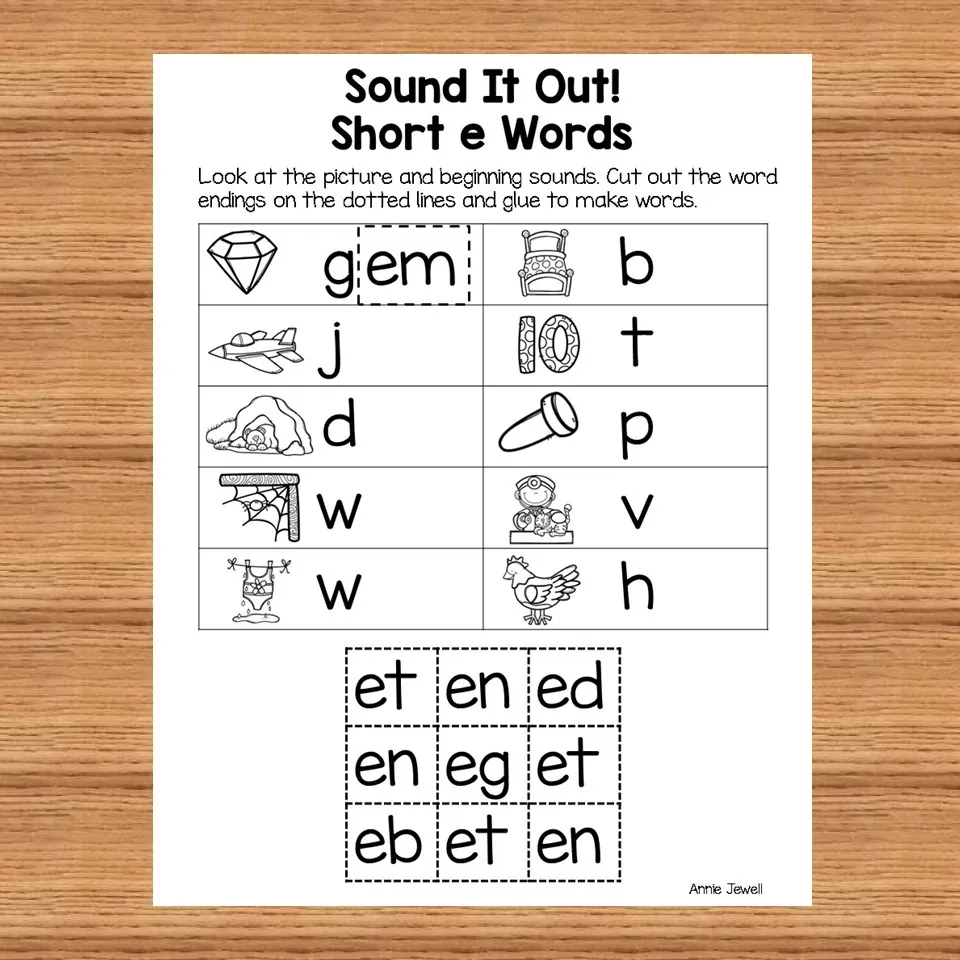
9 pages – Beginning sounds, word endings, matching words to pictures, and spelling cvc words.
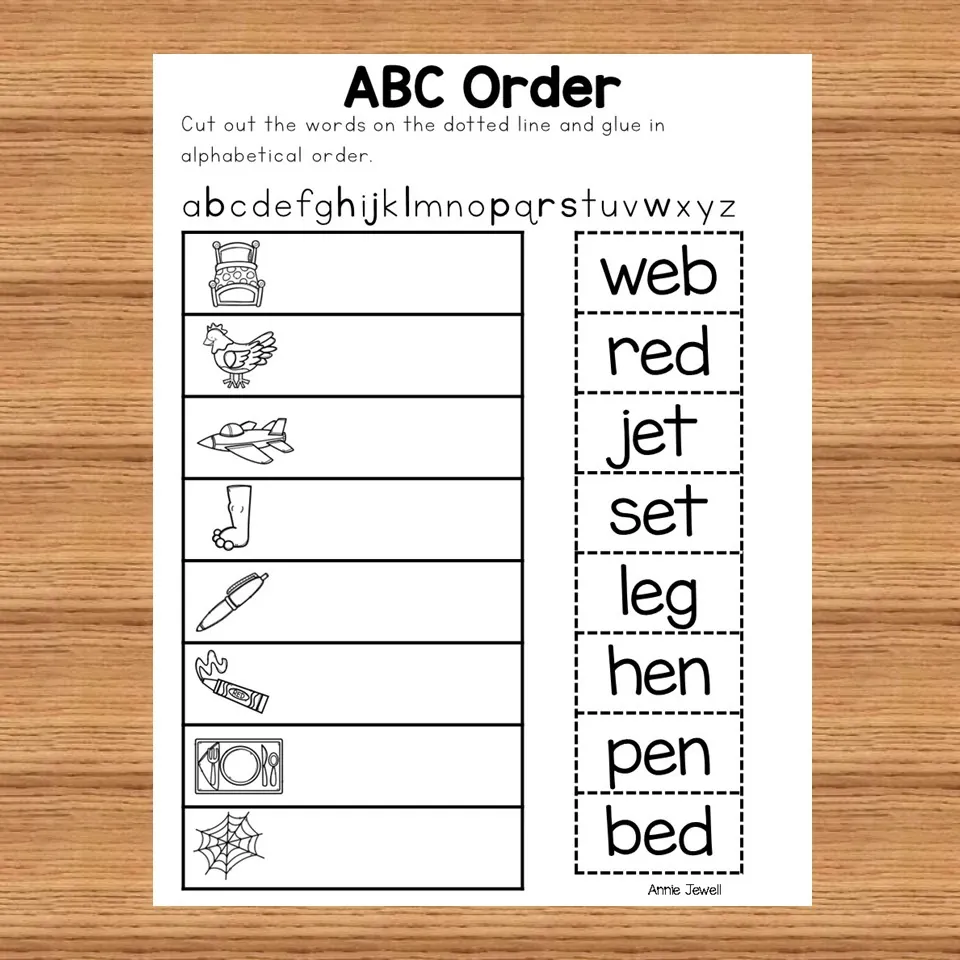
Alphabetical Order
2 pages - These printables have picture clues to assist young readers as an introduction to ABC order.
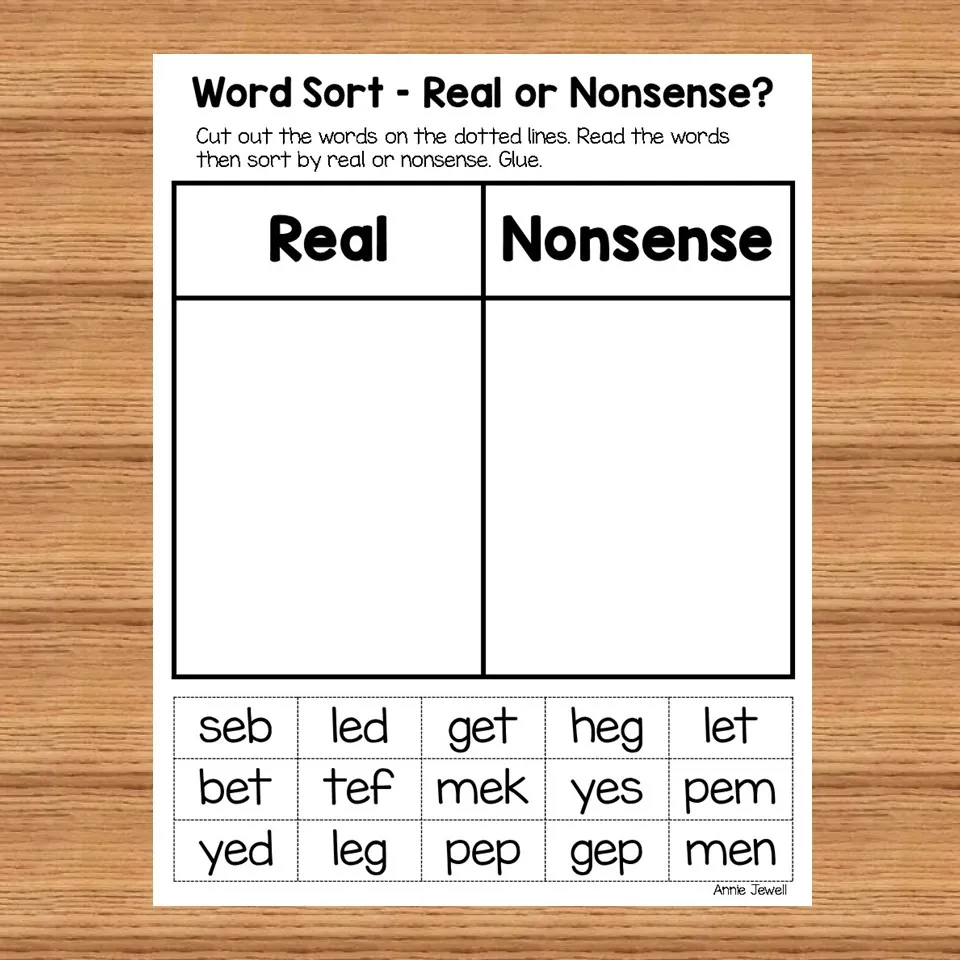
Real and Nonsense Word Sort
2 pages – Children sound out words then sort into categories- Real or Nonsense.
Related resources
More resources teachers may find useful
24 related resources were found using this product's title, contributor, categories and tags.


In the classroom
Teaching tips & learning objectives

Learning objectives
Build short-e CVC words by combining beginning sounds and word endings.
Match short-e words to their corresponding pictures.
Write a short-e word from memory to label a picture.

Teaching tips
Prepare scissors and glue sticks (or pre-cut the pieces) before the lesson, since four of the "Sound It Out!" sheets require cutting and gluing letter and word-ending pieces.
Use the vocabulary reference page to preview all 19 short-e words with students before assigning the cut-and-glue sheets.
Save the two "Real or Nonsense?" sort sheets for after students are comfortable decoding short-e CVC words, since several nonsense words (heg, mek, sef) require sounding out before sorting.

Skills covered
CVC word building — students combine beginning-sound and word-ending pieces to construct short-e words like gem, wed, and net.
Word-picture matching — students match written short-e words to their corresponding pictures.
Independent spelling and labeling — students write a short-e word from memory to label a picture, without letter pieces to assemble.
Good to know
Questions teachers ask about this resource
How do the four cut-and-glue "Sound It Out!" sheets differ from each other?
The first two ask students to cut and glue both a beginning letter and a word ending to build each short-e word from picture clues, while the last two already print the picture with its beginning sound and ask students to cut and glue only the matching word ending.
Are the nonsense words in the word-sort sheets random letters, or do they follow the short-e pattern?
They follow the same short-e CVC pattern as the real words, such as heg, mek, and sef, so students must sound out each one rather than recognize it by sight to decide if it's real or invented.

No reviews yet
Downloaded this resource? Tell other teachers how it went.
Resource details
Concepts & topics
Core concepts
 Core concepts
short e
CVC words
phonics
alphabetical order
 Topics
Explore more
Categories this resource belongs to
Explore related searches
More to explore
You may also like