



3,886 products added recently
Page 29 - 2nd Grade Activities
Boost your second graders' enthusiasm with activities that combine fun and education. These resources cover various subjects and promote critical thinking and collaboration. Use them to enrich your lessons and keep students actively involved in their learning journey.

 Show filters

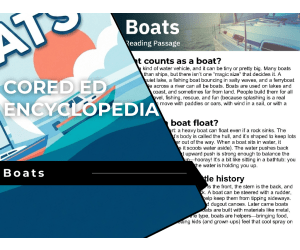
Boats Reading Comprehension Passage - Cored Ed Encyclopedia
ELA, Language Development, Resources for Teachers, Reading Comprehension, Reading, Pre-Reading, Creative Writing, Writing, Physics, Science, Grade 2, 3, 4, 5, Worksheets & Printables, Worksheets, Teacher Tools, Centers, Activities, Writing Prompts, Assessments, Tests, Quizzes and Tests, Quizzes
This boats reading comprehension contains the following: Pre-Reading Trivia Students will write down one thing they already know about the subject and then read five more facts and discuss. These facts are fun, and the students will enjoy learning about the subject before reading more. COMPANION VIDEO NOW AVAILABLE (EMBEDDED AFTER PREVIEW PICTURES IN PRODUCT DESCRIPTION) Reading Passage The text is a high-interest reading passage with set paragraphs, roughly three to four paragraphs long. It contains a variety of themes about the topic, anywhere from history to technology. The passage is between 250 and 350 words in length. Mixed Questions The first question page contains four multiple-choice questions, each with a choice of four answers, and three written response questions that require a sentence or two from the student. Creative Writing In this question, the student will be required to write a five to eight sentence paragraph on a question related to the topic. Extension Activities This page is optional for fast finishers. If there are five to ten minutes left at the end of the lesson, the student can choose one of three activities, each one requiring a different skill. Answer Key There are answers for the multiple-choice questions and three written response questions have sample answers. FULL CATALOG OF DOWNLOAD LINKS AND ENCYCLOPEDIA INDEX HERE Cored Ed Encyclopedia Overview The Cored Ed Encyclopedia is a weekly series of lessons that you can pick up and use right away. These short readings fit into whatever time you have available. Each one includes a warm-up, a reading, and a set of questions, but it’s flexible — you can do just the reading, the full lesson, or skip the writing section if you need to. Each lesson focuses on a single topic so students don’t get lost. The writing is clear but never childish, making it perfect for grades two through five. Topics range from animals and science to history, inventions, and everyday things. No matter the level of the student, everyone should take away at least one new idea or fact from each lesson. The materials are easy to print, easy to explain, and require no setup. They work well for whole-class teaching, partner work, or independent study.
Author Cored Education
Rating
Tags Vocabulary, Spelling, Reading Comprehension, Reading Passages, Cored Encyclopedia, Facts, Reading, Creative Writing, Physics, Boats
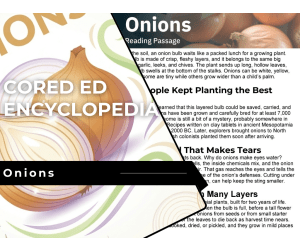
Onions Reading Comprehension Passage - Cored Ed Encyclopedia
ELA, Language Development, Resources for Teachers, Reading Comprehension, Reading, Pre-Reading, Writing, Life Sciences, Science, Nature & Plants, Grade 2, 3, 4, 5, Worksheets & Printables, Worksheets, Teacher Tools, Centers, Activities, Writing Prompts, Assessments, Tests, Quizzes and Tests, Quizzes
This onions reading comprehension contains the following: Visualize on the Cover (Teacher Read Aloud Script) Start your lesson by taking a few moments to visualize the topic and share thoughts or feelings about it. Pre-Reading Trivia Students will write down one thing they already know about the subject and then read five more facts and discuss. These facts are fun, and the students will enjoy learning about the subject before reading more. Reading Passage The text is a high-interest reading passage with set paragraphs, roughly three to four paragraphs long. It contains a variety of themes about the topic, anywhere from history to technology. The passage is between 250 and 350 words in length. Mixed Questions The first question page contains four multiple-choice questions, each with a choice of four answers, and three written response questions that require a sentence or two from the student. Vocabulary Questions Practice seven key words from the text in this section across two activities. First section is scrambled words where students will unscramble three words given a clue for each. The second section is a word to meaning matching activity. Creative Writing In this question, the student will be required to write a five to eight sentence paragraph on a question related to the topic. Extension Activities This page is optional for fast finishers or to take home. There are several activities, each one requiring a different skill. Do some, do none, do all, completely optional - but you will feel reassured knowing every possibility is planned for. Includes summary writting question. Answer Key There are answers for the multiple-choice questions, written response questions have sample answers, vocabulary answers and if there is a summary question then a sample summary will be provided as well. FULL CATALOG OF DOWNLOAD LINKS AND ENCYCLOPEDIA INDEX HERE Lesson Snapshot Title: Onions Genre: Nonfiction (informational text) Subject: Life Science (plants) / Reading Informational Text Primary Topic: Onion bulbs, history, tears, and growing Estimated Guided Reading Level (A–Z): Q What This Lesson Teaches Best How an onion bulb is made of layers and helps the plant grow. Key plant facts: onions send up hollow leaves , and the bulb swells at the bottom of the stalks. A clear cause-and-effect explanation for why cutting onions can make eyes water (chemicals mix → gas → tears). A brief history of onions, including early recipes on clay tablets in ancient Mesopotamia and later planting in North America. How onions are grown/harvested, including that onions are biennial plants and can be started from sets . Learning Goals Students will identify details that describe what an onion bulb is like and what it does for the plant. Students will explain why cutting an onion can make eyes water using information from the text. Students will describe one way people long ago saved and replanted onions. Students will describe how onions can be grown (from seeds or sets) and when they are often harvested. Students will use section headings to locate key information in the passage. Key Vocabulary From the Text biennial — a plant built for a two-year life cycle. chemicals — substances that can mix and cause changes. Mesopotamia — an ancient place where people wrote on clay tablets. colonists — people who settled in a new place long ago. sets — small starter onion bulbs used for planting. Cored Ed Encyclopedia Overview The Cored Ed Encyclopedia is a weekly series of lessons that you can pick up and use right away. These short readings fit into whatever time you have available. Each one includes a warm-up, a reading, and a set of questions, but it’s flexible — you can do just the reading, the full lesson, or skip the writing section if you need to. Each lesson focuses on a single topic so students don’t get lost. The writing is clear but never childish, making it perfect for grades two through five. Topics range from animals and science to history, inventions, and everyday things. No matter the level of the student, everyone should take away at least one new idea or fact from each lesson. The materials are easy to print, easy to explain, and require no setup. They work well for whole-class teaching, partner work, or independent study.
Author Cored Education
Rating
Tags Vocabulary, Spelling, Reading Comprehension, Reading Passages, Reading, Creative Writing, Reading Strategies, Writing Prompts, Onions, Life Science
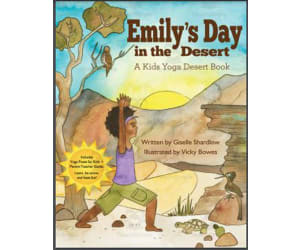
Kids Yoga Stories: Yoga Desert Book for Kids - Emily’s Day in the Desert
P.E. & Health, Yoga, Preschool, Kindergarten, Grade 1, 2, 3, Activities
This eBook of Yoga Desert Book for Kids - Emily’s Day in the Desert will help students learn about the Desert through movement! Yoga Desert Book for Kids - Emily’s Day in the Desert provides lots of guidance for kids and parents. Included in this eBook of Yoga Desert Book for Kids - Emily’s Day in the Desert: - A desert yoga eBook - Guide to teach yoga -15 yoga poses - 48 pages Recommended for ages 4+ Ways in which you can use these cards as homeschoolers or in the classroom include: -For transition times -Morning routines or circle times -Brain breaks to calm their minds and bodies -Physical education -Occupational and/or physical therapy -With one child, small, or large groups Benefits of Yoga for kids include: -Increased strength -Increased flexibility -Improves sleep -Promotes positive interactions amongst adults and children -Develops self-confidence -Improves self-expression -Improves body awareness -Promotes a lifestyle that is active and healthy.
Author Kids Yoga Stories
Tags Kids Yoga Stories, Yoga Desert , EBook Yoga, Emily's Day, Kids Yoga
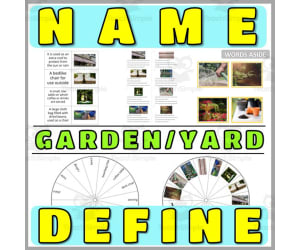
Concept Nouns Naming and Definitions 19
Special Resources, ELA, Language Development, Vocabulary, ESL, Special Education Needs (SEN), Grade 2, 3, 4, 5, Activities, Games
This series of PDF BUNDLE resources focuses on identifying noun concepts, with engaging visualizations ( pictures and graphic arrangements ) of vocabulary by topic. The activity materials in this assignment are designed to help students develop their vocabulary and reading comprehension skills through interactive activities and real-life examples. It includes clear names and definitions of words from common noun categories and can also serve as discussion prompts to encourage critical and analytical thinking, deepen your understanding of the language, and improve your communication skills . This resource is designed to be accessible and engaging to all students . Ideal for teaching English as a Second Language and intervention sessions on learning difficulties. Clear and concise language, visual aids and interactive activities help students easily understand and remember information, integrating visual and kinesthetic elements. You can choose from a variety of worksheets that suit your student's level, interests, and printing preferences. Each category topic includes : 2 sets of Flash cards ( definition sentence / image, image / definition sentence ) 2 sets of Flash cards ( definition word / phrase, definition phrase / word ) 3 anagram strings ( mixed letters of single words or in definition text ) 1 Crossword ( word definition ) 2 sets of linked activities Draw a Line ( definition / image, image / definition ) 2 sets of matching activities Draw a line ( word / definition, definition / word ) 2 series of Quizzes ( definition / image, image / definition ) 2 series of quizzes ( word / definition, definition / word ) 3 Wheels of Fortune ( words, definitions, images ) Search page for 1 word ( word definition ) 2 writing boards ( words, definitions ) 2 blank boards/artboards ( words, definitions ) Various puzzles and word games for naming noun concepts as well . * Use as-is or create your own board games, like Snap, Memory, Match to Sample, and Knowledge Races . Distribute it as morning exercises, quiet time and focus activities, independent workbooks, or fun homework . 65 PDF Pages
Author WORDS ASIDE
Tags Esl, Word Defining, Semantics, Word Search, Anagram, Flash Cards, Centers, Crossword, Definitions, Writing Expository
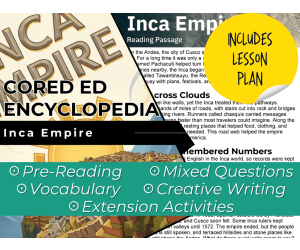
Inca Empire Reading Comprehension Passage - Cored Ed Encyclopedia
ELA, Reading Comprehension, Reading, History, Social Studies, Science, Geography, Technology, Pre-Reading, Language Development, Grade 2, 3, 4, 5, Worksheets & Printables, Worksheets, Teacher Tools, Centers, Activities, Writing Prompts, Assessments, Quizzes and Tests, Quizzes, Lesson Plans
This Inca Empire reading comprehension with lesson plan includes: Visualization (on the front cover) Start your lesson by taking a minute to think and share something about the topic. Read the script aloud (slowly), perhaps prepare some music or sound effects. Student close their eyes and let their imaginations wander. Students open their eyes, read the question aloud and give them a few minutes to complete. Ask a few students to share or keep answers until the end to compare with what they learn in the passage. Quick pause—thousands of Cored Education products are included with your TeachSimple membership. Download links and encyclopedia index available here. Pre-Reading Trivia Students will write down one thing they already know about the subject and then read five more facts and discuss. These facts are fun, and the students will enjoy learning about the subject before reading more. Give 1 minute for students to write what they already know (no pressure—best guess is fine). Read the five facts together. After each fact, do ask a student for their opinion, was it surprising? Set a purpose by asking students to highlight/underline one fact they want to learn more about during the reading. Reading Passage The text is a high-interest reading passage with set paragraphs, roughly three to four paragraphs long. It contains a variety of themes about the topic, anywhere from history to technology. The passage is between 250 and 350 words in length. First, ask students to look at the headings and see what they’ll learn about today. What do they know about the topic/heading? First read options: Teacher read-aloud (best for support). Partner reading (paragraph by paragraph). While reading, students underline important details, and vocabulary words they think may come up in the questions section. Mixed Questions The first question page contains four multiple-choice questions, each with a choice of four answers, and three written response questions that require a sentence or two from the student. Students complete the mcqs first independently, then review quickly as a class. For the 3 written responses, try to get students giving the answer with some form of evidence: “I think ___ because the text says ___.” If students get stuck, send them back to check the passage. Vocabulary Questions Practice seven key words from the text in this section across two activities. First section is scrambled words where students will unscramble three words given a clue for each. The second section is a word to meaning matching activity. Before starting, have some students read out words they underlined in the passage. Ask students to say the word and read aloud the sentence(s) around each word. Ask students to do scrambled words and the matching exercise in pairs then go through answers as a class. For the scrambled spelling task, get four pairs to come up to the board and write the words for extra practice with the other student reading out the clue. For the matching task, prompt students to give full sentences: “I matched ___ with ___ because ___.” Creative Writing In this question, the student will be required to write a five to eight sentence paragraph on a question related to the topic. Before starting, ask students write down 3 key ideas they are going to include in their piece. Ask students for ideas to share around the class to help those struggling. Pro writing expectations: 5–8 sentences At least 2 facts or details from the passage At least 2 vocabulary words from the previous page Students read their paragraphs while classmates listen for facts and vocabulary words. Extension Activities This page is optional for fast finishers or to take home. There are several activities, each one requiring a different skill. Do some, do none, do all, completely optional - but you will feel reassured knowing every possibility is planned for. Includes summary writting question and additional facts. Answer Key There are answers for the multiple-choice questions, written response questions have sample answers, vocabulary answers and if there is a summary question then a sample summary will be provided as well. Lesson Plan Included Customized lesson plan for this lesson is included. Lesson Snapshot Title: Inca Empire Genre: Nonfiction (informational passage) Subject: Social Studies (History) / Reading (Informational Text) Primary Topic: Cusco, roads, quipu records, terraces, legacy Estimated Guided Reading Level (A–Z): S What This Lesson Teaches Best How Cusco grew from a small kingdom into a larger Inca state in the 1400s under a leader named Pachacuti, and how the state was called Tawantinsuyu (the Realm of the Four Parts). How Inca engineers built a wide road system with stairs cut into rock and bridges, plus storehouses and resting places that helped the empire spread across western South America. How the Inca kept records without an English-like alphabet by using a quipu (cords with knots and colors for counts and notes). How terraces were used on hillsides to hold soil and water for crops like potatoes and corn, and how work was organized by the state as a kind of tax. How the empire ended after conflict and Spanish conquest, while people and culture continued (Quechua still spoken; terraces and stone places remain). Learning Goals Describe how Cusco changed in the 1400s and name the Inca state described in the passage. Explain how roads, bridges, and storehouses helped the Inca move messages, supplies, and armies. Explain what a quipu is and what it could record, based on the text. Describe what terraces are used for and how they helped farming on hillsides. Identify what happened in the 1500s that led to the end of the empire and one way Inca life continued afterward. Key Vocabulary From the Text Tawantinsuyu — the Inca state called the Realm of the Four Parts. chasquis — runners who carried messages from stop to stop. quipu — cords with knots and colors for records. terraces — flat steps that hold soil and water. storehouses — places along routes that kept needed supplies. FULL CATALOG OF DOWNLOAD LINKS AND ENCYCLOPEDIA INDEX HERE
Author Cored Education
Rating
Tags Vocabulary, Reading Comprehension, Reading Passages, Lesson Plans, Ela Lesson Plans, Reading Comprehension Lesson Plans, Pre-reading, History, Social Studies Lesson Plans, Geography

Enrichment Activities
ELA, Reading, Grade 3, 4, 5, Activities
155 Pages of Great Enrichment Activities Many times students complete work and we may be working at the small group table, talking with a principal, or handling a situation with another student. Students are told to sit quietly, read silently, or wait until given further instructions. We also have those fast-finishers that are done before some children write their name and date. These Enrichment Activities help engage students, creates a flawless system of purpose in your classroom, and help students feel proud and successful in their work. I have poured my heart and soul into these activities because I know how much we need this and how much our students need this!
Author Hillary’s Teaching Adventures
Tags Enrichment, Reading, Centers, Gifted And Talented, Writing, Enrichment Activities Middle School, Kindergarten Enrichment Activities, Reading Enrichment Activities For 3rd Graders, Free Enrichment Activities For Middle School, Enrichment Activities For Kindergarten

skip counting by 8s bingo - boards 11-15
Math, Patterns, Early Math, Numbers, Grade 1, 2, 3, Activities, Games
Need a fun, engaging activity for practicing skip counting by 8 with your kiddos? This math bingo game is perfect for getting your students focused on skip counting in 8s! Preparation: Print and laminate enough Bingo Boards for each student to have one Optional: print, cut and laminate the Playing Squares Print, cut and laminate the Calling Cards. Lamination is optional, but recommended, as it will ensure that the game remains in good condition and can be used for many years to come! To avoid excessive printing and laminating, the Playing Squares could be replaced with other manipulatives such as buttons or counters. Alternatively, students could mark squares off on their Bingo Boards with dry erase markers and then simply clean the boards again after playing (provided that you have laminated the boards) How to Play: Each student needs a Bingo Board and at least 7 Playing Squares (or other manipulatives or a dry erase marker) Shuffle the Calling Cards and place them in a pile. Draw a Calling Card and call out and/or display the contents of the card. Each student looks on their Bingo Board for a block that matches the Calling Card. If they find one, they cover that block with a Playing Square. Draw a new Calling Card and repeat the process. The game continues until somebody wins. To win, a student must shout out “BINGO!” when they have covered three blocks in a row (horizontally, vertically or diagonally). If the Calling Cards run out before anybody wins, simply shuffle them again and continue playing. Please note: Sometimes there may be more than one block on the Bingo Board that matches the Calling Card. The student may only cover one block on a turn. Once that turn is over, the Playing Square may not be moved to cover a different block. This resource includes 5 different bingo board, in colour as well as black and white. If you would like more bingo boards to use for your class, you can find them in here I also have other skip counting bingo games available - CLICK HERE to check them out! You may also be interested in some these resources: · Fractions bingo games · Fractions matching games · Number bonds activities · Number sense activities · Number recognition activities · Times tables board games · Times tables matching games Your kiddos will love practicing common fractions with this fun bingo game!
Author Colleen's Cosmic Collection
Tags Skip Counting, Counting, Skip Counting Games, Skip Counting Activities, Skip Counting Bingo, Skip Counting By 8s, Skip Counting By 8, Cccskb8s, Counting In 8s
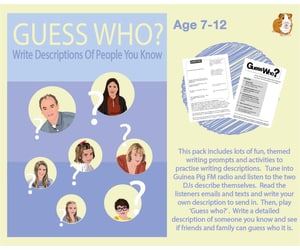
Guess Who? Write Descriptions Of People (7-11 years)
ELA, Writing, Grade 2, 3, 4, 5, 6, Activities
Guess Who? Write Descriptions Of People (7-11 years) 'Guess Who? Write Descriptions Of People' presents an exciting method for children aged 7 to 11 years to boost their language arts and writing skills. This teaching resource connects imagination with practical writing assignments, assisting learners in enhancing their ability to write thoughtful descriptions of people they're familiar with. The process begins with tuning into a fictitious 'Guinea Pig FM radio'. This station features a vibrant radio script where DJ George and co-presenter Christabelle offer descriptions of themselves. Learners are then tasked at mirroring this level of detailing when describing someone they know. Potential extension activities can include turning the assignment into an interactive game of Guess Who?, prompting others identify who the student described based on the stated characteristics. The Structure for Descriptions Physical Appearance Character Traits Hobbies or Activities The writer's feelings about them This structure helps organise students' thoughts and improve their understanding of paragraph building. Fundamental Writing Techniques Integration In addition to content creation guidance and nurturing creativity, this unique resource provides hands-on experience in fundamental writing techniques like utilizing simple compound and complex sentences usefully. It covers basics such as connectives along with grammar punctuation tips designed solely for ages between 7-11 years. Vocabulary Expansion Integration Learners get exposed to better word choices including more descriptive categories - powerful verbs, adjectives that add depth and meaningful adverbs; all intended at significantly enriching students vocabulary banks. This teaching resource comes in a flexible PDF suitable across diverse educational settings from Grade 2 through to Grade 6. It can be utilized for a full-class activity , small group work, or assigned as individualized homework tasks aimed at reinforcing robust language arts skills, with a prime focus on writing.
Author Guinea Pig Education
Tags Descriptive Writing, Character Descriptions, Language Arts, Vocabulary Expansion, Paragraph Building
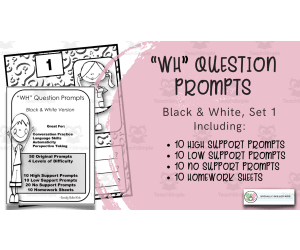
"WH' Question Prompts Set 1 | Black and White Version
Special Resources, Speech Therapy, Preschool, Grade 1, 2, 3, 4, 5, Activities
WH Question Prompts Set 1, Black and White Version The WH Question Prompts Set 1, Black and White Version aims to imbue elementary aged students from kindergarten up to Grade 5 with skills crucial for their social and educational development. This resource is especially valuable in a distance learning or remote teaching context as it can be digitally shared with students for interactive engagement. The exercises are perfect for whole group instruction as well as small group interaction, adding variety and flexibility to your teaching approach. Fostering Proficiency in Asking Questions This set of question prompts focuses on fostering proficiency in asking questions—a fundamental talent that mirrors interest, compassion, and understanding—and in responding to questions—a critical ability signifying the same attributes. Students struggling with these skills will certainly find this resource useful. Specially Designed Designed specifically keeping children with special needs such as autism, ADHD, language delays or English language learners (ELL) in mind, WH Questions Prompt Set 1 provides an enjoyable yet purposeful way where children can practice interacting socially through the exchange of questions and answers. Detailed Format Hosted across a comprehensive 62-page format suitable for colorlations them… As such WH Questions Prompts Set 1's value scales beyond immediate classroom use rendering enriched personality development augmentation overall among our younger generation paving their path towards becoming effective communicators skillfully adapted to connect with the world around them inquisitively and confidently. </div
Author Socially Skilled Kids
Tags Speech Therapy, Social Interaction, Question Prompts, Special Needs, Distance Learning
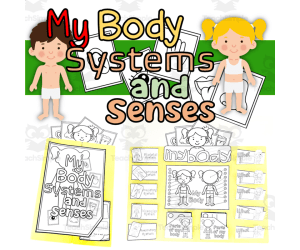
My Body Systems And Senses Lapbook
ELA, Language Development, ESL, Science, Life Sciences, Human Body, Grade 1, 2, 3, Activities, Projects
My Body Systems And Senses Lapbook Integrating visuals and hands-on activities, the My Body Systems And Senses Lapbook offers an intricate guide to human anatomy. This resource provides a distinct learning opportunity for students in grades 1 through 3, making it also suitable for home education or English language learners. Multi-Subject & Inclusive Design This instructional lapbook is designed to cover multiple subject areas - Language Arts, Science, and specifically caters to ESL learners by reinforcing vocabulary in English relating to body systems. Two versions are available for male or female bodies which further ensures inclusive learning as all genders are represented. In-depth & Interactive Content on Body Systems and Senses Covers five primary body systems - skeletal, respiratory, circulatory, nervous and muscular. Detailed content on five principal senses. In-depth information on twenty main parts of the body – front and back- included in pocket folds for a practical approach. Vibrant & Engaging Visual Aids In each lapbook folder are organized inserts that showcase each system with black-and-white images that can be colored by students. This feature not only increases the visual appeal but also prompts engagement of diverse age groups. Pedagogically Aligned Resource With Infinite Re-usability The My Body Systems And Senses Lapbook makes teaching about human anatomy effective during group lessons or small-sized sessions tailored as per class dynamics as well as utilize it as independent study material given student-to-student preference. It matches educational standards outlined within Common Core Standards for both English Language Arts (ELA)and Science syllabus hence promoting consistency across curriculum elements. Furthermore, this PDF-file interactive project type resource can be repurposed repeatedly thanks to its durable file format causing no hindrances in printability making it a flexible long term solution. Overall My Body Systems And Senses is a dynamic learning resource for teachers and home educators looking for diversified, standard compliant, practical yet low cost solutions to teach about human body systems and senses.
Author It's Teacher L
Tags Body Systems, Senses, Human Anatomy, Lapbook, Interactive Project
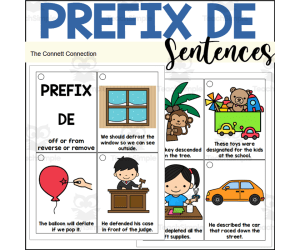
Prefix DE Sentence Reading Rings
ELA, Language Development, Phonics, Grade 2, 3, 4, Activities, Centers, Worksheets & Printables, Task Cards
Practice reading words with the prefix DE- with these sentence reading rings. Students will read words with the prefix de- in the context of sentences. Each card also includes a bold and colorful image to illustrate each sentence and to help students to learn the meanings of each word. What is Included: This resource includes one reading ring for the prefix de. There are seven cards each featuring a different word with the prefix de. The words included in this set are: defrost, depleted, deciduous, decision, deflate, defended, descended, designated, depend, deconstructed, and described. When to Use Early Finishers - If students finish their work early, they can use these reading rings for extra practice. Small Group Work - Teachers can use these reading rings to target small groups of students who need more practice reading words with prefixes. Independent Practice - Students can work independently at their desks to read this set of prefix cards. Morning Work - Students can read and review this reading ring for morning work as their classmates arrive to class. How to Make: Teachers will print out the pages and cut each card apart. Once cut apart, the teacher can choose to laminate the cards for durability. Then, use a hole punch to punch a hole in the top left corner of the card. Place the cards on a ring to create your reading ring, making sure the cover card is on top. Skills Assessed: These reading rings help with identifying words with prefixes These reading rings help with learning the meaning of prefixes These reading rings help students learn how prefixes change the meaning of words. These affixes reading rings are a low prep activity for teachers to prepare for students to use. Once created, these cards can be used over and over to practice reading words with prefixes in the context of a sentence.
Author The Connett Connection
Tags Affixes, Morphology, Prefixes, Literacy Activities, Reading Words With Prefixes

Science Crossword - Set 2: 1 Page Sample (PDF)
ELA, Language Development, Vocabulary, Spelling, ESL, Resources for Teachers, Science, Physics, Earth and Environmental Sciences, Life Sciences, Grade 2, 3, 4, 5, Worksheets & Printables, Worksheets, Teacher Tools, Crosswords Puzzles, Centers, Activities
THIS IS A ONE PAGE SAMPLE OF A SIX CROSSWORD DOWNLOAD FULL SIX CROSSWORD DOWNLOAD INFORMATION: Crossword Series (Themed) This crossword series is designed for students in grades 2–5. Each set of crosswords is built around a clear vocabulary theme, allowing students to strengthen their word recognition, build subject-based knowledge, and reinforce early literacy and thinking skills. Each topic includes six crossword sets , and each set features the following consistent structure: 1. 8 vocabulary clues 2. Crossword puzzle 3. Answer key 4. 1 Did You Know fact related to the set These crosswords are designed to be student-friendly, classroom-ready, and easily integrated into thematic units, seasonal learning, morning work, or independent literacy stations. Science Crosswords Set 2 Word List 1. Energy and Electricity Energy, Electricity, Battery, Circuit, Switch, Solar, Light, Heat 2. Rocks and Minerals Rock, Mineral, Fossil, Sand, Crystal, Diamond, Lava, Soil 3. Life Cycles Egg, Larva, Pupa, Adult, Seed, Sprout, Grow, Change 4. The Water Cycle Water, Evaporate, Condense, Cloud, Rain, Puddle, River, Ocean 5. Scientific Inquiry and Tools Observe, Hypothesis, Experiment, Measure, Balance, Ruler, Data, Graph 6. Natural Disasters Earthquake, Tsunami, Hurricane, Tornado, Flood, Drought, Lightning, Volcano PDF Version Other versions will appear here when available. Follow the store for the lastest on new products. How to Use This Crossword These crosswords are ideal for whole-class work, small groups, literacy centers, or take-home activities. Use one set per day, or spread them across a week or month depending on your curriculum needs. Each clue has been crafted to align with the reading level of grades 2–5, with support for both decoding and meaning. The Did You Know? facts offer additional extension opportunities for writing, drawing, or display work. Whether you're reinforcing vocabulary, exploring a seasonal topic, or adding variety to your literacy block, these crosswords provide a fun, flexible, and focused way to boost early literacy in an engaging format. More Science Themed Products Science Crosswords (Set 1) PDF Science Crosswords (Set 3) PDF FULL CATALOG OF DOWNLOAD LINKS HERE Themed Crossword Links Addition PDF Animals PDF Around the Home PDF Birthday PDF Candy PDF Christmas PDF Cinco de Mayo PDF Clothes PDF Colors PDF Days and Months PDF Division PDF Earth Day PDF Easter PDF Easy Crosswords PDF Fall PDF Father's Day PDF Food PDF Geography (Set 1) PDF Geography (Set 2) PDF Geography (Set 3) PDF Graduation PDF Health PDF History (Set 1) PDF History (Set 2) PDF History (Set 3) PDF Human Body PDF Kindness PDF Life Skills PDF Mother's Day PDF Multiplication PDF Science Crosswords (Set 1) PDF Science Crosswords (Set 2) PDF Science Crosswords (Set 3) PDF Shapes PDF Social Skills PDF Spring PDF Sports PDF St. Patrick's Day PDF Subtraction PDF Summer PDF Thanksgiving PDF Transport PDF Valentine's Day PDF Winter PDF Crosswords in Depth Structure Each crossword clue is written in simplified language to suit early readers, and follows a strict number-and-clue format (e.g., 1.A shape with four sides ). Students complete each puzzle using the themed vocabulary provided, helping to build both content knowledge and spelling confidence. Each completed set includes: A questions section with clearly formatted clues An answers section to support teacher checking or independent correction A Did You Know? fact tied to the topic (one per set) to add curiosity and cross-curricular value Themes Included The crosswords cover a wide variety of engaging, age-appropriate themes such as: Seasons & Holidays (e.g., Winter, Easter, Valentine’s Day) Math Concepts (e.g., Addition, Subtraction, Multiplication, Division) Everyday Topics (e.g., School, Colors, Animals, Weather) Special Units (e.g., Health, Earth Day, Sports, Graduation, Kindness) Each theme is carefully selected to reflect the experiences and interests of young learners, while reinforcing vocabulary and comprehension. For similar downloads and other frees, do check out Cored Group on TeachSimple.
Author Cored Education
Rating
Tags Vocabulary, Spelling, Crosswords, Science, Science Crosswords, Energy And Electricity, Rocks And Minerals, Life Cycles, The Water Cycle, Natural Disasters

Wombat Carer: Interactive Listening Activity
ELA, Language Development, ESL, Grade 3, 4, 5, 6, Activities
The Wombat Carer: Interactive Listening Activity A comprehensive educational resource primarily targeted at adult ESL learners, low-intermediate to intermediate ESL students, and grades 3-6 students wanting to enhance their language arts skills. Resource Description: This tool is based on a news story available on the BTN website (link provided in the product description). Learners can improve their listening capabilities and enrich their vocabulary understanding through engaging with a real-world news narrative. Components of Learning: Note-taking from an oral passage: Improves listeners' ability to identify significant points in verbal communication. Vocabulary exercises: Empowers learners with new language tools by working through new words appearing in the text. Partner discussions: This core component facilitates conversations among pairs, augmenting spoken English capabilities significantly. Comprehension Exercise: Assesses learner progress in understanding spoken content, allowing teachers to monitor advancement levels actively. Additionals:: Incorporates writing activities for channelling improved comprehension and newly acquired vocabulary into written output for validating understanding proficiency. Diverse Application Options This product can be utilized seamlessly in whole-class participation or broken down into smaller group discussions. Also suitable as homework tasks aimed at enhancing individual proficiency. The Wombat Carer: Interactive Listening Activity offers teachers across public schools as well as homeschoolers effective teaching methodologies via audio file type activities guaranteeing learner progress & achievement.
Author Special ED Learning
Tags Interactive Listening, ESL, Vocabulary, Speaking Practice, Comprehension, Interactive Listening Activity, Listening Activity For Adults
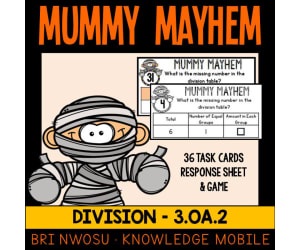
Division - Mummy Mayhem - 3.OA.2
Math, Multiplication and Division, Multiplication, Grade 3, 4, 5, Activities
Mummy Mayhem is a division activity engages and challenges student understanding of interpreting multiplication arrays through play. This unit includes 36 task cards, a recording sheet for student answers, and a one-page game . To increase rigor, give the blank task card template to your students to have them create their own questions. Math Standard: 3.OA.2 - Interpret whole-number quotients of whole numbers This set includes: 36 Division Task Cards 1 Game Board 1 Recording Sheets Answer Sheet Create Your Own Question Template Bonus: This set includes the black and white version of the division task cards and game for easy printing! Happy Teaching! Knowledge Mobile
Author Knowledge Mobile
Tags Division Task Cards, Division Printable, Division Games, Math Centers, Mummy Games, Mummy Maths Games

Kids Yoga Stories: Standing Yoga Cards for Kids
P.E. & Health, Yoga, Preschool, Grade 1, 2, 3, 4, 5, Activities
Use yoga poses to teach about standing properly! Everyone could use a reminder on physical postures that only benefits your body. This set of Standing Yoga Cards for Kids will help your students learn proper postures through yoga poses at either at home, in the classroom, or in a studio. Included in this deck of Standing Yoga Cards for Kids - A card with an index - Tips to teach yoga -20 cards illustrating the yoga poses -20 matching pet cards - Instructions for all the poses The index indicates the order in which the yoga poses are to be used to flow from one pose to the next. There is multicultural representation featured in yoga kids! Recommended for ages 3+ Ways in which you can use these cards as homeschoolers or in the classroom include: -For transition times -Morning routines or circle times -Brain breaks to calm their minds and bodies -Physical education -Occupational and/or physical therapy -With one child, small, or large groups Benefits of Yoga for kids include: -Increased strength -Increased flexibility -Improves sleep -Promotes positive interactions amongst adults and children -Develops self-confidence -Improves self-expression -Improves body awareness -Promotes a lifestyle that is active and healthy.
Author Kids Yoga Stories
Tags Kids Yoga Stories, Standing Yoga , Yoga Cards, Kids Yoga, Yoga Poses
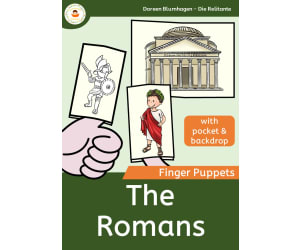
Finger puppets - The Romans- People of the Past
Social Studies, First Peoples (Native), Grade 3, 4, 5, 6, Activities
Finger puppets: The Romans - Bringing the past to life - People in history This material provides you with templates for making finger puppets on the subject of the Romans. The finger puppets are a varied and interactive addition to the topic of people in history. They help pupils to discover and understand historical content in a creative and playful way. The finger puppets are suitable for science and history lessons in grades 3, grades 4, grades 5 and grades 6. The finger puppet templates are available in two versions: one in color and one in black and white. The students can design the black and white templates themselves, for example. With the colored templates , you can quickly create a finger puppet set that you can give to the students to play with. To store it in the binder, the students can make a bag. For the finger puppet show, I have also added suitable backdrops. Uses The finger puppets can be used in various ways in the classroom to internalize what they have learned and deepen their understanding or promote their creativity. For example: Role plays: The students act out scenes from the respective historical context. Dialogues: The students create dialogues between different characters of the respective era with the finger puppets. Inventing stories: The students develop their own stories with the finger puppets and develop the factual topics as a background. Presentations: The students prepare presentations about the respective epoch, using the finger puppets as a visual aid. Group work: Students can work in groups and create scenes or stories together with the finger puppets. This promotes collaboration and social learning. You can find many more of my finger puppets at TeachSimple. For example, finger puppets for biblical stories, fairy tales or people in history. Best regards Your Die Relitante Doreen Blumhagen
Author Die Relitante
Tags Finger Puppets, ElementarySchool, MiddleSchool, CreativeLearning, HistoryClass, SocialStudies, InteractiveLearning, Crafts, The Romans
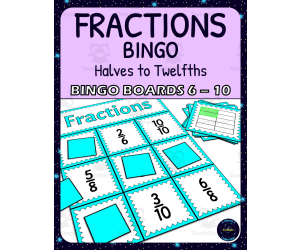
Common Fractions 1/2s - 1/12s Activity - Bingo Game - Fraction Symbols - Boards 6-10
Math, Fractions, Grade 2, 3, 4, Activities, Games
Common Fractions 1/2s to 1/12s Bingo engages students in identifying common fraction symbols. This math game builds fluency with fractions from halves to twelfths. Students match calling cards to fractions on their bingo boards. Covers, playing squares, or dry erase markers track matches. The first to match 3 fractions in a row wins! 5 unique bingo boards provide variations. 4 sets of calling cards display fractions as circles, squares, strips, and symbols. Adjust difficulty by mixing card sets. Supports whole class, small group, centers , or homework. Print, laminate, and cut materials for durability. Extend learning with supporting fraction games focusing on identification, comparisons, ordering, adding, and subtracting. Motivate students to build fraction fluency with this engaging game!
Author Colleen's Cosmic Collection
Tags Fractions, Common Fractions, Fraction Games, Fraction Activities, Fractions Bingo, Math Game, Math Activity, Common Fractions Game, Common Fractions Activity, Cccfbts
Adding 11 Song (MP3)
Math, Addition and Subtraction, Addition, Numbers, Preschool, Kindergarten, Grade 1, 2, 3, Songs, Activities
Add 11 is a song that helps students practice adding 11 with all addition facts from 1-15. The song is a fun and easy way for kids to learn how to add 11. This product is perfect for teachers who want to help their students learn how to add 11.
Author Have Fun Teaching
Tags Counting

Game for a Game?: Games, Trivia, Folklore and Fun
, Preschool, Grade 1, 2, 3, 4, Games, Activities
Game for a Game ?: Games, Trivia, Folklore and Fun Game for a Game ? is an indispensable teaching resource designed to inject fun into the learning process. Providing educators with an array of games suitable for various settings, it caters to the immediate needs of teachers striving to engage their learners in a more interactive manner. This exemplary resource is not just about games but also serves as a vault of trivia, folklore, hand signs and rhymes woven into the fun. It elaborately explains essential rules across various games suitable for different environments - from the schoolyard and street to playrooms and classrooms. The vast options range from old nostalgic materials in your memory bank that may require little or no equipment at all - such as jacks, marbles or hand-clapping games. To more contemporary ones that are just waiting for you to explore and introduce. Description: Game for a Game ? extends its usability across kindergarten through grade 4 effectively facilitating cognitive development while ensuring sustained engagement of learners through variety. Its compatibility extends beyond physical education - making it versatile - given that it supports lessons within any subject imaginable. Product format: The product comes as one manageable PDF file helping keep things organized while saving you valuable preparatory time. And despite being so comprehensive Game for a Game ? does not demand extensive set-up efforts; all you really need are some eager minds ready for recreation: perhaps with chalk or rubber bands at hand depending on your selection from this trove. Purpose : Beyond formal class instruction sessions, this utility can be adapted into small group activities Or even passed out as interesting homework assignments redefining how home-works’ traditionally approached by students! Are you looking forward to seamlessly blend learning with amusement? If yes then ask yourself: Are you game for a Game ? Utilize these exciting resources today!
Author Classroom Complete Press
Tags PDF

Number Bonds 11-20 Bingo - Boards 16-20
Math, Fact Families, Addition and Subtraction, Addition, Grade 1, 2, 3, Activities, Games
Number Bonds 11-20 Bingo engages students in practicing number bonds for numbers 11-20. This math game includes 5 colorful bingo boards with corresponding calling cards. To play, students cover spaces on their board as numbers are drawn. The first student to cover 3 spaces in a row wins! This game can be played whole group or independently. Use buttons, counters or dry erase markers to cover spaces. Or, print and laminate playing squares for reusable gameplay. Extend learning by creating more boards or playing other number bonds games focused on fractions or skip counting. This resource helps cement number bonds concepts through repetition and fun. Used by math teachers for whole group instruction or independent math center rotations, it’s a versatile game loved by second and third grade students.
Author Colleen's Cosmic Collection
Tags Number Bonds, Number Bonds Games, Addition Game, Addition Activity, Math Facts, Addition Facts, Addition Math Facts, Math Fact Practice, Number Bonds To 20, Cccnbb1120
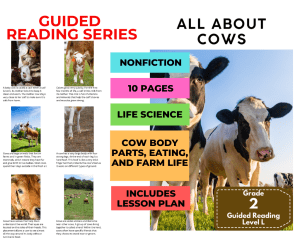
Guided Reading Level L - All About Cows (with Lesson Plan)
ELA, Resources for Teachers, Reading Comprehension, Reading, Science, Language Development, Life Sciences, Animals, Pre-Reading, Vocabulary, Grade 2, 3, 4, Worksheets & Printables, Worksheets, Teacher Tools, Centers, Activities, Literacy Readers, Quizzes, Quizzes and Tests, Assessments, Lesson Plans
This Guided Reading Book - All About Cows (Level L) with lesson plan includes: Guided Reading Color Label (front cover x1) This is a quick way to match the book’s demands to what students can generally handle.. The overall goal is to use the level/color to pick books for several smaller groups. To qualify for a certain level, a student is expected to read a book from that level with about 90–94% accuracy. If a student is consistently accurate and understands, move up a level. If the student is struggling at that level, drop down and add more support. Each student will improve at completely different rates, but it is generally one of the best ways to check progress across the class. DOWNLOAD THE CATALOG TO VIEW ALL GUIDED READING BOOKS AVAILABLE (SORTED LEVELS A-Z) Pre-Reading Question (x1) Teacher asks the prompt aloud, can be while showing the cover or first page. Students share what they already know, or make educated guesses from the cover. Prompt them to use the target vocabulary. Write some of their responses on the board to look back at during the reading. Vocabulary Words (x5) Introduce the five words, best doing it one at a time. Start by saying it, while students repeat and then see if anyone knows what it means before reading further. Read through the meaning and try to briefly connect each word to a picture or gesture so it’s meaningful. Ask students to flip through the book pages and point to where they see each of the vocabulary words. While reading the book pause upon coming across one of the vocab words or read the sentence twice to make sure students understand the word has appeared. Optional: Ask students to raise hands whenever they see/hear one of the new words. Guided Reading Pages (x10) Check the book snapshot (below) for: primary topic - do you need to prep extra reading or intro materials on this? what is taught best - decide on 1-2 bullets to focus on, use the prompt or words provided here for best results. learning goals - what you are checking for students to be able to do after the session, elicit answers using prompts or words provided. key vocabulary (see section above). questions overview - so you know what is coming up and if you need to prep extra materials to assist understanding. Run the lesson You may have already looked at a few of the pages together, but you can show them some of the pictures again first to set meaning. Depending on how much time you have and how familiar your students are with guided reading class, you may want to read the book aloud first with the group first. Students whisper or partner read, while you listen in. If time, do it as a group, one student reading a page each. Use the guided page’s prompts to coach: “Check the picture / does it make sense?” “Point under the words / try the first sound” “Reread the sentence smoothly”. Try to focus more on one student per session (rotating every time), so you can work out if they are ready to move up or need to move down a level. Comprehension Questions (back cover x3) This is your way to check that students didn’t just say the words, but actually understood the text. First, let students answer by pointing to the page/picture and saying a short sentence. After any answer, follow with: “Show me where you found that in the text.” In bigger groups, have partners answer first (10–20 seconds), then call on 2–3 students to share. Differentiation tips: Emerging speakers/struggling readers: oral + pointing On-level: oral in a full sentence Higher: one written sentence or draw + label Book Snapshot Title: All About Cows Genre: Nonfiction (informational) Subject: Life Science + Reading (Informational Text) Primary Topic: Cow body parts, eating, and farm life Estimated Guided Reading Level (A–Z): L What This Book Teaches Best Explains what cows are (large farm animals; mammals that have fur and give birth to live babies). Teaches how cow body parts help them (strong legs, hard hooves that protect feet; eyes placed on the sides for wide view). Describes what cows eat and how they eat plants (herbivores; tongue wraps around grass; plants like grass, hay, clover). Introduces a key digestion process (food goes to a large stomach; cows bring food back up to chew again—“chewing cud”). Builds understanding of cow family and social life (calf care; calves drink milk with vitamins and minerals; cows live in herds and have “friends”). Learning Goals Students will describe what the book says cows are and where they live. Students will explain how a cow’s hoof helps protect its feet while it walks. Students will identify what cows eat and describe how a cow uses its tongue to pull in grass. Students will explain what “chewing cud” means using the book’s description of digestion. Students will describe how calves are cared for and what the text says about calf milk. Students will describe how cows live together in a herd and how they rest. Key Vocabulary From the Text mammals — animals with fur that give birth to live babies. hoof — hard covering that protects a cow’s foot. herbivores — animals that eat only plants. digesting — breaking down food inside the body. herd — a group of cows living together. Discussion Prompts Pre-reading question: What do you already know about cows living on farms? Comprehension questions: How does the book describe a cow’s hoof and what it does? Comprehension questions: What happens to grass after a cow swallows it, and what is “chewing cud”? Comprehension questions: Why can a cow see almost all the way around its body without turning its head? Printing Tips 1. Best Printing Method (Recommended) “Booklet” Printing (Best if Available) If your printer or PDF viewer supports Booklet Printing , use this. Settings to use: Print mode: Booklet Paper size: Letter or A4 (either works) Orientation: Landscape Print on both sides: Yes Flip on: Short edge Scaling: Fit to printable area Booklet subset: First test: Front sides only Then: Back sides only This will automatically: Pair pages correctly Put the cover on the outside Align everything for folding After printing, fold in half and staple along the spine . 2. If “Booklet” Printing Is NOT Available You can still print this correctly with manual duplex printing . Step-by-step: Open the PDF. Choose Print . Set: Orientation: Landscape Pages per sheet: 1 Print on both sides: Yes Flip on: Short edge Print all pages . Because each PDF page already contains two facing book pages, the result will still fold cleanly into a book. Thousands of Cored Education products are included with your TeachSimple membership. Download links and encyclopedia index available here.
Author Cored Education
Rating
Tags Reading Comprehension, Reading Passages, Reading, Guided Reading, Guided Reading Lesson Plan, Guided Reading Activity, Pre-reading, Science Lesson Plans, Life Science, Animals

Heroes Of Our Time Audio Book
Science, Earth and Environmental Sciences, Space, Preschool, Kindergarten, Grade 1, 2, 3, Read Alouds, Activities
On January 28, 1886 the space shuttle Challenger exploded just 73 seconds after lift-off. This unexpected disaster took the lives of seven people.
Author Twin Sisters Digital Media
Tags Hero, Dedication, Challenger, Scientists, Research

Equivalent Fractions Activity - Bingo Game - Fraction Circles - Boards 11-15
Math, Fractions, Grade 2, 3, 4, Activities, Games
Equivalent Fractions Bingo engages students in identifying equivalent fractions represented as fraction circles, squares, strips, and symbols. This math game includes 4 sets of calling cards to match the bingo boards. To prepare, print and optionally laminate bingo boards, playing squares, and calling cards. Students cover equivalent fractions on their board as the teacher draws and displays calling cards. The first student to cover 3 spaces in a row wins! Use buttons or dry erase markers if not printing playing squares. Shuffle cards when the stack runs out. With different boards available, this collaborative game easily differentiates and supplements fraction instruction in small groups or a whole class. Students will love practicing equivalencies with this interactive bingo!
Author Colleen's Cosmic Collection
Tags Fractions, Fraction Game, Fractions Activity, Fractions Games, Equivalent Fractions, Equivalent Fraction Game, Equivalent Fractions Game, Equivalent Fractions Activity, Math Games, Cccfbec
Counting By Fours Song (MP3)
Math, Numbers, Addition and Subtraction, Addition, Grade 3, 4, 5, 6, Songs, Activities
This song is a great way for students to practice skip counting by 4s. They can sing and count along to the fun and engaging song. This is a great resource for teachers who want to help their students learn how to count by 4s.
Author Have Fun Teaching
Tags Counting, Skip Counting