



3,933 products added recently
Page 27 - 2nd Grade Activities
Boost your second graders' enthusiasm with activities that combine fun and education. These resources cover various subjects and promote critical thinking and collaboration. Use them to enrich your lessons and keep students actively involved in their learning journey.

 Show filters

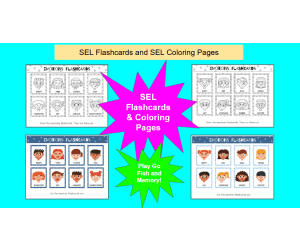
SEL Flashcards for Social Emotional Learning with SEL Coloring Pages
Special Resources, Life Skills, Social Emotional Learning (SEL), Social Skills, Special Education Needs (SEN), Speech Therapy, Preschool, Kindergarten, Grade 1, 2, 3, Activities, Centers, Games, Worksheets & Printables, Flashcards, Worksheets, Coloring Pages
In this SEL product, you will get SEL Flashcards for Social Emotional Learning. You will also get SEL coloring pages because there are two different pages of emotions/feelings. Both pages have a black and white version and a color version. The black and white version allows your students to color their own faces and images. The emotions listed are; happy, sad, silly, proud, shy confused, scared, excited, angry, tired, loving, sick, disgusted, cry, jealous, disappointed. These flashcards can be used for so many purposes. I have used these flashcards for Go Fish games where the students have to ask for a certain feeling. You will need to make two copies of the colored emotions poster to make this game work. If a student asks for "angry" and the student they asked has it, that student give the card to the one who asked and that student places the match down on the table and names a time they felt angry. I have also used this resource for memory games. You would, again, make two copies of each emotion. Then you would mix up the cards and place them face down (I would highly recommend cardstock) in a random order. Students then would choose two cards and reveal the emotion cards. If they are a match, then the student can share when they have felt that way. If it is not a match, they would place the cards face down again the the next student would take a turn. This is a fun and interactive game but also helps students discuss their feelings in a non-threatening way. This resource can be used as a whole class activity where students color their flashcards and then cut them out. They can randomly pick a card and name a time they felt that way. This can also be used as a center activity for Go Fish or Memory (as I described above). The ways to use these Emotion SEL Flashcards are endless!
Author Jennifer Moyer Taylor
Tags SEL Flashcards, SEL Coloring Pages, Games, Social Emotional Learning, School Counseling, SEL, Social Skills, Emotions, Feelings, Sel Activities
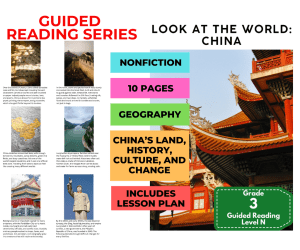
Guided Reading Level N - China (with Lesson Plan)
ELA, Resources for Teachers, Reading Comprehension, Reading, Science, Earth and Environmental Sciences, Social Studies, Geography, Language Development, History, Grade 2, 3, 4, Worksheets & Printables, Worksheets, Teacher Tools, Centers, Activities, Literacy Readers, Quizzes, Quizzes and Tests, Assessments, Lesson Plans
This Guided Reading Book - China (Level N) with lesson plan includes: Guided Reading Color Label (front cover x1) This is a quick way to match the book’s demands to what students can generally handle.. The overall goal is to use the level/color to pick books for several smaller groups. To qualify for a certain level, a student is expected to read a book from that level with about 90–94% accuracy. If a student is consistently accurate and understands, move up a level. If the student is struggling at that level, drop down and add more support. Each student will improve at completely different rates, but it is generally one of the best ways to check progress across the class. DOWNLOAD THE CATALOG TO VIEW ALL GUIDED READING BOOKS AVAILABLE (SORTED LEVELS A-Z) Pre-Reading Question (x1) Teacher asks the prompt aloud, can be while showing the cover or first page. Students share what they already know, or make educated guesses from the cover. Prompt them to use the target vocabulary. Write some of their responses on the board to look back at during the reading. Vocabulary Words (x5) Introduce the five words, best doing it one at a time. Start by saying it, while students repeat and then see if anyone knows what it means before reading further. Read through the meaning and try to briefly connect each word to a picture or gesture so it’s meaningful. Ask students to flip through the book pages and point to where they see each of the vocabulary words. While reading the book pause upon coming across one of the vocab words or read the sentence twice to make sure students understand the word has appeared. Optional: Ask students to raise hands whenever they see/hear one of the new words. Guided Reading Pages (x10) Check the book snapshot (below) for: primary topic - do you need to prep extra reading or intro materials on this? what is taught best - decide on 1-2 bullets to focus on, use the prompt or words provided here for best results. learning goals - what you are checking for students to be able to do after the session, elicit answers using prompts or words provided. key vocabulary (see section above). questions overview - so you know what is coming up and if you need to prep extra materials to assist understanding. Run the lesson You may have already looked at a few of the pages together, but you can show them some of the pictures again first to set meaning. Depending on how much time you have and how familiar your students are with guided reading class, you may want to read the book aloud first with the group first. Students whisper or partner read, while you listen in. If time, do it as a group, one student reading a page each. Use the guided page’s prompts to coach: “Check the picture / does it make sense?” “Point under the words / try the first sound” “Reread the sentence smoothly”. Try to focus more on one student per session (rotating every time), so you can work out if they are ready to move up or need to move down a level. Comprehension Questions (back cover x3) This is your way to check that students didn’t just say the words, but actually understood the text. First, let students answer by pointing to the page/picture and saying a short sentence. After any answer, follow with: “Show me where you found that in the text.” In bigger groups, have partners answer first (10–20 seconds), then call on 2–3 students to share. Differentiation tips: Emerging speakers/struggling readers: oral + pointing On-level: oral in a full sentence Higher: one written sentence or draw + label Book Snapshot Title: Look At the World: China Genre: Nonfiction (informational text) Subject: Social Studies (Geography/History/Culture) Primary Topic: China’s land, history, culture, and change Estimated Guided Reading Level (A–Z): N What This Book Teaches Best How China’s geography includes very different landforms and regions (mountains, deserts, rice fields, coastlines). How rivers shaped early settlement and farming, including the Huang He (Yellow River) valley and the Yangtze River. How ideas and goods traveled through dynasties and trade routes (writing, inventions, the Silk Road). How important places and structures reflect history (the Great Wall, Beijing, the Forbidden City). How China continues to change today while balancing growth, traditions, and environmental concerns. Learning Goals Students will describe the variety of landscapes and regions found in China using text details. Students will explain why people settled near the Huang He (Yellow River) long ago. Students will identify examples of how ideas and inventions spread beyond China’s borders. Students will describe how the Great Wall and the Silk Road are connected to protection and trade. Students will summarize key changes over time described in the text (dynasties, later government changes, modern growth). Students will explain how language, festivals, and conservation are part of life in China today. Key Vocabulary From the Text dynasties — ruling families that lead for long times. civilization — a large, organized society with shared culture. merchants — people who buy and sell goods. dialects — different ways people speak the same language. conservation — protecting plants and animals so they can survive. Discussion Prompts Pre-reading question: What have you heard or learned about China before today? Comprehension questions: What kinds of land and places does the text say China has across East Asia? Comprehension questions: Why do historians call the Huang He (Yellow River) valley important in the text? Comprehension questions: What does the text say merchants and travelers traded on the Silk Road? Printing Tips 1. Best Printing Method (Recommended) “Booklet” Printing (Best if Available) If your printer or PDF viewer supports Booklet Printing , use this. Settings to use: Print mode: Booklet Paper size: Letter or A4 (either works) Orientation: Landscape Print on both sides: Yes Flip on: Short edge Scaling: Fit to printable area Booklet subset: First test: Front sides only Then: Back sides only This will automatically: Pair pages correctly Put the cover on the outside Align everything for folding After printing, fold in half and staple along the spine . 2. If “Booklet” Printing Is NOT Available You can still print this correctly with manual duplex printing . Step-by-step: Open the PDF. Choose Print . Set: Orientation: Landscape Pages per sheet: 1 Print on both sides: Yes Flip on: Short edge Print all pages . Because each PDF page already contains two facing book pages, the result will still fold cleanly into a book. Thousands of Cored Education products are included with your TeachSimple membership. Download links and encyclopedia index available here.
Author Cored Education
Rating
Tags Reading Comprehension, Reading Passages, Reading, Guided Reading, Guided Reading Lesson Plan, Guided Reading Activity, Pre-reading, Social Studies Lesson Plans, Geography, History
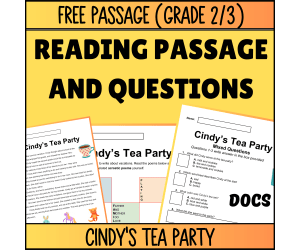
Reading Comprehension Fiction Set 3 Sample: Cindy's Tea Party (Docs)
ELA, Reading, Common Core, Reading Comprehension, ESL, Language Development, Spelling, Creative Writing, Writing, Resources for Teachers, Grade 2, 3, Worksheets & Printables, Worksheets, Writing Prompts, Assessments, Teacher Tools, Tests, Quizzes and Tests, Centers, Activities
Reading Comprehension Passages Fiction Set 3 Sample Overview Fascinating reading comprehension passages, each with an array of activities included. Stories are written for the modern classroom and topics are designed to promote enthusiasm from each student. Each lesson contains a mixed questions section to check understanding, a vocabulary or spelling activity to help remember key language introduced, and a writing exercise. Full answer keys are provided. For a more detailed overview, check the section under the links at the bottom of this description. Passage Included 4.Cindy's Tea Party: Cindy invites some special friends to her tea party. Docs Version This is the Docs editable and fillable version. This download is available in GOOGLE Docs, GOOGLE Forms, GOOGLE Slides. PDF, PPT, WORD. FULL CATALOG OF DOWNLOAD LINKS HERE Grade 2/3 Links Fiction Set 1 - Nature Google Docs Google Forms Google Slides PDF PPT Word Guided Reading Materials Fiction Set 2 - Animals Google Docs Google Forms Google Slides PDF PPT Word Guided Reading Materials Fiction Set 3 - Food Google Docs Google Forms Google Slides PDF PPT Word Guided Reading Materials Fiction Set 4 - School Google Docs Google Forms Google Slides PDF PPT Word Guided Reading Materials Fiction Set 5 - Friends Google Docs Google Forms Google Slides PDF PPT Word Guided Reading Materials Fiction Set 6 - Family Google Docs Google Forms Google Slides PDF PPT Word Guided Reading Materials Fiction Set 7 - Sports Google Docs Google Forms Google Slides PDF PPT Word Guided Reading Materials Nonfiction Set 1 - Technology Google Docs Google Forms Google Slides PDF PPT Word Guided Reading Materials Nonfiction Set 2 - Nutrition Google Docs Google Forms Google Slides PDF PPT Word Guided Reading Materials Nonfiction Set 3 - Animals Google Docs Google Forms Google Slides PDF PPT Word Guided Reading Materials Reading Passages Overview Each passage is especially written for Grade 2-3 students, including key vocabulary required for this age group. Topics are varied and are accompanied by colorful graphics. Topics are meant to educate, yet entertain the modern student. These passages are perfect for the modern classroom. Whereas textbooks can become outdated in no time, any changes to technology or the world will result in updates to this product. Mixed Questions The mixed questions section of each lesson includes a variation of fivecomprehension, vocabulary and math questions. In addition, key reading strategies are frequently covered including cause & effect, summarizing, compare & contrast and making conclusions. Three of the questions will be MCQs and two will require a written response of some kind. Full answers and example responses appear at the end of the lesson. Spelling & Vocab Each reading passage contains a variety of words and phrases designed for Grade 2-3 students. Spelling and vocab activities provide the opportunity to build fluency with these words. As it can become quite mundane doing the same activities over and over, each lesson in a set will contain a different spelling and vocab activity . Writing Prompts Writing prompts are designed to continue the theme or lessons learned in the story. Students are persuaded to write in a variety of ways and each prompt includes several cues to help. As with the spelling/vocab section, writing prompts will vary. This includes research pieces, reading responses, poetry and creative writing prompts. Full Answer Keys Full answer keys and sample responses are provided so no matter how busy you are, you know you're covered! Mixed question answers provide evidence from the text, math questions contain the relevant workings. Answers are designed for use by the teacher, but also suitable as a handout to the student. Additional File One lesson will have an additional file. This is something fun to extend the lesson with. For similar downloads and other frees, do check out Cored Group on TeachSimple.
Author Cored Education
Tags Elementary, Reading, Comprehension, Vocabulary, Answers, Ccss, Common Core, Spelling, Writing, Digital Centers

Rules Rock! Social Skills Story and Activities
Life Studies, Special Resources, Life Skills, Preschool, Grade 1, 2, 3, Activities
Rules Rock! Social Skills Story and Activities This comprehensive educational resource targets students from kindergarten to third grade. The primary focus of the material revolves around educating children on the importance of rules within diverse social settings: Schools Classrooms Families Wider society The Power of Storytelling and Laws Introduction: Rather than rely on dull rote memorization, the package takes an interesting approach via storytelling. This breaks down complex concepts into bite-sized pieces for better understanding. Apart from rules, this kit also dives into another significant societal component - laws. It explains their existence, significance, and underlying real-world contexts. Versatility in Usage & Remote Learning Adaptability: This multi-format pack offers adaptability across educational settings: full classrooms for group lessons, small study circles or personalized homeschooling support. An animated PowerPoint version is available to further cater to distance learning requirements in today's rapidly changing world. Description of Package Contents: The main elements included are: A full-color social story version perfect for classroom read-aloud sessions. An accompanying black-and-white coloring book reflection suitable for generalizing learnings through fun coloring activities that develop fine motor skills while solidifying cognitive understanding gathered from the story. Additionally incorporated are: A 'Skill Builder Activity ' aimed at stimulating learner discussions - fostering critical thinking capabilities regarding rules' relevance while encouraging fruitful communication and instilling empathetic attitudes towards communal living. The PDF worksheets are located under the 'Special Resources' subcategory labeled 'Life Skills'. The Rules Rock! Social Skills Story and Activities make a great teaching asset for educators in need of progressive methods to imbue sound behavioral habits among students keen on understanding societal mechanics.
Author Socially Skilled Kids
Tags Rules, Social Skills, Storytelling, Laws, Interactive Activities

Length, Capacity, Area, Perimeter, Temperature 5 Day Math Remediation
Math, Measurements, Grade 2, 3, 4, Teacher Tools, Lesson Plans, Activities
Length, Capacity, Area, Perimeter, Temperature 5 Day Math Remediation This set is a comprehensive five-day review plan designed to fortify the mathematical understanding of Grade 2 through Grade 4 students in the field of measurements. Day-to-Day Structures Day one: Instruction on metric and customary length as well as capacity. Day two: Focus on finding area. Day three:Covers exploring perimeter. `day four:` Delves into temperature measurement. Each day in the set incorporates explicit teacher directions along with materials for both guided and independent practice. An exit ticket wraps up each fourth day to reinforce that day’s experiences and learning outcomes. Day five revisits all topics covered via review materials followed by another exit ticket assessment ensuring all round comprehension of taught concepts during academic intervention periods. SOLs Focused On The set is tailored towards Virginia Standards of Learning (SOLs), aiming specifically at: SOLs - Math SOL 3.7 (measuring length and capacity), SOLs - Math SOL 3.8 (area and perimeter), and SOLs - Math SOL 3.10 (measuring temperature). However, its relevance extends beyond these standards being highly useful for any educator who needs to establish these skills among their students."} A High Level Engagement Tool On Board To elevate student engagement levels further a daily slideshow comes prepackaged with every topic pertinent to teacher-led instructions especially if whole group sessions or interactive board approach during remediation periods are undertaken. Review Materials and Assessments The set comes with larger twenty-four pages of resources inclusive of answer keys for independent student activities and supporting PowerPoint slides for guided teaching lessons revolving around measurements. Activities can be downloaded across multiple file types increasing versatility in adding to teaching resources.
Author SchoolingSara
Tags Math Remediation, Measurements, Length, Capacity, Area

How to Wrap a Gift | Writing and Sequencing Activity
ELA, Writing, Grade 1, 2, 3, Activities
How to Wrap a Gift | Writing and Sequencing Activity | Informational or Expository Writing This innovative resource provides an excellent solution for educators seeking to introduce their young learners to the world of sequential writing. Based on wrapping a gift, this activity inspires both creativity and critical thinking among students. What's Included? 40 pages of ready-to-print material, ideal for early learners, from preschool up to grade 3. Inclusive exercises: printables, worksheets, and stimulating writing prompts. An easily integrated resource, these activities culminate into a fun-filled writing session brimming with possibilities for detailed coloring works. Two levels of editing checklists, which are fantastic tools in improving pupils' evaluating abilities while also ensuring high-quality outputs. We've also provided "Transition words" anchor charts, aiding your students in crafting well-structured and sequentially ordered sentences. This resource contains an easy-reference "How-to" Writing chart to guide your young writers when creating their compositions. In order to help visually illustrate concepts, we have included 8 color-sequencing cards (with or without enunciative words) along with cut-out black-and-white versions. A handy "What you need?", worksheet template is available designed to guide students toward the sequential steps involved in gift-wrapping. Catering Different Learning Styles: We offer full-page booklets that come complete with pictures ready for coloring. Students can then express sequences creatively in written form across each page's primary lines. We've also included half-page booklet alternatives and various other types of enjoyable prompts to engage pupils of varying proficiency levels. This practical lesson plan promotes in-class or home-based learning, encourages hands-on approaches, and serves varying group sizes effectively. Extra Resources: The How to Wrap a Gift package also includes an envelope template that students can use for the compilation of all resulting sequence cards for future referencing or reuse - a true asset to any teacher's toolkit!
Author Simply Schoolgirl
Tags Gift Wrapping, Sequential Writing, Informational Writing, Writing Prompts, Hands-on Learning

Olympics Now and Then: Ready-To-Use Activities for Substitute Teachers
ELA, Reading, Grade 3, 4, Activities
The Olympics Now and Then: Ready-To-Use Activities for Substitute Teachers The Olympics Now and Then: Ready-To-Use Activities for Substitute Teachers is an invaluable resource that effortlessly aligns with the required curriculum for 3rd and 4th grade Language Arts students. Its main focus is on reading comprehension while integrating the intriguing topic of Olympic history. Teachers will find immeasurable value in this resource as it provides engaging and effective material that can be utilized immediately once class commences. This makes it a perfect solution when regular lesson plans are interrupted, or when substitute teachers need a comprehensive guide to take the reins smoothly. The content within this packet extends beyond merely filling out worksheets, aiming instead to inspire curiosity about global events and cultivate critical thinking skills. Detailed Article & Cross-curricular Worksheets: The detailed article included in the package traces back to the roots of the Olympic Games in 776 B.C., drawing learners into an exciting journey across centuries. It instills students with foundational knowledge about this world-renowned event while developing their reading abilities. Alongside this text, cross-curricular worksheets are provided, which solidify understanding through synthesis of learned concepts. Versatile Teaching Tool: Educators can implement this versatile teaching tool in diverse scenarios including whole group readings, Small group discussions or as independent assignments, It could even function effectively as supplementary homework reinforcement after lessons focusing on historical timelines or sports-themed units. Schooling at Home? No problem! Homeschoolers also benefit from exploiting such all-inclusive resources by easily incorporating them into their tailored learning programs for a well-rounded academic experience. In essence, whether being used as a complete unit study on its own or slipped between traditional lessons, 'Olympics Now and Then' transforms any classroom setting into an epic regime reminiscent of Olympian training camps where minds instead of muscles grow stronger each day! This ready-to-use bundle comes neatly packed into one helpful PDF file type ensuring your next classes are an exciting dive into times both past and present.
Author Classroom Complete Press
Tags PDF
Guided Reading Activities with Lesson Plans: Fiction Set 4 - School
ELA, Reading, Reading Comprehension, Common Core, ESL, Language Development, Pre-Reading, Vocabulary, Resources for Teachers, Grade 2, 3, Worksheets & Printables, Worksheets, Lesson Plans, Teacher Tools, Activities
Guided Reading Activities with Lesson Plans Fiction Set 4 Note: This download DOES NOT include the passages themselves. If you have not already done so, download in a format of your choice in the "reading links" section below. Overview The perfect companion materials for Cored Education reading comprehension downloads. This collection of guided reading lessons includes a wide array of engaging themes that aim to foster comprehension, vocabulary development, and creative thinking. Each lesson is crafted to be interactive and immersive, making learning enjoyable while promoting essential literacy skills. The lessons are designed for students to actively engage with both the material and the world around them, creating connections to their personal experiences while developing key skills. Includes Guided Reading Materials For: 1.Don't Tell Anyone 2.Roger's Luck 3.Starting Third Grade 4.Bridget's New School 5.Changing the Rules 6.My Love of Art Reading Links: This is the guided reading materials version and DOES NOT include the passages themselves. The passages related to this download are available here in GOOGLE Docs, GOOGLE Forms, GOOGLE Slides. PDF, PPT, WORD. Google Docs Google Forms Google Slides PDF PPT Word Details Pre-reading Discussions Each lesson begins with pre-reading questions that help activate prior knowledge and engage students in the theme of the lesson. This allows students to make personal connections with the content before diving into the reading material. Vocabulary Development Every lesson includes vocabulary exploration that introduces key terms students will encounter in the reading. These words are essential for understanding the passage, and activities encourage students to apply the new vocabulary in context. Comprehension Check After the reading, the lessons provide comprehension questions (typically multiple-choice) that assess students’ understanding of the story. These questions help students reflect on key events, characters, and concepts within the text, reinforcing their comprehension. Creative Writing Prompts To foster creativity, the lessons include writing activities that challenge students to apply what they've learned in imaginative ways. These prompts allow students to practice creative expression while reinforcing the lesson’s theme. Discussion Topics Each lesson ends with wrap-up discussion questions that encourage students to think critically and engage in group conversations. These discussions can enhance social learning and deepen understanding by connecting the lesson's content to broader real-world applications. Theme-Based Learning The themes (e.g., winter, nature walks, photography, flowers) are universally appealing and offer opportunities for cross-curricular connections with science, art, and environmental studies. This makes the lessons versatile for a wide range of teaching contexts. Student-Centered Approach The activities are designed to be interactive and student-driven, allowing them to explore the content through discussions, hands-on vocabulary practice, and personal reflections. This promotes active learning and keeps students engaged. FULL CATALOG OF DOWNLOAD LINKS HERE Grade 2/3 Links Fiction Set 1 - Nature Google Docs Google Forms Google Slides PDF PPT Word Guided Reading Materials Fiction Set 2 - Animals Google Docs Google Forms Google Slides PDF PPT Word Guided Reading Materials Fiction Set 3 - Food Google Docs Google Forms Google Slides PDF PPT Word Guided Reading Materials Fiction Set 4 - School Google Docs Google Forms Google Slides PDF PPT Word Guided Reading Materials Fiction Set 5 - Friends Google Docs Google Forms Google Slides PDF PPT Word Guided Reading Materials Fiction Set 6 - Family Google Docs Google Forms Google Slides PDF PPT Word Guided Reading Materials Fiction Set 7 - Sports Google Docs Google Forms Google Slides PDF PPT Word Guided Reading Materials Nonfiction Set 1 - Technology Google Docs Google Forms Google Slides PDF PPT Word Guided Reading Materials Nonfiction Set 2 - Nutrition Google Docs Google Forms Google Slides PDF PPT Word Guided Reading Materials Nonfiction Set 3 - Animals Google Docs Google Forms Google Slides PDF PPT Word Guided Reading Materials Reading Passages Overview Each passage is especially written for Grade 2-3 students, including key vocabulary required for this age group. Topics are varied and are accompanied by colorful graphics. Topics are meant to educate, yet entertain the modern student. These passages are perfect for the modern classroom. Whereas textbooks can become outdated in no time, any changes to technology or the world will result in updates to this product. Mixed Questions The mixed questions section of each lesson includes a variation of fivecomprehension, vocabulary and math questions. In addition, key reading strategies are frequently covered including cause & effect, summarizing, compare & contrast and making conclusions. Three of the questions will be MCQs and two will require a written response of some kind. Full answers and example responses appear at the end of the lesson. Spelling & Vocab Each reading passage contains a variety of words and phrases designed for Grade 2-3 students. Spelling and vocab activities provide the opportunity to build fluency with these words. As it can become quite mundane doing the same activities over and over, each lesson in a set will contain a different spelling and vocab activity . Writing Prompts Writing prompts are designed to continue the theme or lessons learned in the story. Students are persuaded to write in a variety of ways and each prompt includes several cues to help. As with the spelling/vocab section, writing prompts will vary. This includes research pieces, reading responses, poetry and creative writing prompts. Full Answer Keys Full answer keys and sample responses are provided so no matter how busy you are, you know you're covered! Mixed question answers provide evidence from the text, math questions contain the relevant workings. Answers are designed for use by the teacher, but also suitable as a handout to the student. Additional File One lesson will have an additional file. This is something fun to extend the lesson with. For similar downloads and other frees, do check out Cored Group on TeachSimple.
Author Cored Education
Tags Elementary, Reading, Comprehension, Vocabulary, Answers, Common Core, Guided Reading, Guided Reading Activity, Guided Reading Lesson Plans, Guided Reading Lesson Plan

Kids Yoga Stories: My Body Yoga Cards for Kids
P.E. & Health, Yoga, Kindergarten, Preschool, Grade 1, 2, 3, Activities
Use yoga poses to teach your students about their own bodies! This set of My Body Yoga Cards for Kids will help your students learn through movement either at home, in the classroom, or in a studio. Included in this deck of My Body Yoga Cards for Kids - A card with an index - Tips to teach yoga -14 cards illustrating the yoga poses -14 matching body parts cards - Instructions for all the poses The index indicates the order in which the yoga poses are to be used to flow from one pose to the next. There is multicultural representation featured in yoga kids! Recommended for ages 3+ Ways in which you can use these cards as homeschoolers or in the classroom include: -For transition times -Morning routines or circle times -Brain breaks to calm their minds and bodies -Physical education -Occupational and/or physical therapy -With one child, small, or large groups Benefits of Yoga for kids include: -Increased strength -Increased flexibility -Improves sleep -Promotes positive interactions amongst adults and children -Develops self-confidence -Improves self-expression -Improves body awareness -Promotes a lifestyle that is active and healthy.
Author Kids Yoga Stories
Tags Kids Yoga Stories, My Body Yoga, Yoga Cards, Kids Yoga, Yoga Poses

UK/Aus Spelling Adjectives Practice Questions - Year 4-5 Grammar (PDF)
ELA, Language Development, ESL, Grammar, Common Core, Resources for Teachers, Grade 3, 4, Worksheets & Printables, Worksheets, Quizzes and Tests, Teacher Tools, Tests, Assessments, Centers, Activities
THIS IS THE UK/AUS ENGLISH SPELLING VERSION. CHECK THE CATALOG FOR THE ORIGINAL AMERICAN ENGLISH VERSION. Adjectives Grammar Practice MCQS ELA MCQS Overview: In this series of lessons, students will embark on an engaging journey to explore the grammar skills that make our language vibrant and expressive. These lessons are crafted to help students identify, comprehend, and effectively apply language arts skills in both writing and speech. Accompanied by free supplementary materials available for all topics, each lesson builds on the previous one, offering a balanced mix of direct instruction, interactive group activities, and independent practice. Through fun and creative tasks, students will learn to recognize grammar within sentences, understand their function, and use them to enrich their own writing and speech. This UK/Aus English version is especially useful for schools, teachers, and families working with British-based spelling and language conventions. It is a helpful option for classrooms using UK curriculum expectations, international programmes influenced by British English, or any setting where learners need to practise the correct capitalisation and punctuation forms for that version of English. Adjectives Overview: Includes: Identifying Adjectives Gap Filling Comparatives Superlatives Additional Practice PDF Version This is the PDF uneditable version. This download is available in GOOGLE Docs, GOOGLE Forms, GOOGLE Slides. PDF, PPT, WORD, check the links below for more details. FULL CATALOG OF DOWNLOAD LINKS HERE ELA Review Questions Overview Each review test includes three answer choices for every question. The format is clear and easy for students to follow. A small number of pictures are included on each test to make the pages feel more welcoming and less plain. A review sheet is also included to help students go back over many of the main skills covered in the product. Introduction or Example Sheet Each topic includes an introduction or example sheet to use before students begin. This gives students a clear starting point. It also helps refresh key ideas before they move into the practice. Full Answer Keys Full answer keys are included for easy checking. Sample responses are also provided where needed. This helps save time and makes the resource easier to use, even on busy days. In the Supplementary Pack Interactive Ice Breakers: Simple hands-on activities to help students start thinking about the topic. Guided Practice: Teacher-led work that helps students build understanding before working alone. Group and Partner Tasks: Activities that encourage discussion, shared ideas, and teamwork. Independent Worksheets: Extra practice pages for students to complete by themselves. Exit Tasks: Short end-of-lesson activities to check understanding and review learning. For similar downloads and other frees, do check out Cored Group on TeachSimple.
Author Cored Education
Rating
Tags Elementary, Answers, Ccss, Common Core, Tests, Test Prep, Assessment, Grade 3, Grade 4, British English

How to Make a Valentine | Writing and Sequencing Activity
ELA, Writing, Grade 1, 2, 3, Activities
How to Make a Valentine: Writing and Sequencing Activity - A Versatile Learning Resource The product titled 'How to Make a Valentine | Writing and Sequencing Activity | Informational or Expository Writing' provides educators with an array of resources for exploring the process of making a valentine. Through discussions, writing prompts, printable worksheets, and creativity activities—this resource offers an immersive hands-on learning experience. Wide Classroom Applications Whole Group Sessions: Ideal for situations where learners collectively engage in crafting valentines and sharing sequence ideas. Small Group Interactions: This involves pupils working collaboratively to navigate through each step as detailed in this activity pack. Take-Home Assignments: Enables learners to involve family members and expand their crafts skills set at home. Homeschooling Aid:. Perfect tool for homeschooling parents looking guidance on child's craft activity . Included Components This pack comes loaded with colorful sequencing cards (available in worded and wordless options), anchor charts introducing 'How-to Writing' along with transition words. It also includes two levels of editing checklists that refine children's writing skills. The colored full-page booklets consist images enhancing kids' coloring abilities while advancing creative writing based on guided sequences. Lamination-Friendly Resources The included materials can be laminated ensuring longevity—a long term use saves time when planning lessons around Valentine's Day each year! A Comprehensive PDF File: 41 Pages A specially designed PDF file aimed at preschoolers till grade 3 students made available offering language Arts-related activities offering knowledge about informational or expository writing. An All-Inclusive Teaching Resource From preschool learners to grade 3 pupils, boost your students into confident writers through the project-based learning approach offered by this resource.
Author Simply Schoolgirl
Tags Valentine's Day, Craft Activities, Writing Skills, Sequencing, How-to Writing

Christmas Synonyms & Antonyms Worksheets | 2nd–3rd Grammar Practice Ac
Grammar, Language Development, ELA, Vocabulary, Grade 2, 3, 4, Centers, Activities, Worksheets, Worksheets & Printables
Christmas synonyms & anatonyme This festive 8-page black-and-white printable set helps students in Grades 2–3 build stronger vocabulary skills by practicing synonyms (words with similar meanings) and antonyms (words with opposite meanings). The Christmas theme keeps learners engaged while supporting essential language development in a fun and meaningful way. Each worksheet includes a holiday-themed word box , followed by sentence completion tasks that guide students to choose the correct synonym or antonym. The layout is clear and kid-friendly, making the activities easy to complete independently or during small-group instruction. A full answer key is provided to make checking quick and simple for teachers or students. This resource works perfectly for grammar stations, early finishers, homework, sub plans, December ELA lessons, literacy centers , or any Christmas-themed classroom activity. The print-and-go PDF format makes it effortless to use during the busy holiday season. File type: PDF Number of pages: 8 (worksheets + answer key)
Author Sadigitalart
Rating
Tags Christmas Grammar, Synonyms & Antonyms , Christmas Synonyms & Antonyms , Christmas Grammar No Prep, 2nd–3rd Grammar Practice

Zebras Free Reading Comprehension Passage
ELA, Reading Comprehension, Reading, Language Development, ESL, Strategies, Library, Resources for Teachers, Science, Life Sciences, Grade 2, 3, 4, 5, Worksheets & Printables, Worksheets, Teacher Tools, Centers, Activities, Writing Prompts, Assessments, Quizzes and Tests, Quizzes, Tests
Zebras reading comprehension: Snapshot Title: Why Zebras Have Stripes Genre: Nonfiction Subject: Life Science Primary Topic: How zebra stripes help zebras survive Estimated Guided Reading Level (A–Z): R What This Teaches Best Explains possible survival purposes for zebra stripes. Teaches animal adaptation through predator confusion, fly avoidance, and cooling. Uses cause and effect to connect stripes with survival advantages. Introduces scientific investigation through research on striped coats and flies. Shows that scientists may still study and test ideas about animal features. Learning Goals Students will identify reasons zebras may have stripes. Students will explain how stripes can confuse predators. Students will describe how stripes may help keep biting flies away. Students will explain how stripes might help zebras stay cool. Students will use text evidence to support an explanation about zebra survival. Key Vocabulary From the Text Predators — animals that hunt other animals. Herd — group of animals living or moving together. Optical illusion — something that tricks the eyes. Repellent — something that keeps pests away. Currents — moving streams of air or water. Did you know there are thousands of Cored Education products included with a TeachSimple membership? Click here for the free catalog. This product includes: Reading Passage The text is a high-interest reading passage with set paragraphs, roughly three to four paragraphs long. It contains a variety of themes about the topic, anywhere from history to technology. The passage is between 250 and 350 words in length. First, ask students to look at the headings and see what they’ll learn about today. What do they know about the topic/heading? First read options: Teacher read-aloud (best for support). Partner reading (paragraph by paragraph). While reading, students underline important details, and vocabulary words they think may come up in the questions section. Mixed Questions The first question page contains four multiple-choice questions, each with a choice of four answers, and three written response questions that require a sentence or two from the student. Students complete the mcqs first independently, then review quickly as a class. For the 3 written responses, try to get students giving the answer with some form of evidence: “I think ___ because the text says ___.” If students get stuck, send them back to check the passage. Creative Writing In this question, the student will be required to write a five to eight sentence paragraph on a question related to the topic. Before starting, ask students write down 3 key ideas they are going to include in their piece. Ask students for ideas to share around the class to help those struggling. Pro writing expectations: 5–8 sentences At least 2 facts or details from the passage At least 2 vocabulary words from the previous page Students read their paragraphs while classmates listen for facts and vocabulary words. Answer Key There are answers for the multiple-choice questions, written response questions have sample answers, vocabulary answers and if there is a summary question then a sample summary will be provided as well.
Author Cored Education
Rating
Tags Reading Comprehension, Reading Passages, Reading, Ela Mcqs, Creative Writing, Comprehension, Free, Free Reading, Science, Life Science
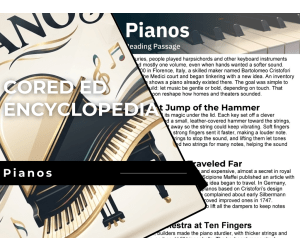
Pianos Reading Comprehension Passage - Cored Ed Encyclopedia
ELA, Language Development, Resources for Teachers, Reading Comprehension, Reading, Pre-Reading, Writing, Strategies, Music, Creative Arts, Grade 2, 3, 4, 5, Worksheets & Printables, Worksheets, Teacher Tools, Centers, Activities, Writing Prompts, Assessments, Tests, Quizzes and Tests, Quizzes
This pianos reading comprehension contains the following: Visualize on the Cover (Teacher Read Aloud Script) Start your lesson by taking a few moments to visualize the topic and share thoughts or feelings about it. Pre-Reading Trivia Students will write down one thing they already know about the subject and then read five more facts and discuss. These facts are fun, and the students will enjoy learning about the subject before reading more. Reading Passage The text is a high-interest reading passage with set paragraphs, roughly three to four paragraphs long. It contains a variety of themes about the topic, anywhere from history to technology. The passage is between 250 and 350 words in length. Mixed Questions The first question page contains four multiple-choice questions, each with a choice of four answers, and three written response questions that require a sentence or two from the student. Vocabulary Questions Practice seven key words from the text in this section across two activities. First section is scrambled words where students will unscramble three words given a clue for each. The second section is a word to meaning matching activity. Creative Writing In this question, the student will be required to write a five to eight sentence paragraph on a question related to the topic. Extension Activities This page is optional for fast finishers or to take home. There are several activities, each one requiring a different skill. Do some, do none, do all, completely optional - but you will feel reassured knowing every possibility is planned for. Includes summary writting question. Answer Key There are answers for the multiple-choice questions, written response questions have sample answers, vocabulary answers and if there is a summary question then a sample summary will be provided as well. FULL CATALOG OF DOWNLOAD LINKS AND ENCYCLOPEDIA INDEX HERE Lesson Snapshot Title: Pianos Genre: Nonfiction (informational text) Subject: Music (Performing Arts) / Reading Informational Text Primary Topic: How the piano was invented and improved Estimated Guided Reading Level (A–Z): S What This Lesson Teaches Best How the piano idea began around 1700 in Florence, Italy , with Bartolomeo Cristofori trying to make music “gentle or bold” depending on touch. How the piano’s key action works: a mechanism sends a leather-covered hammer to strike strings, then pulls back so the string keeps vibrating . How dampers stop strings from ringing—and lifting them lets tones ring longer. How information spread the invention: Scipione Maffei published an article with a diagram , leading builders like Gottfried Silbermann to make pianos based on Cristofori’s design. How the piano grew for bigger spaces: sturdier builds and a wider range from about four octaves to 88 keys , changing where music could be played (homes, schools, apartments, stages). Learning Goals Students will explain why Cristofori began tinkering with a new keyboard instrument around 1700. Students will describe how a key triggers the hammer-and-string action using details from the passage. Students will explain how a player’s touch can make the sound softer or louder according to the text. Students will identify how Maffei helped the piano idea travel and name one builder mentioned who made pianos afterward. Students will describe how the piano’s keyboard range changed over time and state the number of keys many pianos have today. Key Vocabulary From the Text harpsichords — older keyboards that stayed mostly one volume. inventory — a recorded list that showed a piano existed. mechanism — moving parts that make the piano action work. dampers — parts that stop strings from ringing. octaves — groups of notes used to describe keyboard range. Cored Ed Encyclopedia Overview The Cored Ed Encyclopedia is a weekly series of lessons that you can pick up and use right away. These short readings fit into whatever time you have available. Each one includes a warm-up, a reading, and a set of questions, but it’s flexible — you can do just the reading, the full lesson, or skip the writing section if you need to. Each lesson focuses on a single topic so students don’t get lost. The writing is clear but never childish, making it perfect for grades two through five. Topics range from animals and science to history, inventions, and everyday things. No matter the level of the student, everyone should take away at least one new idea or fact from each lesson. The materials are easy to print, easy to explain, and require no setup. They work well for whole-class teaching, partner work, or independent study.
Author Cored Education
Rating
Tags Vocabulary, Spelling, Reading Comprehension, Reading Passages, Reading, Creative Writing, Reading Strategies, Writing Prompts, Music, Pianos

Elephant Flipbook craft African Animal Science Study writing prompt
Animals, Life Sciences, Science, Biology, Grade 1, 2, 3, 4, Crafts, Activities, Parts of and Anatomy of, Worksheets & Printables, Writing Prompts
Make learning about elephants fun and interactive with this printable flipbook craft! Students will explore the fascinating world of African elephants by learning about their habitat, diet, body features, adaptations, and behaviors while strengthening reading comprehension and writing skills through engaging science activities. I like using this resource during African animal units, wildlife studies, animal science lessons, classroom centers, independent work, and homeschool learning. It's a low-prep activity that combines science, reading, writing, and creativity into one meaningful project. What You Will Get This resource includes a printable Elephant flipbook that helps students organize and record what they learn about this magnificent African animal through reading, writing, and hands-on learning. What's Included in this Flipbook? • Elephant flipbook craft templates • Reading and writing activities • Animal facts and science research pages • Habitat, diet, and life cycle sections • Physical characteristics and adaptations pages • Writing prompts and reflection activities • Easy-to-follow assembly instructions This resource is perfect for: • Animal science lessons • African animal units • Wildlife studies • Classroom science centers • Homeschool learning • Independent work and early finishers Why you will love this? • Easy to print and assemble • Encourages reading, writing, and scientific thinking • Builds nonfiction reading comprehension skills • Supports research and observation skills • Makes science learning hands-on and engaging • Creates a meaningful keepsake students can share This Elephant Flipbook Craft is a fun and interactive way for students to discover the incredible adaptations, behaviors, and importance of elephants while developing reading, writing, and science skills through creative, hands-on learning.
Author Perfect_Printables
Rating
Tags Elephant Flipbook, African Animals, Animal Science, Wildlife Study, Writing Prompt, Science Craft, Nonfiction Activities, Science Centers, Elephant Activity, Animal Research
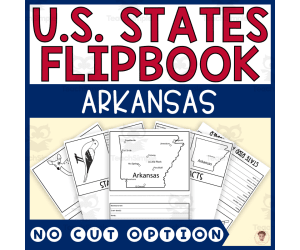
Arkansas State Flipbook (Capital, Bird, Flower, Flag, Animal)
ELA, Creative Arts, Art, Social Studies, Reading, Reading Comprehension, Grammar, Language Development, Spelling, Writing, History, History: USA, Geography, Research, Grade 2, 3, 4, Activities
Arkansas State Flipbook (Capital, Bird, Flower, Flag, Animal) Discover an exciting and interactive flipbook research project that provides an engaging way to teach and review the state of Arkansas and its symbols! Designed for both elementary teachers and homeschoolers, this low-prep resource offers a comprehensive exploration of five major symbols of Arkansas: its capital, bird, flower, flag, and animal. Through an interactive and cross-curricular activity , students will gain a deeper understanding of the state's rich heritage. Choose between two printing options: one that involves cutting and one that doesn't. Additionally, the resource offers two design options: one featuring pictures and one without. With a total of four flipbooks, students will have ample opportunities to dive into their research. This flipbook research project is an excellent addition to your Arkansas-focused unit study or review, Southeast region exploration, or U.S. states curriculum. It seamlessly integrates into writing lessons or centers, as well as social studies or history classes. Furthermore, it can be enjoyed simply for the fun of learning! Empower your students to become experts in all things Arkansas with this versatile resource. Whether you're introducing the state or assessing prior knowledge, this flipbook project caters to a variety of learning needs. Watch as your students immerse themselves in the wonders of Arkansas, develop their research skills, and present their findings with enthusiasm. Unlock the secrets of Arkansas and its symbols through this captivating flipbook research project. Perfect for engaging students in meaningful learning experiences, this resource guarantees an exciting and educational journey through the state's unique heritage. CROSS-CURRICULAR SUBJECTS COVERED: Art (drawing and coloring) English language arts Geography Grammar History Reading Research Science Social studies Spelling Writing Are you interested in helping your students become experts in other U.S. states? From Alabama to Wyoming, you can explore each state and its major symbols—its capital, bird, flower, flag, and animal—through cross-curricular activities. Each day's lesson plan appeals to different types of learners: curated videos (visual and auditory), reading passages (reading), research report pages (writing), interactive notebook and other activities (kinesthetic), and more. Click on the link to my profile to learn more about my 5-day units, including Arkansas ! 37 PDF pages Instructions for 4 easy-to-assemble flipbooks 2 printing options (cutting and no cutting) 2 design options (pictures and without pictures) 7 topics (Arkansas's state capital and other facts, state bird, state flower, state flag, state animal, state map, and KWL)
Author Heather Huhman
Tags Arkansas, Little Rock, Arkansas State Bird, Arkansas State Flower, Arkansas State Flag, Arkansas State Animal, Geography, Flipbook, Us States, United States, What Is Arkansas's State Bird, Arkansas State Flower Picture, What Is Arkansas's State Flower, What Is The Arkansas State Animal, State Animal Arkansas, State Animal For Arkansas

Yogurt Reading Comprehension Passage - Cored Ed Encyclopedia
ELA, Language Development, Reading Comprehension, Reading, Life Sciences, Science, Physics, Social Studies, History, Technology, Grade 2, 3, 4, 5, Worksheets & Printables, Worksheets, Teacher Tools, Centers, Activities, Writing Prompts, Assessments, Quizzes and Tests, Quizzes, Lesson Plans
This yogurt reading comprehension with lesson plan includes: Visualization (on the front cover) Start your lesson by taking a minute to think and share something about the topic. Read the script aloud (slowly), perhaps prepare some music or sound effects. Student close their eyes and let their imaginations wander. Students open their eyes, read the question aloud and give them a few minutes to complete. Ask a few students to share or keep answers until the end to compare with what they learn in the passage. Quick pause—thousands of Cored Education products are included with your TeachSimple membership. Download links and encyclopedia index available here. Pre-Reading Trivia Students will write down one thing they already know about the subject and then read five more facts and discuss. These facts are fun, and the students will enjoy learning about the subject before reading more. Give 1 minute for students to write what they already know (no pressure—best guess is fine). Read the five facts together. After each fact, do ask a student for their opinion, was it surprising? Set a purpose by asking students to highlight/underline one fact they want to learn more about during the reading. Reading Passage The text is a high-interest reading passage with set paragraphs, roughly three to four paragraphs long. It contains a variety of themes about the topic, anywhere from history to technology. The passage is between 250 and 350 words in length. First, ask students to look at the headings and see what they’ll learn about today. What do they know about the topic/heading? First read options: Teacher read-aloud (best for support). Partner reading (paragraph by paragraph). While reading, students underline important details, and vocabulary words they think may come up in the questions section. Mixed Questions The first question page contains four multiple-choice questions, each with a choice of four answers, and three written response questions that require a sentence or two from the student. Students complete the mcqs first independently, then review quickly as a class. For the 3 written responses, try to get students giving the answer with some form of evidence: “I think ___ because the text says ___.” If students get stuck, send them back to check the passage. Vocabulary Questions Practice seven key words from the text in this section across two activities. First section is scrambled words where students will unscramble three words given a clue for each. The second section is a word to meaning matching activity. Before starting, have some students read out words they underlined in the passage. Ask students to say the word and read aloud the sentence(s) around each word. Ask students to do scrambled words and the matching exercise in pairs then go through answers as a class. For the scrambled spelling task, get four pairs to come up to the board and write the words for extra practice with the other student reading out the clue. For the matching task, prompt students to give full sentences: “I matched ___ with ___ because ___.” Creative Writing In this question, the student will be required to write a five to eight sentence paragraph on a question related to the topic. Before starting, ask students write down 3 key ideas they are going to include in their piece. Ask students for ideas to share around the class to help those struggling. Pro writing expectations: 5–8 sentences At least 2 facts or details from the passage At least 2 vocabulary words from the previous page Students read their paragraphs while classmates listen for facts and vocabulary words. Extension Activities This page is optional for fast finishers or to take home. There are several activities, each one requiring a different skill. Do some, do none, do all, completely optional - but you will feel reassured knowing every possibility is planned for. Includes summary writting question. Answer Key There are answers for the multiple-choice questions, written response questions have sample answers, vocabulary answers and if there is a summary question then a sample summary will be provided as well. Lesson Plan Included Customized lesson plan for this lesson is included. Lesson Snapshot Title: Yogurt Genre: Nonfiction (informational text) Subject: Science (food science/microbiology) & Informational Reading Primary Topic: How yogurt forms, bacteria “helpers,” and history Estimated Guided Reading Level (A–Z): R What This Lesson Teaches Best Explains that warm milk can change during travel , becoming thicker and a little sour, and people learned this new food could last longer than fresh milk. Teaches the science of yogurt-making: tiny bacteria eat sugar in milk and make lactic acid , which helps milk proteins clump so yogurt turns thick and creamy. Shows why warmth matters : keeping milk warm for several hours gives the tiny workers time to do their job. Builds a brief history of how yogurt was studied and spread, including a 1905 observation by Stamen Grigorov and later interest from Ilya Metchnikov that helped it become better known in Europe. Connects history to modern life by describing how Isaac Carasso began selling yogurt in Barcelona and how yogurt comes in many styles today, including fruit-mixed cups and thick strained kinds. Learning Goals Students will describe how yogurt may have been discovered when milk changed during a journey. Students will explain how bacteria help milk turn thick and creamy, using details from the passage. Students will identify why keeping milk warm is important for making yogurt, according to the text. Students will describe what the passage says happened in 1905 that helped people understand yogurt better. Students will sequence key events about yogurt over time (long ago, 1905, 1919) using information from the text. Students will describe a simple home method for making yogurt that is stated in the passage. Key Vocabulary From the Text bacteria — tiny helpers you cannot see without a microscope. lactic acid — an acid bacteria make that changes milk. proteins — milk parts that clump together as yogurt thickens. microscope — a tool used to see tiny living things. cultures — live helpers added to start yogurt thickening. FULL CATALOG OF DOWNLOAD LINKS AND ENCYCLOPEDIA INDEX HERE
Author Cored Education
Rating
Tags Vocabulary, Reading Comprehension, Reading Passages, Lesson Plans, Ela Lesson Plans, Reading Comprehension Lesson Plans, Pre-reading, Life Science, Science Lesson Plans, History
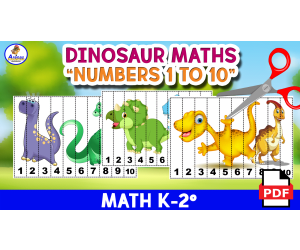
MATH PUZZLE Numbers 1 to 10 - DINOSAUR THEME
Math, Numbers, Preschool, Grade 1, 2, 3, Activities
1. Introduction As is known, puzzles are versatile educational tools and resources that offer children a wide variety of benefits for the motor, cognitive and emotional development of children and students. In addition to being extremely fun and entertaining for students, these teaching resources will help students acquire those essential skills that will be useful in a wide variety of aspects of their lives. For this reason, today I created this fantastic worksheet, thanks to which your students will be able to develop their learning of numbers from 1 to 10, associating their knowledge and learning with the topic of dinosaurs. 2.Objective Putting together mathematical puzzles offers a wide variety of benefits such as the following: - Promote cognitive development: Puzzles help stimulate logical reasoning and critical thinking. In this way, children analyze, plan and make decisions to solve the puzzles, which will contribute to their cognitive development. - Encourage fine motor skills: When children manipulate the parts of the puzzle, they will improve their hand-eye coordination as well as develop fine motor skills by placing the pieces in the specific and correct positions.- - Encourage problem solving: When solving the puzzles, students and/or children will be required to think of multiple possible solutions and choose the correct answer. This will encourage the development of your decision-making and problem-solving skills. - Improve memory: Puzzles will require children to remember details as well as patterns to complete the image correctly. This will contribute to the development and improvement of short and long term memory. - Encourage patience and perseverance: Solving a puzzle requires time and effort. Children will learn to be patient and persevere as they work and complete the puzzle, thus learning to face challenges and overcome them. 3.Order, scheme and stages Present this activity to your students, ask them to use their rubber bands and scissors to carry out the activity. It also emphasizes the care that must be taken when handling the scissors. 4.Grades or ages This activity is aimed at students ages 3, 4, 5 and 6, that is, children who are beginning to learn basic numbers from 1 to 10. 5. Form of application Print this worksheet in A4 format, in color to make the activity much more attractive for your students. 6. Answer keys This game does not require answers. 7.Use text labels puzzle, math puzzles, mathematics, first numbers, numbers from 1 to 10. 8.Rules Specified above. 9.File types The archive is in PDF format. 10.Number of pages This document contains 10 pages.
Author EDITORIAL LAURA EDUCA
Tags Math Puzzle, Numbers, Numbers 1 To 10, Puzzles, Puzzle

Health Crossword Puzzles – Grades 2–5 Vocabulary
ELA, Language Development, Resources for Teachers, Vocabulary, Spelling, ESL, Health, P.E. & Health, Grade 2, 3, 4, 5, Worksheets & Printables, Worksheets, Teacher Tools, Crosswords Puzzles, Centers, Activities
Crossword Series This crossword series is designed for students in grades 2–5. Each set of crosswords is built around a clear vocabulary theme, allowing students to strengthen their word recognition, build subject-based knowledge, and reinforce early literacy and thinking skills. Each topic includes six crossword sets , and each set features the following consistent structure: 1. 8 vocabulary clues 2. Crossword puzzle 3. Answer key 4. 1 Did You Know fact related to the set These crosswords are designed to be student-friendly, classroom-ready, and easily integrated into thematic units, seasonal learning, morning work, or independent literacy stations. Health Crosswords Word List 1. Healthy Eating Fruit, Vegetable, Water, Milk, Grain, Protein, Snack, Meal 2. Exercising Run, Jump, Stretch, Dance, Bike, Swim, Strong, Play 3. Taking Care of Your Body Wash, Brush, Sleep, Bath, Lotion, Towel, Comb, Healthy 4. Staying Safe Helmet, Seatbelt, Cross, Stop, Look, Listen, Light, Careful 5. Visiting the Doctor Doctor, Nurse, Checkup, Shot, Stethoscope, Thermometer, Medicine, Bandage 6. Feeling Good Happy, Calm, Laugh, Energy, Breathe, Rest, Hug, Kind PDF Version Other versions will appear here when available. Follow the store for the lastest on new products. How to Use This Crossword These crosswords are ideal for whole-class work, small groups, literacy centers, or take-home activities. Use one set per day, or spread them across a week or month depending on your curriculum needs. Each clue has been crafted to align with the reading level of grades 2–5, with support for both decoding and meaning. The Did You Know? facts offer additional extension opportunities for writing, drawing, or display work. Whether you're reinforcing vocabulary, exploring a seasonal topic, or adding variety to your literacy block, these crosswords provide a fun, flexible, and focused way to boost early literacy in an engaging format. More Health Themed Products Nothing yet but follow the store for the lastest on new products. FULL CATALOG OF DOWNLOAD LINKS HERE Addition PDF Animals PDF Around the Home PDF Birthday PDF Candy PDF Christmas PDF Cinco de Mayo PDF Clothes PDF Colors PDF Days and Months PDF Division PDF Earth Day PDF Easter PDF Easy Crosswords PDF Fall PDF Father's Day PDF Food PDF Geography (Set 1) PDF Geography (Set 2) PDF Geography (Set 3) PDF Graduation PDF Health PDF History (Set 1) PDF History (Set 2) PDF History (Set 3) PDF Human Body PDF Kindness PDF Life Skills PDF Mother's Day PDF Multiplication PDF Science Crosswords (Set 1) PDF Science Crosswords (Set 2) PDF Science Crosswords (Set 3) PDF Shapes PDF Social Skills PDF Spring PDF Sports PDF St. Patrick's Day PDF Subtraction PDF Summer PDF Thanksgiving PDF Transport PDF Valentine's Day PDF Winter PDF Crosswords in Depth Structure Each crossword clue is written in simplified language to suit early readers, and follows a strict number-and-clue format (e.g., 1.A shape with four sides ). Students complete each puzzle using the themed vocabulary provided, helping to build both content knowledge and spelling confidence. Each completed set includes: A questions section with clearly formatted clues An answers section to support teacher checking or independent correction A Did You Know? fact tied to the topic (one per set) to add curiosity and cross-curricular value Themes Included The crosswords cover a wide variety of engaging, age-appropriate themes such as: Seasons & Holidays (e.g., Winter, Easter, Valentine’s Day) Math Concepts (e.g., Addition, Subtraction, Multiplication, Division) Everyday Topics (e.g., School, Colors, Animals, Weather) Special Units (e.g., Health, Earth Day, Sports, Graduation, Kindness) Each theme is carefully selected to reflect the experiences and interests of young learners, while reinforcing vocabulary and comprehension. For similar downloads and other frees, do check out Cored Group on TeachSimple.
Author Cored Education
Rating
Tags Vocabulary, Spelling, Crosswords, Health, Health Crosswords, Healthy Eating, Exercising, Ela Crosswords, Crossword Puzzles, Health Activities

Sports Word Searches: 1 Page Sample (PDF)
ELA, Language Development, Resources for Teachers, Vocabulary, Spelling, ESL, Sports, P.E. & Health, Grade 2, 3, 4, 5, Worksheets & Printables, Worksheets, Teacher Tools, Centers, Activities, Word Searches
THIS IS A ONE PAGE SAMPLE OF A SIX PAGE WORD SEARCH DOWNLOAD FULL SIX PAGE WORD SEARCH DOWNLOAD INFORMATION This wordsearch series is designed for students in grades 2–5. Each set of wordsearches is built around a clear vocabulary theme, helping students develop word recognition, improve spelling, and boost topic-related understanding through engaging visual puzzles. Every wordsearch also includes a fun hidden shape for students to guess—adding an interactive twist to traditional vocabulary practice. These wordsearches are student-friendly, classroom-ready, and perfect for integrating into literacy warmups, seasonal units, fast-finisher tasks, or home learning extensions. Each puzzle reinforces themed vocabulary in a playful, structured format that keeps learners motivated. Sports Word Search Word List 1. Team Sports Soccer, Basketball, Baseball, Football, Volleyball, Hockey, Lacrosse, Softball 2. Fun Outdoor Games Tag, Jump rope, Kickball, Frisbee, Tug-of-war, Relay race, Capture the flag, Hide-and-seek 3. Sports Equipment Ball, Bat, Helmet, Goal, Net, Jersey, Whistle, Racket 4. Olympics & World Sports Gymnastics, Swimming, Track, Boxing, Archery, Wrestling, Judo, Marathon 5. Describing Sports & Athletes Fast, Strong, Agile, Tough, Focused, Teamwork, Determined, Champion 6. Jobs in Sports Coach, Referee, Athlete, Commentator, Trainer, Fan, Scorekeeper, Reporter PDF Version Other versions will appear here when available. Follow the store for the lastest on new products. How to Use These Wordsearches These wordsearches are ideal for: Morning work or early finisher bins Vocabulary centers or anchor activities Holiday or seasonal review lessons Independent literacy stations or take-home enrichment Each puzzle includes a themed word list and a shaped grid for students to complete. Word directions may vary (horizontal, vertical, diagonal), and answer keys are included for easy checking. Optional vocabulary challenges or writing tasks can be added to extend the learning experience. Whether you're reviewing key vocabulary, exploring a seasonal topic, or offering fun literacy practice, these wordsearches provide a flexible and engaging tool to support vocabulary growth in grades 2–5. More Sports Themed Products CROSSWORDS FULL CATALOG OF DOWNLOAD LINKS HERE Themed Word Search Links Addition PDF Animals PDF Around the Home PDF Birthday PDF Candy PDF Christmas PDF Cinco de Mayo PDF Clothes PDF Colors PDF Days and Months PDF Division PDF Earth Day PDF Easter PDF Easy Word Searches PDF Fall PDF Father's Day PDF Food PDF Geography (Set 1) PDF Geography (Set 2) PDF Geography (Set 3) PDF Graduation PDF Health PDF History (Set 1) PDF History (Set 2) PDF History (Set 3) PDF Human Body PDF Kindness PDF Life Skills PDF Mother's Day PDF Multiplication PDF Science Word Searches (Set 1) PDF Science Word Searches (Set 2) PDF Science Word Searches (Set 3) PDF Shapes PDF Social Skills PDF Spring PDF Sports PDF St. Patrick's Day PDF Subtraction PDF Summer PDF Thanksgiving PDF Transport PDF Valentine's Day PDF Winter PDF Wordsearches in Depth Structure Each wordsearch is crafted around a focused sub-theme and includes a visual puzzle shaped like a related object (e.g., balloon, gift, snowman). Students complete each puzzle using the provided themed word list, strengthening both content knowledge and spelling skills in a highly engaging format. Each completed set includes: A shaped wordsearch puzzle with 10 vocabulary words A student instruction guide with search directions (horizontal, vertical, diagonal) An answer key for teacher support or student self-checking A Did You Know? fact connected to the theme for enrichment or discussion Themes Included The wordsearches cover a wide range of fun, age-appropriate themes, including: Seasons & Holidays (e.g., Halloween, Easter, Valentine’s Day) Math Concepts (e.g., Addition, Number Words) Everyday Topics (e.g., Animals, Weather, School) Special Units (e.g., Health, Earth Day, Sports, Kindness) Each topic is selected to reflect students’ real-life experiences and interests while reinforcing literacy skills and content understanding in a playful, visual way. For similar downloads and other frees, do check out Cored Group on TeachSimple.
Author Cored Education
Rating
Tags Vocabulary, Spelling, Sports, Team Sports, Sports Equipment, Olympics & World Sports, Ela Word Searches, Word Searches, Sports Word Searches, Word Search

Manfish: A Story of Jacques Cousteau Read Aloud Book Companion
ELA, Reading, Reading Comprehension, Literature, Grade 2, 3, 4, Read Alouds, Activities
The Manfish: A Story of Jacques Cousteau Read Aloud Book Companion This exceptional teaching resource, designed for Grade 2 to Grade 4 students, focuses on comprehension, literature and reading skills development as a unique part of Language Arts learning. Specifically meant to accompany the book Manfish: A Story of Jacques Couveau by Jennifer Berne (not included). Key Features: 28 distinct print-and-go reading activities - offers flexibility in lesson planning. Fosters critical thinking - encourages predicting outcomes and drawing inferences using text evidence. Creativity-promoting exercises - includes designing a Biosphere Brochure or crafting an Instagram post. Learn & Grow with Interesting Activities: Younger learners will explore intriguing topics including: Character studies, Identification of story elements, Determination of themes, Event plotting, Additionally they'll engage in exercises such as : Sensory detail sketching, Comparison and contrast tasks, This handy tool can be used across diverse learning platforms for both individual lessons and guided reading sessions. Perfect for group work during center rotations or more comprehensive literature circles enabling thorough supplemental reading tasks like research-based projects. The PDF file contains enlightening graphic organizers deliver insights into the book companion along with enjoyable worksheets for activities lavished upon second graders through fourth graders alike!
Author Creatively Gifted
Tags Character Studies, Comprehension, Critical Thinking, Literature Appreciation, Reading Skills Development
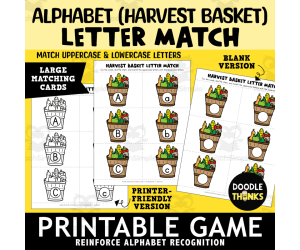
Alphabet Harvest Basket Letter Match Uppercase/Lowercase Matching Game
Creative Arts, Art, Fine Arts, Grade 1, 2, 3, 4, 5, Activities, Games, Centers
Alphabet Harvest Basket Letter Match Uppercase and Lowercase Matching Game Letter Recognition This Harvest Basket-Themed ABC Matching Game is an engaging and hands-on way for young students to practice uppercase and lowercase letter recognition. Use it as a matching game, center activity, or early finisher task! Included are blank cards for differentiated learning or for students to create their very own cards, while practicing handwriting. Use the black and white version as a coloring activity as well. This letter match game is perfect for letter of the week activities, alphabet practice and review, literacy centers, letter recognition practice, and autumn-themed activities. Just print, cut, and play! As a suggestion, print on cardstock (thicker paper) and laminate for durability. Great for individual, small group, or center use. Benefits of playing letter matching games: Boosts letter recognition Enhances phonemic awareness Improves focus and attention Builds fine motor skills Strengthens memory Develops problem-solving skills Encourages independent learning Promotes social skills Supports early literacy Makes learning fun. Included in this download: 9 Pages of Large Matching Cards (Uppercase & Lowercase Letters) 3 Pages of Blank Large Matching Cards (Uppercase & Lowercase Letters) 5 Pages of Small Matching Cards 3 Pages of Blank Small Matching Cards Printer-Friendly Black/White Versions Thank you for supporting Doodle Thinks and have fun learning!
Author Doodle Thinks
Rating
Tags Alphabet, Letter Match, Matching Games, Early Literacy, Letter Recognition, Learning Centers, Letter Of The Week, Independent Learning, Fine Motor Skills, Harvest Basket

Present Tense Practice Questions - Grade 3-4 Grammar (PPT)
ELA, Language Development, ESL, Grammar, Common Core, Resources for Teachers, Grade 3, 4, Quizzes and Tests, Teacher Tools, Tests, Assessments, Presentations, Activities
Present Tense Grammar Practice MCQS ELA MCQS Overview: In this series of lessons, students will embark on an engaging journey to explore the grammar skills that make our language vibrant and expressive. These lessons are crafted to help students identify, comprehend, and effectively apply language arts skills in both writing and speech. Accompanied by free supplementary materials available for all topics, each lesson builds on the previous one, offering a balanced mix of direct instruction, interactive group activities, and independent practice. Through fun and creative tasks, students will learn to recognize grammar within sentences, understand their function, and use them to enrich their own writing and speech. Present Tense Overview: Includes: Present Simple Present Continuous Present Perfect Mistake Finding PPT Version This is the PPT editable and interactive version. There is a fillable answer sheet at the end. This download is available in GOOGLE Docs, GOOGLE Forms, GOOGLE Slides. PDF, PPT, WORD, check the links below for more details. FULL CATALOG OF DOWNLOAD LINKS HERE Grade 3/4 Links: Adjectives Google Docs Google Forms Google Slides PDF PPT Word Free Supplementary Materials Pack Adverbs Google Docs Google Forms Google Slides PDF PPT Word Free Supplementary Materials Pack Conjunctions Google Docs Google Forms Google Slides PDF PPT Word Free Supplementary Materials Pack Nouns Google Docs Google Forms Google Slides PDF PPT Word Free Supplementary Materials Pack Pronouns Google Docs Google Forms Google Slides PDF PPT Word Free Supplementary Materials Pack Verbs Google Docs Google Forms Google Slides PDF PPT Word Free Supplementary Materials Pack Sentence Structure Google Docs Google Forms Google Slides PDF PPT Word Free Supplementary Materials Pack Present Tense Google Docs Google Forms Google Slides PDF PPT Word Free Supplementary Materials Pack Past Tense Google Docs Google Forms Google Slides PDF PPT Word Free Supplementary Materials Pack Future Tense Google Docs Google Forms Google Slides PDF PPT Word Free Supplementary Materials Pack Context Clues Google Docs Google Forms Google Slides PDF PPT Word Free Supplementary Materials Pack Defining Words Google Docs Google Forms Google Slides PDF PPT Word Free Supplementary Materials Pack Fill the Blanks Google Docs Google Forms Google Slides PDF PPT Word Free Supplementary Materials Pack Homophones Google Docs Google Forms Google Slides PDF PPT Word Free Supplementary Materials Pack Synonyms Google Docs Google Forms Google Slides PDF PPT Word Free Supplementary Materials Pack ELA Review Questions Overview Questions have three answer choices. There are a handful of pictures on each test for aesthetic purposes, as well as a review sheet covering most of the topics covered in the product. Introduction or Example Sheet Each topic will include an introduction or example sheet to go through first with your students. Full Answer Keys Full answer keys and sample responses are provided so no matter how busy you are, you know you're covered! In the Supplementary Pack Interactive Ice Breakers: Fun, hands-on activities that get students thinking about adjectives right from the start. Guided Practice: Teacher-led exercises that reinforce the day’s lesson, ensuring students can confidently identify and use adjectives. Group and Partner Tasks: Collaborative activities that allow students to work together to solve problems, categorize adjectives, and create descriptive sentences. Independent Worksheets: Structured worksheets that provide individual practice and help solidify understanding of key concepts. Exit Tasks: Quick, reflective activities at the end of each lesson that assess understanding and encourage students to apply what they’ve learned. For similar downloads and other frees, do check out Cored Group on TeachSimple.
Author Cored Education
Tags Elementary, Answers, Ccss, Common Core, Grammar, Tests, Test Prep, Assessment, Grade 3, Grade 4

Elevators Free Reading Comprehension Passage
ELA, Reading Comprehension, Reading, Language Development, ESL, Library, Science, Physics, Engineering, Technology, Grade 2, 3, 4, 5, Worksheets & Printables, Worksheets, Teacher Tools, Centers, Activities, Writing Prompts, Assessments, Quizzes and Tests, Quizzes, Tests
Elevators reading comprehension: Snapshot Title: How Elevators Work Genre: Nonfiction Subject: Physical Science / Engineering Primary Topic: How elevator systems move people safely Estimated Guided Reading Level (A–Z): S What This Lesson Teaches Best Explains how elevators move people and heavy loads between floors. Teaches mechanical systems through cables, counterweights, sheaves, motors, and brakes. Shows how counterweights reduce the energy needed to move an elevator car. Describes safety features such as door sensors, emergency brakes, and speed governors. Connects elevator safety to the development of tall buildings. Learning Goals Students will identify major parts of an elevator system. Students will explain how cables and a sheave help move the elevator car. Students will describe how a counterweight balances the car. Students will explain how motors and brakes control movement. Students will describe safety features that help prevent elevator accidents. Key Vocabulary From the Text Counterweight — heavy weight that balances another object. Sheave — wheel that cables loop over. Shaft — space where an elevator moves. Sensors — devices that notice changes or movement. Governor — device that watches elevator speed. Did you know there are thousands of Cored Education products included with a TeachSimple membership? Click here for the free catalog. This product includes: Reading Passage The text is a high-interest reading passage with set paragraphs, roughly three to four paragraphs long. It contains a variety of themes about the topic, anywhere from history to technology. The passage is between 250 and 350 words in length. First, ask students to look at the headings and see what they’ll learn about today. What do they know about the topic/heading? First read options: Teacher read-aloud (best for support). Partner reading (paragraph by paragraph). While reading, students underline important details, and vocabulary words they think may come up in the questions section. Mixed Questions The first question page contains four multiple-choice questions, each with a choice of four answers, and three written response questions that require a sentence or two from the student. Students complete the mcqs first independently, then review quickly as a class. For the 3 written responses, try to get students giving the answer with some form of evidence: “I think ___ because the text says ___.” If students get stuck, send them back to check the passage. Creative Writing In this question, the student will be required to write a five to eight sentence paragraph on a question related to the topic. Before starting, ask students write down 3 key ideas they are going to include in their piece. Ask students for ideas to share around the class to help those struggling. Pro writing expectations: 5–8 sentences At least 2 facts or details from the passage At least 2 vocabulary words from the previous page Students read their paragraphs while classmates listen for facts and vocabulary words. Answer Key There are answers for the multiple-choice questions, written response questions have sample answers, vocabulary answers and if there is a summary question then a sample summary will be provided as well.
Author Cored Education
Rating
Tags Reading Comprehension, Reading Passages, Reading, Ela Mcqs, Creative Writing, Comprehension, Free, Free Reading, Science, Physics