



3,955 products added recently
Page 6 - 2nd Grade Activities
Boost your second graders' enthusiasm with activities that combine fun and education. These resources cover various subjects and promote critical thinking and collaboration. Use them to enrich your lessons and keep students actively involved in their learning journey.

 Show filters

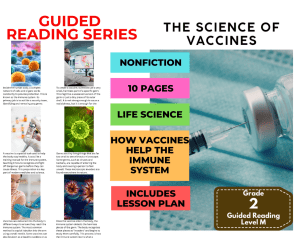
Guided Reading Level M - Science of Vaccines (with Lesson Plan)
ELA, Resources for Teachers, Reading Comprehension, Reading, Science, Life Sciences, Health, P.E. & Health, Pre-Reading, Language Development, Grade 1, 2, 3, Worksheets & Printables, Worksheets, Teacher Tools, Centers, Activities, Literacy Readers, Quizzes, Quizzes and Tests, Assessments
This Guided Reading Book - Science of Vaccines (Level M) with lesson plan includes: Guided Reading Color Label (front cover x1) This is a quick way to match the book’s demands to what students can generally handle.. The overall goal is to use the level/color to pick books for several smaller groups. To qualify for a certain level, a student is expected to read a book from that level with about 90–94% accuracy. If a student is consistently accurate and understands, move up a level. If the student is struggling at that level, drop down and add more support. Each student will improve at completely different rates, but it is generally one of the best ways to check progress across the class. DOWNLOAD THE CATALOG TO VIEW ALL GUIDED READING BOOKS AVAILABLE (SORTED LEVELS A-Z) Pre-Reading Question (x1) Teacher asks the prompt aloud, can be while showing the cover or first page. Students share what they already know, or make educated guesses from the cover. Prompt them to use the target vocabulary. Write some of their responses on the board to look back at during the reading. Vocabulary Words (x5) Introduce the five words, best doing it one at a time. Start by saying it, while students repeat and then see if anyone knows what it means before reading further. Read through the meaning and try to briefly connect each word to a picture or gesture so it’s meaningful. Ask students to flip through the book pages and point to where they see each of the vocabulary words. While reading the book pause upon coming across one of the vocab words or read the sentence twice to make sure students understand the word has appeared. Optional: Ask students to raise hands whenever they see/hear one of the new words. Guided Reading Pages (x10) Check the book snapshot (below) for: primary topic - do you need to prep extra reading or intro materials on this? what is taught best - decide on 1-2 bullets to focus on, use the prompt or words provided here for best results. learning goals - what you are checking for students to be able to do after the session, elicit answers using prompts or words provided. key vocabulary (see section above). questions overview - so you know what is coming up and if you need to prep extra materials to assist understanding. Run the lesson You may have already looked at a few of the pages together, but you can show them some of the pictures again first to set meaning. Depending on how much time you have and how familiar your students are with guided reading class, you may want to read the book aloud first with the group first. Students whisper or partner read, while you listen in. If time, do it as a group, one student reading a page each. Use the guided page’s prompts to coach: “Check the picture / does it make sense?” “Point under the words / try the first sound” “Reread the sentence smoothly”. Try to focus more on one student per session (rotating every time), so you can work out if they are ready to move up or need to move down a level. Comprehension Questions (back cover x3) This is your way to check that students didn’t just say the words, but actually understood the text. First, let students answer by pointing to the page/picture and saying a short sentence. After any answer, follow with: “Show me where you found that in the text.” In bigger groups, have partners answer first (10–20 seconds), then call on 2–3 students to share. Differentiation tips: Emerging speakers/struggling readers: oral + pointing On-level: oral in a full sentence Higher: one written sentence or draw + label Book Snapshot Title: The Science of Vaccines Genre: Nonfiction (informational) Subject: Life Science (human body/health) Primary Topic: How vaccines help the immune system Estimated Guided Reading Level (A–Z): M What This Book Teaches Best What a vaccine is and how it “teaches” the immune system to recognize and fight dangerous germs. What germs are, why many are too small to see without a microscope, and that microscopic invaders are found in nature. The immune system’s job as a protective “security team” that identifies and removes germs that do not belong. How scientists make vaccines using a very small, harmless part of a germ, and why it is not strong enough to cause real sickness. How antibodies and memory cells help the body respond now and later, and how vaccines can help protect communities when most people are vaccinated. Learning Goals Students will explain how the text describes a vaccine helping the body stay healthy. Students will describe what germs are like and why a microscope is needed to see many of them. Students will describe the immune system’s main job as explained in the book. Students will explain what scientists use to create a vaccine and why it does not cause real sickness. Students will describe how the immune system makes antibodies and what antibodies do to the germ. Students will explain what memory cells do and how vaccines can help protect communities. Key Vocabulary From the Text immune — related to the body’s system for fighting germs. microscopic — so small it can’t be seen without a microscope. antibodies — special proteins that latch onto germs and mark them. injection — a quick shot using a small needle. bloodstream — the blood moving through the body. Discussion Prompts Pre-reading question: What do you think your body does to protect you from germs? Comprehension questions: How does the text say a vaccine helps the immune system recognize and fight germs? Comprehension questions: What do scientists use to create a vaccine, according to the book? Comprehension questions: What do “memory cells” do if a strong germ tries to enter the body later? Printing Tips 1. Best Printing Method (Recommended) “Booklet” Printing (Best if Available) If your printer or PDF viewer supports Booklet Printing , use this. Settings to use: Print mode: Booklet Paper size: Letter or A4 (either works) Orientation: Landscape Print on both sides: Yes Flip on: Short edge Scaling: Fit to printable area Booklet subset: First test: Front sides only Then: Back sides only This will automatically: Pair pages correctly Put the cover on the outside Align everything for folding After printing, fold in half and staple along the spine . 2. If “Booklet” Printing Is NOT Available You can still print this correctly with manual duplex printing . Step-by-step: Open the PDF. Choose Print . Set: Orientation: Landscape Pages per sheet: 1 Print on both sides: Yes Flip on: Short edge Print all pages . Because each PDF page already contains two facing book pages, the result will still fold cleanly into a book. Thousands of Cored Education products are included with your TeachSimple membership. Download links and encyclopedia index available here.
Author Cored Education
Rating
Tags Reading Comprehension, Reading Passages, Reading, Guided Reading, Guided Reading Lesson Plan, Guided Reading Activity, Pre-reading, Vocabulary, Science Lesson Plans, Life Science

Writing Activities for Park Lane School Presents The Wizard of Oz (6-10 years)
ELA, Writing, Creative Writing, Grade 1, 2, 3, 4, Activities
Product Title: Writing Activities for Park Lane School Presents The Wizard of Oz (6-10 years) A comprehensive, digital resource designed to develop creative writing skills in children aged between 6-10 years old. Using the engaging narrative of Park Lane School's presentation of The Wonderful Wizard of Oz, this interactive toolkit provides opportunities for reflection, self-expression and deeper understanding. About the Story: The story centers around Sam, a student who longs to shine on stage. However, due to his audition jitters, he ends up working behind the scenes. As we explore different emotions such as enthusiasm, disappointment and nervousness students connect with these feelings creating opportunity for personal reflection. Versatile Classroom Application: Crafted by an elementary school teacher. The resource can be implemented as part of group activities enabling student interaction through discussions and feedback. It could also serve as takeaway assignment encouraging individual introspection at home. Park Lane School Presents...The Wonderful Wizard Of Oz: Writing Activity Resource Content: This package contains a total of 45 pages flooded with thought provoking questions and stimulating write-up tasks rooted in our very storyline. Children are supported not only expressing their own experiences but imagining what others might think or feel connecting on an emotional aspect which indirectly stimulates emotional cognizance alongside bettering their arts faculty. This is a shareable digital tool compatible across platforms like Google Classroom that proffers flexibility making it value-addition whether you are: a public school teacher seeking high-quality materials a homeschooler looking for viable creative writing exercises or drills. Inclusive Features: Also inclusive of coloring pictures that add an adventurous element, enriching the creative exploration process. Grade and Subject Area: The resource is suitable for students in Grade 1-4 under the language arts subject area. An ideal addition to influencing your student's communication potentials filled with relatable content through exploring Sam's heartfelt journey.
Author Guinea Pig Education
Tags Creative Writing, Emotional Awareness, Storytelling, Interactive Activities, Literature
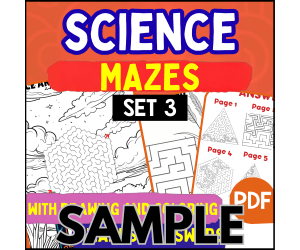
Science Mazes - Set 3: 1 Page Sample (PDF)
ELA, Language Development, Vocabulary, Spelling, ESL, Resources for Teachers, Science, Physics, Earth and Environmental Sciences, Life Sciences, Grade 2, 3, 4, 5, Worksheets & Printables, Worksheets, Teacher Tools, Centers, Activities, Mazes
THIS IS A ONE PAGE SAMPLE OF A SIX PAGE MAZE DOWNLOAD FULL SIX MAZE DOWNLOAD INFORMATION: Maze Series This maze series is designed for students in grades 2–5. Each set features a clear, kid-friendly theme with scene-based mazes that students first navigate, then complete by drawing a few target words from a simple word list. Pages come in varied styles and graduated difficulty, with an optional “color it in” step—and some themes invite quick calculations to match the task. These mazes are student-friendly, classroom-ready, and perfect for literacy warmups, seasonal units, fast-finisher bins, centers, sub plans, or home learning extensions. The playful, structured format builds problem-solving, attention to detail, and fine-motor control while reinforcing themed content in a motivating way. Note: Unlike many themed products, not all word-list words appear on the maze pages. To support full vocabulary coverage, we’ve released a companion word list you can find in the links section. Science Set 3 Word List 1. Human Body Systems Brain, Heart, Lungs, Muscles, Bones, Veins, Digest, Nerves 2. Ecosystems and Food Chains Ecosystem, Habitat, Producer, Consumer, Decomposer, Food Chain, Predator, Prey 3. States of Matter Matter, Solid, Liquid, Gas, Melt, Freeze, Evaporate, Condense 4. Space and the Universe Galaxy, Milky Way, Orbit, Gravity, Black Hole, Meteor, Astronomer, Telescope 5. Plants and Photosynthesis Roots, Stem, Leaf, Flower, Seed, Sunlight, Oxygen, Chlorophyll 6. Simple Machines and Engineering Lever, Pulley, Ramp, Wheel, Axle, Screw, Gears, Invent PDF Version Other versions will appear here when available. Follow the store for the lastest on new products. How to Use These Mazes Perfect for: Morning work or early-finisher bins Literacy or STEM centers Holiday/seasonal review lessons Independent stations, sub plans, or take-home enrichment More Science Themed Products Science Crosswords (Set 1) PDF Science Crosswords (Set 2) PDF Science Crosswords (Set 3) PDF Science Word Searches (Set 1) PDF Science Word Searches (Set 2) PDF Science Word Searches (Set 3) PDF Science Mazes (Set 1) PDF Science Mazes (Set 2) PDF FULL CATALOG OF DOWNLOAD LINKS HERE Themed Mazes Links Addition PDF Animals PDF Around the Home PDF Birthday PDF Candy PDF Christmas PDF Cinco de Mayo PDF Clothes PDF Colors PDF Days and Months PDF Division PDF Earth Day PDF Easter PDF Easy Mazes PDF Fall PDF Father's Day PDF Food PDF Geography (Set 1) PDF Geography (Set 2) PDF Geography (Set 3) PDF Graduation PDF Health PDF History (Set 1) PDF History (Set 2) PDF History (Set 3) PDF Human Body PDF Kindness PDF Life Skills PDF Mother's Day PDF Multiplication PDF Science (Set 1) PDF Science (Set 2) PDF Science (Set 3) PDF Shapes PDF Social Skills PDF Spring PDF Sports PDF St. Patrick's Day PDF Subtraction PDF Summer PDF Thanksgiving PDF Transport PDF Valentine's Day PDF Winter PDF Mazes in Depth Structure Each maze is crafted around a focused sub-theme. Students navigate the maze, encountering branches and cul-de-sacs that build attention and planning. Most pages include a tiny follow-up box—students draw or label 2–3 target words from a small word box, add a quick count, or color in the scene—so the activity reinforces both content and skills in a highly engaging format. Each completed set includes: A themed maze page. A simple student instruction strip. An answer key showing the solved path for teacher support or self-checking Themes Included These mazes cover a wide range of fun, age-appropriate themes, including: Seasons & Holidays (e.g., Halloween, Easter, Valentine’s Day) Math-Lite Connections (e.g., quick counts, number words) Everyday Topics (e.g., Animals, Weather, School) Special Units (e.g., Health, Earth Day, Sports, Kindness) Each topic reflects students’ real-life experiences and interests while strengthening problem-solving, visual scanning, and fine-motor control in a playful, highly visual way. Easy extensions (optional): Time it: solve once in pencil, then try to beat the time in pen Retell the route using sequence words (first, next, then, finally) Count intersections or turns and graph the results Write a 1–2 sentence mini-story about the scene using the target words Design a tiny maze in the corner for a partner to solve Differentiation tips: Offer a finger-trace pass before pencils for emerging learners Highlight the borders of the correct region on first attempts Use thicker-line versions or simpler pages to build confidence Pair roles: “navigator” gives directions; “driver” traces the path For similar downloads and other frees, do check out Cored Group on TeachSimple.
Author Cored Education
Rating
Tags Vocabulary, Spelling, Science, Human Body Systems, Ecosystems, Food Chains, States Of Matter, Plants And Photosynthesis, Mazes, Science Mazes

Homophones Practice Questions - Vocabulary Grade 3-4 (Docs)
ELA, Language Development, ESL, Common Core, Resources for Teachers, Vocabulary, Grade 3, 4, Worksheets & Printables, Worksheets, Quizzes and Tests, Teacher Tools, Tests, Assessments, Centers, Activities
Homophones Vocabulary Practice MCQS ELA MCQS Overview: In this series of lessons, students will embark on an engaging journey to explore the grammar skills that make our language vibrant and expressive. These lessons are crafted to help students identify, comprehend, and effectively apply language arts skills in both writing and speech. Accompanied by free supplementary materials available for all topics, each lesson builds on the previous one, offering a balanced mix of direct instruction, interactive group activities, and independent practice. Through fun and creative tasks, students will learn to recognize grammar within sentences, understand their function, and use them to enrich their own writing and speech. Homophones Overview: Homophones include: sent, scent, cent for, four, fore wear, where, were raise, rays, raze vane, vein, vain they're, their, there two, too, to, than, then, van Docs Version This is the Docs editable and fillable version. This download is available in GOOGLE Docs, GOOGLE Forms, GOOGLE Slides. PDF, PPT, WORD, check the links below for more details. FULL CATALOG OF DOWNLOAD LINKS HERE Grade 3/4 Links: Adjectives Google Docs Google Forms Google Slides PDF PPT Word Free Supplementary Materials Pack Adverbs Google Docs Google Forms Google Slides PDF PPT Word Free Supplementary Materials Pack Conjunctions Google Docs Google Forms Google Slides PDF PPT Word Free Supplementary Materials Pack Nouns Google Docs Google Forms Google Slides PDF PPT Word Free Supplementary Materials Pack Pronouns Google Docs Google Forms Google Slides PDF PPT Word Free Supplementary Materials Pack Verbs Google Docs Google Forms Google Slides PDF PPT Word Free Supplementary Materials Pack Sentence Structure Google Docs Google Forms Google Slides PDF PPT Word Free Supplementary Materials Pack Present Tense Google Docs Google Forms Google Slides PDF PPT Word Free Supplementary Materials Pack Past Tense Google Docs Google Forms Google Slides PDF PPT Word Free Supplementary Materials Pack Future Tense Google Docs Google Forms Google Slides PDF PPT Word Free Supplementary Materials Pack Context Clues Google Docs Google Forms Google Slides PDF PPT Word Free Supplementary Materials Pack Defining Words Google Docs Google Forms Google Slides PDF PPT Word Free Supplementary Materials Pack Fill the Blanks Google Docs Google Forms Google Slides PDF PPT Word Free Supplementary Materials Pack Homophones Google Docs Google Forms Google Slides PDF PPT Word Free Supplementary Materials Pack Synonyms Google Docs Google Forms Google Slides PDF PPT Word Free Supplementary Materials Pack ELA Review Questions Overview Questions have three answer choices. There are a handful of pictures on each test for aesthetic purposes, as well as a review sheet covering most of the topics covered in the product. Introduction or Example Sheet Each topic will include an introduction or example sheet to go through first with your students. Full Answer Keys Full answer keys and sample responses are provided so no matter how busy you are, you know you're covered! In the Supplementary Pack Interactive Ice Breakers: Fun, hands-on activities that get students thinking about adjectives right from the start. Guided Practice: Teacher-led exercises that reinforce the day’s lesson, ensuring students can confidently identify and use adjectives. Group and Partner Tasks: Collaborative activities that allow students to work together to solve problems, categorize adjectives, and create descriptive sentences. Independent Worksheets: Structured worksheets that provide individual practice and help solidify understanding of key concepts. Exit Tasks: Quick, reflective activities at the end of each lesson that assess understanding and encourage students to apply what they’ve learned. For similar downloads and other frees, do check out Cored Group on TeachSimple.
Author Cored Education
Tags Elementary, Answers, Ccss, Common Core, Tests, Test Prep, Grade 3, Grade 4, Vocabulary, Digital Centers

Sharks Know-It-Alls! Audio Book
Science, Life Sciences, Animals, Preschool, Kindergarten, Grade 1, 2, 3, 4, Read Alouds, Activities
As part of the unique, science Know-It-Alls! Series that features interesting science facts, this audiobook puts the spotlight on Sharks! Did you know that sharks can smell blood in the water from over a mile away? Awesome narration and sound effects plus many interesting facts, makes this audiobook fun and exciting for young science enthusiasts age 4 and up!
Author Twin Sisters Digital Media
Tags Science, Education, Fun, Ebook, Sharks
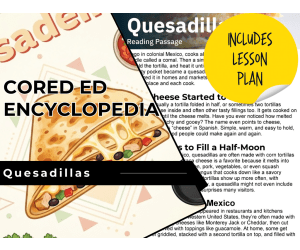
Quesadillas Reading Comprehension Passage - Cored Ed Encyclopedia
ELA, Language Development, Reading Comprehension, Reading, Pre-Reading, Social Studies, Writing, Strategies, Geography, Vocabulary, Grade 2, 3, 4, 5, Worksheets & Printables, Worksheets, Teacher Tools, Centers, Activities, Writing Prompts, Assessments, Quizzes and Tests, Quizzes, Lesson Plans
This quesadillas reading comprehension includes: Visualization (on the front cover) Start your lesson by taking a minute to think and share something about the topic. Read the script aloud (slowly), perhaps prepare some music or sound effects. Student close their eyes and let their imaginations wander. Students open their eyes, read the question aloud and give them a few minutes to complete. Ask a few students to share or keep answers until the end to compare with what they learn in the passage. Quick pause—thousands of Cored Education products are included with your TeachSimple membership. Download links and encyclopedia index available here. Pre-Reading Trivia Students will write down one thing they already know about the subject and then read five more facts and discuss. These facts are fun, and the students will enjoy learning about the subject before reading more. Give 1 minute for students to write what they already know (no pressure—best guess is fine). Read the five facts together. After each fact, do ask a student for their opinion, was it surprising? Set a purpose by asking students to highlight/underline one fact they want to learn more about during the reading. Reading Passage The text is a high-interest reading passage with set paragraphs, roughly three to four paragraphs long. It contains a variety of themes about the topic, anywhere from history to technology. The passage is between 250 and 350 words in length. First, ask students to look at the headings and see what they’ll learn about today. What do they know about the topic/heading? First read options: Teacher read-aloud (best for support). Partner reading (paragraph by paragraph). While reading, students underline important details, and vocabulary words they think may come up in the questions section. Mixed Questions The first question page contains four multiple-choice questions, each with a choice of four answers, and three written response questions that require a sentence or two from the student. Students complete the mcqs first independently, then review quickly as a class. For the 3 written responses, try to get students giving the answer with some form of evidence: “I think ___ because the text says ___.” If students get stuck, send them back to check the passage. Vocabulary Questions Practice seven key words from the text in this section across two activities. First section is scrambled words where students will unscramble three words given a clue for each. The second section is a word to meaning matching activity. Before starting, have some students read out words they underlined in the passage. Ask students to say the word and read aloud the sentence(s) around each word. Ask students to do scrambled words and the matching exercise in pairs then go through answers as a class. For the scrambled spelling task, get four pairs to come up to the board and write the words for extra practice with the other student reading out the clue. For the matching task, prompt students to give full sentences: “I matched ___ with ___ because ___.” Creative Writing In this question, the student will be required to write a five to eight sentence paragraph on a question related to the topic. Before starting, ask students write down 3 key ideas they are going to include in their piece. Ask students for ideas to share around the class to help those struggling. Pro writing expectations: 5–8 sentences At least 2 facts or details from the passage At least 2 vocabulary words from the previous page Students read their paragraphs while classmates listen for facts and vocabulary words. Extension Activities This page is optional for fast finishers or to take home. There are several activities, each one requiring a different skill. Do some, do none, do all, completely optional - but you will feel reassured knowing every possibility is planned for. Includes summary writting question. Answer Key There are answers for the multiple-choice questions, written response questions have sample answers, vocabulary answers and if there is a summary question then a sample summary will be provided as well. Lesson Plan Included Customized lesson plan for this lesson is included. Lesson Snapshot Title: Quesadillas Genre: Nonfiction (informational passage with support pages) Subject: Reading (Informational Text) / Social Studies (Culture & Food Traditions) Primary Topic: How quesadillas began and changed by place Estimated Guided Reading Level (A–Z): Q What This Lesson Teaches Best How foods and traditions change as people share them in different places (homes, markets, restaurants, and around the world). Comparing regional variations (corn vs. flour tortillas; different cheeses and fillings in different parts of Mexico and the U.S.). Building vocabulary and background knowledge about cooking tools and ingredients (comal, Oaxaca cheese, huitlacoche, guacamole). Identifying main ideas and key details across sections with headings (history/origin, filling choices, spreading beyond Mexico). Learning Goals Students can explain how the passage says a quesadilla is made (tortilla, filling, folded, heated). Students can describe how quesadillas changed in different places using details from the text. Students can compare quesadillas in different regions mentioned (central/southern Mexico, northern Mexico, Mexico City, Southwestern United States). Students can identify the main idea of each section heading and support it with one detail. Students can use key vocabulary from the passage when discussing the topic. Key Vocabulary From the Text colonial — from the time when a country was ruled by another comal — a flat griddle for heating and cooking tortillas Oaxaca — a place in Mexico named in the passage huitlacoche — a corn fungus used as a savory filling guacamole — a topping served with some quesadillas Discussion Prompts Pre-reading question: What foods have you seen change in different places or families? Comprehension questions: According to the passage, what is a quesadilla and how is it cooked? Comprehension questions: What are two different fillings or cheeses the passage says people use? Comprehension questions: How does the passage explain quesadillas changing as they spread beyond Mexico? FULL CATALOG OF DOWNLOAD LINKS AND ENCYCLOPEDIA INDEX HERE
Author Cored Education
Rating
Tags Vocabulary, Reading Comprehension, Reading Passages, Reading, Creative Writing, Reading Strategies, Writing Prompts, Lesson Plans, Quesadillas, Social Studies

Guitars Reading Comprehension Passage - Cored Ed Encyclopedia
ELA, Language Development, Resources for Teachers, Reading Comprehension, Reading, Pre-Reading, Writing, Music, Creative Arts, Strategies, Grade 2, 3, 4, 5, Worksheets & Printables, Worksheets, Teacher Tools, Centers, Activities, Writing Prompts, Assessments, Tests, Quizzes and Tests, Quizzes
This guitars reading comprehension contains the following: Pre-Reading Trivia Students will write down one thing they already know about the subject and then read five more facts and discuss. These facts are fun, and the students will enjoy learning about the subject before reading more. Reading Passage The text is a high-interest reading passage with set paragraphs, roughly three to four paragraphs long. It contains a variety of themes about the topic, anywhere from history to technology. The passage is between 250 and 350 words in length. Mixed Questions The first question page contains four multiple-choice questions, each with a choice of four answers, and three written response questions that require a sentence or two from the student. Creative Writing In this question, the student will be required to write a five to eight sentence paragraph on a question related to the topic. Extension Activities This page is optional for fast finishers. If there are five to ten minutes left at the end of the lesson, the student can choose one of three activities, each one requiring a different skill. Answer Key There are answers for the multiple-choice questions and three written response questions have sample answers. FULL CATALOG OF DOWNLOAD LINKS AND ENCYCLOPEDIA INDEX HERE Cored Ed Encyclopedia Overview The Cored Ed Encyclopedia is a weekly series of lessons that you can pick up and use right away. These short readings fit into whatever time you have available. Each one includes a warm-up, a reading, and a set of questions, but it’s flexible — you can do just the reading, the full lesson, or skip the writing section if you need to. Each lesson focuses on a single topic so students don’t get lost. The writing is clear but never childish, making it perfect for grades two through five. Topics range from animals and science to history, inventions, and everyday things. No matter the level of the student, everyone should take away at least one new idea or fact from each lesson. The materials are easy to print, easy to explain, and require no setup. They work well for whole-class teaching, partner work, or independent study.
Author Cored Education
Rating
Tags Vocabulary, Spelling, Reading Comprehension, Reading Passages, Reading, Creative Writing, Reading Strategies, Writing Prompts, Guitars, Music

Science Crossword - Set 3: 1 Page Sample (PDF)
ELA, Language Development, Vocabulary, Spelling, ESL, Resources for Teachers, Science, Physics, Earth and Environmental Sciences, Life Sciences, Grade 2, 3, 4, 5, Worksheets & Printables, Worksheets, Teacher Tools, Crosswords Puzzles, Centers, Activities
THIS IS A ONE PAGE SAMPLE OF A SIX CROSSWORD DOWNLOAD FULL SIX CROSSWORD DOWNLOAD INFORMATION: Crossword Series (Themed) This crossword series is designed for students in grades 2–5. Each set of crosswords is built around a clear vocabulary theme, allowing students to strengthen their word recognition, build subject-based knowledge, and reinforce early literacy and thinking skills. Each topic includes six crossword sets , and each set features the following consistent structure: 1. 8 vocabulary clues 2. Crossword puzzle 3. Answer key 4. 1 Did You Know fact related to the set These crosswords are designed to be student-friendly, classroom-ready, and easily integrated into thematic units, seasonal learning, morning work, or independent literacy stations. Science Crosswords Set 3 Word List 1. Human Body Systems Brain, Heart, Lungs, Muscles, Bones, Veins, Digest, Nerves 2. Ecosystems and Food Chains Ecosystem, Habitat, Producer, Consumer, Decomposer, Food Chain, Predator, Prey 3. States of Matter Matter, Solid, Liquid, Gas, Melt, Freeze, Evaporate, Condense 4. Space and the Universe Galaxy, Milky Way, Orbit, Gravity, Black Hole, Meteor, Astronomer, Telescope 5. Plants and Photosynthesis Roots, Stem, Leaf, Flower, Seed, Sunlight, Oxygen, Chlorophyll 6. Simple Machines and Engineering Lever, Pulley, Ramp, Wheel, Axle, Screw, Gears, Invent PDF Version Other versions will appear here when available. Follow the store for the lastest on new products. How to Use This Crossword These crosswords are ideal for whole-class work, small groups, literacy centers, or take-home activities. Use one set per day, or spread them across a week or month depending on your curriculum needs. Each clue has been crafted to align with the reading level of grades 2–5, with support for both decoding and meaning. The Did You Know? facts offer additional extension opportunities for writing, drawing, or display work. Whether you're reinforcing vocabulary, exploring a seasonal topic, or adding variety to your literacy block, these crosswords provide a fun, flexible, and focused way to boost early literacy in an engaging format. More Science Themed Products Science Crosswords (Set 1) PDF Science Crosswords (Set 2) PDF FULL CATALOG OF DOWNLOAD LINKS HERE Themed Crossword Links Addition PDF Animals PDF Around the Home PDF Birthday PDF Candy PDF Christmas PDF Cinco de Mayo PDF Clothes PDF Colors PDF Days and Months PDF Division PDF Earth Day PDF Easter PDF Easy Crosswords PDF Fall PDF Father's Day PDF Food PDF Geography (Set 1) PDF Geography (Set 2) PDF Geography (Set 3) PDF Graduation PDF Health PDF History (Set 1) PDF History (Set 2) PDF History (Set 3) PDF Human Body PDF Kindness PDF Life Skills PDF Mother's Day PDF Multiplication PDF Science Crosswords (Set 1) PDF Science Crosswords (Set 2) PDF Science Crosswords (Set 3) PDF Shapes PDF Social Skills PDF Spring PDF Sports PDF St. Patrick's Day PDF Subtraction PDF Summer PDF Thanksgiving PDF Transport PDF Valentine's Day PDF Winter PDF Crosswords in Depth Structure Each crossword clue is written in simplified language to suit early readers, and follows a strict number-and-clue format (e.g., 1.A shape with four sides ). Students complete each puzzle using the themed vocabulary provided, helping to build both content knowledge and spelling confidence. Each completed set includes: A questions section with clearly formatted clues An answers section to support teacher checking or independent correction A Did You Know? fact tied to the topic (one per set) to add curiosity and cross-curricular value Themes Included The crosswords cover a wide variety of engaging, age-appropriate themes such as: Seasons & Holidays (e.g., Winter, Easter, Valentine’s Day) Math Concepts (e.g., Addition, Subtraction, Multiplication, Division) Everyday Topics (e.g., School, Colors, Animals, Weather) Special Units (e.g., Health, Earth Day, Sports, Graduation, Kindness) Each theme is carefully selected to reflect the experiences and interests of young learners, while reinforcing vocabulary and comprehension. For similar downloads and other frees, do check out Cored Group on TeachSimple.
Author Cored Education
Rating
Tags Vocabulary, Spelling, Crosswords, Science, Science Crosswords, Human Body Systems, Ecosystems, Food Chains, States Of Matter, Plants And Photosynthesis

Guided Reading Level M - The Sport of Fencing (with Lesson Plan)
ELA, Resources for Teachers, Reading Comprehension, Reading, Science, Engineering, Technology, Sports, P.E. & Health, Physical Education, Grade 2, 3, 4, Worksheets & Printables, Worksheets, Teacher Tools, Centers, Activities, Literacy Readers, Quizzes, Quizzes and Tests, Assessments, Lesson Plans
This Guided Reading Book - The Sport of Fencing (Level M) with lesson plan includes: Guided Reading Color Label (front cover x1) This is a quick way to match the book’s demands to what students can generally handle.. The overall goal is to use the level/color to pick books for several smaller groups. To qualify for a certain level, a student is expected to read a book from that level with about 90–94% accuracy. If a student is consistently accurate and understands, move up a level. If the student is struggling at that level, drop down and add more support. Each student will improve at completely different rates, but it is generally one of the best ways to check progress across the class. DOWNLOAD THE CATALOG TO VIEW ALL GUIDED READING BOOKS AVAILABLE (SORTED LEVELS A-Z) Pre-Reading Question (x1) Teacher asks the prompt aloud, can be while showing the cover or first page. Students share what they already know, or make educated guesses from the cover. Prompt them to use the target vocabulary. Write some of their responses on the board to look back at during the reading. Vocabulary Words (x5) Introduce the five words, best doing it one at a time. Start by saying it, while students repeat and then see if anyone knows what it means before reading further. Read through the meaning and try to briefly connect each word to a picture or gesture so it’s meaningful. Ask students to flip through the book pages and point to where they see each of the vocabulary words. While reading the book pause upon coming across one of the vocab words or read the sentence twice to make sure students understand the word has appeared. Optional: Ask students to raise hands whenever they see/hear one of the new words. Guided Reading Pages (x10) Check the book snapshot (below) for: primary topic - do you need to prep extra reading or intro materials on this? what is taught best - decide on 1-2 bullets to focus on, use the prompt or words provided here for best results. learning goals - what you are checking for students to be able to do after the session, elicit answers using prompts or words provided. key vocabulary (see section above). questions overview - so you know what is coming up and if you need to prep extra materials to assist understanding. Run the lesson You may have already looked at a few of the pages together, but you can show them some of the pictures again first to set meaning. Depending on how much time you have and how familiar your students are with guided reading class, you may want to read the book aloud first with the group first. Students whisper or partner read, while you listen in. If time, do it as a group, one student reading a page each. Use the guided page’s prompts to coach: “Check the picture / does it make sense?” “Point under the words / try the first sound” “Reread the sentence smoothly”. Try to focus more on one student per session (rotating every time), so you can work out if they are ready to move up or need to move down a level. Comprehension Questions (back cover x3) This is your way to check that students didn’t just say the words, but actually understood the text. First, let students answer by pointing to the page/picture and saying a short sentence. After any answer, follow with: “Show me where you found that in the text.” In bigger groups, have partners answer first (10–20 seconds), then call on 2–3 students to share. Differentiation tips: Emerging speakers/struggling readers: oral + pointing On-level: oral in a full sentence Higher: one written sentence or draw + label Book Snapshot Title: The Sport of Fencing Genre: Nonfiction (informational) Subject: Physical Education / Reading (Informational Text) Primary Topic: Fencing gear, swords, and how matches work Estimated Guided Reading Level (A–Z): M What This Book Teaches Best Basic overview of fencing as a sport, including where it takes place (a long, narrow mat called a “strip”). Safety equipment and how it protects fencers (mask, jacket, glove, cuff). Differences among the three fencing swords and how points are scored with each (foil, épée, sabre). Key fencing moves and positions used in a match (“En Garde” stance, lunge). How modern fencing tracks points and how respect is shown before and after matches. Learning Goals Students will describe what fencing looks like and where it takes place using details from the text. Students will explain how fencing safety gear protects a fencer during a match. Students will compare foil, épée, and sabre by describing how targets and scoring work. Students will identify and describe the “En Garde” stance and why it helps movement. Students will explain how a lunge helps a fencer reach an opponent to score a point. Students will describe how fencing shows respect before and after a match. Key Vocabulary From the Text strip — the long, narrow mat where fencers move. foil — a light, flexible sword used in fencing. épée — the heaviest fencing sword with the whole body as target. sabre — a fast sword that can score with tip or edge. lunge — a move stepping forward to reach an opponent. Discussion Prompts Pre-reading question: What safety gear do you think someone would need to fence safely? Comprehension questions: Why do fencers wear a fencing mask? In a foil match, what part of the opponent is the target for scoring points? What do fencers do before and after a match to show respect? Printing Tips 1. Best Printing Method (Recommended) “Booklet” Printing (Best if Available) If your printer or PDF viewer supports Booklet Printing , use this. Settings to use: Print mode: Booklet Paper size: Letter or A4 (either works) Orientation: Landscape Print on both sides: Yes Flip on: Short edge Scaling: Fit to printable area Booklet subset: First test: Front sides only Then: Back sides only This will automatically: Pair pages correctly Put the cover on the outside Align everything for folding After printing, fold in half and staple along the spine . 2. If “Booklet” Printing Is NOT Available You can still print this correctly with manual duplex printing . Step-by-step: Open the PDF. Choose Print . Set: Orientation: Landscape Pages per sheet: 1 Print on both sides: Yes Flip on: Short edge Print all pages . Because each PDF page already contains two facing book pages, the result will still fold cleanly into a book. Thousands of Cored Education products are included with your TeachSimple membership. Download links and encyclopedia index available here.
Author Cored Education
Rating
Tags Reading Comprehension, Reading Passages, Reading, Guided Reading, Guided Reading Lesson Plan, Guided Reading Activity, Pre-reading, Health Lesson Plans, P.e., Sports

Insects Reading Comprehension Passage - Cored Ed Encyclopedia
ELA, Reading Comprehension, Reading, Science, Pre-Reading, Language Development, Life Sciences, Insects, Earth and Environmental Sciences, Vocabulary, Grade 2, 3, 4, 5, Worksheets & Printables, Worksheets, Teacher Tools, Centers, Activities, Writing Prompts, Assessments, Quizzes and Tests, Quizzes, Lesson Plans
This Insects reading comprehension with lesson plan includes: Visualization (on the front cover) Start your lesson by taking a minute to think and share something about the topic. Read the script aloud (slowly), perhaps prepare some music or sound effects. Student close their eyes and let their imaginations wander. Students open their eyes, read the question aloud and give them a few minutes to complete. Ask a few students to share or keep answers until the end to compare with what they learn in the passage. Quick pause—thousands of Cored Education products are included with your TeachSimple membership. Download links and encyclopedia index available here. Pre-Reading Trivia Students will write down one thing they already know about the subject and then read five more facts and discuss. These facts are fun, and the students will enjoy learning about the subject before reading more. Give 1 minute for students to write what they already know (no pressure—best guess is fine). Read the five facts together. After each fact, do ask a student for their opinion, was it surprising? Set a purpose by asking students to highlight/underline one fact they want to learn more about during the reading. Reading Passage The text is a high-interest reading passage with set paragraphs, roughly three to four paragraphs long. It contains a variety of themes about the topic, anywhere from history to technology. The passage is between 250 and 350 words in length. First, ask students to look at the headings and see what they’ll learn about today. What do they know about the topic/heading? First read options: Teacher read-aloud (best for support). Partner reading (paragraph by paragraph). While reading, students underline important details, and vocabulary words they think may come up in the questions section. Mixed Questions The first question page contains four multiple-choice questions, each with a choice of four answers, and three written response questions that require a sentence or two from the student. Students complete the mcqs first independently, then review quickly as a class. For the 3 written responses, try to get students giving the answer with some form of evidence: “I think ___ because the text says ___.” If students get stuck, send them back to check the passage. Vocabulary Questions Practice seven key words from the text in this section across two activities. First section is scrambled words where students will unscramble three words given a clue for each. The second section is a word to meaning matching activity. Before starting, have some students read out words they underlined in the passage. Ask students to say the word and read aloud the sentence(s) around each word. Ask students to do scrambled words and the matching exercise in pairs then go through answers as a class. For the scrambled spelling task, get four pairs to come up to the board and write the words for extra practice with the other student reading out the clue. For the matching task, prompt students to give full sentences: “I matched ___ with ___ because ___.” Creative Writing In this question, the student will be required to write a five to eight sentence paragraph on a question related to the topic. Before starting, ask students write down 3 key ideas they are going to include in their piece. Ask students for ideas to share around the class to help those struggling. Pro writing expectations: 5–8 sentences At least 2 facts or details from the passage At least 2 vocabulary words from the previous page Students read their paragraphs while classmates listen for facts and vocabulary words. Extension Activities This page is optional for fast finishers or to take home. There are several activities, each one requiring a different skill. Do some, do none, do all, completely optional - but you will feel reassured knowing every possibility is planned for. Includes summary writting question and additional facts. Answer Key There are answers for the multiple-choice questions, written response questions have sample answers, vocabulary answers and if there is a summary question then a sample summary will be provided as well. Lesson Plan Included Customized lesson plan for this lesson is included. Lesson Snapshot Title: Insects Genre: Nonfiction (informational text) Subject: Reading (Informational Text) / Life Science Primary Topic: Insect body parts, growth, history, and study Estimated Guided Reading Level (A–Z): R What This Lesson Teaches Best Identifies core insect body parts and features (head, thorax, abdomen; six legs; antennae; compound eyes; many have wings). Explains how insects grow using an outside skeleton (exoskeleton) and why molting is needed as they get bigger. Describes butterfly life stages as an example of changing shape in stages (egg, caterpillar, chrysalis, winged adult). Connects insects to deep time and evidence from fossils (oldest known flying insects in the Carboniferous Period; many species today). Introduces how people study and classify insects over time (Aristotle, Carl Linnaeus, and modern entomology). Learning Goals Students will identify the three main insect body parts and describe what each part includes. Students will explain why insects must molt as they grow, using the idea of an exoskeleton. Students will describe the butterfly’s life stages in order, using details from the passage. Students will explain what fossils reveal about early flying insects and how insect groups changed over time. Students will define entomology and describe tools scientists use to study insects. Key Vocabulary From the Text thorax — middle body part where legs attach. abdomen — back body section behind the thorax. antennae — feelers that taste the air. exoskeleton — hard outer coat that works like a skeleton. entomology — the study of insects. FULL CATALOG OF DOWNLOAD LINKS AND ENCYCLOPEDIA INDEX HERE
Author Cored Education
Rating
Tags Vocabulary, Reading Comprehension, Reading Passages, Lesson Plans, Ela Lesson Plans, Reading Comprehension Lesson Plans, Pre-reading, Science Lesson Plans, Life Science, Insects

Vegetables Reading Comprehension Passage - Cored Ed Encyclopedia
ELA, Language Development, Reading Comprehension, Reading, Pre-Reading, Science, Life Sciences, Health, P.E. & Health, Nature & Plants, Grade 2, 3, 4, 5, Worksheets & Printables, Worksheets, Teacher Tools, Centers, Activities, Writing Prompts, Assessments, Quizzes and Tests, Quizzes, Lesson Plans
This vegetables reading comprehension with lesson plan includes: Visualization (on the front cover) Start your lesson by taking a minute to think and share something about the topic. Read the script aloud (slowly), perhaps prepare some music or sound effects. Student close their eyes and let their imaginations wander. Students open their eyes, read the question aloud and give them a few minutes to complete. Ask a few students to share or keep answers until the end to compare with what they learn in the passage. Quick pause—thousands of Cored Education products are included with your TeachSimple membership. Download links and encyclopedia index available here. COMPANION VIDEO NOW AVAILABLE (EMBEDDED AFTER PREVIEW PICTURES IN PRODUCT DESCRIPTION) Pre-Reading Trivia Students will write down one thing they already know about the subject and then read five more facts and discuss. These facts are fun, and the students will enjoy learning about the subject before reading more. Give 1 minute for students to write what they already know (no pressure—best guess is fine). Read the five facts together. After each fact, do ask a student for their opinion, was it surprising? Set a purpose by asking students to highlight/underline one fact they want to learn more about during the reading. Reading Passage The text is a high-interest reading passage with set paragraphs, roughly three to four paragraphs long. It contains a variety of themes about the topic, anywhere from history to technology. The passage is between 250 and 350 words in length. First, ask students to look at the headings and see what they’ll learn about today. What do they know about the topic/heading? First read options: Teacher read-aloud (best for support). Partner reading (paragraph by paragraph). While reading, students underline important details, and vocabulary words they think may come up in the questions section. Mixed Questions The first question page contains four multiple-choice questions, each with a choice of four answers, and three written response questions that require a sentence or two from the student. Students complete the mcqs first independently, then review quickly as a class. For the 3 written responses, try to get students giving the answer with some form of evidence: “I think ___ because the text says ___.” If students get stuck, send them back to check the passage. Vocabulary Questions Practice seven key words from the text in this section across two activities. First section is scrambled words where students will unscramble three words given a clue for each. The second section is a word to meaning matching activity. Before starting, have some students read out words they underlined in the passage. Ask students to say the word and read aloud the sentence(s) around each word. Ask students to do scrambled words and the matching exercise in pairs then go through answers as a class. For the scrambled spelling task, get four pairs to come up to the board and write the words for extra practice with the other student reading out the clue. For the matching task, prompt students to give full sentences: “I matched ___ with ___ because ___.” Creative Writing In this question, the student will be required to write a five to eight sentence paragraph on a question related to the topic. Before starting, ask students write down 3 key ideas they are going to include in their piece. Ask students for ideas to share around the class to help those struggling. Pro writing expectations: 5–8 sentences At least 2 facts or details from the passage At least 2 vocabulary words from the previous page Students read their paragraphs while classmates listen for facts and vocabulary words. Extension Activities This page is optional for fast finishers or to take home. There are several activities, each one requiring a different skill. Do some, do none, do all, completely optional - but you will feel reassured knowing every possibility is planned for. Includes summary writting question. Answer Key There are answers for the multiple-choice questions, written response questions have sample answers, vocabulary answers and if there is a summary question then a sample summary will be provided as well. Lesson Plan Included Customized lesson plan for this lesson is included. Lesson Snapshot Title: Vegetables Genre: Nonfiction (Informational text) Subject: Science (Life Science: plants, nutrition) / Reading (informational text) Primary Topic: What vegetables are and why they matter Estimated Guided Reading Level (A–Z): N What This Lesson Teaches Best What counts as a vegetable (in this text): Defines vegetables as edible parts of plants people choose to eat, including roots (carrot), leaves (spinach), and flower buds (broccoli). Plant parts and categories: Explains that many vegetables come from soft-stemmed, herbaceous plants rather than woody trees, and that vegetables come in many shapes because plants have many useful parts. Early farming and seed-saving: Describes how people once gathered edible plants from the wild, then began planting and saving seeds (about 10,000–7,000 BC), keeping and sharing plants that tasted better or grew bigger. Science vs. everyday language (tomato debate): Contrasts the botanical definition of “fruit” (seed-bearing part formed from a flower’s ovary) with how “vegetable” often means a savory plant food served with meals, noting a U.S. court decision in 1893 calling tomatoes vegetables for a tax rule. Nutrition and food preservation: States vegetables are usually low in fat and calories, filling because they bring water and fiber, and may contain vitamins/minerals (examples include vitamin A and vitamin C); also notes chilling, freezing, or canning to keep vegetables longer. Learning Goals Students will define a vegetable using examples from the text (root, leaf, bud). Students will describe where many vegetables come from (soft-stemmed, herbaceous plants) and explain what that means. Students will explain how seed-saving helped wild plants become “garden favorites,” using details from the passage. Students will compare the botanical meaning of fruit with the cooking meaning of vegetable, using the tomato example. Students will identify two reasons vegetables can be filling and healthy (water, fiber, vitamins/minerals) based on the text. Key Vocabulary From the Text edible — safe and good to eat. herbaceous — soft-stemmed; not woody. botanists — scientists who study plants. ovary — flower part that can form fruit. fiber — nutrient that helps you feel full. FULL CATALOG OF DOWNLOAD LINKS AND ENCYCLOPEDIA INDEX HERE
Author Cored Education
Rating
Tags Vocabulary, Reading Comprehension, Reading Passages, Lesson Plans, Ela Lesson Plans, Reading Comprehension Lesson Plans, Pre-reading, Science Lesson Plans, Nature And Plants, Health

The Sandman Lapbook Project Reading & Writing Grades 3 4 5 ELA
ESL, Language Development, ELA, Children’s Literature, Literature, Literary Devices, Reading Comprehension, Reading, Strategies, Grade 3, 4, 5, Centers, Activities, Crafts, Projects, Assessments, Teacher Tools, Graphic Organizers, Templates
Take a trip into a meaningful learning experience with this The SandmanLapbook Project made for Grades 3, 4, and 5 learners, homeschoolers, and EFL/ESL students. This resource set is packed with interactive activities for reading classes, reading centers, reading comprehension supplemental assessment tool, fairy tale units, and so much more! Contents: • 3 The SandmanLapbook Differentiated Reading Passages (Easy, Average, Hard) • 6 The SandmanLapbook Unique Cover Options • 2 The SandmanLapbook Name Page Versions • 1 The SandmanLapbook Center Page • 3 The SandmanLapbook Story Summary Templates • 2 The SandmanLapbook Theme and Message Pages • 2 The SandmanLapbook Sequencing Pockets • 6 The SandmanLapbook Picture Event Cards • 3 The SandmanLapbook Event Sequencing Sets – Easy, Average, Hard (6 cards each) • 6 The SandmanLapbook Retell Cue Cards • 1 The SandmanLapbook Character Foldable • 1 The SandmanLapbook Setting Fold • 1 The SandmanLapbook Story Elements Foldout • 1 The SandmanLapbook Book Rating Page • 1 The SandmanLapbook Personal Connection Page
Author It's Teacher L
Rating
Tags The Nightingale, Reading Comprehension, ELA Projects, Fairy Tale
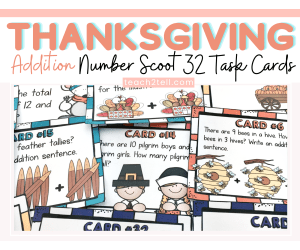
Thanksgiving Activities Math Centers 32 Addition Strategies Task Cards
Math, Numbers, Early Math, Basic Operations, Addition, Addition and Subtraction, Homeschool Curriculum, Grade 3, 4, 5, 6, Centers, Activities, Games, Task Cards, Worksheets & Printables
Looking for Thanksgiving Activities that make your math centers fun, engaging, and no-prep? These 32 Addition Strategies Task Cards are the perfect way to keep your students learning while enjoying the festive season. With meaningful Thanksgiving-themed illustrations and a clear, student-friendly layout, these cards help reinforce essential addition skills to help build number sense. Best suited for Grades 2–5, the task cards focus on strengthening addition fact fluency, building confidence, and providing meaningful practice in a format that works for whole-class review, small groups, or independent centers. What’s Included 32 Thanksgiving-themed addition task cards Recording sheet for accountability Teacher answer key for quick checks or self-correction Printable PDF file in high-quality format Seasonal designs to keep students motivated and on-task The addition skills reinforced in this pack are: writing an addition fact for a multiplication sentence writing an addition sentence for a given array writing the missing addend in an addition fact. writing the sum of two given numbers writing an addition sentence for a given illustration problem-solving using illustrations Perfect For: Thanksgiving math centers Small-group rotations Early finisher tasks Morning work Homework practice Sub tub activities These task cards will make your Thanksgiving Activities meaningful, simple to prep, and fun for your students. Just print, cut, and add these 32 task cards to your November math centers—your students get engaging practice, and you get more time to enjoy the season.
Author Teach2Tell
Rating
Tags Thanksgiving Activities, Thanksgiving Math, Math Centers, Grade 3 Math, Grade 4 Math, Grade 5 Math, Holiday Math Activities, Addition Strategies, Number Sense

Colors Word List Posters (PDF)
ELA, Language Development, Resources for Teachers, Vocabulary, Spelling, ESL, Grade 2, 3, 4, 5, Worksheets & Printables, Worksheets, Teacher Tools, Centers, Activities, Posters, Classroom Decor
Word List Poster Series This word list poster series is designed for students in grades 2–5. Each printable focuses on a clear, kid-friendly theme and features 8 target vocabulary words with short, student-friendly meanings or fun facts. The clean layout works as both an anchor chart and a write-in sheet, giving students a quick, visual reference they can revisit during centers and independent work. These posters are student-friendly, classroom-ready, and perfect for warmups, vocabulary walls, sub plans, or take-home reference. Display a single poster to support the day’s lesson, or group several to build a themed wall across your unit. Note: Each poster is a companion piece to its matching themed product in the series—pair it with the corresponding maze, wordsearch, or activity pack for a consistent set of 8 focus words. Colors Word List 1. Basic Colors Red, Blue, Yellow, Green, Orange, Purple, Pink, Brown 2. Light and Dark Colors White, Black, Gray, Light blue, Dark green, Tan, Silver, Gold 3. Colors in Nature Sky blue, Leaf green, Sunset orange, Rose red, Ocean blue, Snow white, Sunflower yellow, Earth brown 4. Fun & Creative Colors Rainbow, Neon, Pastel, Metallic, Glow-in-the-dark, Transparent, Shimmering, Multicolor 5. Colors in Things We Use Paint, Crayon, Marker, Ink, Fabric, Paper, Lights, Dye 6. Feelings & Colors Happy yellow, Sad blue, Angry red, Calm green, Excited orange, Loving pink, Brave purple, Mysterious black PDF Version Other versions will appear here when available. Follow the store for the lastest on new products. How to Use These Word List Posters Perfect for: Morning work or early-finisher bins Vocabulary centers or anchor walls Holiday/seasonal review lessons Independent stations, sub plans, or take-home reference More Colors Themed Products CROSSWORDS WORD SEARCHES MAZES FULL CATALOG OF DOWNLOAD LINKS HERE Themed Word List Posters Links Addition PDF Animals PDF Around the Home PDF Birthday PDF Candy PDF Christmas PDF Cinco de Mayo PDF Clothes PDF Colors PDF Days and Months PDF Division PDF Earth Day PDF Easter PDF Easy Word List Posters PDF Fall PDF Father's Day PDF Food PDF Geography (Set 1) PDF Geography (Set 2) PDF Geography (Set 3) PDF Graduation PDF Health PDF History (Set 1) PDF History (Set 2) PDF History (Set 3) PDF Human Body PDF Kindness PDF Life Skills PDF Mother's Day PDF Multiplication PDF Science (Set 1) PDF Science (Set 2) PDF Science (Set 3) PDF Shapes PDF Social Skills PDF Spring PDF Sports PDF St. Patrick's Day PDF Subtraction PDF Summer PDF Thanksgiving PDF Transport PDF Valentine's Day PDF Winter PDF Word List Posters in Depth Structure Each poster is built around a focused sub-theme and presents 8 target words with short, student-friendly meanings or fun facts. The clean A4 portrait layout works as an anchor chart on your board or as a student reference at desks. These posters are designed as companion pieces to the matching themed products (mazes, wordsearches, activity packs), so the same vocabulary stays visible across your unit. Each poster set includes: A themed word list poster with 8 words + brief meanings/facts A clean, high-contrast layout for easy printing and display Space that can double as write-in/draw-to-show-meaning during centers Themes Included Seasons & Holidays (e.g., Halloween, Easter, Valentine’s Day) Everyday Topics (e.g., Animals, Weather, School) Math & Science Connections (e.g., Number Words, Simple Machines) Special Units (e.g., Health, Earth Day, Sports, Kindness) Each topic reflects real-life experiences and interests while strengthening vocabulary recognition and content understanding in a clear, visual way. Easy extensions (optional) Sketch it: students draw a quick icon for each word Sort it: group words by category (e.g., actions, objects) Star it: highlight “I already know” vs. “I’m learning” words Match it: point to examples in a reading, video, or picture set Say it: brief oral definition or example sentence during share-out Differentiation tips Pre-teach 2–3 anchor words; add the rest later in the week Offer picture cues or gestures for emerging readers/ELLs Let students choose 4 of 8 to focus on first, then build up Color-code by part of speech or concept family for quick scanning For similar downloads and other frees, do check out Cored Group on TeachSimple.
Author Cored Education
Rating
Tags Vocabulary, Spelling, Colors, Basic Colors, Light And Dark Colors, Colors Activities, Ela Posters, Color Posters, Colors Word Lists, Ela Word Lists

Birds of Prey Know-It-Alls! Audio Book
Science, Life Sciences, Animals, Grade 2, 3, 4, Read Alouds, Activities
As part of the unique, science Know-It-Alls! Series that features interesting science facts, this audiobook puts the spotlight on Birds of Prey! Did you know that owls are the only birds of prey that are nocturnal? That means they like to hunt at night. Children will learn about the eagle, hawk, owl, falcon, and vulture. Awesome narration and sound effects plus many interesting facts, makes this audiobook fun and exciting for young science enthusiasts age 4 and up! Titles in the Know-It-Alls! Series include: Butterflies, Crocodiles, Dinosaurs, Farm Animals, Safari Babies, Snakes, Sharks, Spiders, Whales, Wolves, Puppies, Wild Cats, Bugs, Birds of Prey, Fish, Frogs, Apes, Seals, Bats, Bears, Predators, Mummies, Volcanoes, Lizards, Kittens and Horses.
Author Twin Sisters Digital Media
Tags Science, Birds, Prey, Education, Ebook

Geography Word List Posters - Set 3 (PDF)
ELA, Language Development, Vocabulary, Spelling, ESL, Resources for Teachers, Geography, Social Studies, Grade 2, 3, 4, 5, Worksheets & Printables, Worksheets, Teacher Tools, Centers, Activities, Posters, Classroom Decor
Word List Poster Series This word list poster series is designed for students in grades 2–5. Each printable focuses on a clear, kid-friendly theme and features 8 target vocabulary words with short, student-friendly meanings or fun facts. The clean layout works as both an anchor chart and a write-in sheet, giving students a quick, visual reference they can revisit during centers and independent work. These posters are student-friendly, classroom-ready, and perfect for warmups, vocabulary walls, sub plans, or take-home reference. Display a single poster to support the day’s lesson, or group several to build a themed wall across your unit. Note: Each poster is a companion piece to its matching themed product in the series—pair it with the corresponding maze, wordsearch, or activity pack for a consistent set of 8 focus words. Geography Set 3 Word List 1. More Countries of the World United States, United Kingdom, Australia, India, Peru, Egypt, South Korea, Turkey 2. More Famous Cities Chicago, Toronto, Dubai, Venice, Shanghai, Bangkok, Lisbon, Marrakech 3. More Famous Landmarks Mount Fuji, Sydney Opera House, Chichen Itza, Victoria Falls, Neuschwanstein Castle, Angkor Wat, Red Square, The Parthenon 4. Landforms and Earth's Features Canyon, Plateau, Delta, Glacier, Hill, Bay, Strait, Isthmus 5. U.S. States and Capitals California, Texas, Florida, Alaska, Hawaii, Washington D.C., New York, Illinois 6. People and Cultures Around the World Language, Tradition, Festival, Temple, Market, Music, Clothing, Customs PDF Version Other versions will appear here when available. Follow the store for the lastest on new products. How to Use These Word List Posters Perfect for: Morning work or early-finisher bins Vocabulary centers or anchor walls Holiday/seasonal review lessons Independent stations, sub plans, or take-home reference More Geography Themed Products Geography Crosswords (Set 1) PDF Geography Crosswords (Set 2) PDF Geography Crosswords (Set 3) PDF Geography Word Searches (Set 1) PDF Geography Word Searches (Set 2) PDF Geography Word Searches (Set 3) PDF Geography Mazes (Set 1) PDF Geography Mazes (Set 2) PDF Geography Mazes (Set 3) PDF FULL CATALOG OF DOWNLOAD LINKS HERE Themed Word List Posters Links Addition PDF Animals PDF Around the Home PDF Birthday PDF Candy PDF Christmas PDF Cinco de Mayo PDF Clothes PDF Colors PDF Days and Months PDF Division PDF Earth Day PDF Easter PDF Easy Word List Posters PDF Fall PDF Father's Day PDF Food PDF Geography (Set 1) PDF Geography (Set 2) PDF Geography (Set 3) PDF Graduation PDF Health PDF History (Set 1) PDF History (Set 2) PDF History (Set 3) PDF Human Body PDF Kindness PDF Life Skills PDF Mother's Day PDF Multiplication PDF Science (Set 1) PDF Science (Set 2) PDF Science (Set 3) PDF Shapes PDF Social Skills PDF Spring PDF Sports PDF St. Patrick's Day PDF Subtraction PDF Summer PDF Thanksgiving PDF Transport PDF Valentine's Day PDF Winter PDF Word List Posters in Depth Structure Each poster is built around a focused sub-theme and presents 8 target words with short, student-friendly meanings or fun facts. The clean A4 portrait layout works as an anchor chart on your board or as a student reference at desks. These posters are designed as companion pieces to the matching themed products (mazes, wordsearches, activity packs), so the same vocabulary stays visible across your unit. Each poster set includes: A themed word list poster with 8 words + brief meanings/facts A clean, high-contrast layout for easy printing and display Space that can double as write-in/draw-to-show-meaning during centers Themes Included Seasons & Holidays (e.g., Halloween, Easter, Valentine’s Day) Everyday Topics (e.g., Animals, Weather, School) Math & Science Connections (e.g., Number Words, Simple Machines) Special Units (e.g., Health, Earth Day, Sports, Kindness) Each topic reflects real-life experiences and interests while strengthening vocabulary recognition and content understanding in a clear, visual way. Easy extensions (optional) Sketch it: students draw a quick icon for each word Sort it: group words by category (e.g., actions, objects) Star it: highlight “I already know” vs. “I’m learning” words Match it: point to examples in a reading, video, or picture set Say it: brief oral definition or example sentence during share-out Differentiation tips Pre-teach 2–3 anchor words; add the rest later in the week Offer picture cues or gestures for emerging readers/ELLs Let students choose 4 of 8 to focus on first, then build up Color-code by part of speech or concept family for quick scanning For similar downloads and other frees, do check out Cored Group on TeachSimple.
Author Cored Education
Rating
Tags Vocabulary, Spelling, Geography, Countries Of The World, Famous Cities, Famous Landmarks, Landforms And Earth's Features, U.S. States And Capitals, Word Lists, Geography Word Lists
Addition and Subtraction within 20 with Worksheets 1st Grade Math
Math, Addition and Subtraction, Addition, Subtraction, Calculus, Basic Operations, Early Math, Counting, Numbers, Kindergarten, Preschool, Grade 1, 2, 3, Teacher Tools, Activities, Centers, Worksheets & Printables, Word Problems, Worksheets, Workbooks
This interactive and attractive set Addition and Subtraction within 20 with19 Pages learners develop their original Addition and Subtraction within 20 with this set contains 19 pages in this set, each in each a different Digraphs Addition and Subtraction within 20 with to ensure a fun and structured approach to using a fun and type of work that useful; Each card is fun this edited set of Addition and Subtraction within 20 with is built in an elegant style that attracts attention this interactive and attractive set of Addition and Subtraction within 20 with designed to help young learners develop their original Addition and Subtraction within 20 with skills through Addition and Subtraction within 20 with This set contains. these printable offer useful courses, this provides a useful course-rich practice, it is designed to help using resource grade 2 easily to learn about Addition and Subtraction within 20 with fun and interactive manner. A collaborative learning activity added students. PDF format
Author LAMO
Rating
Tags Basic Operations, Math, Homework, Worksheets, Printables
Reading Comprehension Passages Fiction Set 7 - Sports (Google Slides)
ELA, Reading, Language Development, Spelling, Common Core, Vocabulary, Reading Comprehension, Children’s Literature, Literature, Writing, Grade 2, 3, Teacher Tools, Presentations, Assessments, Tests, Quizzes and Tests, Activities
Reading Comprehension Passages Fiction Set 7 Overview Fascinating reading comprehension passages, each with an array of activities included. Stories are written for the modern classroom and topics are designed to promote enthusiasm from each student. Each lesson contains a mixed questions section to check understanding, a vocabulary or spelling activity to help remember key language introduced, and a writing exercise. Full answer keys are provided. For a more detailed overview, check the section under the links at the bottom of this description. Passages Include 1.Catch It, Dan: Dan is at the ball game and wants to catch a foul ball. 2.Feeling Left Out: Polly isn't invited bowling by her friends and wants to knowwhy. 3.Ian's Friday Nights: Ian wants to be anywhere but the bleachers on Friday nights. 4.Aimee's Dilemma: Soccer or cheerleading? That is the question. 5.A Great Team: Adam & Justin both want to play first base. How will they sortit? 6.Ana's Swimming Party: Jodie can't swim and doesn't want her friends to find out. 7.Touchdown Pythons: Serena loves her first football game. 8.Sam's Passion: Sam talks about his passion for Karate in this passage. 9.Where's My Board: Kerry spends all the story looking for her skateboard. 10.Lacey the Runner: Lacey has dreams to run in the Olympics. Read to find out more. Additional File: Ana's Swimming Party: Invitation Templates Google Slides Version This is the Google Slides editable and fillable version. This download is available in GOOGLE Docs, GOOGLE Forms, GOOGLE Slides. PDF, PPT, WORD. FULL CATALOG OF DOWNLOAD LINKS HERE Grade 2/3 Links Fiction Set 1 - Nature Google Docs Google Forms Google Slides PDF PPT Word Guided Reading Materials Fiction Set 2 - Animals Google Docs Google Forms Google Slides PDF PPT Word Guided Reading Materials Fiction Set 3 - Food Google Docs Google Forms Google Slides PDF PPT Word Guided Reading Materials Fiction Set 4 - School Google Docs Google Forms Google Slides PDF PPT Word Guided Reading Materials Fiction Set 5 - Friends Google Docs Google Forms Google Slides PDF PPT Word Guided Reading Materials Fiction Set 6 - Family Google Docs Google Forms Google Slides PDF PPT Word Guided Reading Materials Fiction Set 7 - Sports Google Docs Google Forms Google Slides PDF PPT Word Guided Reading Materials Nonfiction Set 1 - Technology Google Docs Google Forms Google Slides PDF PPT Word Guided Reading Materials Nonfiction Set 2 - Nutrition Google Docs Google Forms Google Slides PDF PPT Word Guided Reading Materials Nonfiction Set 3 - Animals Google Docs Google Forms Google Slides PDF PPT Word Guided Reading Materials Reading Passages Overview Each passage is especially written for Grade 2-3 students, including key vocabulary required for this age group. Topics are varied and are accompanied by colorful graphics. Topics are meant to educate, yet entertain the modern student. These passages are perfect for the modern classroom. Whereas textbooks can become outdated in no time, any changes to technology or the world will result in updates to this product. Mixed Questions The mixed questions section of each lesson includes a variation of fivecomprehension, vocabulary and math questions. In addition, key reading strategies are frequently covered including cause & effect, summarizing, compare & contrast and making conclusions. Three of the questions will be MCQs and two will require a written response of some kind. Full answers and example responses appear at the end of the lesson. Spelling & Vocab Each reading passage contains a variety of words and phrases designed for Grade 2-3 students. Spelling and vocab activities provide the opportunity to build fluency with these words. As it can become quite mundane doing the same activities over and over, each lesson in a set will contain a different spelling and vocab activity . Writing Prompts Writing prompts are designed to continue the theme or lessons learned in the story. Students are persuaded to write in a variety of ways and each prompt includes several cues to help. As with the spelling/vocab section, writing prompts will vary. This includes research pieces, reading responses, poetry and creative writing prompts. Full Answer Keys Full answer keys and sample responses are provided so no matter how busy you are, you know you're covered! Mixed question answers provide evidence from the text, math questions contain the relevant workings. Answers are designed for use by the teacher, but also suitable as a handout to the student. Additional File One lesson will have an additional file. This is something fun to extend the lesson with. For similar downloads and other frees, do check out Cored Group on TeachSimple.
Author Cored Education
Tags Elementary, Reading, Comprehension, Vocabulary, Answers, Ccss, Common Core, Spelling, Writing, Passages

Doodles and Oodles of Art
Creative Arts, Art, Preschool, Kindergarten, Grade 1, 2, 3, Activities, Crafts
Doodles and Oodles of Art: An Inspiring Resource for Students' Creativity Doodles and Oodles of Art offers a comprehensive compilation of over one hundred art ideas. It invigorates the creative spirit in students and is perfect for educators in search of inspiring art activities. These activities are suitable across a spectrum grade levels, from kindergarten through to grade three. The standout feature of this resource lies not just in its simplicity but also its adaptability. Every project uses materials that are economical and easy to acquire, facilitating seamless implementation in diverse environments, such as conventional classrooms or home schools. From an instructional viewpoint, it can be employed for entire class projects during art sessions or divided into smaller group activities to encourage cooperative learning. Redefining Conventional Lesson Plans In contrast to traditional lesson plans bound by rigid instructions or guidelines, Doodles and Oodles of Art stands apart by encouraging individual creativity without set boundaries. No rigid instructions or guidelines Allows space for personal creativity exploration Aiding Instruction Process Smoothly To support your teaching process effectively, each activity is linked with full examples illustrating potential outcomes. Regardless, there's always room left for inventive exploration with no right or wrong approach set firmly. Flexible PDF Format This extensive resource comes as a user-friendly 136-page PDF ready for printing—providing flexibility so educators can print copies on an as-needed basis serving different purposes such as homework assignments, class handouts or personal instruction manuals. Doodles and Oodles of Art captures an ideal combination between structured learning while leaving room open for creativity —preparing young learners' minds for their artistic journey, making art education more approachable for educators across various educational settings: from public schooling to homeschooling. In fields like Art & Music with associated crafting activities, where nurturing creativity is crucially important, Doodles & Oodles of Art serves not just as a tool but also inspires everyone towards embracing the generous scope that artistic freedom allows. Unleashing Imagination Dive right into this world where imagination overrules strict rules—where we provide the young learners with wings to fly!
Author Classroom Complete Press
Tags Art Development, Art Ideas, Crafts, Patterns, Pictures

Reading Passages on Light Heat Electricity Magnetism (Google Drive)
Science, Physics, Common Core, ESL, Language Development, ELA, Vocabulary, Grade 2, 3, 4, Assessments, Teacher Tools, Tests, Quizzes and Tests, Centers, Activities, Presentations, Diagrams, Worksheets, Worksheets & Printables
Reading Passages on Light Heat Electricity Magnetism for Physical Science Light Heat Electricity Magnetism: Reading Passages Physical Science is a versatile package of science reading lessons offering an engaging way to practice and learn science concepts. Each passage is followed by a set of questions that demand a variety of skills, ensuring that every reader is challenged and engaged. With topics covering light, heat, and electrical circuits, the lessons provide a comprehensive and enjoyable approach to mastering these essential scientific principles. What's inside? Part 3 - Light, Heat, Electricity & Magnetism. Reading Passage 1: Characteristics of Light: Reflection and Refraction Reading Passage 2: Heat, Sources of Heat, and Heat Conduction Reading Passage 3: Electricity, Electrical Circuits, and Energy Reading Passage 4: Symbols and Electric Circuits Reading Passage 5: Magnets Magnetism and Electromagnetism This resource comes in 27 PAGES (Docs Version: US English with Answers) & 5 FORMS (Self-Grading) 143 SLIDES The average teaching duration using this resource is 2 Weeks Science Reading Comprehension Outline: Targeted for students in 3rd and 4th grades, these reading passages are enhanced with illustrations and graphs to elucidate critical points. Each lesson aligns with the Common Core State Standards, allowing you to integrate science reading practice effortlessly, knowing that minimal preparation is needed on your part. Each passage comes with a variety of questions in different formats, including multiple-choice formats, data analysis, and fill-in-the-blanks. The topics covered strike a balance between engaging content and core curriculum-based science subjects. Versatile in application, these lessons are suitable for a variety of settings such as whole-class instruction, morning activities, independent desk work, small group discussions, contingency plans for substitute teachers, homework assignments, or even special holiday-themed tasks. FULL CATALOG OF DOWNLOAD LINKS HERE Grade 3/4 Links: Physical Science Part 1 - Properties of Objects and Materials Google Docs/Slides/Forms PDF PPT Word Free Supplementary Pack Accompanying Videos Physical Science Part 2 - Position and Motion of Objects Google Docs/Slides/Forms PDF PPT Word Free Supplementary Pack Accompanying Videos Physical Science Part 3 - Light, Heat, Electricity, Magnetism Google Docs/Slides/Forms PDF PPT Word Free Supplementary Pack Accompanying Videos Life Science Part 1 - Characteristics of Organisms Google Docs/Slides/Forms PDF PPT Word Free Supplementary Pack Accompanying Videos Life Science Part 2 - Life Cycles of Organisms Google Docs/Slides/Forms PDF PPT Word Free Supplementary Pack Accompanying Videos Life Science Part 3 - Organisms and Environments Google Docs/Slides/Forms PDF PPT Word Free Supplementary Pack Accompanying Videos Earth Science Part 1 - Properties of Earth Materials Google Docs/Slides/Forms PDF PPT Word Free Supplementary Pack Accompanying Videos Earth Science Part 2 - Changes in the Earth and Sky Google Docs/Slides/Forms PDF PPT Word Free Supplementary Pack Accompanying Videos Earth Science Part 3 - Objects in the Sky Google Docs/Slides/Forms PDF PPT Word Free Supplementary Pack Accompanying Videos For similar products and other frees, do check out Cored Group on TeachSimple .
Author Cored Education
Rating
Tags Science, Elementary, Reading, Comprehension, Vocabulary, Physics, Physical Science, Reading Comprehension Assessments, Science Assessments, Vocabulary Assessments

Noah's Ark Bible Story Foldable Mini Book Grade 1 2 3 READING
Common Core, ELA, Literature, Children’s Literature, Reading, Reading Comprehension, Strategies, Grade 1, 2, 3, Activities, Worksheets & Printables, Writing Prompts, Projects, Crafts, Workbooks
Guide your young learners on this amazing journey to discover one of the classic and timeless Bible story of Noah’s Ark through this Noah’s Ark Foldable Mini Book Set! Created for 1st, 2nd, and 3rd Grade learners, homeschoolers, and EFL / ESL students, this enchanting tale is a perfect engaging and meaningful reading classes and Bible lessons! Contained in this set are the following: 1. Noah’s Ark colored mini-book 2. Noah’s Ark black and white mini-book with story tracing activities 3. Noah’s Ark picture-fill mini-book for sequencing test or exercise 4. Noah’s Ark black and white mini-book for story re-tell and writing exercise 5. Noah’s Ark blank mini-book pages for story re-tell, writing and drawing exercises 6. Noah’s Ark sample lesson plan The vivid depiction of the Noah’s Ark tale encourages the students’ imagination and creativity, and the simple presentation of the story gives flexibility to any curriculum preparations. The activities in this resource are made to support the students’ reading comprehension, writing, creative interpretation skills, not to mention instilling the important moral of the Noah’s Ark tale of obedience, faith and hope.
Author It's Teacher L
Tags Noah's Ark, Bible Story, Reading Comprehension, Bible Reading Comprehension, Bible Lessons

Arctic Animals Coloring Pages worksheet activity printables
Animals, Life Sciences, Science, Geography, Social Studies, Creative Arts, Art, Grade 2, 3, 4, 5, Activities, Outlines, Teacher Tools, Worksheets & Printables, Coloring Pages, Worksheets
Engage your students by teaching about Arctic animals while allowing them to use their imagination while developing their motor skills by creating no-prep coloring pages featuring polar wildlife. Students can learn about the different types of Arctic animals such as polar bear, penguin, seal, whale, and they can also practice color, detail, and hand-eye coordination. The no-prep format provides an easy-to-use, enjoyable activity that allows you to combine learning with enjoyment, thus making learning memorable and fun! The Arctic Animals Coloring Pages are great for all levels of students and can be utilized in science, geography, and art centers, in addition to being utilized as homework assignments and during the time students finish early. ❄️🐾 Why Do it : The purpose of the activity is to provide students with knowledge of Arctic animals and their habitats 🐻❄️., enhance fine motor skills ✏️., create an awareness of polar regions and ecosystems 🌍., create curiosity about wildlife ❄️. Coloring provides a hands-on, creative approach to making learning fun and engaging for students of all levels. How Do You Do It : To use the Arctic Animals Coloring Pages, follow these simple steps: 1️⃣ Print the Arctic Animals Coloring Pages. 2️⃣ Introduce some key facts about the Arctic and its animals. 3️⃣ Ask the students to color the animals focusing on their details and patterns. 4️⃣ Discuss some of the interesting facts about each animal or Arctic habitat. 5️⃣ Use optional extension activities like labeling animals or habitats. ✅ Audience : K-5 Grades 🌟, individual assignment, paired assignment, student who finish early, science and geography center or substitute lesson plan 🤝. Practical use within the classroom: This type of assignment can be used for individual student practice, in classroom centers, for students to complete at home, and as a creative way for students who finish their work early to enhance their creative thinking skills. 🤲 Variations that may be fun to incorporate into your classroom: Artwork & Science Extensions 🎨: Drawing your own arctic animal habitat. Timely Coloring Competition For Students ⏳: See how many arctic animals students can colour within a certain time frame. Fact Labelling ✏️: Create a simple fact that describes each creature. Inventing Your Own Habitat 🧩: Construct a complete Arctic habitat with living creatures. How This Assignment Meets NGSS, Science/Geography Standards, and Helps Develop Hand Eye Coordination, Concentration/Focus, and Creativity within a Number of Subject Areas. File Format/Printing Information: The PDF file will have both colour and black/white pages of this lesson, which can easily be printed in a classroom setting because of the ink-saving features provided. Teacher Strategies 🌟: While helping students learn about the arctic environment and associated animal species, I would suggest that teachers provide students with an opportunity to apply their creative skills while learning about ecosystems and animal habitats within a hands on manner, which makes it a very enjoyable learning experience for all students! ❄️🐾
Author Classsim
Rating
Tags Arctic , Animals, Coloring Pages , Worksheet, Activity, Printables , Arctic Animals, Arctic Animals Coloring Pages , Arctic Animals Coloring Pages Worksheet , Arctic Animals Coloring Pages Worksheet Activity Printables

Alligator reptile Flipbook Craft Animal Science Study Writing Prompt
Animals, Life Sciences, Science, Biology, Grade 1, 2, 3, 4, Crafts, Activities, Parts of and Anatomy of, Worksheets & Printables, Writing Prompts
Make learning about alligators fun and interactive with this printable flipbook craft! Students will explore the fascinating world of alligators by learning about their habitat, diet, body features, life cycle, adaptations, and interesting facts while strengthening reading comprehension and writing skills through engaging science activities. I like using this resource during reptile units, wetland habitat studies, animal science lessons, classroom centers, independent work, and homeschool learning. It's a low-prep activity that combines science, reading, writing, and creativity into one meaningful project. What You Will Get This resource includes a printable Alligator flipbook that helps students organize and record what they learn about this fascinating reptile through reading, writing, and hands-on learning. What's Included in this Flipbook? • Alligator flipbook craft templates • Reading and writing activities • Animal facts and science research pages • Habitat, diet, and life cycle sections • Physical characteristics and adaptations pages • Writing prompts and reflection activities • Easy-to-follow assembly instructions This resource is perfect for: • Reptile lessons • Animal science units • Wetland and habitat studies • Classroom science centers • Homeschool learning • Independent work and early finishers Why you will love this? • Easy to print and assemble • Encourages reading, writing, and scientific thinking • Builds nonfiction reading comprehension skills • Supports research and observation skills • Makes science learning hands-on and engaging • Creates a meaningful keepsake students can share This Alligator Flipbook Craft is a fun and interactive way for students to discover the unique characteristics, adaptations, and behaviors of alligators while developing reading, writing, and science skills through creative, hands-on learning.
Author Perfect_Printables
Rating
Tags Animal Science, Writing Prompt, Science Craft, Nonfiction Activities, Science Centers, Animal Research, Alligator Flipbook, Alligator Research Project, Alligator, Reptile Study
Life Cycle of a Silkworm Moth Worksheet - Insect Science Unit Study
Montessori, Animals, Life Sciences, Science, Biology, Insects, Kindergarten, Preschool, Grade 1, 2, 3, Projects, Activities, Posters, Classroom Decor, Flashcards, Worksheets & Printables, Parts of and Anatomy of
Let’s explore the amazing transformation of the silkworm moth. This Life Cycle of a Silkworm Moth Worksheet is a fun and educational way for kids to learn about insects and how they grow. This worksheet is perfect for science lessons homeschool studies and hands on classroom activities this worksheet helps students discover the full journey of a silkworm from tiny egg to flying moth What is Inside the Silkworm Moth Life Cycle Worksheet Silkworm Overview: A simple explanation of what silkworms are where they live and how they are connected to silk. Life Cycle Diagram :A clear and labeled chart showing each stage egg larva pupa and adult moth Cut and Paste Activity: A fun hands on task to help kids arrange the life stages in the correct order Flashcards : Picture cards to help remember each step of the life cycle Bonus Coloring Page You will get a silkworm coloring page with this worksheet as bonus. Why This Worksheet is Great for Kids Easy to understand and engaging for young learners Builds science knowledge and sequencing skills Encourages observation and curiosity about insects Perfect for unit studies on insects moths or the natural world What Will You Learn: The four main stages of the silkworm moth life cycle How silkworms change at each stage of growth Why silkworms are important in nature and how they help people This resource makes learning about insects fun simple and meaningful Let us discover the life of the silkworm moth together through interactive activities and fun facts
Author Perfect_Printables
Rating
Tags Silkworm Moth, Bugs Insects, Silkworm Life Cycle, Silkworm Moth Worksheet, Insect Science Unit, Life Cycle, Silkworm Activities, Insect Study, Nature Study, Metamorphosis