



3,890 products added recently
Page 73 - Kindergarten Activities
Delight your kindergarten students with activities that combine play and education. These resources focus on basic concepts through songs, stories, and hands-on exploration. Incorporate them to nurture curiosity and build a strong foundation for lifelong learning.

 Show filters


AN Word Family Sorting Activities
ELA, Language Development, Phonics, Kindergarten, Grade 1, Activities
This AN Word Family Sorting Activity is a great resource for your students to practice recognizing AN words and pictures in isolation. This sorting activity includes three different sorts for students to categorize AN family words in an engaging literacy center. Sorts Included in this Literacy Resource Sort words that are included in the AN family from words that are not included in the AN family. Sort pictures that represent words in the AN family from pictures that represent words not in the AN family. Sort between real and nonsense AN words. The teacher can easily differentiate these sorting activities for students who need more or less support to be successful in completing these sorts. How to Use: The teacher can create a file folder sorting activity The teacher can add magnets to the picture pieces and create a cookie tray sorting activity The teacher can place the cards and mats in a box for a simple sorting activity To assemble file folder activities, position the two sorting mats on each side of a file folder. Use the word and image cards for sorting onto the mats. Adding hook and loop fasteners to both the cards and mats ensures the cards remain positioned once sorted. For the cookie tray sorting, attach magnets to each card's back. Lay the mats next to each other on the tray, and the magnets will secure the cards to the mats. These methods provide an interactive literacy station that will captivate your kindergartners and first graders as they learn and practice AN family words. Ways to Use: Early Finishers Independent Work Small Group Activity Literacy Center Morning Work These sorting activities require minimal preparation. the teacher needs to just print each of the pages on card stock, cut the picture sorting cards, and then laminate them if so desired to create a reusable literacy activity .
Author The Connett Connection
Rating
Tags CVC Words, Real And Nonsense Words, Phonics Sort, Nonsense Words, Literacy Centers, Hands On Center, AN Words, AN Word Family
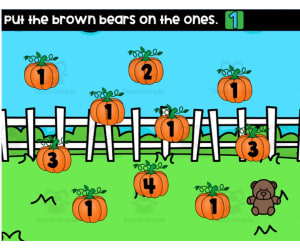
Fall Identifying Numbers 1-10 Digital Activity.
Math, Numbers, Kindergarten, Preschool, Activities
This resource is a Fall Identifying Numbers 1-10 Digital Activity . Students will love the interactive math activities from slide to slide as they identify and practice numbers. Each activity comes with an autumn theme, making this a perfect seasonal activity . A link to Google Slides is included to make this a completely digital activity .
Author JoyfulToddler
Tags Numbers, Identification, Digital Activity, October, Fall
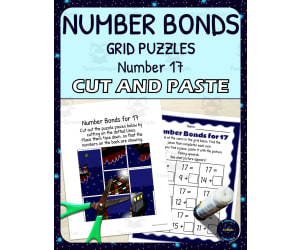
Number Bonds for 17 Practice - Cut and Paste Grid Puzzle
Math, Addition and Subtraction, Addition, Kindergarten, Preschool, Grade 1, Activities
Need an activity for practicing number bonds that will be fun and engaging? These no-prep, self checking cut and paste math puzzles are great for helping students to focus on addition as they do number bonds for number 17. Preparation: Just print and go! There are 2 pages for each number – The main worksheet and a page with puzzle pieces that need to be cut out and pasted on the worksheet. Each student will need a copy of both pages. There is also a “Back of Puzzle Pieces” page. This needs to be printed on the reverse side of all puzzle pieces pages. There are 2 printing options – colour or black and white You can also mix and match the colour and black and white pages. For example, you could print only the puzzle pieces in colour and the worksheet in black and white if you wish. These worksheets are great for: Homework Centers Extra work for early finishers Extra practice for students struggling with Number Sense How Students Use These Worksheets: Students cut out the puzzle pieces and place the pieces with the pictures facing down, so that the numbers on the back are visible. Next they need to look at the worksheet. There are sums in the blocks that need to be completed. They must find the pieces that match the sums and paste the pieces on the correct squares, with the numbers facing downwards and the picture facing upwards. As they paste the pieces in place, the picture will form! I also have number bonds grid puzzles for other numbers available - CLICK HERE to check them out! You may also be interested in some these resources: · Number bonds bingo games · Number bonds strip puzzles · Number bonds worksheets · Fractions matching games · Skip counting bingo · Times tables board games · Times tables matching games
Author Colleen's Cosmic Collection
Tags Number Bonds, Number Bonds Activities, Cut And Paste, Elementary Math, Addition Activities, Math Facts, Addition Facts, Addition Math Facts, Math Fact Practice, Cccnbgp

Sight Words Playdough Mat- Fry's 1st 100, Sight Words Practice & Activities
ELA, Writing, Handwriting, Reading, Kindergarten, Preschool, Grade 1, Activities
Sight Words Playdough Mat- Fry's 1st 100, Sight Words Practice & Activities A highly engaging and interactive educational tool crafted to enhance early reading and literacy development. This invaluable resource emphasizes on the indispensable first hundred Fry sight words which, when recognized by new readers, significantly enhances their reading fluency and comprehension. Playdough Mats: Dynamic Learning Tools Providing a vibrant approach to learning sight words, playdough mats aid in strengthening fine motor skills. Crafted with visually appealing design featuring clear and bold lettering, this tool can be of great value in various settings like classrooms or homes. Educators' Aid From a teacher's perspective, the Sight Words Playdough Mat acts as an essential addition to any reading or literacy curriculum . It can be seamlessly included in small group activities or independent workstations thereby boosting the overall learning experience. Homeschooling Resource Homeschooling parents too will find immense value in this resource as it provides an opportunity for enjoyable educational activities at home with their children. Besides reinforcing learning it also cultivates positive associations with reading and writing. Total Sight Words Covered: There are 100 sight words covered in this teaching resource ranging from commonly used nouns like 'people' or 'number', verbs likes 'will' or 'write', prepositions like 'from' or 'into', conjunctions like ‘and’ ‘or’. These are integral for language arts education right from preschool up until Grade 1. Pdf Sheets: Each PDF contains fifty US Letter Size pages that provide ample opportunities for repetitive practice making mastery over sight words acquisition easier. Subsubjects: This tool is equally useful for subsubjects like Handwriting, Reading, Writing. Overall The Sight Words Play Dough Mat is indeed a rewarding teaching aid constructively created considering its wide-spectrum usability catering to diverse environments; offering innovative practice methods centered around play dough manipulation; fostering skills such as word recognition whilst maintaining the fun element- making early literacy achievable yet engaging!
Author TeacherYouWant
Tags Sight Words, Playdough Mats, Literacy Development, Fine Motor Skills, Interactive Activities

Matching Food Faces A-Z
ELA, Kindergarten, Preschool, Grade 1, Activities
Fun Matching Foods FacesA-Z Preschool/Homeschool Chart Fun Matching Foods A-Z Preschool/Homeschool Chart is an exciting tool designed to elevate the process of teaching alphabets. Philosophyed in a user-friendly chart format, it offers a unique and interactive approach to introducing kids to the ABCs. Writing exercise by tracing the letters of the alphabets. The blended design combines matching exercises with food items representing each letter from A-Z - enhancing the experience by making learning both fun and educational. Children don't just learn their alphabets - they also get introduced to different types of food! Versatile Usage Applications Classrooms: The chart is perfect for whole group instruction. Small Groups: It's adaptable enough for use in smaller groups or assemblies. Homeschooling: Homeschool educators can use it as part of their individual teaching modules. Ease Of Use & Compatibility Easily printable on regular cardstock paper, this seven-page compilation requires minimal setup - simply add Velcro dots and you're good to go! Moreover, the product comes in universally accessible PDF format, ensuring you can utilize this fantastic resource irrespective of your device or location. A Golden Learning Opportunity for Early Learners & Kindergarteners Ideal for early learners transitioning into preschool, it's also greatly helpful even for kindergarteners who wish to Polish their language arts skills. Students will reinforce letter recognition while gaining knowledge about different foods through pre-reading activities and phonics exercises. So step away from traditional methods and add a dash of excitement into your teaching technique courtesy The Fun Matching Foods A-Z Preschool/Homeschool Chart !
Author KD's Kids School Shop
Tags Preschool, Letters, Matching , Food Varieties, Small Group, Thining Skills, Reading, Spelling, Tracing Letters
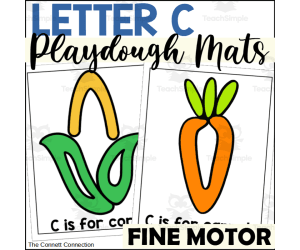
Letter C Playdough Mats
ELA, Language Development, Phonics, Kindergarten, Preschool, Activities
These letter C playdough mats allow students to build those fine motor muscles while learning about things that begin with the letter C.. Each mat features a picture of a word that starts with C for students to use playdough to create. These mats are suitable to preschoolers and kindergartners who are learning about the initial sound of the letter C and those who need extra practice building up their fine motor skills. There are 7 different playdough mats in this set: * C is for cat * C is for corn * C is for cup * C is for carrot * C is for cookie * C is for candle * C is for crab When to Use * Fine Motor Center * Playdough Center * Alphabet Center * Literacy Center * Independent Activity * Small Group Activity * Morning Tub or Basket Activity * Table Top Activity Skills Assessed * Fine Motor Skills * Color Matching * Beginning Sounds The playdough mats themselves are no prep. The teacher will simply print them out, and laminate them if desired and place them in the appropriate center or activity area. All that needs to be added to this activity is different colored playdough or clay. These mats not only provide a fun and engaging activity for students to practice fine motor skills, they also provide a way for students to associate the initial sound of the letter C to recognizable pictures. Teachers will love the easy set up for this center activity. By laminating these pages, teachers will have a reusable playdough center for students to use over and over. The playdough should not stick to the laminated pages. If laminating is not an option, I would recommend placing the playdough mats inside page protectors or in plastic sleeves. The playdough will not stick to their surfaces as well.
Author The Connett Connection
Tags Letter C, Letter C Playdough Mat, Playdough Mats, Alphabet Activities, Letter C Activities, Fine Motor Skills, Fine Motor Center, Phonics Activity, Playdough Center

Preschool Writing Center: My 5 Senses
ELA, Writing, Kindergarten, Centers, Activities
Preschool Writing Center: My 5 Senses - Your Key to Interactive Language Education The Preschool Writing Center: My 5 Senses is an innovative educational resource designed to enhance the teaching and learning process for kindergarten and preschool students. With a primary focus on language arts, particularly writing, this material aims to create an interactive and stimulating environment for effective comprehension. Seamless Integration into the Curriculum This resource seamlessly integrates with units such as the 'my 5 senses unit', 'observation unit', or other relevant science units about fall, pumpkins, apples etc. By engaging students with various subjects of observation using their five senses, it promotes sensory development at a young age. Vocabulary Enrichment via Word Wall Cards Included in this repository are word wall cards that help learners spell words related to descriptions of items or expressions based on their individual five senses perspective - thus enriching their vocabulary from a pragmatic point of view. Promotion of Writing Skills through Open-ended Templates Story-Writing Papers:: These also serve as excellent avenues for letter practice. Book-Writing Seats:: These help initiate students into understanding how books function structurally. Greeting Cards & Thematic Writings: This resource expands beyond academic confines courtesy by including greeting cards themed around food which learners can use in reaching out affectionately towards family members or friends plus useful thematic writings such as 'How to Use Your Senses'. Alongside an accessible PDF format which optimizes ease-of-use irrespective teacher's tech proficiency levels. In summary, if you're an educator seeking a practical toolkit that substantially elevates your teaching-learning effectiveness, Preschool Writing Center: My 5 Senses is the go-to resource for you.
Author The Proactive Classroom
Tags Writing Center, 5 Senses, Vocabulary Development, Sensory Development, Interactive Learning

Number Recognition 0-10 Bingo - Boards 6-10
Math, Early Math, Numbers, Kindergarten, Preschool, Grade 1, Activities, Games
Number Recognition 0-10 Bingo teaches young learners to identify numbers 0-10. This engaging math game strengthens number sense skills through active participation. To begin, print and laminate bingo boards, calling cards, and playing squares. Distribute materials to students. Shuffle and draw calling cards one by one. Students search their boards for the called number and cover it with a playing square. The first to cover 3 spaces in a row shouts "Bingo!" and wins. Replay as desired. Lamination makes the game durable for repeated use. For a no-print option, use buttons as playing pieces and call numbers verbally. Extend learning by creating new calling cards or making custom boards. Number Recognition Bingo transforms essential early math practice into amusing, multi-level play.
Author Colleen's Cosmic Collection
Tags Number Recognition, Number Sense, Number Recognition Games, Number Sense Game, Number Recognition Bingo, Number Recognition Activities, Cccnrb010, Number Identification, Number Identification Activity, Number Identification Game
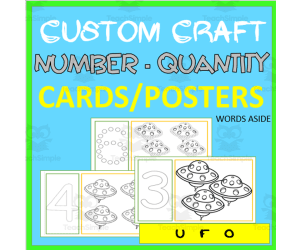
NUMBER AND QUANTITY CUSTOM CARDS | COLOR TRACE DOT | ufo
Special Resources, Creative Arts, Art, Special Education Needs (SEN), Math, Numbers, Place Value, Kindergarten, Preschool, Grade 1, Activities, Crafts, Worksheets & Printables, Flashcards, Worksheets
Introducing: NUMBER AND QUANTITY CUSTOM CARDS | COLOR TRACE DOT | UFO . This teaching resource is a valuable tool designed to engage your students in mastering their math basics, focusing on number symbols and corresponding quantity. It aims at making learning an interactive and entertaining process . These materials are specifically tailored for preschool, kindergarten, and first-grade educators. Can be utilized within both traditional school settings and homeschooling environments . The cards offer visual representations of numbers one to ten - ideal for developing student understanding of numeracy and basic place values . The three different sets offer opportunities to color, trace or dot ensuring the material is immersive . You can expand their use beyond instruction; make unique self-made classroom decorations by transforming them into posters or bulletin board pins . Focused on flexibility these task cards can be used as independent work packs allowing customization of learning pace during individual study times. Moreover, they create engaging weekend assignments that encourage practice at home . The fun UFO-themed design lets learners connect education with playtime atmospheres further buoying their intrigue while supplementing numeracy skills promoting education without sacrificing fun ! A key feature includes : Multisensory approach compatibility- They effortlessly align with multisensory methods acting as ideal support for manipulatives like math cubes or play bricks each card reinforcing concepts seamlessly . In the future anticipate new engaging replacements such as spacecrafts, dinosaurs submarines among other designs! Making it possible to marry educational advancement along with creative enjoyment paving paths beyond rote learning norms unveiling serious crafty fun leaning opportunities! Note : Provided in convenient PDF file format enhancing accessibility across multiple platforms . In conclusion, NUMBER AND QUANTITY CUSTOM CARDS | COLOR TRACE DOT | UFO is a sophisticated yet playful teaching resource catered towards holistically molding your numeracy instruction with elements of fun and engagement.
Author WORDS ASIDE
Tags Interactive Learning, Visual Representation, Numeracy Skills, Multisensory Approach, Task Cards, Homeschooling, Numbers, Independent Work, Homework, Words Aside
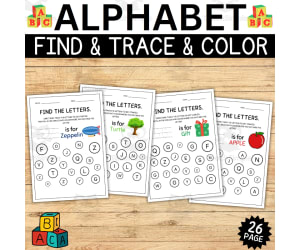
ABC Adventures: A Fun Way to Discover, Trace & Color the Alphabet!
Creative Arts, Art, Social Studies, ELA, Graphic Arts, Reading, Writing, Handwriting, Kindergarten, Preschool, Grade 1, Activities
ABC Adventures: A Fun Way to Discover, Trace & Color the Alphabet! This is an interactive educational tool designed to stimulate curiosity and engagement in children who are just beginning their literacy journey. This resource serves double duty as it not only introduces preschoolers, kindergarteners, and first graders to the delights of the alphabet but also encourages them to color and trace each letter independently. Comprehensive Connection: Bringing together art and music, social studies, language arts with a dash of graphic art for added fun - this resource helps students make a comprehensive connection between letters, sounds, objects beginning with that letter sound and fun coloring activities. With 26 pages representing each letter of the alphabet (A-Z), this vibrant content aligns strongly with every child's imagination. Catchy Illustrations: Each page within ABC Adventures features a big-sized alphabet coupled with eye-catching illustrations suggesting objects that commence with that specific letter—providing dynamic representation for kids stimulating recognition by association initiation along expanding vocabulary base. Fine Motor Skills Development: Fine motor development is another key takeaway from this engaging tool which gets refined via compelling coloring opportunities! Kids improve their hand-eye coordination control over writing implements solidifying future handwriting capabilities by tracing letters as well object images representing those alphabets across pages. Purposefully Designed for Early Learners: Specially tailored for early learners studying in Pre-K through Grade 1 - you will discover ABC Adventures beneficial across curriculum integration scenarios from whole group activities directed in classroom settings or assigned smaller peer led activity groups extending into independent homework too! No Additional Preparation Required: This versatile teaching tool does not require any prep. Teachers have the liberty to present one page at a time focusing only on individual letters or distribute as whole booklets engaging students right away into collaborative learning while facilitating home assignments as well. Forts up Immersive, Student-Centric Learning Experience: ABC Adventures— an educational stimulant crafted carefully merging learning with fun takes a unique method of redefining traditional teaching approach into an immersive, interactive student-centric experience. Move towards inclusive Alphabet familiarity reinforced with fun activities uplifting learning experiences employing this out-of-the-box educational resource!
Author Style Your Classroom
Tags Interactive Learning, Alphabet Recognition, Fine Motor Skills, Coloring Activities, Vocabulary Expansion

Letter S Flip Book
ELA, Language Development, Phonics, Pre-Reading, Kindergarten, Preschool, Activities
This letter S flipbook is the perfect tool to help preschoolers and kindergarteners learn all about the letter S! The different pages in this flip book allow students to practice recognizing the letter, writing the letter, and identifying words that begin with the letter. What is Included: This flip book has a cover page for students to simply color. The seek and find page practices letter recognition by having students identify capital and lowercase forms of the letter. The find and color page practices letter recognition of the target letter from other letters of the alphabet. Students can use dot markers to mark the letters, they can color in the letter or use stickers to cover the letters. The cut and paste page allows students to work with scissor skills to cut out examples of the letter from either printed materials, like magazines or newspapers, or students can use the letters provided at the bottom of the page. The trace and write page allows students to practice tracing and writing the capital and lowercase forms of the letter. The beginnings sound page has students coloring the pictures that begin with the letter. The trace and draw page has students tracing a word that begins with the letter, then drawing a picture to represent that word. When to Use: Literacy Centers - This flip book can be placed in a literacy center for students to work on identifying the letter. Morning Work - This flip book is a perfect morning work activity. Doing one or two pages each morning, students can finish one flip book a week. Homework - These flip books can be sent home for parents to work with letter recognition with their children. Small Group Activity - Students who need extra help with identifying letters and sounds can work with the teacher in a small group setting.
Author The Connett Connection
Tags Flip Book, Hands-on Learning, Phonics, Literacy Centers, Letter S, Letter S Activity

Puzzle: Shapes with non-interlocking pieces - ABLLS-R section B
Special Resources, Creative Arts, Art, Special Education Needs (SEN), Speech Therapy, Graphic Arts, Math, Patterns, Early Math, Geometry, Science, Basic Science, Kindergarten, Preschool, Grade 1, 2, Activities
Teaching young learners non-interlocking puzzles is important for a variety of reasons. Promotes problem-solving skills: Non-interlocking puzzles challenge young learners to use critical thinking and problem-solving skills. By figuring out how the pieces fit together, children develop their spatial awareness, logical reasoning, and attention to detail. Improves fine motor skills: As children manipulate the pieces of the puzzle, they develop their hand-eye coordination and fine motor skills. These skills are important for a range of activities, from writing and drawing to sports and other physical activities. Encourages persistence and resilience: Completing a puzzle requires persistence and resilience. Children learn that it takes time and effort to reach a goal, and that mistakes and setbacks are a natural part of the process. These skills can help them in other areas of their lives, such as academic work and extracurricular activities. Fosters a sense of accomplishment: Finishing a puzzle can give young learners a sense of accomplishment and pride. This can boost their self-esteem and confidence, and motivate them to take on other challenges. Provides a fun and engaging learning experience: Non-interlocking puzzles can be a fun and engaging way for young learners to learn new concepts and skills. They offer a hands-on, interactive experience that can capture children's attention and make learning more enjoyable. This resource can be used as teaching or assessment tool for the ABLLS-R Section B Visual Performance. Non-interlocking puzzle 3, 4, and 5 pieces. The puzzle image is fun silly shapes. Not complicated picture but enough design to work on visual discrimination and visual awareness. Print and laminate all pages. If a learner struggles with fine motor and clear velcro dot can be placed on the picture to hold the puzzle piece in place to reduce frustration for the learner. Store all pieces in a large clear plastic envelope for many years of teaching. Enjoy IFIO girl I'll Figure It Out
Author IFIO girl - I'll Figure It Out
Tags Fine Motor Skills, Visual Discrimination, ABLLS-R Section B Visual Performance, Shapes Puzzle, ABLLS-R Section B, Autism, Early Puzzle, 4 Piece Puzzle, Non Interlocking Puzzle, Occupational Therapy, Interlocking Pieces

Doctor Number Puzzles 1-20
Math, Counting, Early Math, Numbers, Kindergarten, Preschool, Activities
This resource contains a set of doctor themed puzzles designed to engage preschool and kindergarten students in a thorough exploration of numbers and counting objects from 1-20. Built around an appealing community helper theme, this engages students to practice counting and recognizing numbers up to 20. With its bold, and brightly colored cards, these simple puzzles layouts, kindergartners and preschoolers can stay engaged and have fun with counting! What is Included: there are twenty-one 2 piece puzzles where students can match numbers with the correct number of objects the number pieces can also be used with puzzles for matching the number and the number word. How to Use: Students will choose a flower pot and then place the correct flower onto that pot according to that number. When these Puzzles: Task Box Activities - These puzzles can easily be stored in task boxes and provide for easy set up, clean up, and storage. Math Center - The puzzles can be placed inside a math center for students to work alone or with a partner. Morning Tubs or Baskets - The puzzles can be placed in a morning bin for students to do while they wait for their classmates to arrive. Small Group Activities - The teacher can pull aside a small group of students who need practice with counting and number recognition to work on these puzzles. Quiet Time Activity - In the preschool classroom, these puzzles are a perfect activity for non-nappers to work on quietly. Skills Assess by these Puzzles Students can practice number recognition and counting up to 20, including the number zero. These doctor number puzzles are low prep. They just need to be printed and cut apart. The teacher can laminate these puzzles for durability if desired. Once created, the puzzles can be laminated for durability, making this activity reusable.
Author The Connett Connection
Rating
Tags Number Recognition, Counting Objects, Counting Puzzles, Number Puzzles

Road Track Letter Tracing
ELA, Language Development, Phonics, Pre-Reading, Preschool, Kindergarten, Grade 1, Activities, Worksheets
Road Track Letter Tracing - Teaching Tool Road Track Letter Tracing is a hands-on resource designed to boost letter formation skills in early learners. Suitable for Language Arts and Phonics subjects, this tool offers a creative way of learning, keeping children engaged while practising uppercase and lowercase letters. This tool's versatility makes it suitable for both public schools and homeschooling settings. Unique Features: A construction/occupation-themed backdrop makes it ideal for the corresponding lesson plan. The activities are based on an interactive mat design that resembles a road track. It can be used during whole group sessions or small targeted group interventions. Bridging Education with Play: The product includes 52 alphabet mats (26 each of uppercase and lowercase letters), allowing students to drive small toy cars or use the provided car template along each letter’s path. This unique driving game merges fun with reinforcement of letter recognition and encourages correct letter formation practice in an engaging manner. Additional Functionality: Laminated mats double up as tracing aids where kids can trace letters using board markers –avoid permanent markers though! Mats can act as floor alphabet tiles during structured playtime; Mats serve as interactive wall tiles; These can complement your construction or occupation themed centers etc... Broadening Linguistic Development: Road Track Letter Tracing invigorates linguistic development in various fun ways guaranteed to leave memorable imprints on young learners' educational journey! Toolkit Format & User Group: This toolkit takes the form of an easily accessible PDF format, breathing life into traditional learning methods. It is ideally used from the Early Learning stages up to Grade 1. Enhance your teaching toolkit with Road Track Letter Tracing – where play merges seamlessly with pedagogy!
Author Koodles Clubhouse
Tags Handwriting Practice, Letter Formation, Interactive Learning, Phonics Support, Alphabet Recognition

Guided Reading Level H - Reading Labels and Names
ELA, Resources for Teachers, Reading Comprehension, Reading, Health, P.E. & Health, Special Resources, Life Skills, Language Development, Vocabulary, Kindergarten, Grade 1, 2, Worksheets & Printables, Worksheets, Teacher Tools, Centers, Activities, Literacy Readers, Quizzes, Quizzes and Tests, Assessments
This Guided Reading Book - Reading Labels and Names (Level H) includes: Guided Reading Color Label (front cover x1) This is a quick way to match the book’s demands to what students can generally handle.. The overall goal is to use the level/color to pick books for several smaller groups. To qualify for a certain level, a student is expected to read a book from that level with about 90–94% accuracy. If a student is consistently accurate and understands, move up a level. If the student is struggling at that level, drop down and add more support. Each student will improve at completely different rates, but it is generally one of the best ways to check progress across the class. DOWNLOAD THE CATALOG TO VIEW ALL GUIDED READING BOOKS AVAILABLE (SORTED LEVELS A-Z) Pre-Reading Question (x1) Teacher asks the prompt aloud, can be while showing the cover or first page. Students share what they already know, or make educated guesses from the cover. Prompt them to use the target vocabulary. Write some of their responses on the board to look back at during the reading. Vocabulary Words (x5) Introduce the five words, best doing it one at a time. Start by saying it, while students repeat and then see if anyone knows what it means before reading further. Read through the meaning and try to briefly connect each word to a picture or gesture so it’s meaningful. Ask students to flip through the book pages and point to where they see each of the vocabulary words. While reading the book pause upon coming across one of the vocab words or read the sentence twice to make sure students understand the word has appeared. Optional: Ask students to raise hands whenever they see/hear one of the new words. Guided Reading Pages (x10) Check the book snapshot (below) for: primary topic - do you need to prep extra reading or intro materials on this? what is taught best - decide on 1-2 bullets to focus on, use the prompt or words provided here for best results. learning goals - what you are checking for students to be able to do after the session, elicit answers using prompts or words provided. key vocabulary (see section above). questions overview - so you know what is coming up and if you need to prep extra materials to assist understanding. Run the lesson You may have already looked at a few of the pages together, but you can show them some of the pictures again first to set meaning. Depending on how much time you have and how familiar your students are with guided reading class, you may want to read the book aloud first with the group first. Students whisper or partner read, while you listen in. If time, do it as a group, one student reading a page each. Use the guided page’s prompts to coach: “Check the picture / does it make sense?” “Point under the words / try the first sound” “Reread the sentence smoothly”. Try to focus more on one student per session (rotating every time), so you can work out if they are ready to move up or need to move down a level. Comprehension Questions (back cover x3) This is your way to check that students didn’t just say the words, but actually understood the text. First, let students answer by pointing to the page/picture and saying a short sentence. After any answer, follow with: “Show me where you found that in the text.” In bigger groups, have partners answer first (10–20 seconds), then call on 2–3 students to share. Differentiation tips: Emerging speakers/struggling readers: oral + pointing On-level: oral in a full sentence Higher: one written sentence or draw + label Book Snapshot Title: Reading Labels and Names Genre: Nonfiction (informational) Subject: Reading / Life Skills Primary Topic: Labels give facts and clues in daily life Estimated Guided Reading Level (A–Z): H What This Book Teaches Best Labels are “like a clue” that give “important information” and “facts about an object.” Labels tell what is inside or what something is (e.g., a box labeled “Orange,” a jar labeled “strawberry jam”). Labels and names help people stay organized and find the right item (a bin labeled “Toys,” a library label that says “Fiction.”). Labels can keep people safe and help them make careful choices (a sign that says “Wet Floor.”). Reading labels helps every day because labels “give facts and solve mysteries.” Learning Goals Students will explain what the book says a label is like and what it gives (clues, information, facts). Students will describe how a label tells what is inside an object using an example from the text. Students will identify how labels help keep spaces organized and clean using details from the text. Students will explain how a label can help keep people safe, using the “Wet Floor” sign example. Students will describe how names on items (like an envelope) help people know who something is for. Key Vocabulary From the Text clue — something that helps you figure something out. information — facts that help you know something. object — a thing you can see or touch. envelope — paper cover that holds a letter. mysteries — things you are trying to figure out. Discussion Prompts Pre-reading question: What labels do you notice that give you important information? Comprehension questions: What does the book say a label is like? Which label in the book helps keep the room clean? According to the book, how do labels help every day? Printing Tips 1. Best Printing Method (Recommended) “Booklet” Printing (Best if Available) If your printer or PDF viewer supports Booklet Printing , use this. Settings to use: Print mode: Booklet Paper size: Letter or A4 (either works) Orientation: Landscape Print on both sides: Yes Flip on: Short edge Scaling: Fit to printable area Booklet subset: First test: Front sides only Then: Back sides only This will automatically: Pair pages correctly Put the cover on the outside Align everything for folding After printing, fold in half and staple along the spine . 2. If “Booklet” Printing Is NOT Available You can still print this correctly with manual duplex printing . Step-by-step: Open the PDF. Choose Print . Set: Orientation: Landscape Pages per sheet: 1 Print on both sides: Yes Flip on: Short edge Print all pages . Because each PDF page already contains two facing book pages, the result will still fold cleanly into a book. Thousands of Cored Education products are included with your TeachSimple membership. Download links and encyclopedia index available here.
Author Cored Education
Rating
Tags Vocabulary, Reading Comprehension, Reading Passages, Leveled Reading, Nonfiction, Reading, Guided Reading, Health, Life Skills, Labels
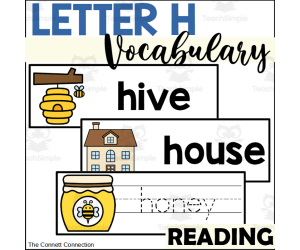
Letter H Vocabulary and Tracing Cards
ELA, Reading, Writing, Handwriting, Language Development, Vocabulary, Kindergarten, Preschool, Activities
Students can practice reading and writing letter H words with these vocabulary and tracing cards. These cards include bold, clear images of objects and ideas that begin with the initial sound of the letter H. This set contains a total of 12 unique vocabulary cards with their corresponding tracing card, making these cards perfect for a wall display or a writing center activity. These vocabulary and tracing cards are suitable for preschoolers and kindergartners who are beginning to learn about words, letters and handwriting. The vocabulary cards provide a way for students to identify things that start with the letter H and the tracing cards provide students with a fun way to practice letter formation and writing words. When to Use * Literacy Center * Writing Center * Wall display in writing or reading center * Small Group Activity * Pocket Chart Display * Word Wall Cards The vocabulary cards can make a great wall display in a writing center or as part of a word wall. Students will be able to reference the cards when writing or labeling pictures. These cards can also be used as a pocket chart activity where the teacher can introduce different letter H words. Students will love the vibrant, easy to recognize pictures and the big, bold words. Skills Assessed * Beginning Sounds * Tracing Skills * Letter Formation * Handwriting These cards are a low prep activity for teachers to create. The teacher simply needs to print the cards and cut them out. The cards can be laminated if desired. By laminating the tracing cards, the teacher can create a write and wipe activity that students can reuse over and over.
Author The Connett Connection
Tags Letter H, Letter H Activities, Alphabet Activities, Letter Of The Week, Tracing Activity, Writing Center, Preschool Writing Center, Vocabulary Cards

TRACING THE NUMBERS 1 TO 9 - Funny Exercises
Math, Numbers, Kindergarten, Preschool, Grade 1, Activities
1. Brief introduction: Learning the first numbers should be an extremely curious and emotionally rich experience for children. For this reason, teachers must devise the best strategies for children to enjoy this experience. On this occasion I have developed this fantastic review sheet for numbers 1 to 5, with a somewhat curious theme. I hope you enjoy applying it in the classroom, at home! 2. Title of the pedagogical resource: "Numbers 1 to 9 Review Worksheets" 3. Topic to work on: The numbers from 1 to 9. 4. Area of knowledge where it should be applied: This worksheet can be worked on in the area of mathematics. 5. Number of pages contained: This document contains 9 pages, ready to be printed. 6. Is it available in color or white/black? This educational resource is available in colors, so that it is much more playful, eye-catching and interesting for children. It should be noted that according to research, the brain and therefore the organ of vision respond with much more interest to stimuli such as colors. 7. What version is it available in? This educational document is available in PDF version, so that it is much easier to print it and not present problems of imbalance or movement of the elements that make up the document. 8. Editable/Not Editable: This pedagogical resource is not editable. 9. Age at which it can be applied: This resource could be applied to children of 4,5,6 years old who are learning the lines of the first numbers from 1 to 9. 10. Tags or keywords that describe the content: numbers, tracing the numbers, tracing the numbers, tracing for children, tracing sheets, tracing activities, tracing activities for children. 11. Ways to print: I highly suggest that you print this document as it is, so that the children can see the graphics in a pleasant way, and also so that they have enough space to draw the numbers. 12. Forms of application in class: You can use this document in class, during the teaching of numbers or at the end as a form of evaluation, and of course you can use it as homework for the children.
Author EDITORIAL LAURA EDUCA
Tags Numbers, Tracing Numbers, Numbers 1 To 9

Number Mats 1-100 to Build A Number
Math, Numbers, Kindergarten, Preschool, Activities
Get students excited about learning numbers 1-100 with these hands-on number mats! This math activity uses different kinds of manipulatives or craft supplies to build each number mats for a hands-on approach to practice number recognition and formation. What is Included: There is one mat for each number from one to one-hundred. Ways to use these mats: Students can use pouch tops to build each number. Students can use cotton balls or pom poms to create each number. Students can stick stickers in each circle to fill in each number. Students can use bingo dabbers to make each number. Students can use mini erasers to fill in each number. Students can use stamps to put one stamp inside each circle. Any small manipulative will work in filling each mat. Laminate the mats to create a more durably and reusable math activity. These mats make a great fine motor activity for preschoolers and kindergartners who are learning to recognize numbers up to 100. Turn the Mats into a Game! To make these mats a game, provide students with a die. The students will roll the die and, then the students will add the correct number of manipulatives to the number mat until they build the entire number. Where to Use: Math Centers - Simply place the mats and manipulatives in a math center for students to complete alone or with a partner. Morning Tubs or Baskets - Place these mats in a morning bin for students to complete as their classmates arrive to class. Quiet Time Activity - These mats can be used during a quiet time for students who do not nap, helping them stay engaged while their peers sleep. These number 1-100 mats are a no prep option for teachers to put in their literacy centers. The teacher simply needs to add the desired manipulatives that students will use to complete the mats.
Author The Connett Connection
Tags Build A Letter, Alphabet Mats, Letter Recognition, Alphabet Center, Literacy Center, Preschool Literacy

Valentine's Bump Game
Math, Addition and Subtraction, Addition, Kindergarten, Preschool, Grade 1, Games, Activities
Valentine's Bump Game: A Delightful Teaching Resource The "Valentine's Bump Game" is a specialized resource crafted to facilitate the understanding of addition. It is appropriate for Early Learning, Kindergarten, and first-grade students, making learning an enjoyable journey. Focused on Enriching Mathematical Skills The game incorporates two dice that students roll and then proceed based on the combined result- reinforcing their knowledge of addition. Versatility is a key feature of this tool as it can be applied in various ways like a traditional bump game, or visually via instructions such as 'roll and color' or 'roll-cover'. Multifaceted Application & Learning Opportunities It allows teachers to gauge individual student understanding of specific mathematical concepts—ideal for whole group learning sessions or smaller academically homogeneous clusters. To include practical maths applications into homework assignments components like 'roll and color'' & 'roll-cover' can be adapted effortlessly—making it an ideal bridging tool between home environments & institutional settings . User-Friendly Compact Design This teaching resource comes in a PDF file format consisting of one printable page. More than saving space, this design ensures access to quality content irrespective of restrictions usually associated with physical resources—an eco-conscious approach without compromising academic quality! In essence, The Valentine's Bump Game provides invaluable tools which enhance textbook information with fun-filled practical experiences that enrich knowledge acquisition.
Author Cherry Workshop
Tags Addition Practice, Math Game, Tactile Learning, Manipulative, Home Assignments

Letter T Beginning Sound Sort
ELA, Language Development, Phonics, Kindergarten, Preschool, Activities
Letter T Beginning Sound Sort This hands-on phonics activity helps students recognize, distinguish, and sort the beginning T sound in words. Students will examine picture cards, determine if the image starts with T, and sort the turkey cards onto correct forest mats. Use this T letter sort for small groups, literacy centers , morning work, and more. Laminate cards for durability. Add magnets to cards to make a baking tray activity. Print, cut out, and store easily. With this low-prep phonics resource, students will practice identifying initial T sounds, sorting objects by first letter, and distinguishing between words starting with T or other letters. Supports letter-sound relationship skills and print concept development. Introduces early literacy concepts to reinforce classroom learning or homework practice.
Author The Connett Connection
Tags Letter Of The Week, Alphabet Activities, Alphabet Centers, Beginning Sounds, Literacy Center, Preschool Literacy Center, Initial Sounds, Letter T, Letter T Activities, Initial /t/

Mental Function Boost Boards Pack 2
Special Resources, Speech Therapy, Preschool, Kindergarten, Grade 1, Activities
Mental Function Boost Boards Pack 2 is a teaching resource designed to improve students' cognitive functioning skills. This pack contains printable cards that can be used by teachers in small groups or for individual student work. The cards target skills like memory, problem-solving, attention, and processing speed. Teachers may choose to display the cards at learning centers or use them for whole-class games and activities. This versatile resource allows educators to boost their students' mental capacities in engaging ways. It is suitable for use in preschool, kindergarten, 1st grade classrooms, or by speech therapists. With creative implementation, Mental Function Boost Boards Pack 2 can become a key tool for developing students' cognitive abilities.
Author WORDS ASIDE
Tags Speech Therapy, Vocabulary, Language Development, Special Education, Cognitive
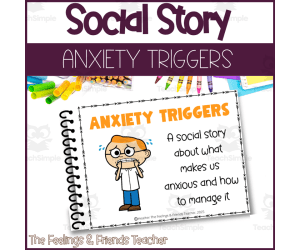
Anxiety Social Story For Identifying Triggers & Coping Skills
Resources for Teachers, Special Resources, Social Emotional Learning (SEL), Special Education Needs (SEN), Life Skills, Kindergarten, Preschool, Grade 1, 2, 3, Worksheets & Printables, Activities
This anxiety social story will help students learn all about identifying triggers, specifically with anxiety, and introduces anxiety specific coping skills that they can use to self-regulate! Anxiety in our students is on the rise, and not just with students on the Autism Spectrum, but any of our students! And what I have found is that our students struggle to understand what makes them anxious or worried. This social story helps to alleviate that problem as it introduces common anxiety triggers that help students pinpoint exactly which situations cause them to feel stressed, scared, or even worried. After identifying triggers of anxiety, the story then discusses practical ways to calm themselves down, to help promote emotional regulation. And the best part is, the social story is just the tip of the iceberg! It includes coping skill cards and a choice board with multiple calming strategies that your students can use in their everyday lives! So not only are you introducing the concepts in the social story, but you are able to reinforce the concepts in the classroom as well! Needing a digital option? I’ve got you covered! This also includes a digital version of the story with the same concepts so that way you can use it for class lessons, in anxiety small groups, or even on a tablet!
Author The Feelings and Friends Teacher
Tags Anxiety Social Story, Anxiety Coping Skills, Anxiety Worksheets, Anxiety Small Group, Identifying Triggers, Triggers, Emotional Regulation, Social Stories Autism, Autism Resources

Aesop's Fables Reader's Theater Play Adapted Script
Children’s Literature, Literature, ELA, Reading Comprehension, Reading, ESL, Language Development, Preschool, Kindergarten, Grade 1, 2, Activities, Read Alouds, Literacy Readers, Teacher Tools
Readers’ Theater: Aesop’s Fables Come to Life ! Make reading and art expression fun and meaningful ! Bring classic Aesop’s Fables to life through a delightful Readers’ Theater / Drama Mini-Play with interactive flashcards and creative visual supports . This engaging resource builds reading fluency, comprehension, vocabulary, and character education —all while keeping students excited to read and perform ! Perfect for small groups, literacy centers, or whole-class activities , this flexible set helps every learner shine through movement, expression, and collaboration. What’s Included : Cover / Poster / Bulletin Board Pin — Perfect for displaying your classroom production ! Narration Text — A teacher script for introducing the story and building listening comprehension . 4 Script Versions — Two fonts × two formats to suit varying classroom needs. 6 Visual Script Versions — Color-coded, symbol-supported versions to aid comprehension and accessibility . A4 Face Masks, Headbands, Crowns, Props & Scenery Images — Bring the story to life through drama and art . Script Strips — Great for sequencing, retelling, and reading fluency activities . Character & Setting Cards — Ideal for sorting, matching, or visual storytelling . Graphic Organizers — Fun game and activity templates for comprehension, vocabulary, and sequencing . Perfect For Reading Intervention & Fluency Practice Literacy Centers & Small Groups Drama & Oral Language Activities SEL & Character Education Lessons Grades K–2 ❤️ Why Teachers Love It Transform your reading block into a joyful, dramatic, and meaningful learning experience that reinforces: Reading Fluency Comprehension Oral Language Creativity Moral and Character Values Let your students step into the world of Aesop’s timeless fables—and watch them read, perform, and grow with confidence! meless fables—and watch them read, perform, and grow with confidence! For more P D F materials and educational and therapy resources on language, special education, numeracy, basic math and pictorial / manipulative approach to learning, you can click WORDS ASIDE
Author WORDS ASIDE
Rating
Tags Aesop, Fables, Drama, Play, Reading, Face Mask, Readers Theater, Script, Visual Support, Words Aside

CVC Words Nest Clipping Cards Activity
ELA, Language Development, Phonics, Preschool, Kindergarten, Grade 1, Activities
CVC Words Nest Clipping Cards Activity This is a valuable teaching resource that offers an engaging method for boosting student's literacy abilities. It enables development of competencies such as phonics, understanding of CVC words, encoding and decoding, letter recognition and improving reading and listening skills. Suitable for: Kindergarten to Grade 1 level students Preschoolers The activity can be effortlessly adapted across literacy classes or phonics lessons. It assists students in recalling and reviewing the crucial sounds of letters s,a,t,p,i,n along with comprehension of relevant CVC words. About the PDF: The file includes ten pages brimming with colorful clipping cards specifically designed around the letters s,a,t,p,i,n alongside their corresponding CVC words. These are distributed over nine pages (four cards per page). Alongside this, there is one instruction sheet ensuring seamless integration into your teaching plan. Instructions to use: Print out desired sets from templates available. Cut them out. Laminate them for long-term serviceability before dispersing among students or groups at literacy centers or directly during class. Note: For bigger classrooms or group sessions; ensure you have printed adequate copies to cater to all involved. In summary: The CVC Words Nest Clipping Cards Activity provides educators with an interactive way to facilitate core learning objectives while fostering engagement within young learners on different stages of their early linguistic journey. </html
Author Koodles Clubhouse
Tags CVC Words, Clipping Cards, Phonics Activities, Literacy Skills, Reading Skills