Play & discovery
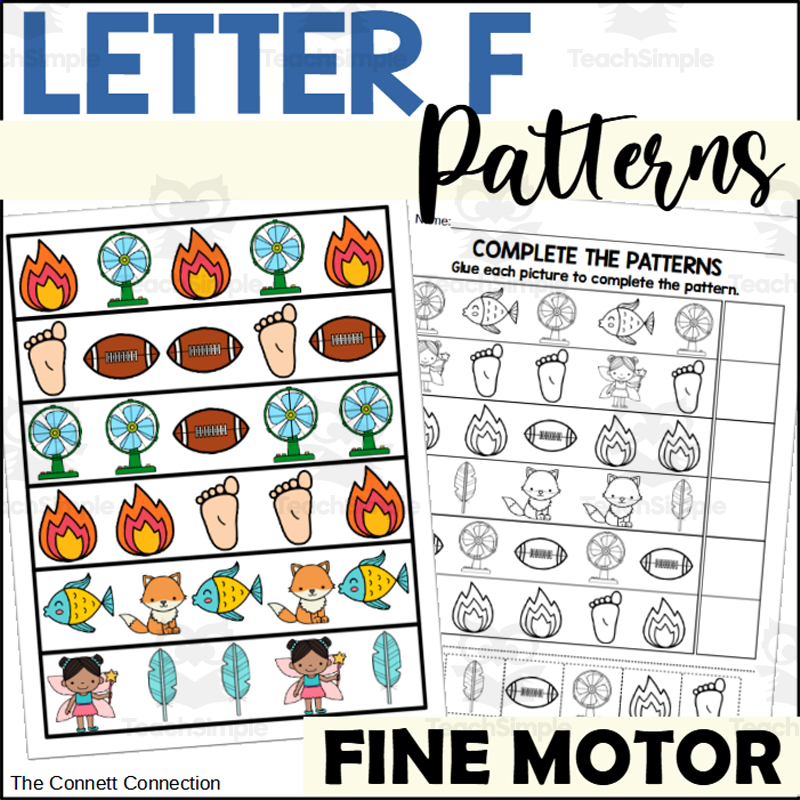
Letter F Patterns
Glue pictures to complete a visual pattern on each worksheet page.
Includes: pattern-completion worksheet page(s) with name line, 'glue each picture to complete the pattern' instruction




Classroom resources
Browse by lesson focus
Choose the topic or kind of practice you need.
Showing 1417–1440 of 3475 resources

 Show filters
 Glue pictures to complete a visual pattern on each worksheet page.
Includes: pattern-completion worksheet page(s) with name line, 'glue each picture to complete the pattern' instruction

Assemble a booklet of flashcards, read the CVCE word-formation explanation, and practice reading/writing words from the provided word list.
Includes: instructions page · CVCE word explanation with examples
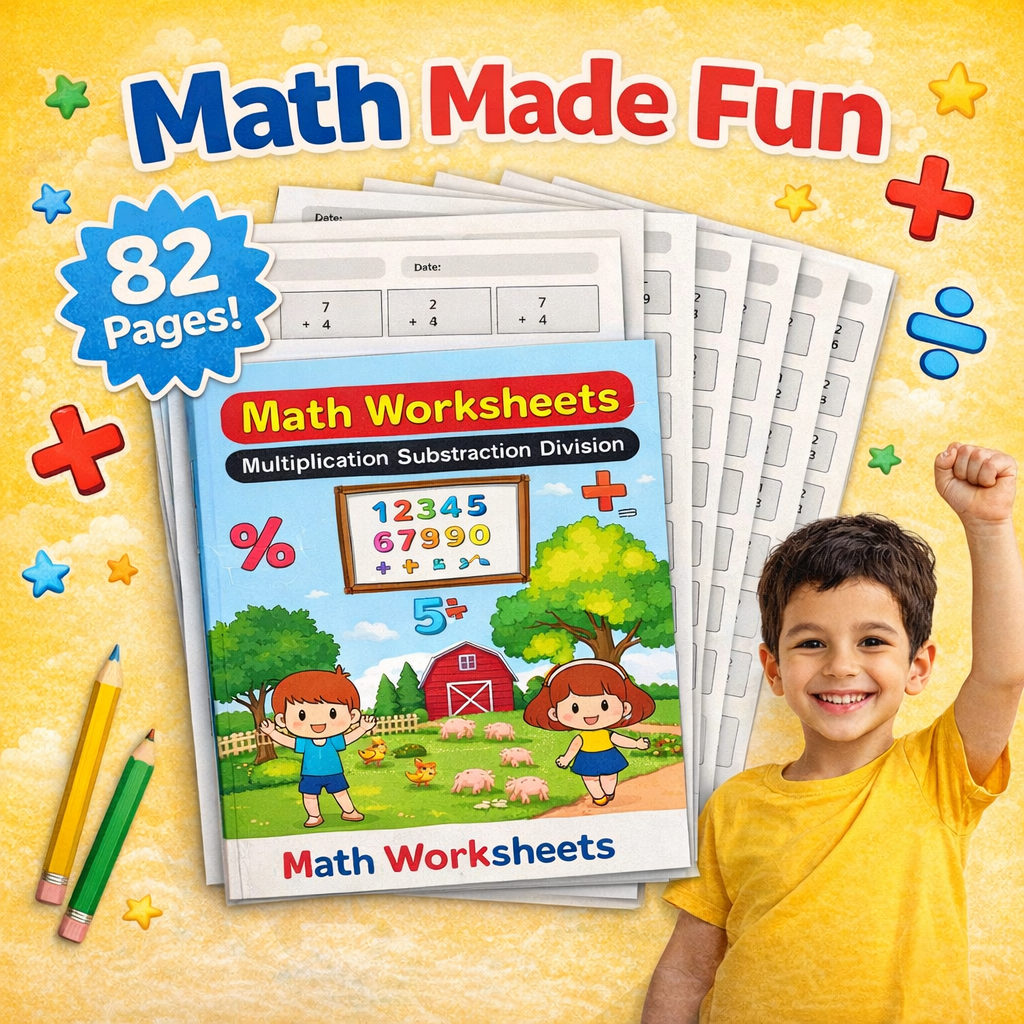
Students solve rows of single-digit and low-double-digit vertical addition problems (e.g. 8+7, 2+7) on repeated worksheet pages with Name/Date headers.
Includes: Cover/ownership page ('This book Belong To:')
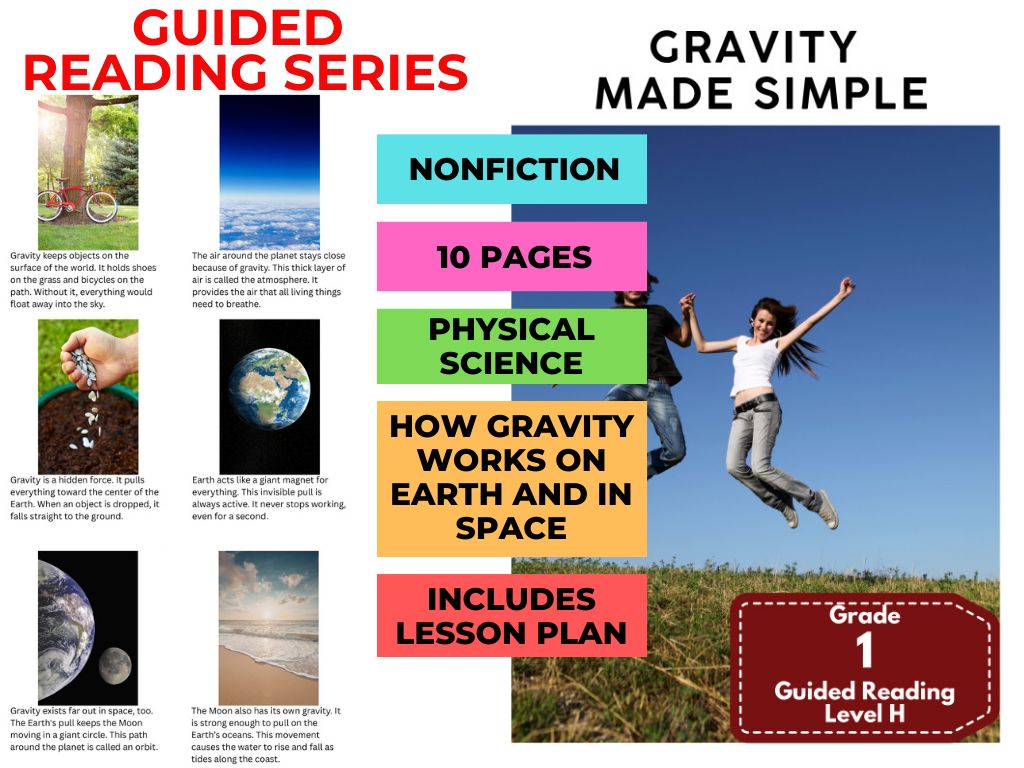
Read the Level H book with fluency matched to punctuation; use target vocabulary (gravity, atmosphere, orbit, mass, universe) in speech; answer comprehension questions using the sentence stem 'I think ___ because the book says/shows ___' and cite text evidence when asked 'Show me where you found that.'
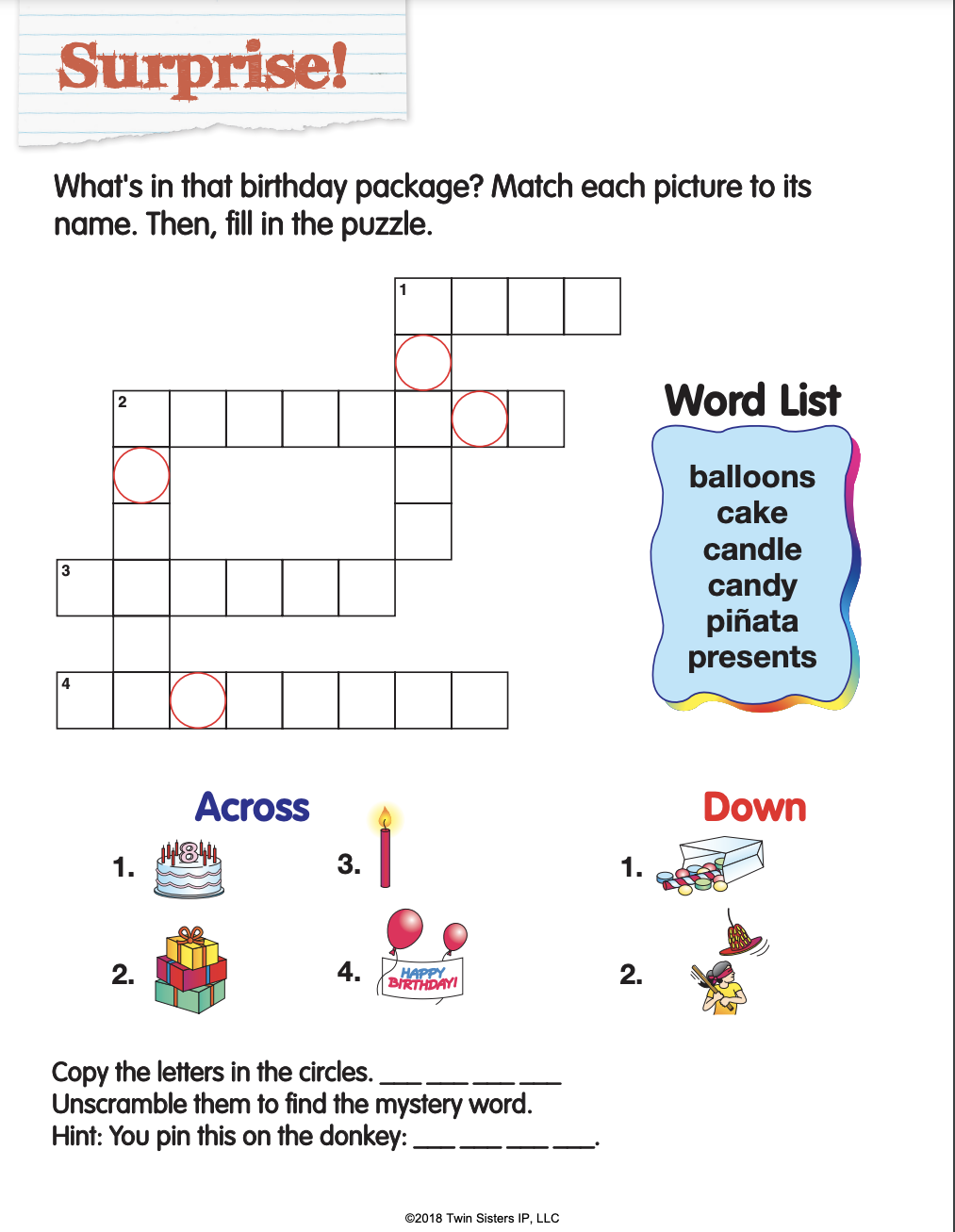
Students match a picture to its name from a word list, fill the words into the crossword grid, then use the circled letters from the completed puzzle to solve a bonus 'mystery word'.
Includes: multiple themed crossword puzzles (e.g., 'Get Ready!' - getting dressed, 'Get Set!' - breakfast, 'Fun in the Sun' - playground, 'Growing a Garden' -…
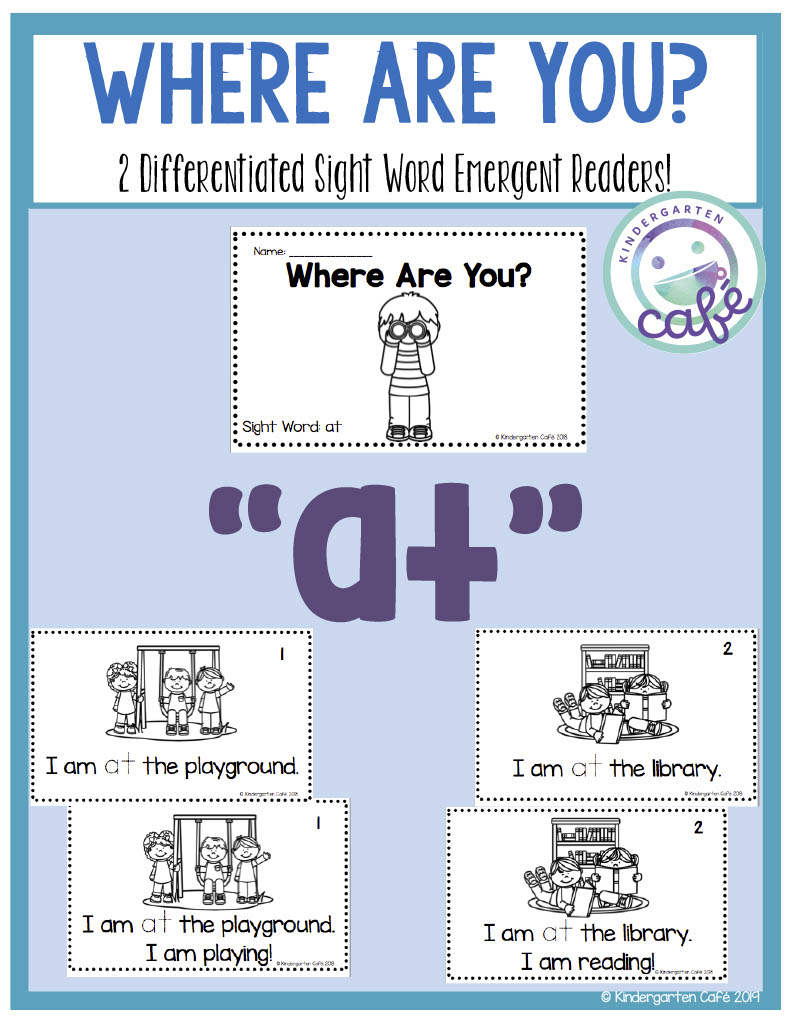
An emergent reader booklet that gives beginning readers repeated practice reading and recognizing the sight word "at" in a short, patterned, illustrated story about everyday locations (playground, library, store, school).
Includes: two differentiated versions of the same patterned story, each following the same sentence pattern
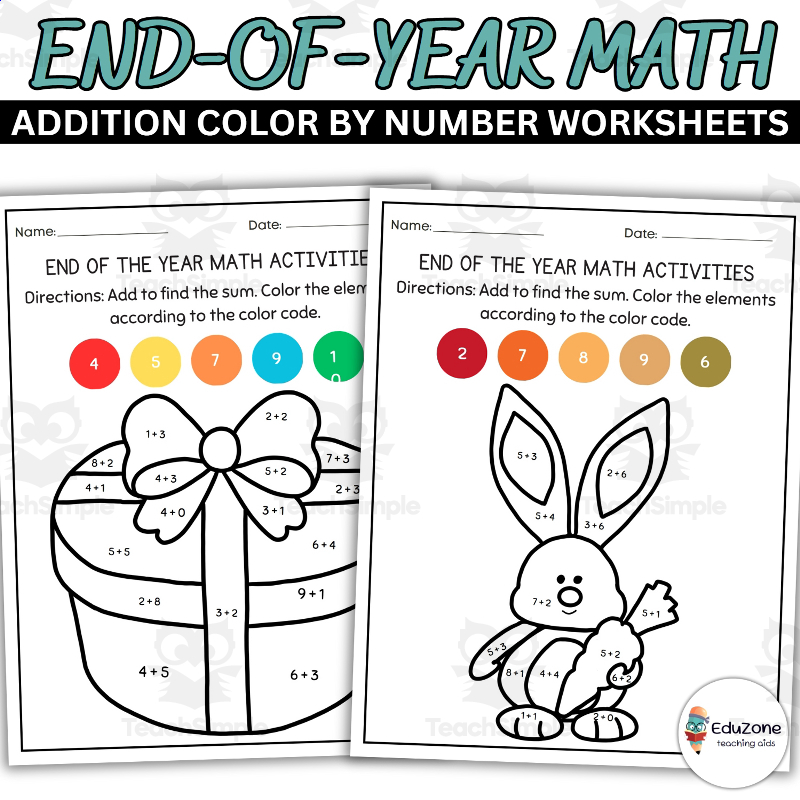
Solve each addition equation, then color the corresponding picture element using a color code keyed to the sums.
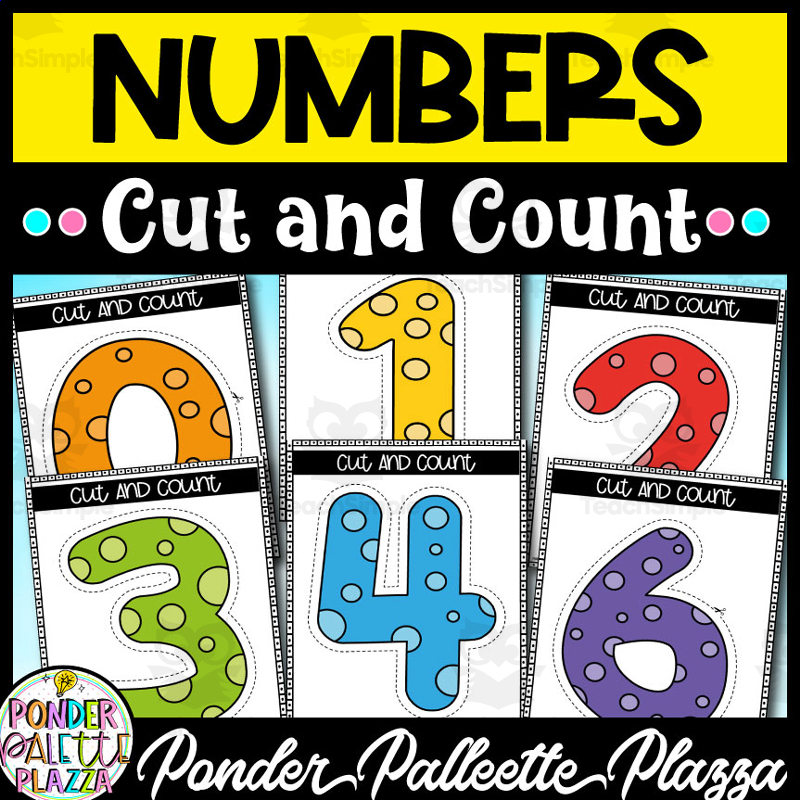
Let’s be honest, teaching numbers can sometimes feel like trying to make a cat do math homework. But with the Numbers Cut and Count - Numbers Posters , your students won’t just see numbers; they’ll love them! These posters are colorful, bold, and designed to grab attention, making your math lessons feel less like work and more…
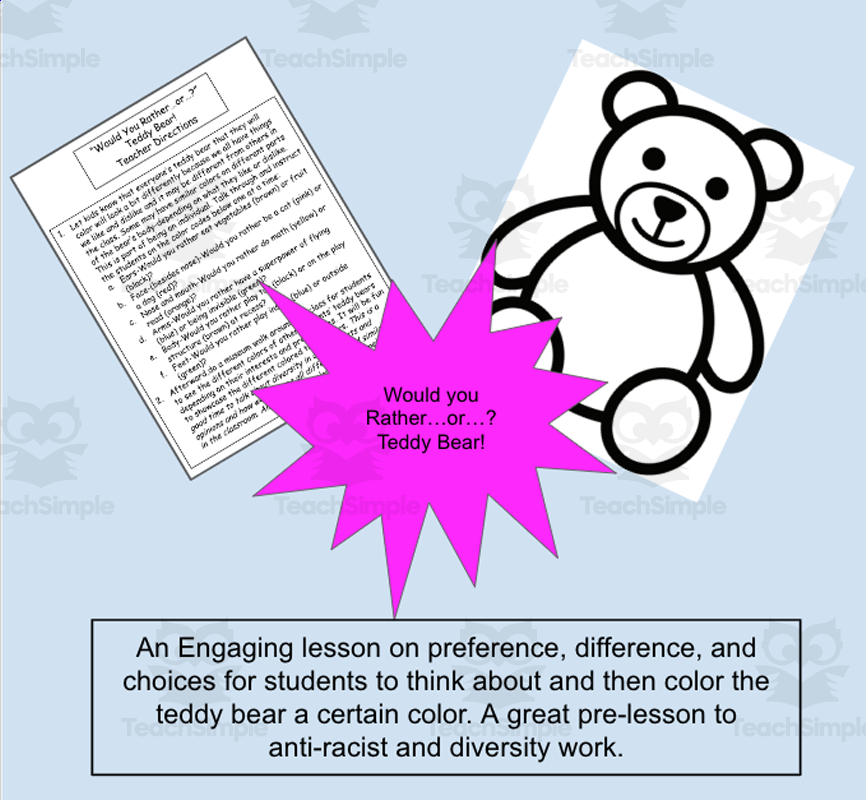
A social-emotional learning (SEL) activity introducing personal preference, individuality, and respect for differences through a 'Would You Rather' style coloring activity.
Includes: title/intro page describing the activity as a pre-lesson to anti-racist and diversity work · 1-page teacher directions with 6 'would you rather' preference prompts and a color code for each body part of the teddy bear (ears…
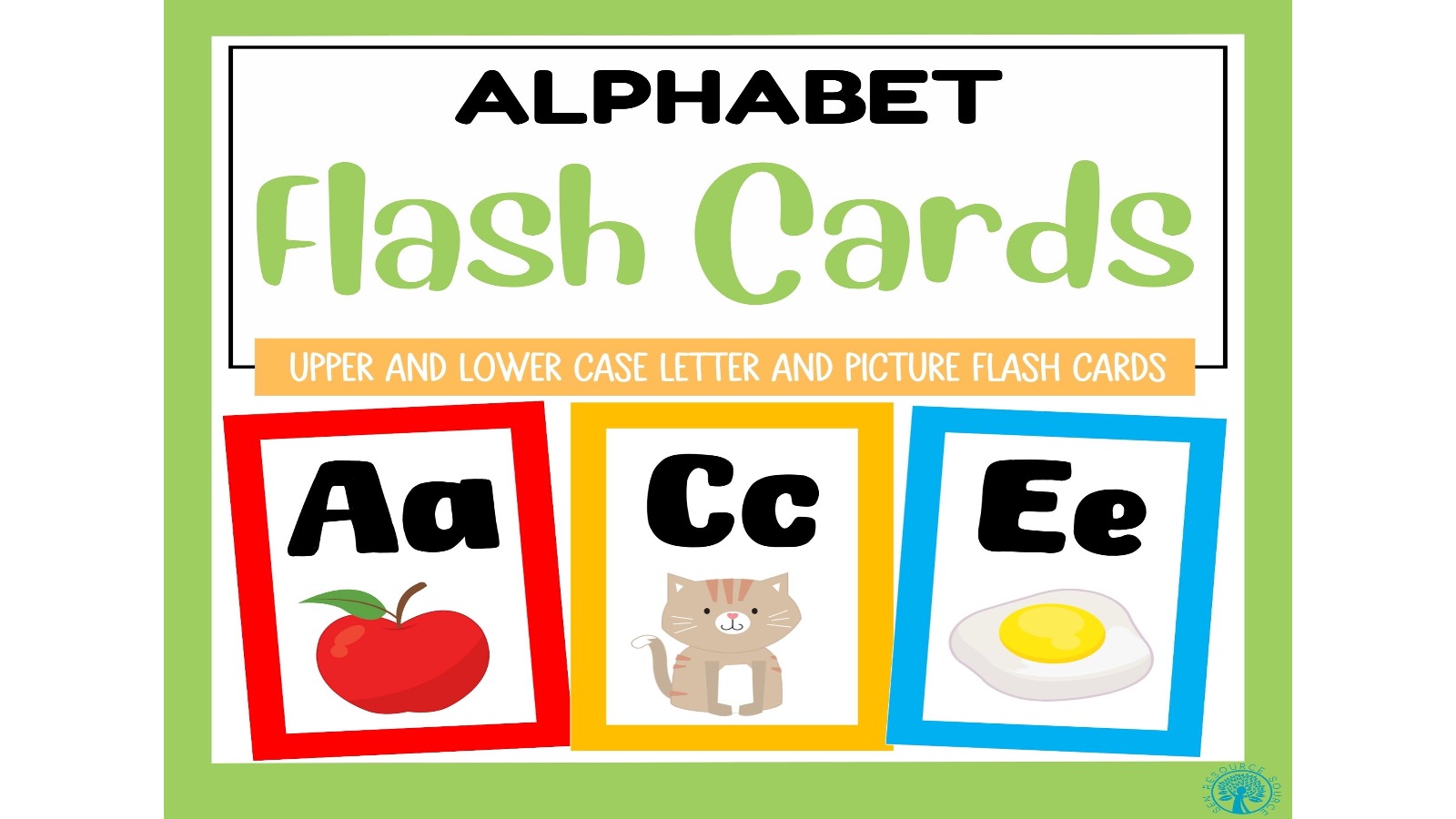 Free download
 Learning the alphabet is important for children because it is the foundation for developing reading and writing skills. Knowing the letters and their sounds allows children to start decoding words and building their vocabulary. It also helps them to understand the structure of written language and how it relates to…
Includes: two separate PDF files (delivered as a .zip), each listing uppercase/lowercase letter pairs A-Z across 13-14 pages
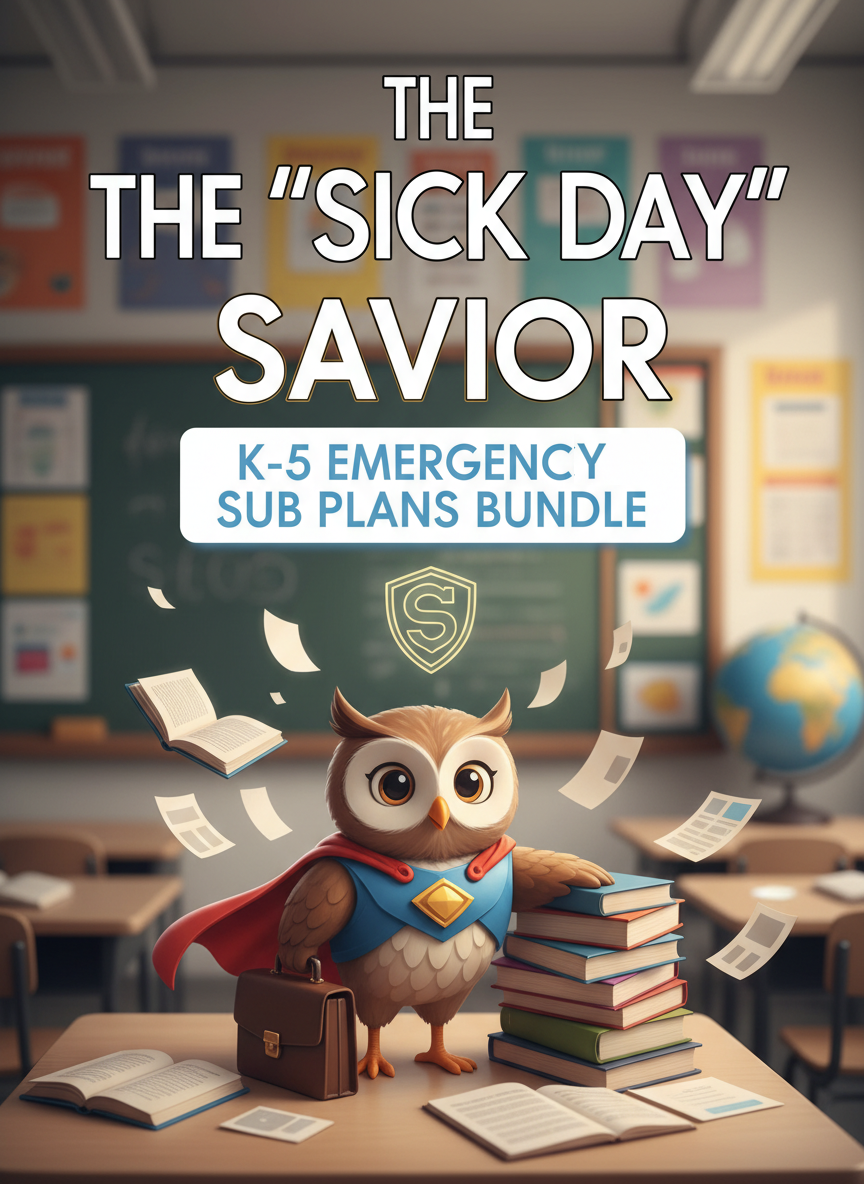
Complete grade-differentiated independent work packets (per bundle overview: letter tracing and number recognition for Kindergarten, reading passages with text-dependent questions and thematic math problems for Grades 1-2, and reading comprehension/multi-step word problems/critical thinking for Grades 3-5) while a…
Includes: Bundle Overview & Quick Start guide · Substitute Welcome Packet (editable templates: master schedule, roster/seating, medical/behavioral alerts, classroom management…
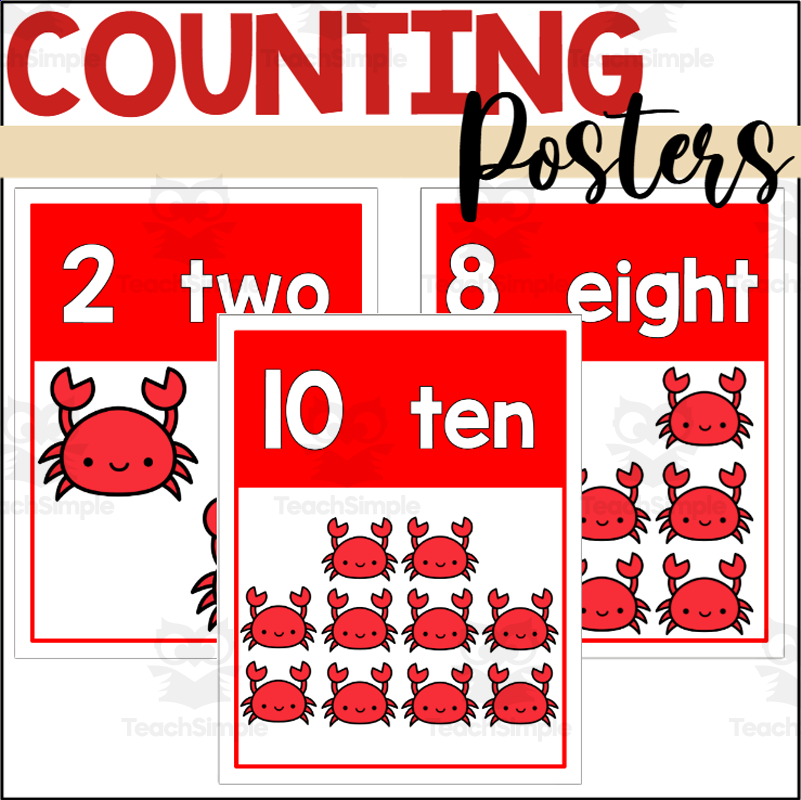
Help young students practice counting and recognizing numbers 1-10 using crab-themed posters.
Read short prompts and complete fill-in-the-blank, circling, matching, sorting, and multiple-choice quiz items for each topic.
Includes: key vocabulary page per topic · practice worksheet pages per topic
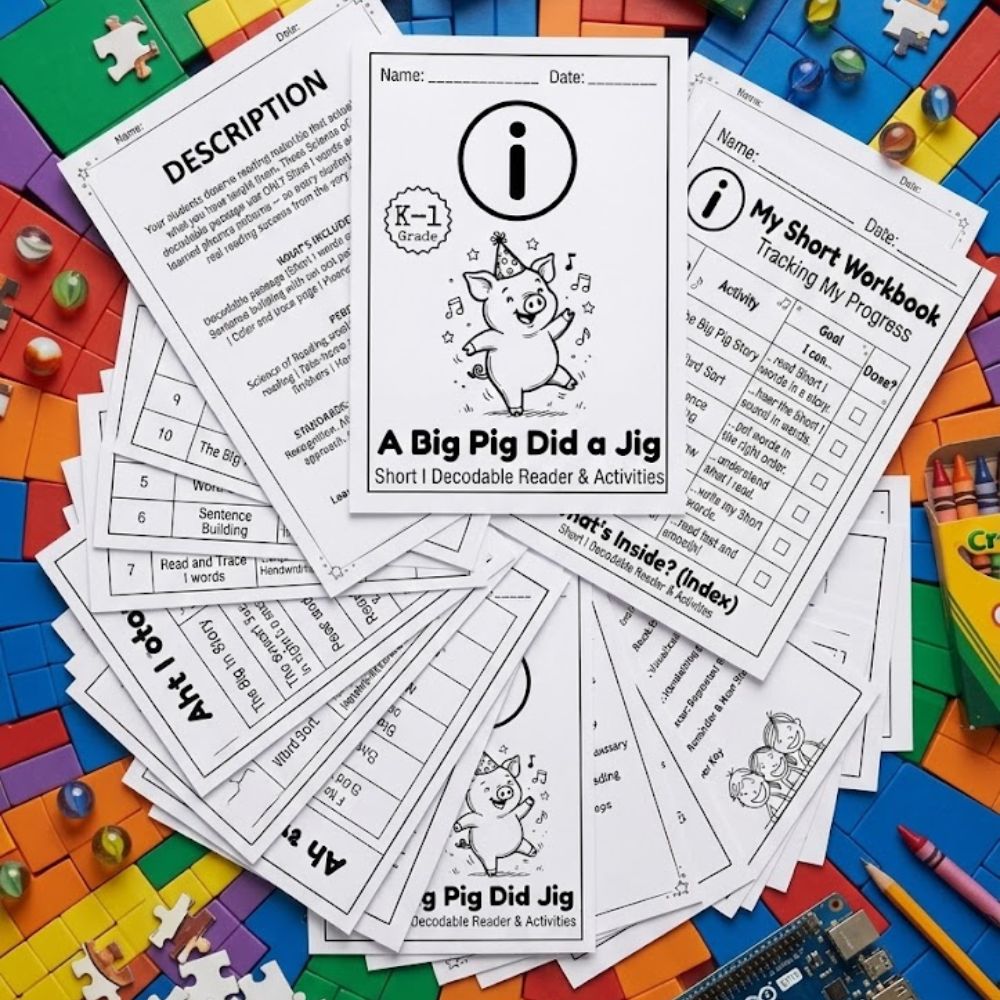
Students read the three-part decodable passage 'The Big Pig' (about a pig named Sid), complete a word sort distinguishing words with the short-i sound (e.g., wig, bin, sit, dig, pin, kid) from words without it (e.g., cat, log, fan, box), build sentences via a cut-and-paste activity (e.g., 'A big pig did jig.', 'Sid…
Includes: description/overview page · decodable passage 'The Big Pig' (3 pages of short-i-only text about a pig named Sid, a jig, and a fish)
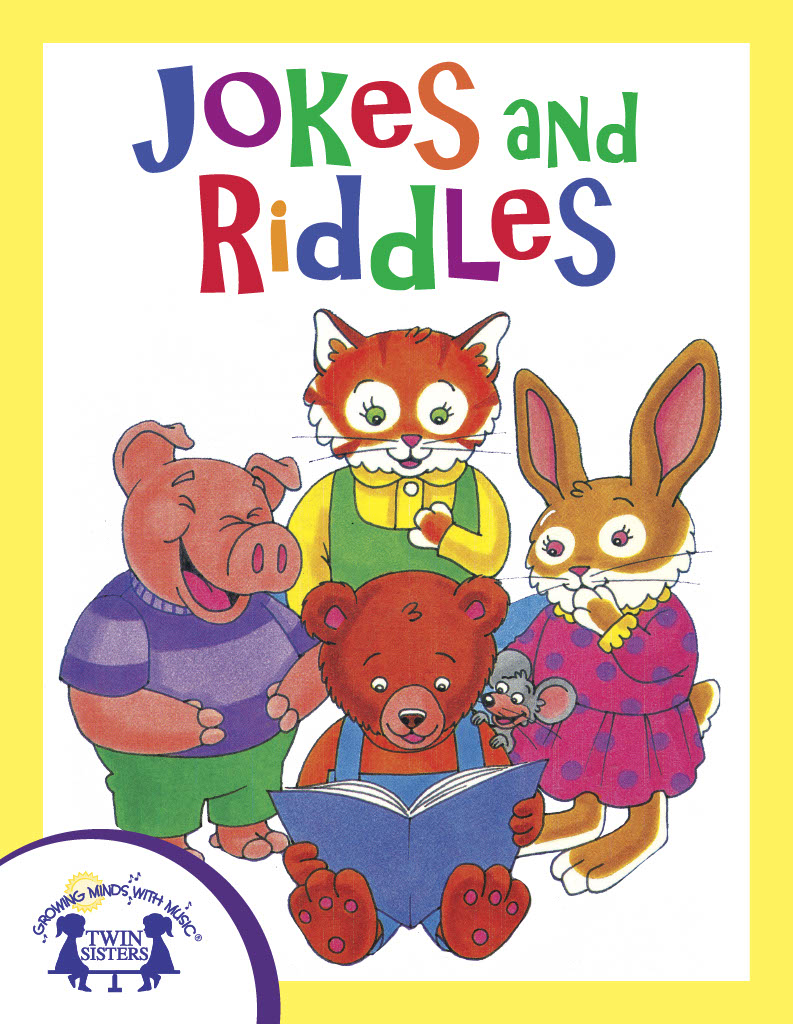
Read or listen to jokes and riddles aloud, practice call-and-response knock-knock jokes, and discuss/tell jokes to build conversational and early literacy skills.
Includes: author bio/publisher page (Twin Sisters) · compiled list of jokes, riddles, and knock-knock jokes
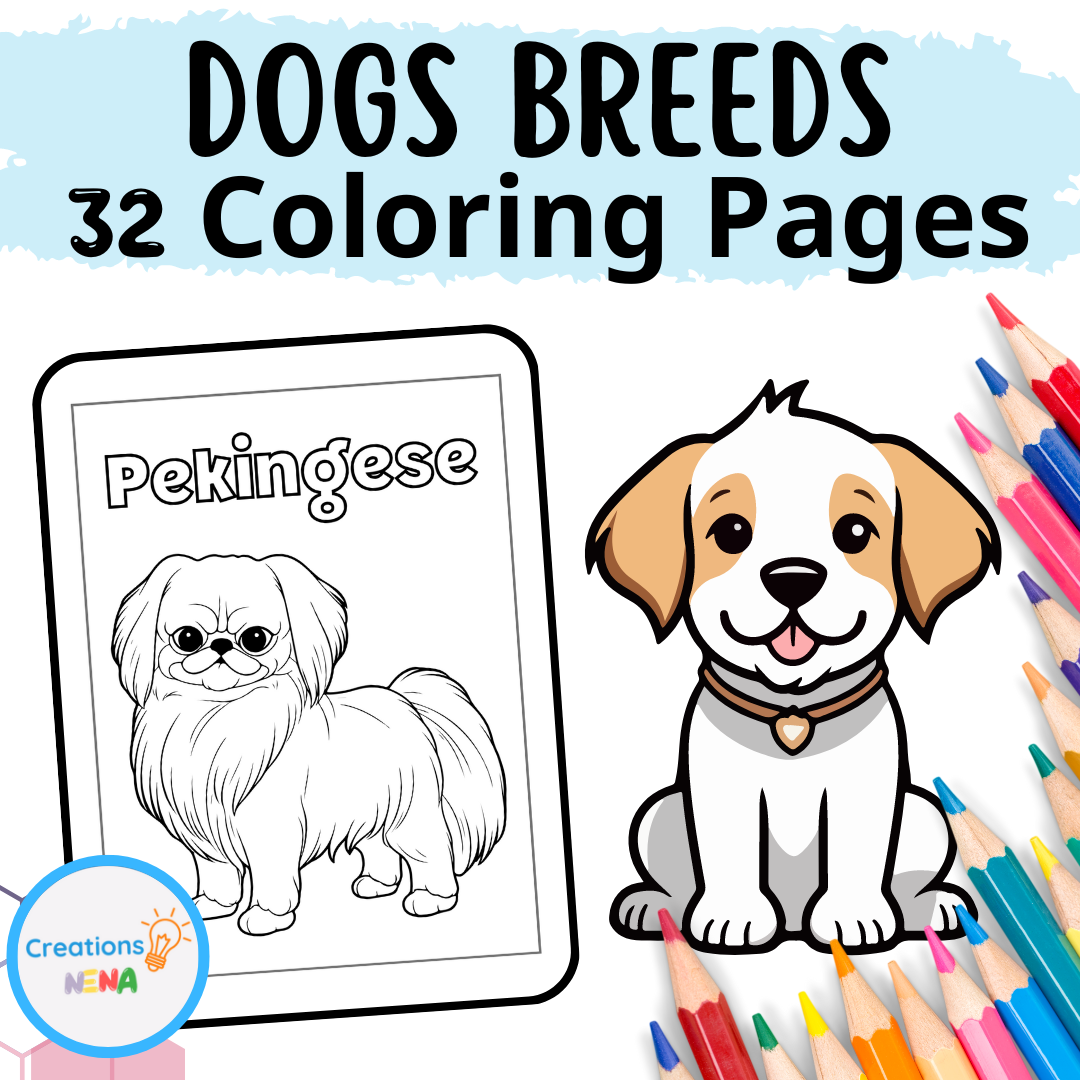
Color labeled illustrations of named dog breeds.
Includes: 32 labeled dog-breed coloring pages (e.g., Dachshund, Bulldog, Shar Pei, Golden Retriever, Yorkshire, Maltese, Bloodhound, Pomeranian, Mastiff, Pitbull,…
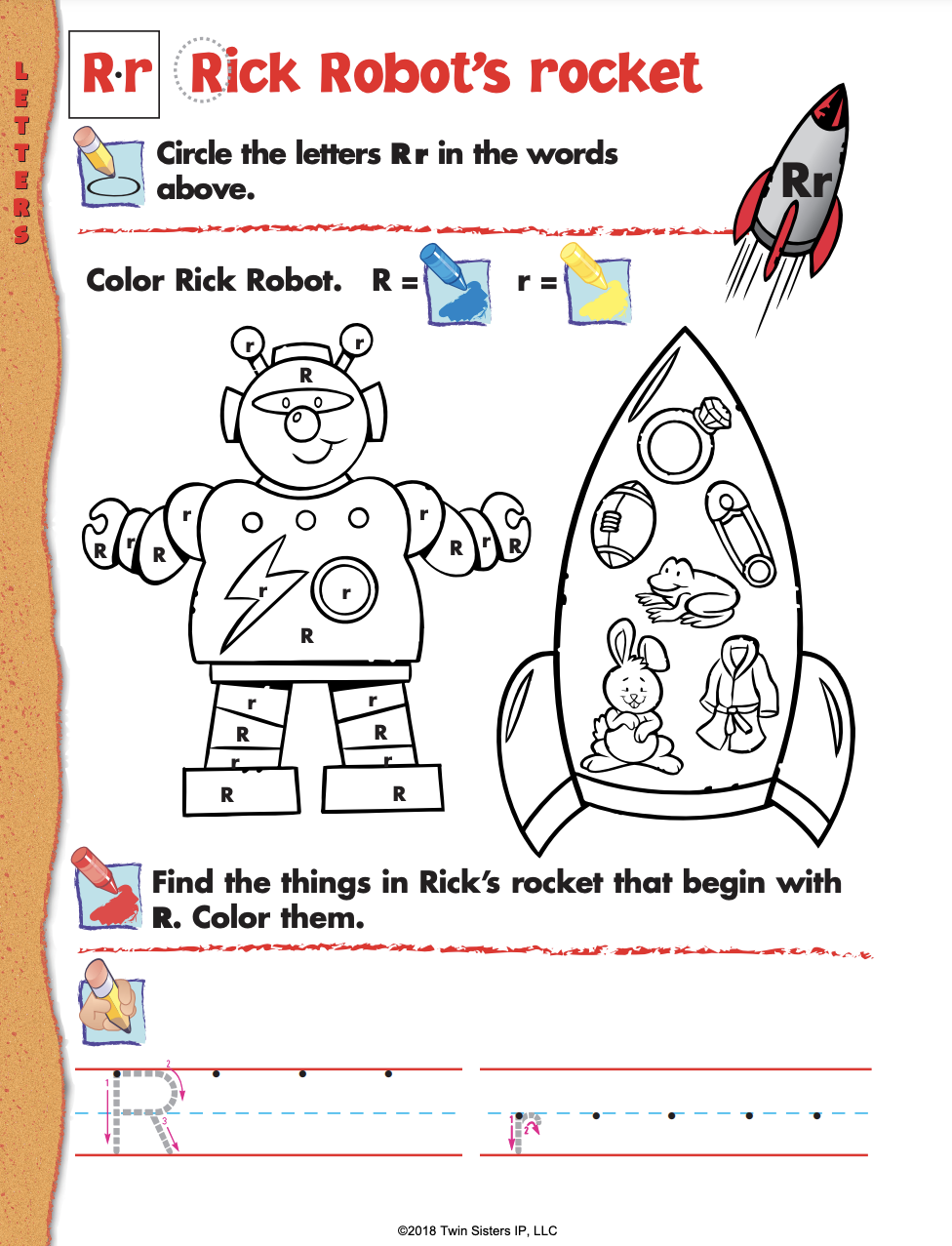
For each letter: circle target letters found in a word/phrase, name and color pictures that begin with the target sound, and complete a physical-skills task (e.g., connect-the-dots, trace a path/maze) associated with that letter.
Includes: one worksheet per letter (name-the-picture / circle-the-letter / color activity) · physical-skills pages (connect-the-dots, maze) tied to specific letters
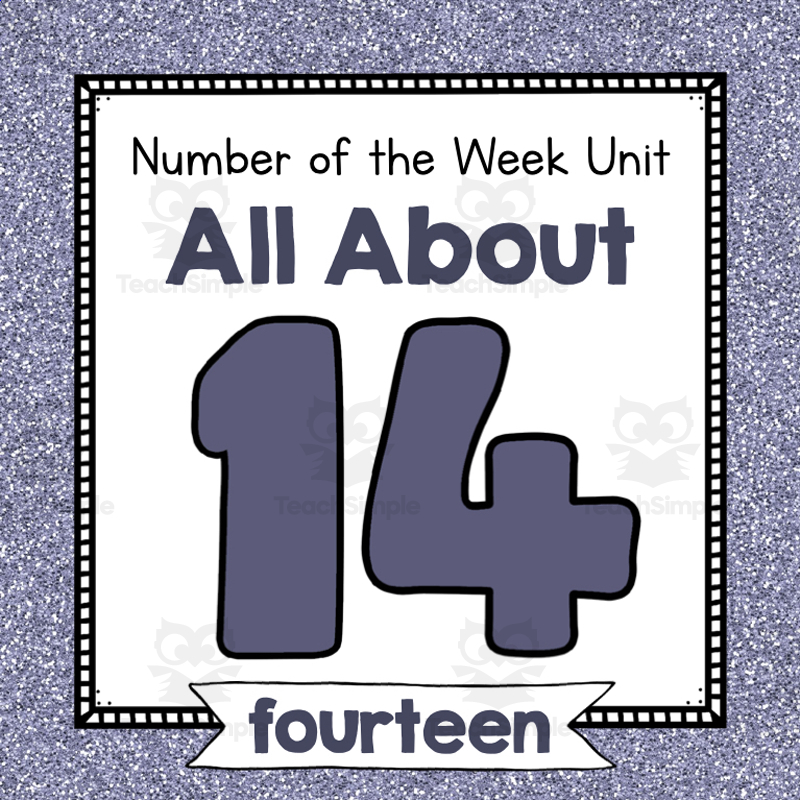
Teach and build number sense around the number 14 ('Fourteen') through a mix of hands-on manipulatives and printable practice pages covering recognition, formation, and counting.
Includes: glue-together number line strip · glue-together classroom chant chart strip · 'Show the Number Fourteen' pages: word form, ten frame, base ten blocks, number line, measuring
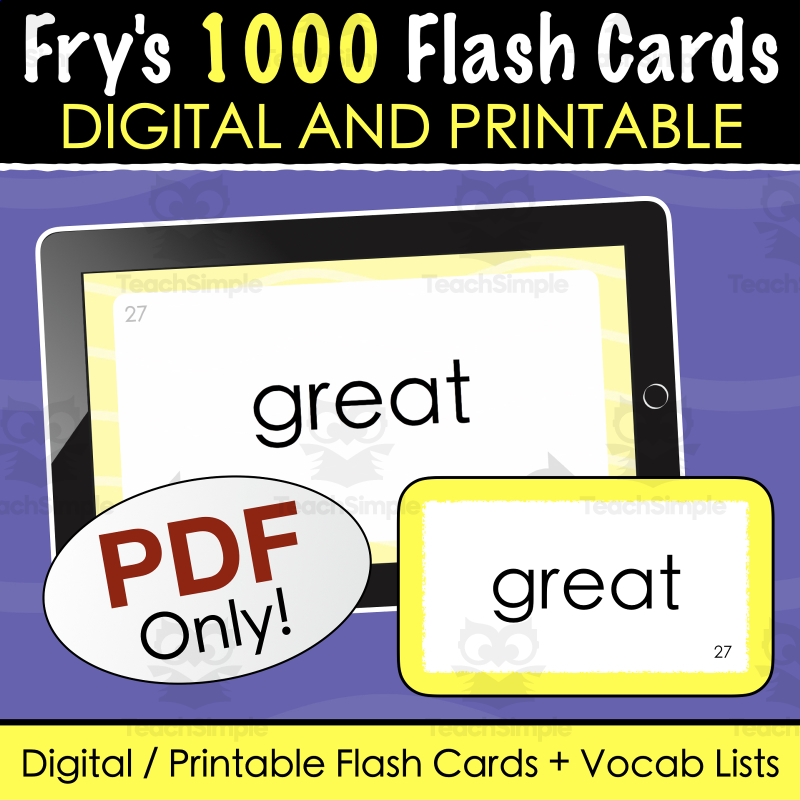
Read each sight word aloud from a digital slideshow (one word per slide, navigated with arrow keys) or a printable card, practicing correct pronunciation one word at a time.
Includes: 10 digital flash-card PDFs, one per hundred (First 100 through Tenth 100), one word per slide with 'How to Use' instructions · a README PDF
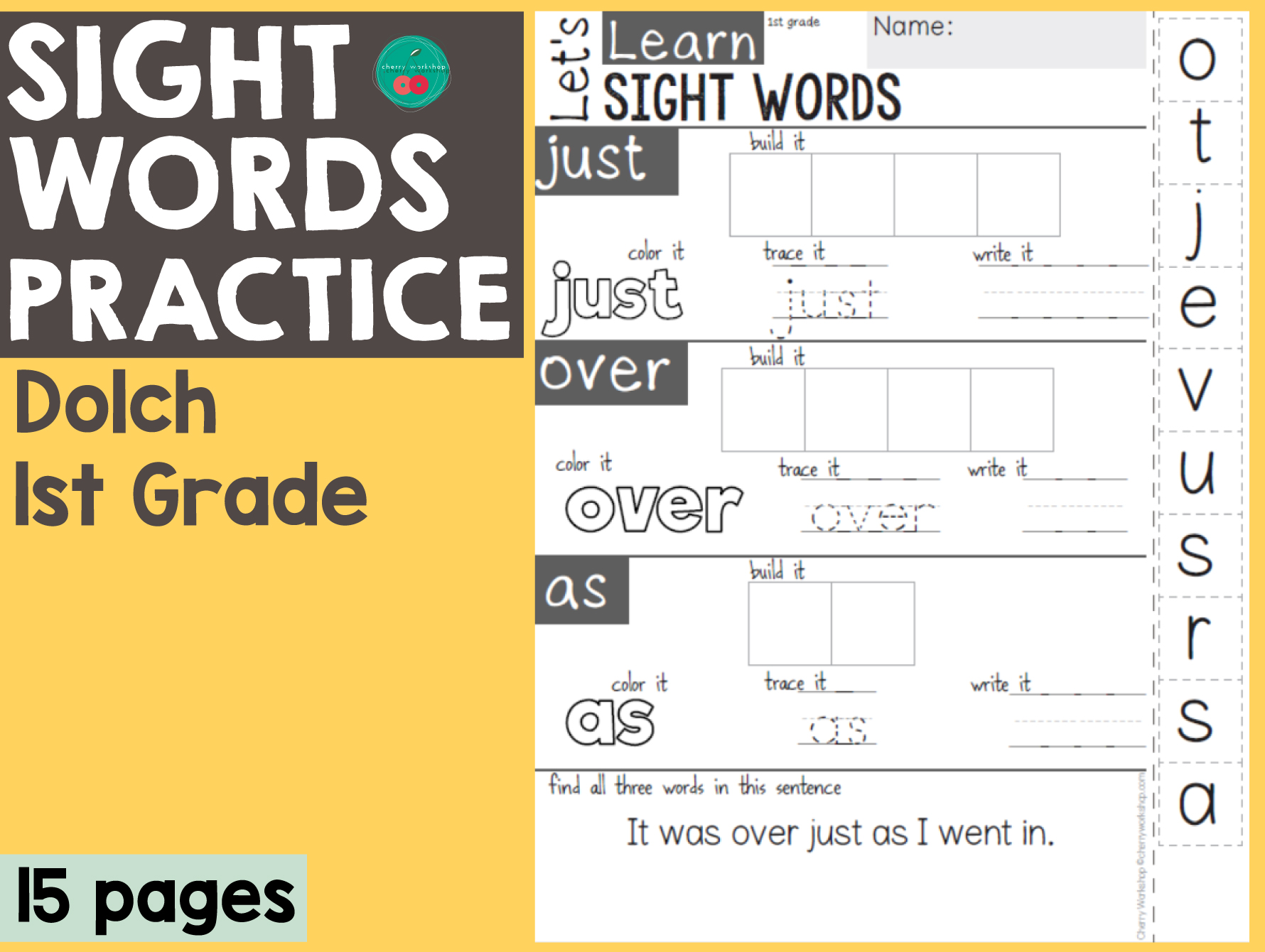
For each of three words per page, students color the word, trace the word ('build it' letter-tile boxes plus a 'trace it' line), and write the word; then find and identify all three target words within a printed model sentence at the bottom of the page.
Includes: a model sentence per page using all three of that page's words, for students to locate/identify the words within context
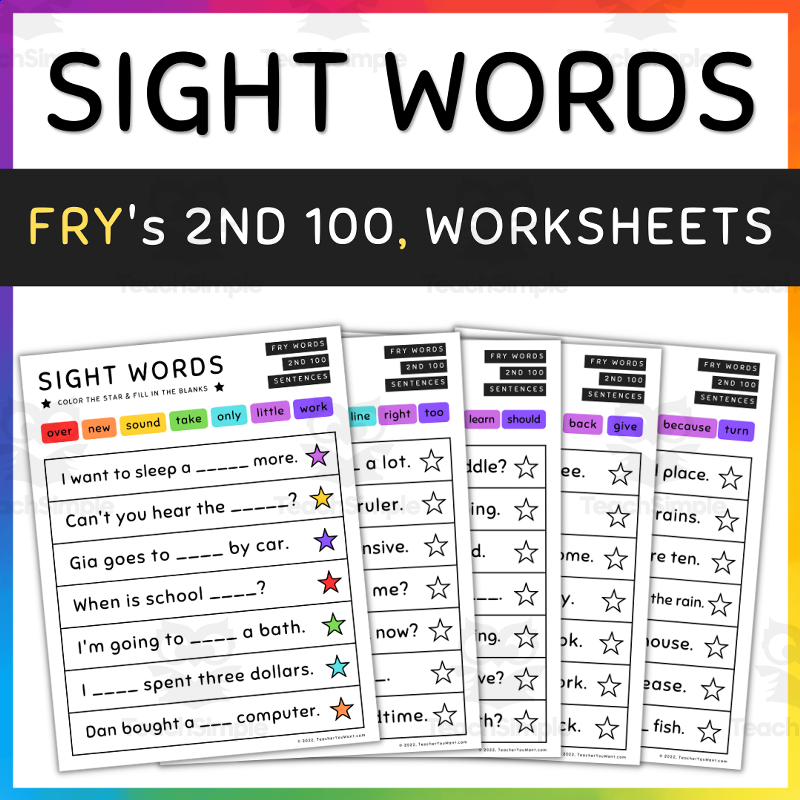
Read each sentence, choose the missing sight word from the word bank shown above it, write the word in the blank, and color the star at the top of the page.
Includes: 15 pages, each presenting a 7-word sight-word bank, 7 fill-in-the-blank sentences using those words, and a 'color the star' element

For each sight word, students read short sentences containing the word and circle it, trace/write the word repeatedly, color the word, find it in a small word-search grid, and write their own sentence using the word.
Includes: Pre-Primer Dolch word list and progress-tracking checklist
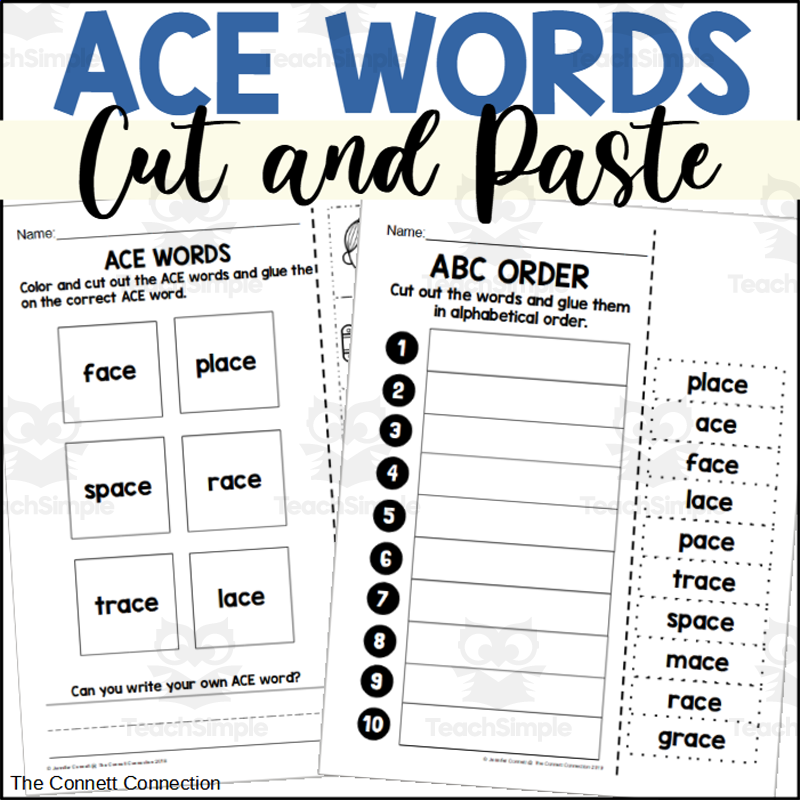
Cut out word or picture cards and paste them to match pictures to ACE words, put ACE words in alphabetical order, sort pictures/words into ACE-family vs. not-ACE-family columns, and sort words into real-word vs. nonsense-word columns.
Includes: color-and-cut ACE word match worksheet · CVCe picture-word match worksheet
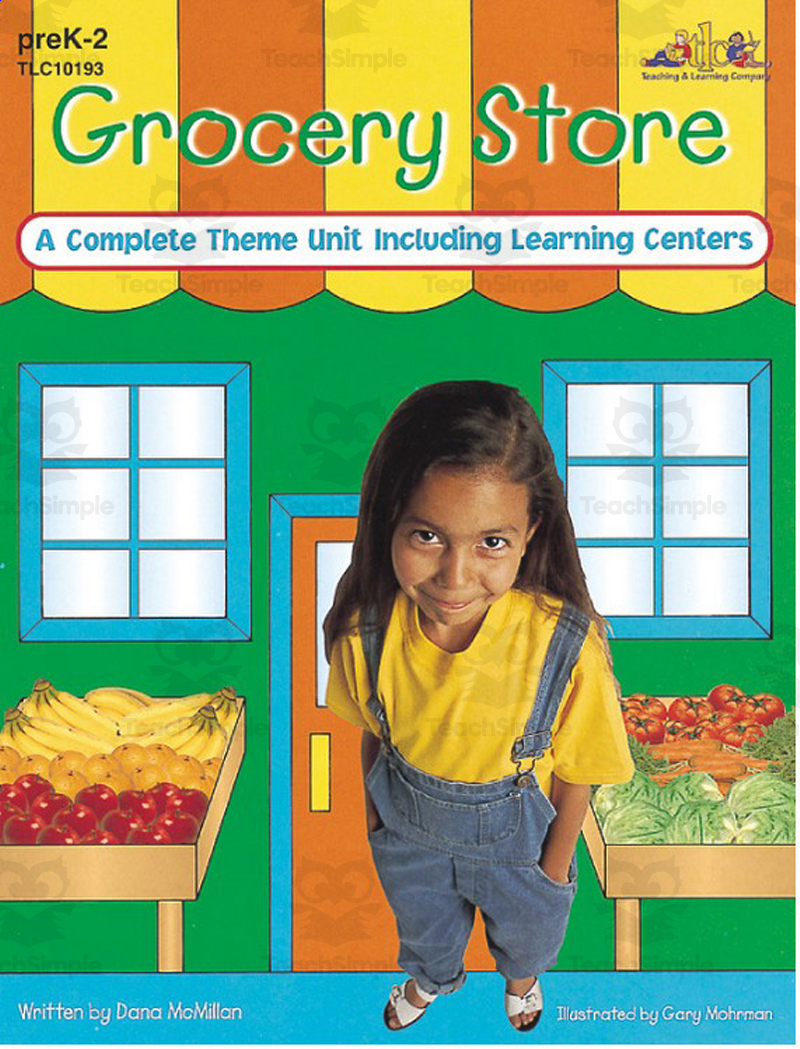
Participate in themed learning-center tasks (dramatic play grocery store role play, art, science, construction activities) and a grocery-store field trip, building vocabulary and concepts around the grocery store theme.
Includes: introductory guidance on using themes with learning centers (choosing a theme, developing tasks, designing starting points) · Grocery Store theme starting-point activity (dress as a farmer, bring produce)