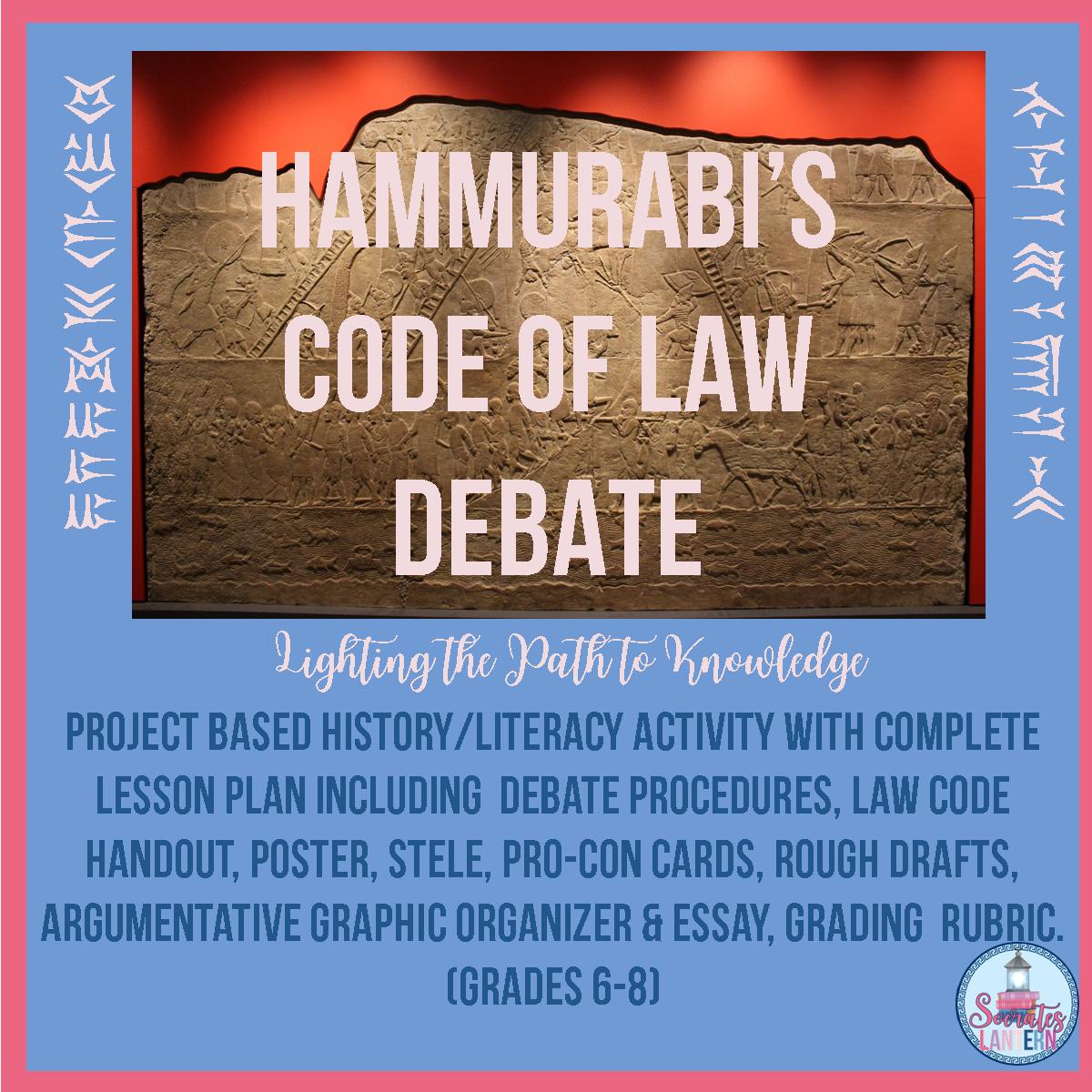
Hammurabi's Code of Law Debate
A project-based debate activity teaching Hammurabi's Code of Law and ancient history, using argumentative writing and public speaking to connect ancient law to modern-day legal/ethical debates.




2,017 resources
Explore sub-categories
3 sub-categories · 2,017 resources
A project-based debate activity teaching Hammurabi's Code of Law and ancient history, using argumentative writing and public speaking to connect ancient law to modern-day legal/ethical debates.
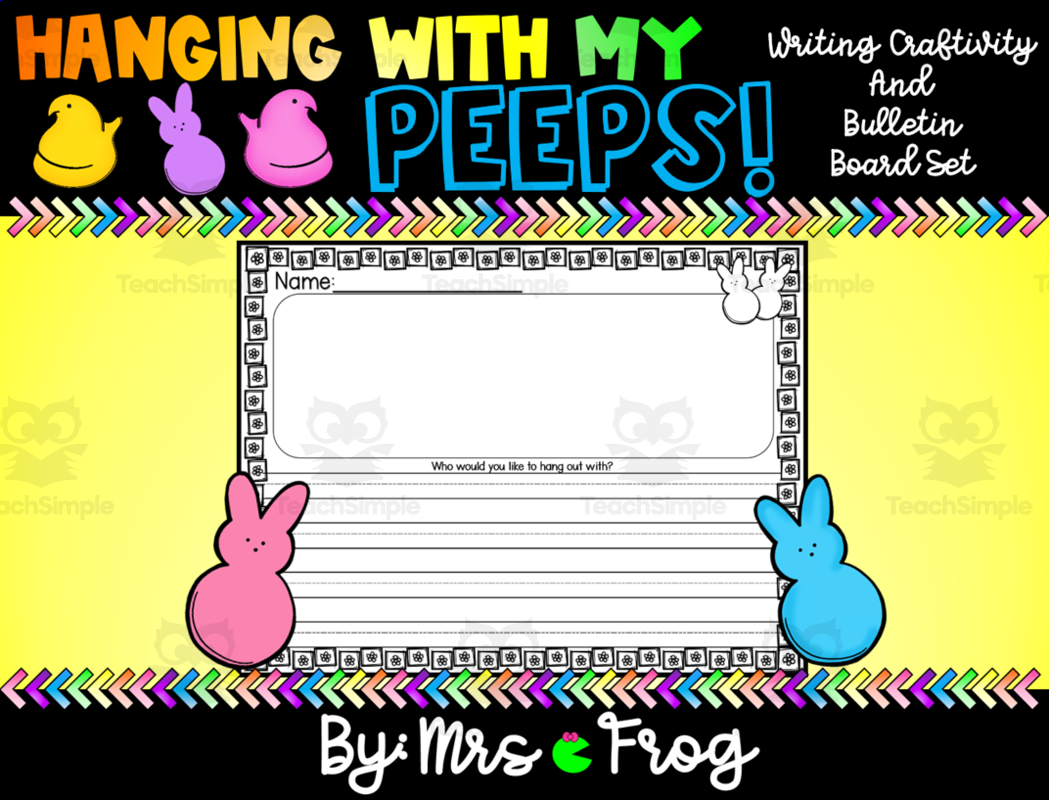
Provide a spring/Easter-themed writing craftivity and matching bulletin board display.
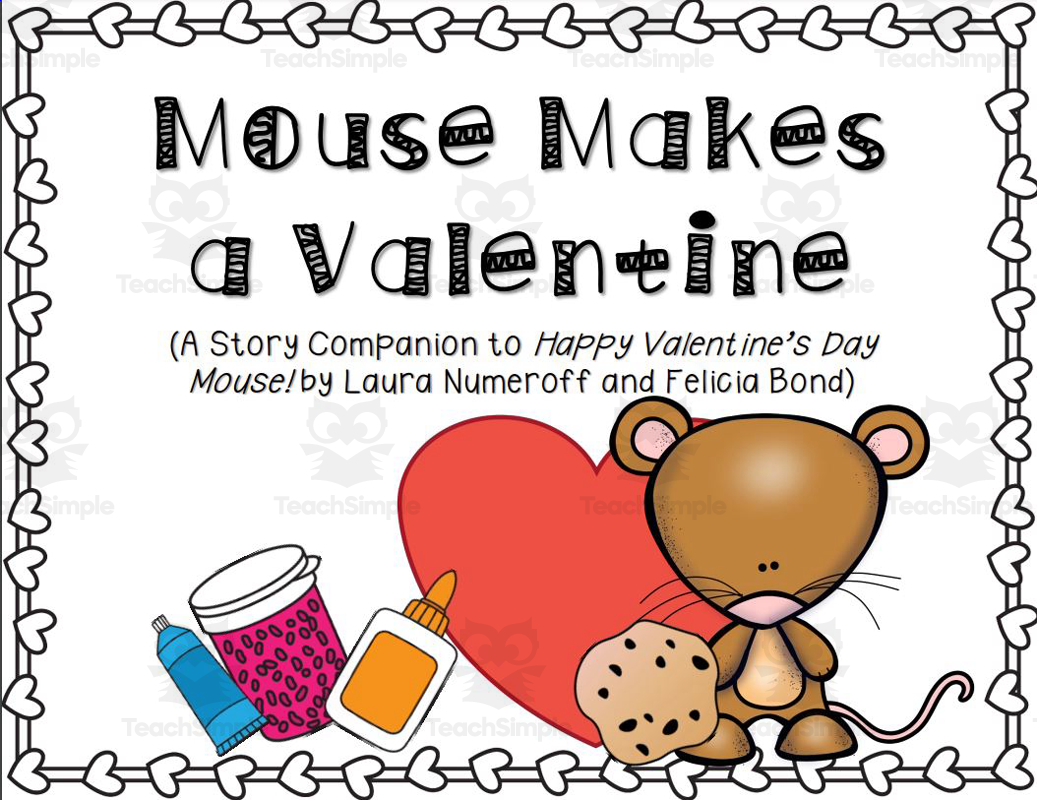
This packet goes along with the story by Laura Numeroff and Felicia Bond. I have included an emergent reader, a story sequencing page, a character traits page, a syllables page, and 3 writing responses.

The picture-book companion offers discussion questions with responses, early reading and handwriting pages, writing prompts and story crafts. Read the book first, then select activities appropriate to your learners. A puzzle, mask and crown provide hands-on ways to continue talking about the story.

A creative-writing/nutrition activity where students invent original healthy drink recipes using a provided vocabulary list of healthy ingredients, framed as a school 'Healthy Drinks Vending Machine' contest, and graded with a rubric.
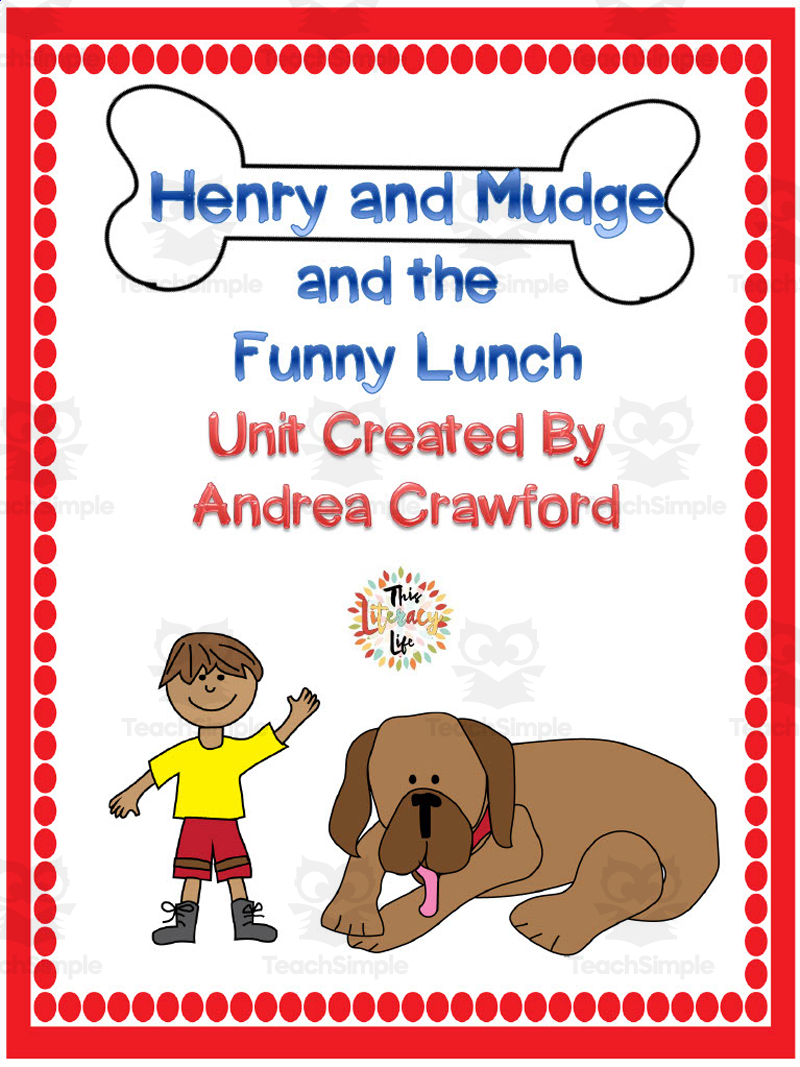
A literacy companion unit for the book 'Henry and Mudge and the Funny Lunch,' covering vocabulary, prediction, comprehension, and compound words.

A Common Core-aligned full-day substitute teacher plan for 4th grade built around a 'Heroes' theme, combining reading, social studies/character education, writing, and math activities for a sub or regular teacher to run a complete school day.
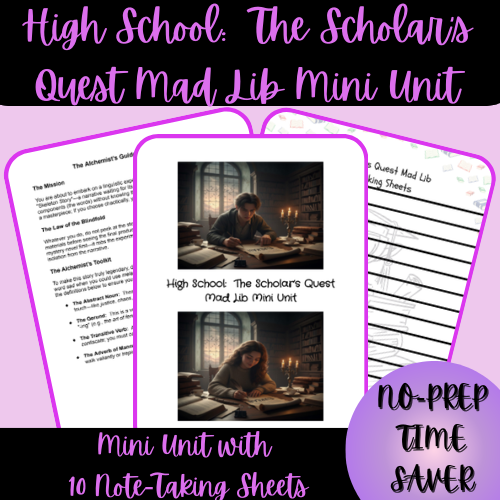
In my house, finding ninth-grade resources that do not feel childish is an uphill battle. If a worksheet looks like it is from 1994, my daughter is done before she even picks up a pencil.
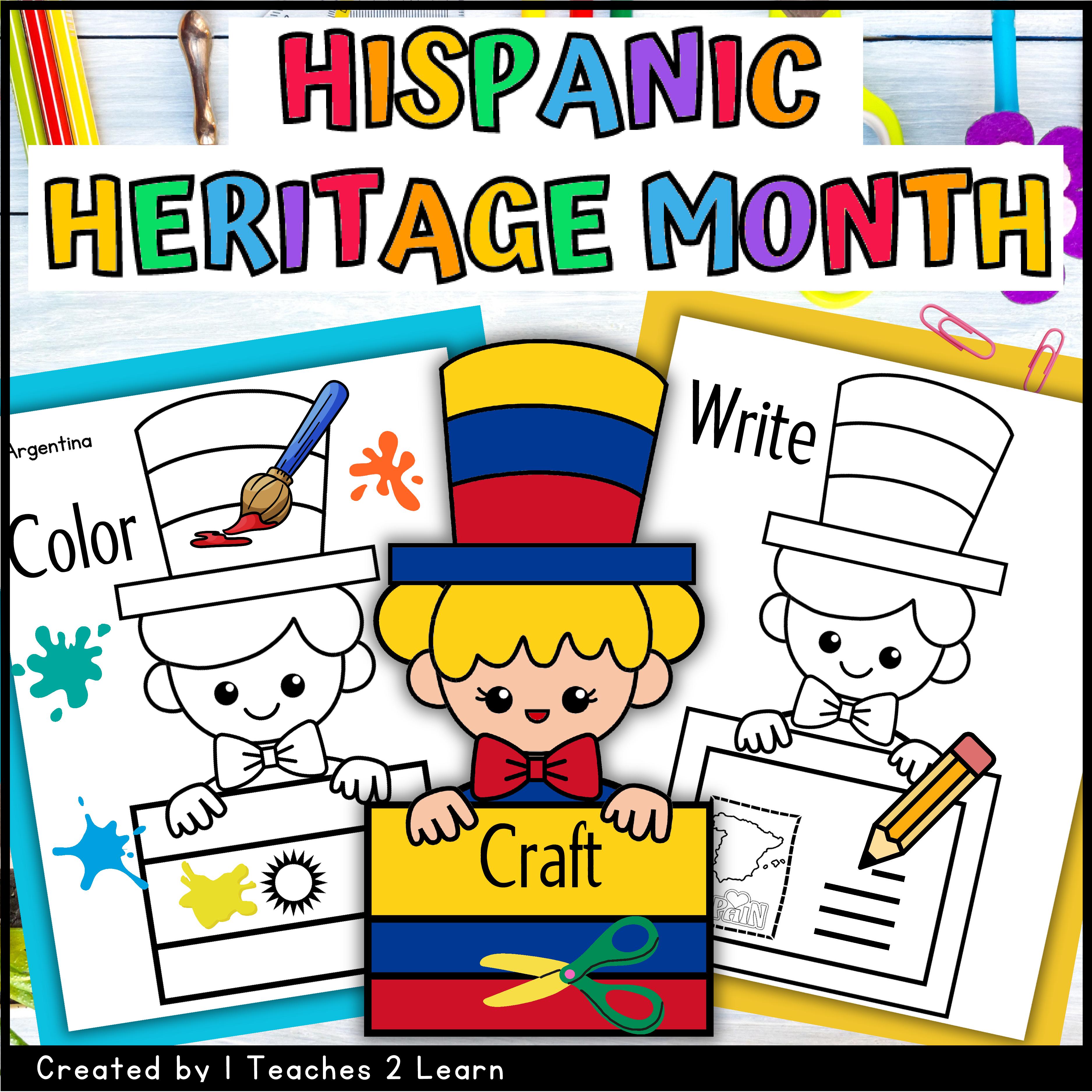
A large Hispanic Heritage Month craft/coloring/writing resource covering 21 Spanish-speaking countries: students build a paper craft figure holding a flag or a country-map writing sheet, color pages, and respond to age-differentiated writing prompts about each country.
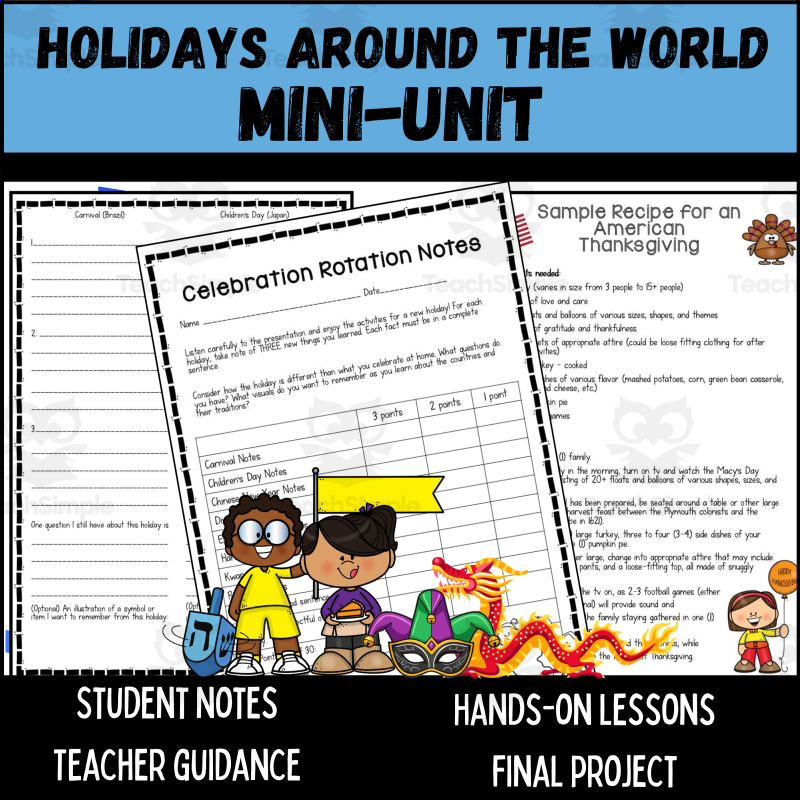
This hands-on, interactive World Holidays Mini-Unit will bring cultural understanding, global awareness, and meaningful collaboration into your classroom.
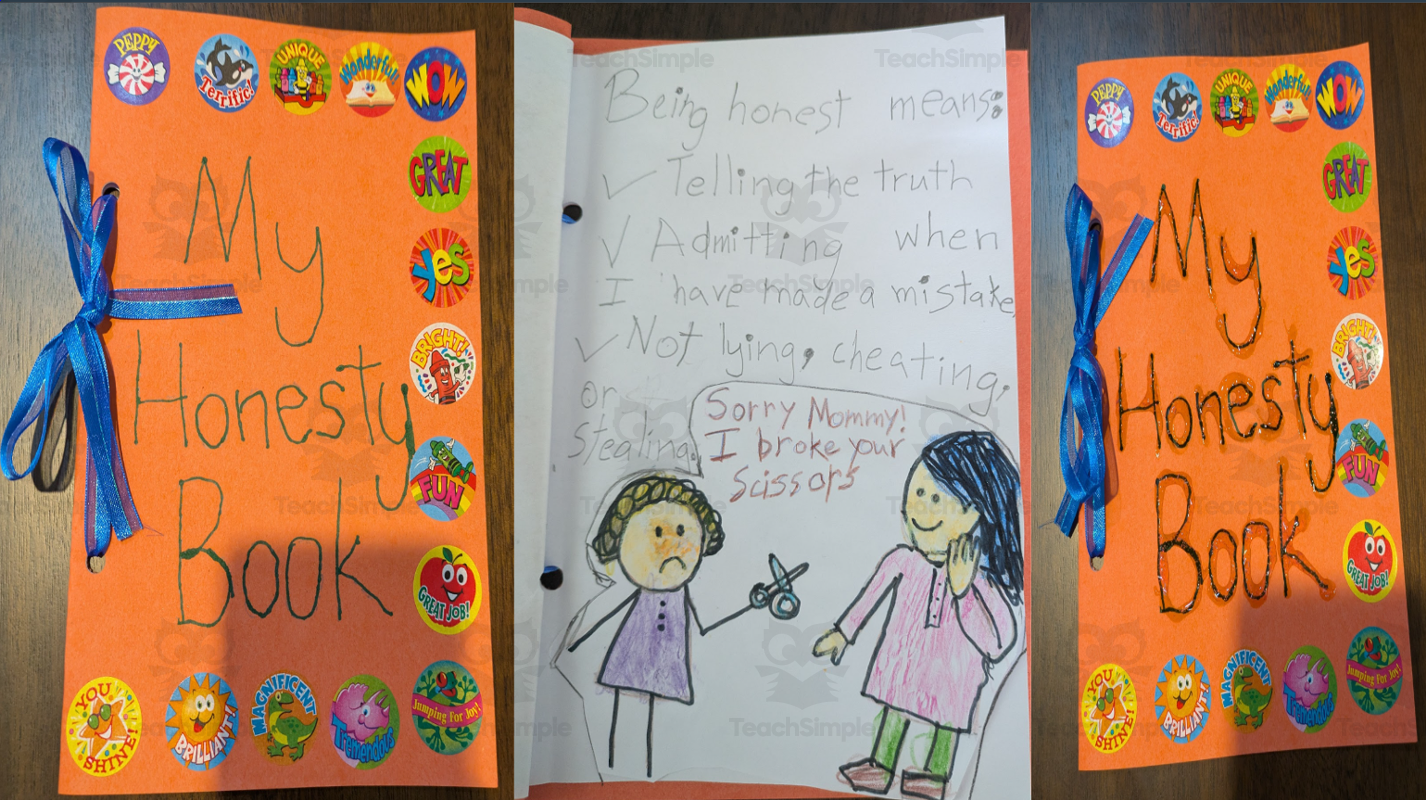
Build a character-education mini booklet exploring honesty through guided drawing and writing prompts, differentiated for K-1 and grades 2-3.
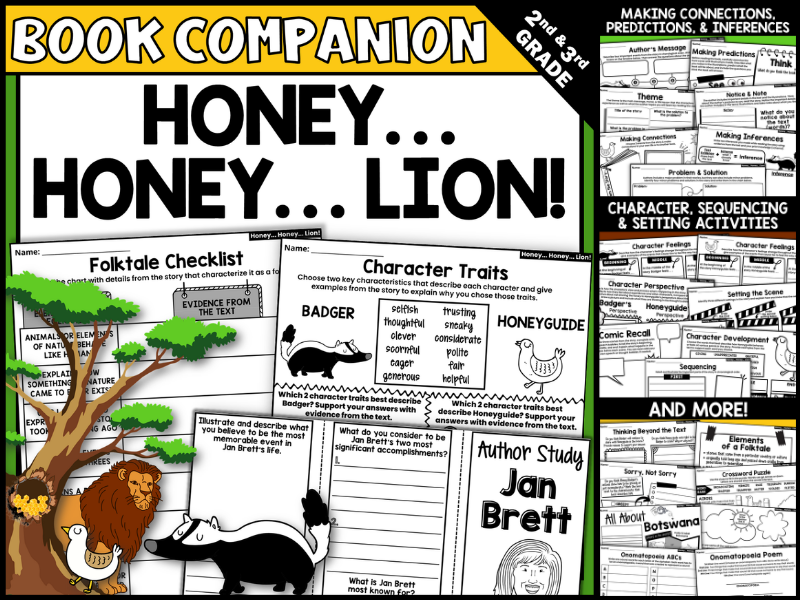
Provide a print-and-go book companion of reading comprehension activities for the picture book 'Honey... Honey... Lion!' by Jan Brett, covering story elements, folktale analysis, character study, sequencing, and inference skills.
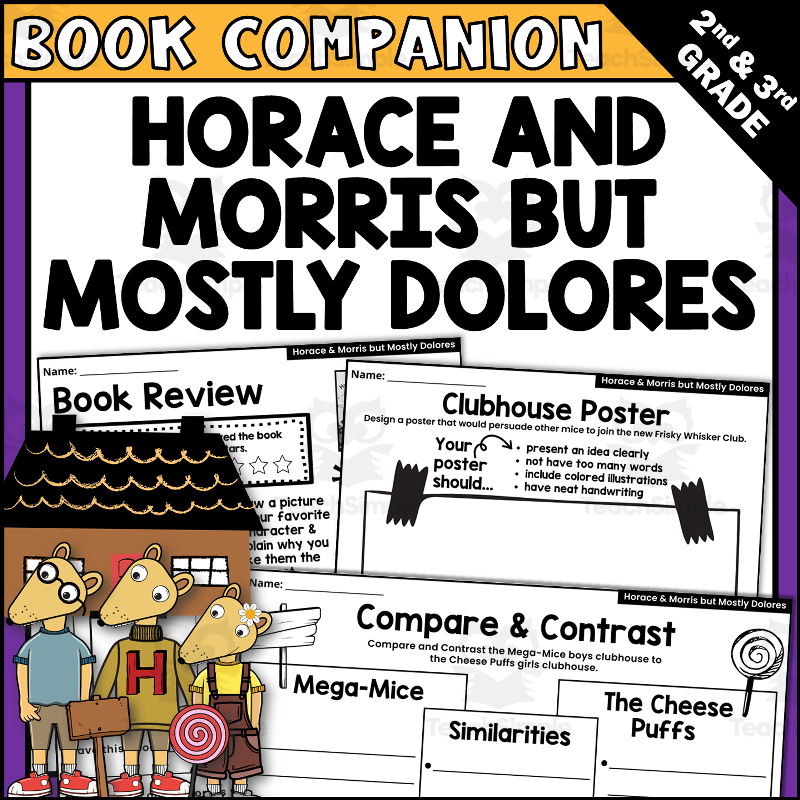
Provide a complete book-companion set of reading-comprehension activities for the picture book 'Horace and Morris But Mostly Dolores' by James Howe.
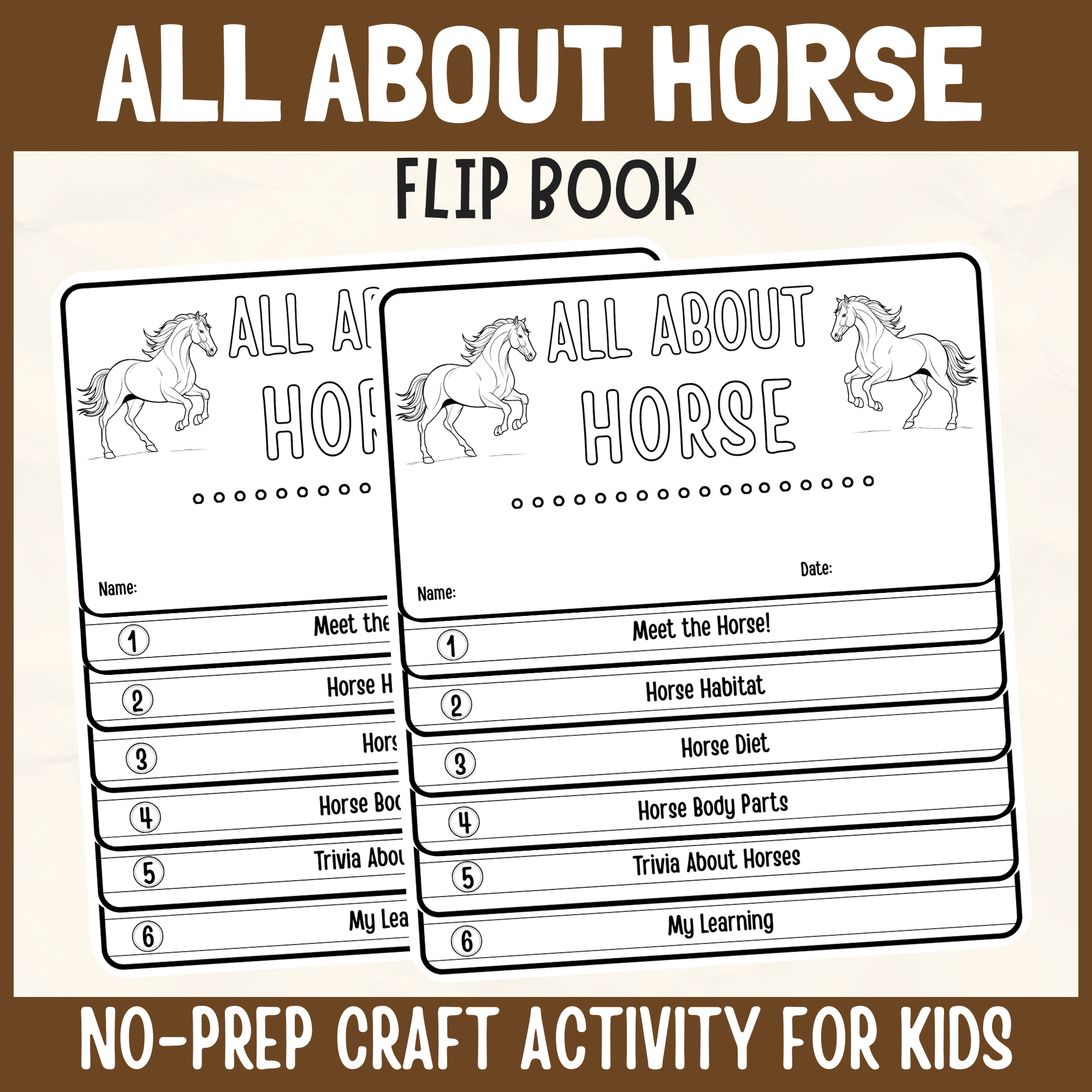
Teach facts about horses (appearance, growth, habitat, defense, communication) through a foldable flipbook craft with guided questions.
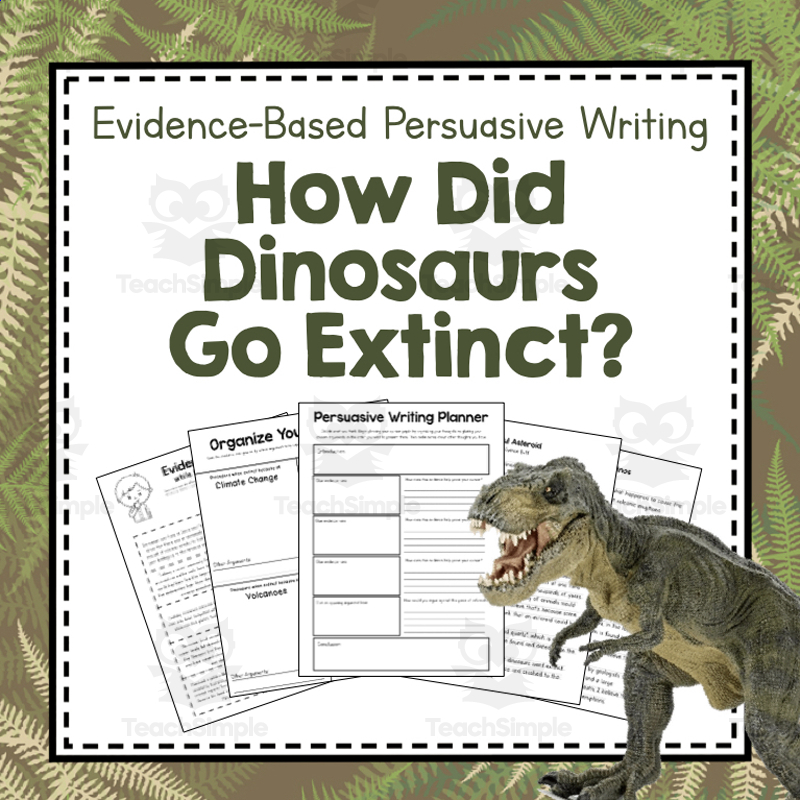
How Did the Dinosaurs Go Extinct? | Persuasive Writing Pack The How Did the Dinosaurs Go Extinct? | Persuasive Writing Pack is an interactive educational resource designed primarily for students in grades 3 to 5.
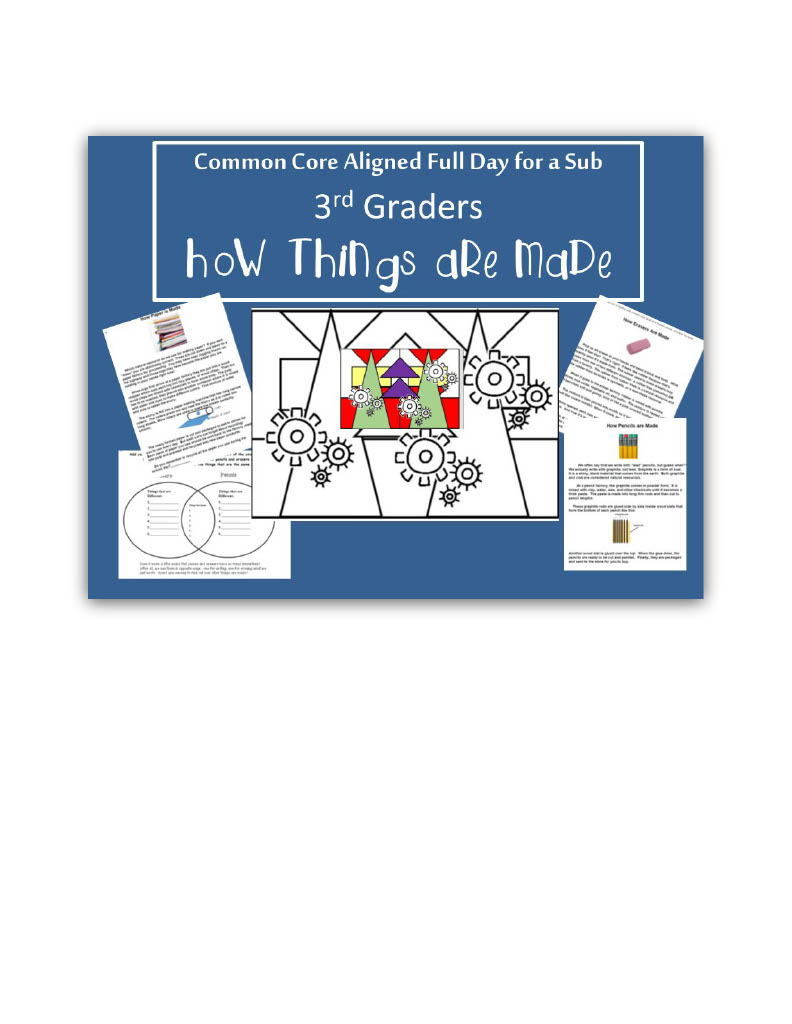
A full-day substitute teacher plan package for Grade 3 built around the theme of how everyday items are manufactured, combining reading comprehension, writing, math review, and vocabulary activities.

The tooth-brushing topic gives developing writers a familiar process to organize. Picture and sentence sequences support planning before students use transition words in a draft. Select an editing checklist that matches the writer’s level, then reread the directions to check order and clarity.

Use making a peanut butter sandwich as a familiar model for procedural writing. The packet offers sequencing pieces, writing supports and prompts for making instructions more specific, with a sample paragraph and editing checklists to support revision. Choose drawing or writing formats to match students’ needs; the paper activities can be completed without preparing or tasting food.
Teaches early writers to produce sequential 'how-to' expository writing about making a valentine, using leveled models, checklists, and picture-sequencing supports.
Teaches early elementary writers how to compose a step-by-step 'how-to' (procedural/expository) piece using the everyday example of apple pie, with an emphasis on sequencing and transition words.
Teaches early elementary writers how to compose a step-by-step 'how-to' (procedural/expository) piece using the everyday example of caramel apples, with an emphasis on sequencing and transition words.
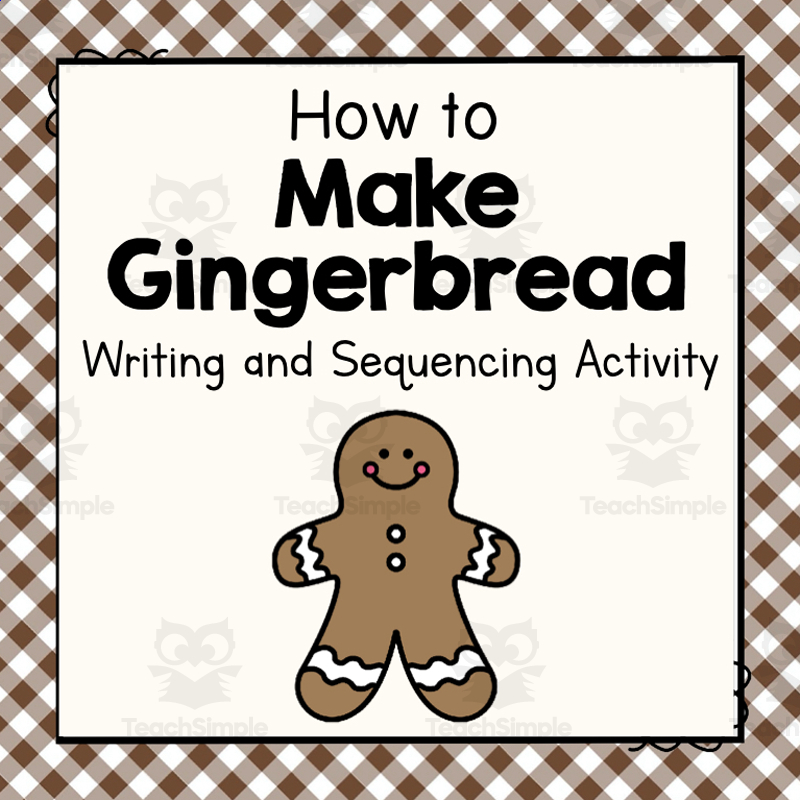
Teaches early elementary writers how to compose a step-by-step 'how-to' (procedural/expository) piece using the everyday example of gingerbread cookies, with an emphasis on sequencing and transition words.
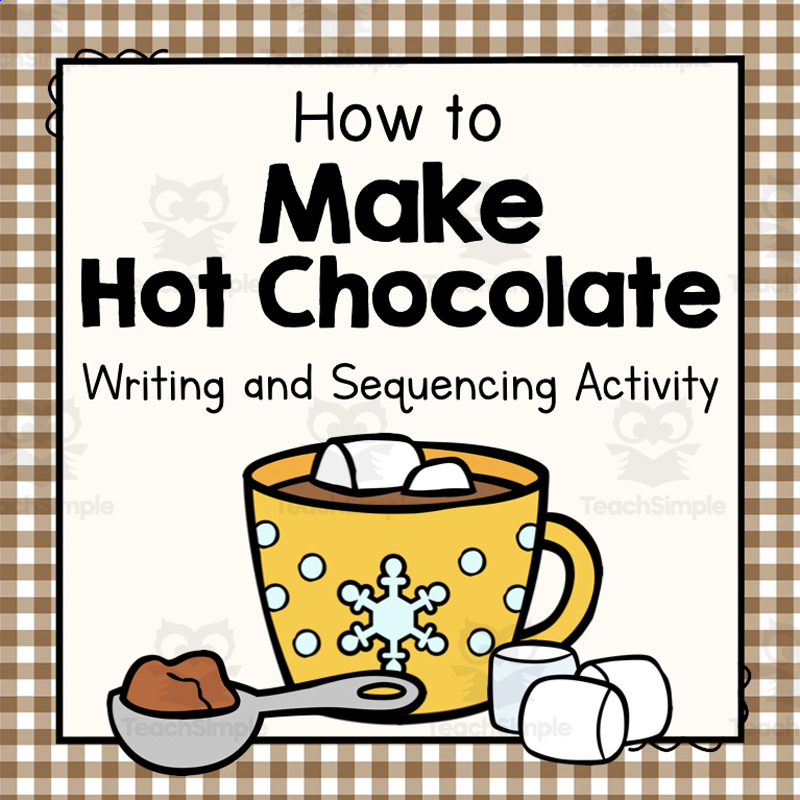
Teaches early elementary writers how to compose a step-by-step 'how-to' (procedural/expository) piece using the everyday example of hot chocolate, with an emphasis on sequencing and transition words.
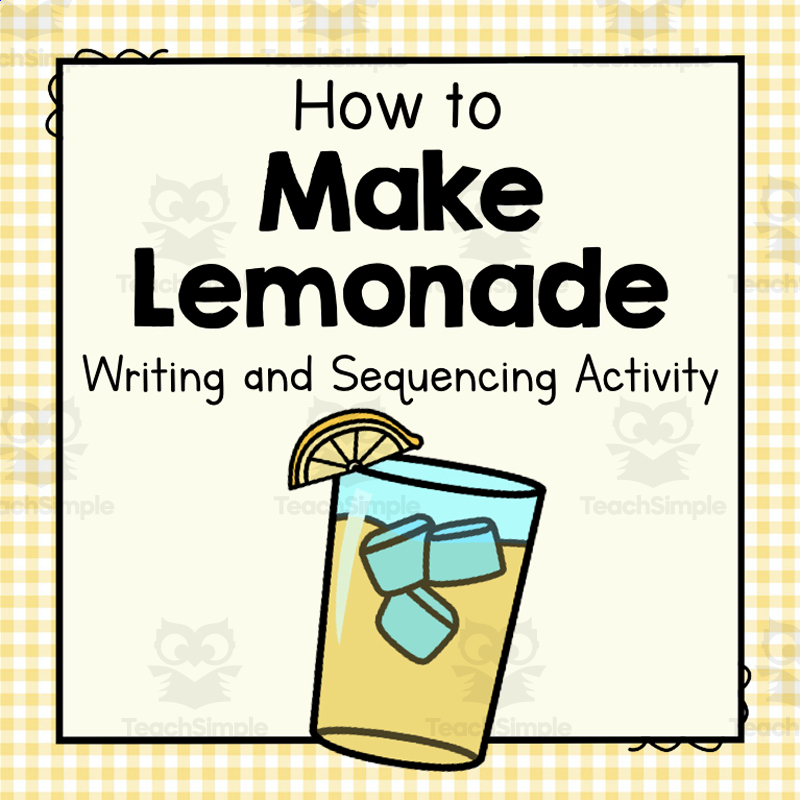
Teaches early elementary writers how to compose a step-by-step 'how-to' (procedural/expository) piece using the everyday example of lemonade, with an emphasis on sequencing and transition words.