



3,890 products added recently
Page 75 - ELA Activities
Explore a variety of ELA activities designed to enrich your students' learning experience. From reading comprehension exercises to creative writing prompts, these resources support the development of essential literacy skills. Engage your class with interactive lessons that foster a love for language and literature. These activities are suitable for various grade levels and can be seamlessly integrated into your curriculum, helping you create dynamic and effective English Language Arts lessons.

 Show filters

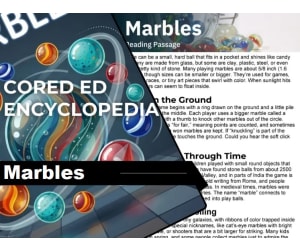
Marbles Reading Comprehension Passage - Cored Ed Encyclopedia
ELA, Language Development, Resources for Teachers, Reading Comprehension, Reading, Pre-Reading, Writing, Strategies, History, Social Studies, Grade 2, 3, 4, 5, Worksheets & Printables, Worksheets, Teacher Tools, Centers, Activities, Writing Prompts, Assessments, Tests, Quizzes and Tests, Quizzes
This marbles reading comprehension contains the following: Visualize on the Cover (Teacher Read Aloud Script) Start your lesson by taking a few moments to visualize the topic and share thoughts or feelings about it. Pre-Reading Trivia Students will write down one thing they already know about the subject and then read five more facts and discuss. These facts are fun, and the students will enjoy learning about the subject before reading more. Reading Passage The text is a high-interest reading passage with set paragraphs, roughly three to four paragraphs long. It contains a variety of themes about the topic, anywhere from history to technology. The passage is between 250 and 350 words in length. Mixed Questions The first question page contains four multiple-choice questions, each with a choice of four answers, and three written response questions that require a sentence or two from the student. Vocabulary Questions Practice seven key words from the text in this section across two activities. First section is scrambled words where students will unscramble three words given a clue for each. The second section is a word to meaning matching activity. Creative Writing In this question, the student will be required to write a five to eight sentence paragraph on a question related to the topic. Extension Activities This page is optional for fast finishers or to take home. There are several activities, each one requiring a different skill. Do some, do none, do all, completely optional - but you will feel reassured knowing every possibility is planned for. Includes summary writting question. Answer Key There are answers for the multiple-choice questions, written response questions have sample answers, vocabulary answers and if there is a summary question then a sample summary will be provided as well. FULL CATALOG OF DOWNLOAD LINKS AND ENCYCLOPEDIA INDEX HERE Lesson Snapshot Title: Marbles Genre: Nonfiction Subject: Reading (Informational Text) Primary Topic: What marbles are, how they’re used, and history Estimated Guided Reading Level (A–Z): Q What This Lesson Teaches Best Defines what marbles are and what they can be made from (glass, clay, plastic, steel, agate). Explains a classic marble game using clear, step-by-step details (ring on the ground, shooter, “for fair,” “for keeps,” “knuckling”). Builds background knowledge by tracing marbles across time and places (2500 BCE, Rome, medieval times, Britain, India). Uses headings to organize information into sections (game rules, history, and modern designs/collecting). Uses vivid descriptive language to help readers picture marbles (colors that “float inside,” “tiny galaxies,” “ribbons of color”). Learning Goals Describe what a marble is and list materials marbles can be made from. Explain how the classic ring game works, including what a shooter does. Tell what “for fair” and “for keeps” mean in the game. Describe how marbles connect to history using details from the text (places and time periods). Use section headings to locate and share information about games, history, and marbles today. Describe how the author explains what marbles look like in sunlight and in clear glass. Key Vocabulary From the Text Agate — a pretty kind of stone used for some marbles. Shooter — a bigger marble used to knock other marbles. Archaeologists — people who find and study things from long ago. Medieval — from a long-ago time in history. Galaxies — huge groups of stars; here, a way to describe patterns. Cored Ed Encyclopedia Overview The Cored Ed Encyclopedia is a weekly series of lessons that you can pick up and use right away. These short readings fit into whatever time you have available. Each one includes a warm-up, a reading, and a set of questions, but it’s flexible — you can do just the reading, the full lesson, or skip the writing section if you need to. Each lesson focuses on a single topic so students don’t get lost. The writing is clear but never childish, making it perfect for grades two through five. Topics range from animals and science to history, inventions, and everyday things. No matter the level of the student, everyone should take away at least one new idea or fact from each lesson. The materials are easy to print, easy to explain, and require no setup. They work well for whole-class teaching, partner work, or independent study.
Author Cored Education
Rating
Tags Vocabulary, Spelling, Reading Comprehension, Reading Passages, Reading, Creative Writing, Reading Strategies, Writing Prompts, Marbles, History

Plan & Write The Story Of Little Red Riding Hood (6-9 years)
ELA, Writing, Creative Writing, Grade 1, 2, 3, 4, Activities
Plan & Write The Story Of Little Red Riding Hood (6-9 years) The all-in-one solution for fostering creative writing skills This teaching resource uses the much-loved story of Little Red Riding Hood as a foundation to develop story structure. From setting up beginnings, middles, and ends in stories to detailing characters and scenery elements - there's plenty for young learners to explore and create. A Treasure Trove of Confidence Boosters: The pack is filled with multiple starting points that help children who are beginning their journey into writing. Fostering Brainstorming Skills: Guide young learners through the process of gathering thoughts, jotting them down before they start creating their narrative masterpieces. Inspiring Writing Challenges: Exciting prompts encourage students to expand upon existing stories using their unique ideas. Sneak Peek into Illustrative Glitz: An enticing ensemble of silhouette illustrations sprinkled throughout make turning each page an adventure whilst keeping learners engaged! The resource suits perfectly grades 1 through 4 teachers teaching Language Arts or Creative Writing subjects. It will be useful when planning whole-group learning experiences or small-group activities . Parents can use it for home-schooling within kid-friendly workshops or even homework tasks! Raising Young Authors Made Easy With Plan & Write The Story Of Little Red Riding Hood (6-9 years) Transform your student's little daydreams into stepping stones towards advanced creative-writing skills with this practical guide framed within colorful classic folklore!
Author Guinea Pig Education
Tags Creative Writing, Storytelling, Narrative Structure, Brainstorming, Interactive Resource, Little Red Riding Hood Plot

Reading Comprehension Fiction Set 1 Sample: Basketball (Google Forms)
ELA, Reading, Language Development, Common Core, Vocabulary, Reading Comprehension, ESL, Writing, Children’s Literature, Literature, Grade 6, 7, Activities, Assessments, Teacher Tools, Tests, Quizzes and Tests
Reading Comprehension Passages Fiction Set 1 Overview Reading comprehension lessons, especially written for Grade 6-7, providing the chance to read interesting and engaging passages. Each lesson has a mix of questions to check understanding, a vocabulary or spelling activity to help remember key language introduced, and a writing exercise. Full answer keys are provided. Passage Included 2.Basketball: Evie shows her newfound basketball skills. Google Forms Version This is the Google Forms editable and fillable/self grading version. This download is available in GOOGLE Docs, GOOGLE Forms, GOOGLE Slides. PDF, PPT, WORD. FULL CATALOG OF DOWNLOAD LINKS HERE Grade 6/7 Links Fiction Set 1 Google Docs Google Forms Google Slides PDF PPT Word Guided Reading Materials Fiction Set 2 Google Docs Google Forms Google Slides PDF PPT Word Guided Reading Materials Nonfiction Set 1 Google Docs Google Forms Google Slides PDF PPT Word Guided Reading Materials Nonfiction Set 2 Google Docs Google Forms Google Slides PDF PPT Word Guided Reading Materials Reading Passages Overview Each passage is especially written for Grade 6/7 students, including key vocabulary required for this age group. Topics are varied and are accompanied by colorful graphics. Topics are meant to educate, yet entertain the modern student. The majority of these short stories contain an important message - a way of developing these young learners further. Mixed Questions The mixed questions section of each lesson includes a variation of five to six comprehension, vocabulary and Math questions. In addition, key reading strategies are frequently covered including cause & effect, summarizing, compare & contrast and making conclusions. Mixed questions require a written response (no MCQ's), full answers and example responses appear at the end of the lesson. Spelling & Vocab Each reading passage contains a variety of words and phrases designed for Grade 6/7 students. Spelling and vocab activities provide the opportunity to build fluency with these words. Activities provide clues to help assist students. Vocabulary activities include extra questions where students must write a synonym, an antonym or a sentence using a certain word. Writing Prompts Writing prompts are designed to continue the theme or lessons learned in the story. Students are persuaded to write in a variety of ways and each prompt includes several cues to help. The main focus in this product, is the student. Prompts will require the student to relate to past experiences and encourage them to discuss feelings and ways to improve. Full Answer Keys Full answer keys and sample responses are provided so no matter how busy you are, you know you're covered! Mixed question answers provide evidence from the text, Math questions contain the relevant workings. Answers are designed for use by the teacher, but also suitable as a handout to the student. For similar downloads and other frees, do check out Cored Group on TeachSimple.
Author Cored Education
Tags Elementary, Reading, Comprehension, Vocabulary, Answers, Ccss, Common Core, Spelling, Writing, Passages

Bingo Game: Latin Roots
ELA, Language Development, Vocabulary, Spelling, Grade 4, 5, 6, Games, Activities
Latin Roots Bingo Game Make learning fun with the Latin Roots Bingo Game. This educational tool is perfect for Grade 4 - Grade 6 students, providing a fun way to review or check their understanding of Greek and Latin roots and derivatives. It's suitable for educators in a traditional or homeschooling environment. The game includes 40 Greek and Latin roots, from "aer/aero" to "ver/vers/vert". Everything is tied into our other educational resources like the Greek and Latin Roots and Derivatives: Reference Cards and Card Sort. The Bingo Package Includes: 30 ready-to-play game cards, Calling cards that mirror each root used, A clear answer key for easy verification of winners. You just need to print out the bingo game cards (and laminate if you'd like them to last longer), gather some marker chips, such as plastic discs or dry beans, then you're ready! Fostering associative thinking, students listen carefully when definitions are called out ("clues") that relate to specific root words on their card. Someone shouting "Bingo!" when they've marked off enough clues correctly across their card can create an exciting atmosphere! And remember - more rounds are possible after a winner emerges! Suggested Use: We suggest educators use this resource with other materials like our Bundle: Greek and Latin Roots; Greek and Latin Prefixes. Spelling drills feel less daunting equally impactful with this engaging bingo game as part of your lesson plan! Note: Covers Language Arts Subject Focus Area – Vocabulary enhancement & Spelling improvements activities The resource comes in high-quality downloadable PDF format Ideally suited for Activities Type discipline within educational curriculum
Author Virtually Montessori
Tags Latin Roots, Bingo Game, Vocabulary Enhancement, Spelling Improvement, Active Learning

Discoverers’ Day Word Search 2rd 3th 4th 5th Grade worksheet activity
Vocabulary, Language Development, ELA, Spelling, Holiday & Seasonal, Grade 2, 3, 4, 5, Games, Activities, Word Searches, Worksheets, Worksheets & Printables
Commemorate curiosity and exploration with this Discoverers' Day Word Search! 🗺️ Students will engage with vocabulary about explorers, discoveries, and navigation while practicing reading, spelling, and word recognition. There's no prep needed, and this printable worksheet activity provides an engaging event in learning about history - and is fun! Purpose: Introduce and reinforce vocabulary related to exploration 🧭 Enhance literacy skills in spelling and focus ✏️ Instill curiosity about history, geography, and famous discoveries 🌍 Engage students in an interactive classroom activity combining literacy with social studies 🗺️ Order of Events / Steps: 1️⃣ Hand out the Discoverers' Day Word Search worksheet. 2️⃣ Review the list of words and explore explorers and their discoveries. 3️⃣ Students will find and circle words in the word search puzzle. 4️⃣ Facilitate a brief discussion answering how the discoveries changed history. 5️⃣ Check answers with the answer key provided ✅ Grades or Age: 2nd – 5th grade students 🌟 Ways of Implementation: This activity works well as an independent or group activity, morning warm-ups, in centers, partner work, with early finishers, or as a substitute plan 🧑🏫✨ Answer Keys: Easy review for the teacher How to Use and Variations: Timed challenge ⏳ - determine who can complete faster Partner puzzle 🤝 - do it together for added fun Vocabulary extension ✏️ - write sentences that use explorer-related words Create your own 🧩 - students create their own word search around explorers Standards: Supports CCSS/ELA vocabulary development and is integrated with social studies standards in regards to exploration, geography, and history, 🗺️📘 File Types and Pages: PDF format with color and black & white options Ink-friendly Answer key included Teacher Compliment: Encourage curiosity and literacy with this Discoverers' Day Word Search with no prep, active learning that comes to life! 🧭🌍✨please enjoy it with your students !!!
Author Classsim
Rating
Tags Discoverers’ , Day , Word Search , 2rd 3th 4th 5th Grade , Worksheet , Activity, Discoverers’ Day , Discoverers’ Day Word Search, Discoverers’ Day Word Search 2rd 3th 4th 5th Grade , Discoverers’ Day Word Search 2rd 3th 4th 5th Grade Worksheet

Beginning and Final Blends Flashcards
ELA, Phonics, Language Development, Pre-Reading, Special Education Needs (SEN), Special Resources, Grade 1, Flashcards, Worksheets & Printables, Games, Activities
Beginning and Final Blends Flashcards with pictures A set of beginning and final blends with both letters and matching pictures. This set covers the following beginning blends: sw, sk, st, sp, sl, sn, sm, bl, be, cl, cr, dr, fr, fl, gr, gl, pl, pr, tr, tw And the following final blends: ft, lk, nd , nt, mp, st, lt, sk, nk This set of consonant blends flashcards contains the blends a child will most likely need for their current reading/spelling level, if they are just learning to hear four sounds in a word with a short vowel sound. Once a child meets more advanced vocabulary, the child’s ability to decode will be such that they will no longer need consonant blends flashcards - the skill will be more or less automatic. A child does not need to know every consonant blend by heart. What is needed is the ability to hear the two sounds in a blend to spell and to blend two consonants to read. Phonemic awareness of the blends is a good place to start. How to use the Beginning and Final Blends Flashcards with pictures: ·If you print the letters and their matching pictures back to back, you will have a set of self-correcting cards with which a child can practice reading the consonant blends. ·If you print the letters and pictures separately, then you can let the child match letters to pictures, selecting just as many as the child can cope with, at a given time. For some children, learning the consonant blends is not an easy skill, so it may be advisable, once the child has an idea of what is needed, to move on to the next skill, as there will be plenty of opportunities to practice the blends as the child progresses through a phonic programme.
Author Lilibette's Resources
Rating
Tags Beginning Blends, Final Blends, Consonant Blends, Flashcards With Pictures, Flashcards, Phonic Flashcards

Expanding Language Activities Directions with Details
Special Resources, ELA, Speech Therapy, Reading, Reading Comprehension, Language Development, Vocabulary, Writing, Grade 4, 5, 6, Activities, Worksheets & Printables, Worksheets
Expand Oral and Written Expression While Giving and Following Directions Learning to give and follow directions helps students develop essential skills such as communication, listening, critical thinking, problem-solving, sequencing, responsibility, independence, attention to detail, and collaboration. These skills contribute to their academic success and are transferrable to various aspects of their lives, preparing them for future challenges and opportunities. Work on skills for oral and written directions. These fun activities will help students learn to edit while working on describing, categorization, organizing, planning, and sequencing. Teach basic concepts for directions. Giving clear and concise directions helps students improve their communication skills. They learn to express themselves effectively, using appropriate vocabulary and language. It also encourages them to listen actively and attentively when receiving directions, fostering effective communication in both giving and receiving information. ☝Students learn to pay attention to details, focus on important information, and comprehend instructions accurately. Students need to analyze information, identify the steps required, and organize them logically. ⚡Directions help students understand the importance of sequencing and organizing information in a logical manner. They learn to break down complex tasks into smaller, manageable steps and arrange them in a proper order. ❤️Giving and following directions often involve working with others. Students learn to collaborate, cooperate, and coordinate their actions with their peers. They understand the importance of clear communication, teamwork, and respecting others' input when working together towards a common goal. Great for social communication building. ⭐Students learn to give exact instructions on how to make specific items. ☀️Using actual food is not necessary, but definitely raises the fun level. What's Included: ✔Directions ✔How to Make worksheets to keep students organized ✔Following directions drawing tasks ✔Over 30 Puzzles ✔Planner ✔Vocabulary List Worksheets ✔Ideas for Extension Lessons ✨Over 50 activities included
Author Ivybee Speech
Tags Oral Language, Written Language, Writing, Details, Speech And Language Therapy, Language Arts, Critical Thinking, Communication, Receptive And Expressive Language, Problem Solving, Following Directions With Spatial Concepts
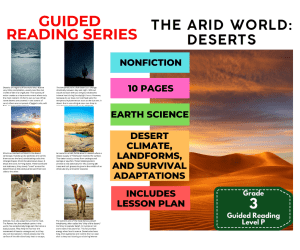
The Arid World - Deserts: Guided Reading Level P with Lesson Plan
ELA, Resources for Teachers, Reading Comprehension, Reading, Science, Language Development, Social Studies, Life Sciences, Geography, Earth and Environmental Sciences, Grade 2, 3, 4, Worksheets & Printables, Worksheets, Teacher Tools, Centers, Activities, Literacy Readers, Quizzes, Quizzes and Tests, Assessments, Lesson Plans
This The Arid World - Deserts (level p) guided reading book with lesson plan includes: Guided Reading Color Label (front cover x1) This is a quick way to match the book’s demands to what students can generally handle.. The overall goal is to use the level/color to pick books for several smaller groups. To qualify for a certain level, a student is expected to read a book from that level with about 90–94% accuracy. If a student is consistently accurate and understands, move up a level. If the student is struggling at that level, drop down and add more support. Each student will improve at completely different rates, but it is generally one of the best ways to check progress across the class. DOWNLOAD THE CATALOG TO VIEW ALL GUIDED READING BOOKS AVAILABLE (SORTED LEVELS A-Z) Pre-Reading Question (x1) Teacher asks the prompt aloud, can be while showing the cover or first page. Students share what they already know, or make educated guesses from the cover. Prompt them to use the target vocabulary. Write some of their responses on the board to look back at during the reading. Vocabulary Words (x5) Introduce the five words, best doing it one at a time. Start by saying it, while students repeat and then see if anyone knows what it means before reading further. Read through the meaning and try to briefly connect each word to a picture or gesture so it’s meaningful. Ask students to flip through the book pages and point to where they see each of the vocabulary words. While reading the book pause upon coming across one of the vocab words or read the sentence twice to make sure students understand the word has appeared. Optional: Ask students to raise hands whenever they see/hear one of the new words. Guided Reading Pages (x10) Check the book snapshot (below) for: primary topic - do you need to prep extra reading or intro materials on this? what is taught best - decide on 1-2 bullets to focus on, use the prompt or words provided here for best results. learning goals - what you are checking for students to be able to do after the session, elicit answers using prompts or words provided. key vocabulary (see section above). questions overview - so you know what is coming up and if you need to prep extra materials to assist understanding. Run the lesson You may have already looked at a few of the pages together, but you can show them some of the pictures again first to set meaning. Depending on how much time you have and how familiar your students are with guided reading class, you may want to read the book aloud first with the group first. Students whisper or partner read, while you listen in. If time, do it as a group, one student reading a page each. Use the guided page’s prompts to coach: “Check the picture / does it make sense?” “Point under the words / try the first sound” “Reread the sentence smoothly”. Try to focus more on one student per session (rotating every time), so you can work out if they are ready to move up or need to move down a level. Comprehension Questions (back cover x3) This is your way to check that students didn’t just say the words, but actually understood the text. First, let students answer by pointing to the page/picture and saying a short sentence. After any answer, follow with: “Show me where you found that in the text.” In bigger groups, have partners answer first (10–20 seconds), then call on 2–3 students to share. Differentiation tips: Emerging speakers/struggling readers: oral + pointing On-level: oral in a full sentence Higher: one written sentence or draw + label Book Snapshot Title: The Arid World: Deserts Genre: Nonfiction (informational) Subject: Earth Science Primary Topic: Desert climate, landforms, and survival adaptations Estimated Guided Reading Level (A–Z): P What This Book Teaches Best Defines deserts by very low precipitation and explains how scarce water shapes the environment. Explains extreme temperature changes in hot deserts from day to night and why they happen. Compares hot deserts and cold deserts , including why icy places can still be deserts. Shows how living things adapt to desert conditions , with examples from plants and animals (cactus, fennec fox, camel, sidewinder snake). Describes how wind shapes desert landforms , including how dunes form and move. Learning Goals Students can define a desert using the book’s description of precipitation and water scarcity. Students can explain why temperatures in a hot desert can drop quickly after sunset, based on the text. Students can describe how a cold desert can exist and name the example given in the book. Students can identify at least three desert adaptations and match them to the plant or animal described. Students can describe how wind forms dunes and what the text says dunes do over time. Students can explain what an oasis is and why it supports life in a desert. Key Vocabulary From the Text precipitation — water that falls from the sky, like rain. evaporation — when water turns to vapor and leaves. nocturnal — active at night and resting in daytime. oasis — a fertile desert area with freshwater reaching the surface. dunes — hills of sand formed when wind drops sand. Discussion Prompts Pre-reading question: What challenges do you think plants and animals face in a very dry place? Comprehension questions: How much rain do deserts usually get in a single year, according to the text? Comprehension questions: What does the book say helps the Saguaro cactus conserve water? Comprehension questions: What is an oasis, and where does its freshwater usually come from? Printing Tips 1. Best Printing Method (Recommended) “Booklet” Printing (Best if Available) If your printer or PDF viewer supports Booklet Printing , use this. Settings to use: Print mode: Booklet Paper size: Letter or A4 (either works) Orientation: Landscape Print on both sides: Yes Flip on: Short edge Scaling: Fit to printable area Booklet subset: First test: Front sides only Then: Back sides only This will automatically: Pair pages correctly Put the cover on the outside Align everything for folding After printing, fold in half and staple along the spine . 2. If “Booklet” Printing Is NOT Available You can still print this correctly with manual duplex printing . Step-by-step: Open the PDF. Choose Print . Set: Orientation: Landscape Pages per sheet: 1 Print on both sides: Yes Flip on: Short edge Print all pages . Because each PDF page already contains two facing book pages, the result will still fold cleanly into a book. Thousands of Cored Education products are included with your TeachSimple membership. Download links and encyclopedia index available here.
Author Cored Education
Rating
Tags Reading Comprehension, Reading Passages, Reading, Guided Reading, Guided Reading Lesson Plan, Guided Reading Activity, Pre-reading, Science Lesson Plans, Social Studies Lesson Plans, Earth Science

Pecan Pie Baby Read Aloud Book Companion Activities for IRA
ELA, Reading, Reading Comprehension, Literature, Grade 2, 3, 4, Read Alouds, Activities
Pecan Pie Baby Read Aloud Book Companion Activities for IRA This educational resource offers well-rounded enrichment opportunities supporting comprehension, literature study, and reading skill development in students of Grade 2 to Grade 4. It is based on the popular book 'Pecan Pie Baby' by Jacqueline Woodson (note: book not included) and comes with a diverse collection of 27 printable tasks. Character analysis, understanding story elements, theme identification, causality study among others. Able to compare viewpoints, make informed predictions and inferences based on textual evidence. Better proficiency in listening or reading made fun through a range of activities promoting higher-order thinking skills. Versatility in Usage - Adapts to Your Teaching Style Educators can use this resource as a whole group activity during classroom sessions or with smaller groups for targeted skill building. It is just as effective for independent homework assignments promoting self-guided exploration leading to better concept understanding. Creative Engagement & Personalized Learning Journey Your students get creative with child-friendly graphic organizers and story plotting techniques through cause-and-effect chains improving their summarizing capabilities. Fun vignettes challenge learners to sketch scenes from the story while personal writing endeavours encourage imagination thus fostering a passion for literacy over time. Nurturing Social Understanding Beyond literary prowess these activities also introduce relatability brought forth through comparative family studies helping your students understand societal norms better thereby broadening their perspective. Tailored For You at teachsimple.com (Creatively Gifted Storefront) All exercises are completely printable making them suitable for varied teaching environments, even homeschooling. Make your academic preparations effortless with these curriculum-aligned resources ensuring everyone benefits substantially from it.
Author Creatively Gifted
Tags Pecan Pie Baby, Read Aloud, Book Companion, Comprehension Activities, Literature Study

Boss's Day Word Search 2rd 3th 4th 5th Grade worksheet activity
Vocabulary, Language Development, ELA, Spelling, Business, Life Studies, Career, Grade 2, 3, 4, 5, Games, Activities, Word Searches, Worksheets, Worksheets & Printables
Commemorate Boss's Day in a fun detail with this printable word search worksheet! 🕵️♀️ Students will scan the word search and reinforce vocabulary words in context while practicing spelling and vocabulary words related to leadership, teamwork, and appreciation. A fun, upbeat and no-prep activity that promotes literacy while adding a festive moment to the classroom ✏️ 🎉 Objectives: - Practice vocabulary and spelling skills ✏️ - Reinforce ideas of leadership, responsibility, and teamwork 🤝 - Get students engaged in a seasonal activity that will be fun, while promoting student engagement - Easy-to-use, no prep worksheet for busy teachers! Order of Events / Steps: 1️⃣ Pass out the Boss's Day Word Search worksheet. 2️⃣ Students scan the word search and find circle the vocabulary words. 3️⃣ As a class, discuss and review the meanings of leadership and appreciation. 4️⃣ Review answers using the answer key they received in the worksheet. ✅ Grades or Ages: Great for Grades 2-5 🎓 Way of Implementation: Use as morning work, literacy centers, early finishers, substitute✅ There’s a super easy answer key just to jog your memory! Instructions/variations: Time challenge ⏳ - who can finish first? Partner puzzle 🤝 - teamwork mode Vocabulary extension ✏️ - use the words to write about a great leader or role model Creative writing 📝 - students write notes of "Thank You" using the words from the puzzle Standards: This activity capitalizes on CCSS/ELA vocabulary practice and social emotional learning about appreciation, respect, and communication. File types & pages: PDF download 🖨️ ink-friendly + color options 1 puzzle page + 1 complete answer key ✅ Teacher encouragement: Add a bit of fun and thankfulness to your lesson with this Boss's Day Word Search - all the fun of literacy, teamwork and just plain fun all in one! 💼🌟 enjoy it
Author Classsim
Rating
Tags Boss's , Day , Word Search , 2rd 3th 4th 5th Grade , Worksheet , Activity, Boss's Day Word Search , Boss's Day Word Search 2rd 3th 4th 5th Grade , Boss's Day Word Search 2rd 3th 4th 5th Grade Worksheet , Boss's Day Word Search 2rd 3th 4th 5th Grade Worksheet Activity

Hansel and Gretel | Digital Real Aloud Library
ELA, Reading, Kindergarten, Preschool, Grade 1, 2, Activities
Hansel and Gretel | Digital Read Aloud Library Our unique and immersive approach to familiarizing students with the classic tale of Hansel and Gretel sparks student engagement at an unprecedented level. Our interactive slide features 15 bookshelves filled with diverse renditions of this story. Each 'book' on the digital shelf takes learners to external YouTube links for a new version of Hansel and Gretel. This innovative resource will captivate preschoolers, kindergarteners, and first- or second-grade students during language arts lessons. In addition to reading sessions, this tool enhances listening comprehension skills with its digital read-aloud feature. Acknowledging Comprehension as Key in Language Arts Mastery We understand that comprehension is just as critical as reading. With this in mind, our product package includes a book synthesis handout for every story rendition. Students are thereby encouraged not merely to listen but also reflect on each story's elements such as: The progression of plotlines, The development of characters throughout different versions, Packaging: PowerPoint Presentation + PDF Resource The package contains 1 PowerPoint presentation along with 1 PDF (three pages), both designed for ease-of-use during classroom instruction or homework assignments. Versatile Implementation in Any Learning Environment Tailored Plans: This all-encompassing language arts exercise goes beyond being just another activity – it promotes reading, listening, and analytic proficiency.
Author Good Human Project
Tags Interactive, Engagement, Listening Comprehension, Diverse Renditions, Language Arts

Bugs for Lunch Read Aloud Book Companion
ELA, Reading, Reading Comprehension, Literature, Science, Life Sciences, Insects, Grade 2, 3, 4, Read Alouds, Activities
This picture book companion is a complete supplemental resource for the book Bugs for Lunch by Margery Facklam. It includes 15 print-and-go reading activities to choose from, making this resource ideal for customizing learning to your student's specific needs and academic abilities. Students will investigate various bugs and insects, conduct research to learn more about people all over the world who eat bugs, compare & contrast, make inferences and connections, learn and apply new vocabulary, answer questions that require them to think beyond the text, and much more! Students will be captivated by the stimulating activities, while educators will value the saved effort in searching for premium resources to tackle complex reading concepts. The activities on offer aim to promote advanced cognitive skills, urge students to cite textual justifications for their conclusions, and motivate them to articulate their personal opinions and views. ⭐️This Resource Includes:⭐️ ◾ Bug Lunch Match-Up: Students cut out the insects and glue them in the box next to who might eat them for lunch (ANSWER KEY INCLUDED). ◾ Who Am I?: Students will match the insects and animals in the word bank to the descriptions below. Then, for each one, draw and color a picture (ANSWER KEY INCLUDED). ◾ Words That Rhyme: Students read the word pairs and come up with other words that rhyme. ◾ Word Scramble: Students use the details from the book to unscramble the words (ANSWER KEY INCLUDED). ◾ 3-2-1: Students will describe three ways that the animals or insects in the book catch their lunch, explain two things they learned, and name one animal or insect they want to learn about and explain why. ◾ Write & Illustrate a Poem: Students choose an animal or insect not featured in the book and write a four-line poem about it. Then they create an illustration to go with their poem. ◾ Crossword Puzzle: Students use the clues and the word bank to fill in the crossword puzzle (ANSWER KEY INCLUDED). ◾ Word Search Puzzle: Students use the clues to fill in the puzzle. Words can go across or down. Letters are shared when the words intersect (ANSWER KEY INCLUDED). ◾ Bug-tastic Recipe: Students create a bug-based recipe. They will list the ingredients, write step-by-step cooking instructions, and draw a picture of your bug-inspired dish. ◾ Crawly Café Menu: Students create a bug-based menu for breakfast, lunch, or dinner. ◾ Book Review: Students will rate and review the book. ◾ Buggy Bites Around the World: Students will scan the QR code to learn more about people all over the world who eat bugs. Then, in the boxes on the map below, they will describe what bugs are eaten in each country. ◾ Critter Research (3 versions are included): Students roll a die to see which insect or animal they will research to learn more about. Then, they conduct research using teacher-approved websites and informational texts to look for information to answer the provided questions. This resource is for extension read-aloud activities only. The book is not included. ⭐️You may also like: ⭐ TEXT SET #1: "The Importance of Friendship" ◾ A Weekend With Wendell Read Aloud Book Companion Activities for IRA ◾ First Come the Zebra Read Aloud Book Companion Activities for IRA ◾ This is Our House Read Aloud Book Companion Activities for IRA ◾ Horace and Morris But Mostly Dolores Read Aloud Book Companion Activities for IRA ◾ The Old Woman Who Named Things Read Aloud Book Companion Activities for IRA TEXT SET #3: "Finding Your Way in a New Place" ◾ Grandfather Counts Read Aloud Book Companion Activities for IRA ◾ The Have a Good Day Cafe, Read Aloud Book Companion Activities for IRA ◾ Roses for Gita Read Aloud Book Companion Activities for IRA ◾ Mango, Abuela, and Me, Read Aloud Book Companion Activities for IRA ◾ Home at Last Read Aloud Book Companion Activities for IRA TEXT SET #7: "Exploring Narrative Nonfiction" ◾ Cactus Hotel Read Aloud Book Companion Activities for IRA ◾ A Log's Life Read Aloud Book Companion Activities for IRA ◾ Salmon Stream Read Aloud Book Companion Activities for IRA ◾ Think of an Eel Read Aloud Book Companion Activities for IRA ✨Be sure to check out my storefront here: https://teachsimple.com/contributor/creatively-gifted
Author Creatively Gifted
Tags IRA, Picture Book Activities, Read Aloud Lessons, Interactive Read Aloud Activities, Elementary Reading, Reading Comprehension, Fountas And Pinnell IRA, Family, Second Grade, Memory Stories
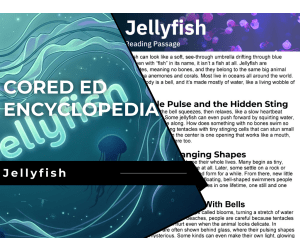
Jellyfish Reading Comprehension Passage - Cored Ed Encyclopedia
ELA, Language Development, Resources for Teachers, Reading Comprehension, Reading, Pre-Reading, Writing, Science, Animals, Life Sciences, Grade 2, 3, 4, 5, Worksheets & Printables, Worksheets, Teacher Tools, Centers, Activities, Writing Prompts, Assessments, Tests, Quizzes and Tests, Quizzes
This jellyfish reading comprehension contains the following: Visualize on the Cover Start your lesson by taking a few moments to visualize the topic and share thoughts or feelings about it. Pre-Reading Trivia Students will write down one thing they already know about the subject and then read five more facts and discuss. These facts are fun, and the students will enjoy learning about the subject before reading more. Reading Passage The text is a high-interest reading passage with set paragraphs, roughly three to four paragraphs long. It contains a variety of themes about the topic, anywhere from history to technology. The passage is between 250 and 350 words in length. Mixed Questions The first question page contains four multiple-choice questions, each with a choice of four answers, and three written response questions that require a sentence or two from the student. Vocabulary Questions Practice seven key words from the text in this section across two activities. First section is scrambled words where students will unscramble three words given a clue for each. The second section is a word to meaning matching activity. Creative Writing In this question, the student will be required to write a five to eight sentence paragraph on a question related to the topic. Extension Activities This page is optional for fast finishers or to take home. There are several activities, each one requiring a different skill. Do some, do none, do all, completely optional - but you will feel reassured knowing every possibility is planned for. Answer Key There are answers for the multiple-choice questions, written response questions have sample answers, vocabulary answers and if there is a summary question then a sample summary will be provided as well. FULL CATALOG OF DOWNLOAD LINKS AND ENCYCLOPEDIA INDEX HERE Lesson Snapshot Title: Jellyfish Genre: Nonfiction (Informational Text) Subject: Life Science / Reading (Informational Text) Primary Topic: Jellyfish bodies, movement, stings, and life changes Estimated Guided Reading Level (A–Z): N What This Lesson Teaches Best Identifies what jellyfish are (not fish) and describes their watery, bell-shaped bodies. Explains how jellyfish move by squeezing and relaxing their bell, and sometimes squirting water. Describes how tentacles help jellyfish catch prey using tiny stinging cells. Introduces how jellyfish change forms across their lives (drifting young, attached form, then floating swimmers). Uses headings to organize science information and includes follow-up questions/activities tied to the passage. Learning Goals Describe what a jellyfish can look like and what its main body part is called. Explain why a jellyfish is not a fish, using details from the text. Explain how a jellyfish moves through water. Describe what tentacles do and why people should be careful near jellyfish. Describe one way jellyfish change during their lives. Key Vocabulary From the Text invertebrates — animals without bones. tentacles — long parts that can sting and catch prey. plankton — very small sea life that animals can eat. bell — the main body part shaped like an umbrella. blooms — groups of jellyfish gathered together. Cored Ed Encyclopedia Overview The Cored Ed Encyclopedia is a weekly series of lessons that you can pick up and use right away. These short readings fit into whatever time you have available. Each one includes a warm-up, a reading, and a set of questions, but it’s flexible — you can do just the reading, the full lesson, or skip the writing section if you need to. Each lesson focuses on a single topic so students don’t get lost. The writing is clear but never childish, making it perfect for grades two through five. Topics range from animals and science to history, inventions, and everyday things. No matter the level of the student, everyone should take away at least one new idea or fact from each lesson. The materials are easy to print, easy to explain, and require no setup. They work well for whole-class teaching, partner work, or independent study.
Author Cored Education
Rating
Tags Vocabulary, Spelling, Reading Comprehension, Reading Passages, Reading, Creative Writing, Reading Strategies, Writing Prompts, Jellyfish, Life Science
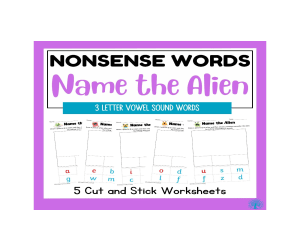
3 Letter Nonsense Words Name the Alien
ELA, Language Development, Phonics, Reading, Preschool, Grade 1, Activities
Learning to decode new words is an essential reading skill, and these Nonsense Words worksheets make mastering vowel sounds fun! This pack contains 6 alien-themed worksheets focused on creating and sounding out nonsense words to build phonics skills. Each page contains a blank box for children to design, draw and color their own alien. They then have a collection of sounds at the bottom to cut out and create a nonsense name for their alien that includes a specific vowel sound that will go in the middle of the silly alien name. Students will practice isolating and pronouncing the target sounds as they figure out how to read the funny names. With fun graphics and engaging activities, these Nonsense Word worksheets provide enjoyable phonics practice. Children will get repeated exposure to the basic short vowel sounds that pop up frequently in English words. The alien theme adds an element of entertainment to help hold kids' interest as they tackle each new sound challenge. Educators looking for a supplemental resource to help students master short vowel sounds will love this pack. It provides focused practice to cement knowledge of these fundamental phonics skills in a refreshing way! The eye catching clipart is courtesy of Kari Bolt Clipart
Author SEN Resource Source
Tags Word Blending, Decoding Practice, Early Reading Skills, Reading Fluency , Phonological Awareness, Short Vowel Sounds, Nonsense Words, Alien Words, Phonic, Reading
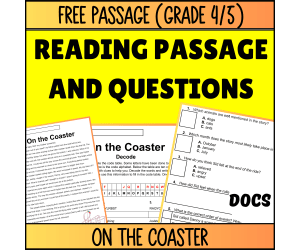
Reading Comprehension Fiction Set 2 Sample: On the Coaster (Docs)
ELA, Reading, Common Core, Reading Comprehension, Spelling, Language Development, ESL, Children’s Literature, Literature, Writing, Grade 4, 5, Worksheets & Printables, Worksheets, Writing Prompts, Assessments, Teacher Tools, Tests, Quizzes and Tests, Centers, Activities
Reading Comprehension Passages Fiction Set 2 Sample Overview No prep reading comprehension lessons, with enjoyable stories and topics. Each lesson has a blend of post-reading activities. Mixed questions to check overall understanding. Vocabulary activities, plus a writing section. Lessons also contain a bonus extension exercise at the end. Some you may like, some you may not, either way they are there if you wish to use them. Full answer keys are provided. Passage Included 7.On the Coaster: Sid talks about his experience on a roller coaster. Docs Version This is the Docs editable and fillable version. This download is available in GOOGLE Docs, GOOGLE Forms, GOOGLE Slides. PDF, PPT, WORD. FULL CATALOG OF DOWNLOAD LINKS HERE Grade 4/5 Links Fiction Set 1 - Animals Google Docs Google Forms Google Slides PDF PPT Word Guided Reading Materials Fiction Set 2 - Family Google Docs Google Forms Google Slides PDF PPT Word Guided Reading Materials Fiction Set 3 - Friends Google Docs Google Forms Google Slides PDF PPT Word Guided Reading Materials Fiction Set 4 - School Google Docs Google Forms Google Slides PDF PPT Word Guided Reading Materials Fiction Set 5 - Sports Google Docs Google Forms Google Slides PDF PPT Word Guided Reading Materials Nonfiction Set 1 - Birds Google Docs Google Forms Google Slides PDF PPT Word Guided Reading Materials Nonfiction Set 2 - Insects Google Docs Google Forms Google Slides PDF PPT Word Guided Reading Materials Nonfiction Set 3 - Mammals Google Docs Google Forms Google Slides PDF PPT Word Guided Reading Materials Nonfiction Set 4 - Nature Google Docs Google Forms Google Slides PDF PPT Word Guided Reading Materials Nonfiction Set 5 - Sea Animals Google Docs Google Forms Google Slides PDF PPT Word Guided Reading Materials Reading Passages Overview Each passage is especially written for Grade 4-5 students, including key vocabulary required for this age group. Topics are varied and are accompanied by colorful graphics. Topics are meant to educate, yet entertain the modern student. These passages are perfect for the modern classroom. Whereas textbooks can become outdated in no time, any changes to technology or the world will result in updates to this product. Mixed Questions The mixed questions section of each lesson includes a variation of five comprehension, vocabulary and math questions. In addition, key reading strategies are frequently covered including cause & effect, summarizing, compare & contrast and making conclusions. Two or three of the questions will be MCQs and other questions will require a written response of some kind. Full answers and example responses appear at the end of the lesson. Spelling & Vocab Each reading passage contains a variety of words and phrases designed for Grade 4-5 students. Spelling and vocab activities provide the opportunity to build fluency with these words. As it can become quite mundane doing the same activities over and over, each lesson in a set will contain a different spelling and vocab activity . Activities include: spelling games, sentence match-ups, mixed-up text and decoding words from the lesson. Writing Prompts Writing prompts are designed to continue the theme or lessons learned in the story. Students are persuaded to write in a variety of ways and each prompt includes several cues to help. As with the spelling/vocab section, writing prompts will vary. This includes research pieces, reading responses, poetry and creative writing prompts. Full Answer Keys Full answer keys and sample responses are provided so no matter how busy you are, you know you're covered! Mixed question answers provide evidence from the text, math questions contain the relevant workings. Answers are designed for use by the teacher, but also suitable as a handout to the student. Just for Fun Each lesson will have a bonus extension exercise. This is something fun to extend the lesson with. You can find these at the end of each lesson, titled Just for Fun. Just for Funs are optional. Some you may like, some you may not. Either way, they are there to do with as you wish. For similar downloads and other frees, do check out Cored Group on TeachSimple.
Author Cored Education
Tags Elementary, Reading, Comprehension, Vocabulary, Answers, Ccss, Common Core, Spelling, Writing, Digital Centers
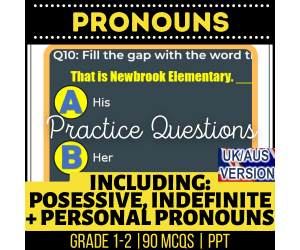
UK/Aus Spelling Pronouns Practice Questions - Year 2-3 (PPT)
ELA, Language Development, ESL, Grammar, Common Core, Resources for Teachers, Grade 1, 2, Teacher Tools, Presentations, Tests, Quizzes and Tests, Assessments, Activities
THIS IS THE UK/AUS ENGLISH SPELLING VERSION. CHECK THE CATALOG FOR THE ORIGINAL AMERICAN ENGLISH VERSION. Pronouns Grammar Practice MCQS: 6 lessons, 90 MCQS, 210 slides ELA MCQS Overview: In this series of lessons, students will embark on an engaging journey to explore the grammar skills that make our language vibrant and expressive. These lessons are crafted to help students identify, comprehend, and effectively apply language arts skills in both writing and speech. This UK/Aus English version is especially useful for schools, teachers, and families working with British-based spelling and language conventions. It is a helpful option for classrooms using UK curriculum expectations, international programmes influenced by British English, or any setting where learners need to practise the correct capitalisation and punctuation forms for that version of English. Pronouns Overview: Includes: Personal Pronouns Possessive Pronouns Indefinite Pronouns Additional Practice PPT Version This is the PPT editable and interactive version. There is a fillable answer sheet at the end. This download is available in GOOGLE Docs, GOOGLE Forms, GOOGLE Slides. PDF, PPT, WORD, check the links below for more details. FULL CATALOG OF DOWNLOAD LINKS HERE ELA Review Questions Overview Each review test includes three answer choices for every question, which helps keep things simple and manageable for students. The layout is clear and easy to follow, so students can focus on the questions instead of figuring out what to do. A few pictures are included on each test to make the pages feel a little more inviting and less overwhelming. A review sheet is also included, giving students a chance to go back over many of the main skills covered in the resource. Introduction or Example Sheet Each topic comes with an introduction or example sheet to look at before students begin. This gives students a clear starting point and helps them feel more prepared. It also lets them see what to expect before moving into the main work. For many students, it is a helpful way to quickly refresh the key ideas before they start practicing on their own. Full Answer Keys Full answer keys are included to make marking and checking work faster and easier. Sample responses are also provided where needed, especially for open-ended tasks. This can be a real time-saver on busy days and makes the resource more practical to use. Everything is there to help make planning, teaching, and checking student work feel a little more straightforward. For similar downloads and other frees, do check out Cored Group on TeachSimple.
Author Cored Education
Rating
Tags Elementary, Reading, Comprehension, Vocabulary, Answers, Ccss, Common Core, Spelling, Writing, Passages
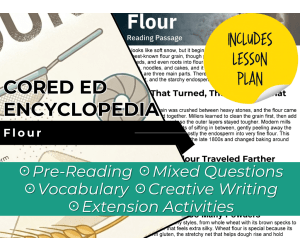
Flour Reading Comprehension Passage - Cored Ed Encyclopedia
ELA, Reading Comprehension, Reading, Science, Technology, Language Development, Social Studies, History, Pre-Reading, Life Sciences, Grade 2, 3, 4, 5, Worksheets & Printables, Worksheets, Teacher Tools, Centers, Activities, Writing Prompts, Assessments, Quizzes and Tests, Quizzes, Lesson Plans
This flour reading comprehension with lesson plan includes: Visualization (on the front cover) Start your lesson by taking a minute to think and share something about the topic. Read the script aloud (slowly), perhaps prepare some music or sound effects. Student close their eyes and let their imaginations wander. Students open their eyes, read the question aloud and give them a few minutes to complete. Ask a few students to share or keep answers until the end to compare with what they learn in the passage. Quick pause—thousands of Cored Education products are included with your TeachSimple membership. Download links and encyclopedia index available here. Pre-Reading Trivia Students will write down one thing they already know about the subject and then read five more facts and discuss. These facts are fun, and the students will enjoy learning about the subject before reading more. Give 1 minute for students to write what they already know (no pressure—best guess is fine). Read the five facts together. After each fact, do ask a student for their opinion, was it surprising? Set a purpose by asking students to highlight/underline one fact they want to learn more about during the reading. Reading Passage The text is a high-interest reading passage with set paragraphs, roughly three to four paragraphs long. It contains a variety of themes about the topic, anywhere from history to technology. The passage is between 250 and 350 words in length. First, ask students to look at the headings and see what they’ll learn about today. What do they know about the topic/heading? First read options: Teacher read-aloud (best for support). Partner reading (paragraph by paragraph). While reading, students underline important details, and vocabulary words they think may come up in the questions section. Mixed Questions The first question page contains four multiple-choice questions, each with a choice of four answers, and three written response questions that require a sentence or two from the student. Students complete the mcqs first independently, then review quickly as a class. For the 3 written responses, try to get students giving the answer with some form of evidence: “I think ___ because the text says ___.” If students get stuck, send them back to check the passage. Vocabulary Questions Practice seven key words from the text in this section across two activities. First section is scrambled words where students will unscramble three words given a clue for each. The second section is a word to meaning matching activity. Before starting, have some students read out words they underlined in the passage. Ask students to say the word and read aloud the sentence(s) around each word. Ask students to do scrambled words and the matching exercise in pairs then go through answers as a class. For the scrambled spelling task, get four pairs to come up to the board and write the words for extra practice with the other student reading out the clue. For the matching task, prompt students to give full sentences: “I matched ___ with ___ because ___.” Creative Writing In this question, the student will be required to write a five to eight sentence paragraph on a question related to the topic. Before starting, ask students write down 3 key ideas they are going to include in their piece. Ask students for ideas to share around the class to help those struggling. Pro writing expectations: 5–8 sentences At least 2 facts or details from the passage At least 2 vocabulary words from the previous page Students read their paragraphs while classmates listen for facts and vocabulary words. Extension Activities This page is optional for fast finishers or to take home. There are several activities, each one requiring a different skill. Do some, do none, do all, completely optional - but you will feel reassured knowing every possibility is planned for. Includes summary writting question and additional facts. Answer Key There are answers for the multiple-choice questions, written response questions have sample answers, vocabulary answers and if there is a summary question then a sample summary will be provided as well. Lesson Plan Included Customized lesson plan for this lesson is included. Lesson Snapshot Title: Flour Genre: Nonfiction (Informational Text) Subject: Science (Food Science) / Reading (Informational Text) Primary Topic: How flour is made from seeds and grains Estimated Guided Reading Level (A–Z): P What This Lesson Teaches Best Explains what flour is made from: flour begins as a seed , and people grind grains (and other plants) into powder used for many foods. Teaches the three main parts inside a grain seed — bran , germ , and endosperm —and what each part is like. Describes how milling changed over time, from heavy stones to steel rollers and lots of sifting to make very fine flour. Builds understanding of why white flour became popular (it kept longer) and what “enriched” flour means in this text. Connects ingredient science to baking by explaining how wheat proteins can form gluten , helping dough rise and hold bubbles of air. Learning Goals Students will explain how flour begins as a seed and becomes powder through grinding. Students will identify the three main parts of a grain seed: bran, germ, and endosperm. Students will describe how modern mills use rollers and sifting to make fine flour. Students will explain why white flour kept longer, based on what the text says about oils. Students will describe what “enriched” flour means in the passage and why it mattered. Students will explain how gluten helps dough rise and hold bubbles of air. Key Vocabulary From the Text bran — the outer part of a grain seed. germ — the tiny part that could sprout. endosperm — the starchy part that feeds the seed. enriched — flour with certain vitamins and iron added back. gluten — stretchy net that helps dough rise and hold air. FULL CATALOG OF DOWNLOAD LINKS AND ENCYCLOPEDIA INDEX HERE
Author Cored Education
Rating
Tags Vocabulary, Reading Comprehension, Reading Passages, Lesson Plans, Ela Lesson Plans, Reading Comprehension Lesson Plans, Pre-reading, Science Lesson Plans, History, Technology

FREE ANCHOR CHART OF READING | THE ELEPHANT
Reading, ELA, Writing, Adult Education, Early Learning, Elementary, High School, Homeschool Resources, Middle School, Not Grade Specific, Activities, Worksheets & Printables
FREE ANCHOR CHART OF READING | THE ELEPHANT INTRODUCTION: THANK YOU FOR BEING PART OF EDITORIAL ARENAS EDUCATIVAS We are an educational corporation that is dedicated to the development of fabulous resources for mathematics, literacy, as well as resources for teaching Spanish and brain exercises. MAIN INFORMATION: 1. Why should teachers use educational material in the classroom? As is known, educational material helps students build their knowledge autonomously and, above all, in an unforgettable way. 2. What is the name of this document? This document is titled "Educational material for children" 3. What topic will be addressed in this resource? This document will address an educational topic that every child should learn in a basic way. 4. For what ages is it recommended? This set of educational sheets is recommended for children in general who are in the learning age and these sheets will be of great help to them. 5. Who is the author of this document? The author, who was in charge of producing and compiling this educational material, is EDITORIAL ARENAS EDUCATIVAS. 6. In what area of knowledge can it be applied? You can apply this set of educational sheets according to your criteria, in the corresponding area. COMPLEMENTARY INFORMATION: 7. In what version is it available? This document is available in PDF version, A4 size, because we consider that this size is the original and most common standard. 8. Editable/Non-Editable: This educational document and/or set of educational sheets is not editable, because this way you will be able to use it much more easily. 9. Age at which it can be applied: This educational resource can be applied to children of all ages, that is, students from 3 to 12 years old, who must acquire some basic knowledge that thanks to this document they will be able to address. 10. Tags or keywords that describe the content: didactic material, teaching sheets, material for children, printable educational material, printable material. 11. Ways to print: I suggest you print this document in A4 format, and check if your printer has enough ink for the printout to be of quality and so that your students can complete their worksheet without any problem.
Author EDITORIAL LAURA EDUCA
Tags FREE ANCHOR CHART OF READING, FREE, FREE RESOURCES, ANCHOR, ANCHOR CHART, READING, COMPREHENSION
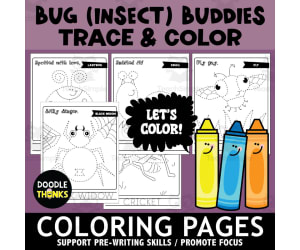
Bugs & Insects Tracing & Coloring Pages | Kinder through 3rd Activity
Creative Arts, Art, ELA, Fine Arts, Writing, Handwriting, Holiday & Seasonal, Seasons, Spring, Kindergarten, Preschool, Grade 1, Coloring Pages, Worksheets, Worksheets & Printables, Activities, Centers
Bugs and Insects Coloring Pages | Fine Motor Art Activities for K-3rd Introduce your students to the these fun tracing and coloring pages of adorable insects. This coloring resource offers a fun and effective way to enhance fine motor skills, color recognition, and pre-writing abilities all while celebrating the uniqueness of the bugs and insects. Save precious planning time and treat your students to an engaging learning experience. What are some benefits of coloring? Coloring is fun for all ages and it helps with relaxation and promoting a sense of calm. Coloring is such a great way to calm students, promote hand-eye coordination, help with hand strength and practice pencil grip, help recognize colors and shapes, encourage patience and focus, increase creative confidence, and promote creativity and imagination. What are some benefits of tracing? Tracing helps to develop fine motor skills such as improving handwriting and practicing pencil grip. What are some other ways to use this easy, no-prep resource? They are great for early finishers, bell ringers, morning time, individual art time, brain breaks, sub days, art bins, art centers , and homeschool. Included in this download: 15 Coloring and Tracing Pages Contents Page For Personal and Educational Use Only Images to trace and color: snail ladybug cricket fly black widow moth grasshopper firefly mosquito bee roach millipede cicada beetle butterfly Check out more coloring pages: Exotics Fruits Coloring Pages Flower Pattern Coloring Page Roll and Color A Quirky Sheep Roll and Color A Sweet Pig Roll and Color A Resting Chicken I hope your learners have a great time coloring and tracing! Thanks for visiting Doodle Thinks resources at Teach Simple!
Author Doodle Thinks
Rating
Tags Coloring Pages, Coloring, Tracing, Handwriting, Fine Motor Skills, Pre-writing Skills, Art Activity Printable, Bugs Coloring Pages, Insects Coloring Pages, Color Recognition
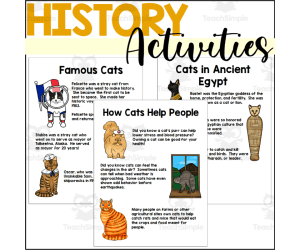
Cats in History and Other Famous Cats
Reading, ELA, History, Social Studies, Grade 1, 2, Read Alouds, Activities
Students will have fun reading about the history of cats in other countries and about other famous cats with these short reading passages. Each passage focuses on the unique history that cats played in certain cultures around the world and how cats are still useful to us today. These passages can help students see and learn about cats in a way they haven't explored before. What is Included There is one reading passage that focuses on the history of cats in Japan. There is one reading passage that focuses on the history of cats in Egypt. There is one reading passage that focuses on a few famous cats, including the first cat in space as well as a cat who survived three shipwrecks! There is one reading passage that shows how cats are useful to us today. Each reading passage is a short, simple read on the basic history of cats in Japan and Egypt. Each famous cat has a two or three sentence passage explaining why they were famous. Each passage is accompanied by colorful, drawings to illustrate each part of the passage. When to Use Read aloud - The teacher can read these passages full of fun cat facts to their students. Independent Reading - Older students can read these passages on their own to learn more about cats and how they affected and still affect cultures around the world. For Fun - Students can read these passages for fun to learn all of the interesting facts about cats. These reading passages are print and go. Just print and use them how you want, whether students read on their own or you read to them. These reading pages can be laminated for durability and placed in a reading center or other location where students can freely choose items to read on their own.
Author The Connett Connection
Tags Cats In History, Famous Cats, Reading Passages, Cats In Egypt, Cats In Japan
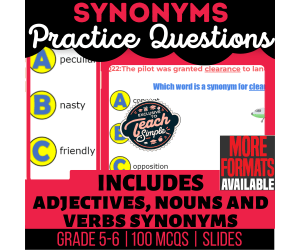
Synonyms Practice Questions - Vocabulary Grade 5-6 (Slides)
ELA, Language Development, ESL, Common Core, Resources for Teachers, Vocabulary, Grade 5, 6, 7, Quizzes and Tests, Teacher Tools, Tests, Assessments, Activities
Synonyms Grammar Practice MCQS ELA MCQS Overview: In this series of lessons, students will embark on an engaging journey to master the language arts skills that make communication effective and expressive. These lessons are designed to help students recognize, understand, and apply key grammar, vocabulary, and writing conventions in both their writing and speech. Each lesson builds upon the previous one, providing a structured blend of direct instruction, interactive group activities, and independent practice. With engaging tasks and thought-provoking questions, students will explore sentence structure, word choice, punctuation, and grammar rules to strengthen their understanding of English language conventions. Accompanied by free supplementary materials covering all topics, this series ensures a well-rounded and enjoyable learning experience. Through practice and exploration, students will develop the skills needed to analyze language, construct clear sentences, and express themselves with confidence. Synonyms Overview: Nouns Synonyms Verbs Synonyms Adjectives Synonyms Synonyms in a Sentence Slides Version This is the Slides editable and interactive version. There is a fillable answer sheet at the end. This download is available in GOOGLE Docs, GOOGLE Forms, GOOGLE Slides. PDF, PPT, WORD, check the links below for more details. FULL CATALOG OF DOWNLOAD LINKS HERE Grade 5/6 Links: Capitalization & Punctuation Google Docs Google Forms Google Slides PDF PPT Word Free Supplementary Materials Pack Adjectives Google Docs Google Forms Google Slides PDF PPT Word Free Supplementary Materials Pack Nouns Google Docs Google Forms Google Slides PDF PPT Word Free Supplementary Materials Pack Pronouns Google Docs Google Forms Google Slides PDF PPT Word Free Supplementary Materials Pack Verbs Google Docs Google Forms Google Slides PDF PPT Word Free Supplementary Materials Pack Prefixes & Suffixes Google Docs Google Forms Google Slides PDF PPT Word Free Supplementary Materials Pack Sentence Structure Google Docs Google Forms Google Slides PDF PPT Word Free Supplementary Materials Pack Subject Verb Agreement Google Docs Google Forms Google Slides PDF PPT Word Free Supplementary Materials Pack Tenses Google Docs Google Forms Google Slides PDF PPT Word Free Supplementary Materials Pack Context Clues Google Docs Google Forms Google Slides PDF PPT Word Free Supplementary Materials Pack Defining Words Google Docs Google Forms Google Slides PDF PPT Word Free Supplementary Materials Pack Fill in the Blanks Google Docs Google Forms Google Slides PDF PPT Word Free Supplementary Materials Pack Homophones Google Docs Google Forms Google Slides PDF PPT Word Free Supplementary Materials Pack Synonyms Google Docs Google Forms Google Slides PDF PPT Word Free Supplementary Materials Pack ELA Review Questions Overview Questions have three answer choices. There are a handful of pictures on each test for aesthetic purposes, as well as a review sheet covering most of the topics covered in the product. Introduction or Example Sheet Each topic will include an introduction or example sheet to go through first with your students. Full Answer Keys Full answer keys and sample responses are provided so no matter how busy you are, you know you're covered! In the Supplementary Pack Interactive Ice Breakers: Engaging warm-up activities that introduce students to key ELA concepts, such as quick capitalization corrections and punctuation challenges. Guided Practice: Structured teacher-led exercises that reinforce grammar and punctuation rules, helping students identify and apply them correctly in sentences. Group and Partner Tasks: Collaborative activities where students work together to edit sentences, correct capitalization, and improve punctuation through peer discussion and teamwork. Independent Worksheets: Carefully designed worksheets that provide focused practice, allowing students to apply learned concepts and refine their skills independently. Exit Tasks: Quick assessments at the end of each lesson, prompting students to reflect on what they’ve learned and apply their knowledge in writing and editing tasks. For More Like This For similar downloads and other frees, do check out Cored Group on TeachSimple.
Author Cored Education
Tags Elementary, Answers, Ccss, Common Core, Tests, Test Prep, Assessment, Grade 5, Grade 6, Vocabulary

Big Song (MP3)
ELA, Reading, Preschool, Kindergarten, Grade 1, Songs, Activities
This resource is a great way for students to learn the sight word BIG. The song is catchy and easy to follow. This would be a great resource for any teacher looking to help their students learn this sight word.
Author Have Fun Teaching
Tags Counting
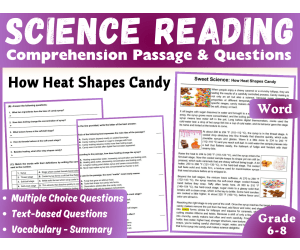
Science Reading Comprehension Passage: Making Candy (Word)
Science, ELA, Reading, Reading Comprehension, Strategies, Resources for Teachers, Chemistry, Grade 6, 7, 8, 9, Writing Prompts, Worksheets & Printables, Centers, Activities, Teacher Tools, Assessments, Quizzes and Tests, Quizzes, Tests
Science Reading Comprehension Passage and Questions: Making Candy (Word) This very engaging science reading passage is about how heat changes sugar syrup into different kinds of candy . It explains that candy making depends on temperature, water loss, and sugar concentration . As sugar syrup boils, water evaporates, the syrup becomes more concentrated, and different temperature ranges create different textures, such as thread, soft-ball, firm-ball, hard-ball, soft-crack, and hard-crack stages. It also explains how candy makers use molds, pulling, stretching, or cutting to shape the candy after heating. This passage is designed to bridge the gap between science and literacy through strengthening reading comprehension and sparking scientific curiosity in middle school students. The passage blends English Language Arts skills with accurate science content that supports NGSS classroom practice. Ideal for interdisciplinary learning in ELA and Science. Suitable for Grade 9 review, too! Student Tasks for The Passage: 5 multiple-choice questions targeting main idea, key details, inference, vocabulary in context, and use of evidence 5 vocabulary matching items with clear, student-friendly definitions 5 text-based questions that require citing specific lines or facts 1 summary prompt that asks students to condense central ideas accurately Full answer key for every section Available Formats for this Resource PDF Fillable PDF Google Docs FULL CATALOG OF DOWNLOADING LINKS HERE Product Details Length: 4 pages total Grades: 6–8, also suitable for Grade 9 review Use cases: close reading, stations, homework, intervention, test prep, and sub plans Standards support: reinforces informational-text skills and supports NGSS-style sense making through observation, modeling, and clear use of claim, evidence, and reasoning Why Teachers Choose This Set Authentic science content paired with rigorous literacy practice Consistent task structure across all passages for easier planning and smoother student routines Clear, age-appropriate writing that builds confidence without oversimplifying Other Science Reading Collections you May find in the store: 1. Astronomy & Space Science 2. Volcanoes, Rocks, & Mountains 3. Rock Cycle, Soil, & Sinkholes 4. Mars, Glaciers, & Antarctica 5. Water Cycle, Acid Rain, & Wastewater 6. Insects, Animals, & Ecosystems 7. Bioluminescence & Insects 8. Animal Skin, Cats, & T. Rex 9. Human Body and Senses 10. Health & Applied Bioscience 11. Waves, Light, & Imaging 12. Electricity & Energy 13. Motion & Materials 14. Chemistry and Materials Science Use this set to reinforce ELA skills in science, to add literacy to your lessons, and to support independent work. The passages strengthen main idea, evidence use, vocabulary in context, inference, cause and effect, and summary writing. With ready-to-use assessments and complete answer keys, you can provide focused practice that is simple to run and fast to review.
Author Middle & High School - CORED Education
Rating
Tags Middle School, Reading Comprehension, Reading Strategies, ELA, Centers, Reading Passage, Assessments, Vocabulary, Making Candy
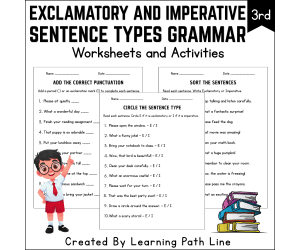
3rd Grade Exclamatory and Imperative Sentences Worksheets
ELA, Grade 1, 2, 3, 4, 5, Activities
Make sentence types easy and engaging with these 3rd Grade Exclamatory and Imperative Sentences Worksheets ! This no-prep grammar resource gives students focused practice identifying, comparing, punctuating, and writing exclamatory and imperative sentences . Designed for 3rd grade ELA and grammar practice , this resource includes 12 printable activity worksheets , with 11 practice examples on each worksheet . The activities gradually move from identifying sentence types to applying punctuation and writing original sentences. Skills Covered Identifying exclamatory sentences Identifying imperative sentences Commands and requests Sentences that express strong feelings Periods and exclamation marks Correct sentence punctuation Classifying sentence types Completing sentences Correcting punctuation Rewriting sentences Writing original sentences Activities Included Students will practice sorting and identifying sentences, choosing the correct punctuation, finding imperative and exclamatory sentences, completing sentences, fixing punctuation mistakes, rewriting sentences, and creating their own examples. Perfect For Use these worksheets for: Grammar lessons Morning work Literacy centers Independent practice Small groups Homework Review Early finishers Assessment practice Substitute teacher plans Grade Level Recommended for 3rd Grade and useful for 2nd–4th grade review or differentiation . Easy to Use Simply print the worksheets and use them with your grammar lessons. The variety of activities gives students repeated practice without every page feeling the same. Included: 12 printable grammar worksheets Focus: Exclamatory & Imperative Sentences Subject: English Language Arts / Grammar / Writing Format: Printable PDF / No Prep Help your students build confidence with sentence types, grammar, and punctuation through clear and meaningful practice!
Author Learning Path Line
Rating
Tags 3rd Grade Grammar, Exclamatory Sentences, Imperative Sentences, Sentence Types, Types Of Sentences, 3rd Grade ELA, Grammar Worksheets, Sentence Worksheets, Punctuation Worksheets, Exclamation Sentences, Command Sentences, Third Grade Grammar, ELA Worksheets, Grammar Activities, Sentence Type Practice, Imperative Worksheet, Exclamatory Worksheet, Printable Grammar, No Prep Grammar, Elementary Grammar