



3,890 products added recently
Page 91 - ELA Activities
Explore a variety of ELA activities designed to enrich your students' learning experience. From reading comprehension exercises to creative writing prompts, these resources support the development of essential literacy skills. Engage your class with interactive lessons that foster a love for language and literature. These activities are suitable for various grade levels and can be seamlessly integrated into your curriculum, helping you create dynamic and effective English Language Arts lessons.

 Show filters


Letter D Beginning Sound Sort
ELA, Language Development, Phonics, Kindergarten, Preschool, Activities
This beginning sound sort for the letter D is a great hands on activity for recognizing the beginning sound of the letter D. This is an easy and fun activity to give students who need practice with recognizing the letter D sound from amongst other letter sounds or for those students who need extra practice distinguishing between the initial sounds in words. To complete this sorting activity , students will look at a dinosaur to determine if the picture begins with the letter D or does not begin with the letter D, and then the students will place the dinosaur on the volcano background. This sorting activity includes 3 pages that contains * One volcano mat for pictures that begin with the letter D * One volcano mat for pictures that do not begin with the letter D * Dinosaur pictures that begin with D: dog, doughnut, dolphin, duck * Dinosaur pictures that do not begin with D: bat, football, rainbow, peanut This beginning sound sort can be used in the following ways * Literacy centers * Fine motor centers * File folder activity * Add magnets to the picture cards for a baking tray activity * Small group activities * Morning work * Emergency sub plans Skills assessed with these letter D initial sound sort * Initial Sound of the letter D * Distinguishing between words that begin with D and do not begin with D * Ability to sort the picture cards on to the correct mat This beginning sounds sorting activity is a low prep activity . All a teacher needs to do is to print the three pages, cut out the picture cards and laminate the pages and cards if desired. The activity is easy to set up and to put away and store.
Author The Connett Connection
Tags Letter D, Letter D Activities, Alphabet Activities, Phonics Activities, Beginning Sounds, Initial Sounds, Letter Of The Week, Initial /d/ Sound, Sorting Activities, Dinosaurs
Reading Comprehension Nonfiction Set 4 Sample: Best Season (Docs)
ELA, Reading, Common Core, Reading Comprehension, ESL, Language Development, Spelling, Resources for Teachers, Creative Writing, Writing, Grade 4, 5, Worksheets & Printables, Worksheets, Centers, Activities, Assessments, Teacher Tools, Tests, Quizzes and Tests
Reading Comprehension Passages Nonfiction Set 4 Sample Overview No prep reading comprehension lessons, with enjoyable articles and topics. Each lesson has a blend of post-reading activities. Mixed questions to check overall understanding. Vocabulary activities, plus a writing section. Lessons also contain a bonus extension exercise at the end. Some you may like, some you may not, either way they are there if you wish to use them. Full answer keys are provided. Passage Included 1.Best Season: Is winter the best season? What activities do we do? Read more in this article. Docs Version This is the Docs editable and fillable version. This download is available in GOOGLE Docs, GOOGLE Forms, GOOGLE Slides. PDF, PPT, WORD. FULL CATALOG OF DOWNLOAD LINKS HERE Grade 4/5 Links Fiction Set 1 - Animals Google Docs Google Forms Google Slides PDF PPT Word Guided Reading Materials Fiction Set 2 - Family Google Docs Google Forms Google Slides PDF PPT Word Guided Reading Materials Fiction Set 3 - Friends Google Docs Google Forms Google Slides PDF PPT Word Guided Reading Materials Fiction Set 4 - School Google Docs Google Forms Google Slides PDF PPT Word Guided Reading Materials Fiction Set 5 - Sports Google Docs Google Forms Google Slides PDF PPT Word Guided Reading Materials Nonfiction Set 1 - Birds Google Docs Google Forms Google Slides PDF PPT Word Guided Reading Materials Nonfiction Set 2 - Insects Google Docs Google Forms Google Slides PDF PPT Word Guided Reading Materials Nonfiction Set 3 - Mammals Google Docs Google Forms Google Slides PDF PPT Word Guided Reading Materials Nonfiction Set 4 - Nature Google Docs Google Forms Google Slides PDF PPT Word Guided Reading Materials Nonfiction Set 5 - Sea Animals Google Docs Google Forms Google Slides PDF PPT Word Guided Reading Materials Reading Passages Overview Each passage is especially written for Grade 4-5 students, including key vocabulary required for this age group. Topics are varied and are accompanied by colorful graphics. Topics are meant to educate, yet entertain the modern student. These passages are perfect for the modern classroom. Whereas textbooks can become outdated in no time, any changes to technology or the world will result in updates to this product. Mixed Questions The mixed questions section of each lesson includes a variation of five comprehension, vocabulary and math questions. In addition, key reading strategies are frequently covered including cause & effect, summarizing, compare & contrast and making conclusions. Two or three of the questions will be MCQs and other questions will require a written response of some kind. Full answers and example responses appear at the end of the lesson. Spelling & Vocab Each reading passage contains a variety of words and phrases designed for Grade 4-5 students. Spelling and vocab activities provide the opportunity to build fluency with these words. As it can become quite mundane doing the same activities over and over, each lesson in a set will contain a different spelling and vocab activity . Activities include: spelling games, sentence match-ups, mixed-up text and decoding words from the lesson. Writing Prompts Writing prompts are designed to continue the theme or lessons learned in the story. Students are persuaded to write in a variety of ways and each prompt includes several cues to help. As with the spelling/vocab section, writing prompts will vary. This includes research pieces, reading responses, poetry and creative writing prompts. Full Answer Keys Full answer keys and sample responses are provided so no matter how busy you are, you know you're covered! Mixed question answers provide evidence from the text, math questions contain the relevant workings. Answers are designed for use by the teacher, but also suitable as a handout to the student. Just for Fun Each lesson will have a bonus extension exercise. This is something fun to extend the lesson with. You can find these at the end of each lesson, titled Just for Fun. Just for Funs are optional. Some you may like, some you may not. Either way, they are there to do with as you wish. For similar downloads and other frees, do check out Cored Group on TeachSimple.
Author Cored Education
Tags Elementary, Reading, Comprehension, Vocabulary, Answers, Ccss, Common Core, Spelling, Writing, Digital Centers
Pianos Reading Comprehension Passage - Cored Ed Encyclopedia
ELA, Language Development, Resources for Teachers, Reading Comprehension, Reading, Pre-Reading, Writing, Strategies, Music, Creative Arts, Grade 2, 3, 4, 5, Worksheets & Printables, Worksheets, Teacher Tools, Centers, Activities, Writing Prompts, Assessments, Tests, Quizzes and Tests, Quizzes
This pianos reading comprehension contains the following: Visualize on the Cover (Teacher Read Aloud Script) Start your lesson by taking a few moments to visualize the topic and share thoughts or feelings about it. Pre-Reading Trivia Students will write down one thing they already know about the subject and then read five more facts and discuss. These facts are fun, and the students will enjoy learning about the subject before reading more. Reading Passage The text is a high-interest reading passage with set paragraphs, roughly three to four paragraphs long. It contains a variety of themes about the topic, anywhere from history to technology. The passage is between 250 and 350 words in length. Mixed Questions The first question page contains four multiple-choice questions, each with a choice of four answers, and three written response questions that require a sentence or two from the student. Vocabulary Questions Practice seven key words from the text in this section across two activities. First section is scrambled words where students will unscramble three words given a clue for each. The second section is a word to meaning matching activity. Creative Writing In this question, the student will be required to write a five to eight sentence paragraph on a question related to the topic. Extension Activities This page is optional for fast finishers or to take home. There are several activities, each one requiring a different skill. Do some, do none, do all, completely optional - but you will feel reassured knowing every possibility is planned for. Includes summary writting question. Answer Key There are answers for the multiple-choice questions, written response questions have sample answers, vocabulary answers and if there is a summary question then a sample summary will be provided as well. FULL CATALOG OF DOWNLOAD LINKS AND ENCYCLOPEDIA INDEX HERE Lesson Snapshot Title: Pianos Genre: Nonfiction (informational text) Subject: Music (Performing Arts) / Reading Informational Text Primary Topic: How the piano was invented and improved Estimated Guided Reading Level (A–Z): S What This Lesson Teaches Best How the piano idea began around 1700 in Florence, Italy , with Bartolomeo Cristofori trying to make music “gentle or bold” depending on touch. How the piano’s key action works: a mechanism sends a leather-covered hammer to strike strings, then pulls back so the string keeps vibrating . How dampers stop strings from ringing—and lifting them lets tones ring longer. How information spread the invention: Scipione Maffei published an article with a diagram , leading builders like Gottfried Silbermann to make pianos based on Cristofori’s design. How the piano grew for bigger spaces: sturdier builds and a wider range from about four octaves to 88 keys , changing where music could be played (homes, schools, apartments, stages). Learning Goals Students will explain why Cristofori began tinkering with a new keyboard instrument around 1700. Students will describe how a key triggers the hammer-and-string action using details from the passage. Students will explain how a player’s touch can make the sound softer or louder according to the text. Students will identify how Maffei helped the piano idea travel and name one builder mentioned who made pianos afterward. Students will describe how the piano’s keyboard range changed over time and state the number of keys many pianos have today. Key Vocabulary From the Text harpsichords — older keyboards that stayed mostly one volume. inventory — a recorded list that showed a piano existed. mechanism — moving parts that make the piano action work. dampers — parts that stop strings from ringing. octaves — groups of notes used to describe keyboard range. Cored Ed Encyclopedia Overview The Cored Ed Encyclopedia is a weekly series of lessons that you can pick up and use right away. These short readings fit into whatever time you have available. Each one includes a warm-up, a reading, and a set of questions, but it’s flexible — you can do just the reading, the full lesson, or skip the writing section if you need to. Each lesson focuses on a single topic so students don’t get lost. The writing is clear but never childish, making it perfect for grades two through five. Topics range from animals and science to history, inventions, and everyday things. No matter the level of the student, everyone should take away at least one new idea or fact from each lesson. The materials are easy to print, easy to explain, and require no setup. They work well for whole-class teaching, partner work, or independent study.
Author Cored Education
Rating
Tags Vocabulary, Spelling, Reading Comprehension, Reading Passages, Reading, Creative Writing, Reading Strategies, Writing Prompts, Music, Pianos
Reading Passage 21: DNA (Google Docs)
ELA, Reading, Reading Comprehension, Science, Life Sciences, Biology, Common Core, ESL, Language Development, Vocabulary, Grade 5, 6, 7, Centers, Activities, Assessments, Teacher Tools, Tests, Quizzes and Tests, Worksheets, Worksheets & Printables
Free Reading Passage on DNA for Life Science What's inside this free product? Science Reading Comprehension Passage: DNA Independent Google Docs Version: This is the independent Google Docs version containingone lesson. Product Info: 8 PAGES (US English with Answers) Google Docs Version Teaching Duration: 90 Minutes Science Reading Comprehension Outline: Introducing a comprehensive resource tailored for 5th and 6th graders, this product offers enriching reading passages supplemented with illustrative pictures and graphs to clarify key concepts. Aligned with the Common Core State Standards (CCSS), it offers a hassle-free approach to teaching, given that the bulk of the preparation is already done for you. The passages present a diverse set of questions – from multiple choice to data analysis and fill-in-the-blanks. This ensures a rich blend of high-interest content and fundamental curriculum-based science themes. With its versatility, you can seamlessly integrate these lessons into various classroom settings, whether it's whole class discussions, morning exercises, independent desk tasks, small group engagements, contingency plans for substitute teachers, regular homework assignments, or even themed activities for holidays. FULL CATALOG OF DOWNLOAD LINKS HERE Grade 5/6 Links: Physical Science Part 1 - Physical and Chemical Properties Google Docs/Slides/Forms PDF PPT Word Free Supplementary Pack Accompanying Videos Physical Science Part 2 - Motion and Energy Google Docs/Slides/Forms PDF PPT Word Free Supplementary Pack Accompanying Videos Physical Science Part 3 - Electricity and Magnets Google Docs/Slides/Forms PDF PPT Word Free Supplementary Pack Accompanying Videos Life Science Part 1 - Cells, Reproduction and Genetics Google Docs/Slides/Forms PDF PPT Word Free Supplementary Pack Accompanying Videos Life Science Part 2 - Human Body Systems Google Docs/Slides/Forms PDF PPT Word Free Supplementary Pack Accompanying Videos Life Science Part 3 - Plant Parts and Ecosystems Google Docs/Slides/Forms PDF PPT Word Free Supplementary Pack Accompanying Videos Earth Science Part 1 - Plate Tectonics and Rock Cycle Google Docs/Slides/Forms PDF PPT Word Free Supplementary Pack Accompanying Videos Earth Science Part 2 - Ocean Exploration and Natural Resources Google Docs/Slides/Forms PDF PPT Word Free Supplementary Pack Accompanying Videos Earth Science Part 3 - Weather and Solar System Google Docs/Slides/Forms PDF PPT Word Free Supplementary Pack Accompanying Videos For similar products and other frees, do check out Cored Group on TeachSimple .
Author Cored Education
Tags Science, Elementary, Reading, Comprehension, Vocabulary, Answers, Physics, Physical Science, Ccss, Common Core

Post Office Alphabet Puzzles
ELA, Language Development, Phonics, Kindergarten, Preschool, Activities, Centers
Teach your preschool and kindergarten students the alphabet with these engaging post office alphabet puzzles. These letter matching puzzles are designed to help young learners practice letter identification, uppercase and lowercase letter recognition, and early phonics skills in a fun, hands on way. Each puzzle features a bright and colorful mail carrier themed image, making this activity perfect for a community helper learning centers, small groups, or independent literacy practice. What is Included: This resource contains 26 two-piece alphabet puzzles for matching capital and lowercase letters for each letter of the alphabet. The hands-on nature of these puzzles gives students a tactile way to practice matching uppercase and lowercase letters of the alphabet. Students can complete these puzzles independently or with a partner. When to Use Early Finishers - If students finish their work early, they can use these puzzles for extra practice. Small Group Work - Teachers can use these puzzles to target small groups of students who need more practice. Literacy Center - Students can practice building words individually or with a partner in a literacy center . Morning Tub or Basket - Students can work independently or with a partner to complete the puzzles while waiting on classmates to arrive at class. Tasks Boxes - These puzzles fit well in tasks boxes making literacy centers easy to set up and put away. Students will stay engaged and have fun completing these puzzles over and over to master letter recognition. Skills Assessed: Letter Recognition and Identification for Capital and Lowercase Letters Matching Capital Letters with their Corresponding Lowercase Letters Ability to place single letters in alphabetical order These post office alphabet puzzles are a low prep option for teachers. They just need to be printed out and cut apart before being added to the desired activity location. The puzzles can be laminated for durability if desired.
Author The Connett Connection
Rating
Tags Alphabet Puzzles, Letter Recognition, Alphabet Activities
Guided Reading Level E - Safe in a Storm
ELA, Resources for Teachers, Reading Comprehension, Reading, Language Development, Pre-Reading, Vocabulary, Science, Earth and Environmental Sciences, Physics, Kindergarten, Grade 1, 2, Worksheets & Printables, Worksheets, Teacher Tools, Centers, Activities, Literacy Readers, Quizzes, Quizzes and Tests, Assessments
This Guided Reading Book - Safe in a Storm (Level E) includes: Guided Reading Color Label (front cover x1) This is a quick way to match the book’s demands to what students can generally handle.. The overall goal is to use the level/color to pick books for several smaller groups. To qualify for a certain level, a student is expected to read a book from that level with about 90–94% accuracy. If a student is consistently accurate and understands, move up a level. If the student is struggling at that level, drop down and add more support. Each student will improve at completely different rates, but it is generally one of the best ways to check progress across the class. DOWNLOAD THE CATALOG TO VIEW ALL GUIDED READING BOOKS AVAILABLE (SORTED LEVELS A-Z) Pre-Reading Question (x1) Teacher asks the prompt aloud, can be while showing the cover or first page. Students share what they already know, or make educated guesses from the cover. Prompt them to use the target vocabulary. Write some of their responses on the board to look back at during the reading. Vocabulary Words (x5) Introduce the five words, best doing it one at a time. Start by saying it, while students repeat and then see if anyone knows what it means before reading further. Read through the meaning and try to briefly connect each word to a picture or gesture so it’s meaningful. Ask students to flip through the book pages and point to where they see each of the vocabulary words. While reading the book pause upon coming across one of the vocab words or read the sentence twice to make sure students understand the word has appeared. Optional: Ask students to raise hands whenever they see/hear one of the new words. Guided Reading Pages (x10) Check the book snapshot (below) for: primary topic - do you need to prep extra reading or intro materials on this? what is taught best - decide on 1-2 bullets to focus on, use the prompt or words provided here for best results. learning goals - what you are checking for students to be able to do after the session, elicit answers using prompts or words provided. key vocabulary (see section above). questions overview - so you know what is coming up and if you need to prep extra materials to assist understanding. Run the lesson You may have already looked at a few of the pages together, but you can show them some of the pictures again first to set meaning. Depending on how much time you have and how familiar your students are with guided reading class, you may want to read the book aloud first with the group first. Students whisper or partner read, while you listen in. If time, do it as a group, one student reading a page each. Use the guided page’s prompts to coach: “Check the picture / does it make sense?” “Point under the words / try the first sound” “Reread the sentence smoothly”. Try to focus more on one student per session (rotating every time), so you can work out if they are ready to move up or need to move down a level. Comprehension Questions (back cover x3) This is your way to check that students didn’t just say the words, but actually understood the text. First, let students answer by pointing to the page/picture and saying a short sentence. After any answer, follow with: “Show me where you found that in the text.” In bigger groups, have partners answer first (10–20 seconds), then call on 2–3 students to share. Differentiation tips: Emerging speakers/struggling readers: oral + pointing On-level: oral in a full sentence Higher: one written sentence or draw + label Book Snapshot Title: Safe in a Storm Genre: Nonfiction (informational safety) Subject: Science / Health & Safety Primary Topic: Staying safe before, during, after storms Estimated Guided Reading Level (A–Z): E What This Book Teaches Best Recognizing signs that a storm is near (dark clouds, wind, lightning, thunder). Knowing the safest place to be when thunder roars (inside a sturdy building). Following indoor safety steps during storms (stay away from windows; sit in the middle of a room). Making safe choices when power goes out and after storms (use a flashlight; avoid floodwater; return outside when it is safe). Understanding storm-related dangers involving electricity and water (avoid plugged-in devices; stay away from water). Learning Goals Students will identify at least two signs that a storm is near using details from the text. Students will explain where the book says to be when thunder roars. Students will describe two ways to stay safe inside during a storm, based on the text. Students will explain why the book says to stay away from water during a storm. Students will retell safety steps from the book in order (before/during/after the storm). Key Vocabulary From the Text lightning — a bright flash in the sky. sturdy — strong and not easy to break. flashlight — a small light you can hold. electricity — power that runs lights and devices. floodwater — water covering land after heavy rain. Discussion Prompts Pre-reading question: What do you do at home to stay safe when a storm is coming? Comprehension questions: What are two signs the book says can tell you a storm is near? Where does the book say is the best place to be when thunder roars? Why does the book say to stay away from water during a storm? Printing Tips 1. Best Printing Method (Recommended) “Booklet” Printing (Best if Available) If your printer or PDF viewer supports Booklet Printing , use this. Settings to use: Print mode: Booklet Paper size: Letter or A4 (either works) Orientation: Landscape Print on both sides: Yes Flip on: Short edge Scaling: Fit to printable area Booklet subset: First test: Front sides only Then: Back sides only This will automatically: Pair pages correctly Put the cover on the outside Align everything for folding After printing, fold in half and staple along the spine . 2. If “Booklet” Printing Is NOT Available You can still print this correctly with manual duplex printing . Step-by-step: Open the PDF. Choose Print . Set: Orientation: Landscape Pages per sheet: 1 Print on both sides: Yes Flip on: Short edge Print all pages . Because each PDF page already contains two facing book pages, the result will still fold cleanly into a book. Thousands of Cored Education products are included with your TeachSimple membership. Download links and encyclopedia index available here.
Author Cored Education
Rating
Tags Vocabulary, Reading Comprehension, Reading Passages, Leveled Reading, Nonfiction, Reading, Guided Reading, Earth Science, Storms, Physics

Help Write The Slithery Snake Story (7-11 years)
ELA, Writing, Creative Writing, Grade 1, 2, 3, 4, 5, 6, Activities
Help Write The Slithery Snake Story (7-11 years) A unique and dynamic teaching resource, designed primarily for educators in a bid to inspire creative writing prowess among children. This pack encourages students between ages 7 and 11 to read pre-defined sentences and ignite their imagination by considering multiple choice answers or formulating an answer of their own. Purpose The key intention of this hands-on approach is to cultivate refined vocabulary utilisation whilst providing a confidence boost to even hesitant writers. The interactive 'magazine-style' format involving captivating fiction and non-fiction texts along with supplementary activities spark an interest in creating stories, letters, play scripts, diaries, poems or persuasive leaflets. Learning Benefits Beyond creative expression – gain insight on innovative writing techniques illustrating differences between simple, compound and complex sentences and the appropriate use of connectives. Valuable grammar tips - introducing challenging vocabularies and enhancing punctuation skills. Educational Settings Application This diverse educational recourse could be fittingly used across different platforms such as public schools or homeschooling environments. Its thoughtful design allows for implementation in various contexts including whole group lessons triggering collective ideation; smaller group sessions endorsing peer collaboration; or independently as homework assignments enabling free expression without any constraints. About the Product Format This teaching pack is consolidated into a practical 13-page downloadable PDF file under Language Arts - Creative Writing Activities ' category on TeachSimple.com; featuring reading comprehension exercises followed by output-oriented tasks. Targeted Audience & Benefits An exceptional practice tool beneficial not only for Grades 1 to 6 pupils preparing for exams but also prove advantageous for students with special needs or those using English as a second language, thus reinforcing inclusivity in literacy education.
Author Guinea Pig Education
Tags Creative Writing, Vocabulary Enrichment, Engaging Activities, Reading Comprehension, Writing Techniques

Subject-Verb Agreement Practice Questions - Grammar Grade 5-6 (PPT)
ELA, Language Development, ESL, Grammar, Common Core, Resources for Teachers, Grade 5, 6, 7, Quizzes and Tests, Teacher Tools, Tests, Assessments, Activities
Subject-Verb Agreement Grammar Practice MCQS ELA MCQS Overview: In this series of lessons, students will embark on an engaging journey to master the language arts skills that make communication effective and expressive. These lessons are designed to help students recognize, understand, and apply key grammar, vocabulary, and writing conventions in both their writing and speech. Each lesson builds upon the previous one, providing a structured blend of direct instruction, interactive group activities, and independent practice. With engaging tasks and thought-provoking questions, students will explore sentence structure, word choice, punctuation, and grammar rules to strengthen their understanding of English language conventions. Accompanied by free supplementary materials covering all topics, this series ensures a well-rounded and enjoyable learning experience. Through practice and exploration, students will develop the skills needed to analyze language, construct clear sentences, and express themselves with confidence. Subject-Verb Agreement Overview: Major Subject-Verb Practice Wish Sentences Request Sentences Contrary to Fact Sentences PPT Version This is the PPT editable and interactive version. There is a fillable answer sheet at the end. This download is available in GOOGLE Docs, GOOGLE Forms, GOOGLE Slides. PDF, PPT, WORD, check the links below for more details. FULL CATALOG OF DOWNLOAD LINKS HERE Grade 5/6 Links: Capitalization & Punctuation Google Docs Google Forms Google Slides PDF PPT Word Free Supplementary Materials Pack Adjectives Google Docs Google Forms Google Slides PDF PPT Word Free Supplementary Materials Pack Nouns Google Docs Google Forms Google Slides PDF PPT Word Free Supplementary Materials Pack Pronouns Google Docs Google Forms Google Slides PDF PPT Word Free Supplementary Materials Pack Verbs Google Docs Google Forms Google Slides PDF PPT Word Free Supplementary Materials Pack Prefixes & Suffixes Google Docs Google Forms Google Slides PDF PPT Word Free Supplementary Materials Pack Sentence Structure Google Docs Google Forms Google Slides PDF PPT Word Free Supplementary Materials Pack Subject Verb Agreement Google Docs Google Forms Google Slides PDF PPT Word Free Supplementary Materials Pack Tenses Google Docs Google Forms Google Slides PDF PPT Word Free Supplementary Materials Pack Context Clues Google Docs Google Forms Google Slides PDF PPT Word Free Supplementary Materials Pack Defining Words Google Docs Google Forms Google Slides PDF PPT Word Free Supplementary Materials Pack Fill in the Blanks Google Docs Google Forms Google Slides PDF PPT Word Free Supplementary Materials Pack Homophones Google Docs Google Forms Google Slides PDF PPT Word Free Supplementary Materials Pack Synonyms Google Docs Google Forms Google Slides PDF PPT Word Free Supplementary Materials Pack ELA Review Questions Overview Questions have three answer choices. There are a handful of pictures on each test for aesthetic purposes, as well as a review sheet covering most of the topics covered in the product. Introduction or Example Sheet Each topic will include an introduction or example sheet to go through first with your students. Full Answer Keys Full answer keys and sample responses are provided so no matter how busy you are, you know you're covered! In the Supplementary Pack Interactive Ice Breakers: Engaging warm-up activities that introduce students to key ELA concepts, such as quick capitalization corrections and punctuation challenges. Guided Practice: Structured teacher-led exercises that reinforce grammar and punctuation rules, helping students identify and apply them correctly in sentences. Group and Partner Tasks: Collaborative activities where students work together to edit sentences, correct capitalization, and improve punctuation through peer discussion and teamwork. Independent Worksheets: Carefully designed worksheets that provide focused practice, allowing students to apply learned concepts and refine their skills independently. Exit Tasks: Quick assessments at the end of each lesson, prompting students to reflect on what they’ve learned and apply their knowledge in writing and editing tasks. For More Like This For similar downloads and other frees, do check out Cored Group on TeachSimple.
Author Cored Education
Tags Elementary, Answers, Ccss, Common Core, Grammar, Tests, Test Prep, Assessment, Grade 5, Grade 6

Spring Reading Comprehension Passage and Questions
Reading, ELA, Spring, Seasons, Holiday & Seasonal, Elementary, Read Alouds, Activities
Spring is the season that follows winter and precedes summer, typically lasting from March to June in the Northern Hemisphere. It is characterized by warmer temperatures, longer days, and the blooming of flowers and trees. Spring is also a time of renewal and growth in nature, with animals emerging from hibernation and new life flourishing. Are you looking for a fun and engaging way to celebrate the Spring Season? This reading passage is a great resource for celebrating the Spring Season in schools while practicing reading skills. This educational resource features simple, kid-friendly pages designed to make learning both enjoyable and interactive. Great for homeschooling, classroom education, or extra practice. Number of pages: 8 pages (4 BW + 4 COLOR) Format PDF file size: 8.5*11 Inches If you and your students or your children enjoy using this educational and engaging resource. please rate it and follow my store to be the first to know about my new teaching resources and freebies. Enjoy!
Author Wonderland School
Tags Spring, Spring Reading Passages, Spring Coloring Pages, Spring Bulletin Board, Reading, Reading Passages, Reading Comprehension, Close Reading

UK/Aus Spelling Captitalisation and Punctuation Year 2-3 (Slides)
ELA, Language Development, ESL, Grammar, Common Core, Resources for Teachers, Grade 1, 2, Presentations, Teacher Tools, Assessments, Tests, Quizzes and Tests, Activities
THIS IS THE UK/AUS ENGLISH SPELLING VERSION. CHECK THE CATALOG FOR THE ORIGINAL AMERICAN ENGLISH VERSION. Capitalisation and Punctuation Grammar Practice MCQS: 10 lessons, 150 MCQS, 350 slides ELA MCQS Overview: In this series of lessons, students will embark on an engaging journey to explore the grammar skills that make our language vibrant and expressive. These lessons are crafted to help students identify, comprehend, and effectively apply language arts skills in both writing and speech. This UK/Aus English version is especially useful for schools, teachers, and families working with British-based spelling and language conventions. It is a helpful option for classrooms using UK curriculum expectations, international programmes influenced by British English, or any setting where learners need to practise the correct capitalisation and punctuation forms for that version of English. Capitalisation and Punctuation Overview: Includes: Proper Nouns Opening/Closing Letters Uppercase/Lowercase Dates Punctuation Practice Slides Version This is the Slides interactive and editable version with fillable answer sheet. This download is available in GOOGLE Docs, GOOGLE Forms, GOOGLE Slides. PDF, PPT, WORD, check the links below for more details. FULL CATALOG OF DOWNLOAD LINKS HERE ELA Review Questions Overview Each review test includes three answer choices for every question, which helps keep things simple and manageable for students. The layout is clear and easy to follow, so students can focus on the questions instead of figuring out what to do. A few pictures are included on each test to make the pages feel a little more inviting and less overwhelming. A review sheet is also included, giving students a chance to go back over many of the main skills covered in the resource. Introduction or Example Sheet Each topic comes with an introduction or example sheet to look at before students begin. This gives students a clear starting point and helps them feel more prepared. It also lets them see what to expect before moving into the main work. For many students, it is a helpful way to quickly refresh the key ideas before they start practicing on their own. Full Answer Keys Full answer keys are included to make marking and checking work faster and easier. Sample responses are also provided where needed, especially for open-ended tasks. This can be a real time-saver on busy days and makes the resource more practical to use. Everything is there to help make planning, teaching, and checking student work feel a little more straightforward. For similar downloads and other frees, do check out Cored Group on TeachSimple.
Author Cored Education
Rating
Tags Elementary, Answers, Ccss, Common Core, Grammar, Language Arts, Test, Test Prep, Mcq, Ela

Science Reading Comprehension: Life Cycles of Organisms (Google Drive)
ELA, Science, Life Sciences, Biology, Common Core, Animals, Insects, Nature & Plants, Grade 2, 3, 4, Centers, Activities, Assessments, Teacher Tools, Presentations, Tests, Quizzes and Tests, Worksheets, Worksheets & Printables, Diagrams
Science Reading Comprehension on Life Cycles of Organisms for Life Science (Biology) Life Cycles of Organisms: Reading Passages Life Science (Biology): Whether you're aiming to introduce your students to the world of science or simply seeking an uncomplicated reading resource, this no-prep package is a perfect fit. With its colorful design, user-friendly format, and a diverse range of questions and topics, this science reading worksheet set offers a hassle-free and engaging educational experience. Give it a try today to enrich your curriculum effortlessly! What's inside? Part 2 - Life Cycles of Organisms Reading Passage 1: The Life Cycle of Plants Reading Passage 2: The Life Cycle of Animals Reading Passage 3: Heredity Product Info: 17 PAGES (Docs Version: US English with Answers) & 3 FORMS (Self-Grading) 87 SLIDES Teaching Duration: 2 Weeks Science Reading Comprehension Outline: Targeted for students in 3rd and 4th grades, these reading passages are enhanced with illustrations and graphs to elucidate critical points. Each lesson aligns with the Common Core State Standards, allowing you to integrate science reading practice effortlessly, knowing that minimal preparation is needed on your part. Each passage comes with a variety of questions in different formats, including multiple-choice formats, data analysis, and fill-in-the-blanks. The topics covered strike a balance between engaging content and core curriculum-based science subjects. Versatile in application, these lessons are suitable for a variety of settings such as whole-class instruction, morning activities, independent desk work, small group discussions, contingency plans for substitute teachers, homework assignments, or even special holiday-themed tasks. FULL CATALOG OF DOWNLOAD LINKS HERE Grade 3/4 Links: Physical Science Part 1 - Properties of Objects and Materials Google Docs/Slides/Forms PDF PPT Word Free Supplementary Pack Accompanying Videos Physical Science Part 2 - Position and Motion of Objects Google Docs/Slides/Forms PDF PPT Word Free Supplementary Pack Accompanying Videos Physical Science Part 3 - Light, Heat, Electricity, Magnetism Google Docs/Slides/Forms PDF PPT Word Free Supplementary Pack Accompanying Videos Life Science Part 1 - Characteristics of Organisms Google Docs/Slides/Forms PDF PPT Word Free Supplementary Pack Accompanying Videos Life Science Part 2 - Life Cycles of Organisms Google Docs/Slides/Forms PDF PPT Word Free Supplementary Pack Accompanying Videos Life Science Part 3 - Organisms and Environments Google Docs/Slides/Forms PDF PPT Word Free Supplementary Pack Accompanying Videos Earth Science Part 1 - Properties of Earth Materials Google Docs/Slides/Forms PDF PPT Word Free Supplementary Pack Accompanying Videos Earth Science Part 2 - Changes in the Earth and Sky Google Docs/Slides/Forms PDF PPT Word Free Supplementary Pack Accompanying Videos Earth Science Part 3 - Objects in the Sky Google Docs/Slides/Forms PDF PPT Word Free Supplementary Pack Accompanying Videos For similar products and other frees, do check out Cored Group on TeachSimple .
Author Cored Education
Rating
Tags Science, Elementary, Reading, Comprehension, Life Science, Biology, Science Assessments, Reading Comprehension Assessments, Vocabulary Assessments, Self Assessment

English Weather & Landform Vocabulary Game 2+ Players
Life Studies, ELA, Language Development, Pre-Reading, ESL, Reading, Vocabulary, Kindergarten, Preschool, Grade 1, 2, 3, 4, 5, 6, 7, 8, 9, 10, 11, 12, Teacher Tools, Presentations, Activities, Games
Vocabulary practice made fun! This English #vocabulary #game practices 16 high-frequency #weather and #landform words. Editable pages make it easy to add in extra words your learners are working on. Learners will practice reading the words saying "I have ____. Who has _____?". Then classmates will search their cards to see if they have the weather or landform in question! Repeated exposure is necessary for vocabulary retention. In addition, a QR code has been provided in the instructions. Simply point your phone or computer camera at the code to open a link to the Google Slides presentation. Pull up the corresponding photo for each vocabulary word to expose learners to 2+ photos of the object in question. It's common knowledge that while tangible objects are best, realistic photos are next-best when teaching vocabulary. No more clip art or cartoons here! Use the realia presentation to introduce the vocabulary words as well as to support learners during the game. Play multiple rounds, and shuffle well to give extended practice! With a minimum of 2 players, this game is perfect for pairs, small group, or whole-class practice with up to 16 players! Words included in this pack are: hot, cold, thunderstorm, windy, rainy, partially cloudy, cloudy, snowy, mountain, lake, ocean, river, hill, valley, cave, and desert. This PDF download includes game instructions, the easy to use QR code link to the realia presentation, two pages to print, as well as a blank page for you to add in additional vocabulary words and drawings! Be sure to check out additional "I Have, Who Has" vocabulary games in English, French, and Spanish: School and Classroom, Calendar: Days, Months, & Seasons, Food & Drink, Numbers 1-10, Colors, and Patterns, Weather & Landforms! Got questions or a request? Let me know! Get in touch on socials at @melissaisteaching.
Author Melissa Is Teaching
Tags ESL Vocabulary, Esl Vocab, Vocab Games, Weather Vocab, Landform Vocab, Accidentes Geologicos

Bird Alphabet Sensory Bin Mats
ELA, Holiday & Seasonal, Language Development, Phonics, Seasons, Spring, Kindergarten, Preschool, Activities
These bird alphabet sensory bin mats engage young learners in letter recognition practice. What is Included: There are 8 different bird alphabet mats for capital and lowercase letters. There are bird letter tiles for students to use when matching letters. How to Use: To create a sensory bin, the teacher will hide the letter tiles inside a sensory bin and then give students an alphabet mat to match the letters they find. Students will match bird letter cards to capital and lowercase mats depicting colorful bird scenes. Children will take out cards one by one, searching for the matching letter on their personal mat. Alternatively, distribute the mats and cards for independent matching tasks. This versatile activity lets learners work alone, in pairs, or a whole group. The eight illustrated mats strengthen alphabet skills and feature real photographs for an engaging literacy center . When to Use: Literacy Center - This sensory bin can be placed in a literacy center for students to work on independently or with a partner. Morning Work - The teacher can place the sensory bin in a morning tub for students to work on as they wait for their classmates to arrive to class. Quiet Time Activity - Students in preschool rooms who do not nap can work quietly with one of these sensory bins. This low prep activity is perfect for teachers to prepare for students to use in the classroom or for children to use at home to practice their letter recognition skills with a hands on approach. The bird mats make a great literacy center for young learners in preschool and kindergarten. Use these fun alphabet mats year after year for a fun seasonal activity assessing letter matching abilities. Pair with other bird themed resources like dot painting fine motor tasks, alphabet puzzles, and counting clip cards for cross-curricular bird themed fun.
Author The Connett Connection
Tags Sensory Bin, Alphabet Activities, Letter Recognition, Spring Alphabet Mats, Spring Alphabet, Spring Literacy
FREE: Our 5 Senses Lesson Plan & Conversation For Kindergarten & 1st
Montessori, Science, ESL, Language Development, ELA, Kindergarten, Grade 1, 2, Centers, Activities, Lesson Plans, Teacher Tools
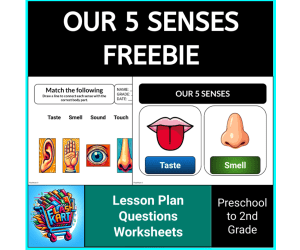
Exploring Our Five Senses No-Prep Lesson Plan, Worksheets, Anchor Charts, & Conversation Cards Kindergarten to Grade 2 Make learning about the five senses simple, engaging, and stress-free with this no-prep Five Senses resource designed for Kindergarten to Grade 2 learners. Everything inside is ready to use - just print and teach. I created this resource to help young students explore how they use their senses to understand the world around them, while also encouraging discussion, observation, and language development. What’s inside? This Five Senses pack includes: A clear and easy to follow Five Senses lesson plan Printable worksheets for hands-on practice Anchor charts to support visual learning Conversation starter cards to encourage speaking and sharing ideas I have designed all the activities with young learners in mind and they work well for whole-group lessons, small groups, or independent practice. Resource features: No Prep - Print and use right away Visual & Interactive - Anchor charts, cards, and kid-friendly visuals may keep your students engaged for a long time Skill-Building - This resource supports observation skills, vocabulary, and oral language development Flexible - This resource is a great tool for classrooms, homeschool settings, or at-home practice How to use it? Introduce the Five Senses Start with the anchor charts and poem to help students understand each sense in a simple yet memorable way. Build Conversation Skills Use the conversation cards to encourage students to talk about their own experiences. The prompts inside help children express ideas, listen to others, and build confidence in English. This Five Senses resource is ideal for preschool, Montessori, kindergarten, first grade, and second grade classrooms. It’s a great addition to early science lessons, language development activities, and seasonal or thematic units. It is perfect for teachers and parents looking for an engaging, low-stress way to teach the five senses while encouraging curiosity, discussion, and real-world connections.
Author FlashKart
Rating
Tags Our 5 Senses, Sense Organs, Kindergarten, 1st Grade, 2nd Grade, Conversation, Esl, Efl, Science Lesson Plan, Centers
Composers Opinion Writing Step-by-Step (Would You Rather)
ELA, Writing, Grade 2, 3, 4, Activities
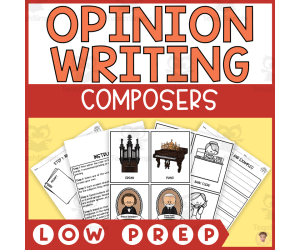
Composers Opinion Writing Step-by-Step (Would You Rather) This is an engaging teaching resource designed for educators of second, third, and fourth graders. This low-prep activity uses a fun thematic approach in English language arts and music studies, making teaching easier. Description This activity revolves around a composers-themed opinion writing. It offers students step-by-step guidance through the research and composition process. It includes cards, mix-and-match research report pages, differentiated graphic organizers across three learning levels and sentence starters & transitions focusing on grammatical accuracy. The main resource: 31 composer cards which can be used individually or in small groups to conduct thorough research. Engagement: Opinion writing comes alive based on well-researched information about famous composers like Mozart, Beethoven, Bach etc., their instruments or famous works. Note: The activities are not solely for language arts classes but can also apply to social studies due to historical contexts provided about these composers' lives. Foster Skills Development The resource fosters more than subject mastery development; it helps students acquire critical thinking skills essential for forming educated opinions. Students actively learn by obtaining factual information from credible sources through their individual assignments while promoting communication during group projects. Easily Accessible Resource Included as a PDF file makes it easy for teachers not only to access but also print this adaptable tool – whether teaching in school or instructing child at home via home-study program. Integrating seamlessly into an existing curriculum or forms the core of unit study on composers yielding possibilities that delve deep into music history along with honing language arts skills. This Resource Provides: Opportunity to delve deep into music history while also improving language arts skills. An effective teaching tool for public, private or homeschool educators In conclusion, Composers Opinion Writing Step-by-Step (Would You Rather) is an academic and creative resource awaiting classroom exploration.
Author Heather Huhman
Tags Composers, Opinion Writing, Research, Music Studies, Critical Thinking

KG Morning Work | 180 Days of Spiral Review | Math & ELA | 3rd Quarter
ELA, Math, Kindergarten, Centers, Activities, Lesson Plans, Teacher Tools, Worksheets & Printables
Kindergarten Morning Work | 3rd Quarter Student Pages + Full-Year Teacher Resources Keep your kindergarten mornings consistent, engaging, and purposeful with 45 days of Kindergarten morning work for Quarter 3 . This resource includes ALL teacher resources for the complete 180-day program , while the student practice pages in this pack are specifically for 3rd Quarter: Days 91–135 . What’s Included ⭐ FULL-YEAR TEACHER RESOURCES You receive the complete teacher toolkit for planning, organizing, differentiating, and tracking the entire 180-day Kindergarten morning work program : Teacher Guide Month-by-month Pacing Guide Skills Checklist Common Core Standards Alignment Fully Editable Morning Work Schedule Complete Answer Key for Days 1–180 Student Progress Tracker Parent letters and home-practice forms Three Certificates of Completion Bonus Morning Routine Pack 📚 STUDENT PAGES INCLUDED: 3RD QUARTER The student portion of this product includes Days 91–135 , providing 45 days of ready-to-use Kindergarten morning work . Each daily page includes five short, developmentally appropriate activities : Early Literacy — letters, sounds, phonics, rhyming, or sight words Handwriting — letters, numbers, names, and words Math — counting, number sense, addition, subtraction, or shapes Fine Motor — tracing, dot-to-dot, mazes, or drawing Thinking Skills — patterns, matching, visual discrimination, or “Which One Does Not Belong?” Important: The student practice pages included in this product are Days 91–135 only . The teacher resources and complete Answer Key cover all 180 days . How It Works in the Classroom Use this Kindergarten morning work as a daily morning routine, independent practice, early-finisher activity, or skill review. Each page is designed to take approximately 10–15 minutes . Large print, short directions, and plenty of white space make the pages accessible for young learners. The routine follows a predictable weekly rotation: Monday: Letters, counting, tracing, and shapes Tuesday: Beginning sounds, number sense, and patterns Wednesday: Sight words, adding, and fine motor practice Thursday: Rhyming, shapes, and matching Friday: Weekly review, color-by-code, puzzles, and draw-and-write Quarter 3 begins with January skills such as sight words, beginning sounds, number sequencing, CVC word building, subtraction, and AAB patterns . Use the pages for: Morning work Bell ringers Independent practice Early finishers Literacy centers Math warm-ups Fine motor practice Spiral review Sub plans At-home practice The editable schedule also lets you adjust the routine to fit your classroom schedule and small-group needs. Standards & Learning Goals This Kindergarten morning work resource provides daily practice across early literacy, handwriting, math, fine motor development, and thinking skills. 📖 Early Literacy & Writing Students practice: Letter recognition Beginning sounds Ending sounds CVC words Word families Rhyming Sight words Phonics Name writing Handwriting Word writing Early sentence development Quarter 3 continues moving students toward more independent reading and writing. Students practice sight words, CVC word building, sounds, rhyming, and increasingly complex written responses. 🔢 Math Students practice: Counting Number sequencing Number sense Comparing quantities Addition Subtraction Ten frames Patterns Shapes Measurement Color-by-code activities The resource supports Kindergarten expectations including writing numbers 0–20, understanding quantities, counting, comparing numbers and groups, representing addition and subtraction, composing teen numbers, comparing measurable attributes, and identifying shapes. ✏️ Fine Motor & Thinking Skills Students also develop: Pencil control Tracing Dot-to-dot skills Visual discrimination Pattern recognition Matching Drawing Problem solving “Which One Does Not Belong?” reasoning These activities provide important kindergarten readiness practice alongside academic skills. Why Teachers Love It ✨ You get ALL the teacher resources for the entire year. The teacher materials support the complete 180-day program , not just Quarter 3. ✨ Students get exactly what they need for Quarter 3. Days 91–135 provide a complete 45-day student set. ✨ Build independence. The familiar five-part format helps students know what to expect each morning. ✨ Save prep time. Everything is already organized and ready to print. ✨ A real developmental progression. Quarter 3 moves students into sight words, CVC word building, subtraction, number sequencing, and more advanced patterns . ✨ Practice multiple skills every day. Literacy, handwriting, math, fine motor, and thinking skills are all included. ✨ Keep students engaged. Dot-to-dots, patterns, picture activities, puzzles, tracing, drawing, and visual challenges add variety. ✨ Differentiate easily. Model directions, read prompts aloud, reduce the number of activities, or provide additional support when needed. ✨ Track student growth. The Progress Tracker lets you monitor skills from letter recognition and phonics through counting, addition, subtraction, shapes, patterns, and fine motor development. ✨ Keep your classroom organized. The editable schedule includes daily planning, weekly skill focus, small-group notes, and a complete 36-week year-at-a-glance planner. ✨ Get answers for the entire year. The complete teacher package includes an Answer Key for the full 180-day program. Looking for Kindergarten morning work for Quarter 3 that saves prep time and builds essential early learning skills? This pack includes 45 days of student practice (Days 91–135) PLUS ALL teacher resources for the full 180-day program . Give your kindergarteners a predictable, engaging morning routine that strengthens literacy, handwriting, math, fine motor skills, and independence! Print it, prep it, and make your kindergarten mornings easier! 💛
Author Bright Classroom Ideas Marketplace
Rating
Tags Ela, Math, Morning Work, Back To School
Kneating Fun - Play Dough - Letters and Phonics - Alphabet A-Z
ELA, Language Development, Phonics, Kindergarten, Preschool, Grade 1, Activities
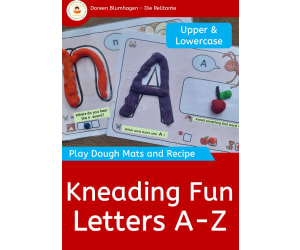
A-Z Playdough Letters – Kneating Fun - Alphabet A-/ Introduce a fun and interactive way for preschoolers, first graders, and students in special education to engage with letters and sounds through our A-Z Playdough Mats. Perfect for classroom use or home activities , these mats combine creativity with essential learning goals. What You’ll Get: This set includes 52 playdough mats, each designed to cover the entire alphabet twice—once with uppercase and once with lowercase letters. Every mat features a friendly image to guide children in understanding the correct pronunciation of each letter sound. How to Use: Letter Formation: Kids use playdough to shape each letter on the mat. Sound-Associated Objects: Children mold objects that either start with the given sound (for uppercase) or include it somewhere in the word (for lowercase). Sound Recognition: By forming small playdough balls, children can indicate where they hear the sound within a word—beginning, middle, or end. Uppercase letters offer two correct and one incorrect example, while lowercase sounds appear in various positions within the words provided. Flexible Use: These mats allow for tailored learning—focus solely on uppercase, lowercase, or mix both types as needed. Pro Tip: Enhance durability by printing uppercase and lowercase letters on opposite sides of the same sheet or sticking them together and then laminating. Printing Guidelines: For uppercase letters, print only the odd-numbered pages (5-55). For lowercase letters, print the even-numbered pages (6-56). For a double-sided option, use short-edge flip for pages 5-56. To keep your mats in good condition and prevent playdough residue, either laminate the pages or place them in protective sleeves. Additionally, a budget-friendly DIY playdough recipe is included for your convenience. Happy learning! Warm regards, Doreen Blumhagen – Die Relitante
Author Die Relitante
Tags Mathematics, Hands-on Learning, Numbers, Digits, Fine Motor Skills, Play Dough, Learning Games, Elementary School, Preschool, Number Range 10

Bill and Pete Book Companion Read Aloud
ELA, Reading, Reading Comprehension, Literature, Grade 2, 3, 4, Read Alouds, Activities
Bill and Pete Book Companion Read Aloud This supplemental resource for the picture book Bill and Pete by Tomie dePaola includes 31 print-and-go activities to help teachers customize learning according to students' needs. The activities encourage thinking beyond the text to foster higher-order thinking skills. Students will investigate characters, identify story elements, plot events, compare and contrast, make predictions, inferences and connections, and more. Questions require textual evidence to support reasoning and prompt personal insights. Implementation ideas include: targeted instruction focusing on different reading skills each day; independent centers where students revisit the text using a new activity ; guided reading groups to address struggles; literature circles for deeper discussion. Activities are organized into sections: Before Reading: Making predictions During Reading: Identifying story elements; Sequencing events; Recalling chronological order; Completing a story elements graphic organizer and summary; Categorizing story events by theme; Drawing comic book scenes; Identifying problems and solutions; Making inferences using textual clues; Making personal connections; Annotating the author's details; Determining the message After Reading: Analyzing characters through actions, thoughts, feelings; Plotting feelings and causes throughout the arc; Selecting adjectives to describe characters at various points and justify with text; Explaining key changes; Considering importance of settings; Determining theme with text support; Answering analysis questions; Using sensory details to describe events; Speculating on what happens next; Critiquing with ratings, drawing, and recommendation; Reading an informational text on related content Author Extensions: Researching author's life to create biography brochure, one-pager, and acrostic poem With its range of creative and thoughtful activities covering essential reading skills, this resource allows teachers to save time while challenging students.
Author Creatively Gifted
Tags IRA, Picture Book Activities, Read Aloud Lessons, Interactive Read Aloud Activities, Elementary Reading, Reading Comprehension, Fountas And Pinnell IRA, Second Grade, Tomie Depaola, Author Study

Jet Skis Reading Comprehension Passage - Cored Ed Encyclopedia
ELA, Language Development, Resources for Teachers, Reading Comprehension, Reading, Pre-Reading, Science, Technology, Sports, P.E. & Health, Grade 2, 3, 4, 5, Worksheets & Printables, Worksheets, Teacher Tools, Centers, Activities, Writing Prompts, Assessments, Tests, Quizzes and Tests, Quizzes
This jet skis reading comprehension contains the following: Visualize on the Cover Start your lesson by taking a few moments to visualize the topic and share thoughts or feelings about it. Pre-Reading Trivia Students will write down one thing they already know about the subject and then read five more facts and discuss. These facts are fun, and the students will enjoy learning about the subject before reading more. Reading Passage The text is a high-interest reading passage with set paragraphs, roughly three to four paragraphs long. It contains a variety of themes about the topic, anywhere from history to technology. The passage is between 250 and 350 words in length. Mixed Questions The first question page contains four multiple-choice questions, each with a choice of four answers, and three written response questions that require a sentence or two from the student. Vocabulary Questions Practice seven key words from the text in this section across two activities. First section is scrambled words where students will unscramble three words given a clue for each. The second section is a word to meaning matching activity. Creative Writing In this question, the student will be required to write a five to eight sentence paragraph on a question related to the topic. Extension Activities This page is optional for fast finishers or to take home. There are several activities, each one requiring a different skill. Do some, do none, do all, completely optional - but you will feel reassured knowing every possibility is planned for. Answer Key There are answers for the multiple-choice questions, written response questions have sample answers, vocabulary answers and if there is a summary question then a sample summary will be provided as well. FULL CATALOG OF DOWNLOAD LINKS AND ENCYCLOPEDIA INDEX HERE Lesson Snapshot Title: Jet Skis Genre: Nonfiction (Informational Text) Subject: Science & Technology / Reading (Informational Text) Primary Topic: How jet skis work, history, and safety Estimated Guided Reading Level (A–Z): Q What This Lesson Teaches Best Explains what jet skis are and how they ride on the water (small watercraft, sit or stand, skim the surface). Teaches cause-and-effect mechanics : a pump-jet pulls water in and shoots it out the back to push the craft forward. Shows how steering and speed work (turning the nozzle; hull rises and “planes” at higher speed). Builds background knowledge with a short history of the Jet Ski brand (Kawasaki, 1973, early stand-up models, later sit-down “runabout” styles, racing). Connects reading to real-world decision-making with safety guidance (life jacket, age recommendations, secure footing/grip, protective clothing, respect wildlife). Support-pages QA note: Most questions/vocabulary match the passage, but the “Example Summary” on the answers page mentions “Discoveries” and “Patents,” which are not stated in the reading passage . Learning Goals Explain what a jet ski is and how it moves across the water using details from the text. Describe how the pump-jet moves water through the craft and how that creates forward motion. Describe how a rider steers a jet ski and what happens as speed increases. Summarize key information about how jet skis changed over time, including the 1973 introduction and later style changes. Identify safety tips from the text and explain why rules matter for riders and wildlife. Key Vocabulary From the Text watercraft — a vehicle made to travel on water. runabout — a small ride-on motorboat style. impeller — a spinning part that pushes water through. nozzle — the part that aims the water jet. hull — the main body of a boat or craft. Cored Ed Encyclopedia Overview The Cored Ed Encyclopedia is a weekly series of lessons that you can pick up and use right away. These short readings fit into whatever time you have available. Each one includes a warm-up, a reading, and a set of questions, but it’s flexible — you can do just the reading, the full lesson, or skip the writing section if you need to. Each lesson focuses on a single topic so students don’t get lost. The writing is clear but never childish, making it perfect for grades two through five. Topics range from animals and science to history, inventions, and everyday things. No matter the level of the student, everyone should take away at least one new idea or fact from each lesson. The materials are easy to print, easy to explain, and require no setup. They work well for whole-class teaching, partner work, or independent study.
Author Cored Education
Rating
Tags Vocabulary, Spelling, Reading Comprehension, Reading Passages, Reading, Creative Writing, Reading Strategies, Writing Prompts, Jet Skis, Sports

Problems & Solutions: Alternative Education Edition
ELA, Not Grade Specific, Activities, Games
Problems & Solutions: Alternative Education Edition - An Overview The Problems & Solutions: Alternative Education Edition is a teaching resource that boosts cognitive abilities among students. It primarily targets the Language Arts domain, enhancing reading, thinking, and speaking skills. Module Structure The module contains six units labelled A-F and comprises seventy-two problems. These problems are transformed into engaging activities for alternative education students. Each problem has three solutions; however, the provided solutions and problem cards don't necessarily align. Solution Finding Approach To find the correct answers, students need to engage with their peers and exchange solution cards – an activity promoting social interaction, communication skills, and analytical thinking. The activities are grouped into sets such as 1-2-3-4 or 5-6-7-8 etc., each forming a complete set within itself. Flexibility of Application This learning method is distinguished by its flexibility. The number of card sets can be adjusted to match the class size regardless of its strength or weaknesses at any given time—on condition that these card sets are always applied in groups off four. Mainly designed for one-on-one student interactions, numerous scenarios permit further adaptations for unique classroom settings - from whole group participation down to small focused teachings based on individual capabilities followed by homework assignments for reinforcing continued learning outside educational premises. Adaptable across different grades without specific restrictions further emphasizing its versatile nature making it an excellent tool specifically situated towards special education classrooms due primarily to these innate flexible characteristics allowing adaptability in line with individual learning curves. In Conclusion Incorporating fun gameplay into Language Arts competencies enhancement— reading and cognitive skills; coupled with interpersonal communication skills improvement, the Problems & Solutions: Alternative Education Edition presents an intricate yet enjoyable learning experience that's especially engineered to improve overall English language proficiency among learners regardless of their grade.
Author Gary Ciesla
Tags Alternative Education, Language Arts, Problem Solving, Interactive Learning, Communication Skills

Lesson 8: Captain Hookem – How to Grab the Reader’s Attention - An Alien Wrote my Expository Essay with Mr. Butt and Bonefish
ELA, Writing, Creative Writing, Strategies, Grade 4, 5, 6, Activities
Lesson 8: Captain Hookem – How to Grab the Reader’s Attention - An Alien Wrote my Expository Essay with Mr. Butt and Bonefish Capture your students' imagination with this innovative approach to teaching expository writing. Designed for grades 4, 5, and 6, this versatile resource offers an engaging narrative that highlights the power of a good hook in any piece of writing. The adventure begins when an alien named Mr. Butt and a sidekick dubbed Bonefish demonstrate how to seize readers' attention right from the start. This animated tale serves as more than just amusement; it encapsulates core lessons on captivating beginnings – an invaluable skill in any form of writing. Multimedia Teaching Resource This multimedia teaching resource encompasses PowerPoint presentations that thoroughly explain each concept while maintaining student interest through visual engagement. These lessons emphasize early sentence structuring tactics that enhance expressive writing while ensuring each rhetorical point hits its mark. Inclusion of Assessment Elements In addition to the core tutorial, the package comprises assessment elements tailored towards evaluating students' comprehension of effective hooks within essay beginnings; vitally crucial for expository essays yet beneficial across all types of written discourse. Versatility & Flexibility in Teaching Should certain concepts prove challenging or need reinforcing, educators have flexibility reiterating lessons for enhanced understanding. This feature positions this tool as ideal for whole class orientations and small group activities alike because its inherent versatility accommodates various learning rates amongst students. The resources come in multiple file types allowing educators to easily incorporate them into their existing lesson plans or adapt them for homework assignments away from direct supervision — plugin-and-play compatibility at its finest! Within subjects like Language Arts—and subtopics such as creative writing strategies—this interactive exploit sets out to demystify rhetorical structures paving way for confident expression among learners through structured frameworks that capture reader intrigue right off the bat. Whether you're a public school teacher looking to breathe new life into your standard curriculum or a homeschooling parent seeking fresh ways inspire your child's love of language arts, Lesson 8: Captain Hookem... offers the flexibility, excitement, and educational value you need.
Author Scary Good Writing With Mr. Butt and Bonefish
Tags Captivating Beginnings, Expository Writing, Hook Techniques, Engaging Narratives, Expressive Writing

100 Little Language Lessons: Skill-building activities featuring 600 essential vocabulary words
ELA, Language Development, Vocabulary, Grade 1, 2, 3, 4, Activities
100 Little Language Lessons: Skill-Building Activities Featuring 600 Essential Vocabulary Words 100 Little Language Lessons is a dynamically designed teaching resource, perfect for both school teachers and homeschoolers. This tool implements the student-approved approach to language learning by Margaret Brinton. The resource comprises of 100 meticulously constructed lessons blend skill-building activities with invaluable practice. Each lesson unites the reading of interesting passages with recognition and usage of key vocabulary words, facilitating language arts while enhancing critical thinking skills in students. Format The strength lies in its simplicity - a single reproducible page per concept. Suitable for large group interactions or individual assignments due to its flexibility. Coverage from grades 1 through 4, providing an extensive focus on various language arts topics especially vocabulary enrichment. Incorporating over 600 essential vocabulary words, this educational material enhances reading comprehension abilities among students. Digital Accessibility & Physical Replicability Easily accessible in PDF format digitally anytime, anywhere. Teachers can replicated into hard copies if needed suiting some learners' preference. Margaret Brinton's many years’ worth experience in teaching ascertains each lesson incorporates age-appropriate literacy practices seamlessly woven together. In Conclusion: Uses & Benefits Main curriculum component or supplementary material offering additional challenge for brighter students, Daily class hours utilization or given as take-home enrichment activity , The "100 Little Language Lessons", significantly complements any comprehensive language arts program extensively making it an indispensable resource every educator should possess!</p
Author Classroom Complete Press
Tags PDF

ENGLISH TEXT+ 6 ANCHOR CHARTS | The Cloud That Couldn't Rain
Language Development, ELA, Reading, Reading Comprehension, Strategies, Writing, Creative Writing, Vocabulary, Pre-Reading, Early Learning, Elementary, Adult Education, High School, Homeschool Resources, Middle School, Not Grade Specific, Activities, Worksheets & Printables, Teacher Tools, Anchor Charts, Charts, Quizzes and Tests
ENGLISH TEXT+ 8 ANCHOR CHARTS | The Cloud That Couldn't Rain INTRODUCTION: Welcome to EDITORIAL ARENAS EDUCATIVAS! We specialize in producing diverse educational tools to support children's learning journeys. Be sure to browse our store for reading, writing, math, and Spanish resources designed to make learning fun and impactful. MAIN DESCRIPTION: 1) What is the main objective of this resource? As is known, the development of these resources primarily seeks to help our students around the world learn a variety of topics better and in a much more fun way. 2) What types of activities or content does this document include? This type of document contains educational activities, all specially designed to be developed and understood in an easy and educational way. 3) How can this material support children's learning or development? This material will help our students learn in an educational way. It will support your students by guiding them in a much more playful way to achieve easy and rapid learning. 4) What specific skills are developed using this resource? Students will be able to develop their attention, concentration, creativity, and imagination skills. It will also allow students to develop their cognitive skills such as comprehension, analysis, and others. SECONDARY AND COMPLEMENTARY INFORMATION: 1) What is the title of this resource? This resource is titled "Educational Resource for Better Learning" developed by EDITORIAL ARENAS EDUCATIVAS. 2) How many pages does the file contain in total? This educational document contains enough pages to make this resource ideal for promoting fun and successful learning. 3) Does this material allow for custom editing? This educational document is available in PDF format, so you cannot edit it. You simply need to download and then print it. 4) What main topic does the resource cover? This document has been developed to address a basic topic that children in kindergarten through elementary school should master. This document will also be helpful to the general public who want to learn.
Author EDITORIAL LAURA EDUCA
Rating
Tags Free, Free Resources, Englush Language Art, Reading, Comprehension, Anchor Chart, Comprehension Anchor Chart

Sight Words Fluency Learning Game | Fry's 3rd 100 Words
ELA, Language Development, Spelling, Kindergarten, Preschool, Grade 1, 2, 3, Activities, Games
Sight Words Fluency Learning Game for Fry's 3rd 100 Words This sight word learning game helps students build reading fluency with Fry's 3rd 100 high frequency words. To play, laminated word cards are scattered around. Students take turns using fly swatters to quickly locate and cover target words called out by the teacher. The first student to successfully "swat" the target word wins the card. This engaging multi-sensory game can be played competitively in teams or partners for a fun way to repeatedly encounter, read, and recognize essential early reading vocabulary. It's perfect for literacy centers , small reading groups, or even whole class review. Modify the difficulty level by changing the word lists over time as students progressed. Print on cardstock and laminate the materials for heavy classroom use. This teacher-created learning game transforms sight word drill into an active, exciting literacy activity.
Author Brian Johnson
Tags Swat The Bug, Sight Words, Spelling Activities, Learning To Read, Fry's Sight Words