 Free download
Vocabulary games & practice
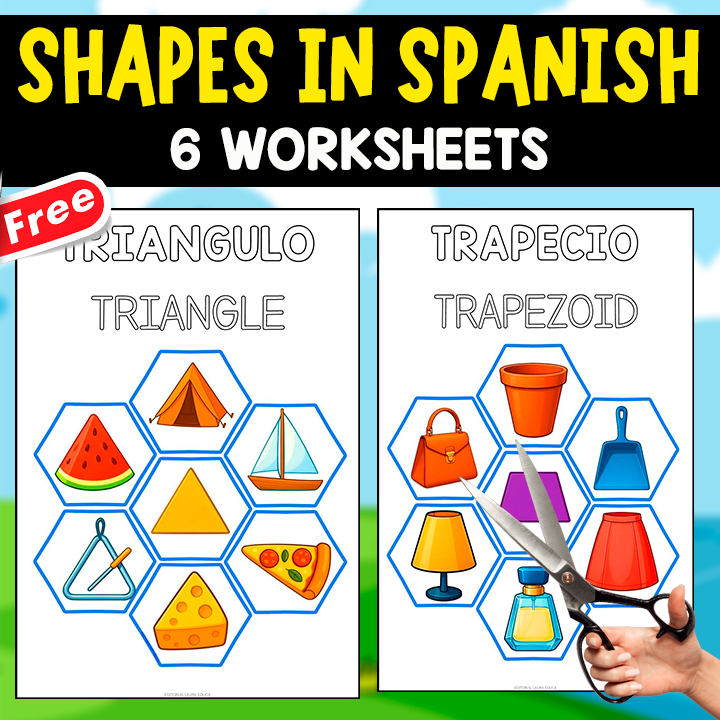
THE SHAPES IN ENGLISH AND SPANISH | 6 PAGES
Bilingual (Spanish/English) shape-name poster/flashcard set introducing basic geometric shapes with vocabulary in both languages.


Classroom resources
Browse by lesson focus
Choose the topic or kind of practice you need.
Showing 1009–1032 of 1070 resources

 Show filters Free download
Bilingual (Spanish/English) shape-name poster/flashcard set introducing basic geometric shapes with vocabulary in both languages.

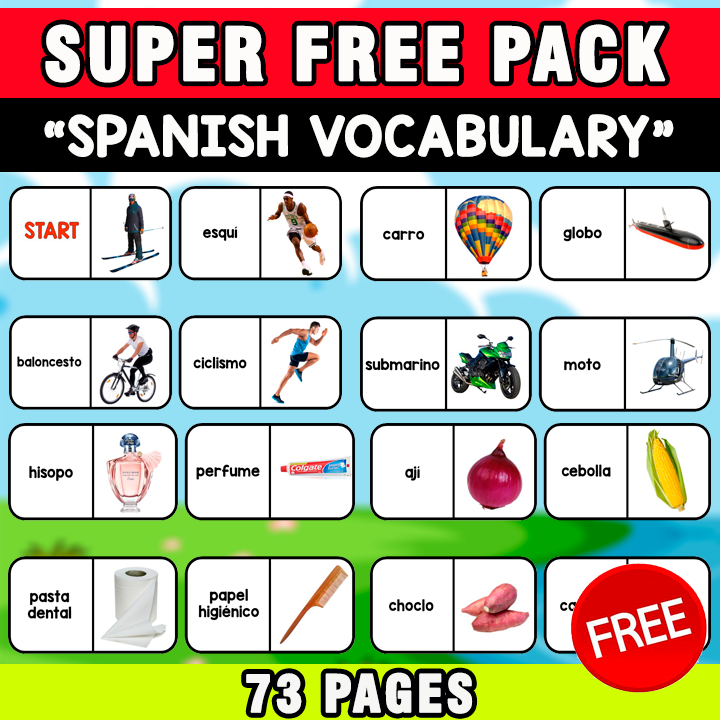
Two-level deck of Spanish-English vocabulary picture cards for Memory and Go Fish style matching games.
 Free download
Flashcard set naming four basic geometric shapes in Spanish.
 Free download
A set of Spanish-language-arts 'Problema del Dia' task cards for 1st grade, for daily warm-up or station practice covering multiple language-arts skills.
 Free download
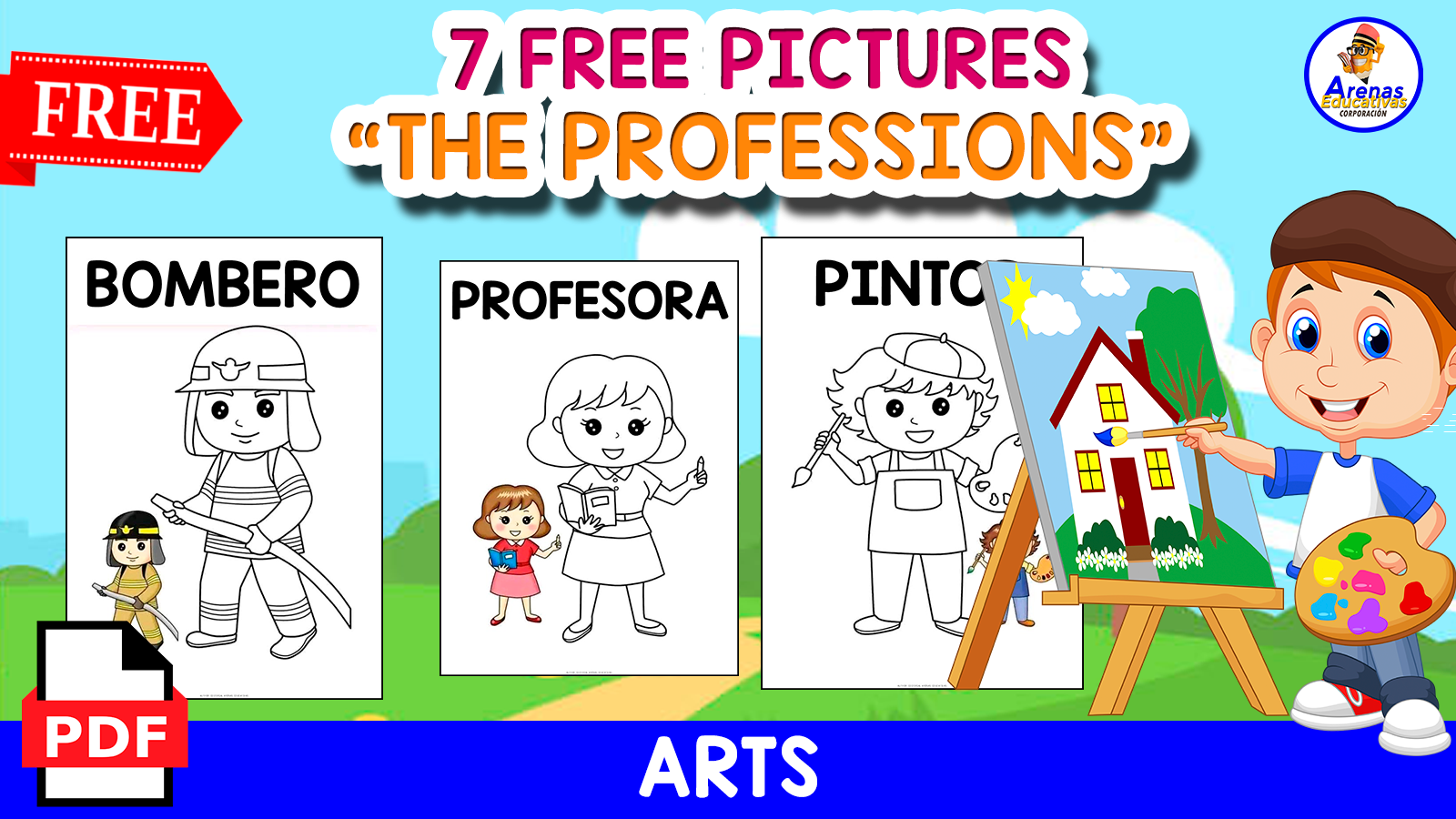
Picture/vocabulary cards depicting seven professions, labeled in Spanish.

A complete Spanish-language workbook lesson (Lesson 4 of a series) teaching students to tell time in Spanish and use school-related vocabulary.
 Free download
Teach Spanish color-name vocabulary via a cut-and-paste minibook.

Teach beginning Spanish vocabulary and language skills covering the Spanish alphabet, numbers 1-1000, colors, and shapes, as Lesson 2 of a Spanish-learning workbook series.
 Free download
LAS OCUPACIONES EN ESPAÑOL | SPANISH OCCUPATIONS | PUZZLE SUMMARY OF THIS PRODUCT: Name of the Product: LAS OCUPACIONES EN ESPAÑOL | SPANISH OCCUPATIONS | PUZZLE Total Pages Included: 6 Format Provided (PDF, Digital, Printable, etc.): PDF Color Version or Black & White Version: COLOR MAIN DESCRIPTION OF THIS RESOURCE: -Write an engaging…

Lesson 8 of the 'Mi Camino Spanish' workbook series, teaching Spanish vocabulary for fruits, vegetables, breakfast/lunch/dinner foods, drinks, desserts, table-setting items, and the phrases '¿Tienes hambre?'/'¿Tienes sed?' (Are you hungry?/thirsty?).
 Free download
I thank you infinitely for your interest in my educational store! I am a teacher who strives every day to produce these great educational resources for children, so I thank you because with your downloads you are helping a lot to promote my personal and professional work.

Spanish-language lesson (Lesson 6 of a workbook series) teaching body-part vocabulary and how to express pain with 'me duele/me duelen,' plus farm, ocean, and jungle animal vocabulary.
 Free download
Teach Spanish animal-name vocabulary, with each word shown twice per card (consistent with a tracing/handwriting-practice use).

A complete Spanish lesson ('Lesson 1' of a planned 10-lesson series) teaching personal pronouns, the tú/usted distinction, common greetings, goodbyes, courtesy phrases, and the question '¿Cómo estás?'.

A Spanish-language activity packet for practicing greetings, farewells, and introductions (saludos y despedidas) through matching, spelling, fill-in-the-blank conversations, multiple choice, translation, word search, and reading comprehension exercises.

Lesson 3 of a Spanish workbook series, teaching students to say the days of the week, months of the year, and seasons, and to describe the weather in Spanish.
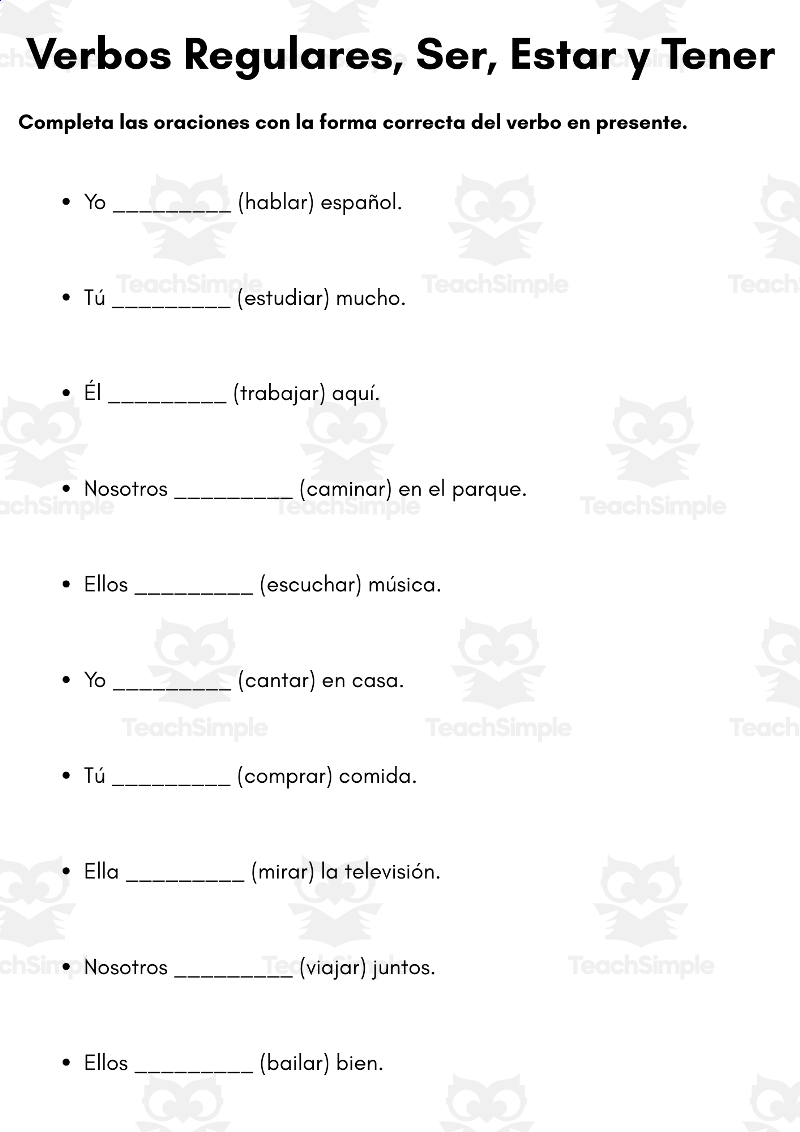
Give students practice conjugating Spanish regular -ar/-er/-ir verbs and the irregular verbs ser, estar, and tener in the present tense

A printable Spanish-language set of 7 'thinking routine' templates that give teachers structured protocols for prompting student reflection, observation, prediction, and critical thinking around a text, video, or image.

Support ESL/ELL students' 5th grade ELA vocabulary acquisition with bilingual English/Spanish word wall cards covering reading skills, figurative language, poetry, and narrative/writing terms.

A bilingual (English/Spanish) seasons unit that teaches vocabulary and characteristics of the four seasons through matching, coloring, writing, and drawing activities.

Bilingual English-Spanish (Castilian) flashcard/worksheet set pairing common English adjectives with their opposites and Spanish (Castilian) translations, for Spanish (Castilian)-speaking ESL/EFL students.
 Free download
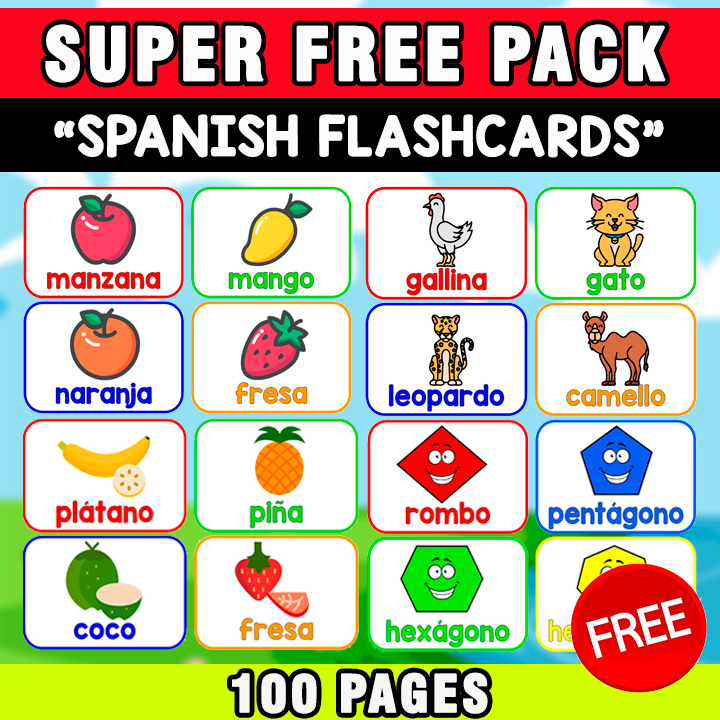
A set of Spanish vocabulary flashcards covering vegetables, animals, fruits, planets, colors, and shapes, plus paired animal-name cutting flashcards.
 Free download
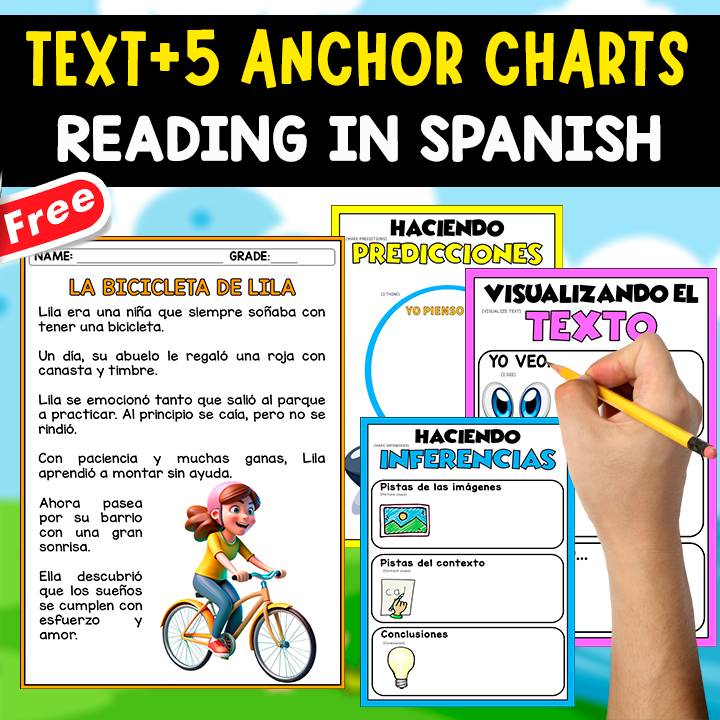
Gives students a short Spanish-language story, "LA BICICLETA DE LILA", followed by reading-comprehension questions, a vocabulary glossary, and four reading-strategy anchor charts (predicting, questioning, visualizing, and inferring) tied to the story.
 Free download
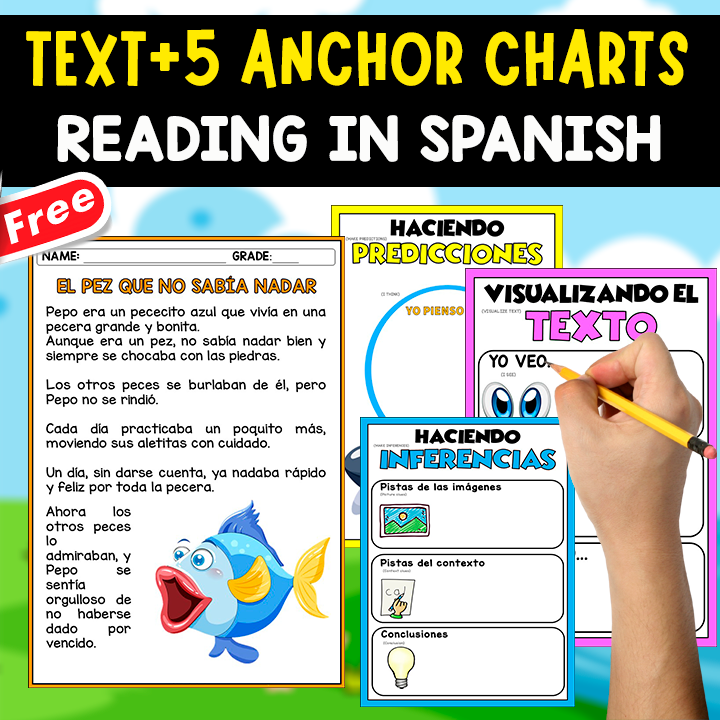
Gives students a short Spanish-language story, "EL PEZ QUE NO SABÍA NADAR", followed by reading-comprehension questions, a vocabulary glossary, and four reading-strategy anchor charts (predicting, questioning, visualizing, and inferring) tied to the story.