
Forces & electricity
Electricity Unit Study | Static and Current Electricity
Read booklet pages and write definitions in blanks provided (static, static charge, static discharge, discharge, shock, collide).




Classroom resources
Browse by lesson focus
Choose the topic or kind of practice you need.
Showing 25–48 of 92 resources

 Show filters
 Read booklet pages and write definitions in blanks provided (static, static charge, static discharge, discharge, shock, collide).
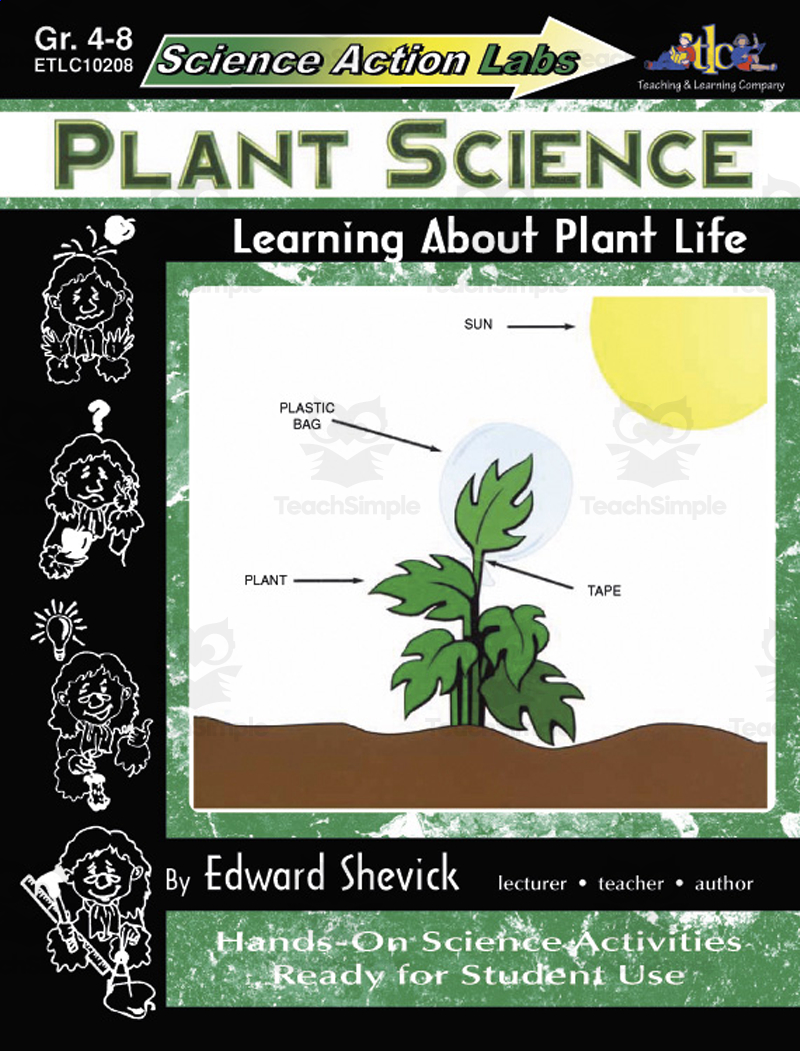
Carry out hands-on labs and experiments across 21 sections: It Is Not Easy to Be Alive, The Size and Shape of Living Things, Are Plants Alive?, Yeast Under Control, Seed Lab, A Science Fair with Seeds, Corn Seed Olympics, Traveling Seeds, Flower Power, Investigating Pollen, Great Plant Scientists, Leaves: The Factory…
Carry out hands-on labs and experiments across 19 sections (Magnets in Our World, Making and Testing Magnets, Magnetic Lines of Force, Compass Lab, Electromagnet Lab, Millimag Lab, Magnetism from the Earth, Magnetic Challenge, Magnetic Fun, static electricity labs, Static Cafeteria, Building an Electroscope, Edison…
Observe a leaf-in-water experiment, complete fill-in-the-blank and matching worksheet sections on photosynthesis components, and answer short-answer questions.

Form a hypothesis, assemble described materials, and carry out hands-on experiments/activities across 24 lab sections (What Is in Our Air?, A Gas Guessing Game, Air Matters, Balloons: Elastic Bags of Air, balloon-weight and puzzler labs, Air Under Pressure, Air Pressure Fun, Bottled Eggs, Newton's Soda Pop Bottle…
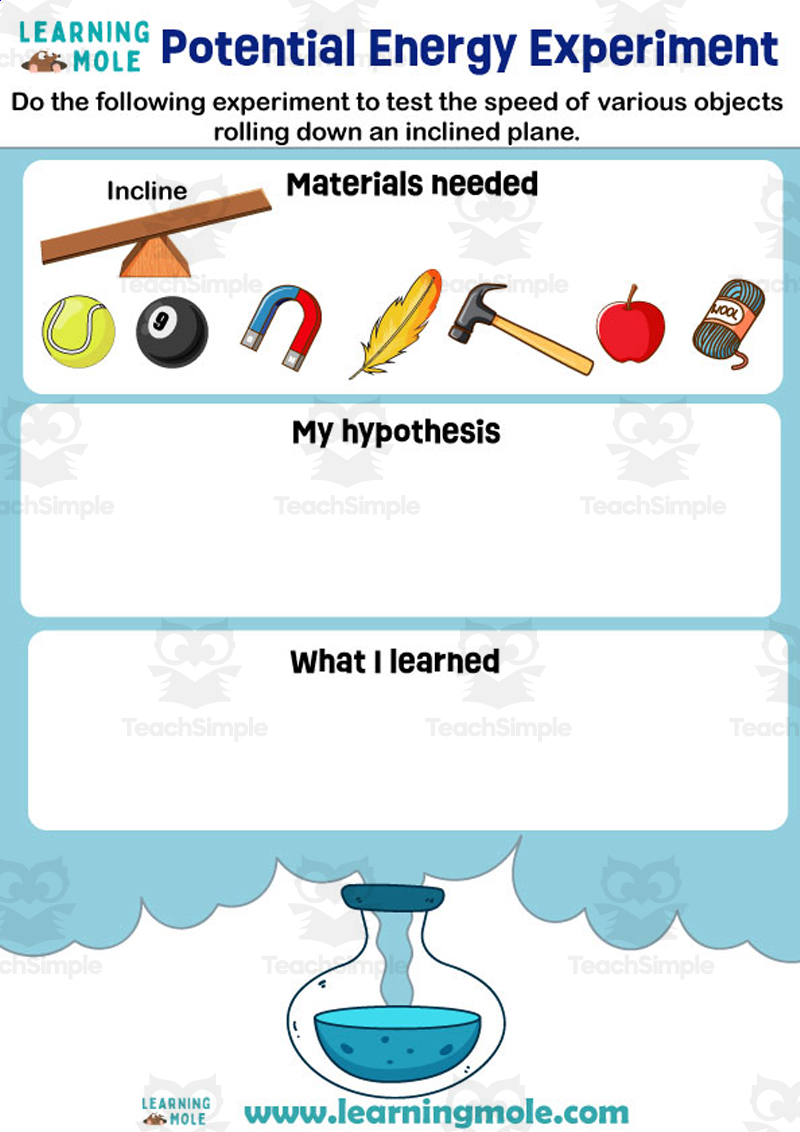
Set up an inclined plane, form a hypothesis, run the experiment, and record what they learned.
A full science workbook (Book B of the 'Simple and Fun Science' series, ages 6-8) teaching science process skills (observing, predicting, inferring) through hands-on activities beginning with health/germs topics and continuing across further life/earth science lessons.
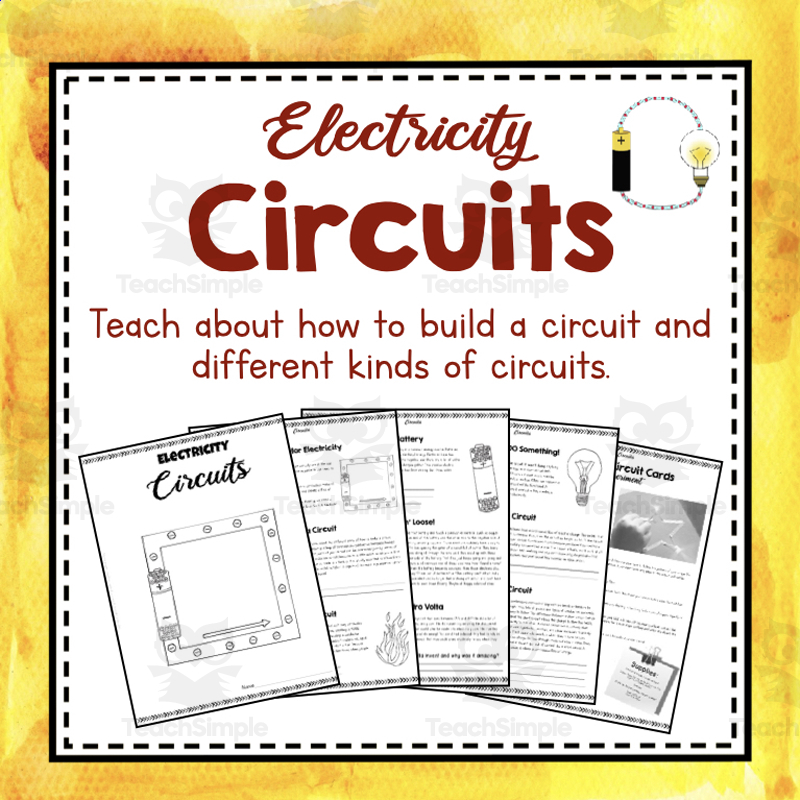
Read booklet pages and write definitions in blanks provided (circuit, circuit board, battery, short circuit); complete a hands-on experiment creating a short circuit with a battery and an aluminum foil strip; read a short biography of Alessandro Volta.
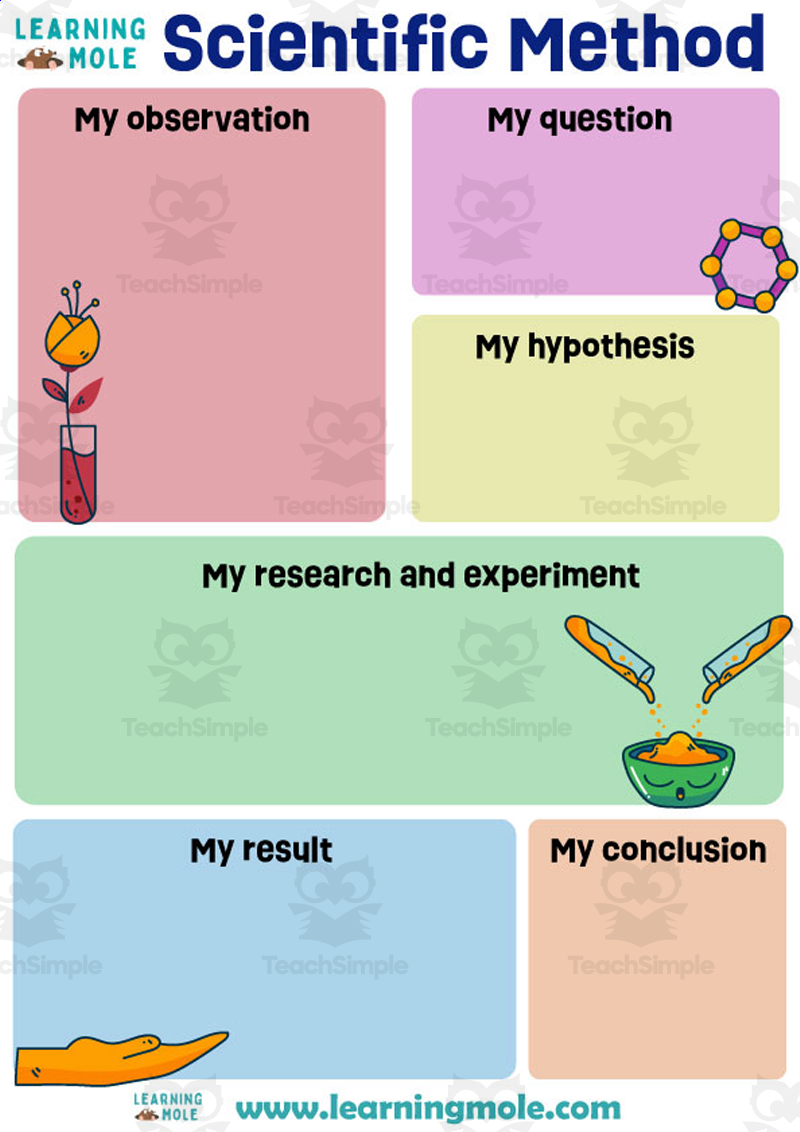
Fill in boxes for observation, question, hypothesis, research/experiment, result, and conclusion.
Complete reading comprehension questions, hands-on experiments, a crossword, a word search, and a comprehension quiz related to life cycles.

Observe the teacher (or themselves) light a candle and watch it burn, label a diagram of the candle using given vocabulary (candle/wax, wick, flame, liquid wax, smoke/gases), fill in blanks in a results paragraph using a word bank (gases, wax, wick, steam, liquid, reversible), and write a conclusion in their own words.
Students perform hands-on lab activities/experiments on sound and light, record observations/data on provided data tables, and check work against a provided answer key.

Follow guided kitchen science experiments (e.g., density demonstrations using items like a candy bar density worksheet, balloons, baking soda and vinegar, ice cream in a bag) using household materials from a supplied shopping list.

Complete hands-on experiments and activities across 15 lab chapters (Eyes on the World, Eye Fun, How We Make Sounds, How We Hear, How We Smell/Taste/Feel, Your Amazing Brain, Health Superstitions, Your Heart, How We Breathe, Learning About Tobacco, Digesting Your Food, Counting Food Calories, The Bones in Your Body…

Students predict and then test: (1) whether objects are magnetic using a magnet wand, (2) whether objects float in water, (3) which objects are heaviest by ordering them with a scale, and (4) whether objects will be carried by wind, recording predictions and results in provided tables.
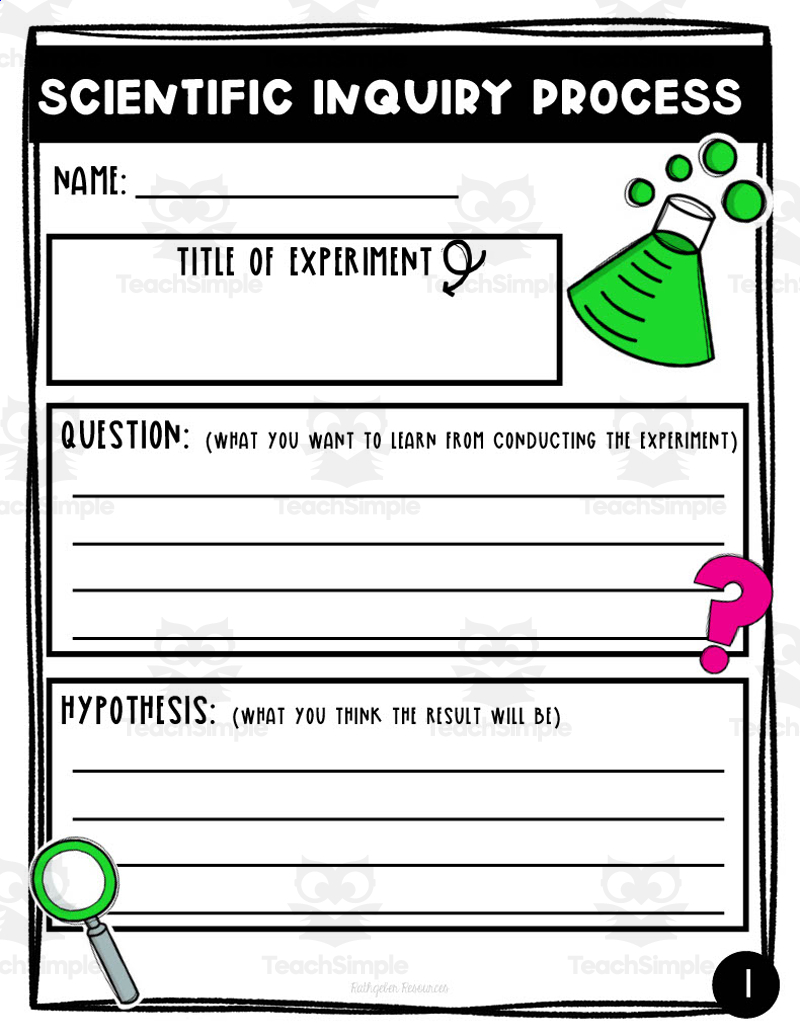
Fill in the title, question, hypothesis, materials, procedure, data (charts/graphs/tables/sketches), and conclusion sections for a science experiment of the student's or teacher's choosing.

Students complete simple hands-on activities/experiments (e.g., observing a glass of water, listing water uses), answer worksheet questions, and take part in group discussions guided by recurring characters (C.D. and Allie) who help them collect and process data.
A full science workbook (Book C of the 'Simple and Fun Science' series, ages 7-8) teaching science process skills (observing, inferring, measuring, predicting, problem-solving) through hands-on activities.
Follow step-by-step instructions to conduct simple science/engineering experiments and builds (e.g., oobleck, tornado in a jar, LED light-saber circuit, catapults, boat that floats, nature sculpture) individually or in groups.

Complete hands-on experiments/labs, answer discussion questions, and work through activity sheets (e.g. 'All About Oxygen') across 15 lab chapters (What Is in Our Air?, Air Takes Up Space, Air Has Weight, Air Has Pressure, More Fun with Air Pressure, Air Has Resistance, Breathing Air, Balloons Full of Air, Our Windy…

Fill in blanks about the 5 things plants need (light, water, air, temperature, nutrients), plant a seed, water it a measured amount daily, observe it on a windowsill, then measure and draw its height weekly for 6 weeks in a results table and write a conclusion about whether it grew well.
Students work in lab teams to observe, form and test hypotheses, record data, compare consumer products, and complete guided lab worksheets; some labs are designed for teacher demonstration and group discussion instead.

The lesson begins with two tomato plants treated differently in more than one way, prompting students to discuss why the conclusion is unreliable. Fill-in notes introduce independent, dependent, and controlled variables before students apply the terms to basketball, studying, and a derby-car scenario. A short review and model answers support the follow-up discussion.
Read short explanatory text, answer fill-in-the-blank and short-answer questions, label diagrams, and carry out simple hands-on experiments/activities using everyday materials; complete a review page with a word puzzle.