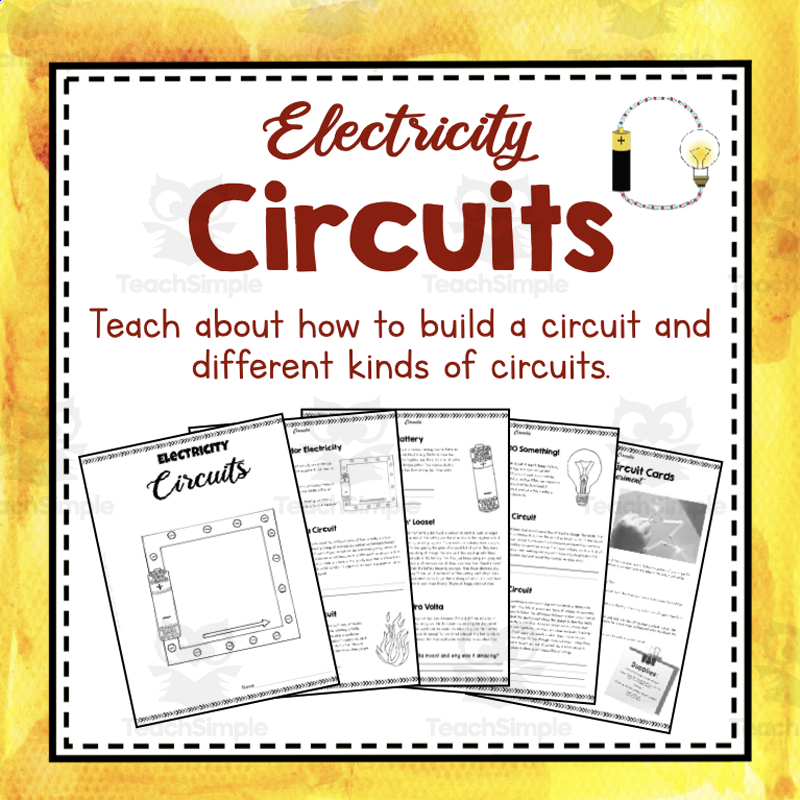
Electricity Unit Study | Circuits
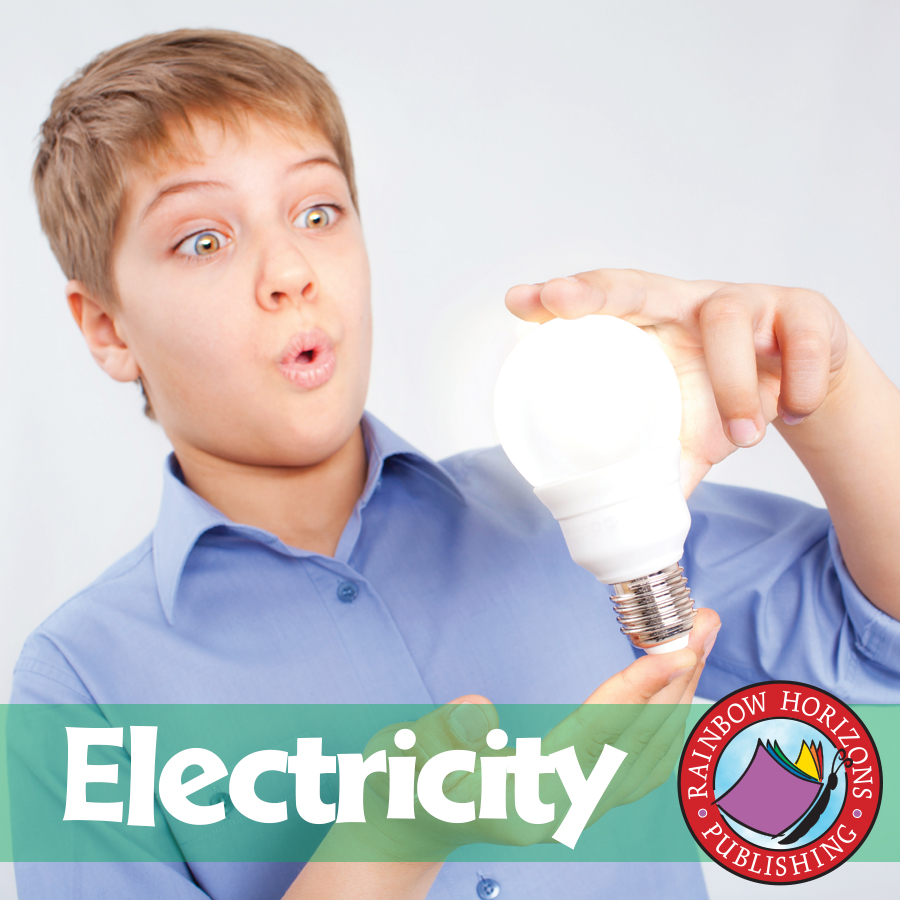
An elementary unit-study booklet teaching how circuits work (components, batteries, short circuits, functional circuits) with a hands-on short-circuit experiment, in matching student and teacher booklet versions.
Classroom resources
Browse by lesson focus
Choose the topic or kind of practice you need.
An elementary unit-study booklet teaching how circuits work (components, batteries, short circuits, functional circuits) with a hands-on short-circuit experiment, in matching student and teacher booklet versions.
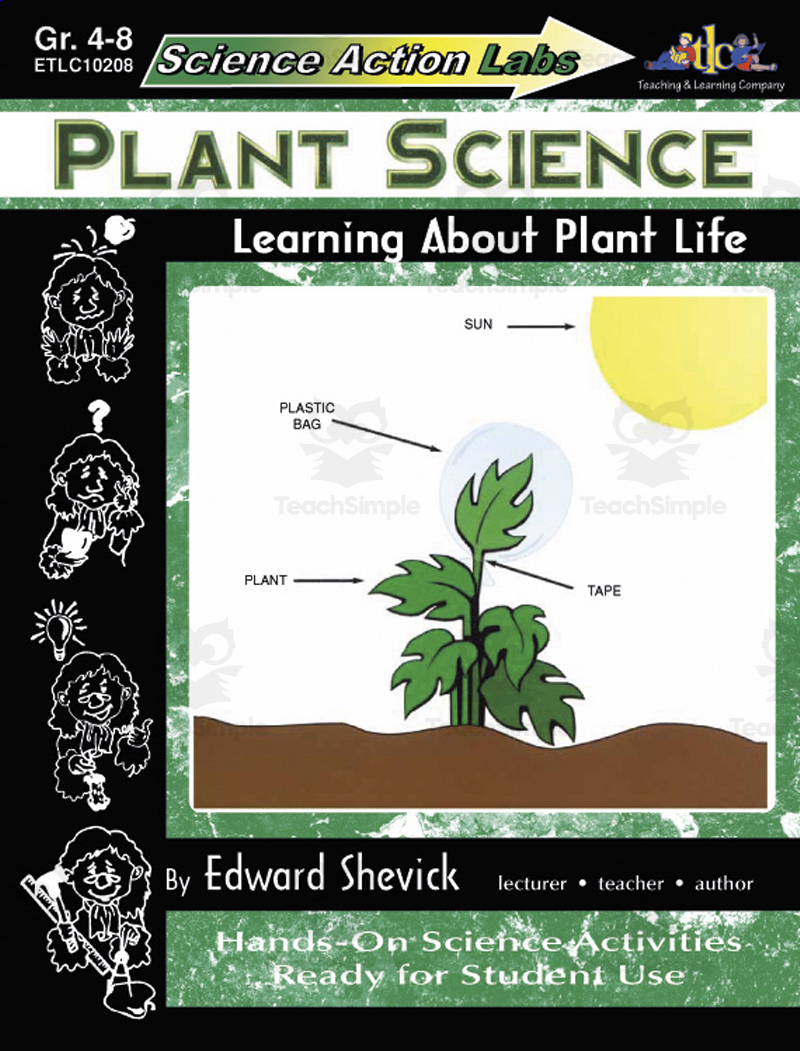
A grade 4-5 plant-science teaching unit combining overhead-projector student notes with hands-on discovery worksheets and optional enrichment activities covering seeds, roots, stems, leaves, flowers, plant needs, and the plant life cycle.
A multi-topic activity packet teaching force and motion concepts (force, motion, friction, and related math) for elementary science.
Teach students the Claim-Evidence-Reasoning (CER) framework for scientific argumentation using eight short data-based science scenarios plus one open-ended CER challenge.
Engage students with static electricity/electrostatics concepts through a rotating 9-station hands-on lab activity.
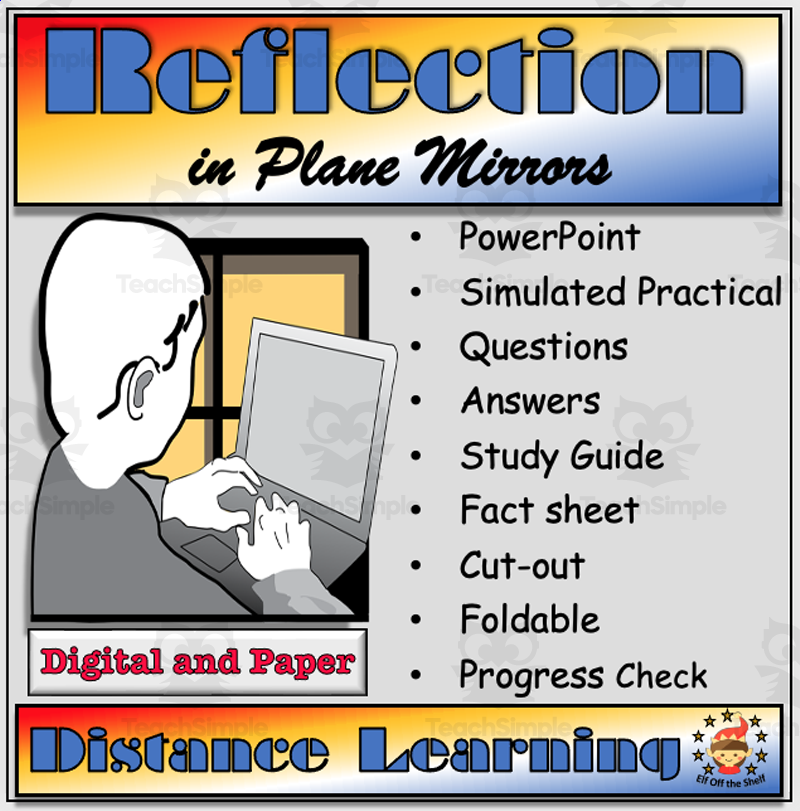
Teaches how light reflects off plane mirrors (transparent/translucent/opaque materials, luminous/non-luminous objects, angle of incidence equals angle of reflection, periscopes) as a self-directed distance-learning physics pack.
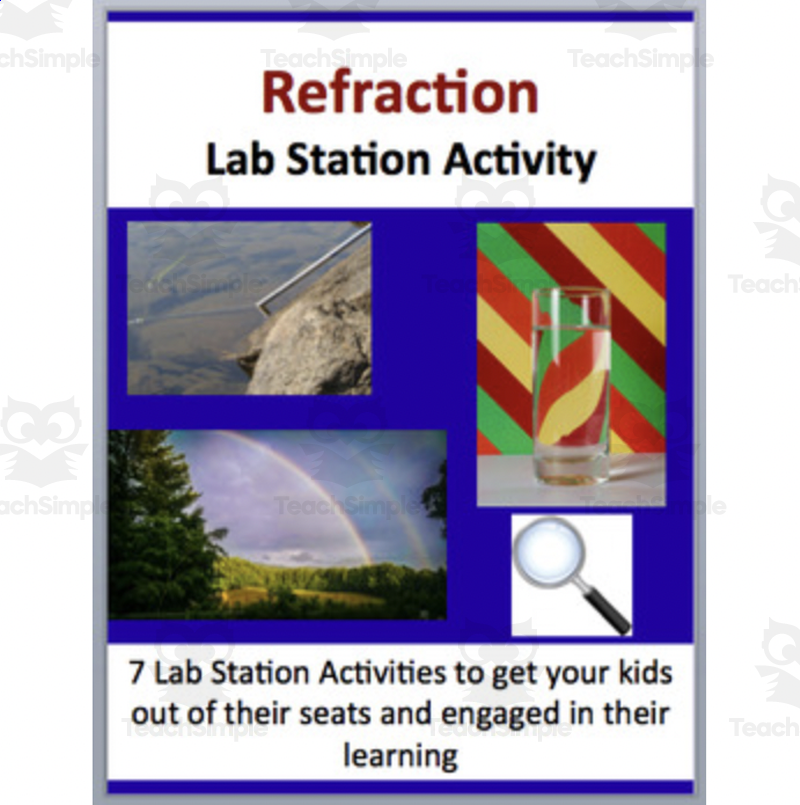
A 9-station physics lab activity on light refraction (Snell's Law) for a self-directed 30-45 minute lesson: a reading passage, station cards, a lab passport/answer booklet, a video-response worksheet, a knowledge-check quiz, and bonus word scramble/word search.
A multi-file distance-learning/homeschool chemistry pack teaching mixtures, solutions, dissolving, suspensions, and saturated solutions via an animated PowerPoint, worksheets, and a photocopiable lesson.
A two-part electricity unit: Part I is direct-instruction notes and 7-9 worksheets/assignments on electricity fundamentals; Part II is a role-play class project where students debate which type of power plant a fictional town should build.
A multi-station physics lab activity teaching projectile motion (initial velocity, launch angle) through hands-on measurement, research, reading, and knowledge-check stations built around a catapult/paper-football theme.
A physical science unit teaching matter, atoms, molecules, states of matter, and physical vs. chemical changes through overhead teacher notes, worksheets, puzzles, and hands-on activities.
Teach plant science/botany concepts (characteristics of living things, seeds, flowers/pollen, leaves, plant cells, trees, plant classification, and plant survival) through hands-on experiments.
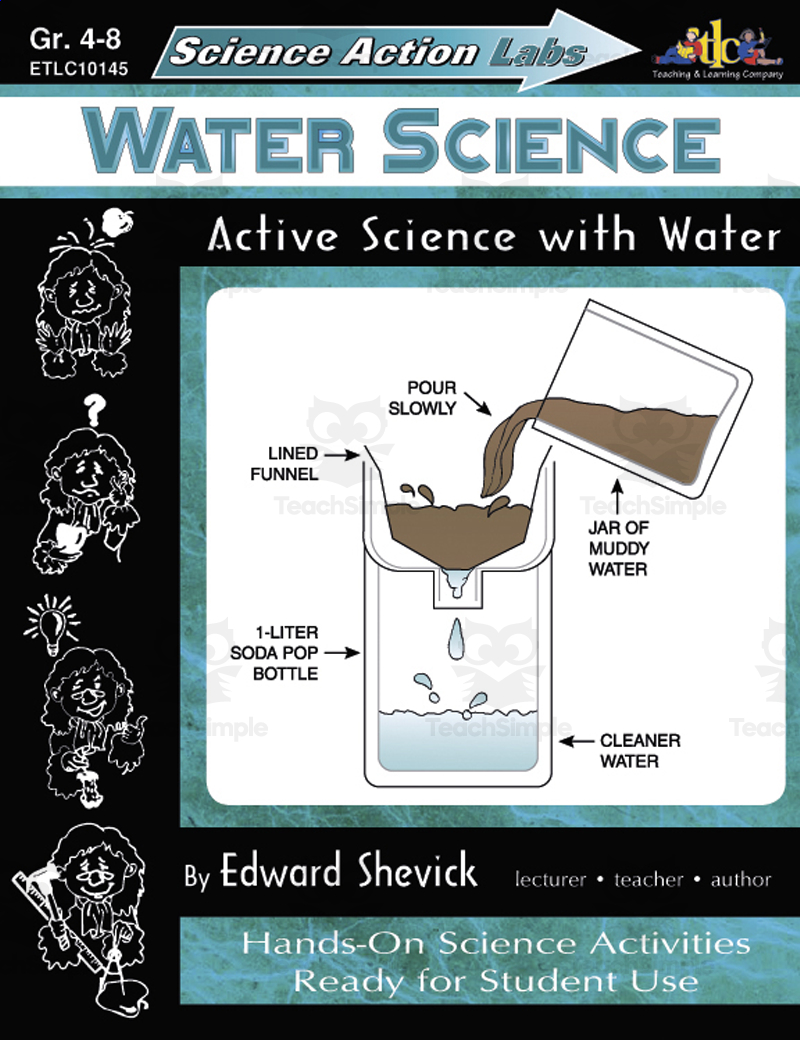
A 23-chapter set of hands-on science labs and activities exploring water science topics for upper elementary/middle school students: water pressure, buoyancy, chemistry, surface tension, ice, purification, conservation, weather, and water's role in life.
Teach electricity and magnetism concepts (magnetic force, compasses, electromagnets, static electricity, electroscopes, electrical circuits, generating electricity) through hands-on experiments.
Provide 28 independent hands-on STEM/science experiment activities with supply lists and instructions for classroom, camp, or independent/group use.
Teach air-science concepts (air pressure, gas properties, breathing/respiration in humans/animals/plants, Bernoulli's principle, carbon dioxide, barometers, siphons) through hands-on hypothesis-driven experiments framed around Newton's scientific method.
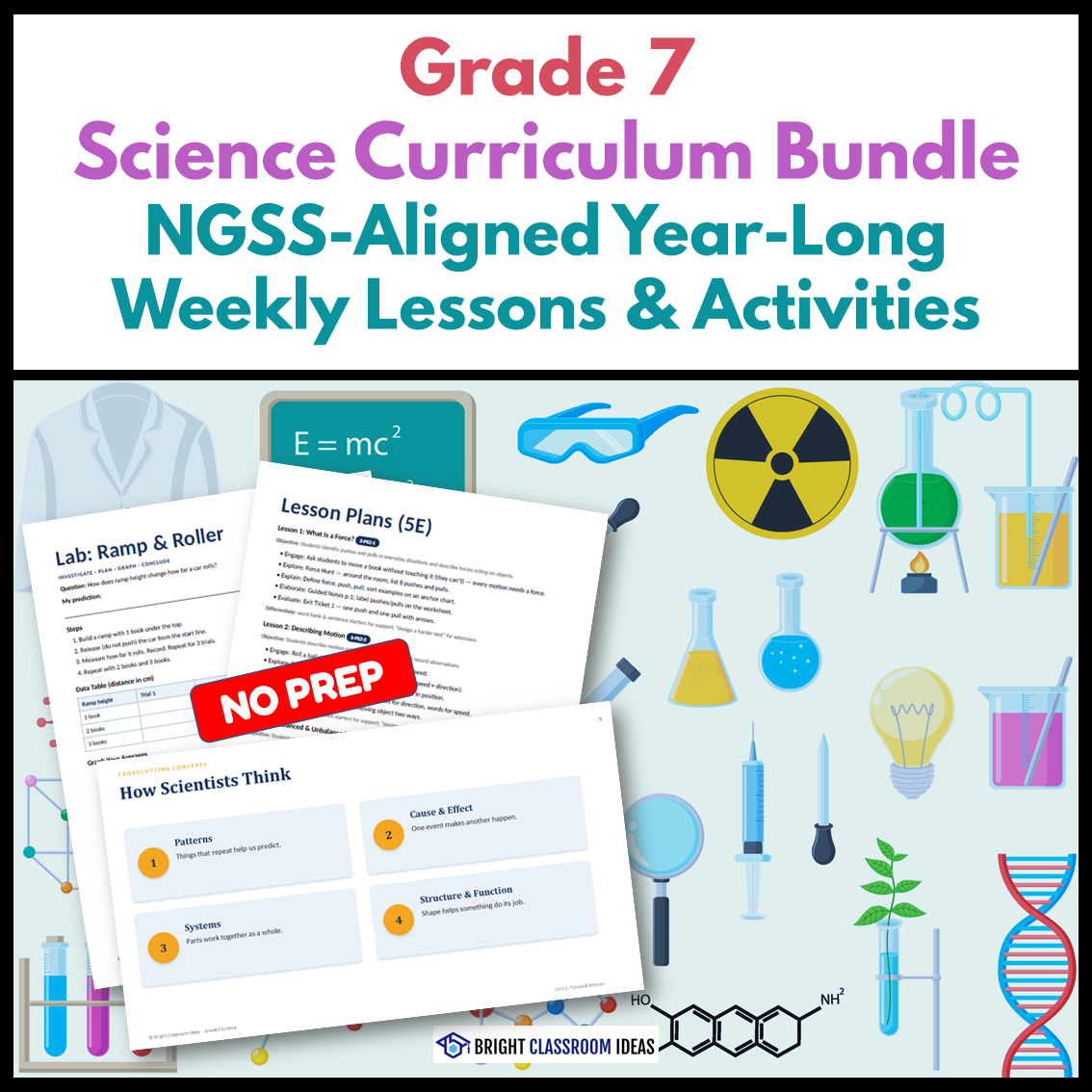
A complete, NGSS-aligned full-year (36-week, 10-unit, 96-lesson) Grade 7 science curriculum covering life, physical, and Earth science plus engineering design, delivered as 8 files (teacher guide, lesson plans, labs/STEM, assessments, answer keys/rubrics, reading passages/guided notes, worksheets/vocabulary, and projects/review).
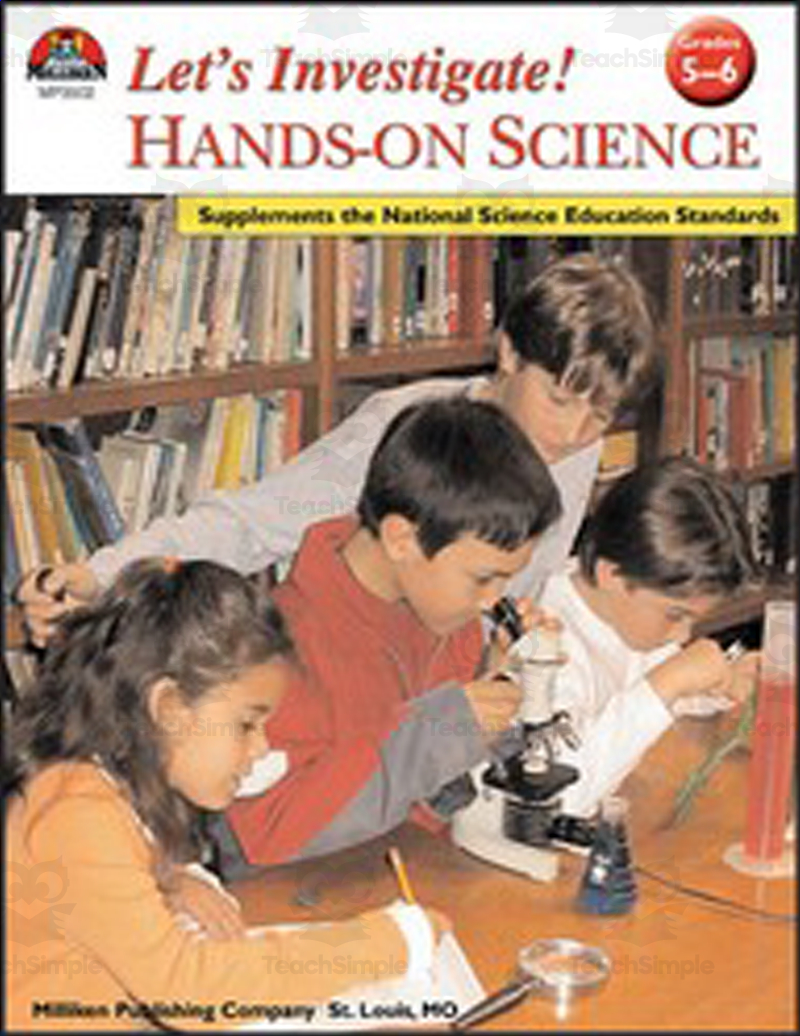
Provide hands-on science experiments and activities across physical, earth, and life science topics for grades 5-6, supplementing the (U.S.) National Science Education Standards.
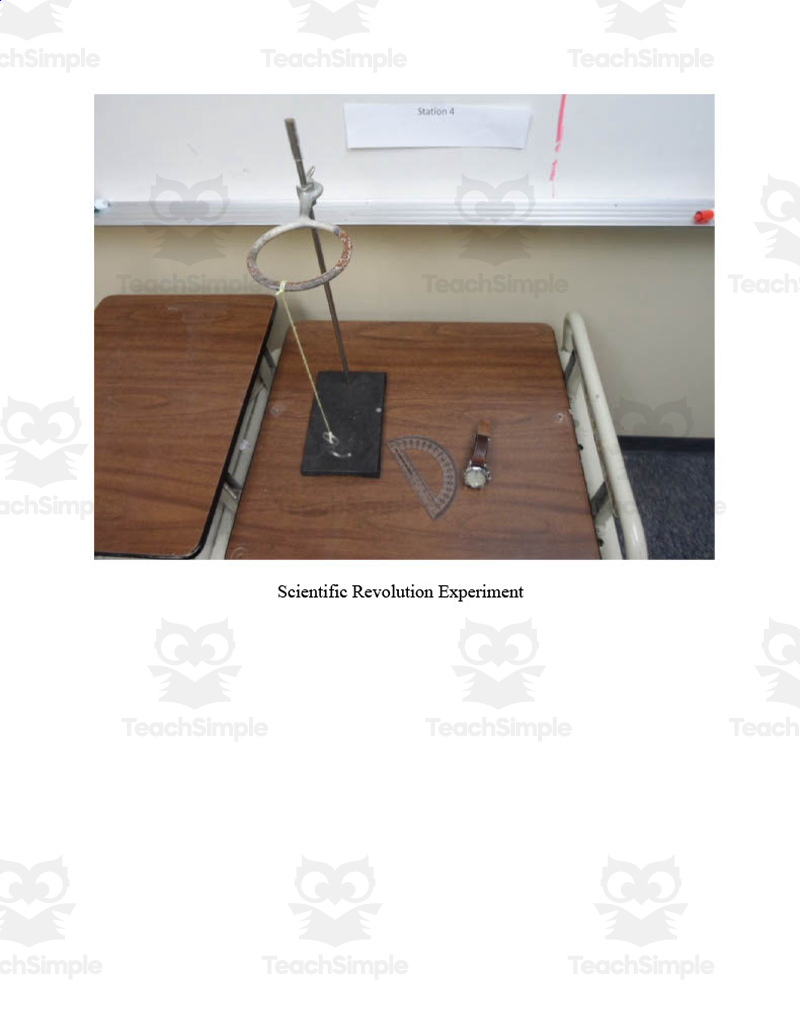
A hands-on history lesson plan in which students rotate through four experiment stations to test claims made by ancient philosophers (Aristotle, Galen) against the findings of Scientific Revolution figures (Galileo, Copernicus, Vesalius), illustrating the shift to the empirical scientific method.
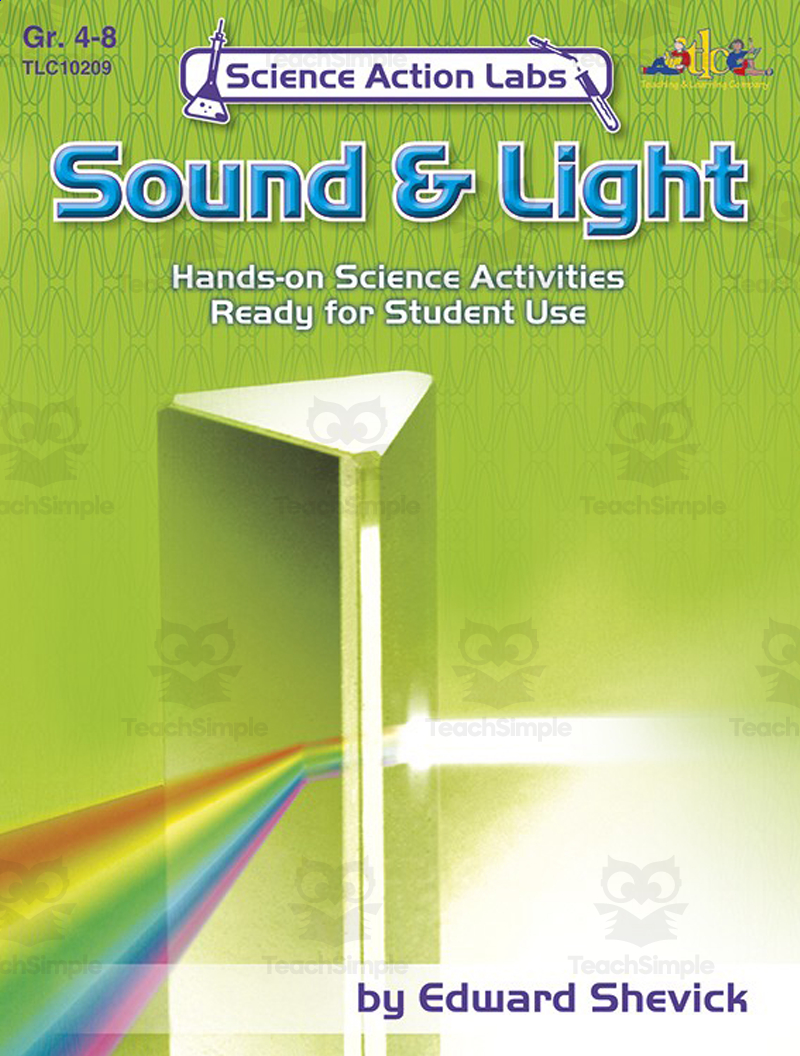
A hands-on physical-science workbook of lab activities exploring sound and light concepts (e.g. mirrors, sound waves, rainbow lab) for classroom demonstration or individual student use.
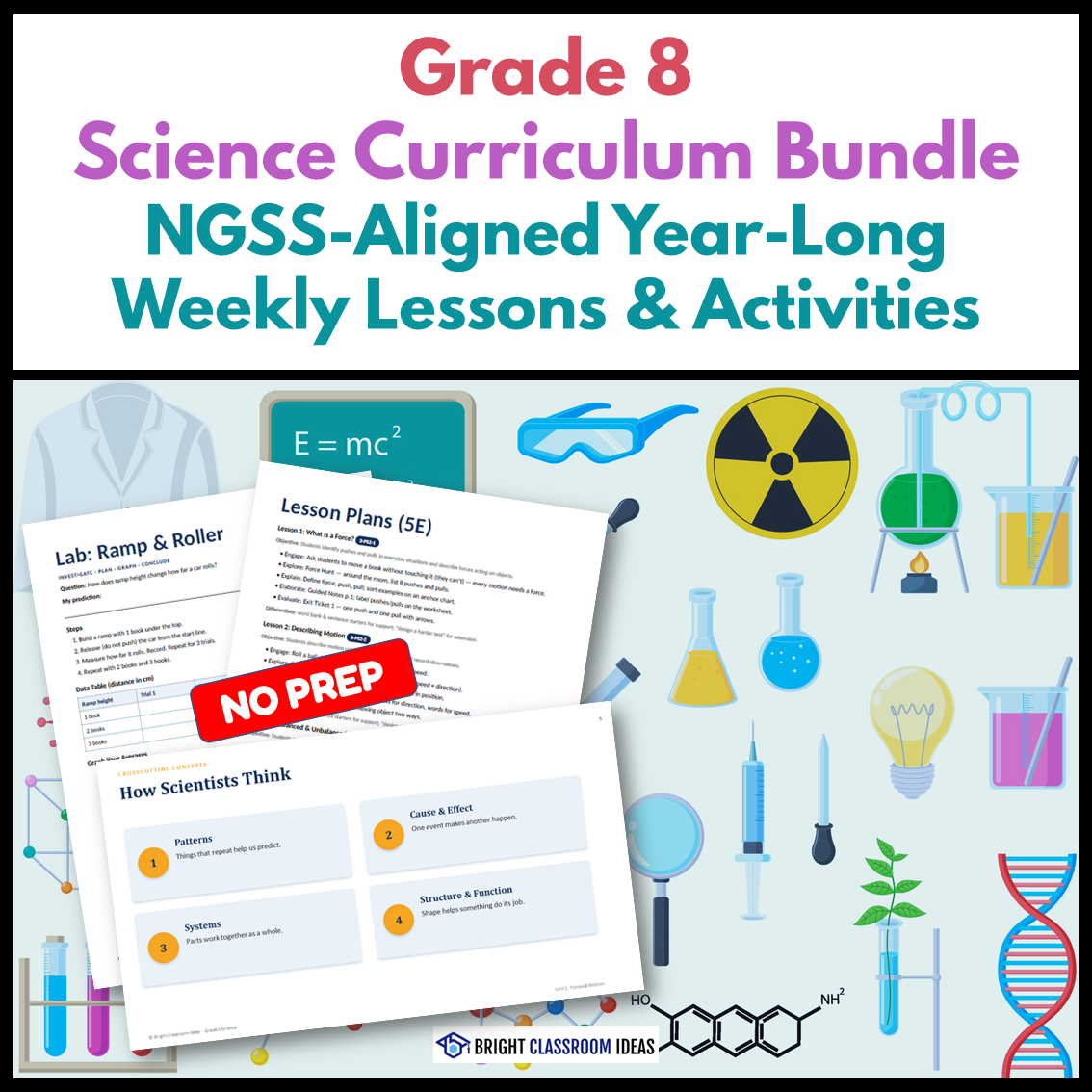
A full-year Grade 8 NGSS-aligned science curriculum providing teacher guide, lesson plans, labs, assessments, answer keys, reading passages, worksheets and projects for a complete middle-school science course.
A set of 23 hands-on science labs that teach the scientific method (observation, hypothesis, communication, decision-making) through varied classroom activities and mini-experiments.
Provide a collection of hands-on science experiments/demonstrations (chemical reactions, physical science, sensory play) for elementary students to try with adult-supplied household materials.
Teach physical science concepts (matter, properties of matter, elasticity, motion, and Newton's First Law) through hands-on experiments, framed around Newton's laws.