



5,118 products added recently
Page 13 - Newest Teaching Resources

 Show filters

Matching, Tracing, and Writing of the Pumpkin Life Cycle
Science, Writing, ELA, Kindergarten, Preschool, Worksheets & Printables
The majority of pumpkin life cycle resources either talk at children or offer them so little to do that they become disinterested after two minutes, which led to the creation of these worksheets. To truly grasp something, children must switch between reading, drawing, labeling, and writing. This aims to achieve that. Six stages are covered by the resource: seed, sprout, vine, flower, green pumpkin, and ripe pumpkin. When engaging with six and seven-year-olds, who need to understand why order is important rather than just be told, those stages follow actual, observable developments. A sequencing exercise, number-the-stages, matching, a coloring page, trace-and-write vocabulary, draw-and-write, and a sentence completion part with a word bank are all included. Eight exercises covering a single subject, incorporating science vocabulary, literacy, and fine motor practice—not because more is always better, but rather because children at this age typically land on something and run with it, and you want options. It is effective for fall units or October science centers. It works well for small groups, solitary practice, and morning work. Instead of using it as a packet, I've seen teachers disassemble it and utilize each component separately. Either way, it works. No particular setup is needed. This is appropriate for the unit if you are teaching plant life cycles. This should be sufficient if you simply need a hands-on activity for a hectic October week that doesn't require you to spend ten minutes explaining the task before the children can begin. Format: pictures or PDF
Author life skills learning store
Rating
Tags Pumpkin Life Cycle , Life Cycle , Pumpkin, Writing, Halloween , Activities

Worksheets on Nocturnal Animals | Night Animals, Habitats
Reading, ELA, Writing, Grade 1, 2, 3, Worksheets & Printables
Children are up all day. The majority of creatures aren't, and upon closer inspection, the disparity is more bizarre than it first appears. The animals that come to life at night—owls, bats, foxes, hedgehogs, raccoons, and skunks—are the focus of this 10-page worksheet bundle. In addition to covering science terminology, adaptations, ecosystems, and food chains, the pages include a reading passage set in a forest at nite, a matching exercise, and a helpful fill-in-the-names sheet that takes kids by surprise. In order to bring the entire course together at the end, students can also complete a blank animal fact-file. It all prints in black and white. No preparation. Simply print it out and distribute it. The reading page is appropriate for self-assured second-graders and early third-graders, but it is intended for grades 1-3. Ten worksheets altogether, including an introduction to nocturnal creatures, a comparison of nocturnal and diurnal animals, an animal facts page, an adaptations page, a fill-in fact file, habitat and food chain pages, a forest reading passage, a matching activity, and a names page. functions as a center, a stand-alone unit, morning work, or homework. One sheet every day for a week has been used by homeschooling families. Format: Pdf with pictures
Author life skills learning store
Rating
Tags Nocturnal Animals, Habitats, Night Animals, Animals, Nocturnal, Printables, Worksheets

Halloween Escape Room | 7 Mystery Codes and Halloween Puzzles
ELA, Grade 2, 3, 4, Worksheets & Printables
It's going to get much more fascinating in your Halloween classroom. Students are given seven puzzling objectives to complete in this escape room; simply print the PDF, distribute it, and be done. Other than choosing how to gather your children, there is no assembly, no technology, and no preparation. Every task improves on the previous one. Students match shadow silhouettes to characters, complete simple addition problems where the solutions become codes, decode Halloween words, find hidden letters in a maze, and solve riddles by counting the letters in each solution. It intensifies just enough to keep them in suspense. They will have one last lock after completing all seven. Second and third graders actually care about the "YOU ESCAPED!" page when they crack it. A teacher guide, the opening Halloween story, all seven missions, clue cards, the last lock challenge, and the answer key are all included in the 15-page PDF. Nothing to construct. Small groups, center rotations, companion work, a class Halloween party, and early finishers who would otherwise be disturbing everyone else can all use it. Spelling, word identification, basic addition, visual matching, and logical reasoning are among the skills taught; nonetheless, pupils mistakenly believe they are engaging in Halloween-themed activities. grades two through four. Children must be able to comprehend brief instructions and perform simple addition. While some will succeed on their alone, the majority will perform better in a team or with a partner. Format: pictures or PDF
Author life skills learning store
Rating
Tags Halloween Escape Room, Halloween, Escape Room, Mystery Codes, Puzzles, Printables, Worksheets

File Management & Keyboard Speed Hacks Guide (SURV05)
Life Studies, STEM, Science, High School, Elementary, Homeschool Resources, Middle School, Worksheets & Printables
Stop dealing with lost Google Drive files and "Untitled" document chaos with the File Management & Keyboard Speed Hacks Guide (SURV05) ! Designed for 1:1 Chromebook classrooms, Middle School Computer Tech, Advisory, Homeroom, ELA, Science, and STEM classes, this 3-page, print-ready packet equips students with crucial cloud drive organization skills, structured file naming formulas, and essential keyboard shortcuts. What Is Included in This 3-Page Packet? 📋 Page 1: Teacher Guide & Lesson Plan Features ISTE Technology Standards and Common Core alignment, common student digital clutter mistakes, teaching strategies, learning outcomes, answer keys, and a handy hotkey cheat sheet. 💻 Page 2: Student Mission Card & Practical Guide Hooks students with a high-stakes scenario about a lost digital project minutes before a deadline. Features a high-visibility "Golden Rules" callout box introducing the Folder-First Rule, standardized file naming structures, and the Ctrl+Z safety net. Includes a visual diagram of a Master Digital Drive Folder Tree architecture. ⌨️ Page 3: Practical Application & Skill Reflection Engages students in the "Hotkey Speed Matching Challenge" (pairing essential actions with Ctrl/Cmd shortcuts) and the "File Naming Makeover Challenge" (transforming chaotic file names into clean, searchable titles). Concludes with executive function reflections on digital workflow speed, plain-text pasting (Ctrl+Shift+V), and routine weekly drive maintenance. Educational Value & Key Benefits: Eliminates Lost Homework Excuses: Teaches students how to systematically organize Google Drive or OneDrive folders by subject and term. Boosts Digital Speed & Efficiency: Master shortcuts like copy, paste, select all, find, and undo to increase computer productivity. 1:1 Classroom Essential: Perfect for technology orientation, digital citizenship units, computer lab resets, or back-to-school skill building across Grades 6–8.
Author Innovative Middle School STEM
Rating
Tags STEM, STEAM, File Management, Files, Shortcuts, Keyboard Shortcut, Engineer, Engineering, Keyboard Hack

Halloween Craft Writing Exercise: Disguise a Ghost
ELA, Creative Arts, Writing, Grade 1, 2, 3, 4, Worksheets & Printables
Children adore Halloween. They also enjoy creating things that are uniquely theirs. Put both in one location with Disguise a Ghost. Students create a ghost character from the ground up by coloring it, choosing a disguise, drawing its appearance, giving it a name, and discovering its true identity. They then write a brief narrative about what occurs when the disguise nearly fails. Each of the ten printed pages is an advancement. A ghost template for coloring, a disguise inspiration page, an open drawing area, a naming and character information page, a brief description prompt, a secret identity page, a reveal drawing, a three-prompt tale page, and a classroom display version are all included in the packet. Nothing to prepare other than printing, including cutting and pasting. Although the writing assignments are brief, they complement one another. Students have already identified their ghost by the time they get to the tale page. That makes the writing easier and, honestly, more interesting to read. Grades 1 through 4. Younger kids can keep it simple and lean into the art. Kids in the upper grades tend to go deep on the secret identity stuff. The Halloween theme stays fun without veering into anything spooky or age-inappropriate. It's a ghost in a costume with a whole life behind it. Students tend to get attached. Format : Pdf / Images
Author life skills learning store
Rating
Tags Halloween Craft, Craft, Halloween, Writing , Exercise, Disguise A Ghost

Drug Analysis & Presumptive Color Tests
Science, Chemistry, Life Sciences, Biology, Human Body, Physics, Research, Resources for Teachers, Classroom Management, Community Building, Grade 6, 7, 8, 9, 10, 11, 12, Worksheets & Printables, Workbooks, Worksheets, Word Searches, Teacher Tools, Assessments, Lesson Plans, Quizzes and Tests, Quizzes, Tests
Unlock the world of forensic science with this all-in-one unit on Forensic Drug Analysis! Are you looking for a comprehensive, engaging, and scientifically rigorous resource to teach forensic drug analysis? This complete unit takes your students from the crime scene to the courtroom, bridging the gap between field testing and definitive laboratory analysis. Designed for high school and introductory college-level science classrooms, this package demystifies complex chemistry and legal principles with clear explanations, real-world case studies, and hands-on activities. This isn't just a collection of worksheets; it's a complete pedagogical toolkit. The unit is meticulously structured into three parts: a detailed informational text, a 10-worksheet student workbook, and a robust teacher resource section with high-quality visuals and a complete answer key. What's Inside This 44-Page Unit? Part 1: The Core Concepts (Student-Friendly Text): A deep dive into the foundational principles, including: The Controlled Substances Act (CSA) and the five drug schedules. The "Big Three" Presumptive Color Tests: In-depth chemical explanations of the Marquis, Duquenois-Levine, and Scott tests. The Critical Concept of False Positives: Real-world case studies (like the Krispy Kreme donut incident!) illustrate the limitations of field tests. The "Gold Standard" Confirmatory Tests: A clear breakdown of Gas Chromatography-Mass Spectrometry (GC-MS) and Fourier Transform Infrared Spectroscopy (FTIR). Part 2: The Student Workbook (10 Worksheets): Reinforce learning and assess understanding with a variety of fill-in-the-blank, scenario-based, and critical thinking questions covering every topic in the unit. Worksheets include: CSA & Scheduling Individual worksheets for Marquis, Duquenois-Levine, and Scott tests. False Positives, Presumptive vs. Confirmatory Testing, GC-MS, FTIR. Two comprehensive forensic scenario and review worksheets. Part 3: Teacher Resources & Visuals: Everything you need to teach with confidence: Stunning Visual Aids: Three high-quality, professional diagrams (Drug Scheduling Matrix, Presumptive Test Flowchart, and The Evidentiary Pipeline) perfect for presentations or as classroom posters. Teacher Implementation Guide: Expert advice on pedagogical framing, navigating common student misconceptions, and safe lab simulation strategies using common household chemicals. Comprehensive Answer Key: A complete, question-by-question answer key for all 10 worksheets to make grading a breeze. Transform your classroom into a forensic laboratory and empower your students with the critical thinking skills needed to understand the true science behind the headlines. Keywords : Forensic Science, Toxicology, Drug Analysis, Presumptive Tests, Marquis Test, Scott Test, Duquenois-Levine Test, Confirmatory Testing, GC-MS, Forensics Lesson Plan, High School Chemistry, AP Chemistry, Criminal Justice, College Forensics, Student Workbook, Teacher Guide, Answer Key, Forensic Chemistry, STEM, CTE, Blood Alcohol Concentration, BAC, Widmark Formula, Health Class Activity, Biology, Human Physiology, DUI, DWI, Underage Drinking, Alcohol Education, Math Application, Algebra, Real World Math, Worksheet, Printable, Digital Resource, No Prep, Teacher's Guide, Fentanyl, Opioid Crisis, Overdose, Case Study, High School Science, AP Biology, Chemistry, Criminology, Postmortem Redistribution, Drug Testing, Taphonomy, Body Decomposition, Postmortem Interval, PMI, Forensic Entomology, Mummification, Adipocere, Grave Wax, High School Forensics, Lesson Plan, Odontology, Dental Identification, Bite Marks, Criminal Justice Activity, CSI, Mass Disaster, DVI, Ante-Mortem, Post-Mortem, Teacher Key, No-Prep, Print-and-Go, Forensic Case Study, Time of Death, Post-Mortem Interval, Algor Mortis, Livor Mortis, Rigor Mortis, Glaister Equation, Crime Scene Investigation, Forensic Pathology, Autopsy, Death Investigation, Cause and Manner of Death, Forensic Science Lesson, Forensic Anthropology, Bone Identification, Skeletal Analysis, Age Estimation, Sex Determination, Anatomy Activity, CSI Classroom, Digital & Printable, Sub-Ready, Trace Evidence, Locard's Exchange Principle, Hair Morphology, Cuticle, Cortex, Medulla, Medullary Index, Natural Fibers, Synthetic Fibers, Comparison Microscopy, Primary & Secondary Transfer, Crime Scene Investigation (CSI), DNA Phenotyping, Genetics, Biotechnology, Genetic Ethics, SNP, Ancestry, Genetic Genealogy, IGG, Cold Case, DNA, High School, College, Law, Golden State Killer, GEDmatch, DNA Analysis, Forensics Activity, Critical Thinking, DNA Fingerprinting, DNA Profiling, PCR, Gel Electrophoresis, STR Analysis, Honors Biology, Molecular Biology, Lab Procedures, Activities, CODIS, Paternity Test, Electropherogram, Hardy-Weinberg, Random Match Probability, Bloodstain Pattern Analysis, BPA, Angle of Impact, Area of Convergence, Area of Origin, Forensics Worksheets, Forensics Lab, Trigonometry Application, Physics in Forensics, Deductive Reasoning, BPA workbook, forensic science high school, blood spatter analysis, trigonometry forensics, crime scene reconstruction, velocity spatter, forensic worksheets, Serology, Blood Evidence, Blood Typing, Kastle-Meyer Test, Luminol, Lab, Unit Plan, Case Scenarios, 3D Reconstruction, Virtual Forensics, Law Enforcement, LiDAR, Photogrammetry, Digital Forensics, VR, Handwriting Analysis, Questioned Documents, Forgery Detection, Ink Chromatography, Document Alteration, Tool Mark Analysis, Physical Matching, Evidence, Grades 9-12, Visual Aids, Striation, Casting, Impression Evidence, Shoe and Tire Tracks, Gait Analysis, Class vs Individual Characteristics, Career and Technical Education, Sub Plan, Workbook, Activity, Print and Go, forensic science curriculum, Evidence Collection, Locard's Principle, first day of school activities, back to school, first day jitters, all about me, all about me worksheets, our class is a family, our class is a family activity, first day jitters activities, first day of school crown, find someone who, a letter from your teacher on the first day of school, math about me, back to school word search, find someone who back to school activity, all about me craft, color by number back to school, meet the teacher template editable, would you rather back to school, morning meeting slides, classroom jobs, Middle School Science, Forensic Photography, Oblique Lighting, UV/IR Photography, Exposure Triangle, Scale Placement, Photo Log, Hands-on, Project-Based Learning, Capstone. Why Parents/Schools Love It: Builds Critical Thinking: It goes beyond simple "color-change" magic, teaching the real science and, crucially, the limitations and ethical implications of forensic testing (like false positives). Comprehensive & Turnkey: This is a complete, ready-to-use unit. It saves teachers dozens of hours of prep time by providing the core text, student worksheets, professional visuals, and a full answer key in one package. Engaging & Relevant: Uses fascinating real-world case studies and scenarios to connect complex chemistry to tangible, high-interest applications in the justice system. Safe & Practical for the Classroom: The included Teacher Guide provides clever and 100% safe lab simulation ideas, allowing students to experience the testing process without using any hazardous or controlled substances. Visually Stunning: The professional, high-resolution diagrams are a massive value-add, helping to distill complex processes like drug scheduling and the evidentiary pipeline into easy-to-understand visuals for modern learners. Target Student Audience : Based on the advanced vocabulary (e.g., colorimetric, electrophilic aromatic substitution, resorcinol moiety, chromatography ) and the complexity of the chemical and legal concepts, target: High School (Grades 11-12): Specifically for advanced, honors, or AP Chemistry classes and dedicated Forensic Science electives. Introductory College/University Level (100-200 level): Perfect for introductory courses in Forensic Science, Criminal Justice, or as a module in a General Chemistry lab curriculum. Copyright/Terms of Use: This Book was copyrighted by Syed Hammad Rizvi. This resource is for personal and single classroom use only. You may not alter, redistribute, or sell any part of this resource. In other words, you may not put it on the Internet where it could be publicly found and downloaded. If you want to share this resource with colleagues, please purchase additional licenses from Teachsimple. Thank you for respecting these terms of use. This product is happily brought to you by Syed Hammad Rizvi
Author Creative Book Store
Rating
Tags ForensicScience, Forensics, Chemistry, Science, STEM, Education, CriminalJustice, CrimeSceneInvestigation, ForensicChemistry, Toxicology

Real-World Ratio Worksheets: Rising Cost of Living Financial Literacy
Finance, Life Studies, Home Economics, Percentages, Math, Fractions, Money, Grade 6, 7, 8, 9, 10, 11, 12, Worksheets & Printables, Worksheets, Word Problems
Do not download: This product is an empty file. Here’s a middle or high school applied math or consumer math activity to help your students practice the ratio math skills they have learned in a real-world situation: the rising cost of living . The three-page worksheet includes real statistics (from the United States) with accurate median family income, median house price, and average private college costs from 1965, 1995, and 2025. Students can use simple ratios to compare this data and see if housing and university really are more expensive compared to wages than they used to be. Although this lesson uses US data, it demonstrates trends that are occurring in other countries (like Canada) too! How to Use: Print 3 pages of worksheets for each student. Go over the table on page one together. It shows the median family income, median house price, and average cost of one year of college in 1965, 1995, and 2025 (in dollars for each of those years). Ask students what they notice. Model how to use the chart to write a ratio and simplify it by rounding. Use the included example of 1965 income to 1965 house price, which simplifies to 1:3 Let students work in pairs or small groups on the rest of the ratio questions. They will complete research for question 8: to find the average prices of a different category (medical insurance, food, cars, etc.) for 1965, 1995, and 2025. These can be shared later in a class discussion. Students can also share their ideas from question 9 in the discussion: how can people get ahead when housing and college cost so much more compared to wages than they used to? Finally, students can create their own meme to share a real-world proportional relationship about the rising cost of living with others. A sample is included in the answer key. A complete answer key is included so there is no guess-work with this lesson! Grades to Use With: This lesson is designed for middle school students in 6th, 7th or 8th grade to apply and practice ratio, rate, and proportional relationship skills. It could also be used in high school consumer math classes to help students understand current economic events. What's Included: 5-Page PDF: Ready to Print and Use! Complete Teacher Instructions Worksheet: Real Historical Data from the US: income, house prices, college costs in 1965, 1995, 2025 Worksheet: Ratio Math Questions Worksheet: Reflect & Create a Meme Complete Answer Key
Author Grace Under Pressure
Rating
Tags Rising Cost Of Living, Ratio Worksheets, Ratio And Rate, Real World Math, Financial Literacy, High School Financial Literacy, Middle School Financial Literacy, Budget, Ratio Word Problems

Data & Graph Literacy Essentials Guide (SURV04)
Life Studies, Science, STEM, Elementary, High School, Homeschool Resources, Middle School, Worksheets & Printables
Eliminate axis setup errors, broken scales, and improper chart choices in student work with the Data & Graph Literacy Essentials Guide (SURV04) ! Designed for Middle School Science, Math, STEM, Social Studies, and ELA classes, this 3-page, print-ready packet teaches students universal rules for constructing, analyzing, and auditing data graphs. What Is Included in This 3-Page Packet? 📋 Page 1: Teacher Guide & Lesson Plan Features NGSS Science & Engineering Practice 4 (Analyzing & Interpreting Data) and Common Core Math alignment (CCSS.MATH.CONTENT.6.SP.B.4), direct teaching strategies, common middle school graphing mistakes, expected learning goals, and complete answer keys. 📊 Page 2: Student Mission Card & Practical Guide Hooks students with a real-world scenario analyzing a deceptive commercial graph. Features a high-visibility "Golden Rules" callout box defining the DRY MIX rule (Dependent/Manipulated variables on Y/X axes), mathematical equal interval rules, and the TAILS graphing checklist. Includes a visual Graph Selection & Axis Matrix layout diagram. 🔍 Page 3: Practical Application & Skill Reflection Engages students in the "Graph Type Selector Challenge" (choosing between Bar, Line, Pie, and Scatter plots for various data sets) and the "Spot the Misleading Graph Audit" (identifying axis swaps, uneven intervals, and skewed visual data). Concludes with executive function reflection questions examining media bias, missing units, and cross-subject data representation. Educational Value & Key Benefits: Fixes Common Graphing Errors: Master variable axis placement (DRY MIX) and scale increments before writing lab reports or math projects. Builds Critical Data Literacy: Teaches students how to identify misleading graphs and biased data representations in advertising and news media. Cross-Curricular Utility: Ideal for science lab pre-lessons, math statistics units, social studies map/chart analysis, or advisory study skills.
Author Innovative Middle School STEM
Rating
Tags STEM, STEAM, Engineer, Engineering, Data, Data Literacy, Graph Literacy, Graphing

ESL Grammar Activity - Verb "To Have" - Spanish Speaking Students
Language Development, ELA, ESL, Not Grade Specific, Middle School, High School, Adult Education, Worksheets & Printables, Worksheets
ESL Grammar Activity Worksheets - Verb "To Have" - Spanish Speaking Students Make learning English grammar simple and engaging with this English Second or Foreign Language Teaching Resource focused on the essential Verb to Have . This printable ESL Grammar Activity includes easy to follow explanations, grammar exercises, and an answer key, making it an excellent resource for beginner English learners. Designed for Beginner ESL - EFL - TESOL - TEFL students , this teaching resource is ideal for newcomers, English language learners, and students who are beginning to build their English grammar foundations. The activities provide learners with an opportunity to understand and practise the Verb to Have in a clear and accessible way. This Verb to Have Grammar Activity can be used in a variety of educational settings. It is suitable for ESL classrooms, English language learning centers, tutoring sessions, homeschool lessons, and individual study . Teachers and ESL tutors can use the worksheets as part of a grammar lesson, for independent practice, revision, homework, or additional classroom activities. The printable PDF format makes this resource convenient and ready to use. Simply print the worksheets and provide your students with focused grammar practice without the need for extensive preparation. What Is Included? This ESL Verb to Have Grammar Activity Worksheets includes: 1 Introduction to the topic 1 Clear Grammar Explanation Grammar Exercises for student practice Answer Key for easy correction and assessment This ESL Grammar Teaching Resources can be ideal for Spanish Speaking Students Whether you are teaching English as a Second Language ( ESL ) or English as a Foreign Language ( EFL ) , this resource is a practical way to help beginner students develop confidence with one of the most important English verbs. Give your students structured, accessible, and printable English grammar practice with this Verb to Have ESL Worksheet Activity ! ESL with Alan is a Teaching Resources Store whose aim is to help English as a Second or foreign Language ( ESL - EFL - TESOL - TEFL ) Teachers, Educators and Tutors around the world (be it online or offline) to achieve their teaching objectives while creating an enjoyable and stimulating learning environment. Learning is fun, So should English! Always If you want to browse more of my ESL, EFL, TESOL Teaching Resources, click here right ESL with Alan!
Author Learning with Alan
Rating
Tags ESL, EFL, English Second Language, Spanish, Grammar, Verbs, Exercise, Printable, Activity, Worksheets

Consonant Digraphs CH SH WH Lesson Plan, Stories, & Worksheets for K-2
ELA, Phonics, Language Development, Pre-Reading, Kindergarten, Grade 1, 2, Centers, Activities, Lesson Plans, Teacher Tools, Flashcards, Worksheets & Printables, Worksheets
Consonant Digraphs ch sh and wh Lesson Plan, Stories, Flashcards, and Worksheets for K-2 Looking for a no-prep way to teach the consonant digraphs ch, sh, and wh ? This resource brings together a complete lesson plan, original new stories , flashcards , hands-on activities , and worksheets in one packet. Students get to practice these digraphs through reading, phonics practice, writing, sorting, and fine motor activities . With both color and black and white options , you can choose what works best for your students and your teaching setting. What's Included? Complete 1-Hour Lesson Plan: Step by step guidance for introducing, practicing, and applying the ch, sh, and wh digraphs . Three Original Stories: Read stories featuring Charmy the Chick (CH), Shiny the Sheep and Shimpy the Fish (SH), and Whimsy the Whale (WH) . Hands-On Craft Activity: A scissor-skills bookmark activity that students can color, cut, and thread. Phonics Worksheets: Includes tracing and coloring, cutting and sorting, sentence writing, and fill in the blanks activities. Visual Aids: Cut and go flashcards for practicing the digraphs are also included in this set. Answer Key: An answer key is included for teacher convenience. Colorful and Black and White Versions: Feel free to use the colorful worksheets or the ink-saving black and white ones. This resource is perfect for: Kindergarten 1st Grade 2nd Grade review 2nd Grade ESL/EFL learners Small-group phonics practice Homeschooling Resource Features: No-Prep and Ready to Print: Everything is prepared for you, so you can spend less time planning and more time teaching. Story-Based Phonics: Students practice ch, sh, and wh through original stories and follow-up activities. Multi-Sensory Practice: Students will practice ch, sh, and wh digraphs through reading, phonics activities, writing, sorting, and fine motor practice . Flexible Use: Use these activities for whole-group instruction, small groups, literacy centers , independent practice , or homework . Ways to Use This Resource Whole Group: Use the lesson plan, stories, and flashcards to introduce or review the ch, sh, and wh digraphs . Small Groups: Work with students who need additional phonics practice or ESL/EFL support. Literacy Centers: Set out the sorting, tracing, coloring, and writing activities for independent or partner practice. Fine Motor Practice: Use the bookmark activity during literacy centers, morning work, or an art-integrated literacy activity . Homework: Send these worksheets and stories home for additional practice. Why Teachers and Homeschoolers Will Find It Useful! It saves time: Everything you need for a complete phonics lesson is included in one packet, so you don't have to search for separate stories, worksheets, and activities. It keeps students engaged: Animal characters and short stories give students a fun way to practice their phonics skills . The variety of activities also gives them opportunities to read, write, sort, color, and create . It offers flexible practice: Use this resource with kindergarten and 1st grade students to make them learn these digraphs by heart, or use them with 2nd grade students who need review or additional phonics practice. I designed this resource for educators looking for phonics lesson plans, digraph activities, kindergarten reading resources, 1st grade literacy centers, decodable stories, or consonant digraph worksheets . This set brings all these activities together in one convenient packet. Common Core Standards Alignment CCSS.ELA-LITERACY.RF.K.3.A: Demonstrate basic knowledge of one to one letter-sound correspondences by producing the primary sound or many of the most frequent sounds for each consonant. CCSS.ELA-LITERACY.RF.1.3.A: Know the spelling-sound correspondences for common consonant digraphs (e.g., ch, sh, wh). CCSS.ELA-LITERACY.RL.1.1: Ask and answer questions about key details in a text. CCSS.ELA-LITERACY.W.1.2: Write informative/explanatory texts in which they name a topic, supply some facts about the topic, and provide some sense of closure.
Author FlashKart
Rating
Tags Phonics, Digraphs, ESL, EFL, ELA, No-prep, Worksheets, Flashcards, Centers, Stories

ESL Reading Comprehension + Writing Activity - Businessmen - Jobs
Language Development, ELA, ESL, Vocabulary, Reading Comprehension, Reading, Formal Writing, Writing, Creative Writing, Not Grade Specific, Middle School, High School, Adult Education, Worksheets & Printables, Worksheets, Writing Prompts
ESL Reading Comprehension + Writing Activity Worksheet - Businessmen - Jobs This ESL - EFL Teaching Resource on " Businessmen - Jobs " ( 3 PDF Worksheets Slides - Reading Comprehension + Writing Activity ) can be ideal to improve Language skills in English. Ideal students for this ESL EFL TESOL Reading + Writing Activity are Foreign Students at middle and High School ( 7th - 12th Grade; teens ) . Newcomers or any ESL Learner is also more than suitable for this ESL - EFL - TESOL - TEFL (English as a Second or Foreign Language) Activity on " Businessmen - Jobs " ( Introduction + origins and history of this profession + experience and education needed + various types of this job + what it consists of + interviews ). This Teaching Educational Resource Product can also be ideal for ESL EFL TESOL Centers worldwide or any English second language tutor. Intermediate Advanced English as a Second or Foreign Language ( ESL - EFL - TESOL - TEFL ) learners are suitable for this ESL - EFL - TESOL - TEFL Teaching Resource on " Businessmen - Jobs " (Worksheet; 3 PDF Printable slides) In this English Second or Foreign Language ( ESL - EFL - TESOL - TEFL ) Reading Comprehension + Essay Writing Activity Worksheet on " Businessmen - Jobs " ( Introduction + origins and history of this profession + experience and education needed + various types of this job + what it consists of + interviews ), the following ESL - EFL - TESOL - TEFL ( English Second or Foreign Language ) activities are included: 1 text on " Businessmen - Jobs " ( Introduction + origins and history of this profession + experience and education needed + various types of this job + what it consists of + interviews ) 22 Comprehension Questions related to the previous text on " Businessmen- Jobs " ( with related space where students can answer to this text's comprehension questions ) 1 essay prompt for a writing activity on " Businessmen - Jobs " ( writing an essay on your own personal opinion on this job and whether you would ever like to become a Businessman or not and why ) This ESL - EFL - TESOL - TEFL ( English Second or Foreign Language ) Teaching Resource Reading + Writing Activity ( essay prompts ) on " Businessmen - Jobs " ( Introduction + origins and history of this profession + experience and education needed + various types of this job + what it consists of + interviews ) is great for Intermediate Advanced English as a second or foreign language learners ( ESL- EFL - TESOL - TEFL ). This English Second Language Worksheet on " Businessmen - Jobs " ( Introduction + origins and history of this profession + experience and education needed + various types of this job + what it consists of + interviews ) aims to train and Reading Comprehension + Writing Skills. "Learning with Alan" is a teaching resources store that aims to provide high quality teaching resources and educational materials for ESL - EFL - TESOL ( English Second or Foreign Language ) teachers, tutors and educators. It aims to support teachers, educators, and tutors in both online and offline environments, helping them achieve their teaching goals while creating a fun, stimulating atmosphere for learning English. Always remember: learning is fun, and so is English! If you want to find more ESL - EFL - TESOL - TEFL ( English Second or Foreign Language ) Teaching Resources and Educational Material click here Learning with Alan!
Author Learning with Alan
Rating
Tags ESL, EFL, Reading Comprehension, Writing Activity, Business, Jobs, English Second Language, Worksheets, Printable, Activity

Decodable Passages for Older Struggling Readers
Science, Basic Science, Inventors, Theories, ELA, Language Development, Phonics, Reading, Reading Comprehension, Strategies, Homeschool Curriculum, Grade 3, 4, 5, 6, 7, 8, Worksheets & Printables, Writing Prompts, Workbooks, Worksheets, Word Searches, Teacher Tools, Lesson Plans, Quizzes and Tests, Quizzes, Tests
Science of Reading Decodable Passages for Older Struggling Readers | Phonics & Fluency Intervention (Grades 3-8) Finally, a reading intervention resource that respects your older students. Are you an interventionist, special education teacher, or literacy coach tired of using "babyish" decodable texts with your 4th, 5th, 6th, 7th, or 8th-grade students? Do you need a systematic, evidence-based tool that targets foundational skill gaps without sacrificing your students' dignity? This comprehensive resource is your solution. Grounded in the Science of Reading (SoR) and Structured Literacy , this packet is meticulously designed for the cognitive and emotional needs of the older struggling reader. We abandon infantilizing stories and embrace a "code-breaking" approach with age-respectful, high-interest passages that empower students to see themselves as capable readers. This isn't just a set of worksheets; it's a complete instructional system for Phase 1 of reading remediation , covering the most critical phonics skills. WHAT'S INCLUDED IN THIS ALL-IN-ONE PACKET? Part 1: Core Content & Theory (Teacher's Guide): A robust 10-page guide for the educator. It details the methodology, explains the "why" behind the instruction, and includes powerful case studies. Perfect for professional development or for sharpening your own instructional practice. Part 2: Student Workbook: 6 multi-page worksheets targeting a sequential progression of phonics skills. Each worksheet is a mini-lesson that seamlessly integrates: Decodable Passage & Fluency: Age-respectful passages for accuracy and fluency practice (WCPM tracking). Phonemic Awareness & Decoding: Targeted exercises to build sound-symbol correspondence and orthographic mapping. Reading Comprehension: Text-dependent questions that move beyond simple recall to inferential thinking. Spelling Dictation (Encoding): The ultimate test of mastery, connecting reading and spelling. Part 3: Visuals, Implementation & Teacher Resources: Pedagogical Frameworks: Clear visual models (flowcharts and diagrams) of the phonics progression, fluency model, and a 45-minute intervention protocol. Teacher Implementation Guide: Explicit strategies for managing student anxiety, error correction, and administering dictation. Comprehensive Answer Key: Complete answer keys for every student worksheet. TARGETED SKILL PROGRESSION: This resource provides a systematic, cumulative path to rebuilding foundational skills: CVC Words (Closed Syllables) Consonant Digraphs (sh, ch, th, wh, ck) Vowel Teams (ai, ay, ee, ea) Advanced Vowel Teams (igh, oa, ow, ew) R-Controlled Vowels / "Bossy R" (ar, or) Advanced R-Controlled Vowels (er, ir, ur) This is the perfect tool for Tier 2 or Tier 3 reading intervention, special education (SpEd), students with dyslexia, and homeschool parents seeking a structured, effective, and motivating phonics program. Help your older students close the gap and restore their academic confidence. Download now to transform your reading intervention! Keywords: struggling readers, middle school, upper elementary, reading intervention, special education, dyslexia, Orton-Gillingham, structured literacy, Science of Reading, phonics, decoding, fluency, comprehension, encoding, CVC, digraphs, vowel teams, r-controlled vowels, multisyllabic words, no-prep worksheets Why Educators and Caregivers Choose This Resource : Grounded in the Science of Reading: It uses an evidence-based, structured, and systematic approach that administrators and informed parents are actively seeking for effective intervention. Age-Respectful Content: It solves the critical problem of student humiliation and disengagement by using mature topics and themes, which builds student confidence and motivation. Comprehensive & All-in-One: It's not just passages. It includes teacher theory, implementation guides, fluency tracking, comprehension, and spelling dictation, making it a complete, ready-to-use system. Builds True Decoding Skills: The methodology explicitly dismantles the "guessing habit" and forces students to build strong orthographic mapping skills, leading to permanent, authentic reading improvement. Clear & Easy to Implement: With visual frameworks, a 45-minute lesson protocol, and a full answer key, it removes the guesswork for the teacher and ensures a high-quality, consistent intervention session every time. Designed For : Based on the explicit text in the PDF ("upper elementary or middle school grades (Grades 3–8)") and the case studies of students in Grades 4, 5, 6, and 8, target: Students in Grades 3 through 8 who are reading significantly below grade level. Specifically, students who lack foundational phonics skills and still struggle with decoding basic words. This is an intervention resource , not for the general classroom curriculum. You should market this to Reading Interventionists, Special Education Teachers, Literacy Specialists, Tutors, and Homeschooling Parents of children with reading difficulties like dyslexia. Terms of Use & Copyright Notice © Miss Iffat Rizvi. All rights reserved. Thank you for purchasing this educational resource. This product is protected by copyright law and is intended solely for personal and individual classroom use. By downloading this resource, you agree to the following terms: Permitted Use: You may use these materials with your own students. Restrictions: You may not modify, redistribute, resell, or share any part of this document. Digital Sharing: Posting this resource on the internet, public websites, or shared school drives where it can be publicly accessed or downloaded is strictly prohibited. Sharing with Colleagues If your coworkers or department peers would like to use this resource, please purchase additional multi-user licenses through Teachsimple Decodable Passages for Older Struggling Readers . Thank you for respecting the time, effort, and intellectual property that went into creating this product.
Author Iffat Rizvi's Mastery Lab
Rating
Tags ScienceOfReading, ReadingIntervention, StrugglingReaders, DecodablePassages, StructuredLiteracy, OlderReaders, SpecialEducation, OrtonGillingham, EvidenceBasedPractice, SORinTheClassroom

Halloween Math Mystery with Candy Corn for Third Grade Students
Math, Grade 3, Worksheets & Printables
Students won't realize that this is a math exercise; instead, they will believe they are solving a crime. Your third graders take on the role of junior detectives searching for the lost Golden Candy Corn in Candy Corn Math Mystery. It was taken by someone. Suspects exist. Math answers contain hints. Kids won't even wonder, "When will I ever use this?" because they will have practiced a good portion of your third-grade standards by the time they figure out who did it and where the candy corn ended up. The problem with mystery structures is that students are too preoccupied with solving the puzzle to realize they are practicing math. How it operates After reading a mysterious introduction, students proceed through seven obstacles. Every math solution contributes to the investigation: a code cracked here, a hint unlocked there, a suspect ruled out by the numbers. Since everything is connected from beginning to end, children are never merely finishing a worksheet; instead, they are working toward a goal. They ultimately discover who stole the candy corn and where it was hidden. After that, they obtain a Candy Corn Detective certificate by completing a detective reflection. The certificate is important because pupils who complete it feel as like they have accomplished something, not just reached the bottom of a page. Math was covered. The tasks include multi-step word problems, multiplication facts, division and equal groups, addition and subtraction within 1,000, and unknown numbers. Although it isn't typically stated as a math criterion, students must also apply reasoning and derive conclusions from evidence, which frequently appears on tests. What's covered The suspect investigation, the final reveal, the detective reflection, the detective certificate, the teacher instructions, the mystery introduction, seven math and mystery challenges, hint and code exercises, and individual solution keys for each relevant area. You can print a class set without using color ink because the pages are in black and white. Effective for Math centers, partner work, solitary practice, small groups, early finishers, Halloween math review, or a Friday activity if you want participation without mayhem. Print it once, distribute it, and let the mystery take care of the rest. Third grade Printable PDF format Prepare by printing and leaving
Author life skills learning store
Rating
Tags Candy Corn , Math Mystery, Halloween Math, 3rd Grade, Halloween, Worksheets, Printables, Activities

Indigenous Peoples' Day and Columbus Day | Historical Viewpoints
Reading, ELA, History: USA, History, Social Studies, Grade 4, 5, 6, Worksheets & Printables
It used to seem easier to teach Columbus. This is 1492, this is the ship, and this is the adventurer. That's not what this resource for grades 4-6 does. After reading about the journey, students read about the Taíno people who were already residing in the Caribbean. They examine timelines. They contrast maps. After reading two versions of the same arrival, they determine why they differ and whose viewpoint each one represents. There is a lot covered in the packet. Informational readings about Columbus and the Taíno are included, along with comprehension questions, a timeline of the First Voyage, a map exercise, vocabulary exercises, a comparison of Before and After 1492, a Venn diagram, and exercises on fact versus opinion, proof versus claim, and primary versus secondary sources. In the "Perspective Detective" exercise, students are asked to determine not only what a source says but also why it was written that way. Main idea and important details, sequencing, reading maps, historical terminology, written responses, and source analysis are among the skills that were practiced. Included are full answer keys. The PDF is ink-friendly and in black and white. Print it out and use it for a lesson on Columbus Day or Indigenous Peoples' Day, a unit in October, individual study, centers, or subplans. Other than printing, no preparation is needed. Format: pictures or PDF.
Author life skills learning store
Rating
Tags Columbus Day, Indigenous Peoples' Day , Historical Perspectives, Us History , Activiries, Worksheets , Printables

Phonic Worksheets for Early Years/Intervention
Special Resources, ELA, Special Education Needs (SEN), Language Development, Pre-Reading, Phonics, Reading, Spelling, Kindergarten, Preschool, Grade 1, 2, Teacher Tools, Lesson Plans, Worksheets & Printables, Worksheets, Activities, Games
This is a pack of 14 sets of phonic worksheets for the digraphs: L blends, CK, SH, CH, TH, OO, EE, OR, AR, A-E, I-E, O-E, U-E, AI and EA, especially designed for those with special needs, including those with dyslexia or who may be suspected of being dyslexic but will work equally well with young learners in Kindergarten/EYFS/Y1. These sheets are aligned with LETRS and UK GOV requirements. These worksheets also align with the most popular phonic programmes, including RWI and Letters and Sounds. What is included? PDFs of worksheets, each covering the sounds: L Blends. CK, SH, CH, TH, OO, EE, OR, AR, A-E, I-E, O-E, U-E, AI and EA, all following my special method devised as I privately tutor children of all ages with profound special needs. Over 180+ Worksheets: Your phonics lessons covered! Tracking, fluency triangles, spelling, reading, games, comprehension exercises....and more! Some sounds contain print-and-go games to make learning fun. AR and A-E each contain a board game. Who are these worksheets for? I have written them for pupils who struggle with processing information - especially sounds. This includes children who are DYSLEXIC or have ANY other kind of processing disorder. Such children may have failed with other methods of teaching phonics. Such pupils need activities that: ·are highly structured - one tiny step at a time, building on the one before, using only a limited number of words to start with and only using words that the child has already learnt to sound out, with no nasty surprises. ·Have only a little on each pageas these pupils tire easily. What makes these worksheets special? I have a powerful three-step process which I use with my special needs pupils, which is worked out over the course of the 12 worksheets: 1. See it!Where we focus on becoming aware of the new sound in words. This involves first hearing the new sound in words and then seeing it in words (tracking). 2. Sound-it-out!Having learnt to see the new sound in words, we learn to sound out these words to read and write them. We begin by usingsound-it-out boxesfor reading and spelling, which help the child to segment the word prior to blending the sounds. Once the child can read and write individual words, we work on fluency by building familiarity with the common words in the new sound family. Once the child can sound the words out to read and spell confidently, we move on to recognising them/using them in longer reading and dictation passages, as soon as the child is able. I provide 2 reading passages with comprehension exercises and one dictation passage, with a page in the workbook dedicated to it, with room for a picture, which again cements understanding. 3. Write it! Incorporated into the above two steps, we constantly write the new sound. This adds a multi-sensory dimension to our work - we see with our eyes, we sound it with our mouth parts and voice, and then we move by writing. All three steps work together to help the child feel in control of his/her learning and to become a successful, confident learner. We finish each sound (except the Consonant L-Blends) with a dictation, which culminates our work before we move on to the next sound. I try to give this a week after we finish the book, to act as revision. The dictation: Read this passage to your pupil, who should write it. Have the child read his/her work and check for errors. Make sure the writing is completely accurate before saying the child has finished, including full stops and capital letters correctly used. Flashcards are included in most books. Phonic Games are also included for AR and A-E to make learning more fun! What is included? 10 PDFs totalling 150 + worksheets each covering the sounds: CK, SH, CH, TH, OO, EE, OR, AR, A-E, I-E, O-E, U-E, AI and EA, 2 PDF games for AR and A-E in full colour and black and white
Author Lilibette's Resources
Rating
Tags Phonic Worksheets, Phonic Games, Speical Needs, Special Needs, Ee Phonics, Or Phonics, Ar Phonics, A-e Phonics, Split Digraph Phonics

Alphabet Flashcards: Phonetic
ELA, Special Resources, Language Development, Phonics, Pre-Reading, Special Education Needs (SEN), Common Core, Kindergarten, Teacher Tools, Classroom Decor, Flashcards, Worksheets & Printables, Word Walls
Alphabet Flashcards Here is a colourful set of Alphabet Flashcards – sure to delight any child. As a bonus, as I know that some children are transport lovers, I have included two pictures for some letters to provide a form of transport to appeal to these children (i.e.: H for helicopter, R for rocket, L for lorry, F for fire and fire engine, A for ambulance). This set of alphabet flashcards is equally suited to a variety of needs: · The parent with a young child · The teacher in the classroom · The classroom assistant · The SEN teacher · The ESL/EFL teacher They can be used in all situations to help children learn those all-important alphabet/beginning/initial sounds and become familiar with both upper- and lower-case letter shapes. Suggested ways in which to use the Alphabet Flashcards: · Pin them on the wall in order as a display: ask the child to point to the letters either by name, by sound, or by picture (beginning sound). · Look around the house/classroom for things that begin with the same sound as the object on a given flashcard. · Choose several cards (suitable for the needs of the child you are playing with) and lay them out on the table face up: Play I spy: I spy with my little eye something beginning with ‘….’. · Bean bag toss: Lay a selection of flashcards on the floor and give the child a bean bag. Ask – can you toss the bean bag onto the picture that begins with..’..’. · Print duplicates and play snap! · Help the child to put the flashcards in alphabetical order! Format: Four flashcards print to an A4 page, formatted to fit the page on a cheap HP printer. It is advised that the flashcards be laminated to make them more durable. They will get hard wear! What is included? 1 PDF 11 pages 46 pictures (2 for some sounds as indicated above) For a comprehensive set of alphabet flashcards, with letters and 2 sets of picture cards, see here. When children are first starting to learn letter shapes and sounds, it is helpful to have a handy reference chart that they can use to aid recall of letter shapes and a picture cue to the sound each letter stands for.
Author Lilibette's Resources
Rating
Tags Phonics, Alphabet, Beginning Sounds, Initial Sounds, Kindergarten, Preschool Phonics, Phonics Charts, Alphabet Flashcards, SEN, ESL/EFL

Animals to Color - Book of 10: Science Coloring Pages
Creative Arts, Art, Science, Life Sciences, Animals, Kindergarten, Preschool, Grade 1, 2, Activities
Animals to Color - Book of 10: Science Coloring Pages Here is a super pack of 10, hand-drawn pictures of animals for children to color. The study of the natural world is the foundation for the later study of science. The colouring of pictures of natural things, be it plants or animals, is more than a pastime activity. It is a means of familiarising young children with these everyday subjects. The coloring of these animal pictures can of course, be used as a pastime, or even as part of a creative lesson - the pictures look super framed - but they have the potential to teach much more. The UK National Curriculum for Science expects children to be taught to use the local environment to study plants and animals throughout the year. What better than to use familiar subjects - such as bagers, moles, hedgehogs and more to teach much about the natural world? Coloring can help children to become familiar with the parts of the Robin: ask questions: How is a fox like a stoat? Can you liken them to any of the other creatures? How is a hedgehog different from the other animals? Coloring a picture of an animal can also help children to become familiar with the characteristics of those animals - shape, habits, size, color etc... It is best if children color the animal pictures with the use of reference books to get accurate colors. Who are these coloring pictures of animals for? Anybody. Older children will extend the activity further than younger ones, Uses for the coluring pictures of animals Use to help children learn the name of the frog and to recognise them. Use to make Seasonal Cards Use as part of a science lesson Use for a basis for collage work Paint or color. What is included in the pack? 1 sheet to be coloured 1 sheet giving an example of how the picture could be coloured.
Author Lilibette's Resources
Rating
Tags Animals, Animal Colouring Pictures, Animal Pictures To Colour, Colouring, Colouring Pictures, Natural World, Science, Art, Zooology, Science Coloring Pages

Letter O Worksheets + PowerPoint Lesson: Beginning Sounds Lesson 15
Special Resources, ELA, Special Education Needs (SEN), Language Development, Phonics, Speech Therapy, Kindergarten, Preschool, Worksheets, Worksheets & Printables, Presentations, Teacher Tools
Letter O Worksheets + PowerPoint Lesson Lesson 15 teaches the letter Oo and its related phonic sound through a 37-slide PowerPoint lesson, and 5 follow-up activity worksheets. All you need to teach the phonic letter O! Whether in school or at home, this series of phonic presentations can help you effectively teach initial/beginning sounds to all pupils, including those with special needs/dyslexia. This lesson is part of a synthetic, systematic phonics programme for all abilities, including those suspected of being dyslexic. This lesson is in the first stage of the Reading Made Simple programme, where we teach the initial, or beginning, sounds. The ability to hear the initial/beginning sound is stressed throughout, while we learn to associate each letter with its sound. Each lesson can stand alone, but the activities will presume knowledge of the previous letters in the alphabet as Reading Made Simple teaches the initial sounds in alphabetical order. Special features of the Letter O Worksheets and PowerPoint presentation: The PowerPoint is silent so that you can interact with your child in the best way for them: full instructions are provided at the bottom of each slide - be sure to show 'Notes'. The PowerPoint is editable so that you can make it fit your pupils. Science of Reading Aligned Truly phonetic; no 'i' for 'ice-cream'. We focus heavily on phonemic awareness, which is so necessary for a head start in phonics The child is given plenty of opportunities to learn the necessary skills - perfection is not expected in lesson 1. Still, the teacher will look for the development of the necessary skills as the child works through the alphabet. What is included in the Letter O worksheets Pack? A 37-slide PowerPoint which teaches phonemic awareness, letter/sound correspondence and letter formation, along with practice games 5 follow-up, Letter O worksheets How can this resource be used? It can be used in multiple ways: As the child learns each sound, you can use the PowerPoint lesson to reinforce your lesson It can be sent home for a child to watch with his/her parents after being taught the letter Oo in class - this will then act as revision as well as training the parent as to what is necessary to help the child. Use in class Use at home by parents or for home education Suggested Method: Introduce each letter in turn to your pupil. Have a flashcard of the letter ready. Say each letter's sound to the child and ask him/her to repeat it thrice. Explain that some words begin with this sound. Give an example. You can use the lesson as teacher training for yourself, to learn how to teach your child, or to use it with the child. Choose suitable activities (matching your child's ability) from the pack of worksheets. Notes are suggestions only. Use language appropriate to your pupil and be sure to interact naturally. However, could you focus on the child's hearing of the sounds at the beginning of words? This is often overlooked in the quest to help children learn the initial sounds as quickly as possible. Technical help: Please open PowerPoint in normal mode so you can see the notes and use the 'Draw' tool when prompted. Some slides are interactive. More: Teachers: Find more Initial Sounds Worksheets here: https://teachsimple.com/product/beginning-sounds-phonics-worksheets Find FREE revision/practice initial sounds slides here: https://teachsimple.com/product/learn-initial-sounds-powerpoint
Author Lilibette's Resources
Rating
Tags Phonics, Learn To Read, Initial Sounds, Beginning Sounds, Alphabet, Parents, Home School, Special Needs, Letter O Worksheets, Letter O

Letter N Worksheets + PowerPoint: Lesson 14
Special Resources, ELA, Special Education Needs (SEN), Language Development, Phonics, Speech Therapy, Kindergarten, Preschool, Worksheets, Worksheets & Printables, Presentations, Teacher Tools
Learn Initial Sounds N: Lesson 14 teaches the letter Nn and its related phonic sound through a 34-slide PowerPoint lesson, and 5 follow-up activity worksheets. All you need to teach the phonic letter N! Whether in school or at home, this series of phonic presentations can help you effectively teach initial/beginning sounds to all pupils, including those with special needs/dyslexia. This lesson is part of a synthetic, systematic phonics programme for all abilities including those suspected of being dyslexic. This lesson is in the first stage of the Reading Made Simple programme where we teach the initial, or beginning, sounds. The ability to hear the initial/beginning sound is stressed throughout, while we learn to associate each letter with its sound. Each lesson can stand alone but the activities will presume knowledge of the previous letters in the alphabet as Reading Made Simple teaches the initial sounds in alphabetical order. Special features of the Learn Initial Sounds N: Lesson 14 The PowerPoint is silent so that you can interact with your child in the best way for them: full instructions are provided at the bottom of each slide - be sure to show 'Notes'. The PowerPoint is editable so that you can make it fit your pupils. Science of Reading Aligned Truly phonetic; no 'i' for 'ice-cream'. We focus heavily on phonemic awareness which is so necessary for a head start in phonics The child is given plenty of opportunities to learn the necessary skills - perfection is not expected in lesson 1. Still, the teacher will look for the development of the necessary skills as the child works through the alphabet. What is included in the Learn Initial Sounds N: Lesson 14? A 34-slide PowerPoint which teaches phonemic awareness, letter/sound correspondence and letter formation along with practice games 5 follow-up worksheets How can the Learn Initial Sounds N: Lesson 14 be used? It can be used in multiple ways: As the child learns each sound, you can use the PowerPoint lesson to reinforce your lesson It can be sent home for a child to watch with his/her parents after being taught the letter Nn in class - this will then act as revision as well as training the parent as to what is necessary to help the child. Use in class Use at home by parents or for home education Suggested Method: Introduce each letter in turn to your pupil. Have a flashcard of the letter ready. Say each letter's sound to the child and ask him/her to repeat it thrice. Explain that some words begin with this sound. Give an example. You can use the lesson as teacher training for yourself, to learn how to teach your child, or to use it with the child. Choose suitable activities (matching your child's ability) from the pack of worksheets. Notes are suggestions only. Use language appropriate to your pupil and be sure to interact naturally. However, could you focus on the child's hearing of the sounds at the beginning of words? This is often overlooked in the quest to help children learn the initial sounds as quickly as possible. Technical help: Please open PowerPoint in normal mode so you can see the notes and use the 'Draw' tool when prompted. Some slides are interactive. More: Teachers: Find more Initial Sounds Worksheets here: https://teachsimple.com/product/beginning-sounds-phonics-worksheets Find FREE revision/practice initial sounds slides here: https://teachsimple.com/product/learn-initial-sounds-powerpoint
Author Lilibette's Resources
Rating
Tags Phonics, Learn To Read, Initial Sounds, Beginning Sounds, Alphabet, Parents, Home Education, Home School, Letter N, Letter N Worksheets

igh Phonics Anchor Charts
ELA, Phonics, Language Development, Spelling, Pre-Reading, Special Education Needs (SEN), Special Resources, Kindergarten, Grade 1, Word Walls, Classroom Decor, Anchor Charts, Teacher Tools, Worksheets & Printables, Coloring Pages, Worksheets
This 'igh' set of 2 phonics anchor charts is excellent for acquainting children with words in the 'igh' spelling family, for both reading and spelling development. What is included in the pack? One brightly coloured 'igh' phonic anchor chart which can be used as a word wall, or for teacher use One black and white phonics anchor chart, which can be coloured by pupils What do the worksheets involve? The colour 'igh' anchor chart can be used as a word wall or as an aid to teaching the 'igh' digraph. The black and white anchor chart can be coloured by the pupil. The act of colouring helps the family of 'ai' words to be fixed together as a group of words in the child's memory. In addition, children can be encouraged to think of a story, using as many words on the igh' anchor chart as possible. How to use the anchor charts One of the great difficulties of learning digraphs, encountered by the middle and lower thirds of the class, is remembering which digraph to use for each word. For example, is it cake, or caik? By linking words in the same family together, children can be helped to overcome this difficulty. This is how this phonics anchor chart can help. Children will greatly enjoy colouring the non-clip art, realistic pictures. Always encourage neat colouring, as this sets a standard for all work. Who are the phonics anchor charts for? Young learners Those with a special need Due to their non-babyish nature, they can be successfully used with older ESL/EFL pupils. Who can use the phonics anchor charts? Teachers Parents Home educators Tutors Adult education Anyone! Answer keys: There is no need for an answer key. Watch out for more phonics anchor charts from Lilibette's Resources in the future!
Author Lilibette's Resources
Rating
Tags Phonics Anchor Charts, Phonics Anchor Chart, Digraphs, Long Vowels, Kindergarten Spelling, Kindergarten Reading, Igh Phonics Anchor Chart

Life Science Reading Comprehension Passage: Microevolution (PDF)
Science, ELA, Reading, Reading Comprehension, Strategies, Resources for Teachers, Life Sciences, Biology, Grade 6, 7, 8, 9, 10, Writing Prompts, Worksheets & Printables, Centers, Activities, Teacher Tools, Assessments, Quizzes and Tests, Quizzes, Literacy Readers, Worksheets
Life Science Reading Comprehension Passage and Questions: Microevolution (PDF) This very engaging science reading passage is about microevolution and the small inherited changes that occur within populations over many generations . It explains how traits and alleles can become more or less common through natural selection, mutation, genetic drift, the bottleneck and founder effects, gene flow, and non-random mating. Students explore clear examples such as insect camouflage, antibiotic-resistant bacteria, changing bird beaks, animal movement, pollen transfer, and mate-attracting traits. This passage is designed to bridge the gap between science and literacy by strengthening reading comprehension while sparking scientific curiosity in middle school students. It blends English Language Arts skills with accurate science content, helping students build background knowledge, understand key concepts, use evidence from the text, and explain scientific ideas clearly. This resource supports science classroom practice while also reinforcing important literacy skills such as main idea, vocabulary, comprehension, and summarizing. Ideal for interdisciplinary learning in ELA and Science. Suitable for Grade 9 review, too! Student Tasks for The Passage: 10 multiple-choice questions targeting main idea, key details, science concepts, comparison, and real-world applications 10 True/False statements to check understanding and address common misconceptions 5 text-based short-answer questions that require students to explain important ideas from the passage 5 vocabulary matching items with clear, student-friendly definitions 1 summary prompt that asks students to condense the central ideas accurately Full answer key for every section Available Formats for this Resource Fillable PDF Word Docs Google Docs Product Details Length: 7 pages total Grades: 6–8, also suitable for Grade 9 review Use cases: close reading, stations, homework, intervention, test prep, and sub plans Standards support: Reinforces informational-text skills and supports NGSS-style sense-making by helping students read scientific explanations, connect evidence to key concepts, interpret real-world examples, and explain cause-and-effect relationships in science. Why Teachers Choose This Set Authentic science content paired with rigorous literacy practice Consistent task structure across all passages for easier planning and smoother student routines Clear, age-appropriate writing that builds confidence without oversimplifying > Other Science Reading Collections and Topics You May Find in the Store: 1. Astronomy & Space Science 2. Volcanoes, Rocks, & Mountains 3. Rock Cycle, Soil, & Sinkholes 4. Mars, Glaciers, & Antarctica 5. Water Cycle, Acid Rain, & Wastewater 6. Insects, Animals, & Ecosystems 7. Bioluminescence & Insects 8. Animal Skin, Cats, & T. Rex 9. Human Body and Senses 10. Health & Applied Bioscience 11. Waves, Light, & Imaging 12. Electricity & Energy 13. Motion & Materials 14. Chemistry and Materials Science 15. Electromagnetism 16. Acids and Bases 17. Gas Laws 18. Biotechnology 19. Periodic Trends 20. Protists and Fungi 21. Microevolution 22. Blood 23. Chemical Bonding 24. Magnets 25. Muscles 26. Nuclear Chemistry 27. Electromagnetic Devices 28. Epigenetics 29. The Law of Conservation of Mass 30. Atomic Models 31. Isotopes and Ions 32. Light 33. Human-Environment Interaction 34. Theory of Evolution 35. Photosynthesis 36. Origins of Life and Early Earth 37. Gene Expression and Regulation 38. Thermochemistry 39. Allergies 40. Coevolution 41. Birth to Adulthood 42. Cells 43. Entropy and Free Energy 44. The Human Brain 45. Mixtures and Solutions 46. Invertebrates 47. Zoo Animals 48. Biochemistry 49. Animal Behavior 50. Population Ecology ...and many more engaging science reading passages that cover intriguing and important topics designed to spark curiosity and support student learning. Use this passage to reinforce ELA skills in science, to add literacy to your lessons, and to support independent work. The passages strengthen main idea, evidence use, vocabulary in context, inference, cause and effect, and summary writing. With ready-to-use assessments and complete answer keys, you can provide focused practice that is simple to run and fast to review.
Author EduNation Creative Store
Rating
Tags Middle School, Reading Comprehension, Reading Strategies, ELA, Centers, Reading Passage, Assessments, Vocabulary, Biology, Life Science

Science Reading Comprehension Passage: Microevolution (Fillable PDF)
Science, ELA, Reading, Reading Comprehension, Strategies, Resources for Teachers, Life Sciences, Biology, Grade 6, 7, 8, 9, 10, Writing Prompts, Worksheets & Printables, Centers, Activities, Teacher Tools, Assessments, Quizzes and Tests, Quizzes, Literacy Readers, Worksheets
Life Science Reading Comprehension Passage and Questions: Microevolution (Fillable PDF) This very engaging science reading passage is about microevolution and the small inherited changes that occur within populations over many generations . It explains how traits and alleles can become more or less common through natural selection, mutation, genetic drift, the bottleneck and founder effects, gene flow, and non-random mating. Students explore clear examples such as insect camouflage, antibiotic-resistant bacteria, changing bird beaks, animal movement, pollen transfer, and mate-attracting traits. This passage is designed to bridge the gap between science and literacy by strengthening reading comprehension while sparking scientific curiosity in middle school students. It blends English Language Arts skills with accurate science content, helping students build background knowledge, understand key concepts, use evidence from the text, and explain scientific ideas clearly. This resource supports science classroom practice while also reinforcing important literacy skills such as main idea, vocabulary, comprehension, and summarizing. Ideal for interdisciplinary learning in ELA and Science. Suitable for Grade 9 review, too! Student Tasks for The Passage: 10 multiple-choice questions targeting main idea, key details, science concepts, comparison, and real-world applications 10 True/False statements to check understanding and address common misconceptions 5 text-based short-answer questions that require students to explain important ideas from the passage 5 vocabulary matching items with clear, student-friendly definitions 1 summary prompt that asks students to condense the central ideas accurately Full answer key for every section This passage is designed as a fillable PDF , which means students can type their answers directly into the document on any computer or tablet . Each page includes highlighted text fields that show them exactly where to type! Available Formats for this Resource PDF Word Docs Google Docs Product Details Length: 7 pages total Grades: 6–8, also suitable for Grade 9 review Use cases: close reading, stations, homework, intervention, test prep, and sub plans Standards support: Reinforces informational-text skills and supports NGSS-style sense-making by helping students read scientific explanations, connect evidence to key concepts, interpret real-world examples, and explain cause-and-effect relationships in science. Why Teachers Choose This Set Authentic science content paired with rigorous literacy practice Consistent task structure across all passages for easier planning and smoother student routines Clear, age-appropriate writing that builds confidence without oversimplifying > Other Science Reading Collections and Topics You May Find in the Store: 1. Astronomy & Space Science 2. Volcanoes, Rocks, & Mountains 3. Rock Cycle, Soil, & Sinkholes 4. Mars, Glaciers, & Antarctica 5. Water Cycle, Acid Rain, & Wastewater 6. Insects, Animals, & Ecosystems 7. Bioluminescence & Insects 8. Animal Skin, Cats, & T. Rex 9. Human Body and Senses 10. Health & Applied Bioscience 11. Waves, Light, & Imaging 12. Electricity & Energy 13. Motion & Materials 14. Chemistry and Materials Science 15. Electromagnetism 16. Acids and Bases 17. Gas Laws 18. Biotechnology 19. Periodic Trends 20. Protists and Fungi 21. Microevolution 22. Blood 23. Chemical Bonding 24. Magnets 25. Muscles 26. Nuclear Chemistry 27. Electromagnetic Devices 28. Epigenetics 29. The Law of Conservation of Mass 30. Atomic Models 31. Isotopes and Ions 32. Light 33. Human-Environment Interaction 34. Theory of Evolution 35. Photosynthesis 36. Origins of Life and Early Earth 37. Gene Expression and Regulation 38. Thermochemistry 39. Allergies 40. Coevolution 41. Birth to Adulthood 42. Cells 43. Entropy and Free Energy 44. The Human Brain 45. Mixtures and Solutions 46. Invertebrates 47. Zoo Animals 48. Biochemistry 49. Animal Behavior 50. Population Ecology ...and many more engaging science reading passages that cover intriguing and important topics designed to spark curiosity and support student learning. Use this passage to reinforce ELA skills in science, to add literacy to your lessons, and to support independent work. The passages strengthen main idea, evidence use, vocabulary in context, inference, cause and effect, and summary writing. With ready-to-use assessments and complete answer keys, you can provide focused practice that is simple to run and fast to review.
Author EduNation Creative Store
Rating
Tags Middle School, Reading Comprehension, Reading Strategies, ELA, Centers, Reading Passage, Assessments, Vocabulary, Biology, Life Science
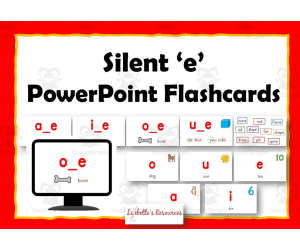
Silent e PowerPoint Flashcards: Phonics Presentations
Common Core, Phonics, Language Development, ELA, Spelling, Special Education Needs (SEN), Special Resources, Kindergarten, Grade 1, Presentations, Teacher Tools, Flashcards, Worksheets & Printables
This set of Silent E PowerPoint Flashcards has been created to help pupils differentiate between long and short vowel sounds. Many pupils, especially those with a processing difficulty, struggle to swap quickly from one to another, and therefore, much practice is needed. Aim and objective Once I start to teach Powerful ‘e’, I incorporate these flashcards into my daily lesson starter. My aim is that the child internalises the sounds so that on seeing a powerful ‘e’, they can say the right vowel sound and vice versa. This enables accurate blending and reduces frustration for the child caused by choosing the wrong vowel sound. How to use the Silent 'e' PowerPoint flashcards Work through the slides one by one. Teach the child to say the name made by the letters, followed by the word. They can use the picture as a cue. Do not underestimate the role of the picture to help the child give the correct sound. The more the correct sound is given, the sooner the child will internalise the sounds. Once the pupil seems confident, try using the set of slides without pictures! This can be done in stages, removing the pictures for the short vowel sounds first. Always return to the pictures if the child begins to choose the wrong vowel sound. We do not want them to struggle, even though we want to help them recall the correct sound. A balance must be found. What is included: Five vowel flashcards with picture cues Four Silent 'e' flashcards with picture cues (I do not teach E_E in the early stages as the few words with this sound that a child needs are best taught as sight words (e.g. here). Five vowel flashcards without picture cues Four Silent 'e' flashcards without picture cues An activity An Activity: The activity involves words appearing on the screen one by one. The child is asked: Does it have an ‘e’? Yes, or no. What sound will the vowel make? (short sound, or long name) Can you sound out the word using that vowel sound? Click for the next word. The words can be edited to change the activity. The PowerPoint is A4 format, so the slides can be printed out to form physical matching flashcards.
Author Lilibette's Resources
Rating
Tags Phonics Presentations, Silent E, Split Digraph, Long Vowels, Phonics, Special Needs, Phonics For Kindergarten

Life Science Reading Comprehension Passage: Microevolution (Word)
Science, ELA, Reading, Reading Comprehension, Strategies, Resources for Teachers, Life Sciences, Biology, Grade 6, 7, 8, 9, 10, Writing Prompts, Worksheets & Printables, Centers, Activities, Teacher Tools, Assessments, Quizzes and Tests, Quizzes, Literacy Readers, Worksheets
Life Science Reading Comprehension Passage and Questions: Microevolution (Word) This very engaging science reading passage is about microevolution and the small inherited changes that occur within populations over many generations . It explains how traits and alleles can become more or less common through natural selection, mutation, genetic drift, the bottleneck and founder effects, gene flow, and non-random mating. Students explore clear examples such as insect camouflage, antibiotic-resistant bacteria, changing bird beaks, animal movement, pollen transfer, and mate-attracting traits. This passage is designed to bridge the gap between science and literacy by strengthening reading comprehension while sparking scientific curiosity in middle school students. It blends English Language Arts skills with accurate science content, helping students build background knowledge, understand key concepts, use evidence from the text, and explain scientific ideas clearly. This resource supports science classroom practice while also reinforcing important literacy skills such as main idea, vocabulary, comprehension, and summarizing. Ideal for interdisciplinary learning in ELA and Science. Suitable for Grade 9 review, too! Student Tasks for The Passage: 10 multiple-choice questions targeting main idea, key details, science concepts, comparison, and real-world applications 10 True/False statements to check understanding and address common misconceptions 5 text-based short-answer questions that require students to explain important ideas from the passage 5 vocabulary matching items with clear, student-friendly definitions 1 summary prompt that asks students to condense the central ideas accurately Full answer key for every section Available Formats for this Resource PDF Fillable PDF Google Docs Product Details Length: 7 pages total Grades: 6–8, also suitable for Grade 9 review Use cases: close reading, stations, homework, intervention, test prep, and sub plans Standards support: Reinforces informational-text skills and supports NGSS-style sense-making by helping students read scientific explanations, connect evidence to key concepts, interpret real-world examples, and explain cause-and-effect relationships in science. Why Teachers Choose This Set Authentic science content paired with rigorous literacy practice Consistent task structure across all passages for easier planning and smoother student routines Clear, age-appropriate writing that builds confidence without oversimplifying > Other Science Reading Collections and Topics You May Find in the Store: 1. Astronomy & Space Science 2. Volcanoes, Rocks, & Mountains 3. Rock Cycle, Soil, & Sinkholes 4. Mars, Glaciers, & Antarctica 5. Water Cycle, Acid Rain, & Wastewater 6. Insects, Animals, & Ecosystems 7. Bioluminescence & Insects 8. Animal Skin, Cats, & T. Rex 9. Human Body and Senses 10. Health & Applied Bioscience 11. Waves, Light, & Imaging 12. Electricity & Energy 13. Motion & Materials 14. Chemistry and Materials Science 15. Electromagnetism 16. Acids and Bases 17. Gas Laws 18. Biotechnology 19. Periodic Trends 20. Protists and Fungi 21. Microevolution 22. Blood 23. Chemical Bonding 24. Magnets 25. Muscles 26. Nuclear Chemistry 27. Electromagnetic Devices 28. Epigenetics 29. The Law of Conservation of Mass 30. Atomic Models 31. Isotopes and Ions 32. Light 33. Human-Environment Interaction 34. Theory of Evolution 35. Photosynthesis 36. Origins of Life and Early Earth 37. Gene Expression and Regulation 38. Thermochemistry 39. Allergies 40. Coevolution 41. Birth to Adulthood 42. Cells 43. Entropy and Free Energy 44. The Human Brain 45. Mixtures and Solutions 46. Invertebrates 47. Zoo Animals 48. Biochemistry 49. Animal Behavior 50. Population Ecology ...and many more engaging science reading passages that cover intriguing and important topics designed to spark curiosity and support student learning. Use this passage to reinforce ELA skills in science, to add literacy to your lessons, and to support independent work. The passages strengthen main idea, evidence use, vocabulary in context, inference, cause and effect, and summary writing. With ready-to-use assessments and complete answer keys, you can provide focused practice that is simple to run and fast to review.
Author EduNation Creative Store
Rating
Tags Middle School, Reading Comprehension, Reading Strategies, ELA, Centers, Reading Passage, Assessments, Vocabulary, Biology, Life Science