


9,430 products added recently
Page 896 - Newest Teaching Resources

 Show filters


Country Study on Chile Guess Who Game Cards on Famous Chileans
Social Studies, Geography, Grade 6, 7, 8, 9, 10, 11, 12, Activities, Games
Country Study on Chile Guess Who Game Cards on Famous Chileans This Teaching Resource is a fun Guess Who Game PDF (1 slide, 15 cards) on Famous People from Chile. This Printable Resource can be great for Geography and Social Studies Classes. Suitable Learners for this kind of lesson are students from 6th Grade to 12th Grade. This Geography + Social Studies Guess Who Game on Famous Chileans (Country Study) aims to introduce learners to Chile (South America) and its most famous Chileans (leaders, film makers, politicians, writers etc.). Little Preparation is needed for this Social Studies + Geography Activity. Some of the Chilean People selected for this Geography + Social Studies Country Study on Chile are: Bernardo O' Higgins (Chilean Independence Leader) Pablo Neruda (Poet and Novel Literature Prize Laureate) Isabel Allende (Writer) Alejandro Jodorowsky (Film maker) Humberto Maturana (Biologist ang Philosopher) Michelle Bachelet (first Woman President of Chile) Pedro Pascal (Actor) Pablo Larrain (Film Maker) and many more! A very fun and engaging way to play this "Guess Who on Famous People from Chile" (country study on Chile, South America) game can be the following: all Learners sit on the floor in a circle every Learner has a Flash Card on their face every Learner/player asks a question about their Flash Card's famous Chilean This Social Studies + Geography Country Study on Chile PDF Printable Teaching Resource (1 slide, 15 cards for 15 Famous People from Chile) can be great for learners from 6th grade to 12th grade to introduce Chile and its Culture through its most important and celebrated people. Learning with Alan is a Brand New Teaching Resource/Educational Material Store whose aim is to help Teachers, Educators and Tutors to achieve their teaching objectives while creating a fun and stimulating environment. Never Forget! If you want to browse more of my Teaching Resources, click here Learning with Alan!
Author Learning with Alan
Tags Country Study, Chile, South America, Guess Who, Game, Cards, Social Studies, Geography, Printable, Teaching Resource

Wearing Glasses Social Story
Special Resources, Life Skills, Special Education Needs (SEN), Not Grade Specific,
Introducing our "I Wear Glasses" Social Story, a carefully crafted educational resource designed to guide children, particularly those on the autistic spectrum, in understanding and embracing the importance of wearing glasses. Social stories employ a patient and reassuring tone, creating an easily digestible format to help children navigate social situations. This specific social story addresses the significance of wearing glasses, recognizing that children on the autistic spectrum or those with certain sensory sensitivities may face challenges in understanding and accepting this aspect of their routine. However, the story is thoughtfully designed to be universally applicable, catering to any child who may be struggling to comprehend the importance of wearing glasses. The narrative unfolds with a focus on reducing anxiety and building confidence by explaining the reasons behind wearing glasses. The inclusion of personalized spaces within the story allows for the insertion of photos, fostering a connection between the child and their glasses. By featuring images of the child and others they know wearing glasses, the story becomes a relatable and inclusive tool for social learning. Beyond addressing the immediate concern of wearing glasses, this social story nurtures a broader understanding of social cues, expectations, and perspectives. It stands as a supportive resource for any child navigating the complexities of social situations or concepts, providing a foundation for improved communication and social skills. In essence, our "I Wear Glasses" Social Story goes beyond informing; it fosters understanding, acceptance, and a positive mindset, allowing children to confidently embrace and communicate about wearing glasses as a natural and important part of their daily routine. These books should be used over and over to reinforce the point so I would suggest either putting the pages into a display book or laminating and binding them. Clipart images courtesy of Kari Bolt.
Author SEN Resource Source
Tags Social Stories, Autism, SEN, Glasses, Social Narrative

Keeping My Hands to Myself – Social Story
Special Resources, Social Skills, Life Skills, Not Grade Specific,
Presenting our "Keeping My Hands to Myself" Social Story, a thoughtful and educational resource designed to assist children, particularly those on the autistic spectrum, in understanding and navigating social situations. Social stories employ a patient and reassuring tone, making complex social cues more accessible and less overwhelming for children. Understanding social expectations and appropriate behaviors is crucial for children, and this social story addresses the specific challenge of keeping hands to oneself. While designed with a focus on children who may struggle with touching or poking others or handling personal boundaries, the story is applicable to any child encountering difficulties in understanding social skills or cues. The narrative unfolds in a manner that gently guides children through the concept of personal space and the importance of respecting the boundaries of others. The story helps children grasp the impact of their actions on others and promotes self-awareness, empathy, and appropriate social behaviors. Social stories are versatile tools that offer support beyond specific diagnoses, making them valuable resources for any child encountering challenges in understanding social situations or concepts. This particular social story not only addresses the immediate concern of keeping hands to oneself but also instills valuable lessons about empathy, communication, and respecting the personal space of others. In essence, our "Keeping My Hands to Myself" Social Story is a bridge to improved social understanding and effective communication, fostering a sense of security and confidence in children as they navigate social interactions. These books should be used over and over to reinforce the point so I would suggest either putting the pages into a display book or laminating and binding them. Clipart images courtesy of Kari Bolt.
Author SEN Resource Source
Rating
Tags Social Story, Autism, Behavior, Social Skills, Hands To Myself, Social Narrative, Social Story Hands In Pants, Social Stories Keeping Hands To Self, How To Teach A Child To Keep Hands To Themselves

Individual Visual Timetable
Special Resources, Special Education Needs (SEN), Life Skills, Social Skills, Not Grade Specific,
Introducing our Individual Visual Timetable, a thoughtful and customizable resource designed to provide structure and support for children who benefit from visual cues in their daily routine. A visual timetable, comprised of pictures and symbols representing various activities throughout the day, serves as an invaluable tool for promoting a sense of security and control. Children, particularly those with special educational needs or who are visual learners, may experience anxiety when faced with uncertainty about their daily schedule. This individual visual timetable is crafted to address this concern, offering a tailored solution that can be personalized according to each child's specific day. Unlike conventional visual timetables used for the entire class, this resource provides a focused and individualized approach, allowing caregivers and educators to create a schedule that caters to the unique needs of each child. By offering a clear and visually supported representation of their day, this tool can alleviate anxiety and foster a sense of calm and confidence in children. The pack includes 45 visual timetable cards showcasing various activities and lessons, complemented by clocks displaying o'clock, quarter past, half past, and quarter to for every hour. This comprehensive set ensures that the individual visual timetable not only communicates daily routines but also reinforces time-telling skills. This pack includes 45 visual timetable cards showing activities and lesson as well as clocks showing o'clock, quarter past, half past and quarter to for every hour. Clipart images courtesy of Kari Bolt Clipart.
Author SEN Resource Source
Tags Visual Timetable, SEN, Autism, Individual, Time

Choice Boards – Visual Communication Tool for Kids
Special Resources, Special Education Needs (SEN), Social Skills, Life Skills, Not Grade Specific,
Choice Boards are a valuable resource designed to enhance communication and empower children who may find it challenging to express their preferences. A choice board serves as a visual support system, aiding in conveying the choices a child would like to make, particularly those facing communication difficulties. This bundle features five distinct choice boards, each addressing different aspects of a child's daily routine: rewards, free time, break time, calming down, and resources. The versatility of this bundle lies in its adaptability, as each board comes with eight spaces for choices. However, the flexibility extends further, allowing for customization by placing as few as two options on the board based on the child's individual needs. The use of choice boards has proven to be an effective tool in fostering a sense of control and motivation for children, particularly in a school setting. By incorporating these boards into the learning environment, educators and caregivers can create a supportive space that encourages active participation and decision-making. To further tailor the choice boards to individual preferences, the bundle includes 12 different choice cards. This variety allows for the selection of specific options that resonate with each child, promoting a personalized and meaningful experience. In essence, our Choice Boards Bundle transcends the traditional boundaries of educational resources. It is a tool that goes beyond academics, emphasizing inclusivity, communication, and the empowerment of children in their day-to-day activities. By providing visual supports and customizable options, this resource stands as a supportive aid for both educators and caregivers in fostering a positive and participative environment for children with diverse needs. Thisbundle contains 5 different choice boards: - Rewards - Free time - Break time - Calming down - Resources. Clipart images courtesy of Kari Bolt Clipart.
Author SEN Resource Source
Rating
Tags Choice Boards, Autism, Communication, SEN, Visual Choice Board
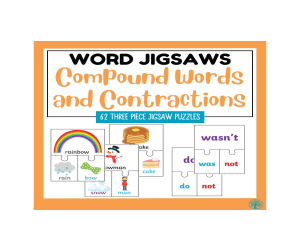
Compound and Contraction Word Jigsaws
ELA, Grammar, Language Development, Vocabulary, Reading, Spelling, Grade 1, 2, 3, Activities
Grasping compound words and contractions are key milestones for early reading and writing fluency. These engaging jigsaw sets provide hands-on practice recognizing, reading, and manipulating these two complex word forms. With self-correcting three piece puzzles, students actively build lexical skills vital for literacy development. The 34 contraction puzzles feature words like can't, don't and I'll. Children must sound out and assemble the individual components like "can" and "not" to make the combined word. The 28 compound word jigsaws include vocabulary like football, pancake, butterfly. Students blend the meaning of the individual words like "foot" and "ball" to decode the new compound term. Moving and connecting the jigsaw pieces provides kinesthetic reinforcement of how smaller words combine to make larger vocabulary. The physicality cements reading comprehension and spelling skills. Teachers can use these materials repeatedly in literacy centers, small groups or phonics lessons. With illustrated compound words and movable contraction parts, children are immersed in the mechanics of language. Manipulating the words into unified puzzles delivers “aha” moments. The engaging, self-checking activities make complex linguistic concepts tangible and fun. Students will delight in these hands-on games while gaining abilities to recognize, read, and apply multifaceted vocabulary. This pack includes 34 three piece contraction jigsaws and 28 three piece compound word jigsaws. Clipart images courtesy of Kari Bolt Clipart, Flycatcher Clipart and Little Red
Author SEN Resource Source
Tags Vocabulary, Grammar, Compound Words, Contraction Words, Language Arts

Non-identical Animal Matching
Special Resources, ELA, Language Development, Pre-Reading, Special Education Needs (SEN), Not Grade Specific, Activities
Matching games build visual discrimination, classification, and critical thinking skills in young learners. This set takes matching a step further by featuring non-identical images that must be sorted based on conceptual relationships. With an engaging farm animal theme, students will delight in making connections between like animals. The materials include 6 base boards, each with 4-5 detailed farm animal pictures. Rather than matching identical pairs, students must categorize the animals by traits like species, color, or baby/adult. Sort pigs, cows, sheep, chickens, horses and more using visual cues like number of legs, color of fur, or size. Because the images vary slightly, students must look beyond basic appearance to understand how the animals are related fundamentally. This challenges learners to classify concepts at a deeper level. Worksheets can be used independently, in small groups, or whole class. The open-ended format allows for sorting by multiple attributes. Laminated boards and animal cut-outs enable reuse for different categorization each time. Activities build visual discrimination, flexible thinking, and vocabulary as students explain their sorting rationale. Moving the pieces enhances motor skills too. This engaging game delivers cognitive growth in a hands-on way. This set comes with 6 base boards each with 4-5 farm animal pictures. Clipart images courtesy of Kari Bolt Children's Illustrator:
Author SEN Resource Source
Tags Autism, Independent Workstation Activities, Matching, Non-identical Pictures, Visual Discrimination, Animal Matching, Cognitive Skills, Non-Identical Matching, Critical Thinking

Wriggle Break Cards
Special Resources, Social Skills, Life Skills, Special Education Needs (SEN), Not Grade Specific, Worksheets & Printables, Flashcards
Wriggle Break Cards: An Innovative Teaching Resource The Wriggle Break Cards are a revolutionary teaching resource designed for educators aiming to blend movement breaks into their classrooms or homeschooling schedules. Created with the knowledge that brief moments of physical activeness stimulate the brain, the cards work to heighten focus and elevate learning results. Specially valuable for students contending with attention issues such as those diagnosed with ADHD or autism, these cards have nevertheless proven to enhance learning for all children. This makes them an indispensable component of modern teaching tools. A Look Inside: 20 unique flashcards: Each set contains various activities from stretches and aerobics to action songs, yoga poses, and fun games User-friendly design: Clear instructional text and explanatory images by acclaimed illustrator Kari Bolt make it easy for children to understand each activity Ease in Usage: Educators can incorporate these cards strategically throughout sessions when they notice students growing restless. The reminders on the card prompts individuals towards quick breaks! Growing Autonomy: Not just break reminders,, however; giving control of these cards empowers students in their education journey enabling them moments of relaxation as well. Versatile Application: The Wriggle Break Cards allow opportunities beyond individual use. Drawing inspiration from active learning concepts where pupils learn by doing enforces collective classroom exercise sessions too being another beneficial usage possibility . No specific grade restriction ensures its wide applicability across diverse age groups thus cementing its status as an exemplary tool promoting physical movement in any curriculum style - be it a conventional classroom or homeschooling. Easy Access: The cards are available as downloadable PDFs, making this resource easily accessible from anywhere in the world without the slightest of hassle. Clipart images courtesy of Kari Bolt Clipart.
Author SEN Resource Source
Tags Movement Breaks, Focus Improvement, ADHD Support, Educational Resource, Active Learning, Visual Behavior Prompts, Visual Prompts, Behavioral Tools

Behaviour Prompt Fans
Special Resources, Special Education Needs (SEN), Social Emotional Learning (SEL), Social Skills, Not Grade Specific, Activities
Managing student behavior without constant verbal redirection can be challenging. These illustrated prompt fans offer teachers a quiet, visual solution. The 7-piece fan provides friendly visual cues to get children back on track in a non-disruptive way. Educators can hold up prompts like “Good Looking”, “Hand Up”, or “Stop” during instruction. A subtle glance conveys expectations and reminders to stay focused and behaved. Prompts for posture, listening, and participation keep students engaged in lessons. The “Well Done!” piece offers quick positive reinforcement. Rather than loud reprimands, these materials allow subtle behavior corrections. Students, especially visual learners, appreciate the low-key signals. Consistent cues aid self-regulation skills. Durable for repeated use, teachers can integrate these fans seamlessly into classroom management. Silent redirections with a simple visual aid maintain a calm, productive learning environment. Children quickly grasp the meaning behind each illustrated piece. Integrate these into your toolkit for harmonious lessons with fewer disruptions. Establish clear expectations and redirect behaviors while keeping valuable teaching momentum. The fan has 7 pieces which include the prompts: - Good looking - Good listening - Good sitting - Hand up - Well done! - Time out - Stop The wonderful clipart images are courtesy of Kari Bolt Clipart
Author SEN Resource Source
Tags Behavior Support, Behaviour Support, SEN, Visual Behavior Prompts, Behavioral Cues, Visual Supports, Behavior Reminders, Behavioral Visuals

Calming Strategies Checklist
Special Resources, Life Skills, Social Emotional Learning (SEL), Social Skills, Special Education Needs (SEN), Not Grade Specific, Worksheets & Printables, Worksheets
Title: Calming Strategies Checklist Children dealing with heightened emotional states, especially those struggling with anger issues often need guidance and support to navigate their emotions efficiently. The Calming Strategies Checklist is a good tool to help educators be proactive in helping such students manage their stress. Created as a worksheet, it aims to involve children actively in self-regulating their emotions—an important life skill. This relevant educational resource is an invaluable asset for public school teachers or homeschoolers who have pupils under their care experiencing difficulties managing anger effectively. Presented as a behavior support instrument, this identity-friendly presentable checklist encourages children to introspect on what calming strategies work best for them when they encounter stressful situations. The Audience: The Calming Strategies Checklist is not grade-specific but instead reaches every child facing struggles head-on and offers possible solutions they can leverage during periods of emotional volatility. This tool falls into the arena of special resources under life skills, indispensable soft-skills training for all young learners hoping to build resilience and control in emotionally charged circumstances. Versatility: Whole group instruction: Could engage the entire class in discussions about anger management strategies without isolating any single student meanwhile promoting broader understanding among the students towards managing adversities gradually building camaraderie among peers. Small group implementation:Can focus more closely on kids who frequently encounter episodes of heightened emotions while offering peer discussions directed at brainstorming effective calming techniques stimulating empathy amongst themselves encouraging supportive learning environment enriching classroom dynamics further . Homework use:Enable children's opportunities to explore personal strategies quiet from peer incidents understanding themselves better via one-on-one interactive engagement with parents pertaining personal experiences providing space encouraging better bonding between parent-child engaging equally beyond regular academic progress also introducing parental perspectives into teaching-learning experiences further broadening its wholesome outcomes beyond conventional classroom settings. And finally,the downloadable PDF format ensures its easy distribution amongst students while ensuring a tailored for use, standardized but interactive worksheet suitable for traditional or distance learning environments. In Summary: The Calming Strategies Checklist holistically addresses behavior-related challenges regarding anger and offers a proactive approach towards grappling with emotional responses facilitating overall personality development amongst young learners. It constitutes an effective tool that underscores the importance of life skills in children's comprehensive education journey designed to aid educators develop regulated environments conducive to reciprocal learning experiences while promoting emotional health and adaptive behavior among their students. Clipart images courtesy of Kari Bolt Clipart
Author SEN Resource Source
Tags Calming Strategies, Anger Management, Behavior Support, Emotional Regulation, Resilience

Opposite Word Jigsaws
ELA, Language Development, Vocabulary, Preschool, Activities
Grasping opposites, or antonyms, builds vocabulary and cognitive skills essential for young learners. These engaging jigsaw pieces turn opposite word comprehension into an interactive, hands-on activity. With 33 two-piece puzzles featuring illustrated word pairs, students will delight in mastering this foundational language concept. Each jigsaw set includes words like up/down, day/night, big/small, clean/dirty along with coordinating picture cards. By matching the words and images, children reinforce their understanding of contrasting vocabulary. Moving the puzzle pieces together provides kinesthetic reinforcement of opposite relationships. Teachers can use these materials for whole group opposite introduction, small group practice or independent centers. Durable pieces are ideal for repeated use and learning games. The self-correcting format gives students instant feedback. Seeing, saying, reading and manipulating opposite vocabulary cements comprehension. Beyond its educational benefits, the Opposite Word Jigsaws contribute to a child's overall cognitive growth by fostering curiosity, exploration, and interactive learning. As children engage in the matching process, they not only refine their language skills but also lay the foundation for broader cognitive abilities. Learning to recognize and apply contrasting adjective pairs improves descriptive language and reading readiness. Understanding opposites aids math skills like sorting/classifying objects. This interactive resource brings essential antonym mastery to life in an approachable way. Moving the pieces together lets children feel and celebrate their growing lexical knowledge. This pack includes 33 two piece jigsaws each with a word and image. Clipart images courtesy of Kari Bolt Clipart and Crunchy Mom.
Author SEN Resource Source
Tags Opposites, Vocabulary, Sorting, Antonyms, Language Development, Word Pairs, Language Arts, Word Opposites, Language Skills, Opposite Of Teach

Big and Small Sorting
Special Resources, Special Education Needs (SEN), Math, Early Math, Measurements, Kindergarten, Preschool, Activities
This Big and Small Sorting resource is a wonderful one to have students learn and practice sorting and matching shapes and objects. Sorting and matching shapes and objects helps to build visual perception and thinking skills. This Big and Small Sorting activity requires children to group different objects based on whether they are big or small. Using this Big and Small Sorting activity would be perfect for an independent workstation activity or work in pairs or small groups of students. This set may also be used to engage in conversations with students to increase their abilities to talk about something specific. This Big and Small Sorting includes cards with images that are big and cards with images that are small. Images include common animals, foods, toys, and things of which children are familiar. Each of the sets are included in the files added to the zip file. This Big and Small Sorting was designed for students in any grade with the need to increase visual perception and to increase their thinking skills who may also be within the autism spectrum. This set comes with 2 base boards and 14 pictures to sort. For similar resources and other engaging resources, visit my store here! Clipart images courtesy of Kari Boly Clipart
Author SEN Resource Source
Tags Independent Workstation Activity, Autism, Sorting And Matching, SEN, Big And Small, Early Math

Behavior Prompt Cards
, Not Grade Specific, Classroom Decor
Managing classroom conduct without constant verbal reminders is a challenge. These illustrated behavior prompt cards offer a quiet, visual solution. The 6 colorful cards provide friendly cues that redirect students non-disruptively. Teachers can hold up cards like "Good Looking" and "Hand Up to Speak" during instruction. A simple glance conveys expectations and reminds focused learners to stay on-task. Prompts for good sitting posture, listening, and participation keep students engaged in lessons. The "Well Done!" card offers quick, positive reinforcement of good behaviors. If misbehavior continues, the "Time Out" card signals a needed break. Avoiding noisy reprimands maintains a calm classroom climate. Students appreciate the subtle signals, especially those who are visual, nonverbal or sensory-sensitive learners. Consistent cues and expectations aid self-regulation skills. Included lanyard sizes allow you to keep reminder cards close by. Silent redirections guide students without interrupting valuable teaching time and momentum. Kids gravitate toward the colorful designs and quickly understand the meaning behind each one. Integrate these prompts into your behavior management toolkit for more harmonious lessons and activities. They help establish an encouraging environment where students can learn, explore and grow. Included are 6 cards: - Good listening - Good looking - Good sitting - Hand up to speak - Well done! - Time out Also included are lanyard sized versions of the cards Clipart images courtesy of Kari Bolt Clipart
Author SEN Resource Source
Tags Behavior Support, Behaviour Support, Teacher Prompt Card, Visual Behavior Prompts, Behavioral Cues, Behavior Reminders, Classroom Behavior, Behavior Management
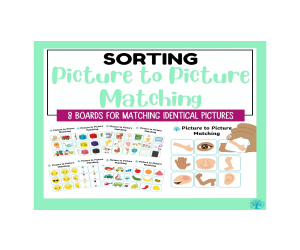
Picture to Picture Matching
Special Resources, Special Education Needs (SEN), Not Grade Specific, Activities
Picture to Picture Matching - A Comprehensive Teaching Resource This exceptional tool Picture to Picture Matching aims to assist learners in matching identical pictures. It serves as a crucial way to foster pre-reading skills amongst children by honing visual distinguishing abilities over the reliance on tactile sensations. The activity acts as a stepping stone for learners by aiding them in making finer distinctions between objects based purely on sight. This valuable skill has potential implications across different learning scenarios – from recognizing letters and words while reading, differentiating shapes during geometry lessons or even identifying human emotions in social studies! Meticulously crafted: Every aspect has been meticulously crafted with experts' advice for seamless practice across a variety of settings: large group classroom exercises or small group interventions. Inclusive: Parents homeschooling their children will find this equally useful. The Package: Users receive 9 base boards along with 9 picture cards each – all ready to match! Content broken down into manageable chunks to keep engagement alive without overwhelming young learners. Durable & reusable: Just laminate the sheets and apply Velcro strips! Ready for repeated use without showing any wear or tear. 'Special Resources': Pupils with Special Educational Needs (SEN) as well as any child interested in learning through visuals can greatly benefit from these challenges at their own pace. In consideration of its engagement value and educational dividends, "Picture to Picture Matching"is a remarkable addition that caters universally and captivates individually. Not just another PDF file type activity download, but an invaluable addition indeed! This set includes 9 base boards each with 9 picture cards to match. Clipart images courtesy of Kari Bolt Clipart
Author SEN Resource Source
Tags Pre-reading Skills, Visual Distinction, Learning Resource, Educational Tool, Picture Matching

Calming Strategies Posters
Special Resources, Life Skills, Not Grade Specific, Posters, Classroom Decor
Presenting our Calming Strategies Posters – a unique assortment of 13 vibrant and visually attractive display posters tailored to help your students handle their emotions effectively. These resources are ideal for educators striving to build a welcoming and supportive learning environment where children feel at ease expressing themselves while acquiring essential emotional regulation abilities. With stunning illustrations by the talented Kari Bolt, a noteworthy Children's Illustrator, every poster captivates attention and enhances the bond between words and feelings for young learners. The engaging artwork is paired with simple descriptions of various calming methods that can be employed during heightened emotional moments like anger or anxiety. Effortlessly print these posters to exhibit in your classroom or throughout school premises as soothing reminders for students who need aid in managing their emotions. They also act as fantastic discussion starters for class conversations about coping strategies, fostering open communication on mental wellness within your student community. Rather than waiting for problems to arise, these tools teach proactive skills that prevent issues. When integrated into a comprehensive social-emotional learning plan, these posters lay the foundation for good mental health and relationship behaviors. Captivating students’ interest, the vibrant visuals make calming strategies accessible and easy to embrace.
Author SEN Resource Source
Tags Anger, Calming Strategies, Classroom Display Posters, Behavior Support
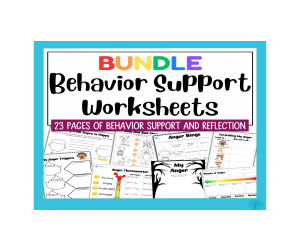
Behavior Support Worksheet Bundle
Special Resources, Social Skills, Life Skills, Social Emotional Learning (SEL), Special Education Needs (SEN), Not Grade Specific, Worksheets & Printables, Worksheets
Promoting positive behavior and self-regulation skills in children requires targeted guidance. This collection of worksheets and activities aims to equip students with strategies for managing their emotions and actions. With engaging formats, these materials teach crucial skills for school and social success. This pack includes 16 worksheets: * Anger Choices * Anger Bingo * Anger Meter * Behavior Reflection * Anger Dos and Don'ts * Controlling my Anger * My Anger * Getting from Angry to Happy * Behavior Choices * Good and Bad Choices * Anger Responses * Kind hands * My Anger Triggers * Phases of Anger * Why should I Follow the Rules? * Anger Thermometer The resources in this bundle help children identify and express their feelings in constructive ways. Activities teach coping mechanisms like deep breathing, counting, and taking time out to defuse anger and calm down. By learning to recognize emotional triggers and apply regulation strategies, students gain tools to de-escalate situations before acting out. Several worksheets address the root causes of behaviors using self-evaluation and introspection. Students learn to reflect on their actions, identify better choices, and make amends after mistakes. Developing this self-awareness fosters personal accountability and growth. The concrete examples and scenarios help kids apply the social-emotional lessons. Interactive formats like drawing and cutting and sticking make the content approachable. These teacher-created resources aim to set children up for success, not just penalize them after the fact. Equipping students with behavior management skills early on instills self-discipline and emotional intelligence. This leads to fewer disruptions and more harmonious classrooms. The worksheets build coping skills using relatable, engaging methods. Clipart courtesy of Kari Bolt Clipart.
Author SEN Resource Source
Tags Behavior Support, Anger, Angry, Emotions, Social-Emotional Learning, Self-Reflection, Social Skills, Anger Management, Coping Skills, Calming Strategies

Now and Next Board
Special Resources, Special Education Needs (SEN), Not Grade Specific,
Visual schedules are an effective classroom tool, especially for reducing anxiety in children who thrive on routine. Combining “now and next” boards with reward cards provides helpful structure while motivating positive behavior. This resource includes a two-column schedule board labeled “Now” and “Next” where teachers can display activity cards outlining the day’s lessons and tasks. Seeing the sequence of events provides reassuring structure. Children can focus on the current task knowing what comes next. The set also includes 22 illustrated reward cards like computer time, a sticker, or 5 minutes of Legos. These incentives can be integrated into the schedule, motivating students to complete the “Now” activity to earn the “Next” reward. With over 80 engaging activity and lesson cards, teachers can customize the board. Cards with clear illustrations depicting math, reading, PE, music and more provide visual cues young children relate to. This system reduces anxiety around transitions while building readiness skills. Now and next boards give children a sense of control over the day’s cadence. Integrating motivating rewards incentivizes positive behavior. This clear structure helps create a calm, focused environment ideal for learning and development. This pack has a chart with two boxes for ‘Now’ and ‘Next’ and 72 visual timetable cards with lessons and activities as well as 22 reward cards. Clipart images courtesy of Kari Bolt Clipart.
Author SEN Resource Source
Tags Now And Next Board, Visual Timetable, Reward Chart, Autism, SEN , Routine

Behavior Target Reward Charts
Special Resources, Resources for Teachers, Classroom Management, Social Emotional Learning (SEL), Special Education Needs (SEN), Not Grade Specific, Charts, Teacher Tools
Blending visual schedules and motivational reward systems yields an effective behavior management tool for classrooms and home. These charts allow teachers to set personalized conduct goals for each student while providing a clear schedule of activities. The set includes two sizes of “Now and Next” boards detailing current lessons/tasks and then the chosen reward. Change the illustrated activity cards daily. When students complete the “Now” activity and follow behavior goals, they earn their chosen reward. In order to gain the reward the chart shows given targets that they should work toward which will personal to the individual child. Sixteen illustrated reward options like computer time, bubbles, or time playing with their chosen toy allow children to see the payoff for positive behavior. Teachers can tailor the options to each child's preferences. At clean up time, students remove their schedule cards and do a reflection worksheet. This prompts discussion about their day's conduct and feelings. Did they earn their reward? Why or why not? The reflection teaches self-evaluation skills. Combining scheduling, rewards and reflection provides structure and motivation. Children understand the behavioral objectives and see their progress. The routine builds self-discipline, on-task behavior and social skills. Parents and teachers can align targets like "keeping hands to self " with individual needs. An engaging system offering consistency, incentives and clear expectations benefits learning and development. In this file there are two different formats of now and next chart one with 1 lesson and one with 2 lessons. There are also 48 lesson and activity picture cards and 16 different reward cards for the child to choose from. There is also a chart for the children to do their own personal target reflection at the end of the day to promote discussion about how they think their day has been. Clipart images courtesy of Kari Bolt Clipart.
Author SEN Resource Source
Tags Behavior Targets, Reward Chart, Target Chart, Behavior Support, Behavior Review, Target Reward

Reward Charts
, Not Grade Specific, Charts, Teacher Tools
Positive reinforcement is an effective way to promote good behavior in children. This engaging reward system allows children to earn stars for positive actions that lead to a chosen prize. With multiple chart options, teachers can tailor the system to each student's needs and abilities. This set includes four different reward charts that require 2, 3, 4 or 6 stars to earn a reward. Once a child chooses a goal card with their preferred prize, they can work towards that motivator by displaying positive behaviors like following directions, being kind, or trying their best. Teachers and parents distribute stars accordingly. Twenty illustrated prize cards depict rewards like extra playground time, picking a class game, or eating lunch with the teacher. Students stay invested in the process of earning stars for positive conduct. The physical charts provide visual motivation. Customize the system by choosing an appropriate star goal chart for each child. Adjust the reward options seasonally or for variety. The flexible components can target goals from academics to behavior. Rewarding effort and achievements, rather than punishing problems, yields excellent results. Children respond well to positive reinforcement and incentives. This system offers an engaging way to promote desired conduct. Pack contains 4 different charts to be used dependent on the ability of the child, each chart requires them to earn a different number of stars to earn their reward. There are also 20 reward cards for children to choose from as well as stars. Clipart images courtesy of Kari Bolt Clipart:
Author SEN Resource Source
Tags Reward Charts, Behavior, Targets

Counting to 10
Math, Early Math, Numbers, Kindergarten, Preschool, Grade 1, Worksheets & Printables, Worksheets
Early math skills like rote counting and number recognition pave the way for future math achievement. These simple worksheets provide engaging practice counting objects and writing numbers 1-10. With eight different illustrated themes, students gain repeated exposure recognizing and quantifying numbers 1-10. Each page features a different category like farm animals, fruit, vehicles or dinosaurs. Young learners will count the objects and write the corresponding numeral. The vivid pictures keep students focused as they practice one-to-one correspondence and number formation. Worksheets can be used for whole group lessons or independent practice. The variety of categories and examples aids math comprehension. Seeing numbers in different visual contexts reinforces the quantities they represent. Students gain experience counting both familiar and new objects which builds flexibility. Math skills stick better when applied in fun contexts like bugs, blocks and crayons rather than plain numeral charts. These simple practice sheets help cement early numeracy skills essential for math success. Students will gain fluency counting, quantifying sets, and writing numbers 1-10 through engaging activities. Building this solid foundation prepares learners for more complex math down the road. In this pack there are 8 different versions showing insects, safari animals, fruit, blocks, crayons, farm animals, dinosaurs and transport. Clipart images courtesy of Kari Bolt Children’s Illustrator.
Author SEN Resource Source
Tags Counting To 10, Early Numeracy, Number Recognition, Preschool Counting, Counting Activities, Learning To Count, Counting Skills, Basic Arithmetic, Early Math Skills, Numeracy Development

ESL Lesson Plan on Social Medias - Listening comprehesnion + Writing
ELA, Language Development, ESL, Reading, Reading Comprehension, Writing, Vocabulary, Grade 7, 8, 9, 10, 11, 12, Teacher Tools, Lesson Plans
This Fantastic ESL EFL TESOL Social Media Lesson (PDF Digital Lesson 12 slides + answer keys in the last slide) is Great to stimulate English Learning within Newcomers or any English Second Language Students. Ideal participants for this Activity are Foreign Languages Students at Middle School and early High School. This Product can also be Great for ESL Centers Abroad and ESL Tutors or private teachers. This ESL EFL TESOL Activity can be more than great for intermediate English as a Second or Foreign Language Students. This Stimulating ESL-EFL-TESOL Lesson Plan on Social Medias (13 slides) includes: a short Introduction to Social Medias and their perks and issues a Picture Description ESL EFL TESOL Activity given of three scenes (kids browsing their phones and social medias, an old lady connecting through digital devices and a scene of a boy who is victim of cyberbullying; graphic scene where the boy browse his phone while two peers laught) One Listening comprehension Activity (with answers keys in the bottom) with QR Code-Linked YouTube Video One Writing Activity with 2 options (the further issues social medias bring + the perks social medias also have; write about the evolution of social medias and write about the possibilites one can have nowadays) This ESL, EFL, TESOL, TEFL PDF Digital Teaching Resource (12 slides + answer keys in the last slide) can be great for Intermediate Advanced English as a second or foreign language learners. Its aim is to make students exercise and/or improve their Listening comprehesion and Writing English as a second language Skills. ESL with Alan is a Brand New ESL, EFL, TESOL Store whose aim is to help English as a Second or foreign Language Teachers, Educators and Tutors (be it online or offline) to achieve their teaching objectives while creating a fun and stimulating environment. Never Forget! Learning is fun, So should English! Always If you want to browse more of my PDF ESL, EFL, TESOL Teaching Resources, click here Learning with Alan!
Author Learning with Alan
Tags ESL, English Second Language, Social Media, Lesson Plan, English, Activities, Writing, Listening, Listening Comprehension, Teens

Number Mats 1-100 to Build A Number
Math, Numbers, Kindergarten, Preschool, Activities
Get students excited about learning numbers 1-100 with these hands-on number mats! This math activity uses different kinds of manipulatives or craft supplies to build each number mats for a hands-on approach to practice number recognition and formation. What is Included: There is one mat for each number from one to one-hundred. Ways to use these mats: Students can use pouch tops to build each number. Students can use cotton balls or pom poms to create each number. Students can stick stickers in each circle to fill in each number. Students can use bingo dabbers to make each number. Students can use mini erasers to fill in each number. Students can use stamps to put one stamp inside each circle. Any small manipulative will work in filling each mat. Laminate the mats to create a more durably and reusable math activity. These mats make a great fine motor activity for preschoolers and kindergartners who are learning to recognize numbers up to 100. Turn the Mats into a Game! To make these mats a game, provide students with a die. The students will roll the die and, then the students will add the correct number of manipulatives to the number mat until they build the entire number. Where to Use: Math Centers - Simply place the mats and manipulatives in a math center for students to complete alone or with a partner. Morning Tubs or Baskets - Place these mats in a morning bin for students to complete as their classmates arrive to class. Quiet Time Activity - These mats can be used during a quiet time for students who do not nap, helping them stay engaged while their peers sleep. These number 1-100 mats are a no prep option for teachers to put in their literacy centers. The teacher simply needs to add the desired manipulatives that students will use to complete the mats.
Author The Connett Connection
Tags Build A Letter, Alphabet Mats, Letter Recognition, Alphabet Center, Literacy Center, Preschool Literacy

Under the sea voice level pattern edition
, Kindergarten, Preschool, Grade 1, 2, 3,
The best part about decorating your classroom is picking and choosing your favourite designs that best appeal to your students, the idea behind this classroom decoration is to give you as a teacher the opportunity to pick your favourite under-the-sea-inspired designs to create your very own masterpiece of a classroom. This Under the sea alphabet poster pattern edition decoration is a key element in creating a classroom community as well as classroom management within your class. The objective behind the alphabet posters is to help teachers to support learners in learning their letters and letter sounds as well as support students that are struggling with remembering their letters and letter sounds. This Under the Sea alphabet poster pattern edition download comes as a downloadable PDF which should be printed in color and laminated to be placed on the wall in your classroom. These posters are suitable for all grades however in specific pre-k as well as grades; R,1, 2 and 3. If you like this Under the Sea pattern edition classroom decoration be sure to have a look at the rest of this edition decoration: - Number posters - Alphabet posters - Birthday chart - Daily Calendar - Focus wall - Voice level posters - Months of the year - Days of the week - Color posters This download contains 143 pages DIRECTIONS: The files are all PDFs. Print and laminate the pages to use in the classroom. If you would like anything specific to be added please let me know and I’ll be happy to do so when I can. Use: You are free to use and modify the material. For similar or other resources, visit my store here!
Author Ezee 101
Tags Under The Sea, Voice Level, Classroom Community, Classroom Management, Classroom Decor, Class Deoration

Under the sea number posters pattern edition
Math, Numbers, Kindergarten, Preschool, Grade 1, 2, 3, Posters, Classroom Decor
Under the Sea Number Posters Pattern edition Dive into a fun and interactive way of teaching numbers with the "Under the Sea Number Posters pattern edition". This unique resource infuses an oceanic element into numerical education, enabling educators to give their teaching environment a fresh, engaging look while delivering quality lessons. As classroom decor, it not only brightens up learning spaces but also serves as an effective visual aid for students. Design and Look This set is meticulously designed with vibrant ocean-inspired aesthetics that readily captivate learners' attention and pique their interest in number learning. It's perfect for preschool to Grade 3 classes focusing on Math subjects and Numbers subtopics.The set genuinely resonates with young learners who are naturally drawn to cheerful colors and playful designs. Versatility The Under the Sea Number Posters deliver versatility in its offerings - posters featuring numbers from one through twenty are provided both with and without ten frames charts, allowing educators flexibility in implementation based on instructional needs or pedagogical preference. With posters accompanied by ten frame charts, each number is presented visually through corresponding dots within a ten frame grid alongside the number word - fostering students' recognition of numeric symbols, counting skills, and understanding of cardinal values all at once. The alternative set without ten frames introduces just the digits alongside their word forms providing a simpler approach beneficial for very young kids starting out or those needing consolidation on basic identification skill before moving onto conceptual understanding via pictorial representation (ten frames). Possible Uses: Ideal for whole group lessons where these can be hung up as reference during activities; Suitable for smaller group discussions involving counting games; Can be given as homework assignments where kids can practice writing over them after pasting it onto scrapbooks – all encouraging repetition towards effortless recall. All you need to do is print these PDF files and laminate them if desired for added durability – simple preparation yielding significant instructional benefits! Feel free to make modifications if required so that this tool aligns perfectly with specific curriculum needs – a testament to its flexibility. Transform your classroom into an undersea world of numbers, and watch your students' numeric skills surface with the "Under the Sea Number Posters". If you like this Under the Sea pattern edition classroom decoration be sure to have a look at the rest of this edition decoration: - Number posters - Alphabet posters - Birthday chart - Daily Calendar - Focus wall - Voice level posters - Months of the year - Days of the week - Color posters Be sure to keep an eye on our store @Ezee101
Author Ezee 101
Tags Number Posters, Counting, Ten Frame, Classroom Decoration, Numbers, 1-20, Under The Sea