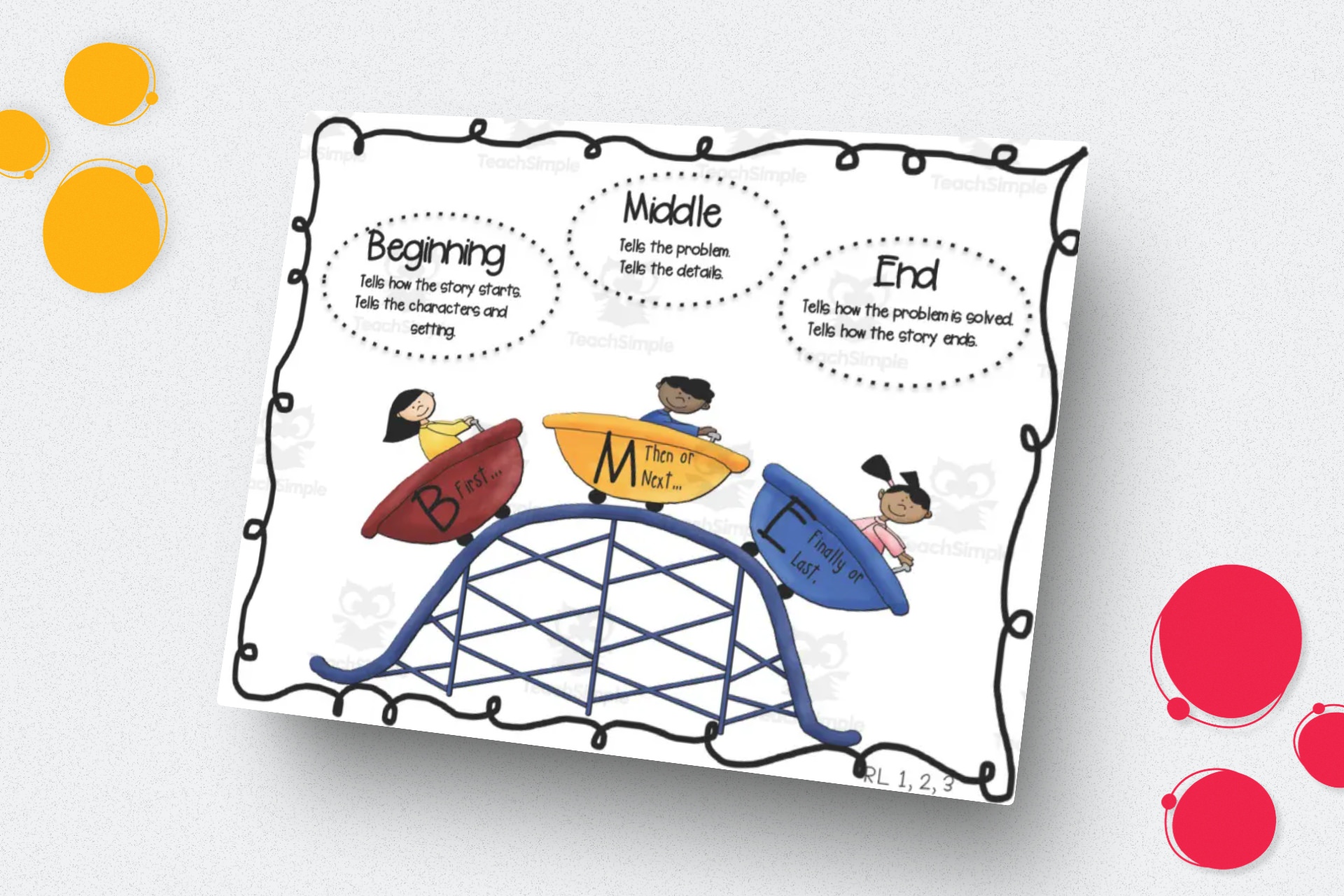
Plot Anchor Chart – Story Structure Set of 4
Teaching Plot Anchor Chart Chart out new territories of learning with this unique set of teaching tools designed to simplify the process of understanding plot structures.




327 resources
Explore sub-categories
5 sub-categories · 327 resources
Teaching Plot Anchor Chart Chart out new territories of learning with this unique set of teaching tools designed to simplify the process of understanding plot structures.
Ten plot-focused graphic organizers guide students through mapping a story's five elements — introduction, rising action, climax, falling action, and resolution — using formats that range from a classic Plot Pyramid and Story Cycle to a Prediction Tree, a nine-box Sequence Chain, and a two-column Changes-in-Plot chart. Two introductory instructional pages explain how to use the ten templates; the Plot Analysis format, for example, also asks students to identify point of view, foreshadowing, and symbolism alongside the standard plot stages. Because every organizer is a blank template, teachers supply the story or text students will map onto it.
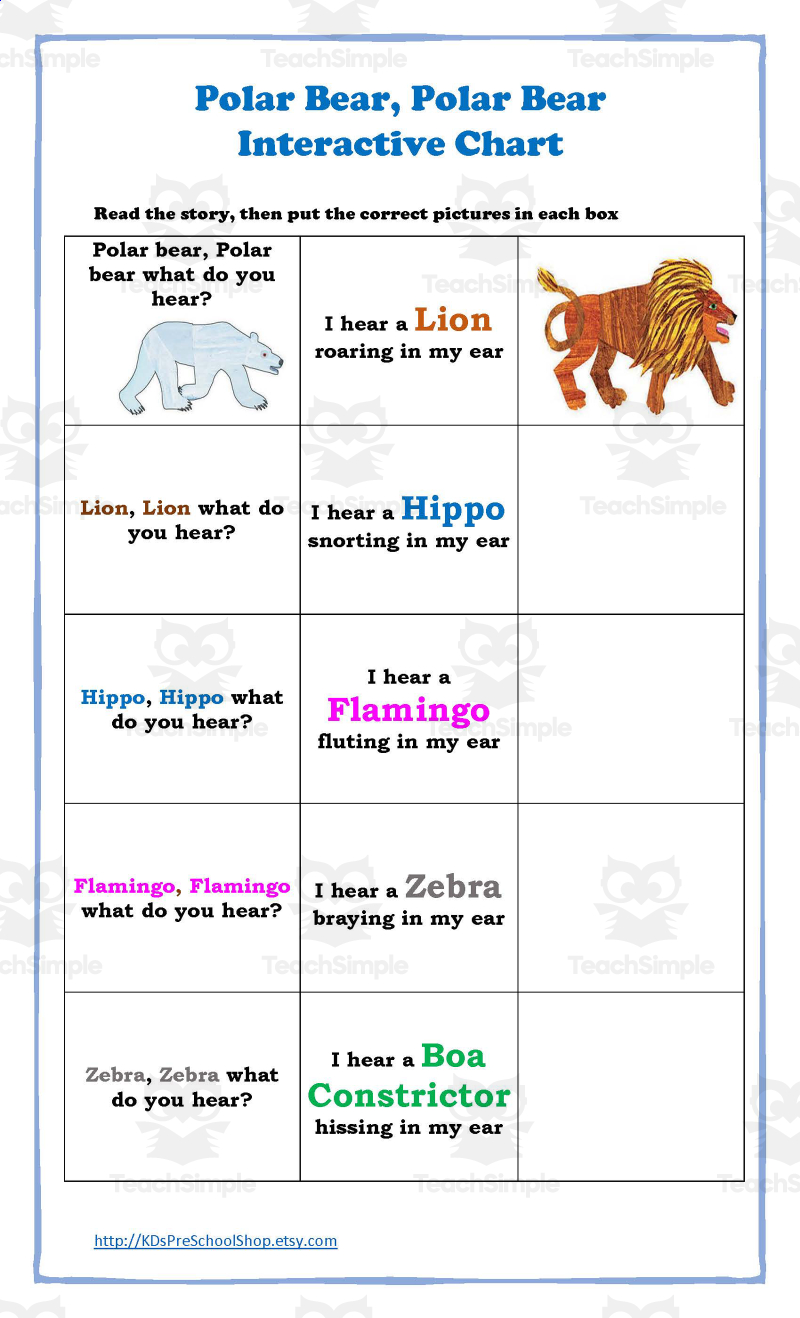
Polar Bear Interactive Chart | Book Companion This interactive sequencing chart makes an engaging companion resource for classrooms reading the children's book Polar Bear, Polar Bear, What Do You See?
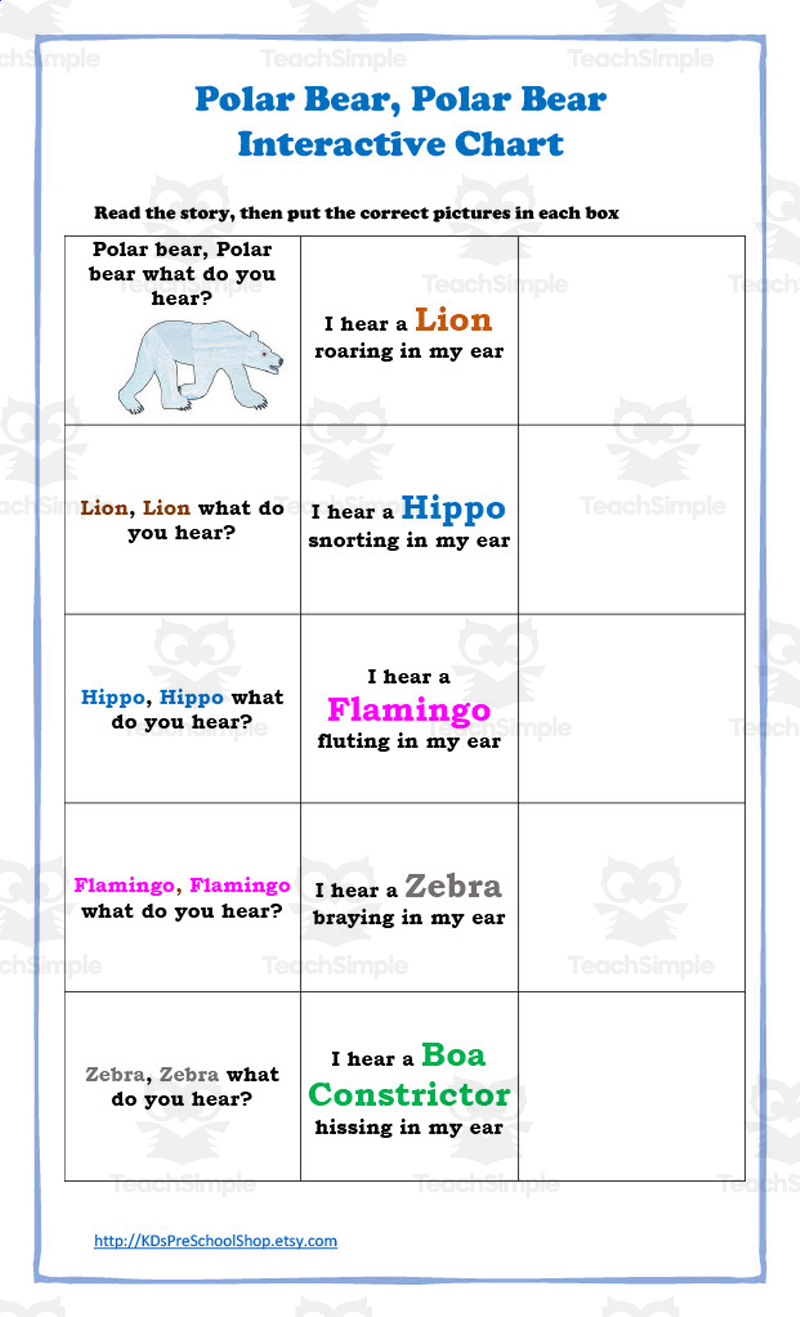
Support early literacy through a repetitive-pattern "Polar Bear, Polar Bear, What Do You Hear?" style story chart pairing animals with the sounds they make.

This worksheet can help your students compare two stories with similar plots or characters. It can be a useful tool to help them understand the elements from the two stories.
 Free download
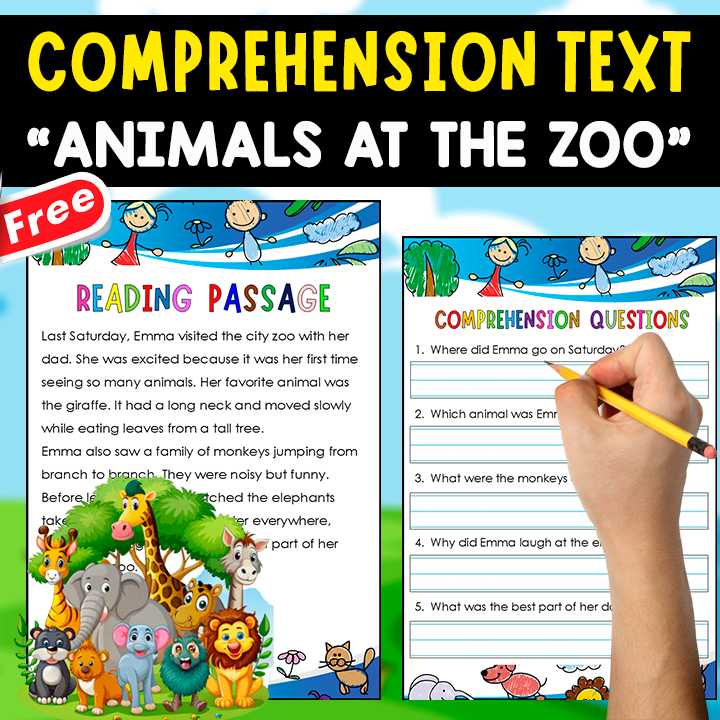
 A short ESL/early-reader comprehension pack using a simple fiction passage about a family visit to the zoo, paired with four reading-strategy anchor-chart activities (predict, visualize, question, summarize) and a vocabulary box.

A five-step Somebody/Wanted/But/So/Then framework walks students through identifying a story's main character, goal, problem, attempted solution, and ending, and it appears twice — once fully worded as a teacher or display copy, and once with key words blanked out for students to fill in themselves. A second, matching chart titled ‘Summarizing’ explains that a summary retells a story's main events and lists the five elements to include (characters, setting, problem, events, solution) using the same SWBST acronym, again in both a complete and a fill-in-the-blank version. Together the four pages form a two-part anchor chart set meant to be posted for reference and then reinforced through an interactive-notebook-style blank version students complete in their own notes. The charts can support story retelling alongside a teacher-selected text.

This resource is a Squirrel's New Year's Resolution Interactive Reading Packet. This is a great component to your early finisher buckets or reading stations during the winter season.

Anchor charts and assessments teaching kindergarten students (RL.K.3) to identify characters, setting, and major events in a story.
 Free download
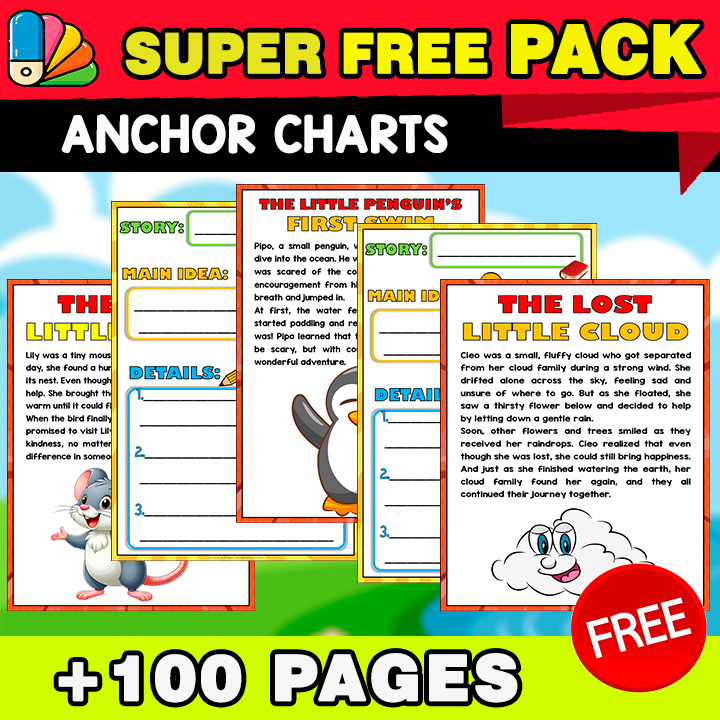
 A bundle of short original English stories/fables (including at least one classic fable, 'The Lion and the Mouse') each paired with a main-idea-and-details reading-comprehension anchor chart, provided in both a completed worked example and a blank student-practice template.
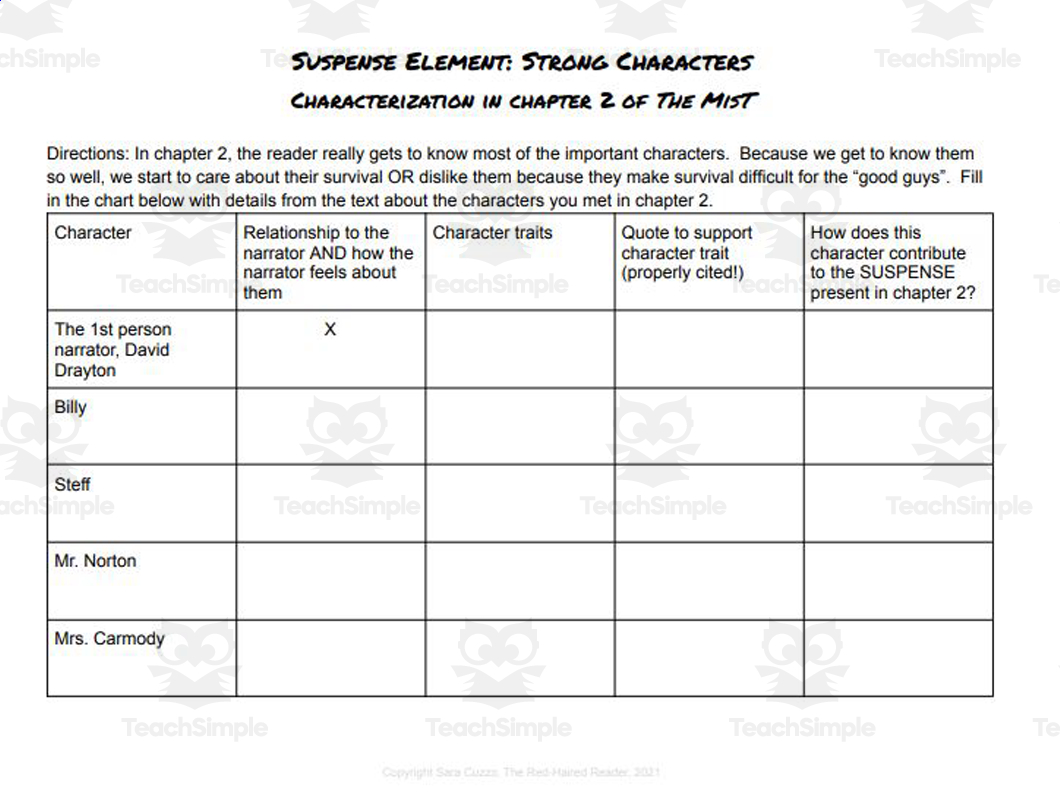
Analyze Suspense in Stephen King's The Mist Chapter 2\nThis 4-page Google Doc resource helps students study suspense in chapter 2 of Stephen King's horror novella The Mist.
 Free download
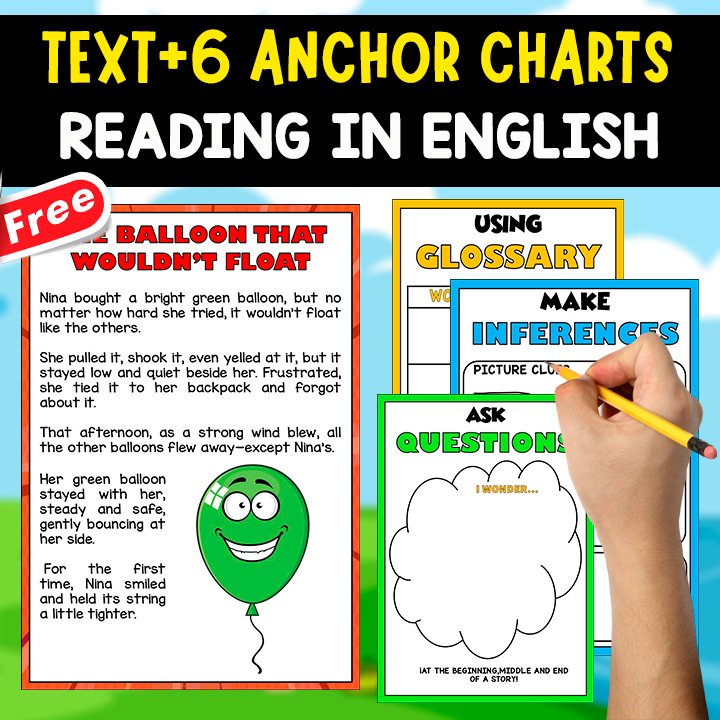
 Reading comprehension anchor chart set built around an original short story, teaching main idea, details, and comprehension strategies.
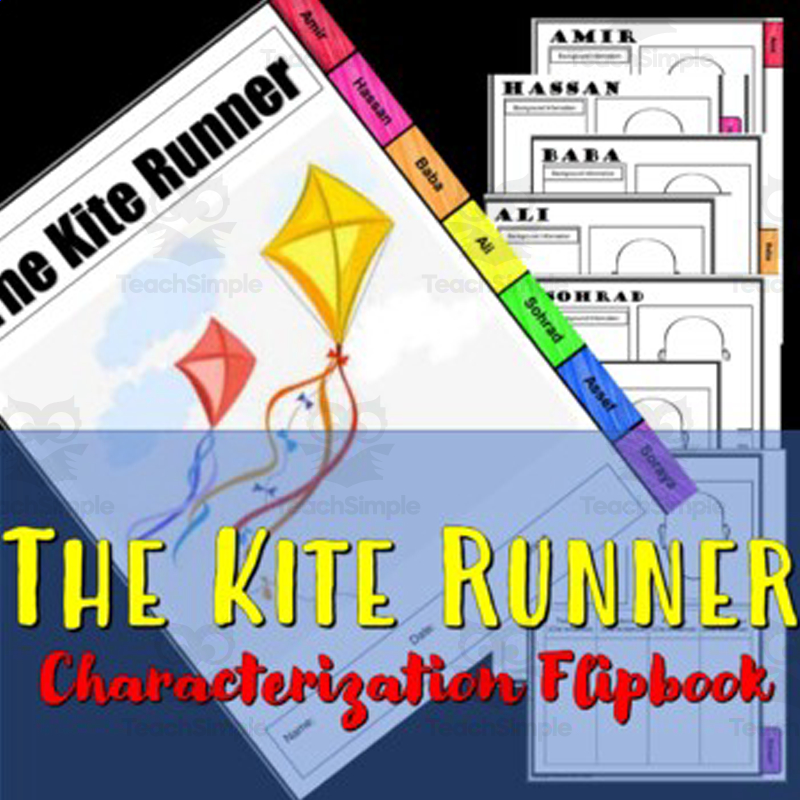
The Kite Runner Characterization Flip Book This unique teaching resource is perfect for students from Grades 7 through 12. It's designed as a book companion, taking the user on an enlightening journey through the main characters of the…

Use the charts to introduce a basic comparison between first- and third-person narration, then have students apply the sentence frame to a text you supply. Completed and partially blank versions offer different amounts of support. Ask students to examine the narrator’s words rather than dialogue alone, and explain that first-person narration can be fictional as well as a personal narrative.
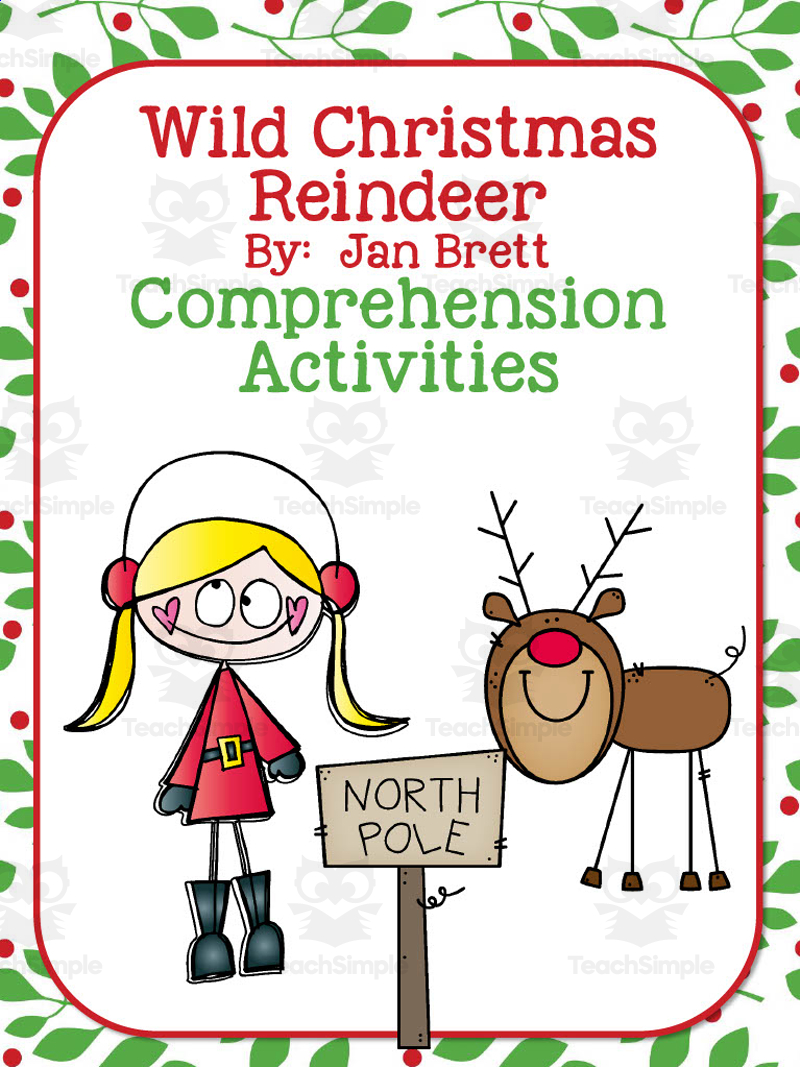
A reading comprehension activity packet designed as a companion to the picture book 'Wild Christmas Reindeer' by Jan Brett, covering prediction, cause and effect, story elements, character feelings, summary writing, and discussion questions.