



3,965 products added recently
Page 6 - Popular Graphic Organizers
Discover a selection of popular graphic organizers suitable for a variety of subjects and grade levels. These versatile tools assist students in structuring information, planning essays, and summarizing content. Utilize these organizers to support critical thinking and improve educational outcomes in your classroom.

 Show filters


The Outsiders Graphic Organizers
ELA, Literature, Reading Comprehension, Grade 4, 5, 6, 7, 8, Graphic Organizers, Teacher Tools
Reading The Outsiders? Looking for a way to engage your students? Our graphic organizers go perfectly with this timeless classic. Helping your students learn vocabulary, theme, plot, and symbols. This includes 5 graphic organizers and a rubric for easy grading
Author Educate and Create
Rating
Tags Novel Study, Graphic Organizers, The Outsiders, Outsiders, Reading

The Scientific Revolution: Graphic Organizer
Social Studies, History, History: World, Grade 7, 8, 9, 10, 11, Teacher Tools, Graphic Organizers
The Scientific Revolution refers to a period of profound scientific advancements and changes in the way people viewed and understood the natural world. It took place roughly between the 16th and 18th centuries, starting with the Copernican Revolution and ending with the Enlightenment. During this period, several significant scientific discoveries and advancements were made, leading to a fundamental shift in scientific thinking. Some key figures associated with the Scientific Revolution include Nicolaus Copernicus, Galileo Galilei, Johannes Kepler, Isaac Newton, and Francis Bacon. One of the central developments of the Scientific Revolution was the heliocentric model of the solar system proposed by Copernicus. He argued that the Earth revolves around the Sun, challenging the prevailing geocentric model that placed the Earth at the center of the universe. Galileo's observations with his improved telescope supported Copernicus' heliocentric model and further contributed to the understanding of planetary motion. Galileo also conducted experiments on motion, discovering the principle of inertia and making significant contributions to the field of mechanics. Johannes Kepler formulated three laws of planetary motion, providing mathematical descriptions of how planets move in elliptical orbits around the Sun. His laws helped establish a more accurate understanding of celestial mechanics. Perhaps the most influential figure of the Scientific Revolution was Sir Isaac Newton. His groundbreaking work in physics, laid out in his book "Mathematical Principles of Natural Philosophy" (often referred to as "Principia"), presented the laws of motion and the law of universal gravitation. Newton's laws provided a unified framework for understanding the motion of celestial bodies and objects on Earth. The Scientific Revolution also saw advancements in other fields, including anatomy, biology, chemistry, and optics. It led to the development of new experimental methods and the establishment of scientific institutions, such as the Royal Society in England. The impact of the Scientific Revolution extended beyond the scientific realm. It challenged long-held beliefs and traditional authorities, particularly those of the Catholic Church. The new scientific knowledge and methods encouraged critical thinking and the pursuit of empirical evidence, laying the groundwork for the Enlightenment—an intellectual and philosophical movement that emphasized reason, individualism, and progress. Overall, the Scientific Revolution marked a significant turning point in human history, ushering in a new era of scientific inquiry, experimentation, and a more systematic approach to understanding the natural world. It paved the way for subsequent scientific advancements and continues to shape our understanding of the universe today. Teacher-prepared notes show students what is important and how ideas relate, and offer a model for how students should take notes themselves (Marzano et al., 2001). These notes come with a completed teacher version and a student fill-in-the-blank version. Ready to print and ready to use! Works great with the interactive notebook! Thumbnail Clipart Credit: By PrincePadania
Author EduPal Learning
Tags Scientific Revolution, Graphic Organizer , Galileo, Newton, Copernicus

3D Shape Nets – Identification Practice Worksheet
Geometry, Math, Grade 5, 6, 7, 8, Worksheets & Printables, Diagrams, Teacher Tools, Graphic Organizers
3D Shape Nets Identification Worksheet Learning about 3D shapes doesn’t have to be complicated. This activity makes it easy for students to understand how 2D nets fold to form familiar 3D solids such as prisms, pyramids, cones, and cylinders. The worksheet is neatly organized, showing each net alongside three possible shape names for students to choose from. It’s a simple and visual way to help learners make connections between flat shapes and the solids they create. This resource is ideal for lessons on 3D geometry, shape nets, and solid figures. It’s especially helpful for visual learners who benefit from seeing geometric relationships illustrated clearly, and it makes a great addition to math centers, small-group work, or independent review activities. Using this worksheet helps students build confidence in recognizing and naming 3D shapes while developing stronger spatial reasoning and geometry vocabulary. Teachers will appreciate that it’s ready to print and use right away. The file comes as a two-page PDF, one page for student practice and one page with the answer key for quick checking. It works best for grades 5 through 8, but it can also be used as a review tool for older students who need extra support. Whether you project it for class discussion or print copies for individual use, this geometry worksheet is a practical and engaging way to explore 3D nets and shapes in any math classroom.
Author EduStudio
Rating
Tags 3D Shapes, Geometry Worksheet, Shape Nets, Solid Figures, Spatial Reasoning, Graphic Organizer, Math Activity, Middle School Geometry, Surface Area, Visual Learning
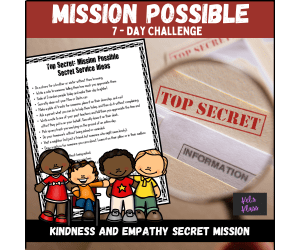
Kindness and Empathy Challenge - Top Secret: Mission Possible
Social Emotional Learning (SEL), Special Resources, Social Skills, Community Building, Resources for Teachers, Reading, ELA, Elementary, Activities, Projects, Graphic Organizers, Teacher Tools, Worksheets & Printables
Perfect for revitalizing classroom relationships after winter break, the Top Secret: Mission Possible Kindness and Empathy Challenge encourages students to practice empathy, build social-emotional skills, and foster a supportive classroom environment through fun and meaningful activities. Why You Need This Resource: Designed for January and February, this kindness and empathy challenge is perfect for reviewing classroom expectations, teaching positive interactions, and helping students act with character. Students will develop and choose secret missions, completing tasks that spread positivity in and around their school and home, while reinforcing key social-emotional learning (SEL) skills. What’s Included in This Mission: Mission Statement for Your Agents: A top-secret introduction that gets students engaged and ready to take on their roles as agents of kindness. Idea List for Secret Tasks: A variety of creative and impactful kindness missions they can accomplish in secret. Blank Planning Organizer: A space for your students to brainstorm and design their own missions for added creativity and ownership. Nonfiction Reading Passage: A thoughtfully crafted passage, complete with discussion questions to deepen understanding and spark conversations. How This Resource Benefits Your Classroom: Builds a positive classroom culture through team-building activities and SEL-focused challenges. Encourages students to practice empathy and kindness in real-life scenarios. Helps review and reinforce classroom rules and expectations post-winter break. Supports academic skills with nonfiction reading, comprehension, and discussion opportunities. Perfect For: Classroom team-building activities in January and February Social-emotional learning lessons Reviewing classroom rules and expectations after winter break Teachers looking for engaging SEL resources that make a real impact Keywords: Kindness Activities for Kids, Social-Emotional Learning (SEL) Resources, Empathy Lessons for Elementary, Kindness Challenge for Students, Classroom Team-Building Activities, Post-Winter Break Activities, Character Education, Nonfiction Reading with Discussion Questions, February Kindness Activities, Kindness Missions for Elementary Classrooms. Equip your students with the tools they need to create a supportive and empathetic classroom environment while keeping them excited and motivated. Mission Possible: Accepted!
Author Kel's Klass
Tags Kindness Activities, Social And Emotional Learning Resources, SEL, Empathy Activities, Kindness And Empathy Challenge, Nonfiction Reading, Post-winter Break Activity, February Kindness, February Empathy

Diamante Poetry – Posters & Graphic Organizers
ELA, Literature, Poetry, Kindergarten, Grade 1, 2, 3, Graphic Organizers
This resource is a set of learning posters and graphic organizers for diamante poetry writing. There is a poster that teaches about diamante poetry. Students will explore features about diamante poems. They will use different templates to write a diamante poem. This pairs well with your poetry unit in English class. You may also love to print these off and use in a center activity. This resource can be accessed through: PowerPoint Google slides PDF
Author Good Human Project
Tags Diamante Poetry, Poetry Writing, Posters, Graphic Organizers, Diamante Poems, Template, Poem, Print, Writing Template, Poetry Lesson

September 11th, 2001: Graphic Organizer
Social Studies, History, History: USA, Grade 6, 7, 8, 9, 10, Teacher Tools, Graphic Organizers
Teaching about the monumental moments in history isn't just part of our job—it's a calling. One of those watershed moments, without a doubt, is the 9/11 attacks of 2001. Orchestrated by al-Qaeda, this day didn't just change the skyline of New York; it changed the fabric of the United States and shifted its trajectory on the global front. While many of us can still feel the weight of the smoke-filled air as we watched the World Trade Center towers fall, or the heartbreak hearing the tales of heroism from Flight 93, we must recognize that for a good number of our students, this day is a story from before their time. Our challenge—and indeed, our responsibility—is to bridge that gap, making the stories of that day both tangible and understandable. One way to navigate this is with clear, structured notes. Think of it as connecting the dots: breaking down complex events and pairing them with firsthand accounts, like President George W. Bush's immediate reactions, helps paint a fuller picture for our students. In our shared goal to enlighten and inform, I've put together a resource that walks through 9/11. For us educators, there's a comprehensive version, and for our students, an interactive one designed to pique their curiosity and encourage active participation. Ready to use, these tools are designed to make our task a tad easier while ensuring our students gain a thorough understanding. By weaving this resource into our lessons, we're taking our students by the hand and guiding them through one of the most consequential days in recent history. It's so vital they grasp the magnitude and nuances of such events, and I truly think this tool will be a cornerstone in that effort. This product comes with a completed teacher version and a fill-in-the-blanks version. Ready to print and ready to use. Great format to help students learn.
Author EduPal Learning
Tags September 11, Terrorist Attack, Trade Center, Twin Towers, World Trade Center, George W. Bush, Graphic Organizer

Haiku Poem Writing Activity Lesson Plan, Interactive Notebook Template
Writing, ELA, Creative Writing, Poetry, Literature, Homeschool Templates, Grade 3, 4, 5, 6, Centers, Activities, Door Decor, Classroom Decor, Graphic Organizers, Teacher Tools, Lesson Plans, Rubrics, Templates, Worksheets & Printables
This Haiku Poem Writing Activity makes poetry fun, structured, and easy to teach - perfect for helping students understand the classic 5-7-5 syllable pattern while buidling confidence in writing. With a ready-to-use lesson plan and interactive notebook templates, your students will be guided step-by-step through the process of writing their own haiku poems. What's Included Detailed Haiku lesson plan Clear explanation of the 5-7-5 syllable structure Student-friendly haiku poem example Interactive notebook templates for hands-on learning Scaffolded writing templates Assessment rubric for quick and consistent marking Why Teachers Love This Resource Haiku poems are a fantastic way to introduce poetry because of their short, structured format. This resource helps students focus on syllables, word choice, and imagery—without feeling overwhelmed. Especially Effective For Reluctant writers who need clear structure Building syllable awareness Developing descriptive language skills Perfect For 3rd Grade (also suitable for Grades 2-5) Poetry units Writing Lessons Literacy Centers Interactive Notebooks Homeschool Learning How You Can Use It Whole-class poetry lesson Small group instruction Independent writing activity Assessment task Fast-finisher work Skills Covered Poetry writing Syllable counting Descriptive vocabulary Sentence construction Creative expression If your students struggle with “What do I write?”—this resource gives them the structure and support they need to succeed.
Author Teach2Tell
Rating
Tags Haiku Poem, Haiku Lesson Plan, Poetry Writing Activity, Haiku Template, Syllable Counting Activity, National Poetry Month , Writing Activity, April Writing Activity, Poetry Lesson, 3rd Grade Writing
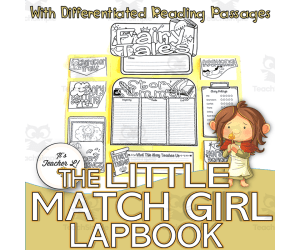
The Little Match Girl Lapbook Project Reading Writing Grades 3 4 5 ELA
ELA, Language Development, ESL, Literary Devices, Literature, Children’s Literature, Reading Comprehension, Reading, Strategies, Grade 3, 4, 5, Centers, Activities, Crafts, Projects, Assessments, Teacher Tools, Graphic Organizers, Templates
Inspire your students with the touching classic tale of The Little Match Girlthrough this The Little Match Girl Lapbook project especially made for Grades 3, 4, 5 students, homeschoolers, and EFL/ESL learners. This engaging resource is designed for reading classes, reading centers, fairy tale units, reading comprehension assessment tool, sub plan, and so much more! What’s Inside: •3 The Little Match Girl Lapbook Differentiated Reading Passages (Easy, Average, Hard) •6 The Little Match Girl Lapbook Cover Designs •2 The Little Match Girl Lapbook Name Pages •1 The Little Match Girl Lapbook Central Overlap Page •3 The Little Match Girl Lapbook Story Summary Page Choices •2 The Little Match Girl Lapbook Theme & Message Pages •2 The Little Match Girl Lapbook Sequence Pockets •6 The Little Match Girl Lapbook Story Event Visual Cards •3 The Little Match Girl Lapbook Levels of Sequencing Cards •6 The Little Match Girl Lapbook Story Retelling Cards •1 The Little Match Girl Lapbook Character Foldable •1 The Little Match Girl Lapbook Setting Foldable •1 The Little Match Girl Lapbook Extra Elements Fold •1 The Little Match Girl Lapbook Story Review Page •1 The Little Match Girl Lapbook Personal Connection Foldable
Author It's Teacher L
Rating
Tags The Little Match Girl, Fairy Tale, Reading Centers, ELA Project, Reading Comprehension Project

Fairy Tales Writing Packet
ELA, Writing, Grade 1, 2, 3, Teacher Tools, Graphic Organizers
This resource is a Fairy Tales Writing Packet. There is a list of 10 fairy tales for students to choose from and multiple graphic organizers . From story maps to flow charts, students will enjoy this fairy tales writing packet.
Author Rathgeber Resources
Tags Venn Diagram, Reading Charts, Fairy Tales, Graphic Organizers, Writing

EYE GYMNASTICS | 5 FREE POSTERS
Special Resources, Montessori, Early Learning, Elementary, Homeschool Resources, Not Grade Specific, Pre-K, Worksheets, Worksheets & Printables, Diagrams, Teacher Tools, Graphic Organizers, Presentations, Rubrics, Templates
EYE GYMNASTICS | 5 FREE POSTERS INFORMATION OF THE AUTHOR;At EDITORIAL ARENAS EDUCATIVAS, we believe that learning should be as fun as playing. That’s why we create educational materials that spark children’s curiosity and creativity. I invite you to check out my educational store and discover the wide range of resources that can transform your classes. MAIN DESCRIPTION OF THIS RESOURCE: What is the name of your product and what makes it special? This beautiful product is called “ EYE GYMNASTICS | 5 FREE POSTERS ”, and it is very special because it was carefully designed or compiled. With this educational resource, we want students to learn with enthusiasm and fun, because we believe learning is fun. How many pages are included in this resource? This fabulous document contains the following number of pages: 5 What size is it designed in (A4, letter, etc.)? This resource is designed in A4 format and compiled as a PDF. This makes downloading and printing simple and convenient, and PDFs are also easy to store and carry anywhere. PDF A4 Is the material in color or black and white? This pedagogical document comes in both black and white and color. This makes it more attractive for your learning sessions, but you have the freedom to choose how to print it. COLOR TAGS: EYE GYMNASTICS, EYE, BRAIN, BRAIN GAMES. SECONDARY AND COMPLEMENTARY INFORMATION: For what ages, levels, or grades is it designed? My specialty is creating educational resources for children, especially for preschool (ages 3–5) and primary (ages 6–12). Sometimes, I also create Spanish resources for learners of all ages. What subject, skill, or topic does it cover? This resource is designed to cover essential learning areas for children, generally literacy and math. What learning objectives does it achieve? This document fulfills a playful objective—it’s meant to be attractive and engaging for children. At the same time, it ensures that students learn or reinforce their knowledge. Who can use it best (teachers, parents, students, therapists, homeschoolers)? We are all part of education. Whether you are a teacher, parent, student, or therapist, this document can adapt perfectly to your learning goals, depending on your creativity. What additional materials are recommended (printer, scissors, markers, etc.)? The more immersed students are in learning, the greater their results. That’s why it’s ideal to complement this resource with pencils, crayons, markers, and even other art tools.
Author EDITORIAL LAURA EDUCA
Rating
Tags FREE, FREE RESOURCES, GYMNASTICS, EYE GYMNASTICS, SPECIAL RESOURCES

Bering Land Bridge – Graphic Organizer & Mapping
Social Studies, History, History: USA, History: World, Grade 6, 7, 8, 9, Teacher Tools, Graphic Organizers
The Bering Land Bridge - Graphic Organizer & Mapping Activity This is a robust teaching resource crafted for grades 6 through 9 USA History and World History classes. It uniquely blends key concepts with strategies for note-taking, fostering an environment ripe for educational growth. Main Features: Specially made to help students grasp the major events surrounding the crossing of the Bering Land Bridge by hunter-gatherers. Features student-centric and instructor-focused notes, encouraging active content engagement while supporting teachers during instruction. Acts as a bridge between theory and practice, complementing classroom readings with additional ideas to stimulate insightful discussions. The built-in reading activity about the Bering Land Bridge, is an interactive exercise allowing students to understand about human migration patterns globally easily. The package also includes a mapping activity along with probing questions to further enhance comprehension levels across all learning stages. No extra purchases required; everything needed is included in this product bundle! The Power of Visual Aids: To promote knowledge retention effectively, this instructional resource incorporates relevant illustrations from Teachers Resource Force & Prince Padania. All these resources offer flexibility for adaptation - be they whole class activities, small group assignments or individual homework projects. In conclusion, any educator aiming to instill their students with thorough understanding of this global historical event will find 'The Bering Land Bridge - Graphic Organizer & Mapping Activity' incredibly useful!
Author EduPal Learning
Rating
Tags Bering Land Bridge, Hunter-gatherers, Migration Patterns, Geographical Implications, Mapping Activity

Cesar Chavez (2014): Movie Guide and Graphic Organizer
ELA, Social Studies, Grade 7, 8, 9, 10, 11, Graphic Organizers, Teacher Tools
The movie follows Chavez's early life as a migrant farm worker and his subsequent rise to prominence as a leader of the United Farm Workers (UFW) union. Throughout the film, Chavez and his colleagues fight for the rights of migrant workers, organizing strikes and boycotts to improve their working conditions and wages. The film highlights some of the key moments in Chavez's life, including his participation in the Delano grape strike of 1965, which became a significant turning point in the struggle for labor rights in the United States. Chavez and his colleagues faced many obstacles in their fight for justice, including resistance from powerful growers and opposition from some members of the community who did not understand or support their cause. Despite these challenges, Chavez remained committed to his principles of nonviolent protest and social justice. His efforts eventually led to the creation of the UFW, which became a powerful force for change in the labor movement and inspired other marginalized groups to fight for their rights. The film portrays Chavez as a humble and dedicated leader, who was willing to make personal sacrifices for the sake of his cause. It also highlights the important role played by Chavez's wife, Helen (Rosario Dawson), and the many other activists and supporters who worked alongside him. The movie concludes with a message of hope and inspiration, as it shows the impact of Chavez's legacy on subsequent generations of activists and the ongoing struggle for social justice and equality. These 25 teacher-generated questions are designed to help students focus in on key information during this powerful movie. This movie guide comes with some additional background information about the Bracero program and it also comes with a Cesar Chavez character map. Ready to print and use! Comes with a completed answer key! Thumbnail Clipart Credit: Prince Padania
Author EduPal Learning
Tags Cesar Chavez, Movie Guide, Video Guide, Hispanic Heritage , Cesar Chavez Movie Free, Chavez The Movie, Cesar Chavez Worksheet Pdf

Video Game Design - Coding + Pixel Art Graphic Organizer
Creative Arts, Art, Graphic Arts, Grade 7, 8, 9, 10, Graphic Organizers, Teacher Tools
As you introduce and review new topics with your art students, you may want to ensure that you have quality resources that will allow them to express their understanding of the concept. Art can be concrete and abstract simultaneously! Because of this, we want to assess mastery in the best ways we know how. We can do this when we present hands-on and engaging lessons and instruction to our students. This is a Video Game Design – Coding + Pixel Art Design Graphic Organizer. It is an editable presentation that can be accessed through Microsoft or Google. It consists of 15 slides. The objective is for students to be able to code their own video game with the use of art and graphics. The presentation breakdown is as follows: Slide 2 – Student assignment. Students will code their own video game that includes a narrative, at least 3 balanced levels, and self-made pixel art animation (sprites and backgrounds) Slide 3 – Game Design breakdown. Slides 4 & 5 – Components organization. Slides 6 & 7 – Mechanics organization. Slides 8 & 9 – Space organization. Slides 10 & 11 – Goals organization. Slides 12 & 13 – Rules organization. Slide 14 – Coding Score rubric. Slide 15 – Design Score rubric. This can be used with middle and high school art students. I hope you enjoy! Here are similar resources for you to enjoy: https://teachsimple.com/product/agamograph-self-reflection-form https://teachsimple.com/product/social-story-for-safe-hands-and-feet https://teachsimple.com/product/addition-matching-velcro-activity https://teachsimple.com/product/abstract-form-lesson-activity You can visit my storefront here: https://teachsimple.com/contributor/resource-garden I can be contacted for questions and concerns at nicole.maizelis@gmail.com .
Author Resource Garden
Tags Video Game Design, Graphic Arts, Pixel Art, Coding, Art Lesson, Rubrics, Program Development, Algorithm, Creativity, Student Goals
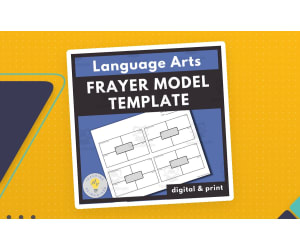
Frayer Model Templates Editable, Digital, & Printable | Vocabulary Set
ELA, Language Development, Vocabulary, Not Grade Specific, Worksheets, Worksheets & Printables, Graphic Organizers, Templates
Frayer models are a great way for students to learn and apply new vocabulary words. Use these templates with a class novel or assign them to students to use with independent reading material. This set includes both pre-made versions and blank, editable versions so that you can adjust them to fit your class' abilities and needs. ✏️ Vocabulary sets are pre-labeled with the following sections: Word (centered) Part of Speech and Definition Connection (can be synonyms or anything related) Picture Sentence ✏️ What's Included: 5 variations - Google slide deck - Vocabulary Set, 8 slides - Google slide deck - Blank models, 8 slides - Google slide deck - Blank models (4 per page) - Printable PDF - Vocabulary Labels Set of 8 - 1 page front and back - Printable PDF - Blank models (Set of 8) Common Core Standards: Determine or clarify the meaning of unknown and multiple-meaning words and phrases Use glossaries or beginning dictionaries, both print and digital, to determine or clarify the precise meaning of key words and phrases. Identify real-life connections between words and their use (e.g., describe people who are friendly or helpful). Acquire and use accurately grade-appropriate general academic and domain-specific words
Author Teaching Reimagined
Tags Frayer Model, Editable, Vocabulary Square, Graphic Organizer, Language Arts, Digital Printable
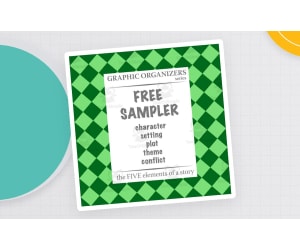
FREE: The FIVE Elements of a Story Graphic Organizers
ELA, Reading, Reading Comprehension, Language Development, Pre-Reading, Writing, Not Grade Specific, Teacher Tools, Graphic Organizers
This is a FREE sample of our Graphic Organizers Series: The FIVE Elements of a Story. In this sample, you can enjoy a selection of 10 custom graphic organizers for Character, Setting, Plot, Theme, and Conflict. These graphic organizers can be used in any classroom, for any grade, and with any student. Use these graphic organizers to help students gain an understanding of the five elements of a story. Each graphic organizer comes with instructions on how to use them. Character Graphic Organizers: Character Map - Write the name of the character in the middle circle. Then, describe the character’s actions in the top left square; what the character says and how they speak in the top right square; the character’s feelings in the bottom left square; and what the character looks like in the bottom right square. Character Comparison - Use the Venn Diagram to compare two characters from the story. Write the names of each character in the overlapping circles. Write any differences the characters have with one another in the outside circles. Write any similarities the characters have in the middle of both circles. Setting Graphic Organizers: Setting Stage - Draw the setting that the story takes place in on the stage in this graphic organizer. Be sure to illustrate the time and place that the story takes place in. Also include the environment of the story, and try to show the tone or mood that the setting creates for the story. Elements of Setting - Place + Time + Environment + Mood = Setting in this Graphic Organizer. Describe the Place that the story takes place in the top left box. Then, describe the Time in the top right box. Then, describe the Environment in the bottom left box. Finally, describe the Mood in the bottom right box. Plot Graphic Organizers: Plot Pyramid – Complete this classic Plot Pyramid graphic organizer by writing the Introduction of the story in the bottom left box. Then, describe the Rising Action, followed by the Climax of the story. Finish up with the Falling Action and the Resolution or Conclusion of the story. Storyboard – Illustrate the plot or an event from the story. Draw or describe in detail each stage in the plot or in an event that takes place in the story. Remember, the order of plot development is: Introduction, Rising Action, Climax, Falling Action, and Resolution/Conclusion. Theme Graphic Organizers: Theme Chart – First identify the main characters, main conflict, and theme of the story. Then, breakdown the theme of the story by first writing down the beginning of the theme. Follow this by writing the development of the theme, then the climax of the theme. Finish off with the resolution of the theme. Theme Identifier – Get help identifying the Theme of a story by answering the questions. Start off by describing what happens in the story. Then, identify the most important event in the story. Explore the characters by identifying how they change and what they learn. Finally, determine what the author is trying to tell you. Conflict Graphic Organizers: Conflict Dissection – Complete this graphic organizer by filling in each quadrant. In the first box, identify the characters of the story. In the next box, identify the time and place of the story. In the third box, identify the problem that takes place in the story. In the last box, identify the solution to the problem. Conflict Type Chart – In the first column, find examples from the story that shows Character against Character. In the second column, find examples of Character against Nature. In the third column, find examples of Character against Self. And finally, in the fourth column, find examples of Character against Society.
Author Ibby Resources
Tags Study, Skills, Character, Setting, Plot, Theme, Conflict, Literary, Device
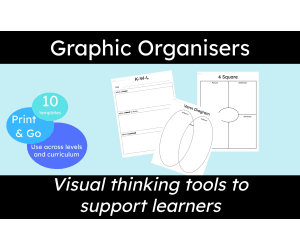
Graphic Organisers - Visual thinking tools to support learners
Research, Not Grade Specific, Graphic Organizers, Teacher Tools
This PDF resource includes 10 print and go graphic organiser templates to support visual thinking routines in your classroom. Including; Brainstorm, KWL, Y Chart, 3-2-1, Draw and Write, Venn Diagram, Is, Is Not, 4 Square, Cause and Effect, and Storyboard. Visual thinking tools can be used with all ages and levels and across any curriculum or subject area. They are excellent for independent work, collaborative group work, whole class instruction, formative and summative assessment tasks, student reflection, and more! Ideas for Use To use this resource in the classroom, I advise specifically teaching each thinking routine to all students. Once the students are familiar with each routine, they can then be given the opportunity to select the tool that best suits the information they are reviewing and sharing, This process gives students more agency and autonomy over their learning. Another powerful use is to ask students to complete a visual thinking tool prior to beginning a new topic, unit or reading. This information can be used by the teacher to assess prior knowledge and help plan the direction of the unit of work. Once the teaching of the unit is complete, ask students to repeat the process. This will show how their thinking has change of the unit and how their knowledge has grown. Choosing two different coloured pens will easily show prior and post knowledge. Why Use Graphic Organisers Graphic organisers and visual thinking routines allow students a tool to simplify complex thinking. They give them an opportunity to deep dive into the content that is being taught. These tools give students a visual representation of the relationship between concepts and supports them to organise and clarify their ideas and to be able to share their thinking with others. These tools should become a part of every teacher's toolbox to ensure quality teaching and learning.
Author Juggling Juniors
Rating
Tags Visual Thinking Tools, Graphic Organisers, Concept Maps, Mind Maps, Knowledge Maps, Thinking Maps, Relationship Chart, Cognitive Organisers, Concept Diagrams, Thinking Routines

CBT & Anxiety Management Toolkit
Life Skills, Special Resources, Social Emotional Learning (SEL), Social Skills, Special Education Needs (SEN), Speech Therapy, STEM, Resources for Teachers, Classroom Management, Community Building, Homeschool Curriculum, Homeschool Templates, Grade 9, 10, 11, 12, Projects, Activities, Teacher Tools, Assessments, Graphic Organizers, Lesson Plans, Outlines, Rubrics, Presentations, Worksheets & Printables
Find the top CBT Anxiety Management Toolkit Professional Edition PDF – a 47-page digital guide filled with helpful information and tools to beat anxiety. This guide is meant for therapists, life coaches, and individuals looking for effective mental health tools. This SEO-friendly CBT workbook provides detailed information on cognitive models, anxiety triggers, cognitive distortions, ABC models, automatic thought records, evidence boards, worry trees, de-catastrophizing scripts, fear ladders, grounding techniques, behavioral activation plans, core beliefs, and daily mood trackers. Be empowered with step-by-step strategies for cognitive restructuring, exposure therapy, behavioral activation, and sensory grounding techniques to overcome anxiety and live an anxiety-free life. This guide is meant for psychology professionals and mental health enthusiasts. Get this printable CBT anxiety workbook PDF today and get the mental health assistance and resilience training you need. Why Parents/Schools Love It: Evidence-Based Tools for Real-World Application: CBT worksheets for students to develop skills that can be applied in the real world, helping them develop emotional resilience that can improve their academic performance. Promotes Self-Awareness and Mental Health Literacy: Encourages students to engage in reflective exercises that can help them develop skills that can last a lifetime, allowing them to cope with stress in an appropriate manner. Flexible for Classroom or Home Application: PDFs with diagrams that can be printed out for use in the classroom or at home for students who need extra support during high-stress periods of the academic calendar. Professional Quality Content at an Affordable Price: Helps provide students with the tools that can normally only be accessed with the guidance of a therapist, all at an affordable price for the school. Tracks Progress for Measurable Growth: Helps parents/educators track the progress of students' emotional state so that improvements can be measured. Target Classes/Students : Given that the PDF is a comprehensive analysis and review of CBT tools and strategies for anxiety management, targeted towards professionals and adult learners, the target audience would be students in higher education and advanced programs, especially in the field of psychology and counseling. The target classes/students would be: Undergraduate Psychology or Counseling Students (Sophomore to Senior Level): The PDF would be ideal for classes such as “Introduction to CBT,” “Abnormal Psychology,” or “Mental Health Interventions,” where students can use the worksheets for case study and self-reflection assignments. Graduate Students in Clinical Psychology, Social Work, or Therapy: The PDF would be suitable for classes such as “Cognitive Behavioral Therapy Practicum,” “Anxiety Disorders Treatment,” or “Professional Counseling Skills,” where students can use the content for case studies and assignments. Adult Education or Continuing Education: The target audience would be adult learners in online or community college classes, especially in the field of psychology and counseling, or in a life coaching program. High School Advanced Placement (AP) Psychology: The target audience would be seniors in advanced psychology classes, provided that the curriculum covers CBT concepts, as the content is too advanced and technical for a general audience. Copyright/Terms of Use: This Book was copyrighted by Syed Hammad Rizvi. This resource is for personal and single classroom use only. You may not alter, redistribute, or sell any part of this resource. In other words, you may not put it on the Internet where it could be publicly found and downloaded. If you want to share this resource with your colleagues, you may buy additional licenses from Teachsimple. Thank you for respecting these terms of use. This product is happily brought to you by Syed Hammad Rizvi
Author Creative Book Store
Rating
Tags CBT, CognitiveBehavioralTherapy, AnxietyManagement, AnxietyRelief, MentalHealth, MentalHealthMatters, MentalHealthAwareness, StressRelief, OvercomeAnxiety, AnxietyTools
Literary Devices: Using Graphic Organizers to Identify Point of View
ELA, Literature, Grade 5, 6, 7, 8, Graphic Organizers, Teacher Tools
"Literary Devices: Using Graphic Organizers to Identify Point of View" - A Dynamic Lesson Plan Tailored for educators, this resource focuses on teaching students about the fascinating interplay between language and storytelling. It is particularly useful for grades 5 through 8, fitting seamlessly within Language Arts curricula. The tool introduces learners to the intense world beneath mesmerizing tales—the Literary Devices. These include critical components like: Characterization Setting Plot Theme, and more... The value in this resource lies in its emphasis on identifying Point of View in literature via grade-specific activities utilizing graphic organizers . User-friendly Definitions and Practice Opportunities- Apart from providing simple definitions for key terminologies, it offers repeated practice opportunities to bolster understanding. Bloom's Taxonomy Model Adherence- The content adheres strictly to the Bloom's Taxonomy model ensuring high quality and educational validity making it usable in both public schools or homeschools alike. It could be used with whole class cohorts or smaller study groups; not forgetting homework assignments either. Tying narrations together with age-appropriate learning activities enable young scholars to understand storytelling better while appreciating creativity; they also build critical analysis skills tackling diverse literary forms encouraging exploration that growth-seeking academic minds desire. Thus whether you aim at arming young minds for expansive literary studies or just inspire a deep affection toward classic/modern Literature - 'Literary Devices: Using Organizers Identify Point of View' could be an indispensable addition to your teaching toolkit.
Author Classroom Complete Press
Tags PDF, Graphic Organizers For Literature, Literary Element Lesson Plans

Personal Narrative Writing, Graphic Organizer, Rubric & Examples
Creative Arts, Common Core, Grade 5, 6, Graphic Organizers, Teacher Tools, Templates, Rubrics, Writing Prompts, Worksheets & Printables
Get your class writing every day with this easy to follow resource for personal narrative writing.Personal narratives are stories about yourself. Most students get stumped in the writing process when it comes to generating ideas... well not anymore! This guide will help take your young authors on the writing journey. It will show them how to write from the very first steps of coming up with an idea all the way to writing a conclusion. It is fool proof, easy to leave plans for a substitute and to take the headache and scariness out of writing for you as the teacher! Personal Narrative curriculum is a must! We can't expect that students just know how to write. There is structure that is involved. Every story with this kit will have a killer beginning, middle and end. It will eliminate students' need to repeat themselves and truly get to the heart of their story. Students are lost when it comes to telling their own stories. You get stuck with a list of “And then… and then.. and then…” Break those bad habits with this Personal Narrative Writing Set! Students will be able to tell a fluent story with suspense and intrigue! With this resource you will get: full set of teacher plans examples of great writing to share with your class student writing pages tips and tricks on how to break writer’s slump (and the kid that says “I have nothing to write about”) reflection pages that help create better writers for your future writing pieces scoring rubric for teachers to use for themselves or for data or during conference time with parents countless tips and tricks to enhance your students’ personal narrative writing Start with this 20 page framework and make writing a breeze in your class!
Author Big Apple Teaching
Tags Personal Narrative, Writing, Dialogue, Grammar, Descriptive Words, Setting The Scene, Vivid Verbs, Adjectives, Sentence Starters, Writing Prompts

Area and Perimeter Formulas – 2D Shapes Cheat Sheet
Math, Geometry, Grade 5, 6, 7, 8, 9, 10, 11, 12, Teacher Tools, Graphic Organizers
Perimeter and Area Formulas of 2D Shapes | Cheat Sheet This valuable resource is designed to make learning mathematics easier for students. Specializing in Geometry, this cheat sheet presents a wide range of formulas dedicated to calculating the perimeter and area of various two-dimensional shapes, accommodating students from grades 5 all the way through to 12. Uses: It can be incorporated into group discussions for dissecting each formula in detail. Students can be divided into small groups to explore specific shapes separately using this sheet. It acts as a useful homework tool easily referred during practice by pupils at home. The sheet includes Perimeter and Area formulas for common two-dimensional shapes like: Square, Rectangle, Parallelogram,Triangle,Trapezoid,Circle,Sector of Circle,Ellipse,Pentagon up till Octagon including regular polygons. It features an accompanying image for each shape that aids in easy identification based on their unique dimensions aiding not just calculations but also enhances visual understanding. Bonuses: Saves time compared to searching through textbooks or notes when under exam pressure or seeking immediate clarity while practicing problems–this guide offers immense reference benefits promptly. The accuracy in calculations is enhanced with appropriate application of relevant variables per particular formula; thus diminishing potential errors root cause boosting academic performance levels substantially. The digital product comes as PDF files containing three pages filled with colored formulas and three more pages featuring black-and-white versions which are ideal for printing. It allows easy adaptability due to user preferences or resources available thereby granting every student unrestricted access irrespective wherever they are studying: be it during classroom sessions or at home reviewing. Proximity to better comprehension and precision - this brilliant academic tool reinforces crucial foundational knowledge, driving students towards greater mathematical confidence.
Author educ_project
Rating
Tags Perimeter Formulas, Area Formulas, 2D Shapes, Geometry, Cheat Sheet

Pack of Student Planner and Tracker
Special Resources, Life Studies, ELA, Life Skills, Writing, Grade 4, 5, 6, Teacher Tools, Graphic Organizers, Activities, Worksheets & Printables, Worksheets
This 20-pages Student Planner and Tracker Pack includes Assignment Trackers, Examination Trackers, Group Project Trackers, Individual Project Trackers, Daily Dumps (Daily Planners), and Weekly Grinds (Weekly Planners). The designs and organization of the planners in this pack are specifically made to be easy-to-use and engaging so that students will enjoy monitoringand learning to focus on their important tasks. Some planners and trackers have areas where teachers and parents can write their notes and signatures making them teacher and parent friendly especially in checking the learners' school or daily progress. The different designs are aimed to give teachers and parents freedom to choose the best style they need for their classes. This no-prep worksheet planner packs are non-editable and can be part of the students' folder files or take home folders. What’s included: 1. 6 Assignment Trackers: convenient way to keep track of daily homework/assignments which show due dates and accomplishment status along with notes or reminders. This is not only helpful for students but also to teachers and parents to keep track of their learners’ activities. 2. 3 Examination Trackers: test and examination checks that are helpful for learners to organize their incoming tests and exams. These sheets include the subjects, dates, along with the contents like topics, reference books and pages. Teachers and parents can also check these trackers for the learners’ progress as well as the subject and/or topics that they still need to focus their studies more. 3. 2 Group Project Trackers: project trackers that are designed for group projects. These are helpful to organize group projects since they specify materials and supplies needed, every tasks that should be done and the corresponding group members that are assigned for each one. The group project tracker also helps the teacher check the project status and students’ teamwork in finishing their projects. 4. 2 Individual Project Tracker: designed for individual project tracking that help learners organize their project plan and keep track of their progress. Also included in the content are the options for teachers and parents to check the project progress. 5. 3 Project List Trackers: project checkers of all subjects that can help learners monitor all projects they have in school. These project trackers contain the project kind, subject, start date and due dates that are helpful to check which project should be given more priority on. 6. 2 Daily Brain Dump: daily planners that keep the students updated with their day-to-day activities, focus on the important tasks of the day and guides the learners with their day. They can also add their thoughts and reminders. 7. 2 Weekly Grind: weekly planners that help the learners organize their week, emphasize the important daily tasks and the weekly goals that they need to achieve.
Author It's Teacher L
Tags Daily Planner, Weekly Planner, Homework Tracker, Assignment Tracker, Project Tracker, Life Skills
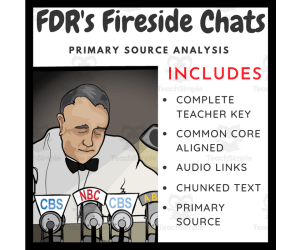
FDR's Fireside Chats: Primary Source Analysis & Graphic Organizer
Social Studies, History, History: USA, Grade 8, 9, 10, 11, Teacher Tools, Graphic Organizers
Get ready to explore the captivating world of Franklin D. Roosevelt's Fireside Chats with our comprehensive Primary Source Analysis and Graphic Organizer resource, perfect for high school American History and Government classes. This well-rounded educational package is designed to help your students dive deep into the historical significance of President FDR's ground-breaking radio addresses. Our all-inclusive bundle is packed full of engaging materials that bring FDR's Fireside Chats to life in your classroom. Students will be encouraged to participate in stimulating activities such as examining a detailed background of the chats, analyzing carefully selected primary source excerpts, and pulling out key evidence from FDR’s speeches using an easy-to-follow graphic organizer . Witness your students' critical thinking skills flourish as they dissect first-hand accounts from two significant Fireside Chats – On Banking Crisis (1933) and On Farmers and Laborers (1936). They'll immerse themselves fully into these speeches while learning how to pinpoint their purpose & impact on public morale during volatile times in American history. This turnkey product has everything you need! You'll receive a digital teacher key alongside a student version, all available in printer-friendly PDF format. Don't miss this amazing opportunity to create memorable learning experiences for your students while connecting them with an unforgettable chapter of US Presidential history! Thumbnail Clipart Credit: Massare Clips and Design
Author EduPal Learning
Tags FDR, Roosevelt, Great Depression, Franklin D. Roosevelt, Fireside Chat, Primary Source , Analysis
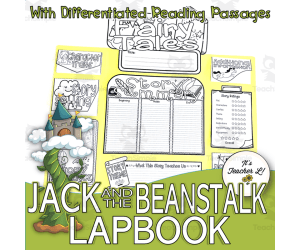
Jack and the Beanstalk Lapbook Project Reading & Writing Grade 3 4 5
Language Development, ELA, Children’s Literature, Literature, Literary Devices, Reading Comprehension, Reading, Grade 3, 4, 5, Activities, Centers, Crafts, Projects, Teacher Tools, Graphic Organizers, Assessments
Trek the trail of Jack in this fantastic Jack and the Beanstalk Lapbook Project designed for Grades 3, 4, 5, homeschool classrooms, and EFL/ESL learners. This perfect resource set is made for reading classes, reading centers, fairy tale units, sub plans, as well as a supplemental assessment tool for your reading comprehension activities. Contents: •3 Jack and the Beanstalk Lapbook Differentiated Reading Passages (Easy, Average, Hard) •6 Jack and the Beanstalk Lapbook Themed Lapbook Covers •2 Jack and the Beanstalk Lapbook Name Pages •1 Jack and the Beanstalk Lapbook Inner Overlap Page •3 Jack and the Beanstalk Lapbook Story Summary Page Options •2 Jack and the Beanstalk Lapbook Story Message Pages •2 Jack and the Beanstalk Lapbook Story Sequence Pockets •6 Jack and the Beanstalk Lapbook Story Sequence Photocards •3 Jack and the Beanstalk Lapbook Story Sequence Sets (6 cards each: Easy, Average, Hard) •6 Jack and the Beanstalk Lapbook Story Retell Cards •1 Jack and the Beanstalk Lapbook Character Traits Fold •1 Jack and the Beanstalk Lapbook Story Setting Fold •1 Jack and the Beanstalk Lapbook Additional Elements Fold •1 Jack and the Beanstalk Lapbook Story Ratings Page •1 Jack and the Beanstalk Lapbook Personal Reflection Fold
Author It's Teacher L
Rating
Tags Jack And The Beanstalk, Fairy Tale, Reading Comprehension, ELA Project

Progressive Era Muckrakers Reading & Graphic Organizer
Social Studies, History, History: USA, Grade 6, 7, 8, 9, 10, 11, 12, Teacher Tools, Graphic Organizers
This is a set of readings on the leading "muckrakers" of the Progressive Era. This resource includes a corresponding graphic organizer . I suggest to finish the lesson with an excerpt from Upton Sinclair’s The Jungle—a big hit with the high school set.
Author Exa's Excellent Social Studies Lessons
Tags Progressive Era, Muckrakers, The Jungle, Ida Tarbell, Theodore Roosevelt, Progressive Era Muckrakers Answer Key, Progressive Era Muckrakers Worksheet Answers, Modern Day Muckrakers