



3,924 products added recently
Page 82 - Science Lesson Plans
Bring science to life with lesson plans that cover biology, chemistry, physics, and more. These resources offer experiments and interactive lessons to stimulate curiosity. Implement them to foster a deep understanding of scientific principles and a passion for discovery.

 Show filters


I WONDER - What Are Fingernails Made From | Animated Video Lesson
Human Body, Life Sciences, Science, Biology, Grade 3, 4, 5, 6, 7, 8, 9, Lesson Plans, Teacher Tools
Video Overview The human body is full of fascinating wonders to learn. This video is created to help the students recognize the anatomy and the job of the human body. I WONDER - What Are Fingernails Made From | Animated Video Lesson Every part and organ in our human body is vital so let's see how important they are. Have you ever imagined how we look like if we didn't have a skeleton? Did you know that because we have our amazing muscles we can stand! Do you know how many teeth do we have? Have you ever wondered about the food journey inside our body? Can you name all the glands in our body? Why do we have skin? Our nervous system is really good at sending signals. Can you tell us more about it? Are you really good at Mathematics, painting, or any other thing? You should really thank your brain about it! The famous five senses are really doing a great work? Can you explain how every sense works? I WONDER - What Are Fingernails Made From | Animated Video Lesson The video is perfect for encouraging the researching skills for the students, while learning more about our fantastic human body. I WONDER - What Are Fingernails Made From | Animated Video Lesson This friendly designed video is suitable for students at school, homeschooling, and as a group activity. Format Available in MP4 format.
Author Educational Voice
Tags What Are Fingernails Made From, What Are Fingernails Made From Video, Fingernails, Fingernail, Fingernails Facts, Fingernails Facts For Kids, Fingernails Video, Fingernails Video For Kids
I WONDER - What Makes Neptune Special | Animated Video Lesson
Space, Earth and Environmental Sciences, Science, Grade 6, 7, 8, 9, 10, 11, 12, Lesson Plans, Teacher Tools
Video Introduction An amazing video designed for the students to learn more about space facts. I WONDER - What Makes Neptune Special | Animated Video Lesson Do you like reading about space? If yes, what is your favorite topic? What do you know about our solar system? What is the smallest planet in our solar system? What is the biggest planet in our solar system? What is the hottest planet in our solar system? And what is the coldest one? Do you think there are aliens? If yes, what do you think they look like? What do they eat and how they speak to each other? Where do they live? What is a galaxy? And what is a milky way? Have you recently saw a shooting star? If yes, tell us more about it, like when did it happen and where? What is a blackhole? Can a blackhole gets bigger by time? Do you like counting the stars? What do you think a star is made of? I WONDER - What Makes Neptune Special | Animated Video Lesson The video is perfect for encouraging the researching skills for the students, while learning more about the fantastic space. I WONDER - What Makes Neptune Special | Animated Video Lesson This friendly designed video is suitable for students at school, homeschooling, and as a group activity. Format Available in MP4 format.
Author Educational Voice
Tags What Makes Neptune Special, What Makes Neptune Special Video, Neptune Special, Neptune Special Facts, Neptune Special Facts For Kids, Neptune Special Video, Neptune Special Video For Kids, Neptune
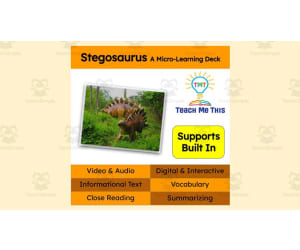
Stegosaurus | Interactive Science Lesson | Micro-Learning Deck
Science, Life Sciences, Animals, Grade 6, 7, 8, 9, Teacher Tools, Lesson Plans
Engage students with an informative slideshow on the Stegosaurus dinosaur. This science resource explores the anatomy and behavior of this iconic Jurassic herbivore through a video lesson, reading passage with audio, close reading activity, and quick write assignment. Educators can utilize the deck in whole or small groups to build knowledge, assess comprehension, and spark discussion. The multimedia format and focused content delivery make this an adaptable resource for reinforcing standards-based learning objectives across middle school grade bands. Students will stay engaged as they move through the self-paced content, analyzing text and visuals to learn extinction theories and intriguing facts about Stegosaurus body features like the double row of kite-shaped plates along its back. Use to supplement your zoology or earth science curriculum .
Author Teach Me This
Tags Stegosaurus, Interactive, Science, Vocabulary, Comprehension

Rainbows Curriculum Pack
Creative Arts, Art, ELA, Math, Measurements, Writing, Handwriting, Science, Earth and Environmental Sciences, Environmental Science, Kindergarten, Lesson Plans, Teacher Tools
If your students are studying nature or are about to begin a rainbows unit, I have just the resource to provide you with everything you need and more! This is a Rainbows Curriculum Pack complete with an abundance of printable resources and engaging activities for students to complete. This curriculum was designed for your preschool students. The curriculum goal is to help children celebrate the wonders of nature and review the colors in a rainbow. The vocabulary that students will focus on is rainbow, arch, transparent, semi-circle, prism, and colors. This curriculum will come with a letter of the week (R) and color of the week (all colors). This curriculum pack includes: --Sensory Table Ideas --Art Activities --Cooking Experience --Community Time --Math Activities --Home/School Connection Ideas --Science Table Enrichments --Science Concepts/Activities --Prop Box Ideas/Dramatic Play Enrichments --Movement and Motor --Playground/Walk Activities --Transition/Waiting Ideas --Block Area Enrichments --Flannel Board --Teacher Made Enrichment Ideas --Field Trip Ideas --Supplemental Learning Ideas/Activities At the start of this pack, you will receive a list of supplies needed for activities and projects. The worksheets, activities, and tasks included in this pack are intended to be completed in a variety of formats – whole group, small group, and independent work. I hope you enjoy! You can find more resources at my storefront here: https://teachsimple.com/contributor/learning-foundations Here are other similar resources for you to enjoy: https://teachsimple.com/product/gingerbread-man-curriculum-pack https://teachsimple.com/product/jungle-love-curriculum-pack https://teachsimple.com/product/friendship-curriculum-pack https://teachsimple.com/product/kings-queens-and-dragons-curriculum-pack https://teachsimple.com/product/fire-safety-curriculum-pack
Author Learning Foundations
Tags Preschool Curriculum, Rainbows, Environment, Weather, Math Activities, Science Table Enrichments, Science Concepts, Prop Box Ideas, Motor Skills

Reindeer Reading Comprehension Passage - Cored Ed Encyclopedia
ELA, Language Development, Reading Comprehension, Reading, Pre-Reading, Science, Writing, Strategies, Animals, Life Sciences, Grade 2, 3, 4, 5, Worksheets & Printables, Worksheets, Teacher Tools, Centers, Activities, Writing Prompts, Assessments, Quizzes and Tests, Quizzes, Lesson Plans
This reindeer reading comprehension includes: Visualization (on the front cover) Start your lesson by taking a minute to think and share something about the topic. Read the script aloud (slowly), perhaps prepare some music or sound effects. Student close their eyes and let their imaginations wander. Students open their eyes, read the question aloud and give them a few minutes to complete. Ask a few students to share or keep answers until the end to compare with what they learn in the passage. Quick pause—thousands of Cored Education products are included with your TeachSimple membership. Download links and encyclopedia index available here. COMPANION VIDEO NOW AVAILABLE (EMBEDDED AFTER PREVIEW PICTURES IN PRODUCT DESCRIPTION) Pre-Reading Trivia Students will write down one thing they already know about the subject and then read five more facts and discuss. These facts are fun, and the students will enjoy learning about the subject before reading more. Give 1 minute for students to write what they already know (no pressure—best guess is fine). Read the five facts together. After each fact, do ask a student for their opinion, was it surprising? Set a purpose by asking students to highlight/underline one fact they want to learn more about during the reading. Reading Passage The text is a high-interest reading passage with set paragraphs, roughly three to four paragraphs long. It contains a variety of themes about the topic, anywhere from history to technology. The passage is between 250 and 350 words in length. First, ask students to look at the headings and see what they’ll learn about today. What do they know about the topic/heading? First read options: Teacher read-aloud (best for support). Partner reading (paragraph by paragraph). While reading, students underline important details, and vocabulary words they think may come up in the questions section. Mixed Questions The first question page contains four multiple-choice questions, each with a choice of four answers, and three written response questions that require a sentence or two from the student. Students complete the mcqs first independently, then review quickly as a class. For the 3 written responses, try to get students giving the answer with some form of evidence: “I think ___ because the text says ___.” If students get stuck, send them back to check the passage. Vocabulary Questions Practice seven key words from the text in this section across two activities. First section is scrambled words where students will unscramble three words given a clue for each. The second section is a word to meaning matching activity. Before starting, have some students read out words they underlined in the passage. Ask students to say the word and read aloud the sentence(s) around each word. Ask students to do scrambled words and the matching exercise in pairs then go through answers as a class. For the scrambled spelling task, get four pairs to come up to the board and write the words for extra practice with the other student reading out the clue. For the matching task, prompt students to give full sentences: “I matched ___ with ___ because ___.” Creative Writing In this question, the student will be required to write a five to eight sentence paragraph on a question related to the topic. Before starting, ask students write down 3 key ideas they are going to include in their piece. Ask students for ideas to share around the class to help those struggling. Pro writing expectations: 5–8 sentences At least 2 facts or details from the passage At least 2 vocabulary words from the previous page Students read their paragraphs while classmates listen for facts and vocabulary words. Extension Activities This page is optional for fast finishers or to take home. There are several activities, each one requiring a different skill. Do some, do none, do all, completely optional - but you will feel reassured knowing every possibility is planned for. Includes summary writting question. Answer Key There are answers for the multiple-choice questions, written response questions have sample answers, vocabulary answers and if there is a summary question then a sample summary will be provided as well. Lesson Plan Included Customized lesson plan for this lesson is included. Lesson Snapshot Title: Reindeer Genre: Nonfiction (informational text) Subject: Life Science (Animals & Habitats) Primary Topic: Reindeer adaptations, migration, and human connections Estimated Guided Reading Level (A–Z): R What This Lesson Teaches Best How reindeer are adapted for cold places (thick coat; wide hooves for soft snow and soggy tundra). How reindeer find food when conditions are harsh (digging through snow to reach lichen). Migration and seasonal movement (some herds travel long journeys; more than 600 miles north in summer, then south again). How people and reindeer have influenced each other (communities watching hoofprints, herding partnerships, reindeer helping with travel and providing resources). A conservation-style question about changing winters (warming turning soft snow into hard ice that seals food away). Learning Goals Students will describe where reindeer live using details from the text (Arctic and subarctic lands). Students will explain two body features that help reindeer in winter conditions. Students will describe how reindeer get food when it is scarce, using the text’s example. Students will explain how long journeys relate to seasons and survival in the passage. Students will describe one way people have interacted with or depended on reindeer in the text. Key Vocabulary From the Text subarctic — very cold region just below the Arctic. tundra — open, cold land with few trees. hoofprints — marks left by hooves in the ground or snow. lichen — crusty plantlike growth on rocks and ground. Vulnerable — at risk of harm or shrinking in number. FULL CATALOG OF DOWNLOAD LINKS AND ENCYCLOPEDIA INDEX HERE
Author Cored Education
Rating
Tags Vocabulary, Reading Comprehension, Reading Passages, Reading, Creative Writing, Reading Strategies, Writing Prompts, Lesson Plans, Reindeer, Life Science

Discolouration | Animated Kitchen Science Video Lesson
Science, Physics, Not Grade Specific, Lesson Plans, Teacher Tools
Discolouration: Animated Kitchen Science Video Lesson The Discolouration Animated Kitchen Science Video Lesson aims to provide educators with a dynamic and interactive teaching resource. It's an effective tool for public school teachers seeking to energize their classroom, and homeschoolers in need of engaging content. Adaptive Learning Content No specific grade level is required for this resource. It's perfect as a teaching aid for learners of all levels. The video focuses on Physical Science, specifically discolouration phenomena, all using familiar kitchen settings that students can relate to. Versatile Learning Tool The video lesson is designed at 12 minutes long—an optimal length for keeping students motivated. Being digital (in MP4 format), it offers flexible use: Whether virtually in online classes, face-to-face lessons or assigned independently as homework—it fits the bill. Bullet Point 1: Created as a recapitulation or introduction tool Bullet Point 2: Fits perfectly into conventional and digital classrooms Fostering Engagement through Interaction and Fun This Animated Kitchen Science Video wonderfully merges knowledge acquisition with fun and interactive graphics—amplifying student engagement. The primary objective here is not just factual understanding but also knowledge transfer in memorable ways—sparking student curiosity about everyday phenomena around them nestled in reflection. In Conclusion, The Discolouration | Animated Kitchen Science Video Lesson assists educators striving towards creating effective yet entertaining learning experiences by merging compelling visualization methods with rich scientific content. Aside from being enjoyable,the video simplifies complex ideas into easily digestible snippets while sustaining the students' attention throughout the course of the lesson. Remember, even though the video doesn't have ‘graded’ content, it makes a brilliant springboard for in-depth-discussion on the topic and could inspire related experiments!
Author Educational Voice
Tags Discolouration, Kitchen Science, Interactive Lesson, Physical Science, Animated Video
I WONDER - Are There Different Types Of Friction | Animated Video
Physics, Science, Grade 4, 5, 6, 7, 8, 9, 10, Lesson Plans, Teacher Tools
Video Introduction An amazing activity designed for the students to learn more about STEM. I WONDER - Are There Different Types Of Friction | Animated Video Lesson Do you like STEM subjects? what is your favorite one? Have you ever tried to plant a seed? If yes, tell us more about it. Or have you ever tried to invent something? If yes, tell us more about it. And how do you think it will help us? Have you ever seen a microorganism under a microscope? What was it? And how it looked like? Mathematics is a marvelous subject. Let' sharpen our brains and solve some equations. Do you like timetable tricks? What is your favorite one? Do you know how to code? Have you ever created an app or a game before? If yes, how was it like? I WONDER - Are There Different Types Of Friction | Animated Video Lesson The video is perfect for encouraging the researching skills for the students, while learning more about this fantastic topic. I WONDER - Are There Different Types Of Friction | Animated Video Lesson This friendly designed video is suitable for students at school, homeschooling, and as a group activity. Format Available in MP4 format.
Author Educational Voice
Tags Are There Different Types Of Friction, Are There Different Types Of Friction Video, Types Of Friction, Types Of Friction Video, Types Of Friction Facts, Types Of Friction Facts For Kids, Friction , Friction Facts
I WONDER - How Was The Post It Invented | Animated Video Lesson
Inventors, Basic Science, Science, History: British, History, Social Studies, History: Europe, History: World, History: USA, Grade 3, 4, 5, 6, 7, 8, 9, Lesson Plans, Teacher Tools
Video Introduction An amazing video designed for the students to learn more about history. I WONDER - How Was The Post It Invented | Animated Video Lesson Do you like history? Which topic do you really enjoy about history? Have you ever read an interesting fact about the Vikings? If yes, can you mention them? What do you like most about the Victorian era? Can you name all the Tudors? Have you ever wondered how people used to live in ancient Japan and ancient China? Do you know any interesting facts about ancient Egyptians and the Pharaohs? Have you ever visited South America? What do you know about Incas and Aztecs? Celtic culture was really one of a kind, can you name any of the places that Celts used to live in? Imagine yourself living during the ancient Roman empire, how your life will look like? Ancient Greece was an amazing place to live in. What do you know about ancient Greek life? I WONDER - How Was The Post It Invented | Animated Video Lesson The video is perfect for encouraging the researching skills for the students, while learning more about history. I WONDER - How Was The Post It Invented | Animated Video Lesson This friendly designed video is suitable for students at school, homeschooling, and as a group activity. Format Available in MP4 format.
Author Educational Voice
Tags How Was The Post It Invented, How Was The Post It Invented Video, The Post It, The Post It Note History, The Post It Note History Video, The Post It Note History Facts, The Post It Note History Video For Kids
I WONDER - What Is Lava | Animated Video Lesson
Geography, Social Studies, Earth Sciences, Earth and Environmental Sciences, Science, Environmental Science, Grade 3, 4, 5, 6, 7, 8, 9, Lesson Plans, Teacher Tools
Video Introduction An amazing video designed for the students to learn more about natural disasters in different countries. I WONDER - What Is Lava | Animated Video Lesson What do you know about this natural disaster? Do you know in which part of the world this could happen? Have you ever read about the safety misusers that we could have to protect ourselves from this natural disaster? If yes, can you tell us more about them? Can you name other natural disasters? If yes, tell us more about where they are likely to happen? And how frequently? Do you like reading about Geography? What is your favorite country in the whole world? If you are going on a trip where it will be? Which country? What you are going to see there? Does this country has a famous place to visit? Do you like reading about Geology? If yes, what is your favourite topic? I WONDER - What Is Lava | Animated Video Lesson The video is perfect for encouraging the researching skills for the students, while learning more about this fantastic phenomenon. I WONDER - What Is Lava | Animated Video Lesson This friendly designed video is suitable for students at school, homeschooling, and as a group activity. Format Available in MP4 format.
Author Educational Voice
Tags What Is Lava, What Is Lava Video, Lava, Lava Facts, Lava Facts For Kids, Lava Video, Lava Video For Kids, Volcano, Volcano Facts, Volcano Video

All About Block Based Coding | Animated Coding Video Lesson
Science, Technology, Computer Science, Grade 9, 10, 11, 12, Lesson Plans, Teacher Tools
Introduce high school students to block-based coding with this 3-minute animated video lesson. Students journey inside a computer to discover what code is and how it powers real-world technology. Viewers learn the basics of coding languages and block coding systems in an engaging, easy-to-understand way. Use this video to kick off a coding unit, help struggling students, or provide extra support to visual learners. Implement it for whole-class instruction, small groups, or as a homework supplement. The vivid images and clear narration aimed at grades 9-12 make foundational computer science concepts stick. Whether for introduction or review, this animated lesson creatively builds coding comprehension.
Author Educational Voice
Tags Science Video, Computer Lesson, Coding Lesson, Computer Science, Block Based Coding
Waste: The Global View: Agricultural Waste Gr. 5-8
Science, Earth and Environmental Sciences, Environmental Science, Grade 5, 6, 7, 8, Teacher Tools, Lesson Plans
Waste: The Global View: Agricultural Waste Gr. 5-8 A comprehensive teaching resource targeted at educators who aspire to bring real-world environmental issues into the classroom. This resource focuses specifically on agricultural waste. Overview of Lesson Plan The lesson opens with an in-depth exploration of how natural disasters and human activity like agriculture and mining produce different kinds of waste. Drawing lessons from historic events such as Hurricane Katrina, tsunami in the Indian Ocean, and Exxon Valdez oil spill, educators can guide their students through facts about how these events produce diverse types of waste that need management across the globe. This lesson plan emphasizes agricultural pesticides and radioactive waste from nuclear power plants as fundamental aspects of educational content. Its strength lies not just in depicting challenges but also highlighting instances where societies have successfully managed their wastes. Simplicity & Accessibility 'Waste: The Global View: Agricultural Waste Gr. 5-8' has been customized using simplified language and vocabulary for grades 5-8 making complex science concepts more accessible to learners at this levell. Focusing not just on providing knowledge but also fostering understanding—using Bloom's Taxonomy model through its preparation process. Included Student Activities & Resources: Befor reading activities to initiate thought-processes After reading activities to reinforce gained knowledge effectively enforcing memory retention techniques. Crossword puzzle, Word search exercise, A final quiz with answer key—forming excellent tools for both teaching reinforcement and assessment. Note: Bright color mini posters are supplied as visual aids aimed at engaging children visually aligning with most learning styles preferred by students in grades 5-8. Compatibility & Flexibility Delivered as a single easily downloadable PDF file ensures compatibility across devices, suitable for public school teachers or homeschoolers . Adaptable for whole groups or small group sessions, and even for homework assignments. In Conclusion 'Waste: The Global View: Agricultural Waste Gr. 5-8', is invaluable to any environmentally conscious lesson plan offering balance between environmental education and useful teaching resources.
Author Classroom Complete Press
Tags PDF

Cells, Skeletal & Muscular Systems Gr. 5-8
Science, Life Sciences, Human Body, Grade 5, 6, 7, 8, Teacher Tools, Lesson Plans
Cells, Skeletal & Muscular Systems Gr. 5-8 An effective teaching resource designed specifically for students in grades 5 to 8. It offers an engaging way of understanding the intricacies of human anatomy. Key components: Cellular Exploration: The basis of life, learners are guided to build models depicting important cell parts. This practical approach aids apprehension and memorization. Tissue and Organ Discovery: After understanding cells, the learning journey ventures into tissues and organs that form comprehensive systems working together seamlessly within our bodies. Skeletal System Study: A unique interactive approach is applied - designing an alien skeleton using knowledge about human bones– emphasizing not just creative thinking but also a solid understanding of bone structure. Detailed briefings on joints and cartilage offer insights into how they provide mobility within our body. Muscular System Analysis:The differences between various muscles types - skeletal muscle vs smooth muscle vs cardiac muscle are elaborated along with further insight into voluntary versus involuntary movements. This versatile resource can be used in different teaching settings such as full class discussions or smaller group workshops thereby catering to individual learner styles. It even encourages parental engagement through homework tasks. Aligned with Next Generation State Standards while incorporating principles from Bloom's Taxonomy and STEAM initiatives, this product provides numerous hands-on activities like crosswords puzzles word searches comprehension quizzes answer keys etc, Finally there is ready access to a one-file PDF for seamless usage making it a value addition to any science teacher's toolkit.
Author Classroom Complete Press
Tags PDF

I WONDER - Can Spiders Live In Water | Animated Video Lesson
Animals, Life Sciences, Science, Biology, STEM, Grade 1, 2, 3, 4, 5, 6, 7, 8, Lesson Plans, Teacher Tools
Video Introduction Animal kingdoms are full of fascinating wonders to learn. This video is designed for the students to learn more about animals in different countries. I WONDER - Can Spiders Live In Water | Animated Video Lesson Do you like animals? what is your favorite one? Do you own a pet? If yes, tell us more about it, like what its name? And what do you like most about it? What are the animal kingdoms? Can you write down the characteristics of each animal class like mammals, birds, reptiles, amphibian, fish and mollusks. Do you know that some animals can sing, can you name any of them? What is the largest and the smallest mammal in the world? What is the largest and the smallest bird in the world? What is the largest and the smallest fish in the world? I WONDER - Can Spiders Live In Water | Animated Video Lesson The video is perfect for encouraging the researching skills for the students, while learning more about these fantastic animals. I WONDER - Can Spiders Live In Water | Animated Video Lesson This friendly designed video is suitable for students at school, homeschooling, and as a group activity. Format Available in MP4 format.
Author Educational Voice
Tags Can Spiders Live In Water, Can Spiders Live In Water Video, Spiders, Spider, Spiders Facts, Spiders Facts For Kids, Spiders Video, Spiders Video For Kids, Spider Facts, Spider Video

Deserts Reading Comprehension Passage - Cored Ed Encyclopedia
ELA, Language Development, Reading Comprehension, Reading, Life Sciences, Science, Earth and Environmental Sciences, Technology, Geography, Social Studies, Grade 2, 3, 4, 5, Worksheets & Printables, Worksheets, Teacher Tools, Centers, Activities, Writing Prompts, Assessments, Quizzes and Tests, Quizzes, Lesson Plans
This deserts reading comprehension with lesson plan includes: Visualization (on the front cover) Start your lesson by taking a minute to think and share something about the topic. Read the script aloud (slowly), perhaps prepare some music or sound effects. Student close their eyes and let their imaginations wander. Students open their eyes, read the question aloud and give them a few minutes to complete. Ask a few students to share or keep answers until the end to compare with what they learn in the passage. COMPANION VIDEO NOW AVAILABLE (EMBEDDED AFTER PREVIEW PICTURES IN PRODUCT DESCRIPTION) Quick pause—thousands of Cored Education products are included with your TeachSimple membership. Download links and encyclopedia index available here. Pre-Reading Trivia Students will write down one thing they already know about the subject and then read five more facts and discuss. These facts are fun, and the students will enjoy learning about the subject before reading more. Give 1 minute for students to write what they already know (no pressure—best guess is fine). Read the five facts together. After each fact, do ask a student for their opinion, was it surprising? Set a purpose by asking students to highlight/underline one fact they want to learn more about during the reading. Reading Passage The text is a high-interest reading passage with set paragraphs, roughly three to four paragraphs long. It contains a variety of themes about the topic, anywhere from history to technology. The passage is between 250 and 350 words in length. First, ask students to look at the headings and see what they’ll learn about today. What do they know about the topic/heading? First read options: Teacher read-aloud (best for support). Partner reading (paragraph by paragraph). While reading, students underline important details, and vocabulary words they think may come up in the questions section. Mixed Questions The first question page contains four multiple-choice questions, each with a choice of four answers, and three written response questions that require a sentence or two from the student. Students complete the mcqs first independently, then review quickly as a class. For the 3 written responses, try to get students giving the answer with some form of evidence: “I think ___ because the text says ___.” If students get stuck, send them back to check the passage. Vocabulary Questions Practice seven key words from the text in this section across two activities. First section is scrambled words where students will unscramble three words given a clue for each. The second section is a word to meaning matching activity. Before starting, have some students read out words they underlined in the passage. Ask students to say the word and read aloud the sentence(s) around each word. Ask students to do scrambled words and the matching exercise in pairs then go through answers as a class. For the scrambled spelling task, get four pairs to come up to the board and write the words for extra practice with the other student reading out the clue. For the matching task, prompt students to give full sentences: “I matched ___ with ___ because ___.” Creative Writing In this question, the student will be required to write a five to eight sentence paragraph on a question related to the topic. Before starting, ask students write down 3 key ideas they are going to include in their piece. Ask students for ideas to share around the class to help those struggling. Pro writing expectations: 5–8 sentences At least 2 facts or details from the passage At least 2 vocabulary words from the previous page Students read their paragraphs while classmates listen for facts and vocabulary words. Extension Activities This page is optional for fast finishers or to take home. There are several activities, each one requiring a different skill. Do some, do none, do all, completely optional - but you will feel reassured knowing every possibility is planned for. Includes summary writting question and additional facts. Answer Key There are answers for the multiple-choice questions, written response questions have sample answers, vocabulary answers and if there is a summary question then a sample summary will be provided as well. Lesson Plan Included Customized lesson plan for this lesson is included. Lesson Snapshot Title: Deserts Genre: Nonfiction (informational text with headings) Subject: Earth Science / Life Science / Reading (Informational Text) Primary Topic: Deserts are defined by dryness and survival tricks Estimated Guided Reading Level (A–Z): P What This Lesson Teaches Best Clarifies the key definition: a desert is defined by dryness , not by sand. Explains desert rainfall patterns (often under about 10 inches/25 centimeters per year, sometimes arriving in a quick burst). Builds understanding that deserts can be hot or cold, including Antarctica as the biggest desert on Earth in the passage. Highlights plant and animal adaptations (cacti storing water; plants keeping/curling leaves; rodents getting moisture from seeds; animals hiding in burrows by day and moving at night). Introduces how scientists study deserts today (weather stations, soil samples, satellite pictures) and explains “rain shadow.” Learning Goals Students will explain how the passage defines a desert. Students will describe what the passage says about how much rain many deserts get in a year. Students will identify at least two survival tricks of desert plants from the text. Students will identify at least two survival tricks of desert animals from the text. Students will explain what a “rain shadow” is, using the passage’s description. Students will describe ways deserts are studied today, based on the text. Key Vocabulary From the Text dryness — having very little water or rain. sparse — not many; spread out. burrows — holes in the ground where animals hide. satellite — something in space that takes pictures from above. dunes — hills of sand shaped by wind. FULL CATALOG OF DOWNLOAD LINKS AND ENCYCLOPEDIA INDEX HERE
Author Cored Education
Rating
Tags Vocabulary, Reading Comprehension, Reading Passages, Lesson Plans, Ela Lesson Plans, Reading Comprehension Lesson Plans, Pre-reading, Science Lesson Plans, Earth Science, Geography

Circulatory, Digestive & Reproductive Systems - Digital Lesson Plan Gr. 5-8 - FLASH-PC
Science, Life Sciences, Human Body, Grade 3, 4, 5, 6, 7, 8, Teacher Tools, Lesson Plans
Sure, here you go: ``` The Circulatory, Digestive & Reproductive Systems - Digital Lesson Plan Gr. 5-8 - FLASH-PC This is a highly interactive teaching resource designed to navigate the curiosity of students through the miracles of human anatomy. This accessible educational tool ideally caters to educators seeking effective and engaging methods for teaching grades 3rd through 8th about our body systems. Lesson Contents In this digital lesson plan, students venture through the functions of circulatory, digestive, and reproductive systems across an impressively detailed 80-screen page format. Learners acquire an immersive insight into human physiology by: Fully understanding how kidneys and intestines efficiently liberate us from harmful waste Stepping into the complex processes within our stomach turning food into fuel for our bodies Infiltrating the journey of blood as red blood cells The course also answers that age-old question all children ponder eventually – How are babies made? Walking them sensitively yet factually through stages of development offers unique perspectives on reproduction. Interactive Learning Activities This comprehensive package heightens student involvement with numerous interactive activities such as: 'Pre-and post-reading tasks' , 'Test preparation materials' , 'Memory match games' , '); ' Crossword puzzles' and 'Word searches', which challenge their newly learned vocabulary, 'Supplemental video & audio content' for visual and auditory learners. Benefits for Teachers Designed specifically with teachers' needs in mind, this tool can be smoothly implemented as part of a whole group session where lively discussion can be facilitated or used in smaller groups where personalized learning experiences can be curated according to each child's capability pace. It is also suitable for assigning enriching homework exercises. Its comprehensive adherence to state standards and alignment with Bloom's Taxonomy makes it a reliable tool for addressing mandated curriculum goals while fostering higher-order thinking skills among students. Ease of Access This software package is easily downloadable as a PC software file-type. Teachers worldwide will find that enlightening human anatomy sessions are just a click away. With the Circulatory, Digestive & Reproductive Systems - Digital Lesson Plan for grades 5 through 8, teaching human body dynamics becomes an enlightening journey rather than a difficult task. ```
Author Classroom Complete Press
Tags Software (PC)
I WONDER - When Did The Compsognathus Live On Earth | Animated Video
Animals, Life Sciences, Science, History: Ancient, History, Social Studies, History: World, Grade 4, 5, 6, 7, 8, 9, 10, Lesson Plans, Teacher Tools
Video Introduction An amazing video designed for the students to learn more about dinosaurs in different countries. I WONDER - When Did The Compsognathus Live On Earth | Animated Video Lesson Do you like dinosaurs? what is your favorite one? Do you own a pet? If yes, tell us more about it, like what its name? And what do you like most about it? Do you think that your pet has been evolved from a dinosaur? Can you write down the characteristics of your favourite dinosaur like it's shape, their rivals, where did it use to live and what was their favourite food? What is the largest and the smallest dinosaur that ever found? Why is the T-rex is so famous? Have you ever read any interesting facts about it? Can you name any of the carnivores or herbivores dinosaurs? I WONDER - When Did The Compsognathus Live On Earth | Animated Video Lesson The video is perfect for encouraging the researching skills for the students, while learning more about dinosaurs. I WONDER - When Did The Compsognathus Live On Earth | Animated Video Lesson This friendly designed video is suitable for students at school, homeschooling, and as a group activity. Format Available in MP4 format.
Author Educational Voice
Rating
Tags When Did The Compsognathus Live On Earth, When Did The Compsognathus Live On Earth Video, Compsognathus, Compsognathus Facts, Compsognathus Video, Compsognathus Video For Kids, Compsognathus Facts For Kids

Wool Reading Comprehension Passage - Cored Ed Encyclopedia
ELA, Language Development, Reading Comprehension, Reading, Pre-Reading, Science, Technology, Physics, History, Social Studies, Grade 2, 3, 4, 5, Worksheets & Printables, Worksheets, Teacher Tools, Centers, Activities, Writing Prompts, Assessments, Quizzes and Tests, Quizzes, Lesson Plans
This wool reading comprehension with lesson plan includes: Visualization (on the front cover) Start your lesson by taking a minute to think and share something about the topic. Read the script aloud (slowly), perhaps prepare some music or sound effects. Student close their eyes and let their imaginations wander. Students open their eyes, read the question aloud and give them a few minutes to complete. Ask a few students to share or keep answers until the end to compare with what they learn in the passage. Quick pause—thousands of Cored Education products are included with your TeachSimple membership. Download links and encyclopedia index available here. Pre-Reading Trivia Students will write down one thing they already know about the subject and then read five more facts and discuss. These facts are fun, and the students will enjoy learning about the subject before reading more. Give 1 minute for students to write what they already know (no pressure—best guess is fine). Read the five facts together. After each fact, do ask a student for their opinion, was it surprising? Set a purpose by asking students to highlight/underline one fact they want to learn more about during the reading. Reading Passage The text is a high-interest reading passage with set paragraphs, roughly three to four paragraphs long. It contains a variety of themes about the topic, anywhere from history to technology. The passage is between 250 and 350 words in length. First, ask students to look at the headings and see what they’ll learn about today. What do they know about the topic/heading? First read options: Teacher read-aloud (best for support). Partner reading (paragraph by paragraph). While reading, students underline important details, and vocabulary words they think may come up in the questions section. Mixed Questions The first question page contains four multiple-choice questions, each with a choice of four answers, and three written response questions that require a sentence or two from the student. Students complete the mcqs first independently, then review quickly as a class. For the 3 written responses, try to get students giving the answer with some form of evidence: “I think ___ because the text says ___.” If students get stuck, send them back to check the passage. Vocabulary Questions Practice seven key words from the text in this section across two activities. First section is scrambled words where students will unscramble three words given a clue for each. The second section is a word to meaning matching activity. Before starting, have some students read out words they underlined in the passage. Ask students to say the word and read aloud the sentence(s) around each word. Ask students to do scrambled words and the matching exercise in pairs then go through answers as a class. For the scrambled spelling task, get four pairs to come up to the board and write the words for extra practice with the other student reading out the clue. For the matching task, prompt students to give full sentences: “I matched ___ with ___ because ___.” Creative Writing In this question, the student will be required to write a five to eight sentence paragraph on a question related to the topic. Before starting, ask students write down 3 key ideas they are going to include in their piece. Ask students for ideas to share around the class to help those struggling. Pro writing expectations: 5–8 sentences At least 2 facts or details from the passage At least 2 vocabulary words from the previous page Students read their paragraphs while classmates listen for facts and vocabulary words. Extension Activities This page is optional for fast finishers or to take home. There are several activities, each one requiring a different skill. Do some, do none, do all, completely optional - but you will feel reassured knowing every possibility is planned for. Includes summary writting question. Answer Key There are answers for the multiple-choice questions, written response questions have sample answers, vocabulary answers and if there is a summary question then a sample summary will be provided as well. Lesson Plan Included Customized lesson plan for this lesson is included. Lesson Snapshot Title: Wool Genre: Nonfiction (informational text) Subject: Life Science / Informational Reading Primary Topic: How wool works, history, and uses Estimated Guided Reading Level (A–Z): R Support pages present: Pre-reading trivia, mixed questions, vocabulary activities, creative writing, extension activities, and an answer key (all match the passage’s ideas and terms). What This Lesson Teaches Best Explains what wool is made of (tiny protein fibers) and how a natural wave called crimp helps fibers cling when spun into yarn. Teaches a clear cause-and-effect science idea : wool cloth traps air pockets, and trapped air helps keep warmth close. Builds understanding of how humans and sheep changed over time , including breeding for thicker coats, learning to shear, and wool becoming valuable through trade. Describes the process from fleece to finished materials , including shearing, lanolin in fresh wool, washing/sorting, spinning into yarn, and rubbing fibers into felt. Highlights real-world uses and properties of wool , including moisture handling and resistance to melting/dripping in fire because it chars instead. Learning Goals Students will explain how crimp helps wool fibers cling together when making yarn. Students will describe how wool cloth keeps warmth close using details about trapped air. Students will identify two ways people have used wool, based on examples in the text. Students will sequence key steps from fleece to yarn or felt that are stated in the passage. Students will describe why freshly shorn wool is called “greasy,” using evidence from the passage. Key Vocabulary From the Text fleece — a sheep’s coat that can be sheared off. protein — a natural building block that wool fibers are made of. crimp — a natural wave in each wool fiber. lanolin — a waxy substance from a sheep’s skin. felt — thick material made when fibers lock together. FULL CATALOG OF DOWNLOAD LINKS AND ENCYCLOPEDIA INDEX HERE
Author Cored Education
Rating
Tags Vocabulary, Reading Comprehension, Reading Passages, Lesson Plans, Ela Lesson Plans, Reading Comprehension Lesson Plans, Pre-reading, Science Lesson Plans, History Lesson Plans, Wool

I WONDER - What Is Frost | Animated Video Lesson
Earth Sciences, Earth and Environmental Sciences, Science, Geography, Social Studies, STEM, Chemistry, Grade 4, 5, 6, 7, 8, 9, 10, Lesson Plans, Teacher Tools
Video Introduction An amazing video designed for the students to learn more about famous phenomena in different countries. I WONDER - What Is Frost | Animated Video Lesson What do you know about this phenomenon? Where it happens? When it happens? What are the safety measures that we should take to be safe during this phenomenon? Are there any other places in the world that experienced this phenomenon? If yes, tell us more about them. Why do you think it happens? Do you like reading about Geography? What is your favorite country in the whole world? I WONDER - What Is Frost | Animated Video Lesson The video is perfect for encouraging the researching skills for the students, while learning more about this fantastic phenomenon. I WONDER - What Is Frost | Animated Video Lesson The video is perfect for encouraging the researching skills for the students, while learning more about this fantastic phenomenon. Format Available in a PDF format.
Author Educational Voice
Rating
Tags What Is Frost, What Is Frost Video, Frost, Frost Facts, Frost Video, Frost Video For Kids, Frost Facts For Kids, Frosting, Frosting Facts, Frosting Video
I WONDER - What Are The Different Modes In Minecraft | Animated Video
STEM, Computer Science, Technology, Science, Grade 6, 7, 8, 9, 10, 11, 12, Lesson Plans, Teacher Tools
Video Introduction An amazing video designed for the students to learn more about STEM. I WONDER - What Are The Different Modes In Minecraft | Animated Video Lesson Do you like STEM subjects? what is your favorite one? Have you ever tried to plant a seed? If yes, tell us more about it. Or have you ever tried to invent something? If yes, tell us more about it. And how do you think it will help us? Have you ever seen a microorganism under a microscope? What was it? And how it looked like? Mathematics is a marvelous subject. Let' sharpen our brains and solve some equations. Do you like timetable tricks? What is your favorite one? Do you know how to code? Have you ever created an app or a game before? If yes, how was it like? I WONDER - What Are The Different Modes In Minecraft | Animated Video Lesson The video is perfect for encouraging the researching skills for the students, while learning more about this fantastic topic. I WONDER - What Are The Different Modes In Minecraft | Animated Video Lesson This friendly designed video is suitable for students at school, homeschooling, and as a group activity. Format Available in MP4 format.
Author Educational Voice
Tags What Are The Different Modes In Minecraft, What Are The Different Modes In Minecraft Video, Different Modes In Minecraft, Different Modes In Minecraft Video, Different Modes In Minecraft Facts, Different Modes In Minecraft Video For Kids

History of the Domestic Dog: Guided Reading Level R with Lesson Plan
ELA, Resources for Teachers, Reading Comprehension, Reading, Science, Language Development, Life Sciences, Vocabulary, History, Social Studies, Grade 3, 4, 5, Worksheets & Printables, Worksheets, Teacher Tools, Centers, Activities, Literacy Readers, Quizzes, Quizzes and Tests, Assessments, Lesson Plans
This History of the Domestic Dog (level r) guided reading book with lesson plan includes: Guided Reading Color Label (front cover x1) This is a quick way to match the book’s demands to what students can generally handle.. The overall goal is to use the level/color to pick books for several smaller groups. To qualify for a certain level, a student is expected to read a book from that level with about 90–94% accuracy. If a student is consistently accurate and understands, move up a level. If the student is struggling at that level, drop down and add more support. Each student will improve at completely different rates, but it is generally one of the best ways to check progress across the class. DOWNLOAD THE CATALOG TO VIEW ALL GUIDED READING BOOKS AVAILABLE (SORTED LEVELS A-Z) Pre-Reading Question (x1) Teacher asks the prompt aloud, can be while showing the cover or first page. Students share what they already know, or make educated guesses from the cover. Prompt them to use the target vocabulary. Write some of their responses on the board to look back at during the reading. Vocabulary Words (x5) Introduce the five words, best doing it one at a time. Start by saying it, while students repeat and then see if anyone knows what it means before reading further. Read through the meaning and try to briefly connect each word to a picture or gesture so it’s meaningful. Ask students to flip through the book pages and point to where they see each of the vocabulary words. While reading the book pause upon coming across one of the vocab words or read the sentence twice to make sure students understand the word has appeared. Optional: Ask students to raise hands whenever they see/hear one of the new words. Guided Reading Pages (x10) Check the book snapshot (below) for: primary topic - do you need to prep extra reading or intro materials on this? what is taught best - decide on 1-2 bullets to focus on, use the prompt or words provided here for best results. learning goals - what you are checking for students to be able to do after the session, elicit answers using prompts or words provided. key vocabulary (see section above). questions overview - so you know what is coming up and if you need to prep extra materials to assist understanding. Run the lesson You may have already looked at a few of the pages together, but you can show them some of the pictures again first to set meaning. Depending on how much time you have and how familiar your students are with guided reading class, you may want to read the book aloud first with the group first. Students whisper or partner read, while you listen in. If time, do it as a group, one student reading a page each. Use the guided page’s prompts to coach: “Check the picture / does it make sense?” “Point under the words / try the first sound” “Reread the sentence smoothly”. Try to focus more on one student per session (rotating every time), so you can work out if they are ready to move up or need to move down a level. Comprehension Questions (back cover x3) This is your way to check that students didn’t just say the words, but actually understood the text. First, let students answer by pointing to the page/picture and saying a short sentence. After any answer, follow with: “Show me where you found that in the text.” In bigger groups, have partners answer first (10–20 seconds), then call on 2–3 students to share. Differentiation tips: Emerging speakers/struggling readers: oral + pointing On-level: oral in a full sentence Higher: one written sentence or draw + label Book Snapshot Title: The Science and History of the Domestic Dog Genre: Nonfiction (informational) Subject: Life Science Primary Topic: Domestication, traits, and roles of dogs Estimated Guided Reading Level (A–Z): R What This Book Teaches Best Explains dogs’ biological connection to gray wolves , including shared DNA and instincts tied to social behavior and communication. Describes the history of domestication and how human artificial selection led to many distinct dog breeds. Uses specific evidence to show why dogs have exceptional smell and hearing (brain structures, scent receptors, and hearing frequencies). Shows how selective breeding creates specialists for different jobs (speed, herding, cold-weather survival, and service work). Teaches how to read dog communication signals (tail wag speed/height, ear position, facial muscles, back posture). Learning Goals Explain how the text connects domestic dogs to gray wolves using specific evidence (classification and DNA). Describe how domestication began and how humans’ breeding choices created many breeds over time. Identify details that show why dogs can smell better than humans (olfactory bulb and scent receptors). Identify details that show why dogs can hear better than humans (frequencies and ear muscles). Compare at least two breeds in the text by explaining how traits match their work or environment (speed, herding, cold climate, service). Describe what the text says people can look for to understand a dog’s emotional state. Key Vocabulary From the Text subspecies — a smaller group within a kind of animal. domestication — animals becoming used to living with people. olfactory — having to do with smell. frequencies — how high or low a sound is. resilient — able to handle hard conditions and keep going. Discussion Prompts Pre-reading question: What jobs or tasks have you seen dogs do for people? Comprehension questions: According to the text, how are domestic dogs connected to gray wolves? Comprehension questions: What evidence does the text give to show how powerful a dog’s sense of smell is? Comprehension questions: What signs does the text say people can look for to understand a dog’s emotional state? Printing Tips 1. Best Printing Method (Recommended) “Booklet” Printing (Best if Available) If your printer or PDF viewer supports Booklet Printing , use this. Settings to use: Print mode: Booklet Paper size: Letter or A4 (either works) Orientation: Landscape Print on both sides: Yes Flip on: Short edge Scaling: Fit to printable area Booklet subset: First test: Front sides only Then: Back sides only This will automatically: Pair pages correctly Put the cover on the outside Align everything for folding After printing, fold in half and staple along the spine . 2. If “Booklet” Printing Is NOT Available You can still print this correctly with manual duplex printing . Step-by-step: Open the PDF. Choose Print . Set: Orientation: Landscape Pages per sheet: 1 Print on both sides: Yes Flip on: Short edge Print all pages . Because each PDF page already contains two facing book pages, the result will still fold cleanly into a book. Thousands of Cored Education products are included with your TeachSimple membership. Download links and encyclopedia index available here.
Author Cored Education
Rating
Tags Reading Comprehension, Reading Passages, Reading, Guided Reading, Guided Reading Lesson Plan, Guided Reading Activity, Pre-reading, Science Lesson Plans, Life Science, History

I WONDER - Why Do Chameleons Change Colour | Animated Video Lesson
STEM, Biology, Life Sciences, Science, Animals, Grade 3, 4, 5, 6, 7, 8, 9, Lesson Plans, Teacher Tools
Video Introduction Animal kingdoms are full of fascinating wonders to learn. This video is designed for the students to learn more about animals in different countries. I WONDER - Why Do Chameleons Change Colour | Animated Video Lesson Do you like animals? what is your favorite one? Do you own a pet? If yes, tell us more about it, like what its name? And what do you like most about it? What are the animal kingdoms? Can you write down the characteristics of each animal class like mammals, birds, reptiles, amphibian, fish and mollusks. Do you know that some animals can sing, can you name any of them? What is the largest and the smallest mammal in the world? What is the largest and the smallest bird in the world? What is the largest and the smallest fish in the world? I WONDER - Why Do Chameleons Change Colour | Animated Video Lesson The video is perfect for encouraging the researching skills for the students, while learning more about these fantastic animals. I WONDER - Why Do Chameleons Change Colour | Animated Video Lesson This friendly designed video is suitable for students at school, homeschooling, and as a group activity. Format Available in MP4 format.
Author Educational Voice
Tags Why Do Chameleons Change Colour, Why Do Chameleons Change Colour Video, Chameleons, Chameleon, Chameleons Facts, Chameleons Facts For Kids, Chameleons Video, Chameleons Video For Kids

TikTok Algorithm & Content Calendar Mapping
Technology, Science, Computer Science, Engineering, Business, Life Studies, Career, Leadership, Research, Finance, Homeschool Curriculum, Grade 7, 8, 9, 10, 11, 12, Worksheets & Printables, Workbooks, Worksheets, Word Searches, Teacher Tools, Assessments, Lesson Plans, Quizzes and Tests, Quizzes, Tests
Are your students spending hours scrolling TikTok? It's time to transform their passive consumption into a powerful, career-building skill! This comprehensive, 43-page project-based learning unit demystifies the TikTok algorithm and empowers students to think like professional digital strategists. Move beyond random posting and teach the data-driven science behind viral content. This isn't just a worksheet packet; it's a complete, academically rigorous curriculum designed for high school students. It treats TikTok as a serious case study in modern marketing, audience psychology, and behavioral economics. Students will transition from being casual creators to strategic digital architects, capable of planning, executing, and analyzing a 30-day content campaign. What's Included in This 43-Page All-in-One Unit: Part 1: Core Theory & Case Studies (10 Pages): In-depth chapters covering the architecture of the TikTok algorithm, the 4 phases of audio lifecycles (Inception, Acceleration, Apex, Decay), strategic content pillars, the 70/20/10 risk model, and real-world case studies. Part 2: The Student Workbook (21 Pages): Ten detailed worksheets guide students through practical application. They will analyze trending audio, calculate velocity, identify algorithmic triggers, define their niche, establish content pillars, build a 30-day posting calendar, and learn to iterate based on performance data. Part 3: Teacher Resources & Visuals (12 Pages): High-Contrast Diagrams: Perfect for classroom projection, breaking down the audio lifecycle, content matrix, and distribution feedback loop. Comprehensive Answer Key: Detailed, expected answers for every worksheet to make grading clear and objective. Teacher Implementation Guide: A step-by-step guide with pre-teaching strategies, classroom activities, discussion prompts, and advice for overcoming common student roadblocks. This resource is perfect for project-based learning and ready to print or use digitally. Equip your students with the 21st-century media literacy and marketing skills they need to succeed in the digital economy. Perfect for: High School Marketing & Business Classes Media Literacy & Digital Citizenship Units Career and Technical Education (CTE) Courses Journalism & Communications Entrepreneurship Programs Keywords: TikTok Marketing, Social Media Strategy, Digital Literacy, Algorithm, Content Calendar, Project-Based Learning (PBL), High School Business, CTE, Media Studies, 21st Century Skills, Content Creation, Viral Trends, Marketing Curriculum. Why Parents/Schools Love It: Turns Screen Time into Skill Time: It transforms a platform students already use for entertainment into a rigorous academic exercise, teaching critical thinking and analytical skills. Teaches In-Demand 21st-Century Skills: Students learn the fundamentals of digital marketing, data analysis, strategic planning, and content creation—skills that are highly valuable in college and future careers. 100% Turnkey & No-Prep: This is a complete, ready-to-go unit. With a teacher's guide, answer keys, and student worksheets, educators can implement it immediately without hours of prep work. Highly Engaging & Relevant: By using TikTok, a platform students are passionate about, this curriculum guarantees high student engagement and makes abstract concepts (like data analysis) tangible and exciting. Promotes Digital Citizenship: The unit encourages students to think ethically and critically about the content they create and consume, fostering responsible behavior in the digital world. Target Student Audience : Based on the academic language ("sociological study," "algorithmic architecture") and the direct mention on page 1, target: Grades: 9th to 12th Grade . While designed with 9th graders in mind, the complexity of the strategic concepts makes it perfectly suitable and challenging for students up to grade 12, especially in advanced marketing or business courses. Classes: Marketing, Business, Media Studies, Digital Literacy, Communications, Entrepreneurship, and Career & Technical Education (CTE) electives. Copyright/Terms of Use: This Book was copyrighted by Syed Hammad Rizvi. This resource is for personal and single classroom use only. You may not alter, redistribute, or sell any part of this resource. In other words, you may not put it on the Internet where it could be publicly found and downloaded. If you want to share this resource with colleagues, please purchase additional licenses from TpT. Thank you for respecting these terms of use. This product is happily brought to you by Syed Hammad Rizvi Are your students spending hours scrolling TikTok? It's time to transform their passive consumption into a powerful, career-building skill! This comprehensive, 43-page project-based learning unit demystifies the TikTok algorithm and empowers students to think like professional digital strategists. Move beyond random posting and teach the data-driven science behind viral content. This isn't just a worksheet packet; it's a complete, academically rigorous curriculum designed for high school students. It treats TikTok as a serious case study in modern marketing, audience psychology, and behavioral economics. Students will transition from being casual creators to strategic digital architects, capable of planning, executing, and analyzing a 30-day content campaign. What's Included in This 43-Page All-in-One Unit: Part 1: Core Theory & Case Studies (10 Pages): In-depth chapters covering the architecture of the TikTok algorithm, the 4 phases of audio lifecycles (Inception, Acceleration, Apex, Decay), strategic content pillars, the 70/20/10 risk model, and real-world case studies. Part 2: The Student Workbook (21 Pages): Ten detailed worksheets guide students through practical application. They will analyze trending audio, calculate velocity, identify algorithmic triggers, define their niche, establish content pillars, build a 30-day posting calendar, and learn to iterate based on performance data. Part 3: Teacher Resources & Visuals (12 Pages): High-Contrast Diagrams: Perfect for classroom projection, breaking down the audio lifecycle, content matrix, and distribution feedback loop. Comprehensive Answer Key: Detailed, expected answers for every worksheet to make grading clear and objective. Teacher Implementation Guide: A step-by-step guide with pre-teaching strategies, classroom activities, discussion prompts, and advice for overcoming common student roadblocks. This resource is perfect for project-based learning and ready to print or use digitally. Equip your students with the 21st-century media literacy and marketing skills they need to succeed in the digital economy. Perfect for: High School Marketing & Business Classes Media Literacy & Digital Citizenship Units Career and Technical Education (CTE) Courses Journalism & Communications Entrepreneurship Programs Keywords: TikTok Marketing, Social Media Strategy, Digital Literacy, Algorithm, Content Calendar, Project-Based Learning (PBL), High School Business, CTE, Media Studies, 21st Century Skills, Content Creation, Viral Trends, Marketing Curriculum. Why Parents/Schools Love It: Turns Screen Time into Skill Time: It transforms a platform students already use for entertainment into a rigorous academic exercise, teaching critical thinking and analytical skills. Teaches In-Demand 21st-Century Skills: Students learn the fundamentals of digital marketing, data analysis, strategic planning, and content creation—skills that are highly valuable in college and future careers. 100% Turnkey & No-Prep: This is a complete, ready-to-go unit. With a teacher's guide, answer keys, and student worksheets, educators can implement it immediately without hours of prep work. Highly Engaging & Relevant: By using TikTok, a platform students are passionate about, this curriculum guarantees high student engagement and makes abstract concepts (like data analysis) tangible and exciting. Promotes Digital Citizenship: The unit encourages students to think ethically and critically about the content they create and consume, fostering responsible behavior in the digital world. Target Student Audience : Based on the academic language ("sociological study," "algorithmic architecture") and the direct mention on page 1, target: Grades: 9th to 12th Grade . While designed with 9th graders in mind, the complexity of the strategic concepts makes it perfectly suitable and challenging for students up to grade 12, especially in advanced marketing or business courses. Classes: Marketing, Business, Media Studies, Digital Literacy, Communications, Entrepreneurship, and Career & Technical Education (CTE) electives. Copyright/Terms of Use: This Book was copyrighted by Syed Hammad Rizvi. This resource is for personal and single classroom use only. You may not alter, redistribute, or sell any part of this resource. In other words, you may not put it on the Internet where it could be publicly found and downloaded. If you want to share this resource with colleagues, please purchase additional licenses from Teachsimple. Thank you for respecting these terms of use. This product is happily brought to you by Syed Hammad Rizvi
Author Creative Book Store
Rating
Tags TikTokAlgorithm, TikTokMarketing, ContentStrategy, SocialMediaMarketing, DigitalMarketing, ContentCalendar, ViralMarketing, TrendingAudio, SocialMediaStrategy, BusinessTeacher
I WONDER - Why Do Giraffes Always Stand | Animated Video Lesson
STEM, Biology, Life Sciences, Science, Animals, Grade 1, 2, 3, 4, 5, 6, 7, 8, Lesson Plans, Teacher Tools
Video Introduction Animal kingdoms are full of fascinating wonders to learn. This video is designed for the students to learn more about animals in different countries. I WONDER - Why Do Giraffes Always Stand | Animated Video Lesson Do you like animals? what is your favorite one? Do you own a pet? If yes, tell us more about it, like what its name? And what do you like most about it? What are the animal kingdoms? Can you write down the characteristics of each animal class like mammals, birds, reptiles, amphibian, fish and mollusks. Do you know that some animals can sing, can you name any of them? What is the largest and the smallest mammal in the world? What is the largest and the smallest bird in the world? What is the largest and the smallest fish in the world? I WONDER - Why Do Giraffes Always Stand | Animated Video Lesson The video is perfect for encouraging the researching skills for the students, while learning more about these fantastic animals. I WONDER - Why Do Giraffes Always Stand | Animated Video Lesson This friendly designed video is suitable for students at school, homeschooling, and as a group activity. Format Available in MP4 format.
Author Educational Voice
Tags Why Do Giraffes Always Stand, Why Do Giraffes Always Stand Video, Giraffe, Giraffes, Giraffes Facts, Giraffes Facts For Kids, Giraffes Video, Giraffes Video For Kids, Animal, Animals

Reducing Your Own Carbon Footprint: Your Travel Footprint Gr. 5-8
Science, Earth and Environmental Sciences, Environmental Science, Grade 5, 6, 7, 8, Teacher Tools, Lesson Plans
Reducing Your Own Carbon Footprint: Your Travel Footprint Gr. 5-8 This engaging and informative teaching resource is tailored to grades 5 through 8. The resource tackles the critical topic of global climate change and its human-related causes in a way that's accessible for students, focusing on producing students who are aware, responsible, and proactive in combating this global issue. The Greenhouse Effect This program explores the greenhouse effect in detail, looking at how it impacts our environment and lays the groundwork for understanding broader climate change issues. Energy Usage in Common Kitchen Scenarios Tackling everyday topics like energy usage inside a kitchen, this resource breaks down instances of energy consumption we often overlook - from farm to table concept that plays a vital role in our daily routine yet remains under-interpreted in traditional education spaces. Analyzes individual actions contributing to carbon footprint levels. Demonstrates community-wide effects even after disposal. Presents viable environmentally-friendly rules as part of regular life's social contract. Involving Learners with Activities Learners are engaged with activities designed for calculating travel footprints. The learners measure environmental impact personally but also seek efficient ways to reduce their own environmental footprints - empowering them towards creating sustainable communities. Bloom's Taxonomy & STEAM Initiatives Base Model The asset adds educational depth with: A structured thinking process involving comprehension quizzes ensuring thorough understanding among pupils. Robust add-ons such as graphic organizers assisting visual learners while word searches and crosswords add fun elements extending beyond coursework. Materials Enclosed One accessible PDF file prepares you with 30 ready-to-print pages ideal for whole group discussions or breaking down into small groups likewise acts as an excellent homework assignment or supplemental materials fostering independent studies. This lesson plan, richly embedded with core values in alignment with the field of Environmental Science, equips students to responsibly and proactively meet the challenges presented by climate change - boasting a pedagogy rooted in comprehensive and factual Environmental science education.
Author Classroom Complete Press
Tags Science, Reading Passage, Carbon Footprint, Environment, Travel