



3,931 products added recently
Page 98 - Science Lesson Plans
Bring science to life with lesson plans that cover biology, chemistry, physics, and more. These resources offer experiments and interactive lessons to stimulate curiosity. Implement them to foster a deep understanding of scientific principles and a passion for discovery.

 Show filters

I WONDER - How Does The Redwood Tree Get Enough Water | Animated Video
Environmental Science, Earth and Environmental Sciences, Science, Earth Sciences, Nature & Plants, Life Sciences, Grade 6, 7, 8, 9, 10, 11, 12, Lesson Plans, Teacher Tools
Video Introduction An amazing video designed for the students to learn more about STEM. I WONDER - How Does The Redwood Tree Get Enough Water | Animated Video Lesson Do you like STEM subjects? what is your favorite one? Have you ever tried to plant a seed? If yes, tell us more about it. Or have you ever tried to invent something? If yes, tell us more about it. And how do you think it will help us? Have you ever seen a microorganism under a microscope? What was it? And how it looked like? Mathematics is a marvelous subject. Let' sharpen our brains and solve some equations. Do you like timetable tricks? What is your favorite one? Do you know how to code? Have you ever created an app or a game before? If yes, how was it like? I WONDER - How Does The Redwood Tree Get Enough Water | Animated Video Lesson The video is perfect for encouraging the researching skills for the students, while learning more about this fantastic topic. I WONDER - How Does The Redwood Tree Get Enough Water | Animated Video Lesson This friendly designed video is suitable for students at school, homeschooling, and as a group activity. Format Available in MP4 format.
Author Educational Voice
Tags How Does The Redwood Tree Get Enough Water, How Does The Redwood Tree Get Enough Water Video, Redwood Tree, Redwood Tree Facts, Redwood Tree Facts For Kids, Redwood Tree Video, Redwood Tree Video For Kids
I WONDER - Can Vegetables Be Grown In Space | Animated Video Lesson
Nature & Plants, Life Sciences, Science, Biology, Space, Earth and Environmental Sciences, Grade 4, 5, 6, 7, 8, 9, 10, Lesson Plans, Teacher Tools
Video Introduction An amazing video designed for the students to learn more about STEM. I WONDER - Can Vegetables Be Grown In Space | Animated Video Lesson Plants world is really fascinating! Do you know that some flowers eat insects? Some other plants like to grow on walls can you mention any? Do you know what is the difference between fungicide and pesticide? If yes, Can you tell us more about it? What is nuclear energy? Is it safe to use it? Do you think it is a clean energy? Have you ever read about potential energy? If yes, tell us what it is? Do you think that potential energy can be converted into another form of energy? How it happens? I WONDER - Can Vegetables Be Grown In Space | Animated Video Lesson The video is perfect for encouraging the researching skills for the students, while learning more about this fantastic topic. I WONDER - Can Vegetables Be Grown In Space | Animated Video Lesson This friendly designed video is suitable for students at school, homeschooling, and as a group activity. Format Available in MP4 format.
Author Educational Voice
Rating
Tags Can Vegetables Be Grown In Space, Vegetables, Space Vegetables, Grow Vegetables In Space, Vegetables Facts, Vegetables Video, Vegetables Video For Kids, Space Food, Space, Growing Vegetables In Space

I WONDER - What Shape Are Arachnid Bodies | Animated Video Lesson
STEM, Biology, Life Sciences, Science, Animals, Grade 4, 5, 6, 7, 8, 9, 10, Lesson Plans, Teacher Tools
Video Introduction Animal kingdoms are full of fascinating wonders to learn. This video is designed for the students to learn more about animals in different countries. I WONDER - What Shape Are Arachnid Bodies | Animated Video Lesson Do you like animals? what is your favorite one? Do you own a pet? If yes, tell us more about it, like what its name? And what do you like most about it? What are the animal kingdoms? Can you write down the characteristics of each animal class like mammals, birds, reptiles, amphibian, fish and mollusks. Do you know that some animals can sing, can you name any of them? What is the largest and the smallest mammal in the world? What is the largest and the smallest bird in the world? What is the largest and the smallest fish in the world? I WONDER - What Shape Are Arachnid Bodies | Animated Video Lesson The video is perfect for encouraging the researching skills for the students, while learning more about these fantastic animals. I WONDER - What Shape Are Arachnid Bodies | Animated Video Lesson This friendly designed video is suitable for students at school, homeschooling, and as a group activity. Format Available in MP4 format.
Author Educational Voice
Tags What Shape Are Arachnid Bodies, What Shape Are Arachnid Bodies Video, Arachnid Bodies, Arachnid, Arachnid Bodies Facts, Arachnid Bodies Facts For Kids, Arachnid Bodies Video, Arachnid Bodies Video For Kids

I WONDER - How Does A Skunk Protect Itself | Animated Video Lesson
Animals, Life Sciences, Science, STEM, Grade 1, 2, 3, 4, 5, 6, 7, 8, Lesson Plans, Teacher Tools
Video Introduction Animal kingdoms are full of fascinating wonders to learn. This video is designed for the students to learn more about animals in different countries. I WONDER - How Does A Skunk Protect Itself | Animated Video Lesson Do you like animals? what is your favorite one? Do you own a pet? If yes, tell us more about it, like what its name? And what do you like most about it? What are the animal kingdoms? Can you write down the characteristics of each animal class like mammals, birds, reptiles, amphibian, fish and mollusks. Do you know that some animals can sing, can you name any of them? What is the largest and the smallest mammal in the world? What is the largest and the smallest bird in the world? What is the largest and the smallest fish in the world? I WONDER - How Does A Skunk Protect Itself | Animated Video Lesson The video is perfect for encouraging the researching skills for the students, while learning more about these fantastic animals. I WONDER - How Does A Skunk Protect Itself | Animated Video Lesson This friendly designed video is suitable for students at school, homeschooling, and as a group activity. Format Available in MP4 format.
Author Educational Voice
Tags How Does A Skunk Protect Itself, How Does A Skunk Protect Itself Video, Skunk, Skunks, Skunk Facts, Skunk Facts For Kids, Skunk Video, Skunk Video For Kids, Skunks Protect Itself, Skunks Protect Itself Video

Senses, Nervous & Respiratory Systems: The Senses of Taste and Smell Gr. 5-8
Science, Life Sciences, Human Body, Grade 5, 6, 7, 8, Teacher Tools, Lesson Plans
Senses, Nervous & Respiratory Systems: The Senses of Taste and Smell Gr. 5-8 Delve into the complex make-up of the human body with this riveting study guide that centers around three major systems - the senses, nervous and respiratory systems. Particularly focused on the senses of taste and smell, this comprehensive lesson plan is a fundamental resource for educators who aim to bring biology alive in their Grade 5 to Grade 8 classrooms. Designed thoughtfully for both public school teachers and homeschoolers, our content provides a carefully balanced blend of engaging hands-on activities that can be effectively utilized in whole or small group settings as well as comprehension questions that can serve as rewarding homework assignments. This product aims to answer intriguing questions such as "How long is a nerve cell?" or "How are our lungs like a train station?" through scientifically accurate yet easy-to-understand reading passages. Detailed exploration of our brain, spinal cord and nerves facilitates an understanding about how these essential parts function harmoniously within our nervous system. Covers organs responsible for five senses with special attention given to taste and smell. The section on respiratory system presents students with captivating knowledge about where exactly air travels each time we inhale or exhale - quite like an internal globe-trotting adventure! Note: A series of additional resources provided such as color mini posters designed attractively for visual learners. Evaluation comes comfortably with tailor-made tools like crossword puzzles, word searches, test prep exercises and a final quiz for assessment . This digital PDF resource conforms seamlessly to State Standards while also adhering thoughtfully to Bloom's Taxonomy and STEM initiatives' guidelines - it brings alive theoretical concepts coupled with practical learning experiences. Its propensity towards intricacies made simple through constructive design elements understandably makes human body study nothing short of fascinating!
Author Classroom Complete Press
Tags PDF

Properties of Matter: Physical Changes of Matter Gr. 5-8
Science, Physics, Grade 5, 6, 7, 8, Teacher Tools, Lesson Plans
Properties of Matter: Physical Changes of Matter Gr. 5-8 An instructional resource perfect for teachers and homeschoolers educating students from grades 5 to grade 8 about the complex concepts of matter in physical science. This comprehensive guide aids educators in teaching what matter is and what it's not, with activities focused on understanding the distinctions between a mixture and a solution. Includes an engaging array of hands-on activities designed to facilitate comprehension about various physical and chemical alterations of matter. Simplifies otherwise complex scientific concepts through accessible language usage. Provides meticulously curated information paired with easy-to-implement instruction, crafted specifically for learners requiring extra support or those who do well with step-by-step guidance due to its focus on foundational skills reinforcement. A notable feature: The array of experiments that keep learners engaged during instruction. Alongside these interactive elements are reading passages that help boost literary comprehension whilst highlighting applicable science principles simultaneously. An effective tool in preparing students for exams, thanks to its informative mini posters which serve as condensed revision materials and integrated answer key designed specifically for checking pupil’s mastery over topics discussed. How Can You Use It? You can use this resource: In whole group settings enhancing collaborative learning experiences In one-on-one class settings allowing each student self-paced study time based on their respective needs. We’ve made sure that our resources align perfectly with state standards, written considering Bloom's Taxonomy guidelines coupled with STEM initiatives provisions - rest assured that your learnings align strictly with educational strategies that underline successful teaching practice. You can download this indispensable guide as a PDF, making delivery of content handy and efficient for educators catering to youngsters eager to unravel the wonders of matter and its physical changes.
Author Classroom Complete Press
Tags PDF

I WONDER - How Are Sound And Water Waves Different | Animated Video
Physics, Science, STEM, Grade 6, 7, 8, 9, 10, 11, 12, Lesson Plans, Teacher Tools
Video Introduction An amazing video designed for the students to learn more about STEM. I WONDER - How Are Sound And Water Waves Different | Animated Video Lesson Do you like STEM subjects? what is your favorite one? Have you ever tried to plant a seed? If yes, tell us more about it. Or have you ever tried to invent something? If yes, tell us more about it. And how do you think it will help us? Have you ever seen a microorganism under a microscope? What was it? And how it looked like? Mathematics is a marvelous subject. Let' sharpen our brains and solve some equations. Do you like timetable tricks? What is your favorite one? Do you know how to code? Have you ever created an app or a game before? If yes, how was it like? I WONDER - How Are Sound And Water Waves Different | Animated Video Lesson The video is perfect for encouraging the researching skills for the students, while learning more about this fantastic topic. I WONDER - How Are Sound And Water Waves Different | Animated Video Lesson This friendly designed video is suitable for students at school, homeschooling, and as a group activity. Format Available in MP4 format.
Author Educational Voice
Tags How Are Sound And Water Waves Different, How Are Sound And Water Waves Different Video, Water Waves , Water Waves Facts, Water Waves Video, Sound Waves , Sound Waves Facts, Sound Waves Video
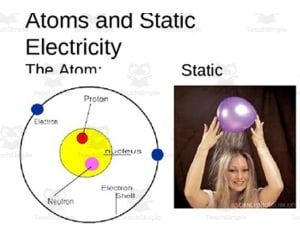
Atoms and Static Electricity
Science, Physics, Grade 6, Teacher Tools, Lesson Plans
Atoms and Static Electricity for Grade 6 Science Classes This incredible PowerPoint resource is ideally designed for educators who aim to facilitate an immersive learning experience while explaining the concept of atomic structure and static electricity. The primary focus is on fostering student's understanding of what an atom is via engaging classroom discussions. There are detailed partitions into the composition of certain atoms like: Carbon Magnesium Calcium In-depth information about atomic particles including their differences, specifically - protons, neutrons and electrons, has been integrated within this teaching tool as well. Towards Hands-On Learning This resource comprises two interactive student projects. The students get an opportunity to build their own atom diagrams which solidify their understanding in a more engaging way. A versatile Resource For Any Classroom Setting! The flexibility of this standalone PowerPoint resource allows it to be effectively implemented in every kind of teaching environment. Whether you're leading a whole group instruction or conducting shared investigations within small groups; learners stay invested while learning at a comfortable pace. This makes it apt even if you're considering assigning it as homework for autodidactic students. In essence, Atoms & Static Electricity unfolds often misunderstood aspects within Physics both simply yet comprehensively- making science more accessible and understandable! </div
Author Easy As ABC
Tags Atoms, Static Electricity, Atomic Structure, Classroom Discussions, Interactive Learning, Electricity Atoms
I WONDER - What Are The Stages In A Butterfly's Life Cycle
STEM, Insects, Life Sciences, Science, Animals, Biology, Grade 1, 2, 3, 4, 5, 6, 7, 8, Lesson Plans, Teacher Tools
Video Introduction Animal kingdoms are full of fascinating wonders to learn. This video is designed for the students to learn more about animals in different countries. I WONDER - What Are The Stages In A Butterfly's Life Cycle | Animated Video Lesson Do you like animals? what is your favorite one? Do you own a pet? If yes, tell us more about it, like what its name? And what do you like most about it? What are the animal kingdoms? Can you write down the characteristics of each animal class like mammals, birds, reptiles, amphibian, fish and mollusks. Do you know that some animals can sing, can you name any of them? What is the largest and the smallest mammal in the world? What is the largest and the smallest bird in the world? What is the largest and the smallest fish in the world? I WONDER - What Are The Stages In A Butterfly's Life Cycle | Animated Video Lesson The video is perfect for encouraging the researching skills for the students, while learning more about these fantastic animals. I WONDER - What Are The Stages In A Butterfly's Life Cycle | Animated Video Lesson This friendly designed video is suitable for students at school, homeschooling, and as a group activity. Format Available in MP4 format.
Author Educational Voice
Tags What Are The Stages In A Butterfly's Life Cycle, What Are The Stages In A Butterfly's Life Cycle Video, Butterfly's Life Cycle, Butterfly's Life Cycle Facts, Butterfly's Life Cycle Facts For Kids, Butterfly's Life Cycle Video
I WONDER - What Animals Are Like Koalas | Animated Video Lesson
STEM, Biology, Life Sciences, Science, Animals, Grade 1, 2, 3, 4, 5, 6, 7, 8, Lesson Plans, Teacher Tools
Video Introduction Animal kingdoms are full of fascinating wonders to learn. This video is designed for the students to learn more about animals in different countries. I WONDER - What Animals Are Like Koalas | Animated Video Lesson Do you like animals? what is your favorite one? Do you own a pet? If yes, tell us more about it, like what its name? And what do you like most about it? What are the animal kingdoms? Can you write down the characteristics of each animal class like mammals, birds, reptiles, amphibian, fish and mollusks. Do you know that some animals can sing, can you name any of them? What is the largest and the smallest mammal in the world? What is the largest and the smallest bird in the world? What is the largest and the smallest fish in the world? I WONDER - What Animals Are Like Koalas | Animated Video Lesson The video is perfect for encouraging the researching skills for the students, while learning more about these fantastic animals. I WONDER - What Animals Are Like Koalas | Animated Video Lesson This friendly designed video is suitable for students at school, homeschooling, and as a group activity. Format Available in MP4 format.
Author Educational Voice
Tags What Animals Are Like Koalas, What Animals Are Like Koalas Video, Koalas, Koala, Koalas Facts, Koalas Facts For Kids, Koalas Video, Koalas Video For Kids, Koala Facts, Koala Video
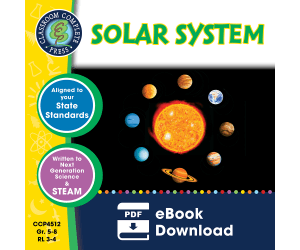
Solar System Gr. 5-8
Science, Earth and Environmental Sciences, Space, Grade 5, 6, 7, 8, Teacher Tools, Lesson Plans
Solar System Gr. 5-8: Indispensable Teaching Resource Solar System Gr. 5-8 is a meticulously crafted teaching resource designed to inspire and educate young learners about the mysteries and wonders of our solar system. Customized to simplify fundamental astronomy concepts for students in grades 5 through 8, this resource illuminates every facet of our celestial neighborhood. Enlightening Content This asset demystifies constituents of the solar system such as planets, moons, asteroids, and beyond. It further delves into each inner and outer planet presenting a comprehensive view for curious minds. Versatile Teaching Tool Used effectively in whole group lessons fueling interactive discussions. Encourages teamwork when incorporated into smaller learning clusters. A useful reference material for homework assignments. Addition of Practical Experience This educational module includes hands-on projects like constructing scale models of the solar system or planning imaginary trips to any chosen planet stimulating knowledge retention among students significantly! The Phases of the Moon: An Essential Topic Intriguing phenomena like 'Blue Moon' are covered promoting enhanced understanding towards mysterious lunar phases. Differences Between Stars Based on Colour and Size: For instance: Yellow Dwarfs Vs Blue Giants comparison encourages awareness about stellar differences among pupils! Creativity Meets Science: Students can also create imaginative presentations recounting fascinating stories about their favourite constellation. Distinguishing Astronomy Objects: This guide dives deep into differentiating asteroids from meteors and comets cultivating critical differentiation skills among young learners. Accordance with Education Standards The tool aligns seamlessly with Next Generation State Standards, Bloom's Taxonomy and STEAM initiatives ensuring comprehensive knowledge delivery within lessons. Additional Engagement Features To make learning further engaging, this guide also includes: Experiments, Crossword Puzzles, Word Searches, and Comprehension Quizzes An answer key is available promptly validating the acquired understanding of students. The entire resource comes enclosed as a single PDF file for swift accessibility to all aspects of 'Solar System Gr. 5-8 making it an excellent choice to sharpen students’ cosmic knowledge significantly!
Author Classroom Complete Press
Tags PDF
I WONDER - How Many Times Can You Recycle Glass And Aluminum
Environmental Science, Earth and Environmental Sciences, Science, Grade 5, 6, 7, 8, 9, 10, 11, Lesson Plans, Teacher Tools
Video Introduction An amazing video designed for the students to learn more about STEM. I WONDER - How Many Times Can You Recycle Glass And Aluminum | Animated Video Lesson Do you like STEM subjects? what is your favorite one? Have you ever tried to plant a seed? If yes, tell us more about it. Or have you ever tried to invent something? If yes, tell us more about it. And how do you think it will help us? Have you ever seen a microorganism under a microscope? What was it? And how it looked like? Mathematics is a marvelous subject. Let' sharpen our brains and solve some equations. Do you like timetable tricks? What is your favorite one? Do you know how to code? Have you ever created an app or a game before? If yes, how was it like? I WONDER - How Many Times Can You Recycle Glass And Aluminum | Animated Video Lesson The video is perfect for encouraging the researching skills for the students, while learning more about this fantastic topic. I WONDER - How Many Times Can You Recycle Glass And Aluminum | Animated Video Lesson This friendly designed video is suitable for students at school, homeschooling, and as a group activity. Format Available in MP4 format.
Author Educational Voice
Tags How Many Times Can You Recycle Glass And Aluminum, How Many Times Can You Recycle Glass And Aluminum Video, Glass Recycling, Glass Recycling Facts, Aluminum Recycling, Aluminum Recycling Facts

I WONDER - Is The Skin Made Of Layers | Animated Video Lesson
Biology, Life Sciences, Science, Human Body, Grade 4, 5, 6, 7, 8, 9, 10, Lesson Plans, Teacher Tools
Video Overview The human body is full of fascinating wonders to learn. This video is created to help the students recognize the anatomy and the job of the human body. I WONDER - Is The Skin Made Of Layers | Animated Video Lesson Every part and organ in our human body is vital so let's see how important they are. Have you ever imagined how we look like if we didn't have a skeleton? Did you know that because we have our amazing muscles we can stand! Do you know how many teeth do we have? Have you ever wondered about the food journey inside our body? Can you name all the glands in our body? Why do we have skin? Our nervous system is really good at sending signals. Can you tell us more about it? Are you really good at Mathematics, painting, or any other thing? You should really thank your brain about it! The famous five senses are really doing a great work? Can you explain how every sense works? I WONDER - Is The Skin Made Of Layers | Animated Video Lesson The video is perfect for encouraging the researching skills for the students, while learning more about our fantastic human body. I WONDER - Is The Skin Made Of Layers | Animated Video Lesson This friendly designed video is suitable for students at school, homeschooling, and as a group activity. Format Available in MP4 format.
Author Educational Voice
Tags Is The Skin Made Of Layers, Is The Skin Made Of Layers Video, Skin Layers, Skin Layers Facts, Skin Layers Facts For Kids, Skin Layers Video, Skin Layers Video For Kids, Skin, Skin Facts, Skin Facts For Kids
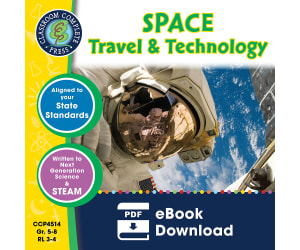
Space Travel & Technology Gr. 5-8
Science, Earth and Environmental Sciences, Space, Grade 5, 6, 7, 8, Teacher Tools, Lesson Plans
Space Travel & Technology Gr. 5-8 An exceptional teaching resource designed for science and astronomy curriculum enhancement aimed at students from Grades 5 through 8. Embark your students on a journey into the cosmos, picturing themselves as astronauts on a mission to the International Space Station (ISS). A comprehensive look at space exploration This hands-on resource provides valuable insights into the various roles in a space shuttle mission. Students get familiarized with powerful instruments like telescopes and their role in studying celestial bodies. Dive headfirst into interstellar missions Gaining invaluable knowledge about how spacecrafts function. Planning a hypothetical mission to Mars; assembling necessary items for the projected 2.5-year journey. Designing an innovative, real-world rover intended for planetary exploration, spurring creativity while fostering problem-solving skills. Lunar Studies and Beyond This educational tool dedicates interesting sections to lunar studies, celebrating humanity's greatest achievements like Apollo 11's moon landing. Moreover, it provides an exciting insight into life aboard the ISS and predictions of how everyday toys would operate in zero gravity! This dynamic teaching aid is adaptable across various classroom activities like group sessions or small cluster projects or even as challenging homework assignments! Tailored according to Next Generation State Standards and Blooms Taxonomy’s educational objectives along with STEAM initiatives ensures top-notch education centered around practical inquiry-based learning experiences. Your classrooms' connection to cosmos – Ignite curiosity, foster problem-solving skills and instill within future scientists a love for space science!! Build your scientific teaching toolkit today! Pedagogical strides beyond traditional textbook curriculum Hands-on experiments that promote experiential learning. Crossword puzzles aiming towards vocabulary building exercises thereby ensuring comprehensive learning and retention. Our PDF format ensures easy implementation and maintenance among educators, irrespective of their technical skills. Add Space Travel & Technology Gr. 5-8 – your key to the cosmos, to your educational resources today!
Author Classroom Complete Press
Tags PDF

I WONDER - What Are Conductors And Insulators | Animated Video Lesson
Chemistry, Science, Grade 6, 7, 8, 9, 10, 11, 12, Lesson Plans, Teacher Tools
Video Introduction An amazing video designed for the students to learn more about STEM. I WONDER - What Are Conductors And Insulators | Animated Video Lesson Do you like STEM subjects? what is your favorite one? Have you ever tried to plant a seed? If yes, tell us more about it. Or have you ever tried to invent something? If yes, tell us more about it. And how do you think it will help us? Have you ever seen a microorganism under a microscope? What was it? And how it looked like? Mathematics is a marvelous subject. Let' sharpen our brains and solve some equations. Do you like timetable tricks? What is your favorite one? Do you know how to code? Have you ever created an app or a game before? If yes, how was it like? I WONDER - What Are Conductors And Insulators | Animated Video Lesson The video is perfect for encouraging the researching skills for the students, while learning more about this fantastic topic. I WONDER - What Are Conductors And Insulators | Animated Video Lesson This friendly designed video is suitable for students at school, homeschooling, and as a group activity. Format Available in MP4 format.
Author Educational Voice
Tags What Are Conductors And Insulators, What Are Conductors And Insulators Video, Conductors, Conductors Facts, Conductors Facts For Kids, Conductors Video, Insulators, Insulators Facts, Insulators Video

I WONDER - How Is AI Evolving | Animated Video Lesson
STEM, Science, Computer Science, Technology, Grade 6, 7, 8, 9, 10, 11, 12, Lesson Plans, Teacher Tools
Video Introduction An amazing video designed for the students to learn more about STEM. I WONDER - How Is AI Evolving | Animated Video Lesson Do you like STEM subjects? what is your favorite one? Have you ever tried to plant a seed? If yes, tell us more about it. Or have you ever tried to invent something? If yes, tell us more about it. And how do you think it will help us? Have you ever seen a microorganism under a microscope? What was it? And how it looked like? Mathematics is a marvelous subject. Let' sharpen our brains and solve some equations. Do you like timetable tricks? What is your favorite one? Do you know how to code? Have you ever created an app or a game before? If yes, how was it like? I WONDER - How Is AI Evolving | Animated Video Lesson The video is perfect for encouraging the researching skills for the students, while learning more about this fantastic topic. I WONDER - How Is AI Evolving | Animated Video Lesson This friendly designed video is suitable for students at school, homeschooling, and as a group activity. Format Available in MP4 format.
Author Educational Voice
Tags How Is AI Evolving, How Is AI Evolving Video, AI Facts, AI Facts For Kids, AI Video, AI Video For Kids, Artificial Intelligence, Artificial Intelligence Facts, Artificial Intelligence Video, Artificial Intelligence Video For Kids
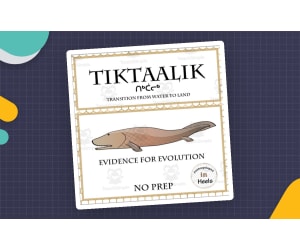
Tiktaalik : Evidence for Evolution Informational Text and Activity
Science, Life Sciences, Biology, Grade 10, 11, 12, Teacher Tools, Lesson Plans
Tiktaalik: Evidence of Evolution of a "Fishapod" This resource is great to teach your students how early life transitioned from the ocean to the land. Learners will: - explore fossils in order to gain a perspective of evolution - watch several free videos and fossils - complete a worksheet - complete a think pair share activity - informational text and a transitional fossil coloring activity. ⚘ Evolution Curriculum must contain Tiktaalik Tiktaalik is special because it provides insights into how early life transitioned from the ocean to the land. Although we cannot trace our family tree directly back to Tiktaalik, we know an animal much like Tiktaalik was a direct ancestor to modern humans. In 2004, up in the Nunavut Territory of the Artic, archeologists discovered the fossilized remains of a an odd creature with a flat head, scales, little arms and it grew up to three meters (9 feet) long. It had the body of a fish and appeared to have four primitive limbs allowing it to crawl on land. Scientists didn’t find just one specimen – but ten all together. Carbon dating informed scientists the animals lived about 375 million years ago in the late Devonian Period. Archeologists asked the local Inuit tribe to name the fish. A local council of elders known as the Inuit Qaujimajatuqangit Katimajiit were consulted, and they gave Tiktaalik its name, ᑎᒃᑖᓕᒃ, which translates to a large freshwater fish that lives in the shallows, in Inuktitut.
Author Anthropolotist in Heels
Tags Evolution, Tiktaalik, Homologous, Adaptation, Natural Selection, Define Tiktaalik, Fossil Record Lesson Plan Middle School, Tiktaalik Evolution, The Fossil Tiktaalik Appears To:

How to 3D Print in your classroom
Science, Technology, Computer Science, Not Grade Specific, Teacher Tools, Lesson Plans
A detailed guide for teachers and supporting instruction sheet for students to help facilitate 3D printing in the classroom.
Author WhyMaker
Tags Computer Science - Technology, For All Subjects, 3D Print

I WONDER - How Do Raspberries Grow | Animated Video Lesson
Nature & Plants, Life Sciences, Science, Grade 6, 7, 8, 9, 10, 11, 12, Lesson Plans, Teacher Tools
Video Introduction An amazing video designed for the students to learn more about STEM. I WONDER - How Do Raspberries Grow | Animated Video Lesson Do you like STEM subjects? what is your favorite one? Have you ever tried to plant a seed? If yes, tell us more about it. Or have you ever tried to invent something? If yes, tell us more about it. And how do you think it will help us? Have you ever seen a microorganism under a microscope? What was it? And how it looked like? Mathematics is a marvelous subject. Let' sharpen our brains and solve some equations. Do you like timetable tricks? What is your favorite one? Do you know how to code? Have you ever created an app or a game before? If yes, how was it like? I WONDER - How Do Raspberries Grow | Animated Video Lesson The video is perfect for encouraging the researching skills for the students, while learning more about this fantastic topic. I WONDER - How Do Raspberries Grow | Animated Video Lesson This friendly designed video is suitable for students at school, homeschooling, and as a group activity. Format Available in MP4 format.
Author Educational Voice
Tags How Do Raspberries Grow, How Do Raspberries Grow Video, Raspberries, Raspberry, Raspberries Facts, Raspberries Facts For Kids, Raspberries Video, Raspberries Video For Kids, Raspberries Facts Video For Kids
I WONDER - Why Is Mars Red | Animated Video Lesson
Space, Earth and Environmental Sciences, Science, Grade 4, 5, 6, 7, 8, 9, 10, Lesson Plans, Teacher Tools
Video Introduction An amazing video designed for the students to learn more about space facts. I WONDER - Why Is Mars Red | Animated Video Lesson Do you like reading about space? If yes, what is your favorite topic? What do you know about our solar system? What is the smallest planet in our solar system? What is the biggest planet in our solar system? What is the hottest planet in our solar system? And what is the coldest one? Do you think there are aliens? If yes, what do you think they look like? What do they eat and how they speak to each other? Where do they live? What is a galaxy? And what is a milky way? Have you recently saw a shooting star? If yes, tell us more about it, like when did it happen and where? What is a blackhole? Can a blackhole gets bigger by time? Do you like counting the stars? What do you think a star is made of? I WONDER - Why Is Mars Red | Animated Video Lesson The video is perfect for encouraging the researching skills for the students, while learning more about the fantastic space. I WONDER - Why Is Mars Red | Animated Video Lesson This friendly designed video is suitable for students at school, homeschooling, and as a group activity. Format Available in MP4 format.
Author Educational Voice
Tags Why Is Mars Red, Why Is Mars Red Video, Mars, Mars Facts, Mars Facts For Kids, Mars Video, Mars Video For Kids, Red Planet, Red Planet Facts, Red Planet Facts For Kids

I WONDER - What Causes Forest Fires | Animated Video
Geography, Social Studies, Environmental Science, Earth and Environmental Sciences, Science, Earth Sciences, Grade 4, 5, 6, 7, 8, 9, 10, Lesson Plans, Teacher Tools
Video Introduction An amazing video designed for the students to learn more about natural disasters in different countries. I WONDER - What Causes Forest Fires | Animated Video Lesson What do you know about this natural disaster? Do you know in which part of the world this could happen? Have you ever read about the safety misusers that we could have to protect ourselves from this natural disaster? If yes, can you tell us more about them? Can you name other natural disasters? If yes, tell us more about where they are likely to happen? And how frequently? Do you like reading about Geography? What is your favorite country in the whole world? If you are going on a trip where it will be? Which country? What you are going to see there? Does this country has a famous place to visit? Do you like reading about Geology? If yes, what is your favourite topic? I WONDER - What Causes Forest Fires | Animated Video Lesson The video is perfect for encouraging the researching skills for the students, while learning more about this fantastic phenomenon. I WONDER - What Causes Forest Fires | Animated Video Lesson This friendly designed video is suitable for students at school, homeschooling, and as a group activity. Format Available in MP4 format.
Author Educational Voice
Tags What Causes Forest Fires, What Causes Forest Fires Video, Forest Fires, Forest Fires Video, Forest Fires Video For Kids, Forest Fires Facts, Forest Fires Facts For Kids, Causes Of Forest Fires, Causes Of Forest Fires Video
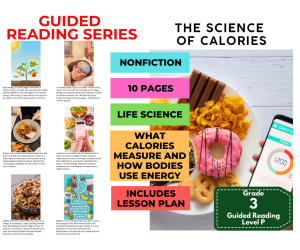
The Science of Calories: Guided Reading Level P with Lesson Plan
ELA, Resources for Teachers, Reading Comprehension, Reading, Science, Life Sciences, Health, P.E. & Health, Physics, Language Development, Grade 2, 3, 4, Worksheets & Printables, Worksheets, Teacher Tools, Centers, Activities, Literacy Readers, Quizzes, Quizzes and Tests, Assessments, Lesson Plans
This The Science of Calories (level p) guided reading book with lesson plan includes: Guided Reading Color Label (front cover x1) This is a quick way to match the book’s demands to what students can generally handle.. The overall goal is to use the level/color to pick books for several smaller groups. To qualify for a certain level, a student is expected to read a book from that level with about 90–94% accuracy. If a student is consistently accurate and understands, move up a level. If the student is struggling at that level, drop down and add more support. Each student will improve at completely different rates, but it is generally one of the best ways to check progress across the class. DOWNLOAD THE CATALOG TO VIEW ALL GUIDED READING BOOKS AVAILABLE (SORTED LEVELS A-Z) Pre-Reading Question (x1) Teacher asks the prompt aloud, can be while showing the cover or first page. Students share what they already know, or make educated guesses from the cover. Prompt them to use the target vocabulary. Write some of their responses on the board to look back at during the reading. Vocabulary Words (x5) Introduce the five words, best doing it one at a time. Start by saying it, while students repeat and then see if anyone knows what it means before reading further. Read through the meaning and try to briefly connect each word to a picture or gesture so it’s meaningful. Ask students to flip through the book pages and point to where they see each of the vocabulary words. While reading the book pause upon coming across one of the vocab words or read the sentence twice to make sure students understand the word has appeared. Optional: Ask students to raise hands whenever they see/hear one of the new words. Guided Reading Pages (x10) Check the book snapshot (below) for: primary topic - do you need to prep extra reading or intro materials on this? what is taught best - decide on 1-2 bullets to focus on, use the prompt or words provided here for best results. learning goals - what you are checking for students to be able to do after the session, elicit answers using prompts or words provided. key vocabulary (see section above). questions overview - so you know what is coming up and if you need to prep extra materials to assist understanding. Run the lesson You may have already looked at a few of the pages together, but you can show them some of the pictures again first to set meaning. Depending on how much time you have and how familiar your students are with guided reading class, you may want to read the book aloud first with the group first. Students whisper or partner read, while you listen in. If time, do it as a group, one student reading a page each. Use the guided page’s prompts to coach: “Check the picture / does it make sense?” “Point under the words / try the first sound” “Reread the sentence smoothly”. Try to focus more on one student per session (rotating every time), so you can work out if they are ready to move up or need to move down a level. Comprehension Questions (back cover x3) This is your way to check that students didn’t just say the words, but actually understood the text. First, let students answer by pointing to the page/picture and saying a short sentence. After any answer, follow with: “Show me where you found that in the text.” In bigger groups, have partners answer first (10–20 seconds), then call on 2–3 students to share. Differentiation tips: Emerging speakers/struggling readers: oral + pointing On-level: oral in a full sentence Higher: one written sentence or draw + label Book Snapshot Title: The Science of Calories Genre: Nonfiction (informational science text) Subject: Science (Nutrition/Human Body) Primary Topic: What calories measure and how bodies use energy Estimated Guided Reading Level (A–Z): P What This Book Teaches Best Defines energy as what living things need to survive and function, and connects energy to everyday examples like cars and lamps. Explains that a calorie measures energy in food (not weight or size) and describes it as a scientific unit of measurement. Shows how most energy starts with the sun , and how plants use photosynthesis to turn light into chemical energy stored in plant parts. Describes how the human body uses energy all the time (even during rest or sleep) to power the heart, lungs, and brain. Explains how food energy is released through digestion , how activity increases energy demand, and how extra calories may be stored as body fat. Learning Goals Explain what energy is and why living things need it. Describe what a calorie measures according to the text. Explain how plants get energy from the sun and where that energy is stored in a plant. Describe how digestion helps the body unlock energy from food. Describe how physical activity changes the body’s need for calories. Explain what happens when more calories are consumed than the body needs for daily activities. Key Vocabulary From the Text measurement — finding out how much of something there is. photosynthesis — plants use sunlight to make chemical energy. digestion — the process that unlocks energy in food. intestines — long tubes that help finish breaking down food. converted — changed from one form into another. Discussion Prompts Pre-reading question: What do you think calories tell us about the food we eat? Comprehension questions: What does the book say a calorie measures? Comprehension questions: How does the book explain that plants capture and store energy from the sun? Comprehension questions: What does the book say happens when a person consumes more calories than needed for daily activities? Printing Tips 1. Best Printing Method (Recommended) “Booklet” Printing (Best if Available) If your printer or PDF viewer supports Booklet Printing , use this. Settings to use: Print mode: Booklet Paper size: Letter or A4 (either works) Orientation: Landscape Print on both sides: Yes Flip on: Short edge Scaling: Fit to printable area Booklet subset: First test: Front sides only Then: Back sides only This will automatically: Pair pages correctly Put the cover on the outside Align everything for folding After printing, fold in half and staple along the spine . 2. If “Booklet” Printing Is NOT Available You can still print this correctly with manual duplex printing . Step-by-step: Open the PDF. Choose Print . Set: Orientation: Landscape Pages per sheet: 1 Print on both sides: Yes Flip on: Short edge Print all pages . Because each PDF page already contains two facing book pages, the result will still fold cleanly into a book. Thousands of Cored Education products are included with your TeachSimple membership. Download links and encyclopedia index available here.
Author Cored Education
Rating
Tags Reading Comprehension, Reading Passages, Reading, Guided Reading, Guided Reading Lesson Plan, Guided Reading Activity, Pre-reading, Science Lesson Plans, Life Science, Health

I WONDER - Where Is Tea Grown | Animated Video Lesson
Nature & Plants, Life Sciences, Science, Grade 3, 4, 5, 6, 7, 8, 9, Teacher Tools, Lesson Plans
Video Introduction An amazing video designed for the students to learn more about STEM. I WONDER - Where Is Tea Grown | Animated Video Lesson Plants world is really fascinating! Do you know that some flowers eat insects? Some other plants like to grow on walls can you mention any? Do you know what is the difference between fungicide and pesticide? If yes, Can you tell us more about it? What is nuclear energy? Is it safe to use it? Do you think it is a clean energy? Have you ever read about potential energy? If yes, tell us what it is? Do you think that potential energy can be converted into another form of energy? How it happens? I WONDER - Where Is Tea Grown | Animated Video Lesson The video is perfect for encouraging the researching skills for the students, while learning more about this fantastic topic. I WONDER - Where Is Tea Grown | Animated Video Lesson This friendly designed video is suitable for students at school, homeschooling, and as a group activity. Format Available in MP4 format.
Author Educational Voice
Rating
Tags Where Is Tea Grown, Tea, Tea Facts, Tea Facts For Kids, Tea Video, Tea Video For Kids, Tea Leaves, Planting Tea, Planting Tea Video For Kids, Planting Tea Facts

Lesson Plan on The Weather - Grades 1-4
Earth and Environmental Sciences, Science, Earth Sciences, Environmental Science, Grade 1, 2, 3, 4, Activities, Lesson Plans, Teacher Tools, Worksheets & Printables
This fun 90-minute lesson is perfect for Grades 1–4. It helps students learn all about the weather in a simple and engaging way. The lesson starts with a quick observation activity where students look outside and describe what they see. Then, they watch a short, colorful video called Weather | Science for Kids . It explains what weather is, the different elements, and why it matters. After the video, students answer questions, sort weather cards, and work in pairs. The lesson includes a printable worksheet full of matching, drawing, and word games. Students also make their own weather wheels and act as mini meteorologists in class. Everything is hands-on and easy to follow. The lesson builds vocabulary, boosts speaking, and teaches science—all at once. It’s ideal for classroom or remote learning. Best of all, the activities are ready to print and use right away. If you want a weather lesson that’s fun, interactive, and packed with learning, this is it!
Author Bright Classroom Ideas Marketplace
Rating
Tags Weather, Lesson, Plan, Environment, Earth