
Language & listening
Kindergarten Speech and Language Screener
A speech-language screening form for assessing kindergarten students' articulation, vocabulary, sentence repetition, storytelling, and direction-following skills.




Classroom resources
Browse by lesson focus
Choose the topic or kind of practice you need.
Showing 73–91 of 91 resources

 Show filters
 A speech-language screening form for assessing kindergarten students' articulation, vocabulary, sentence repetition, storytelling, and direction-following skills.

A 108-page literacy intervention packet of 10 differentiated activities for teaching letter-sound correspondence, designed for small groups, interventions, or centers.
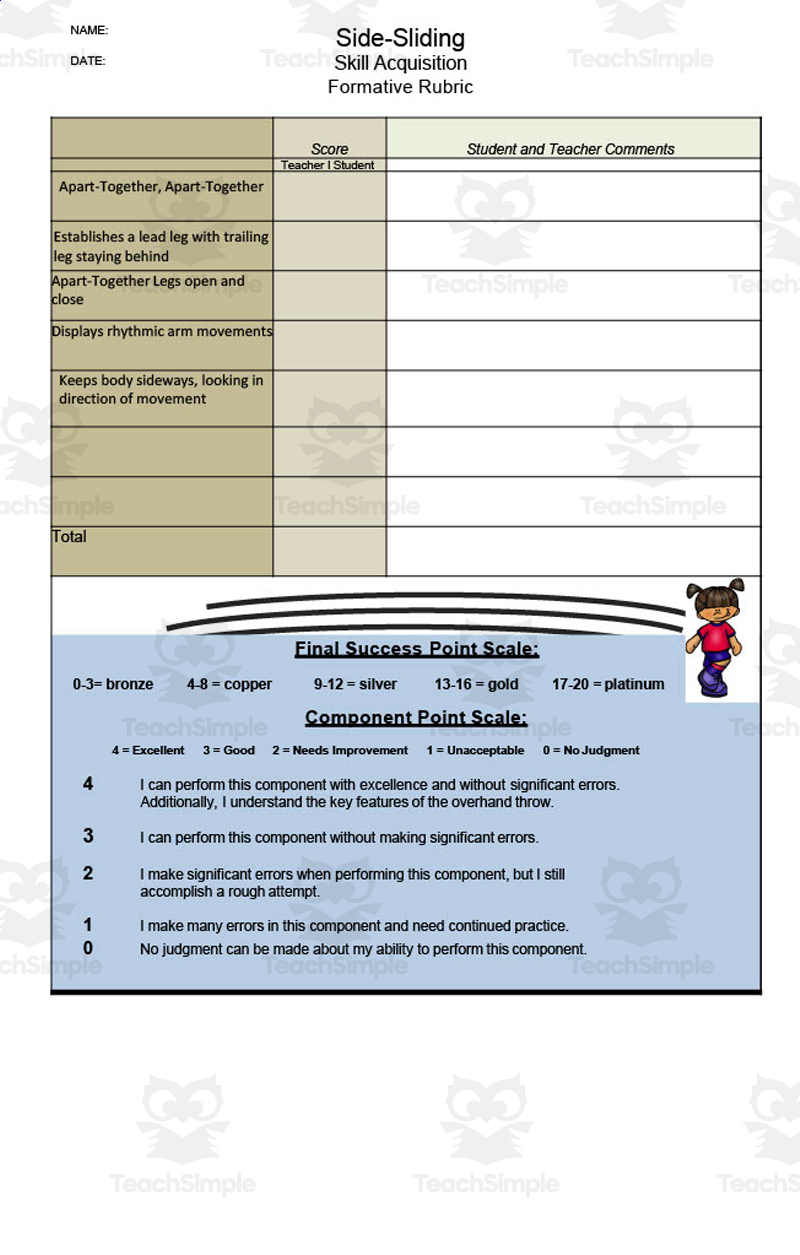
Give PE teachers a formative rubric to assess student acquisition of the side-sliding movement skill.
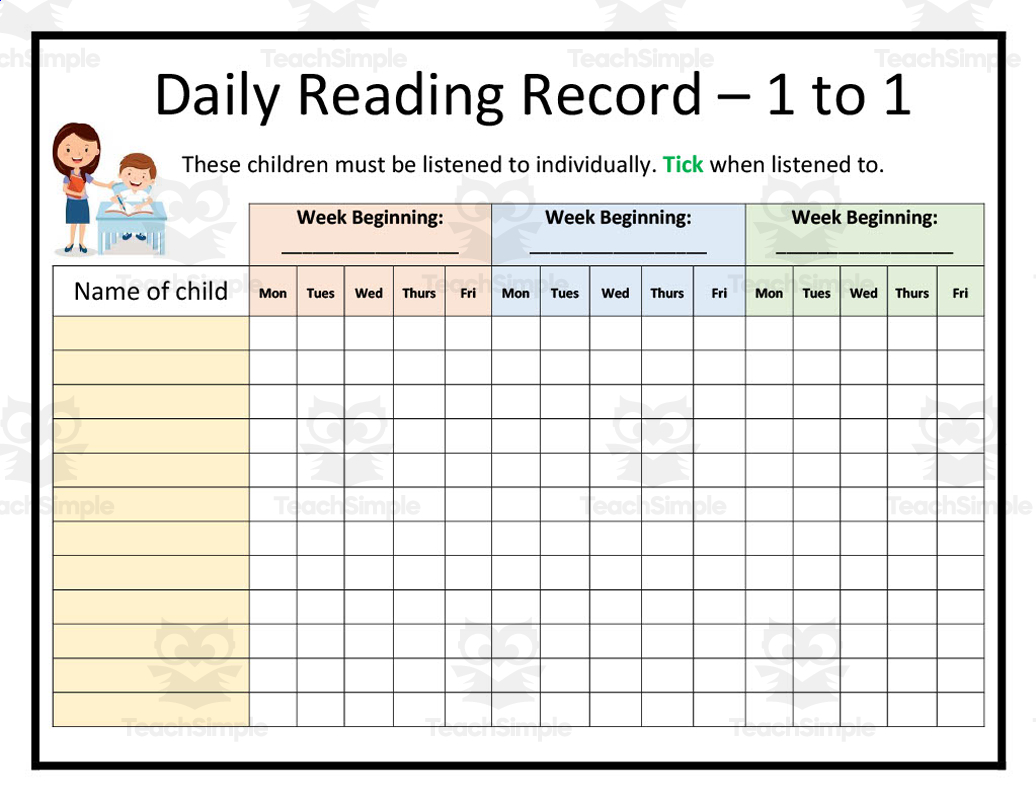
A one-to-one reading record sheet for teachers to log which children have been individually heard read each day of the week.

Use short practice sections to look at several early learning skills, including visual matching, classification, sequencing and letter recognition . Picture-based choices sit alongside tracing and coloring tasks, so teachers can focus on one area at a time. Read the directions aloud as needed and use students’ responses to decide which skill to revisit with a concrete example.
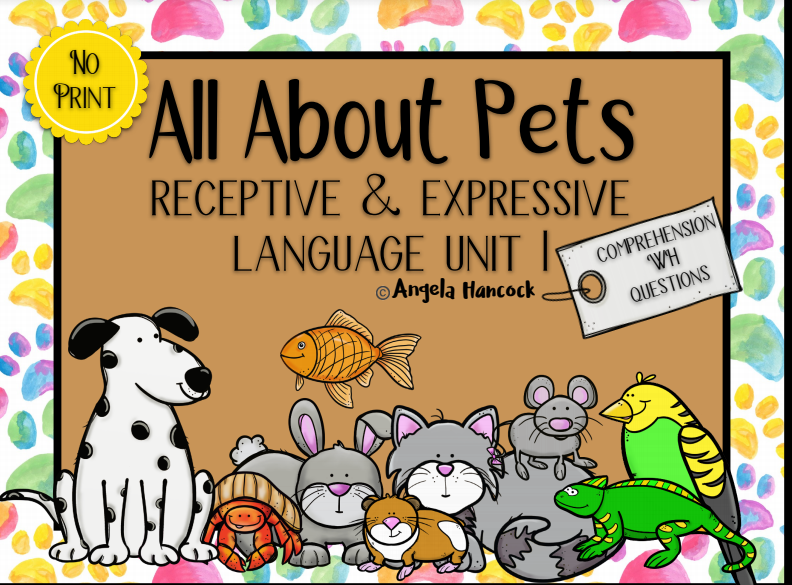
A no-print, digital/interactive listening-comprehension resource that uses a virtual pet-shop theme to build receptive and expressive language skills, primarily for speech-language therapy use.
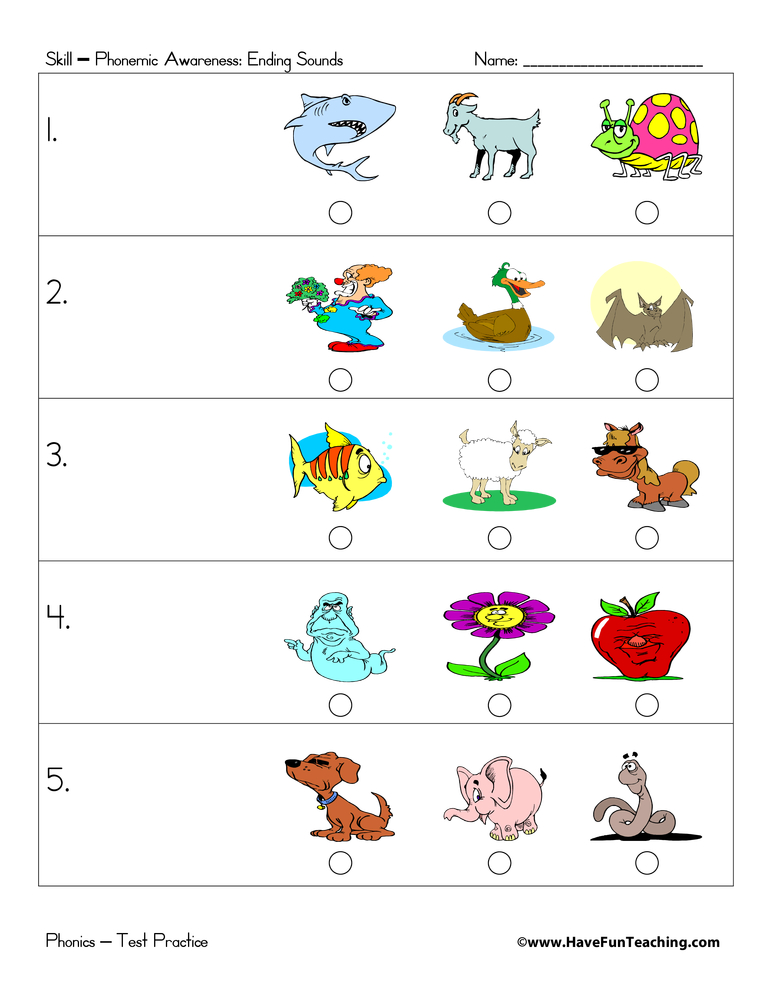
Provide teacher-led practice identifying ending consonant sounds in words, framed as test-practice for phonemic awareness/phonics.
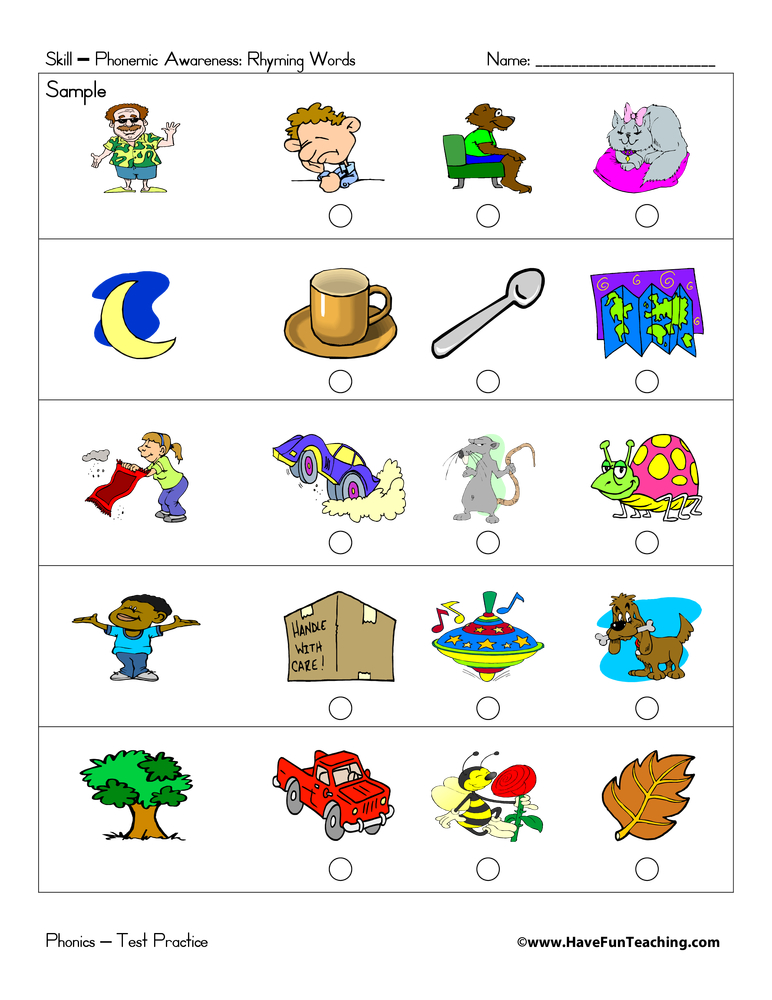
Assess phonemic awareness by having students identify which pictured word rhymes with a target picture.
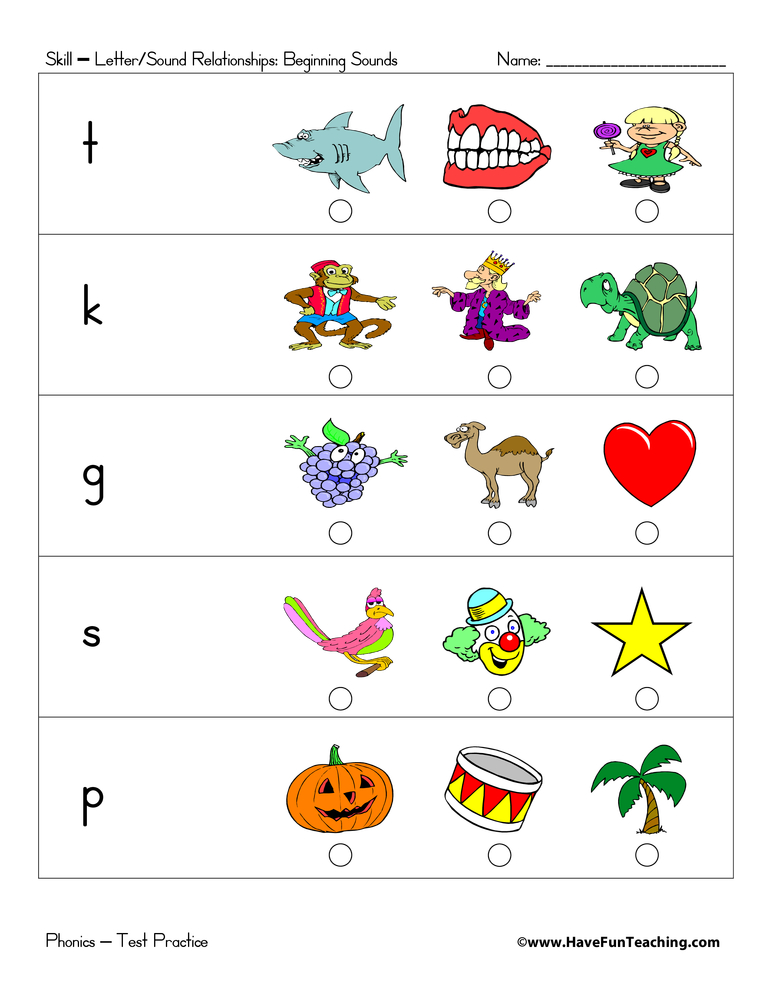
Practice identifying the beginning sound of a letter by choosing which picture name begins with that sound.
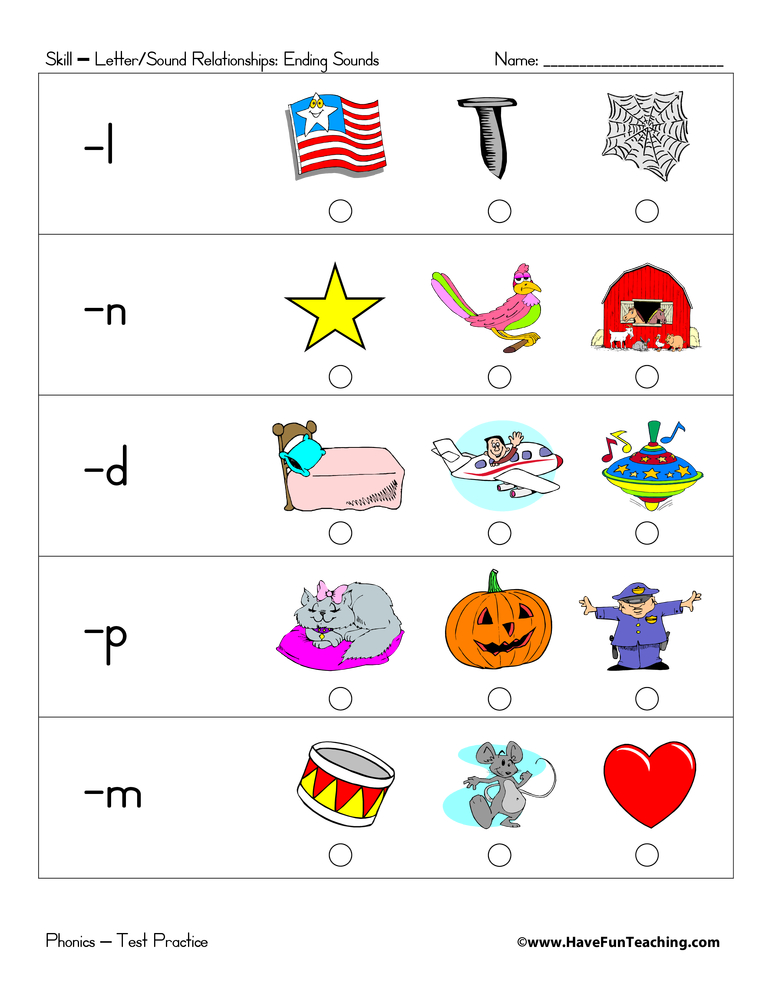
Practice identifying the ending sound of a letter/letter combination by choosing which picture name ends with that sound.
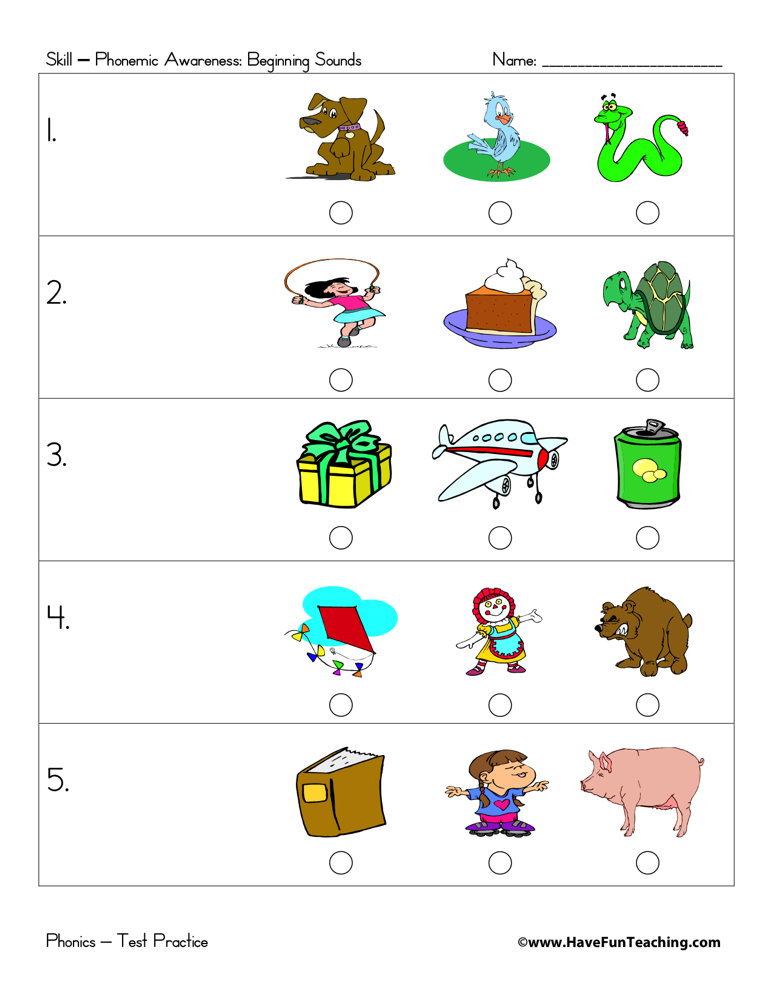
Provide teacher-led practice identifying beginning consonant sounds in words, framed as test-practice for phonemic awareness/phonics.
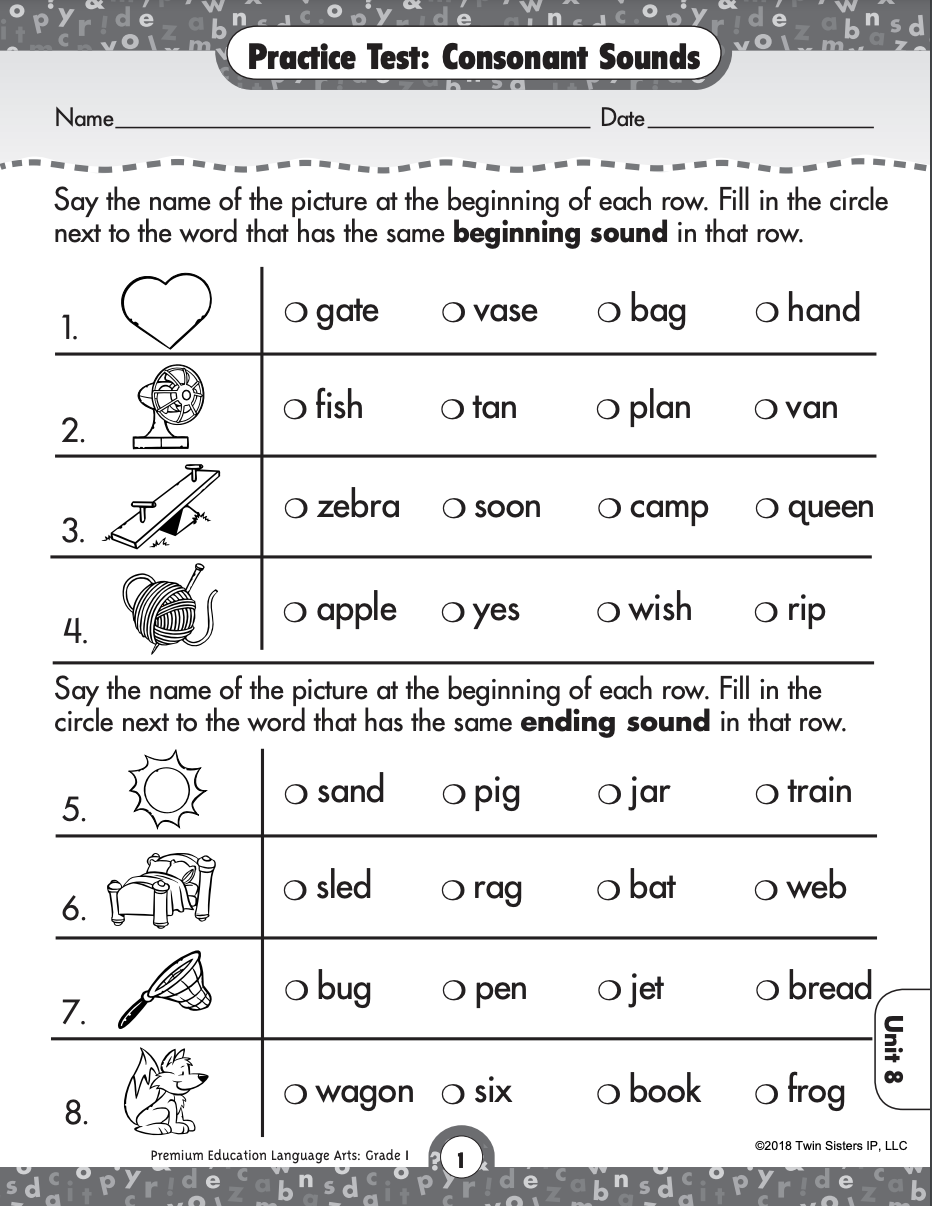
The packet combines picture-supported sound questions with text-based vocabulary, reading, and grammar tasks. Use one skill section at a time to see how students apply what they have learned, rather than assigning every page in one sitting. Name the pictured items together when introducing the sound tasks, then discuss selected responses after students work.

Use the dated rows to record a learner’s responses at several points during the year. The sheets cover letter recognition , letter sounds, numbers, and counting, allowing you to compare performance on the same type of task over time. Keep the records together to guide which early literacy or numeracy skills to revisit.
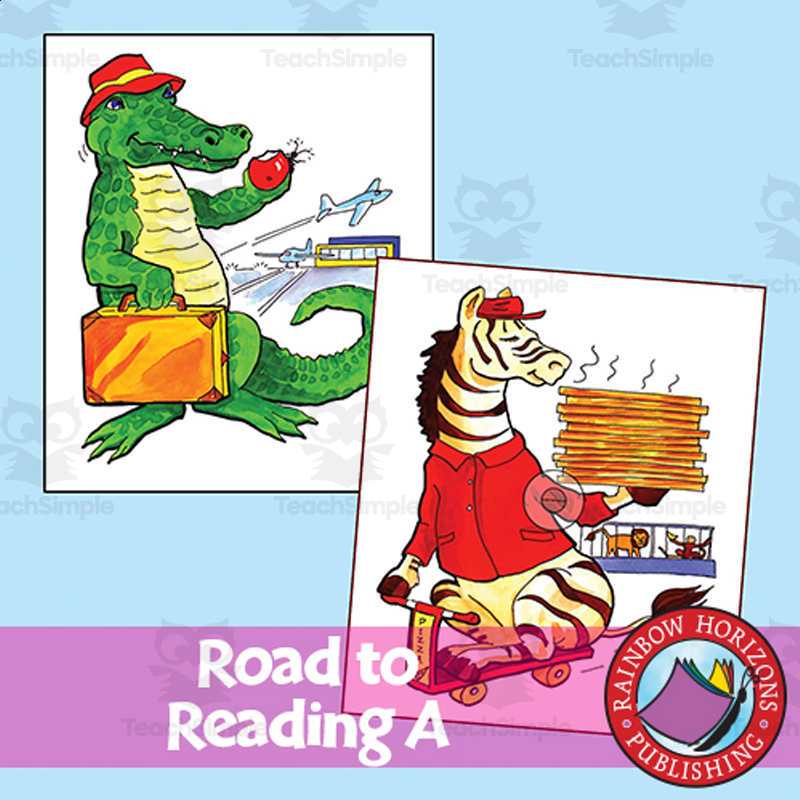
Part 1 (Unit 1: Letter Names) of the 12-part 'Road to Reading' foundational reading-intervention program, teaching alphabet letter names, letter shapes, and print concepts to struggling readers.

A beginning-of-year, picture-based diagnostic assessment for grade 1 math to identify student strengths and skill gaps across 11 key skill areas, paired with an answer key/teacher scoring guide and follow-up practice materials.
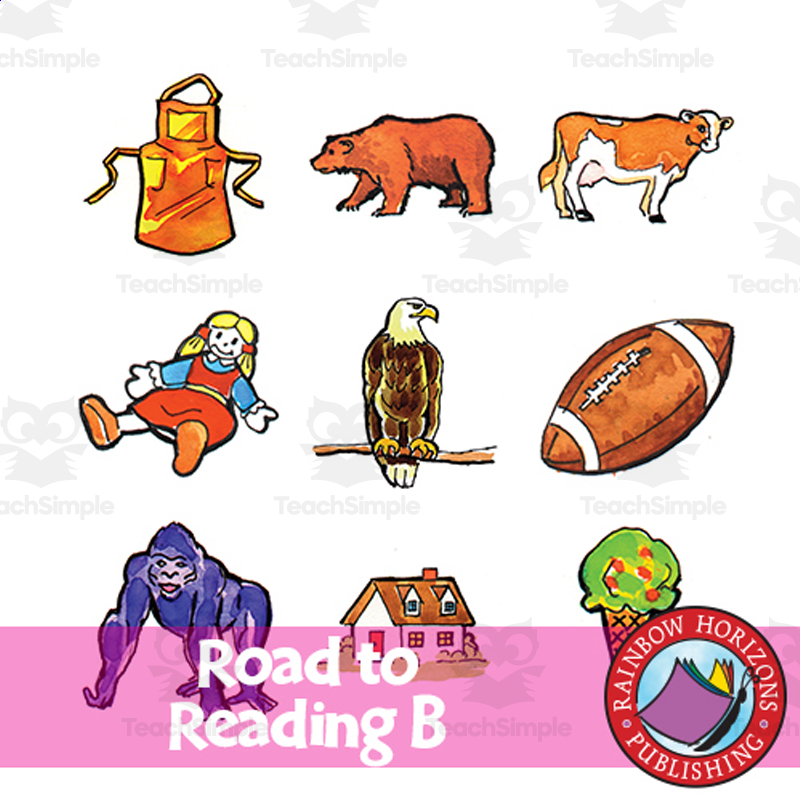
Part 2 (Unit 2: Beginning Sounds) of the 12-part 'Road to Reading' foundational reading-intervention program, teaching students to connect letter names to the sounds at the beginning of words.
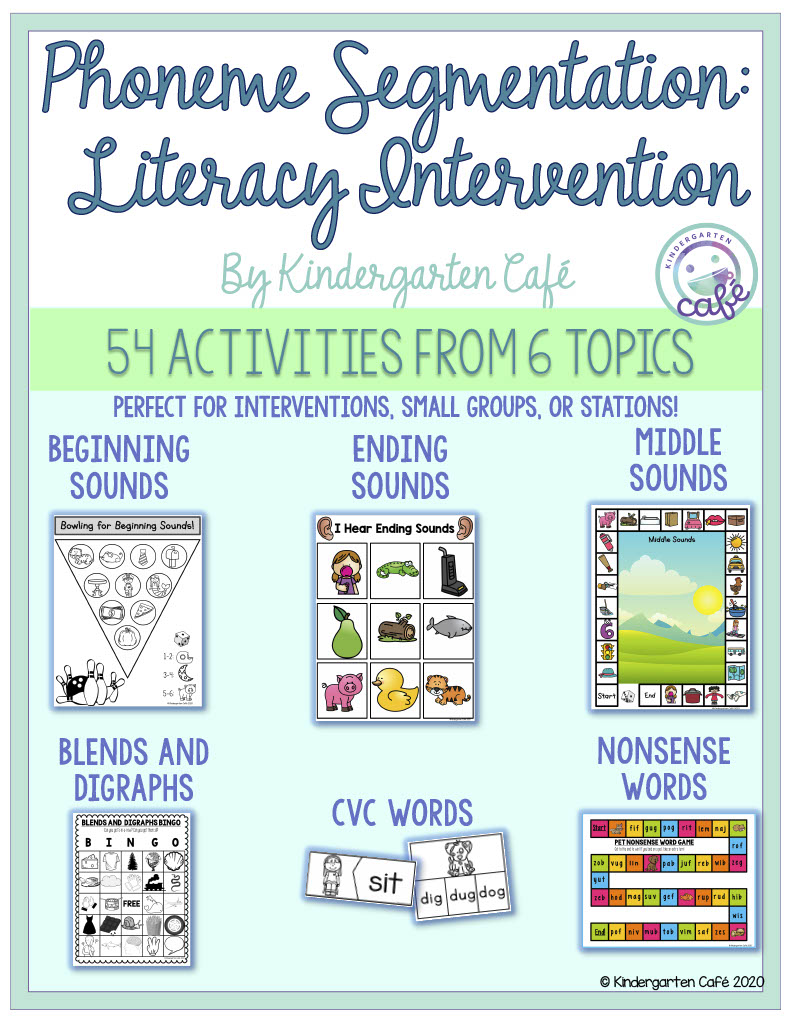
A phonics intervention packet that gives teachers 54 differentiated, game-based activities across six phoneme-segmentation topics (beginning, ending and middle sounds, blends and digraphs, CVC words, nonsense words) for interventions, small groups, or stations.

A kindergarten comprehensive review/practice-test workbook covering heavy/light comparison, counting to 10/20, shape matching, sets, patterns, addition, subtraction, and a combined measurement-and-money test.

A multi-unit practice test workbook for assessing and drilling core Grade 1 math skills across arithmetic, shapes, fractions, graphs, place value, and two-digit operations.