



3,926 products added recently
Page 2 - Biology Quizzes
Chemistry Quizzes assess students' understanding of the composition, properties, and changes of matter. Questions may cover atomic structure, the periodic table, chemical bonding, stoichiometry, and acids and bases. These quizzes help students apply theoretical knowledge to practical problems and experiments. Incorporating Chemistry Quizzes supports the development of analytical skills essential for success in science.

 Show filters

Scientist Lazzaro Spallanzani Fact Sheet, Quiz + Interactive Exercises
Life Sciences, Science, Biology, STEM, History: World, History, Social Studies, Animals, Human Body, Grade 7, 8, 9, 10, Worksheets, Worksheets & Printables, Quizzes, Quizzes and Tests, Teacher Tools, Projects, Activities
Discover Lazzaro Spallanzani – A Scientist Who Changed How We See Life Did you know that Lazzaro Spallanzani made incredible discoveries about how living organisms work? From figuring out how digestion happens to showing that life doesn’t just appear out of nowhere (disproving spontaneous generation), Spallanzani was a true pioneer of biology. His experiments opened the door to modern microbiology and helped us understand processes that we often take for granted today. This teaching resource is designed to help your grades 7–10 students learn about Spallanzani’s life and his groundbreaking experiments in a fun and interactive way. It’s perfect for a 45-minute lesson, with everything you need to make the topic engaging and easy to understand. What’s Included: Concise Informational Text: A clear and engaging overview of Lazzaro Spallanzani’s role in science. Fact Sheet Activity: Encourages students to organize knowledge and work creatively. Quiz with Solutions: Promotes fun, interactive learning and self-assessment. Additional Exercises: Students can create their own questions and collaborate in pairs to deepen their understanding. Flexible Formats: Includes a color and black-and-white printable PDF, as well as interactive H5P tasks for digital learning. Why You’ll Love This Resource: Time-Saving: Perfect for teachers who need a ready-to-go, well-structured lesson. Versatile Use: Ideal for biology, history of science, or cross-curricular lessons in English and science classes. Promotes Independence: Solutions are included, allowing students to check their work and explore the topic at their own pace. Interactive and Engaging: Tasks are designed to keep students actively involved while learning about Lazzaro Spallanzani’s legacy. Whether you use it for a regular lesson, substitute teaching, or as part of a digital learning activity, this resource will make Lazzaro Spallanzani’s contributions come alive for your students. Bring Lazzaro Spallanzani’s fascinating world of science into your classroom and inspire your students to see history and science in a whole new light! Have fun exploring the world of science with your students! Warmly, Lernfitness Did You Know? I teach with a certified therapy dog, and together we focus on creating a positive and inspiring learning environment.
Author Lernfitness
Tags Science, Biology, Famous Scientists Lesson, H5P, Interactive Science Exercises, STEM, History, Scientists, Lazzaro Spallanzani, Digestion
Alexander Fleming– Fact Sheet, Quiz & Interactive PDF incl. H5P
Life Sciences, Science, STEM, History, Social Studies, Biographies, Inventors, Basic Science, Physics, Biology, Grade 6, 7, 8, 9, 10, 11, 12, Worksheets, Worksheets & Printables, Quizzes, Quizzes and Tests, Teacher Tools, Projects, Activities
Scientist Alexander Fleming - Fact Sheet, Quiz & Interactive Version (PDF & H5P) Alexander Fleming – The Accidental Discovery of Penicillin Fact Sheet, Quiz & Interactive Exercises (PDF + H5P) 💊🦠 This 45-minute resource introduces students in grades 7–10 to Alexander Fleming and his groundbreaking contribution to modern medicine: the discovery of penicillin. Many students have heard of antibiotics, but they often don’t know the story behind how the first one was found – or why it was such a turning point in medical history. Fleming’s observation of mold killing bacteria in 1928 led to one of the most important medical advances of the 20th century. To make this topic accessible in the classroom, I’ve put together a short and structured lesson. It includes a clear informational text, a fact sheet, quiz questions with answers, and a creative pair activity. The material is provided in both color and black-and-white versions – ready to print or use digitally – plus an interactive H5P version for digital learning 💻. What’s included: A student-friendly text on Alexander Fleming and the discovery of penicillin A fact sheet to help students identify and organize key information Quiz questions (with solutions) for quick review A creative task where students write their own questions and exchange them with a partner Formats: Printable/digital PDF and interactive H5P version Answer key included ✅ I’ve used this as part of a biology unit on the immune system or microbes, but it also works well in cross-curricular lessons on scientific discovery or health. It’s easy to use, whether for regular lessons, partner work, or independent tasks. 🚀 Download now and bring the legacy of Alexander Fleming into your biology lessons today! 📍 Best wishes, Heike from Lernfitness Did You Know? I teach with a certified therapy dog, and together we create a positive and inspiring learning environment. 🐶✨
Author Lernfitness
Tags Science, Biology, Famous Scientists Lesson, H5P, Interactive Science Exercises, STEM, History, Scientists, DNA, Barbara McClintock

Life Science Reading Comprehension Passage: Biotechnology (PDF)
Science, ELA, Reading, Reading Comprehension, Strategies, Resources for Teachers, Life Sciences, Biology, Grade 6, 7, 8, 9, 10, Writing Prompts, Worksheets & Printables, Centers, Activities, Teacher Tools, Assessments, Quizzes and Tests, Quizzes, Tests
Life Science Reading Comprehension Passage and Questions: Biotechnology (PDF) This very engaging science reading passage is about biotechnology and how living things can be used as tools to solve real-world problems . It explains how people use cells, bacteria, genes, plants, and other biological processes to create useful products and improve everyday life. The passage connects biotechnology to familiar examples such as bread, yogurt, vaccines, insulin, genetically modified crops, bioremediation, lab-grown meat, and biofuels. It also shows students how biotechnology can support medicine, agriculture, environmental cleanup, and a more sustainable future. This passage is designed to bridge the gap between science and literacy by strengthening reading comprehension while sparking scientific curiosity in middle school students. It blends English Language Arts skills with accurate science content, helping students build background knowledge, understand key concepts, use evidence from the text, and explain scientific ideas clearly. This resource supports science classroom practice while also reinforcing important literacy skills such as main idea, vocabulary, comprehension, and summarizing. Ideal for interdisciplinary learning in ELA and Science. Suitable for Grade 9 review, too! Student Tasks for The Passage: 10 multiple-choice questions targeting main idea, key details, science concepts, comparison, and real-world applications 10 True/False statements to check understanding and address common misconceptions 5 text-based short-answer questions that require students to explain important ideas from the passage 5 vocabulary matching items with clear, student-friendly definitions 1 summary prompt that asks students to condense the central ideas accurately Full answer key for every section Available Formats for this Resource Fillable PDF Word Docs Google Docs FULL CATALOG OF DOWNLOADING LINKS HERE Product Details Length: 7 pages total Grades: 6–8, also suitable for Grade 9 review Use cases: close reading, stations, homework, intervention, test prep, and sub plans Standards support: Reinforces informational-text skills and supports NGSS-style sense-making by helping students read scientific explanations, connect evidence to key concepts, interpret real-world examples, and explain cause-and-effect relationships in science. Why Teachers Choose This Set Authentic science content paired with rigorous literacy practice Consistent task structure across all passages for easier planning and smoother student routines Clear, age-appropriate writing that builds confidence without oversimplifying Other Science Reading Collections and Topics You May Find in the Store: 1. Astronomy & Space Science 2. Volcanoes, Rocks, & Mountains 3. Rock Cycle, Soil, & Sinkholes 4. Mars, Glaciers, & Antarctica 5. Water Cycle, Acid Rain, & Wastewater 6. Insects, Animals, & Ecosystems 7. Bioluminescence & Insects 8. Animal Skin, Cats, & T. Rex 9. Human Body and Senses 10. Health & Applied Bioscience 11. Waves, Light, & Imaging 12. Electricity & Energy 13. Motion & Materials 14. Chemistry and Materials Science 15. Electromagnetism 16. Acids and Bases 17. Gas Laws 18. Biotechnology 19. Periodic Trends 20. Protists and Fungi 21. Microevolution 22. Blood 23. Chemical Bonding 24. Magnets 25. Muscles 26. Nuclear Chemistry 27. Electromagnetic Devices 28. Epigenetics 29. The Law of Conservation of Mass 30. Atomic Models 31. Isotopes and Ions 32. Light 33. Human-Environment Interaction 34. Theory of Evolution 35. Photosynthesis 36. Origins of Life and Early Earth 37. Gene Expression and Regulation 38. Thermochemistry 39. Allergies 40. Coevolution 41. Birth to Adulthood 42. Cells 43. Entropy and Free Energy 44. The Human Brain 45. Mixtures and Solutions 46. Invertebrates 47. Zoo Animals 48. Biochemistry 49. Animal Behavior 50. Population Ecology ...and many more engaging science reading passages that cover intriguing and important topics designed to spark curiosity and support student learning. Use this passage to reinforce ELA skills in science, to add literacy to your lessons, and to support independent work. The passages strengthen main idea, evidence use, vocabulary in context, inference, cause and effect, and summary writing. With ready-to-use assessments and complete answer keys, you can provide focused practice that is simple to run and fast to review.
Author Middle & High School - CORED Education
Rating
Tags Middle School, Reading Comprehension, Reading Strategies, ELA, Centers, Reading Passage, Assessments, Vocabulary, Biology, Life Science

Basic Genetics - Digital Quiz
Science, Life Sciences, Biology, Grade 6, 7, 8, Quizzes, Quizzes and Tests, Teacher Tools
The Basic Genetics - Digital Quiz is a simple yet effective resource tool ideally suitable for middle school science educators conducting distance learning classes. Employing a Google Form interface, this comprehensive quiz aids in creating a digital, paperless classroom environment. In the role of an educator, comprehending the importance of providing students with quick feedback on their academic performance is paramount. This self-grading resource not only streamlines your teaching process but also offers instant results to students, promoting enhanced understanding of scientific concepts. This user-friendly teaching aid can be leveraged within varied pedagogical contexts including practice sessions, homework assignments or during science study groups. It has proven efficacious particularly during online education periods as well as in traditional face-to-face classrooms. The provided resource is fully adjustable and includes one quiz variant encompassing 10 questions that cover the basics of Genetics: Punnet squares Genotypes and phenotypes Alleles along with homozygous and heterozygous genotypes Dominant and recessive traits This fundamental level approach to these scientific concepts serves as excellent support for English learners or those with Individualized Education Programs (IEPs), ensuring all learners' accessibility. Note:This resource maintains its digital-native format meaning it cannot be converted into hard copy activities. The content herein targets grades six through eight Biology curricula but could also add value to related fields by enrichening understanding across various subject areas. Facing challenges unique to distance learning such as student access restrictions or learner diversity? Leverage tools like The Basic Genetics - Digital Quiz which boasts adaptable technologies to uphold inclusivity whilst ensuring quality educational experiences.
Author Sheltered Language Resources
Tags Genetics, Distance Learning, Middle School, Science Education, Digital Quiz

Antoine Laurent de Lavoisier – Exploring the Father of Modern Chemistr
Life Sciences, Science, STEM, Social Studies, Biographies, Inventors, Basic Science, Physics, Chemistry, Biology, Grade 6, 7, 8, 9, 10, 11, Worksheets, Worksheets & Printables, Quizzes, Quizzes and Tests, Teacher Tools, Projects, Activities
Antoine Laurent de Lavoisier – Exploring the Father of Modern Chemistry A structured reading and worksheet resource for grades 8–10 (PDF + H5P) ⚗️📚 A printable and digital resource for grades 8–10 science and cross-curricular teaching 🧪🧠 This classroom resource gives students the chance to learn about Antoine Laurent de Lavoisier, the scientist often referred to as the “father of modern chemistry.” Known for his work on the conservation of mass and his role in naming elements like oxygen and hydrogen, Lavoisier helped shape the way we think about matter and chemical reactions today. The material combines a clear, student-friendly text with structured tasks to support understanding and engagement. It’s designed to be flexible enough for regular science lessons, independent study, or even substitute teaching—no special background knowledge is needed. What’s included: Informational text about the life and work of Antoine Lavoisier Profile worksheet for summarizing key points Quiz questions with complete answer key Two optional follow-up activities: – Students write their own questions based on the text – Partner exchange and answer Formats: – PDF (print or digital use) – Editable DOCX (text only, no design) – H5P (interactive version for digital platforms, no images) In the classroom: This resource works well alongside lessons on chemical reactions, the law of conservation of mass, or the history of scientific discovery. I’ve used it both as an introduction to a new unit and as a quiet reading activity when students needed structured but independent work. The H5P version is especially useful for blended learning or homework, allowing students to check their answers and work at their own pace. A practical way to link modern scientific concepts to one of their earliest thinkers—with no extra prep required. Have fun exploring the world of science with your students! Warmly, Lernfitness Did You Know? I teach with a certified therapy dog, and together we focus on creating a positive and inspiring learning environment.
Author Lernfitness
Rating
Tags Science, Famous Scientists Lesson, H5P, Interactive Science Exercises, STEM, Scientists, Chemistry, De Lavoisier, Father Of Modern Chemistry, Antoine Laurent De Lavoisier

Life Science Reading Comprehension Passage: Goosebumps (PDF)
Science, ELA, Reading, Reading Comprehension, Strategies, Resources for Teachers, Life Sciences, Biology, Grade 6, 7, 8, 9, Writing Prompts, Worksheets & Printables, Centers, Activities, Teacher Tools, Assessments, Quizzes and Tests, Quizzes, Tests
Life Science Reading Comprehension Passage and Questions: Goosebumps (PDF) This very engaging life science reading passage about goosebumps and why humans still get them. It explains that goosebumps happen when tiny muscles attached to hair follicles tighten and pull hairs upright. In furry animals, this reaction helps trap heat and can make the animal look larger when threatened. In humans, the reflex is mostly vestigial , meaning it is a leftover from ancestors who had more body hair. The passage also explains how goosebumps connect to the sympathetic nervous system , adrenaline , strong emotions, music, fear, cold, and even scientific research on stress and feelings. This passage is designed to bridge the gap between science and literacy through strengthening reading comprehension and sparking scientific curiosity in middle school students. The passage blends English Language Arts skills with accurate science content that supports NGSS classroom practice. Ideal for interdisciplinary learning in ELA and Science. Suitable for Grade 9 review, too! Student Tasks for The Passage: 5 multiple-choice questions targeting main idea, key details, inference, vocabulary in context, and use of evidence 5 vocabulary matching items with clear, student-friendly definitions 5 text-based questions that require citing specific lines or facts 1 summary prompt that asks students to condense central ideas accurately Full answer key for every section Available Formats for this Resource Fillable PDF Word Docs Google Docs FULL CATALOG OF DOWNLOADING LINKS HERE Product Details Length: 5 pages total Grades: 6–8, also suitable for Grade 9 review Use cases: close reading, stations, homework, intervention, test prep, and sub plans Standards support: reinforces informational-text skills and supports NGSS-style sense making through observation, modeling, and clear use of claim, evidence, and reasoning Why Teachers Choose This Set Authentic science content paired with rigorous literacy practice Consistent task structure across all passages for easier planning and smoother student routines Clear, age-appropriate writing that builds confidence without oversimplifying Other Science Reading Collections you May find in the store: 1. Astronomy & Space Science 2. Volcanoes, Rocks, & Mountains 3. Rock Cycle, Soil, & Sinkholes 4. Mars, Glaciers, & Antarctica 5. Water Cycle, Acid Rain, & Wastewater 6. Insects, Animals, & Ecosystems 7. Bioluminescence & Insects 8. Animal Skin, Cats, & T. Rex 9. Human Body and Senses 10. Health & Applied Bioscience 11. Waves, Light, & Imaging 12. Electricity & Energy 13. Motion & Materials 14. Chemistry and Materials Science Use this set to reinforce ELA skills in science, to add literacy to your lessons, and to support independent work. The passages strengthen main idea, evidence use, vocabulary in context, inference, cause and effect, and summary writing. With ready-to-use assessments and complete answer keys, you can provide focused practice that is simple to run and fast to review.
Author Middle & High School - CORED Education
Rating
Tags Middle School, Reading Comprehension, Reading Strategies, ELA, Centers, Reading Passage, Assessments, Vocabulary, Life Science, Biology

Life Science Reading Comprehension Passage: Goosebumps (Docs)
Science, ELA, Reading, Reading Comprehension, Strategies, Resources for Teachers, Life Sciences, Biology, Grade 6, 7, 8, 9, Writing Prompts, Worksheets & Printables, Centers, Activities, Teacher Tools, Assessments, Quizzes and Tests, Quizzes, Tests
Life Science Reading Comprehension Passage and Questions: Goosebumps (Docs) This very engaging life science reading passage about goosebumps and why humans still get them. It explains that goosebumps happen when tiny muscles attached to hair follicles tighten and pull hairs upright. In furry animals, this reaction helps trap heat and can make the animal look larger when threatened. In humans, the reflex is mostly vestigial , meaning it is a leftover from ancestors who had more body hair. The passage also explains how goosebumps connect to the sympathetic nervous system , adrenaline , strong emotions, music, fear, cold, and even scientific research on stress and feelings. This passage is designed to bridge the gap between science and literacy through strengthening reading comprehension and sparking scientific curiosity in middle school students. The passage blends English Language Arts skills with accurate science content that supports NGSS classroom practice. Ideal for interdisciplinary learning in ELA and Science. Suitable for Grade 9 review, too! Student Tasks for The Passage: 5 multiple-choice questions targeting main idea, key details, inference, vocabulary in context, and use of evidence 5 vocabulary matching items with clear, student-friendly definitions 5 text-based questions that require citing specific lines or facts 1 summary prompt that asks students to condense central ideas accurately Full answer key for every section Available Formats for this Resource PDF Fillable PDF Word Docs FULL CATALOG OF DOWNLOADING LINKS HERE Product Details Length: 5 pages total Grades: 6–8, also suitable for Grade 9 review Use cases: close reading, stations, homework, intervention, test prep, and sub plans Standards support: reinforces informational-text skills and supports NGSS-style sense making through observation, modeling, and clear use of claim, evidence, and reasoning Why Teachers Choose This Set Authentic science content paired with rigorous literacy practice Consistent task structure across all passages for easier planning and smoother student routines Clear, age-appropriate writing that builds confidence without oversimplifying Other Science Reading Collections you May find in the store: 1. Astronomy & Space Science 2. Volcanoes, Rocks, & Mountains 3. Rock Cycle, Soil, & Sinkholes 4. Mars, Glaciers, & Antarctica 5. Water Cycle, Acid Rain, & Wastewater 6. Insects, Animals, & Ecosystems 7. Bioluminescence & Insects 8. Animal Skin, Cats, & T. Rex 9. Human Body and Senses 10. Health & Applied Bioscience 11. Waves, Light, & Imaging 12. Electricity & Energy 13. Motion & Materials 14. Chemistry and Materials Science Use this set to reinforce ELA skills in science, to add literacy to your lessons, and to support independent work. The passages strengthen main idea, evidence use, vocabulary in context, inference, cause and effect, and summary writing. With ready-to-use assessments and complete answer keys, you can provide focused practice that is simple to run and fast to review.
Author Middle & High School - CORED Education
Rating
Tags Middle School, Reading Comprehension, Reading Strategies, ELA, Centers, Reading Passage, Assessments, Vocabulary, Life Science, Biology
Basic Climate Change Causes & Everyday Action Worksheets
Science, Earth and Environmental Sciences, Earth Sciences, Environmental Science, Geology, Space, Life Sciences, Human Body, Nature & Plants, Biology, Homeschool Curriculum, Homeschool Templates, Grade 2, 3, 4, 5, Worksheets & Printables, Workbooks, Worksheets, Word Searches, Teacher Tools, Assessments, Lesson Plans, Quizzes and Tests, Quizzes, Tests
Introducing Climate Change Worksheets for Grades 2-4! This incredible resource is a completely packaged bundle that can just be printed out and used. It includes the following areas of focus to help you teach students about climate change: Greenhouse Effect Carbon Footprint Fossil Fuels Deforestation Ocean Acidification Albedo Feedback Loops How to take action and make a difference. In addition, there is lots of great information that is presented in age-appropriate science language and style, using easily relatable analogies and examples, plus hands-on activities. The Climate Change Worksheets for Grades 2-4 bundle contains 38 pages and can be used for: Elementary science lessons Homeschooling Social-Emotional Learning (SEL) integration Substitute teacher plans The Climate Change Worksheets for Grades 2-4 bundle is composed of three phases: Phase 1: Core theory chapters will be presented using Constructivist Climate Pedagogy (e.g., no fear-based stories, only empowerment and agency). Phase 2: Ten interactive student worksheets (filling in the blank, analyzing scenarios, brainstorming, using math to solve real-life problems, becoming carbon detectives/energy vampires, making compost, becoming 3Rs experts, transforming our transportation systems, culminating with Climate Action Pledge). Phase 3: A high-contrast visual aid (examples: the Greenhouse Effect Diagram, the Chain of Climate Change Flowchart, the Everyday Action Plan Matrix) and the Teacher Answer Key to assist you in easy grading and differentiation. The resources are designed to meet the NGSS and will help your students build a STEM vocabulary (examples: anthropogenic, albedo, positive feedback, etc.), while also developing their resilience as environmental stewards. The Climate Change Worksheets for Grades 2-4 bundle is low-prep/high-impact and is suitable for Elementary Science, Environmental Education, or Cross-Curricular teaching resources for Grades 2-4. When you purchase these resources, you will receive an instant digital download of the PDF for easy use and printing. What makes it a hit for Parents and Schools: Kid-friendly yet Scientifically Accurate: Uses correct terms and real mechanics, no ‘bad pollution’ oversimplifications, while also using a solution-focused & empowering language to prevent eco-anxiety among young learners Zero Prep, Ready to Implement: Complete Teaching Answer Key + Printable Worksheets + Gorgeous Images = Instant Lesson Plans save Teachers dozens of hours to prepare lessons Action Oriented and Positive: Each of the day to day Habits measure up to the knowledge gained, turning it into Action Confidence and Real-world Skills kids can use at Home Cross Curriculum for Success: Merges Science, Mathematics, Writing, Critical Thinking and Social Emotional Learning (SEL), perfect for meeting multiple standards within one engaging unit Proven Winner in Classrooms and at Home: High contrast illustrations will produce high quality prints, Worksheets will work for whole group, small group or independent usage and the pledge and activity pages foster meaningful conversation among families or school-wide. Intended Users/Grades: This resource was designed in a way that is very clear to understand and has been age-appropriate scaffolding for Grades 2 - 4 (ages 7 - 10) or early elementary students. It is appropriate for: General Education Classrooms (science OR integrated social studies/SEL block) Homeschool families who want a rigorous but accessible resource for climate literacy Special Education or Neuro-inclusion settings (clear visuals, concrete examples, not too many overwhelming elements or data) After School Programs, Environmental Clubs, or Scout Troops Substitute Teacher Plans or Emergency Substitute Teacher Folders The pedagogy introduced throughout the curriculum does not teach about abstract world doom, but rather supports the grounding of concepts through “backyard” observation and personal agency of children. Therefore, it is considered to be developmentally appropriate for concrete operational thinkers at this age group. Copyright & Terms of Use This book is copyrighted to Syed Hammad Rizvi. The contents of this book are only permitted for private, single classroom use. The contents of this book may not be modified, re-distributed or sold. Essentially, the contents of this book cannot be posted on a website where others could find them and download them. If you want to share these resources with your colleagues, you must purchase additional licenses from Teachsimple. Thank you for honoring our terms of use. This resource was created by Syed Hammad Rizvi.
Author Creative Book Store
Rating
Tags ClimateChangeWorksheets, GreenhouseEffect, CarbonFootprint, ElementaryScience, Grades2To4, ClimateActionForKids, EverydayClimateAction, ClimateChangeForKids, NoEcoAnxiety, ActionOrientedScience

Reading Food Labels for Endocrine Disruptors
Science, Chemistry, Basic Science, Inventors, Theories, Life Sciences, Biology, Human Body, P.E. & Health, Health, Grade 6, 7, 8, 9, 10, 11, 12, Workbooks, Worksheets & Printables, Worksheets, Word Searches, Teacher Tools, Lesson Plans, Quizzes and Tests, Quizzes, Tests, Assessments
Are your students truly aware of what's hiding in their snacks? Transform your classroom or home into a real-world science lab with this comprehensive, no-prep curriculum that teaches students to become "Pantry Detectives!" This engaging, project-based unit empowers students to investigate their own food, decode confusing labels, and understand the science behind endocrine-disrupting chemicals (EDCs) , artificial food dyes , and microplastics . Moving beyond abstract concepts, this resource makes health and biology tangible, relevant, and incredibly important to their daily lives. Students will embark on a "scavenger hunt" through their own pantries, applying a three-tiered investigative methodology to uncover hidden chemicals in everyday foods like mac & cheese, fruit snacks, and sports drinks. They will learn to think like toxicologists and act as educated consumer advocates for their own health. This All-in-One Digital PDF Unit Includes: Part 1: The Informational Text (11 pages): A detailed, student-friendly "textbook" covering: The Endocrine System and its function. How EDCs like artificial dyes (Red 40, Yellow 5) and microplastics (BPA, Phthalates) interfere with hormones. Real-world case studies analyzing popular food products. Part 2: The Student Workbook (20 pages): Ten hands-on, investigative worksheets that guide students through their scavenger hunt. Activities include: The Pantry Reconnaissance Mission The Colorful Culprits (Artificial Dyes) The Packaging Problem (Microplastics) The "Natural" Deception (Marketing vs. Reality) The EDC-Free Action Plan (A final synthesis project) Part 3: Teacher Resources & Visuals (10 pages): Everything you need for seamless instruction: 3 High-Resolution Visual Diagrams/Anchor Charts: Perfect for presentations or classroom posters (EDC Pathway, Scavenger Hunt Matrix, Label Decoding Chart). Comprehensive Answer Key: A complete, easy-to-use answer key for all 10 worksheets. Skills & Subjects Covered: Science/Biology: Endocrine system, hormones, cellular receptors, toxicology. Health & Nutrition: Reading food labels, processed foods, making healthy choices. Critical Thinking: Analyzing marketing claims, data synthesis, problem-solving. ELA: Reading comprehension of technical text, vocabulary building. Perfect for middle school science, health class, a homeschool co-op, or a project-based learning (PBL) unit, this resource is ready to print and go. Empower your students to take control of their health by understanding the chemical landscape of their own pantry. Download today! Keywords: Middle School Science, Health, Nutrition, Endocrine System, Food Labels, Scavenger Hunt, Project-Based Learning, PBL, Artificial Dyes, Food Coloring, Microplastics, BPA, Reading Labels, Critical Thinking, Hands-On Activity, Digital, Printable, Worksheet, Homeschool, No Prep, Biology, Consumer Science. Why Parents/Schools Love It: Real-World Relevance: It brilliantly connects abstract biology and chemistry concepts directly to the food students eat every day, making learning tangible and unforgettable. Empowers Students: This isn't just a worksheet; it's a life skill. It teaches students to become critical thinkers and proactive guardians of their own long-term health. Engaging & Hands-On: The "scavenger hunt" format is fun and investigative, promoting active learning over passive memorization. Students are doing science, not just reading about it. Comprehensive & No-Prep: This is a complete, ready-to-use unit. It includes the informational text, all student activities, high-quality visuals, and a full answer key, saving teachers valuable preparation time. Target Student Audience : Based on the explicit mention on page 1 ("For a Grade 7 student") and the complexity of the topics (e.g., Bisphenol-A, petroleum-based dyes, cellular disruption), target audience is: Primary Target: Middle School students (Grades 6, 7, and 8) in Science, Health, or Life Science classes. Secondary Target: Early High School students (Grade 9) in introductory Biology, Health, or Environmental Science courses. It's also an excellent resource for Homeschooling families looking for a relevant, hands-on science curriculum. Copyright/Terms of Use: This Book was copyrighted by Syed Hammad Rizvi. This resource is for personal and single classroom use only. You may not alter, redistribute, or sell any part of this resource. In other words, you may not put it on the Internet where it could be publicly found and downloaded. If you want to share this resource with colleagues, please purchase additional licenses from Teachsimple. Thank you for respecting these terms of use. This product is happily brought to you by Syed Hammad Rizvi
Author Creative Book Store
Rating
Tags ScienceScavengerHunt, FoodLabels, ReadingLabels, EndocrineDisruptors, ProjectBasedLearning, PBL, ArtificialDyes, Microplastics, ChemicalsInFood, ConsumerScience

Composting Ratio & Soil Chemistry Trackers
Science, Earth and Environmental Sciences, Earth Sciences, Environmental Science, Geology, STEM, Chemistry, Biology, Life Sciences, Nature & Plants, Grade 6, 7, 8, 9, 10, 11, 12, Worksheets & Printables, Workbooks, Worksheets, Word Searches, Writing Prompts, Teacher Tools, Lesson Plans, Quizzes and Tests, Quizzes, Tests
Transform your science class into a buzzing hub of discovery with this comprehensive, hands-on composting unit! This is not just a set of worksheets; it's a complete, multi-week STEM project that guides students through the fascinating "soil alchemy" of decomposition. Watch them go from passive learners to active scientists as they track, measure, and manage their very own compost ecosystem. Perfect for Earth Day, an environmental science unit, or a life science module, this resource makes complex chemistry and biology tangible and exciting. Students will master the critical Carbon-to-Nitrogen (C:N) ratio, learn to diagnose problems using sensory data (smell, temperature, texture), and witness the incredible transformation of waste into "black gold." This resource is fully aligned with Next Generation Science Standards (NGSS 5-LS2-1: Ecosystems) and seamlessly integrates science, math, and critical thinking. ► What's Included in this 40-Page Resource? Part 1: The Science of Soil Alchemy (11-Page Guide): A detailed, student-friendly reading guide that explains the core science behind composting, including: The roles of Carbon ("Browns") and Nitrogen ("Greens"). The "Microscopic Workforce" of bacteria, fungi, and microbes. The perfect C:N ratio and the practical "Rule of Thumb." Real-world case studies for problem-solving. Part 2: The Student Workbook (10 Differentiated Worksheets): Engaging activities that reinforce key concepts. Categorizing Organic Matter Mathematical Modeling of the 30:1 Ratio Thermodynamics of the Compost Pile Hydration and Aeration Dynamics Odor Diagnostics & Troubleshooting ...and 5 more in-depth worksheets! Part 3: Teacher Resources (Complete Support): Everything you need to implement this project with confidence. Instructional Visuals: Clear, printable diagrams explaining the C:N balance, the biological engine, and a diagnostic matrix. Teacher Implementation Guide: A step-by-step guide covering pedagogical hurdles, material sourcing, classroom safety, and scaffolding the lessons. Differentiation Strategies: Tips for supporting both tactile learners and analytically advanced students. Comprehensive Answer Key: Definitive answers for all 10 worksheets and observation scenarios. ► Ideal For: 4th, 5th, and 6th Grade Science Classes Middle School Environmental Science Electives Homeschool Co-ops and STEM Clubs Fulfilling NGSS 5-LS2-1 Requirements Empower your students with the knowledge to make a real-world environmental impact. Download now and start your composting adventure! Keywords: Composting, Soil Science, STEM Project, Environmental Science, Earth Day, NGSS Aligned, 5-LS2-1, Decomposition, Carbon Nitrogen Ratio, Biology, Chemistry, Life Science, Student Workbook, Hands-On Science, 4th Grade, 5th Grade, 6th Grade, Middle School Science. Why Parents/Schools Love It: Truly Hands-On, Real-World Science: This unit moves beyond textbook theory and allows students to engage in a long-term, tangible scientific experiment. They learn by doing, problem-solving, and seeing the direct results of their actions. Integrates Multiple Subjects (Cross-Curricular): It masterfully blends Science (biology, chemistry), Math (ratios, measurement, data analysis), and Language Arts (descriptive writing in observation logs), reinforcing learning across the curriculum. Teaches Sustainability and Environmental Stewardship: Students don't just learn about the environment; they learn a practical skill that reduces waste and benefits the planet. It fosters a sense of responsibility and empowerment. Comprehensive & Low-Prep for Teachers: This is a complete, "print-and-go" unit. The detailed teacher guide, visual aids, and full answer key mean educators can implement a high-quality, rigorous project with minimal preparation time. Aligned with Academic Standards: Its direct alignment with NGSS standards (specifically 5-LS2-1) is a huge selling point for schools and teachers who need to ensure their curriculum meets state and national requirements. Target Student Audience : Based on the content's language, the specific mention of a "5th-grade science class" in a case study, and the direct reference to NGSS Standard 5-LS2-1 , primary target audience is: 4th to 6th Grade Students. The material is perfectly scaffolded for this age range. It can also be easily adapted for 7th and 8th-grade middle school science, especially for students needing a more hands-on approach to chemistry and biology. Copyright/Terms of Use: This Book was copyrighted by Syed Hammad Rizvi. This resource is for personal and single classroom use only. You may not alter, redistribute, or sell any part of this resource. In other words, you may not put it on the Internet where it could be publicly found and downloaded. If you want to share this resource with colleagues, please purchase additional licenses from Teachsimple. Thank you for respecting these terms of use. This product is happily brought to you by Syed Hammad Rizvi
Author Creative Book Store
Rating
Tags Composting, SoilScience, Decomposition, EnvironmentalScience, STEM, ScienceEducation, Ecology, LifeScience, Biology, ChemistryForKids
Scientist: Vesalius – Fact Sheet, Quiz, and Interactive Exercises
Life Sciences, Science, Biology, Physics, STEM, Human Body, Grade 9, 10, 11, Worksheets, Worksheets & Printables, Quizzes, Quizzes and Tests, Teacher Tools, Projects, Activities
Discover Andreas Vesalius – The Pioneer of Modern Anatomy Andreas Vesalius may be widely known as a groundbreaking anatomist, but did you know he revolutionized the study of the human body and laid the foundation for modern medical science? This comprehensive teaching resource introduces your students in grades 7–10 to Vesalius’s remarkable contributions to anatomy and medicine. Designed for a 45-minute lesson, it combines engaging informational content with interactive and creative tasks to ensure a memorable learning experience. What’s Included: Concise Informational Text: A clear and engaging overview of Vesalius’ role in science. Fact Sheet Activity: Encourages students to organize knowledge and work creatively. Quiz with Solutions: Promotes fun, interactive learning and self-assessment. Additional Exercises: Students can create their own questions and collaborate in pairs to deepen their understanding. Flexible Formats: Includes a color and black-and-white printable PDF, as well as interactive H5P tasks for digital learning. Why You’ll Love This Resource: Time-Saving: Perfect for teachers who need a ready-to-go, well-structured lesson. Versatile Use: Ideal for biology, history of science, or cross-curricular lessons in English and science classes. Promotes Independence: Solutions are included, allowing students to check their work and explore the topic at their own pace. Interactive and Engaging: Tasks are designed to keep students actively involved while learning about Vesalius’ legacy. Whether you use it for a regular lesson, substitute teaching, or as part of a digital learning activity, this resource will make Vesalius’ contributions come alive for your students. Bring Vesalius’ fascinating world of science and philosophy into your classroom and inspire your students to see history and science in a whole new light! Have fun exploring the world of science with your students! Warmly, Lernfitness Did You Know? I teach with a certified therapy dog, and together we focus on creating a positive and inspiring learning environment.
Author Lernfitness
Tags Science, Biology, Famous Scientists Lesson, H5P, Interactive Science Exercises, STEM, Human Body, Vesalius, Andreas Vesalius, History Of Science

Life Science Reading Comprehension Passage: Blood (Word)
Science, ELA, Reading, Reading Comprehension, Strategies, Resources for Teachers, Life Sciences, Biology, Grade 6, 7, 8, 9, 10, Writing Prompts, Worksheets & Printables, Centers, Activities, Teacher Tools, Assessments, Quizzes and Tests, Quizzes, Tests
Life Science Reading Comprehension Passage and Questions: Blood (Word) This very engaging science reading passage is about blood and the many essential jobs it performs throughout the human body . It explains how red blood cells and hemoglobin carry oxygen, how plasma transports nutrients, hormones, and wastes, how white blood cells help fight infection, and how platelets help stop bleeding. Students also learn how blood supports homeostasis, why blood types and safe transfusions matter, and how donated blood can help patients during surgery, after accidents, and during medical treatment. This passage is designed to bridge the gap between science and literacy by strengthening reading comprehension while sparking scientific curiosity in middle school students. It blends English Language Arts skills with accurate science content, helping students build background knowledge, understand key concepts, use evidence from the text, and explain scientific ideas clearly. This resource supports science classroom practice while also reinforcing important literacy skills such as main idea, vocabulary, comprehension, and summarizing. Ideal for interdisciplinary learning in ELA and Science. Suitable for Grade 9 review, too! Student Tasks for The Passage: 10 multiple-choice questions targeting main idea, key details, science concepts, comparison, and real-world applications 10 True/False statements to check understanding and address common misconceptions 5 text-based short-answer questions that require students to explain important ideas from the passage 5 vocabulary matching items with clear, student-friendly definitions 1 summary prompt that asks students to condense the central ideas accurately Full answer key for every section Available Formats for this Resource PDF Fillable PDF Google Docs FULL CATALOG OF DOWNLOADING LINKS HERE Product Details Length: 7 pages total Grades: 6–8, also suitable for Grade 9 review Use cases: close reading, stations, homework, intervention, test prep, and sub plans Standards support: Reinforces informational-text skills and supports NGSS-style sense-making by helping students read scientific explanations, connect evidence to key concepts, interpret real-world examples, and explain cause-and-effect relationships in science. Why Teachers Choose This Set Authentic science content paired with rigorous literacy practice Consistent task structure across all passages for easier planning and smoother student routines Clear, age-appropriate writing that builds confidence without oversimplifying Other Science Reading Collections and Topics You May Find in the Store: 1. Astronomy & Space Science 2. Volcanoes, Rocks, & Mountains 3. Rock Cycle, Soil, & Sinkholes 4. Mars, Glaciers, & Antarctica 5. Water Cycle, Acid Rain, & Wastewater 6. Insects, Animals, & Ecosystems 7. Bioluminescence & Insects 8. Animal Skin, Cats, & T. Rex 9. Human Body and Senses 10. Health & Applied Bioscience 11. Waves, Light, & Imaging 12. Electricity & Energy 13. Motion & Materials 14. Chemistry and Materials Science 15. Electromagnetism 16. Acids and Bases 17. Gas Laws 18. Biotechnology 19. Periodic Trends 20. Protists and Fungi 21. Microevolution 22. Blood 23. Chemical Bonding 24. Magnets 25. Muscles 26. Nuclear Chemistry 27. Electromagnetic Devices 28. Epigenetics 29. The Law of Conservation of Mass 30. Atomic Models 31. Isotopes and Ions 32. Light 33. Human-Environment Interaction 34. Theory of Evolution 35. Photosynthesis 36. Origins of Life and Early Earth 37. Gene Expression and Regulation 38. Thermochemistry 39. Allergies 40. Coevolution 41. Birth to Adulthood 42. Cells 43. Entropy and Free Energy 44. The Human Brain 45. Mixtures and Solutions 46. Invertebrates 47. Zoo Animals 48. Biochemistry 49. Animal Behavior 50. Population Ecology ...and many more engaging science reading passages that cover intriguing and important topics designed to spark curiosity and support student learning. Use this passage to reinforce ELA skills in science, to add literacy to your lessons, and to support independent work. The passages strengthen main idea, evidence use, vocabulary in context, inference, cause and effect, and summary writing. With ready-to-use assessments and complete answer keys, you can provide focused practice that is simple to run and fast to review.
Author Middle & High School - CORED Education
Rating
Tags Middle School, Reading Comprehension, Reading Strategies, ELA, Centers, Reading Passage, Assessments, Vocabulary, Biology, Life Science

Life Science Reading Comprehension Passage: Goosebumps (Fillable PDF)
Science, ELA, Reading, Reading Comprehension, Strategies, Resources for Teachers, Life Sciences, Biology, Grade 6, 7, 8, 9, Writing Prompts, Worksheets & Printables, Centers, Activities, Teacher Tools, Assessments, Quizzes and Tests, Quizzes, Tests
Life Science Reading Comprehension Passage and Questions: Goosebumps (Fillable PDF) This very engaging life science reading passage about goosebumps and why humans still get them. It explains that goosebumps happen when tiny muscles attached to hair follicles tighten and pull hairs upright. In furry animals, this reaction helps trap heat and can make the animal look larger when threatened. In humans, the reflex is mostly vestigial , meaning it is a leftover from ancestors who had more body hair. The passage also explains how goosebumps connect to the sympathetic nervous system , adrenaline , strong emotions, music, fear, cold, and even scientific research on stress and feelings. This passage is designed to bridge the gap between science and literacy through strengthening reading comprehension and sparking scientific curiosity in middle school students. The passage blends English Language Arts skills with accurate science content that supports NGSS classroom practice. Ideal for interdisciplinary learning in ELA and Science. Suitable for Grade 9 review, too! This passage is designed as a fillable PDF , which means students can type their answers directly into the document on any computer or tablet . Each page includes highlighted text fields that show them exactly where to type! Student Tasks for The Passage: 5 multiple-choice questions targeting main idea, key details, inference, vocabulary in context, and use of evidence 5 vocabulary matching items with clear, student-friendly definitions 5 text-based questions that require citing specific lines or facts 1 summary prompt that asks students to condense central ideas accurately Full answer key for every section Available Formats for this Resource PDF Word Docs Google Docs FULL CATALOG OF DOWNLOADING LINKS HERE Product Details Length: 5 pages total Grades: 6–8, also suitable for Grade 9 review Use cases: close reading, stations, homework, intervention, test prep, and sub plans Standards support: reinforces informational-text skills and supports NGSS-style sense making through observation, modeling, and clear use of claim, evidence, and reasoning Why Teachers Choose This Set Authentic science content paired with rigorous literacy practice Consistent task structure across all passages for easier planning and smoother student routines Clear, age-appropriate writing that builds confidence without oversimplifying Other Science Reading Collections you May find in the store: 1. Astronomy & Space Science 2. Volcanoes, Rocks, & Mountains 3. Rock Cycle, Soil, & Sinkholes 4. Mars, Glaciers, & Antarctica 5. Water Cycle, Acid Rain, & Wastewater 6. Insects, Animals, & Ecosystems 7. Bioluminescence & Insects 8. Animal Skin, Cats, & T. Rex 9. Human Body and Senses 10. Health & Applied Bioscience 11. Waves, Light, & Imaging 12. Electricity & Energy 13. Motion & Materials 14. Chemistry and Materials Science Use this set to reinforce ELA skills in science, to add literacy to your lessons, and to support independent work. The passages strengthen main idea, evidence use, vocabulary in context, inference, cause and effect, and summary writing. With ready-to-use assessments and complete answer keys, you can provide focused practice that is simple to run and fast to review.
Author Middle & High School - CORED Education
Rating
Tags Middle School, Reading Comprehension, Reading Strategies, ELA, Centers, Reading Passage, Assessments, Vocabulary, Life Science, Biology

Easter Chemistry Matching Game – Learn Chemical Elements
STEM, Science, Chemistry, Physics, Life Sciences, Special Education Needs (SEN), Special Resources, Research, Biology, Homeschool Templates, Grade 6, 7, 8, 9, 10, Activities, Games, Worksheets & Printables, Task Cards, Quizzes and Tests, Teacher Tools, Quizzes, Word Problems, Word Searches, Worksheets
Spot It! Easter Chemistry Matching Game – A Fun & Interactive Way to Learn the Chemical Elements A Fun & Engaging Game for Science Classrooms Every teacher knows that memorizing the periodic table can feel overwhelming for students. But what if learning element symbols and atomic numbers was as simple as playing a game? This Easter-themed Chemistry Matching Game is a fun, interactive way to reinforce chemical elements while keeping students engaged. It’s fast-paced, easy to set up, and perfect for group activities, review sessions, or even just a lighthearted challenge before spring break. Instead of drilling element names from a chart, students actively recognize, match, and recall symbols through play. The result? They learn without even realizing it! 🌟 Why Students Love This Game ✔ It’s a game, not a test! – No pressure, just fun learning. ✔ Fast and engaging – Perfect for small groups, pairs, or classroom challenges. ✔ Boosts memory skills – Helps students recognize elements faster. ✔ Easter-themed twist – A seasonal way to bring chemistry to life! 📌 What’s Inside? 📜 93 Printable Game Cards with: ✔ 31 chemical elements ✔ Three shape options – Round, hexagonal, and square for easy cutting. ✔ A festive Easter design – Adds a bit of springtime fun to science class! 🎨 No element names on the cards – This encourages true recall instead of memorization from a reference sheet. 🎲 How It Works 1️⃣ Print and cut the game cards. (Laminating them helps for long-term use!) 2️⃣ Give each player a stack of shuffled cards. 3️⃣ Flip a card over and look for a match – The first player to spot one wins that round! 4️⃣ The game continues until all cards have been matched. Whoever has the most cards at the end wins! 🏆 Classroom Tip: Let students color-code elements before playing to reinforce periodic table trends! 🐣 Why Teachers Love It ✔ "My students didn’t even realize they were reviewing chemistry—they were just excited to play!" ✔ "A great activity for before a quiz or as a station in my science rotation!" ✔ "Simple setup, lots of learning, and tons of engagement!" 🔬 Make Chemistry More Playful This Easter! Instead of struggling with flashcards, let students learn through movement, pattern recognition, and competition. This game is an easy way to make chemistry more approachable, interactive, and fun—while keeping the focus on learning! 🐰 Print it, play it, and bring science to life this Easter! 📍 Best, Heike from Lernfitness Did You Know? I teach with a certified therapy dog, and together we focus on creating a positive and inspiring learning environment. 🐶✨
Author Lernfitness
Tags Game, Spot It, Educational Card Games, Picture Match, Chemistry, Physics, Chemical Elements, STEM Easter Activity, Easter, Gamified Learning Chemistry
Life Science Reading Passage: The Dinosaur Tyrannosaurus rex (Word)
Science, ELA, Reading, Reading Comprehension, Strategies, Resources for Teachers, Life Sciences, Animals, Biology, Grade 6, 7, 8, 9, Writing Prompts, Worksheets & Printables, Centers, Activities, Teacher Tools, Assessments, Quizzes and Tests, Quizzes, Tests
Life Science Reading Comprehension Passage and Questions: The Dinosaur Tyrannosaurus rex (Word) This very engaging science reading passage about Tyrannosaurus rex and how scientists use fossils to understand how it lived. It explains what fossils are, where and when T. rex lived, and what fossil evidence reveals about its size, teeth, skull, movement, speed, diet, hunting, and scavenging. It also shows how modern tools, such as CT scans, imaging, computer simulations, and coprolites , help paleontologists build a clearer picture of T. rex as a powerful predator from the late Cretaceous period. This passage is designed to bridge the gap between science and literacy through strengthening reading comprehension and sparking scientific curiosity in middle school students. The passage blends English Language Arts skills with accurate science content that supports NGSS classroom practice. Ideal for interdisciplinary learning in ELA and Science. Suitable for Grade 9 review, too! Student Tasks for The Passage: 5 multiple-choice questions targeting main idea, key details, inference, vocabulary in context, and use of evidence 5 vocabulary matching items with clear, student-friendly definitions 5 text-based questions that require citing specific lines or facts 1 summary prompt that asks students to condense central ideas accurately Full answer key for every section Available Formats for this Resource PDF Fillable PDF Google Docs FULL CATALOG OF DOWNLOADING LINKS HERE Product Details Length: 5 pages total Grades: 6–8, also suitable for Grade 9 review Use cases: close reading, stations, homework, intervention, test prep, and sub plans Standards support: reinforces informational-text skills and supports NGSS-style sense making through observation, modeling, and clear use of claim, evidence, and reasoning Why Teachers Choose This Set Authentic science content paired with rigorous literacy practice Consistent task structure across all passages for easier planning and smoother student routines Clear, age-appropriate writing that builds confidence without oversimplifying Other Science Reading Collections you May find in the store: 1. Astronomy & Space Science 2. Volcanoes, Rocks, & Mountains 3. Rock Cycle, Soil, & Sinkholes 4. Mars, Glaciers, & Antarctica 5. Water Cycle, Acid Rain, & Wastewater 6. Insects, Animals, & Ecosystems 7. Bioluminescence & Insects 8. Animal Skin, Cats, & T. Rex 9. Human Body and Senses 10. Health & Applied Bioscience 11. Waves, Light, & Imaging 12. Electricity & Energy 13. Motion & Materials 14. Chemistry and Materials Science Use this set to reinforce ELA skills in science, to add literacy to your lessons, and to support independent work. The passages strengthen main idea, evidence use, vocabulary in context, inference, cause and effect, and summary writing. With ready-to-use assessments and complete answer keys, you can provide focused practice that is simple to run and fast to review.
Author Middle & High School - CORED Education
Rating
Tags Middle School, Reading Comprehension, Reading Strategies, ELA, Centers, Reading Passage, Assessments, Vocabulary, Life Science, The Dinosaur Tyrannosaurus Rex
Scientist James Watson – Fact Sheet, Quiz & Interactive PDF incl. H5P
Life Sciences, Science, STEM, History, Social Studies, Biographies, Inventors, Basic Science, Physics, Biology, Grade 6, 7, 8, 9, 10, 11, Worksheets, Worksheets & Printables, Quizzes, Quizzes and Tests, Teacher Tools, Projects, Activities
Scientist James Watson - Fact Sheet, Quiz & Interactive Version (PDF & H5P) James Watson – Discovering the DNA Double Helix Fact Sheet, Quiz & Interactive Exercises (PDF + H5P) This 45-minute resource introduces students in grades 7–10 to James Watson and his role in one of the most important scientific discoveries of the 20th century: the structure of DNA. Most students have heard of DNA, but they often don’t know much about how its double helix structure was uncovered – or who was involved in the process. Together with Francis Crick, and building on key work by Rosalind Franklin, Watson helped lay the groundwork for modern genetics. To make this big topic more manageable in class, I’ve put together a short, ready-to-use lesson. It includes an informational text, a fact sheet, quiz questions with answers, and a few creative tasks that get students thinking and engaging with the content. All materials are included in both color and black-and-white versions for flexible use – whether printed or on-screen. What’s included: A short, accessible text on James Watson and the discovery of DNA A fact sheet to help students organize and reflect on the key ideas Quiz questions (with solutions) to check understanding A creative task where students come up with their own questions and discuss them in pairs Formats: PDF for printing or digital use, plus an H5P version for interactive learning Answer key included I’ve used this in biology lessons as part of a genetics unit, but it also works well when exploring the history of science or how scientific discoveries are made. It’s especially helpful when time is short and you want something that’s both informative and easy to implement – no extra prep needed. 🚀 Download now and bring the legacy of James Watson into your biology lessons today! 📍 Best wishes, Heike from Lernfitness Did You Know? I teach with a certified therapy dog, and together we create a positive and inspiring learning environment. 🐶✨
Author Lernfitness
Tags Science, Biology, Famous Scientists Lesson, H5P, Interactive Science Exercises, STEM, History, Scientists, Physiology, James Watson

Theodor Schwann – Fact Sheet, Quiz & Interactive PDF (incl. H5P)
Life Sciences, Science, Biology, STEM, History, Social Studies, Biographies, Inventors, Basic Science, Nature & Plants, Grade 6, 7, 8, 9, Worksheets, Worksheets & Printables, Quizzes, Quizzes and Tests, Teacher Tools, Projects, Activities
Theodor Schwann – Fact Sheet, Quiz & Interactive Version (PDF & H5P) This lesson-ready material introduces students to Theodor Schwann 🧪 and his contribution to one of the most important concepts in biology: the cell theory 🔬. While many students in grades 7 to 10 already know that all living things are made of cells, they often don’t know where this insight comes from – or who helped uncover it. In this lesson, students explore the work of Theodor Schwann, who, together with Matthias Schleiden, laid the foundation for modern cell biology. The materials are designed to fit into a 45-minute session ⏱️ and work well in both print and digital formats. I’ve used them in regular biology lessons as well as for independent learning phases or when a quick but meaningful sub plan was needed. The resource includes a short, accessible reading passage about Schwann’s scientific discoveries. After reading, students fill in a fact sheet 📝 to summarize key information, and then answer quiz questions to check their understanding. What worked really well in my class was the final task: students created their own questions based on the material and exchanged them with a partner. It led to some thoughtful discussions and helped them reflect on what they had actually learned 💬. You’ll find two versions of the printable PDFs – one in color 🎨 and one in black and white. The included H5P version offers a digital alternative for interactive use, especially useful on learning platforms or digital boards (note: the H5P version contains no design elements, just the interactive tasks). Included: Informational text about Theodor Schwann Fact sheet task Quiz questions with answer key Creative student task (write your own questions) Printable PDFs (color & B/W) H5P interactive version The materials are self-explanatory and suitable for classroom use, homework, or digital learning 💻. 🚀 Download now and bring the legacy of Theodor Schwann into your biology lessons today! 📍 Best wishes, Heike from Lernfitness Did You Know? I teach with a certified therapy dog, and together we create a positive and inspiring learning environment. 🐶✨
Author Lernfitness
Tags Science, Biology, Famous Scientists Lesson, H5P, Interactive Science Exercises, STEM, History, Scientists, Cytology, Theodor Schwann
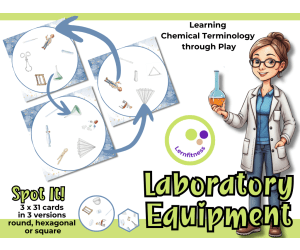
Spot It! – Laboratory Equipment 1 Fun & Engaging Game for Science Lab
STEM, Science, Chemistry, Physics, Life Sciences, Special Education Needs (SEN), Special Resources, Research, Biology, Homeschool Templates, Grade 6, 7, 8, 9, 10, Activities, Games, Worksheets & Printables, Task Cards, Quizzes and Tests, Teacher Tools, Quizzes, Word Problems, Word Searches, Worksheets
Spot It! Laboratory Equipment A Fun & Engaging Game for Science Classrooms 🔬 Make Learning Lab Equipment Fun and Interactive! Teaching students about laboratory equipment doesn’t have to be dull or overwhelming. With Spot It! – Laboratory Equipment, you can turn learning into a fun and engaging experience! This fast-paced matching game is perfect for chemistry, physics, and biology teachers who want to reinforce lab tool recognition in a way that students will love. 🎲 Why This Game Works for Science Teachers ✅ Boosts Visual Memory – Matching images of lab equipment helps students quickly recognize and remember key tools used in science labs. ✅ Encourages Active Participation – Gets students involved instead of passively memorizing lists. ✅ Improves Classroom Engagement – The fast-paced nature of the game keeps students motivated and focused. ✅ Perfect for Any Science Class – Whether you're teaching chemistry, physics, or biology, this game makes learning lab equipment easy and fun. ✅ Promotes Social Interaction – Encourages teamwork, communication, and collaborative learning. 🧪 What’s Included? 🃏 93 Total Cards – You’ll receive three different versions of the game, each with 31 cards: ✔ Round cards – Traditional Spot It! design. ✔ Square cards – Easy to cut and prepare. ✔ Hexagonal cards – Unique design for an extra challenge. 📖 Game Instructions: 1️⃣ Print the cards. 2️⃣ Laminate them for durability (optional). 3️⃣ Cut out the cards in your preferred shape: round, square, or hexagonal. 🎯 How to Play 🃏 Each player receives one card. 🔬 Turn over a card from the stack in the middle. 👀 Find a matching image between your card and the revealed card as quickly as possible. 🏆 If you find a match first, you win the revealed card. 🎉 The player with the most cards at the end wins! This game turns science learning into a competitive, fast-paced, and enjoyable classroom activity that will keep students engaged while reinforcing important lab vocabulary. 📌 Why Teachers Love It ✔ Saves Prep Time – Ready-to-print, simple setup, and no extra materials required. ✔ Great for Small Groups & Whole Class – Use it in science centers, team challenges, or as a warm-up activity. ✔ Adaptable for Different Learning Levels – Suitable for middle school, high school, and even introductory university-level science classes. 🔬 Make Science Learning More Engaging! If you’re looking for a fun, effective, and interactive way to help students learn and remember laboratory equipment, this Spot It! game is the perfect addition to your science classroom. 🚀 Download now and bring hands-on science learning into your classroom today! 📍 Best wishes, Heike from Lernfitness Did You Know? I teach with a certified therapy dog, and together we focus on creating a positive and inspiring learning environment. 🐶✨
Author Lernfitness
Tags Game, Spot It, Educational Card Games, Picture Match, Chemistry, Lab, Biology, Laboratory Equipment, Lab Tools, Physics
Life Science Reading Comprehension Passage: Protists and Fungi (Word)
Science, ELA, Reading, Reading Comprehension, Strategies, Resources for Teachers, Life Sciences, Biology, Grade 6, 7, 8, 9, 10, Writing Prompts, Worksheets & Printables, Centers, Activities, Teacher Tools, Assessments, Quizzes and Tests, Quizzes, Tests
Life Science Reading Comprehension Passage and Questions: Protists and Fungi (Word) This very engaging science reading passage is about protists and fungi , two groups of small but highly important organisms that affect ecosystems in major ways. It explains how protists can live in water, soil, or hosts; how some protists, such as algae, make food through photosynthesis and support aquatic food chains; and how others, such as Plasmodium , can cause disease. It also explains how fungi absorb nutrients, break down dead material, recycle nutrients, form helpful partnerships with plant roots, and contribute to foods and medicines such as bread and penicillin. This passage is designed to bridge the gap between science and literacy by strengthening reading comprehension while sparking scientific curiosity in middle school students. It blends English Language Arts skills with accurate science content, helping students build background knowledge, understand key concepts, use evidence from the text, and explain scientific ideas clearly. This resource supports science classroom practice while also reinforcing important literacy skills such as main idea, vocabulary, comprehension, and summarizing. Ideal for interdisciplinary learning in ELA and Science. Suitable for Grade 9 review, too! Student Tasks for The Passage: 10 multiple-choice questions targeting main idea, key details, science concepts, comparison, and real-world applications 10 True/False statements to check understanding and address common misconceptions 5 text-based short-answer questions that require students to explain important ideas from the passage 5 vocabulary matching items with clear, student-friendly definitions 1 summary prompt that asks students to condense the central ideas accurately Full answer key for every section Available Formats for this Resource PDF Fillable PDF Google Docs FULL CATALOG OF DOWNLOADING LINKS HERE Product Details Length: 7 pages total Grades: 6–8, also suitable for Grade 9 review Use cases: close reading, stations, homework, intervention, test prep, and sub plans Standards support: Reinforces informational-text skills and supports NGSS-style sense-making by helping students read scientific explanations, connect evidence to key concepts, interpret real-world examples, and explain cause-and-effect relationships in science. Why Teachers Choose This Set Authentic science content paired with rigorous literacy practice Consistent task structure across all passages for easier planning and smoother student routines Clear, age-appropriate writing that builds confidence without oversimplifying Other Science Reading Collections and Topics You May Find in the Store: 1. Astronomy & Space Science 2. Volcanoes, Rocks, & Mountains 3. Rock Cycle, Soil, & Sinkholes 4. Mars, Glaciers, & Antarctica 5. Water Cycle, Acid Rain, & Wastewater 6. Insects, Animals, & Ecosystems 7. Bioluminescence & Insects 8. Animal Skin, Cats, & T. Rex 9. Human Body and Senses 10. Health & Applied Bioscience 11. Waves, Light, & Imaging 12. Electricity & Energy 13. Motion & Materials 14. Chemistry and Materials Science 15. Electromagnetism 16. Acids and Bases 17. Gas Laws 18. Biotechnology 19. Periodic Trends 20. Protists and Fungi 21. Microevolution 22. Blood 23. Chemical Bonding 24. Magnets 25. Muscles 26. Nuclear Chemistry 27. Electromagnetic Devices 28. Epigenetics 29. The Law of Conservation of Mass 30. Atomic Models 31. Isotopes and Ions 32. Light 33. Human-Environment Interaction 34. Theory of Evolution 35. Photosynthesis 36. Origins of Life and Early Earth 37. Gene Expression and Regulation 38. Thermochemistry 39. Allergies 40. Coevolution 41. Birth to Adulthood 42. Cells 43. Entropy and Free Energy 44. The Human Brain 45. Mixtures and Solutions 46. Invertebrates 47. Zoo Animals 48. Biochemistry 49. Animal Behavior 50. Population Ecology ...and many more engaging science reading passages that cover intriguing and important topics designed to spark curiosity and support student learning. Use this passage to reinforce ELA skills in science, to add literacy to your lessons, and to support independent work. The passages strengthen main idea, evidence use, vocabulary in context, inference, cause and effect, and summary writing. With ready-to-use assessments and complete answer keys, you can provide focused practice that is simple to run and fast to review.
Author Middle & High School - CORED Education
Rating
Tags Middle School, Reading Comprehension, Reading Strategies, ELA, Centers, Reading Passage, Assessments, Vocabulary, Biology, Life Science
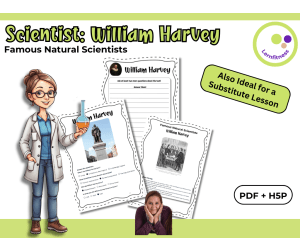
Scientist: William Harvey Fact Sheet, Quiz, and Interactive Exercises
Life Sciences, Science, Biology, Physics, STEM, Human Body, History, Social Studies, Grade 7, 8, 9, Worksheets, Worksheets & Printables, Quizzes, Quizzes and Tests, Teacher Tools, Projects, Activities
Discover William Harvey – The Scientist Who Unveiled the Circulatory System William Harvey is best known as the physician who discovered the circulation of blood, revolutionizing our understanding of the human body and laying the groundwork for modern physiology. This comprehensive teaching resource introduces your students in grades 6–8 to Harvey’s groundbreaking contributions to biology and medicine. Designed for a 45-minute lesson, it combines engaging informational content with interactive and creative tasks to ensure a memorable and educational experience. What’s Included: Concise Informational Text: A clear and engaging overview of William Harvey’s role in science. Fact Sheet Activity: Encourages students to organize knowledge and work creatively. Quiz with Solutions: Promotes fun, interactive learning and self-assessment. Additional Exercises: Students can create their own questions and collaborate in pairs to deepen their understanding. Flexible Formats: Includes a color and black-and-white printable PDF, as well as interactive H5P tasks for digital learning. Why You’ll Love This Resource: Time-Saving: Perfect for teachers who need a ready-to-go, well-structured lesson. Versatile Use: Ideal for biology, history of science, or cross-curricular lessons in English and science classes. Promotes Independence: Solutions are included, allowing students to check their work and explore the topic at their own pace. Interactive and Engaging: Tasks are designed to keep students actively involved while learning about William Harvey’s legacy. Whether you use it for a regular lesson, substitute teaching, or as part of a digital learning activity, this resource will make William Harvey’s contributions come alive for your students. Bring William Harvey’s fascinating world of science and medicine into your classroom and inspire your students to see history and science in a whole new light! Have fun exploring the world of science with your students! Warmly, Lernfitness Did You Know? I teach with a certified therapy dog, and together we focus on creating a positive and inspiring learning environment.
Author Lernfitness
Tags Science, Biology, Famous Scientists Lesson, H5P, Interactive Science Exercises, STEM, William Harvey, Circulatory System, Medicine, Physician

Cellular Hydration & Electrolyte Balances
Math, Money, Measurements, Science, Physics, Life Sciences, Biology, Human Body, Statistics, Percentages, Grade 6, 7, 8, 9, 10, 11, 12, Worksheets & Printables, Workbooks, Worksheets, Word Searches, Teacher Tools, Quizzes and Tests, Quizzes, Tests, Assessments, Lesson Plans
Transform your math and science classroom into a high-stakes sports science lab! Ever have students ask, "When will I ever use this in real life?" This comprehensive, cross-curricular unit is the definitive answer, bridging the gap between abstract mathematical concepts and the tangible, high-interest world of athletic performance. This no-prep resource, "The Mathematics of Athletic Recovery," challenges students to step into the role of a sports scientist. They will learn the critical biology behind hydration and electrolyte balance and then apply mathematical skills to solve real-world problems for student-athletes. This isn't just another worksheet; it's a deep dive into the practical application of math and science. WHAT'S INCLUDED (45 Pages): Phase 1: The Foundational Text (11 pages): An engaging, textbook-style introduction to the science of sweat, electrolytes (Sodium, Potassium, Magnesium), and the dangers of improper hydration. It introduces the core formulas and the "Golden Ratio" of recovery. Phase 2: Student Workbook (21 pages): Ten progressively challenging math worksheets that guide students from basic conversions to complex, multi-step word problems. Students will calculate sweat rates, electrolyte deficits, replenishment ratios, and formulate custom recovery plans for various athletes and scenarios. Phase 3: Visuals & Teacher Resources (13 pages): High-Quality Visual Aids: Three professional SVG diagrams perfect for projection or as anchor charts, illustrating electrolyte depletion, the 40:8:1 recovery ratio, and the Sodium-Potassium pump. Comprehensive Answer Key: Complete solutions for all 10 worksheets. Full Teacher Implementation Guide: Includes core objectives, a suggested 3-day pacing guide, discussion points, differentiation strategies (for scaffolding and rigor), and guidance on addressing common student misconceptions. KEY MATH & SCIENCE CONCEPTS COVERED: Mathematics: Ratios, Proportions, Unit Conversions (Metric & Customary), Percentages, Multi-step Word Problems, Basic Algebra, Data Analysis. Health & Science: Cellular Hydration, Homeostasis, Osmosis, Key Electrolytes (Na+, K+, Mg2+), Muscular Function, and the science of athletic recovery. PERFECT FOR: Middle School Math Classes (Grades 7-9) High School Health, Biology, or Physical Education Classes Applied Mathematics Courses Homeschooling Curriculum Engaging Project for Student-Athletes Emergency Sub Plans Empower your students to see math and science in action! This unit not only builds critical thinking and calculation skills but also teaches valuable lessons about health and physiology. Download now and show your students how math powers champions! Why Parents/Schools Love It: Real-World Application: It directly answers the age-old student question, "Why do we need to learn this?" by connecting math to the high-interest topic of sports, making learning relevant and memorable. Promotes Critical Thinking: Instead of simple plug-and-chug problems, this unit requires students to analyze complex scenarios, select the correct formulas, and execute multi-step calculations, just like a real scientist. Truly Cross-Curricular: It seamlessly integrates core Math standards with essential Health and Life Science concepts (biology, physiology), reinforcing learning across multiple subjects. Comprehensive and Teacher-Friendly: This is a complete, "no-prep" unit. With a detailed lesson, 10 worksheets, professional visuals, an answer key, and a full implementation guide, it saves teachers valuable planning time. Engages All Learners: The theme of athletic performance is highly motivating for student-athletes and sports fans, providing a powerful hook to capture the interest of students who might otherwise be disengaged from math. Target Student Classes : Based on the content and the explicit mention in the Teacher's Guide, target: Primary Target: Middle School (Grades 7, 8, and 9) . The mathematical concepts (ratios, percentages, multi-step problems) are a perfect fit for the 8th-grade curriculum and are excellent for enrichment in 7th grade or review in 9th grade. Secondary Target: High School (Grades 9-11) . This resource is exceptionally well-suited for: General or Applied Math courses. Biology classes studying homeostasis and cellular transport. Health and Physical Education (PE) classes. Introductory Sports Medicine or Kinesiology electives. Copyright/Terms of Use: This Book was copyrighted by Syed Hammad Rizvi. This resource is for personal and single classroom use only. You may not alter, redistribute, or sell any part of this resource. In other words, you may not put it on the Internet where it could be publicly found and downloaded. If you want to share this resource with colleagues, please purchase additional licenses from Teachsimple. Thank you for respecting these terms of use. This product is happily brought to you by Syed Hammad Rizvi
Author Creative Book Store
Rating
Tags Math, Science, Health, Biology, STEM, STEAM, PhysicalEducation, RealWorldMath, AppliedMath, SportsScience

Zero-Waste Lifestyle Tracking & Habit Builder Journals
Science, Resources for Teachers, Life Sciences, Earth and Environmental Sciences, Earth Sciences, Environmental Science, Geology, Nature & Plants, STEM, Biology, Grade 6, 7, 8, 9, 10, 11, 12, Teacher Tools, Worksheets & Printables, Workbooks, Worksheets, Word Searches, Assessments, Lesson Plans, Quizzes and Tests, Quizzes, Tests
Turn your classroom into an environmental science lab with the help of this awesome 41-page Zero Waste Lifestyle Tracking and Habit Builder Journal! This is a project-based learning resource for grades 4–8 that is aligned to the standards! Looking for a real world environmentally focused way to teach environmental science to your students that isn't just a bunch of recycling posters? A complete curriculum journal combining current neuroscience research, ecology theory and hands-on data collection will give your students everything they need to consider themselves true environmental scientists - and it begins with measuring their own lives! This resource is not just one big stack of worksheets but rather, it is a fully scaffolded 3-phase academic journal developed with university seminar style rigor and middle school classroom style accessibility. Your students won’t just learn about the environment; they’ll measure it, analyze it and make changes to it! CONTENTS (41 Pages, Print & Digital Ready): Phase 1 — Core Content & Theory (4 chapters): 1. The Anatomy of Waste explains what happens throughout the lifespan of waste items, including Lifecycle Assessment (LCA), the impact of microplastics in our world today, which items go in the landfill, which items can be incinerated, and how long it takes for a plastic fork to travel 450 years into our future 2. The Neuroscience of Habit Building discusses how our brains form habits based on the basal ganglia of the brain, how we can rebuild/rewire our habits scientifically through neuroplasticity, and the three parts of the habit loop (cue-routine-reward) 3. The Zero-Waste Hierarchy introduces the four elements of a zero-waste lifestyle: Refuse, Reduce, Reuse, Rot (Composting) and Recycle. This chapter includes a real-world example of how one school significantly reduced their waste by over 90% using these four proven methods 4. Data-Driven Stewardship teaches your students to think like a marine biologist and meteorologist by showing them how to track and analyze their own local environmental data. After each chapter is a fill-in-the-blank review of the chapter, called the Scholar's Review. Phase 2: 10Worksheet Workbook for Students (Research Lab Style) Personal Waste Audit 24-Hour (Data Collection Protocols: Empirical) Material Lifecycle Analysis of Material (From Raw Extraction To Disposal) Biochemistry of Composting (Green And Brown Materials, Aerobic And Anaerobic Decomposition) Single Use Plastic Substitution Matrix (Cost/Benefit Analysis) Water and Energy Footprint Calculation (Embedded Energy And Water Load Calculation; Shower Each Year; Cost Of Water To Make Cotton Shirt) Redesign Challenge For Circular Economy (Planned Volatility, Upcycling, Extended Producer Responsibility) Food Waste Economics (FIFO Pantry System, Estimate Of $780 Of Food Waste Per Year, What Is A Food Standard For A Non-Food Waste Item?) Fast Fashion Footprint (Cost To Wear, Use Of Micro-Plastics, Philosophy Of Wardrobe) Supermarket Packaging Detective (Identifying Greenwashing, Multi-Layered Packages, Bulk Purchasing) Zero-Waste Habit Builder (Keystone Priming, 30-Day Tracking Plan, Write Manifesto For A Zero Waste Life) PHASE 3—Teacher Resources and Visuals: Three professionally designed SVG diagrams (Zero Waste Hierarchy, Linear vs. Circular Economy, Sustainability Habit Loop) Complete Answer Key with example answers and teacher rubric notes 4 week pacing guide with weekly objectives, activities, teacher roles and homework 100-point assessments rubric across four categories of data collection, behavioural design, critical thinking and communication Five extension activities (Trash Jar Challenge, Community Waste Mapping, Letter Writing Campaign to Corporations, Do-It-Yourself Repairs Workshop, Composting Science Experiment; if possible please use a separate document per activity) Strategies for differentiating instruction for Grades 4-5, Grade 8/Gifted, IEP/504 and ELL students CONNECTING TO CURRICULUM: This journal ties into Next Generation Science Standards (NGSS), Common Core English Language Arts (informational text analysis, evidence based writing) and Common Core Mathematics (percentages, projections, data analysis). This journal combines many subjects — environmental science, behavioral psychology, economics and persuasive writing — into one connected whole. USAGE IDEAS: Great as a 4-week stand-alone unit or as part of an after-school environmental club, summer enrichment program or reinforcement through integration into existing science, health or social studies curricula. Assign user digitally (fillable PDF) or in print. DIGITAL DOWNLOAD — PRINT & GO! REASONS PARENTS/SCHOOLS LOVE THE RESOURCE: Merging Science, Psychology, and Real-World Mathematics – Instead of merely reading about the environment, kids actually conduct real waste audits, calculate their water footprints, and use their own personal data to perform real-world food waste economics analysis – helping them to take abstract concepts and move towards making those concepts their own, and thus, real. Tremendous Support For Teachers From Day One – Each of the resources, including a complete 4-Week Pacing Guide, example responses in the Answer Key, a 100-point Assessment Rubric, and a variety of differentiation strategies to accommodate ALL learners (IEP/504, ELL, Gifted) provides teachers with no-prep stress! Building Lasting Habits, Not Just Raising Awareness – This journal is based on neuroscience principles, specifically the Habit Loop framework, which teaches kids HOW behavior changes within the brain — therefore they can establish long-term environmental habits to implement after the conclusion of the unit. No Eco-Anxiety – Only Eco-Empowerment – Constructivist pedagogy does not endorse guilt-based teaching practices to educate/expose students to environmental issues. Instead, students are encouraged to view themselves as environmental scientists, thereby creating a sense of worth/empowerment as opposed to being seen as passive victims of "climate doom"; hence, all resources provided in this unit have been designed with both emotional safety and motivation in mind. Cross-Curricular and Standards-Aligned Value – When you purchase this journal as a single resource, you are actually replacing multiple separate resources. This one journal covers multiple areas of study related to environmental science, data analysis, persuasive writing, behavioral psychology, economics, and systems thinking — therefore you are maximizing the instructional value and curriculum alignment of numerous subject areas! TARGET GRADES/CLASSES: On evaluating for the content type's level of complexity, the level of language used, the level of math skill needed; and how to teach the content using scaffolding: Primary Target 6th, 7th, and 8th grades (Middle School, our primary audience) Science classes; Environmental Science/ Earth Science Health and Wellness Classes Social Studies/Civics (Circular economy, EPR Policy) ELA Classes (Persuasive writing, Informational text) Secondary Target 5th Grade (Upper Elementary, with teacher scaffolded materials to be used; will require the use of Phase 3 differentiation strategies). 4th Grade (Will require major support in accordance with Phase 3 differentiation, as mentioned in Section 2) 9th Grade (High School, Environmental Science as a remedial unit or an introductory unit) Special Programs Gifted/Honors programs (Students in 8th grade, extension Activities) IEP/504 Accommodations (explicitly provide support through IEP/504) ELL Programs (provide bilingual glossary strategies) Environmental clubs (5th through 9th grade) STEM/STEAM programs Best Audience Targets: Middle School Science teachers (6th to 8th grade) Environmental Science Teachers Parents of Students 10 - 14 taking homeschool classes School Librarians purchasing Sustainability books for their library collection After School Program Coordinators Eco-Conscious Parents with Interest in Supplement Learning Your use of this Resource Agreement: Copyright (or Terms of Use) Copyright is held by Syed Hammad Rizvi. You may use this resource for your personal and classroom use only, but may not alter, sell or redistribute any component of this resource, nor place any part of this resource on a publicly available website. You can only share this resource with your coworkers by purchasing additional licenses from Teachsimple. Thank you for complying with all copyright guidelines and restrictions. Syed Hammad Rizvi is proud to provide you with this resource.
Author Creative Book Store
Rating
Tags ZeroWasteEducation, EnvironmentalScience, SustainabilityEducation, ZeroWasteLifestyle, EcoEducation, GreenEducation, ClimateEducation, EnvironmentalLiteracy, SustainabilityLessons, ZeroWasteCurriculum

Spot It! – Laboratory Equipment 3 Fun & Engaging Game for Science Lab
STEM, Science, Chemistry, Physics, Life Sciences, Special Education Needs (SEN), Special Resources, Research, Biology, Homeschool Templates, Grade 6, 7, 8, 9, 10, Activities, Games, Worksheets & Printables, Task Cards, Quizzes and Tests, Teacher Tools, Quizzes, Word Problems, Word Searches, Worksheets
Spot It! Laboratory Equipment 3 A Fun & Engaging Game for Science Classrooms 🔬 Make Learning Lab Equipment Fun and Interactive! Teaching students about laboratory equipment doesn’t have to be dull or overwhelming. With Spot It! – Laboratory Equipment, you can turn learning into a fun and engaging experience! This fast-paced matching game is perfect for chemistry, physics, and biology teachers who want to reinforce lab tool recognition in a way that students will love. 🎲 Why This Game Works for Science Teachers ✅ Boosts Visual Memory – Matching images of lab equipment helps students quickly recognize and remember key tools used in science labs. ✅ Encourages Active Participation – Gets students involved instead of passively memorizing lists. ✅ Improves Classroom Engagement – The fast-paced nature of the game keeps students motivated and focused. ✅ Perfect for Any Science Class – Whether you're teaching chemistry, physics, or biology, this game makes learning lab equipment easy and fun. ✅ Promotes Social Interaction – Encourages teamwork, communication, and collaborative learning. 🧪 What’s Included? 🃏 93 Total Cards – You’ll receive three different versions of the game, each with 31 cards: ✔ Round cards – Traditional Spot It! design. ✔ Square cards – Easy to cut and prepare. ✔ Hexagonal cards – Unique design for an extra challenge. 📖 Game Instructions: 1️⃣ Print the cards. 2️⃣ Laminate them for durability (optional). 3️⃣ Cut out the cards in your preferred shape: round, square, or hexagonal. 🎯 How to Play 🃏 Each player receives one card. 🔬 Turn over a card from the stack in the middle. 👀 Find a matching image between your card and the revealed card as quickly as possible. 🏆 If you find a match first, you win the revealed card. 🎉 The player with the most cards at the end wins! This game turns science learning into a competitive, fast-paced, and enjoyable classroom activity that will keep students engaged while reinforcing important lab vocabulary. 📌 Why Teachers Love It ✔ Saves Prep Time – Ready-to-print, simple setup, and no extra materials required. ✔ Great for Small Groups & Whole Class – Use it in science centers, team challenges, or as a warm-up activity. ✔ Adaptable for Different Learning Levels – Suitable for middle school, high school, and even introductory university-level science classes. 🔬 Make Science Learning More Engaging! If you’re looking for a fun, effective, and interactive way to help students learn and remember laboratory equipment, this Spot It! game is the perfect addition to your science classroom. 🚀 Download now and bring hands-on science learning into your classroom today! 📍 Best wishes, Heike from Lernfitness Did You Know? I teach with a certified therapy dog, and together we focus on creating a positive and inspiring learning environment. 🐶✨
Author Lernfitness
Tags Game, Spot It, Educational Card Games, Picture Match, Chemistry, Lab, Biology, Laboratory Equipment, Lab Tools, Physics

Life Science Reading Comprehension Passage: Goosebumps (Word)
Science, ELA, Reading, Reading Comprehension, Strategies, Resources for Teachers, Life Sciences, Biology, Grade 6, 7, 8, 9, Writing Prompts, Worksheets & Printables, Centers, Activities, Teacher Tools, Assessments, Quizzes and Tests, Quizzes, Tests
Life Science Reading Comprehension Passage and Questions: Goosebumps (Word) This very engaging life science reading passage about goosebumps and why humans still get them. It explains that goosebumps happen when tiny muscles attached to hair follicles tighten and pull hairs upright. In furry animals, this reaction helps trap heat and can make the animal look larger when threatened. In humans, the reflex is mostly vestigial , meaning it is a leftover from ancestors who had more body hair. The passage also explains how goosebumps connect to the sympathetic nervous system , adrenaline , strong emotions, music, fear, cold, and even scientific research on stress and feelings. This passage is designed to bridge the gap between science and literacy through strengthening reading comprehension and sparking scientific curiosity in middle school students. The passage blends English Language Arts skills with accurate science content that supports NGSS classroom practice. Ideal for interdisciplinary learning in ELA and Science. Suitable for Grade 9 review, too! Student Tasks for The Passage: 5 multiple-choice questions targeting main idea, key details, inference, vocabulary in context, and use of evidence 5 vocabulary matching items with clear, student-friendly definitions 5 text-based questions that require citing specific lines or facts 1 summary prompt that asks students to condense central ideas accurately Full answer key for every section Available Formats for this Resource PDF Fillable PDF Google Docs FULL CATALOG OF DOWNLOADING LINKS HERE Product Details Length: 5 pages total Grades: 6–8, also suitable for Grade 9 review Use cases: close reading, stations, homework, intervention, test prep, and sub plans Standards support: reinforces informational-text skills and supports NGSS-style sense making through observation, modeling, and clear use of claim, evidence, and reasoning Why Teachers Choose This Set Authentic science content paired with rigorous literacy practice Consistent task structure across all passages for easier planning and smoother student routines Clear, age-appropriate writing that builds confidence without oversimplifying Other Science Reading Collections you May find in the store: 1. Astronomy & Space Science 2. Volcanoes, Rocks, & Mountains 3. Rock Cycle, Soil, & Sinkholes 4. Mars, Glaciers, & Antarctica 5. Water Cycle, Acid Rain, & Wastewater 6. Insects, Animals, & Ecosystems 7. Bioluminescence & Insects 8. Animal Skin, Cats, & T. Rex 9. Human Body and Senses 10. Health & Applied Bioscience 11. Waves, Light, & Imaging 12. Electricity & Energy 13. Motion & Materials 14. Chemistry and Materials Science Use this set to reinforce ELA skills in science, to add literacy to your lessons, and to support independent work. The passages strengthen main idea, evidence use, vocabulary in context, inference, cause and effect, and summary writing. With ready-to-use assessments and complete answer keys, you can provide focused practice that is simple to run and fast to review.
Author Middle & High School - CORED Education
Rating
Tags Middle School, Reading Comprehension, Reading Strategies, ELA, Centers, Reading Passage, Assessments, Vocabulary, Life Science, Biology