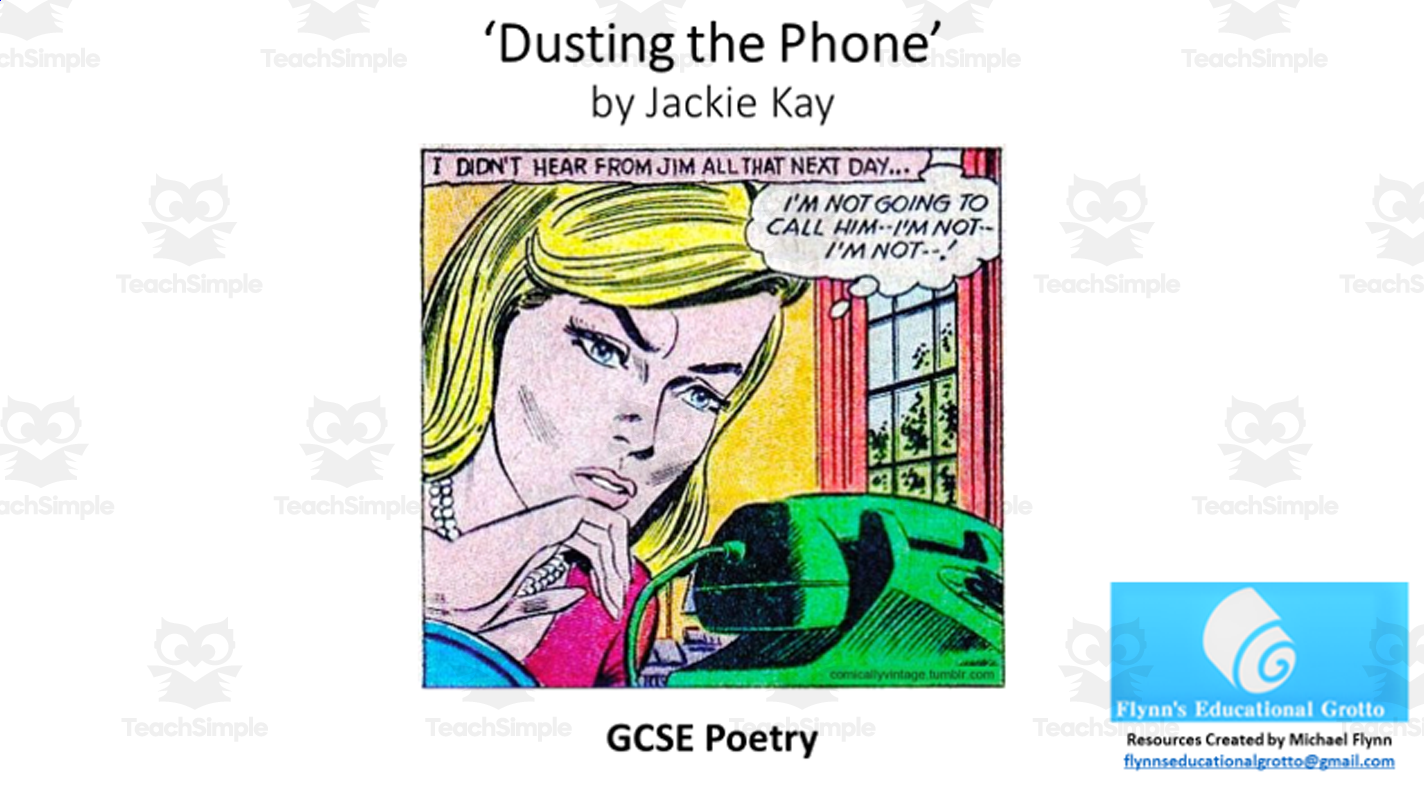
GCSE Poetry Lesson: Dusting the Phone by Jackie Kay
A poetry-analysis lesson deck exploring 'Dusting the Phone' by Jackie Kay, covering meaning, language and structure, focused on anxious waiting and insecurity in a romantic relationship.
31,859 resources
Explore sub-categories
14 sub-categories · 31,859 resources
A poetry-analysis lesson deck exploring 'Dusting the Phone' by Jackie Kay, covering meaning, language and structure, focused on anxious waiting and insecurity in a romantic relationship.
U.A. Fanthorpe's poem "Half-Past Two," about a child kept after school who does not yet understand clock time, is unpacked slide by slide in a GCSE-level English literature lesson built around close reading and analytical writing. The slideshow opens with learning intentions and a glossary of critical terms (narrator, third person, repetition, portmanteau, emotive language, personification, contraction, oxymoron), then supplies biographical context on Fanthorpe before presenting the full poem text twice for annotation. Stanza-by-stanza question sets walk students through content, language, and structure analysis, including the poem's invented compound words like "Gettinguptime" and "timeyouwereofftime," before a PETAL (Point, Evidence, Technique, Analysis, Link) paragraph frame and an extended-response homework task close out the lesson. A model "possible answer" in three bullet points on the poem's tone is included so students can compare their own analysis against a worked example. For another GCSE poem taught with the same PETAL paragraph framework, Vernon Scannell’s ‘Nettles’ offers stanza-by-stanza analysis practice on a different poem.
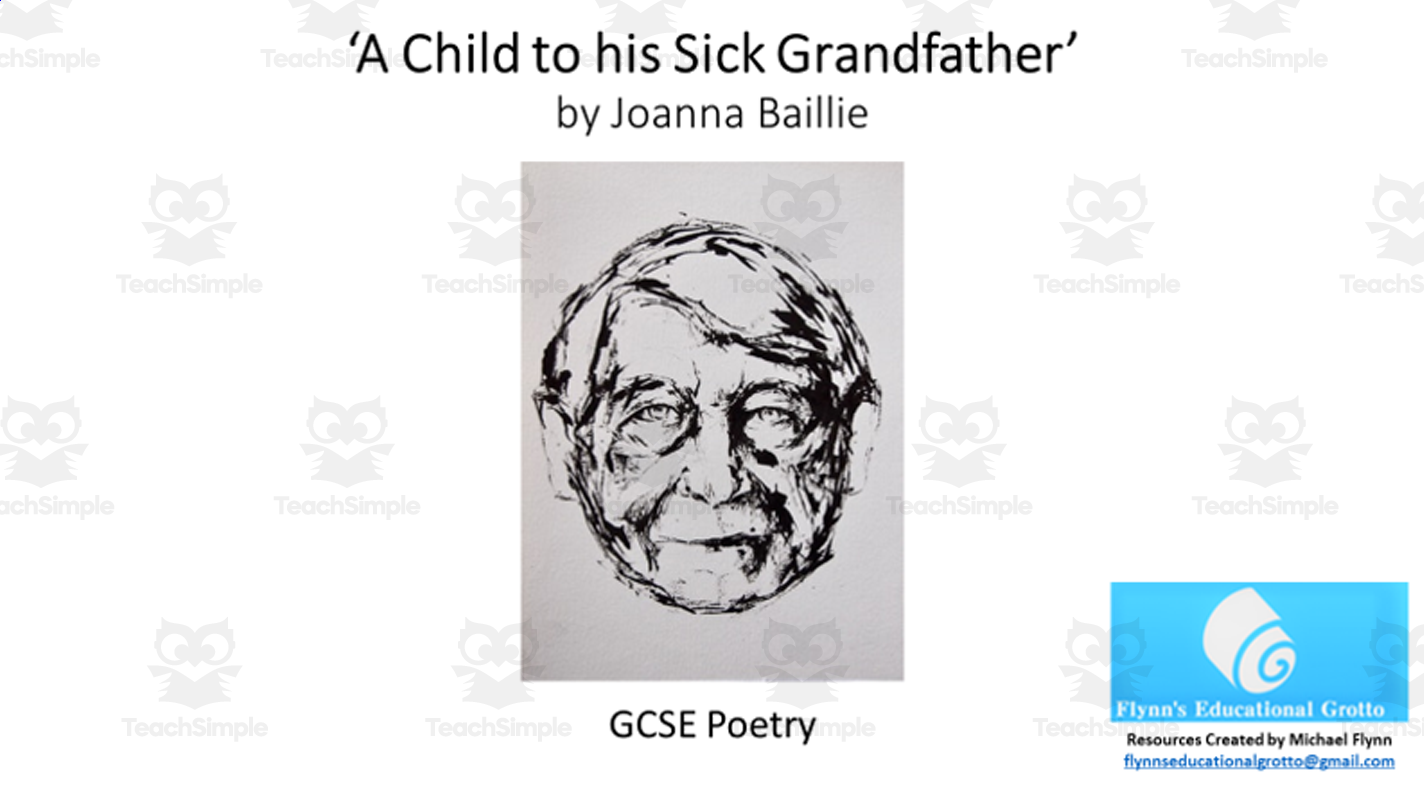
A poetry-analysis lesson deck exploring 'A Child to his Sick Grandfather' by Joanna Baillie, covering meaning, language, structure and thematic significance (aging, illness, family bonds).
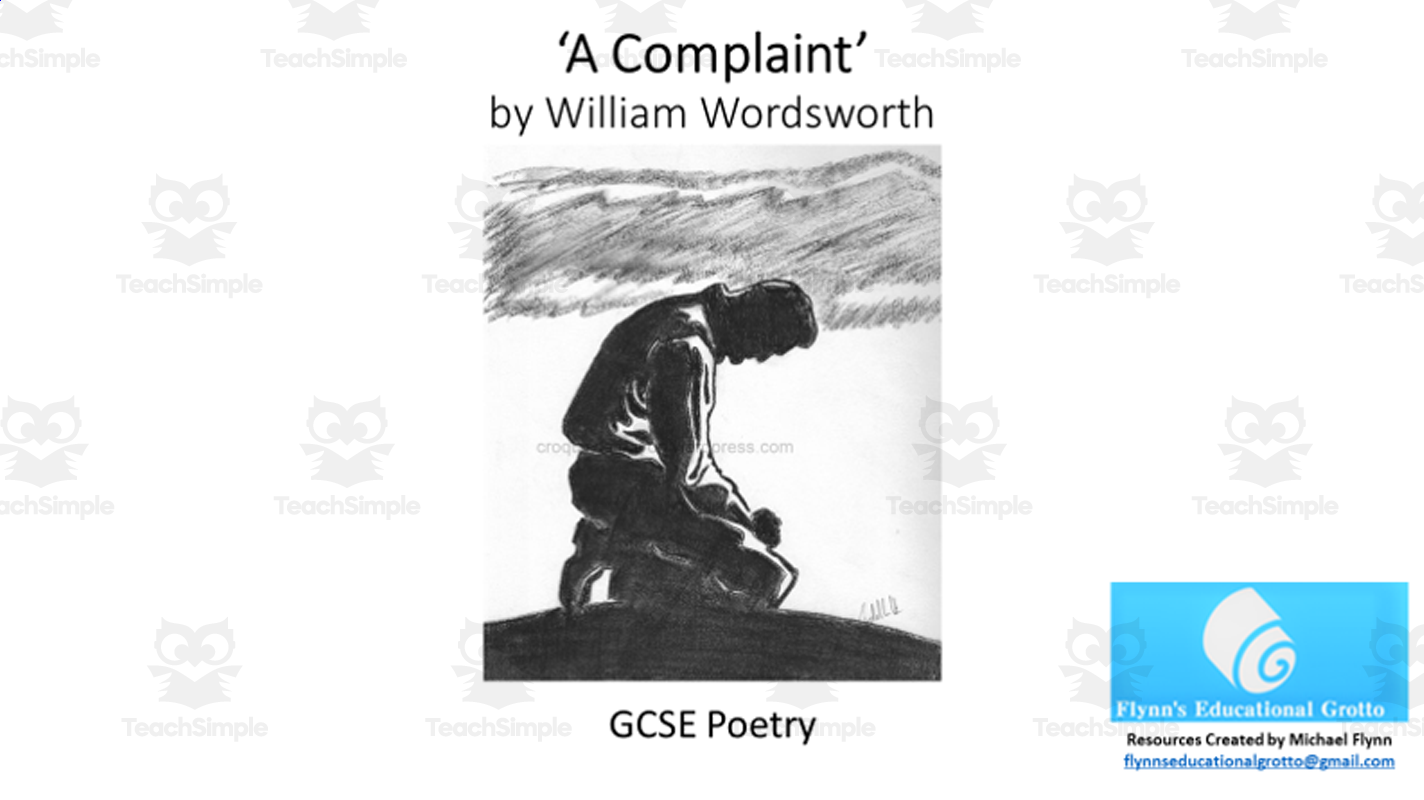
A poetry-analysis lesson deck exploring 'A Complaint' by William Wordsworth, covering meaning, language, structure and the emotional aftermath of a failed relationship.
A poetry-analysis lesson deck exploring 'An Unknown Girl' by Moniza Alvi, covering meaning, language and structure, focused on identity and cultural belonging.
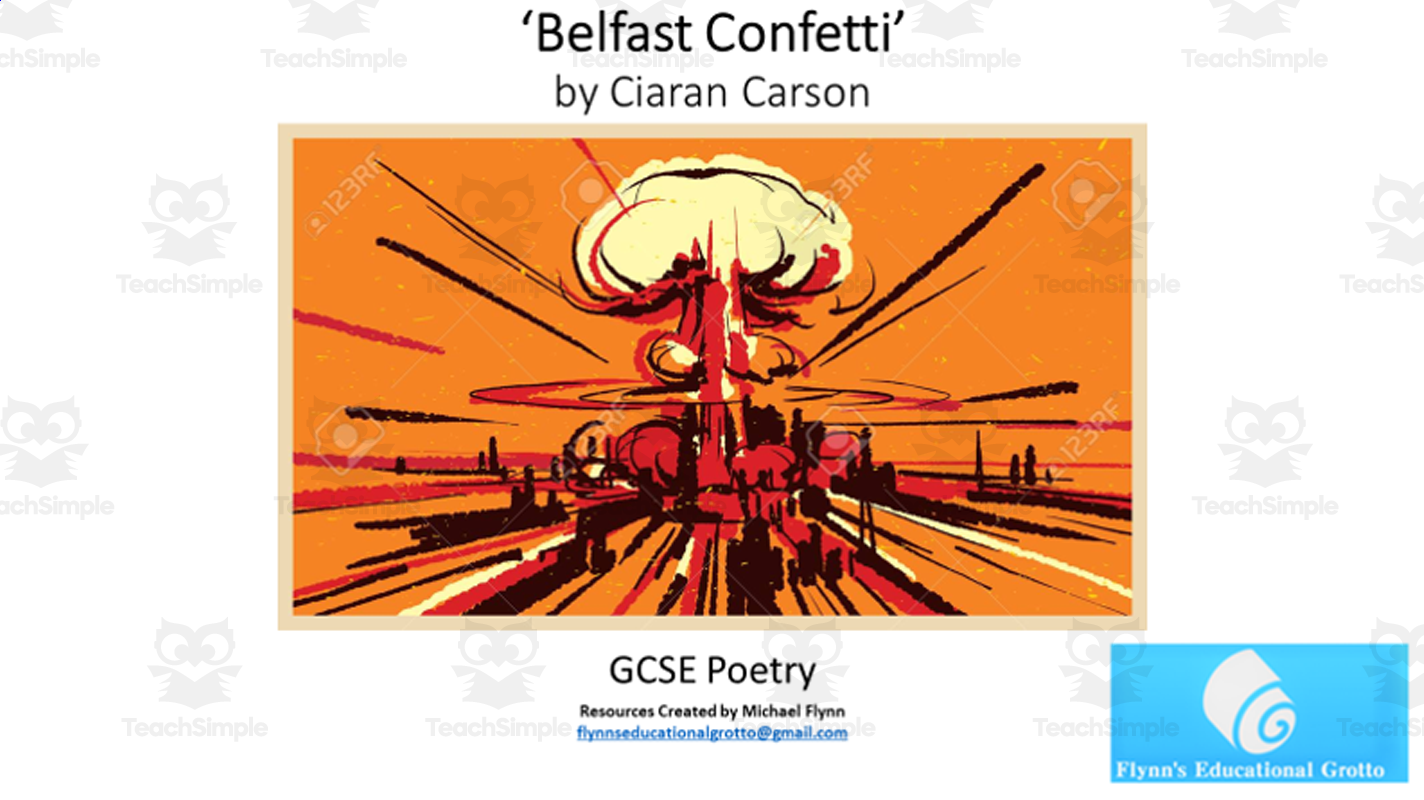
A poetry-analysis lesson deck exploring 'Belfast Confetti' by Ciaran Carson, covering meaning, language and structure, set against the backdrop of Northern Ireland's Troubles and a riot/bomb-blast scene.
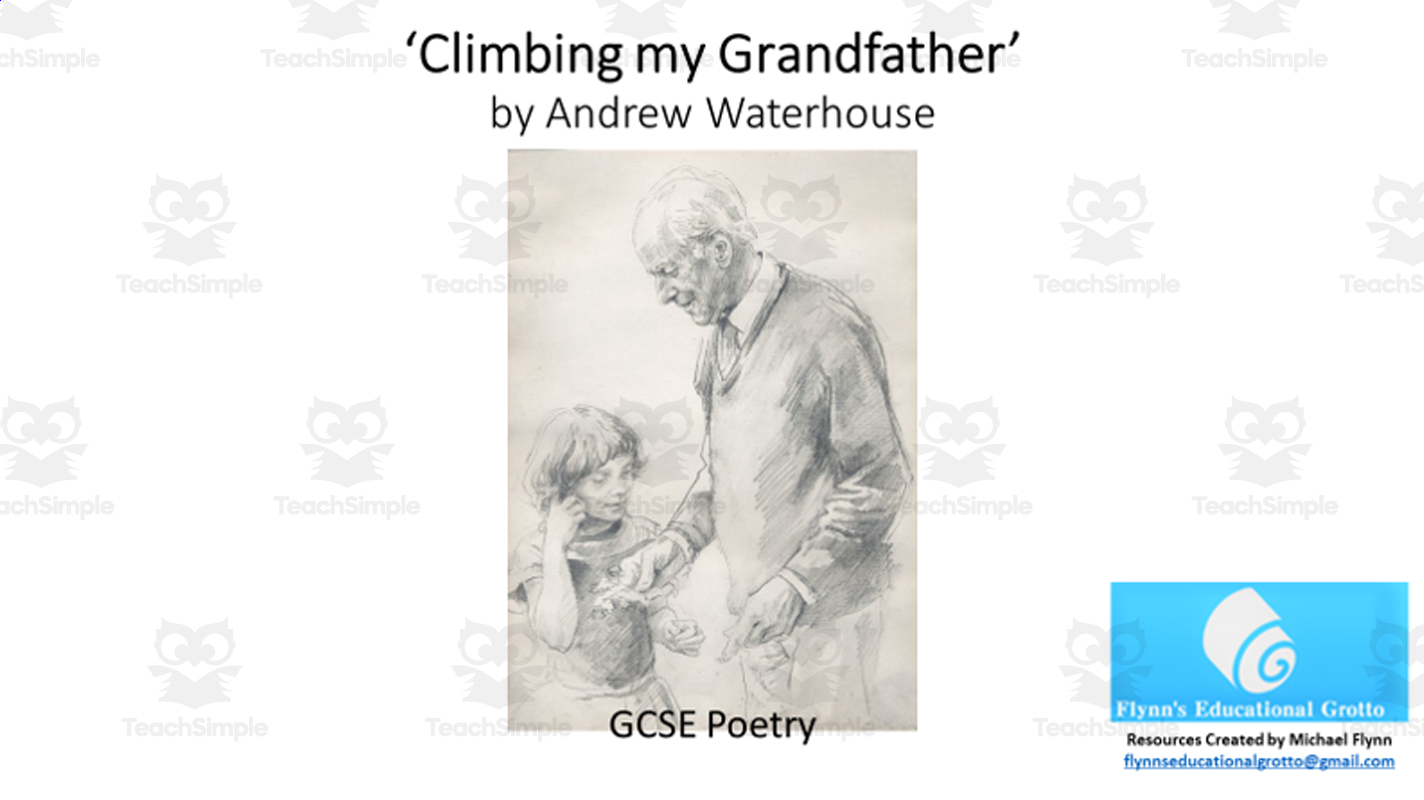
A poetry-analysis lesson deck exploring 'Climbing my Grandfather' by Andrew Waterhouse, covering meaning, language and structure, using an extended climbing metaphor for a grandfather-grandchild relationship.
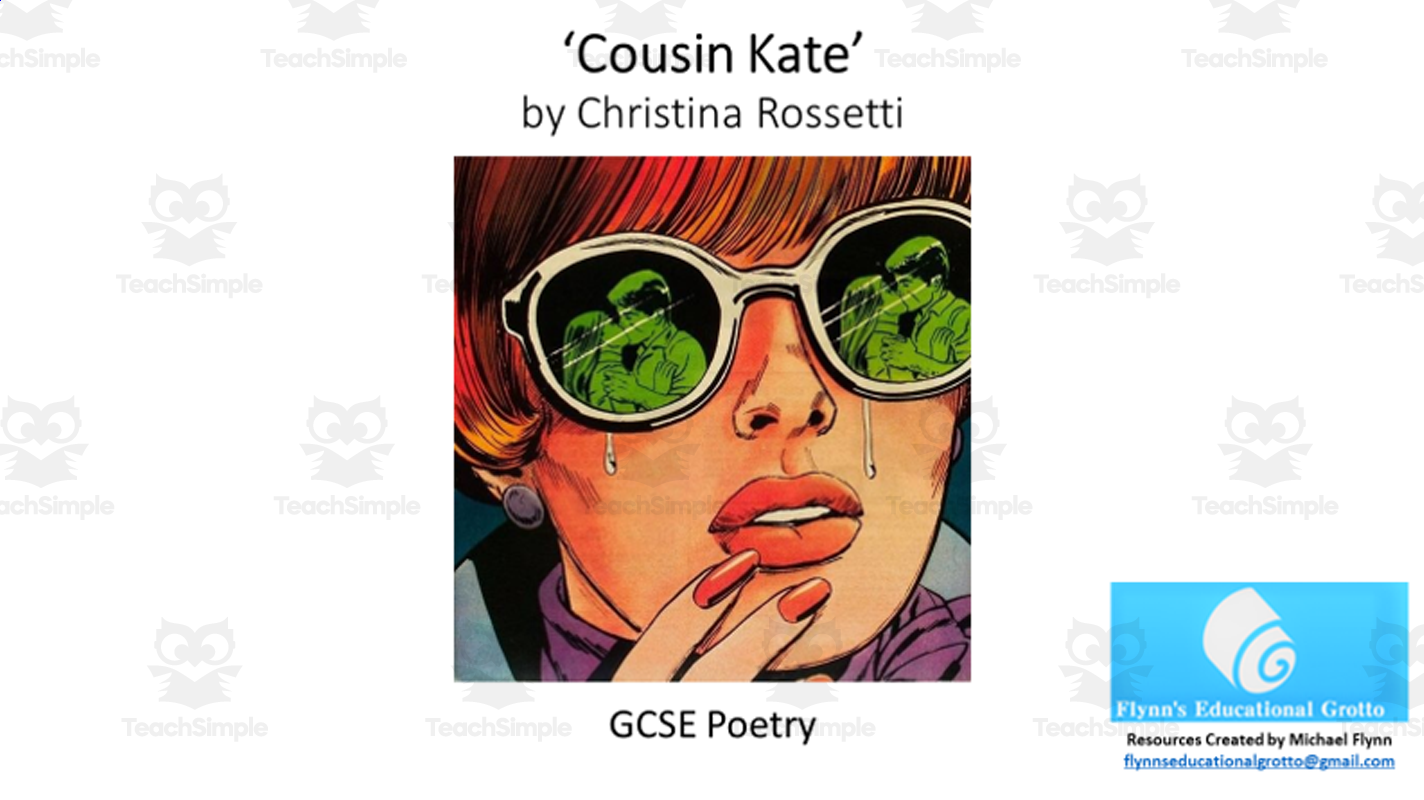
A poetry-analysis lesson deck exploring 'Cousin Kate' by Christina Rossetti, covering meaning, language and structure, focused on seduction, betrayal and inequality between women of different social standing.
A poetry-analysis lesson deck exploring 'Cozy Apologia' by Rita Dove, covering meaning, language and structure, focused on the insecurities and everyday reality of a modern romantic relationship.
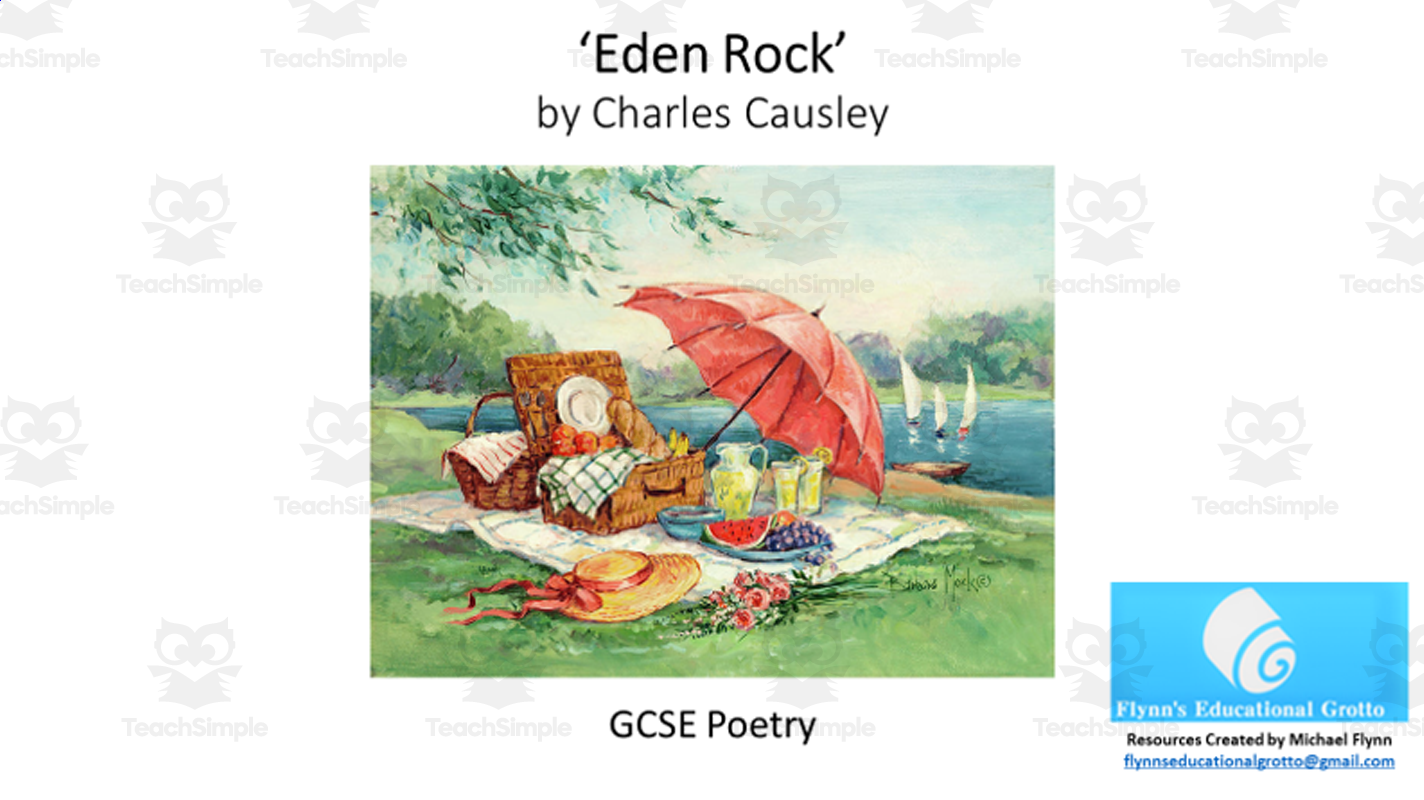
A GCSE English Literature poetry-analysis PowerPoint lesson guiding students through close reading of 'Eden Rock' by Charles Causley, covering author/poet context, first reading and annotation, tone and language analysis, structure questions, and an academic PETAL-paragraph writing task. The lesson frames the poem around nostalgia and childhood memory.
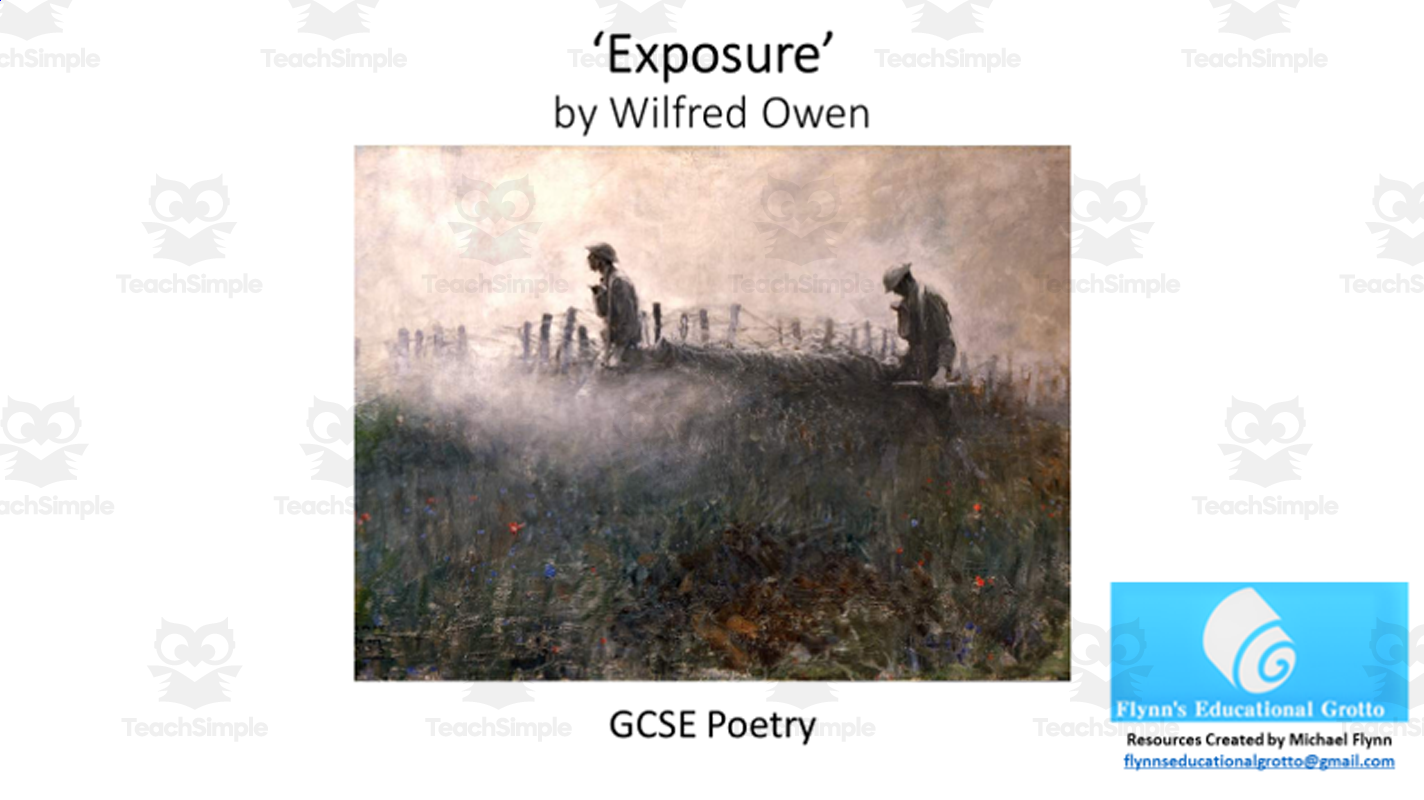
A GCSE English Literature poetry-analysis PowerPoint lesson guiding students through close reading of 'Exposure' by Wilfred Owen, covering author/poet context, first reading and annotation, tone and language analysis, structure questions, and an academic PETAL-paragraph writing task. The lesson frames the poem around World War 1 and the suffering of…
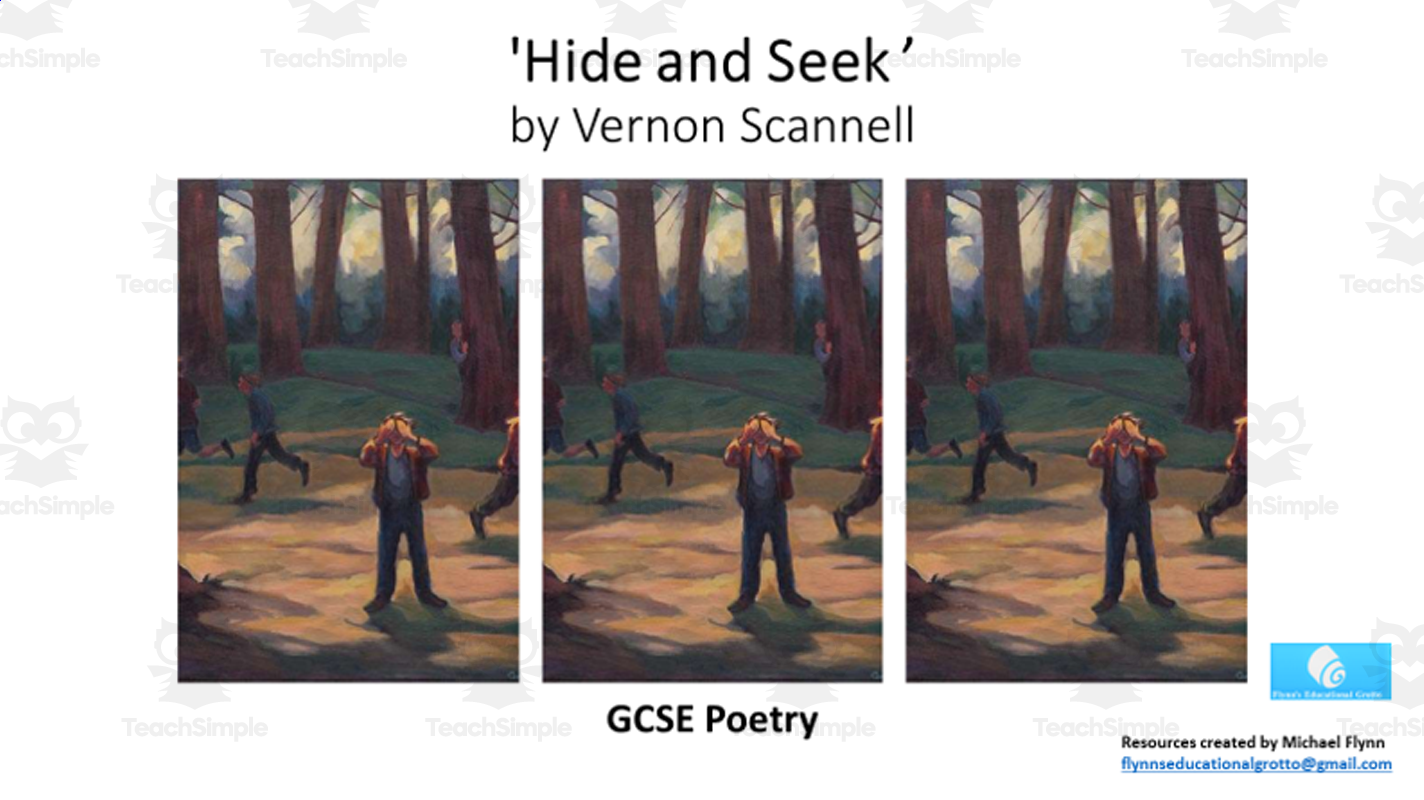
A GCSE English Literature poetry-analysis PowerPoint lesson guiding students through close reading of 'Hide and Seek' by Vernon Scannell, covering author/poet context, first reading and annotation, tone and language analysis, structure questions, and an academic PETAL-paragraph writing task. The lesson frames the poem around a child's game of hide and…
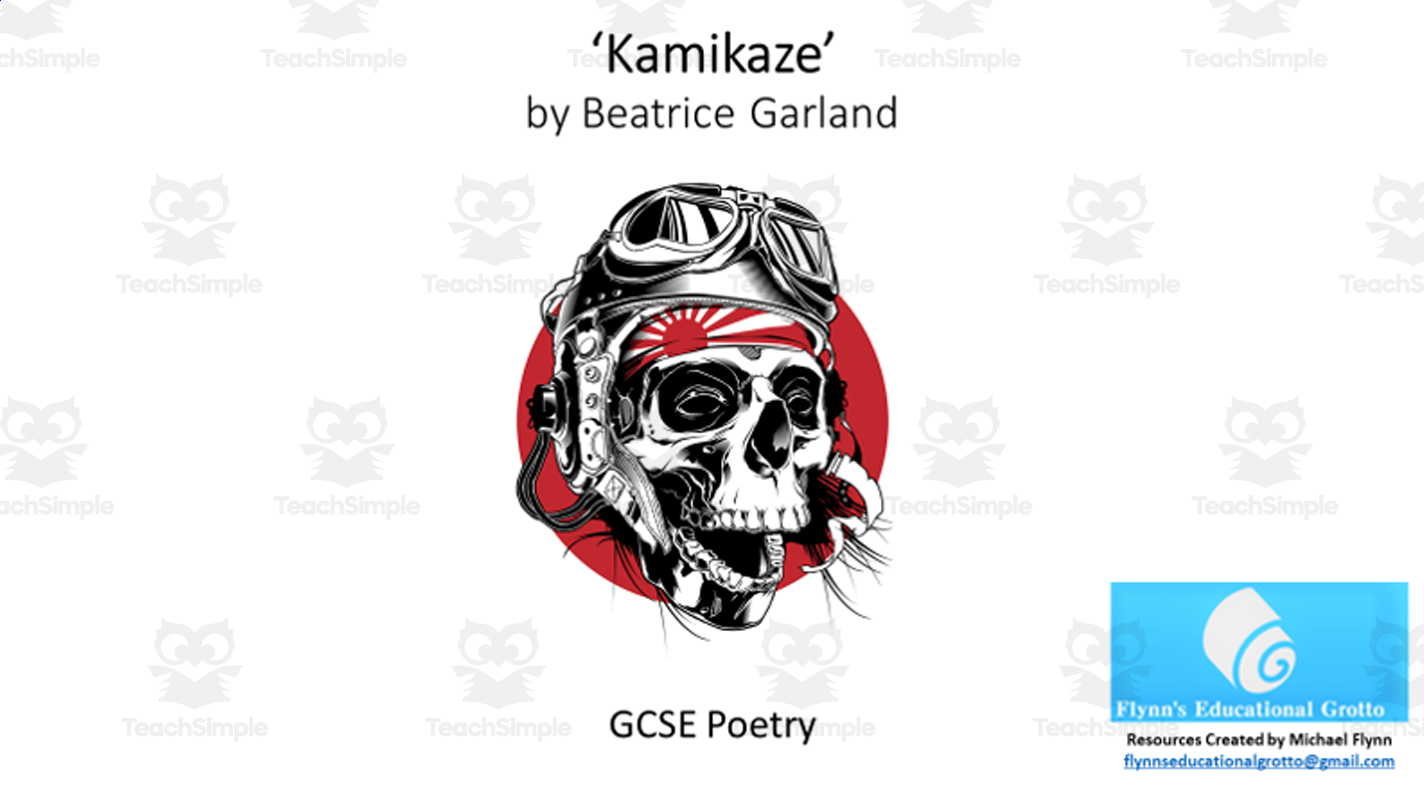
A GCSE-level English literature lesson (slide deck) analyzing Beatrice Garland's poem 'Kamikaze': author context, close reading/annotation of the poem text, tone analysis, content analysis, and stanza-by-stanza language-device analysis.
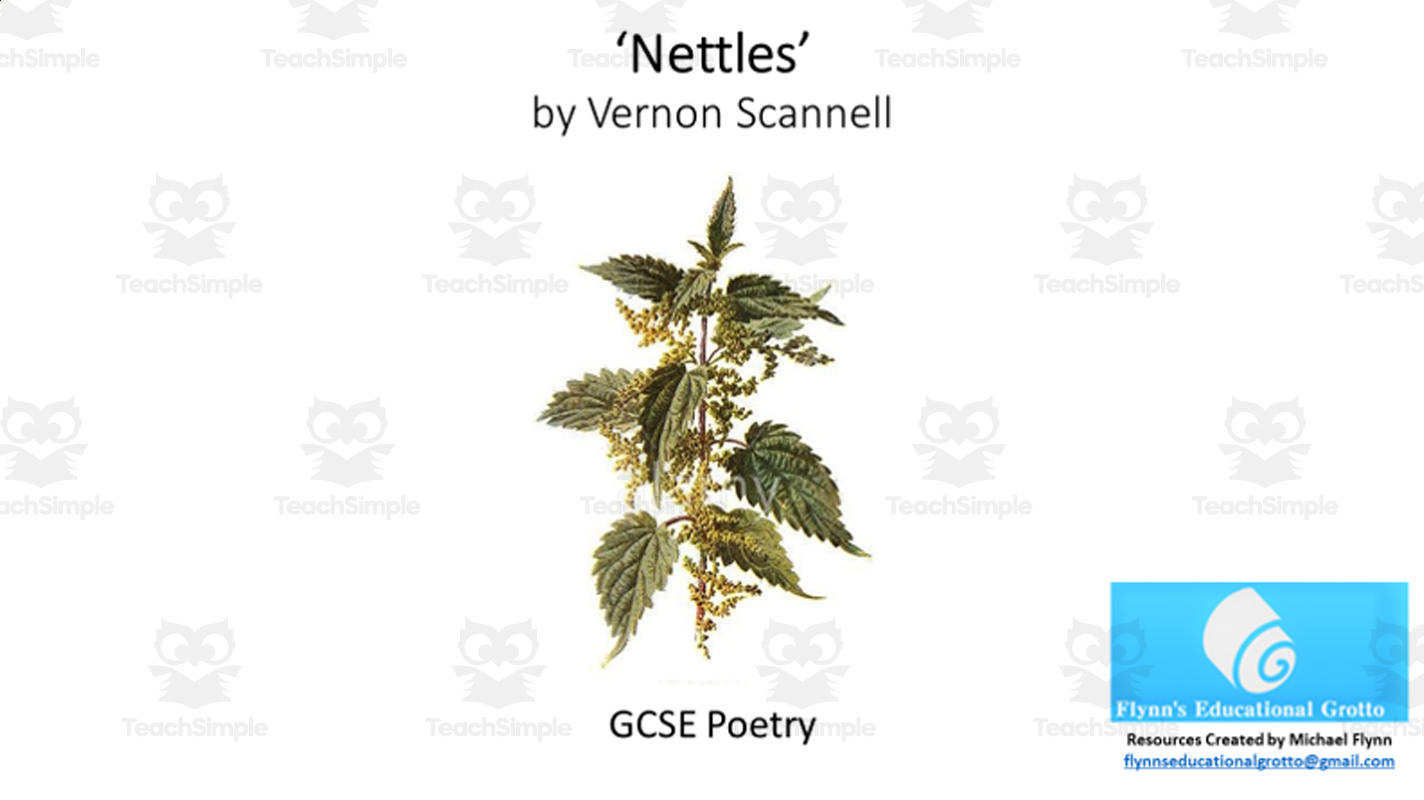
An eighteen-slide GCSE poetry lesson on Vernon Scannell's 'Nettles' opens with author-context biography before two starter discussion slides on over-protective parenting prime students for a first reading of the full poem text. Students then annotate the poem in three line-groups, identifying tone and language devices such as the extended 'regiment of spite' and 'funeral pyre' metaphors, before answering dedicated content and structure questions about the poem's narrative and stanza form. A PETAL (Point, Evidence, Technique, Analysis, Link) framework, paired with a PROOFREAD self-assessment checklist, scaffolds a formal analytical paragraph, and the lesson closes with an extension task, a genre/form homework assignment, and plenary reflection questions. Teachers building a GCSE poetry scheme of work can pair this with the same PETAL-based approach applied to a different set text in the Half-Past Two poem analysis lesson .
A GCSE English Literature poetry-analysis PowerPoint lesson guiding students through close reading of 'Poppies' by Jane Weir, covering author/poet context, first reading and annotation, tone and language analysis, structure questions, and an academic PETAL-paragraph writing task. The lesson frames the poem around a mother's grief for a son who has gone…
A GCSE English Literature poetry-analysis lesson presentation that guides students through close reading and critical analysis of 'Search for my Tongue' by Sujata Bhatt.
A Grade 3-5 geometry resource (FLASH-PC branded) combining an interactive software component (Flash-based, unhandled in this scan) with printable PDF practice/assessment materials covering area, volume, and surface area of squares, cubes, rectangles, and rectangular prisms.
The Geometry: Shapes - Practice the Skill 1 - FLASH-MAC An effective and state-of-the-art teaching resource crafted for first and second-grade students to aid them in mastering the identification of basic geometric shapes.
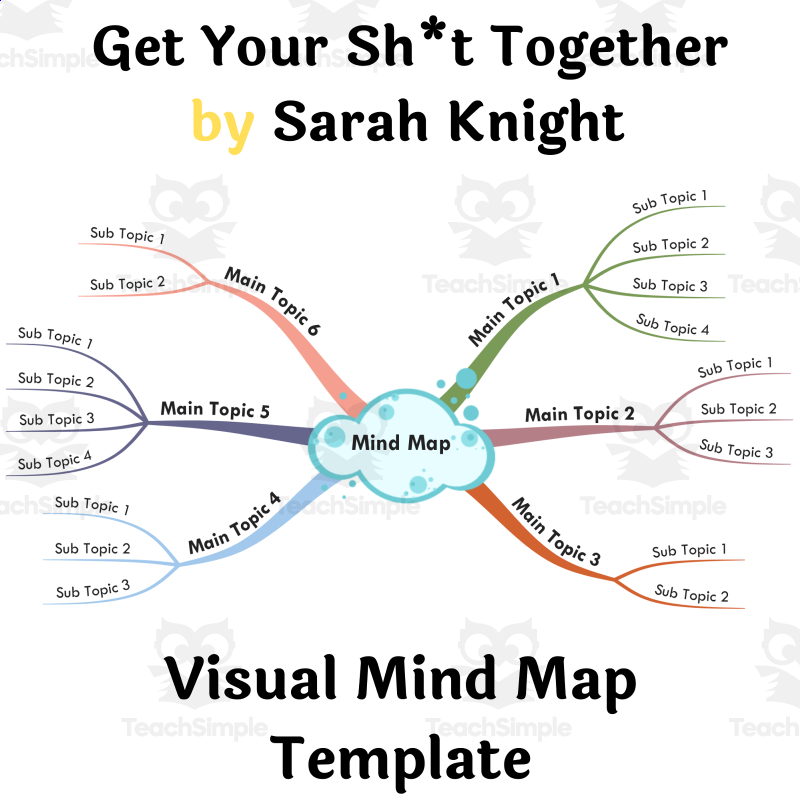
Get Your Sh*t Together by Sarah Knight- Visual Mind Map (+Template) This is an engaging and practical teaching resource designed to aid educators in delivering life skills, organization techniques, and goal alignment strategies.
A reproducible history unit teaching the Gettysburg Address, Abraham Lincoln, and the Battle of Gettysburg through six paired narrative/review activities.
Chapter-by-chapter discussion questions for Jason Reynolds's novel Ghost walk a class through all ten chapters, with each prompt labeled by purpose — RTFO (Read to Find Out), Respond, Discuss, or Reflect — to signal whether students are recalling plot, forming an opinion, debating a scenario, or connecting the story to their own lives. Questions probe specific plot events such as Ghost's history of running from his father, his conflict with teammate Lu, the shoe theft, and Coach's backstory, and several longer chapters are split into two question sets covering separate page ranges. Parenthetical answers are written directly beneath several questions, functioning as a teacher's answer guide embedded in the same document rather than a separate key. The format is built for a teacher to guide a chapter-by-chapter class discussion or literature circle rather than for independent seatwork.
Mini-unit on setting ('Poetry of Place: Searching for Setting'), using Raina Telgemeier's Ghosts as mentor text; the PDF itself is a 2-page description/link page directing to an editable Google Doc version of the resource.
A multi-novel reading comprehension unit built around five short, high-interest/low-vocabulary ghost-themed novels, giving teachers flexible whole-class, individualized, small-group, or listening-test approaches with comprehension, vocabulary, and writing activities plus answer keys for each title.
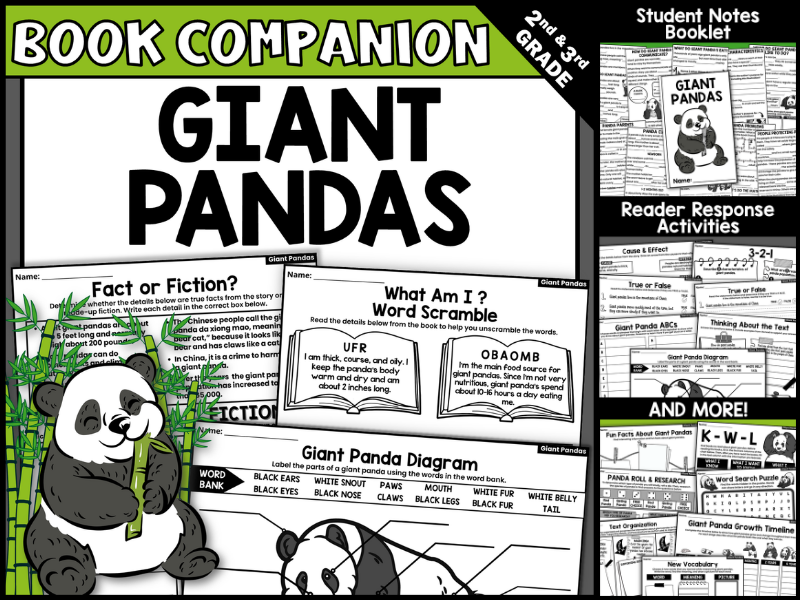
Complete interactive read-aloud/book-companion resource for the nonfiction picture book Giant Pandas by Gail Gibbons, offering print-and-go comprehension, vocabulary, and research activities to use alongside a read-aloud of the book.