6th Grade Dividing Fractions Student Guided Notes
- Grades
- Grade 6
- Pages
- 71
- File type
- Answer key
- Included


- Subject
- Math, Fractions
- Topic
- Dividing Fractions, Guided Notes
- Resource types
- Worksheets
- Answer key
- Included
- Standards
- 6. NS.A.1
Product description
From the author
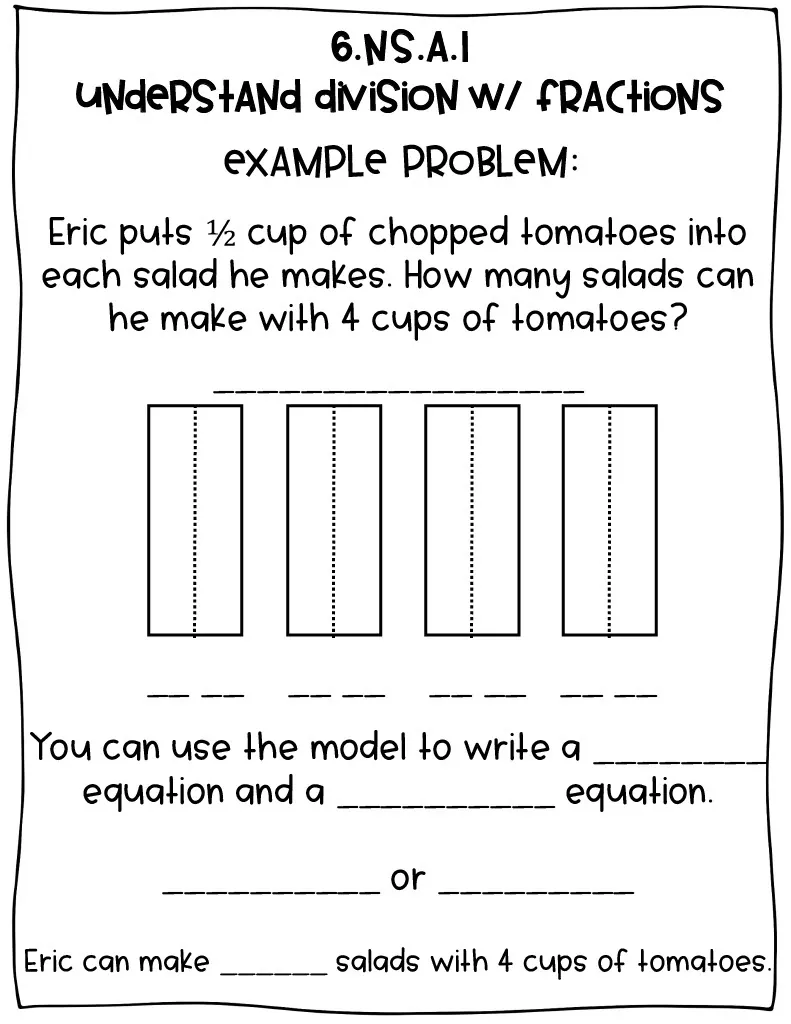
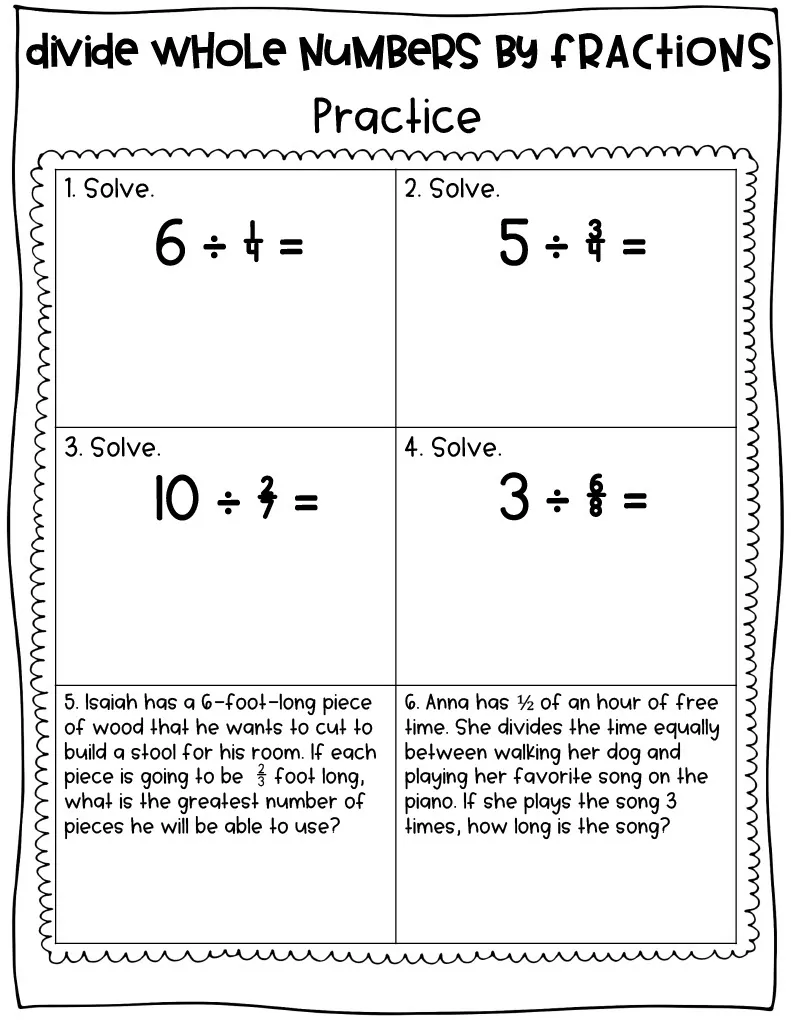
The 6th Grade Dividing Fractions Student Guided Notes is a great packet to hand out to students during your fractions unit.
This is a great way for students to keep track of their learning.
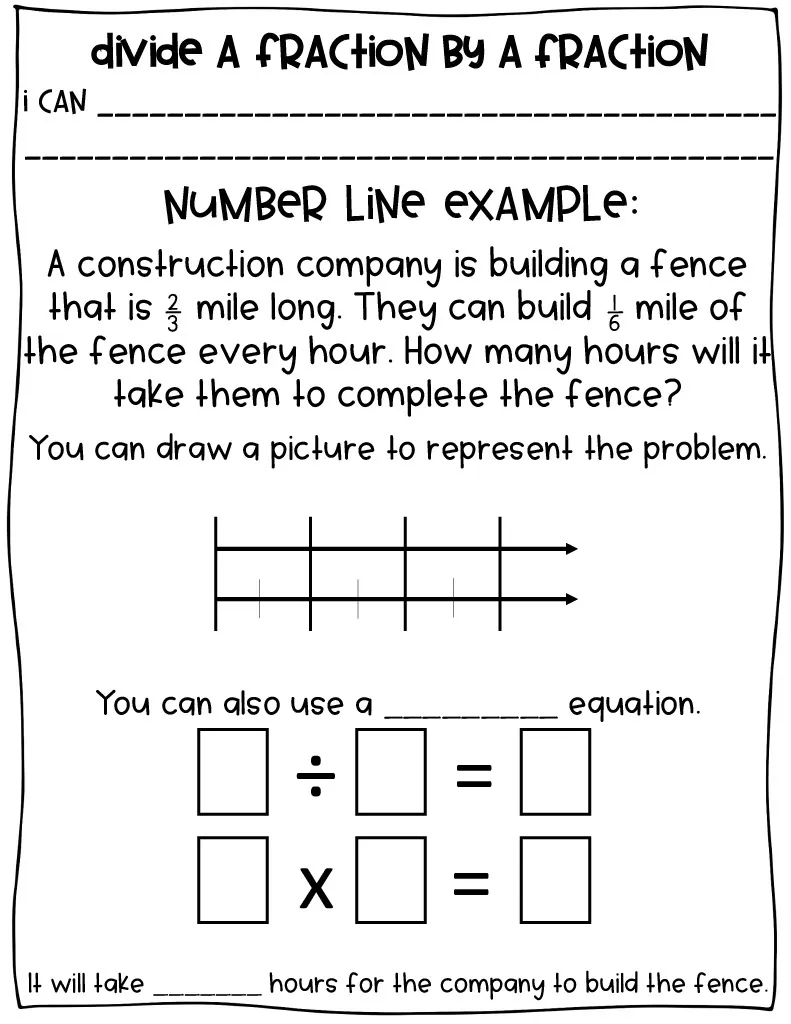
These notes are detailed with graphic organizers and fill in the blanks.
Answer keys are included.
Related resources
More resources teachers may find useful
24 related resources were found using this product's title, contributor, categories and tags.

In the classroom
Teaching tips & learning objectives

Learning objectives
Divide a whole number by a fraction, and a fraction by a whole number.
Divide a fraction by another fraction using the reciprocal method.
Solve real-world word problems that require dividing fractions, such as splitting ingredients or cutting materials into equal pieces.

Teaching tips
Project the notes and complete them alongside students, as the file's own 'How to Use' page recommends.
Print the pages as booklets or two-to-a-page for interactive notebooks, or as whole pages, depending on classroom format.
Use the teacher-copy section (pages 21–36 in the 36-page PDF or 20–35 in the 35-page PDF) as the projected teacher copy while students fill in the blank version.

Skills covered
Reciprocal method — students find a fraction's reciprocal and use it to convert a division problem into multiplication.
Visual fraction modeling — students draw or interpret a model to write a matching division and multiplication equation for a word problem.
Mixed-number division — students convert mixed numbers to fractions before dividing.
Good to know
Questions teachers ask about this resource
Are teacher copies included?
Yes. Both PDFs include a teacher-copy section. Choose one version rather than printing both: the 36-page version adds a teacher note to the substantially overlapping 35-page packet.

No reviews yet
Downloaded this resource? Tell other teachers how it went.
Curriculum
Standards, concepts & topics
Standards
 Standards
- 6. NS.A.1 — Interpret and compute quotients of fractions, and solve word problems involving division of fractions by fractions, e.g., by using visual fraction models and equations to represent the problem. For example, create a story context for (2/3) ÷ (3/4) and use a visual fraction model to show the quotient; use the relationship between multiplication and division to explain that (2/3) ÷ (3/4) = 8/9 because 3/4 of 8/9 is 2/3. (In general, (a/b) ÷ (c/d) = ad/bc.) How much chocolate will each person get if 3 people share 1/2 lb of chocolate equally? How many 3/4-cup servings are in 2/3 of a cup of yogurt? How wide is a rectangular strip of land with length 3/4 mi and area 1/2 square mi?
Core concepts
 Core concepts
Dividing fractions
Reciprocal
Mixed numbers
Fraction vocabulary
 Topics
Explore more
Categories this resource belongs to
Explore related searches
More to explore
You may also like