Character Trading Cards - For Any Literature (Editable in Google Slides)



- Grades
- Grades 7–12, Middle School, High School
- File type
- Google Slide


- Subject
- ELA, Writing, Literature
- Topic
- literature, activity
- Resource types
- Teacher Tools, Templates
About this resource
What's inside this resource
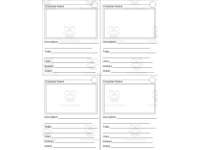
Have your students keep track of different characters from any literature in a fun way using these editable character trading cards. Included is 4 styles. Each style comes in 1 full page cutouts as well as 4 to a page. Use this fun activity with ANY short story, novel, play or history unit. These customizable character trading cards have the students analyze the text and include all the important information about a character. It will also allow them to inference or create details that might be missing. It all makes for a very fun activity.
This resource comes in a printable PDF as well as an editable Google Slide. Make changes as you feel is best for your class! You can print it out and provide the trading cards to your students, or allow them to make a copy and fill it in digitally.
Related resources
More resources teachers may find useful
24 related resources were found using this product's title, contributor, categories and tags.



In the classroom
Teaching tips & learning objectives

Learning objectives
Analyze a text to identify a character's traits, motivations (wants), likes, and dislikes
Select and record a quotation that represents a character
Infer or invent plausible details a text leaves out, such as a character's age, hometown, or hobbies

Teaching tips
Match the style to the depth you need: style 1 for a quick traits check, style 4's full stat sheet for an end-of-novel character study
Use the four-to-a-page layouts when each student tracks several characters, and the full-page versions for a single deep-dive or display
Have students make their own copy of the linked Google Slides deck (the file walks through the copy steps) to fill cards in digitally or to swap out field labels for your unit

Skills covered
Character analysis — students record each character's description, traits, likes, dislikes, and wants from the text they are reading.
Evidence selection — styles 2 and 3 ask for a representative character quote pulled from the literature.
Inference — students supply details the text may not state outright, such as age, location, occupation, or hobbies on the style 4 stat sheet.
Good to know
Questions teachers ask about this resource
How do the four card styles differ?
They step up in detail. Style 1 covers description, traits, likes, dislikes, and wants; style 2 adds name, age, location, and a quote; style 3 adds speed, strength, and intelligence ability meters; style 4 is a fold-style card with a full stat sheet — nickname, height, hometown, occupation, family, hobbies — plus spaces to draw the character on both faces.
Can students fill the cards in digitally?
Yes. The file includes a copy link to a read-only Google Slides version with step-by-step directions for making your own copy, so students can type into their version or teachers can customize the fields before printing.

No reviews yet
Downloaded this resource? Tell other teachers how it went.
Resource details
Concepts & topics
Core concepts
 Core concepts
Character analysis
Character traits
Textual evidence
Inference
 Topics
Explore more
Categories this resource belongs to
Explore related searches
More to explore
You may also like