Haiku Poster
- Grades
- K–3
- Pages
- 26
- File type
- Multiple File Types
- Editable
- Yes


- Subject
- ELA, Writing
- Topic
- Haiku, Poetry writing
- Resource types
- Worksheets
- Editable
- Yes
- Standards
- W.3.5
Product description
From the author
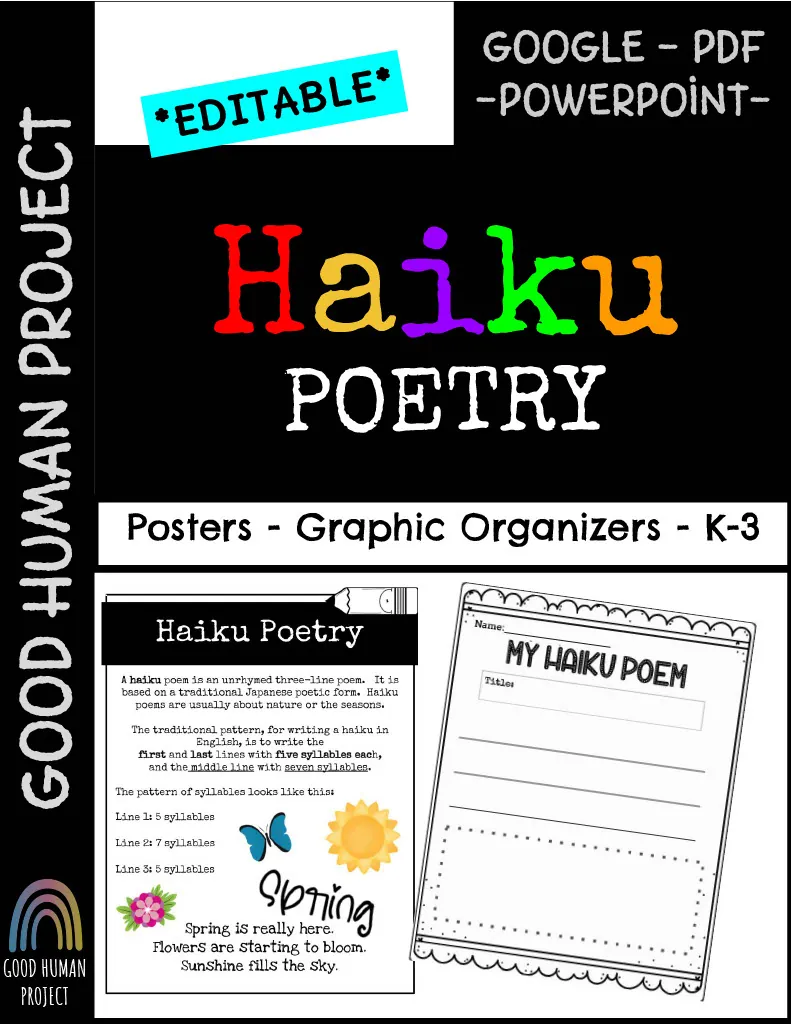
This resource is a set of learning posters and graphic organizers for haiku poetry writing.
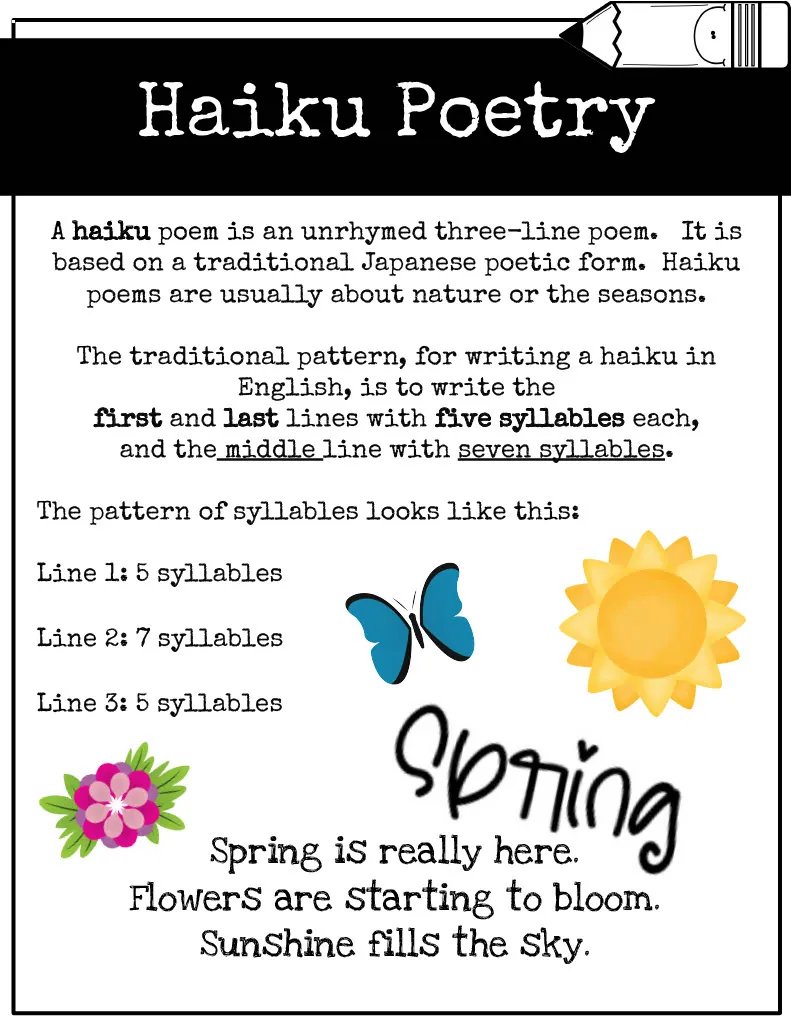
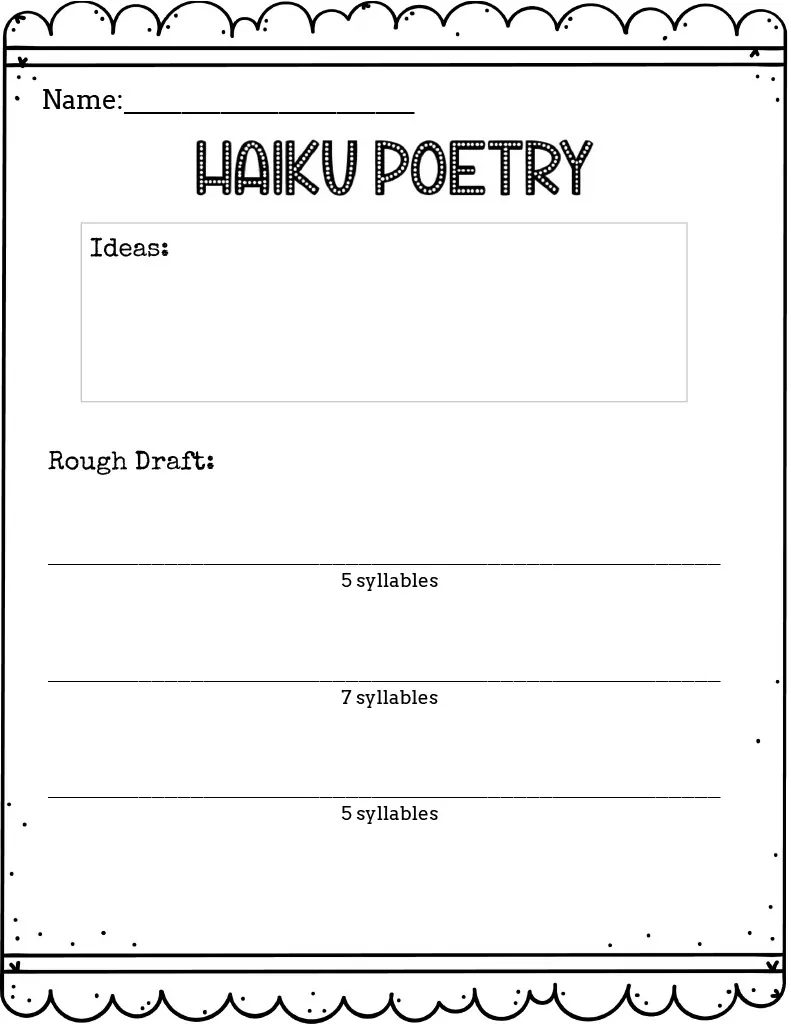
There is a poster to teach about haiku poetry. Students will explore features of this poetry writing.
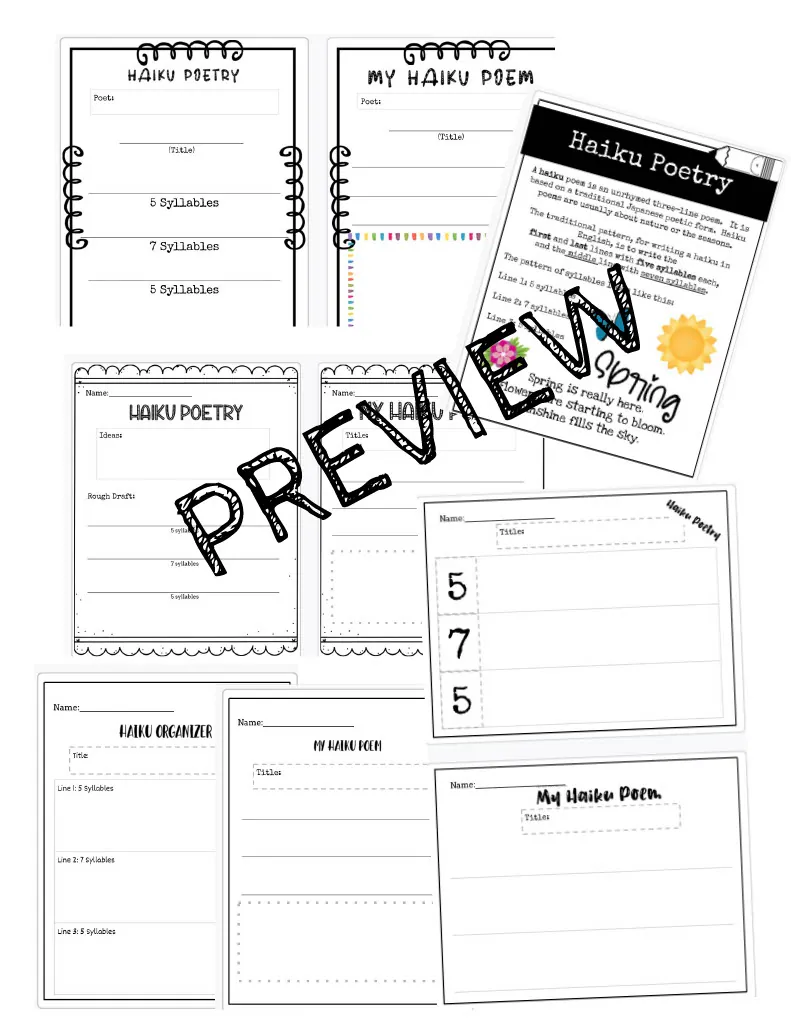
They will then write haiku poems. There are many templates to choose from.
This pairs well with your poetry unit in English class. You may also love to print these off and use in a center activity.
This resource can be accessed through:
PowerPoint
Google slides
Related resources
More resources teachers may find useful
24 related resources were found using this product's title, contributor, categories and tags.


In the classroom
Teaching tips & learning objectives

Learning objectives
Identify the packet’s five-seven-five pattern for a three-line poem.
Draft an original haiku using the syllable-labeled rough-draft organizer as scaffolding.
Produce a finished, titled haiku on a "Poet" byline template.

Teaching tips
Read the model poem on the instructional page aloud and count its syllables line by line before students draft their own.
Start students on the syllable-labeled organizer pages, then move them to the blank-line templates once they no longer need the numeric scaffold.
Pair the two "Poet" byline pages with a simple publishing step, such as reading finished haiku aloud or posting them on a board.

Skills covered
Syllable counting — students count and match five, seven, and five syllables to fit each line of the pattern taught in this packet.
Haiku composition — students draft an original three-line poem following the syllabic pattern modeled on the instructional page.
Draft-to-final revision — students move from an "Ideas"/rough-draft organizer to a titled, finished haiku on a separate byline page.

No reviews yet
Downloaded this resource? Tell other teachers how it went.
Curriculum
Standards, concepts & topics
Standards
 Standards
- W.3.5
Core concepts
 Core concepts
Haiku
Syllable counting
Fixed poetic form
Nature imagery
 Topics
Explore more
Categories this resource belongs to
Explore related searches
More to explore
You may also like