Narrative Poetry – Posters & Graphic Organizers
- Grades
- Grades 1–3, Elementary
- File type
- Multiple File Types


- Subject
- ELA, Literature, Poetry
- Topic
- posters, poetry unit
- Resource types
- Graphic Organizers, Teacher Tools
About this resource
What's inside this resource
This resource is a set of learning posters and graphic organizers for narrative poetry writing.
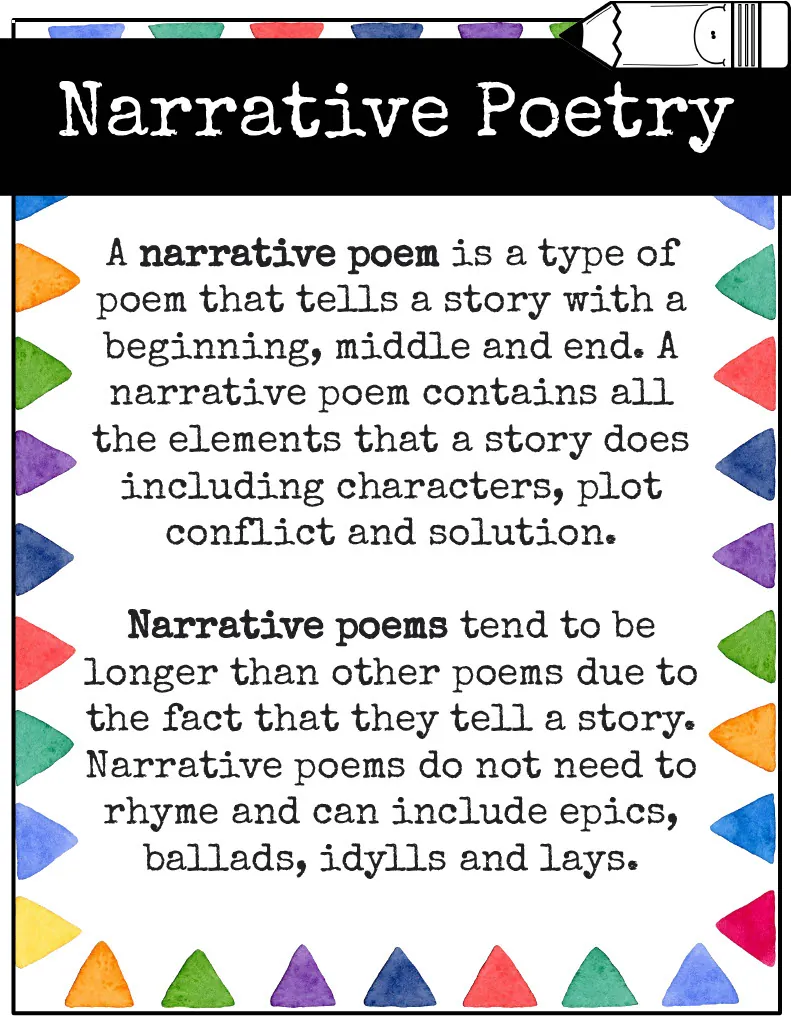
There are a variety of posters that teach about narrative poetry. Students will explore features, how to write a narrative poem and so much more.
They will use the graphic organizers to brainstorm ideas and then write a narrative poem.
This pairs well with your poetry unit in English class. You may also love to print these off and use in a center activity.
This resource can be accessed through:
PowerPoint
Google slides
Related resources
More resources teachers may find useful
24 related resources were found using this product's title, contributor, categories and tags.


In the classroom
Teaching tips & learning objectives

Learning objectives
Identify the defining features of a narrative poem, including characters, setting, a problem, and a solution.
Plan a narrative poem's beginning, middle, and end using a graphic organizer before drafting.
Write an original narrative poem that includes descriptive details and follows a clear event sequence.

Teaching tips
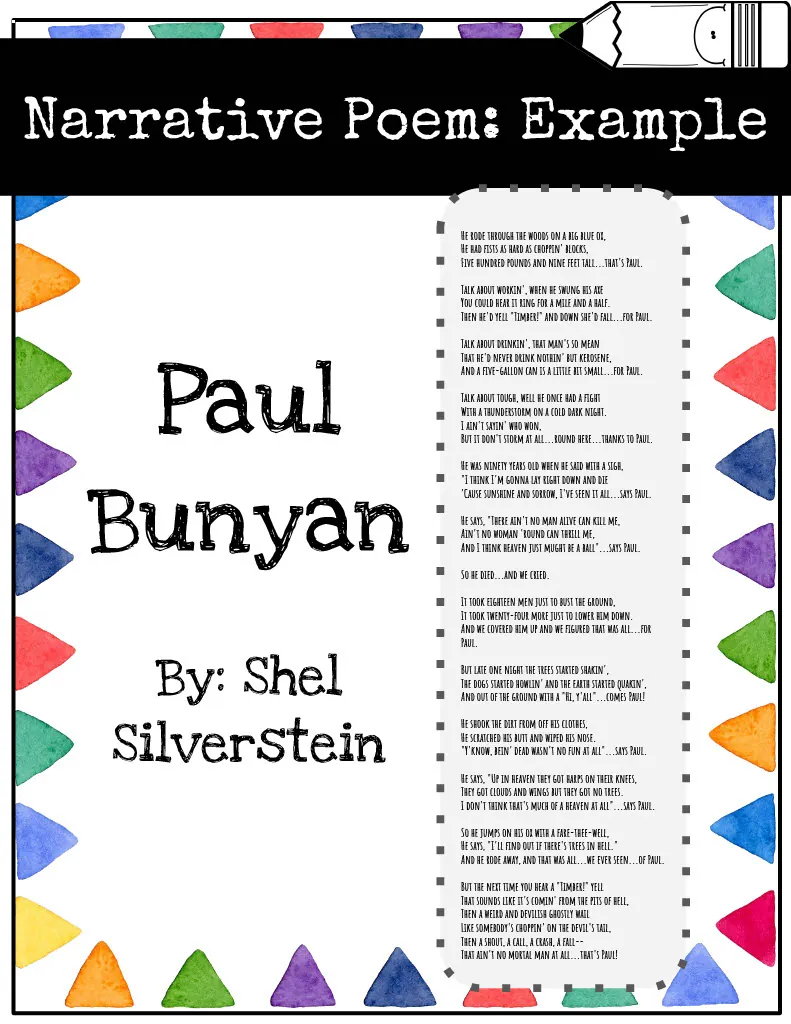
Read the included mentor poems aloud as a class first, since their vocabulary and length exceed independent reading level for K-3 students, then have students complete the graphic organizer on their own.
Require students to fill in every box of the Narrative Poetry Organizer before they start drafting; the Adjectives box in particular pushes students toward the descriptive language the 'How to Write' poster asks for in step 4.
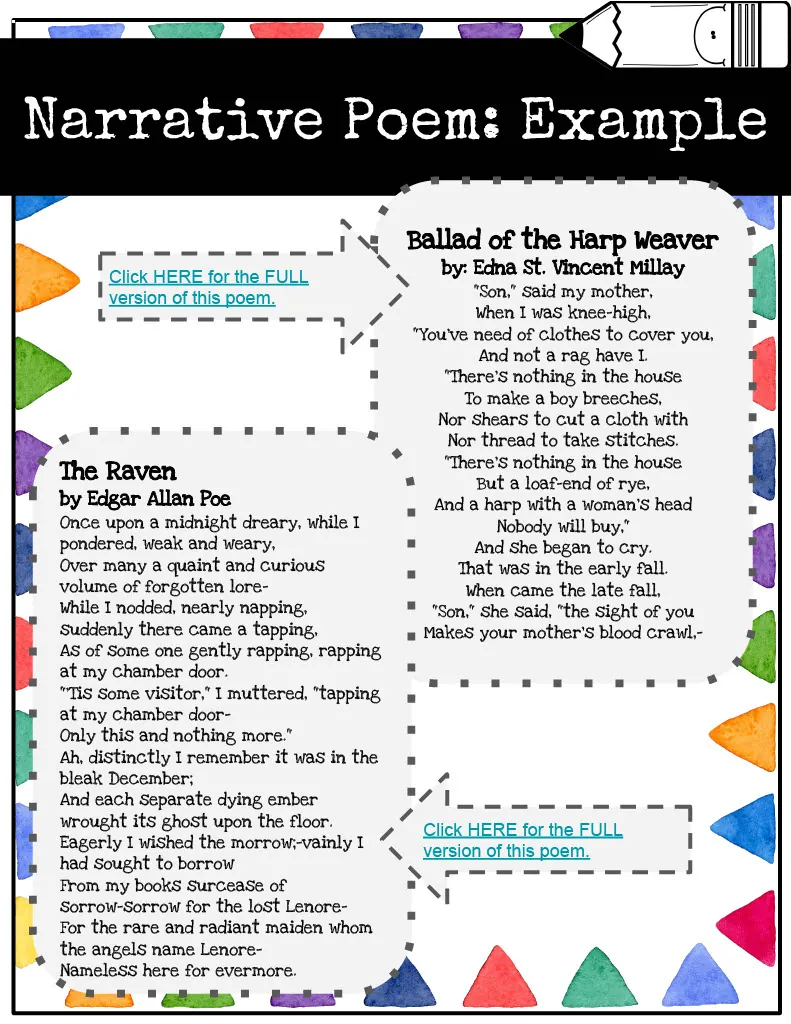
If using the PowerPoint version, show the 'Raven' and 'Ballad of the Harp Weaver' excerpts as a second, rhymed contrast to the free-verse-style 'Paul Bunyan' poem. Use this poetry response sheet to help students respond to a poem they have read and explain what they enjoyed.

Skills covered
Narrative poem planning — students fill in Characters & Setting, Adjectives, Problem, and Solution boxes on the organizer before writing a single line of their poem.
Sequential narrative writing — students separately plan the Beginning, Middle, and End of their poem so the finished draft follows a clear event order.
Genre study through mentor texts — students read published narrative poems (Silverstein, Tennyson, and in the PowerPoint version, Poe and Millay) to see how professional writers use character, conflict, and sequence.
Good to know
Questions teachers ask about this resource
What planning steps come before students start drafting their own poem?
The 'How to Write a Narrative Poem' poster has students choose a simple topic and then complete the Narrative Poetry Organizer — filling in Characters & Setting, Adjectives, Problem, and Solution, plus separate notes for the Beginning, Middle, and End — before any drafting begins.
Which published poems are used as writing models?
The PDF includes the full text of 'Paul Bunyan' by Shel Silverstein and 'The Charge of the Light Brigade' by Alfred Tennyson; the PowerPoint version of the same resource adds excerpts of 'The Raven' by Edgar Allan Poe and 'Ballad of the Harp Weaver' by Edna St. Vincent Millay, each with a link to the full poem.

No reviews yet
Downloaded this resource? Tell other teachers how it went.
Resource details
Concepts & topics
Core concepts
 Core concepts
Narrative poem structure (beginning, middle, end)
Story elements (characters, setting, problem, solution)
Descriptive/sensory language in poetry
 Topics
Explore more
Categories this resource belongs to
Explore related searches
More to explore
You may also like