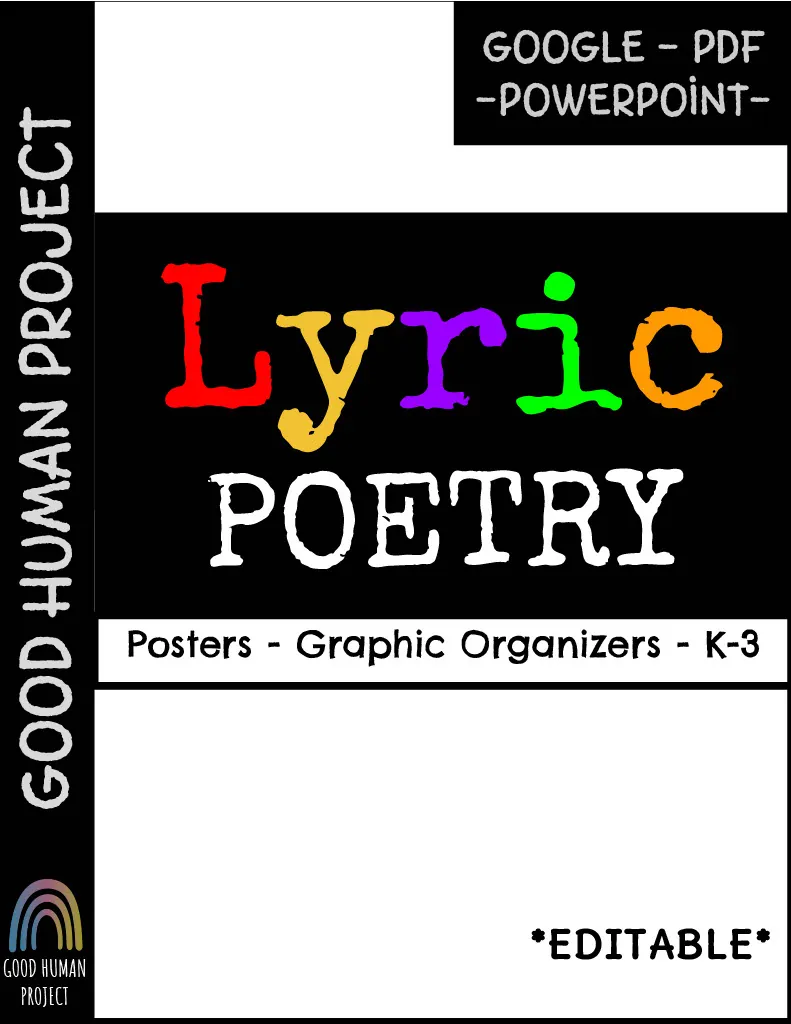
Lyric Poetry Writing – Posters & Graphic Organizers
- Grades
- Grades 1–3, Elementary
- File type
- Multiple File Types


- Subject
- ELA, Literature, Poetry
- Topic
- lyric poetry, lyric poems
- Resource types
- Graphic Organizers, Teacher Tools
About this resource
What's inside this resource
This resource is a set of learning posters and graphic organizers for lyric poetry writing.
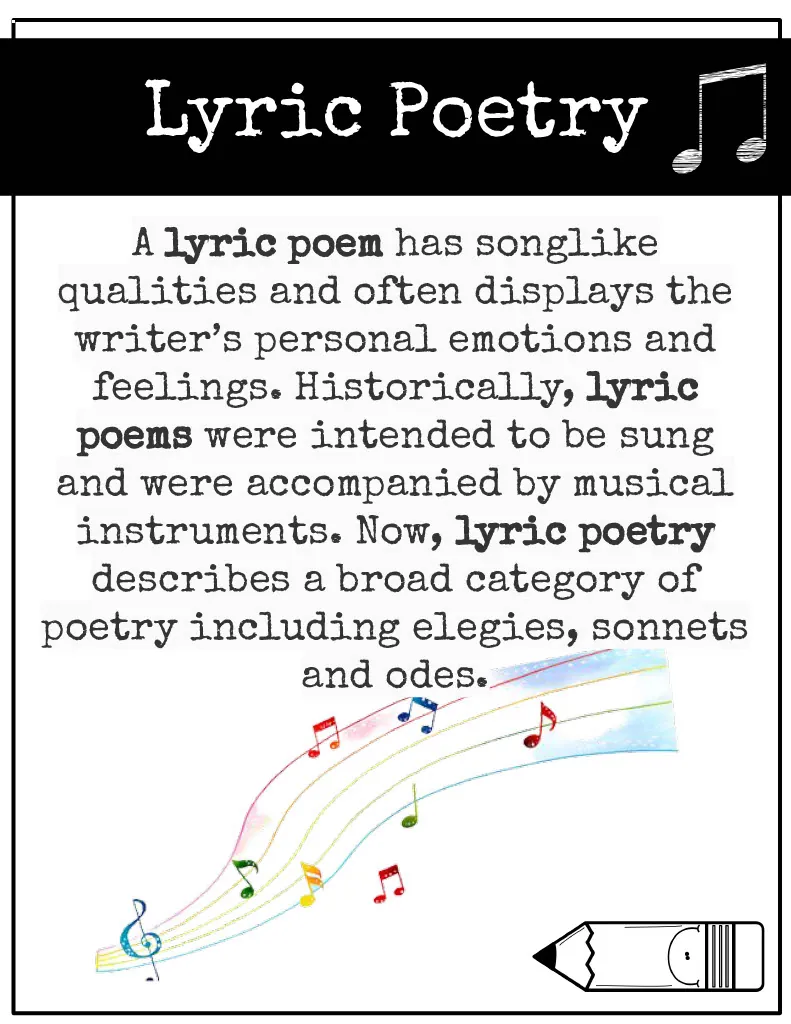
There are a variety of posters that teach about lyric poetry. Students will explore features, famous lyric poems, how to write a lyric poem and so much more.
Students will then write lyric poems with a variety of templates.
This pairs well with your poetry unit in English class. You may also love to print these off and use in a center activity.
This resource can be accessed through:
PowerPoint
Google slides
Related resources
More resources teachers may find useful
24 related resources were found using this product's title, contributor, categories and tags.

In the classroom
Teaching tips & learning objectives

Learning objectives
Define lyric poetry and its songlike, emotional qualities
Analyze a chosen lyric poem's topic, mood, and imagery with the organizer
Connect poetry to music by explaining how a poem 'sounds' like a song

Teaching tips
Post the definition poster and read one exemplar aloud with musical emphasis before students meet the organizer
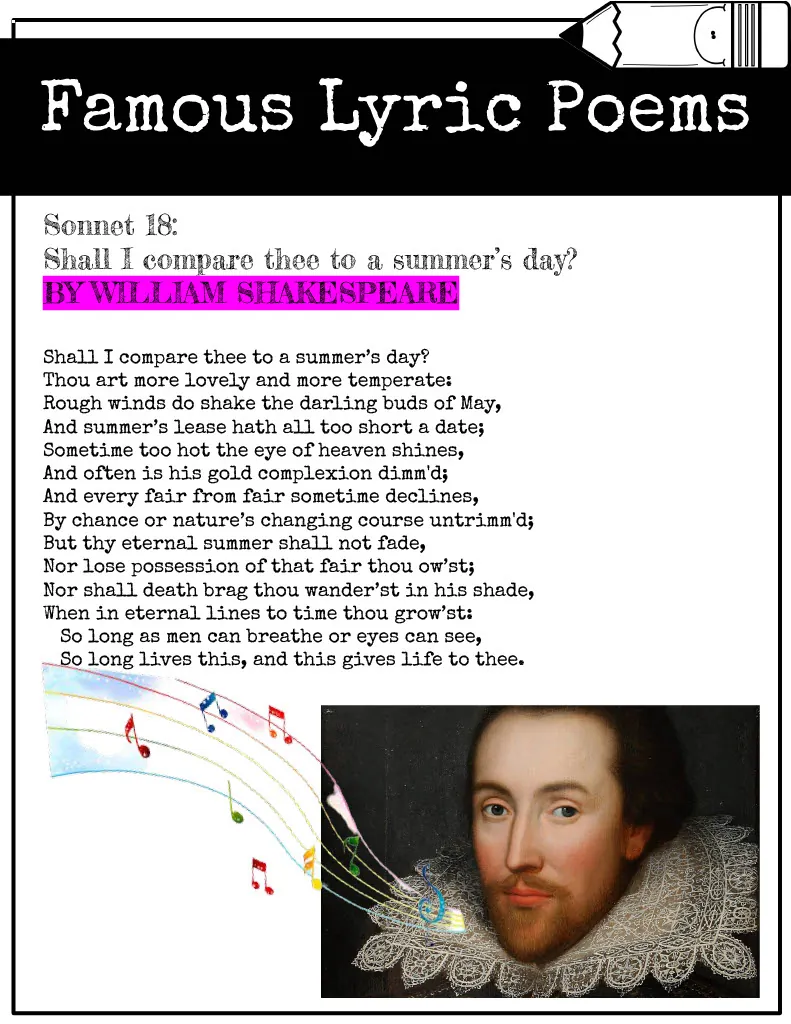
Screen the exemplar posters for your class first — the set is labeled K-3, but Sonnet 18 and Dickinson's funeral poem read well above that band and touch heavy themes
Let students pick any lyric poem for the organizer, as its directions invite, then move straight into the My Lyric Poem template. After reading a model poem, invite students to share their reactions with this Rate a Poem activity before they begin writing their own.

Skills covered
Genre knowledge — the definition poster names lyric poetry's songlike, emotional character and its forms (elegy, sonnet, ode).
Poem analysis — the organizer captures a chosen poem's topic, mood, and imagery and asks how it resembles music.
Poetry writing — students draft an original lyric poem and illustrate it on the template.
Good to know
Questions teachers ask about this resource
What does the graphic organizer ask students to do?
Read a lyric poem of their own choosing and record its title, author, topic, mood, and imagery, then answer the genre's defining question — how the poem was similar to music.
Which poems are included as exemplars?
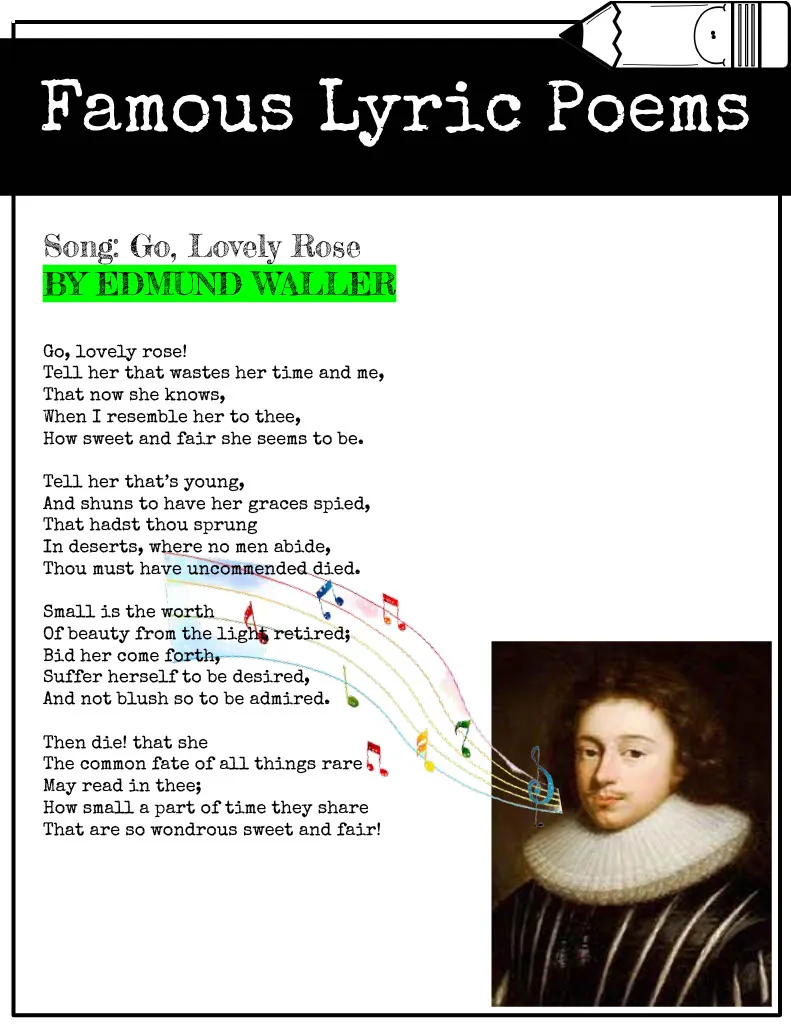
Four full texts: Shakespeare's Sonnet 18, Edmund Waller's 'Song: Go, Lovely Rose,' Emily Dickinson's 'I felt a Funeral, in my Brain,' and Robert W. Service's 'Why Do Birds Sing?' — a range worth previewing for your class before display.

No reviews yet
Downloaded this resource? Tell other teachers how it went.
Resource details
Concepts & topics
Core concepts
 Core concepts
Lyric poetry
Mood
Imagery
Poetry writing
 Topics
Explore more
Categories this resource belongs to
Explore related searches
More to explore
You may also like