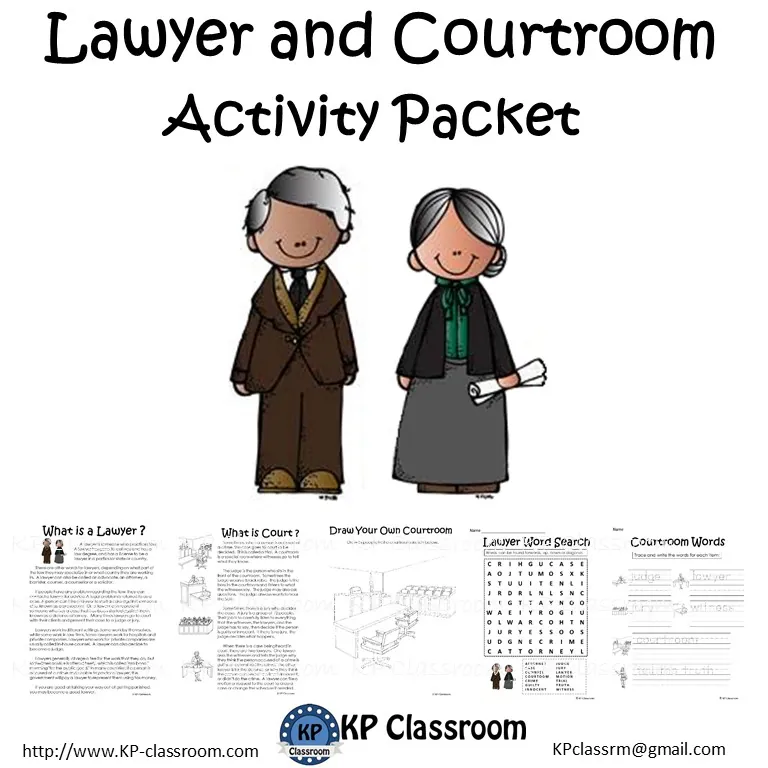
Lawyer and Courtroom Activity Packet and Worksheets
- Grades
- Grades 1–5, Elementary
- File type
- Preparation
- Print ready


- Subject
- Life Studies, Career
- Topic
- lawyer, courtroom
- Resource types
- Worksheets, Worksheets & Printables
- Preparation
- Print ready
About this resource
What's inside this resource
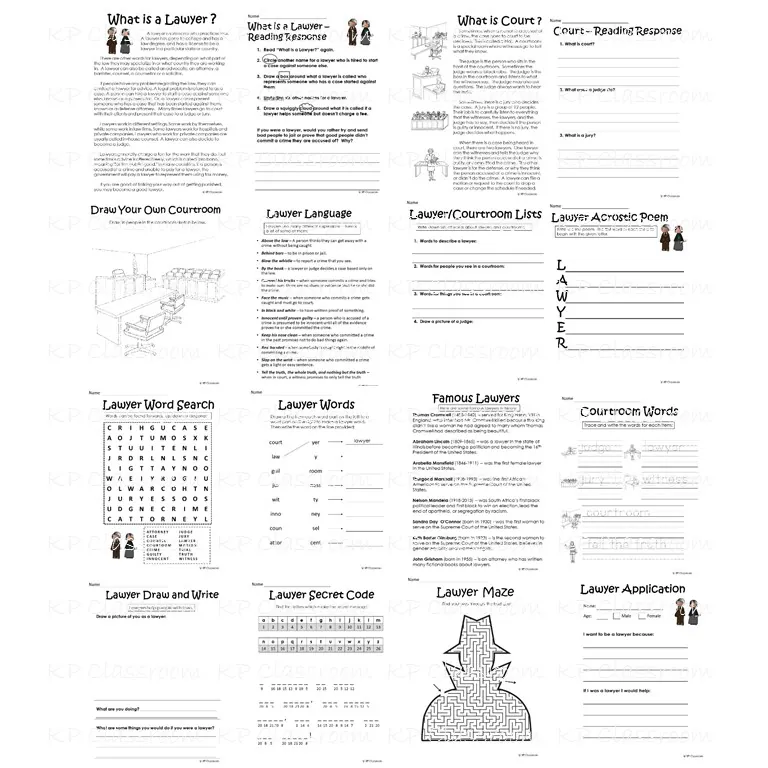
The Lawyer and Courtroom Activity Packet and Worksheets
This outstanding resource designed to introduce the judicial system to young learners in an accessible manner includes engaging, printable worksheets that require no preparation beforehand.
Overview
Learning about lawyers and judges doesn't need to be complicated. With this activity packet, it becomes an exciting exploration. The packet caters to students with varying comprehension abilities across grades 1 - 5.
Content
- A thorough introduction: Covers essential knowledge from explaining what a lawyer is to how a courtroom operates.
- Interactive learning: Encourages expression of understanding through responses. Creative activities: Include tasks such as drawing a courtroom or writing prompts related to legal professions.
- Puzzles and activities: Houses other engaging tasks like word searches or dot-to-dot exercises themed around law.
Career Exploration Opportunities
This versatile packet also pays special focus on career exploration in law through interesting facts about renowned lawyers and intriguing exercises such as filling-out 'Lawyer Applications'. The goal is fostering critical thinking skills among students ranging from grade 1 up until grade 5.
Versatile Usage Options!
The PDF file can be used group-wise in class or delegated as small team efforts or individual homework assignments- adapting flexibly according to your needs! Incorporating this well-planned resource into your teaching strategy will certainly facilitate comprehensive understanding of legal careers while maintaining students' engagement levels high by simplifying complex concepts without falling into the prep hassles trap!
Related resources
More resources teachers may find useful
24 related resources were found using this product's title, contributor, categories and tags.



In the classroom
Teaching tips & learning objectives

Learning objectives
Explain what a lawyer does and name the alternative titles the passage gives - advocate, attorney, barrister, counsel, counsellor and solicitor
Distinguish the two sides of a case, naming the prosecutor and the defence attorney and saying what each argues
Describe who is in a courtroom and what each does, including the judge, the jury of twelve and the witnesses

Teaching tips
Page 1 asks that printing start at page 2, which keeps the credits and contact page out of a class set
The two reading responses work differently: the first asks students to mark up the passage itself with circles, boxes, underlines and a squiggly cloud, so keep that passage in front of them rather than collecting it in
The idiom list on page 7 and the writing prompt on page 8 are a natural pair, and the prompt sets a floor of three expressions, which makes it easy to raise for stronger writers

Skills covered
Reading for specific terms - the first response sheet asks students to circle, box, underline and cloud named items inside the passage rather than answer in their own words.
Legal and courtroom vocabulary - attorney, counsel, jury, motion, witness and innocent appear across the word search, the word-part matching page and the tracing sheet.
Understanding idioms - twelve expressions are each glossed on the Lawyer Language page, and the writing prompt requires at least three to be used correctly in a story.
Good to know
Questions teachers ask about this resource
How do the two reading response sheets differ from each other?
The first is a mark-up task: students circle the word for a lawyer who starts a case, draw a box around the word for one who defends, underline six other names for a lawyer, and draw a squiggly cloud around the term for unpaid help, then answer one opinion question. The second asks three questions in writing - what court is, what a judge does, and what a jury is.
Which expressions does the Lawyer Language page cover?
Twelve, each with a plain-English gloss: above the law, behind bars, blow the whistle, by the book, covered his tracks, face the music, in black and white, innocent until proven guilty, keep his nose clean, red-handed, slap on the wrist, and "tell the truth, the whole truth, and nothing but the truth". The next page asks for a short story using at least three of them.
What does the secret-code page decode to?
The courtroom oath. Numbers 1 to 26 stand for the letters a to z, and the message reads "I promise to tell the truth, the whole truth, and nothing but the truth!" The page that follows prints the same puzzle with every letter filled in above its number.

No reviews yet
Downloaded this resource? Tell other teachers how it went.
Resource details
Concepts & topics
Core concepts
 Core concepts
Courts and trials
Legal vocabulary
Idioms
Careers
Reading comprehension
 Topics
Explore more
Categories this resource belongs to
Explore related searches
More to explore
You may also like