Novel Study Worksheets on "The Kite Runner" by Khaled Hosseini

- Grades
- Grades 7–12, High School, Middle School
- Pages
- 5
- File type
- Preparation
- Print ready


- Subject
- ELA, Reading, Reading Comprehension
- Topic
- Novel Study, English
- Resource types
- Worksheets, Worksheets & Printables
- Preparation
- Print ready
About this resource
What's inside this resource
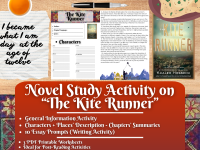
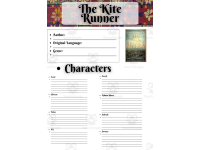
Within this English language and Literature teaching resource it is offered a comprehensive novel study worksheet activity (5 printable PDF pages; Worksheets) focused on the novel "The Kite Runner" by Afghan American author Khaled Hosseini.
Perfect for post-reading exercises, this English Language and Literature teaching resource can be more than great to deepen and improve students' understanding of this novel.
The English Literature Novel Study activity (5 printable PDF pages; Worksheets) can be ideal for English class students in middle and high school (from 7th grade to 12th grade).
In this Novel Study on “The Kite Runner” (5 printable PDF pages; Worksheets), English Language and Literature teachers can find the following activities:
1 section dedicated on general information (author's name, genre, and original language)
1 section dedicated on character descriptions (8 characters)
1 section dedicated on descriptions of key locations (6 places)
1 section decicated on chapter summaries (25 chapters)
1 section dedicated on a writing activity with 10 essay prompts (book review + 9 other novel related essay prompts)
This English Language and Literature Novel Study Activity on "The Kite Runner" by Afghan American author Khaled Hosseini (5 PDF Printable Slides; worksheets) can be great for learners from 7th grade to 12th grade to study this Novel (middle school and High School Students mostly)
Learning with Alan is a Teaching Resource/Educational Material Store whose aim is to help Teachers, Educators and Tutors to achieve their teaching objectives while creating a fun and stimulating learning and teaching environment. Remember. Learning is Fun. Never Forget!
If you want to browse more of my English Language and Literature Novel Study Activity Teaching Resources, click here Learning with Alan!
Related resources
More resources teachers may find useful
24 related resources were found using this product's title, contributor, categories and tags.


In the classroom
Teaching tips & learning objectives

Learning objectives
Track eight named characters across a long novel, recording each one's role and development in a dedicated space rather than in running notes
Distinguish the novel's six key settings and describe what each contributes, including the political weight of the Kabul stadium under Taliban rule
Summarise all twenty-five chapters in sequence, building a full record of how the plot unfolds

Teaching tips
Hand out the character and setting pages before the class starts reading; both are designed to be filled progressively, and the Sohrab and orphanage boxes will stay empty until late in the novel
The chapter boxes are small - about eleven ruled lines each - which forces a genuine summary rather than a retelling; set a sentence limit to match
Prompts 2 to 10 are each substantial enough to be a whole essay, so assign one per student rather than working through them as a set

Skills covered
Character tracking - eight labelled boxes require students to keep separate, developing records of Amir, Hassan, Baba, Assef, Ali, Rahim Khan, Soraya and Sohrab as the novel moves between Kabul and California.
Setting analysis - six named places, including Baba's house and the stadium under Taliban rule, are recorded individually so students can see how place carries meaning in the novel.
Chapter summarising - twenty-five numbered boxes ask for a condensed account of each chapter in a fixed, small space.
Good to know
Questions teachers ask about this resource
How many chapters does the pack account for?
All twenty-five, each with its own numbered box running from Chapter 1 through Chapter 25 across three pages. Nothing is grouped or skipped, so a class can fill one box per reading session and end with a complete plot record.
Which characters and places does the pack single out?
Eight characters - Amir, Assef, Hassan, Rahim Khan, Baba, Sohrab, Ali and Soraya - and six places: Kabul, Baba's house in Kabul, the orphanage in Kabul, the stadium in Kabul under Taliban rule, Peshawar in Pakistan, and San Francisco.
How demanding are the ten writing prompts?
Nine of them are full analytical essay questions, each naming a theme and asking for exploration - the interaction of guilt and redemption, Pashtun and Hazara divisions, betrayal and loyalty, father-son relationships, violence and trauma, kite symbolism, Afghan political change, forgiveness, and displacement to America. The first is lighter: a personal book review with a recommendation to argue.

No reviews yet
Downloaded this resource? Tell other teachers how it went.
Resource details
Concepts & topics
Core concepts
 Core concepts
Novel study
Character analysis
Setting
Chapter summary
Thematic essay writing
 Topics
Explore more
Categories this resource belongs to
Explore related searches
More to explore
You may also like