"Renaissance & Enlightenment" & Video Lessons: Regents Global 9 CRQ

- Grades
- Grade 9
- Pages
- 26
- File type
- Multiple File Types
- Answer key
- Included


- Subject
- Social Studies, History, History: World
- Topic
- Renaissance, Enlightenment
- Resource types
- Assessments
- Answer key
- Included
Product description
From the author
This product is a constructed-response question (“CRQ”) in a Regents-style format for the New York State examination in Global History and Geography.
The CRQ calls upon the student to examine historical sources (I use exclusively primary sources) by providing historical or geographic context, identifying the point of view, intended audience, or purpose of a document and then using the two documents in either compare-contrast, cause-effect analysis, or turning point identification. I advocate a strategy of assigning one CRQ in each unit of study in grades nine and ten without access to notes. I used this as one of the tests at the end of a unit of study. I would tell students about what kinds of documents would appear and what
historical context they should be able to recall in advance. It is a challenging task for them.
The first challenge for novices is to understand what it means to provide context. Faced with the question “What is the historical context of this document?”, beginners will retell what the document says. The reason for this mistake is that, since they were little kids, teachers have asked them to relate what a text means to prove they understood it. [Read more at the Innovation blog]
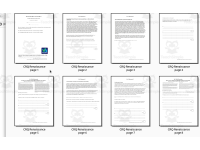
Product includes:
1. Student version
2. Teacher version with suggested answers
3. Passcode to video lessons students can use to prepare the task.
Documents:
Petrarch, on the successful ruler
Machiavelli, also on successful ruler
David Hume, excerpt
On Education of Women
Passcode Lessons:
The Renaissance, part 1
The Renaissance part 2
The Reformation part 1
The Reformation part 2
Russian History part 1
Russian History part 2
Russian History part 3
Russian History part 4
About Innovation Passcodes
Passcodes let your students access selected lessons in my own virtual classroom at InnovationAssessments.com. No registration is required. Use the codes at InnovationAssessments.com/TestDrive.
Related resources
More resources teachers may find useful
24 related resources were found using this product's title, contributor, categories and tags.


In the classroom
Teaching tips & learning objectives

Learning objectives
Explain the historical circumstances that shaped Renaissance political thought and led Enlightenment writers like Hume to challenge traditional beliefs
Identify the point of view or purpose of a primary source and evaluate its reliability with supporting reasoning
Analyze the role of reason in Enlightenment thinking across Hume and the essay on the education of women

Teaching tips
Model the difference between summarizing a document and explaining its historical context.
Use the classroom rubric to discuss the strength of evidence and reasoning.
Choose optional video topics that match the background students need.

Skills covered
Historical contextualization
Evaluating source purpose and point of view
Comparing ideas using evidence from two documents
Good to know
Questions teachers ask about this resource
Which documents do students analyze?
Four primary sources across two sets: Petrarch's Rules for the Successful Ruler (c. 1350) and an excerpt from Machiavelli's The Prince for the Renaissance set, then David Hume's An Enquiry Concerning Human Understanding and an essay on the education of women (from the Harvard Classics English essays volume) for the Enlightenment set.
How do the video lessons pair with the Renaissance and Enlightenment CRQ sets?
Eight review lessons hosted at the vendor's site — The Renaissance parts 1 and 2, The Reformation parts 1 and 2, and Russian History parts 1 through 4 — each with embedded questions that are corrected automatically as students work.

No reviews yet
Downloaded this resource? Tell other teachers how it went.
Resource details
Concepts & topics
Core concepts
 Core concepts
Renaissance political thought
Enlightenment philosophy
Primary source analysis
Source reliability
Constructed-response questions
 Topics
Explore more
Categories this resource belongs to
Explore related searches
More to explore
You may also like