



3,949 products added recently
Page 2 - 2nd Grade Activities
Boost your second graders' enthusiasm with activities that combine fun and education. These resources cover various subjects and promote critical thinking and collaboration. Use them to enrich your lessons and keep students actively involved in their learning journey.

 Show filters


Reading Comprehension Passages Fiction Set 1 - Nature (PDF)
ELA, Reading, Reading Comprehension, Common Core, ESL, Language Development, Spelling, Vocabulary, Writing, Resources for Teachers, Grade 2, 3, Worksheets & Printables, Worksheets, Writing Prompts, Assessments, Teacher Tools, Quizzes, Quizzes and Tests, Centers, Activities
Reading Comprehension Passages Fiction Set 1 Overview Fascinating reading comprehension passages, each with an array of activities included. Stories are written for the modern classroom and topics are designed to promote enthusiasm from each student. Each lesson contains a mixed questions section to check understanding, a vocabulary or spelling activity to help remember key language introduced, and a writing exercise. Full answer keys are provided. For a more detailed overview, check the section under the links at the bottom of this description. Passages Include 1.Bring on the Snow: Kellie wants to make it snow. How does she try? 2.Walk through the Woods: A walk in the woods turns into a huge adventure. 3.Nature Photographer: Donna get some amazing snaps in this story. 4.Nature's Beautiful Colors: Rusty enjoys finding out about the colors in nature. 5.Flower Fun: Learn about flower names and colors in this fun lesson. 6.Picking Cherries: Ross spends his day picking cherries but is it worth it? Additional File: Nature Photographer: Drawing Nature Printable PDF Version This is the PDF uneditable version. This download is available in GOOGLE Docs, GOOGLE Forms, GOOGLE Slides. PDF, PPT, WORD. FULL CATALOG OF DOWNLOAD LINKS HERE Grade 2/3 Links Fiction Set 1 - Nature Google Docs Google Forms Google Slides PDF PPT Word Guided Reading Materials Fiction Set 2 - Animals Google Docs Google Forms Google Slides PDF PPT Word Guided Reading Materials Fiction Set 3 - Food Google Docs Google Forms Google Slides PDF PPT Word Guided Reading Materials Fiction Set 4 - School Google Docs Google Forms Google Slides PDF PPT Word Guided Reading Materials Fiction Set 5 - Friends Google Docs Google Forms Google Slides PDF PPT Word Guided Reading Materials Fiction Set 6 - Family Google Docs Google Forms Google Slides PDF PPT Word Guided Reading Materials Fiction Set 7 - Sports Google Docs Google Forms Google Slides PDF PPT Word Guided Reading Materials Nonfiction Set 1 - Technology Google Docs Google Forms Google Slides PDF PPT Word Guided Reading Materials Nonfiction Set 2 - Nutrition Google Docs Google Forms Google Slides PDF PPT Word Guided Reading Materials Nonfiction Set 3 - Animals Google Docs Google Forms Google Slides PDF PPT Word Guided Reading Materials Reading Passages Overview Each passage is especially written for Grade 2-3 students, including key vocabulary required for this age group. Topics are varied and are accompanied by colorful graphics. Topics are meant to educate, yet entertain the modern student. These passages are perfect for the modern classroom. Whereas textbooks can become outdated in no time, any changes to technology or the world will result in updates to this product. Mixed Questions The mixed questions section of each lesson includes a variation of fivecomprehension, vocabulary and math questions. In addition, key reading strategies are frequently covered including cause & effect, summarizing, compare & contrast and making conclusions. Three of the questions will be MCQs and two will require a written response of some kind. Full answers and example responses appear at the end of the lesson. Spelling & Vocab Each reading passage contains a variety of words and phrases designed for Grade 2-3 students. Spelling and vocab activities provide the opportunity to build fluency with these words. As it can become quite mundane doing the same activities over and over, each lesson in a set will contain a different spelling and vocab activity . Writing Prompts Writing prompts are designed to continue the theme or lessons learned in the story. Students are persuaded to write in a variety of ways and each prompt includes several cues to help. As with the spelling/vocab section, writing prompts will vary. This includes research pieces, reading responses, poetry and creative writing prompts. Full Answer Keys Full answer keys and sample responses are provided so no matter how busy you are, you know you're covered! Mixed question answers provide evidence from the text, math questions contain the relevant workings. Answers are designed for use by the teacher, but also suitable as a handout to the student. Additional File One lesson will have an additional file. This is something fun to extend the lesson with. For similar downloads and other frees, do check out Cored Group on TeachSimple.
Author Cored Education
Rating
Tags Elementary, Reading, Comprehension, Vocabulary, Common Core, Speling, Writing, Passages, Reading Centers, Reading Comprehension Assessments
Vikings Reading Comprehension Passage - Cored Ed Encyclopedia
ELA, Language Development, Reading Comprehension, Reading, Pre-Reading, History, Social Studies, History: Europe, History: British, Vocabulary, Grade 2, 3, 4, 5, Worksheets & Printables, Worksheets, Teacher Tools, Centers, Activities, Writing Prompts, Assessments, Quizzes and Tests, Quizzes, Lesson Plans
This Vikings reading comprehension with lesson plan includes: Visualization (on the front cover) Start your lesson by taking a minute to think and share something about the topic. Read the script aloud (slowly), perhaps prepare some music or sound effects. Student close their eyes and let their imaginations wander. Students open their eyes, read the question aloud and give them a few minutes to complete. Ask a few students to share or keep answers until the end to compare with what they learn in the passage. Quick pause—thousands of Cored Education products are included with your TeachSimple membership. Download links and encyclopedia index available here. Pre-Reading Trivia Students will write down one thing they already know about the subject and then read five more facts and discuss. These facts are fun, and the students will enjoy learning about the subject before reading more. Give 1 minute for students to write what they already know (no pressure—best guess is fine). Read the five facts together. After each fact, do ask a student for their opinion, was it surprising? Set a purpose by asking students to highlight/underline one fact they want to learn more about during the reading. Reading Passage The text is a high-interest reading passage with set paragraphs, roughly three to four paragraphs long. It contains a variety of themes about the topic, anywhere from history to technology. The passage is between 250 and 350 words in length. First, ask students to look at the headings and see what they’ll learn about today. What do they know about the topic/heading? First read options: Teacher read-aloud (best for support). Partner reading (paragraph by paragraph). While reading, students underline important details, and vocabulary words they think may come up in the questions section. Mixed Questions The first question page contains four multiple-choice questions, each with a choice of four answers, and three written response questions that require a sentence or two from the student. Students complete the mcqs first independently, then review quickly as a class. For the 3 written responses, try to get students giving the answer with some form of evidence: “I think ___ because the text says ___.” If students get stuck, send them back to check the passage. Vocabulary Questions Practice seven key words from the text in this section across two activities. First section is scrambled words where students will unscramble three words given a clue for each. The second section is a word to meaning matching activity. Before starting, have some students read out words they underlined in the passage. Ask students to say the word and read aloud the sentence(s) around each word. Ask students to do scrambled words and the matching exercise in pairs then go through answers as a class. For the scrambled spelling task, get four pairs to come up to the board and write the words for extra practice with the other student reading out the clue. For the matching task, prompt students to give full sentences: “I matched ___ with ___ because ___.” Creative Writing In this question, the student will be required to write a five to eight sentence paragraph on a question related to the topic. Before starting, ask students write down 3 key ideas they are going to include in their piece. Ask students for ideas to share around the class to help those struggling. Pro writing expectations: 5–8 sentences At least 2 facts or details from the passage At least 2 vocabulary words from the previous page Students read their paragraphs while classmates listen for facts and vocabulary words. Extension Activities This page is optional for fast finishers or to take home. There are several activities, each one requiring a different skill. Do some, do none, do all, completely optional - but you will feel reassured knowing every possibility is planned for. Includes summary writting question. Answer Key There are answers for the multiple-choice questions, written response questions have sample answers, vocabulary answers and if there is a summary question then a sample summary will be provided as well. Lesson Plan Included Customized lesson plan for this lesson is included. Lesson Snapshot Title: Vikings Genre: Nonfiction (Informational text) Subject: Social Studies (History/Culture) Primary Topic: Viking travel, daily life, and lasting clues Estimated Guided Reading Level (A–Z): Q Support pages included: Visualization prompt, pre-reading trivia, mixed questions, vocabulary activities, creative writing, extension activities, and an answer key. QA check on support pages: The questions/vocabulary generally match the passage; the visualization prompt includes extra sensory details (e.g., “carved dragons,” a “small market”) that are not stated in the reading passage. What This Lesson Teaches Best Geography and origins of Viking-age people: Describes rocky coasts of Scandinavia and connects Vikings to places now Denmark, Norway, and Sweden. Why longships mattered for travel: Explains how longships used oars and a sail, crossed open seas, and moved up shallow rivers. Navigation using nature: States that sailors watched the Sun and stars to keep direction. A fuller view of Viking life: Notes that Vikings farmed, crafted, and traded goods (furs, metalwork, silver), and some blended with local people and helped shape communities. How history leaves evidence: Identifies lasting clues such as ship burials, graves, rune stones, and written sagas. Learning Goals Students will describe where Vikings lived and what the passage says the coasts were like. Students will explain how the longship’s design helped Vikings travel to many places. Students will identify how Viking sailors kept direction while traveling. Students will summarize everyday Viking jobs and trade goods named in the text. Students will list evidence the passage says still helps us learn about Vikings today. Key Vocabulary From the Text Scandinavia — a northern European region where many Vikings lived. Norse — people from Scandinavia in the passage. longship — a Viking boat with oars and a sail. Christianity — a religion that spread as times changed. sagas — stories written down from spoken memories. Discussion Prompts Pre-reading question: What details in the passage describe the coasts of Scandinavia? Comprehension questions: When did some Norse people begin traveling farther than neighbors expected? Comprehension questions: How did the longship help Vikings cross seas and travel up rivers? Comprehension questions: What clues does the passage say still remain today to help us learn about Vikings? FULL CATALOG OF DOWNLOAD LINKS AND ENCYCLOPEDIA INDEX HERE
Author Cored Education
Rating
Tags Vocabulary, Reading Comprehension, Reading Passages, Lesson Plans, Ela Lesson Plans, Reading Comprehension Lesson Plans, Pre-reading, History Lesson Plans, European History, British History
Adjectives Practice Questions - Grade 3-4 Grammar (Google Slides)
ELA, Language Development, ESL, Grammar, Common Core, Resources for Teachers, Grade 3, 4, Quizzes and Tests, Teacher Tools, Tests, Assessments, Presentations, Activities
Adjectives Grammar Practice MCQS ELA MCQS Overview: In this series of lessons, students will embark on an engaging journey to explore the grammar skills that make our language vibrant and expressive. These lessons are crafted to help students identify, comprehend, and effectively apply language arts skills in both writing and speech. Accompanied by free supplementary materials available for all topics, each lesson builds on the previous one, offering a balanced mix of direct instruction, interactive group activities, and independent practice. Through fun and creative tasks, students will learn to recognize grammar within sentences, understand their function, and use them to enrich their own writing and speech. Adjectives Overview: Includes: Identifying Adjectives Gap Filling Comparatives Superlatives Additional Practice Google Slides Version This is the Slides editable and interactive version. There is a fillable answer sheet at the end. This download is available in GOOGLE Docs, GOOGLE Forms, GOOGLE Slides. PDF, PPT, WORD, check the links below for more details. FULL CATALOG OF DOWNLOAD LINKS HERE Grade 3/4 Links: Adjectives Google Docs Google Forms Google Slides PDF PPT Word Free Supplementary Materials Pack Adverbs Google Docs Google Forms Google Slides PDF PPT Word Free Supplementary Materials Pack Conjunctions Google Docs Google Forms Google Slides PDF PPT Word Free Supplementary Materials Pack Nouns Google Docs Google Forms Google Slides PDF PPT Word Free Supplementary Materials Pack Pronouns Google Docs Google Forms Google Slides PDF PPT Word Free Supplementary Materials Pack Verbs Google Docs Google Forms Google Slides PDF PPT Word Free Supplementary Materials Pack Sentence Structure Google Docs Google Forms Google Slides PDF PPT Word Free Supplementary Materials Pack Present Tense Google Docs Google Forms Google Slides PDF PPT Word Free Supplementary Materials Pack Past Tense Google Docs Google Forms Google Slides PDF PPT Word Free Supplementary Materials Pack Future Tense Google Docs Google Forms Google Slides PDF PPT Word Free Supplementary Materials Pack Context Clues Google Docs Google Forms Google Slides PDF PPT Word Free Supplementary Materials Pack Defining Words Google Docs Google Forms Google Slides PDF PPT Word Free Supplementary Materials Pack Fill the Blanks Google Docs Google Forms Google Slides PDF PPT Word Free Supplementary Materials Pack Homophones Google Docs Google Forms Google Slides PDF PPT Word Free Supplementary Materials Pack Synonyms Google Docs Google Forms Google Slides PDF PPT Word Free Supplementary Materials Pack ELA Review Questions Overview Questions have three answer choices. There are a handful of pictures on each test for aesthetic purposes, as well as a review sheet covering most of the topics covered in the product. Introduction or Example Sheet Each topic will include an introduction or example sheet to go through first with your students. Full Answer Keys Full answer keys and sample responses are provided so no matter how busy you are, you know you're covered! In the Supplementary Pack Interactive Ice Breakers: Fun, hands-on activities that get students thinking about adjectives right from the start. Guided Practice: Teacher-led exercises that reinforce the day’s lesson, ensuring students can confidently identify and use adjectives. Group and Partner Tasks: Collaborative activities that allow students to work together to solve problems, categorize adjectives, and create descriptive sentences. Independent Worksheets: Structured worksheets that provide individual practice and help solidify understanding of key concepts. Exit Tasks: Quick, reflective activities at the end of each lesson that assess understanding and encourage students to apply what they’ve learned. For similar downloads and other frees, do check out Cored Group on TeachSimple.
Author Cored Education
Tags Elementary, Answers, Ccss, Common Core, Grammar, Tests, Test Prep, Assessment, Grade 3, Grade 4

Synonyms Practice Questions - Vocabulary Grade 3-4 (Docs)
ELA, Language Development, ESL, Common Core, Resources for Teachers, Vocabulary, Grade 3, 4, Worksheets & Printables, Worksheets, Quizzes and Tests, Teacher Tools, Tests, Assessments, Centers, Activities
Synonyms Vocabulary Practice MCQS ELA MCQS Overview: In this series of lessons, students will embark on an engaging journey to explore the grammar skills that make our language vibrant and expressive. These lessons are crafted to help students identify, comprehend, and effectively apply language arts skills in both writing and speech. Accompanied by free supplementary materials available for all topics, each lesson builds on the previous one, offering a balanced mix of direct instruction, interactive group activities, and independent practice. Through fun and creative tasks, students will learn to recognize grammar within sentences, understand their function, and use them to enrich their own writing and speech. Synonyms Overview: Nouns Synonyms Verbs Synonyms Adjectives Synonyms Synonyms in a Sentence Docs Version This is the Docs editable and fillable version. This download is available in GOOGLE Docs, GOOGLE Forms, GOOGLE Slides. PDF, PPT, WORD, check the links below for more details. FULL CATALOG OF DOWNLOAD LINKS HERE Grade 3/4 Links: Adjectives Google Docs Google Forms Google Slides PDF PPT Word Free Supplementary Materials Pack Adverbs Google Docs Google Forms Google Slides PDF PPT Word Free Supplementary Materials Pack Conjunctions Google Docs Google Forms Google Slides PDF PPT Word Free Supplementary Materials Pack Nouns Google Docs Google Forms Google Slides PDF PPT Word Free Supplementary Materials Pack Pronouns Google Docs Google Forms Google Slides PDF PPT Word Free Supplementary Materials Pack Verbs Google Docs Google Forms Google Slides PDF PPT Word Free Supplementary Materials Pack Sentence Structure Google Docs Google Forms Google Slides PDF PPT Word Free Supplementary Materials Pack Present Tense Google Docs Google Forms Google Slides PDF PPT Word Free Supplementary Materials Pack Past Tense Google Docs Google Forms Google Slides PDF PPT Word Free Supplementary Materials Pack Future Tense Google Docs Google Forms Google Slides PDF PPT Word Free Supplementary Materials Pack Context Clues Google Docs Google Forms Google Slides PDF PPT Word Free Supplementary Materials Pack Defining Words Google Docs Google Forms Google Slides PDF PPT Word Free Supplementary Materials Pack Fill the Blanks Google Docs Google Forms Google Slides PDF PPT Word Free Supplementary Materials Pack Homophones Google Docs Google Forms Google Slides PDF PPT Word Free Supplementary Materials Pack Synonyms Google Docs Google Forms Google Slides PDF PPT Word Free Supplementary Materials Pack ELA Review Questions Overview Questions have three answer choices. There are a handful of pictures on each test for aesthetic purposes, as well as a review sheet covering most of the topics covered in the product. Introduction or Example Sheet Each topic will include an introduction or example sheet to go through first with your students. Full Answer Keys Full answer keys and sample responses are provided so no matter how busy you are, you know you're covered! In the Supplementary Pack Interactive Ice Breakers: Fun, hands-on activities that get students thinking about adjectives right from the start. Guided Practice: Teacher-led exercises that reinforce the day’s lesson, ensuring students can confidently identify and use adjectives. Group and Partner Tasks: Collaborative activities that allow students to work together to solve problems, categorize adjectives, and create descriptive sentences. Independent Worksheets: Structured worksheets that provide individual practice and help solidify understanding of key concepts. Exit Tasks: Quick, reflective activities at the end of each lesson that assess understanding and encourage students to apply what they’ve learned. For similar downloads and other frees, do check out Cored Group on TeachSimple.
Author Cored Education
Tags Elementary, Answers, Ccss, Common Core, Tests, Test Prep, Grade 3, Grade 4, Vocabulary, Digital Centers

Limerick Poem Lesson Plan, Template, Examples & Rubric Poetry Writing
ELA, Poetry, Literature, Homeschool Templates, Grade 3, 4, 5, 6, Centers, Activities, Graphic Organizers, Teacher Tools, Lesson Plans, Rubrics, Worksheets & Printables
Ever tried teaching a limerick poem and found your students either stuck on rhyming… or going completely off track? This resource was created to make teaching limericks much more manageable. It gives your students a clear structure to follow, while still leaving room for the fun and creativity that limerick poetry is known for. Instead of guessing what to write next, students are guided through the process step by step, using examples and templates that help everything “click”. What's Included A detailed lesson plan you can pick up and use A Limerick poem example to model expectations (color and blackline posters) Interactive notebook templates to support each stage A clear explanation of the AABBA rhyme pattern An assessment rubric to keep marking simple A publishing sheet that would make the perfect bulletin board display to celebrate National Poetry Month Perfect For Grades 3-6 Poetry lessons Writing units Literacy rotations Homeschool learning Small group or whole-class teaching How You Might Use It Start by reading a few limericks together (your students will love the humor), then break down the structure as a class. From there, they can use the templates to plan and write their own poems before sharing. Skills Covered Poetry writing Rhyme and rhythm (AABBA pattern) Vocabulary development Sentence structure Creative expression Limericks can be tricky—especially when students are trying to juggle rhyme, rhythm, and structure all at once. Having a template in front of them makes a big difference. I’ve found that once students understand the pattern, they actually enjoy the process (and the silly results that come with it!). It’s also a great way to build confidence in students who usually struggle to get started with writing. So, if you’re looking for a way to teach limerick poetry that gives your students enough structure to succeed—but still lets them have fun with it—this is an easy addition to your writing lessons.
Author Teach2Tell
Rating
Tags Poetry Lesson Plan, Poetry Writing Activity, Elementary Poetry, National Poetry Month , Writing Rubric, Creative Writing Lesson, Poetry Examples, Limerick Poem, Limerick, How To Write A Limerick

Multiplication Practice Worksheets
Math, Multiplication and Division, Multiplication, Early Math, Basic Operations, Grade 1, 2, 3, 4, 5, 6, Activities, Teacher Tools, Assessments, Centers, Lesson Plans
Tired of hearing groans when it's multiplication time? These Multiplication Practice Worksheets turn “I don’t get it” into “I’ve got this!” With 36 pages of targeted practice, this resource is your secret weapon for building math confidence one problem at a time. Whether you’re tackling the times tables for the first time or reinforcing skills, these worksheets make math mastery achievable, and dare we say, enjoyable. Ways to Use: Daily Practice: Perfect for warm-ups, homework, or quick reviews. Math Centers: Keep students busy with purposeful practice during rotations. Test Prep: Ace those standardized tests with solid multiplication foundations. Early Finishers: Say goodbye to “I’m done! Now what?” chaos. Independent Work: Ideal for strengthening focus and self-reliance. Advantages: Comprehensive Coverage: All the key multiplication facts from 1 to 12, drilled to perfection. Engaging Design: Clean, easy-to-read layouts, because nobody needs extra math anxiety. No Prep Needed: Print and teach, spend less time prepping and more time sipping coffee. Flexible Use: Tailor it to fit your classroom schedule and needs. Confidence Boosting: Watch students go from struggling to “Look, I can do it!” Bring out the multiplication rock stars in your class with this no-nonsense, all-practice resource. Say goodbye to “Math is hard” and hello to “I’m crushing it!” Enjoy!
Author Ponder Palette Plazza
Tags Multiplication, Multiplication Worksheets, Multiplication Practice, Math Worksheets, Math Test, Multiplication Test, Mental Math, Basic Operations
Lima Bean Flipbook Botany DIY Craft Plant Science Study Writing Prompt
Life Sciences, Science, Biology, Nature & Plants, Grade 1, 2, 3, 4, Crafts, Activities, Parts of and Anatomy of, Worksheets & Printables, Writing Prompts
Make learning about lima bean plants fun and interactive with this printable DIY flipbook craft! Students will explore the fascinating world of lima bean plants by learning about their habitat, plant parts, life cycle, growth stages, adaptations, and importance while strengthening reading comprehension and writing skills through engaging science activities. I like using this resource during plant science units, botany lessons, seed and plant life cycle studies, classroom centers, independent work, and homeschool learning. It's a low-prep activity that combines science, reading, writing, and creativity into one meaningful project. What You Will Get This resource includes a printable Lima Bean DIY flipbook that helps students organize and record what they learn about this nutritious legume through reading, writing, and hands-on learning. What's Included in this Flipbook? • Lima Bean DIY flipbook craft templates • Reading and writing activities • Plant facts and science research pages • Habitat, life cycle, and growth stages sections • Plant parts and adaptations pages • Writing prompts and reflection activities • Easy-to-follow assembly instructions This resource is perfect for: • Plant science lessons • Botany units • Seed and plant life cycle studies • Classroom science centers • Homeschool learning • Independent work and early finishers Why you will love this? • Easy to print and assemble • Encourages reading, writing, and scientific thinking • Builds nonfiction reading comprehension skills • Supports research and observation skills • Makes science learning hands-on and engaging • Creates a meaningful keepsake students can share This Lima Bean DIY Flipbook Craft is a fun and interactive way for students to discover the life cycle, structure, adaptations, and importance of lima bean plants while developing reading, writing, and science skills through creative, hands-on learning.
Author Perfect_Printables
Rating
Tags Plant Science, Botany, Science Activities, Writing Activities, Craft Activities, DIY Flipbook Craft, Lima Bean, Bean Plant Activities, Bean Flipbook, Botany Activities
Snails Reading Comprehension Passage - Cored Ed Encyclopedia
ELA, Language Development, Reading Comprehension, Reading, Pre-Reading, Writing, Science, Animals, Life Sciences, Strategies, Grade 2, 3, 4, 5, Worksheets & Printables, Worksheets, Teacher Tools, Centers, Activities, Writing Prompts, Assessments, Quizzes and Tests, Quizzes, Lesson Plans
This snails reading comprehension includes: Visualization (on the front cover) Start your lesson by taking a minute to think and share something about the topic. Read the script aloud (slowly), perhaps prepare some music or sound effects. Student close their eyes and let their imaginations wander. Students open their eyes, read the question aloud and give them a few minutes to complete. Ask a few students to share or keep answers until the end to compare with what they learn in the passage. Quick pause—thousands of Cored Education products are included with your TeachSimple membership. Download links and encyclopedia index available here. Pre-Reading Trivia Students will write down one thing they already know about the subject and then read five more facts and discuss. These facts are fun, and the students will enjoy learning about the subject before reading more. Give 1 minute for students to write what they already know (no pressure—best guess is fine). Read the five facts together. After each fact, do ask a student for their opinion, was it surprising? Set a purpose by asking students to highlight/underline one fact they want to learn more about during the reading. Reading Passage The text is a high-interest reading passage with set paragraphs, roughly three to four paragraphs long. It contains a variety of themes about the topic, anywhere from history to technology. The passage is between 250 and 350 words in length. First, ask students to look at the headings and see what they’ll learn about today. What do they know about the topic/heading? First read options: Teacher read-aloud (best for support). Partner reading (paragraph by paragraph). While reading, students underline important details, and vocabulary words they think may come up in the questions section. Mixed Questions The first question page contains four multiple-choice questions, each with a choice of four answers, and three written response questions that require a sentence or two from the student. Students complete the mcqs first independently, then review quickly as a class. For the 3 written responses, try to get students giving the answer with some form of evidence: “I think ___ because the text says ___.” If students get stuck, send them back to check the passage. Vocabulary Questions Practice seven key words from the text in this section across two activities. First section is scrambled words where students will unscramble three words given a clue for each. The second section is a word to meaning matching activity. Before starting, have some students read out words they underlined in the passage. Ask students to say the word and read aloud the sentence(s) around each word. Ask students to do scrambled words and the matching exercise in pairs then go through answers as a class. For the scrambled spelling task, get four pairs to come up to the board and write the words for extra practice with the other student reading out the clue. For the matching task, prompt students to give full sentences: “I matched ___ with ___ because ___.” Creative Writing In this question, the student will be required to write a five to eight sentence paragraph on a question related to the topic. Before starting, ask students write down 3 key ideas they are going to include in their piece. Ask students for ideas to share around the class to help those struggling. Pro writing expectations: 5–8 sentences At least 2 facts or details from the passage At least 2 vocabulary words from the previous page Students read their paragraphs while classmates listen for facts and vocabulary words. Extension Activities This page is optional for fast finishers or to take home. There are several activities, each one requiring a different skill. Do some, do none, do all, completely optional - but you will feel reassured knowing every possibility is planned for. Includes summary writting question. Answer Key There are answers for the multiple-choice questions, written response questions have sample answers, vocabulary answers and if there is a summary question then a sample summary will be provided as well. Lesson Plan Included Customized lesson plan for this lesson is included. Lesson Snapshot Title: Snails Genre: Nonfiction (informational text with support pages) Subject: Science (Life Science) Primary Topic: Snail traits, habitats, and how they survive Estimated Guided Reading Level (A–Z): S What This Lesson Teaches Best What snails are (gastropods, “belly-footed” mollusks) and how they move using a strong foot on the bottom of their bodies. How snail body parts work, including the mantle making the shell, tentacles with tiny eyes, and a radula that scrapes food with many tiny teeth. How snails live in many habitats (mostly ocean; also land and freshwater), including near shore, on reefs, and in deep, dark water. How snails stay safe and survive tough conditions by pulling into their shell, becoming dormant, and sometimes sealing the opening with mucus or an operculum. How scientists use evidence (shell growth spirals and silvery trails) to study snails and understand how they live in so many places. Learning Goals Explain what “gastropods” means and how snails move using a strong foot. Describe how a snail’s mantle helps make and grow its shell. Identify what a radula is and how it helps a snail eat. Describe how land and freshwater snails avoid drying out and handle hot or cold weather. Use details from the passage to describe where snails live (near shore, reefs, deep water, and moist land places). Key Vocabulary From the Text gastropods — “belly-footed” animals that move using a strong foot. mantle — a flap of skin that makes the shell. radula — a scraper with many tiny teeth for eating. dormant — resting and not active for a while. operculum — a little door that can seal a shell opening. FULL CATALOG OF DOWNLOAD LINKS AND ENCYCLOPEDIA INDEX HERE
Author Cored Education
Rating
Tags Vocabulary, Reading Comprehension, Reading Passages, Reading, Creative Writing, Reading Strategies, Writing Prompts, Lesson Plans, Snails, Life Science

The Little Match Girl Fairy Tale Foldable Mini Book Grade 1 2 3 ELA
ESL, Language Development, ELA, Children’s Literature, Literature, Reading Comprehension, Reading, Handwriting, Writing, Grade 1, 2, 3, Centers, Activities, Crafts, Projects, Assessments, Teacher Tools, Literacy Readers
Experience a meaningful and engaging learning opportunities with your learners through this The Little Match Girl Mini Book Activity Pack! Designed specifically for Grades 1, 2 and 3 students, homeschoolers and EFL/ESL learners, this dynamic resource is perfect for teaching and practicing important literacy skills like reading, writing, speaking, fine motor, as well as supports creativity and imagination. The set of mini books can be used for reading classes, reading centers, reading comprehension exercises, fairy tale units, story telling and re-telling, creative writing, morning work, additional exercises for early finishers and so much more! What’s Inside: •The Little Match Girl Story Mini Book– for story retelling, reading and reading comprehension practice •The Little Match Girl Story Mini BookTrace & Read Pages– handwriting practice and motor skills exercise •The Little Match Girl Mini BookSequencing Booklet– sequencing and sorting exercise, story retelling and reading practice •The Little Match Girl Mini BookRetell & Reflect Pages– retell practice, creativity and imagination development •The Little Match Girl Mini BookBlank Create-a-Story Templates– story telling, supporting creative and imaginative thinking skills •The Little Match Girl Mini BookTeacher Guide + Sample Lesson Plan
Author It's Teacher L
Rating
Tags Fairy Tale Units, The Little Match Girl, ELA Project, Reading Comprehension, Reading Centers, Minibook

Present Tense Practice Questions - Grade 3-4 Grammar (Slides)
ELA, Language Development, ESL, Grammar, Common Core, Resources for Teachers, Grade 3, 4, Quizzes and Tests, Teacher Tools, Tests, Assessments, Presentations, Activities
Present Tense Grammar Practice MCQS ELA MCQS Overview: In this series of lessons, students will embark on an engaging journey to explore the grammar skills that make our language vibrant and expressive. These lessons are crafted to help students identify, comprehend, and effectively apply language arts skills in both writing and speech. Accompanied by free supplementary materials available for all topics, each lesson builds on the previous one, offering a balanced mix of direct instruction, interactive group activities, and independent practice. Through fun and creative tasks, students will learn to recognize grammar within sentences, understand their function, and use them to enrich their own writing and speech. Present Tense Overview: Includes: Present Simple Present Continuous Present Perfect Mistake Finding Slides Version This is the Slides editable and interactive version. There is a fillable answer sheet at the end. This download is available in GOOGLE Docs, GOOGLE Forms, GOOGLE Slides. PDF, PPT, WORD, check the links below for more details. FULL CATALOG OF DOWNLOAD LINKS HERE Grade 3/4 Links: Adjectives Google Docs Google Forms Google Slides PDF PPT Word Free Supplementary Materials Pack Adverbs Google Docs Google Forms Google Slides PDF PPT Word Free Supplementary Materials Pack Conjunctions Google Docs Google Forms Google Slides PDF PPT Word Free Supplementary Materials Pack Nouns Google Docs Google Forms Google Slides PDF PPT Word Free Supplementary Materials Pack Pronouns Google Docs Google Forms Google Slides PDF PPT Word Free Supplementary Materials Pack Verbs Google Docs Google Forms Google Slides PDF PPT Word Free Supplementary Materials Pack Sentence Structure Google Docs Google Forms Google Slides PDF PPT Word Free Supplementary Materials Pack Present Tense Google Docs Google Forms Google Slides PDF PPT Word Free Supplementary Materials Pack Past Tense Google Docs Google Forms Google Slides PDF PPT Word Free Supplementary Materials Pack Future Tense Google Docs Google Forms Google Slides PDF PPT Word Free Supplementary Materials Pack Context Clues Google Docs Google Forms Google Slides PDF PPT Word Free Supplementary Materials Pack Defining Words Google Docs Google Forms Google Slides PDF PPT Word Free Supplementary Materials Pack Fill the Blanks Google Docs Google Forms Google Slides PDF PPT Word Free Supplementary Materials Pack Homophones Google Docs Google Forms Google Slides PDF PPT Word Free Supplementary Materials Pack Synonyms Google Docs Google Forms Google Slides PDF PPT Word Free Supplementary Materials Pack ELA Review Questions Overview Questions have three answer choices. There are a handful of pictures on each test for aesthetic purposes, as well as a review sheet covering most of the topics covered in the product. Introduction or Example Sheet Each topic will include an introduction or example sheet to go through first with your students. Full Answer Keys Full answer keys and sample responses are provided so no matter how busy you are, you know you're covered! In the Supplementary Pack Interactive Ice Breakers: Fun, hands-on activities that get students thinking about adjectives right from the start. Guided Practice: Teacher-led exercises that reinforce the day’s lesson, ensuring students can confidently identify and use adjectives. Group and Partner Tasks: Collaborative activities that allow students to work together to solve problems, categorize adjectives, and create descriptive sentences. Independent Worksheets: Structured worksheets that provide individual practice and help solidify understanding of key concepts. Exit Tasks: Quick, reflective activities at the end of each lesson that assess understanding and encourage students to apply what they’ve learned. For similar downloads and other frees, do check out Cored Group on TeachSimple.
Author Cored Education
Tags Elementary, Answers, Ccss, Common Core, Grammar, Tests, Test Prep, Assessment, Grade 3, Grade 4

Virtual Reality World History Tours - History Book
Social Studies, History, History: African, History: Ancient, History: Asian, History: British, History: Canada, History: Europe, History: World, History: USA, Grade 2, 3, 4, 5, 9, 10, 11, 12, Activities, Games, Projects, Word Walls, Classroom Decor, Teacher Tools, Assessments, Diagrams, Graphic Organizers, Lesson Plans
Uncover the most exhilarating educational experience in “Virtual Reality World History Tours - History” by Syed Hammad Rizvi, a full-fledged worldwide history textbook created specifically for deeply submerging middle school and high school-level students in the most excitingly unfolding narrative of human history. Boasting a total of 360 pages in ebook version, this exciting global history educational ebook embarks on a dynamically interactive journey spanning all eras, from the emergence of hominids right up until the age of globalization, global ecology, and the computer age. Featuring all major global histories such as Mesopotamia, Ancient Egypt, Greece, Romans, Byzantine Empire, the Islamic Golden Age, the Medieval History of Europe, the Renaissance, the Industrial Revolution, both World Wars, the Cold War, and many more, this global history textbook for 6th-12th grade levels uniquely combines traditional educational narratives with their most attractive Virtual Reality-inspired alternatives, all uniquely intermixed for maximizing overall educational effectiveness. Perfectly suited for all homeschool, supplemental, as well as independent educational utilization, this fully Search Engine Optimization-optimized educational resource textbook consists of multiple editions including, but not limited to, chapters like histories on African Kingdoms, History on Major Asian Empires, History on Ancient, Medieval, or Present American Civilizations, or worldwide. Why Parents/Schools Love It: Global Coverage: It covers history from prehistory to current events with a total of 152 chapters, which helps to offer a complete curriculum through a single book rather than through various textbooks. Engaging Virtual Reality Theme: Frames history as immersion “tours,” exciting students and bringing concrete events alive for them so that they may be the best learning experience for visual learners or homeschoolers. Inclusive and Diverse Perspectives: Emphasizes the overlooked history of African empires, indigenous cultures, the role of women, and non-European empires, which enhances cultural knowledge. Adaptable For Every Learning Environment: Due to its easy-to-read format, the book is suited for the classroom or individual studies and is easily accessible online through SEO search capabilities. Educational Value at an Affordable Cost: Affordable ebook formats offer high-quality content that corresponds to Common Core Standards at an unbeatable price for time-sensitive parents and educators. Target Classes/Students : On the basis of a comprehensive analysis of the material presented in the book and the level at which the treatment is/DD: Introductory chapters about prehistoric mankind and the first civilizations through more sophisticated topics such as totalitarianism, decolonization, human rights, and future historical perspectives. Grade 6-8 (MS - Middle School Level) The first few chapters covering the early topics such as the Stone Age, the Neolithic Revolution, the early civilizations (Mesopotamia, Egypt, or the Indus Valley civilization), as well as the classical empires, can all be understood in simple terms. Grades 9-12 (High School): The later sections would encompass more complex topics like imperialism, world wars, the Cold War, globalization, and more recent matters like terrorism and sustainability, as would an AP World History course for seniors in high school. The progressive structure of the book constructs knowledge over time and by theme in a way that allows for differentiated instruction within these grades. Copyright/Terms of Use: This Book was copyrighted by Syed Hammad Rizvi. This resource is for personal and single classroom use only. You may not alter, redistribute, or sell any part of this resource. In other words, you may not put it on the Internet where it could be publicly found and downloaded. This resource is for personal use in one classroom only. If you want to share this resource with colleagues, please purchase additional licenses from Teachsimple. Thank you for respecting these terms of use. This product is brought to you happy by Syed Hammad Rizvi
Author Creative Book Store
Rating
Tags WorldHistory, HistoryBook, VirtualReality, VRHistory, HistoryTours, MiddleSchoolHistory, HighSchoolHistory, HistoryCurriculum, EducationalEbook, StudentHistory

Drone Data Detectives:Mastering UAVs for Environmental Mapping
Research, Community Building, Resources for Teachers, Science, Earth and Environmental Sciences, Earth Sciences, Environmental Science, Geology, Space, Life Sciences, Grade 2, 3, 4, 5, 9, 10, 11, 12, Activities, Centers, Experiments, Labs, Assessments, Teacher Tools, Graphic Organizers, Lesson Plans, Outlines, Literacy Readers
Get ready for the ultimate in drones and environmental science with "Drone Data Detectives: Mastering UAVs for Environmental Mapping & Climate Monitoring." The comprehensive high school STEM book on drones deepens the knowledge of teens into the world of Unmanned Aerial Vehicles, making them drone pilots, data analysts, and environmental stewards. This key resource covers everything needed to take raw drone data and develop actional insights in support of climate change monitoring, conservation, agriculture, and disaster response-from the basics in drone piloting and safety regulations to planning flights, and from the advanced sensors that capture aerial data, such as thermal imaging and multispectral cameras, to LiDAR. Packed full of real-world missions, ethical considerations, GIS analysis techniques, machine learning applications, and project-based learning, it is a no-brainer for aspiring scientists interested in remote sensing, photogrammetry, vegetation health metrics, and sustainable technology. This is an ideal textbook for grades 9-12 classrooms, great for homeschooling, or self-study, this book aims to fire up the theoretical teaching with practical skills in order to inspire the next generation of eco-innovators. Keywords: drone education for teens, UAV environmental mapping, climate monitoring drones, STEM books high school, data analysis environmental science, drone piloting guide, remote sensing technology, Why Parents/Schools Love It: Hands-On STEM Activities: Blends theoretical concepts with hands-on drone operations, developing critical thinking and real-world problem-solving capabilities, especially in environmental sectors such as climate change and biodiversity. Future Ready Career Preparation: It delves into areas such as conservation using drones, data science, which matches global career requirements in the field of Green Technology, sustainable development, among others. Encourages Environmental Awareness: Emphasizes responsible use of drones and awareness of global issues that encourage teens to play a role in protecting the planet with technology. Thorough and Readily Available: This text consists of 100 chapters perfectly suited for a classroom setting as it covers topics ranging from fundamental to advanced levels. Safe & Responsible Focus: It is more bent on rules, safety, and risk management, offering reassurance for educational UAV operations. Target Audience : After analyzing the content of the book in entirety—right from the introduction about basic components of drones to aerodynamics, followed by intermediate levels of topics such as sensors and data acquisition, advanced topics of machine learning and analysis of space, to practical implementations in conservation and climate observation—the book has been written for students in grades 9-12 (14-18 years of age), aiming at students expressing interest in the science of tech but gradually increasing in content across: For grade 9 and 10 students, one may focus on the fundamental chapters related to the history of drones, its parts, and the basics of piloting a drone. Grade 11/12 students: Engage with advanced topics such as multi-spectral indices, GIS integration, and photogrammetry. Designed for students who are deeply interested in environment/earth science, technology, and data sciences, and for students of STEM streams such as those in robotics and science clubs. Not designed for middle-school students due to technical complexity such as operations in the electromagnetic spectrum and calculations for NDVI, and nor for college students who would be doing research and hence would require research detail. Copyright/Terms of Use : This book is copied and adapted from Syed Hammad Rizvi. This Work/Way is intended Solely for Private Use. Neither the text nor any part of this Work/Way shall be copied, distributed, or sold. This means that no part of this Work/Way shall be placed on the Internet where it could be publicly accessed. If you want to Share it with your fellow teachers, you can buy additional licenses from Teachsimple. Thank you for Using Responsibly. “This product is happily brought to you by Syed Hammad Rizvi”
Author Creative Book Store
Rating
Tags DroneDataDetectives, MasteringUAVs, EnvironmentalMapping, ClimateMonitoring, UAVTechnology, DroneEducation, STEMBooks, HighSchoolSTEM, EnvironmentalScience, DronePiloting

History of the Domestic Dog: Guided Reading Level R with Lesson Plan
ELA, Resources for Teachers, Reading Comprehension, Reading, Science, Language Development, Life Sciences, Vocabulary, History, Social Studies, Grade 3, 4, 5, Worksheets & Printables, Worksheets, Teacher Tools, Centers, Activities, Literacy Readers, Quizzes, Quizzes and Tests, Assessments, Lesson Plans
This History of the Domestic Dog (level r) guided reading book with lesson plan includes: Guided Reading Color Label (front cover x1) This is a quick way to match the book’s demands to what students can generally handle.. The overall goal is to use the level/color to pick books for several smaller groups. To qualify for a certain level, a student is expected to read a book from that level with about 90–94% accuracy. If a student is consistently accurate and understands, move up a level. If the student is struggling at that level, drop down and add more support. Each student will improve at completely different rates, but it is generally one of the best ways to check progress across the class. DOWNLOAD THE CATALOG TO VIEW ALL GUIDED READING BOOKS AVAILABLE (SORTED LEVELS A-Z) Pre-Reading Question (x1) Teacher asks the prompt aloud, can be while showing the cover or first page. Students share what they already know, or make educated guesses from the cover. Prompt them to use the target vocabulary. Write some of their responses on the board to look back at during the reading. Vocabulary Words (x5) Introduce the five words, best doing it one at a time. Start by saying it, while students repeat and then see if anyone knows what it means before reading further. Read through the meaning and try to briefly connect each word to a picture or gesture so it’s meaningful. Ask students to flip through the book pages and point to where they see each of the vocabulary words. While reading the book pause upon coming across one of the vocab words or read the sentence twice to make sure students understand the word has appeared. Optional: Ask students to raise hands whenever they see/hear one of the new words. Guided Reading Pages (x10) Check the book snapshot (below) for: primary topic - do you need to prep extra reading or intro materials on this? what is taught best - decide on 1-2 bullets to focus on, use the prompt or words provided here for best results. learning goals - what you are checking for students to be able to do after the session, elicit answers using prompts or words provided. key vocabulary (see section above). questions overview - so you know what is coming up and if you need to prep extra materials to assist understanding. Run the lesson You may have already looked at a few of the pages together, but you can show them some of the pictures again first to set meaning. Depending on how much time you have and how familiar your students are with guided reading class, you may want to read the book aloud first with the group first. Students whisper or partner read, while you listen in. If time, do it as a group, one student reading a page each. Use the guided page’s prompts to coach: “Check the picture / does it make sense?” “Point under the words / try the first sound” “Reread the sentence smoothly”. Try to focus more on one student per session (rotating every time), so you can work out if they are ready to move up or need to move down a level. Comprehension Questions (back cover x3) This is your way to check that students didn’t just say the words, but actually understood the text. First, let students answer by pointing to the page/picture and saying a short sentence. After any answer, follow with: “Show me where you found that in the text.” In bigger groups, have partners answer first (10–20 seconds), then call on 2–3 students to share. Differentiation tips: Emerging speakers/struggling readers: oral + pointing On-level: oral in a full sentence Higher: one written sentence or draw + label Book Snapshot Title: The Science and History of the Domestic Dog Genre: Nonfiction (informational) Subject: Life Science Primary Topic: Domestication, traits, and roles of dogs Estimated Guided Reading Level (A–Z): R What This Book Teaches Best Explains dogs’ biological connection to gray wolves , including shared DNA and instincts tied to social behavior and communication. Describes the history of domestication and how human artificial selection led to many distinct dog breeds. Uses specific evidence to show why dogs have exceptional smell and hearing (brain structures, scent receptors, and hearing frequencies). Shows how selective breeding creates specialists for different jobs (speed, herding, cold-weather survival, and service work). Teaches how to read dog communication signals (tail wag speed/height, ear position, facial muscles, back posture). Learning Goals Explain how the text connects domestic dogs to gray wolves using specific evidence (classification and DNA). Describe how domestication began and how humans’ breeding choices created many breeds over time. Identify details that show why dogs can smell better than humans (olfactory bulb and scent receptors). Identify details that show why dogs can hear better than humans (frequencies and ear muscles). Compare at least two breeds in the text by explaining how traits match their work or environment (speed, herding, cold climate, service). Describe what the text says people can look for to understand a dog’s emotional state. Key Vocabulary From the Text subspecies — a smaller group within a kind of animal. domestication — animals becoming used to living with people. olfactory — having to do with smell. frequencies — how high or low a sound is. resilient — able to handle hard conditions and keep going. Discussion Prompts Pre-reading question: What jobs or tasks have you seen dogs do for people? Comprehension questions: According to the text, how are domestic dogs connected to gray wolves? Comprehension questions: What evidence does the text give to show how powerful a dog’s sense of smell is? Comprehension questions: What signs does the text say people can look for to understand a dog’s emotional state? Printing Tips 1. Best Printing Method (Recommended) “Booklet” Printing (Best if Available) If your printer or PDF viewer supports Booklet Printing , use this. Settings to use: Print mode: Booklet Paper size: Letter or A4 (either works) Orientation: Landscape Print on both sides: Yes Flip on: Short edge Scaling: Fit to printable area Booklet subset: First test: Front sides only Then: Back sides only This will automatically: Pair pages correctly Put the cover on the outside Align everything for folding After printing, fold in half and staple along the spine . 2. If “Booklet” Printing Is NOT Available You can still print this correctly with manual duplex printing . Step-by-step: Open the PDF. Choose Print . Set: Orientation: Landscape Pages per sheet: 1 Print on both sides: Yes Flip on: Short edge Print all pages . Because each PDF page already contains two facing book pages, the result will still fold cleanly into a book. Thousands of Cored Education products are included with your TeachSimple membership. Download links and encyclopedia index available here.
Author Cored Education
Rating
Tags Reading Comprehension, Reading Passages, Reading, Guided Reading, Guided Reading Lesson Plan, Guided Reading Activity, Pre-reading, Science Lesson Plans, Life Science, History

Wolves Know-It-Alls! Audio Book
Science, Life Sciences, Animals, Grade 2, 3, 4, Read Alouds, Activities
As part of the unique, science Know-It-Alls! Series that features interesting science facts, this audiobook puts the spotlight on Wolves! Did you know a wolf can pick up the scent of an animal from a mile (1.6km) away? Awesome narration and sound effects plus many interesting facts, makes this audiobook fun and exciting for young science enthusiasts age 4 and up! Titles in the Know-It-Alls! Series include: Butterflies, Crocodiles, Dinosaurs, Farm Animals, Safari Babies, Snakes, Sharks, Spiders, Whales, Wolves, Puppies, Wild Cats, Bugs, Birds of Prey, Fish, Frogs, Apes, Seals, Bats, Bears, Predators, Mummies, Volcanoes, Lizards, Kittens and Horses.
Author Twin Sisters Digital Media
Tags Science, Learning, Wolves, Animals, Ebook
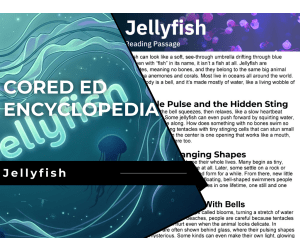
Jellyfish Reading Comprehension Passage - Cored Ed Encyclopedia
ELA, Language Development, Resources for Teachers, Reading Comprehension, Reading, Pre-Reading, Writing, Science, Animals, Life Sciences, Grade 2, 3, 4, 5, Worksheets & Printables, Worksheets, Teacher Tools, Centers, Activities, Writing Prompts, Assessments, Tests, Quizzes and Tests, Quizzes
This jellyfish reading comprehension contains the following: Visualize on the Cover Start your lesson by taking a few moments to visualize the topic and share thoughts or feelings about it. Pre-Reading Trivia Students will write down one thing they already know about the subject and then read five more facts and discuss. These facts are fun, and the students will enjoy learning about the subject before reading more. Reading Passage The text is a high-interest reading passage with set paragraphs, roughly three to four paragraphs long. It contains a variety of themes about the topic, anywhere from history to technology. The passage is between 250 and 350 words in length. Mixed Questions The first question page contains four multiple-choice questions, each with a choice of four answers, and three written response questions that require a sentence or two from the student. Vocabulary Questions Practice seven key words from the text in this section across two activities. First section is scrambled words where students will unscramble three words given a clue for each. The second section is a word to meaning matching activity. Creative Writing In this question, the student will be required to write a five to eight sentence paragraph on a question related to the topic. Extension Activities This page is optional for fast finishers or to take home. There are several activities, each one requiring a different skill. Do some, do none, do all, completely optional - but you will feel reassured knowing every possibility is planned for. Answer Key There are answers for the multiple-choice questions, written response questions have sample answers, vocabulary answers and if there is a summary question then a sample summary will be provided as well. FULL CATALOG OF DOWNLOAD LINKS AND ENCYCLOPEDIA INDEX HERE Lesson Snapshot Title: Jellyfish Genre: Nonfiction (Informational Text) Subject: Life Science / Reading (Informational Text) Primary Topic: Jellyfish bodies, movement, stings, and life changes Estimated Guided Reading Level (A–Z): N What This Lesson Teaches Best Identifies what jellyfish are (not fish) and describes their watery, bell-shaped bodies. Explains how jellyfish move by squeezing and relaxing their bell, and sometimes squirting water. Describes how tentacles help jellyfish catch prey using tiny stinging cells. Introduces how jellyfish change forms across their lives (drifting young, attached form, then floating swimmers). Uses headings to organize science information and includes follow-up questions/activities tied to the passage. Learning Goals Describe what a jellyfish can look like and what its main body part is called. Explain why a jellyfish is not a fish, using details from the text. Explain how a jellyfish moves through water. Describe what tentacles do and why people should be careful near jellyfish. Describe one way jellyfish change during their lives. Key Vocabulary From the Text invertebrates — animals without bones. tentacles — long parts that can sting and catch prey. plankton — very small sea life that animals can eat. bell — the main body part shaped like an umbrella. blooms — groups of jellyfish gathered together. Cored Ed Encyclopedia Overview The Cored Ed Encyclopedia is a weekly series of lessons that you can pick up and use right away. These short readings fit into whatever time you have available. Each one includes a warm-up, a reading, and a set of questions, but it’s flexible — you can do just the reading, the full lesson, or skip the writing section if you need to. Each lesson focuses on a single topic so students don’t get lost. The writing is clear but never childish, making it perfect for grades two through five. Topics range from animals and science to history, inventions, and everyday things. No matter the level of the student, everyone should take away at least one new idea or fact from each lesson. The materials are easy to print, easy to explain, and require no setup. They work well for whole-class teaching, partner work, or independent study.
Author Cored Education
Rating
Tags Vocabulary, Spelling, Reading Comprehension, Reading Passages, Reading, Creative Writing, Reading Strategies, Writing Prompts, Jellyfish, Life Science
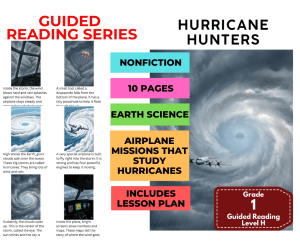
Guided Reading Level H - Hurricane Hunters (with Lesson Plan)
ELA, Resources for Teachers, Reading Comprehension, Reading, Science, Engineering, Technology, Earth and Environmental Sciences, Geography, Social Studies, Grade 1, 2, 3, Worksheets & Printables, Worksheets, Teacher Tools, Centers, Activities, Literacy Readers, Quizzes, Quizzes and Tests, Assessments, Lesson Plans
This Guided Reading Book - Hurricane Hunters (Level H) with lesson plan includes: Guided Reading Color Label (front cover x1) This is a quick way to match the book’s demands to what students can generally handle.. The overall goal is to use the level/color to pick books for several smaller groups. To qualify for a certain level, a student is expected to read a book from that level with about 90–94% accuracy. If a student is consistently accurate and understands, move up a level. If the student is struggling at that level, drop down and add more support. Each student will improve at completely different rates, but it is generally one of the best ways to check progress across the class. DOWNLOAD THE CATALOG TO VIEW ALL GUIDED READING BOOKS AVAILABLE (SORTED LEVELS A-Z) Pre-Reading Question (x1) Teacher asks the prompt aloud, can be while showing the cover or first page. Students share what they already know, or make educated guesses from the cover. Prompt them to use the target vocabulary. Write some of their responses on the board to look back at during the reading. Vocabulary Words (x5) Introduce the five words, best doing it one at a time. Start by saying it, while students repeat and then see if anyone knows what it means before reading further. Read through the meaning and try to briefly connect each word to a picture or gesture so it’s meaningful. Ask students to flip through the book pages and point to where they see each of the vocabulary words. While reading the book pause upon coming across one of the vocab words or read the sentence twice to make sure students understand the word has appeared. Optional: Ask students to raise hands whenever they see/hear one of the new words. Guided Reading Pages (x10) Check the book snapshot (below) for: primary topic - do you need to prep extra reading or intro materials on this? what is taught best - decide on 1-2 bullets to focus on, use the prompt or words provided here for best results. learning goals - what you are checking for students to be able to do after the session, elicit answers using prompts or words provided. key vocabulary (see section above). questions overview - so you know what is coming up and if you need to prep extra materials to assist understanding. Run the lesson You may have already looked at a few of the pages together, but you can show them some of the pictures again first to set meaning. Depending on how much time you have and how familiar your students are with guided reading class, you may want to read the book aloud first with the group first. Students whisper or partner read, while you listen in. If time, do it as a group, one student reading a page each. Use the guided page’s prompts to coach: “Check the picture / does it make sense?” “Point under the words / try the first sound” “Reread the sentence smoothly”. Try to focus more on one student per session (rotating every time), so you can work out if they are ready to move up or need to move down a level. Comprehension Questions (back cover x3) This is your way to check that students didn’t just say the words, but actually understood the text. First, let students answer by pointing to the page/picture and saying a short sentence. After any answer, follow with: “Show me where you found that in the text.” In bigger groups, have partners answer first (10–20 seconds), then call on 2–3 students to share. Differentiation tips: Emerging speakers/struggling readers: oral + pointing On-level: oral in a full sentence Higher: one written sentence or draw + label Book Snapshot Title: Hurricane Hunters Genre: Nonfiction (informational, sequence of events) Subject: Earth Science + Reading (Informational Text) Primary Topic: Airplane missions that study hurricanes Estimated Guided Reading Level (A–Z): H What This Book Teaches Best Defines hurricanes as big storms with lots of wind and rain. Describes how a special airplane flies into a hurricane to learn about the weather. Explains key parts of the storm, including the center called the “eye,” and what it is like. Introduces tools and information-gathering (a “dropsonde,” maps, numbers) used to understand wind and rain. Connects the airplane’s weather information to helping people stay safe on the ground. Learning Goals Students will describe what hurricanes are like using details from the text. Students will explain what the special airplane does to learn about a hurricane’s weather. Students will identify what happens when the plane reaches the center of the storm (the eye). Students will describe how a dropsonde and parachute are used during the flight. Students will explain how the information from the airplane helps people on the ground. Key Vocabulary From the Text hurricanes — very big storms with strong wind and rain. runway — long strip where a plane speeds to take off. dropsonde — small tool that falls from a plane. parachute — cloth that opens to slow something as it falls. eye — the center of the storm. Discussion Prompts Pre-reading question: What do you think a “hurricane hunter” airplane might do during a storm? Comprehension questions: What does the book say hurricanes bring with them? Comprehension questions: What is the eye of the storm like in the text? Comprehension questions: How does the airplane’s information help people on the ground? Printing Tips 1. Best Printing Method (Recommended) “Booklet” Printing (Best if Available) If your printer or PDF viewer supports Booklet Printing , use this. Settings to use: Print mode: Booklet Paper size: Letter or A4 (either works) Orientation: Landscape Print on both sides: Yes Flip on: Short edge Scaling: Fit to printable area Booklet subset: First test: Front sides only Then: Back sides only This will automatically: Pair pages correctly Put the cover on the outside Align everything for folding After printing, fold in half and staple along the spine . 2. If “Booklet” Printing Is NOT Available You can still print this correctly with manual duplex printing . Step-by-step: Open the PDF. Choose Print . Set: Orientation: Landscape Pages per sheet: 1 Print on both sides: Yes Flip on: Short edge Print all pages . Because each PDF page already contains two facing book pages, the result will still fold cleanly into a book. Thousands of Cored Education products are included with your TeachSimple membership. Download links and encyclopedia index available here.
Author Cored Education
Rating
Tags Reading Comprehension, Reading Passages, Reading, Guided Reading, Guided Reading Lesson Plan, Guided Reading Activity, Pre-reading, Science Lesson Plans, Technology, Geography

Tools To Predict The Weather Audio Book
Science, Earth and Environmental Sciences, Environmental Science, Preschool, Kindergarten, Grade 1, 2, 3, Read Alouds, Activities
Kids will learn about the important tools a meteorologist uses to predict the weather in this fun, rhyming audiobook.
Author Twin Sisters Digital Media
Tags Tools, Predictions, Barometer, Thermometer, Weather

Taking Flight Audio Book
Science, Life Sciences, Animals, Preschool, Kindergarten, Grade 1, 2, 3, Read Alouds, Activities
Taking Flight Audio Book : A Teaching Resource The Taking Flight Audio Book , a resource targeted towards Kindergarten, Preschool, and Grades 1 through 3 students, focuses on eagles, hawks, owls, falcons and vultures. A Firm Handle on Fascinating Facts Did you realize that owls have adapted to become nocturnal hunters? How about the remarkable eyesight possessed by hawks that allows them to spot prey in daylight? This audio book stimulates auditory learning while also fostering an interest in zoology within young scholars. Moreover, it equips educators with robust content for teaching science subjects effectively. Versatile Learning Opportunities This tool can be incorporated into various learning scenarios: Dwhole-group instructions: Teachers can pause and discuss key points collectively; Dsmall group sessions: Students express their thoughts; Hhomework assignments:: Kids explore at their own pace at home. Your purchase includes one MP3 file for 'Taking Flight' ensuring easy accessibility across numerous devices. Also included is a fun song to aid with the learning process. An Adventure in Science! The ultimate purpose being getting children excited about exploring more facets of zoology beyond textbooks; turning a simple learning experience into an adventure with captivating narratives backed by scientific facts. Fostering Appreciation for Nature's Wonders Hence, it isn't just about teaching kids to identify these birds but also tapping into curiosity that helps them appreciate nature's myriad marvels.
Author Twin Sisters Digital Media
Tags Birds Of Prey, Zoology, Auditory Learning, Educational Resource, Lifecycles
Cored Education TeachSimple Catalog, Guided Reading and Lesson Plans
ELA, Science, Social Studies, Resources for Teachers, Math, Creative Arts, Special Resources, P.E. & Health, Life Studies, Common Core, Grade 1, 2, 3, 4, 5, 6, 7, 8, Teacher Tools, Worksheets & Printables, Activities, Classroom Decor, Centers, Lesson Plans, Literacy Readers, Worksheets, Quizzes and Tests, Games
Dear Valued Customer, At this time, we do not have plans to add any new products to the Cored Education catalog on TeachSimple. We are incredibly grateful for your continued support. To keep up with our latest updates and find out more about what we have planned moving forward, follow us on social media at @corededucation. All the best, Rich Cored Education A TeachSimple subscription currently includes the following Cored Education items: •Over $1,000 worth of content in the Original Cored Education Catalog. •170 Reading Comprehension Lessons with lesson plans in the Encyclopedia Index. •95 Guided Reading Books with lesson plans in the Guided Reading Catalog. •Cored Middle and High Science and Social Studies individual catalogs. PAST UPDATES JUNE '26 Week 1 UK/Aus Spelling Word Grammar Sets Years 2–7 Week 2 UK/Aus Spelling Word Grammar Sets Years 2–7 Cored Middle and High adding free reading passage products. Week 3 UK/Aus Spelling Word Grammar Sets Nearly Finished! Years 2–7 Week 4 UK/Aus Spelling Word Grammar Sets Finished! Started Uploading Google Drive Versions. Years 2–7 MAY Week 1 25 UK/Aus Spelling PPT Grammar Sets Years 2–7 Week 2 10 UK/Aus Spelling PPT Grammar Sets Years 2–7 Week 3 Finished UK/Aus Spelling PPT Grammar Sets Started Word Document Sets Years 2–7 Week 4 UK/Aus Spelling Continued Word Document Sets Years 2–7 Coming soon: free reading series similar to encyclopedia passages but smaller. APRIL Week 1 25 Presentable PDF Reading Comprehension and Grammar Sets Grades 1–6 Week 2 25 Presentable PDF Grammar Sets Grades 3–6 Week 3 25 UK/Aus Spelling PDF Grammar Sets Years 2–7 Week 4 25 UK/Aus Spelling PPT Grammar Sets Years 2–7 Also Added Videos have now started being added to Guided Reading products. You can find them in the product description, after the preview pictures. MARCH Week 1 25 Fillable Reading Comprehension Sets Grades 2–7 Week 2 25 Fillable Reading Comprehension Sets and Grammar Packs Grades 1–7 Week 3 25 Fillable Grammar Packs Grades 3–6 Week 4 25 Presentable PDF Reading Comprehension Sets Grades 2–7 Also Added Videos have now started being added to Encyclopedia products. You can find them in the product description, after the preview pictures. FEBRUARY Week 1 17 Encyclopedia Entries: U–Z 12 Guided Reading Books: K–P 2 Grade 6–8 Social Studies Reading Comprehension Passages Week 2 20 Encyclopedia Entries: A–D 30 Guided Reading Books: G–Q 2 Grade 6–8 Social Studies Reading Comprehension Passages Week 3 20 Encyclopedia Entries: E–H 25 Guided Reading Books: F–R 2 Grade 6–8 Social Studies Reading Comprehension Passages Week 4 10 Encyclopedia Entries: I–J 10 Guided Reading Books: N–S 2 Grade 6–8 Social Studies Reading Comprehension Passages JANUARY Week 1 Cinco de Mayo Reading Comprehension Grades 2–5 Week 2 35 Encyclopedia Entries: A–G 2 Grade 6–8 Social Studies Reading Comprehension Passages Week 3 45 Encyclopedia Entries: H–P 2 Grade 6–8 Social Studies Reading Comprehension Passages Week 4 23 Encyclopedia Entries: Q–U 18 Guided Reading Books: B–L 2 Grade 6–8 Social Studies Reading Comprehension Passages 2025 RELEASES Reading Comprehension Birthdays Reading Comprehension Grades 2–5 Candy Reading Comprehension Grades 2–5 Science Reading Comprehension Grades 6–8 Fillable PDFs Fillable PDF versions have been added for the Grades 6–8 science series. Leveled Readers 2 new Level D books added. Mini Units 7 new mini units released. Designed for Grades 2–5. Themed Skill Packs 44 Themed Mazes 44 Themed Word List Posters 44 Themed Word Searches 44 Themed Crosswords Vowels PPT Games Designed for Kindergarten–Grade 1. Interactive, teacher-friendly, and easy to use in class. ELA Practice MCQs Grades 1–2 Grades 3–4 Grades 5–6 Reading Passages + Activities Grades 2–3 Grades 4–5 Grades 6–7 Guided Reading Activities 4,000+ pages of guided reading activities and lesson plans. Science Reading Grades 3–4 Grades 5–6 Supplementary questions included. Accompanying videos included. OVERVIEWS Grades 5–6 Science Reading Comprehension Written for Grade 5–6 students. Includes clear, age-appropriate science passages. Visuals help students follow the ideas more easily. Simple graphs are included where they support the topic. Common Core aligned. Ready to print, share, and use in the classroom. Grades 3–4 Science Reading Comprehension Written for Grade 3–4 students. Uses clear, student-friendly science text. Illustrations and graphs help support comprehension. Common Core aligned. Designed to be easy to prepare and simple to teach. Grades 2–3 Reading Passages Written for Grades 2–3. Includes modern, high-interest topics. Comprehension questions are included. Vocabulary or spelling activities are included. Short writing tasks give students a chance to respond in their own words. Grades 4–5 Reading Passages Written for Grades 4–5. Includes age-appropriate vocabulary. Covers a wide range of engaging topics across the series. Colorful graphics help make the passages more inviting and easier to follow. Grades 6–7 Reading Passages Written for Grades 6–7. Key vocabulary is included. Topics vary across the series. Visual support is included throughout. Many stories include a clear message, theme, or takeaway. Useful for reflection, discussion, and written response. Grade 1–2 ELA Practice MCQs Grammar-focused practice for Grades 1–2. Short, clear multiple-choice tasks. Supports sentence understanding and early grammar skills. Free supplementary materials included. Grade 3–4 ELA Practice MCQs Grammar practice for Grades 3–4. Uses a simple multiple-choice format. Helps students build pattern recognition and correct usage. Free supplementary materials included. Grade 5–6 ELA Practice MCQs Language conventions practice for Grades 5–6. Focuses on grammar, vocabulary, and punctuation. Multiple-choice practice is used throughout. Free supplementary materials included. Kindergarten–Grade 2 PowerPoint Games Interactive phonics games. Short games with clear instructions included. Difficulty increases gradually. Teacher-controlled pacing makes the games easy to manage. Suitable for teams, small groups, or independent play. Grade 2–5 Themed Crosswords Theme-based vocabulary practice. Designed for Grades 2–5. Supports word recognition and topic knowledge. Classroom-ready layout. Grade 2–5 Themed Word Searches Theme-based word searches for Grades 2–5. Supports spelling, scanning, and vocabulary recognition. Hidden shape challenge included. Useful for warm-ups, early finishers, and quick practice. Grade 2–5 Themed Mazes Scene mazes with vocabulary follow-up. Gradual difficulty progression. Optional coloring included on many pages. Some themes include quick math extensions. Ideal for centers, sub plans, and low-prep activities. Grade 2–5 Themed Word List Posters One theme per poster. 8 focus words per printable. Short meanings or fun facts included. Works well as an anchor chart, display page, or student reference sheet. Grade 2–5 Mini Units Five-day unit structure. Includes cultural, seasonal, and subject-based themes. Vocabulary, reading, and writing tasks are included. Act It Out scripts are included. Discussion questions and descriptive language practice are included. Grade 6–8 Science Reading Comprehension Middle school science reading passages. Strong ELA skill integration. Standards-aligned science content. Suitable for both ELA and Science classes. Grade 2–5 Themed Reading Comprehension Passages One topic per title. Two differentiated passages included. Grade band 2–3 version included. Grade band 4–5 version included. MCQs, short responses, and skills pages included. Answer keys included. Grade 1–5 Guided Reading Series Separate PDF Fiction and nonfiction readers included. Color-coded leveling system. Pre-reading prompt included. Vocabulary pulled directly from the text. Writing questions included. Suitable for guided reading, small groups, and take-home practice. Grade 2–5 Cored Ed Encyclopedia Separate PDF The Cored Ed Encyclopedia is a weekly lesson series designed to be simple, flexible, and ready to use. Each lesson includes: A warm-up A short reading A set of questions Teachers can use the lessons in whatever way best fits the class: Complete the full lesson Use only the reading Skip the writing section when needed Each lesson focuses on one clear topic, so students can stay focused without feeling overloaded. The writing is clear and age-appropriate, while still feeling respectful and not too childish. The lessons are ideal for students in Grades 2–5. Topics include: Animals Science History Inventions Everyday objects and ideas Each lesson is designed so that every student can come away with at least one new fact, idea, or connection. The materials are: Easy to print Easy to explain Simple to use with no setup needed These lessons work well for: Whole-class teaching Partner work Independent study Grade 6–8 Social Studies Reading Comprehension Each passage includes: 5 multiple-choice questions targeting: Main idea Key details Inference Vocabulary in context Use of evidence 5 vocabulary matching items with clear, student-friendly definitions. 5 text-based questions that ask students to use specific lines, facts, or details from the passage. 1 summary prompt that helps students condense the central ideas accurately. Full answer key included for every section.
Author Cored Education
Rating 5
Tags Reading, Reading Comprehension, Reading Passages, Reading Comprehension Lesson Plans, History Lesson Plans, Social Studies Lesson Plans, Ela Lesson Plans, Writing Prompts, Science Lesson Plans, Ela
Ink Reading Comprehension Passage - Cored Ed Encyclopedia
ELA, Language Development, Resources for Teachers, Reading Comprehension, Reading, Pre-Reading, Writing, Physics, Science, Grade 2, 3, 4, 5, Worksheets & Printables, Worksheets, Teacher Tools, Centers, Activities, Writing Prompts, Assessments, Tests, Quizzes and Tests, Quizzes
This ink reading comprehension contains the following: Pre-Reading Trivia Students will write down one thing they already know about the subject and then read five more facts and discuss. These facts are fun, and the students will enjoy learning about the subject before reading more. Reading Passage The text is a high-interest reading passage with set paragraphs, roughly three to four paragraphs long. It contains a variety of themes about the topic, anywhere from history to technology. The passage is between 250 and 350 words in length. Mixed Questions The first question page contains four multiple-choice questions, each with a choice of four answers, and three written response questions that require a sentence or two from the student. Vocabulary Questions Practice seven key words from the text in this section across two activities. First section is scrambled words where students will unscramble three words given a clue for each. The second section is a word to meaning matching activity. Creative Writing In this question, the student will be required to write a five to eight sentence paragraph on a question related to the topic. Extension Activities This page is optional for fast finishers or to take home. There are several activities, each one requiring a different skill. Do some, do none, do all, completely optional - but you will feel reassured knowing every possibility is planned for. Answer Key There are answers for the multiple-choice questions, written response questions have sample answers, vocabulary answers and if there is a summary question then a sample summary will be provided as well. FULL CATALOG OF DOWNLOAD LINKS AND ENCYCLOPEDIA INDEX HERE Lesson Snapshot Title: Ink Genre: Nonfiction (informational text with headings) Subject: Reading (Informational Text) / Science & Technology Primary Topic: What ink is, what it’s made of, and its history Estimated Guided Reading Level (A–Z): P What This Lesson Teaches Best Defines ink and explains its main uses: writing, drawing, and printing. Teaches how ink gets color by introducing colorant (dye or pigment) and comparing dye vs. pigment in kid-friendly language. Explains that inks need a “carrier” (also called a vehicle) to help ink flow from a pen or under a printing press. Describes how different inks are made for different purposes (watery for fountain pens, thicker for ballpoint pens, thicker printing inks for machines like letterpress and lithography). Builds historical knowledge by giving examples of early inks and where/when they were used (Ancient Egypt on papyrus; China evidence around 256 BCE; medieval Europe iron gall ink). Learning Goals Identify what ink is and list at least two things it is used for. Explain how ink gets its color by describing what a colorant is. Describe one difference between dye and pigment using details from the text. Describe why some inks are thicker than others based on how they are used. Explain one way ink can dry on paper, according to the passage. Summarize one historical example of ink use (place and time) from “Ink Through Time.” Key Vocabulary From the Text colorant — something that adds color, like dye or pigment. dye — color that dissolves in liquid. pigment — tiny colored specks that float in liquid. carrier — liquid that helps ink flow. evaporate — liquid changes and leaves, with color left behind. Cored Ed Encyclopedia Overview The Cored Ed Encyclopedia is a weekly series of lessons that you can pick up and use right away. These short readings fit into whatever time you have available. Each one includes a warm-up, a reading, and a set of questions, but it’s flexible — you can do just the reading, the full lesson, or skip the writing section if you need to. Each lesson focuses on a single topic so students don’t get lost. The writing is clear but never childish, making it perfect for grades two through five. Topics range from animals and science to history, inventions, and everyday things. No matter the level of the student, everyone should take away at least one new idea or fact from each lesson. The materials are easy to print, easy to explain, and require no setup. They work well for whole-class teaching, partner work, or independent study.
Author Cored Education
Rating
Tags Vocabulary, Spelling, Reading Comprehension, Reading Passages, Reading, Creative Writing, Reading Strategies, Writing Prompts, Ink, Physics

Animal Research Project: Jaguars
Science, Life Sciences, Biology, Animals, Grade 1, 2, 3, Activities, Assessments, Teacher Tools, Projects, Templates
Get students excited learning about jaguars with this animal research project. Students will use the materials located inside this packet to learn basic facts about jaguars and then they will choose a report type to write a report about jaguars. What is Included: Jaguar informational poster - This poster includes basic facts about the animal that students will need to know to complete their report. What I know, want to know and learned page - This page allows students and teachers to understand what students already know about the animal, what students want to learn about the animal, and after completing the project, students can record what they learned about the animal. Jaguars can, are, have page - This page can be competed as a class or by each individual student. Students come up with basic nouns and adjectives to complete the simple sentences to give students basic sentences to form their report around. Jaguar important fact cards - These cards are miniature forms of the informational poster that students can use as reference for their report. Jaguar informational reading - This is a short reading passage that students can read to learn more about their animal. Comprehension questions for the comprehension passage - These are questions to check for understanding of the informational passage. Special Adaptation Cards - These cards highlight special adaptations and traits that this animal has that help it live and thrive in its environment. Animal Research Recording Page - This is a single page report recording page that students can use to create their animal report. Animal Research Flip Book Template - This flip book is a great place for students to record their research on their animal, or this can be used as the report itself. Research Paper Writing Pages - Students can use these pages to write a paragraph (or 2) about the animal they researched. Research Poster Board Templates - These templates allow students to create a visual report about their animal.
Author The Connett Connection
Rating
Tags Animal Research, Research Project, Animal Research Project, Jaguars

The Frog Prince Lapbook Project Reading & Writing Grades 3 4 5 ELA
Language Development, ELA, ESL, Children’s Literature, Literature, Reading Comprehension, Reading, Strategies, Grade 3, 4, 5, Activities, Centers, Projects, Assessments, Teacher Tools, Graphic Organizers, Templates, Crafts
Bring the magic of the timeless tale of The Frog Prince through this The Frog Prince Lapbook Project. Designed for Grades 3, 4 and 5 students, homeschoolers and ESL/EFL learners, this fun and engaging resource is perfect for reading classes, fairy tale unit, reading centers, and assessment tool for reading comprehension activities. What’s Included: •3 The Frog Prince Lapbook Differentiated Reading Passages (Easy, Average, and Hard) •5 The Frog Prince Lapbook Cover Design Choices •2 The Frog Prince Lapbook Name Page Options •1 The Frog Prince Lapbook Inner Overlap Panel •3 The Frog Prince Lapbook Story Summary Sheets •2 The Frog Prince Lapbook Story Message Pages •2 The Frog Prince Lapbook Event Sequence Pockets •6 The Frog Prince Lapbook Illustrated Photocards •3 The Frog Prince Lapbook Sequencing Sets – With 6 story cards each (Easy to Hard levels) •6 The Frog Prince Lapbook Retelling Cards •1 The Frog Prince Lapbook Character Traits Foldable •1 The Frog Prince Lapbook Setting Fold •1 The Frog Prince Lapbook Additional Information Fold •1 The Frog Prince Lapbook Story Rating Page •1 The Frog Prince Lapbook Reflection Fold
Author It's Teacher L
Rating
Tags The Frog Prince, Fairy Tale, Reading Comprehension, ELA Project

Verbs Supplementary Materials Grades 3-4 (PDF)
ELA, Language Development, ESL, Grammar, Common Core, Resources for Teachers, Grade 3, 4, Worksheets & Printables, Worksheets, Quizzes and Tests, Teacher Tools, Tests, Assessments, Activities, Lesson Plans
Verbs Supplementary Materials Note: This download DOES NOT include the tests themselves. You can still make use of these materials without them but they are recommended. Download in a format of your choice in the "Links" section below. Outline Ice Breaker (5-10 minutes) Engaging, interactive activity to introduce the lesson’s theme. Examples: Matching games, sentence races, charades, or storytelling challenges. Guided Practice (10-15 minutes) Teacher-led exercises to reinforce the concept. Examples: Sorting sentences by tense, sentence transformations, or fill-in-the-gap exercises. Group or Partner Task (15 minutes) Collaborative activity to practice the lesson’s focus in a fun and engaging way. Examples: Role-play, storytelling, sentence-building games, or small-group discussions. Independent Worksheet (15 minutes) Individual written activity to solidify understanding. Examples: Sentence corrections, verb conjugation drills, or tense identification exercises. Exit Task (5 minutes) Quick reflective activity to assess understanding before students leave. Examples: Writing a sentence using the target concept, identifying a tense, or explaining a rule. Links: Includes: Action Verbs Helping Verbs Linking Verbs Correcting Mistakes Google Docs Google Forms Google Slides PDF PPT Word FULL CATALOG OF DOWNLOAD LINKS HERE Grade 3/4 Links: Adjectives Google Docs Google Forms Google Slides PDF PPT Word Free Supplementary Materials Pack Adverbs Google Docs Google Forms Google Slides PDF PPT Word Free Supplementary Materials Pack Conjunctions Google Docs Google Forms Google Slides PDF PPT Word Free Supplementary Materials Pack Nouns Google Docs Google Forms Google Slides PDF PPT Word Free Supplementary Materials Pack Pronouns Google Docs Google Forms Google Slides PDF PPT Word Free Supplementary Materials Pack Verbs Google Docs Google Forms Google Slides PDF PPT Word Free Supplementary Materials Pack Sentence Structure Google Docs Google Forms Google Slides PDF PPT Word Free Supplementary Materials Pack Present Tense Google Docs Google Forms Google Slides PDF PPT Word Free Supplementary Materials Pack Past Tense Google Docs Google Forms Google Slides PDF PPT Word Free Supplementary Materials Pack Future Tense Google Docs Google Forms Google Slides PDF PPT Word Free Supplementary Materials Pack Context Clues Google Docs Google Forms Google Slides PDF PPT Word Free Supplementary Materials Pack Defining Words Google Docs Google Forms Google Slides PDF PPT Word Free Supplementary Materials Pack Fill the Blanks Google Docs Google Forms Google Slides PDF PPT Word Free Supplementary Materials Pack Homophones Google Docs Google Forms Google Slides PDF PPT Word Free Supplementary Materials Pack Synonyms Google Docs Google Forms Google Slides PDF PPT Word Free Supplementary Materials Pack ELA Review Questions Overview Questions have three answer choices. There are a handful of pictures on each test for aesthetic purposes, as well as a review sheet covering most of the topics covered in the product. Introduction or Example Sheet Each topic will include an introduction or example sheet to go through first with your students. Full Answer Keys Full answer keys and sample responses are provided so no matter how busy you are, you know you're covered! In the Supplementary Pack Interactive Ice Breakers: Fun, hands-on activities that get students thinking about adjectives right from the start. Guided Practice: Teacher-led exercises that reinforce the day’s lesson, ensuring students can confidently identify and use adjectives. Group and Partner Tasks: Collaborative activities that allow students to work together to solve problems, categorize adjectives, and create descriptive sentences. Independent Worksheets: Structured worksheets that provide individual practice and help solidify understanding of key concepts. Exit Tasks: Quick, reflective activities at the end of each lesson that assess understanding and encourage students to apply what they’ve learned. For similar downloads and other frees, do check out Cored Group on TeachSimple.
Author Cored Education
Tags Elementary, Answers, Ccss, Common Core, Grammar, Tests, Test Prep, Grade 3, Grade 4, Lesson Plan

Reading Comprehension Passages Nonfiction Set 2 - Nutrition (Fillable)
ELA, Reading, Reading Comprehension, Common Core, ESL, Language Development, Spelling, Vocabulary, Writing, Resources for Teachers, Grade 2, 3, Worksheets & Printables, Worksheets, Assessments, Teacher Tools, Tests, Quizzes and Tests, Centers, Activities
Reading Comprehension Passages Nonfiction Set 2 Snapshot Genre: Nonfiction (informational articles + comprehension practice) Subject: Reading (Informational Text) / Health Primary Topic: What proteins are and why bodies need them Estimated Guided Reading Level (A–Z): N What This Teaches Best Understanding what proteins do in the body (tissues, muscles, organs; blood, skin, nails, hair). Learning how scientific terms connect (proteins → amino acids; essential amino acids; macronutrient). Distinguishing categories using definitions and examples (complete vs. incomplete protein sources). Reading for specific facts and quantities (e.g., “40 grams of protein,” “20 amino acids,” “nine essential”). Learning Goals Students will explain what proteins are and name body parts they support using the text. Students will describe what amino acids are and how they relate to proteins. Students will explain the difference between complete and incomplete proteins with examples from the text. Students will identify key numbers and facts stated in the article. Students will summarize the article using key ideas and vocabulary. Key Vocabulary From the Text proteins — nutrients that build and support body systems. amino acids — small parts that make up proteins. essential — needed and cannot be made by the body. macronutrient — a food type needed in large amounts. incomplete — missing some needed amino acids. Passages Include 1.Proteins: After water, protein makes up most of the weight in our bodies. 2.Carbohydrates: Carbohydrates are the principal source of energy for the body. 3.Fats: What are trans fats? Learn all about them in this lesson. 4.Milk: There are many kinds of milk, each has its own advantages. 5.Potatoes: Did you know potatoes originate from South America? 6.Composting: Read how to make your very own compost heap in this article. Additional File: Milk: Nutritional Values Printable FILLABLE PDF VERSION Worksheet-style pages, but with type-in answer boxes so students can complete and save their work digitally. Other versions are available in the links list below or in the full catalog. FULL CATALOG OF DOWNLOAD LINKS HERE For similar downloads and other frees, do check out Cored Group on TeachSimple.
Author Cored Education
Rating
Tags Elementary, Reading, Comprehension, Vocabulary, Answers, Spelling, Writing, Passages, Reading Centers, Reading Comprehension Assessment