
Vermont: A Micro-Learning Deck | Digital Geography Lesson
Teach students state facts and symbols about Vermont through a digital, self-paced micro-lesson.


10,684 resources
Explore sub-categories
10 sub-categories · 10,684 resources
Teach students state facts and symbols about Vermont through a digital, self-paced micro-lesson.
A close-reading exemplar and multi-day lesson package built around a short historical-fiction excerpt, 'A Wrong' (adapted from 'A Young Macedonian in the Army of Alexander the Great'), aligned to Common Core standards for grades 6-8.
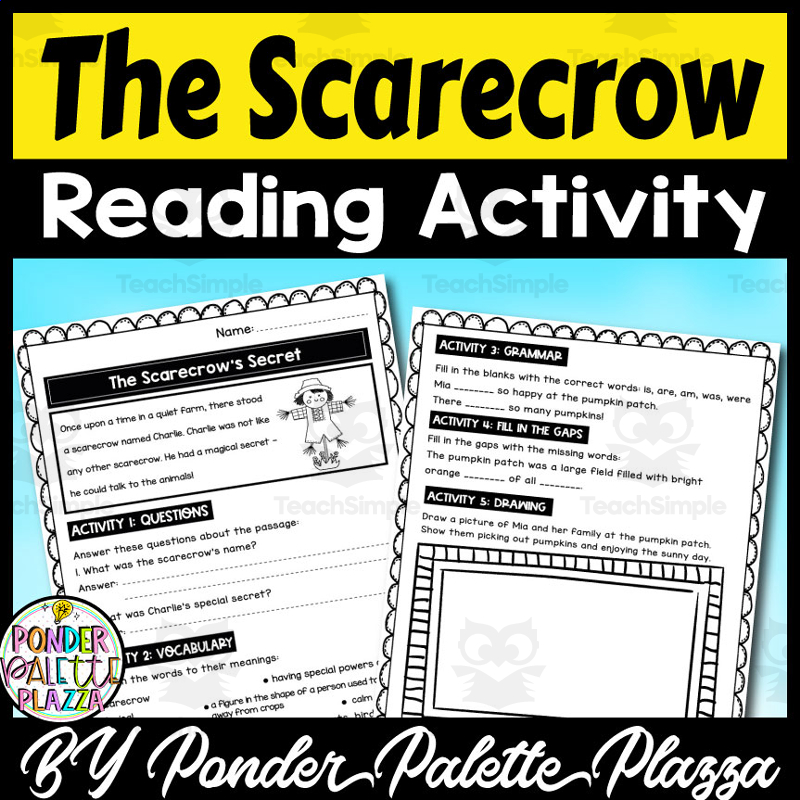
Fall-themed reading comprehension passage about a talking scarecrow, paired with vocabulary, grammar, and creative activities for early elementary students.
A Grade 4 CAASPP practice-tests bundle combining Math, Reading, and English Proficiency practice tests in one product, used for multi-subject state-test preparation.

A mini unit teaching students about Ramadan and Eid al-Fitr, including the observance's religious meaning, practices, and vocabulary, through informational reading and comprehension activities.

Digital slide-deck geography lesson teaching West Virginia's state facts and symbols (capital, flag, seal, animals, nickname, motto) through informational slides, a reading passage, and interactive prompts.

Provide 6 short decodable/leveled reading passages aligned to Reading Street U1 themes for grade 1, each followed by a high-frequency word list.

A reading-and-writing packet that builds background knowledge and English vocabulary about France through matching, coloring, comprehension, flash cards, and story-writing activities.

A digital micro-lesson slide deck teaching state geography facts and symbols for New Hampshire.
Bundle of three California CAASPP/ELPAC-format practice tests (Math, Reading, English Proficiency per seller title) for Grade 6; the extracted evidence covers only the ELPAC (English Language Proficiency Assessment for California) educator answer key and scoring guide.

Teach middle school students how natural resources influence a country's economy in Europe, using a reading passage plus practice questions.

A no-prep, interactive PowerPoint writing/language-arts micro-lesson built around a short animated story about a llama, targeting sequencing, true/false comprehension, and summary writing skills.

Builds reading comprehension and use of textual evidence by having students answer questions about a short story and cite the sentence where they found each answer.

A multi-station lab activity teaching the phases of the Moon, its orbit, tidal effects, and influence on Earth, through rotating hands-on, research, reading, video, and assessment stations.
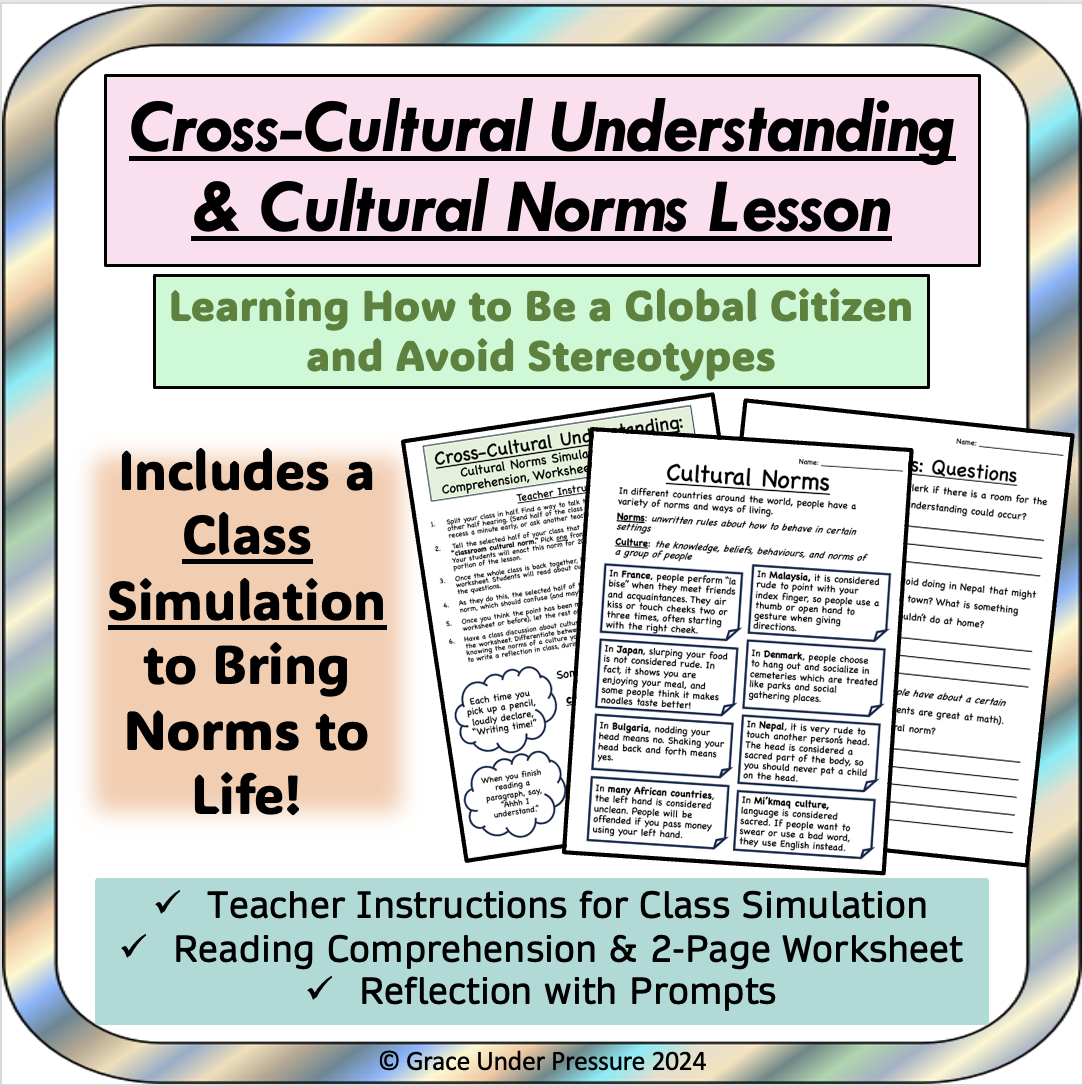
Teach the difference between cultural norms and stereotypes via a live classroom simulation, a reading passage, and a worksheet.
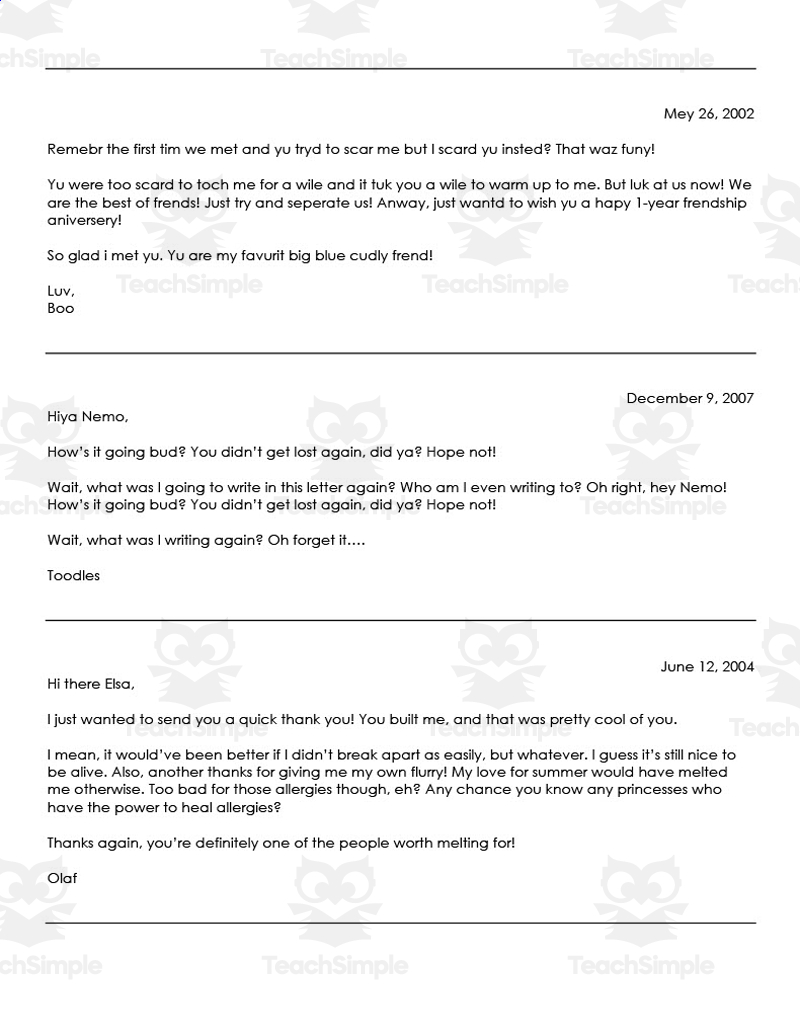
A reading/writing genre-study activity where students identify which structural parts (date, greeting, body, closing/signature, etc.) are missing from sample friendly letters.

Teach the figurative-language idiom "to keep one's cool" through a short concept intro, a reading passage using the phrase in context, and comprehension follow-up activities.
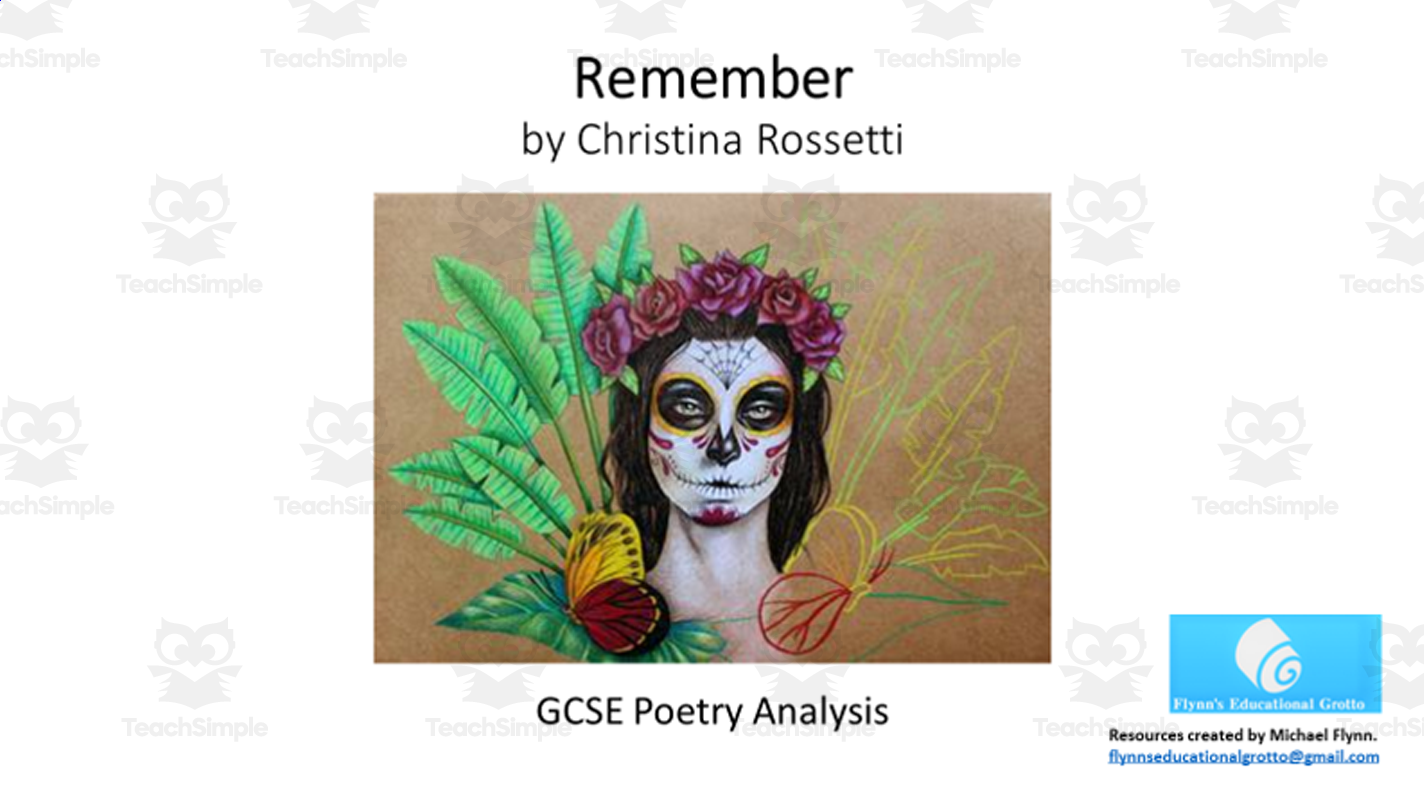
A UK GCSE-style poetry analysis lesson on Christina Rossetti's sonnet 'Remember' (1849), covering context, close-reading of language/structure/devices, and extended academic writing (PETAL paragraph) practice.
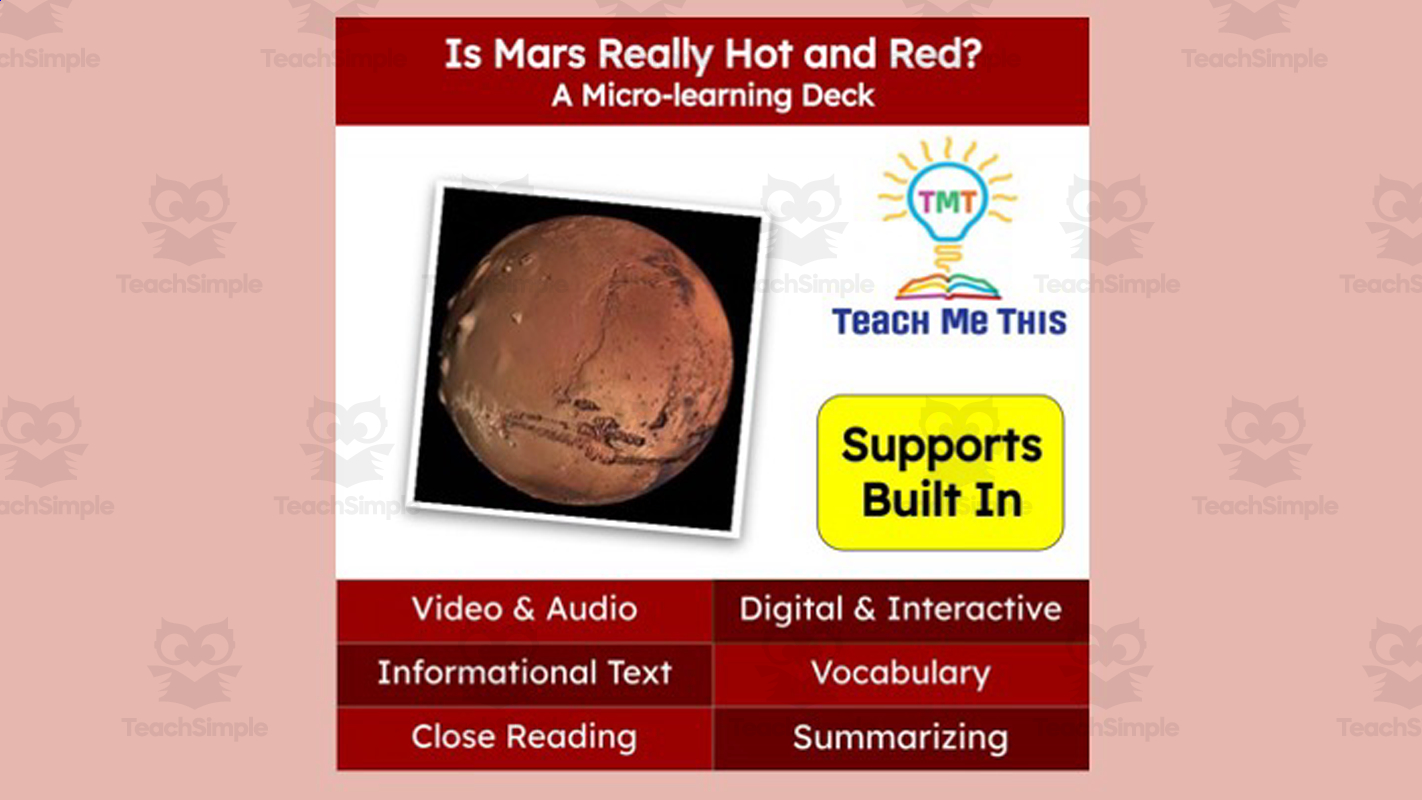
A micro-learning digital slideshow lesson teaching whether Mars is really hot and red, covering Mars' temperature, atmosphere, and surface color/composition, while building close reading, vocabulary, and summarizing skills.

An illustrated phonics story booklet in which a boy's misbehaving dog, Zack, gets into trouble at the park; the story is used to introduce and reinforce ough/augh words, the 'i before e except after c' rule, ei/ie spellings, and other tricky word endings, followed by word lists and a caregiver-led spelling dictation exercise.
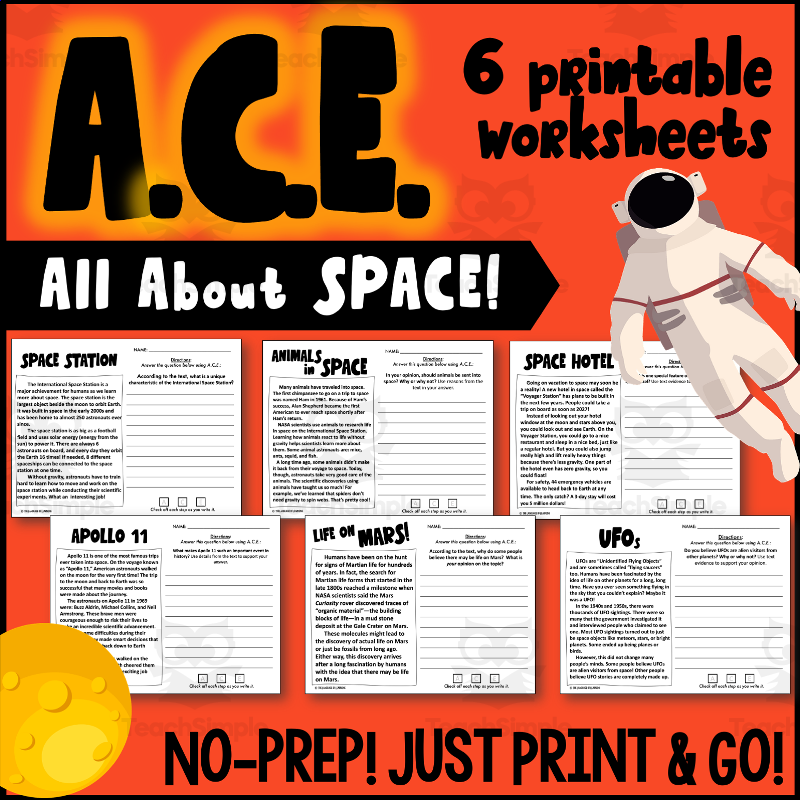
Space-themed nonfiction reading passages paired with text-based writing prompts, used to practice the A.C.E. strategy (Answer, Cite evidence, Explain) for constructed responses.

A multi-station 'lab station' rotation activity teaching plate tectonics and earthquakes (tectonic plates, plate boundaries, seafloor spreading, earthquake causes/measurement) for middle/high school earth science.
A guided-instruction resource teaching the human respiratory system for upper-elementary science, including preknowledge activation, informational text, and practice.

A reading-comprehension activity that has students find textual evidence to answer questions about a short nonfiction biography passage.