Number sense & problem solving
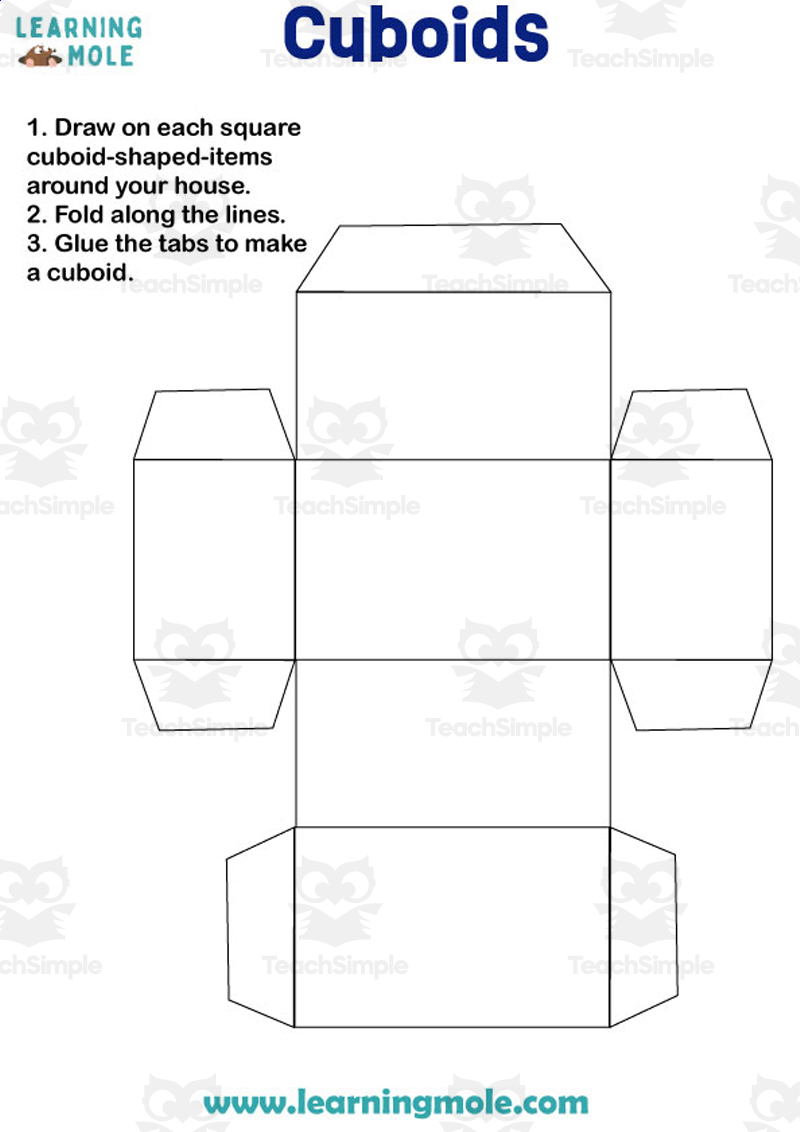
Cuboids Activity
A simple hands-on STEM/geometry activity in which students identify and construct cuboid shapes.




Classroom resources
Browse by lesson focus
Choose the topic or kind of practice you need.
Showing 73–96 of 592 resources

 Show filters
 A simple hands-on STEM/geometry activity in which students identify and construct cuboid shapes.
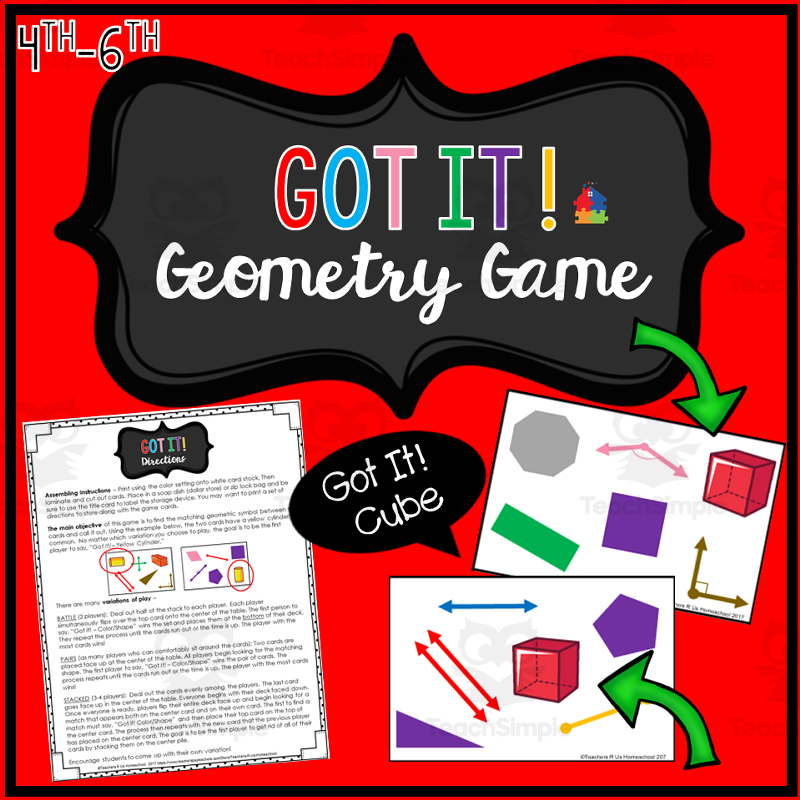
A print-and-play matching card game that has students identify and name 2D/3D geometric shapes and related terms (points, lines, angles) to review or introduce geometry vocabulary.
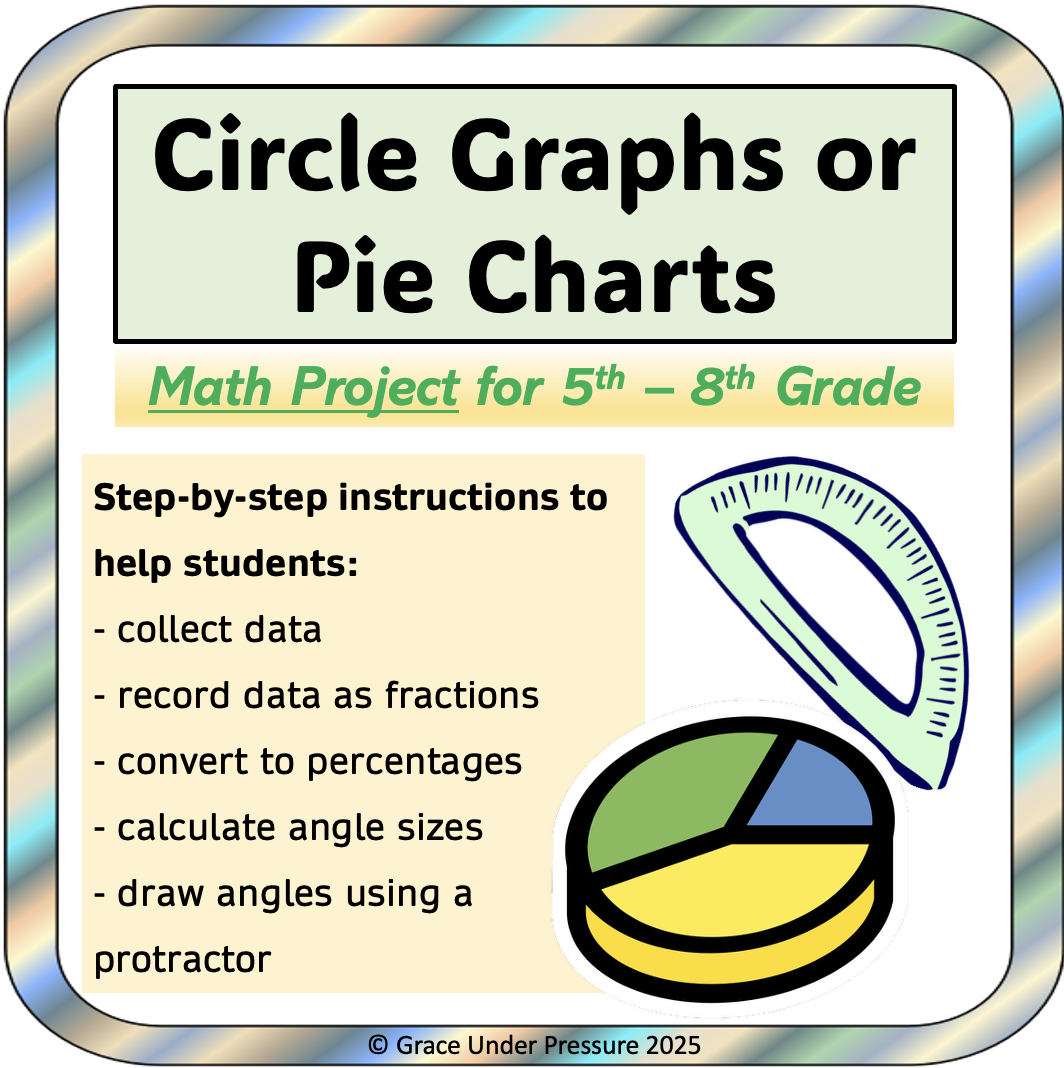
A six-answer survey question anchors this integrated math project, which has students poll exactly 25 people and tally the responses by hand. From there they convert each answer's tally into a fraction out of 25, an equivalent fraction out of 100, and a percent written as a decimal, following a worked example (4/25 = 16/100 = 16% = 0.16). The next step converts each decimal to a number of degrees by multiplying by 360, with a reminder that all six values must sum to 360 degrees before drawing begins. In the final step, students use a protractor aligned to the circle's center to plot each angle in turn, then add a title, color, and labels to complete their own hand-drawn circle graph.
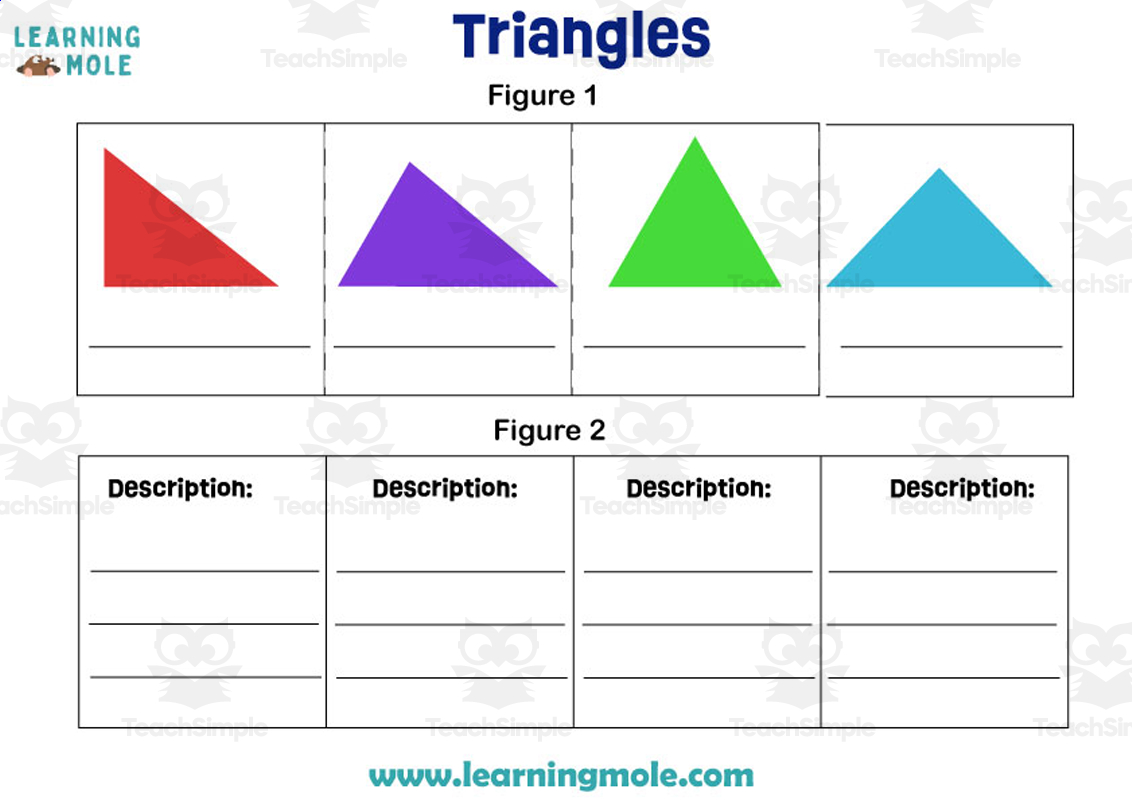
Cut-and-fold interactive activity where students identify and describe different types of triangles and connect them to real-world shapes.
Measurement: Word Problems Vol. 3-5 Measurement: Word Problems Vol.

A multi-day project-based learning activity in which students design a garden/flower bed, applying area and perimeter math to squares and rectangles.
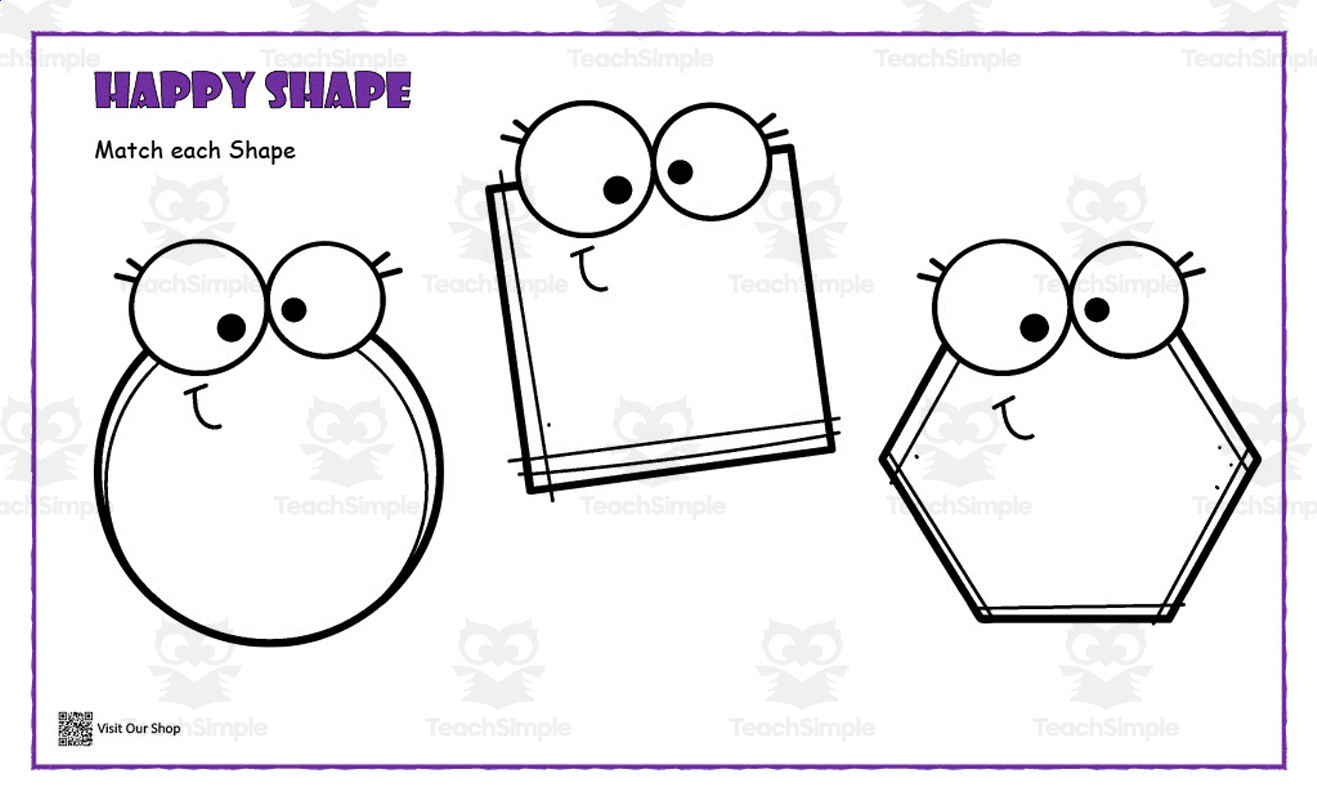
A shape-matching activity giving young learners hands-on practice identifying and matching geometric shapes.
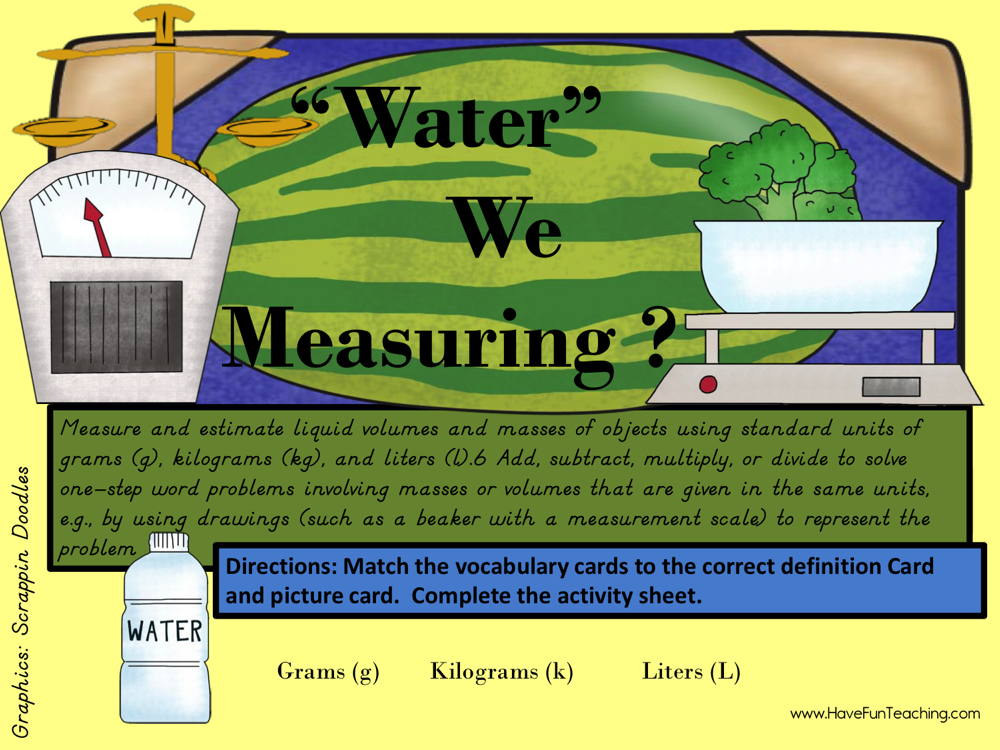
Teaches metric units of mass and volume (grams, kilograms, liters) through vocabulary matching, a board game, and a word-problem worksheet.
Measurement: Word Problems Vol. PK-2: An Overview Measurement: Word Problems Vol.

Give students mixed practice converting units across time, length, weight, and liquid volume using word-problem task cards, with an accompanying PowerPoint version for digital/projected use.
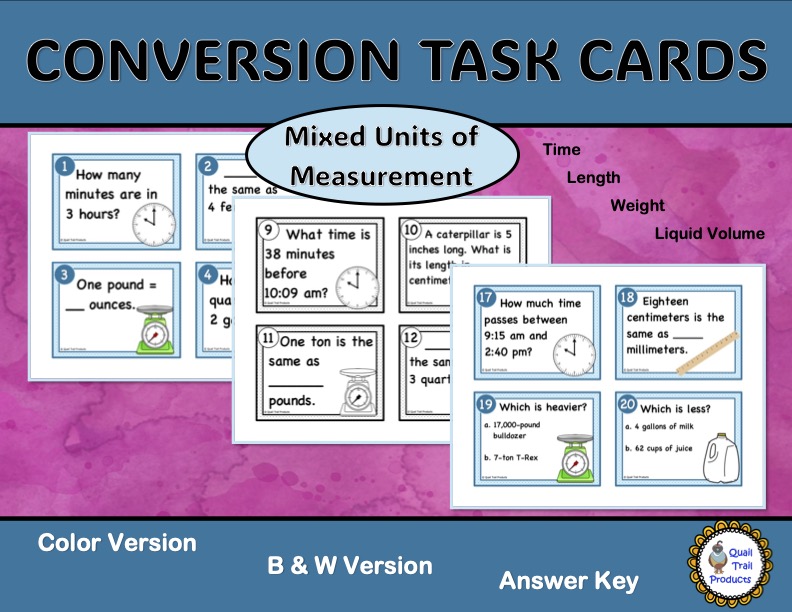
Give students mixed practice converting units across time, length, weight, and liquid volume using word-problem task cards.

A large no-prep packet teaching 3D shapes (cube, sphere, cone, and others) through informational shape pages, real-world-connection readings, color/read/write practice, step-by-step drawing guides, cut-and-fold 'make your own shape' craft templates, and open-ended draw-and-write reflection pages.
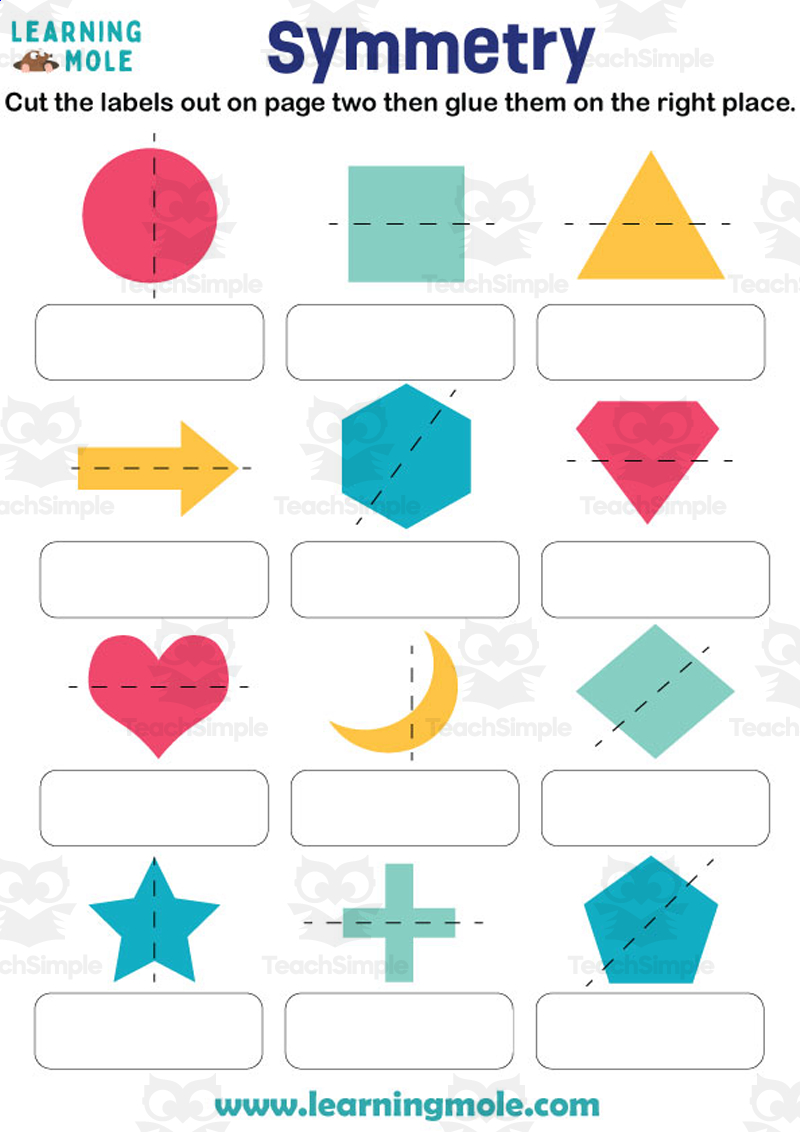
A cut-and-paste activity for classifying shapes/images as symmetrical or not symmetrical.
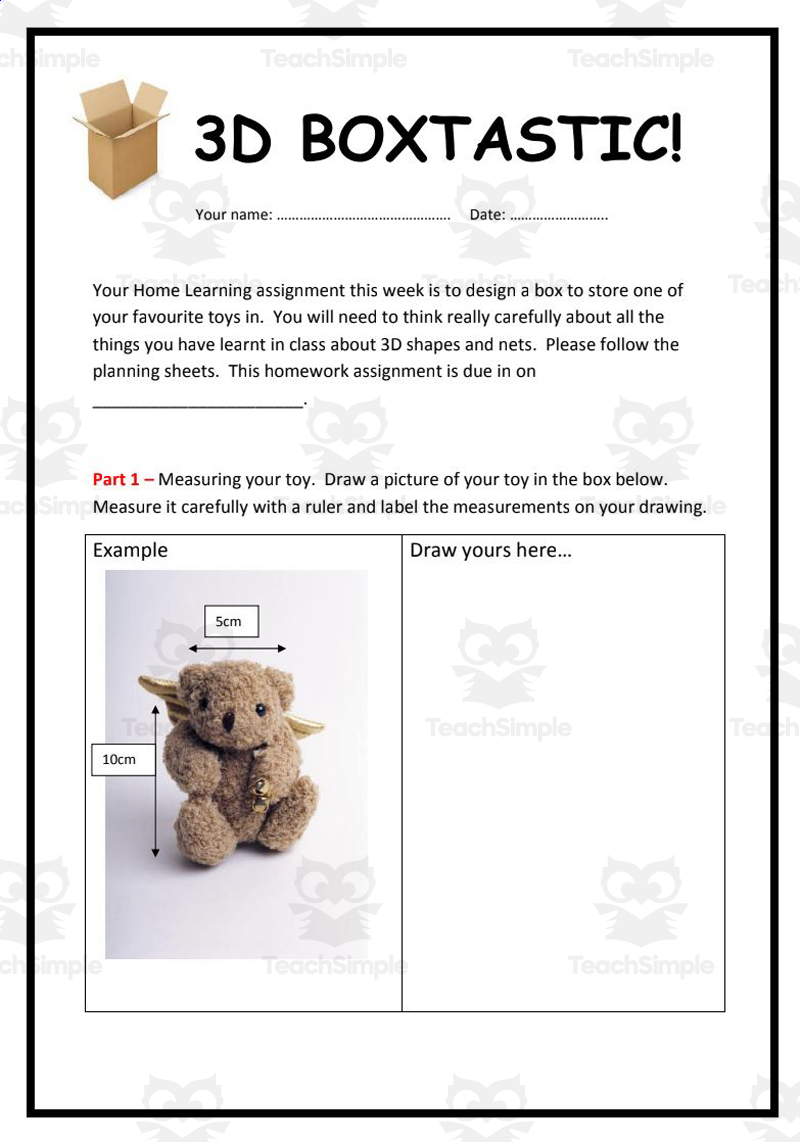
A home-learning design project applying knowledge of 3D shapes and nets by having students design and build a box to store a favourite toy, integrating measurement.

Geometry activity with scaffolded notes teaching the Triangle Inequality Theorem through a hands-on discovery activity using cut straws (or spaghetti) of measured lengths, then guided notes and practice problems.
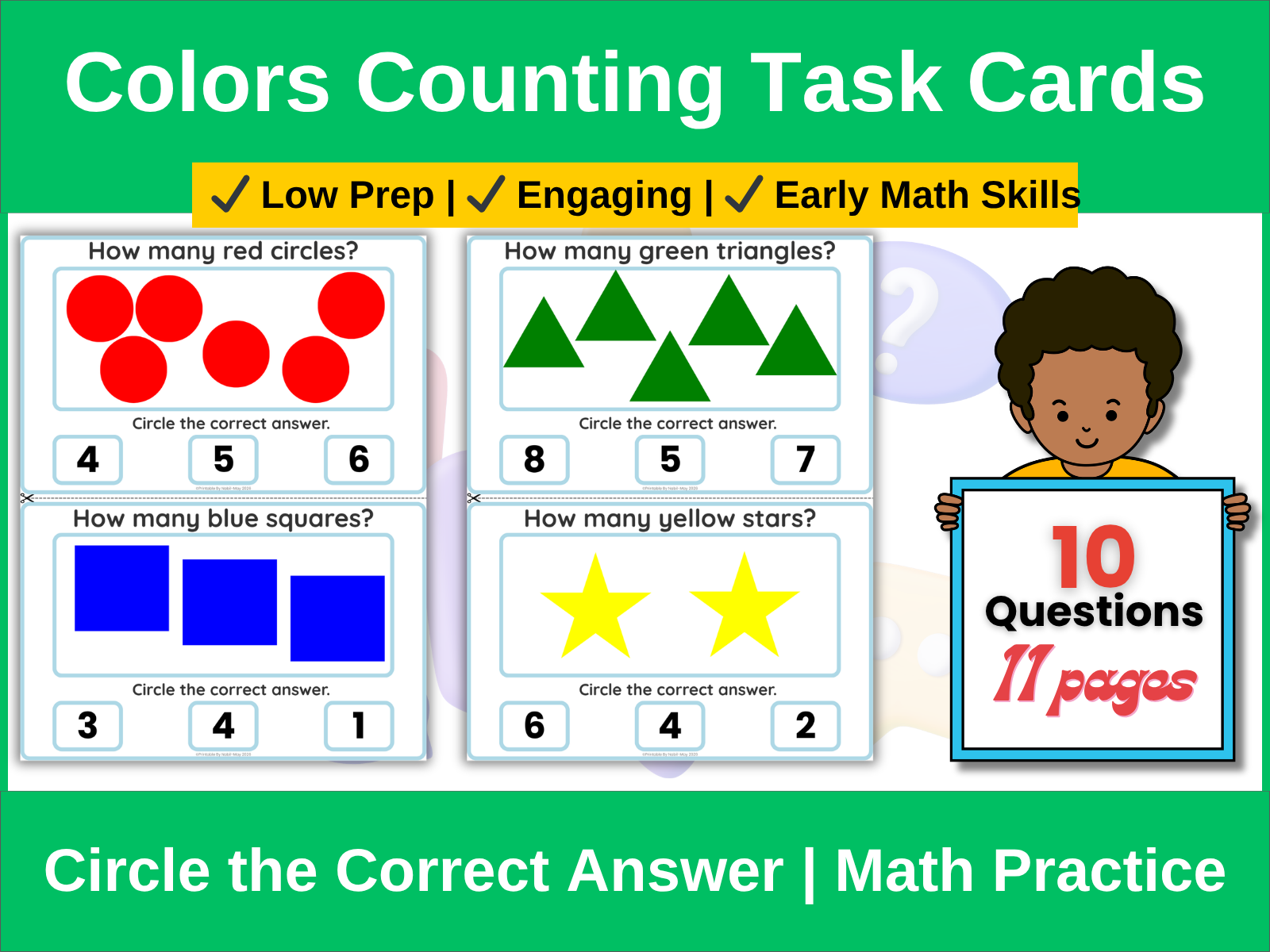
Task cards for early math practice combining color recognition with counting; students count colored shapes and circle the correct total.
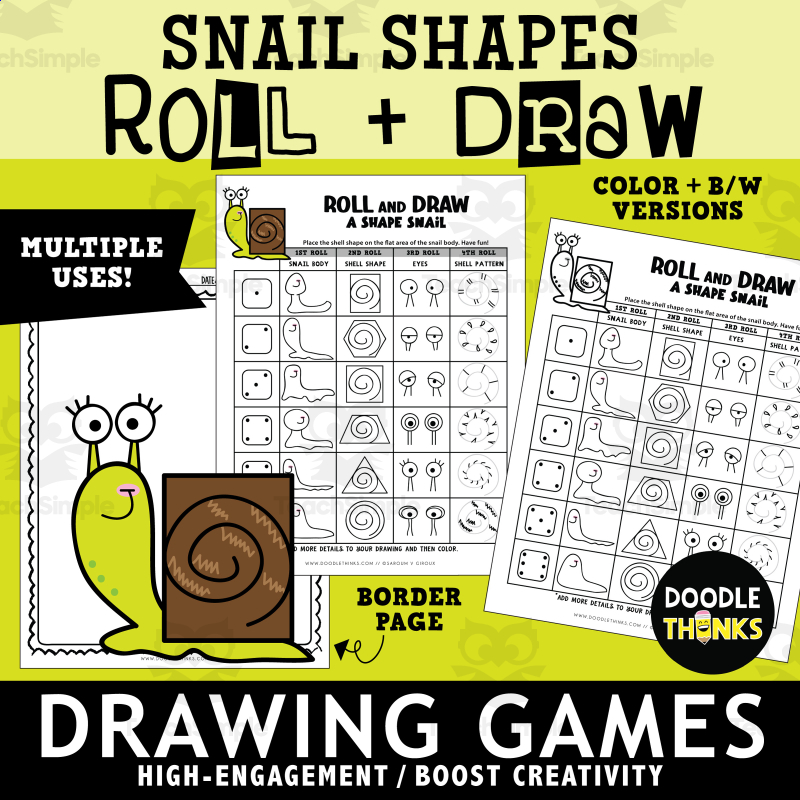
A shape-based roll-and-draw dice game in which students build a drawing of a snail by rolling for each column of body parts on the game sheet and combining the resulting shapes into a finished picture.
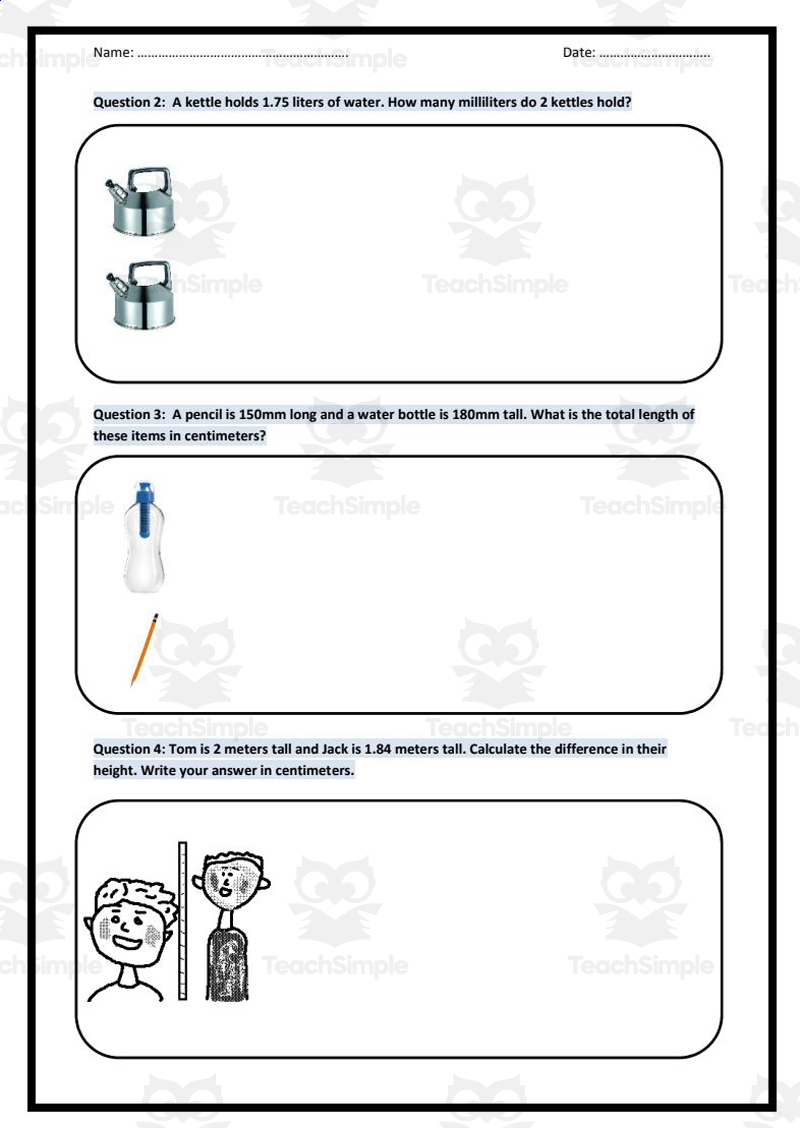
Gives students practice converting between metric units (length, weight, capacity) and solving multi-step measurement word problems using a place-value-chart conversion method.
This lesson is great for helping students apply formulas to find the area and perimeter of rectangles in word problems , which is essential for fourth grade students. By the end of this lesson, students will be able to confidently solve these types of problems on their own.
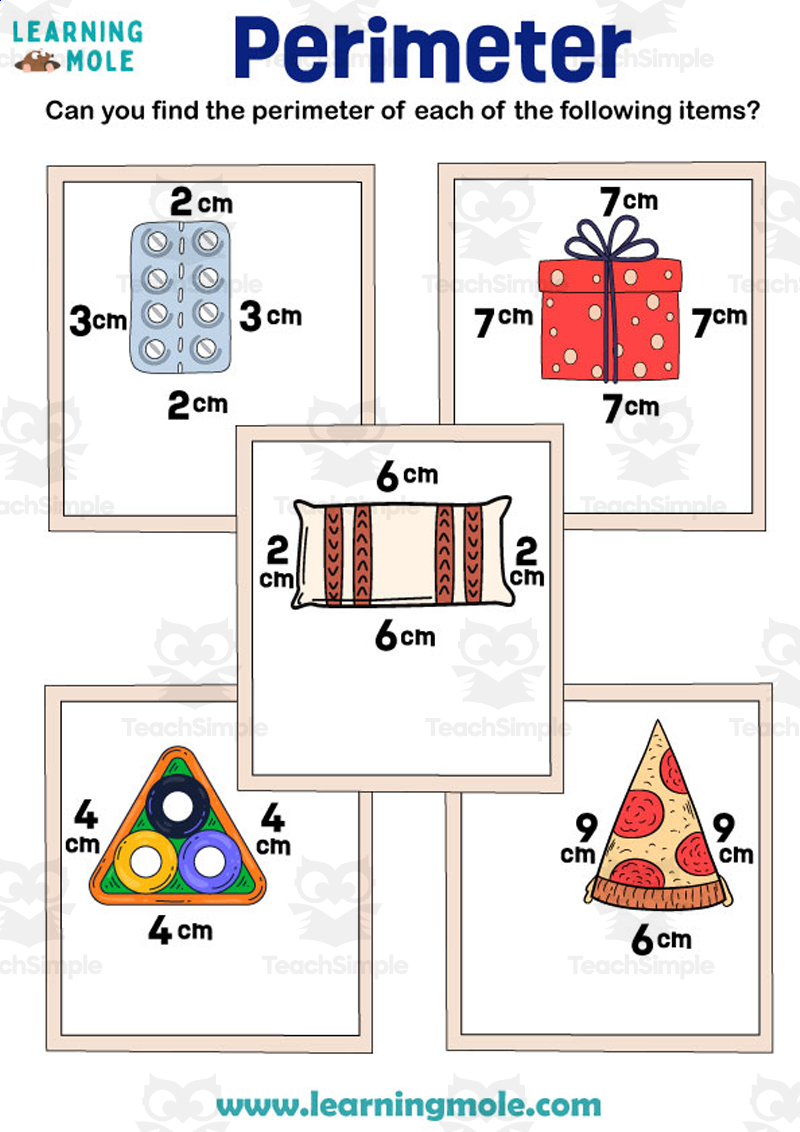
A 1-page perimeter practice worksheet where students calculate the perimeter of several labeled polygon shapes using given side lengths in centimeters.
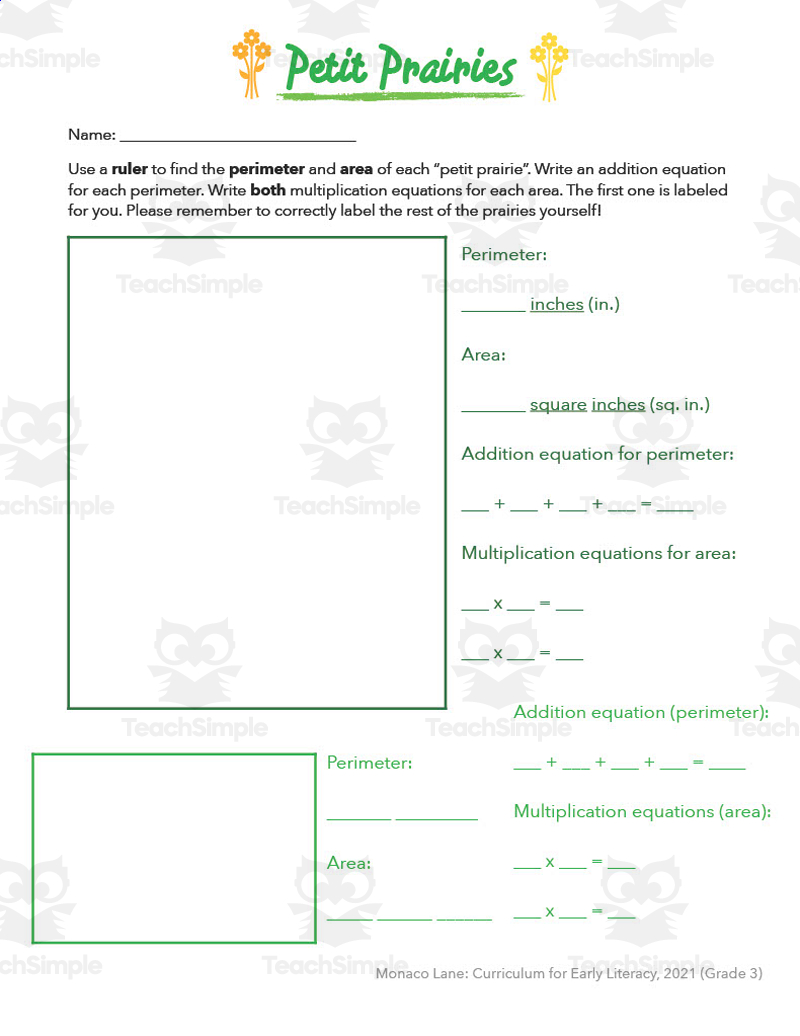
A measurement math worksheet where students use a ruler to find the perimeter and area of illustrated grid-based shapes ('petit prairies'), with a 3rd-grade version adding equation-writing practice.
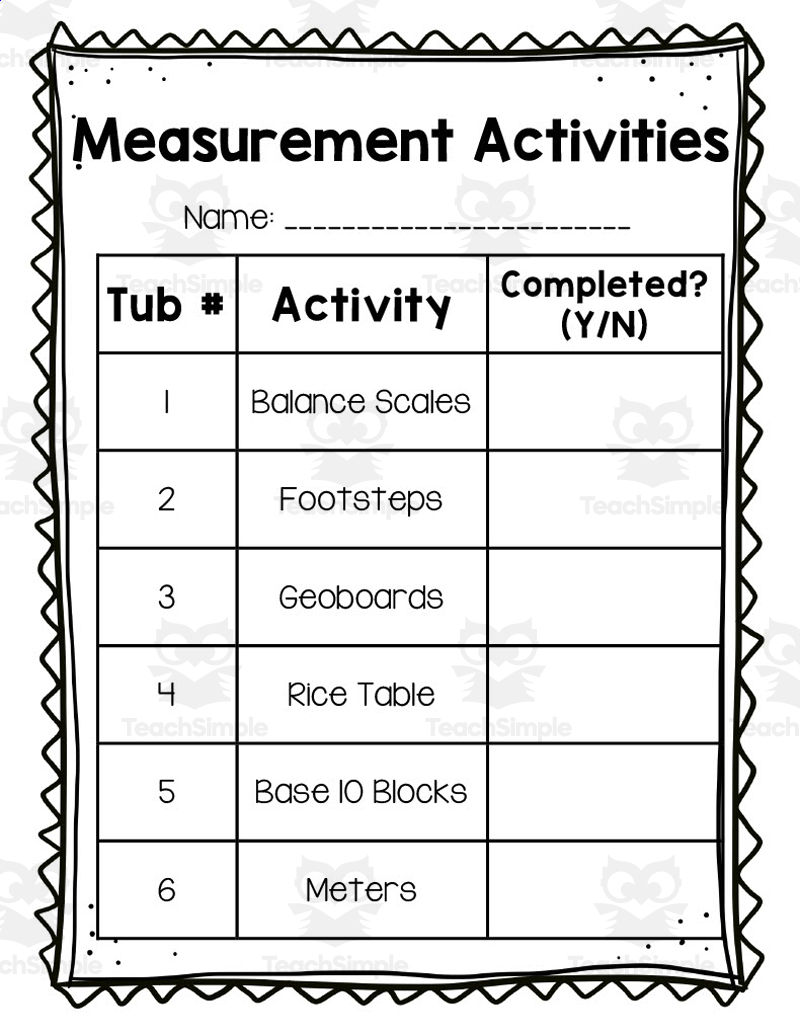
Provide a set of six hands-on measurement center activities (balance scales, footsteps, geoboards, rice table, base-10 blocks, and meters) for students to practice guessing and measuring.

Guided notes and practice teaching scale factor and scale drawings to meet CCSS.MATH.CONTENT.7.G.A.1.

Give students hands-on practice measuring the perimeter of polygons using string/yarn and a ruler.