Un and Una Spanish Practice Worksheets
Give Spanish-language learners practice choosing the correct indefinite article ('un' for masculine nouns, 'una' for feminine nouns), including plural nouns.
Classroom resources
Browse by lesson focus
Choose the topic or kind of practice you need.
Give Spanish-language learners practice choosing the correct indefinite article ('un' for masculine nouns, 'una' for feminine nouns), including plural nouns.
A collection of 10 short bilingual (Spanish/English) moral tales for reading comprehension and bilingual vocabulary practice.
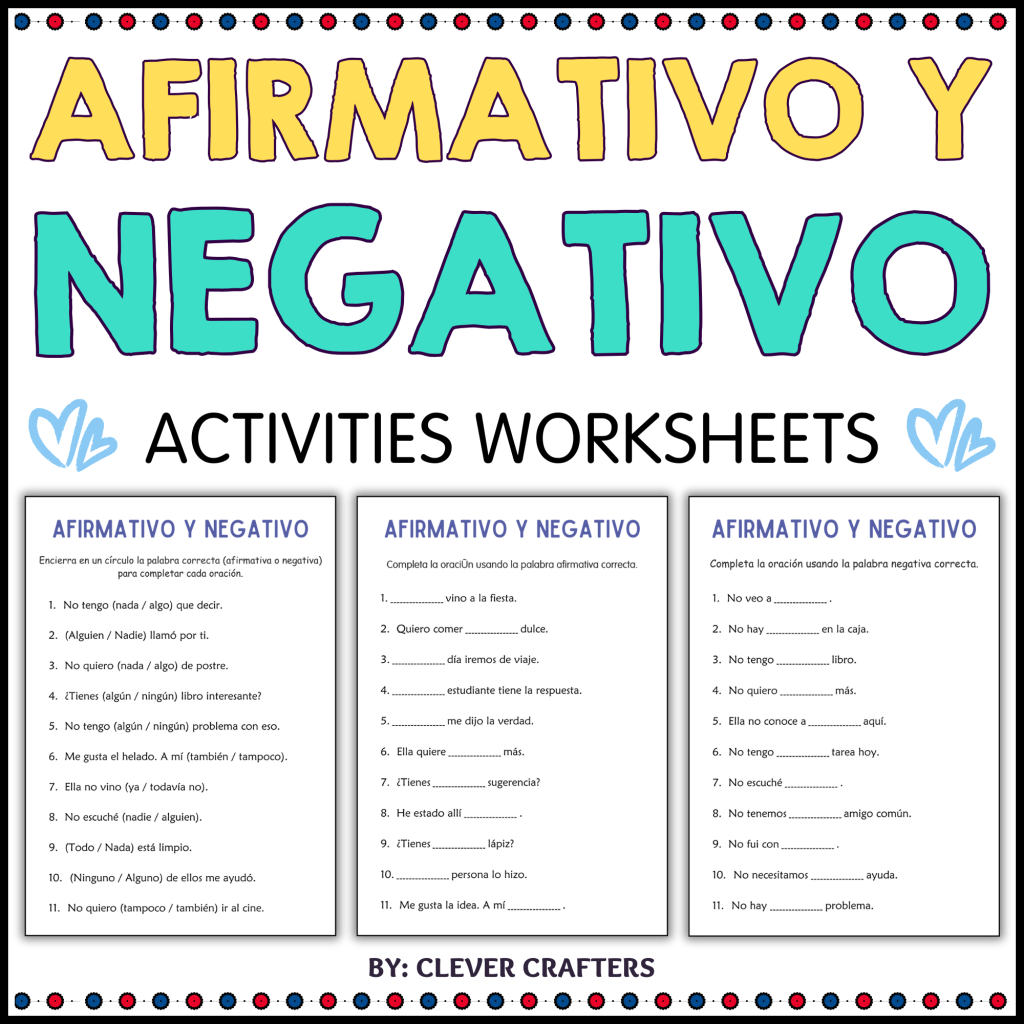
Explore Spanish affirmative and negative words through matching, sentence completion, word choices and original writing. Students first connect contrasting terms, then use them in sentence contexts before composing their own examples. The practice includes familiar pairs such as siempre/nunca and algo/nada. Spanish instructions keep attention on the target language, with teacher support for vocabulary needed to understand the prompts.
A collection of 10 short bilingual (Spanish/English) fables/tales with morals, for reading comprehension and bilingual vocabulary practice.
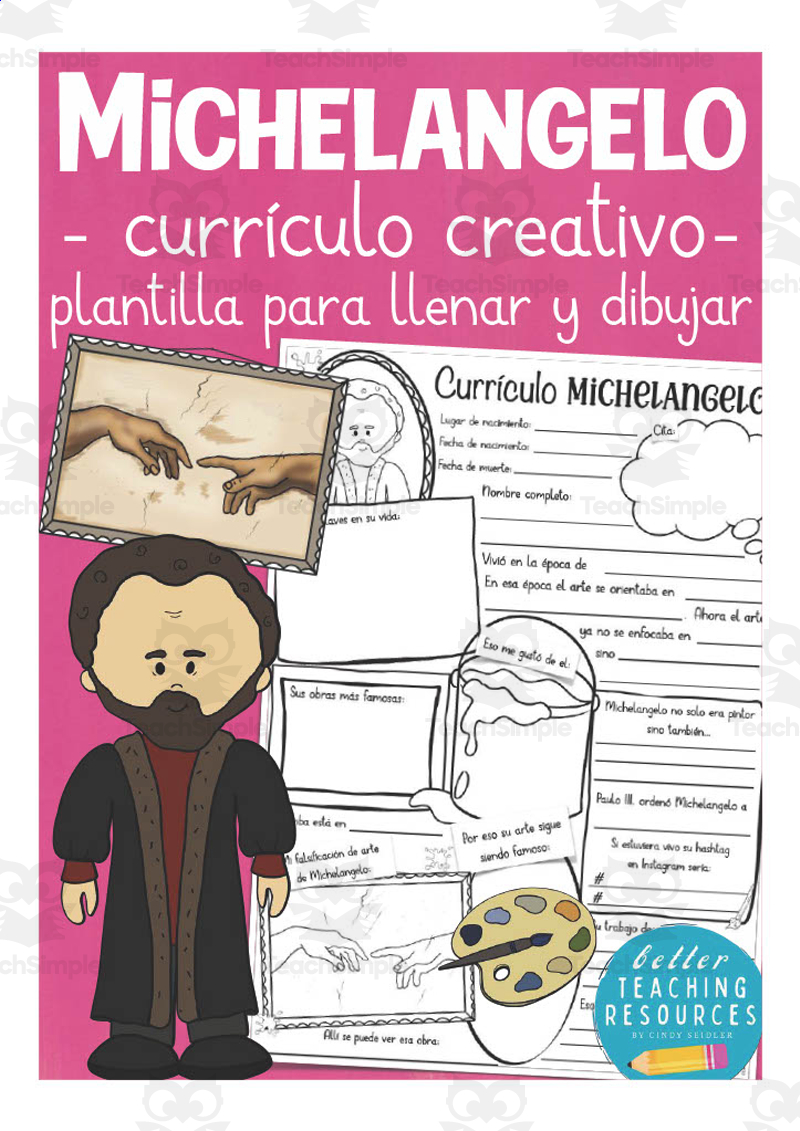
Have students imaginatively assume the identity of the artist Michelangelo and complete a Spanish-language creative 'resume' (currículo) template about the artist's life, style, and work, then illustrate a related drawing task.
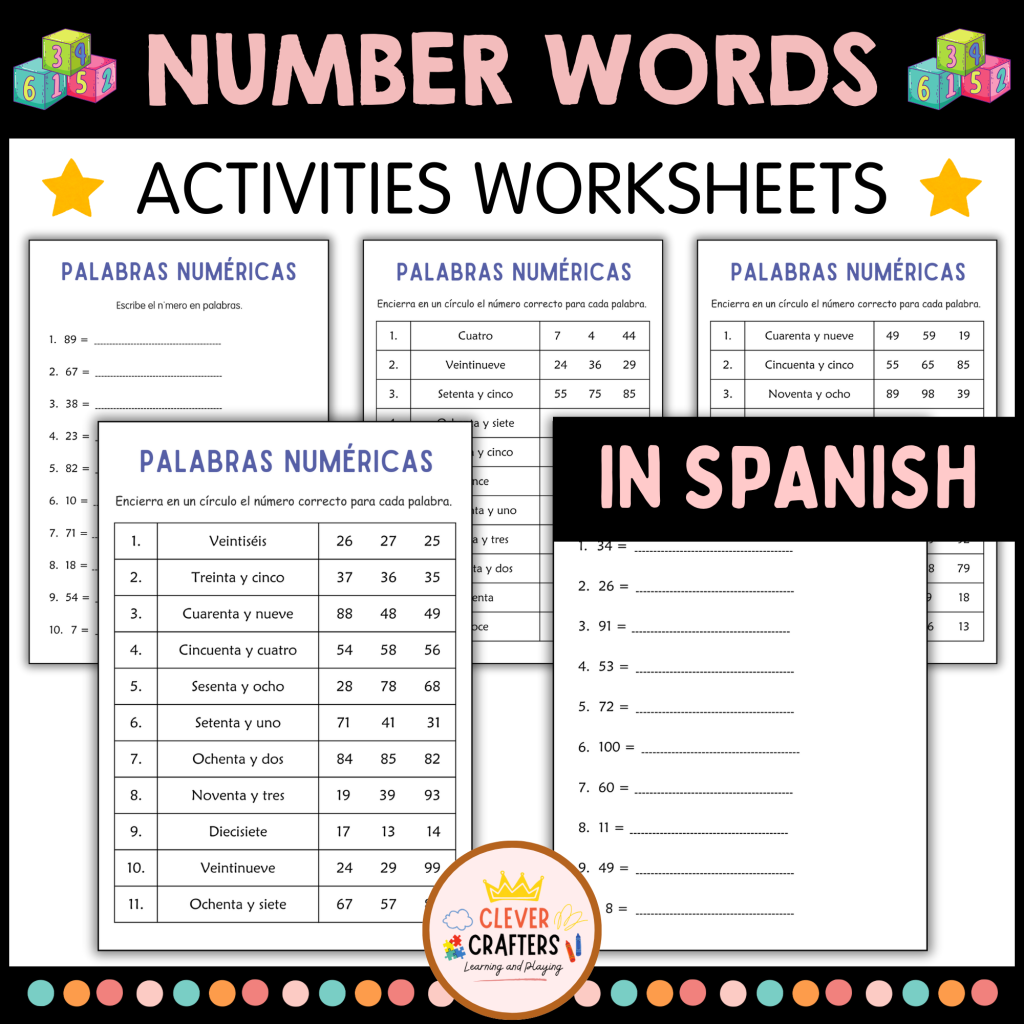
Practice reading Spanish number words and matching them to their numerals from 1 to 100.
Have students imaginatively assume the identity of the artist René Magritte and complete a Spanish-language creative 'resume' (currículo) template about the artist's life, style, and work, then illustrate a related drawing task.
A Spanish worksheet teaching how to tell time in Spanish (telling time expressions, formulas for stating minutes) with a matching exercise and a world-clock lookup activity.
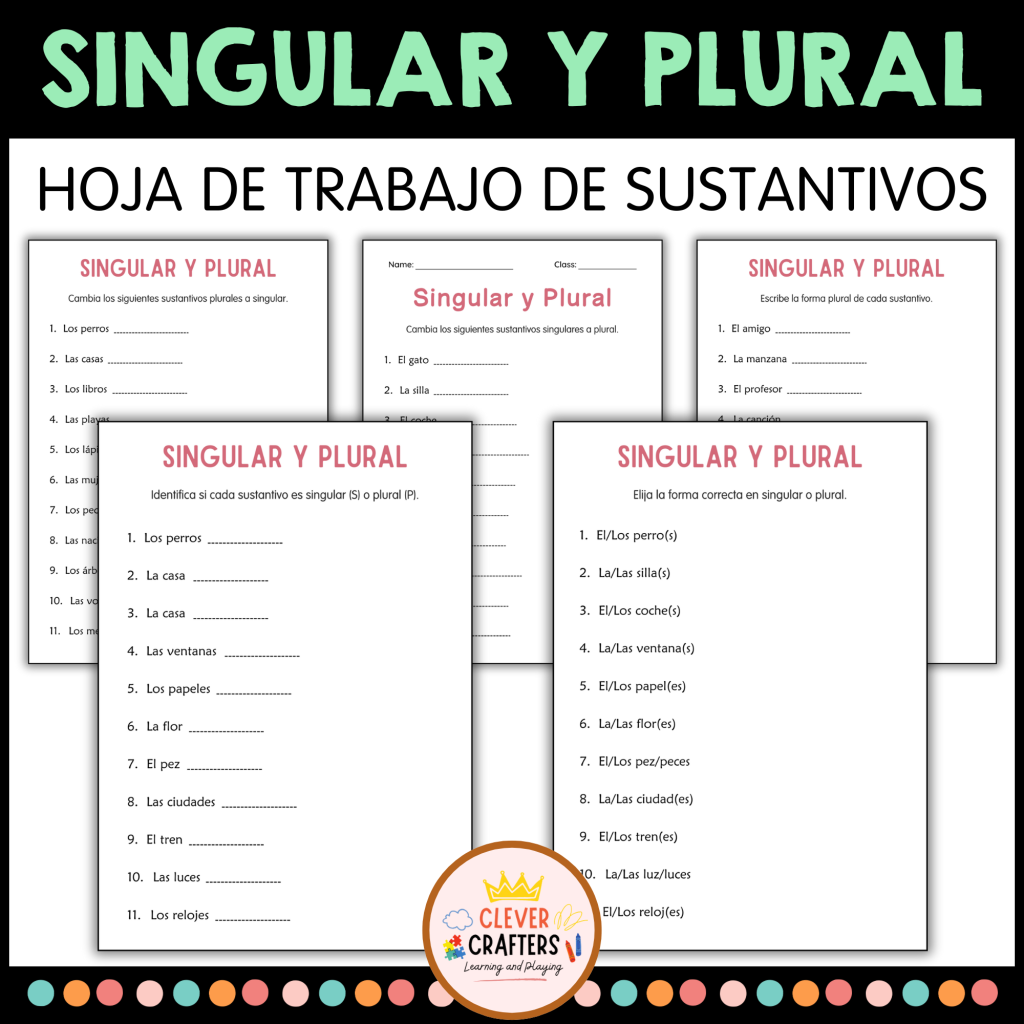
Give students practice converting Spanish nouns between singular and plural forms.
Practicing False Cognates Between Spanish and English, Part 5 This 2-page Spanish print resource offers educators two different exercises to help students practice false cognates (words that look or sound similar between Spanish and English but have different meanings) between the two languages. It is part 5 of a 6-part series focused…
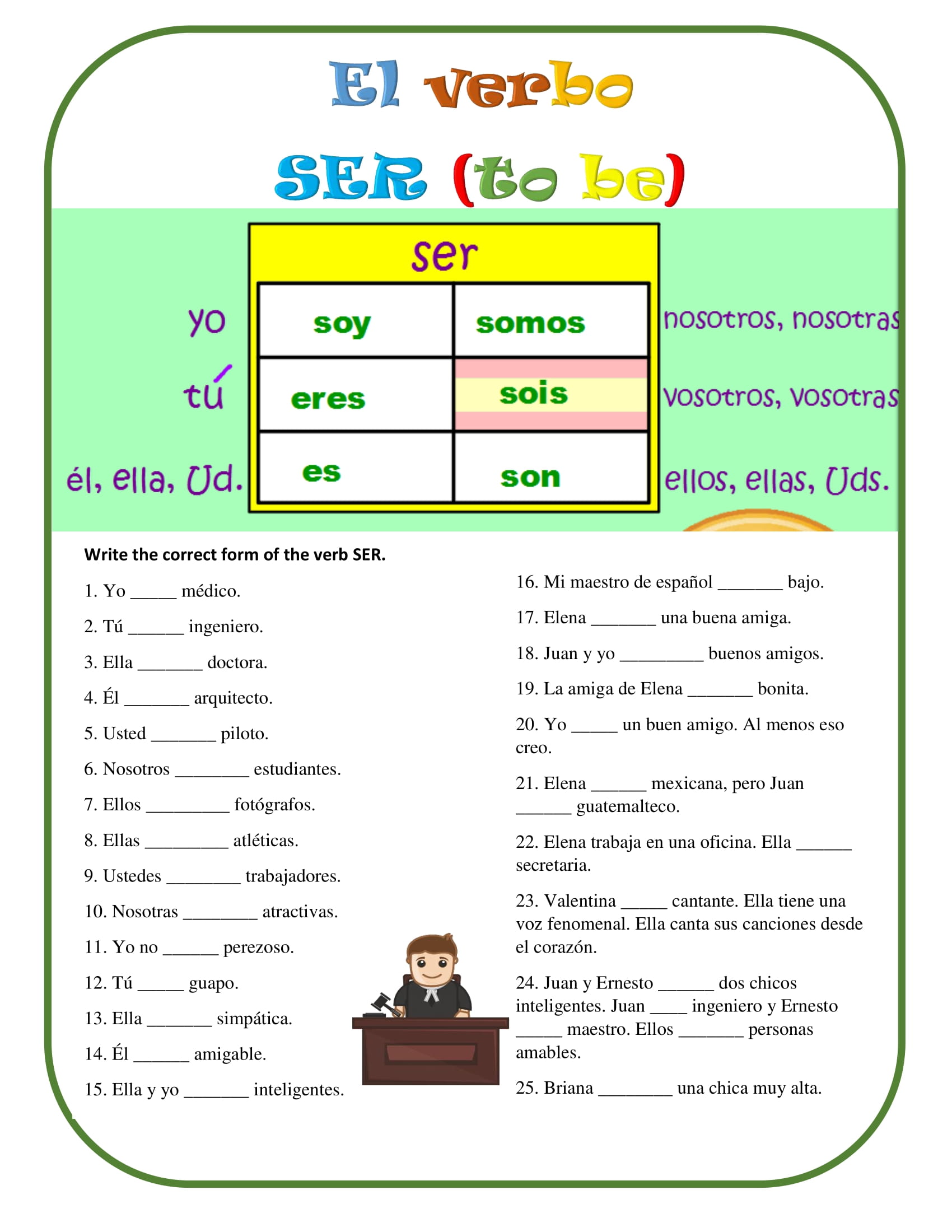
Gives novice Spanish learners practice conjugating and using the verb 'ser' (to be) across fill-in-the-blank, question-answer, and personal-description activities, culminating in a color-by-code reading comprehension picture.
Spanish-language reading comprehension practice: a short illustrated narrative story (Pipo, el pato (Pipo the duck)) followed by open-response comprehension questions.
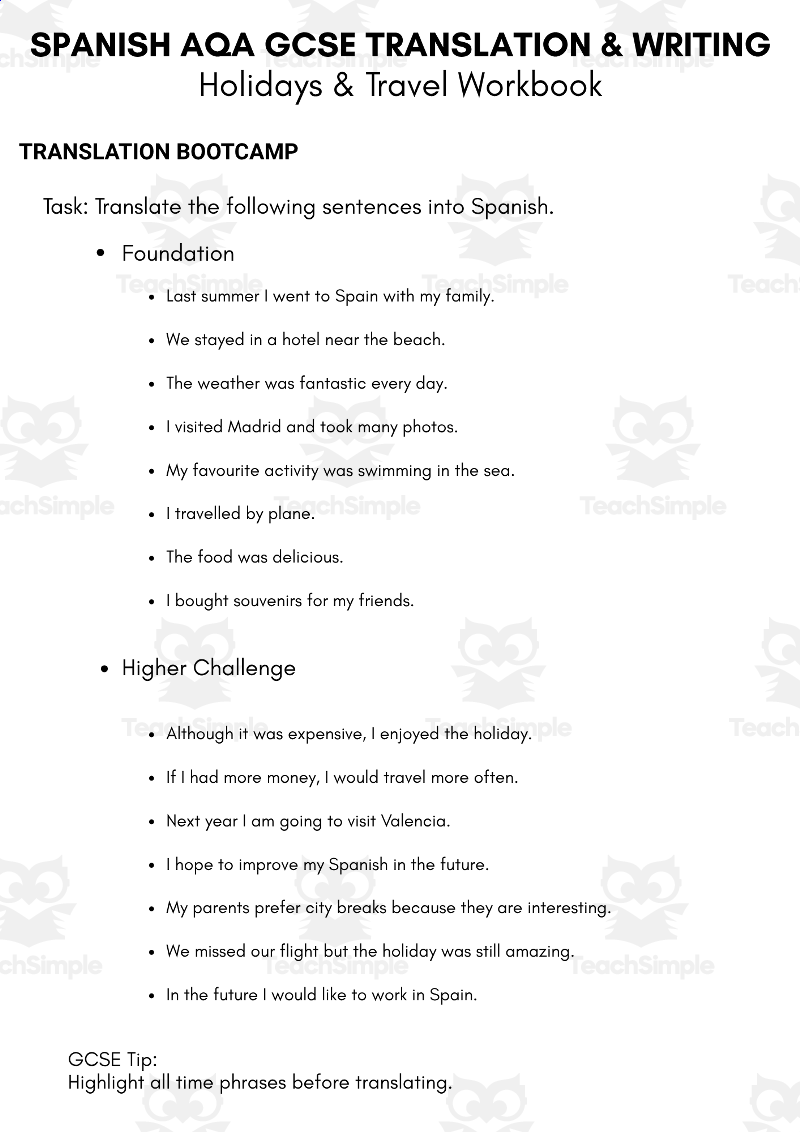
A GCSE-level Spanish translation and extended-writing practice workbook on the Holidays & Travel topic, built for AQA exam-board preparation.
A Spanish reading-comprehension bundle titled 'Pequeña Lección' (Small Lesson), pairing a short winter-themed informational text with comprehension-question worksheets, part of the 'Lecturitas Invierno' G2-G3 (2nd-3rd grade) winter collection.
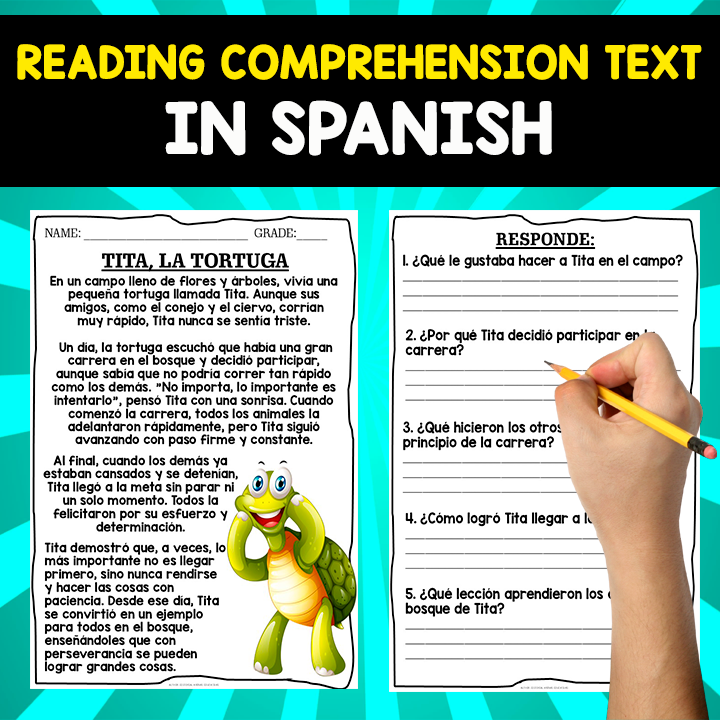
Spanish-language reading comprehension practice: a short illustrated narrative story (Tita, la tortuga (Tita the tortoise)) followed by open-response comprehension questions.
Practice telling and writing time in Spanish, including exact hours, times using 'y' (past the hour), and times using 'menos' (to the hour).
Spanish-language reading comprehension practice: a short illustrated narrative story (Leo, el conejo (Leo the rabbit)) followed by open-response comprehension questions.
Weather vocabulary and expressions in Spanish -- seasons, sky conditions (sunny, cloudy, foggy, stormy), temperature phrasing, and the question ¿Qué tiempo hace? -- are introduced on a reference page before students apply them to a printed May weather calendar showing daily forecasts and temperatures. Using that calendar, students determine whether ten Spanish weather statements are cierto (true) or falso (false) and correct any false statement with the accurate Spanish description, then answer open-response questions describing the weather and temperature for four specific calendar dates. A fully worked answer key is included for both the true/false exercise and the open-response questions, with model responses written in Spanish (e.g., 'HACE SOL,' 'HACE MUCHO CALOR'). The resource is designed as self-contained vocabulary-to-application practice for an introductory unit on Spanish weather expressions.
Spanish-language reading comprehension practice: a short illustrated narrative story (Mía, la mariquita (Mía the ladybug)) followed by open-response comprehension questions.
SPANISH SPELLING DICTATION NO PREP WEEK 2 La H inicial Oraciones para dictado This resource is developed to assist educators in teaching Spanish spelling, particularly the use of the Spanish letter 'H' when placed in initial position. Packaged as a digital workbook , it features: A collection of 10 sentences for teaching and practice.
PLAY-DOH ACTIVITY WITH THE VOWELS | SPANISH INFORMATION OF THE AUTHOR: At EDITORIAL ARENAS EDUCATIVAS, we work every day to create educational materials that turn learning into a fun game. Our mission is for every child to enjoy the process of learning. Visit my educational store and discover all the resources we have ready for you.…
Lesson Objectives By the end of this lesson, you will be able to: - Conjugate the verb IR (to go) in the present tense • Use the phrase, “Voy a...” - Use new Spanish vocabulary related to places - Answer the question, “¿Adónde vas? - Answer the question, “¿Qué vas a hacer? This lesson is part of a new workbook that includes 10 complete…
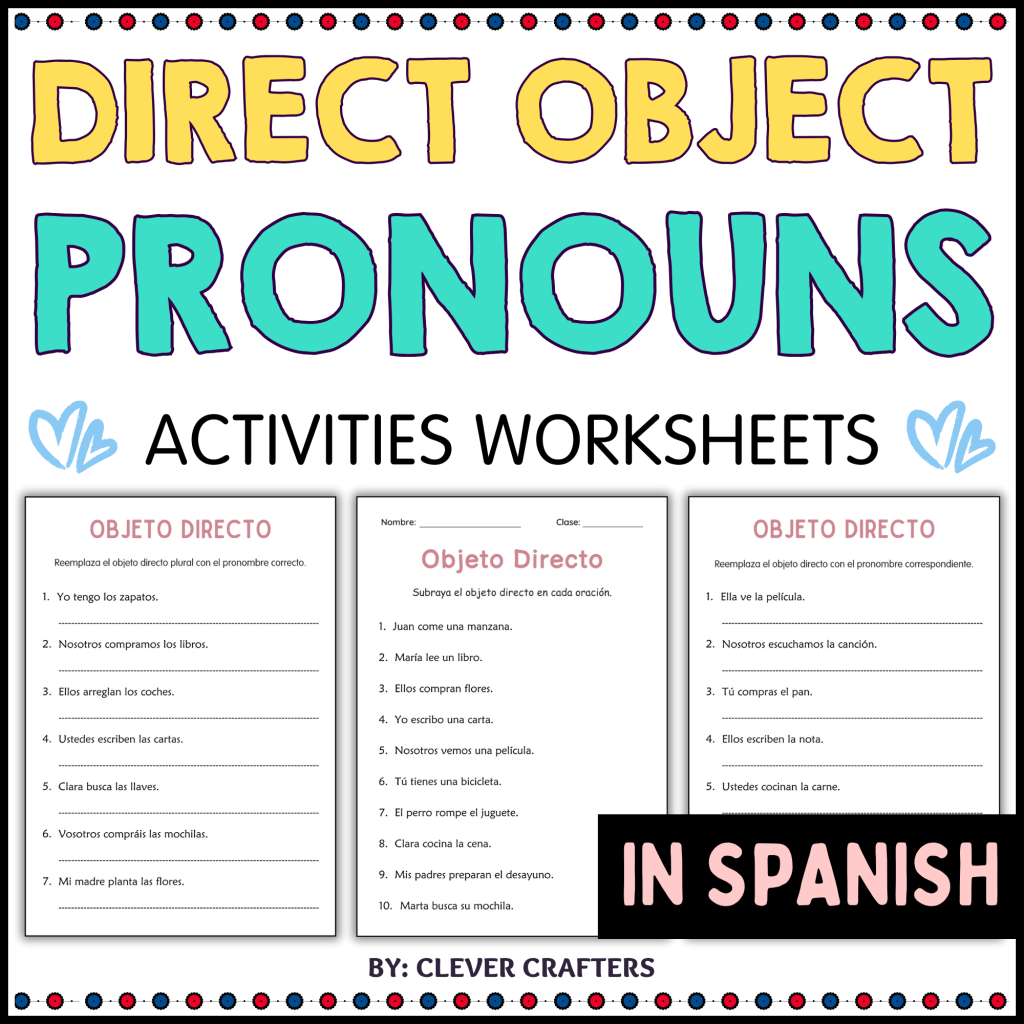
Six worksheets drill Spanish direct object pronouns in increasing difficulty: the first has students underline the direct object in ten sentences, the second and third have them replace singular and plural direct objects with the correct pronoun (lo, la, los, las), and a fourth allows the pronoun before estar or attached to the gerund, with an accent where needed. A fifth worksheet has students attach the pronoun to an infinitive construction, and a sixth asks them to find and correct direct-object-pronoun errors in seven given sentences. All instructions and example sentences are written entirely in Spanish, with no English scaffolding provided anywhere in the file. No answer key is included with any of the six worksheets. Since the worksheets practice pronoun placement with gerunds and infinitives, students unsure of regular -ar, -er, and -ir endings can review them first with a Spanish verb conjugation chart .
Provide a bilingual (Spanish/English) hands-on classroom center for practicing Spanish consonant blends (e.g., cr, br, pr, gl, bl, dr).